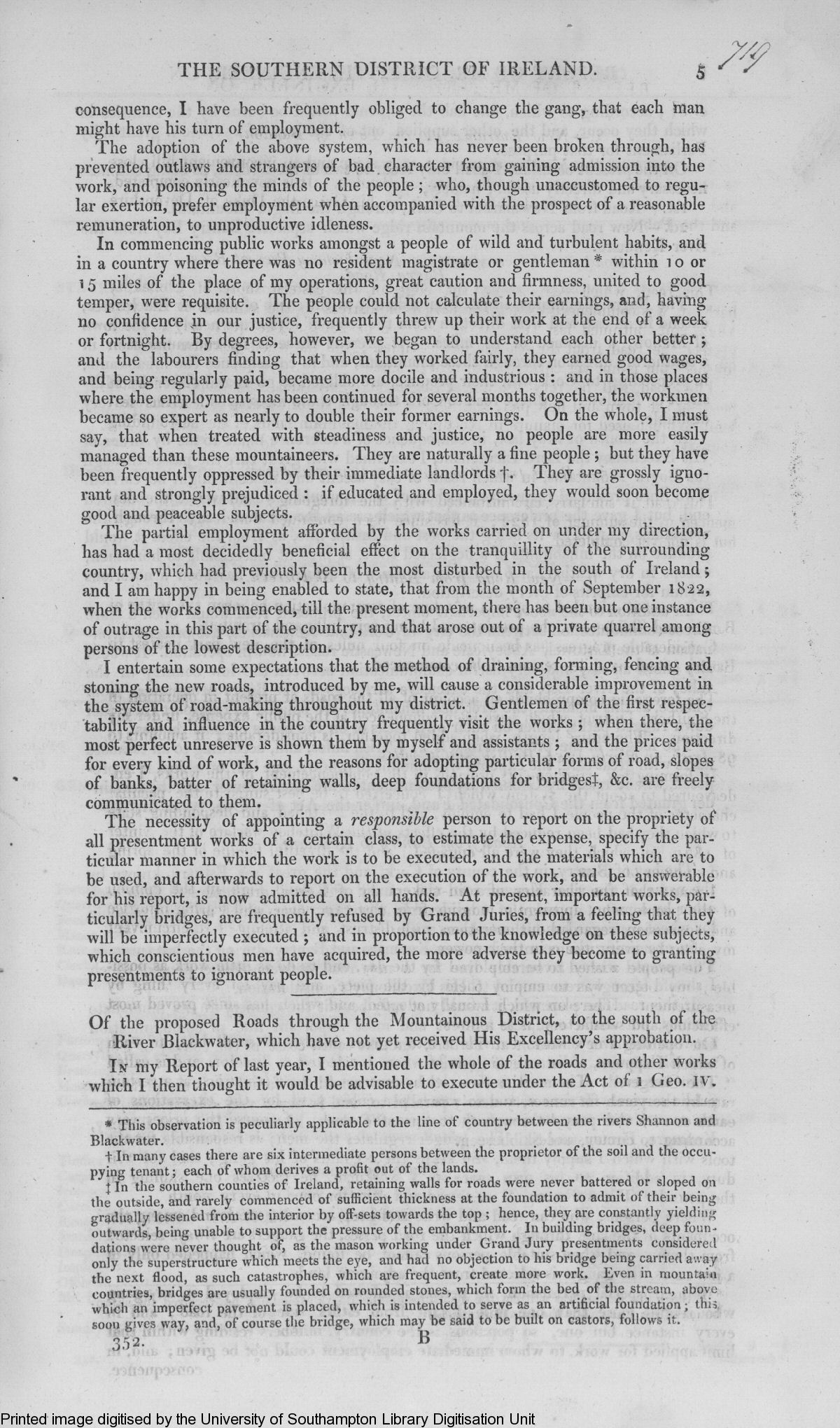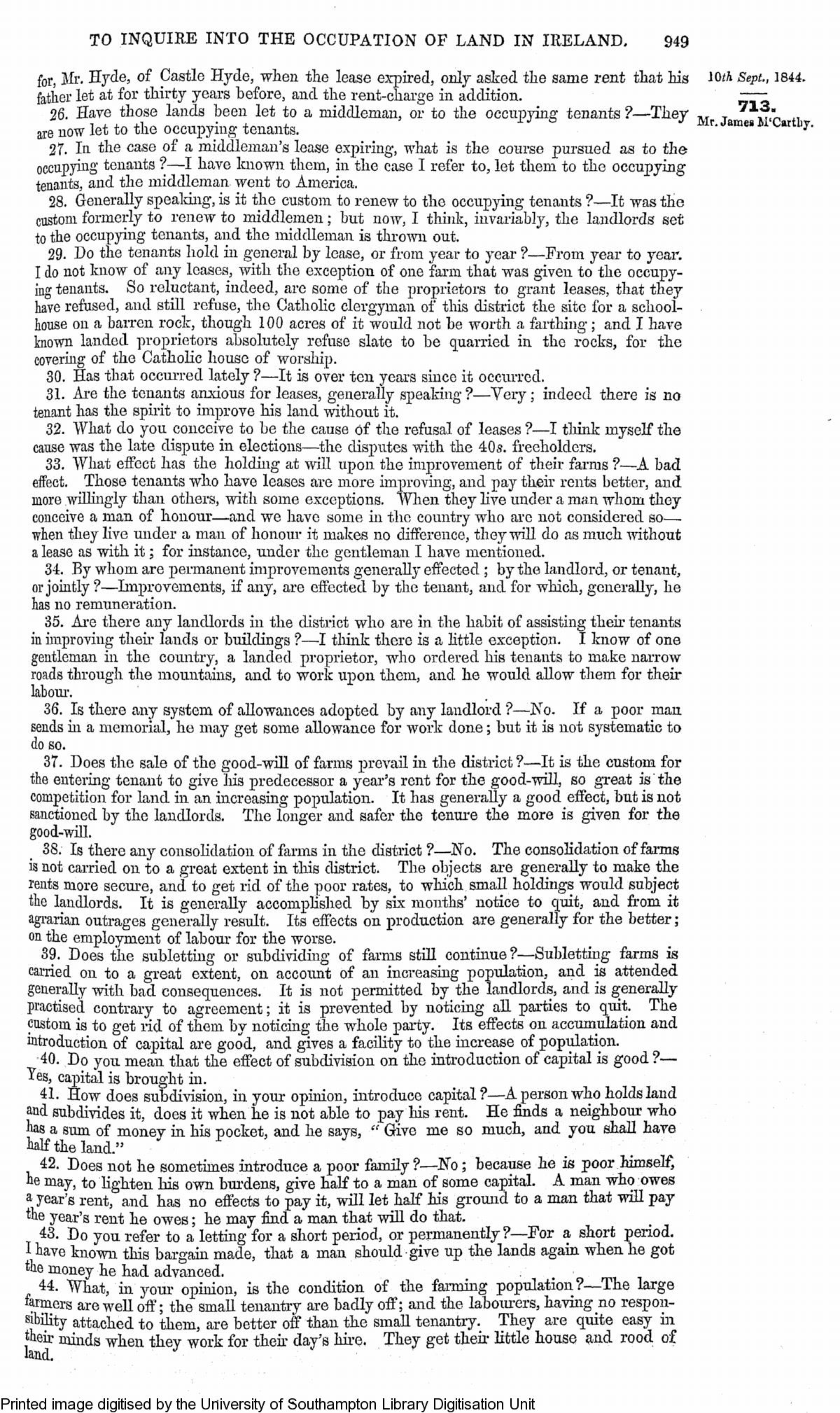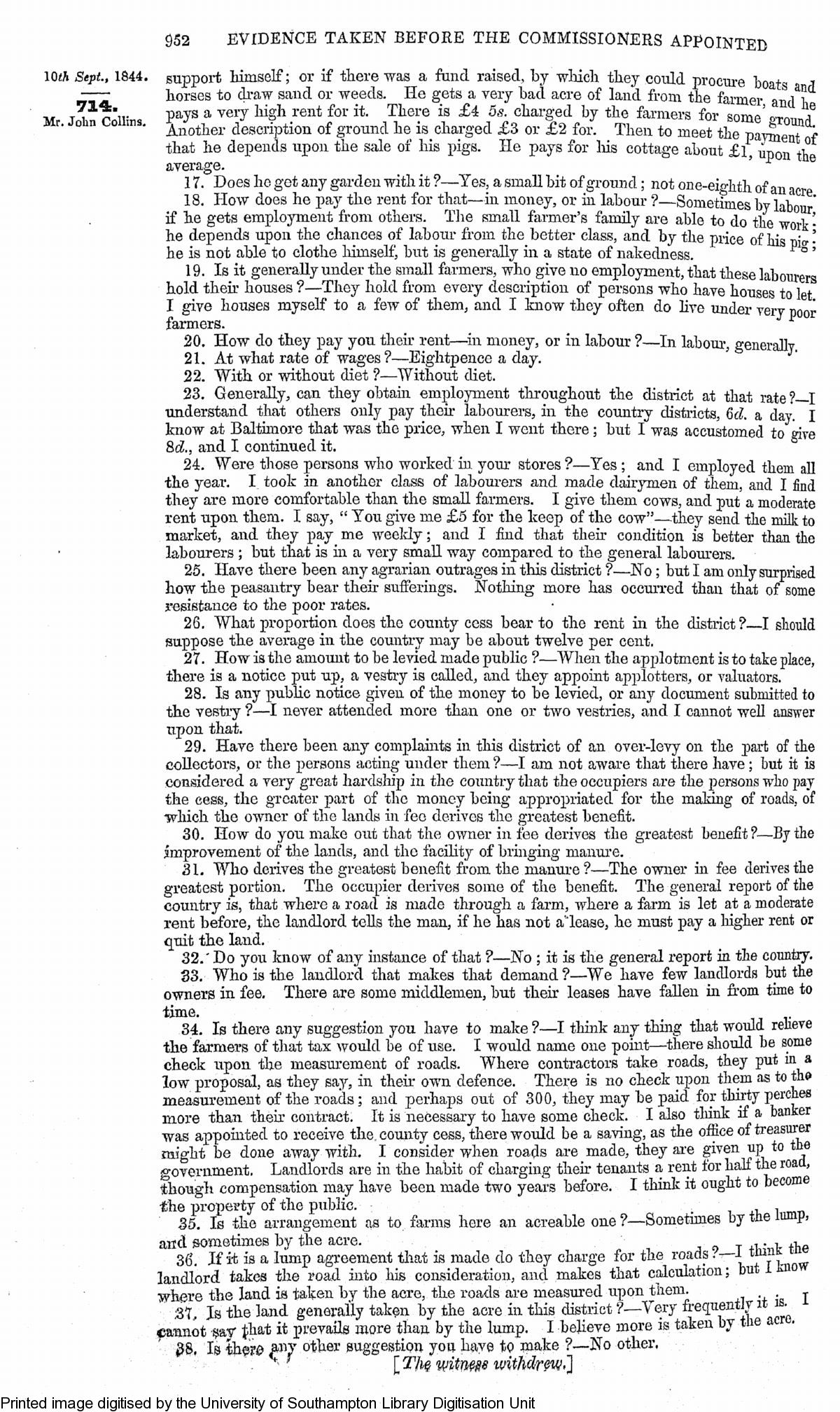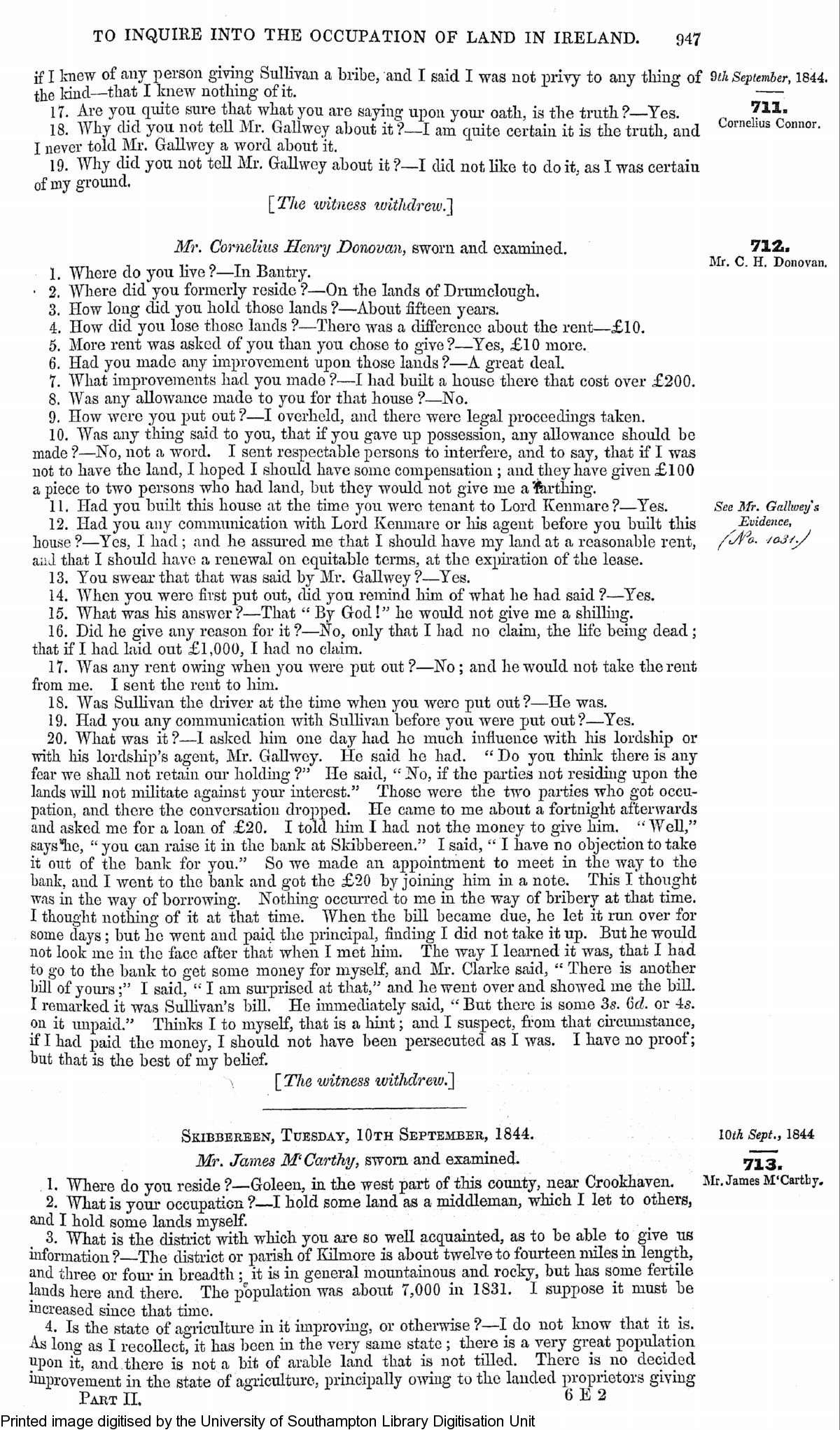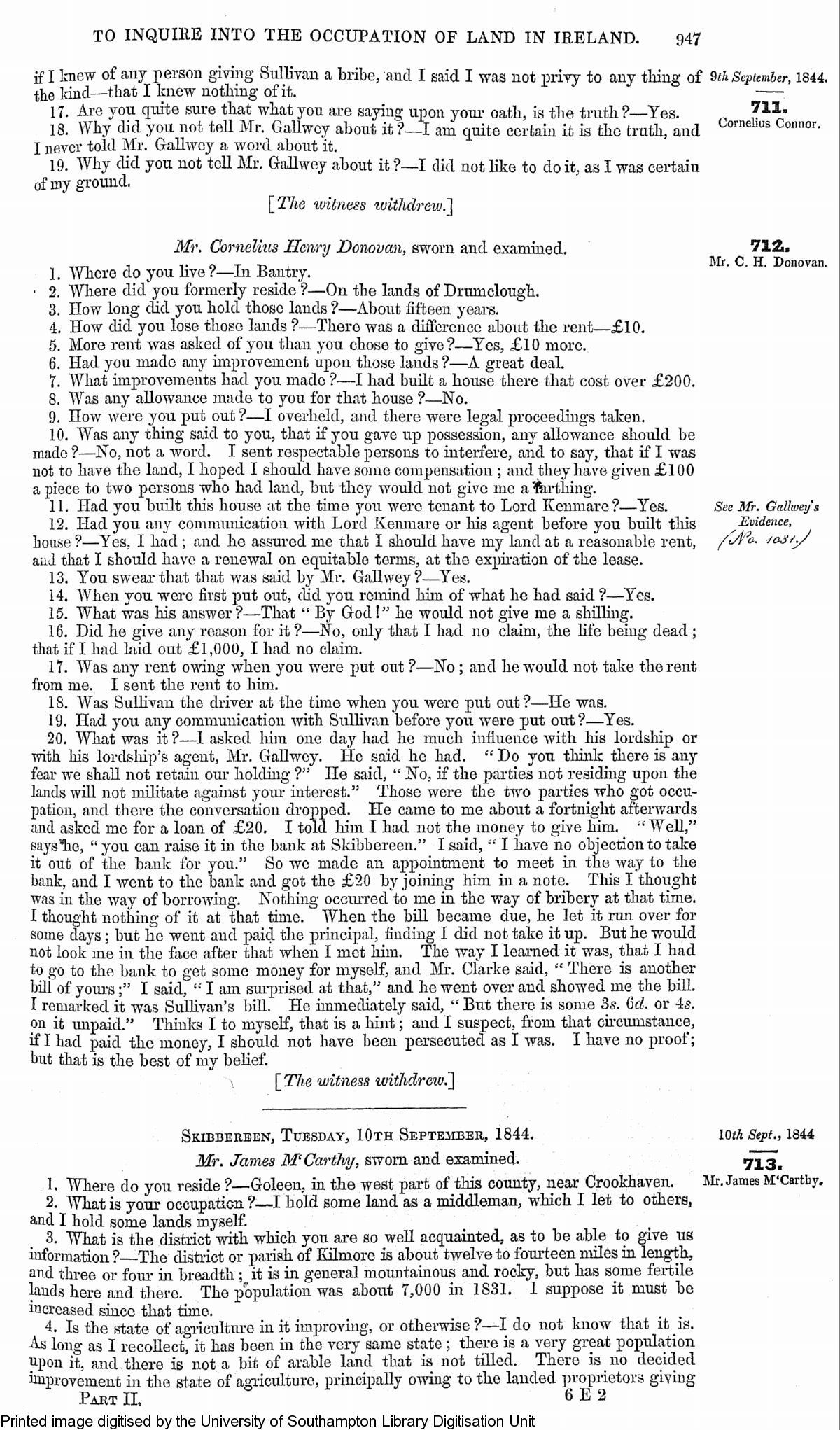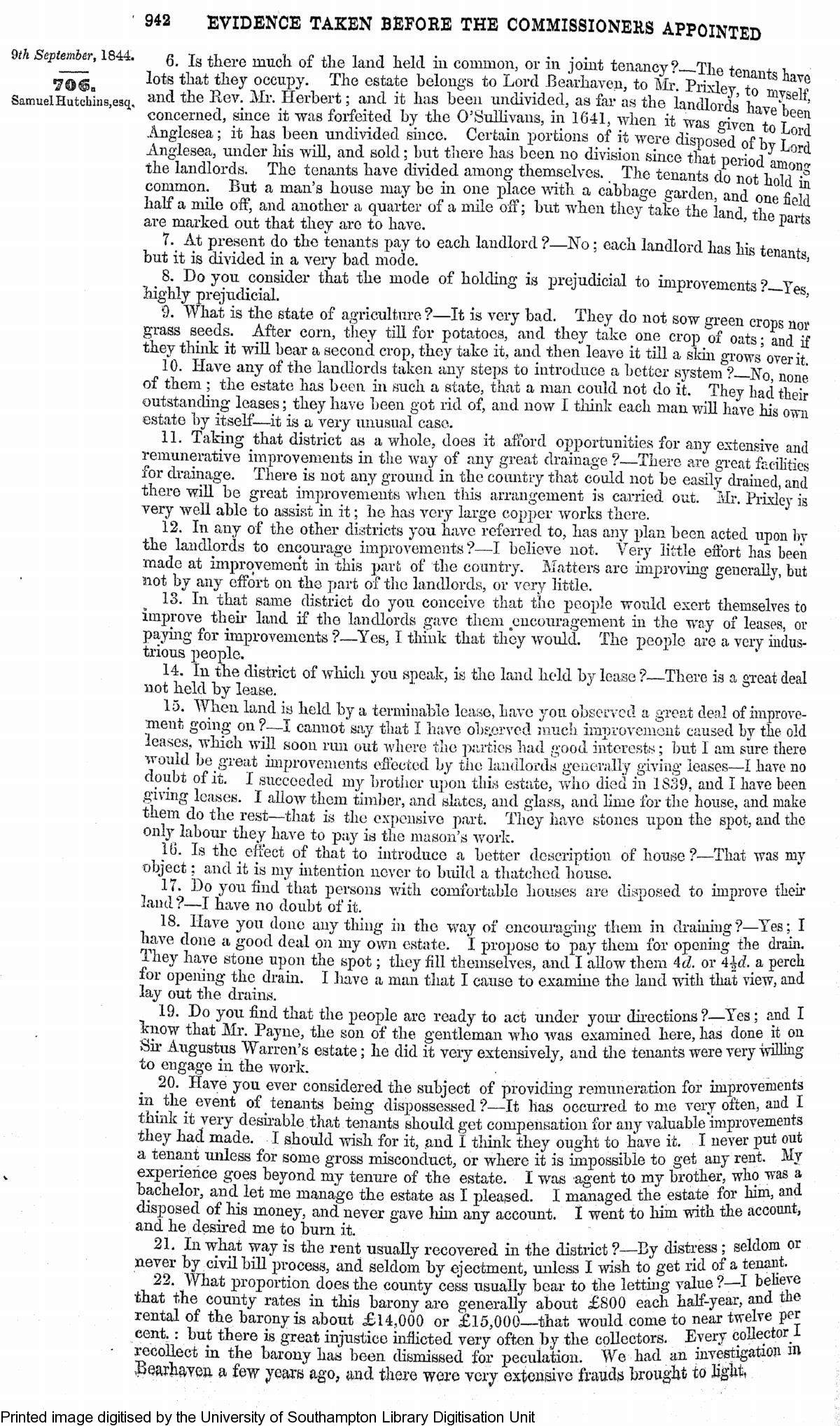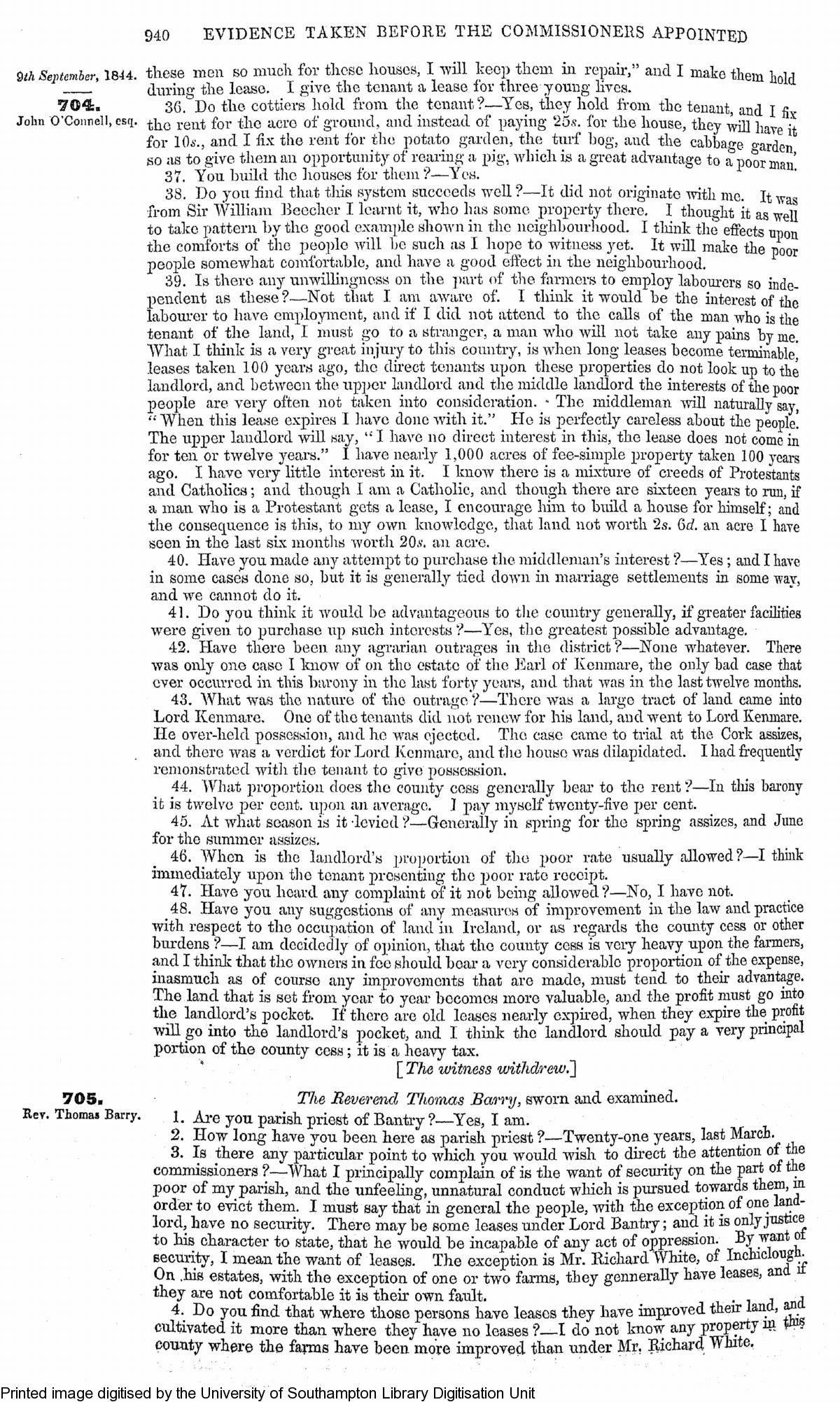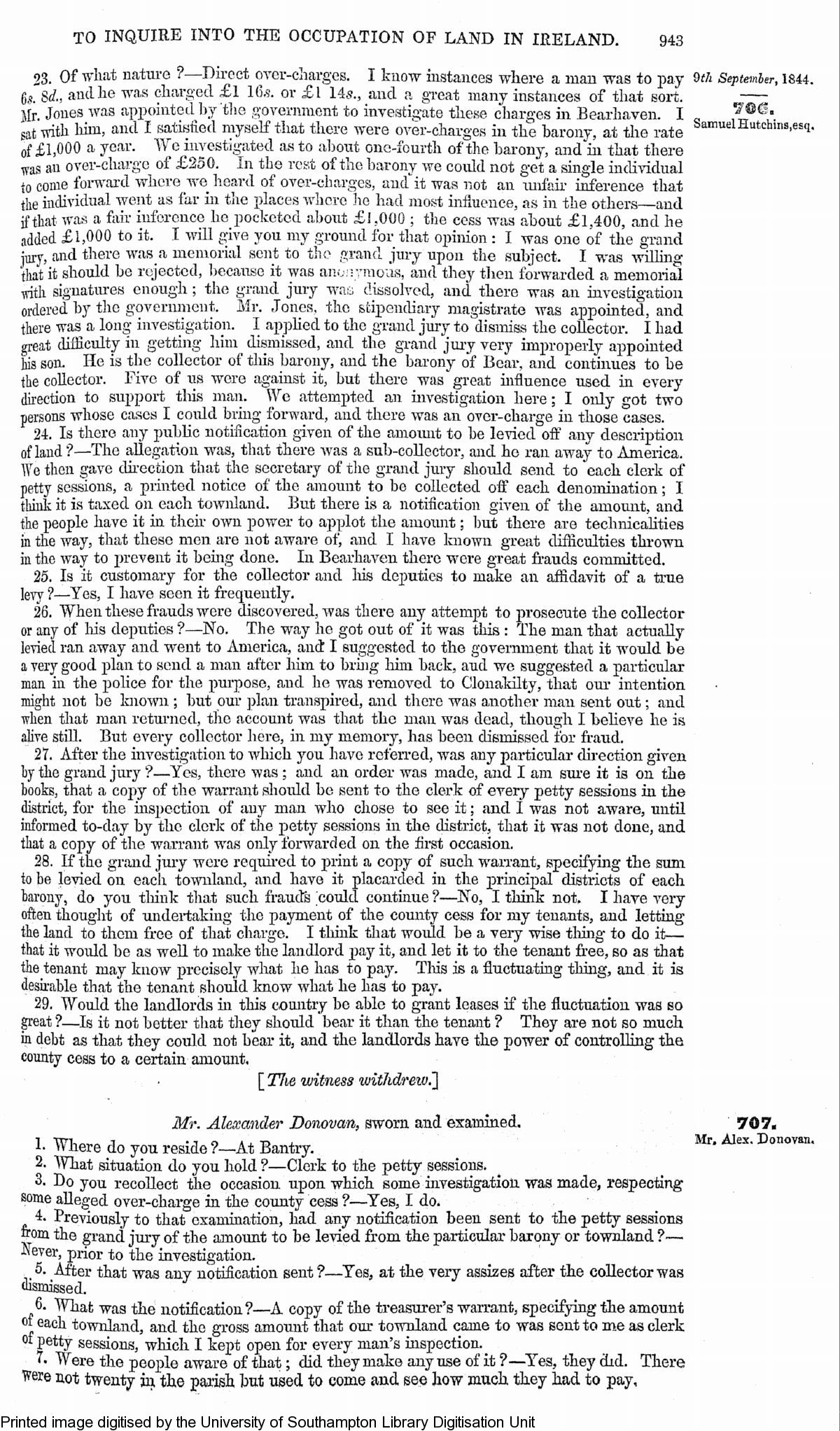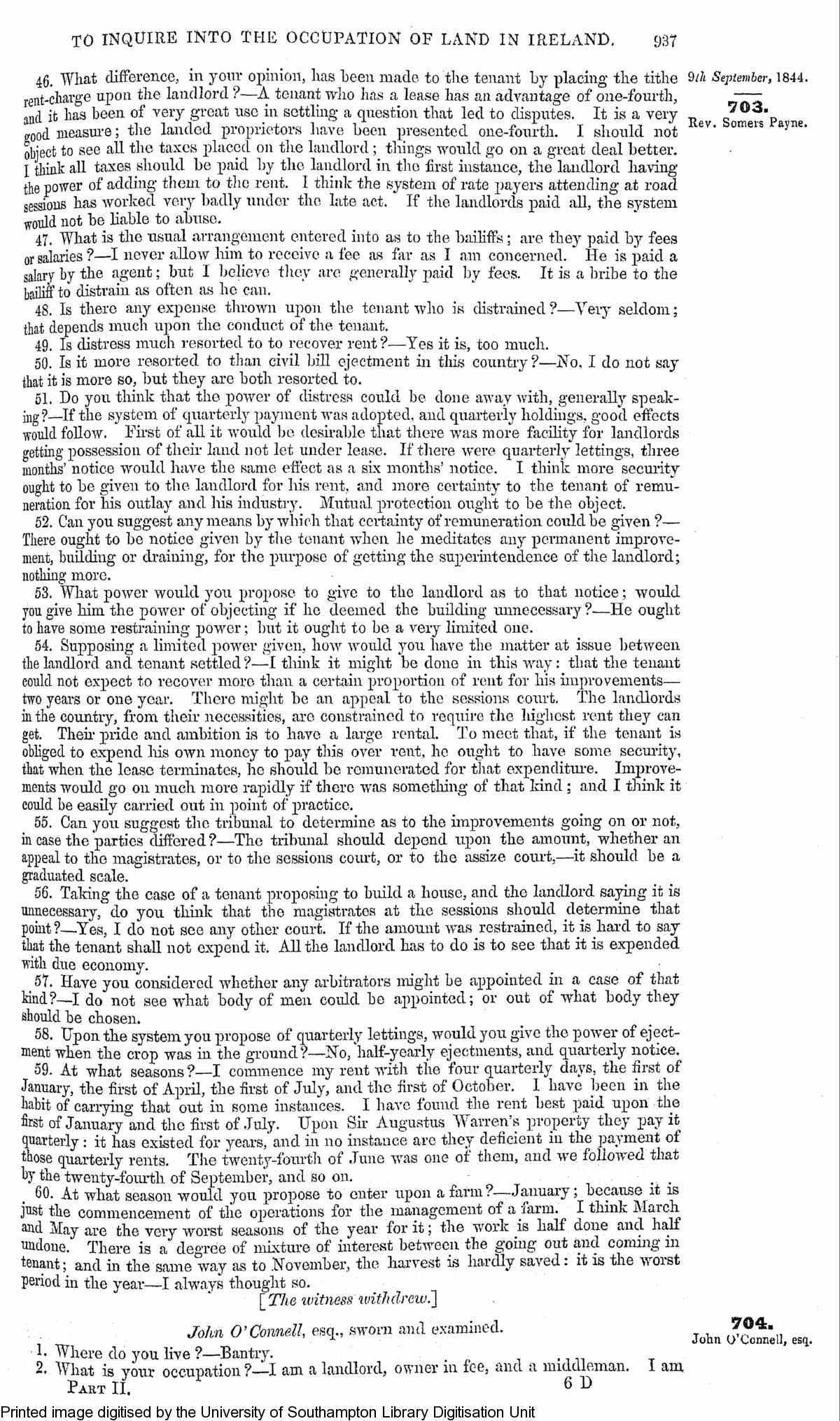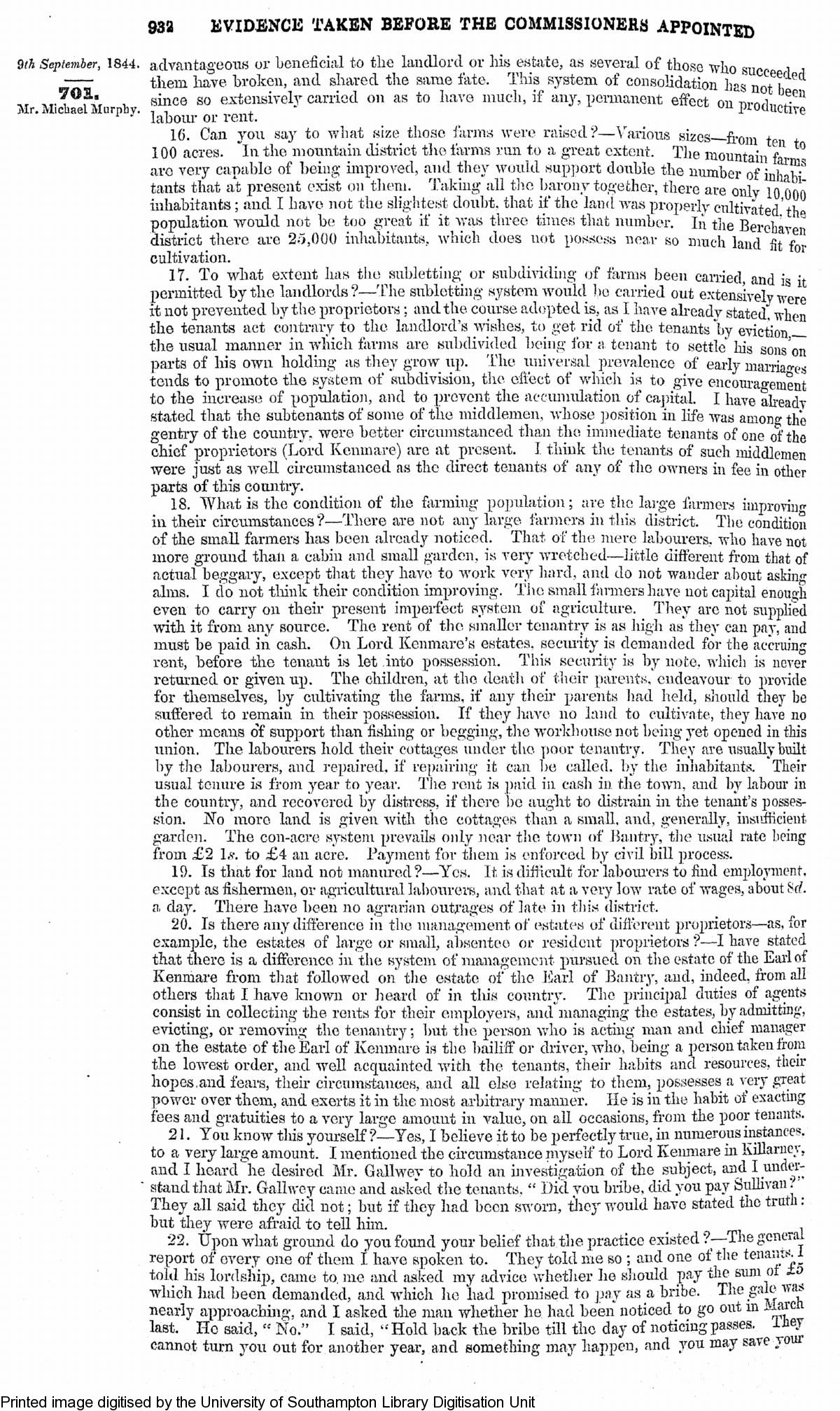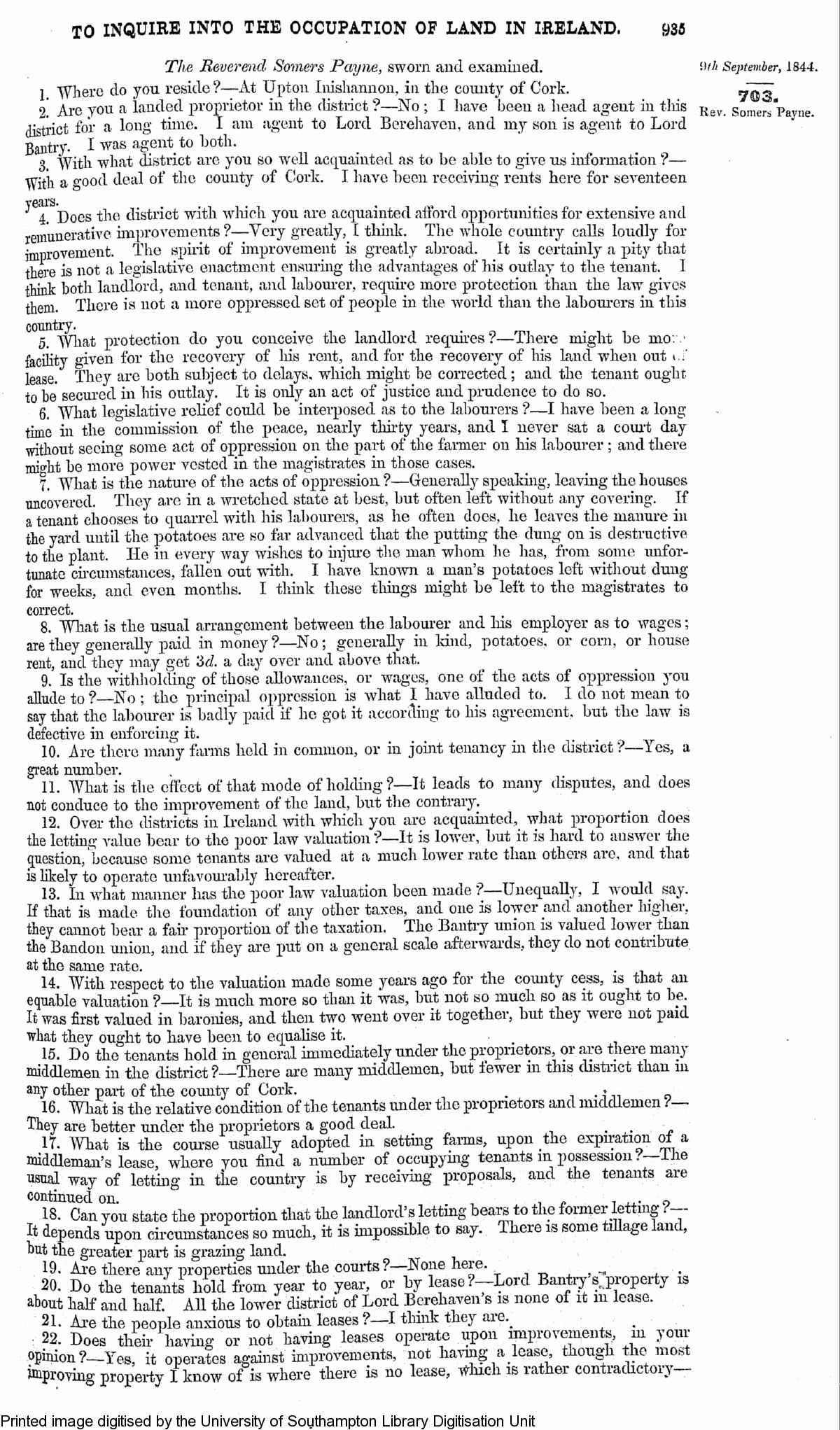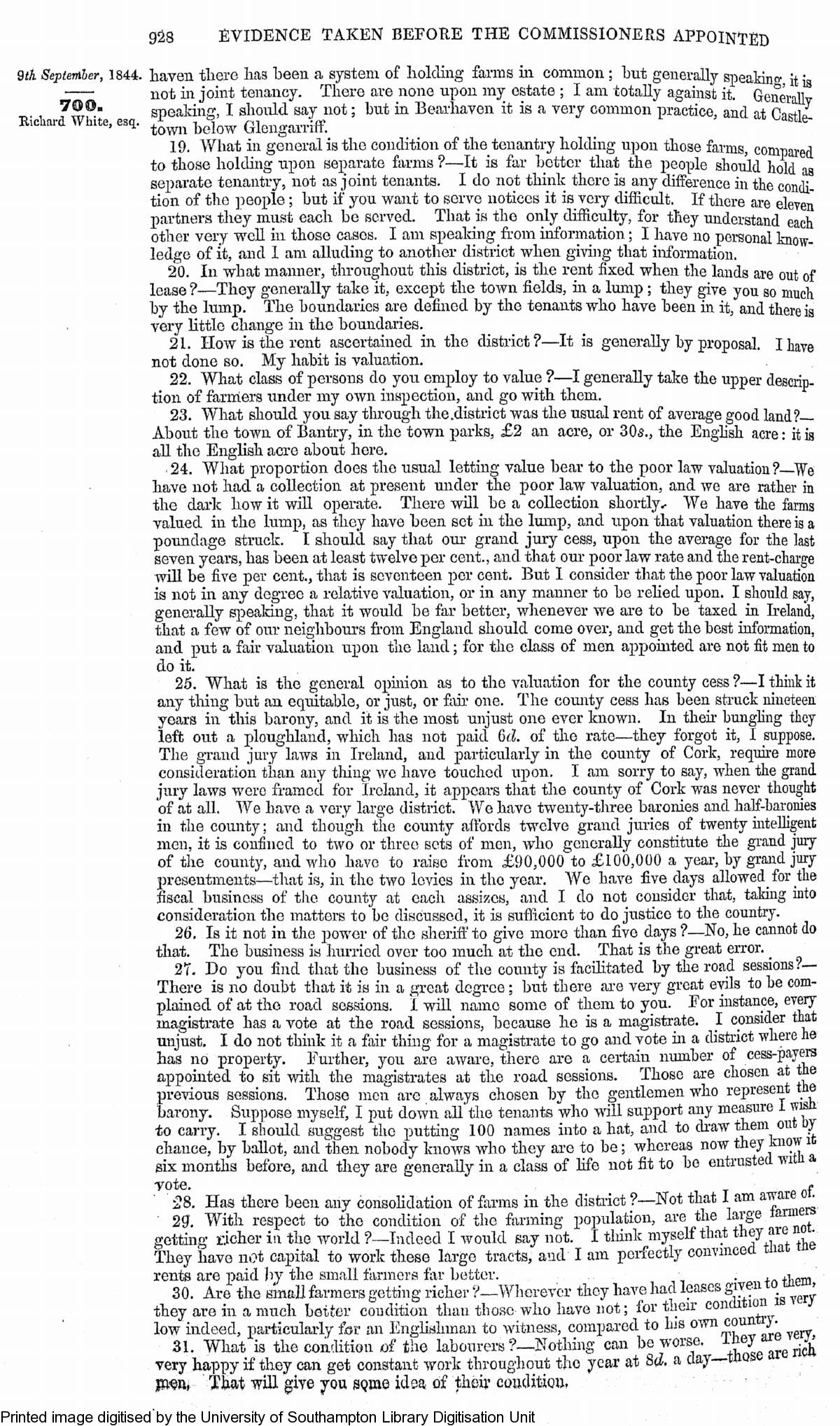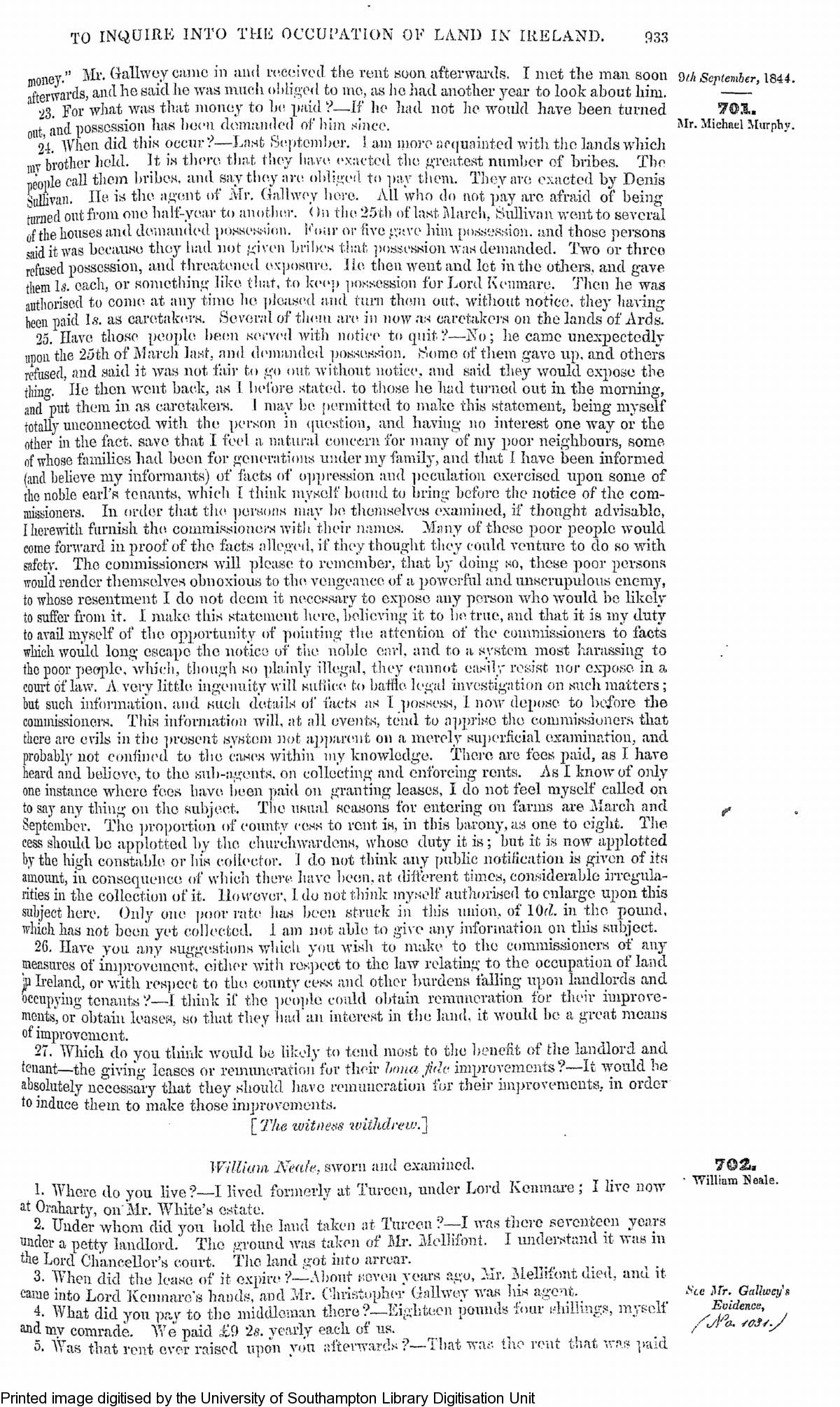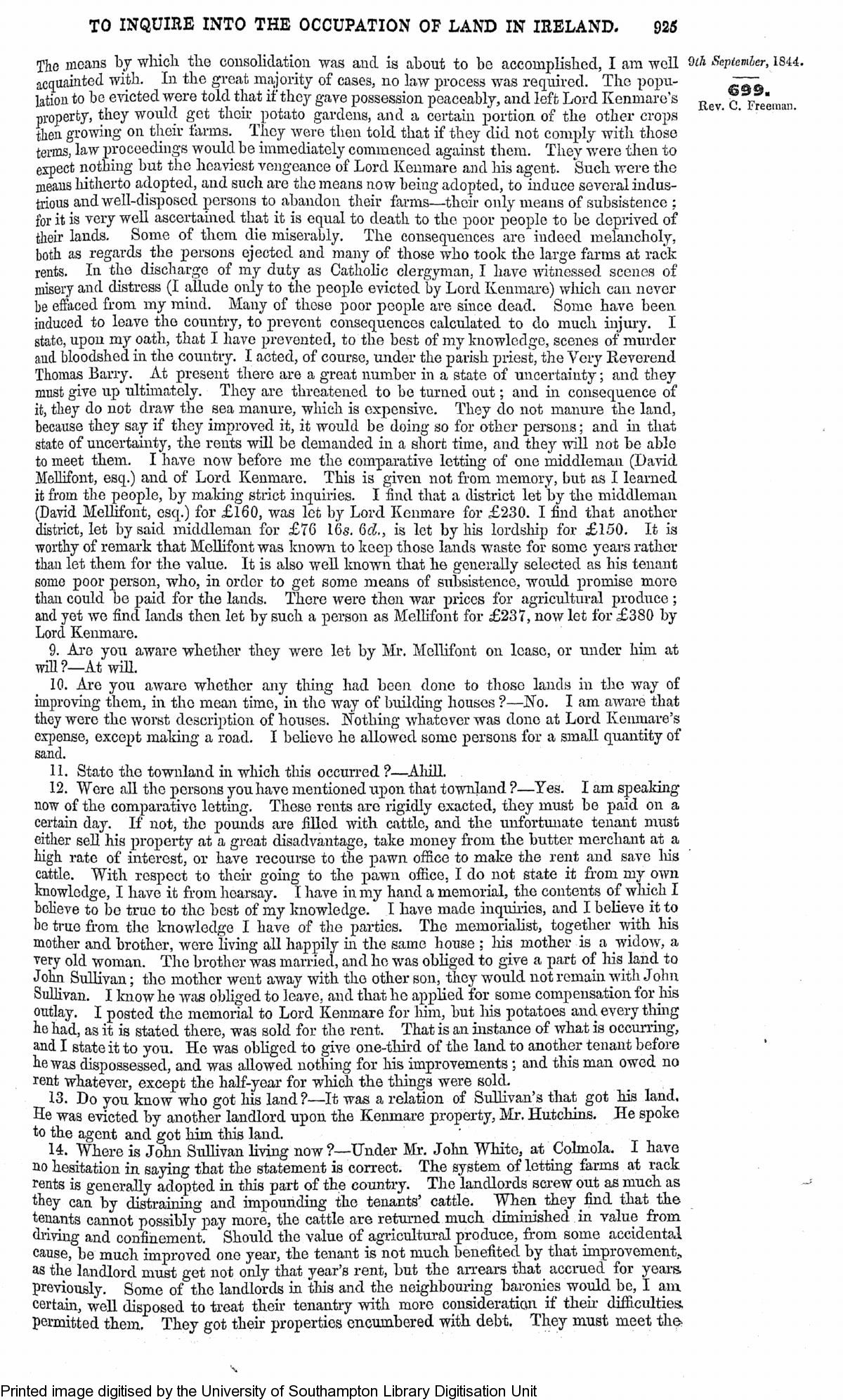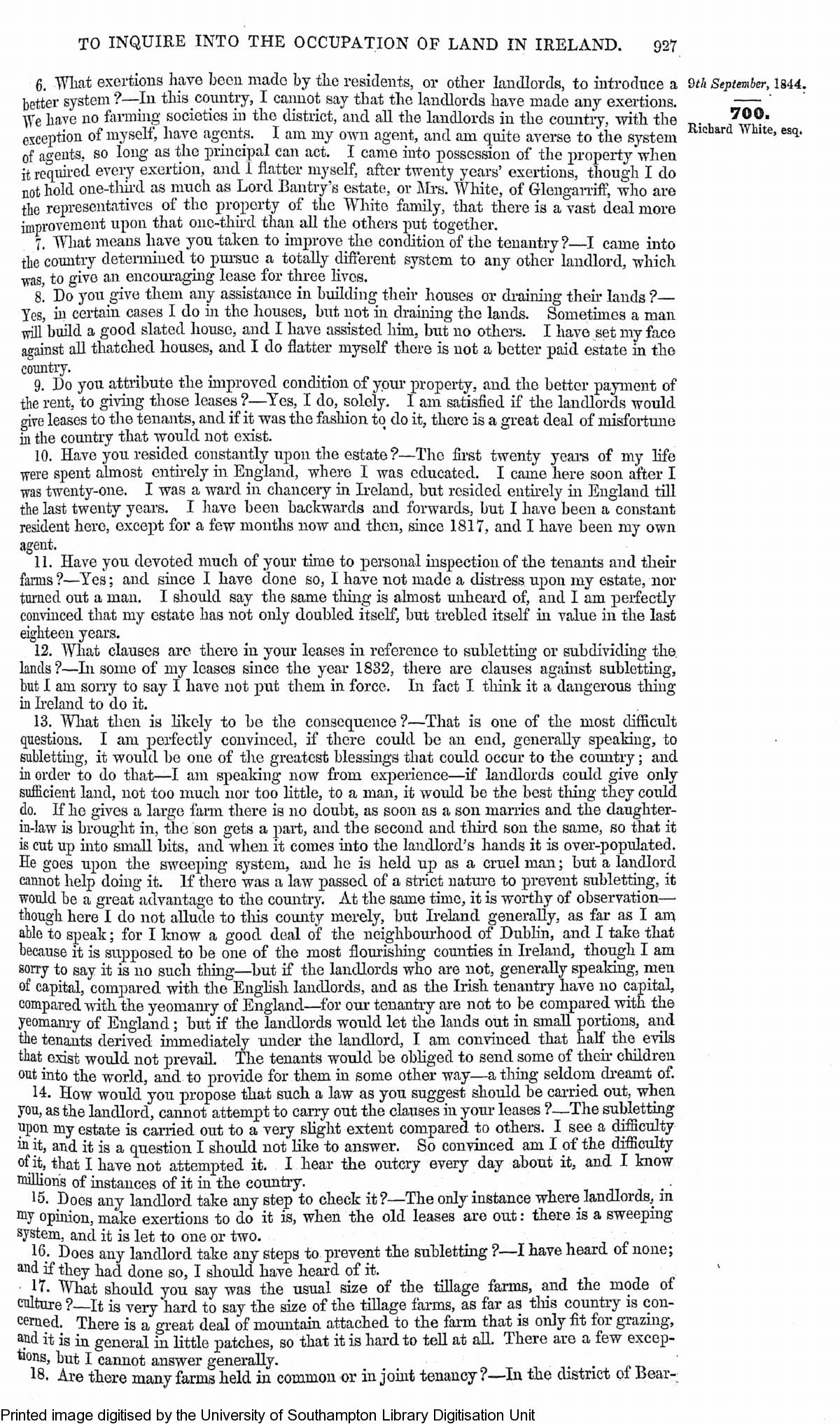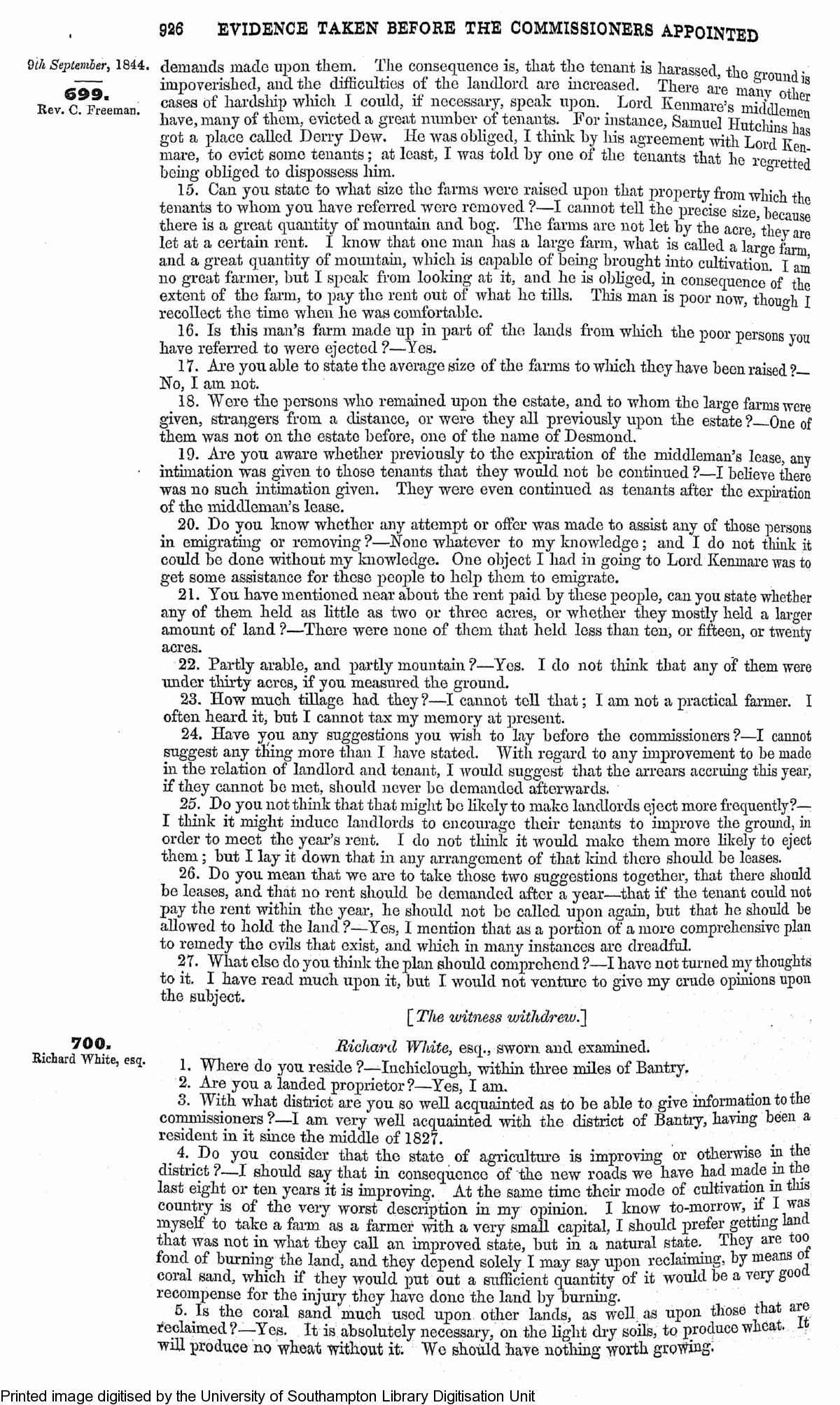
Gill Abbey, Cork inventory 1541 including ‘vicarage’ of Durrus

Tags

,


Inventory Gill Abbey (Cork) 1541

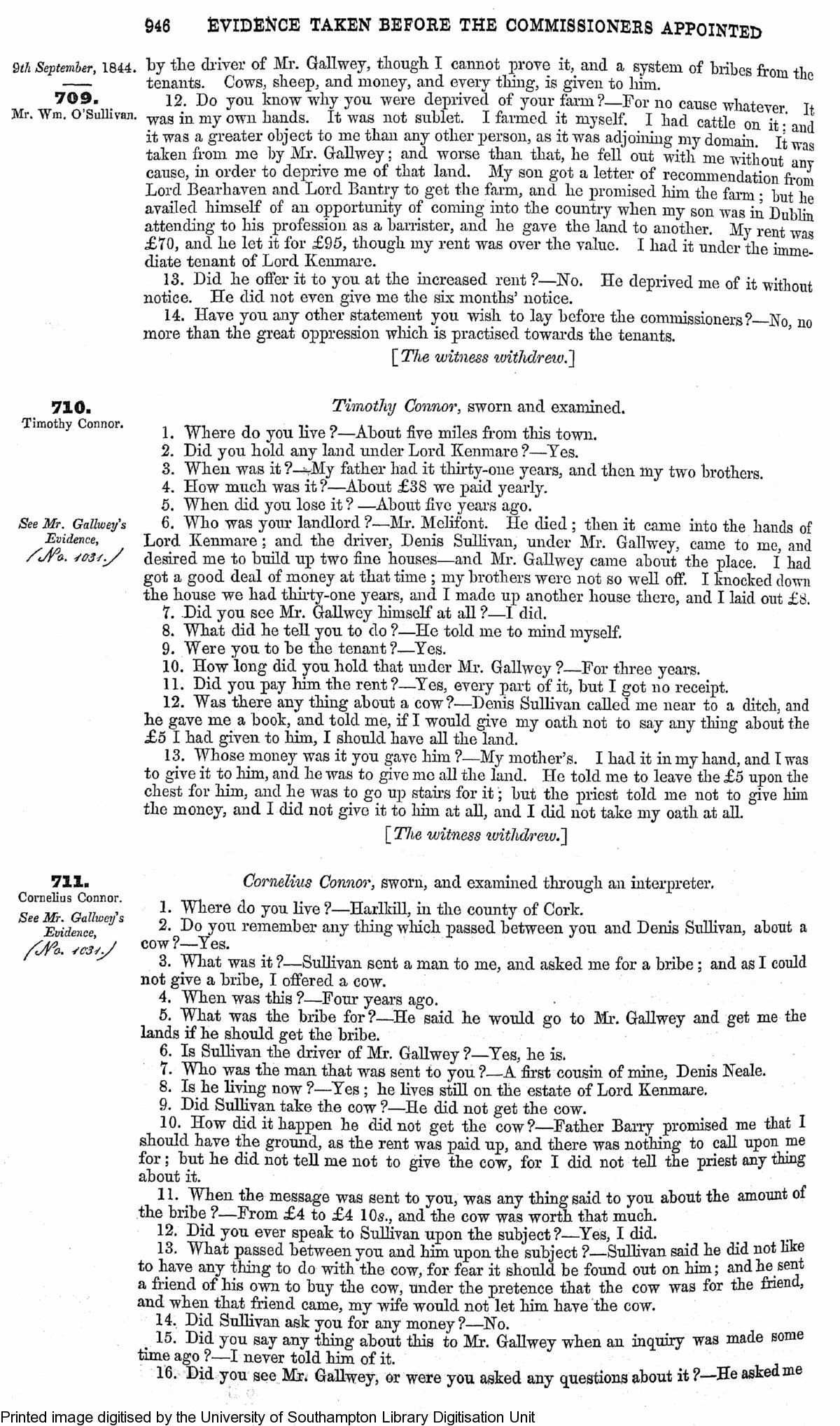
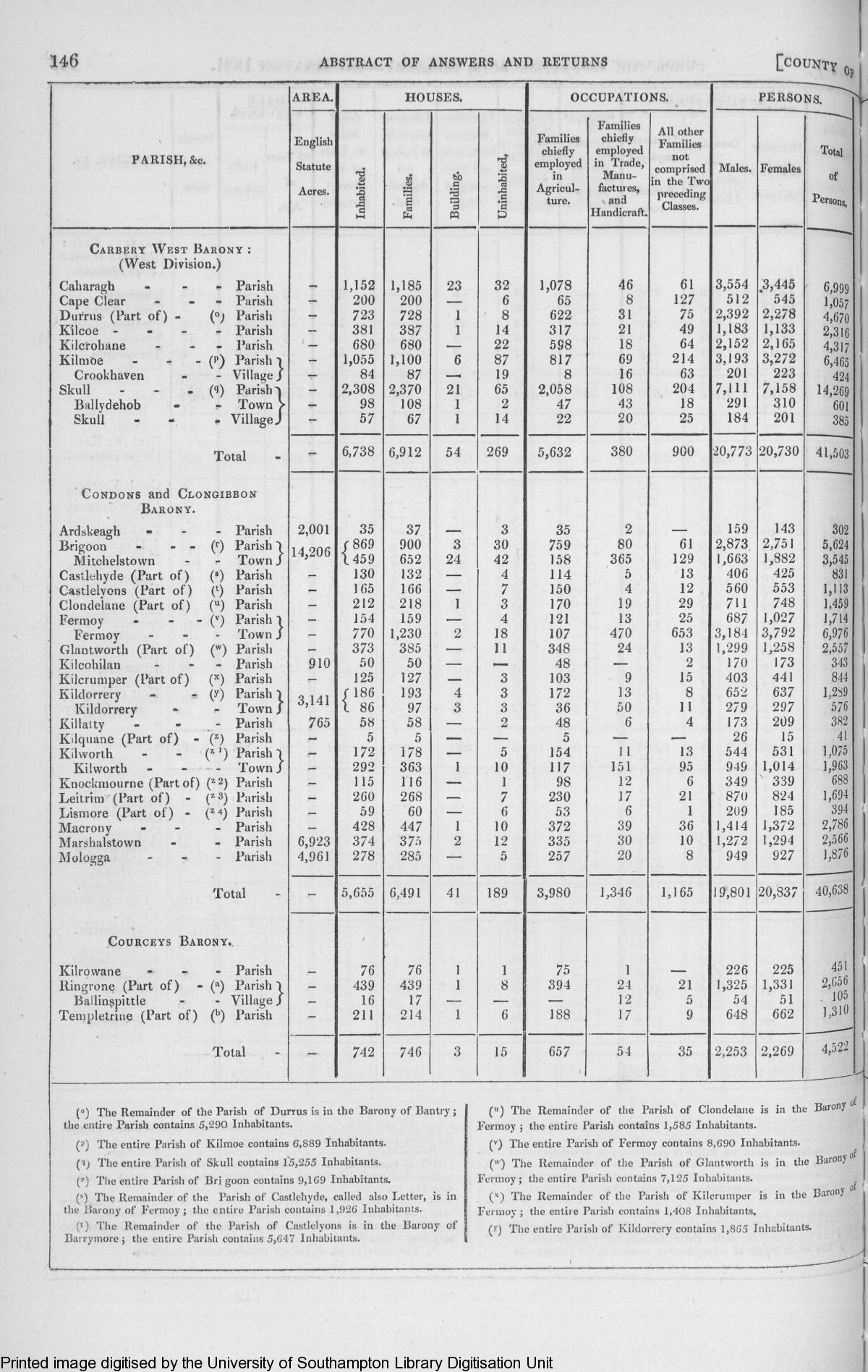
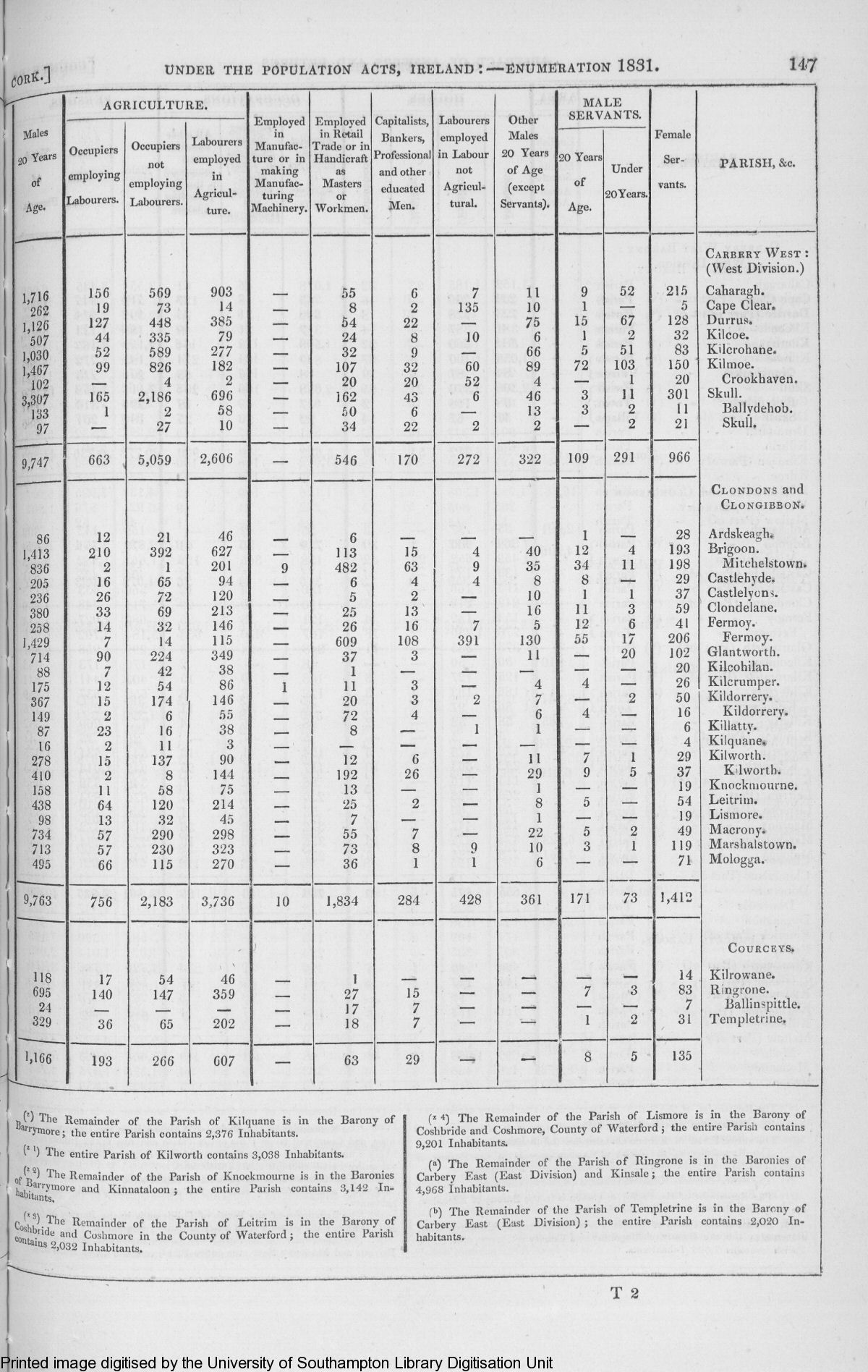
Against the background of the Tudor appropriation of religious property an inventory of property belonging to Gill Abbey was conducted in 1541.  A panel of Cork jurors were appointed and numbered, Walter Gallwey, John and Richard Skiddy, Patrick and William Coppinger, William Meade and Richard Gould (these were representative of old Cork Merchant families some of possible Viking decent).  They included under ‘Durruske’ the vicarage of Durrus which also belonged to St. Catherines in Waterford.   In the 1580s the parsonage and vicarage had a valuation of 40s. A further list was compiled in 1588 and the valuation of Durrus vicarage was £1. 6s. 8d. and ‘Kylcroghan’ was £2. 10s. 0d. in 1591.

It might be noted that the Coppinger family at one stage owned the Durrus town land of Ballycommane

Evanson Family and Estates, Durrus

Tags

, , ,


Magistrate, Nathaniel Evanson, 1675, probably Castledonovan.

Gearhameen, originally McCarthy Castle then Durrus Court c 1740:

https://www.google.ie/maps/place/Gearhameen,+Co.+Cork/@51.6261045,-9.5602202,15z/data=!4m2!3m1!1s0x48459e28b250bf55:0x4d51dc58ca16170f

Ardgoeena from c 1740 still there in ownership of Gallagher family,remnants of probable stable still extant main wall of old house collapsed some years ago.   Well behind stables.:

https://www.google.ie/maps/place/Ardogeena,+Co.+Cork/@51.6122037,-9.5242018,15z/data=!3m1!4b1!4m2!3m1!1s0x48459fb8f9c0f5c7:0x7554b4a819007bca

Friendly Cove/Murreagh probably from c1790:

https://www.google.ie/maps/place/Murreagh,+Co.+Cork/@51.6143184,-9.5429485,15z/data=!3m1!4b1!4m2!3m1!1s0x48459fcb224cb7e3:0x5f4e5fce7b3b237d

There were two large crypts at the sea ward side of St. James Church of the Evansons until a cemetery clearance in the 1930s. The family in England had paid for their maintenance from the late 19th century and when after WW2 they discovered the loss of the tombs with all their detail they were most upset.

Branches of the family were sugar planters and slave owners in Barbados. They expanded into Bandon and Cork where Charles was Mayor. It is difficult to distinguish whether at time the were based in both Bandon and Durrus the house name ‘Brookfield’ may be either Durrus Court or a Bandon House.

Evansons named in 1837/8 enquiry into fictious votes Cork City
Evanson, the Rev. Alleyn Four-mile Water yes
Evanson, Nathaniel Four-mile Water no
Evanson, Charles Four-mile Water no
Evanson, Abraham M. Four-mile Water no
Evanson,William B. Four-mile Water yes
Evanson, Richard Tonson Ardoguma yes
Evanson, Nathaniel Friendly Cove
Evanson, Nathaniel jun. Four-mile Water no

Earl of Bandon (Bernard) Estate, Durrus, Co. Cork

Tags

, ,


From University College Galway, database.

The Bandon estate recovered Durrus lands on the expiration of the Evanson’s lease c1850.  The estate extended from Crottees to Brahalish and included the village which the estate rebuilt c1850.
In the Bandon Estate papers there is a lease from Bernard to Charles and Nathaniel Evanson and Jeremy Cough(l)an (probably of Carrigmanus/Crookhaven their cousin) of lands at Gerhameen, Coller, Rathmore and Rosavanny for 31 years from the 30th October 1727.
The estate donated the site of the present Catholic church c1899.
In the late 19th century Lord Bandon used Durrus Court as a summer residence. The family maintained gamekeepers in areas such as Coomkeen, the Burke family.

The rental registers of the estate covering the Durrus lands from 1850 were rescued some years ago and are currently in the Cork Archives Institute but are awaiting restoration.

FAMILY: BERNARD (EARL OF BANDON)

Family name: Bernard
Family title: Earl of Bandon
Description:
Estates:
  • Bernard – According to Burke, the first Francis Bernard settled in Ireland around the time of Elizabeth I. In 1703 Francis Bernard purchased parts of the Earl of Clancarty estate in the barony of Muskerry, including Ballytrasna. A descendent, also Francis Bernard, was created Viscount Bernard and Earl of Bandon in 1800. The Earl of Bandon’s estate in county Cork amounted to almost 41,000 acres in the 1870s. At the time of Griffith’s Valuation, the estate was among the principal lessors in the parishes of Skull, barony of West Carbery, Ballinadee, Ballymoney, Desertserges, Kilmaloda, Kinneigh, barony of East Carbery, Ardfield, Castleventry, Kilkerranmore, Kilmeen, Lislee and Ross, barony of Ibane and Barryroe, Liscarroll and Buttevant, barony of Orrery, Kilmore, Knockavilly, barony of Kinalea, Athnowen, barony of East Muskerry, Caherlag, Carrigtohill, barony of Barrymore and Ballymodan, barony of Kinalmeaky. A Colonel Bernard, resident in India, was the owner of over 900 acres in county Waterford in the 1870s. The Waterford estate derives from Anne Bernard, who married Robert Foulkes of Youghal in the eighteenth century but bequeathed her estate to her nephew Stephen Bernard.

Carbery/Evans/Evans-Freke Estate, Durrus

Tags

, , , , , , , , ,


In 1700 Bishop Dives Downes visited Durrus and said the landowners included Colonel Freke presumably Ballycomane.

Match 670 from ‘CSO/RP’
NAI REFERENCE: CSO/RP/SC/1821/299
TITLE: Letter from 6th baron Carbery, County Cork, reporting his efforts to maintain law and order in area
SCOPE & CONTENT: Letter from John Evans-Freke, 6th baron Carbery, Castle Freke, Rosscarbery, County Cork, to Chief Secretary’s Office, Dublin Castle, concerning the state of his neighbourhood and emphasising his own vigilance in keeping the peace. Urges government to adopt ‘vigorous’ measures to prevent the ‘contagion’ from spreading to all parts of Ireland. Comments that, ‘Until the Irish are taught to obey the Laws by a due sense of religious and moral Obligation they must be made to obey them by coercive means – This is a most difficult Country to govern’.
EXTENT: 1 item; 4pp
DATE(S): 30 Nov 1821
DATE EARLY: 1821
DATE LATE: 1821

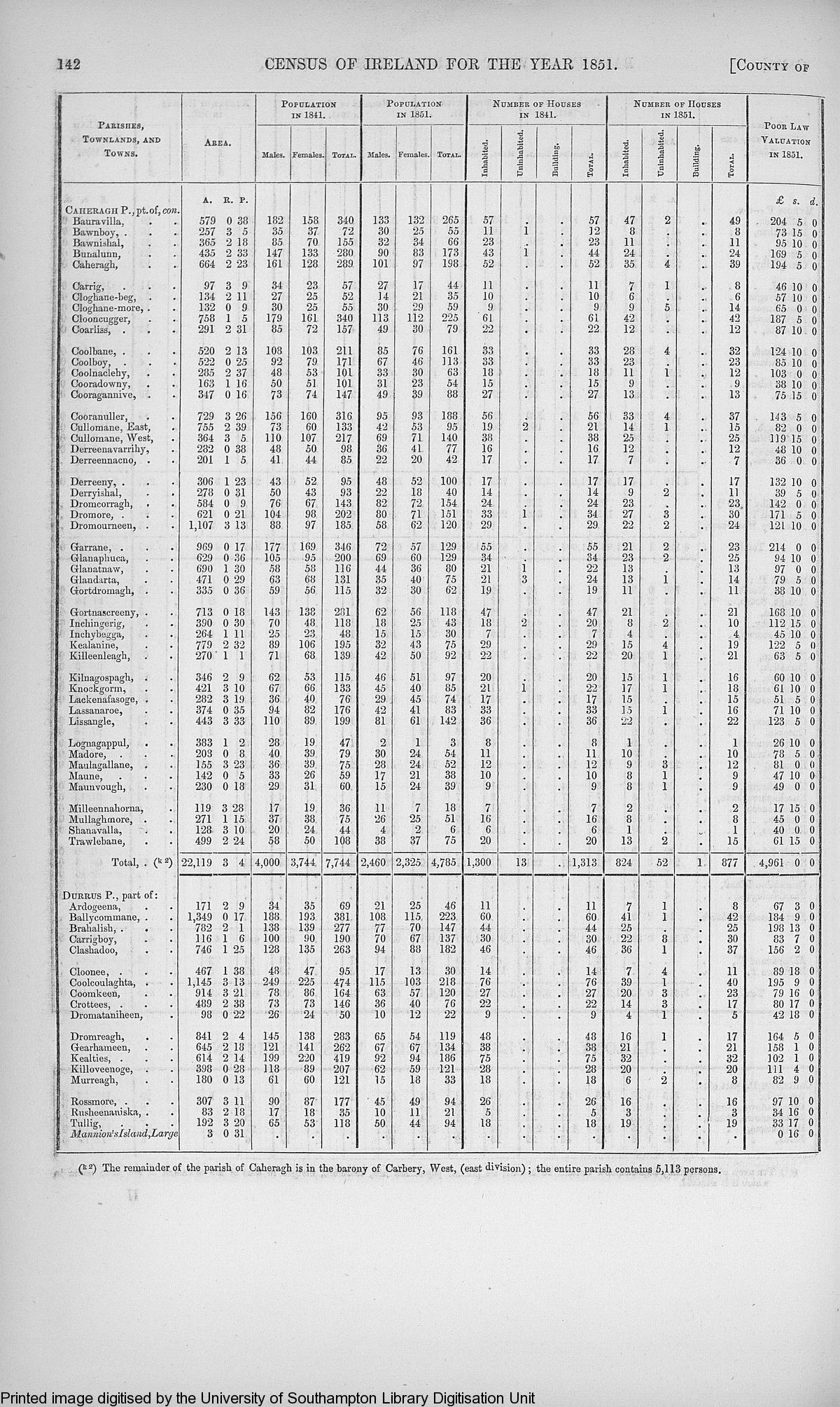
For Map of Ballycomane, Durrus, c1770

https://durrushistory.wordpress.com/2012/08/17/ballycomane/

From University College Galway, database, includes town land of Ballycommane.

FAMILY: EVANS/EVANS-FREKE (BARON CARBERY)

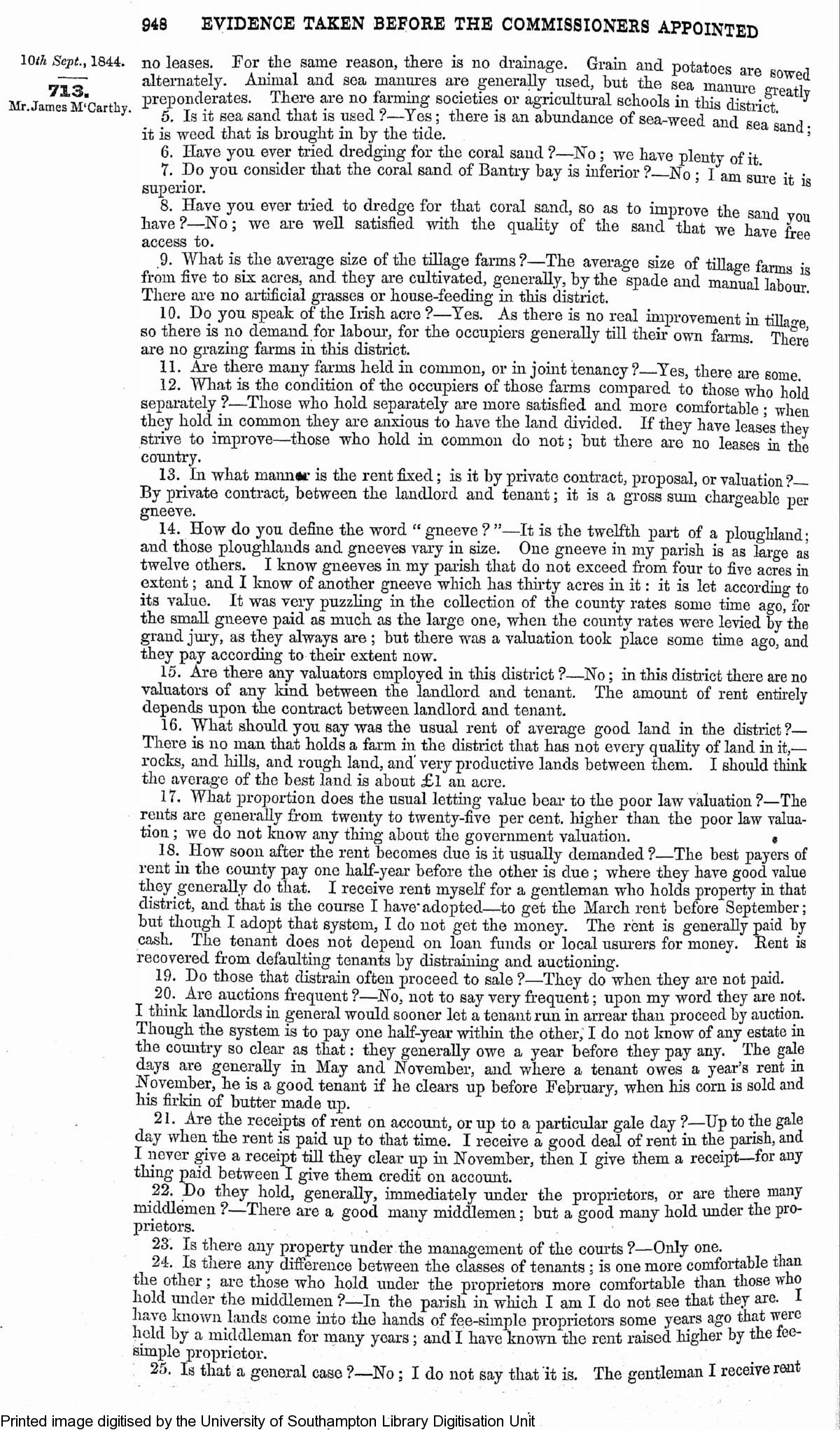
The National Library, Map Collection has a map of the estate of family compiled by Thomas Sherrard it included the townland of ‘Ballycomaune’ (Ballycomane), Durrus and was done in 1788.  It shows the townland with a ford at the road to Bantry presumably where the former creamery was.

Ballycomane is divided into:

West 210 acres arable, mountain

Middle 266 acres arable and pasture

Mountain 318 acres coarse mountain

Lissheen 305 acres arable and mountain

East 213 acres arable and mountain.

The total area is 1,315 acres, and the total family estate is 15,276 acres.  The maps are beautifully produced in a black hue.

In addition local townlands bordering on the estate are listed with the owners and are

Glenlough, Knowlavard (Moulivard) and Clonee Hugh Hutchinson.  West Clonee Arthur Hyde.  Kielreagh and Dromreagh Rt. Hon. Lord Riversdale.  Carrigboy, Dromtineheen and Crutteee (Crottees), James Bernard.

Family name: Evans/Evans-Freke
Family title: Baron Carbery
Description:
Estates:
  • Evans/Evans-Freke – John Evans, of Welsh descent, settled in the city of Limerick in the early 17th century. In 1666 George Evans was granted 2,376 acres in counties Limerick and Tipperary. The Right Honourable George Evans of Bulgaden Hall, parish of Uregare, county Limerick, married Mary, a daughter of John Eyre of Eyre Court, county Galway in 1679. Their eldest son George was created Baron Carbery of Carbery, county Cork, in 1715. He married Anne Stafford of Blatherwick. The descendants of their eldest son George eventually died out in the main line and it was the grandson of their second son John Evans Freke of Bulgaden Hall, who eventually became the 6th Baron. He was succeeded by his nephew George Patrick Evans Freke in 1845. In the early 1850s Baroness Carbery, widow of the 6th Baron, held land in the parishes of Athneasy, Kilbreedy Major, Uregare, baronies of Smallcounty, Coshma and Coshlea, county Limerick, and in the parish of Athnowen, barony of East Muskerry, county Cork. In the 1870s Lord Carbery of Castlefreke, county Cork, owned 13,692 acres in county Cork, 2,724 acres in county Limerick and much smaller estates in counties Kilkenny and Queen’s county [county Laois]. The Parliamentary Return of 1876 records Stewart and Kincaid as his land agents. The representatives of Lady Carbery’s estate were among the principal lessors in the parishes of Dromdaleague, Durrus, Tullagh, barony of West Carbery, the parishes of Kilkerranmore and Rathbarry, barony of Ibane & Barryroe and the parishes of Ross and Fanlobbus, barony of East Carbery, at the time of Griffith’s Valuation. Lord Carbery was among the principal lessors in the parish of Kilbrittain, barony of East Carbery, at the same time. The estate was sold by John, Lord Carbery, in 1919

O’Donovan estates, Muintervara

Tags

, ,


O’Donovan Magistrates:


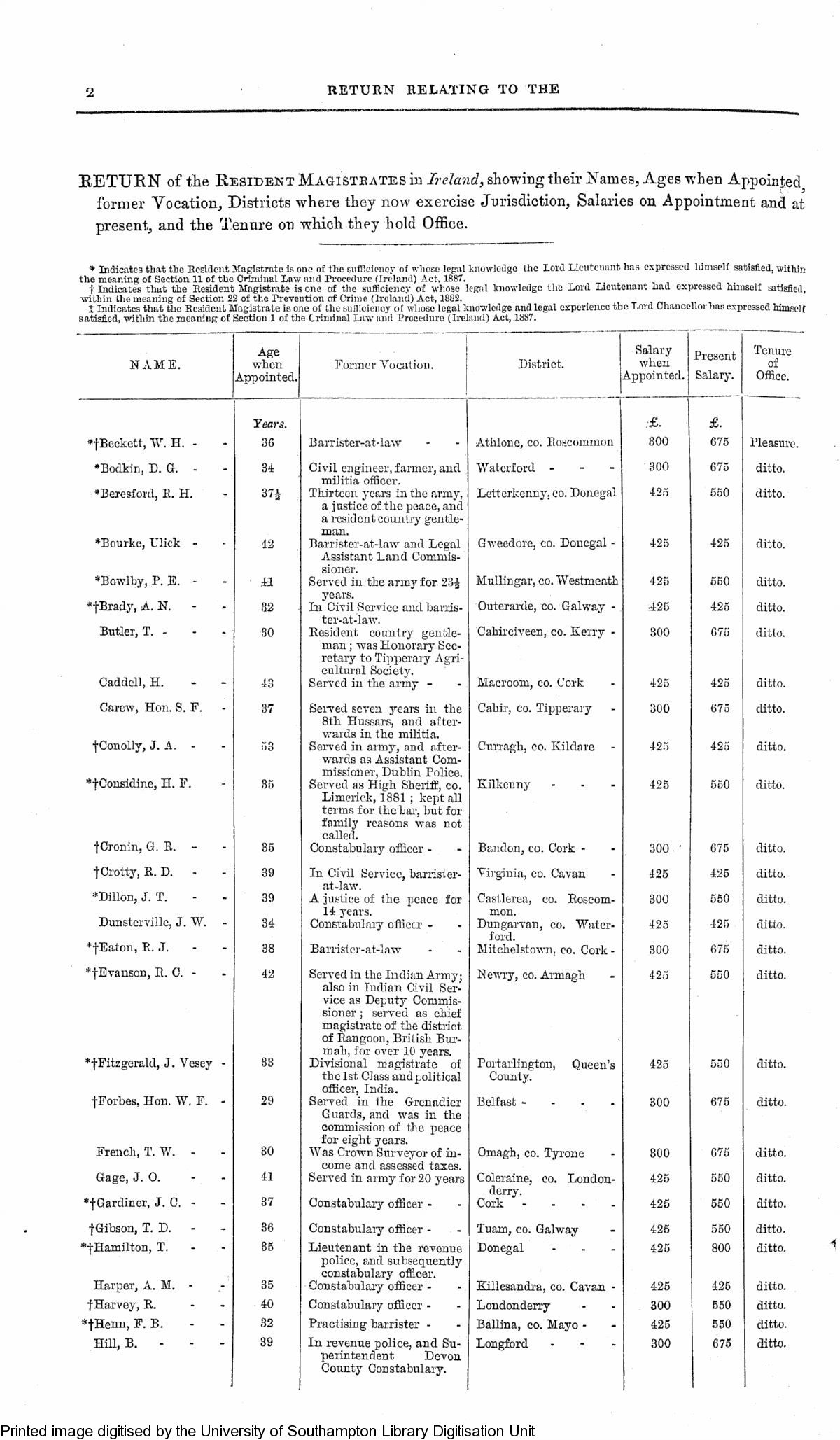
Richard O’Donovan 1818, Fort Lodge, Durrus listed 1838 , son Richard Esq. O’Donovan Cove, and Jane d Alexander O’Donovan, Squince.  Father of Richard O’Donovan JP History  Brother of Timothy and Dr. Daniel O’Donovan JP  He married Maria O’Sullivan on the 15th October 1833, her father was Murty Og, of Ceimatringane House, Castletownbere. She died at Fort Lodge, aged 52, voted 1850 for Denis Galwey as High Constable for Ibane and Ballyroe (Clonakilty).

Richard O’Donovan 1845, Glenlough Cottage, Durrus listed 1838 , son Richard Esq. O’Donovan Cove, and Jane d Alexander O’Donovan, Squince.  Son of Richard O’Donovan JP and Maria O’Sullivan, nephew of Timothy and Dr. Daniel O’Donovan JP , listed 1854.

Timothy O’Donovan (1790–1854), 1818, O’Donovan’s Cove, in ruins 1875, Durrus, listed 1838 , son Richard Esq. and Jane d Alexander O’Donovan, Squince.  Correspondent with Antiquarian Dr. John O’Donovan re O’Donovans of Carbery.  Brother of Dr O’Donovan and Richard O’Donovan JP and uncle of Richard O’Donovan JP.  Landlord and political organiser. Member Election Committee, Rickard Deasy, Clonakilty (later Attorney General) 1855


Timothy O’Donovan (1790–1854), 1818, O’Donovan’s Cove, Durrus, listed 1838 , son Richard Esq. and Jane d Alexander O’Donovan, Squince.  Correspondent with Antiquarian Dr. John O’Donovan re O’Donovans of Carbery.  Brother of Dr O’Donovan and Richard O’Donovan JP and uncle of Richard O’Donovan JP.


https://docs.google.com/document/d/1ZvT84JCKTIhMqqZjJsF_AUJLH8S820ksObykwOty3wg/edit?pref=2&pli=1


Signature of Timothy O’Donovan, Magistrate/Justice of the Peace 1830 for Tithe Aplottments Caheragh (The O”Donovans are buried in the old Caheragh graveyard)

Takes a little time to open, details of title, tenancies, plan of estate.

Sale O’Donovan Estate, Durrus, Landed Estate Court 1876“>The above photographs are of Fort Lodge, an O’Donovan house near the residence of O’Donovan’s Cove.  The property is owned by Mr. Ryan.   Of that original residence nothing remains but the stones may have been used in the building of the house and farm buildings of the Cronin family which are adjacent to the site.

From University College Galway Database on landed estates.

ESTATE: O’DONOVAN (KILCROHANE)

Associated Families

Description

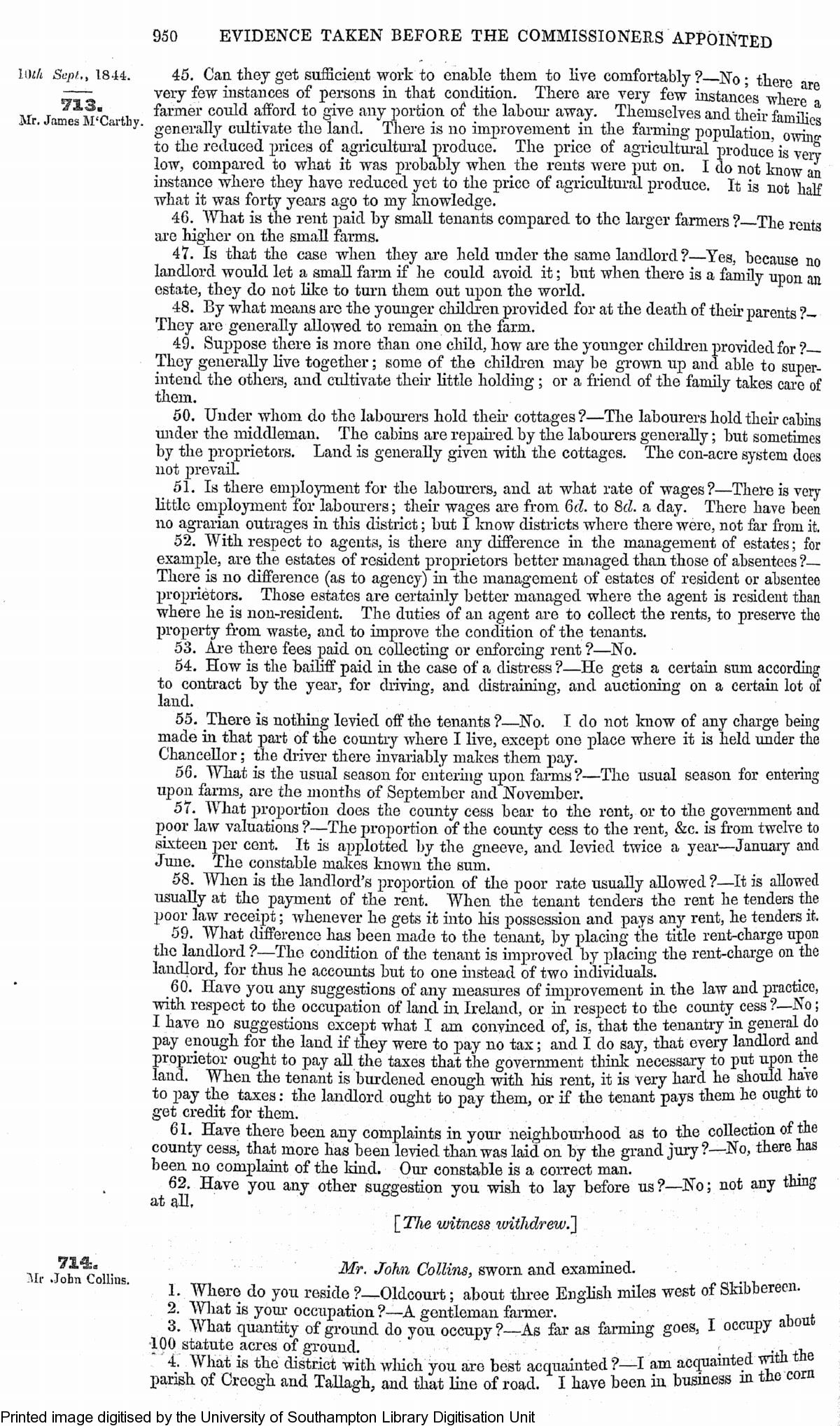
The estate of Timothy O’Donovan, of O’Donovan’s Cove, parishes of Durrus and Kilcrohane, amounted to almost 2000 acres in county Cork in the 1870s. The estate of the late Richard O’Donovan, MD, amounted to over 1600 acres in county Cork at the same time. Both were among the principal lessors in the parish of Kilcrohane, West Carbery, at the time of Griffith’s Valuation. Richard and Daniel O’Donovan held townlands in the parish of Inchigeelagh in 1851. In June 1869, over 1400 acres at Coolmountain, owned by Richard Donovan and others, was offered for sale in the Landed Estates Court. The sale notice indicates that the lands were held on lease from members of the Tonson, Lords Riversdale, estate since 1832. Kathleen O’Donovan, executrix of Richard O’Donovan, offered over 1000 acres of this estate for sale in the Landed Estates Court in July 1876. The original lease, dated 1752, was between the Bishop of Clonfert, Kilmacduagh and Kilfenora and William Roberts. Timothy O’Donovan had taken up the lease in 1844.

Houses

House Name / Description Townland Civil Parish PLU DED Barony County Map Ref
Fort Lodge (H2676)
John B. Gumbleton was leasing this property to Richard Donovan at the time of Griffith’s Valuation, when it was valued at £7. In 1837 Lewis noted it as the seat of R. O’Donovan. It is now in ruins.
Tullig Durrus Bantry Glanlough 29 West Carbery (West) Cork Lat/Lon:51.60798
-9.60537
OSI Ref:
V888407 Discovery map #88. OS Sheet #130.
O’Donovan’s Cove (H2687)
Timothy O’Donovan held this property in fee at the time of Griffith’s Valuation, when it was valued at £12. Lewis recorded it as the seat of T.O’Donovan in 1837. It is described as “in ruins” on the 25-inch map of the 1890s and no trace remains now.
Rossnacaheragh Kilcrohane Bantry Glanlough 29 West Carbery (West) Cork Lat/Lon:51.60523
-9.60960
OSI Ref:
V885404 Discovery map #88. OS Sheet #130.

Archival sources

  • National Archives of Ireland: Landed Estates’ Court Rentals (O’Brien), Donovan, 11 June 1869, Vol 94, MRGS 39/045, (microfilm copy in NUIG)
  • National Archives of Ireland: Landed Estates’ Court Rentals (O’Brien), O’Donovan, 7 July 1876, Vol 125, MRGS 39/056, (microfilm copy in NUIG)

Contemporary printed sources

O’Donovans

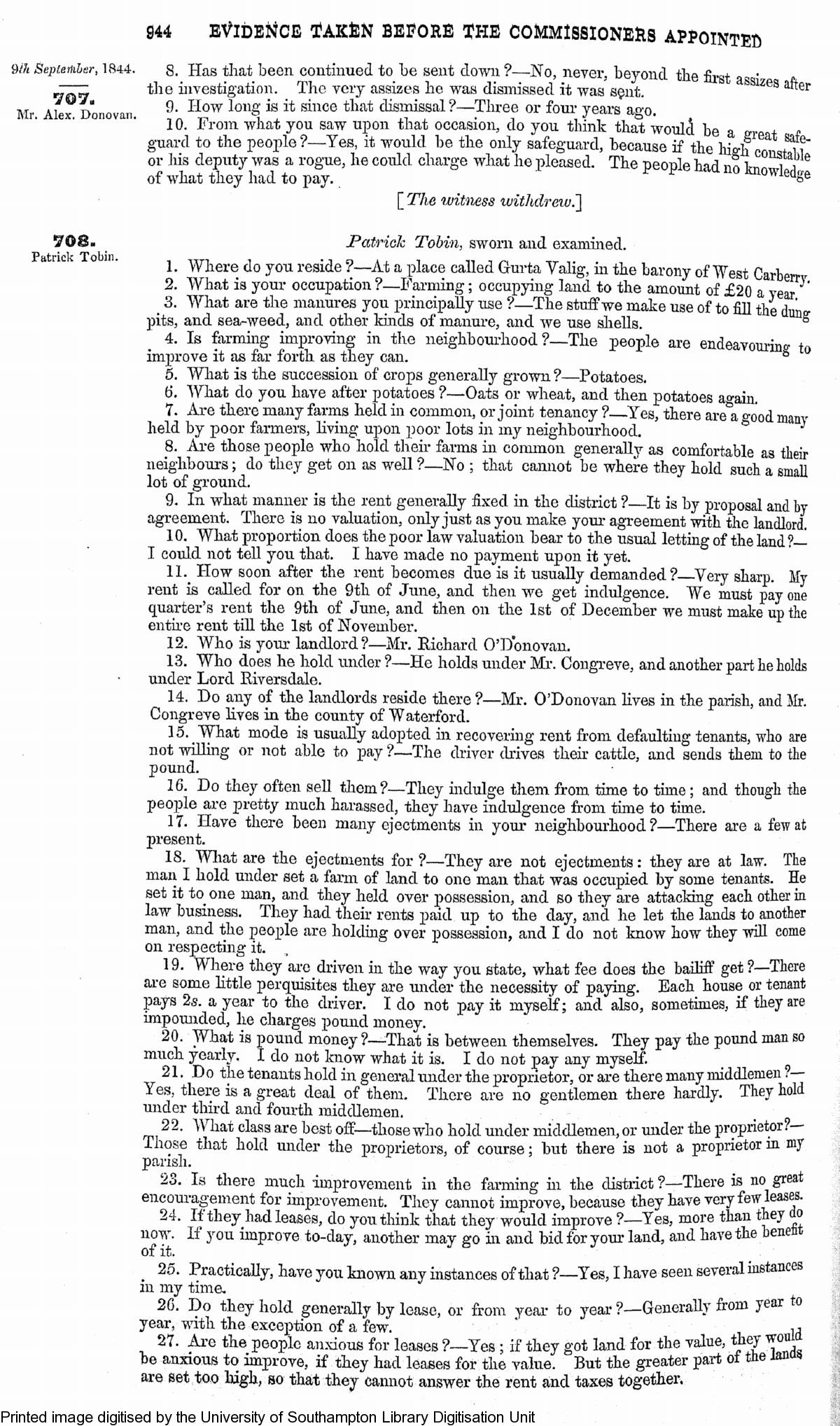
In 1615, Donnel O’Donovan, of Castledonovan, surrendered and was regranted large areas of lands including an interest in Brahalish.  The Antiquarian Dr John O’Donovan, In his translation of ‘The Tribes of Ireland’ by Aonghis O Dalaigh 1852 states that  Timothy O’Donovan of Ardahill, Kilcrohane descends from Keadagh Mor the youngest son of O’Donovan, by the daughter of Sir Owen MacCarthy Reagh was himself the purchaser of Adrahill, Carravileen, Derryclovane and Faunmore.   The ancestor the Richard O’Donovan, Fort Lodge, Dr Daniel O’Donovan, Ahakista, and Timothy O’Donovan, the Cove took this large tract of land for 999 years from a Mr Congreve, of Mount Congreve, Co Waterford an undertaker and they still pay some small head rent.

One of the O’Donovan’s of Clann Lochlainn purchased land in fee simple at Ardahill, Kilcrohane but there is now no trace of his fine residence and imposing iron gates. He may have been Ceadach who was formerly in Inchoclogh, Bantry. In 1794 Timothy O’Donovan of this branch was born and married Mary daughter of Daniel O’Sullivan of Reendonegan House, Bantry and Hanora O’Connell.   She was the aunt of Daniel O’Connell who secured Catholic Emancipation in 1828.  Possibly around 1850 Ceadach O’Donovan helped in improvements to the Kilcrohane Church. He also built a water mill near the house and the mill race is still extant. By the mid 19th Century the family had fallen on hard times with two brothers in the Workhouse in Bantry.   Some of the stones from the house may have been used to build outhouses near Fitzpatrick’s Pub.

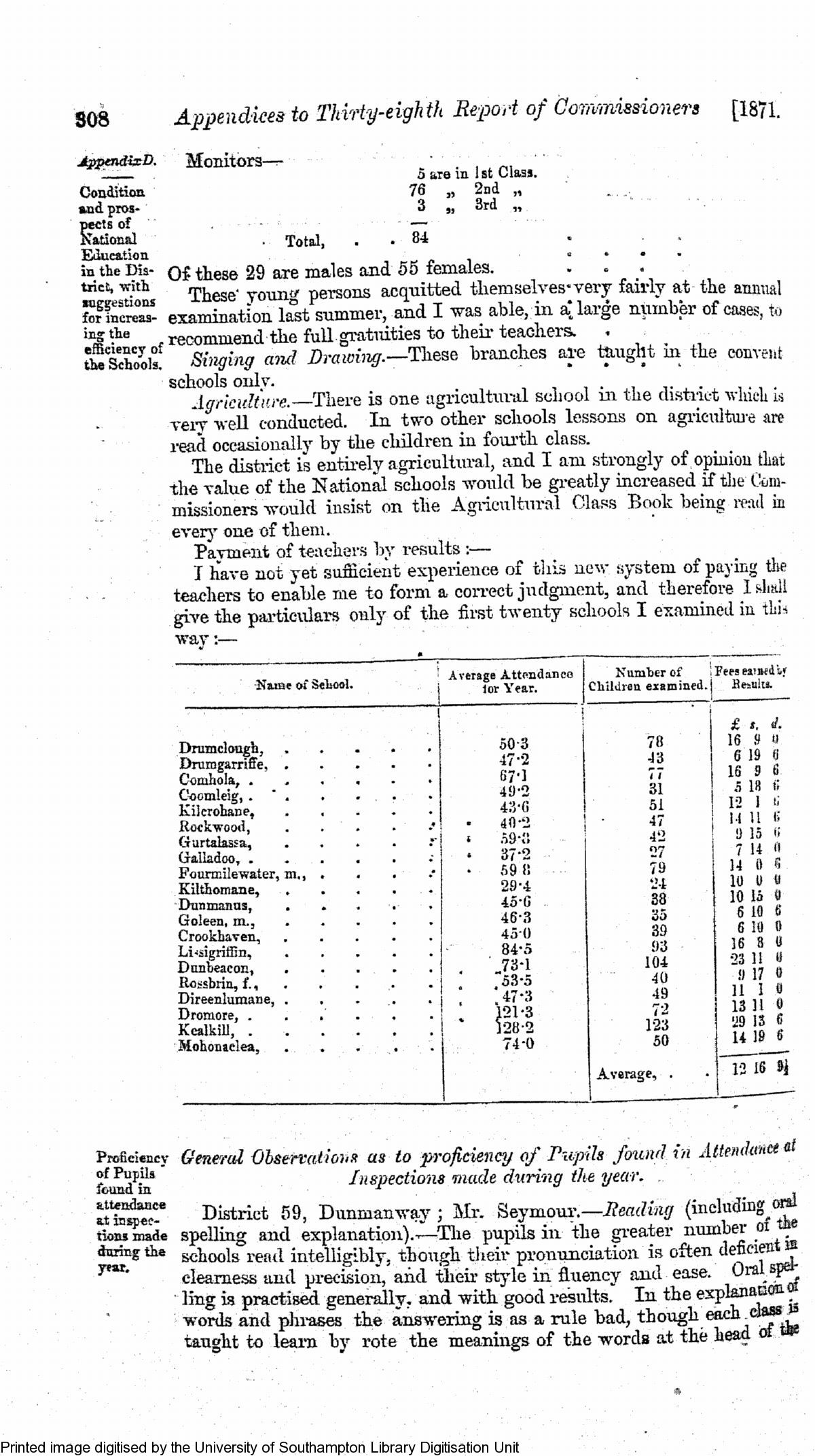
Another O’Donovan of Clann Cathail held land by way of 999 year lease from Lord Riversdale and their house was at Tullig, O’Donovan’s Cove near Ahakista.   Timothy O’Donovan of this branch was born in 1790 and was succeeded by his nephew Richard.  Timothy was a Justice of the Peace in 1823 which was unusual for a Catholic who were only then a handful of the approximately 300 JPs in Co Cork at the time. In a Petty Session case in Castletownbeare involving Father Healy and a parishioner Sullivan in January 1845 his written opinion was sought by Resident Magistrate Litttle and he was described as a worthy Catholic Magistrate well known in the west Riding of Cork as a most practical and enlightened Catholic in this case on the discipline and conduct of Roman Catholic Clergymen.

Richard built the house Fort Lodge, now in ruins c 1830.  He in turn married Maria O’Sullivan on the 15th. October 1833; her father was Murty Og, of Ceimatringane House, Castletownbere. She died at Fort Lodge, aged 52, on the 27th May 1865 the death reported by her son Richard. The Antiquarian Dr. John O’Donovan states that a Richard O’Donovan of this family entered the Irish College in Toulouse, joined the Irish Service in France and became a well known swordsman.  In this house Diarmuid (Jerry) a’Duna, the last of the MacCarthys of Glennacroim near Dunmanway spent his final days ending an ancient line.  He was 83 when he died and was the great grandson of Teige-an Duna the last to reside in the McCarthy Castle in Dunmanway.

Richard O’Donovan, O’Donovan’s Cove is listed in Pigot’s Directory of 1824 and at Fort Lodge in Slater’s Directory of 1846 as well as one of Co. Cork’s property owners in 1870. Daniel O’Donovan of Ahakista cottage (now demolished) is listed in Slater 1862 as a Magistrate.    Tim O’Donovan appears in Thom’s Directory 1862 at O’Donovan’s Cove; he is buried in a large tomb in the old graveyard in Caheragh.  Tim O’Donovan is listed as a Magistrate of O’Donovan’s Cove, Carrickbui, and Bantry.   It is believed that the O’Donovans had sub-tenants such as the O’Brien family of Glenlough.

The various O’Donovan houses are shown in the 1842 Ordnance Survey Maps of 1842 all surrounded by trees and outbuildings at Ardahill Kilcrohane, O’Donovan’s Cove and Fort Lodge.  The Cove had extensive wooded grounds going down to the sea and a gate lodge on the northern upper road. Guy’s Directory of 1875 refers to Timothy O’Donovan deceased and the Cove ‘almost in ruins’.  By 1913, the Cove was shown in ruins and Ardahill had disappeared. There is now no trace of the house at Ardahill or O’Donovan’s Cove, apart from wide iron gates on the main Durrus-Ahakista road near the Cove.  These gates are known as the white gates and in former times were a gathering place for fisherfolk.   Mrs Cronin of the nearby farm (b.1917) says that the house was demolished and she heard that the Cronin farmhouse was partly built with stones from that house.  She said there were stables and kennels for the hounds.  She understood that the O’Donovans were good landlords. The orchard nearby is still extant.  There is another later O’Donovan house on higher ground (Fort Lodge) last occupied by Miss Kate O’Donovan (known as Miss Katty) who in the 1870s had 1,243 acres. She is remembered as being very generous and in the end indigent, apart from the old age pension.  She died in 1928 and is buried in the Durrus Chapel Graveyard with her cousin Jane Blair.  In her latter years the house had part of the roof missing and on the night of her wake the timbers of the house were removed for fire wood.  The house was lost and forgotten until Mr Ryan purchased the property and in 2006 removed the ivy revealing the full extent of that property.

Other branches of the O’Donovan family conformed to the Established Church from the end of the 17th Century and in the 1730s and intermarried with the Townsend, Beecher and Tonson families among others and their descendants gave service in the Royal Navy, British army and Colonial Service.

In the 18th and 19th centuries families in West Cork and South Kerry such as the O’Donovans, the O’Leary, the O’Sullivans, the McSweeneys and McCarthys managed to acquire leasehold interests as middlemen and had close ties of marriage with each other. These interests may be seen in the Tithe Aplottments, Ordnance Survey Name Books and Griffith Valuations. In 1857 Peter McSwiney, the last lineal descendant of the Mac Finin Dubh O’Sullivans (a 400 year old title), after his eviction from Dereen in Kenmare by the Lansdowne Estate, spent his last days in Ahakista Cottage. Richard O’Donovan, O’Donovan’s Cove is listed in Pigot’s Directory of 1824 and at Fort Lodge in Slater’s Directory of 1846 as well as one of Co. Cork’s property owners in 1870. Daniel O’Donovan of Ahakista cottage (now demolished) is listed in Slater 1862 as a Magistrate.    Tim O’Donovan appears in Thom’s Directory 1862 at O’Donovan’s Cove.  Tim O’Donovan is listed as a Magistrate of O’Donovan’s Cove, Carrickbui, and Bantry.  In the late 19th century newspaper obituaries mention ‘old established’ or ‘long tailed’ families and families such as the Dillons and Cantys of Clashadoo, O’Sullivans of Crottees, the Rosses and Kingstons of Glendart are so described and may be indicative of a slightly lesser social stratum then the petty landlord families.


Burke’s Peerage 1871 has a piece on the O’Donovans of O’Donovan’s Cove pointing out their ancient lineage and family relations.

Pococke visit to Bantry 1758, smallpox, leprosy A Bandon doctor, John Milner Barry had noted in 1800 that exposure to cowpox gave immunity to smallpox; this was known in West Cork as ‘shinach’ from ‘sine’ the Irish word for teat.

Tags


Famine 1741 Richard Pococke 1758

Richard Pococke (1704 – 1765), the English-born Bishop of Ossory, travelled in the South West and in 1758 wrote the following in respect of Bantry ‘the chief support of the town is fish and a clandestine import of French brandy’ and re the Beara area, which would have a reference to the other peninsulas ‘they keep their sheep and black cattle ….  They can legally send no fish to France but salmon, all the rest goes to Spain’…… ‘They make huts to keep their cattle in the mountains in summer and live on new churn milk’. …… ‘Girls married at the  age of thirteen  and boys at sixteen’   … ‘People here live to a great age, notwithstanding they drink drams immoderately, living on fish and potatoes, and the sea air makes this custom less pernicious … but then smallpox is very mortal among them, supposed to be owing to the first died.   A sort of scurvy also, which sometimes come near to a leprosie, is frequent among them.   They have great notions of fairies in all these parts, which take the place of witches in other places. …..    All workmen, though only making a ditch or thrashing, do all sorts of handicraft in a private house or fields, had the shameful custom these parts more than any other, of holding a string or something across the way and begging money’.  In relation to smallpox it might be noted that in 1842 the Ordnance Survey Name Book for Rooska mentions a disused sand pit since levelled formerly used to bury smallpox victims.  A Bandon doctor, John Milner Barry had noted in 1800 that exposure to cowpox gave immunity to smallpox; this was known in West Cork as ‘shinach’ from ‘sine’ the Irish word for teat.  There were outbreaks of fever in the mid-1740s, 1762, 1771 and a major epidemic in 1800, 1801  There was a reputed church at Kilhanagan, between Altar and Dunmanus which had a leper’s window.

Barytes Mines Derreenlomane, (Doirín na Lomán: Little Oakwood), Ballydehob, West Cork.

Tags

, , , ,


https://www.google.ie/maps/place/Derreennalomane,+Co.+Cork/@51.5863811,-9.5281993,15z/data=!3m1!4b1!4m2!3m1!1s0x48459f1017e6ba6b:0x2600c7a7bb4c0372

Dereenlomane Barytes Mine

This was originally worked as a copper mine by the Rev. Traill of Schull, assisted by Captain William Thomas in 1840 and they sold 19 tons of copper.  They discovered barytes or barium sulphate, a heavy white mineral, used for paint, papermaking for which in the 1850s there was a limited market.  An early use was by Josiah Wedgewood in the making of pottery.  In 1863 Captain Thomas was chartering boats c 160 tons and shipping the barytes to Messrs Martyn Dennis Liverpool and around 150 people were employed.  That year there was a serious flood which resulted in the mine being non operational for a period.  In 1867 the mine at what was described as Cahirolickaney Mountain was inaccessible and Captain Thomas built a road from the mine to the Dunbeacon Road nearly a mile long in three weeks.  It was marked by a celebration with ‘creature comforts’ in abundance, followed by a dance.  Before the road was built the farmers had to carry sea sand and manure along the line of the rocky bed of a river and scramble up the mountain as best they could with back load on horses, men and women.  The road was called Wilson’s after one of the promoters by Father O’Regan.  There were quite a number of fatalities in the operation of the mine which were mentioned in the local press. 

In 1851, 2,500 tons were raised compared to only 800 tons in three other centres in the former United Kingdom.  The material was washed, dried, crushed and milled.  It was then produced as barytes flour; this was packed into bags and sent to an island jetty in Dunmanus Bay by an aerial ropeway 1.23 miles long.  From 1909, the boats carried coal to Dunbeacon and left with barytes.  During the War men dived there looking for remnants of coal.  Prior to that the ore went by horse and cart to Schull pier. The mine also produced a small tonnage of copper (bornite) and approx 22,000 tons of fine barytes. It was worked by a Liverpool Company controlled by the Roe Brothers; one of the assistant Managers was Mr. Barton.  The mine used to be all lit up at night and it looked like a city.  At its height up to 500 were employed, supervised by Welsh miners. The nembers employed in 1915 were 150 described as highly paid.  Among those who worked there were the father and uncles of Danno Mahony of nearby Derreenlomane the World Wrestling Champion. Bells rang to call the labourers to work in the morning.  A report in 1923 described the treatment of the ore as ‘washing, drying, in a revolving furnace, crushing, rolling between steel rollers and milling’.  In 1917 a major fire caused extensive damage, including the underground workings.  Although repairs were carried out, the mine never recovered its former level of activity. In 1922 the then Department of Agriculture and Technical Instruction reviewed the recent history of the mine and commented on it being burnt down in July 1920.   Mr Lynburn of the Department expressed a hope that in time with a more relaxed regime re explosives it might re open.

A line of timber pylons ran from the mine site down the steep hillside all the way to Dunmanus Bay. The pylons, anchored to triangular concrete-and-stone foundations, supported a continuous aerial rope and a number of cable cars. The system was powered by a gas engine. The foundations are all still in situ and can be followed to the sea.  The ships which carried away the ore landed coal and during the War people dived in the area seeking lumps of coal.

Five hundred men had worked at the mine between 1917-18.  Mine water was pumped by a ‘balanced bob’ with the engine house being sited over the main shaft. The gas engine house was located adjacent to the pump house. The mining company entrusted the job of making ore-bearing cable-cars to a local carpenter cum pit-sawyer named Willie Coakley.  He seems to have played a considerable role in erecting the aerial ropeway system and in weaving wicker cable-cars to transport ore from mine to sea.

Boats landed at a pier of which a buoy still survives. The Atridge, Shannon and Hegarty families from Rossmore across the Bay jointly owned  a fishing boat. They would regularly cross to trade potatoes, vegetables and meat for tobacco and brandy. The Captain was Captain was generally Captain Bousy and afterwards the Attridges were known as the Bousys. It was the custom for the miners to play football at a field near the mine every Saturday afternoon.

On the first trial of the aerial ropeway, a number of baskets were laden with barytes and sent down the steep hill to their destination, a pier at Dunmanus Bay.  From there it was exported to Liverpool, London or Glasgow.   However, on releasing the baskets it was discovered that the braking mechanism on the aerial ropeway had failed. On reaching journey’s end, the run-away cable-cars demolished a portion of the aerial rope and caused extensive damage to the system, presumably several pylons were torn from their foundations.

A local wit composed a poem to commemorate the event – the poem was titled  Coakley’s Apparatus’ One line of the poem describes the wicker basket in euphemism as ‘a donkey who would never have a foal’.

At the Dunbeacon side there was an area of houses now derelict which in the early 20th century was a hive of activity and centre of music and dancing known as the ‘Station Heights’. Many of the families were associated with the mines.

When the mines closed many of the miners went to the coal mines of South Wales or to the USA. One of them was Denis John L O’Sullivan, his father originally from Kilcrohane ran a pub in Durrus, who went to the USA and returned. He had a pub in Durrus Village which is still run by his son Danny.

See the full text of the Official Report here. 

Thackeray visit to Bantry 1842

Tags


From Recollecting John Clarke Sullivan, Nemasket, Mass. USA

http://nemasket.blogspot.com/2010/03/john-clark-sullivan.html

Bantry was typical of Irish towns of the era, with great disparities between the Anglo-Irish population and that of the Native Irish. The great scenic beauty of the region contrasted sharply with the poverty of a large number of its inhabitants. English novelist William Makepeace Thackeray captured this contrast in The Irish Sketch Book of 1842. Describing Bantry a year prior to Sullivan’s birth, Thackeray wrote:

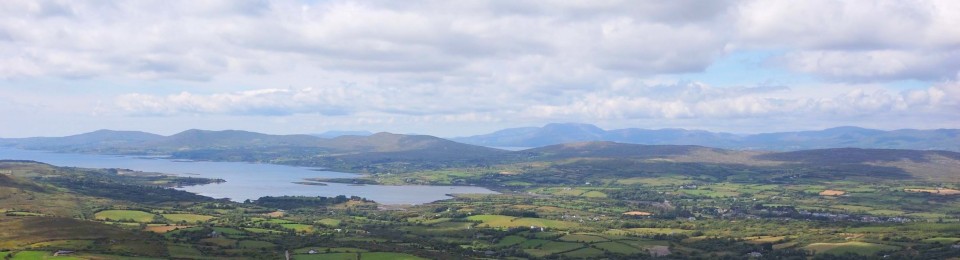
The harbour is beautiful. Small mountains in green undulations rising on the opposite side; great grey ones further back; a pretty island in the midst of the water, which is wonderfully bright and calm. A handsome yacht, and two or three vessels with their Sunday colors out, were lying in the bay. It looked like a seaport scene at a theatre, gay, cheerful, neat, and picturesque. At a little distance the town, too, is pretty. There are some smart houses on the quays, a handsome court-house as usual, a fine large hotel, and plenty of people flocking round the wonderful coach.

The town is most picturesquely situated, climbing up a wooded hill. with numbers of neat cottages here and there, an ugly church with an air of pretension, and a large grave Roman Catholic chapel the highest point of the place. The Main Street was as usual thronged with the squatting blue cloaks, carrying on their eager trade of butter-milk and green apples, and such cheap wares. With the exception of this street and the quay, with their whitewashed and slated houses, it is a town of cabins.

The wretchedness of some of them is quite curious: I tried to make a sketch of a row which lean against an old wall, and are built upon a rock that tumbles about in the oddest and most fantastic shapes, with a brawling waterfall dashing down a channel in the midst. These are, it appears, the beggars’ houses: anyone may build a lodge against this wall, rent-free; and such places were never seen! As for drawing them, it was in vain to try; one might as well make a sketch of a bundle of rags.  An ordinary pigsty in England is really more comfortable. Most of them were not six feet long or five feet high, built of stones huddled together, a hole being left for the people to creep in at, a ruined thatch to keep out some little portion of the rain. The occupiers of these places sat at their doors in tolerable contentment, or the children came down and washed their feet in the water. I declare I believe a Hottentot kraal has more comforts in it: even to write of the place makes one unhappy, and the words move slow. But in the midst of all this misery there is an air of actual cheerfulness; and go but a few score yards off, and these wretched hovels lying together look really picturesque and pleasing.

Despite the insensitivity of many of Thackeray’s comments, they do present a relatively accurate description of Bantry at the time of Sullivan’s birth.

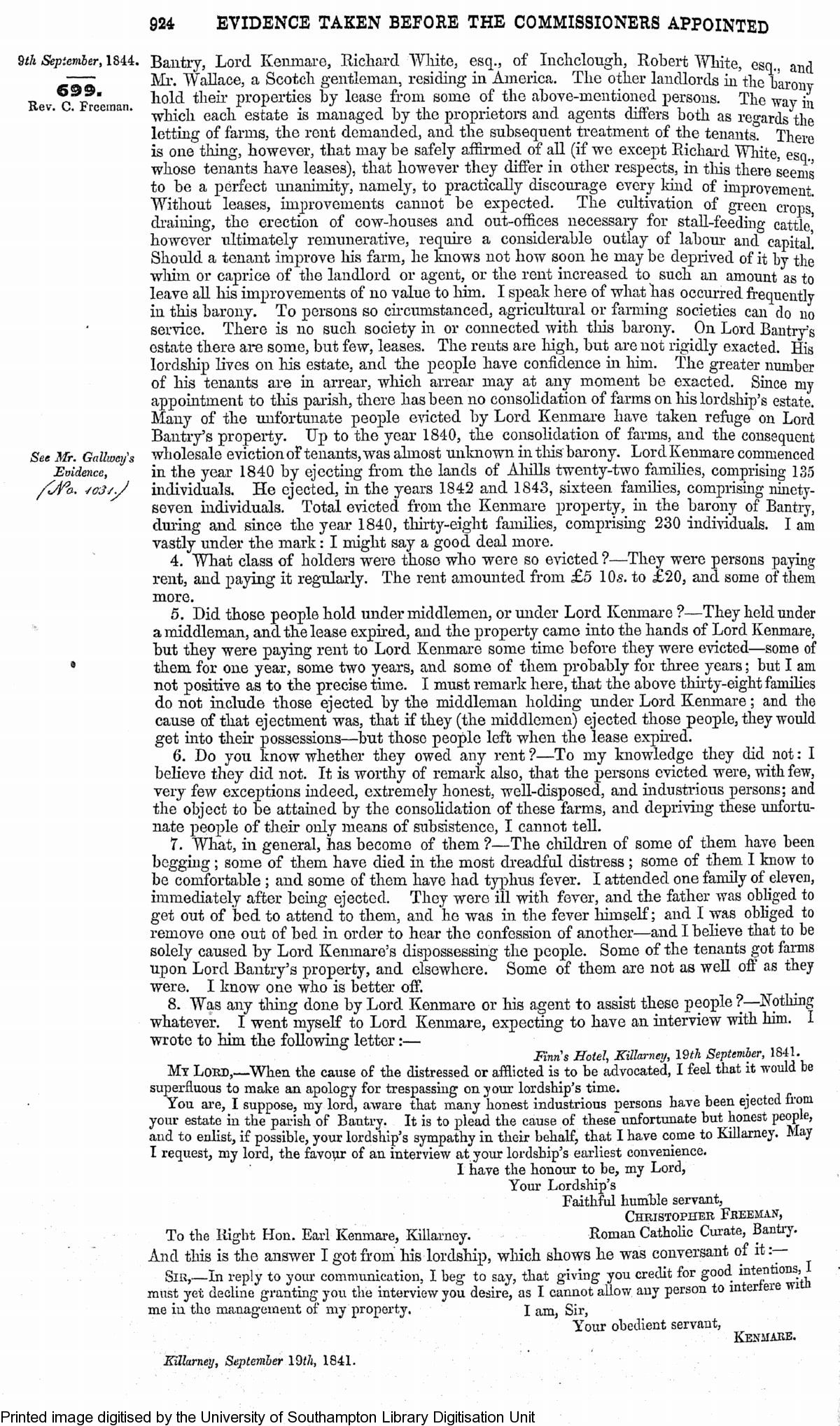
Asenath Nicholson, American Missionary Bantry, 1845.


The pre-famine period was one of extreme poverty for those at the bottom.  Father Mathew said “if you wish to seek out the poor, go to Bantry”…

This is shown in the following extract from the journal of Asenath Nicholson an American Missionary who visited Bantry in 1845 and found a wild dirty sea-port with cabins built upon the rocks and hills, the people going about, not with sackcloth upon their heads, for this they could not purchase, but in rags and tatters such as no country but Ireland could hang out.   I found some deplorable cabins and looking into one, the sight was appalling………I saw a pile of dirty broken straw, which served as a bed for family and pigs; not a chair, table, or pane of glass, and no spot to sit except upon the straw in the corner, without sitting in mud and manure’.