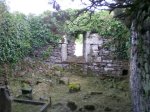
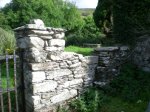
Devotions to Father Barnane, 28th June Moulivard Church, Durrus


https://www.google.ie/maps/place/Maulinward,+Co.+Cork/@51.6357817,-9.4701095,15z/data=!3m1!4b1!4m6!1m3!3m2!1s0x48459fc481b7b42d:0x5a7cb47eb3d1690b!2sGood+Things+Caf%C3%A9!3m1!1s0x4845a00bc351e139:0x479cba81b0121135

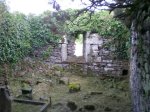
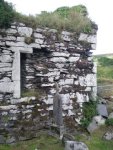
The old Church at Durrus East, Moulivard was probably built around the 14th or early 15th century, contemporaneous with the ruined church in Kilcrohane graveyard. Inside the adjoining graveyard is an incised cross dating from the early Christian period.

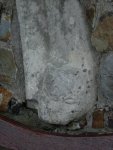
This was found by Jeremiah Hurley, d. 1933, while ploughing their farm near the creamery and then placed in the Church grounds.  Another cross of this type is in Cape Clear and may denote an old monastic settlement.  There had been a monastic settlement at Scartbawn under the patronage of the MacCarthy (Teig Rua Sept) who had a castle in the area at Scart on the present Bantry Cork road.  This moved to Moulivard to take advantage of the water power of Four Mile Water and the mill race is still visible in Ballinvillen (townland of the mill).  Moulivard Church was in good repair in 1639 and in use mid-17th century but according to Maziere Brady (historian of the Diocese of Cork) was in ruins by 1699.  It is said that the White Friars are associated with the site but there is no corroboration of this. There is a local tradition that the church was used in Penal times, when Mass was celebrated from time to time by itinerant friars.  On St John’s Eve (23rd June) an open air mass is celebrated each year.  The stone table used otherwise for coffins is used and in the course of the mass parishioners call out the names of family members buried in the graveyard for prayers. In the 1730s the Franciscans had a limited presence in West Cork the location of their former monasteries.

Rev. Denis Barnane P.P. 1790-1818, from Dunmanway, died 28 June 1834, buried Moulivard, devotion to him continues to this day. Two other priests who were in College with him, Father John Power d.1831 of the Dioceses of Ross reputedly had supernatural powers having a ‘solus’ light and Father Holland. Extracts from the Statutes of the Diocese of Cork show that he was absent from the Diocesan Synod – 09/07/1817, during the Episcopacy of Bishop John Murphy, 1815 – 1847.

Fr. Barnane was credited with curative powers and also had the gift of healing animals.  When he was reprimanded by Bishop John Murphy for publicly exercising these powers his reply was; “I’m dying, I’m in bad health, and when I’m dead, I’ll cure the same as I do now.”

Every year on the 28th June, St. John’s Night – anniversary of his death, the graveyard (Maulaward) would be full of people bringing their complaints, all in search of a cure. People even came from as far away as Cork City.  The church is still visited on St John’s Night by people from all faiths.  It is believed that he had a fondness for the drink and was silenced by the Church.

Thomas Swanton, Ballydehob, Co Cork, Irish scholar, Antiquarian and Landlord 1810-1866 and nephew of Judge Robert Swanton of New York, Maritime Court and United Irishman.

Tags

,


https://www.google.ie/maps/place/Sparrograda,+Co.+Cork/@51.5924943,-9.4435068,15z/data=!4m2!3m1!1s0x4845a1b64d3332e3:0x2600c7a7bb4c1e82

The 2007 journal of the Skibbereen and District Historical Society contains an interesting article by Eugene Daly on Thomas Swanton a forgotten  figure who was an early pioneer in attempts to revive or preserve Irish as a spoken language.

Thomas Swanton, Ballydehob, Co Cork, Irish scholar, Antiquarian and Landlord 1810-1866 and nephew of Judge Robert Swanton of New York, Maritime Court and United Irishman.

He was born in Ballydehob in 1810 and spent some time in the United States with his uncle Robert a lawyer who had been involved with the United Irishmen.  Robert Swanton later became one of the Judges of the Marine Court of the City of New York and died in Blalydehob in 1840 aged 76.

He returned to Ballydehob in 1832 where he owned a small estate of 262 aces at Crann Liath, part of the townland of Sparrograda and this included the eastern end of the village of Ballydehob.

He could speak Irish and in 1846 wrote ‘that though the people here seem desirous to give it up, it will be a long time before they can express themselves with some comfort in English’.  He tried without success to get his 5 daughters to speak Irish or to have the servants use it in the house.

He was a correspondent of John Windle the Cork Antiquarian in both Irish language matters and local archaeology.  Windel’s letters are in UCC and there are over 200 from Swanton.  In 1844 he proposed to Windle a scheme to simplify the spelling of Irish and published  booklet on this topic.  In 1848 he came up with a form of spelling suitable to the west Cork Dialect ‘Cork Irish Pronuntaition – Spelling’. He had to give up this project in 1850.  He was involved in various societies to promote Irish but they had little success.

Father Coombes in an article wrote the following

The Swanton Memorial

An Historical Memorial in Skibbereen

by James Coombes

From the Swanton Family History Worldwide by Louise May Swanton

Two forgotten Ballydehob patriots are linked in a memorial in the old Protestant cemetary in Skibbereen. On the obelisk which surmounts the memorial there is a draped urn with the single word ROBERT inscribed on it. One of the four panels had the following inscription:

Sacred to the Memory of
ROBERT SWANTON
Counsellor at Law
One of the Judges of the Marine
Court of the City of New York
Who departed this life
in Ballidahab
On the 15th of February 1840
aged 76
He was a humble Christian and faithful
Friend and Benefactor

Be ye kind to one another, tenderhearted,
Forgiving one another even as God
for Christ’s sake hath forgiven you.
Epb. iv.3
Do ghradhaigh se na Gaedhil agus an Ghaeilge

Another panel commemorates three children of Thomas Swanton, Maria (d. 21 July 1852, aged 11 years 5 months); Ellen (d. 1 April 1856, aged 17 years 9 months); Annie (. 21 Nov. 1857, aged 17 years 9 months). It also contains the inscriptions: “Omnibus inservientes sed servi unius Domini” and “Blessed are the dead who die in the Lord.”

A third panel commemorates Sarah wife of Nathaniel Evanson, IV July 1830 aged 33. Sarah was almost certainly a sister of Thomas Swanton, who was a nephew of Robert Swanton.

Thomas Swanton, was born on 16 December, 1810. He spent some years in America, probably with his uncle. Then in 1832 Thomas was compelled by ill health to return home to Ireland. He married, probably in the late 1830’s, and had at least five daughters but apparently no son. The Griffith Valuation of 1852 recorded that he farmed the whole townland of Sparrograda, Ballydehob, 262 acres in all. He himself however, addressed his letters from “Crann Liath”, a subdivision of Sparrograda. He also owned half the ground on which the village of Ballydehob was built.

Thomas Swanton took an enlightened interest in the cultural, moral and material welfare of the Irish people. Here one must consider the astonishing scope of his interest. Even more praiseworthy is the complete absence of any tendency to patronize the people or to talk down to them. One reads his letters with the constantly recurring feeling — ‘this was a good man’. He wrote to John Horn of the Neptune Works in Waterford on 3 July 1854:

“I had always from infancy a love of Irish music and of the Irish language. I was for a long time dissuaded from speaking Irish, but when I came to a man’s estate, I gave myself to this language and to contriving a way of spelling it by which the sound would appear at the sight of the word. I persevered in this from 1838 to 1844 when I got the address of Mr. Isaac Pittman, which whom I occasionally corresponded.”

This love lasted throughout his life. He described Irish as ‘the best poor man’s language in the world’ and was deeply hurt and disappointed when he failed to get either his children or his servants to speak Irish. His cultural activities ranged far and wide, bringing archaelogical finds to the attention of experts, corresponding with many scholars, including the Cork antiquary, John Windele, and An t-Athair Donal O Suileabhain, translater of the Imitation of Christ into Irish, promoting Irish traditional music.

In 1844 he helped to found the Cork Kerry Irish Poetry and Musical Society. He sponsored the work of agricultural instructors and during the Famine years was prominent in relieving distress. Over a period of several years he gave lectures, in Irish, on Temperance every October and November in the Market House, Ballydehob. The following letter from his pen, dated Crann Liath, 6 March 1847, appeared in the Young Ireland organ The Nation.

To the Editor of “the Nation”

Sir — I do not write to announce the unimportant fact of my conversion to Repeal principles. I desire, however, to be allowed to state in your pre-eminently patriotic journal that my conversion has been brought by witnessing the neglect of the sufferings of the poor, and the waste of the resources of my country in these calamitous times.

I can scarcely venture to occupy your valuable space by mentioning the obstacles in the way of my going over to your side, arising from my attachment to the Protestant Episcopal Church, from my approval of a hereditary House of Lords, from my decided disapproval of universal suffrage. I find I can reconcile these sentiments with pure patriotism and an anxious longing for Irish legislative Independence.

But sir, what I now desire, in the bitterness of my soul, to represent, is the famished, diseased, helpless, perishing state of the people of my native district. We have no landlords in fee resident, no medical man resident, no hospital, no refuge, no asylum. The pangs of dysentery and the agonies of death are suffered without shelter, without attendance, without comfort.

I challenge any district in Ireland to prove its superiority in wretchedness to East Skull.

I see no laws enacted — no plans proposed by those in authority, calculated to revive prosperity in our peculiarly depressed circumstances. the horrors of famine and pestilence are before us, and the black cloud of despair hangs over us. We have no consolation but our trust in God, and our belief that after this dismal night the sun in Ireland shall shine forth uncloudedly, and that the golden yellow of fruitful Harvest, and the verdant green of hopeful Spring shall be constantly recurrent realities of which our national colours will be emblems.

I am, sir

Yours, with sincere esteem.

THOMAS SWANTON

Thomas Swanton gradually found himself more and more out of tune with both Protestant and Catholic clergy, very much to his own regret. At present it is not possible to assess the degree of fault in the parties concerned. His decision to join the New Jerusalem sect in 1853 hardly helped his relations with the Church of Ireland. He was still alive in the 1860’s, still striving, with some disillusion but with unabated conviction, for his cherished ideals. Two of his unmarried daughters lived in Cork road, Skibbereen well into the twentieth century. Jane died in 1929 at the age of 87, and Hannah died in 1941 at the age of 90. All efforts to trace the dates of death of either Thomas Swanton or his wife have failed. One hopes, however, that he was laid to rest side by side with his beloved uncle who ‘loved the Irish people and hte Irish language’.

1. Andrew Power’s wife, formerly Elizabeth Attridge of Greenmount, Ballydehob, was still alive in Lisaclarig, near Kilcoe in 1831.

2. The Truth Teller was the first Catholic newsppaer in New York and was led by Fr. John Power, vicar general of New York, and nephew of Fr. John Power, the saintly parish priest of Kilmacabea.

He published 250 copies of an advertisement for a new fair in Ballydehob

‘Rabhadh:  Margaidhe Muc, Caorach, Prataidhe, Ime, agus Eisg, saor o chustam, a m-Beal-adahab gach Deardaoin a-a m-bliadhain, a tosnughadh leis a g-cead Deardaoin a mi na Bealthine, 1848.  Buanughadh don Bhainrioghain.  Sean d’Eirin. (Notice: A market for pigs, sheep, butter, and fish free from customs in Ballydehob every Thursday of the year beginning on the first Thursday of May, 1848.  Long live the Queen.  Prosperity to Ireland.)

For a number of years he lectured in Irish on temperance at the Market House in Ballydehob.

He worked ceaselessly for the relief of distress in the Famine and his own health and financial position suffered.

it is believed that he died in 1866

He is the subject of an article by Brendan O Conchuir, in the Journal of the Cork Historical and Archaeological Society 98, 1993 (pp.50-60).

Peadar Ó h-Anracháin was given his papers by his daughter and one of his ‘Cois Life’ articles in the Southern Star refers to this in detail.
Manor Courts Ballydehob 1621, Bantry 1679, Co. Cork, and coments by John Jagoe, Bantry re same to Commission 1836.

Tags

, ,


Manor Courts Ballydehob 1621, Bantry 1679, Co. Cork, and coments by John Jagoe, Bantry re same to Commission 1836.

The jurisdiction of the Manor Courts was transferred to the Petty Sessions in 1859.  Before then they operated throughout Ireland with different dates of commencement.

The court at Ballydehob was set up on the 16th July 1621 over the lands known as ‘Glaght Teige’ or ‘Mahama’ comprising thirteen ploughlands.  A parliamentary report of 1837 stated that in 1833 the court sat on 13 occasions with 131 cases entered and 72 tried.  Its jurisdiction was  below 10 shillings for debt and not exceeding £5 for trespass, detinue, trover and trespass.  The court was presided over by a ‘seneschal’ Mr Sweetnam who was not legally qualified and a jury.

There are papers in relation to the operation of the court in 1761 in the National Library.

The Manor Court in Bantry dated from the 17th January 1679 by patent.  Its jurisdiction was limited to £2.  In 1834 it sat on 14 occasions dealing with 144 cases, this had dropped to 5 sittings in 1837 with 67 cases entered.

In many of the leases granted by the White estate in the 18th century there was a stipulation to sit as a juror in the Bantry Manor Court.  Many of the details of these leases are available on line, they are in the Boole Library of University College Cork.

The Manor courts generally at least towards their demise had a terrible reputation. It was reported that the juries had to be plied with drink and the Seneschal from time to time bribed. The better class of litigant avoided it like the plague preferring the higher courts which would have had sessions in Bantry or possibly Skibbereen.

In his evidence he said that there were Manor Courts in Bantry  and Leamcon (Schull).  They were generally held in public houses wiht a jury drawn from a low class.  The seneshal was drawn from  a drunken class and paid £50-£80 per annum.  His evidence suggested that the jury demanded cash or whiskey from the successful party.  This was referred to as a ‘cob’.  The jury did not retire but openly debated the verdict and onlookers could hear and influence.  The more respectable class of person avoided the Manor Courts preferring the Session Courts which sat in Bantry once a year.

He had attended a Manor Court in Oughterard, Co. Galway which was entirely in Irish, he himself had only a little Irish.  He was the father of barrister John Jagoe (Admitted Grey’s Inns 1835 aged 34) mother O’Connor.

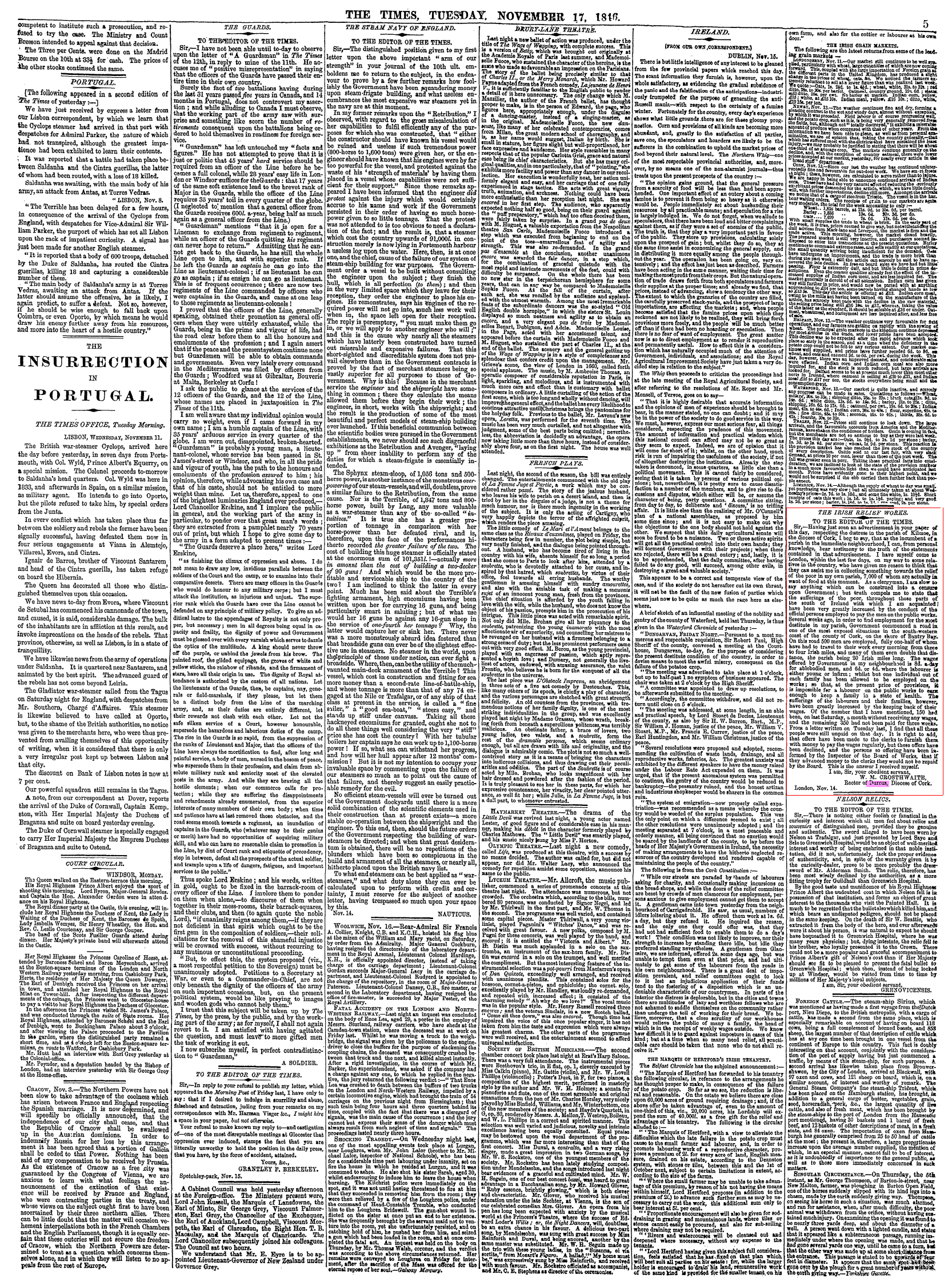
Letter of Rev Crosthwaithe, Rector, Durrus re Relief Works to The Times November 1846

Tags

,


Earlier the Rev Crosthwaite was involved with the Island and Coast Society a proselytizing organization. They had an involvement with at least three schools at the Western end of the Peninsula. They were involved with the Kerry born Rev. Spring who was active on Cape Clear and the Islands and who was friendly with the Rev. Crosthwaite. The stones from his Cape Clear church were used in the building of the former AIB Bank in Schull.

The Rev. Crosthwaite was also on the speech circuit in England raising money for these activities.

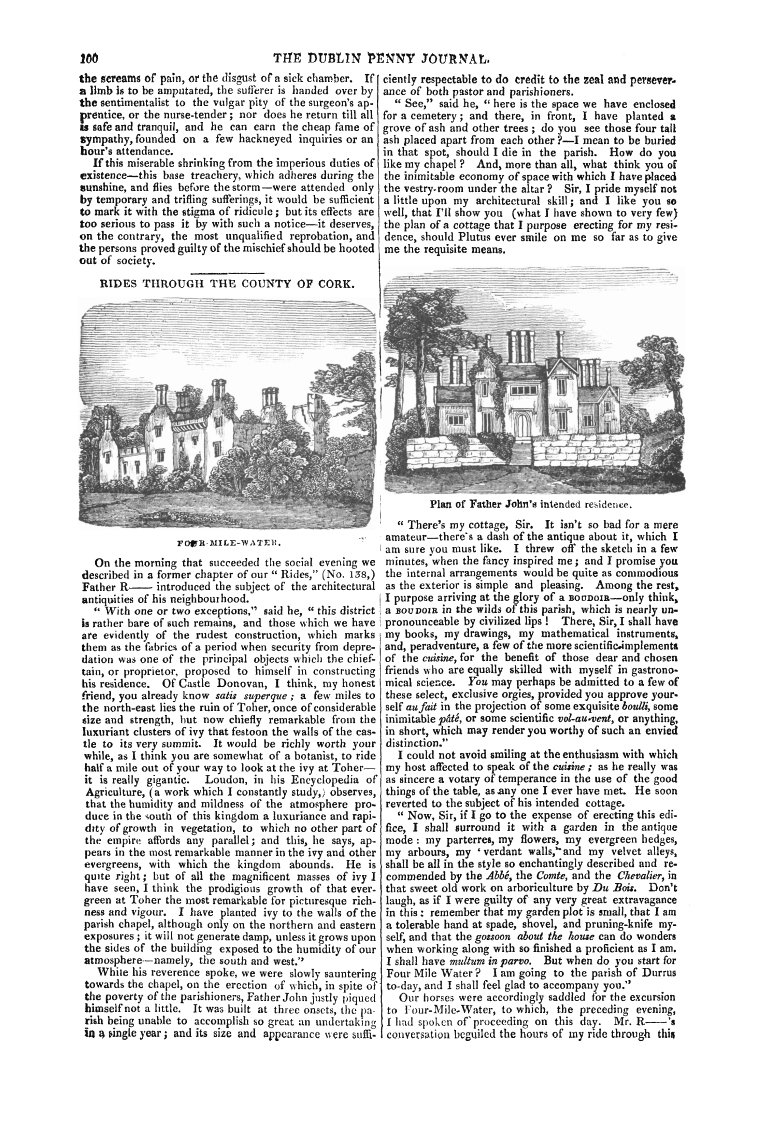
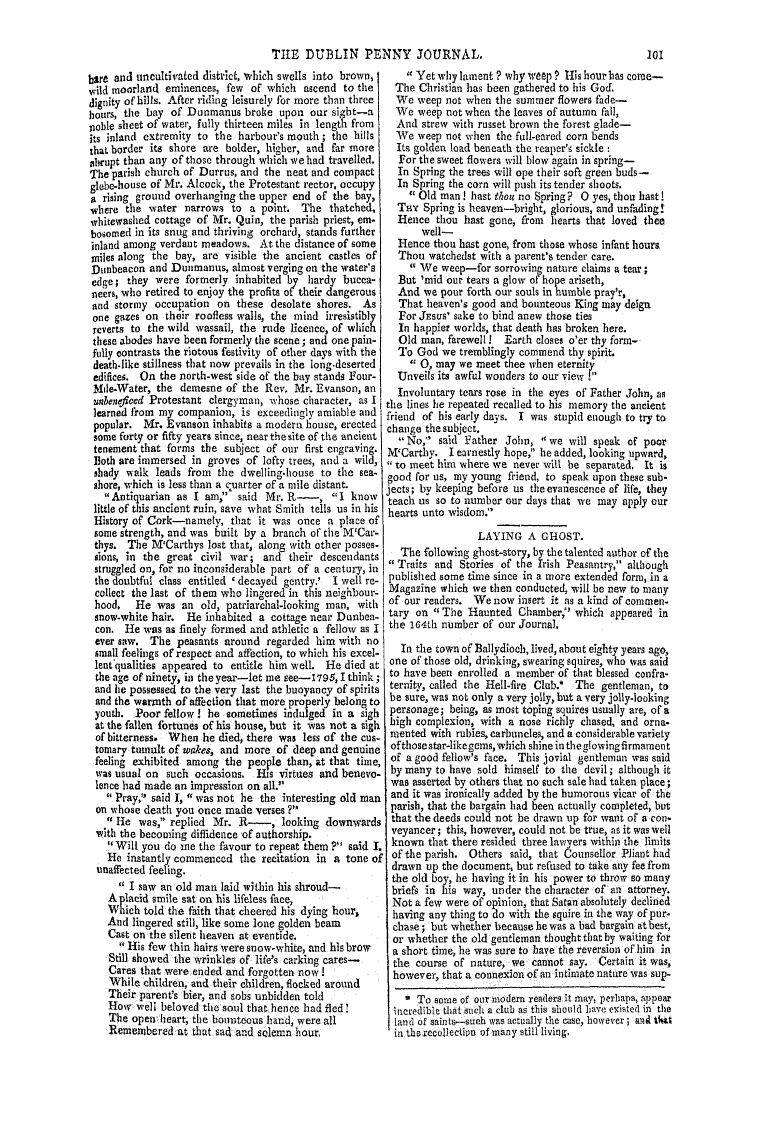
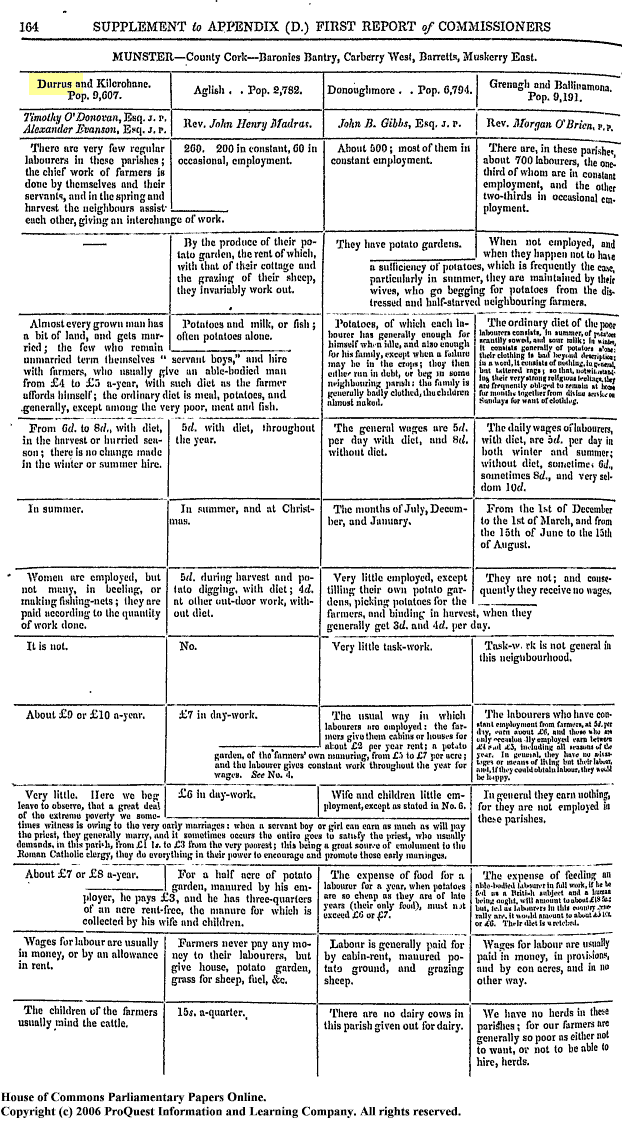
Dublin Penny Journal, Journey to Durrus 1836, from Butler’s Gift (Drimoleague), West Cork, John Windle Cork Antiquarian and Father John Ryan, Drimoleague to the Rev. Alleyn Evanson.

Tags

, , , ,


https://www.google.ie/maps/place/Durrus,+Co.+Cork/@51.6212816,-9.5479125,16z/data=!4m2!3m1!1s0x48459fe7ccd270df:0x231e3744ac95441a


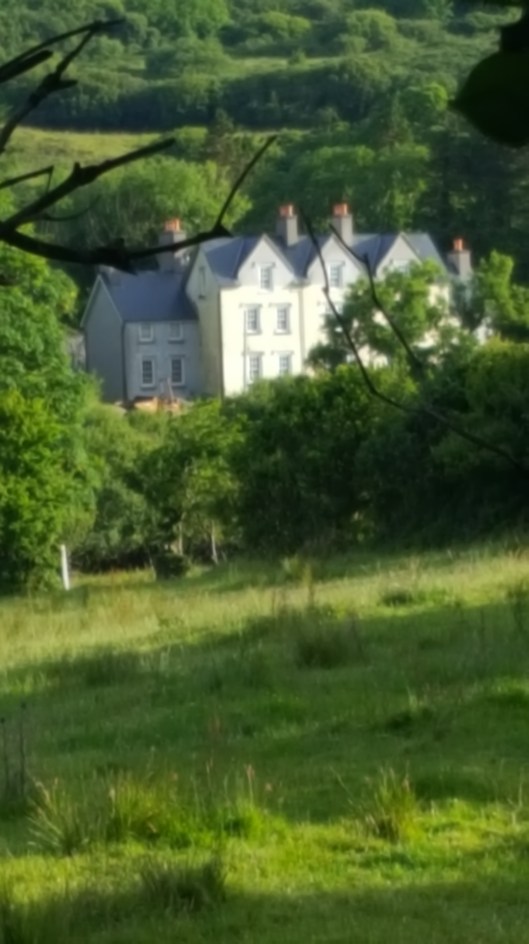
2016 refurbished Durrus Court to original c 1820s.  Replaced the earlier Evanson use of Coolnalong (McCarthy) Castle nearly.


20160625_072611

This journey was undertaken by John Windle, Antiquarian and Fr John Ryan Parish Priest of Drimoleague to Durrus (Four Mile Water) to the house of Alleyn Evanson now known as Durrus Court.  Father Ryan lived in Butler’s Gift (Drimoleague).  John Windle was later involved in what is now University College Cork.

Father Ryan together with Father Quin of Durrus, Father Dore of Caheragh, adn Father Dohenry of Dunmanway were from a number of Tipperary priests seconded to the Diocese of Cork. Father Quin commenced the parish register in Durrus and built the Church and school.  Al were highly active politically.

The Reverend Alleyn Evanson was an unbeneficed clergyman and was a Middleman on an estate rented by the Evanson family from the Bandon Estate c 1720 which at that time they had sold to Francis Bernard of Bandon. The Bandon Estate recovered possession c 1850.

Other Dublin Penny Journal Pieces;

An interesting account of ‘Hell’ from the Dublin Penny Journal.

Glengariff:

Glengariff, West Cork, 1832, from Dublin Penny Journal.

Cobh:

Cove, Co. Cork, 1832 from Dublin Penny Journal.

Philpot Curran and the Millers Dog:

John Philpot Curran and the Miller’s dog

The McCarthys referred to are the McCarthy Mucklaghs former occupants of the nearby castle still extant.  They had an earlier castle at Scart just off the Bantry/Cork road about 2 miles from Durrus Cross.

Neville Bath Map Co. Cork 1790s

Tags


The Grand Jury before the coming of the County Councils in 1898 performed many public work functions and they commissioned Neville Bath to do a map of the county in the 1790s which was published in 1811.  The map is remarkable for its accuracy, beauty, and shows the road network before the later improvements of Richard Griffith and others.  It also included many town lands and ‘the seats of country gentlemen’ and well as clusters of houses, i.e.. clachans.  It is online though the Cork County Council website and is downloadable in 6 parts.

You are here: Home > Maps & Images > Grand Jury Map of County Cork 1811

Grand Juries were established in the eighteenth century to determine whether there was a good case for a criminal prosecution to take place. Later they took over some of the functions that are now carried out by county councils. Bridge building, road maintenance, and the building of fever hospitals were some of the duties carried out by Grand Juries. The poor law unions took over most of these functions in 1840 and county councils took over any remaining fiscal and administrative functions after the Local Government Act of 1898.

Neville Bath’s map for the Grand Jury of Cork was surveyed in the 1790s and published in 1811.

The map is one of the best and most detailed maps of the county before the Ordnance Survey maps of the 1840s. It is a treasure trove for geographers, historians, and place-name specialists. The scale of the published map is three-quarters of an inch to one mile (1: 84480).


The Grand Jury map for County Cork is divided into six sections. Select a link below to open the required section of the Grand Jury map.

Grand Jury Map 1 Thumb Medium


1. Beara Peninsula

Grand Jury Map 2 thumb med


2. NW Cork – Milstreet, Macroom

Grand Jury Map No 3 med


3. NE Cork – Charleville, Fermoy

Grand Jury Map No 4 medium


4. Bantry Bay to Baltimore

Grand Jury Map No 5 medium


5. West Cork

Grand Jury Map No 6 medium


6. Cork Harbour and East Cork

V.V.Gira 1894-1980, President of India, Law Student UCD, Dublin 1913-16

Tags


V.V.Gira father was a prominent lawyer and he came to Ireland to study law at UCD in 1913.  He became associated with Sinn Fein figures and was deported to India by the British in 1916.

When he returned to India he became prominent in labour politics and became the leader of the Railwaymen’s union.  He was impressed by political and labour developments during his Irish visit.  After Indian independence he became a senior figure in politics becoming ambassador to Ceylon as it then was.  He became president of India in 1969 and served until 1974.  He died in 1980.

http://www.kamat.com/database/biographies/v_v_giri.htm

£3 note

Tags


While reading the evidence before a parliamentary enquiry into land tenure taken in Bantry in 1844 and came across a reference to a tenant paying his landlord with a £3 note.  I never came across this before, I do remember the old orange 10 shilling note.

When I checked it out the history was interesting.  Ireland apparently joined sterling in 1825 (currency fluctuations are not new) and the Bank of Ireland was given authority to issue notes.  Included was the £3 and 30 shilling notes.

In 1844 a farm laborer was lucky to get 8p. per day and the salary of a Resident Magistrate started at £300 per annum.  If you took  a laborer now at a low €75 a day that would give the value of £3 at €6,750 or the pay of the modern equivalent of a Resident Magistrate a District Justice at €123K then the value of £3 would be €12,300. Obviously the differential between £1 and £5 was too much hence the £3 note!

James Hennessy, Irish Merchant, Ostend 1699-1758

Tags

, ,


There is a fascinating description of the career of James Hennessy and the extended network of Irish merchant emigres in Ostend in a book

Irish and Scottish Mercantile Networks in Europe and Overseas in the …

By David Dickson, Jan Parmentier, Jane H. Ohlmeyer

Charles Hennessy was born to a well connected family in the Blackwater valley, Co Cork in 1699.  The family was connected to the Nagles and other old English families whose fortunes had changed with the new political situation at the end of the 17th century.  The statesman Edmond Burke was from the same milieu.

Charles emigrated to Ostend in 1730 and was helped by a close network of Irish merchant families involved in the butter, hide and general trading.  There were families with Youghal connections such as the Rays and Lucans and from Cork the Roches, Rays and Coppingers.  These emigre Cork families were from an old English background except the Coppingers who were believed to be of Viking origin. These families had been displaced from the prominence they enjoyed as Cork merchants by the ‘new English’ and were seeking new opportunities.  He was initially involved in provisioning ships with butter and later became involved in the tea  trade purchasing teas from the East India Company and managing to export it to England without the inconvenience of paying duty.  In this he again was relying on the extensive Irish network.  His second marriage was to Mary Coppinger of a family with close Cork links, her brother Thomas was a merchant based in Gothenburg.

Over the years his business interests became quite extensive into shipping, grain speculation he rode various mishaps deftly and died on a visit to Cork in 1758.  His family continued the business into the next generation.

From John T Colins Newspaper extracts

1-IMG_1226