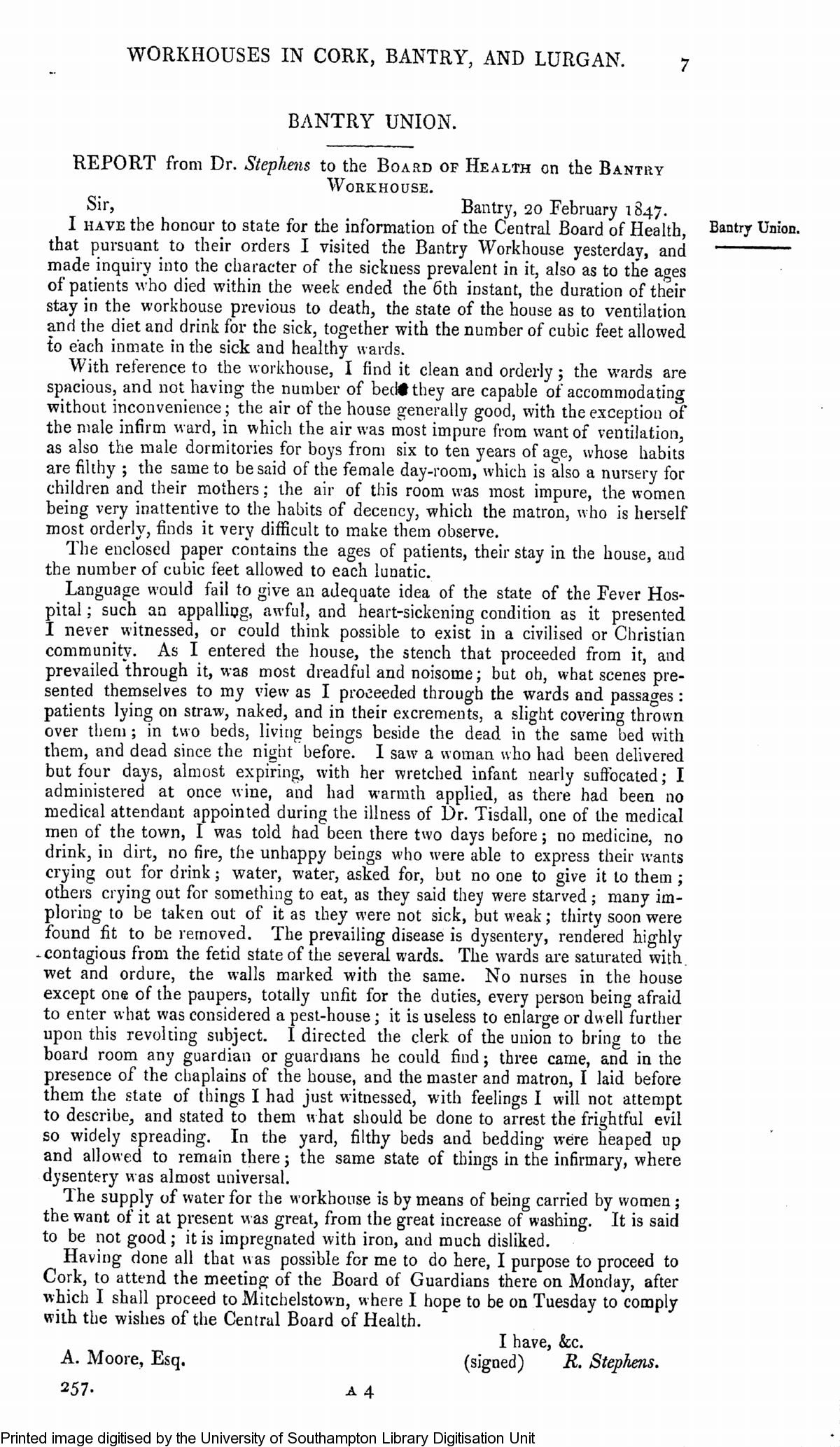


Dr Stephen’s report Bantry workhouse, February 1847
27 Thursday Oct 2011
Posted in Uncategorized
27 Thursday Oct 2011
Posted in Uncategorized
27 Thursday Oct 2011
Posted in Uncategorized
Tags
27 Thursday Oct 2011
Posted in Uncategorized
27 Thursday Oct 2011
Posted in Uncategorized
Tags

27 Thursday Oct 2011
Posted in Uncategorized
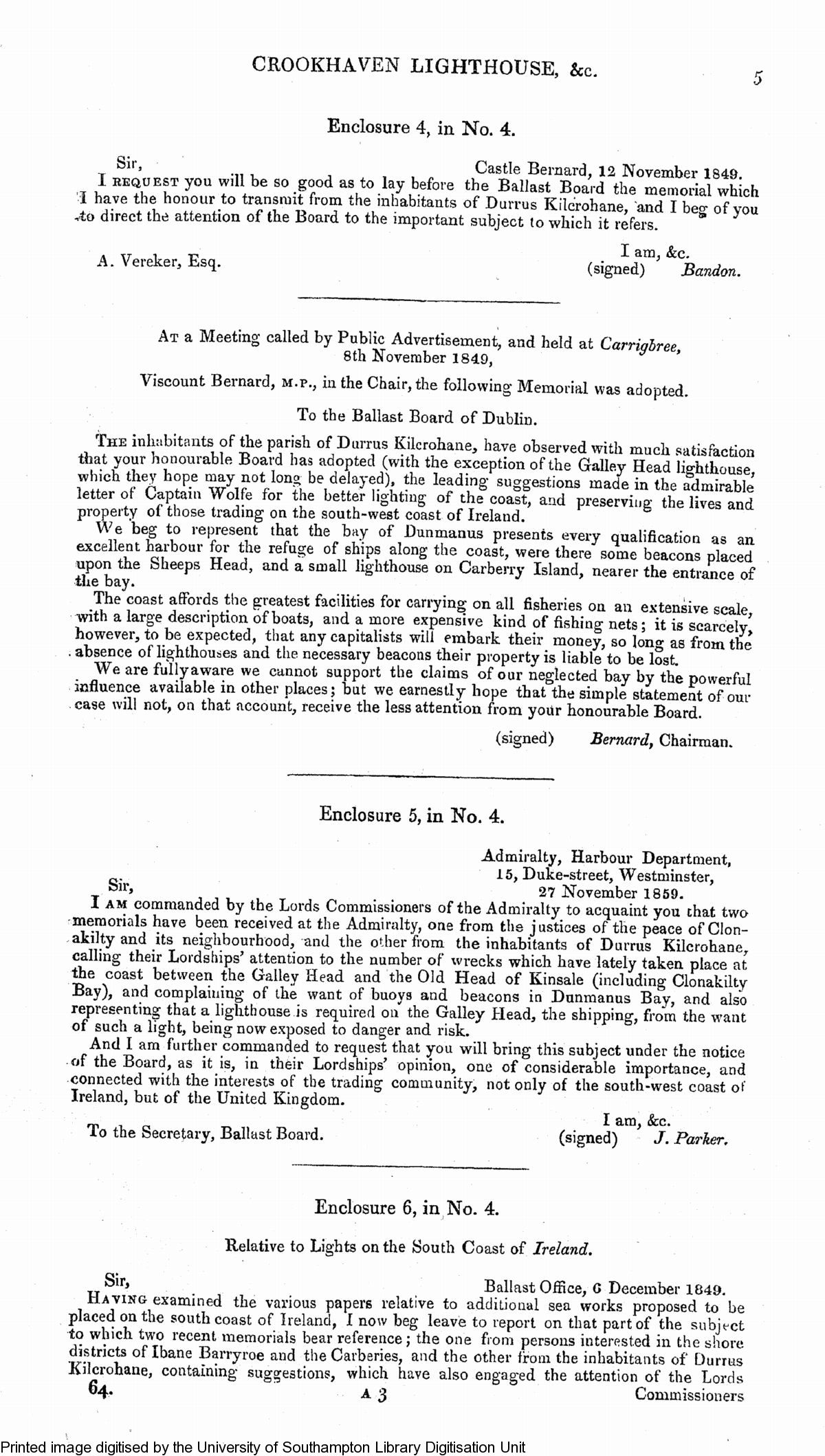
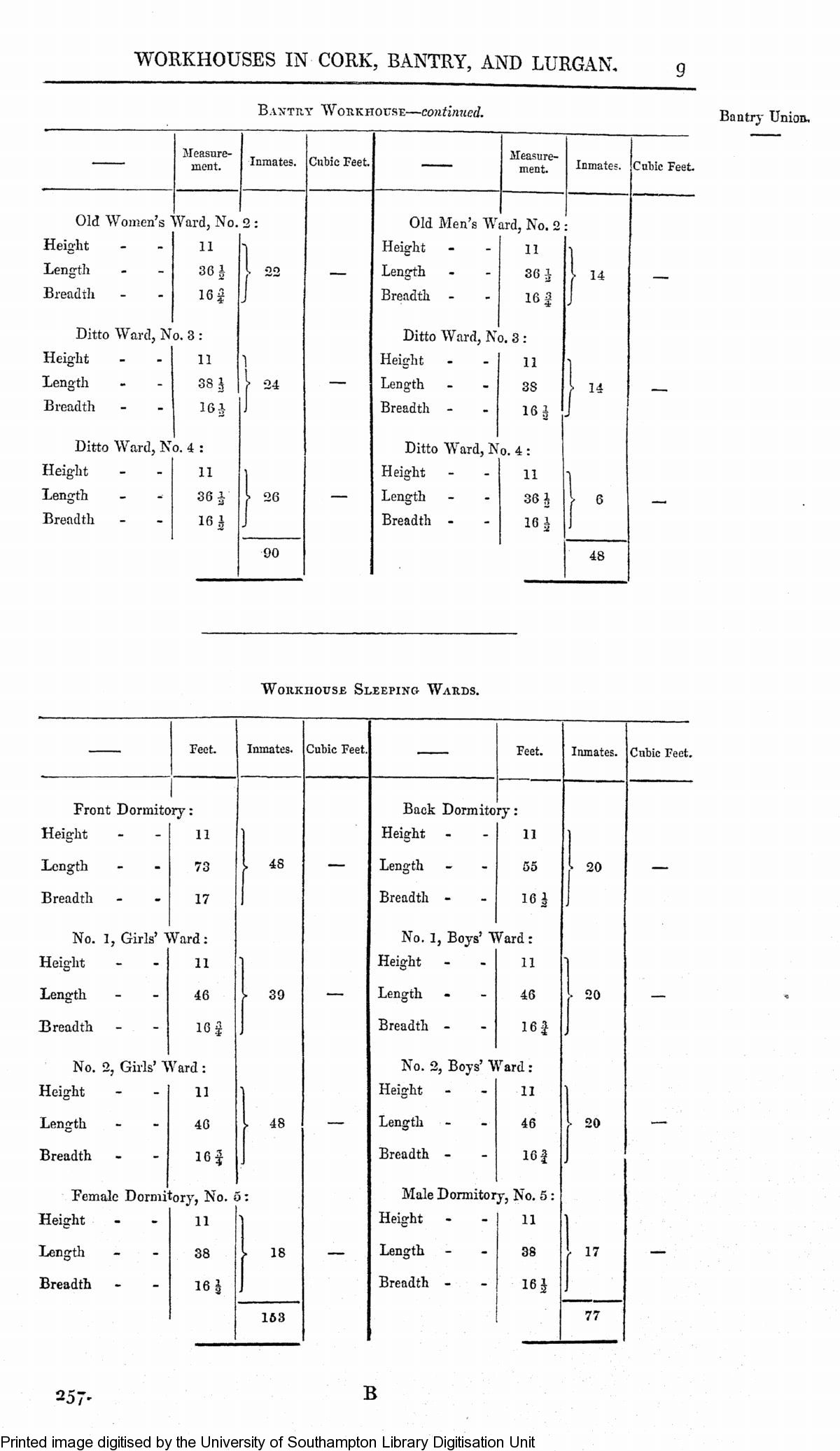
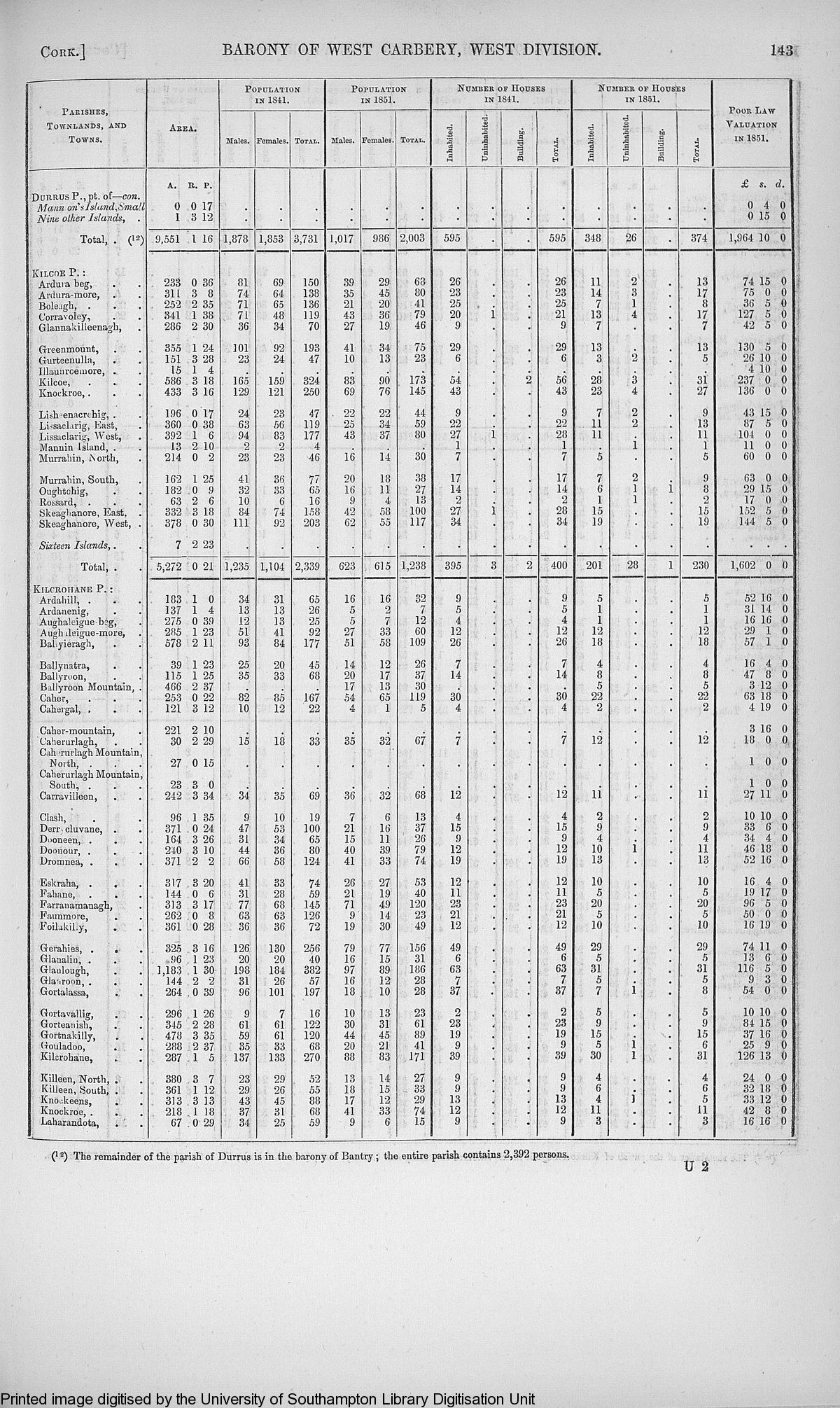
From British Parliamentary papers
19 Wednesday Oct 2011
Posted in Uncategorized
Tags
christian names, girls names west cork 1790, james, Mary catherine ellen history, muintervera, st, west cork
Updated:
https://drive.google.com/file/d/0B6hnQGE3ANjzNk8tRGY3OUl3RFlDYnYzTUZRVjNTOUhtZW40/view?ts=56096dad
Courtesy Danny Tobin.
Catholic Records 1760-1840.
The names are taken from a sample of the births registered in the parish of Muintervara for the period 1820-1840. As the parents and the sponsors are named it is assumed that on average they were born from 1790. The sample is divided into the period 1790-1820 for the parents and sponsors and 1820-40 for the children.
Female
1790-1820
Mary 56 Catherine 34 Ellen 24 Hanora 16 Anne 14 Brigid 13 Margaret 13 Elizabeth 10 Jane 7 Judith 7 Grace 5 Julia 4 Nancy 2 Norry 2 Nano 2 One each Frances, Mercy, Sarah, Maria, Ella, Susan, Sally, Joan.
1820-40
Mary 16 Catherine 9 Ellen 7 Anne 7 Margaret 6 Hanora 5 Johanna 5 Brigid 4 Judith 4 Julian 3 Helen 2 Eliza 2 One each Martha, Nancy, Jane.
Male
1790-1820
John 31 Denis 30 Daniel 30 Timothy 26 Jeremiah 23 Thomas 22 Michael 12 James 11 William 10 Patrick 7 Richard 6 David 5 Henry 5 Robert 3 Morty 2 Peter 2 Con 2 One each Isaac, Luke, Florence, Eugene, Charles, Randal, Andrew.
1820-40
John 15 Denis 14 James 12 Jeremiah 11 Thomas 9 Daniel 8 Michael 6 Timothy 5 William 3 Stephen 2 Cornelius 2 One each Julian, Patrick, Peter, Robert, Charles, Andrew, Richard, David.
Births 1690-
Births St. James and Durrus Area 1690-1860
The following records for St James were lost in the Public Records Office destruction in 1922. The enclosed details were taken from various records including private family histories, genealogy web sites, and the Bantry Estate Records in the UCC Boole Library, online.
Baptisms 1797-1903
Marriages 179-145
Burials 1797-1903
Male.
James 72, William 72, John 51, Richard 41, Thomas 37, Francis 19, Charles 16, George 16, Robert 15, Peter 10, Michael 13, Paul 6, Edward 6, Henry 6, David 5, Jehr. 4, Daniel 4, Elias 4, Gregory 4, Nathaniel 4, Alleyn 3, Joseph 3, Arthur 2, Abraham 1, Patrick 2, Jeffery 2, Benjamin 2, Young 2, Philip 1, Julian 1, Marcus 1, Tonson 1, Eugene 1, Hamilton 1, Alexander 1, Timothy 1, , Goodhand 1, Isaac 1,
Female.
Mary 48, Elizabeth 40, Sarah 26, Anne 22, Margaret 18, Ellen 15, Catherine 12, Frances 9, Susan 8, Avis/Avesia 7, Ursula 5, Jane 4, Hester 2, Grace 2, Barbara 1, Hannah 2, Susannah 1, Honora 1, Sally 1, Melian 1, Abigail 1, Mary Jane 1, Deborah 1, Eva 1, Maria 1, June 1, Martha 1,
17 Monday Oct 2011
Posted in Uncategorized
Tags
ballycomane carrigboy crottees, brahalish rossmore tullig, coomkeen clashadoo clonee, griffith valuation durrus history
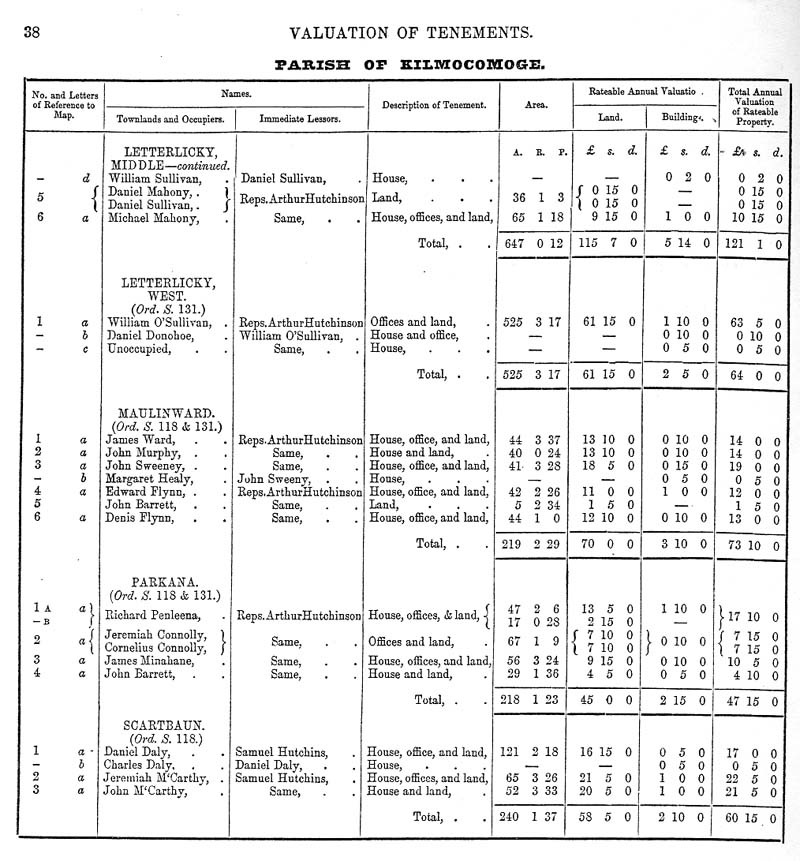
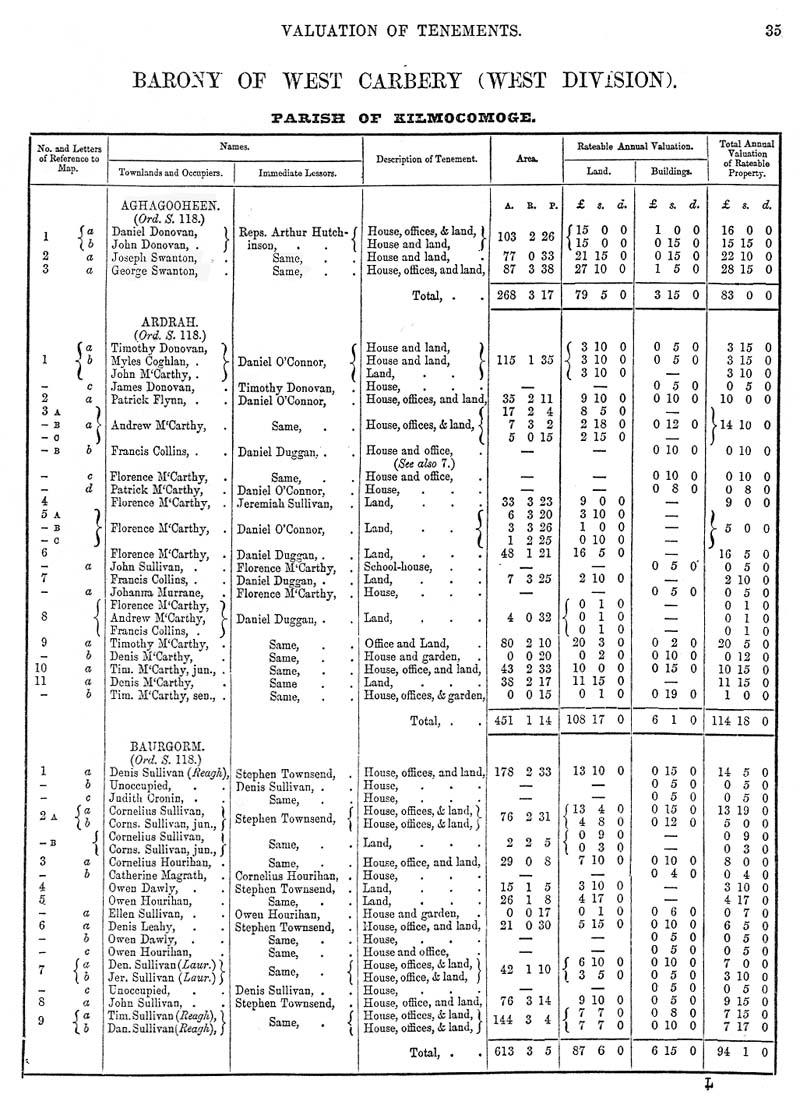
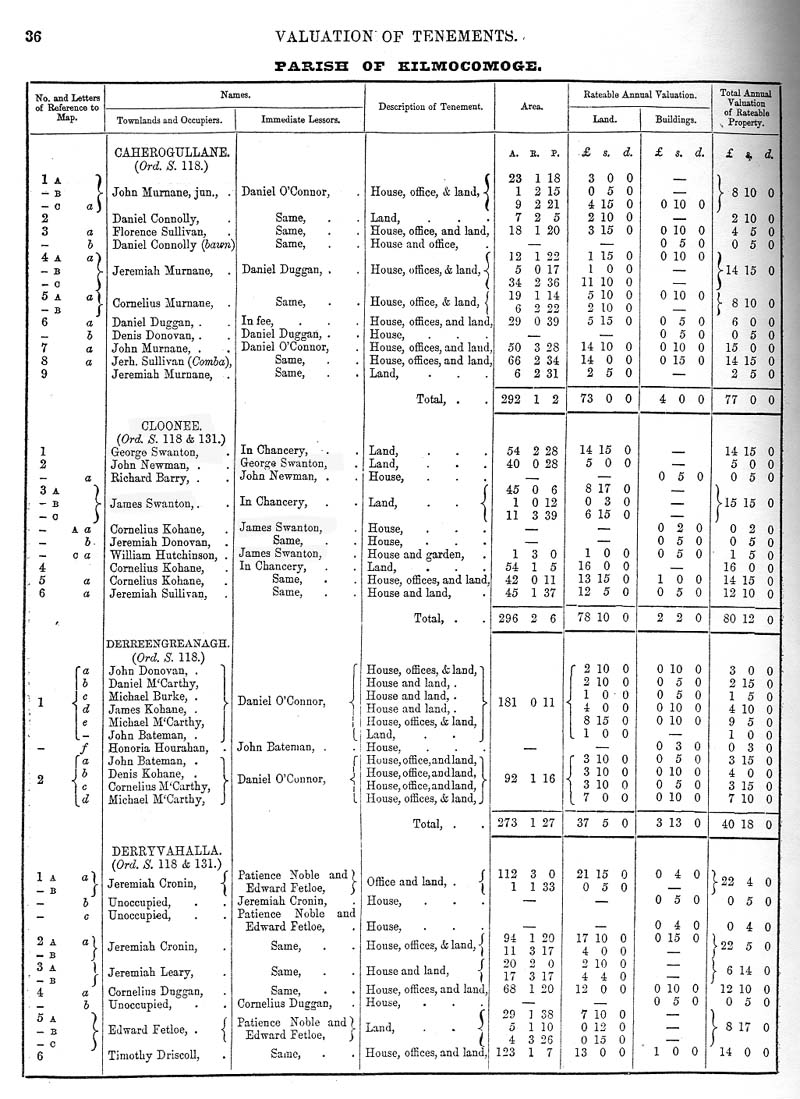
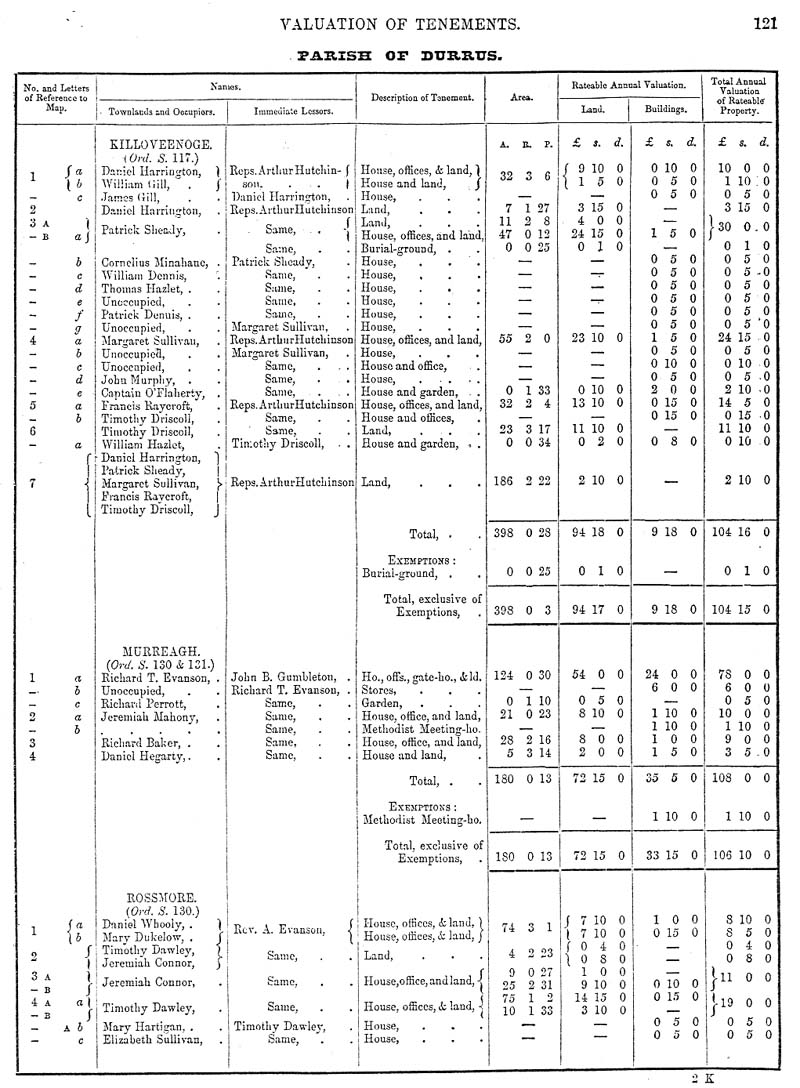
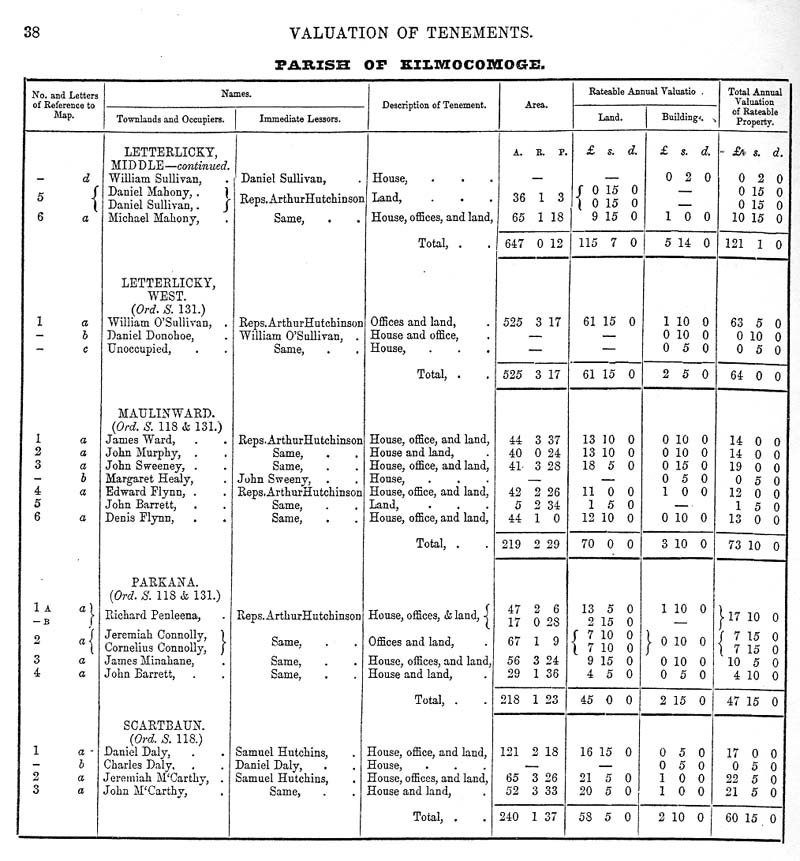
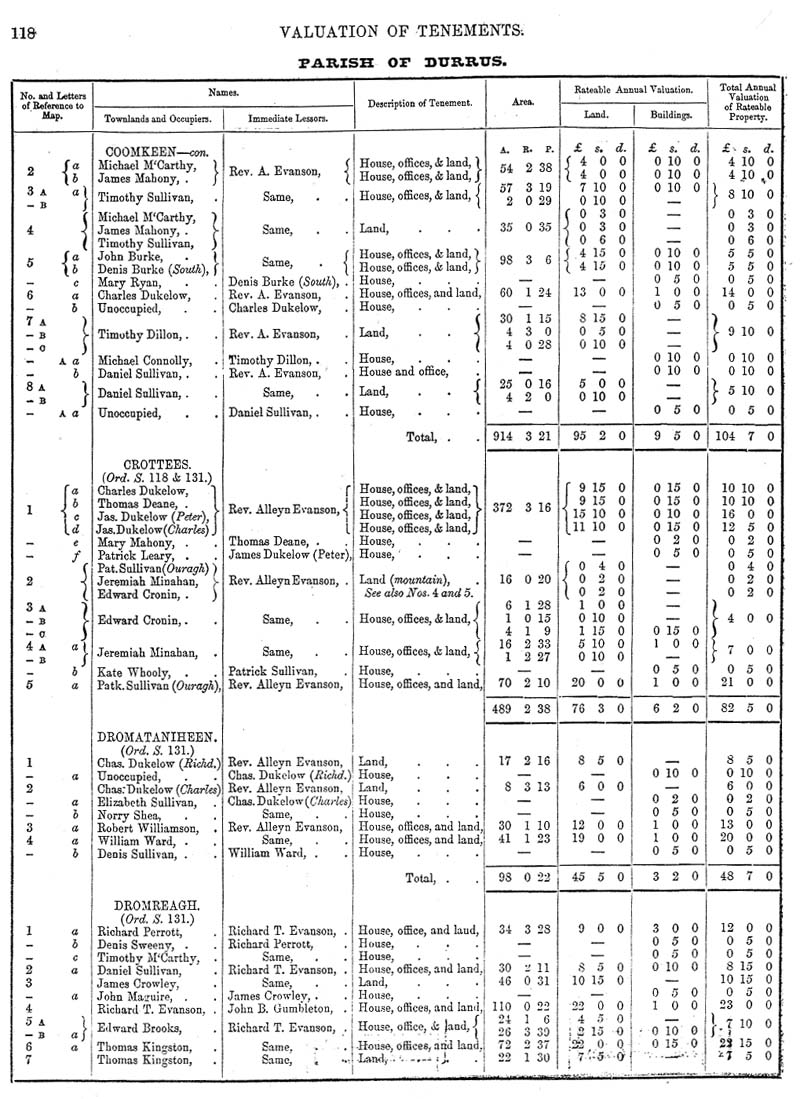
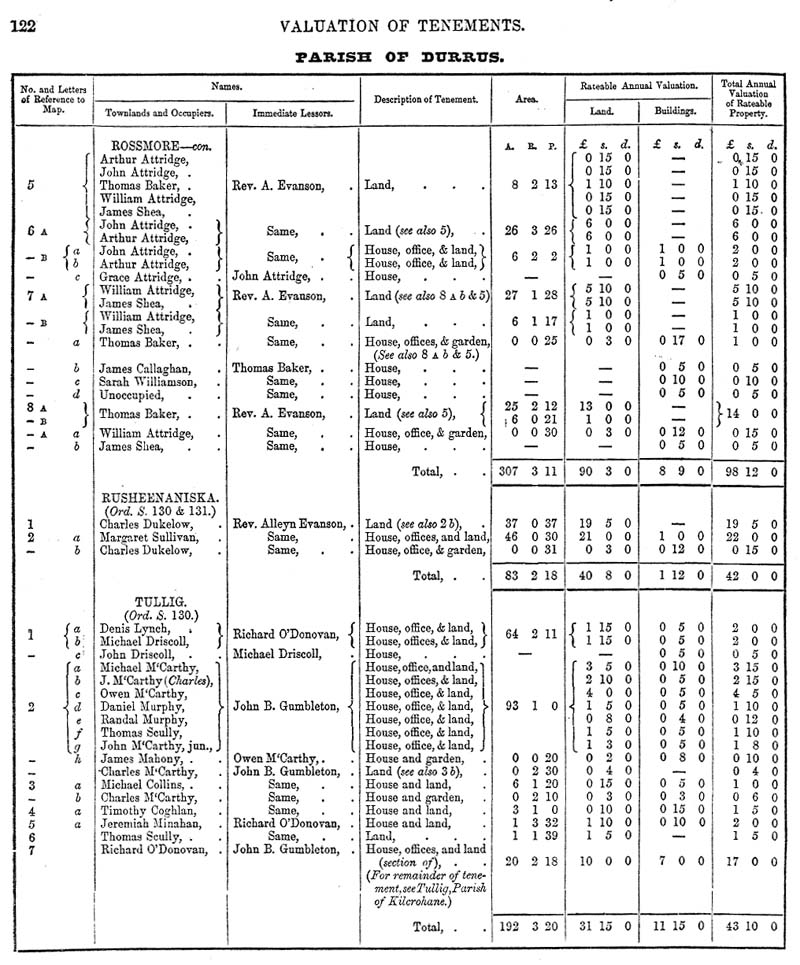
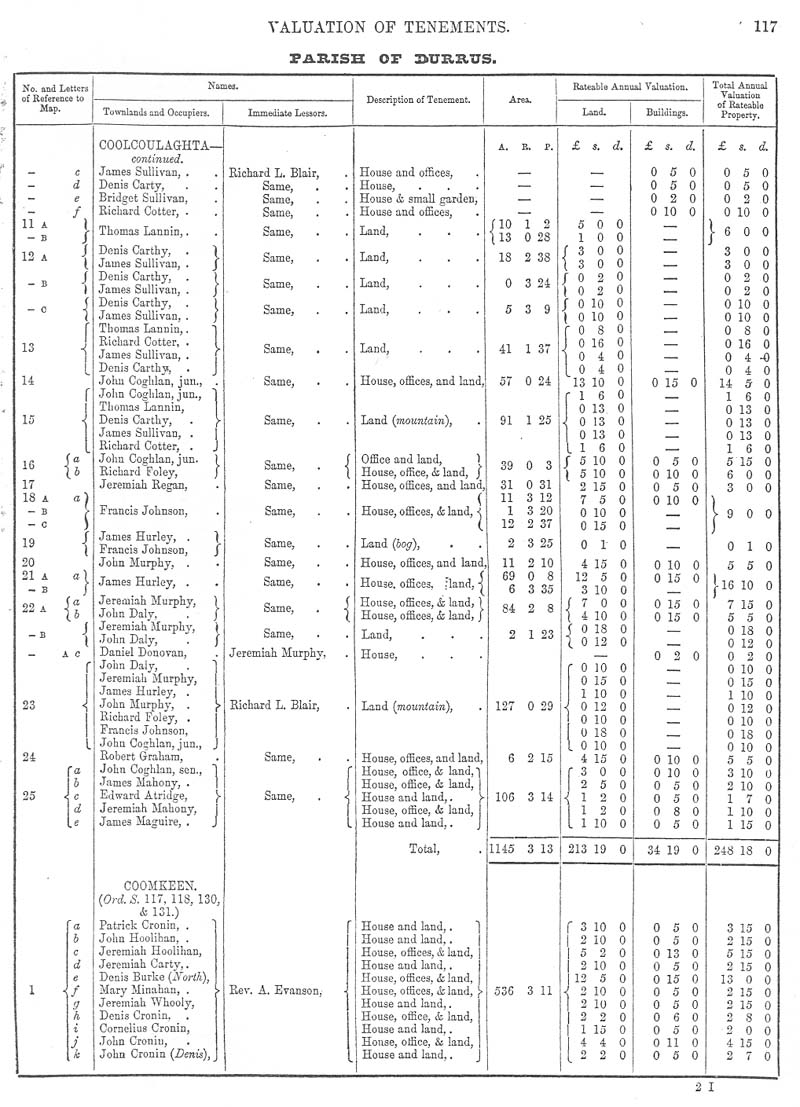
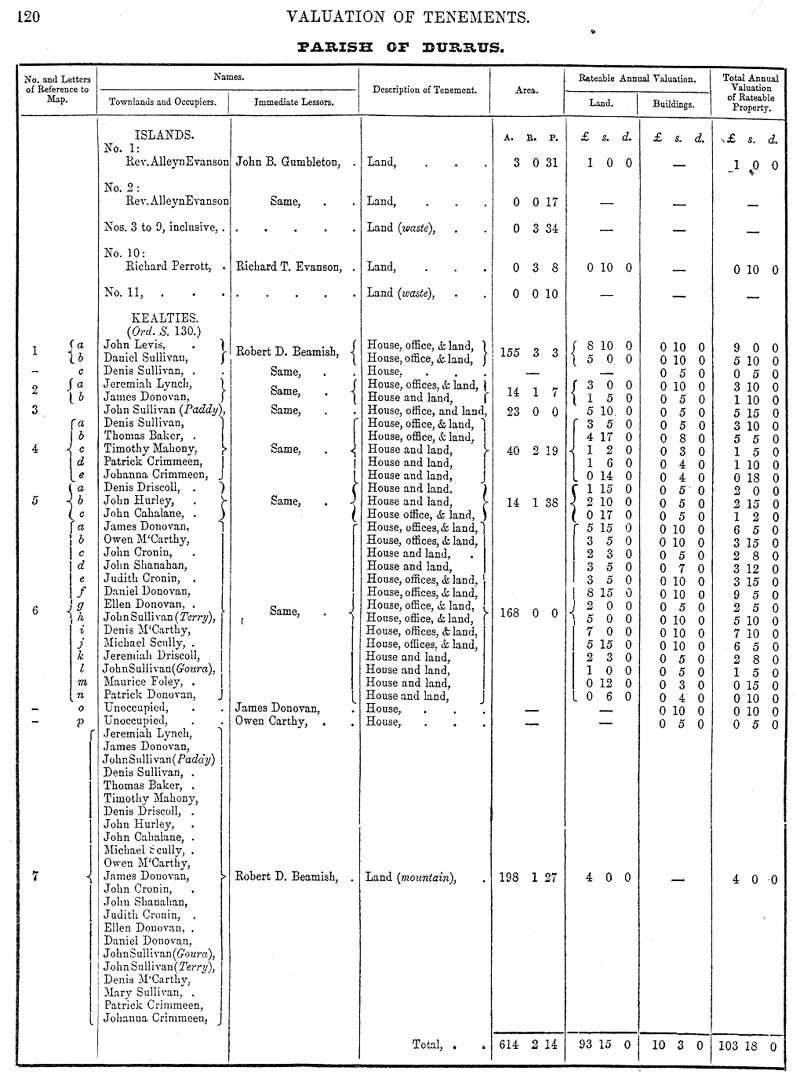
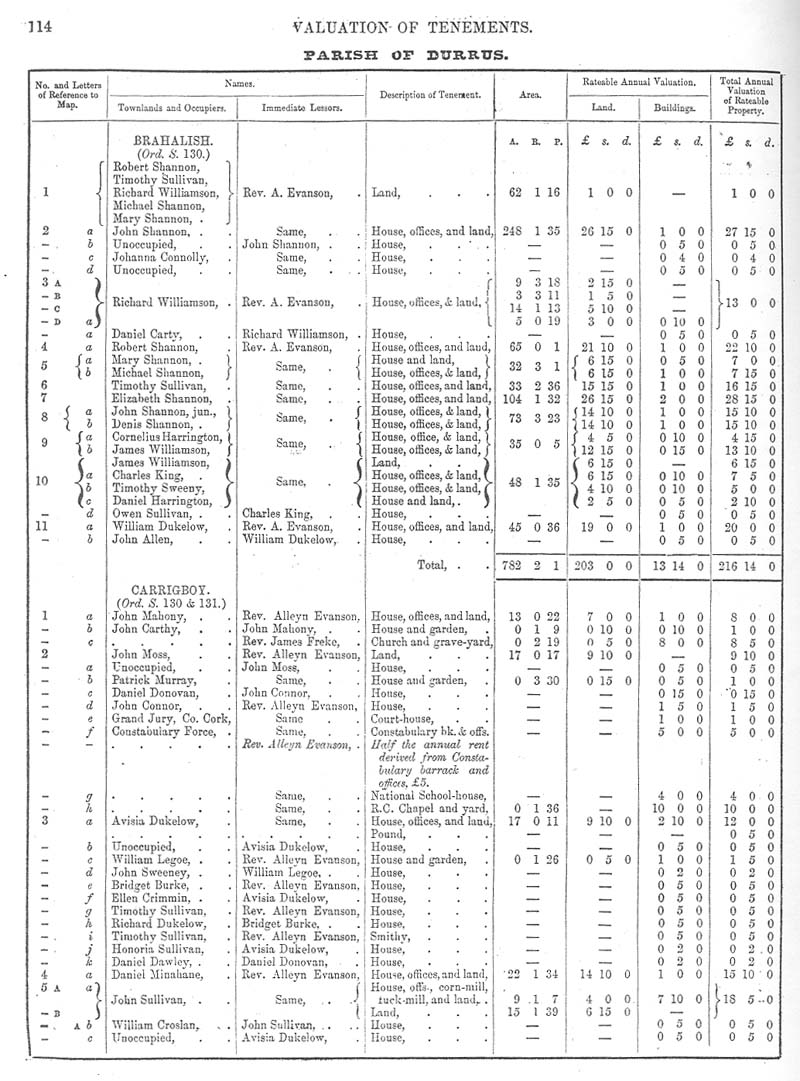
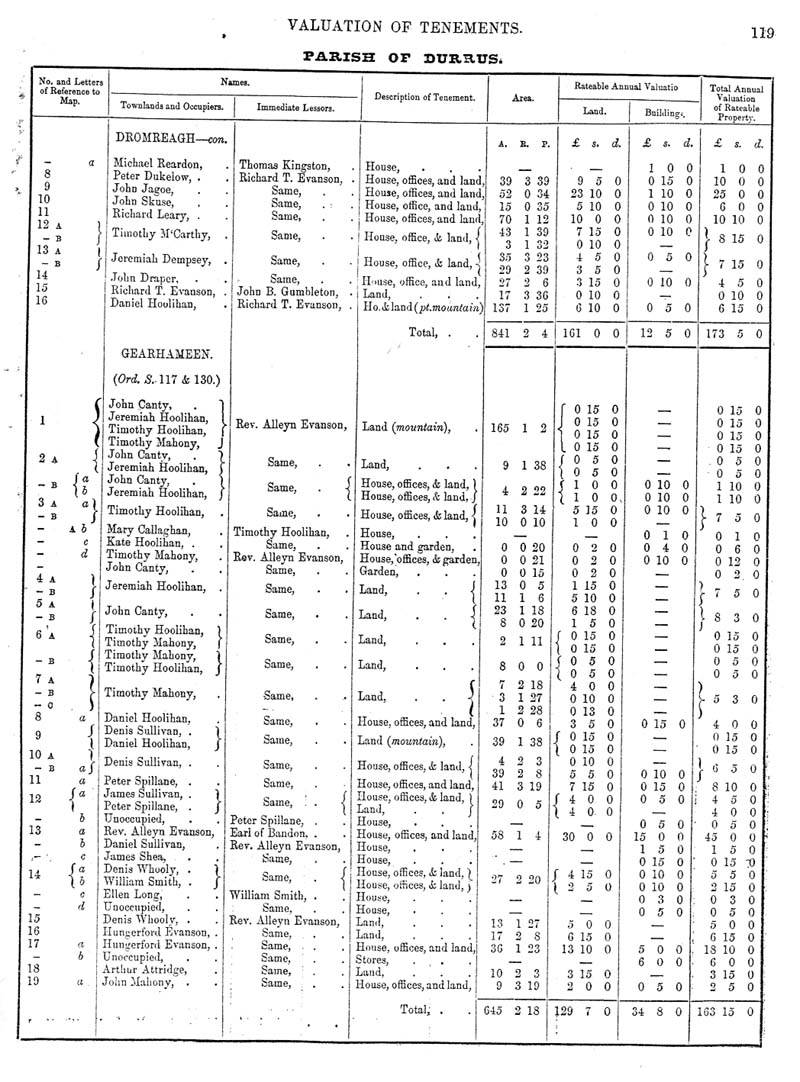
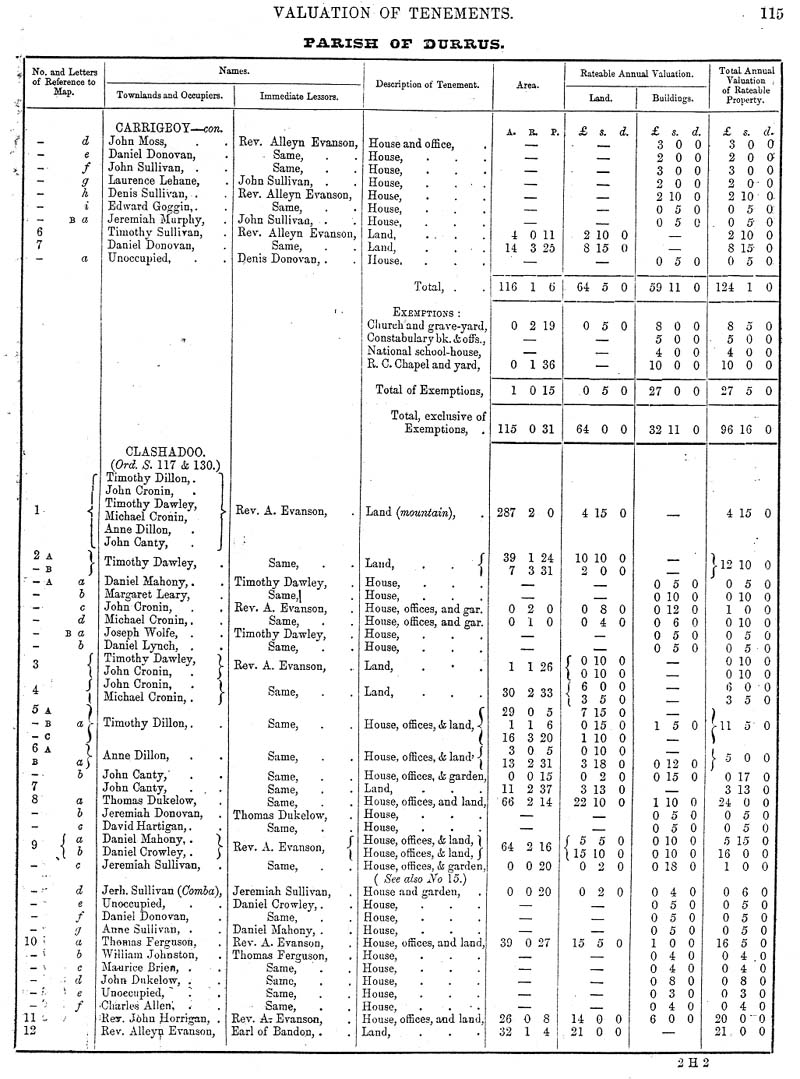 Thanks to Ginni Swanton site, not one extra sheet for Clashadoo missing
14 Friday Oct 2011
Posted in Uncategorized
These details have been taken from the Muintervara church records and in a small number of cases from the records of St. James. Part of Coomkeen at the southern en dis the sub townland of Scrahán na Muice (hiding place of the pigs) occupied by the Dukelow family. Their ancestors probably arrived c 1840s from Crottees it is not possible to say who the previous tenants were although the present farm is an amalgamation of a number of a number of smaller holdings..
Ellen Burke daughter of Daniel and Ellen Goggin, emigrated to Boston married Murphy from Cork. Ons son became a priest, two policemen of those one was involved in the Boston Policeman’s strike in 1919 and with all the others was dismissed. One if not two of her sisters emigrated to Boston and became nuns.
| Coomkeen/Ahagouna | |||||||||
| Parents | Child | Sponsors | |||||||
| John Burke and Ellen Sullivan | Thomas 16th August 1831 | David Hartigan Anne Sullivan | |||||||
| Thomas 16th August 1831 | David Hartigan Anne Sulllivan | ||||||||
| Daniel Hurly and Margaret Driscoll | Michael 8th May 1828 | Morty Mahony Mary Harrington | |||||||
| Thomas Harrington and Ellen Carthy | Thomas 22nd April 1824 | Thomas Ferguson Mary Sullivan | Counquin | ||||||
| Timothy Bryan and Catherine Sullivan | James 29th May 1823 | Denis Croneen Judith Sullivan | |||||||
| Timothy Gallavan and Margaret Sullivan | Timothy 28th July 1821 | Jereemiah Sullivan Honora Neil | Quinquin | ||||||
| James 10th May 1823 | Denis Croneen Joanna Sullivan | ||||||||
| Judith 2nd May 1826 | James Mahony Mary Whooly | ||||||||
| Catherine 10th November 1829 | John Croneen Catherine Carthy | ||||||||
| Denis Burke and Catherine Rearden | Jeremiah 25th March 1832 | Denis Whooly Catherine Burke | Coonquine | ||||||
| Timothy 5th April 1835 | Timothy Mahony Mary Readen | ||||||||
| John 1st March 1828 | Daniel Burke Catherine Houlahane | ||||||||
| Jeremiah 25th March 1832 | Denis Whooly Catherine Burke | ||||||||
| Timothy 5th April 1835 | Timothy Mahony Mary Rearden | ||||||||
| John Burke and Ellen Scully | Julian 15th June 1822 | Denis Burke Catherine Burke | Concun | ||||||
| Hanora 1st August 1825 | Jeremiah Sullivan Joanna Hartigan | Coongeen | |||||||
| Julian 15th June 1822 | Denis Burke Catherine Burke | ||||||||
| Daniel 7th May 1828 | Thomas Scully Ellen Magratath | ||||||||
| Mary 30th March 1835 | Daniel and Catherine Sullivan | ||||||||
| Jerry Burke Margaret Goggin | Mary Burke 26th December 1859 | John Burke Mary Burke | |||||||
| Ellen 16th December 1860 | James Mahony Mary Sullivan | ||||||||
| Jerry 26th December 1864 | |||||||||
| Jehr 1 June 1870 | John Mahony Mary Carty | ||||||||
| Daniel Burke and Mary Goggin | Daniel 17th May 1867 | Con Regan Mary Burke | Yankees | ||||||
| Mary Burke 19th March 1871 | |||||||||
| Mary 12th December 1869 | Daniel Burke Anna Mahony | ||||||||
| Ellen 16 December 1860 | James Mahony Mary Sullivan | ||||||||
| Members of this family emigrated to Boston, two became nuns one became as assistant to church in Washington University. One of the other sisters married in Boston Murphy from Cork tow of the sons became policemen. Oe organised the Boston policemen strife in 1919 for which he was dismissed and never worked again. | |||||||||
| Timothy Lucy and Judith Burke | Catherine Lucy 2nd January 1841 | Denis Burke Mary Burke | Coonqueen | ||||||
| Jas Mahony and Catherine Burke | Daniel Mahony 5th September 1852 | John Burke Julia Burke | Coonqueen James and Catherine married 3rd February 1842 witnesses Jojn and John Burke | ||||||
| Jas 12th November 1854 | Mahony Cath Burke | ||||||||
| Jehr 29th April 1857 | Timy Burke Mary McCarthy | ||||||||
| Cath 22nd November 1850 | |||||||||
| Thomas 29th March 1862 | Thomas Burk Mary Goggin | ||||||||
| Daniel Wholehan and Julia Carthy | Julia 13th February 1870 | Michael Carthy Julia Wholehan | |||||||
| David Hartigan and Catherine Harrington | David Hartigan 1st November 1825 | Jeremiah Sullivan Jane Croneen | |||||||
| John Burke 14th July 1868 | |||||||||
| Julia 14 April 1868 | James Mahony Mary Sullivan | ||||||||
| Patrick Horrigan and Mary Mahony | Ellen 24th June 1836 | Denis Burke Mary Horrigan | |||||||
| Jane 28th August 1839 | Daniel Horrigan Ellen Neill | ||||||||
| E | |||||||||
| James Sullivan and Catherine Bourke | James 28th May 1820 | Daniel Sullivan Mary Mahony | Quinquin | ||||||
| John 18th April 1822 | Thomas Ferguson Grace Ferguson | ||||||||
| Patrick 22nd May 1824 | Denis Sullivan Ellen Scully | ||||||||
| Denis 20th November 1825 | Richard Fergusson Catherine Fergusson | ||||||||
| Daniel Sullivan and Honora Neil | Daniel 22nd September 1823 | Jeremiah Neil Margaret Neil | Cenquin | ||||||
| Randal Donovan and Honora Wholey | Hanora 5th May 1839 | Michael Donovan Catherinea Wholey | |||||||
| Timothy Minihane and Mary Lynch | Margaret 6th August 1837 | Daniel Croneen Mary Wholey | |||||||
| Timothy Sullivan and Johanna Coakley | Margaret 6th August 1837 | Jeremiah and Judith Sullivan | |||||||
| Margaret 25th January 1840 | Patrick and Bridget Coakly | ||||||||
| John Connor and Johanna Daly | Mary 24th February 1833 | Patrick and Mary Connor | |||||||
| Hanora 1st March 1835 | James and Johanna Connor | ||||||||
| Michael Downy and Mary Callaghan | Michael 6th August 1836 | Michael Coghlan Mary Hartigan | |||||||
| Ellen Mahony 2nd March 1848 | |||||||||
| Julia Mahony 28th January 1860/ | |||||||||
| Michael Downing and Sarah Callaghan | Eliza 24th March 1872 | John Hartigan Maria Foley | |||||||
| William Ferguson and Mary Calnan | Thomas 3rd August 1832 | William and Catherine Ferguson | |||||||
| Mary 17th October 1833 | Robert Ferguson Bridget Callinan | ||||||||
| James 8th February 1839 | Richard Quinn (PP) Denis Flynn | ||||||||
| Robert Fergusson and Mary Callahan | 8th February 1839 | Thomas Fergusson Johannh Cullahan | |||||||
| Catherine 17th April 1836 | |||||||||
| John 15th August 1838 | Thomas Fergusson Ellen Kingston | ||||||||
| James 20th October 1845 | Thomas Attridge Grace Fergusson | ||||||||
| James Fergusson 17th April 1836 | |||||||||
| Thomas Fergusson and Mary Calnan | Mary 17th October 1833 | Robert Fergusson Brigid Callinan | Two brothers married to two sisters? | ||||||
| James 8th February 1839 | Richard Quinn (PP) Mary Sullivan | ||||||||
| Thomas 3rd August 1832 | William and Catherine Fergusson | ||||||||
| Mary 17th October 1833 | Robert Fergusson Brigid Callivan | ||||||||
| Daniel Sullivan and Mary Mahony | Bridget 4th May 1826 | Timothy Mahony Elizabeth Ferguson | |||||||
| Hanora 24th March 1821 | Jeremiah Whooly Catherine Burke | ||||||||
| Johanna 5th August 1828 | Thomas and Catherine Fergusson | ||||||||
| Bridget 4th May 1826 | Timothy Mahony Elizabeth Ferguson | ||||||||
| Jeremiah Houlahan and Judith Croneen | Mary 9th December 1827 | Jeremiah Ryans Margaret Ryans | |||||||
| Margaret 17th March 1833 | Jeremiah Croneen Anne | ||||||||
| Hanora 15th April 1838 | Patrick Croneen Ellen Murphy | ||||||||
| Catherine Driscoll Houlahan and | Ellen 1st August 1826 | John Houlahan Mary Croneen | |||||||
| James Sullivan and Catherine Burke | John 18th April 1822 | Thomas and Grace Fergusson | |||||||
| Denis 20th November 1825 | Richard and Catherine Fergusson | ||||||||
| William 29th February 1828 | William and Grace Fergusson | ||||||||
| William 29th February 1828 | William Ferguson Grace Ferguson | ||||||||
| Margaret 21st October 1829 | Jeremiah Sullivan Mary Sullivan | ||||||||
| Denis Carthy Ellen Sullivan | Denis 8th June 1834 | Daniel Hurly Margaret Carthy | |||||||
| Catherine 12th March 1836 | Jeremiah Carthy Ellen Mahony | ||||||||
| Michael 20th December 1842 | |||||||||
| John 14th August 1829 | John Stanley Mary Hurley | ||||||||
| Jeremiah 25th August 1832 | Denis Burke Mary Sullivan | ||||||||
| Daniel Croneen Mary Whooly | John 17th June 1825 | Thomas Scully Mary Croneen | |||||||
| Stephen 8th June 1829 | Jeremiah Wholly Jane Croneen | ||||||||
| Judith 23rd May 1831 | Daniel Hi-Lahan Jeremiah Sullivan | ||||||||
| Cornelius 16th December 1833 | Denis Burke Hanora Wholy | ||||||||
| James Whooly and Hanora Driscoll | Johanna 3rd July 1826 | Michael Whooly Catherine Whooly | |||||||
| Daniel 6th August 1823 | Jeremiah Sullivan Honora Whooley | ||||||||
| James Whooly 1827 | |||||||||
| Denis Whooly Catherien Holohan | Catherine ? | ||||||||
| James 6th July 1827 | Jeremiah Holohan Mary Houlahan | ||||||||
| Joanna 20 March 1825 | Johanna Sullivan Denis Wholy | ||||||||
| Peter Carthy 11th September 1854 | |||||||||
| Jerry Whooly and Mary Moynihan | James 7th December 1866 | Denis Wholehan Ellen Sullivan | |||||||
| Johanna 5th April 1862 | James Whooly Hanora Sullivan | ||||||||
| Daniel Croneen and Mary Whooly | Margaret 3rd August 1827 | Denis Croneen Catherine Whooley | |||||||
| Denis Whooly and Catherine Houlahan | James 6th July 1827 | Jeremiah Houlahan Mary Houlahan | |||||||
| John Croneen and Elizabeth May | Nancy ? | Denis Harrington Nancy May | |||||||
| Nancy 24th April 1824 | Denis Harrington Nancy May | ||||||||
| Ellen Croneen 2nd September 1825 | |||||||||
| Jeremiah Spillane and Mary Whooly | Brigid ? | Daniel Hurley Jane Daly | |||||||
| Denis Croneen and Jane Carthy | Stephen 18th March 1822 | Timothy Splane Hanora Shea | |||||||
| Eugene Carthy and Margaret Dillon | James 21st August 1823 | ||||||||
| Catherine 19th November 1826 | Luke Canty Ella Ferguson | Check if Coomkeen | |||||||
| Daniel Croneen and Mary Harrington | John 30th October 1845 | John Croneen Bridig Croneen | |||||||
| John Hoolahan and Brigid Driscoll | Jehr 23rd January 1851 | Dl Driscoll Margt Hoolahan | |||||||
| William Grady and Mary Burke | John 28th February 1839 | Patrick HayesJudith Burke | |||||||
| Michael and Ellen Carthy | Denis 6th November 1838 | Murthy Sullivan Mary Croneen | |||||||
| Sullivan | Hanora 24th March 1821 | ||||||||
| Wooly | Mary 24th March 1821 | ||||||||
| John Connor and Elizabeth May | Catherine 20th June 1821 | Michael Sullivan Joanna Holahan | |||||||
| Daniel Croneen and Judith Mahony | Cornelius 12th August 1822 | Timothy Croneen Mary Croneen | |||||||
| Daniel Hollahan and Honora Holahan | John 15th November 1822 | John Holahan Mary Hayes | Conquin | ||||||
| Margaret 15th May 1824 | William Sullivan Catherine Holohan | ||||||||
| Mary 20th December 1827 | John Canty Catherine Sullivan | ||||||||
| Ahagouna (Ath na Gamhn: crossing place of calves after stepping stones) | |||||||||
| Timothy Scully and Ellen McGrath | Thomas 6th February 1827 | Thomas Scully Anne Daly | Ahequanna | ||||||
| Mary and Hanora 3rd July 1831 | David Hartigan Hanora Wholey for Hanora Daniel Lucy Catherine Wholy | ||||||||
| Daniel Mahony and Mersy Pierre (Pier) Huguenot, The Mahony family either originated i Ballyourane, an came with the Crowleys c 150 from there Caheragh of in the Carrigmanus area | John | Charles King Mary Carty | Abaghamhna | ||||||
| Bridgt 19th December 1858 | Ellen Dukelow John Mahony | ||||||||
| Martha 18th October 1870 | Frances Dukelow Isaac Johnson | ||||||||
| Catherine 14th October 1866 | John Mahony Nano Mahony | Listed for Carrigbui | |||||||
| Daniel 27th May 1869 | Florence Mahony Ellen Mahony | Listed for Carrigbui | |||||||
| Eliza 22nd December 1860 | Thomas Burke Johanna Sullivan | ||||||||
| Jeremiah Sullivan and Anne Caverly | Jeremiah 1st January 1835 | Daniel Sullivan Ellen Sullivan | Ahyguanna | ||||||
| Mary 1st November 1828 | Michael Caverly Brigid Barnam | ||||||||
| Anne 30th January 1839 | Timothy Sullivan Judith Shea | ||||||||
| Catherine 22nd January 1837 | William Casey Bridget Connor | ||||||||
| Daniel Sullivan 9th June 1827 | Andrew Caverly Ellen Magrath | Mother down as Conoly | |||||||
| John 24th June 1830 | Denis Sullivan Honora Ford | Mother down as Nancy | |||||||
| Jeremiah 1835 | Daniel and Ellen Sullivan | ||||||||
| Jeremiah 24th March 1833 | Timothy Sullivan Johanna Coakley | ||||||||
| Jeremiah 24th April 1833 | Timothy Sullivan Johanna Coakley | ||||||||
| John Dukelow Ellen Murphy (or Murray). The Dukelow are of Huguenot descent. He is probably from Crottees. His descendant in London 1860 involved in Fenians with Swantons and Hurleys from Durrus. He died of cholera | Robert 30th July 1854 | Mary Carthy | John Dukelow shoemaker local loans reproduction fund[1] | ||||||
| Charles 6th January 1853 | Norry Smyth Daniel Swiney | ||||||||
| John 12th November 1850 | Norry Smyth | ||||||||
| Timothy 16th September 1836 | |||||||||
| Michael and Jane Caverly | Andrew 26th January 1831 | Thomas and Elizabeth Fergusson | |||||||
| Richard Caverly[2] and Susan Regan | Anne 8th August 1836 | Henry Caverly Anne Regan | |||||||
| Richard 27th June 1839 | Timothy Sullivan Brigid Donovan | ||||||||
|
Jehr Sullivan 2nd September 1833 | ||||||||
| John Carthy 28th June 1863 | |||||||||
| Denis Whooly 7th February 1831 | |||||||||
| Michael May and Catherine Kelleher | Thomas 15th March 1837 | John Carthy Johanna Allen | |||||||
| John Bohane Honora Sullivan | Judith 17th June 1825 | Cornelius Holohan Joanna Sullivan | Ahequanna | ||||||
| Judith 17th June 1825 | Cornelius Holohan Joanna Sullivan | ||||||||
| Thomas Scully and Anne Moss | Ma-Ge 1st December 1834 | John Moss Mary Hegarty | |||||||
| Thomas 29th November 1837 | |||||||||
| Denis 23rd February 1843 | |||||||||
| Mary 1st April 1830 | Denis Wholey Joanna Harrington | ||||||||
| Timothy 16th September 1836 | |||||||||
| Helena 22nd June 1832 | James Hartigan Hanora Lucy | ||||||||
| Ma-ge 1st December 1834 | Elizabeth Coghlan John Moss | ||||||||
| Anne 14th January 1840 | John Moss Mary Hagerty | ||||||||
| Tomothy Sullivan and Ellen McGrath | Anne 5th February 1829 | Patrick McGrath Mary Magerty | |||||||
| Daniel Wholy and Judith Sullivan | Joanna 15th January 1822 | Denis Wholy Joanna Sullivan | Akaguana | ||||||
| Mary Scully 1st April 1830 | No parents listed | Ahyraenna | |||||||
| Denis Whooly and Mary Croneen | Denis 7th February 1831 | Denis Wholy Catherine Whooly | Atugunna | ||||||
| Brigid Houlahan 15ht March 1830 | |||||||||
| Daniel Holohan and Mary Mahony | Denis 10th January 1831 | Timothy Mahony Ellen Neil | |||||||
| Jeremiah Sullivan Brigid Croneen | Mary 22nd August 1832 | John Croneen Margaret Cronen | |||||||
| Anne 4th January 1840 | John Moss Mary Hagerty | ||||||||
| John Spillane Honora Murnane | Michael 9th September 1832 | David Carthy Anne Shanahan | |||||||
| Ellen 8th June 1834 | Peter Spillane Margaret Carthy | Listed for Coomkeen | |||||||
| Ellen 8th June 1834 | Peter Spillane Margaret Carthy | ||||||||
| Timothy Brien and Catherien Sullivan | Timothy 7th May 1833 | Daniel and Mary Croneen | |||||||
| William Johnson and Sally Sullivan | Mary 18th March 1834 | Thomas Scully Ellen Magrath | |||||||
| Catherine 20th July 1838 | Denis Kenedy Mary Ferguson | ||||||||
| James 16th December 1840 | Richard Adams Margaret Croneen | ||||||||
| Timothy Scully and Anne Glissane | Cornelius 12th August 1834 | Thomas Scully Ellen Driscoll | |||||||
| Michael Shea and Catherine Kelleher | John 8th October 1834 | Jeremiah Sullivan Ellen Banfield | |||||||
| Timothy Sullivan Joan Coakly | Daniel 1834 | William Coakly Catherine Croneen | |||||||
| Daniel Hurly and Catherine Mahony | Ellen 23rd December 1834 | Daniel Carthy Julia Donovan | |||||||
| Thomas Sullivan and Anne Moss | Thomas 29th January 1837 | Timothy Sullivan Martha Moss | |||||||
| Denis Wholey and Hanora Minihane | Denis 27th July 1839 | John Barry Johanna Wholey | |||||||
| John 4th May 1836 | Timothy Scully Mary Wholey | ||||||||
| Denis 27th July 1839 | John Barry Honora Manihane | ||||||||
| Denis Wholey and Hanora Murphy | Johanna 22nd July 1833 | Denis and Catherine Wholey | |||||||
| Patrick Lamb (Durrus Glebe) | Mary 1825 | St James records | Married Richard Roycroft 31 (father William farmer) both widowers painter and glazier Schull her father labourer | ||||||
| John Connell | Anne | Married James Lamb Ahagouna widower 1845 St James | |||||||
| William Bevil (Durrus Glebe) | Anne 1848 | St James records married 1869 James Kingston 26 Coolanure St Edmonds father farmer Samuel own father farmer | |||||||
| Richard Paul and Catherine Grimes | 5th November 1840 | Daniel Donovan Jane Grimes | |||||||
13 Thursday Oct 2011
Posted in Uncategorized
Once the US joined the Allied war effort in April 1917 they determined that naval aviation facilities were necessary along the coast of Ireland. They selected Lough Foyle, Lough Swilly, Queenstown (Cobh), Wexford (Ferrybank), Whiddy Island and Berehaven as sites.
The development of the Whiddy site was difficult as being an island all material had to be shipped to the island. Work started in December 1917 and was completed in August 1918. The base consisted of hangars, slipway, weather and radio stations and a barracks. Staffing was made up of 9 officers, 9 pilots and 399 enlisted men. The first two plane US Navy ‘Curtis H12 Large America’ arrived in September 1918 and went into patrol. The were joined by three other planes. As the war ended in November 1918 the planes in total only logged under 70 hours airtime.
The base after the war was dismantled. Some of the material was auction off locally there is however still the remains of the concrete base of the hangars and other base installations.
See: The Whiddy Island Seaplane Base, Donal Fitzgerald, Bantry Historical and Archaeological Society 1994
13 Thursday Oct 2011
Posted in Uncategorized
Tags
Updated:
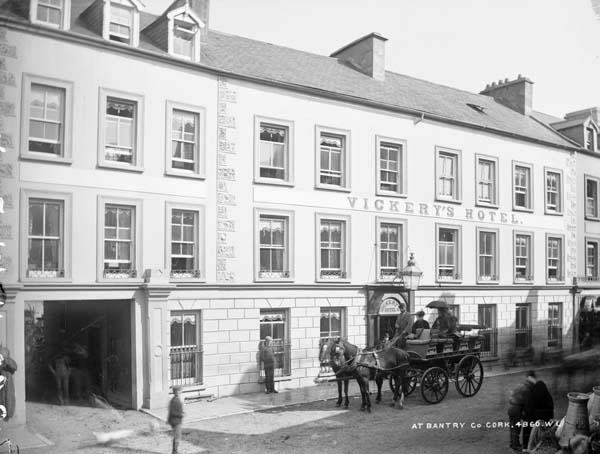
From National Library of Ireland photographic collection c 1890s. Burnt down during Troubles to prevent use by Black and Tans.
Former Hotel January 2016, currently being refurbished.

Courtesy Hazel Vickery:
http://www.irelandxo.com/sites/default/files/history_of_the_vickery_family_of_west_cork.pdf
The legend is that the Vickery family of Co. Cork are reputed to be descended from two brothers from the West Indies who were shipwrecked in Bantry Bay in the mid-18th century. This however is unlikely as there are Vickeries in early 18th century Bantry leases suggesting they were around pre 1700.
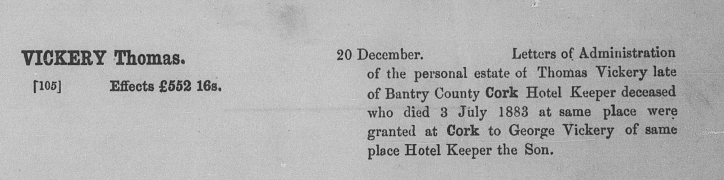
Thomas Vickery (1808-1883) was one of this family and married Mary Sullivan.
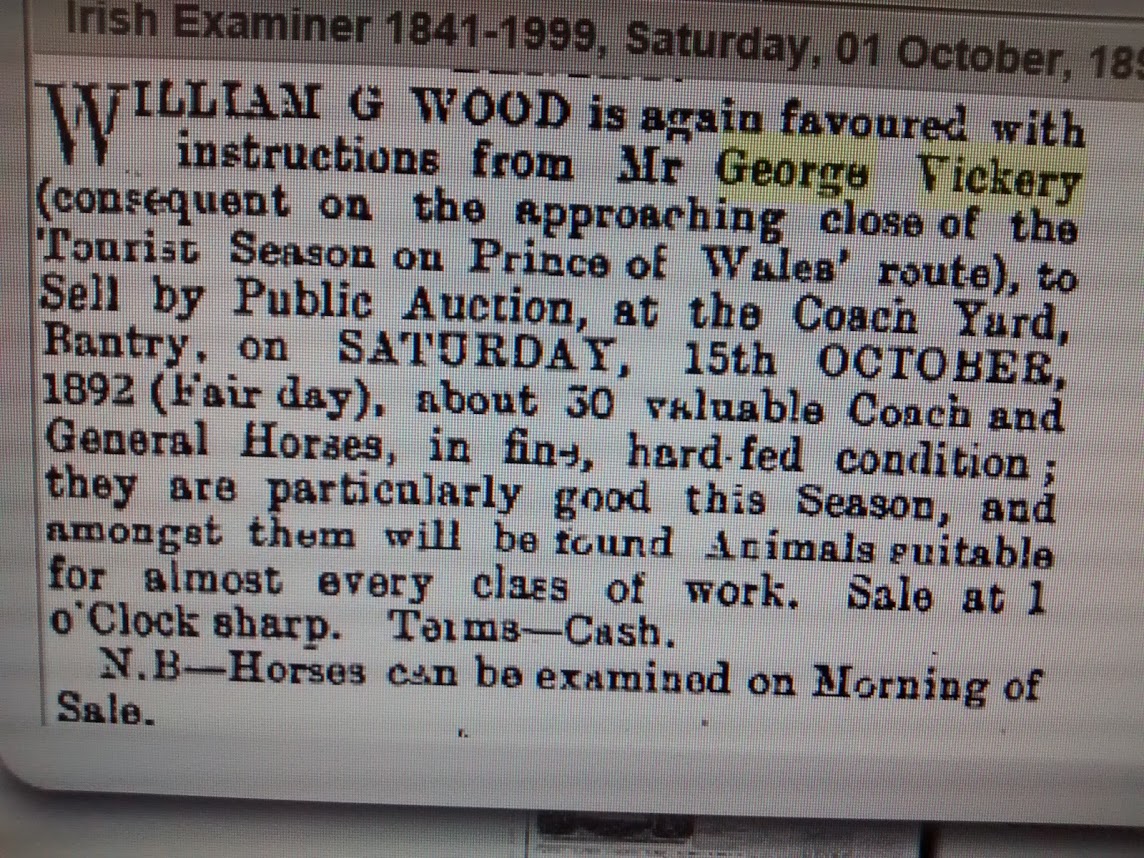
He established a hotel on the site of an old dye works in Bantry c1850 and it continued in business until late 2006 when it was bought by a development consortium. During the troubles the hotel was burned down and reconstructed with the novelty of a wash hand basin in every room.
In 1850 the hotel had 25 bedrooms and it was also the centre of a coaching establishment. This linked Bantry to Killarney on the emerging tourist route. Up to 100 horses were kept for this purpose.
Thomas Vickery’s nephew Robert Stanley Vickery stated that his uncle with establishing his hotel and postal arrangements for the establishment of tourist did more for Bantry and its neighbourhood then the Bantry (White) family ever did. Countless people had their first training in catering and business in the hotel and in the garage business the family also ran. Many went on to found their own businesses or work in others all over Ireland and the world.