‘The Saints of Togherdoo’ (Co. Tyrone) by Zechariah Worrell


jrirish's avatarIrish Methodist Genealogy

A little chapel was built here as early as 1761 and evidence of it remained into the 20th century.  “The ruins were in the corner of Edward Gibson’s field. The wicker ceiling was made of locally grown sally rods, peeled, interlaced and varnished. Sacking was laid on top of it and the thatch above it.”

However, it was Rev Zechariah Worrell (1760 – 1834) , a poet as well as an itinerant preacher, who was to write the little congregation into the annals of Irish Methodist history. In 1808, when leaving there, after a period of service, he wrote the poem ‘Farewell to Tagherdoo’ (sic) to be sung to the tune of ‘Haste again ye days of grace’. In fourteen verses he praised the Christian commitment and friendship he had experienced there.

Tradition records that his successor was less popular with the people and he sent some lines of his own to his predecessor ‘I…

View original post 13 more words
Alice Milligan (1866 – 1953) – poet, Irish nationalist …. and Methodist


jrirish's avatarIrish Methodist Genealogy

Alice Milligan was born at Gortmore, Omagh, County Tyrone the third of 13 children. She was educated at Methodist College, Belfast, Magee College, Derry, and King’s College, London and learned Irish in Dublin.  

She was a friend of James Connolly, a member of Inghinidhe na hEireann and of Sinn Fein. For some years Alice was organiser for the Gaelic League.  She published poetry in the United Irishman among other journals, and in 1895, with Ethna Carbery founded and edited the Northern Patriot. She also edited the Shan Van Vocht from 1896 to 1899. She was a founder member of the Ulster Anti-Partition Council.

In 1900 she wrote a play, The Last Feast of the Fianna, for the Irish Literary Theatre, and The Daughter of Donagh for the Abbey Theatre. In 1898 she published a Life of Wolfe Tone and later a novel, A Royal Democrat as well as…

View original post 92 more words

The Irish Methodist roots of Stanley Baldwin, British Prime Minister


jrirish's avatarIrish Methodist Genealogy

Stanley Baldwin, 1st Earl Baldwin of Bewdley, KG, PC (1867-1947) was a British Conservative politician who served on three occasions as Prime Minister of the UK. (1923-4; 1924-9; 1935-7). During his latter period in office he oversaw the abdication of King Edward VIII.

His mother, Louisa MacDonald, was the grand-daughter of James MacDonald who was called into the ministry in Ireland by John Wesley in 1784. Her father was George B MacDonald who entered  the itinerancy in 1825 and her brother was Frederic W MacDonald who served as President of the British Wesleyan Conference in 1899. There were also Methodists on the Baldwin side of the family descended from Rev Jacob Stanley, Sen.

Through his mother’s family, Stanley Baldwin was also a first cousin of the writer and poet Rudyard Kipling.

View original post

‘Swaddlers’ … An early nickname for Methodists in Ireland


jrirish's avatarIrish Methodist Genealogy

At the request of a small society formed by a soldier in 1745, John Cennick who had been one of Wesley’s preachers but was now a Moravian, came to Dublin in June 1746 and began to preach in a chapel in Skinner’s Alley hired from the Baptists.

Charles Wesley explained how the ‘Swaddler’ title originated (in his diary entry for 10th September 1747).

“One I observed crying, ‘Swaddler,swaddler!’ (our usual title here). ……. We dined with a gentleman, who explained our name to us. It seems we are beholden to Mr Cennick for it, who abounds in such like expressions as ‘I curse and blaspheme all the gods in heaven, but the babe that lay in the manger, the babe that lay in Mary’s lap, the babe that lay in swaddling clouts [clothes], etc’. Hence they nicknamed him ‘Swaddler, or Swaddling John’. And the word sticks to us all, not excepting the clergy.”

View original post 24 more words
Methodism – at the centre of Ireland


jrirish's avatarIrish Methodist Genealogy

More interesting facts from Irish Methodist Genealogy ……..

“In 1824 a House of Commons committee recommended a townland survey of Ireland, with maps at a scale of 6 inches, to facilitate a uniform valuation for local taxation. The Duke of Wellington, then prime minister, authorised this, the first Ordnance Survey of Ireland. The survey was directed by Colonel Thomas Colby, who commanded officers of the Royal Engineers and three companies of sappers and miners.” (Ordnance Survey Memoirs of Ireland)

The Methodist Church at Athlone bears the British Government arrow survey mark where the Ordnance Surveyors started mapping Ireland – it was regarded as the centre point of Ireland.

View original post

John Wesley’s twenty one visits to Ireland


jrirish's avatarIrish Methodist Genealogy

Those of us who pursue an interest in Irish Methodist genealogy look to John Wesley as having been the instigator of the eighteenth century religious revival in Ireland.

He arrived for the first time at St. George’s Quay in Dublin on Sunday, 9th August 1747 and bade farewell in the same city on Sunday, 12th July 1789. In the intervening forty-two  years, about five and a half were spent in Ireland, during the course of twenty-one visits. The County of Kerry appears to have been the only one he failed to reach as he travelled through the length and breadth of the land.  When English Methodists questioned his allocation of so much time he responded, “Have patience, and Ireland will repay you”. 

History has proved his words to have been prophetic and Irish Methodists have carried their faith with them as they have become widely dispersed throughout the world.
View original post

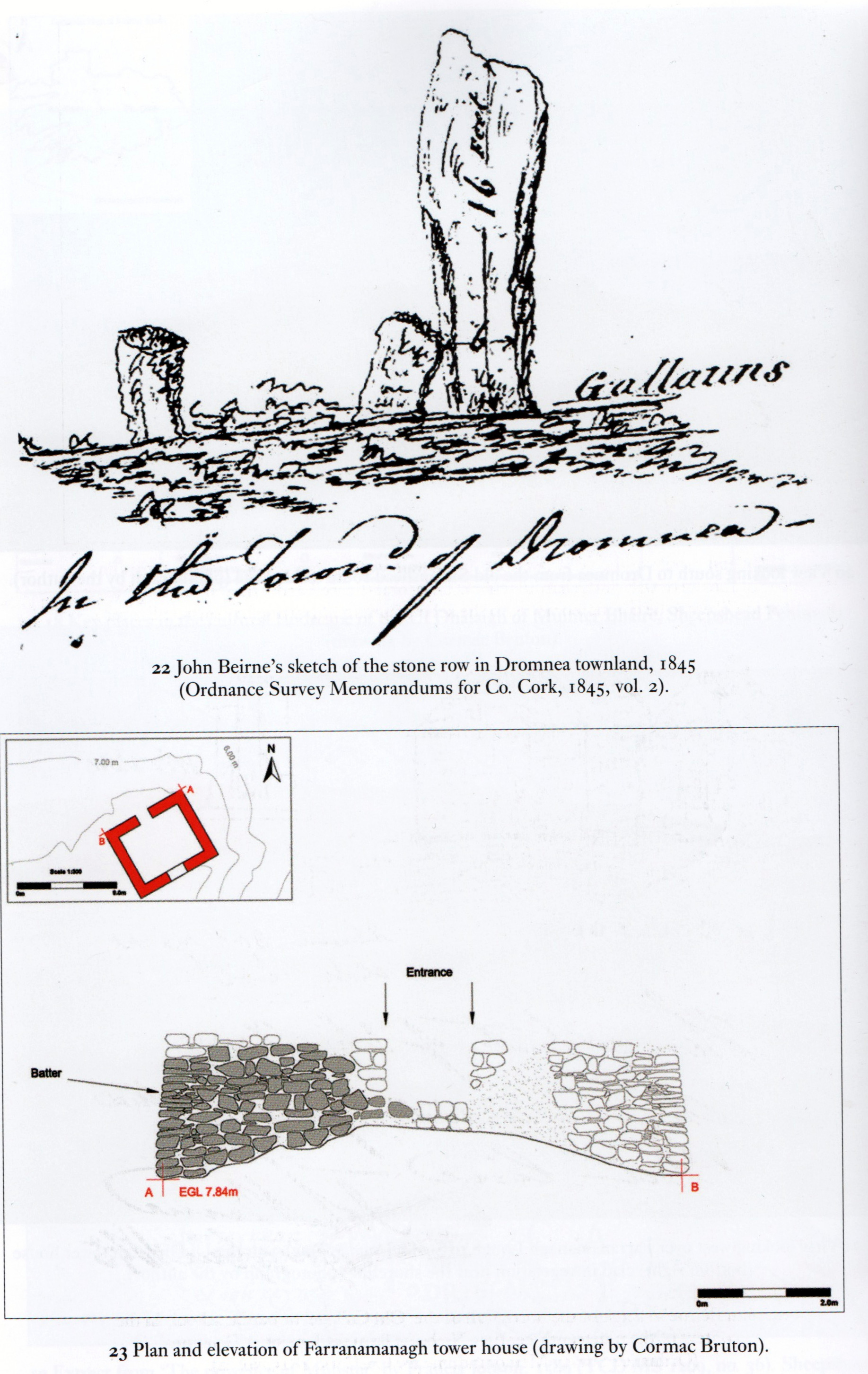
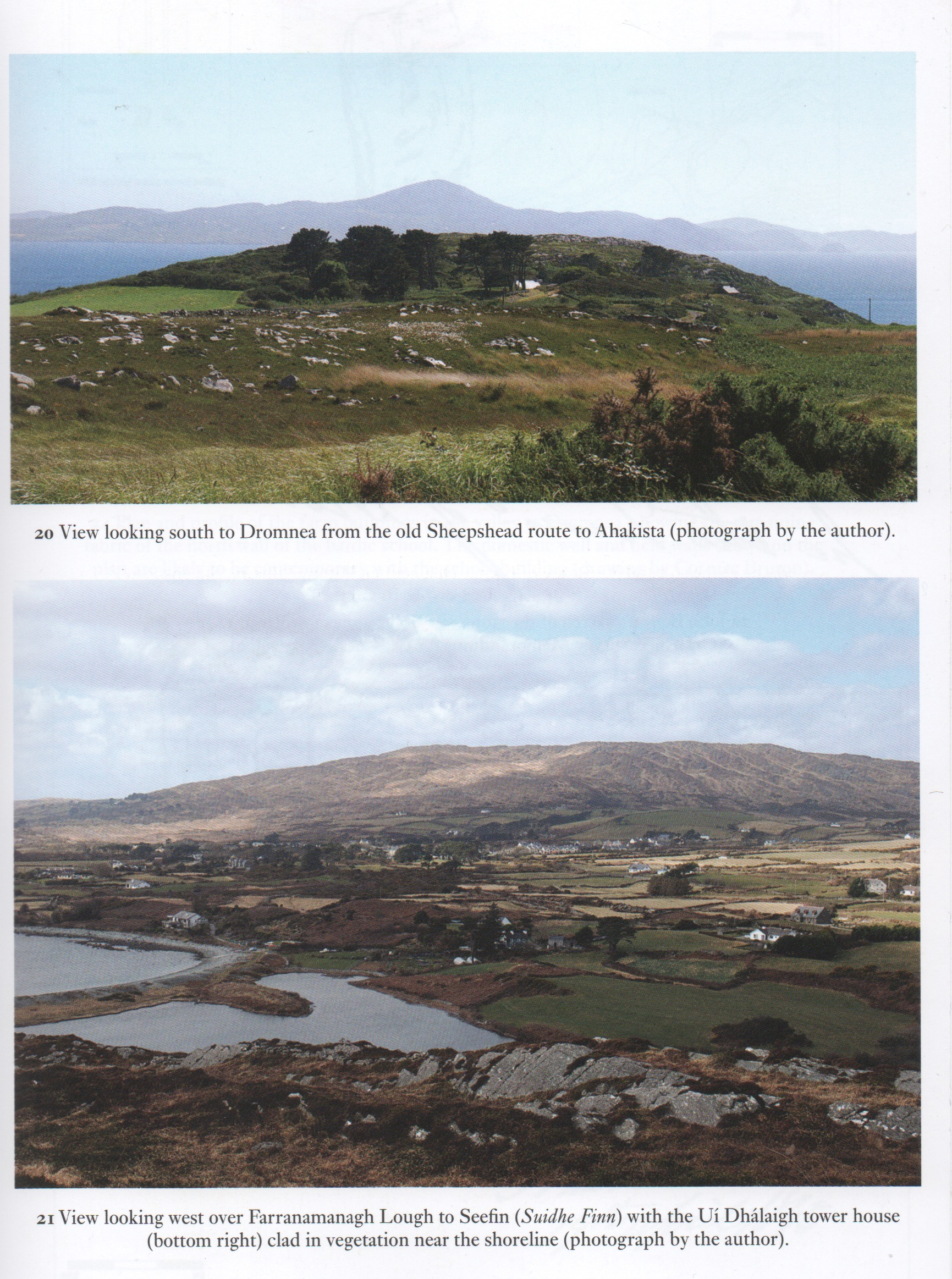
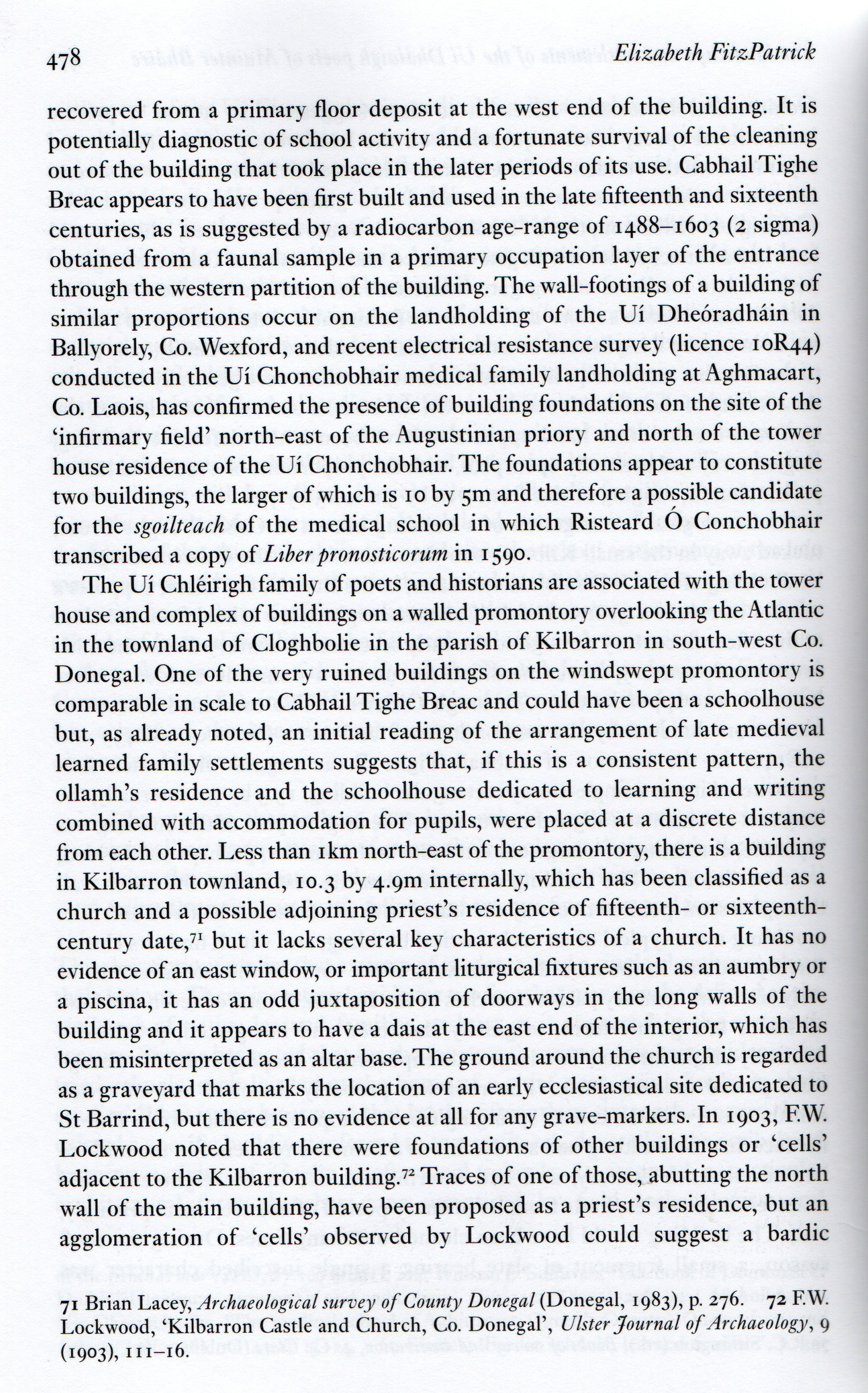
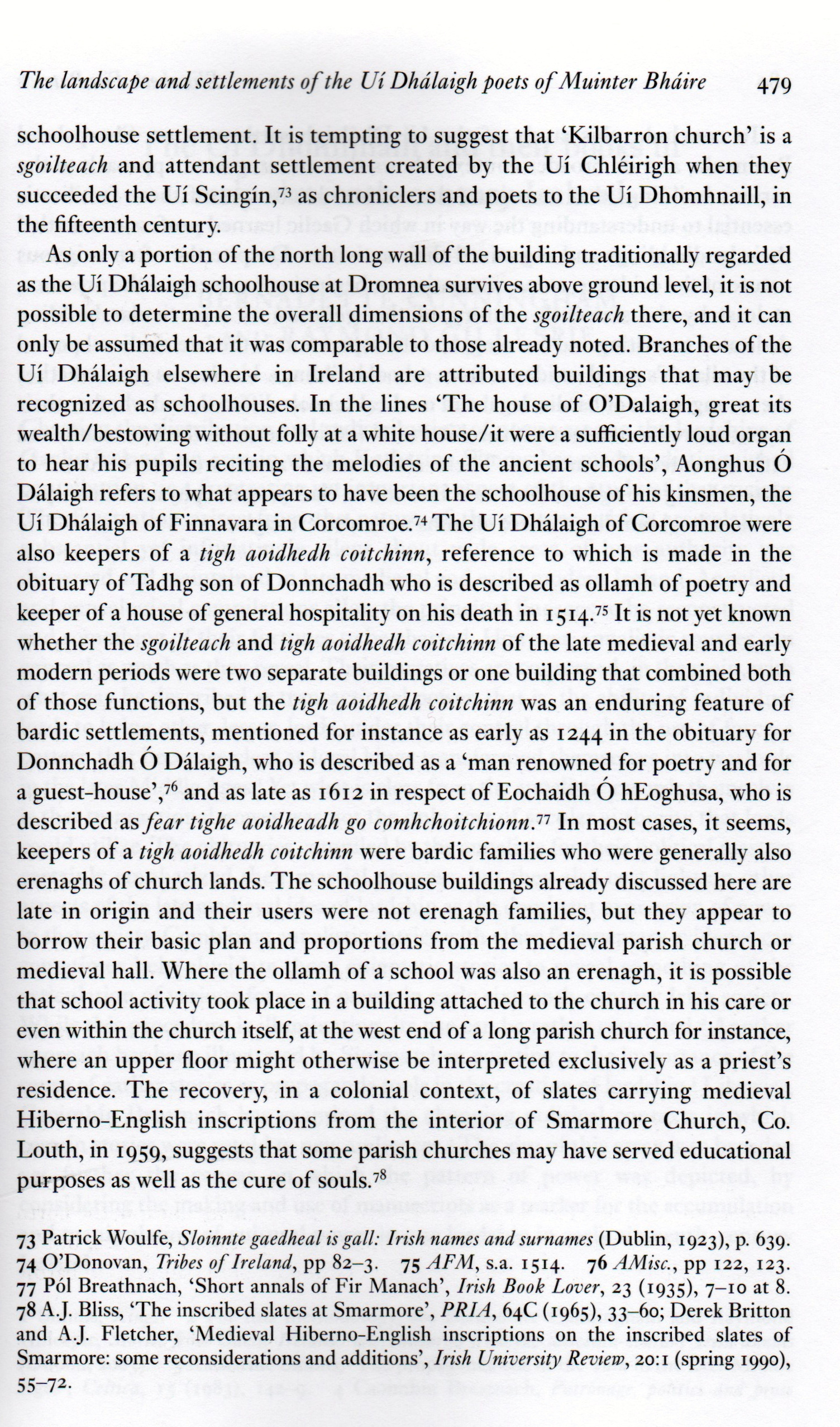
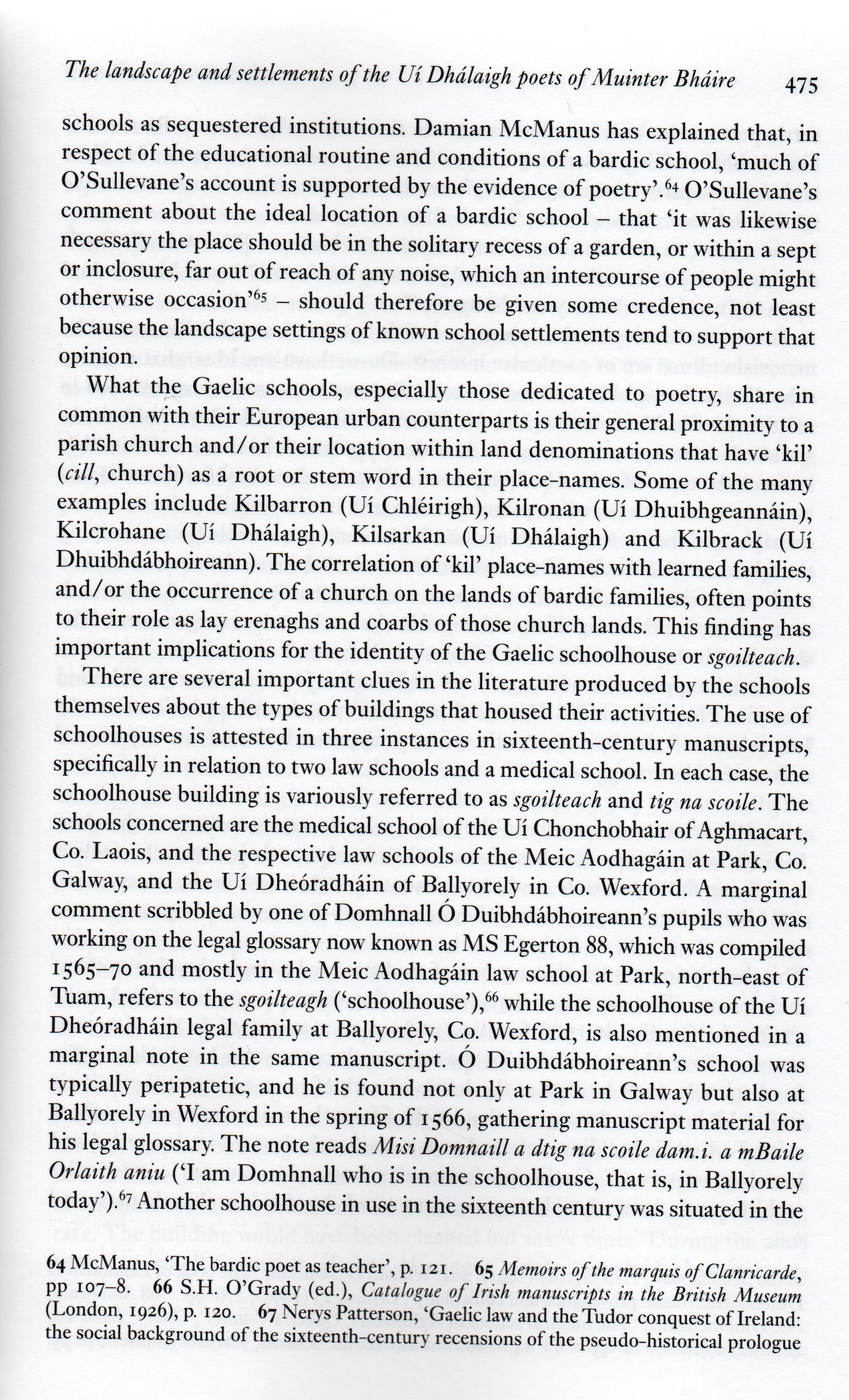
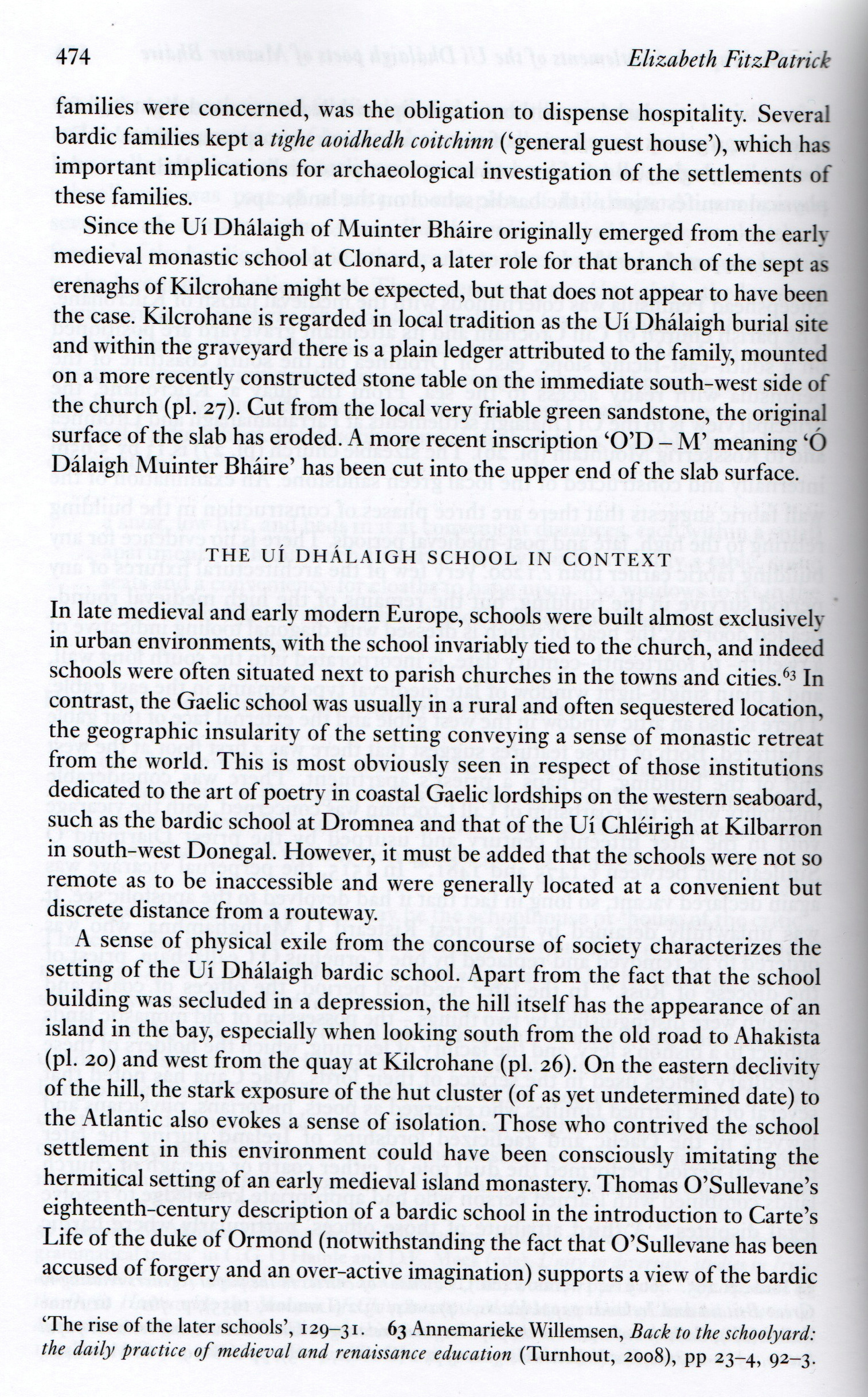
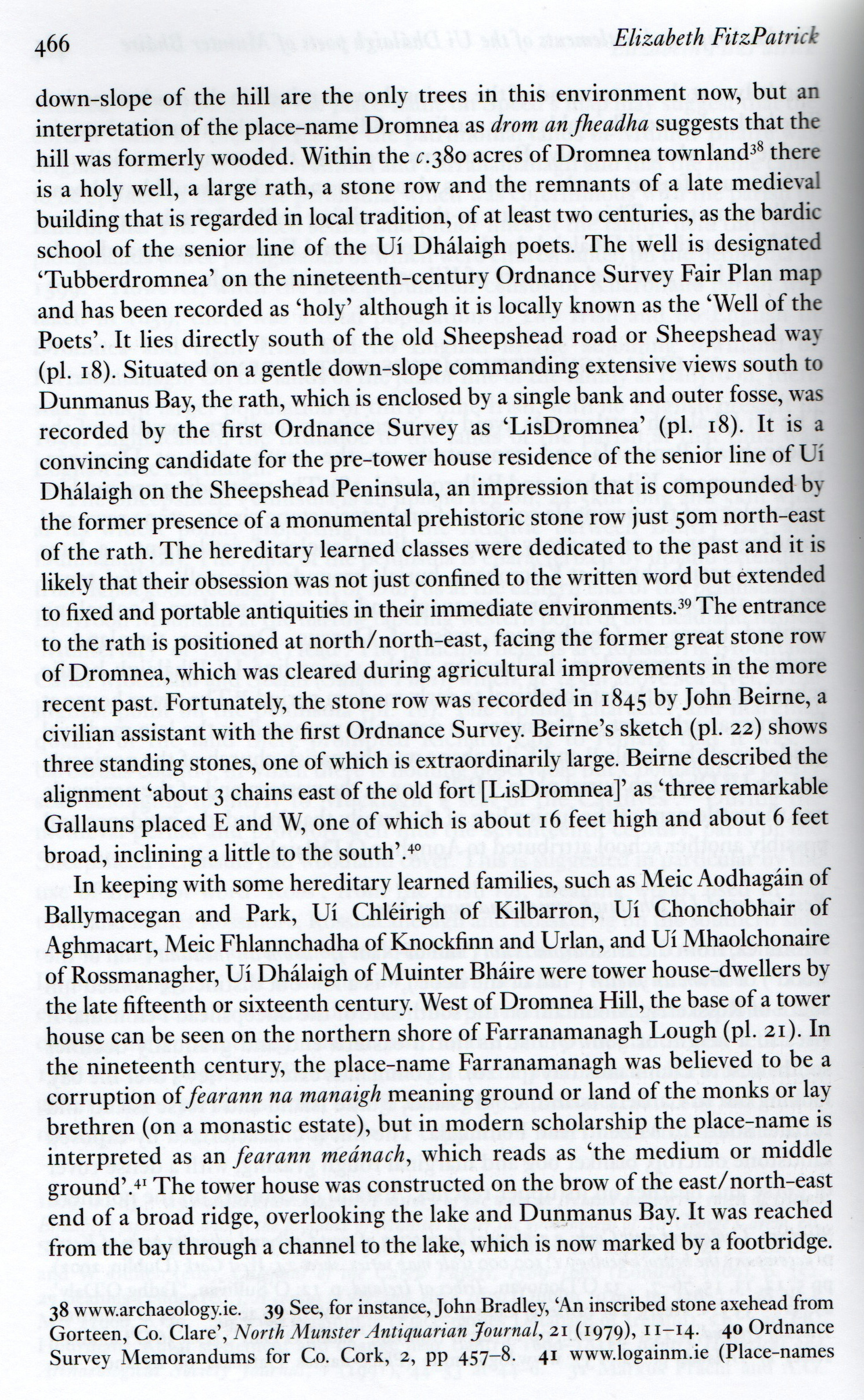
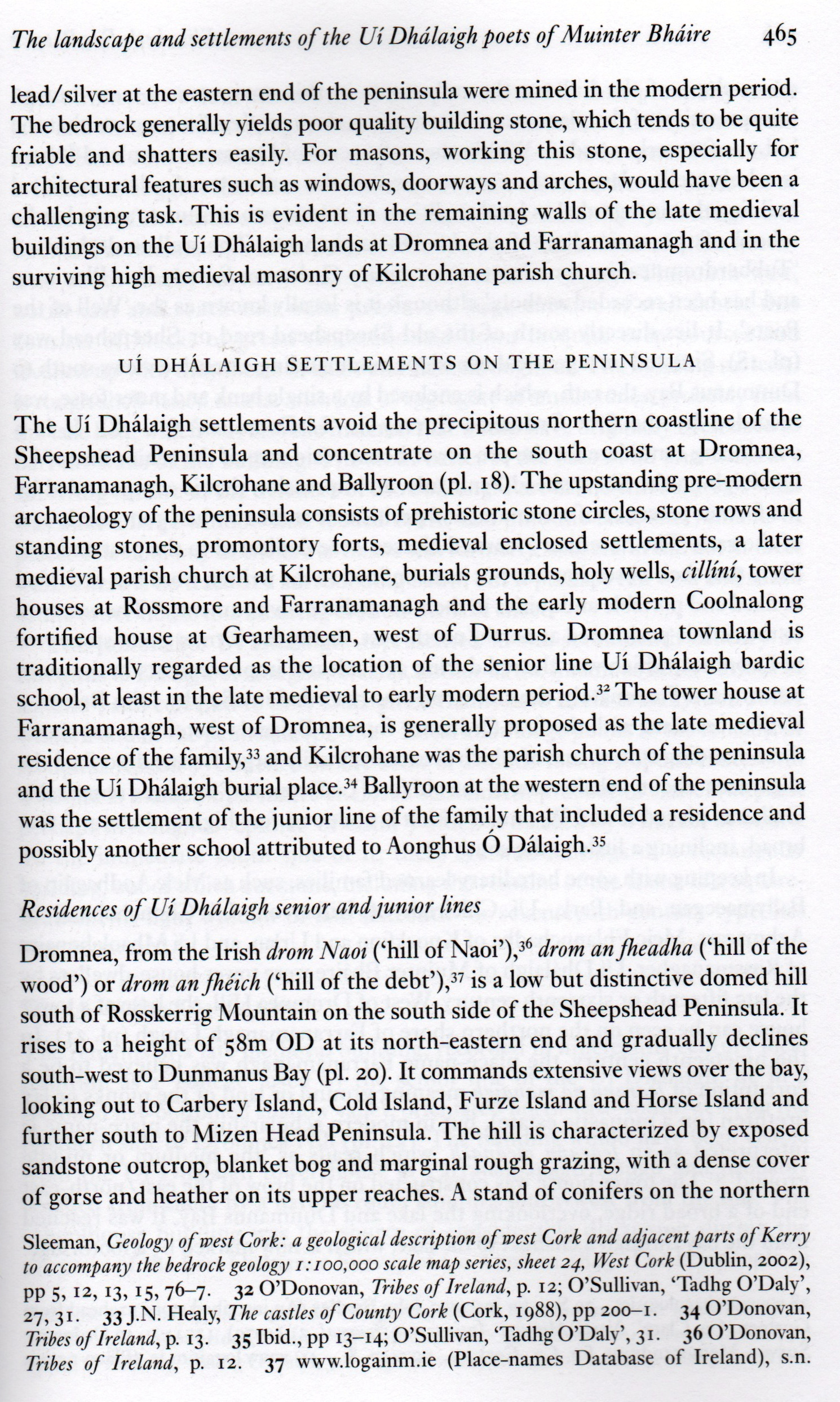
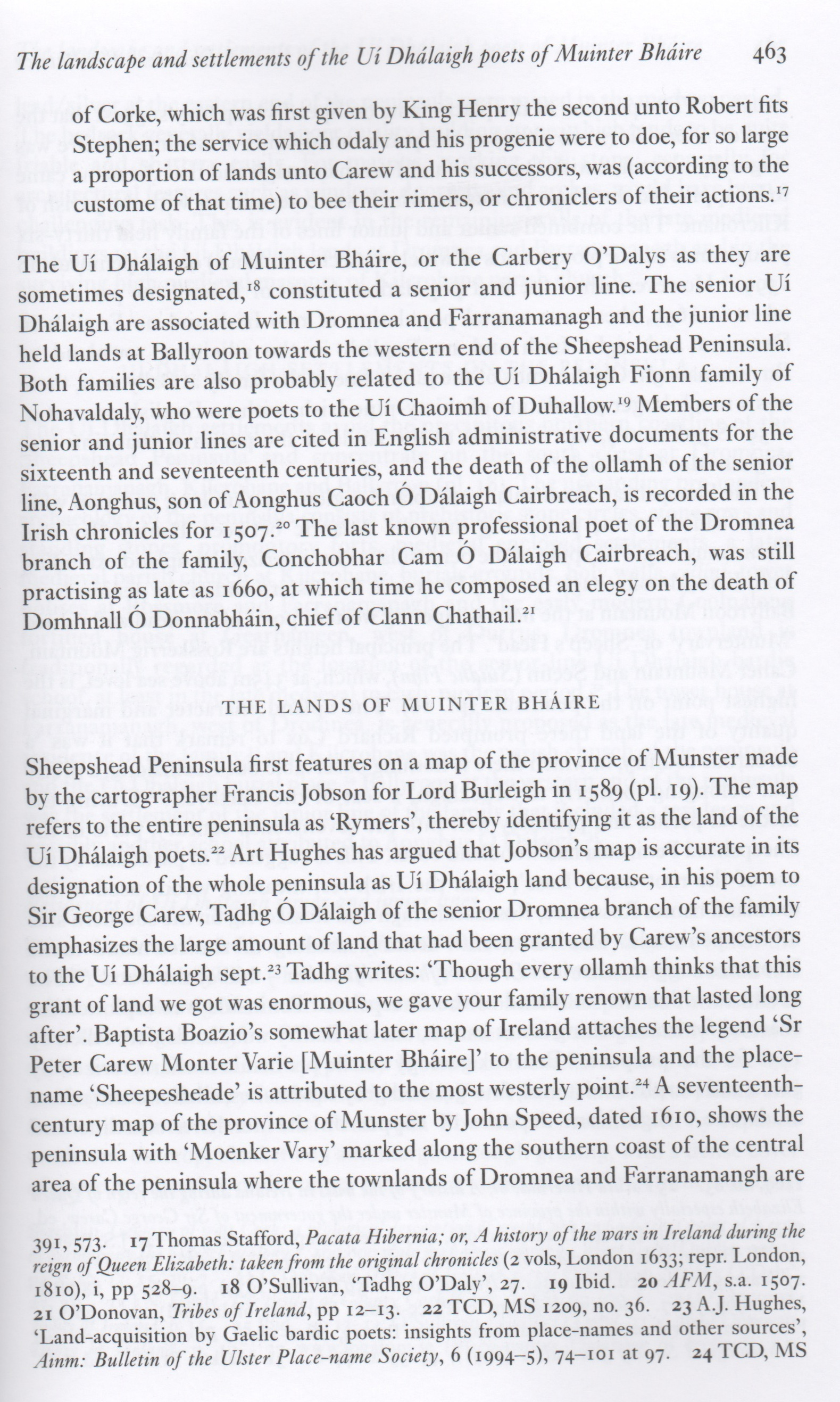
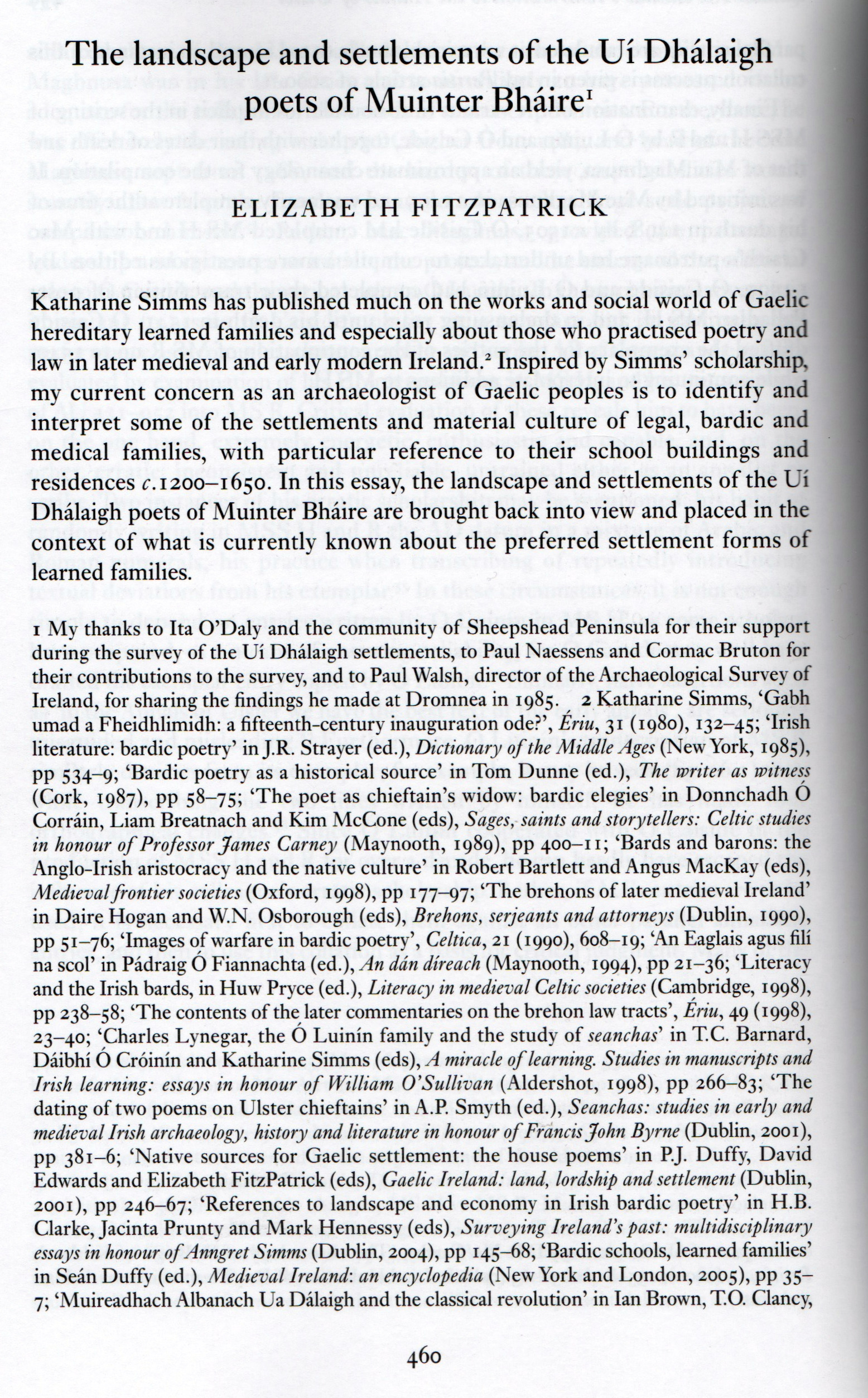
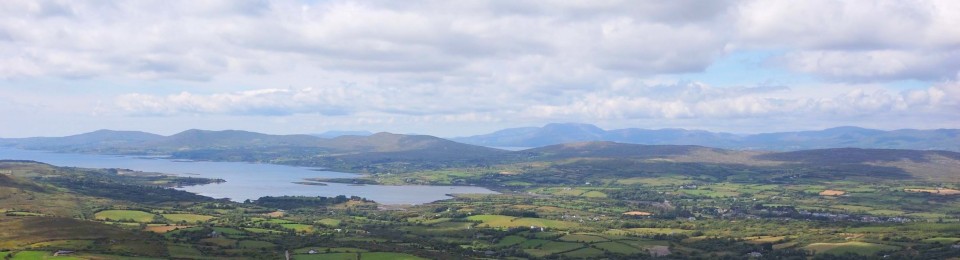
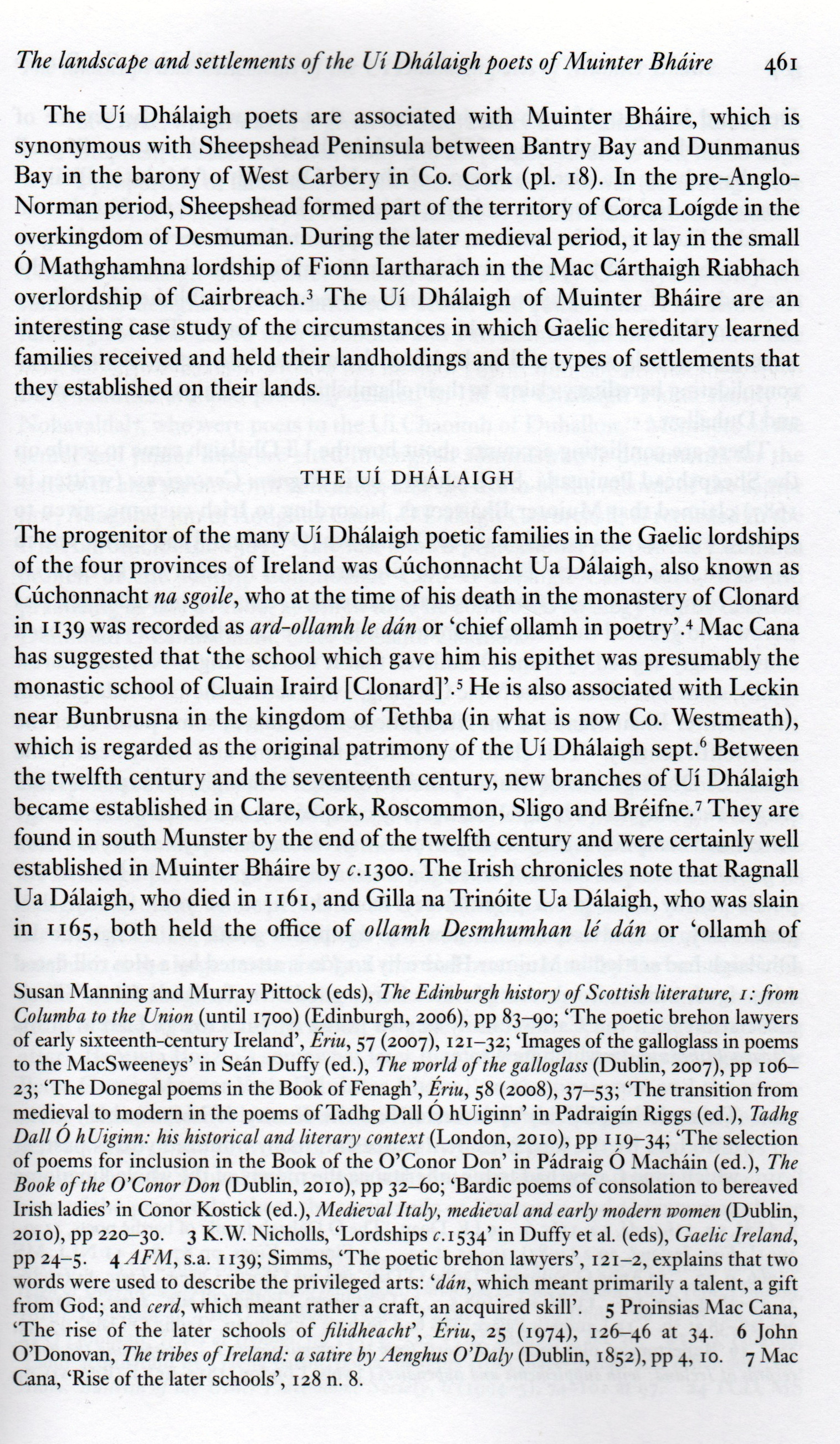
The Ó Dalaighs (Dalys) of Muintervara, West Cork, Rymers/Poets to the McCarthys and O’Mahonys from c 1300, founders of Bardic School, by Oral Tradition where the Sons of the King of Spain Attended.


https://www.google.ie/maps/place/Dromnea,+Co.+Cork/@51.5847637,-9.6764086,15z/data=!3m1!4b1!4m2!3m1!1s0x48459d1f5958ced3:0x2600c7a819bb5172

The Ó Dalaighs (Dalys) of Muintervara, West Cork, Rymers/Poets to the McCarthys and O’Mahonys from c 1300, founders of Bardic School, by Oral Tradition where the Sons of the King of Spain Attended.

Courtesy Dr. Jane Fitzpatrick, Four Courts Press.

http://www.thesheepsheadway.ie/index.cfm/page/kilcrohanechurch

Click to access odaly-bardic-school-kilrohane.pdf

Machnamh an Duine Dhoilíosaigh (The Melancholy Man’s Reflections), Seán Ó Coileáin, (1754-1817) (John Collins, The Silver Tongue of Carbery), and his Manuscripts.

Séan Ó Coileáin (1754-1817), Carbery Poet, ‘The Silver tongue of Munster’, born into an Ireland of Broken Abbeys, Roofless Churches, Battered castles, Burnt Houses, Deserted Villages united in common Poverty. Attendance 1773 at Coimba, Portugal, College for Christian Refugees.

John J. McCarthy, Tullig, Durrus, Co. Cork and Nebraska, Rancher, Poet US Politician, Near Casper, Wyoming home to many from Muintervara.

Jeremiah Joseph (JJ) Callanan, 1786-1829, Some poems From Irish, Dirge of O’Sullivan Bere, The lament of O’Gnieve, The Outlay of Loch Lene, The Convict of Clonmel. Original English Gougaune Barra (I too shall be gone;- but my name shall be spoken When Erin awakes, and her fetters are broken), Oh Say, my ‘Brown Drimin’, On Cleada’s Hill (Mountain range between Millstreet and Killarney) the Moon is Bright, Poetry Hot Spots 1810s 1820s Carbery, Caheragh, Drinagh and Castlehaven. Extended Cork Callanan Medical/Apothecary Family. Patron Dr. Burke, Bantry 1820s.

1414. Treatise on Medicine translated by John O’Cullinane, Physician to Donal McCarthy Reagh and his tutor Pierce Ó h-Uallacháin, begun at Kilbrittain Castle.

Oileán ‘sea Cléire, Memories of Tráigh Chiaráin, A Cape Clear Sailorman, Lamentation for my Mother, The Fastnet, The Dance, Dánta de Pat the Poet Cotter (John K. Cotter) as ‘An Logainmníocht in Óileán Cléire

31-Scan 1759 30-Scan 1758 29-Scan 1757 28-Scan 1756 27-Scan 1755 26-Scan 1754 25-Scan 1753 24-Scan 1752 23-Scan 1780 22-Scan 1779 21-Scan 1778 20-Scan 1777 19-Scan 1776 18-Scan 1775 17-Scan 1774 16-Scan 1773 15-Scan 1772 14-Scan 1771 13-Scan 1770 12-Scan 1769 11-Scan 1768 10-Scan 1767 09-Scan 1766 08-Scan 1765 07-Scan 1764 06-Scan 1763 05-Scan 1762 04-Scan 1761 03-Scan 1760 02-Scan 1781 01-Scan 1782

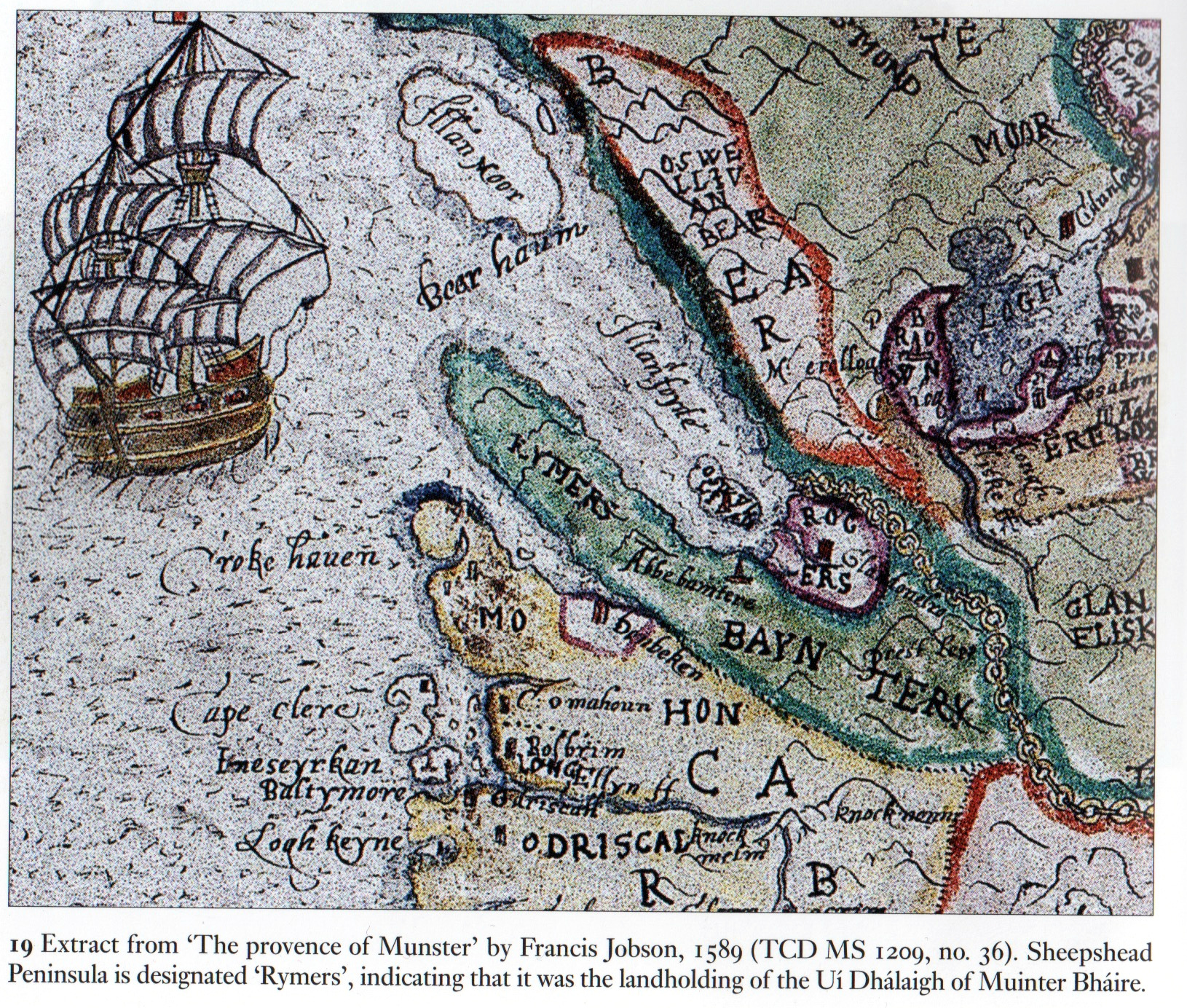
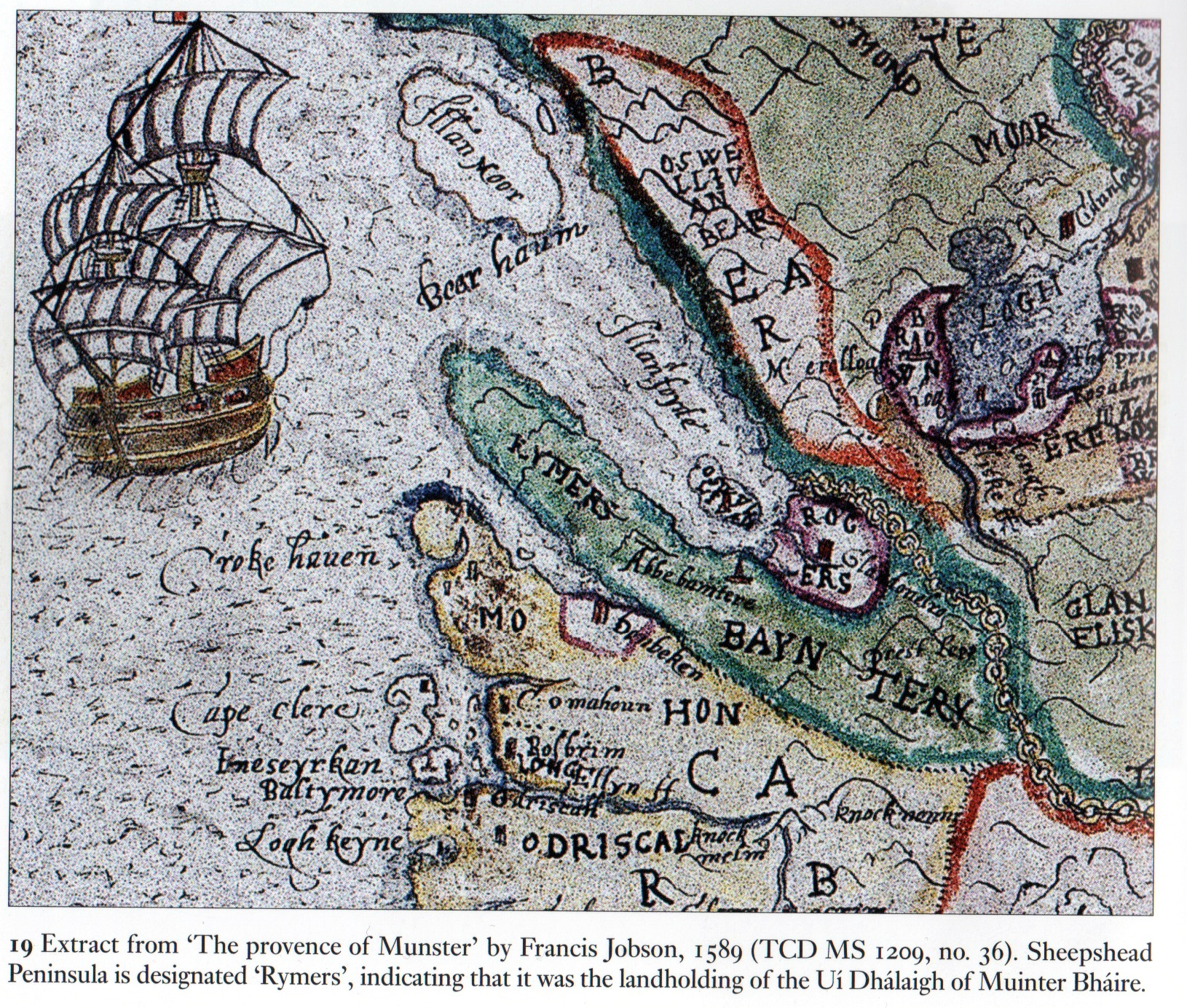
Francis Jobson’s Map of West Cork, 1589 including Cape Clear (Iniskyran), Baltimore, O’Driscolls, Rosbrin, Crookhaven, Bantry, Muintervara land of Rymers (O’Daly’s Bardic School), O’Sullivan Bere, Priest’s Leap.

Tags

, , , ,


Francis Jobson’s Map of West Cork, 1589 including Cape Clear (Iniskyran), Baltimore, O’Driscolls, Rosbrin, Crookhaven, Bantry, Muintervara land of Rymers (O’Daly’s Bardic School), O’Sullivan Bere, Priest’s Leap.

From Dr. Elizabeth Fitzpatrick on the Bardic School.

Map of Co.Cork and Kerry, 1575.

1588 Map of Beare and Bantry from Public Record Office, London, showing Soldiers besieging Castle, Deer in Glangariff, Churches, castles, Houses, Ships, with Commentary, 1958, by Bantry Antiquarian Paddy O’Keeffe.

John Speed, Map of West Cork, 1630.

Map of Carbery West Cork in Tudor Times.

Early Map of Baltimore, West Cork (Between 1605-1640), showing English Settlement, Dunasead Castle, Sherkin Island, Loo Rocks, Storehouse for Preserved Fish, 12 Fishing Boats, Seine Pilchards, 5 Possible Royal Navy Boats.


1-Scan 1754