This gallery contains 16 photos.
Originally posted on Roaringwater Journal:
It’s Halloween – what better time to take a wander round an old graveyard! Fortunately, we’re…
30 Sunday Oct 2016
Posted in Uncategorized
This gallery contains 16 photos.
Originally posted on Roaringwater Journal:
It’s Halloween – what better time to take a wander round an old graveyard! Fortunately, we’re…
29 Saturday Oct 2016
Posted in Uncategorized
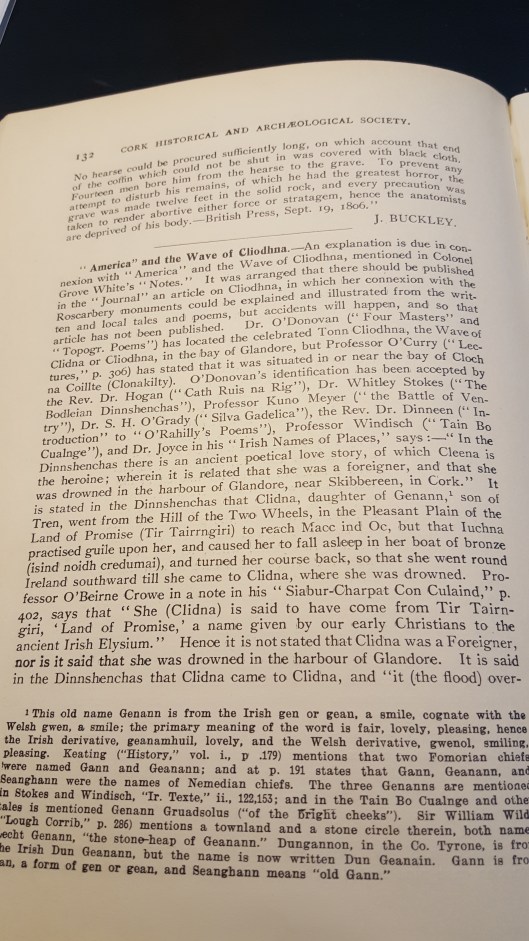
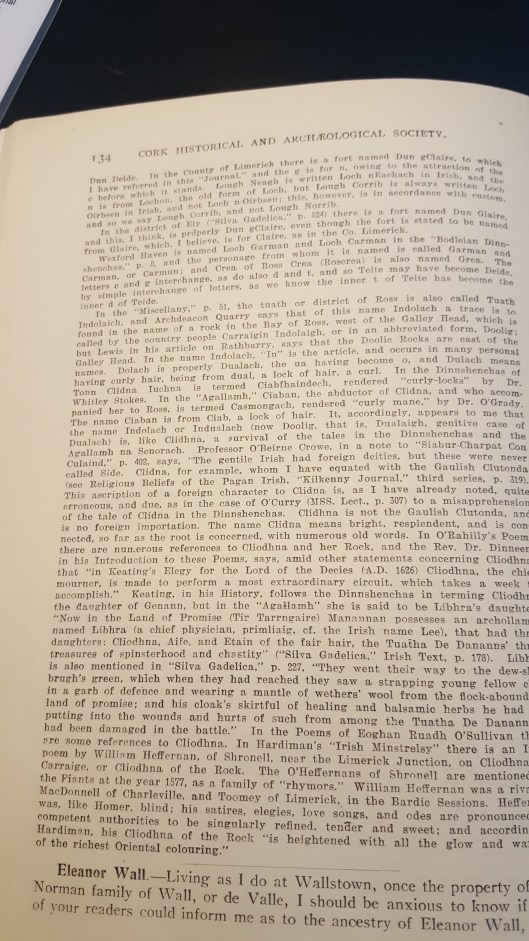
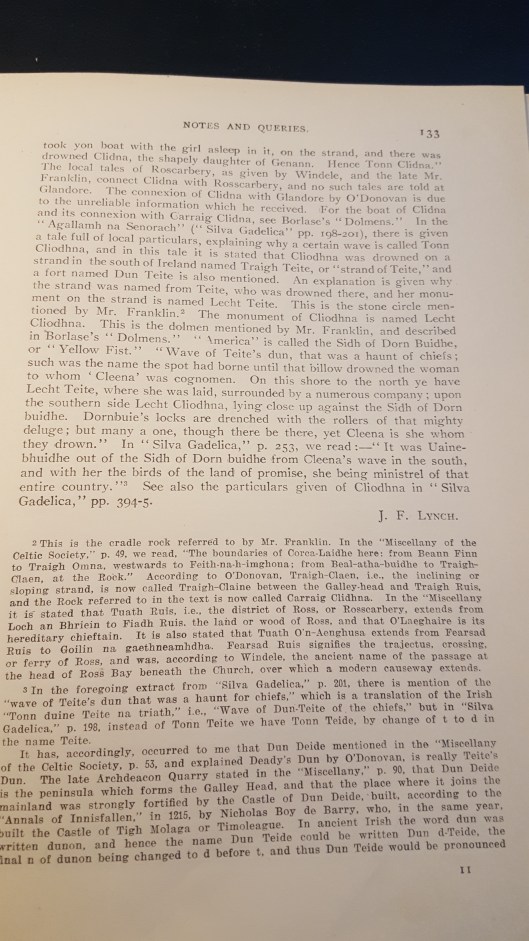
The Wave of Tonn Cliodhna, Glandore, West Cork Associated with the O’Donovans and in Dinnseanachas (accumulated Lore)
Cleena is mentioned by the Irish antiquarian John O’Donovan.[10] Writing in 1849 to a friend, O’Donovan says:
When my grandfather died in Leinster in 1798, Cleena came all the way from Ton Cleena to lament him; but she has not been heard ever since lamenting any of our race, though I believe she still weeps in the mountains of Drumaleaque in her own country, where so many of the race of Eoghan Mor are dying of starvation.
Courtesy 1911 Journal of Cork Historical and Archaeological Society
29 Saturday Oct 2016
Posted in Uncategorized
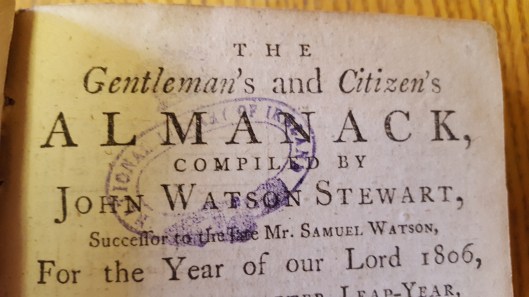
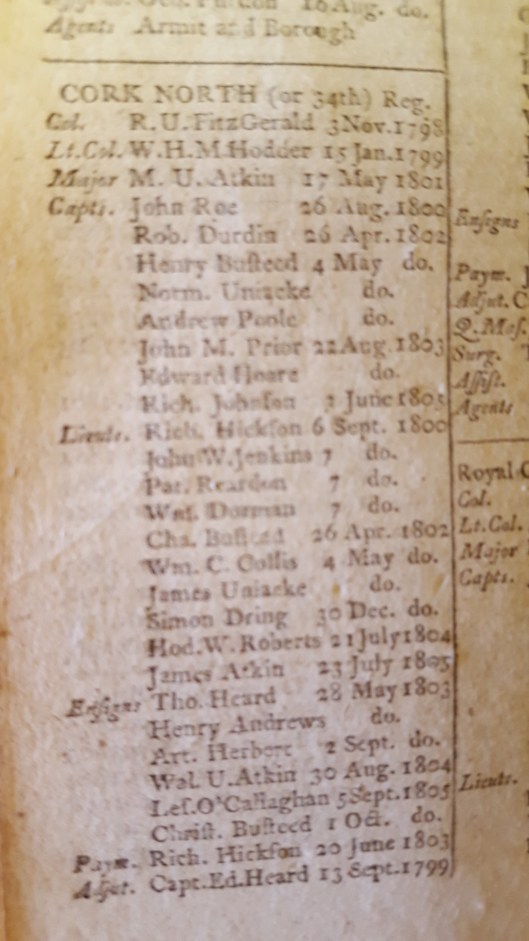
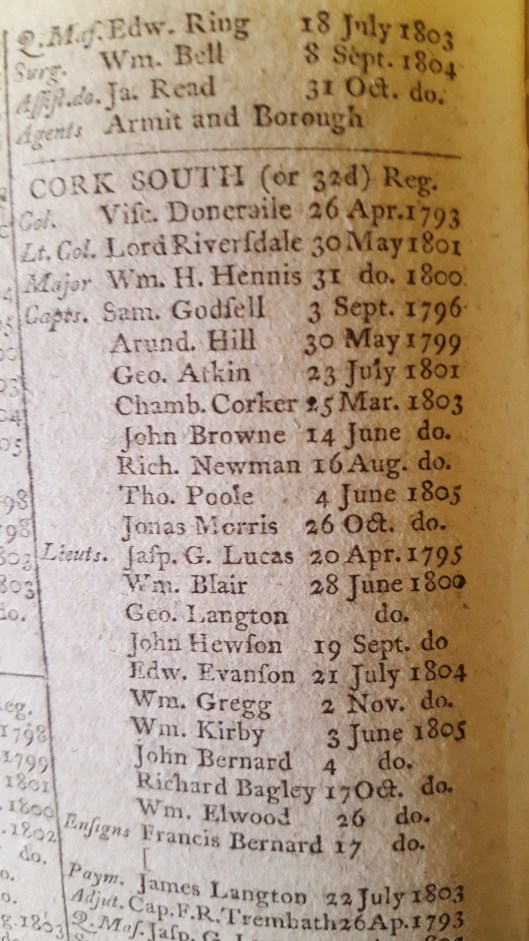
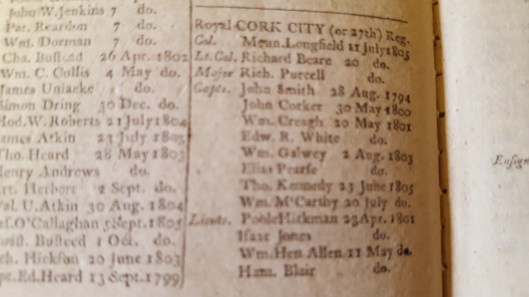
1806. South Cork or 32nd Regiment, North Cork or 34th Regiment, Royal Cork City or 27th Militias with Date of Appointment of Officers.
Included are Lieutenants William Blair (1800) Hamilton Blair probably a Revenue Officer (1803) of Durrus Blair’s Cove family. Edward Evanson (1804) also probably of one of the Durrus Evanson families.
28 Friday Oct 2016
Posted in Uncategorized
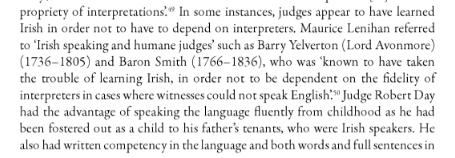
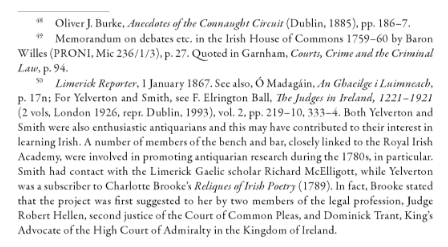
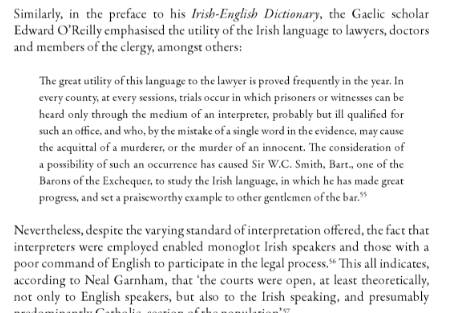
Irish Speaking Judges, James Philpott Curran, Robert Day, Barry Yelverton (Baron Avonmore), Dominic Trant, Kings Advocate in Admiralty Court.
The Laws and Other Legalities of Ireland, 1689-1850
Dominic Trant:
Some Cork Lawyers:
https://docs.google.com/spreadsheets/d/1mMDGaZCW9Z6Cq_C_gwm_FB2orzTe2WxR0WcLXjZZO40/edit#gid=0
| 1736-1805 | Barry Yelverton BA TCD, First Baron Avonmore | Admitted Middle Temple 1759, Irish Bar 1764, MP Carrigfergus, Attorney General, Chief Baron Irish Court of Exchequer 1783 | Kanturk, Eldest son of Francis late Taught by Rev Charles Egan Charlevile School, he himself taught in Dublin acting as Usher to Dr. Andrew Buck who ran the Hibernian Acaademy. Learned irish. | Admission Middle Temple Register 1661-1781, Vol 1, Linen Hall Library Belfast. Supported repeal of Penal Laws, m Mary Nugent, Clonlost, Co. Westmeath | Friends with Capuchin Father Art O’Leary (born Dunmanway wit, public figure) 1786 |
| 1750-1817 | John Philpot Curran TCD | Barrister, MP, Patriot, Poet, Orator, Master of the Irish Rolls, Privy Councellor | Son of James and Sarah nee Philpot. Ed Nicholas Boyce Midleton Ferr School under Carey m Sarah Creagh. Fluent Irish speaker from childhood. Appeared in the 1798 trials for Napper Tandy, William Drennan, Wolfe Tone opposed the Act of Union. | Curran, John Philpot b. July 24, 1750 d. October 14, 1817 Irish politician and judge. Born in Newmarket, Cork, where his father, a descendant of one of Cromwell’s soldiers, was seneschal to the manor-court, Curran was educated at Midleton, through the kind help of a friend, the Rev. Nathaniel Boyse, and at Trinity College, Dublin. In 1773, having taken his MA degree, he entered the Middle Temple. In 1774 he married a lady who brought him a small dowry; but the marriage proved unhappy, and Mrs. Curran finally left her husband. In 1775 Curran was…[Read More] (Bio by: Connie Nisinger) Saint Patrick’s Cathedral, Dublin, County Dublin, Ireland |
Memorial erected by sons in Newmarket Graveyard. Features in James Joyce Ulysses ‘Who would have you now like John Philpot Curran? Psha (7.739-40) |

25 Tuesday Oct 2016
Posted in Uncategorized
Ref. U140/K/3/109 Date: 1840-46 Level : file Title: Scrapbook Page Extent: 4 items Scope and Content: 27 Jul 1844 Circular letter from Thomas Swanton, ‘Ballidahob’ (Ballydehob), Near Skibbereen regarding formation of society, the Cork and Kerry Irish Poetry and Music Society. (2pp)
Courtesy Cork Archives, Dowden papers:
25 Tuesday Oct 2016
Posted in Uncategorized
1839 Applications for presentments to be laid before the Grand Jury of the County of the City of Cork, Spring Assizes, 1839. Contains applications for Payment to B.Neenan £3 for half year’s salary as interpreter of the Irish language.
2. Spring 1839 Printed schedule of applications for presentments to be laid before the Grand Jury of the County of the City of Cork, Spring Assizes, 1839. Contains applications for repairing roads in North and South Liberties, new roads and works including new line of road from Cork to Blarney, new road in the city near Paul Street; establishment items such as B.Neenan £3 for half year’s salary as interpreter of the Irish language, £800 to Governors of the House of Industry, dispensaries, malicious damages. (14pp
Courtesy Cork Archives. Richard Dowden papers:
Magistrate:
| From 1837 | John Borlease Warren | Seneschal of Macroom, Kilcrea, Blarney | Appointed by his relation Lord Bandon. Macroom held in Courthouse, Kilcrea in two farmhouses. | John Borlease Warren (1799-, Magistrate also for Kerry, Warren Grove, Crookstown and Sillerdane Cottage, Kenmare, Co. Kerry, brother of Sir Augustus Warren, m 1823 Mary d Rev R. Warren, Involved in attempts to amicably resolve tithes 1838. 1835 Subscriber Lewis Topographical Dictionary of Ireland 1837. Related and tenant of Lord Bandon. Lord Bandon as Lord of Manor of Macroom, Kilcrea and Blarney appointed him Seneschal to Manor Courts replace Mr. Brown who heard cases to his death at 87 in 1836. Permitted witnesses to give evidence in Irish. |
…
…
| 1815 | John Eugene McCarthy | Middle Temple since 1815 practised as Conveyancer in England, Seneschal of Manor of Rathbarry and Gorthnahoena since 1826 and for some time Timoleague. Kings Inns 1837. | Rathbarry, Rosscarbery. 1st son of Eugene McCarthy, Gent, Blennerville, Co. Kerryand Ellen O’Sullivan in 1837 for Kings Inns , Newtown, Co. Cork. Rathbarry. Conducted when requied Manor Court as Senescal in Irish. Purchased a house and garden for bailiff to avoid being dependant on him. Earlier Seneschal used a pub. Advised Mr. Spring Rice (Lord…Mount..) on proposed changes to legislation | 1837 Parlimentary report. |
….
24 Monday Oct 2016
Posted in Uncategorized
1852. Clonakilty Board of Guardians Records: Letter received from 2nd Regiment stating that a recruiting party is to attend in Bandon ‘and that if any paupers in the workhouse are willing to enlist that they may get directions to proceed to Bandon’.
Courtesy Cork Archives:
24 Monday Oct 2016
Posted in Uncategorized
10 Mar 1853 Resolved, Castletownbere Board of Guardians: ‘that the following class of persons be considered as unfit subjects for medical relief: 1 All parties deriving pay from the crown; 2 Farmers having four cows or more; 3 Farmers having less than four cows but known to have other means, such as money or employment; 4 Tradesmen while having employment; 5 Servants in gentlemen’s employ; 6 Shopkeepers, publicans, and butchers’.
Courtesy Cork Archives:
24 Monday Oct 2016
Posted in Uncategorized
19 Sep 1918 Letter from Colonel Kirkwood, Commanding Berehaven Garrison, making formal application for the handover of workhouse buildings, Context Naval Base World War 1 Bere Island.
Likely in connection with World War 1 then a naval Base on Bere island.
Courtesy Cork Archives:
5 Sep 1918 Resolution expressing willingness to handing over workhouse buildings to the military authorities, subject to reimbursement. It was also resolved to seek to acquire the use of Cametringane House as a temporary infirmary and fever hospital. A committee to deal with the military and make hospital arrangements was also created. [Soldiers occupied the body of the workhouse, but inmates were transferred to the hospital building, not to Cametringane. See 6 Feb 1919, where the LGB express their understanding that Cametringane was taken by the board ‘as a temporary measure to cope with the influenza epidemic’. It is pointed out in response that the board never took possession of the house, and it is ordered that the keys be handed over to the garrison commander, Bere Island].
15 May 1919 Resolution asking the LGB to consider the board’s claim for payment from the military up to 31 March last, noting ‘as there seems to be no likelihood of the military surrendering the workhouse premises, we cannot go on indefinitely paying money on their behalf’. 12 Jun 1919 Letter from the medical officer, Castletown Dispensary District, requesting two days leave to go to Bandon ‘to examine the members of the R.I.C. alleged to have been injured near Eyries’.
10 Jul 1919 LGB circular stating that 17 July ‘has been fixed as the date for the public celebration of peace, which marks the termination of the war, and stating they will raise no objection to the day being observed as a holiday’. ‘No order made’ by the board in response
7 Aug 1919 Notice of payments received from the Admiralty and from the Royal Air Force for maintenance of patients in the hospital. Resolution asking whether the military ‘can now surrender the portion of the workhouse used formerly as a hospital, as our present hospital accommodation is very limited and primitive. Now that the war is over we see no reason for the military requiring the entire house’. Extracts from LGB medical inspector’s report regarding
24 Monday Oct 2016
Posted in Uncategorized
1679. The Manors of Bantry and the Manor of Altham are granted by Charles II, King of Great Britain and Ireland, 1660-85, Chancery Roll of 6 February 1679 to the Earl of Anglesea.
Formerly O’Sullivan forfeit lands.
Courtesy Cork Archives:
Reference is made to the 1679 report of the Lieutenant General of Ireland, the Earl of Ormond, proposing the creation of two manors in favour of Anglesea. The manors are granted by king’s chancery roll of 6 February 1679, creating the Manor of Bantry and the manor of Altham. The present deed confirms that and grants demenses in each manor to Anglesea. Also granted is the power ‘to hold a Court Leet and View of Frank Pledge.., (a) Court Baron.., (a) Court of Record’, and to appoint bailiffs, with power of imprisonment [Manorial Court privileges]. Hunting rights, power to erect a tannery for hides, and market days and fairs (to be held at Ballygobane ‘als Oldtown’) are also granted. Letters patent confirming the foregoing lodged 15 March 1679. The document is dated 10 April 1679. True copy lodged with Clerk of the Peace of the County of Cork, 25 July 1787. The deed sheds light on the extension of English administration in the Beara and Bantry areas in the later 17th century, and on the power of the Earl of Anglesea in that area. The detail on the extensive privileges and freedoms granted to Anglesea, including court and other jurisdiction, is of particular interest.
 West Cork History