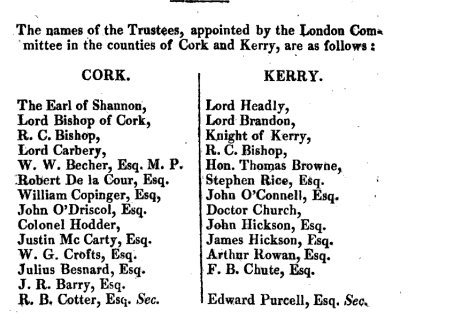
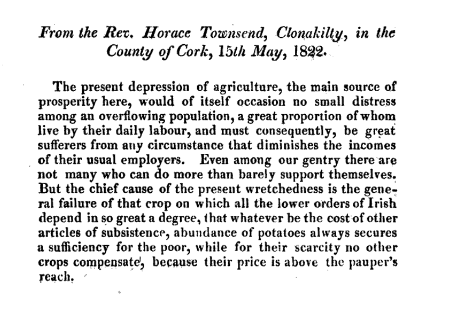
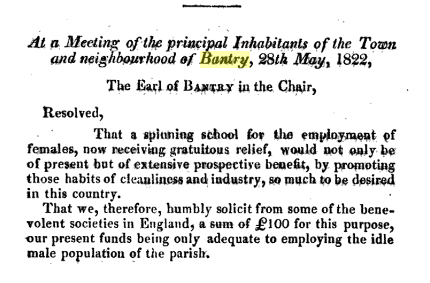
1822, Cork Trustees of London Relief Committee for Distress.
…
This arose from a major disaster due to potato failure.
…
…
…
11 Wednesday Jan 2017
Posted in Uncategorized
1822, Cork Trustees of London Relief Committee for Distress.
…
This arose from a major disaster due to potato failure.
…
…
…
09 Monday Jan 2017
Posted in Uncategorized
The Dr. Albert Casey of Birmingham, Alabama, collection has the details as does the accounts of the Estate on the Irish Manuscripts Commission site online.
1741. Major Tenants on Kenmare Estate Bantry District, Tim Casey, Newtown £18, David Gallwey, Glaunreagh, Dromsullivan £47, James Gallwey, Donemark £38, Patrick Gallway Gurteenroe £22, Richard Goodwin, Beversham Harman, Laheran £15, Thomas Hutchins, Ballylickey, £19, Gilbert Mellefont, Donemark ,£38, Rev. Thomas Miller, Reendonegan, £43, Michael Murphy, Donemark, £18, Rev. Richard Schofield, Ards and Coomleigh, £28, William Sullivan, Ards, £53, Richard Tobin, Donemark Mills, £3, John Young, Direenkollig, £5,
…
Tim Casey, Newtown £18,
David Gallwey, Glaunreagh, Dromsullivan £47, James Gallwey, Donemark £38, Patrick Gallway Gurteenroe £22,
Richard Goodwin,
Beversham Harman, Laheran £15,
Robert Winispeare probably Carrigbui (Durrus), Deed 1724, names Beversham Harman, Lahern, Hutchins also probably involved in timber trade and fishing.
Thomas Hutchins, Ballylickey, £19,
Gilbert Mellefont, Donemark,£38,
Rev. Thomas Miller, Reendonegan, £43,
Michael Murphy, Donemark, £18.
Rev. Richard Schofield, Ards and Coomleigh, £28, William Sullivan, Ards, £53.
Shofields of Dunmanway associated wit Fenwicks/Blairs/Whites in acquiring lands for Hollow Blade Company. Possible Sullivan a Bandon/Dunmanway attorney possibly married into Shofields.
Richard Tobin, Dnemark Mills, £3.
There were a number of Richard Tobins later in Kicrohane including the well known “King’ Tobin.
John Young, Direenkollig, £5,
…
…
09 Monday Jan 2017
Posted in Uncategorized
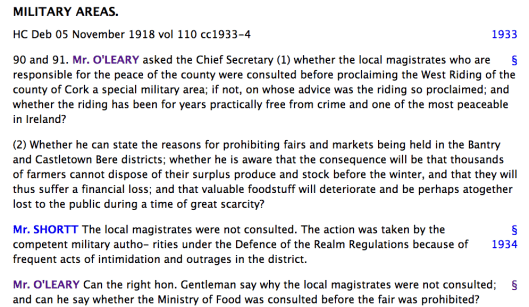
1916 Swearing in of Daniel O’Leary MP for West Cork to House of Commons. 1918 his Question to Whether Local Magistrates Consulted before West Cork Proclaimed and Prohibition of Fairs and Markets in Bantry and Castletownbere.
| Elected 15 Nov 1916 | Daniel O’Leary | Born May 1878 | Died 23 Dec 1954 | 76 |
1916 – By-election on Gilhoolys death. This was the first election after Easter Rising and the last victory for the IPP in west Cork. Seat won by Daniel O’Leary. Last great clash between William O’Brien and John Redmond.
https://en.wikipedia.org/wiki/West_Cork_by-election,_1916

08 Sunday Jan 2017
Posted in Uncategorized
1824 Richard Griffith, Road Engineer, Progress Report, Skibbereen to Crookhaven, Wheeled Carts now Appear, where heretofore Loads were carried on the Backs of Horses, New Entrance to Town Of Bandon, Road From Courtmacsherry to Timoleague, Road from Clonakilty to New Fishery Pier At Ring, New Road Skibbereen to Bantry, Macroom to Killarney, with a Note on The System of Labour Organisation Used.
1828 Public Works Allocations, New Public Roads Skibbereen to Bantry Macroom to Glenflesk
08 Sunday Jan 2017
Posted in Uncategorized
13th January 1816. Viscount Bantry Created Earl of Berehaven and a New Viscount.
..

…

.
Not clear if this is the same but the reference to ‘young nobleman’ might suggest so:
Lord Richard Viscount Berehaven, 2nd Earl of Bantry. (White/Bantry), (1800-1868) Bantry, Pre 1831. 41 Belgrave Square, London. Bearhaven Lord “In a Silver Box, as a testimony of their High Esteem for this highly respected young Nobleman”. (1821) Subscriber 1821 Dr Thomas Wood’s ‘Primitive Inhabitants of Ireland. Notified as Magistrate of Catholic Meeting on Loyalty to King 1825. 13th January 1816. Viscount Bantry Created Earl of Berehaven and a New Viscount. Deputy Lieutenant 1832. Member Commission on Magistrates 1838. Attending Protestant Conservative Society meeting 1832. Protestant Protest Meeting Bandon 1834. He enjoyed an income of £9,000 per annum. He also married well in 1836 in London ; his wife’s Lady Mary O’Brien’s (a descendant of Brian Boru) dowry was £30,000. At Bantry Vote Registration Session 1840 with Augustus Payne JP (His Land Agent), Revs Sadler and Triphook. Probably focus of perceived ’Orange’ faction in Bantry by Liberals. On death of his father became Earl of Bantry in 1851 following 3 years abroad. He amassed Bantry House Art Collection. Member provisional Committee projected Bandon to Bantry Railway 1845. Resolved, by Castletownbere Board of Guardian: ‘that the offer made on the part of Lord Berehaven of the house and offices at Cametringane as a temporary workhouse until the 1st August Castletown Board of Guardians 1850 be accepted’. Beara Estate sold to Lord Clinton c 1850 subject to scathing criticism of him and agent Patrick O’Sullivan, Millcove by Dublin Barrister Prendergast of treatment of tenants and recovery of arrears.
08 Sunday Jan 2017
Posted in Uncategorized
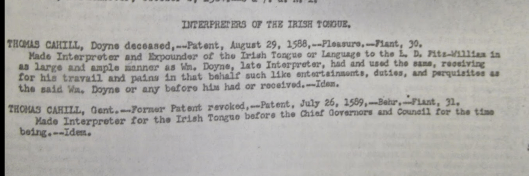
1588. Patents Appointing Official Interpreter and Expounder in The Irish Tongue or Language.
From Dr. Casey Collection
08 Sunday Jan 2017
Posted in Uncategorized
1582. Patent Appointing Cork Customs Officers.
Some Cork Customs Records:
https://docs.google.com/spreadsheets/d/1K9FbQLKPjRm9HLMNy99__AAMLmis519psiSvcP71Rts/edit#gid=0
From Dr.Casey Collection.

07 Saturday Jan 2017
Posted in Uncategorized
Appointment of Rate Collectors 1852 by Bantry Union, Co. Cork, Florence O’Leary, Poundage 6d in the £, Thomas Dillon, Durrus and Kilcrohane 4d.
The Dillons lived at Clashadoo, Durrus and were intermarried with Roycrofts and Canty. The family has a large tomb in Moulivard Graveyard (Durrus East). Thomas Dillon also appears as a member of the Bantry Board of Guardians, looking after the workhouse among other things
Thomas is probably an ancestor to Miss Dillon who had a pub i Bantry near the old railway station and extensive property. She left this to her late nephew Seán Dillon of Clashadoo who in the late 1940s was heavily involved in Clann na Poblachta.
the Dillons may be of the same family as that of the lady who married one of the Bantry Whites in the 1770s. The marriage was set aside as having been performed by a ‘Popish priest’.
07 Saturday Jan 2017
Posted in Uncategorized
…..
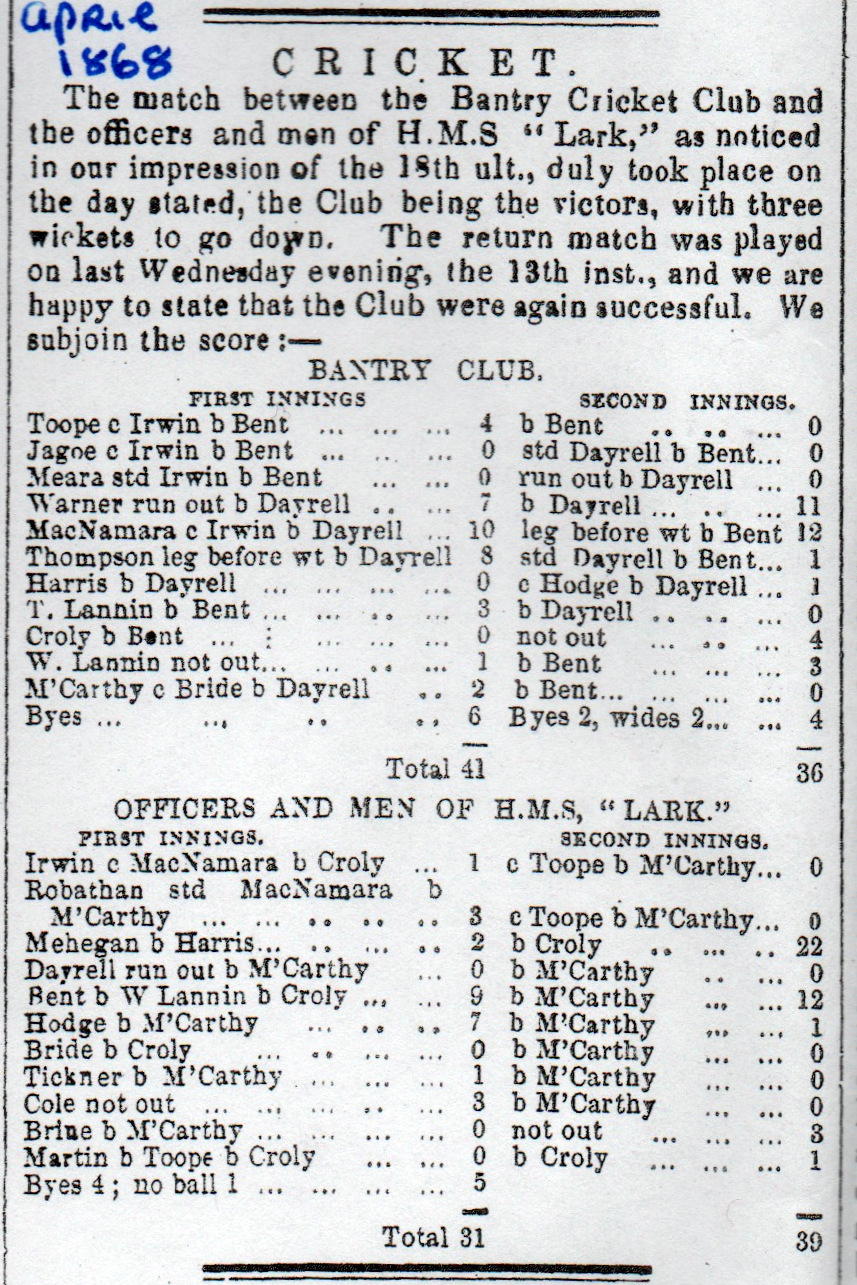
Cricket Match 13th April 1868, Bantry Cricket Club and Officers and men of H.M.S. Lark. Bantry Wins
…
….
07 Saturday Jan 2017
Posted in Uncategorized
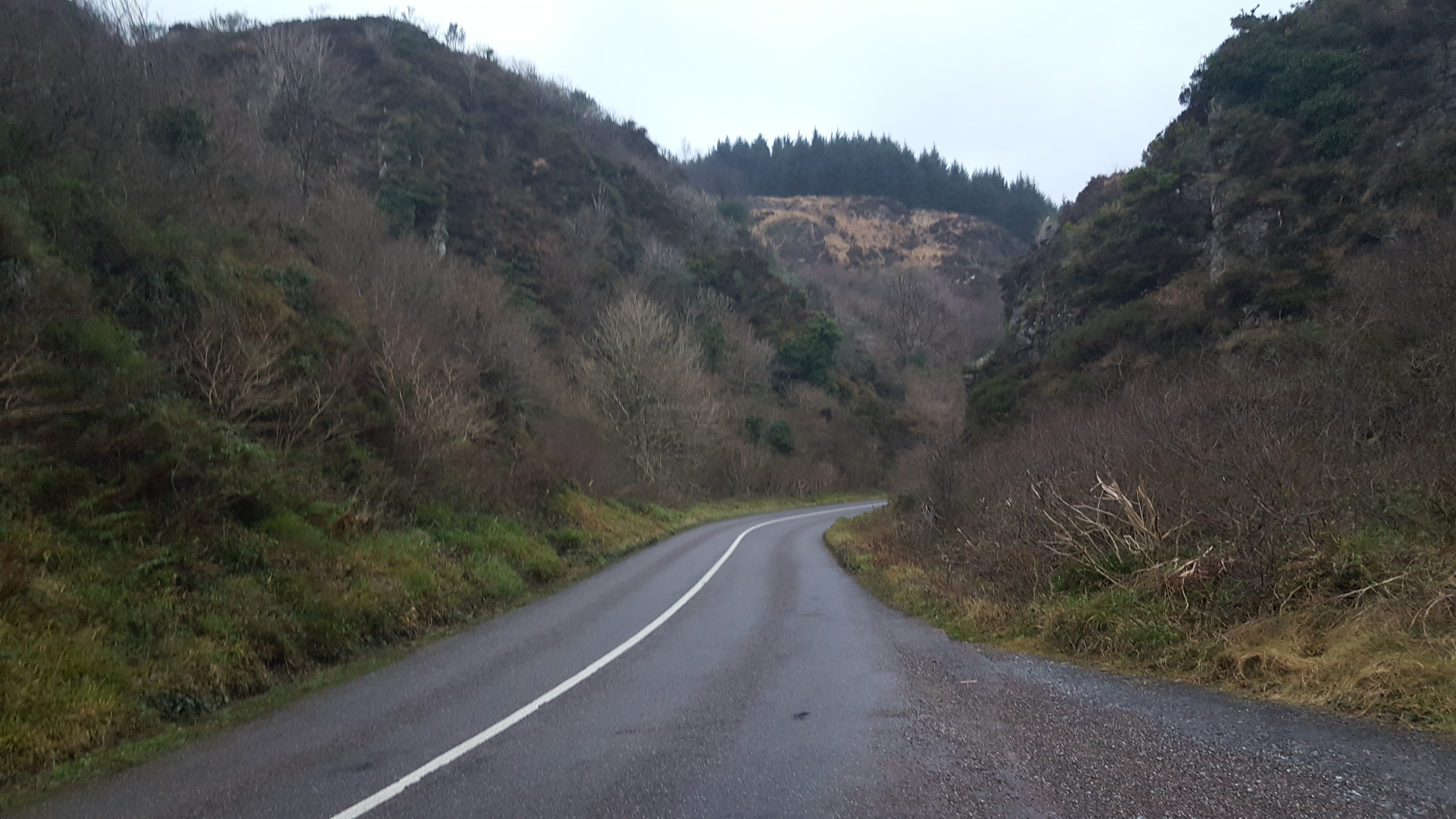
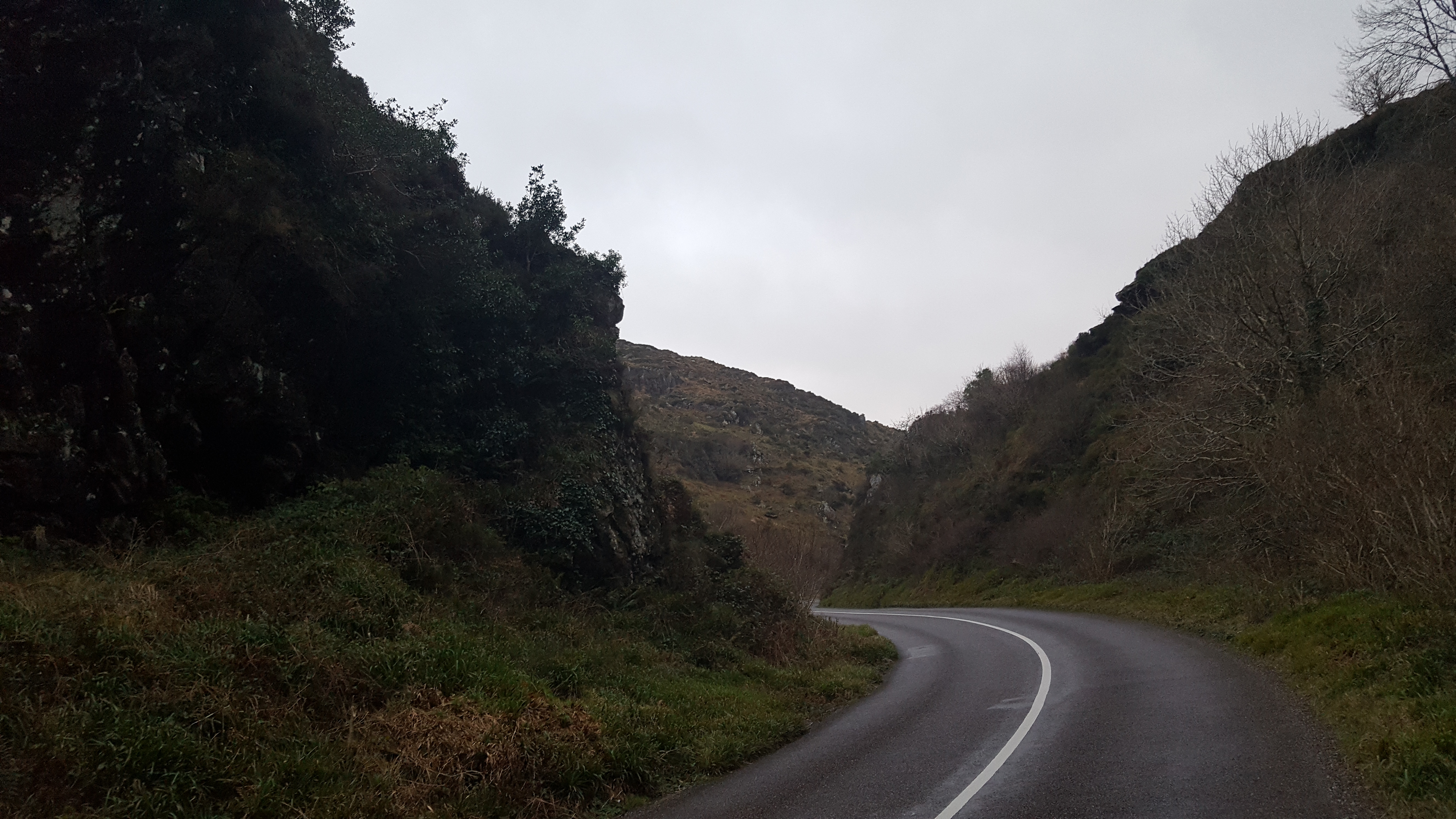
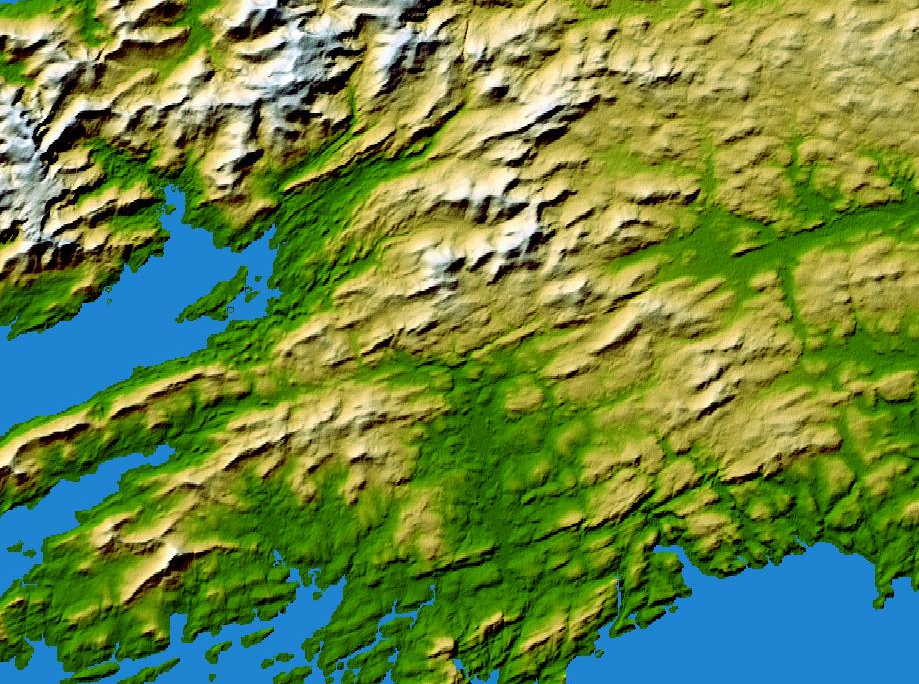
The Sheehy Mountains, a barrier Intersected by Cousane Gap and the Pass of Keimineigh between two Culture Zones, Baronies of Carbery and Bantry and West Muskerry, Co. Cork.
West of Ballineen the land rises into the hills which link to the Cahas and separate the Carberies from northern Co. Cork. The hills are intersected by the Cousane Gap through which Sir Richard Griffith built the road to Bantry Bay from Cork in the late 1820 and the famous Pass of Keimaneigh.
Passing into West Muskerry an area of rock hill and mountain with scrub and forestry the coastal area of the Carberies of West Cork must appear like a land of milk and honey. Pre famine it had one of the highest rural a population density in the world compatible with China and India. This was supported by the potato with ample supplies of sea sand and seaweed. South West Cork was always a point of entry, legend has it that the first people to come to Ireland arrived at Donemark in Bantry. The last waves from the 1580s were the settlers from England, Scotland and Wales supplemented by Huguenots and some Germans. The present West Cork population has a genetic more complex than the headline surname would suggest. The lack of documentary records and destruction makes it difficult but recent DNA evidence would suggest a significant pattern of intermarriage in the late 17th and 18th centuries. West Muskerry had a small population and remained a stronghold of the old Gaelic Order. There were regular forays from there as Rapparees, Tories, Whiteboys and in the 20th century the War of Independence and Civil war raged.
The Gentry of West Cork were on the surface of predominant English planter stock but again the patterns of marriage are complex. Townsend/Barry/Galwey/Meade, Shouldham/McCarthy, Beecher/O’Donovan/O’Neill, Blair/O’Donovan/Cleary, White (Lord Bantry)/O’Brien/Guinness, Puxley/Lavellan (Norman Carrigaline old Catholic), Evans/Freke (Lord Carbery), O’Driscoll, Dowe/Coughlan, Jagoe/O’Connor.
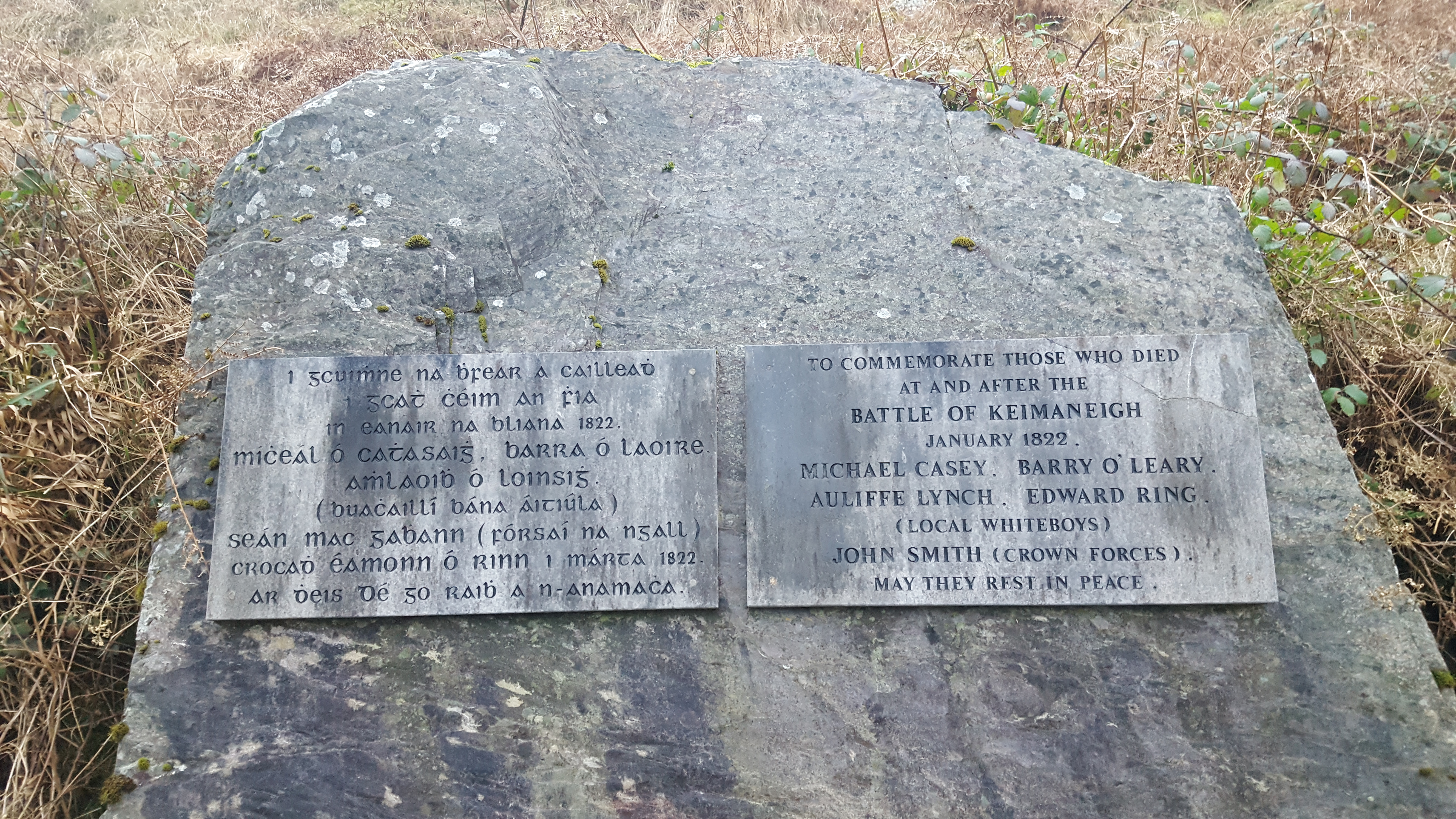
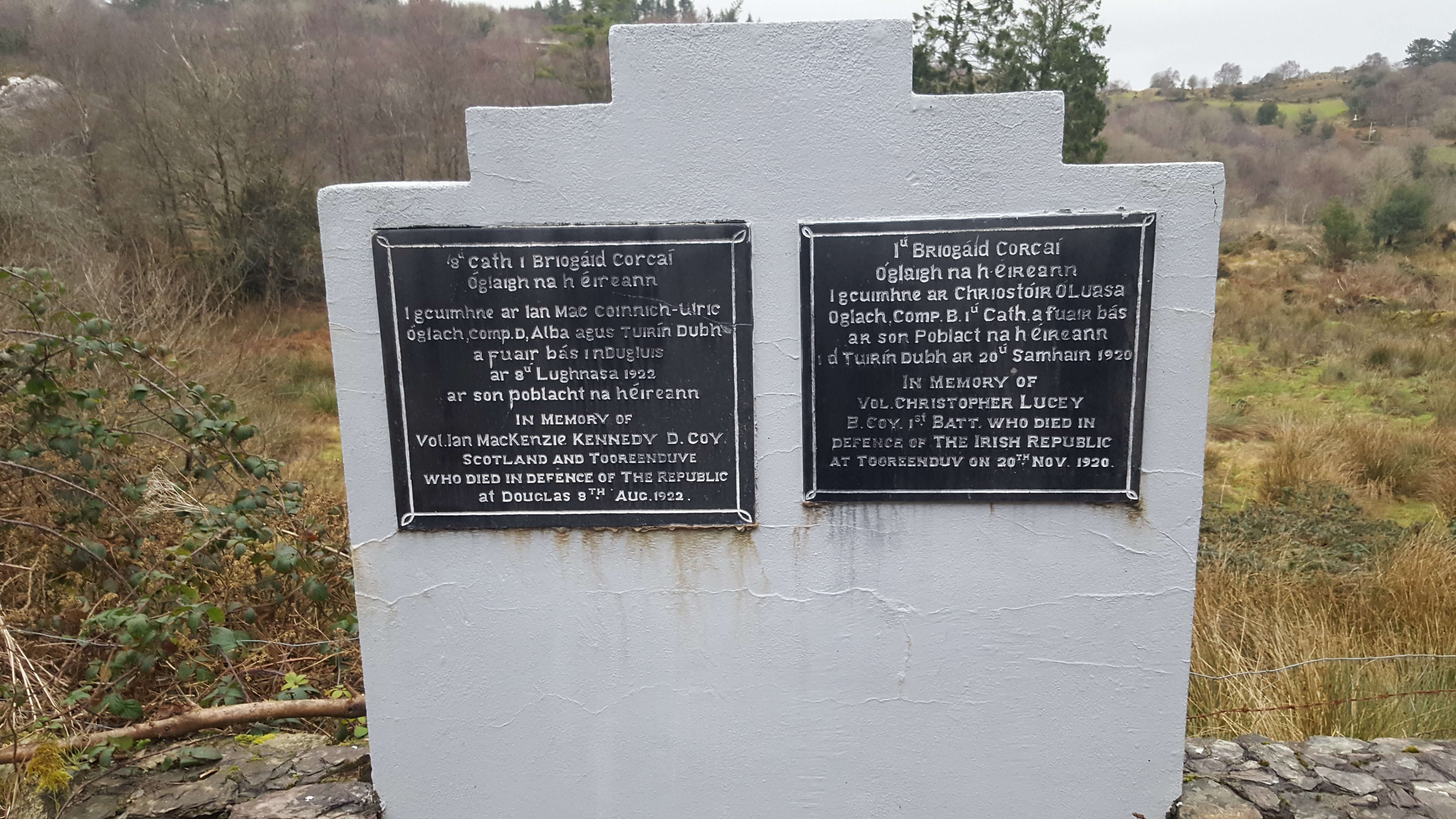
the area is littered with monuments to past encounters on the Irish side. Apart from a mention of Smith a member of Crown forces at the Battle of Keimineagh there is no sign of any RIC/British Army Black and Tan casualties.
Keimineagh:
https://en.wikipedia.org/wiki/Shehy_Mountains
…..
Monuments:
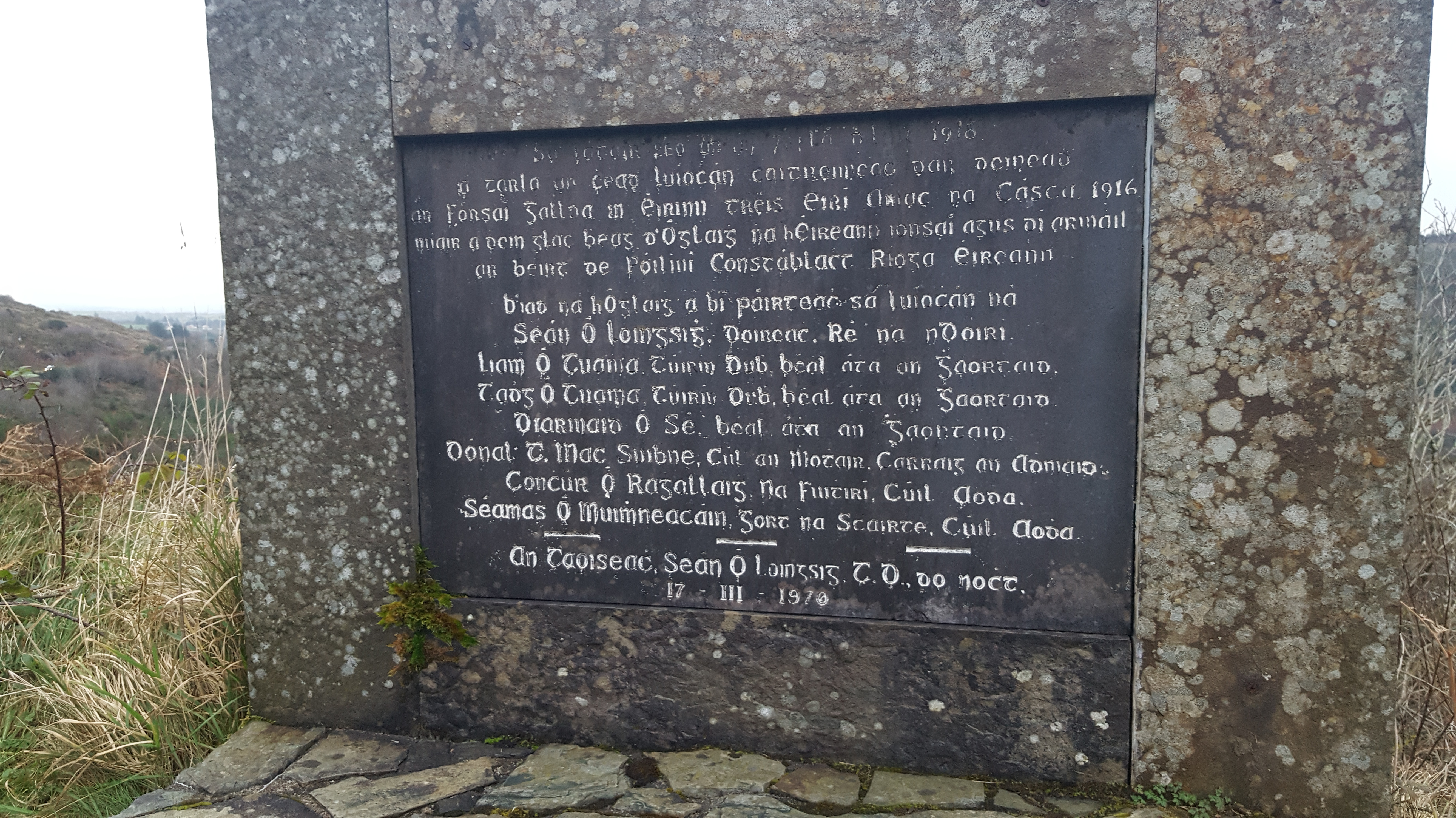
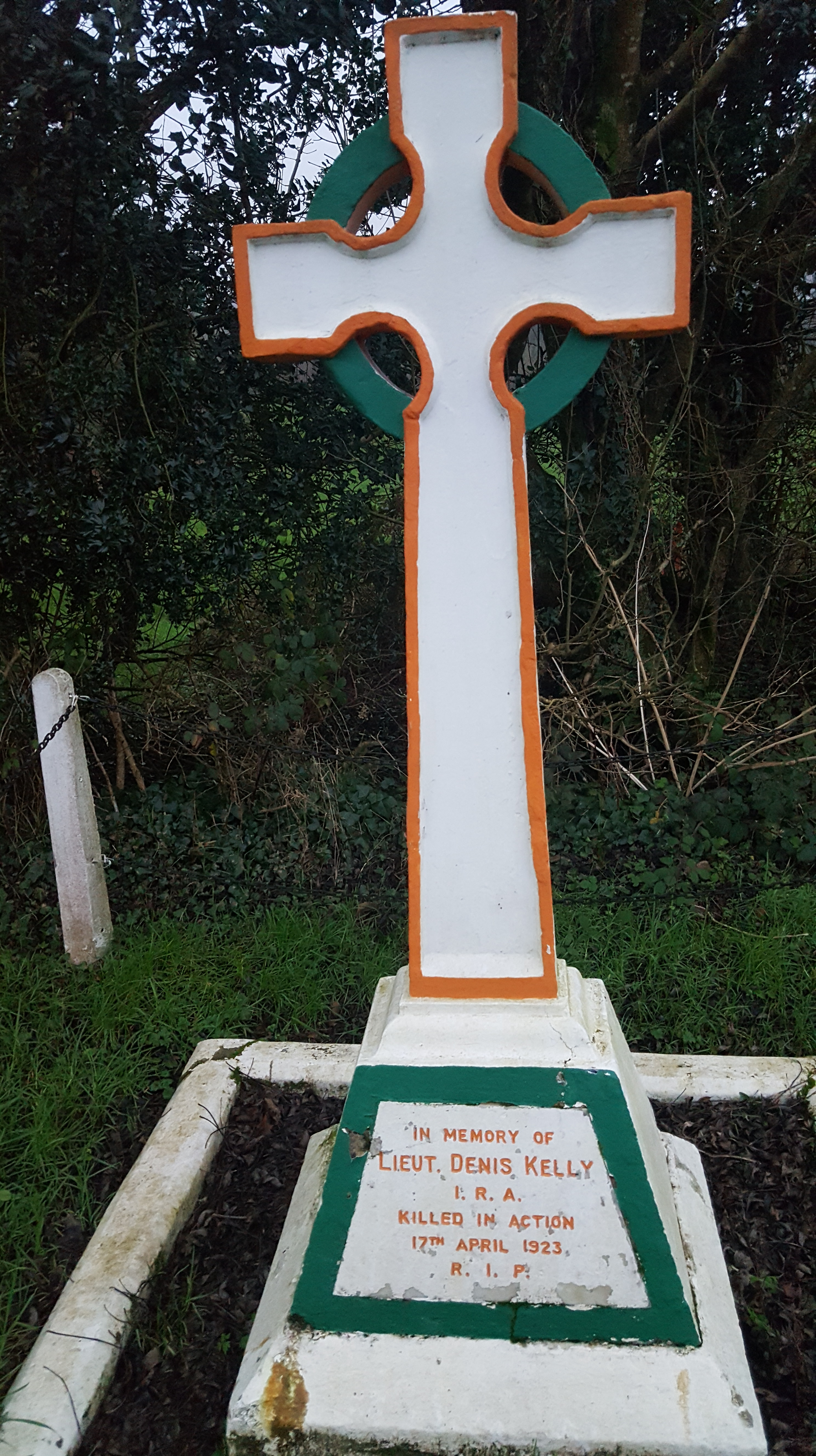
…
…

 West Cork History