Throughout his
diary O Súilleabháin mentions herbs and plants and describes their medicinal uses. For
example, he knew the Irish, English and Latin names for foxglove, its medical uses and
toxicity, and warned against getting it from a ‘quack’
From Diaries of Ireland, an anthology, 1590-1987, Meliosina Lenox-Conyngham, Lippiput 1998.
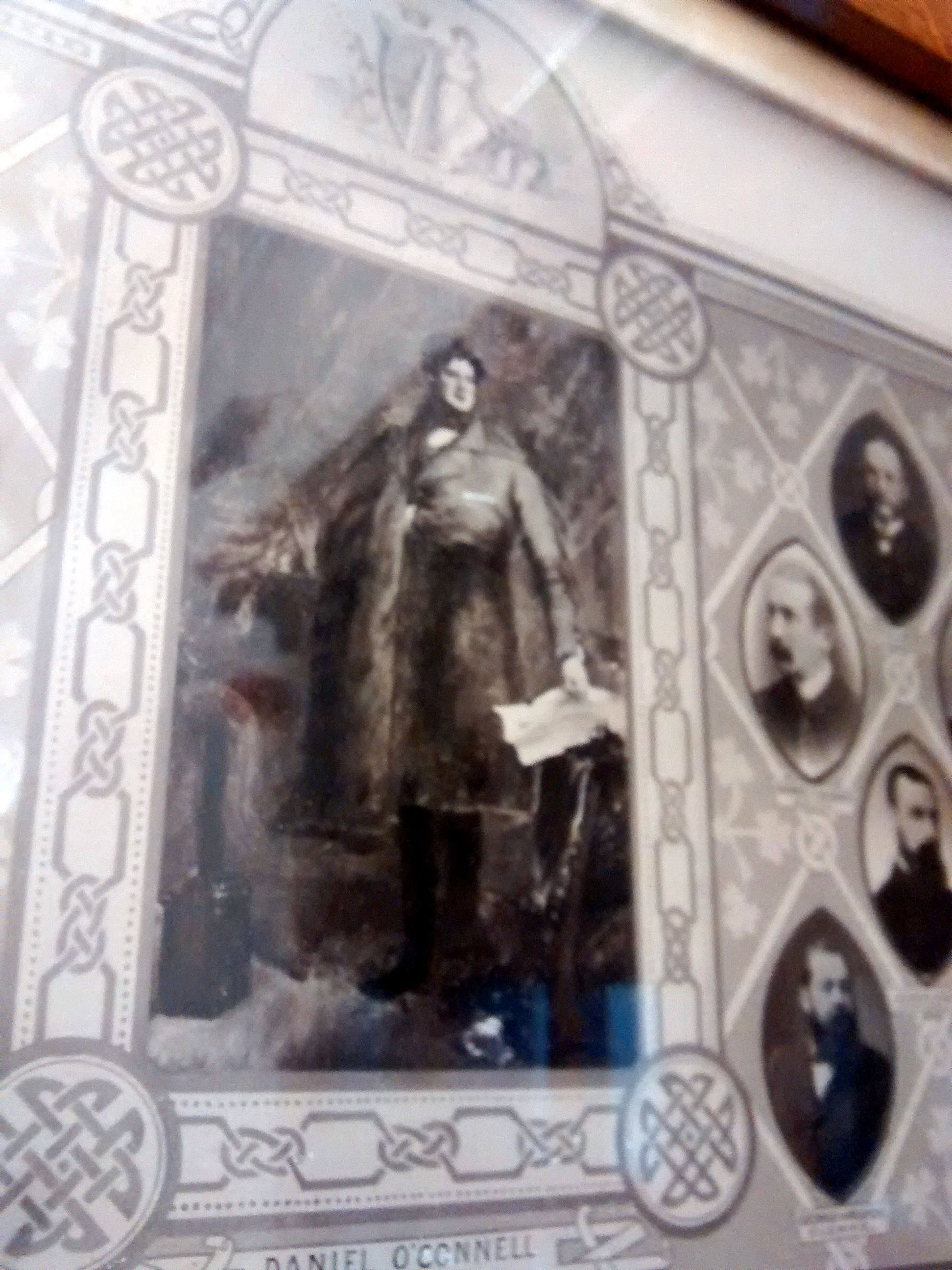
Ó Súilleabhaín 1790-1837 was a Merchant in Co. Kilkenny, he was from Kerry where his father was a hedge school master as was Amhloiimh for a period. For many years he kept a diary in Irish, this is an extract on the election of Daniel O’Connell.
Tuesday 8th July 1828.
…Every window in town was filled with candles all a-light in honour of Daniel O’Connell who was elected in Clare County to be a member of the London Parliament.
https://kilkennyarchaeologicalsociety.ie/wp-content/uploads/2022/07/OKR2013-71-Pierce-Grace-Medicine-in-Pre-famine-Callan.pdf
Dr Thomas Butler lived in Bridge Street and trained medical students there. He
1 P.A. Grace, The middle-class of Callan, County Kilkenny, 1825-1845 (M.A. thesis, University of Limerick, 2012).
2 R eport o f the Poor Law Commissioners on m edical charities, Ireland H .C. 1841 [324], xi, 69.
3Amhlaoibh O Suilleabhean hated him and called him Croinin buidhe or yellow Cronyn. Michael McGrath (ed.),
Cinnlae Amhlaoihh Ui Shúileahhdin (4 vols, D ublin, 1936-7), i, pp.309. (Hereafter, referred to as Cinnlae).
had a ferocious row with Callan’s famous diarist, Amhlaoibh Ó Súilleabháin, when he
found the latter drinking for the third time with his students, particularly one Thomas
O’Looney. O Súilleabháin got two black eyes for his trouble and had to stay indoors for
two weeks.4
The popular Dr Patrick Keating lived in M ill Lane and sent his children to O
Súilleabháin’s school. He was a trusted doctor and friend to many of his patients.
A fourth physician was Dr Michael Stewart Ryan.
Tony Farmar has observed that experience of sickness much depended on class
with only the ‘better sort’ resorting regularly to doctors. Most people relied on folk
medicine and cures when ill. W hen O Súilleabháin’s son scalded his leg with boiling
water his father did not send for his friend Dr Keating. Instead he put a potato plaster
on it; two days later he applied turpentine and a plaster of boiled bread and milk;
four days later a plaster of beeswax, melted Russian lard and turpentine and finally,
a week later, a plaster of boiled ivy leaves. His son’s leg recovered. Throughout his
diary O Súilleabháin mentions herbs and plants and describes their medicinal uses. For
example, he knew the Irish, English and Latin names for foxglove, its medical uses and
toxicity, and warned against getting it from a ‘quack’.