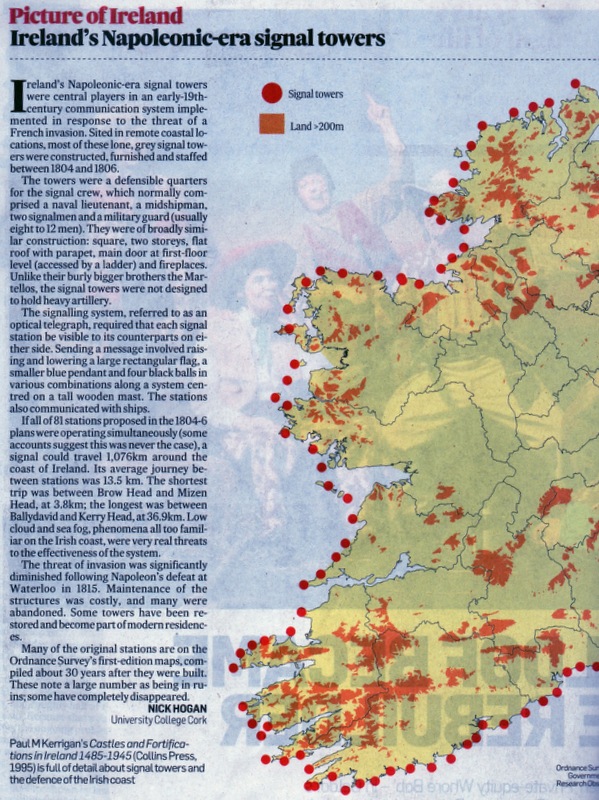
Today’s (2nd February 2013) Irish Times has an interesting piece about the location of the Napoleonic signal towers, with a short article and map part of which is shown below.
02 Saturday Feb 2013
Posted in Uncategorized
Today’s (2nd February 2013) Irish Times has an interesting piece about the location of the Napoleonic signal towers, with a short article and map part of which is shown below.
01 Friday Feb 2013
Posted in Uncategorized

In William J. Smyth’s book, ‘Map-Making, Landscapes and Memory, A Geography of Colonial and Early Modern Ireland c.1530-1750’, he produces a map of the progress of Robert Lythes surveys in Ireland (1567-71) and the enclose a map is taken from this.
Lythe was a military engineer who was commissioned by Sir William Cecil (later Lord Burghley) who was Secretary of State in England in 1550 and became Elizabeth 1 trusted minister. He worked with Sir William Sidney in mapping Ireland for military and strategic purposes.
Lythe’s survey of west Cork was conducted from the pinnacle of a warship, giving the importance of the fisheries off its coast.
01 Friday Feb 2013
Posted in Uncategorized
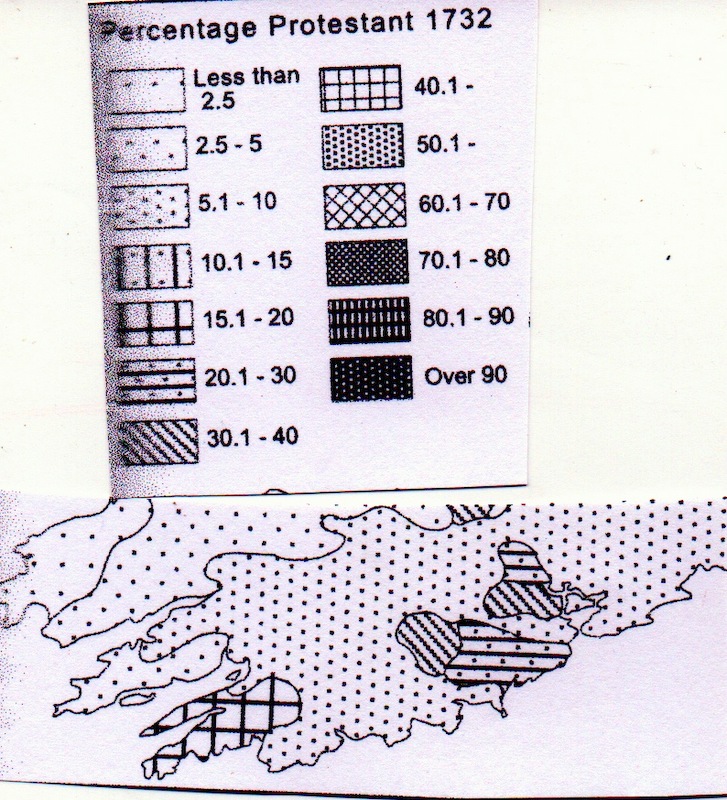
In William J. Smyth’s book, ‘Map-Making, Landscapes and Memory, A Geography of Colonial and Early Modern Ireland c.1530-1750’, he produces a map of the Protestant percentage of the Irish population in 1732 . This is based on a manuscript MS.1742 in the Lambeth Palace Library, London. The map here is based on Smyth’s map.
29 Tuesday Jan 2013
Posted in Uncategorized
In Thomas Maier’s book on the Kennedys he refers to visits by JFK to Mulligans. In 1945 Kennedy was a Hearst columnist and paid a visit to Dublin and frequented the pub. He was back in Dublin in 1947 as part of a Congressional trip during which he met De Valera and also paid a visit to Mulligans.
Mulligans was also the watering hole of choice for the late great writer and newspaper savant Con Houlihan.
John F. Kennedy’s visits to Mulligan’s Pub, Poolbeg Street, Dublin, 1945 1947.
The Kilcrohane Tobins are related by marriage to the Baltimore Fitzgeralds. This is the same family of whom JFK’s mother was descended.
13 Tuesday Nov 2012
Posted in Uncategorized
Number Emigrants
CORK DISTRICT
26. Patrick St 400 15
27. French Church, &c. 54 2
28. Queenstown, &c. 30 4
29. Bandon 164 4
30. Dunmanway 77 –
31. Clonakilty 221 2
32. Skibbereen 294 1
33. Bantry 133 3
34. Youghal 69 4
35. Mallow & Fermoy 33 1
36. Kinsale 45 1
37. Tralee 108 3
38. Killarney, &c 30 –
From Irish emigration database http://ied.dippam.com/
25 Thursday Oct 2012
Posted in Uncategorized
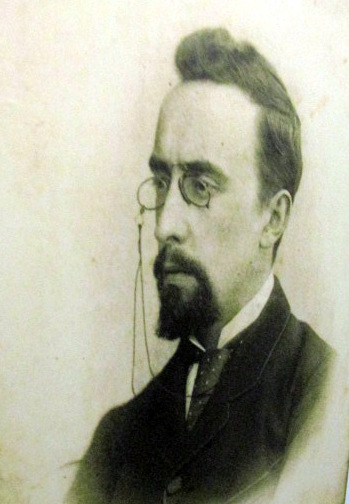
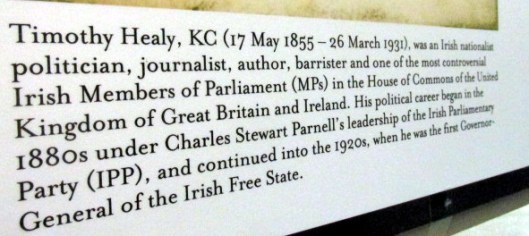 Tim Healy had a sardonic sense of humour as witnessed by his census return ‘religon’.
Surname Forename Townland/Street DED County Age Sex Birthplace Occupation Religion Literacy Irish Language Relation to Head of Household Marital Status Specified Illnesses
Healy Timothy Michael Mountjoy Square North Rotunda Dublin 45 M Co Cork Barrister Idolator Read and write Irish and English
23 Tuesday Oct 2012
Posted in Uncategorized
22 Monday Oct 2012
Posted in Uncategorized
Transcribed by the Ottowa Genealogical Society.
From 1821 the census took place every 10 years. The census for 1821-1851 were destroyed in the explosion in the Public Records Office, Four Courts at the start of the Irish Civil War in 1922, those from 1861- 1891 were destroyed by Government Fiat.
1851IrishCensusReturnsCommaDelimitedTextFileJul24_07
1851IrishCensusReturnsCommaDelimitedTextFileJul24_07
The 1851 Census was taken on the night of 30 March 1851. The following information was requested: Name of street, avenue road, etc.; house number or name; whether or not the house was inhabited; name of each person that had spent the night in that household; relationship of person enumerated to the head of the family; each person’s marital status; age at last birthday (sex is indicated by which column the age is recorded in); each person’s occupation; person’s place of birth; whether deaf, dumb, blind, or lunatic.
Enumeration forms were distributed to all households a couple of days before census night and the complete forms were collected the next day. All responses were to reflect the individual’s status as of 30 March 1851 for all individuals who had spent the night in the house. People who were traveling or living abroad were enumerated at the location where they spent the night on census night. All of the details from the individual forms were later sorted and copied into enumerators’ books, which are the records available to the public today.
22 Monday Oct 2012
Posted in Uncategorized
20 Saturday Oct 2012
Posted in Uncategorized
A BOOK of PEDIGREES. MS 599 1617
These documents are held at Lambeth Palace Library
Former reference: MS 599
219 Pages.
Supplementary information: Calendar of the Carew Manuscripts preserved in the Archiepiscopal Library at Lambeth, ed. J. S. Brewer & W. Bullen (6 vols., 1867-73), vol. V, document 187.
Contents:
P. 1. Headed: “In this book is contained the descents of the mere Irish families, with the several monarchs of them which ruled in that land, whose government continued until that Henry II. of England conquered and suppressed them. The same was formed by sundry collections of the Earl of Thomond, and was corrected by divers of the nation, according to the true orthography of the Irish writing. This book, with the table before annexed, was made in the year of Christ 1617 by commandment of —-.”
P. 2. The following are the names. Ainmreagh, his stem, 128; Blade, his stem, 47; Brach, the father, original, 11; Brien, Baron of Inshecuin, 55; Brien Boravine, his stem, 50; Brien Duff, of Carigogoinell, 54; Brien Loignagh, his stem, 159; Brienne, his stem, 153; Brien Roe, his stem, 52.
Cahall Croderge, his stem, 159; Callada, his stem, 162; Carbry Cloheguir, his stem, 105; Cass, his stem, 25; Cassin, his stem, 43; Catalogue of all the monarchs, 6; Clancare, Earl, 39; Clan Melruona, in the county of Mayo, 157; Clanneaboye, in Ulster, Coor, 138; Coffaghe Kealbreeg, his stem, 119; Conall-oris, his stem, 157; Conall Criffan, his stem, 130; Conlo, his stem, 103; Conor, his stem, 157; Con Roe Maguire, his stem, 176; Connack, his stem, 69; Colman, his stem, 142; Cork, his stem, 69; Cormack, his stem, 170; Cormack Cass, his stem, 42; Cugonnagh Oge Maguire, 176.
Dalrieda, 181; Dermott, otherwise Derby Nangall, King of Leinster, 116; Donogh, from whom all the O’Donoghs of Kerry, 30; Donogh, otherwise Keefe, from O’Keefe, 35.
Ena, his stem, 111; Engus Keanahragh, his stem, 43; Engus-Tuirneg, his stem, 120; Eogan Buock, his stem, 165; Eogan, (see Tyron) his stem, 131; Eogan, his stem, 23; Eoghag Weblin or Duiulen, his stem, 162; Eogh-Breach, his stem, 146; Eogh Tirinicharva, his stem, 154; Erick, his stem, 153.
Fergus King of Scotland, 186; Fiegh, his stem, 146; Fieg Fearmary, his stem, 121; Fighag, his stem, 179; Fieghue Baicka, 111; Firgall, his stem, 148; Flannagan, in county Clare, 156.
Ganall Rannall of Leinster, 118.
Hermon, his stem, 93; Hibeens, his stem, 12.
Imghagh, his stem, 162; Ire, his stem, 64; Iriall, his stem, 82.
Keefe, otherwise Donogh, 35; Keillaghne, 37; Kiary, his stem; Kien, his stem; Kinga, his stem; Kinoella, of the county of Lease, 88; Kynoch, his stem, 109.
Lauve, his stem, 111; Leeseagh, of whom the county of Lease, 82; Luig Loahym, his stem, 103.
MacCartie’s genealogy, 200; MacBranan, 154; MacBrien Arlogh, 51; MacBrien Quonagh, 51; McCarte, Baron of Musgree, 40; MacCarte Carbreagh, in county Corke; MacCarte, prisoner in the Tower London, 39; MacCarta, in Ulster, 89; MacCoghlan, in King’s county, 47; MacDiermoid, in county Sligo, 59; MacDonogh, in county Corke, 37; MacDuall, 166; MacEnisi, 91; MacFynnen, 38; MacGilpatrick, Baron of Upper Ossery; MacGoghagan, of Kings County, MacIbrien-Are, 54; MacMahoun, in Thomond, 51; MacMahoun, in Ulster, 174; Mac ne Liona, in Scotland, 25; Mac ne Mare, in Thomond, 47; MacTeiggarran, 51; Maguiher, in county Monaghan, 172; Maguir, Sir Hugh, 176; Moelruona, his stem, 157; Moelsagh, 145; Mahoun, in county Corke, 30.
Nadfride, his stem, 32; Nads Luig, his stem, 105; Nied Corb, his stem, 105; Neale, the genealogy, 212.
O’Brien Earl of Thomond, genealogy, 189; O’Birnn, in county Sligo, 157; O’Bouill, 130; O’Brien Earl of Thomond, 55; O’Broenan, of Leinster, 110; O’Cahane, in county Tyrone, 133 O’Conor Donn, in county Sligo, 161; O’Conor Falgie, in Kings County, 109; O’Conor Kiery, in county Kiery, 77; O’Conor Roe, in county Sligo, 161; O’Conor Sligo, 161; O’Dea, 47; O’Dionsagh, of Kings County, 110; O’Dogharty, 130; O’Donell, Sir Hugh, 134; O’Duda, county Sligo, 148; O’Duir, of Tipperara, 110; O’Duyn, of Kings County’ 110; O’Faraill, of county Longford, 79; O’Hanly, 155; O’Hanluon, of Ulster, 166; O’Hara, of county Sligo, 59; O’Heyn, 150; O’Kearvaile, of Duhely, 62; O’Keefe, 35; O’Keillaghne, in county Corke, 37; O’Kelly, of county Gallway, 142; O’Loghlain, of county Corke, 76; O’Madagane, 168; O’Mally, in county Maio, 155; O’Manus, in Scotland, 78; O’Mora, in county Leise, 88; O’Riana, of Tipperara, 115; O’Roilly, in county Latrym, 157; O’Rworke, in county Latrym, 157; O’Sagnissi, in county Gallway, 152; O’Suilleavain, 35; O’Tuhill, 115; O’Neale, genealogy, 112.
Ranill, in Ulster, 80; Roghaig, his stem, 162; Rory O’Donnel, Earl Tirconnell, 135; Rossa Failgi, his stem, 106.
Syn, his stem, 178; Sircha, his stem, 179; Swyny, of whom all the Swynys, 136.
Tyrone, Earl, 139-212; Tumultagh, his stem, 109.
The greater part of this volume is filled merely with the stems, but there are some passages interspersed apparently as explanatory notes, as follow:–
P. 6. The catalogue of the monarchs of Ireland
Milo or Mileto, son of Bilius, son of Brigan, who was the son of Brach. Hiberus, his 3rd son, ruled jointly with his brother Hermon, died B.C. 1374. Ire, 5th son of Milo, and brother to Hiberus and Hermon. Hermon, 7th son of Milo, ruled with his brother Hiberus, died B.C. 1370.
From these 3 brothers, all the monarchs that have reigned in the land of Ireland are descended, which are not set down here as they are lineally descended from father to son, but as they did succeed in government one after the other, which was obtained most by strong hand.
P. 11. Brach or Bracehus son of Dea, who brought a colony of Greeks from Peleponesus into the south-west part of Spain, where he was resisted by the inhabitants. Thence he sailed with his fleet to the north-west of Spain joining to Portingall, where he founded the town of Bracan.
P. 12. Hugo son of Ithius, in revenge of his father who was slain in Ireland, persuaded his cousins Iberus and Herman to enterprize the conquest of Ireland.
P. 23. Moghnuoad compelled Connkedghagh King of Ireland to divide the kingdom with him. His half was from Aheliethmegree near to Galway (as appears by a mere remaining, called Eisggerried,) unto Dublin, and his share was in the south and is called by his name Leath-moa, viz., Moa’s half, as the north of the other is called Leah Conn, Conn’s half.
P. 25. Mainileawna had 3 sons, of whom descended Mac Ne Leiona in Scotland now called Lo. Lenox,–sed quere?–Criffan ruled 13 years in the year after Christ 416, he died without issue. This Criffan was poisoned by Mongin his sister, that her son Brien McLahagh might reign, but Nill McLahagh succeeded, and so was her expectation frustrated.
P. 64. Ire, the 5th son of Milo, of whom Ireland was named. He was slain by Hermon.–P. 12.
P. 87. Kaoelva ruled anno after Christ 408. The posterity of this Koelva sometimes governed Ulster, their chief name Oloingsig, they are now without issue.
P. 93. Hermon, the 7th son of Milo, ruled 14 years and died at Rahbeagh in the county of Kilkenny, in the year 1370 B.C.
P. 145. Modsagh ruled 23 years 1010 A.D. This Modsaghluyn ruled nineteen years after Bryen Boroa died, of him the O’Modeagh Luins, Kings of Meath, took name.
P. 176. Sir Hugh Macguir was slain by Sir Warham St. Leger A.D. 1599. Cugonnaght Og Maguire died in Spain, A.D. 1609.
P. 186. Fergus, otherwise McRefy, King of Scotland. This Fergus or Feargus MacRiefie was King of Scotland, and ruled, some say 17, others 24 years, and was slain in battle A.D. 430. For the succeeding Kings of Scotland, there is very much disagreeing amongst such authors as have written, especially concerning the number of years, and in the succession there has been much change even to the person of K. James our present Sovereign reigning A.D. 1617.
P. 188. The genealogy of the Earl of Thomond, shews the lineal progression of the O’Brians family, being a branch of the ancient Irish; for this Brian Boraine is descended in the 68th degree from Hiberous, one of the sons of Billius, son of Brach, who was of Dea, a Grecian.
P. 193. O’Briens, Earls of Thomond, Lords of Ilracan. Donogh, Earl of Thomond and Baron of Ibracan, was slain by Sir Donell his brother.
P. 194. This Sir Donell, after he had murdered the Earl his brother, assumed the name of O’Brian, and banished Conner, his nephew, Earl of Thomond, out of the country.
P. 200. The genealogy of the McCarties, of whom one was Earl of Clancare, shows the several families from Donellmore, a branch descended of the ancient Irishrie, for Donell-more is lineally descended in the 78 degree from Hiberous before named.
Untill Donell Earl of Clancare surrendered his lands to Q. Elizabeth, and took them again from her by letters patent, the said land with the title of MacCartie More followed the custom of Tanistrie. He made his surrender A.D. 1566, and had it from her Majesty by English tenure unto himself and his heirs males, and for default of such issue to remain to the Crown. At that time he was created Earl of Clancare.
Donell McCormock, living, entailed all his lands to his son Donell Earl of Clancare, and his heirs, and for want of such issue to the heirs of James Earl of Desmond, by his wife Elinor, daughter to said Donell McCormock Liragh, and the remainder to the right heirs of the said Donell for ever, which is Ellen, daughter to the Earl of Clancare, married to Florence McCartie.
In A.D. 1568 Donell Earl of Clancare, confederating with Sir Edmond Butler, brother to Thomas Earl of Ormond and James FitzMorice cousin german to Gerald Earl of Desmond, rebelled; afterwards he and they were pardoned. These three above recited sent to the Pope and the King of Spain for aid, but failed in their expectation, none being sent them.
P. 40. The son of Cormack Lord of Musgree married Lady Margarett, daughter to the Earl of Thomond, and was father of Cormack, A.D. 1613. Was about 9 years old, in the county of Cork.
P. 202. Dermond McCartie of Muskry, in the co. of Cork.–This Dermond slew his uncle Dermond More, Lord of Dowally and Muskry, and possessed himself of both these lordships. He was afterwards slain by Donogh ne Spoltie, son to Dermond More. An agreement was made by the followers between them, viz., between Donogh ne Spoltie and Teig the son of Dermond, in which Muskry remained to Teig, and Dowally to Donogh ne Spoltie and McDermond More.
This year, 1613, Donell MacCartie, a near kinsman to Cormock McDermond of Muskry, was by the Pope made Bishop of Cork, Rosse, and Clone. Quere, if he were not one of his uncle’s sons?
P. 203. Muskry is thus bounded.–Upon the west, Bantry; east, Lord Barry; south, Carbry; south-east, Kirry Whirry; north, Dowally.
P. 206. Carties of Dowally, co. Cork. The Lords of Dowally were ever called McDonogh. Cormock, the 8th Lord of Dowally, was slain by Owen the 9th MacDonogh. Cormock Oge Beg, the 14th Lord of Dowally, murdered Donogh the 10th McDonogh. The servants of Dermond the 12th Lord of Dowally murdered Cormock Oge Beg 14th Lord.
P. 207. The lordship of Dowally was long in suit between Donogh McCormock, the 17th McDonogh, and Dermond MacOwen, the 18th McDonogh. At last it was ordered at the Council board in Ireland that Donogh McCormock should have, to him and to his, that portion of land which appertained to the chief Lord of Dowally, and Dermond McOwen should enjoy to him and his heirs that portion which in former time did of custom belong unto the Tanist. But Dermond McOwen, after the death of Donnoghe McCormock, entered upon the whole lands and enjoys it at this present, 1615; alleging that his grand uncle Dermond McOwen, the 12th McDonogh, by a surrender of his land unto Q. Elizabeth, and taking the same from her, did thereby extinguish Tanistry, and that the said Dermond being his heir in blood, esteems himself to be the rightful heir to the whole Lordship of Dowally.
Dermond More McDonell Roe, the first Lord of Dowally in this pedigree, was slain by his nephew Dermond son to Donell Oge MacCarti More. His brother the said Dermond More was Lord of Dowally and Muskry, and after his death Dermond McDonell Oge possessed both the lordships, and banished his uncle’s children; but afterwards the said Dermond was slain by Donogh ne Spoltie, son to the aforesaid Dermond More; and by the gentlemen of the country an agreement was made between the said Donogh ne Spoltie and Teig the son of Dermond slain as aforesaid, by which agreement Muskry fell to the portion of Teig McDermond McDonell Oge, and Dowally unto Donell ne Spoltie McDermond More.
Dowally is thus bounded,–Upon the west with MacCartie More; east, Botevant; south, Muskry; north, Kerry; north-east, the county of Limerick.
P. 212. This Genealogy next following of O’Neale, of whom three were Earls of Tiron, shows the several families of the Neales from Hugh Neale, being a branch descending from the ancient Irish. The said Hugh Neale in the 81st degree is derived from Hermon the seventh son of Milo.
O’Neale, Earl of Tirone.–Con. Backagh, created Earl of Tirone by King Henry VIII, had Alison, a concubine, the wife of a smith of Dundalke. Sir Ferdorogh, otherwise Mathew, Baron of Dungannon, begotten upon the said Alison, slain by Shane O’Neale his brother A.D. 1560. When his father was created Earl of Tirone, he was created Baron of Dungannon, and by letters patent granted to his father he and heirs males were to succeed in the earldom. from Camden.
Brian was hanged. Neale was slain in rebellion, anno 1600. Hugh, Baron of Dunganon, died in Italy without issue. Henry, Colonel of the Archduke’s army, died in Spain.
P. 213. Hugh, Earl of Tiron, was restored by Q. Elizabeth to the title of Earl of Tirone A.D. 1585, which for many years had been discontinued, and bore only the title of Baron of Dungannon from the death of his father, which was in 1560. He was proclaimed traitor the 12th of June 1595 by record. In 1598 he overthrew near the Blackwater her Majesty’s army, where Sir Henry Bagnall, Marshal of Ireland, General of the Forces, with many-captains and gentlemen of mark and a great number of soldiers were slain. In 1607 having entered with Rowry O’Donel, Earl of Tirconnel, into a new confederacy of treason, and finding that the conspiracy was discovered, taking his wife and two of his sons with him, he fled out of Ireland, and with him went Rowry O’Donell, his son, and Hugh the Baron of Dungannon. And now, 1615, he lives in Rome.
P. 214. O’Neale.–Cormack, prisoner in the Tower of London, A.D. 1618. Married the three daughters to Hugh O’Donnel, sister to Hugh Roe and by a concubine had, Art. O’Neale and Brian Shane O’Neale.
P. 215. In anno II Elizabeth; was attainted by Parliament in Ireland when Con. O’Neall was created Earl of Tirone, Matthew, his base son, was by these letters patent created Baron of Dungannon, and the succession in the earldom was granted to him and his heirs male. This Shane thereby became disinherited, made war upon his father, took him and held him prisoner during his life, and slew his brother Matthew before his father died, 1560. In 1561 Shane came into England, made his submission to her Majesty, swore his future obedience, and was pardoned. Not many years after Shane rebelled. Sir Thomas Cusack was sent to him to persuade obedience, with promise he should be created Earl of Tirone, and all his father’s lands be granted him. He scorned the title of Earl and all her other favours, continued in rebellion, and in the year 1567, being driven into great extremity, he put himself into the hands of the Scots, and was slain by Alexander Oge and McGillaspeck in revenge for the death of James McConnell, and Agnus McConnell, brothers to Alexander Oge formerly slain by him.
In 1563 Sir Thomas Cusack was sent by the Lord Deputy and Council of Ireland to treat with Shane O’Neale. It was agreed that in the next Parliament to be summoned the letters patent granted to Con. O’Neall and Matthew, his son, should be annihilated and made void, and the title of Earl of Tirone he confirmed to him; but in the meantime he should enjoy the name of O’Neale, and after the Parliament relinquish the same and have the title and earldom of Tirone to him and his heirs males for ever.–Council Book in Ireland.
P. 216. O’Neale of Lenagh in the county of Tirone.–Tirlogh Lenogh O’Neale had letters patent sent to him by Q. Elizabeth in the—year of her reign, A.D.—-to be Earl of Clanconell and Baron of Clogher, which he then despised. After, he prayed Sir John Perrot, Lord Deputy anno 1585, to procure him the said earldom and barony, but then he could not obtain them. He was knighted by Sir W. FitzWilliams 1588. He slew Brian, Baron of Dungannon, elder brother to Hugh, Earl of Tirone.
Carew Manuscript MS 600 [n.d.]
The contents of this catalogue are the copyright of Lambeth Palace Library
Rights in the Access to Archives database are the property of the Crown, © 2001-2012
The records described on this page are held by Lambeth Palace Library

