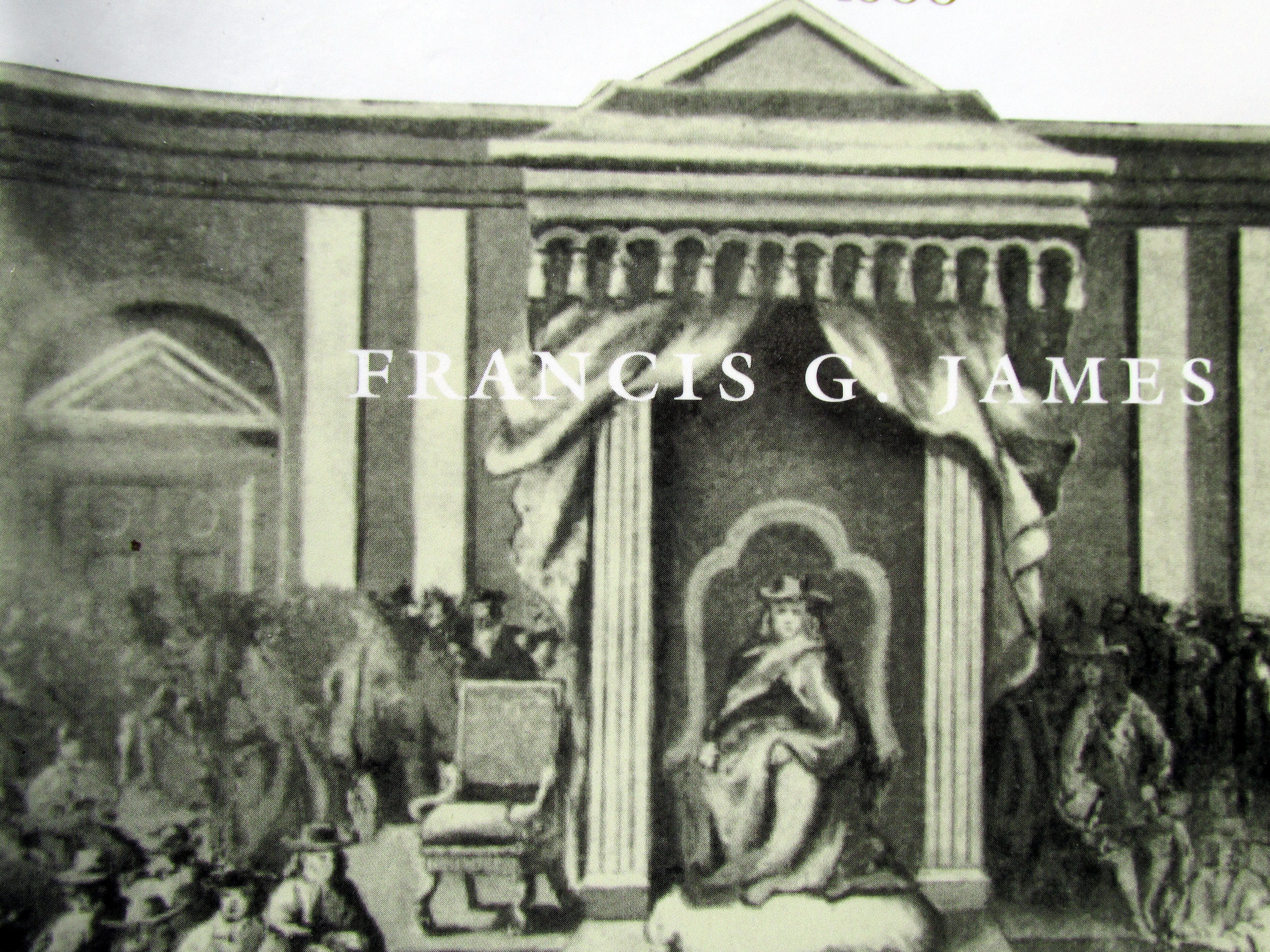
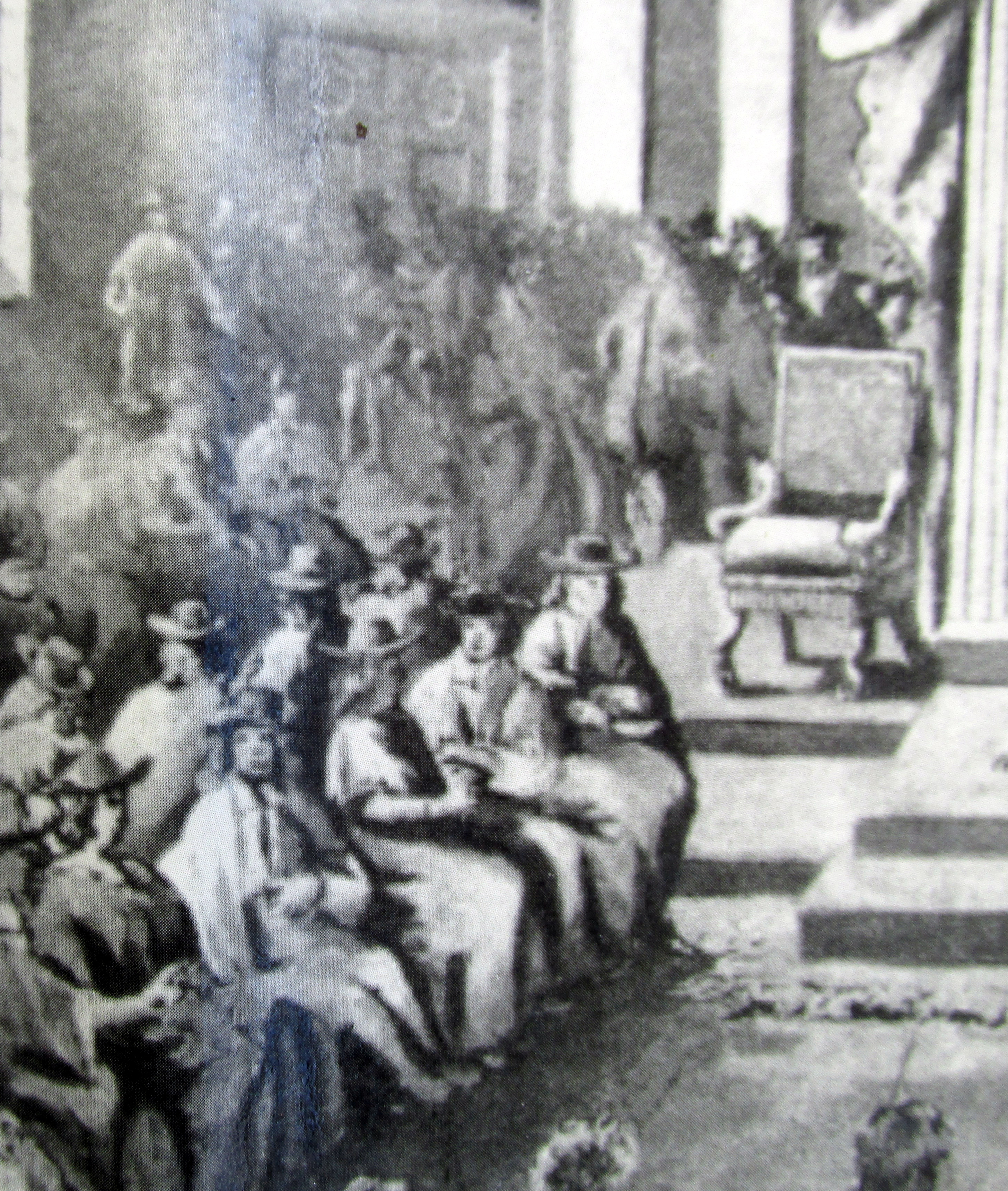
The Parliament of Ireland, 1704, with the Duke of Ormond on the Throne, and Alan Broderick (Midleton, Co. Cork) to his left.


The Parliament of Ireland, 1704, with the Duke of Ormond on the Throne, and Alan Broderick (Midleton, Co. Cork) to his left.

From ‘The Lords of the Asendancy’, The Irish House of Lords adn Its Members, Francis G James, 1995, Irish Acdemic Press.

Based on a French Print, ‘Parlement d’Irelande’.

The only picture of the Irish House of Lords in Session 1704, Chichester House, Dublin.

Chichester House, same Location:

Sale by Cant (Highest Bidder) in Chichester House, Dublin 1703 of Galwey lands in East and West Carbery Forfeited, Kilfaghna, Drombeggy, Cullinagh, Dirryleigh, Shrilane, Gortard, Balliisland and ten small islands, Knockeeridane, Castlehaven, Gortard, Creaghm, Coney Island, Baltimore, Raghmore, Cloghanmore, Cloghanbeg, Lissangel, Caheragh, Gortnamuckla Lisalchorig with some tenants listed, Coppingers, Hollow Blade Company, South Sea Bubble.

The Legal Quarter:

An interesting account of ‘Hell’ from the Dublin Penny Journal.

6-IMG_1871 5-IMG_1870 4-IMG_1869 3-IMG_1868 2-IMG_1867 1-IMG_1866

Before the Bull Man in his black Anglia (AI, Artificial Insemination), Payment of Maid’s wages in part by her father allowed 10 services of employer’s Bull, A Day’s Hire or at Turf or Hay for Insemination, Underemployed Gardaí after Noxious Weeds, Dog Licences and Scrub Bulls.


Before the Bull Man in his black Anglia (AI, Artificial Insemination), Payment of Maid’s wages in part by her father allowed 10 services of employer’s Bull, A Day’s Hire or at Turf or Hay for Insemination, Underemployed Gardaí after Noxious Weeds, Dog Licences and Scrub Bulls.

AI came in c late 1940s before that few farmers could afford a bull the larger farmer kept one and allowed neighbours the use.  When a Miss Levis c 1920 went to work on the large Sweetnam farm in Caheragh part of her annual wages was her father being permitted to let his cows be bulled by her employer’s bull.

In the Durrus area the Shannons of Clashadoo (now Johnsons)had pedigree bull  often bought in Cork of a very high standard and the general understanding was that a day at hay or the use of a horse would be forthcoming.

Before 1970 the countryside was vastly over policed a legacy from the RIC.  In Kilcrohane there were two Garda, in Durrus a Sergeant and at times more than two.  In a period of little crime much time was spent prosecuting farmers for Buachallans (ragworth) or thistles, chasing people for not having dog licenses.  Bulls without a licence were a constant source of activity.  In the Bantry district one family had a bull kept in an enclosure ostensible a large hayrick in which the bull was sheltered with success over a number of raids.
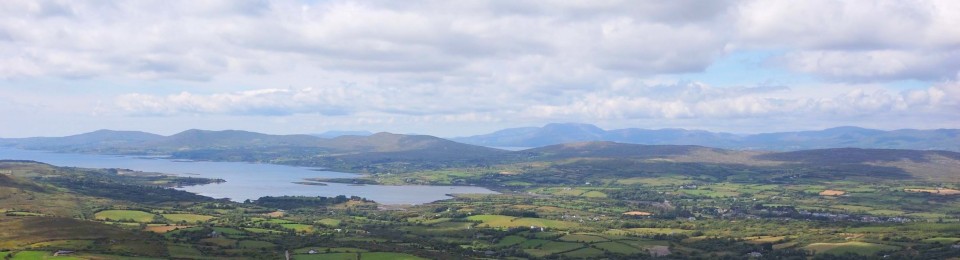
Reconstruction of Famine House and outbuildings, with Sean-Fhocals from Aristocle, Skackleton, Skakespeare.Kilcohane, West Cork with Cowlachts, Landing Places on the south side of Bantry Bay Mining areas.


Reconstruction of Famine House and outbuildings, with Sean-Fhocals from Aristocle, Skackleton, Skakespeare.Kilcohane, West Cork with Cowlachts, Landing Places on the south side of Bantry Bay Mining areas.

The house has been a labour of love for a man from the district who has a great love ol local traditions.  Like some other houses there is no sigh of a fireplace and when the site was being cleared a lot of external ashes were recovered suggesting that major cooking was doe outside.  The house has a loft which would have been common.  In the early 20th century one of the local families had 1 children who slept on the floor of the loft on straw.

The other house are cowlachts or ruined houses not yet or maybe never to be rebuilt.

The landing places are carved into the side of the cliffs and were hazardous.  This part of Bantry Bay was the scene of numerous marine tragedies in the 19th century.

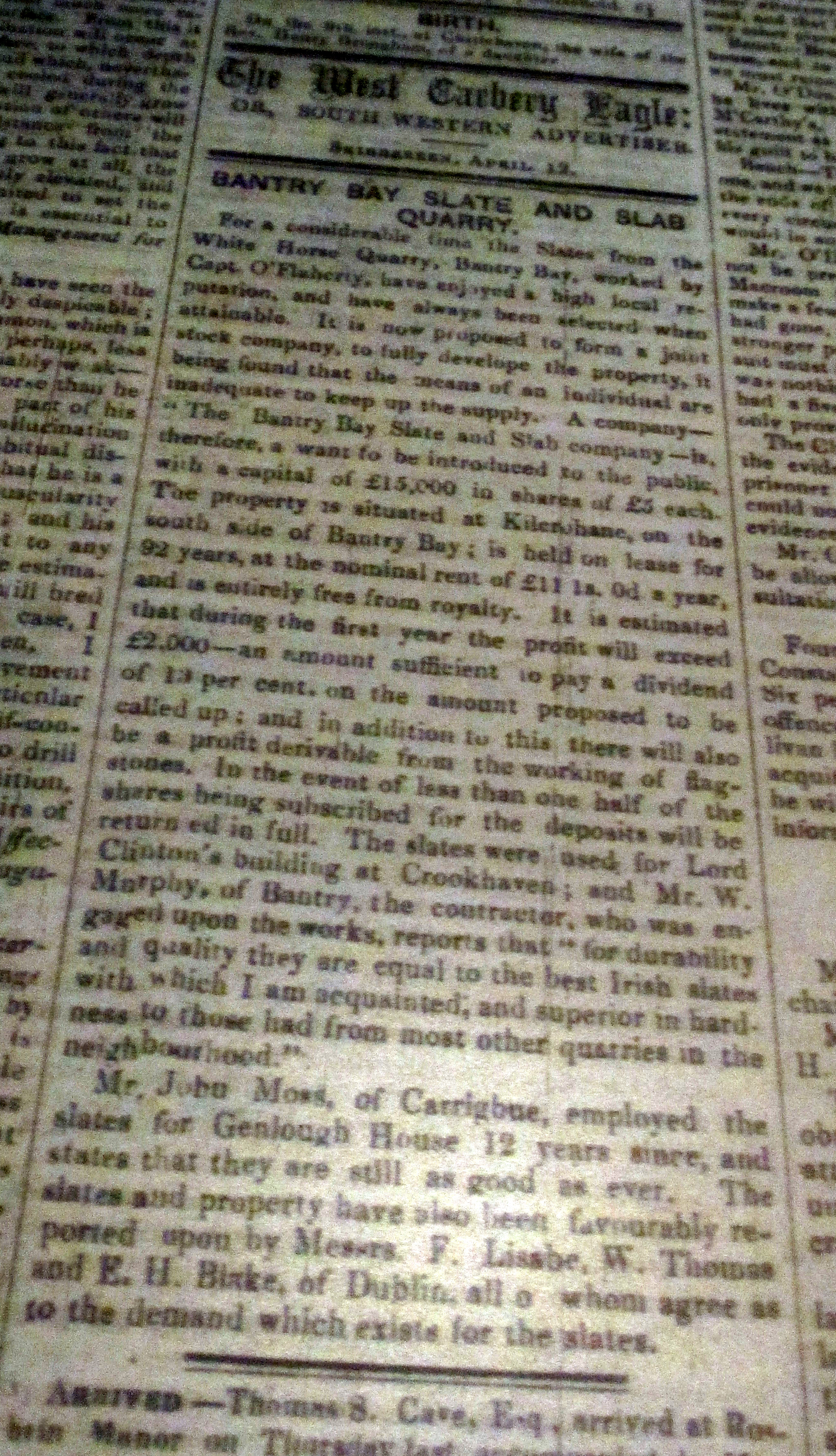
Another shot hows the locality of the Bantry Bay Slate Quarry which fizzled out in the mid 1860s.

1-IMG_1607

https://plus.google.com/photos/100968344231272482288/albums/6129838164844337169

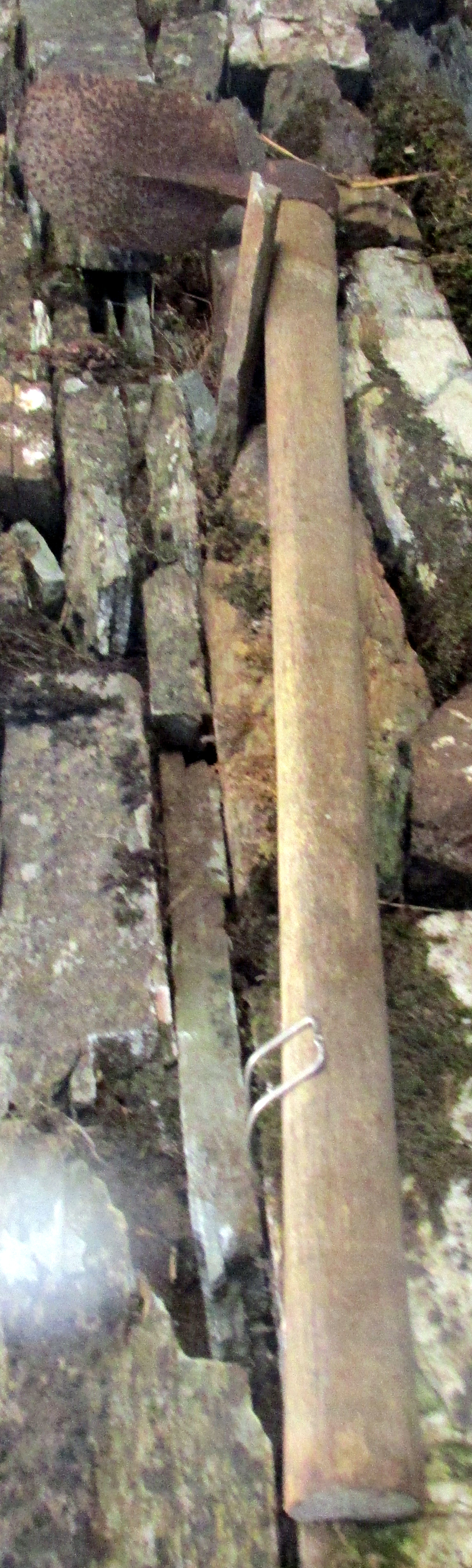
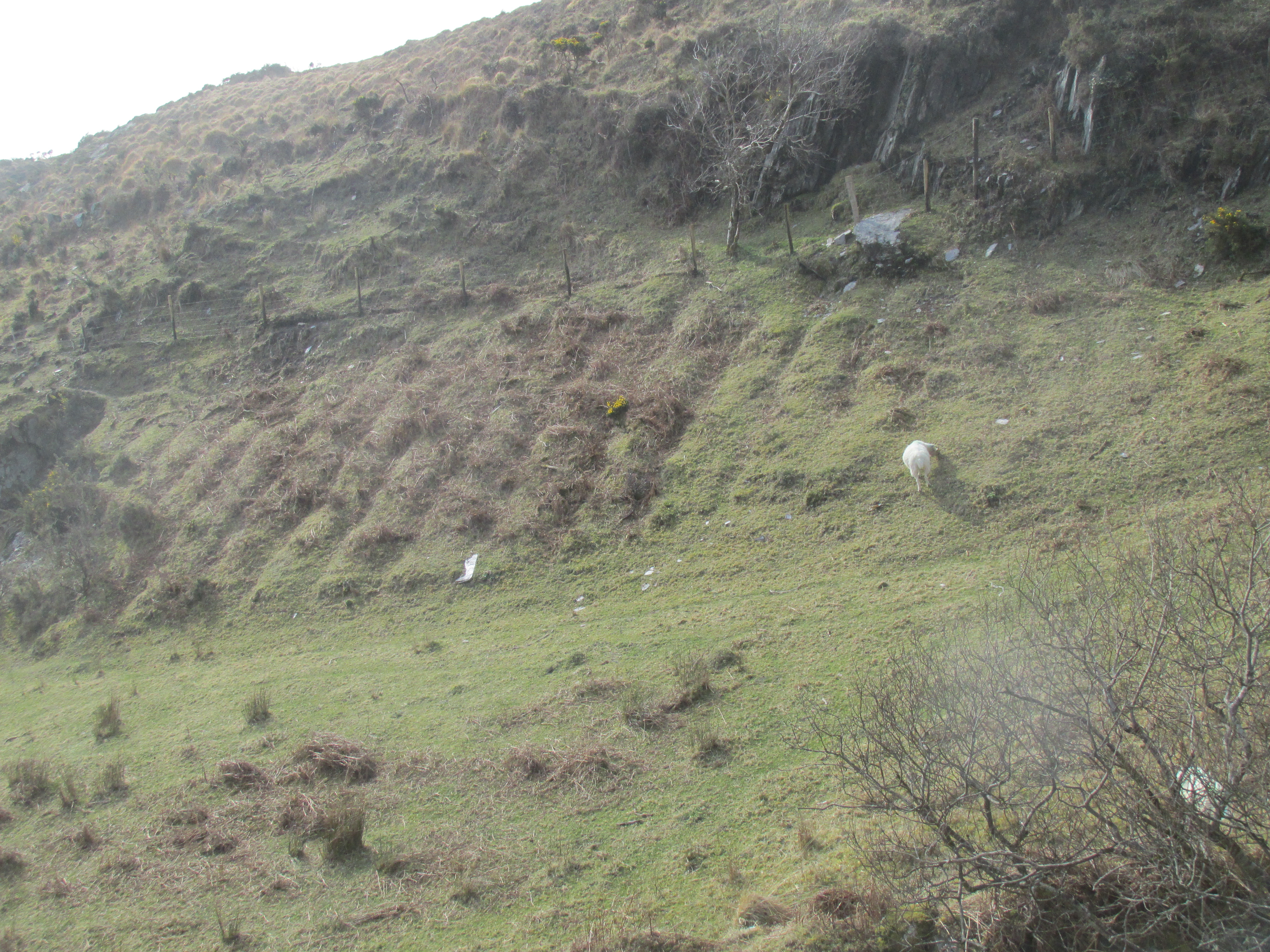
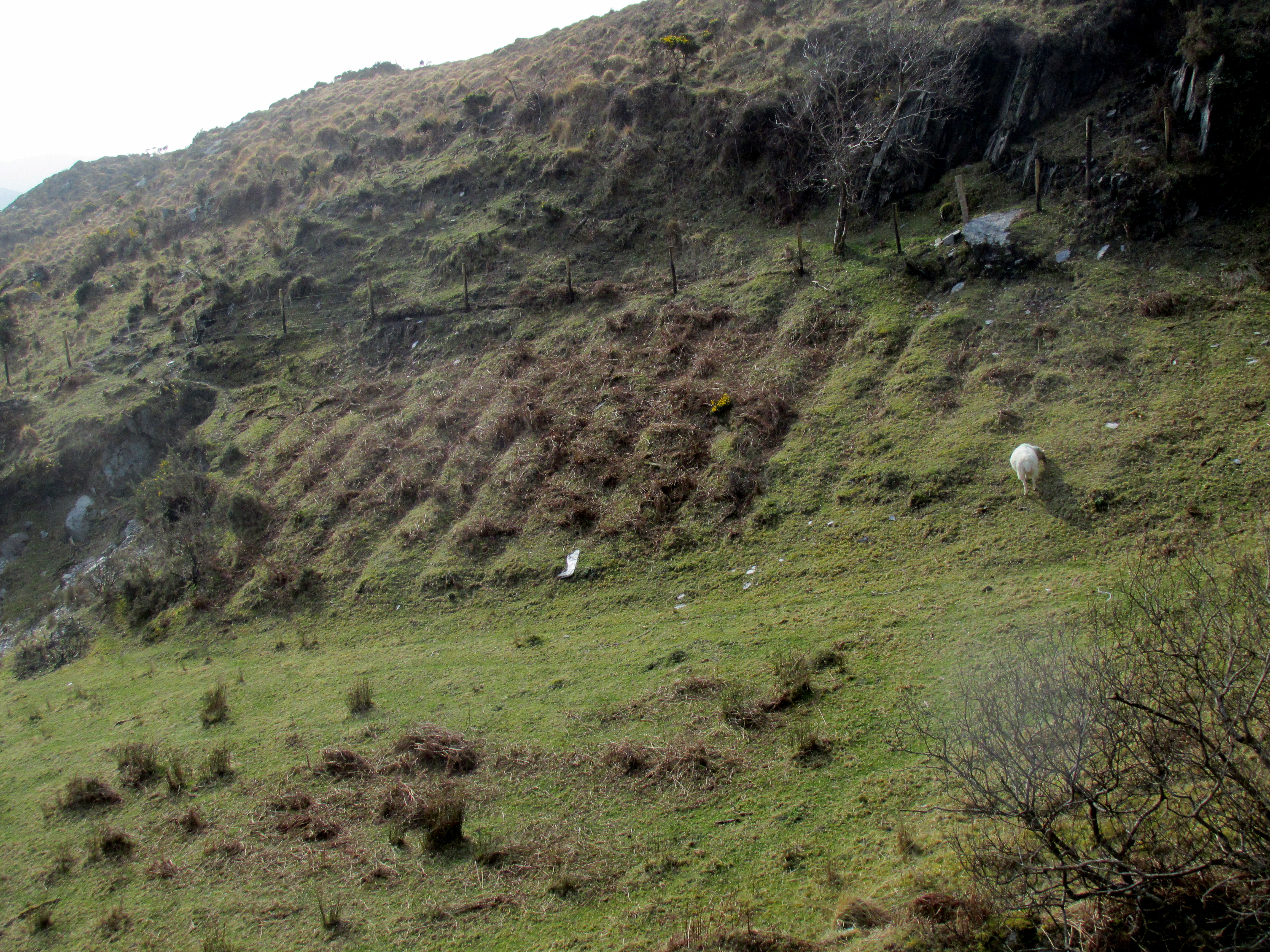
The Grufán and the Spade, Abandoned Famine Lazy Potato Beds, Kicrohane, West Cork.


https://www.google.ie/maps/place/Kilcrohane,+Co.+Cork/@51.5723601,-9.7696701,18z/data=!4m2!3m1!1s0x484582d45a68d7bf:0xa00c7a99731a160

The Grufán and the Spade, Abandoned Famine Lazy Potato Beds, Kicrohane, West Cork.

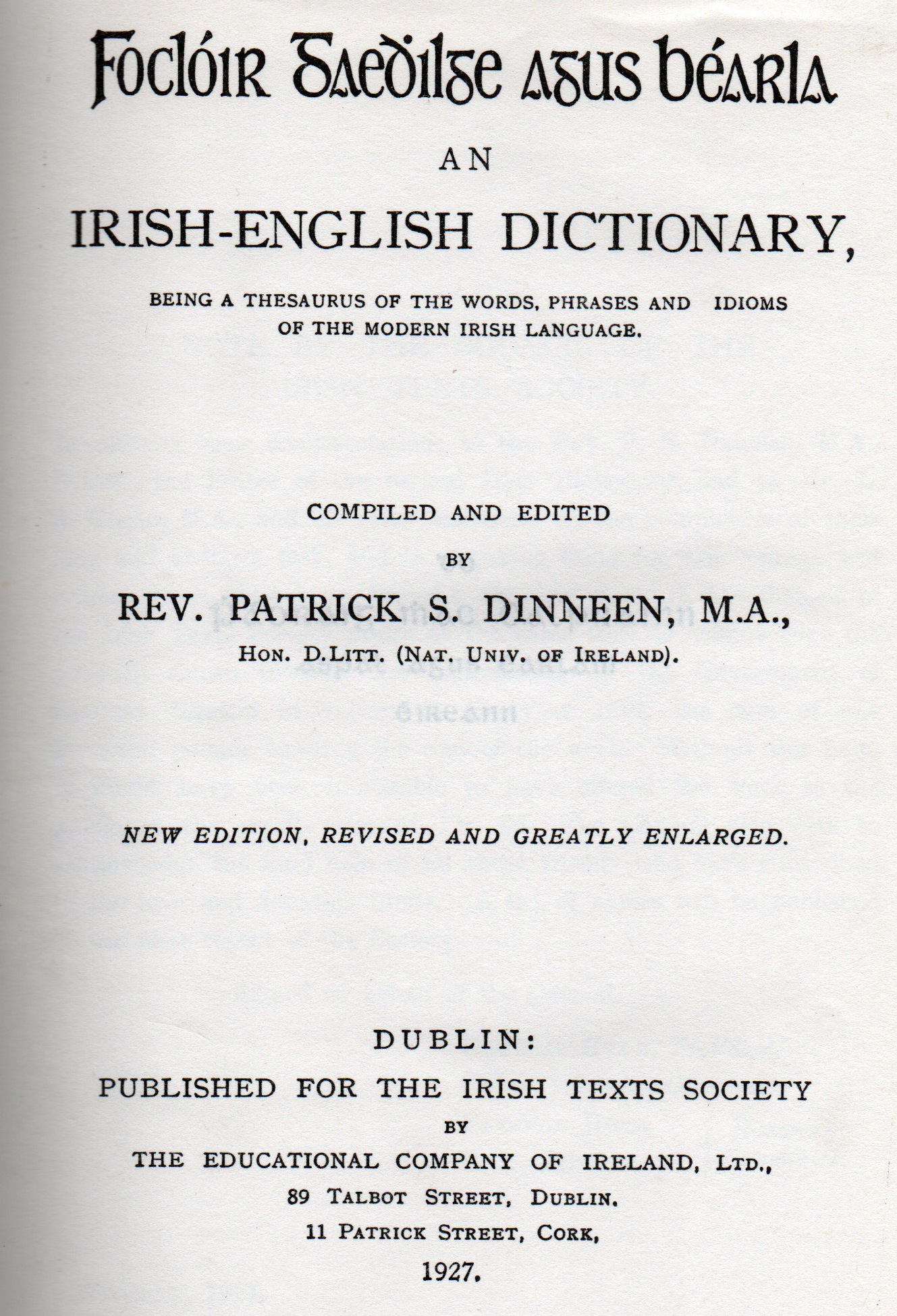
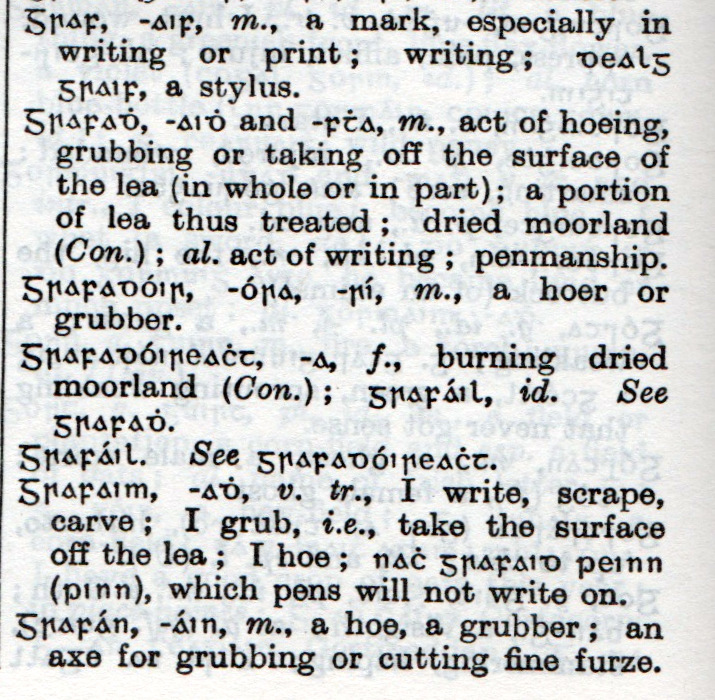
The Grufán is a tool used in famine times to grub out plots from sods where a spade would not be suitable.  It is still used to batted down clods after ploughing.

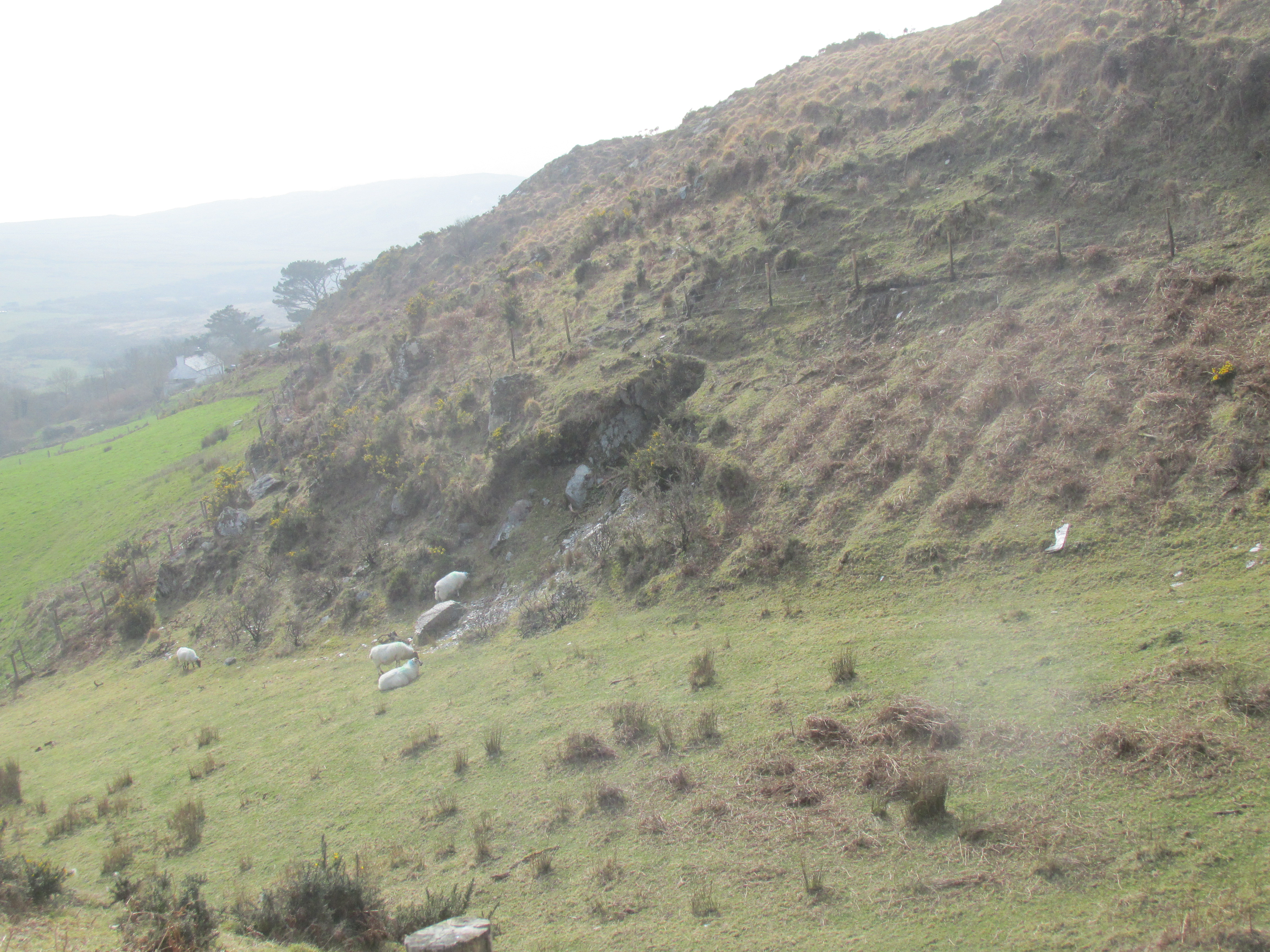
West of Kilcrohane there are a number of exampled of lazy beds abandoned after the famine, never dug.  In 1841 the Munitervara Peninsula had a population of around 10,000, one of the most densely populated non urban areas in the world excluding bog, mountain and lake  There are around 1,00o now on the Peninsula.

Pre 1965 farming practices West Cork, Red Elephant and Epicure potatoes, working with the grufán, threshing with the steam engine, winnowng of wheat and oats, working in the bog.

1-Scan 1520 2-Scan 1521

1-IMG_1814

3-IMG_1846 2-IMG_1845 1-IMG_1844

Shadows and Stone in Action


Finola's avatarRoaringwater Journal

Ken Williams - capturing the momentKen Williams – capturing the moment

Shadows and Stone is the undisputed champion of prehistoric photography sites in Ireland. The work of photographer Ken Williams, it contains an enormous number of high-quality images from Ireland, England and Wales, and Portugal. Within Ireland, the site is organised by the various types of monuments (passage graves, stone circles, rock art, etc) and there are also galleries devoted to solar phenomena such as the Equinox at Loughcrew.

Ken and Robert: getting ready for sunset at BohonaghKen and Robert: getting ready for sunset at Bohonagh

Ken’s work on rock art is astounding. We know first hand how difficult it is to get good photographs of the carvings. Many of them are covered in lichen, obscuring all the detail, and can really only be discerned in long slanting light, such as at sunrise or sunset. Ken uses artificial lighting to capture his excellent images and when we first met him a couple of years…

View original post 370 more words

Incident from Land War in Lisangle, Caheragh, West Cork, December 1881, Petty Session Justices. insist on evidence before issuing warrant.


https://www.google.ie/maps/place/Lissangle,+Co.+Cork/@51.6124134,-9.3001905,15z/data=!4m2!3m1!1s0x4845a7b29742fde5:0x942f6dce120de96e

Incident from Land War in Lisangle, Caheragh, West Cork, December 1881, Petty Session Justices. insist on evidence before issuing warrant.

The Downes referred to is probably a Solicitor as is Fitzmaurice probably a misspelling for Mrs..  The Justices were Landlords.

Incidents from Land War, Durrus, West Cork, 1881-1887.


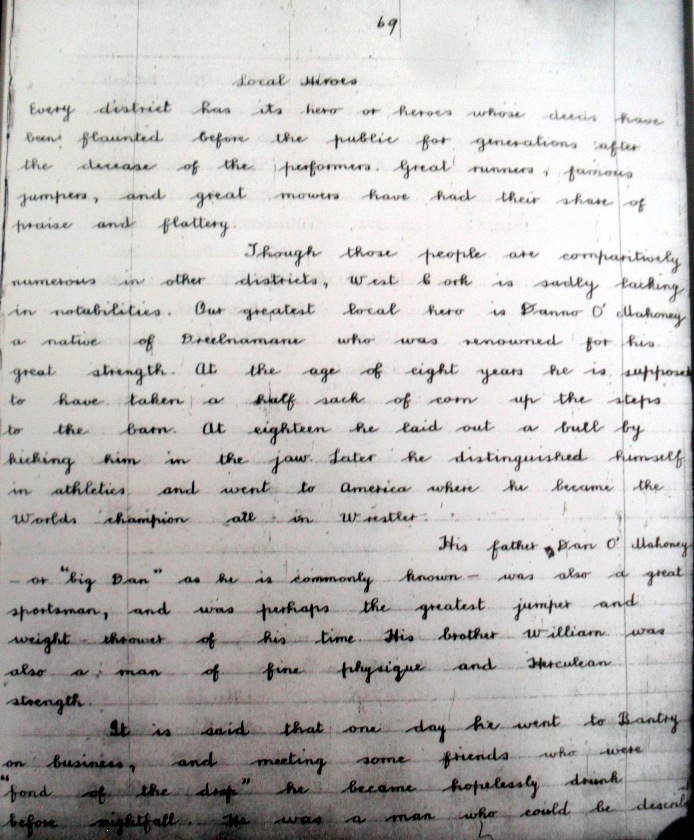
SKIBBEREEN PETTY SESSIONS.—At the weekly petty sessions the presiding justices were—Messrs. J. R. H. Becher, chairman ; R. B. Hungerford, H. R. Marmion, and G. Robinson. Mrs. Fitzmaurice made an application for warrant of arrest, upon information that would be sworn by Mrs. Margaret M’Carthy, of Lisangle, whose farmyard had been entered in the middle of the night, a shot fired, and some of her cattle driven away. She is the widow of the poor-law guardian who recently fell from his horse and was killed while returning from Ballydehob. Mr. Downes observed that it was a most unusual course. He would not like to be the magistrate who signed such a warrant. The bench decided on hearing the evidence. Mrs. Margaret M’Carthy, widow (sworn), said her farmyard had been entered into in the middle of the night, a shot was fired ; she got out of bed, and followed the party ; came up with them ; one of them turned around, she saw his face, and said, “I know you” ; it was Denis M’Carthy. Mr Collins, Petty Sessions Clerk, who had taken down the evidence, was directed by the bench to prepare a warrant for the arrest of Denis M’Carthy to issue on the information being sworn.—Adjourned.

The Cotters Of Inchigeela, Co. Cork.


https://www.google.ie/maps/place/Inchigeelagh,+Co.+Cork/@51.8424459,-9.1264323,15z/data=!3m1!4b1!4m2!3m1!1s0x48451d4de78a27eb:0xa00c7a997319e20

The Cotters Of Inchigeela, Co. Cork.

Legend has it that the West Cork Cotters descend from a number expelled from East Cork c 1640s who settled in Inchigeela.  Many of the family are still buried in the old church there.  The family and their descendants are noted for their business acumen.  The Cotters are of Danish descent.

Recent DNA analysis suggests that the West Cork Cotters, Catholic and Protestant  do not relate to the East Cork Cotters but are likely to be a Sept of either the O’Learys or the O’Mahonys.

https://www.google.ie/maps/place/Inchigeelagh,+Co.+Cork/@51.8424459,-9.1264323,15z/data=!3m1!4b1!4m2!3m1!1s0x48451d4de78a27eb:0xa00c7a997319e20

The Cotters Of Inchigeela, Co. Cork.

Legend has it that the West Cork Cotters descend from a number expelled from East Cork c 1640s who settled in Inchigeela.  Many of the family are still buried in the old church there.  The family and their descendants are noted for their business acumen.  The Cotters are of Danish descent.

Oileán ‘sea Cléire, Memories of Tráigh Chiaráin, A Cape Clear Sailorman, Lamentation for my Mother, The Fastnet, The Dance, Dánta de Pat the Poet Cotter (John K. Cotter) as ‘An Logainmníocht in Óileán Cléire

Thomas Young Cotter 1805-1882, Bantry born First Colonial Surgeon 1835, South Australia. Related to Bantry Young Family, Fish Merchants.

Briseann an Dúchas trí Shúile an Chait, (heritage breaks out through the Eyes of the Cat) Cork families of Danish Origin.

An interesting site on the family.

http://www.cotterinchigeela.com/pages/photographs.aspx

There is a closed Genealogy Cotter group on Facebook worldwide.

Oileán ‘sea Cléire, Memories of Tráigh Chiaráin, A Cape Clear Sailorman, Lamentation for my Mother, The Fastnet, The Dance, Dánta de Pat the Poet Cotter (John K. Cotter) as ‘An Logainmníocht in Óileán Cléire

Thomas Young Cotter 1805-1882, Bantry born First Colonial Surgeon 1835, South Australia. Related to Bantry Young Family, Fish Merchants.

Briseann an Dúchas trí Shúile an Chait, (heritage breaks out through the Eyes of the Cat) Cork families of Danish Origin.

An interesting site on the family.

http://www.cotterinchigeela.com/pages/photographs.aspx

There is a closed Genealogy Cotter group on Facebook worldwide.