1826. Death in Faction Fight, Clonakilty and Deaths Arising From Rev Morritt’s Extraction of tithes at Castlehaven, West Cork.


1826. Death in Faction Fight, Clonakilty and Deaths Arising From Rev Morritt’s Extraction of  tithes at Castlehaven, West Cork.

1823. Inquest into Affray Occasioned by the Rev. Robert Morritt, Rector of Creagh and Castlehaven, Notorious Extraction of Tithes, Caused at Castlehaven, West Cork, at which Fatalities Occurred, Stones Placed into Mouths of Killed Policemen, Press Excluded from Publishing Preliminary Investigation on Morritt’s Motion.

1823. Rev. Robert Morritt, Rector of Creagh and Castlehaven, West Cork Notorious Extractor of Tithes, Searching for Arms in Ballydehob, Caused Affray at Castlehaven at which Fatalities Occurred, Stones Placed into Mouths of Killed Policemen, later Paris Defamation action Against Three English Clergymen.

Screen Shot 2017-04-07 at 10.15.19

1844, Petty Session Courts with James Little, Resident Magistrate (RM), and Local Magistrates Listed, Bantry, Carrigboy (Durrus), Castletownbere, Clonakilty, Dunmanway, Goleen, Remineen (Beara/Glengarriff), Rosscarbery, Skibbereen, Union Hall, West Division, West Cork.


1844, Petty Session Courts with James Little, Resident Magistrate (RM), and Local Magistrates Listed, Bantry, Carrigboy (Durrus), Castletownbere, Clonakilty, Dunmanway, Goleen, Remineen (Beara/Glengarriff), West Division, West Cork.


1844 a series of reforms had resulted in the establishment of the Petty Session Courts, presided over by a Resident Magistrate.  He did not have to be legally qualified, many were former British Army Officers. or RIC District Inspectors.   He was assisted by at least two local Magistrates or Justices of the Peace and the hearing were conducted in Courthouses., the Clerk of Petty Session played a pivotal role.

Formerly the local Magistrates held court often in their own houses, giving a perception of the partial and sectarian administration of justice.

In this listing, the only Church of Ireland clergymen shown are the Rev Alleyn Evanson of Durrus Court, Gearhameen, Durrus.  At this stage he was an ‘beneficed clergyman’ not practising but a land agent and middleman.  The Rev. Richard Wright, of Skibbereen was also a land agent.

Earlier there would have been  very significant presence of ministers representing the then Irish State Church.

chrome-extension://klbibkeccnjlkjkiokjodocebajanakg/suspended.html#uri=http://opac.oireachtas.ie/Data/Library3/Library3/DCT162004.pdf


1835, Return of J. Chatterton Clerk of Peace (State Solicitor) Co. Cork. 298 Magistrates, 11 Resident and Non Acting, 29 Non Resident and Non Acting with Deputy Lieutenants, Magistrates in Holy Orders. No Practising Barristers, Solicitors or Attorneys.


1661-1679. Appointment of Cork Magistrates during Reign of English King Charles 11.


Custos Rotulorum, County Lieutenants and Magistrates in the Commission of The Peace , Co. Cork, in Ireland from 1434, Finances from Probates and Land Records


…..


Screen Shot 2017-04-07 at 07.27.37

Screen Shot 2017-04-07 at 07.27.48

Screen Shot 2017-04-07 at 07.28.01

Screen Shot 2017-04-07 at 07.28.17


Screen Shot 2017-04-07 at 07.28.32

Screen Shot 2017-04-07 at 07.28.43

Screen Shot 2017-04-07 at 07.29.18

Screen Shot 2017-04-07 at 07.29.27

Screen Shot 2017-04-07 at 07.29.38

Screen Shot 2017-04-07 at 07.29.47

Dalys of Kilcrohane, Bards, Reputed Educators of the Sons of the King of Spain, Genetic DNA link to Bandon, Co. Cork Dalys, Ó Dálaigh Slíocht 2017


..

Dalys of Kilcrohane, Bards, Reputed Educators of the Sons of the King of Spain, Genetic DNA link to Bandon, Co. Cork  Dalys, Ó Dálaigh Slíocht 2017

Dalys from Bandon.  Those Dalys we know are genetically related to  Dalys of Kilcrohane on Sheepshead, the minor Bardic branch of Anghus Ó Dalaigh.  There are others  in our the Daly database who are descended from the senior Bardic branch of Drumnea, Kilcrohane.

1708 Deed and Feoffment, Donogh Daly, Farnanmanagh, Kilcrohane, West Cork, Witness Owen Daly.

O’Daly Bardic School 13th to 17th century, Dromnea, Kilcrohane West Cork, pupils including two sons of the King of Spain, descendants founding Daly’s Distillery, Cork.

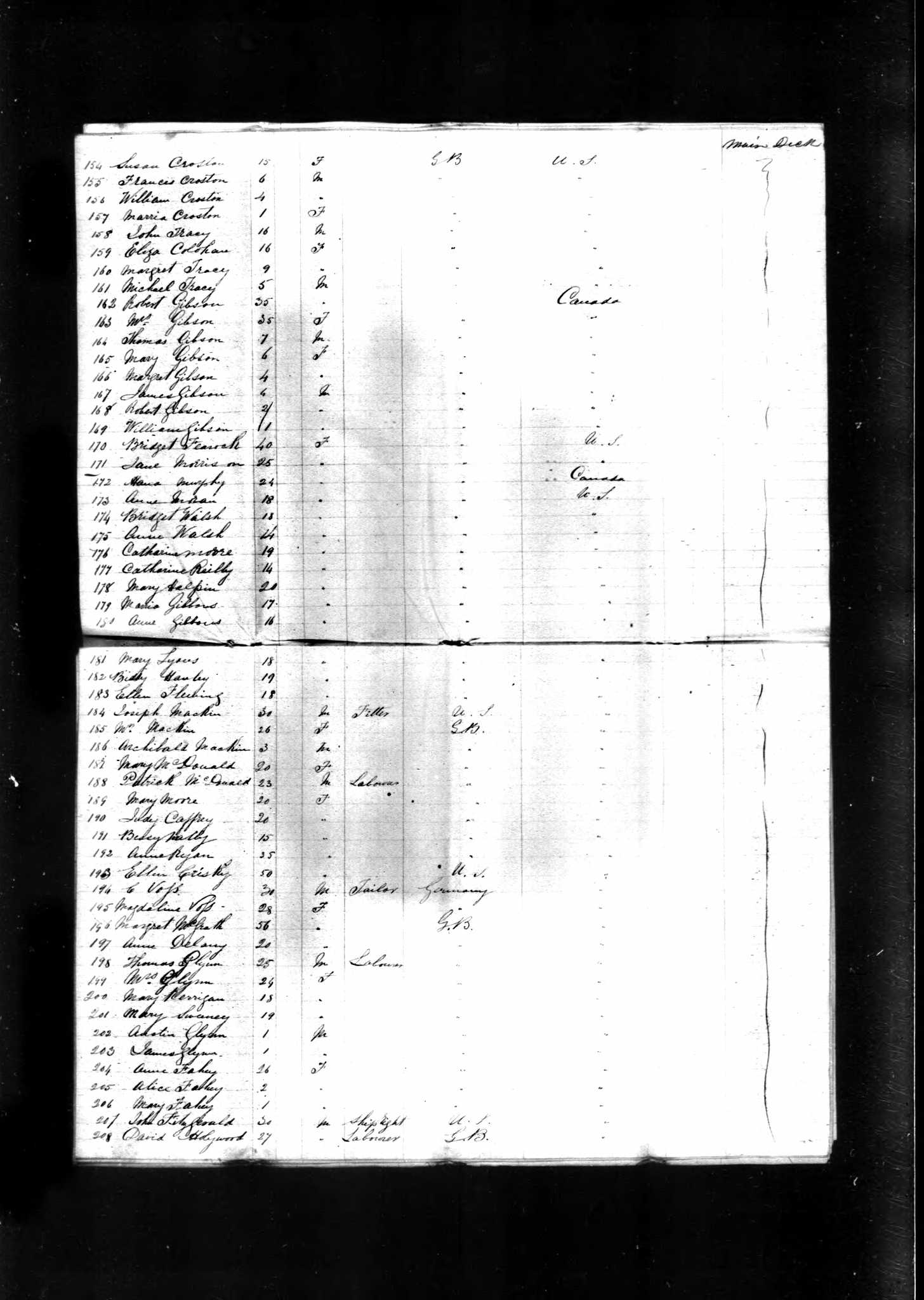
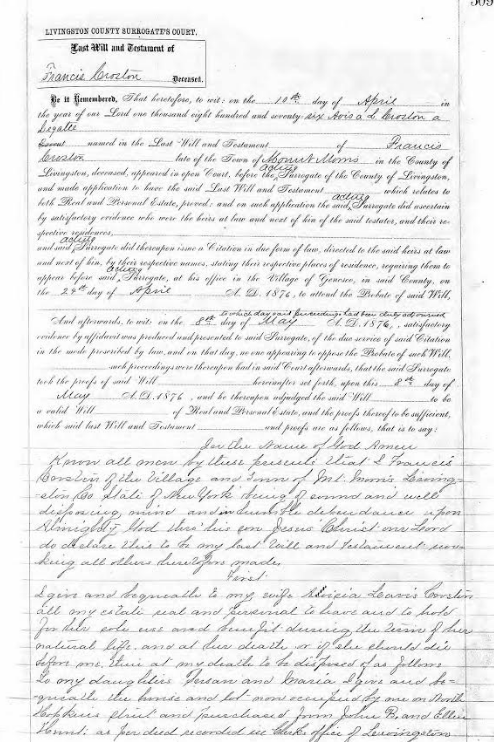
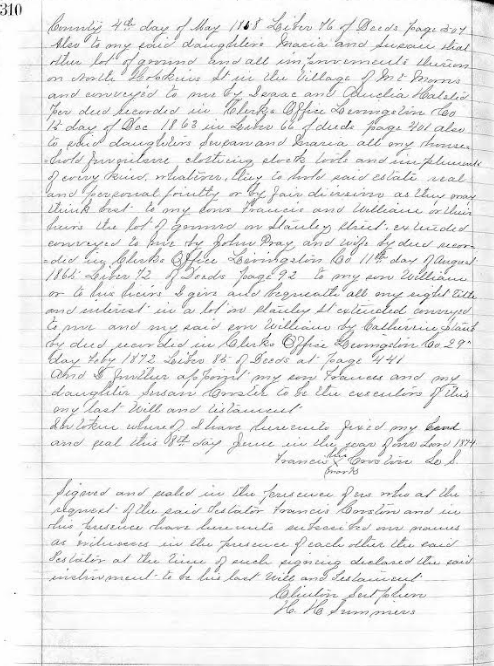
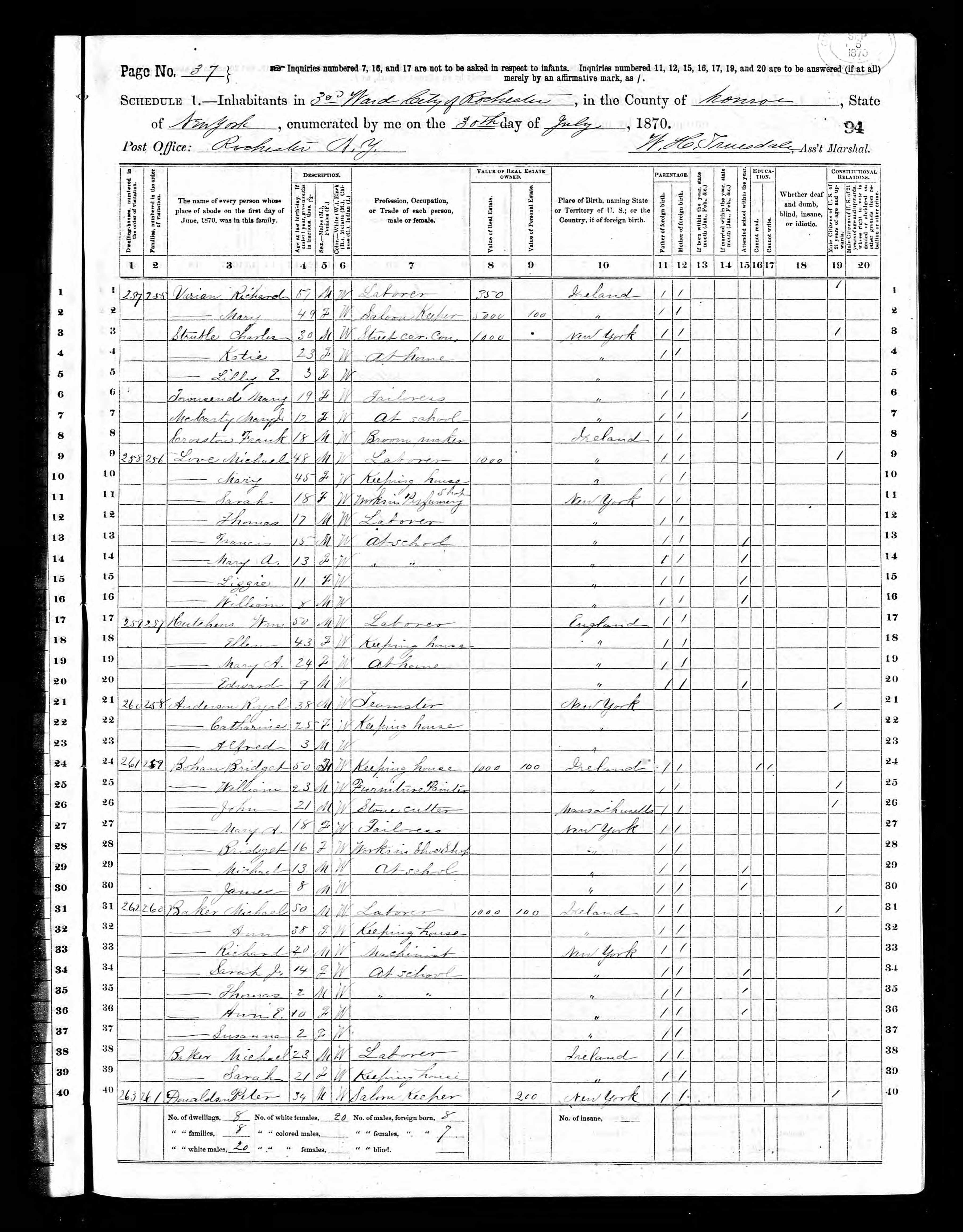
Records of South West Cork families such as Dalys, Haggertys, Swanton, Jagoe. Lannin, Levis, Dukelow, Beamish, Harrington, Mahony, McCarthy, Stout, Kingston, Raycroft, Jennings. Skuce, in Registers of Rochester New York, Register Mount Hope Cemetery, Rochester, Rochester Genealogy Relevant Canadian Records.

https://durrushistory.wordpress.com/wp-admin/edit.php?s=daly&post_status=all&post_type=post&action=-1&m=0&cat=0&paged=1&action2=-1

The Ó Dalaighs (Dalys) of Muintervara, West Cork, Rymers/Poets to the McCarthys and O’Mahonys from c 1300, founders of Bardic School, by Oral Tradition where the Sons of the King of Spain Attended.

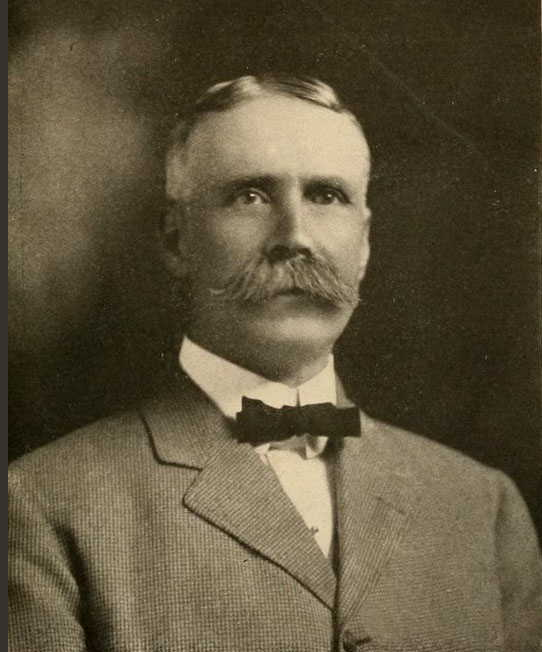
Rev. John Varian Daly, St. John’s College, Cambridge, Curate St. Thomas, Ardwich, Manchester Fell into the Arms of Jesus, 1877, 2nd Surviving son of Joseph Daly and Anne Varian (1814-1900), Toormore, West Cork.

100th Birthday Party, Jer Jack Daly (1915-2018) from, Kilcrohane, Muintervara, West Cork

Memorial to The O’Dalys of Muintiravara, For Many Centuries Prior to 1600 Sub-Chiefs to the McCarthy Mór and The Desmonds, Active in The Munster Wars For Religious And National Freedom. They Suffered Confiscation, Exile and Local Extinction.

Appointment of Civil Process Officers, Co. Cork, West Riding, 1st November 1826, by J. Chatterton, Clerk of the Peace, Bantry: Timothy Sullivan, Jeremiah Sullivan, Jeremiah Day, Robert Warner, Clonakilty: Thomas O’Hea, John Bateman, Dunmanway; Jeremiah Crowley, Timothy Daly, Enniskeane: Robert Thompson, Patrick Connor, Rosscarbery: Andrew McCarthy, James Brien, Skibbereen: George Hayes, Michael Caverly, Morty Sullivan.


DALY Anc Rem Day 2017FDALY Gathering 2017


1830 Tithe Applotments (Tax Assessments) for Durrus District, West Cork, for Church of Ireland/Methodist families.


The 1820s were grim economically for West Cork. The collapse of the textile industry which in the Baronies of Carbery was dependant on home weaving was hard hitting on those families partly dependant on it.

This triggered wide spread emigration mostly but not exclusively Protestant to Canada and Rochester, New York.  Many of the families listed here had members who emigrated.

1830 Tithe Applotments (Tax Assessments) for  Durrus District, West Cork,  for Church of Ireland/Methodist families.   This might loosely be described as a tax assessment.  Not all people are included, no labourers, cottiers, artisans such as shoemakers are excluded.  However by combining the amount of land and its value it provided valuable information.  Discernable are clusters of small holdings in Coolculagta, Ardgoena, Droumreagh which were likely to have been weaving centres.


You can see clusters of small holding probably weavers in Drumreagh, Ardgoena, Coolculaghta.  Also there are names which are no longer around.


The originals can be viewed here, some parts such as Clashadoo are missing, the transcriptions are very poor:


http://titheapplotmentbooks.nationalarchives.ie/search/tab/results.jsp?surname=&firstname=&county=&townland=&parish=durrus&search=Search&sort=&pageSize=&pager.offset=370


Tithe Aplottments 1830 DurrusParts of Bantry, Church of Ireland


1847. Father John Kelleher, PP. Ballydebob, on evils of Land Tenure. Townland of Kilronogue, Ballydehob, West Cork, Population 1841 445, 1847 125 Dead from Hunger, 6 from Disease, 84 Missing. 1841 74 Houses, 1847 27 Unroofed, 11 Unoccupied.


durrushistory's avatarWest Cork History

Kilbronogue:

https://www.google.ie/maps/place/Kilbronoge,+Co.+Cork/@51.534404,-9.503963,14.61z/data=!4m5!3m4!1s0x484598c4203b83c5:0x20f5ab9144199f02!8m2!3d51.5366062!4d-9.4942329?hl=en

1847. Father John Kelleher, PP. Ballydebob, on evils of Land Tenure. Townland of Kilronogue, Ballydehob, West Cork, Population 1841 445, 1847 125 Dead from Hunger, 6 from Disease, 84 Missing.  1841 74 Houses, 1847 27 Unroofed, 11 Unoccupied.

http://www.failteromhat.com/southernstar/page12.php

At Kilbronogue the Revd. continued his journey escorted by Captain Harston, agent of the British Association and the Roman Catholic Parish Priest, Fr. Barry. He visited nine houses before turning away with despair. “In the ninth house that of Charles Regan, I found that of eleven only three remained. We had met the woman of the house on the road and she accompanied me to most of the houses. When we arrived at her cabin she said: ‘I have a fine young man of nineteen years of age and you could carry him in the palm of your hand.’ I entered and saw a bundle of skin and…

View original post 487 more words

Under the Radar: Roads are discovered to yield a more profitable crop than farming, 1809 Cork Grand Jury Presentments: John Arundel, William and John Swanton, Ballydehob, Alexander O’Driscoll, Skibbereen, John and William Warner, Bantry, Samuel Townsend, Henry Ryan, Skibbereen, Later, Birds and Tobins of Kilcrohane, Moss and Nicholas Families, Durrus, Shanahans of Dunbeacon, Vickeries of Ballycomane, Fitzgeralds of Baltimore.


Roads are discovered to yield a more profitable crop than farming, 1809 Presentments John Arundel, William and John Swanton, Ballydehob, Alexander O’Driscoll, Skibbereen, John and William Warner, Bantry, Samuel Townsend Henry Ryan, Skibbereen, Later, Birds and Tobins of Kilcrohane, Moss and Nicholas Families Durrus, Shanahans Dunbeacon, Vickeries Ballycomane, Fitzgeralds Baltimore.

The latter families many intermarried and with McCarthys, O’Sullivans, Murnanes of  Letterlickey, Catholic Shannons of Brahalish.

The Fitzgerald are probably the ancestors of JFK’s mother.

Later c 1830s records show the Tobins securing contracts with the Birds of Bantry (Birds and Tobins local agents Lord Bantry) for areas quite distant from home place almost like Irish ‘subbies’ in England.

In 1739 (13 Geo. II, 20 c. 10) Grand Juries were given the power of acquiring any land, other than built-up areas or private gardens, avenues and orchards, that was needed for new roads, and though damages were payable it was the jury itself that assessed them. In fact there was little objection to finding room for new roads in a country where land was owned in large blocks and used extensively rather than intensively.

From Professor Andrews former geographer TCD:

Indeed in the last analysis it was the Irish tradition of low yielding husbandry that made many middle-class tenants and small gentry so assiduous in their efforts to secure road contracts as a supplementary source of income : as one Co. Limerick landowner succinctly expressed it, ‘roads are discovered to yield a more profitable crop than farming.’10 Grand Jurors were thus subject to pressure from their friends and dependents to present money for roads whether they were necessary or not, and inevitably new lines proliferated.

Cork Grand Jury 1890 presentments p.128-9.

https://docs.google.com/document/d/1uGCxYYvCGNEbpzypv-6tdTnz78HsuF_YJELLh9ezWvM/edit

1729 Turnpike Trust. 1822 Cork, Skibbereen and Kinsale Turnpike (Toll Road), Tolled to 1843. 1839 Funding by Commissioner of Public Works, Loan to Trustees of Cork, Skibbereen and Kinsale Turnpike, For road from Castletownbere to Dursey Island, For a Railway From Certain Bogs to Supply Cork with Turf.


1729 Turnpike Trust.  1822 Cork, Skibbereen and Kinsale Turnpike (Toll Road), Tolled to 1843.  1839 Funding by Commissioner of Public Works, Loan to Trustees of Cork, Skibbereen and Kinsale Turnpike,  For road from Castletownbere to Dursey Island, For a Railway From Certain Bogs to Supply Cork with Turf.

In the early 18th. century the Irish roads were generally of a very poor quality.  The Turnpike Trust was an attempt to improve by sponsoring private Acts of the Irish Parliament for new or to maintain existing road schemes. These were to be funded by the users.

Another Northern European country, Denmark, not invaded by the Romans and not having their roads, also had a major road problem in the mid 18th century.  An Irish Engineer based in Denmark produced a recent paper on the subject.  In the case of Denmark, the King brought in French Engineers c 1750 to lay out a national road system, which lasted to the 1960s.  The French planted  trees alongside the roads something happily replicated in the Irish Motorway Network post 2000, in the autumn the colours are amazing.

Simultaneously the Cork Grand Jury continued piecemeal improvements, added to by the great arterial schemes of Sir Richard Griffith and Nimmo in the 1820s.

The turnpike road to Skibbereen seems to coincide with the mail coach road of 1832 (ROAD PLANNING IN IRELAND BEFORE THE RAILWAY AGE By J. H. ANDREWS Trinity College, Dublin).

Before very long, in any case, the railways were beginning to distract attention from the problem of the trunk roads. In 1857 all the surviving turnpike trusts were liquidated on the ground that, since long distance traffic was now virtually monopolised by the railways, the roads could reasonably revert to county charge.  Four years later the mail coaches, now reduced to a mere 238 miles, made their last appearance in the postal section of Thorn’s annual directory: 

Screen Shot 2017-03-26 at 21.12.25


1766, Lord Lieutenant Gives Assent to the Building of a Turnpike Road from Kanturk to Cork. May have been an early butter road.

Cork Turnpike Road Legislation


1731, Cork-Kilworth Mountain to Co. Tipperary border, tolls intended to last to 1752.

1779-80, tolls increased

1798, road privatised

1798, tolls on stagecoaches doubled

1799, tolls increased.


1731, Newcastle-Limerick-Cork, tolls intended to last to 1753.

1745, tolls increased road to go via Charleville.

1826, new Act.


1747, Listowel-Cork, original tolls to 1809

1767, adjustment of position of turnpike gates


1765, Kanturk-Fair Lane (Cork), tolls intended to continue to 1826 but only short length constructed


1790, Charleville to Cork City


1812, Cork-Tralee, tolls to 1833.


1822, Cork-Skibbereen-Kinsale, tolls to 1843


1825, Cork-Ballyhooly, tolls to 1846.


1830 Extension of Waterford-Cork, provisional only.


1857, all existing turnpike roads in Ireland abolished with effect from 5th April 1858


20170326_192246

https://books.google.ie/books?id=lVUSAAAAYAAJ&pg=RA2-PA9&lpg=RA2-PA9&dq=cork+kinsale+skibbereen+turnpike&source=bl&ots=gUQjbUCSfy&sig=fGEuBtLSpyU213HmRFjdyRfxjjM&hl=en&sa=X&ved=0ahUKEwi_-NKT7vTSAhXLFsAKHcyiBnEQ6AEIMTAD#v=onepage&q=cork%20kinsale%20skibbereen%20turnpike&f=false

Screen Shot 2017-03-26 at 20.04.42

..

Screen Shot 2017-03-26 at 20.05.19

…..

……..

……