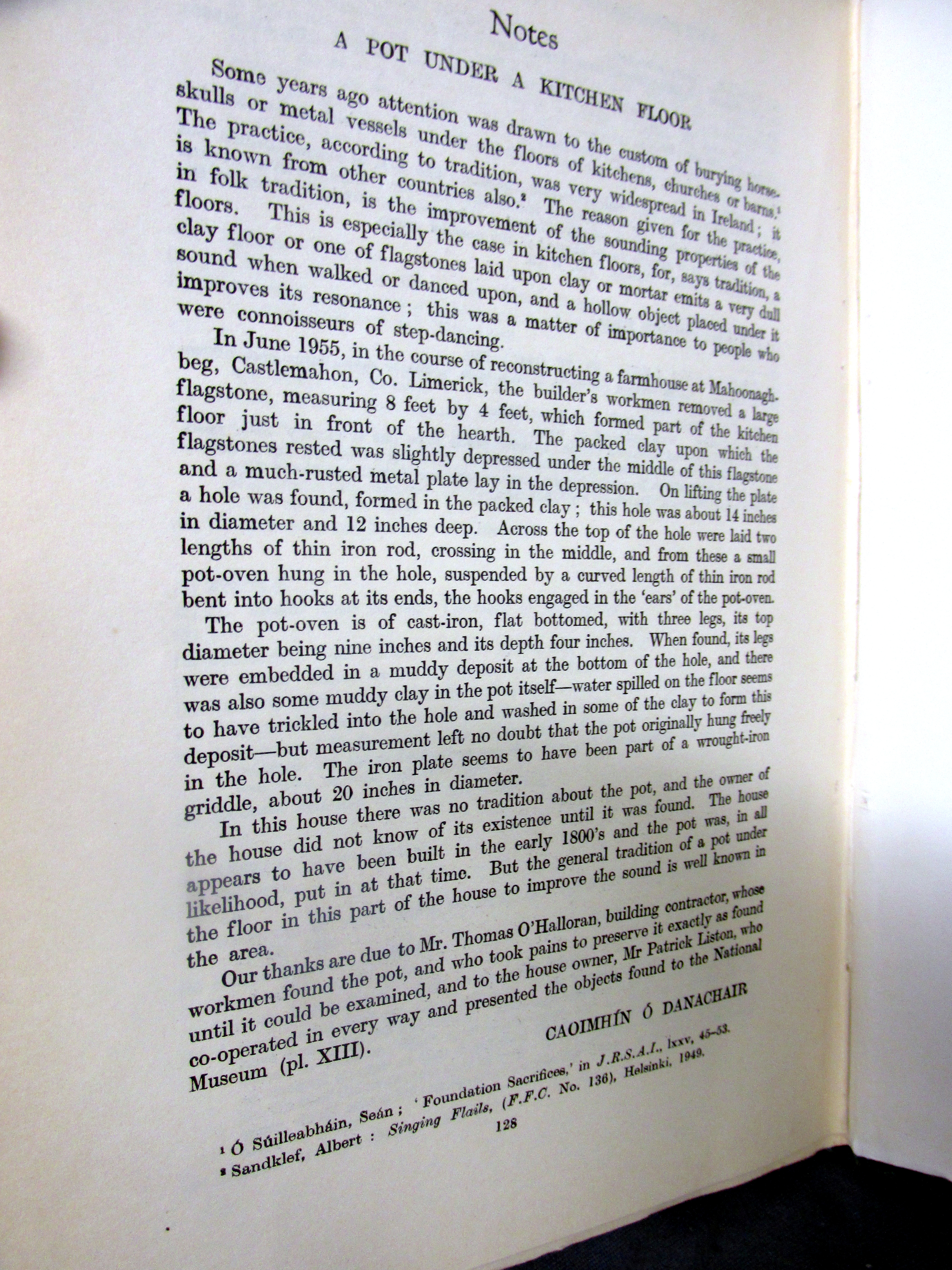
Tradition of Burying Horse’s Skull or Kitchen Pot under Kitchen Floor.
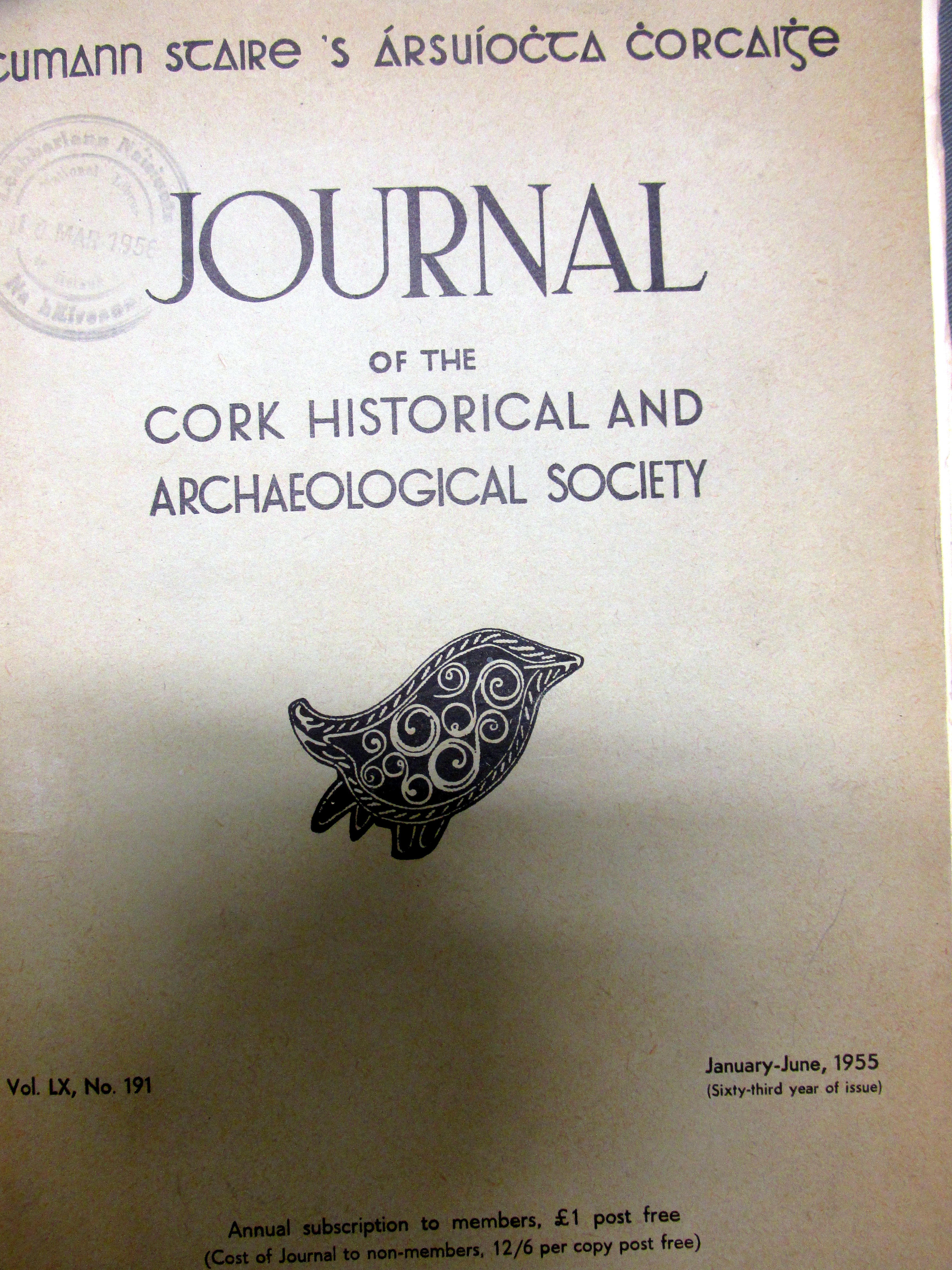
Courtesy 1955 JCHAS
The author Kevin Danaher was a well known author and folklorist.
http://en.wikipedia.org/wiki/Kevin_Danaher

19 Monday Jan 2015
Posted in Uncategorized
Tradition of Burying Horse’s Skull or Kitchen Pot under Kitchen Floor.
Courtesy 1955 JCHAS
The author Kevin Danaher was a well known author and folklorist.
http://en.wikipedia.org/wiki/Kevin_Danaher
19 Monday Jan 2015
Posted in Uncategorized
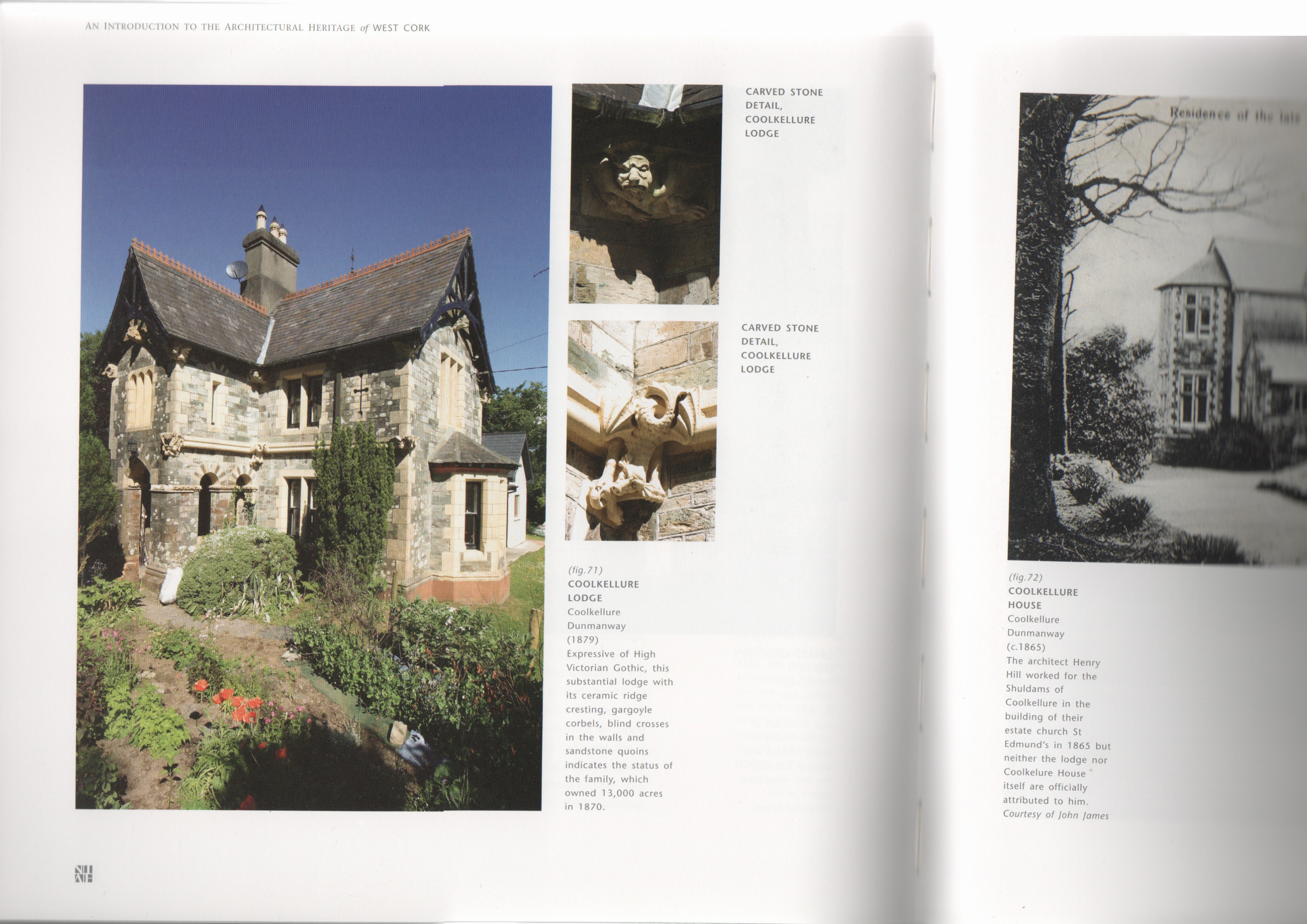
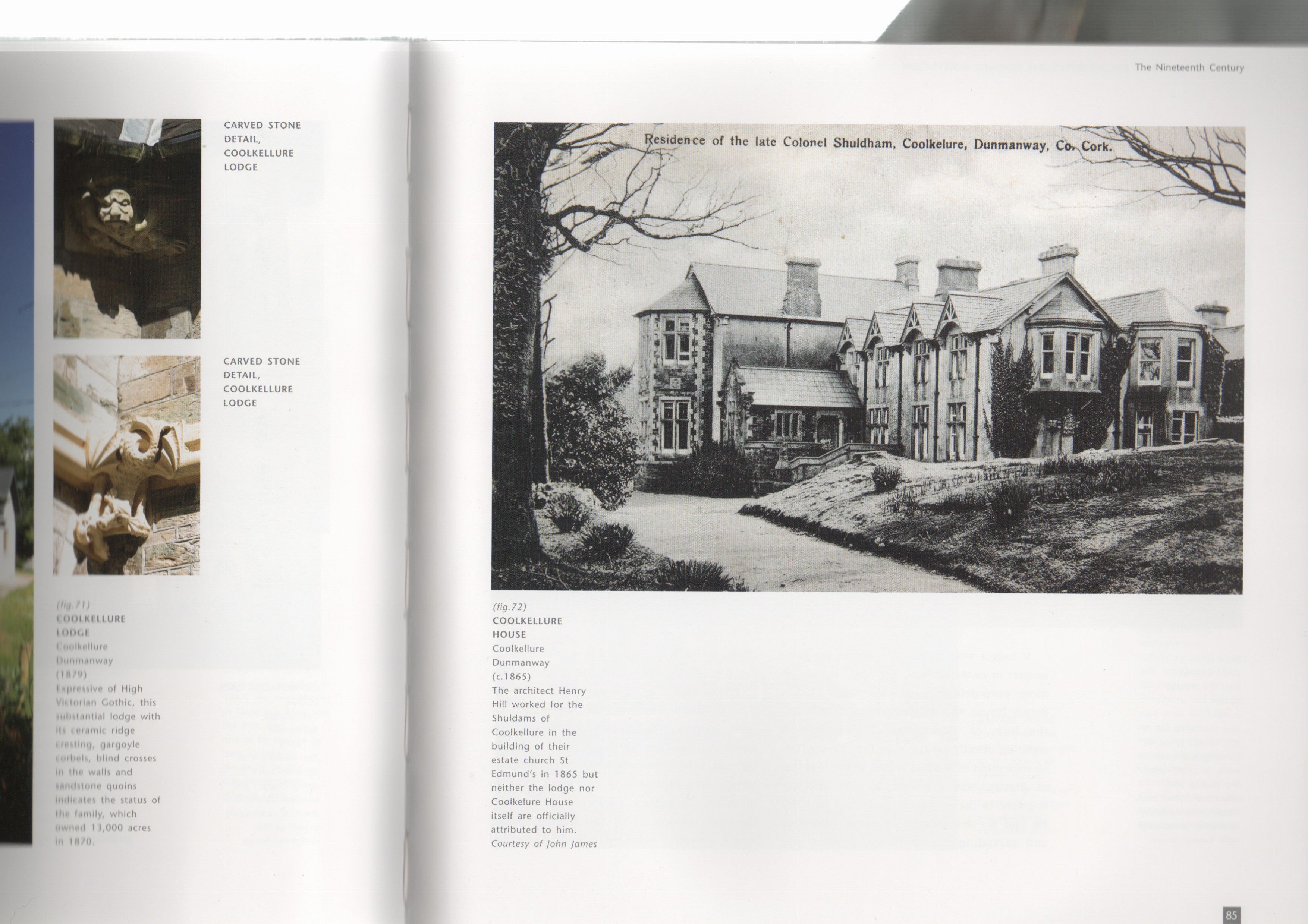
Coolkellure House, 1865, for Colonel Shuldham, Dunmanway, West Cork.
The Dunmanway Shouldham estate originates in the early 18th century marriage of Shouldham from North Kerry, Solicitor General for Ireland and Miss McCarthy she bringing the Mccarthy Estate to the union. Shortly after she appears in the Convert Rolls. The Shouldham had the Galweys of Enniskeane probably also associated with the McCarthys as land agents.
The Shouldham graves at the church they build have large Celtic Crosses.
Magistrates:
Captain Edmund Anderson Shuldham, Coolkelure, Dunmanway, listed 1854, A.D.C. to Lord Lieutenant, subscriber 1861 to Smith’s History of Cork. 3 Jan 1846 Report by EW Shuldham [visiting committee], stating that he found the house ‘in excellent order’, and referring to the moving of female patients downstairs owing to the storm, to the employment of school boys in turning potatoes, and to ‘great damp admitted under both towers’.Niece Georgina, Countess of Bandon. Built Coolkelure Church, Dunmanway, 1865. Dunmanway Shouldhams descend from Shouldham/McCarthy marriage c 1720. Land record, Major Shuldham, 1870, 13,039 acres.
Leopold Shuldham 1856, Coolkelure, Dunmanway, Resident
William Lemuel Shuldham Esq., Coolkelure, Dunmanway. Listed 1835. 1833 Grand Jury Inspector with Hungerford into Ballydehob Dispensary. Sitting Dunmanway 1835, Refusal to convict those accused of firing at Orange Parade in Dunmanway regarded as partisan. 1835 Subscriber Lewis Topographical Dictionary of Ireland 1837. In the chancel of Dunmanway Church s a handsome 3-light window, presented by the late O’Donovan, D.L., as a memorial of his brother-in-law, William Lemuel Shuldham, and his wife. There are mural tablets to the Cox family and others. Reverend Morgan Ó Donovan; born 1769; M.A., T.C.D.; Rector of Dunderrow, County Cork; s. as The Ó Donovan on the death of General Richard Ó Donovan (ancestor of the present Colonel The Ó Donovan) in 1829. He married, November, 1795, Alicia, daughter of William Jones, Esquire, of Cork, and had issue two sons (for whom see Burke’s Landed Gentry) and a daughter, Eleanor, who married, 1839, William Lemuel Shuldham, son of Arthur Lemuel Shuldham, of Dunmanway, County Cork, and of Deerpark, County Devon (Kings’ Dragoon Guards; Lieut.-Colonel East Devon Yeomanry Cavalry; D.L. for County Down), and of his first wife, Catherine Maria, daughter of Sir William Anderson, 6th Bart., of Broughton, and Lea Hall, County Lincoln.
Lieutenant-General Shouldham (1810-, Coolkelure, Dunmanway, daughter Catherine m 1852, Percy Freke Evans, 7th Baron.
http://www.myloc8ion.com/index.php/maps/conf_page5/?f=4545&b=3866639894&g=3&e=2&p=WXK-72-PJ9
Maps 1801-1803, Shuldham (McCarthy) Estate 10,000 acres Dunmanway, Co. Cork
Memorial of Arthur Lemuel Shuldham, Dunmanway, Co. Cork, re Yacht built in 1789
Genealogy of McCarthys of Glenachram from 1366 and history of Dunmanway, Togher Castle, West Cork.
http://ireland.anglican.org/information/dioceses/parish/16310
Courtesy Architectural heritage of west Cork, 2011.
18 Sunday Jan 2015
Posted in Uncategorized
Pre 1794 school at Molloch later at Aughagoheen, Parish of Durrus, West Cork.
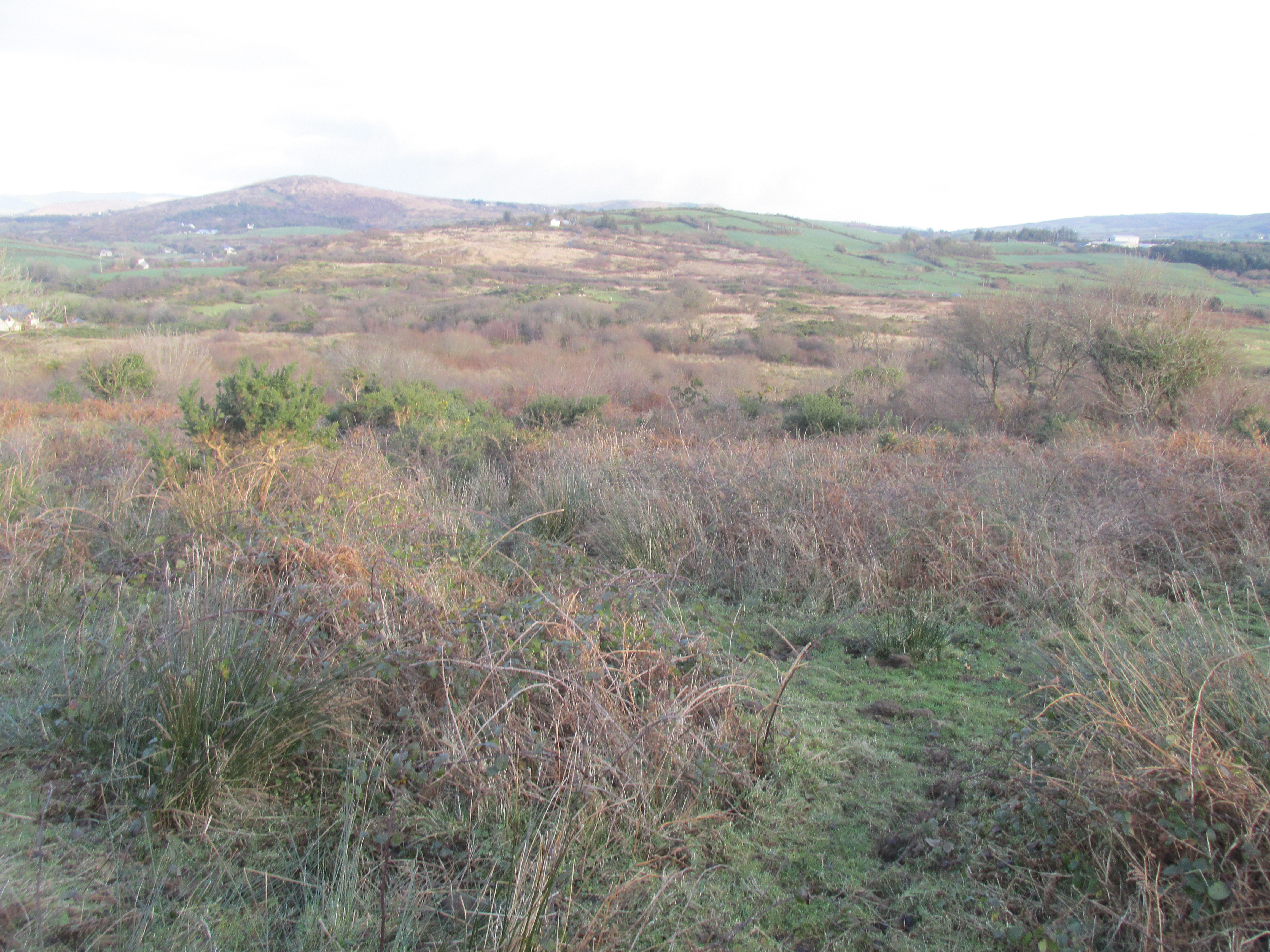
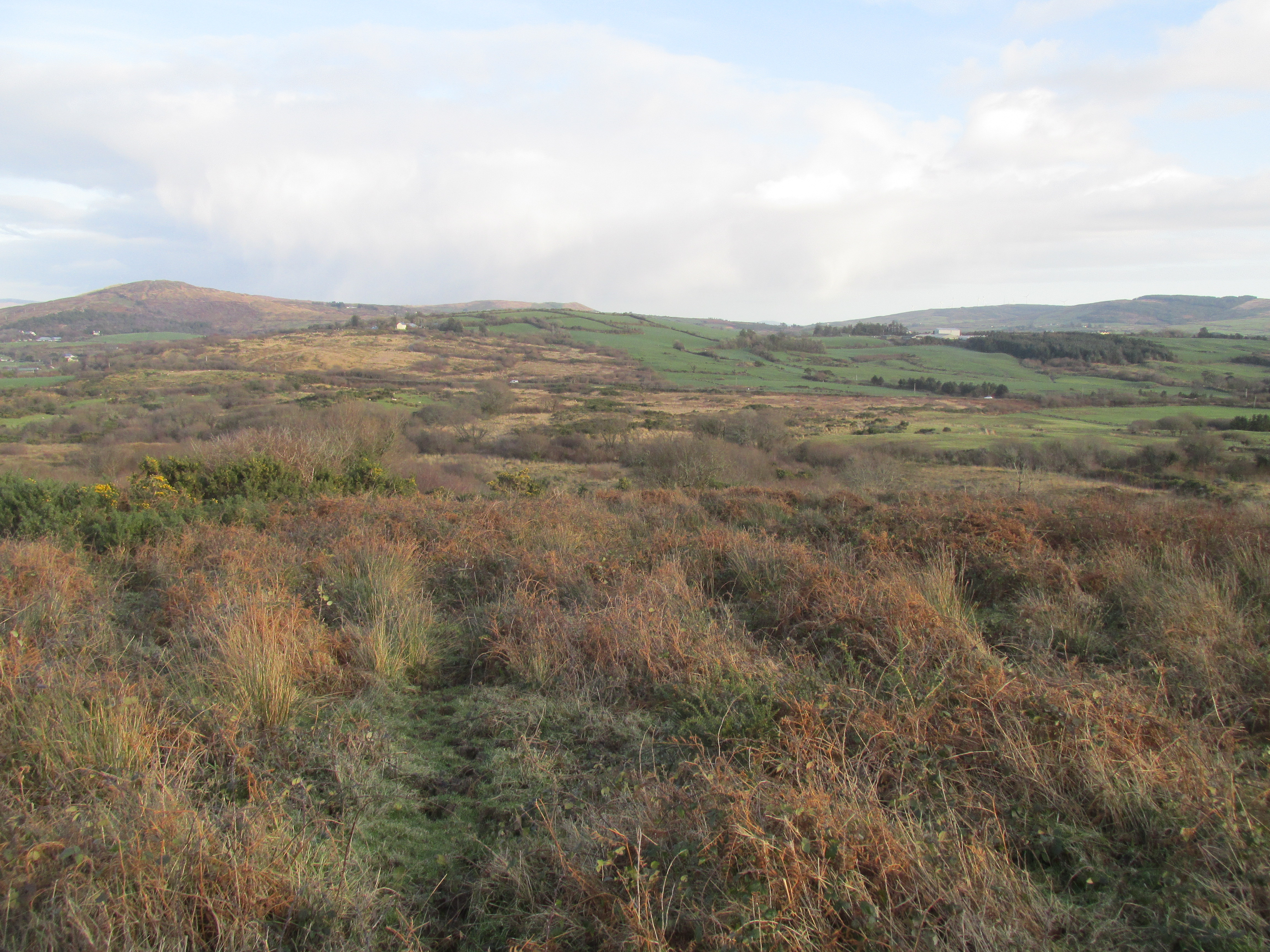
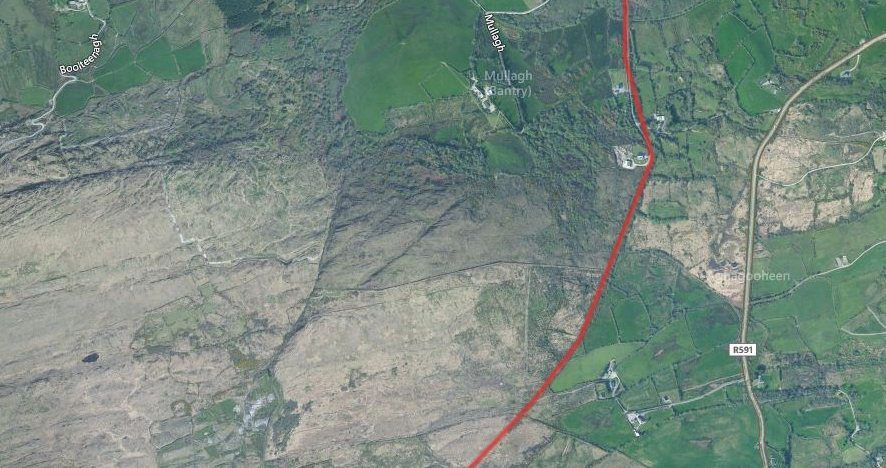
There is a folk memory of the old school at MIloch which ws off the old road from Durrus to Bantry. This road was replaced by the present one along the bog road in 1794 by Richard Whire (later Lord Bantry), he owned the townland of Molloch. Some time later the school at Aughagoheen was built the location at the Bantry end of the Bog Road is known locally as School Heght.
There is not a trace now of either school. The stones from the Aughagoheen one was used in building a local house in
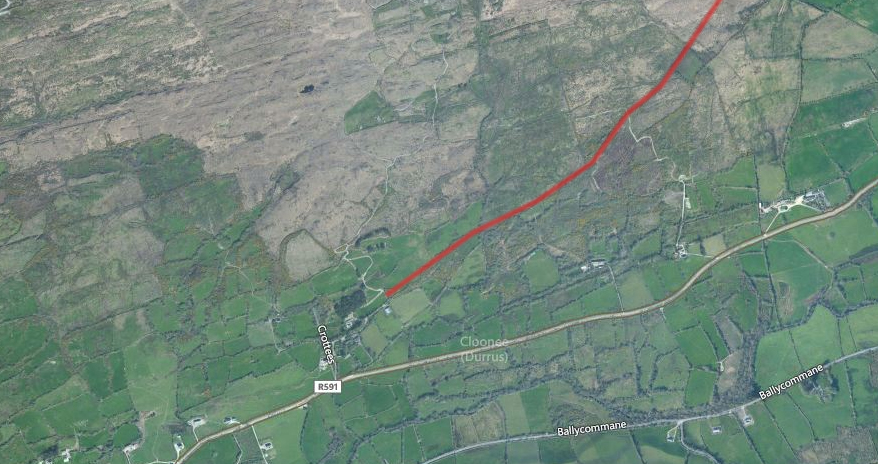
There is no reference to either school in the 1828 list of schools in the baronies of Carbery and Bantry and Bere. General location of Molloch school the other is on the right side of the Bog Road in the green area.
Aughagoheen Church of Ireland
This replaced a school across the lands in Molloch to the North. It was located just off the Bog Road at the entrance to George Swantons farm. There was an application from Rev. William O’Grady on a ‘Bantry Club’ letterhead seeking the entry of the school into the National System. It had been under the Church Education Society (founded 1839) and this involvement would finish on recognition. The patrons were Rev William O’Grady and E.E. Leigh White Esq. It was proposed to carry out certain work and to provide privies. It was suggested that George Pattison aged 18.5 would be the teacher and he would have a house provided by the parish. An inspection disclosed the school hours of 10 am to 2.30 pm with religion 2-2.30. There were 15 pupils 9 males and 6 females. It was later suggested that Annie Stephens be permitted to teach she had been a monitor at Carrigbui up to 3rd. class and was in sole charge for 10 months (this may have been Durrus C of I school). She would be eligible to act as a substitute and was to go for training later. The file indicated that there was no provision to supplement the teacher’s salary and Rev O’Grady replied that the parish was very poor but later proposed to pay £10 in addition to the state salary. The teacher in any event was prepared to work without a local subvention. In the event the appointment went to Miss Susanna Perrott, aged 20 from 1 September 1902, she had trained at the Church of Ireland College at Kildare Street. The school was expected to have 29 plus pupils including 2 from Scart Catholic School which at that time had an attendance averaging between 24.9 and 38.4. After recognition the roll was 17 boys and 6 girls and the attendance ranged between 10 and 18.5. Miss Rebecca Kingston resigned as teacher from 10 March 1910, and it was suggested that the school be closed and the children go to Bantry, at a conveyance cost of £63 per annum. The Rev O’Grady appealed this on hardship grounds, pointing out that many of the children had to come up a side road. The Inspector conducted an enquiry, looking at the distances the children had to travel and their ages. In the end it was agreed that the school stay open. The family names of the children were Swanton (3 families), Love, Foley, Jagoe, Sullivan, Shannon and Deane. Miss Florence M. Clarke resigned from 28 August 1914 and Ella Newman took over (she had been a junior literary mistress in Bantry) from 8 August 1911. She had trained at St. Mary’s Shandon passed the relevant exam and was given provisional recognition from 22 October 1915, the non payment of salary while her appointment was being sanctioned caused hardship. The school closed and the vacant building was eventually purchased by Mr Swanton of Clonee in 1930 for £20 who employed Dan Brien High Road who used the stones from it to build a new farmhouse.
Teachers
Miss Susanna Perrott, 1902 Miss Rebecca Kingston, – 1910
Miss Jennings 1912 Miss Florence M Clarke 191?-1914
Miss Ella Newman 1915-
List of schoolchildren at Aughagoheen school 1910
Ref: School File Series ED91600524789
Children of Young Swanton – ¼ Mile from School
Name Age
May Swanton 6 ¾ Annie 3 ¾
Joseph 10 ¼ Young 11 ¼
Michael 12 ¼
Children of James Swanton – ½ Mile from School
Name Age
Susie S wanton 5 ½ Grace Swanton 7 ¾
Mary Swanton 10 ¼
Children of J. Swanton, Clonee – 1 ½ Miles from School
Name Age
James Swanton 11 ¼ Susie Swanton 14 ½
Name Age
Annie Swanton 6 Sarah Swanton 10 ¼
Samuel Swanton 11 ¾
The Love Family
Lily Love 5 ¾ Mary A. Love 7 ¼
Francis Love 8 ¾ John Love 12 ¼
Cathy Love 13 ¾ Michael Love 15 ½
Charles Foley 6 ¼
May J. Jagoe 8 ¾ Willie Jagoe 15
Thomas Sullivan 12 ¾ Michael Sullivan 11 ¾) 1 1/8 miles through the fields in good weather
Dynah Sullivan 12 ¾) Willie Shannon 15 ¾)
Nellie Shannon 14 ¾) James Deane
The ages of the children and the distance from the school were given, as there was an enquiry by the School Inspector as to whether the school should be closed down, and the children transferred to Bantry, and as to whether this would constitute hardship. The ultimate conclusion was that the school should remain open, in view of the potential hardship to the children. There was a school in Moloch supported by the Church Education Scciety and there are references to it in 1835 (as Clonee) in the application for registration of the Four Mile Water School and in the Rev Cole’s history of the dioceses in the 1860s. before this the site is visible from the Bog Road north towards high ground, this was the old road to Bantry.
18 Sunday Jan 2015
Posted in Uncategorized
Tags
Retracing the pre 1794 road from Durrus to Bantry, the Blind Piper, Old Mines, old road from Coomkeen to Ahagouna (Áth Gamhna: Calf’s Ford).
In 1794 Richard White later Lord Bantry paid for the building of a part of a new road from Durrus to Bantry. It replaced to road which commenced at Crottees went over the hill on a steep gradient and about a half mile to the north of the bog road and then going to Molloch and accessing the Bantry Cork road from that direction.
Above Clonee is a field known as ‘The Piper’s Field’ her a blind piper used to play the uileann pipes for whatever few coins passing traffic would bestow. The the population was up to 10 times the present.
To the north of the road before it goes into Mollock are the remains of old mines.
In Mollock is a grass area where the old pre 1794 school was located, there are no remains.
The new road was somewhat shorter but most likely the old road was too steep for the loads as the period marked the start of one of the greatest booms ever known in Irish Economic history occasioned by the French Wars.
Line of old road:
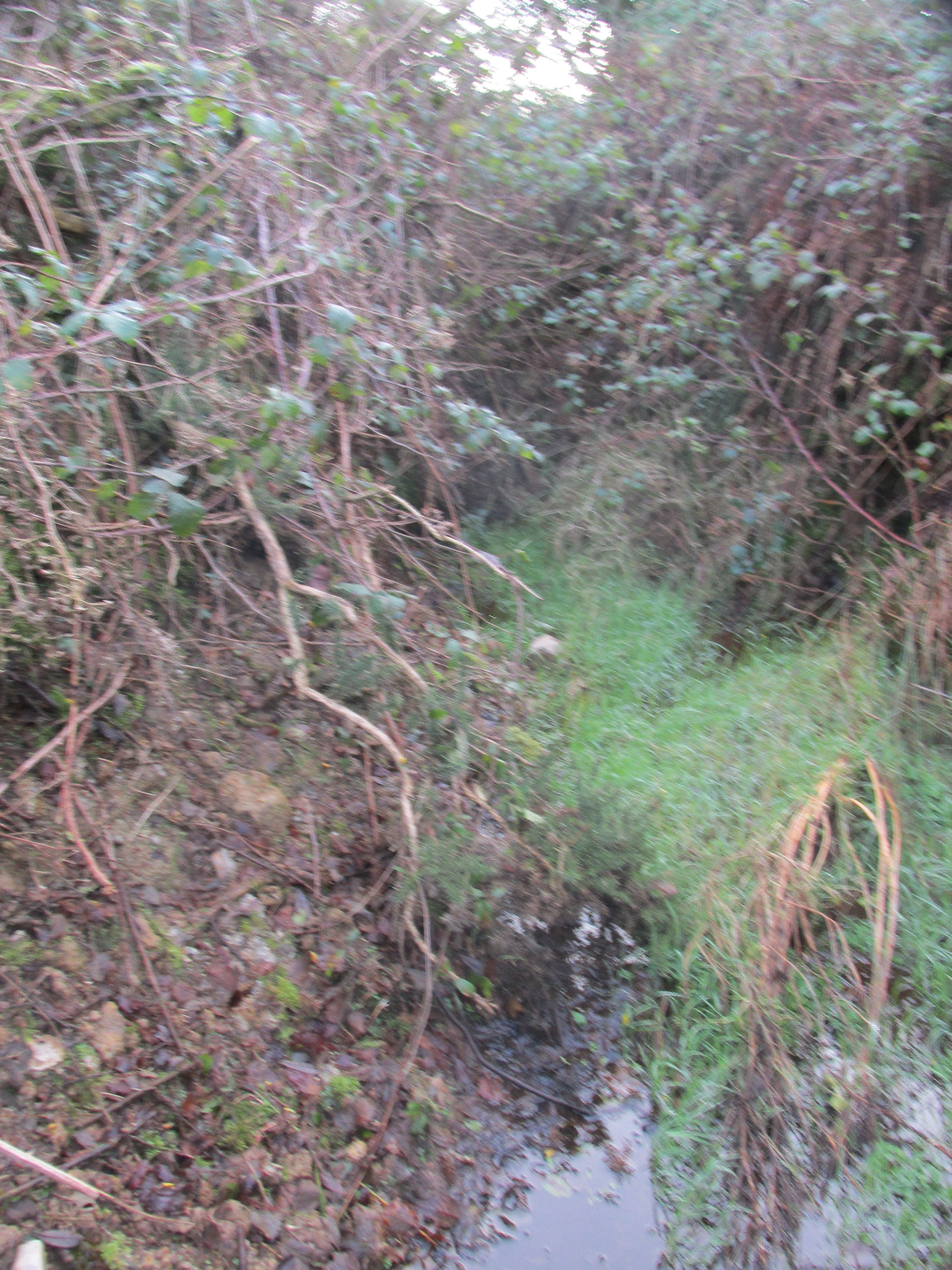
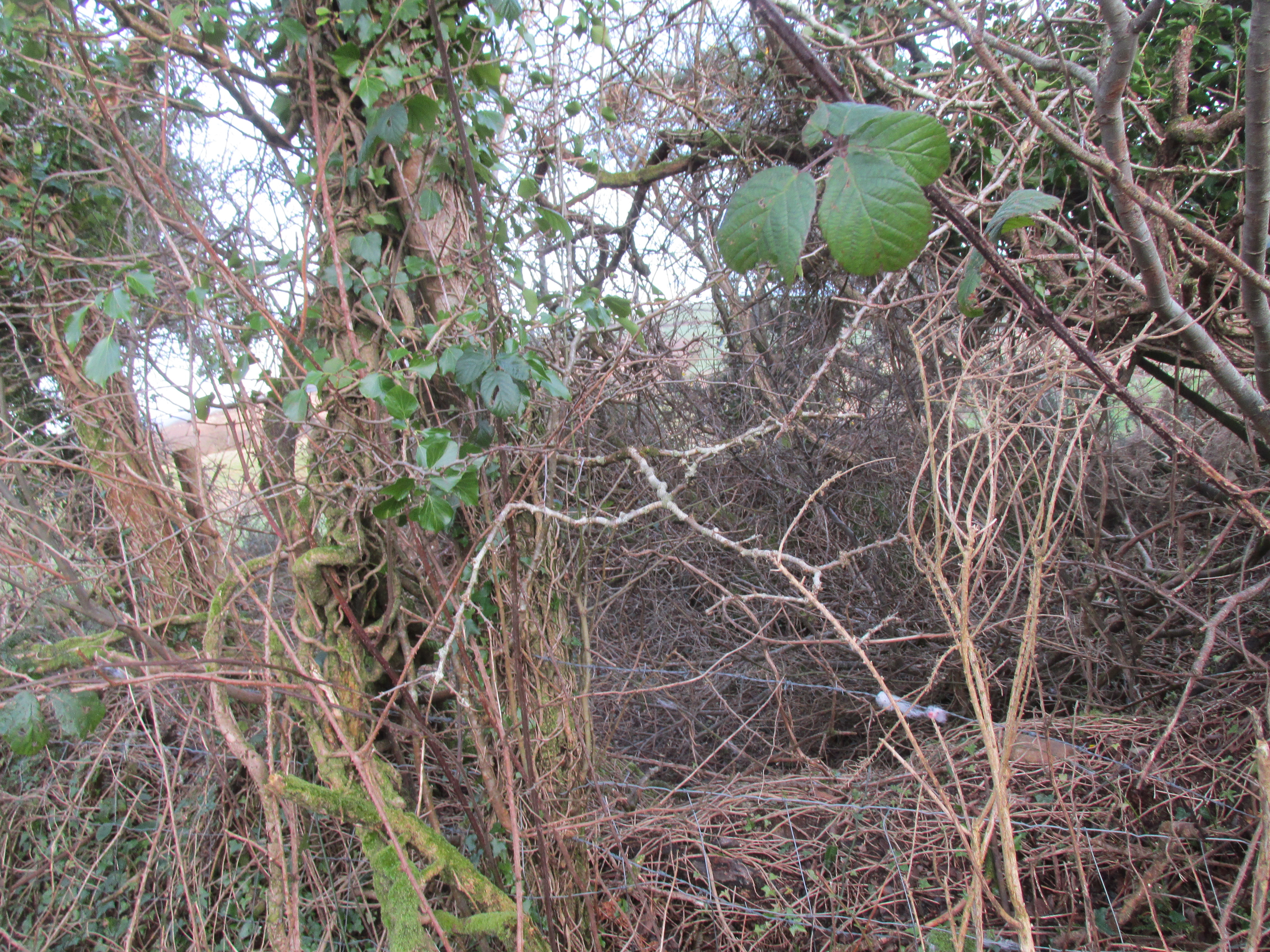
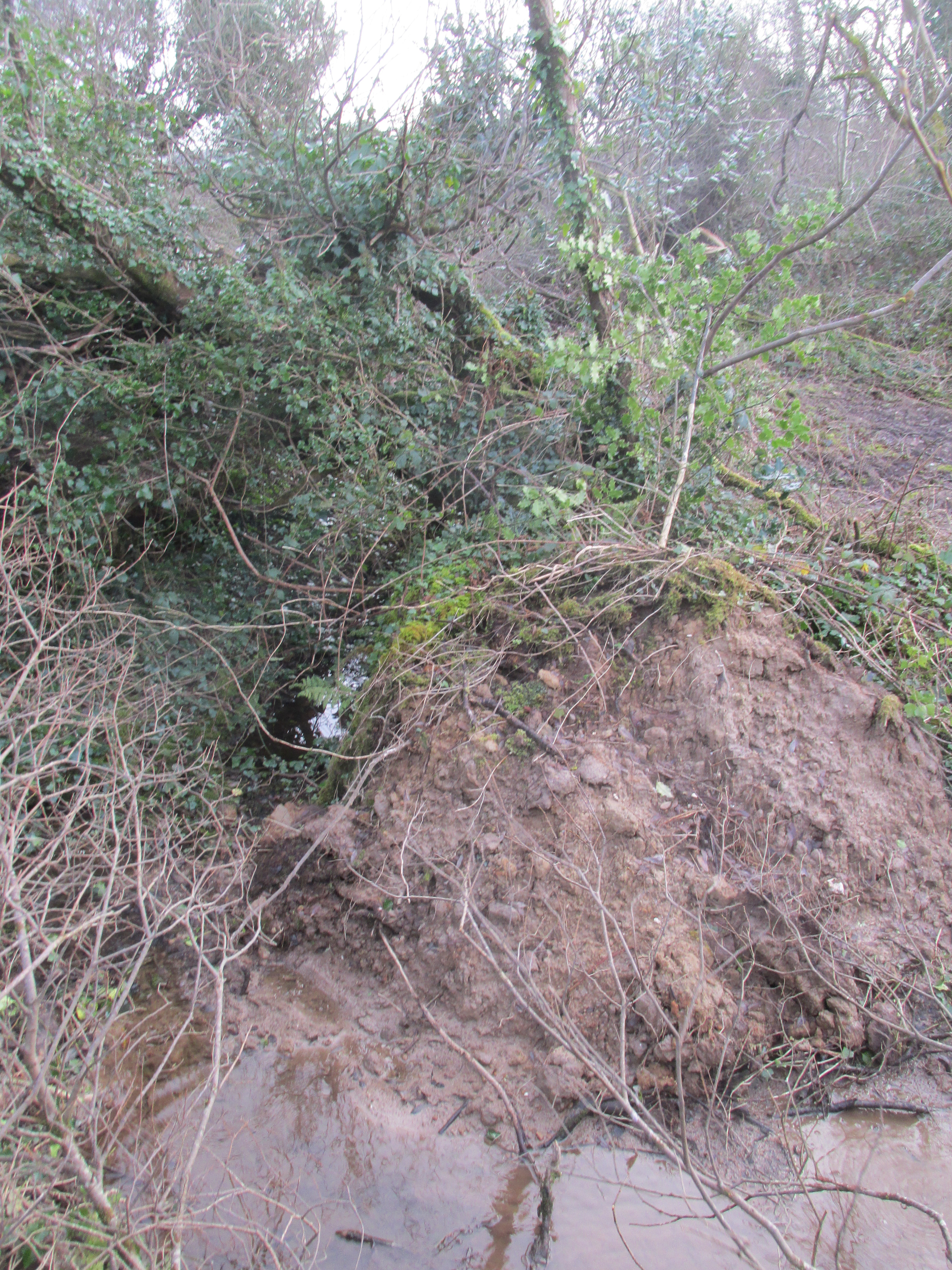
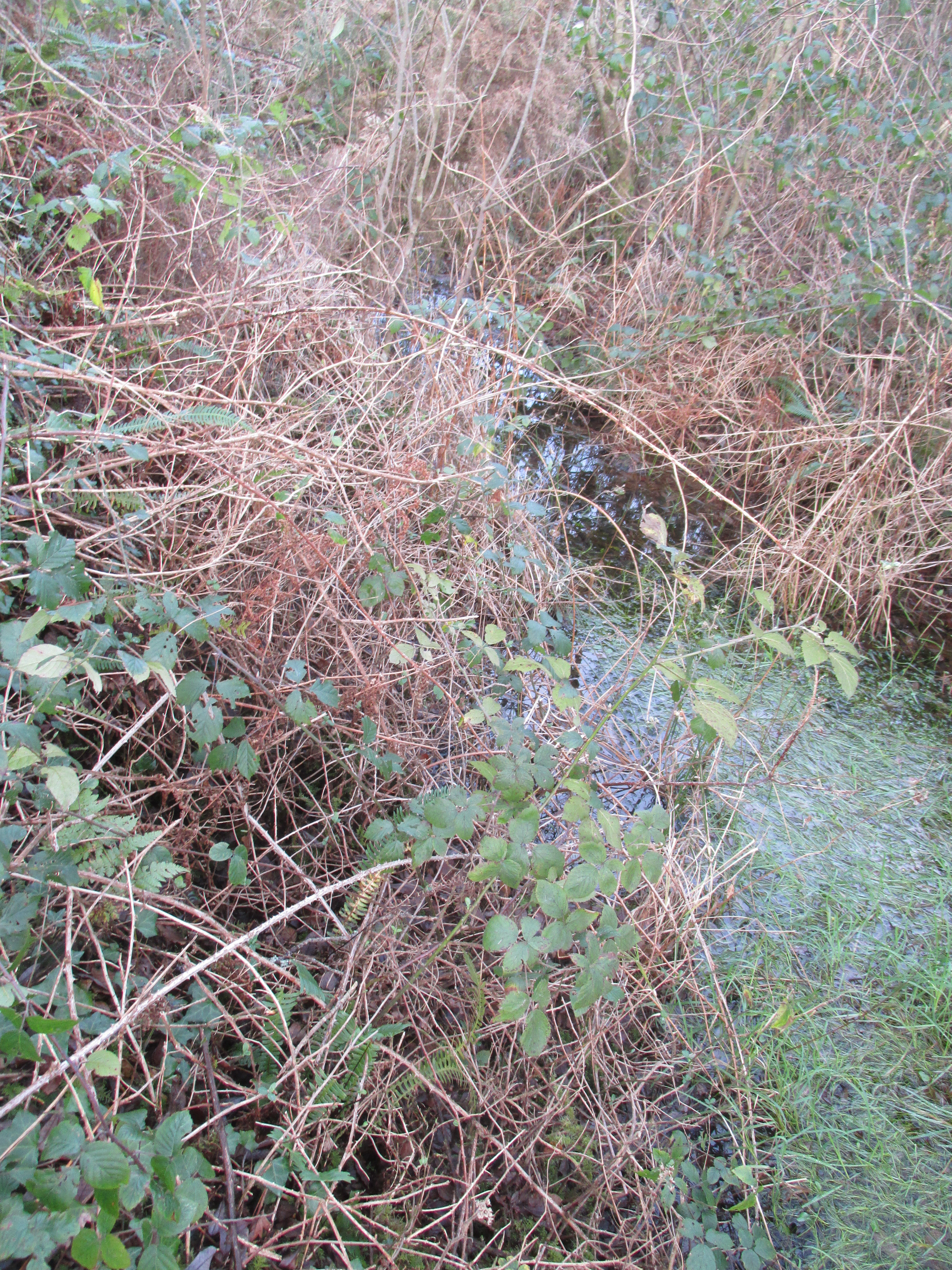
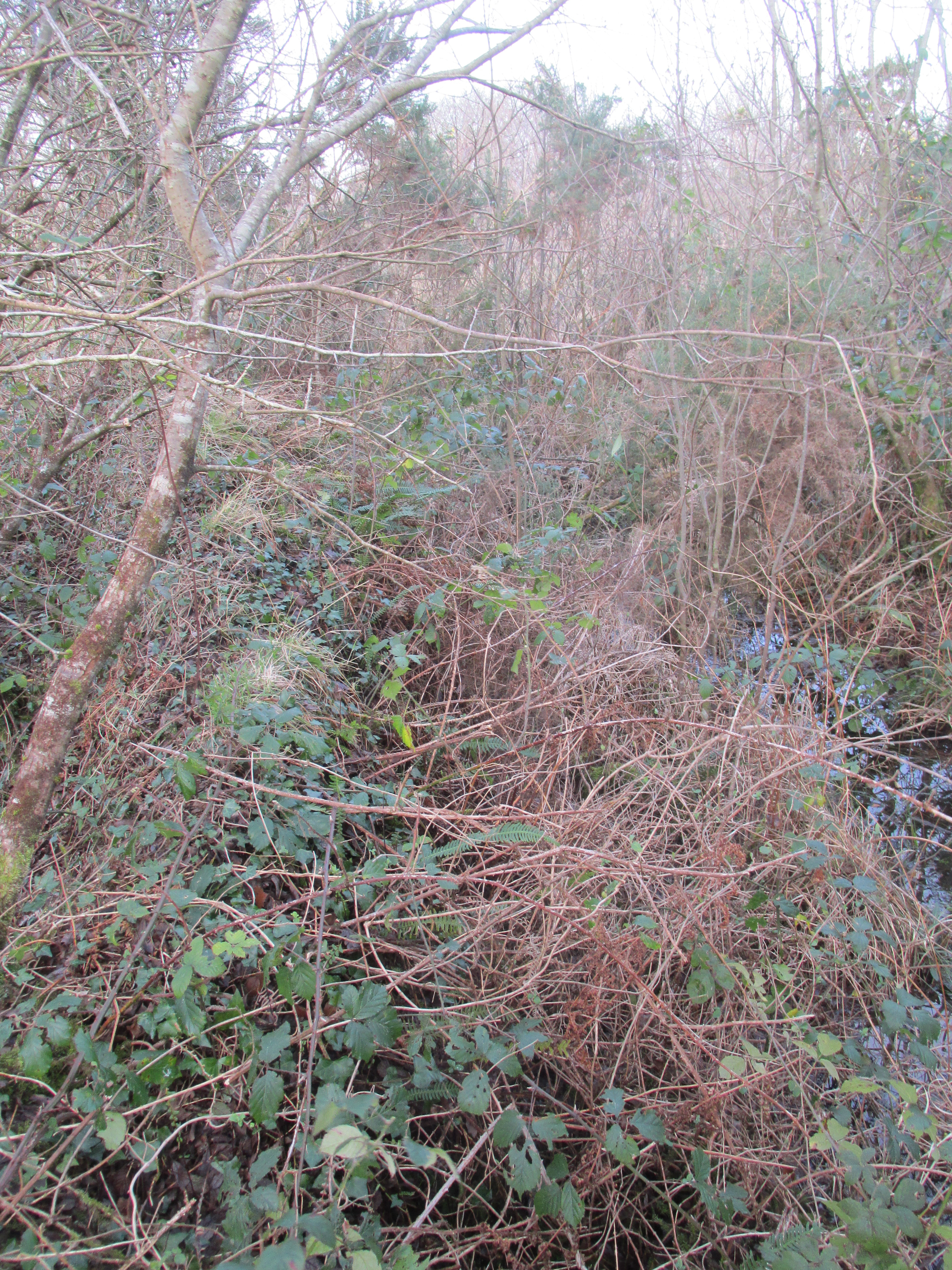
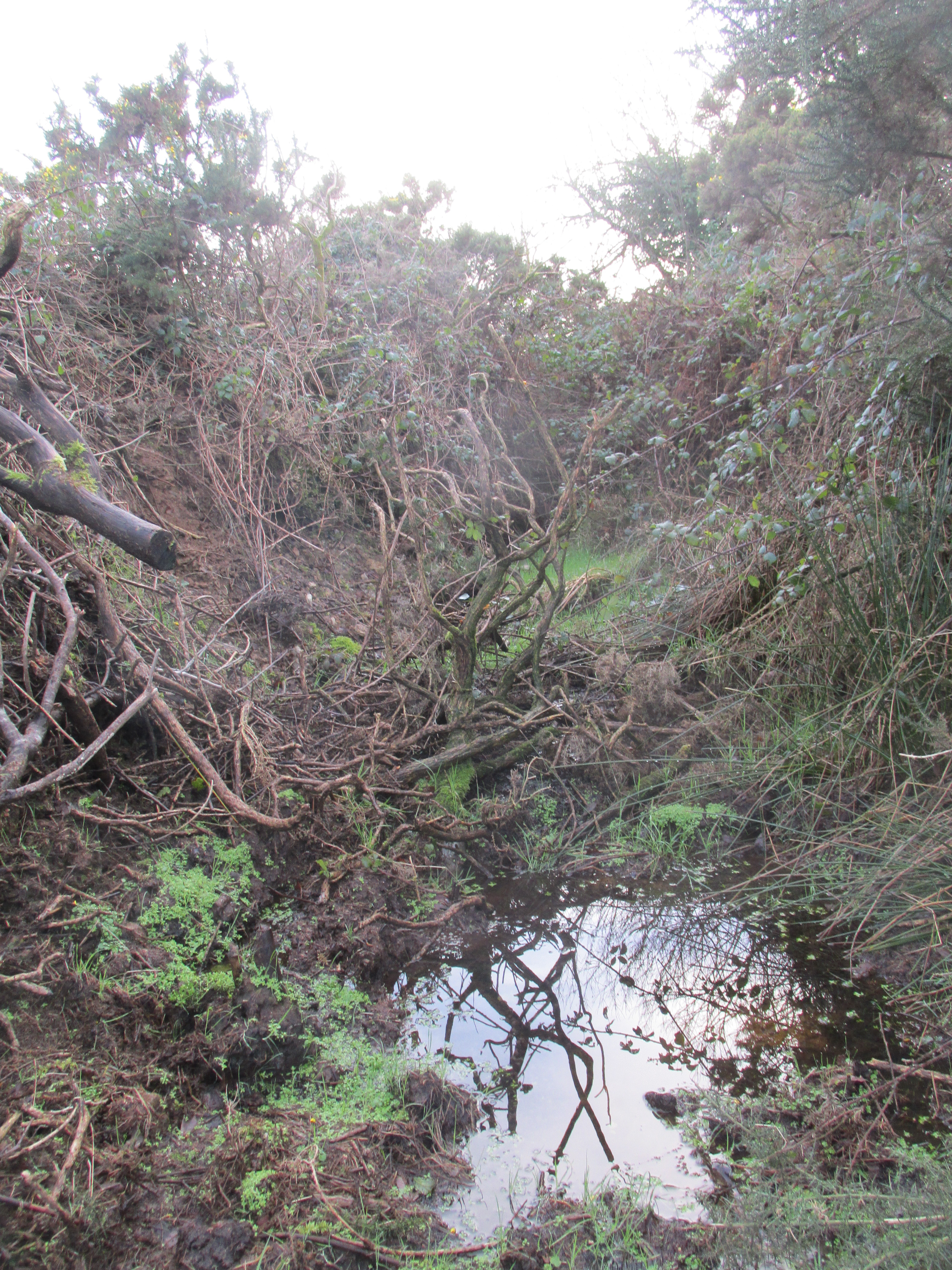
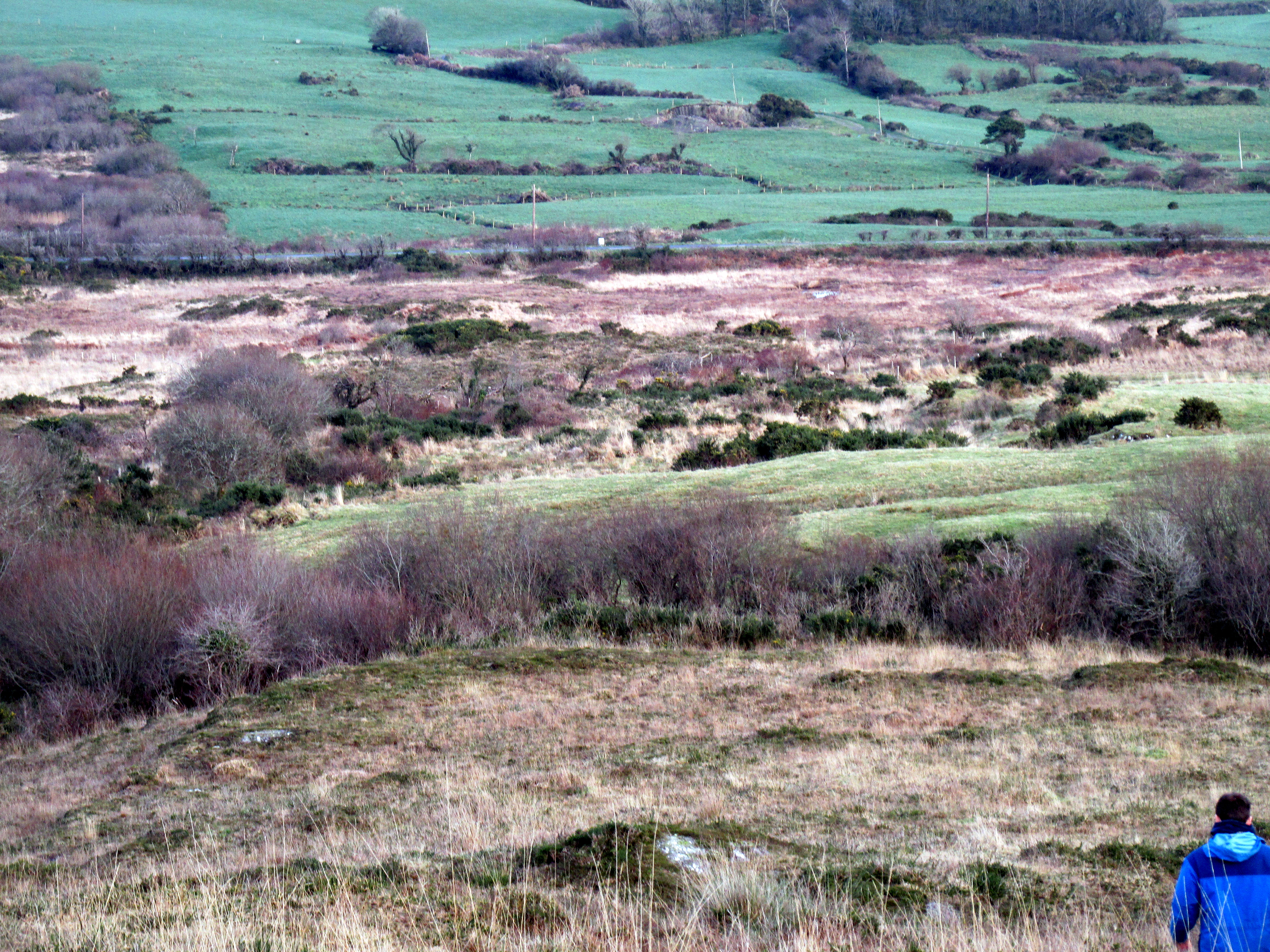
It is still possible to see parts of the road however many parts have disappeared with land reclamation. The road was part of a network of paths, tracks and minor road from Coomkeen some of which are still evident.
Another road from Cookeen ran to the sea at Ahagouna over stepping stones still extant which were used before the Ahagouna bridge was built possible around 1700. Part of this was used up to the 1970s to access outlying fields.

18 Sunday Jan 2015
Posted in Uncategorized
West Cork Farmyard and buildings from c 1740.
One of the family ancestors had a will probated in 1804 which by a miracle was copied by Welply before its descruction in 1922. On this basis it may be possible to suggest that the yard and some if not all of the building go back to 1740. The original farmhouse is included it was originally thatched. The family built a new farmouse probably after c 1880 not shown.
The bullding are largerly build with quarried sandstone with the odd fiels stone used. Many of the wall are directly built ont the ground reck. The main hosies are recessed into the hill.
It shares many features of the Daly homestead in Lisheenacreagh a few miles away as the crow flies.
https://plus.google.com/photos/100968344231272482288/albums/6105635868116070497
18 Sunday Jan 2015
Posted in Uncategorized
Durrus Catholic Church, West Cork, Memorials Stained Glass, built 1899.
https://plus.google.com/photos/100968344231272482288/albums/6105631456872296641
One of the memorials is to Miss Blair whose family originated in Blair’s Cove (Coolculaghta), they family were origially from Dunmanway then Bantry they were intermarried with the Whites (Lord Bantry) family.
The list of subscribers and of plates includes many of the parish who emigrated to America. Australia and England.
18 Sunday Jan 2015
Posted in Uncategorized
Court Case 1884 over John Hamilton White (Lord Bantry Family), Legacy (relation of Lord Bantry) Diocesan College Farrenferris Cork Photograph Students an Staff 1911, failure of Munster Bank and its take-over by new Munster and Leinster Bank 1885
From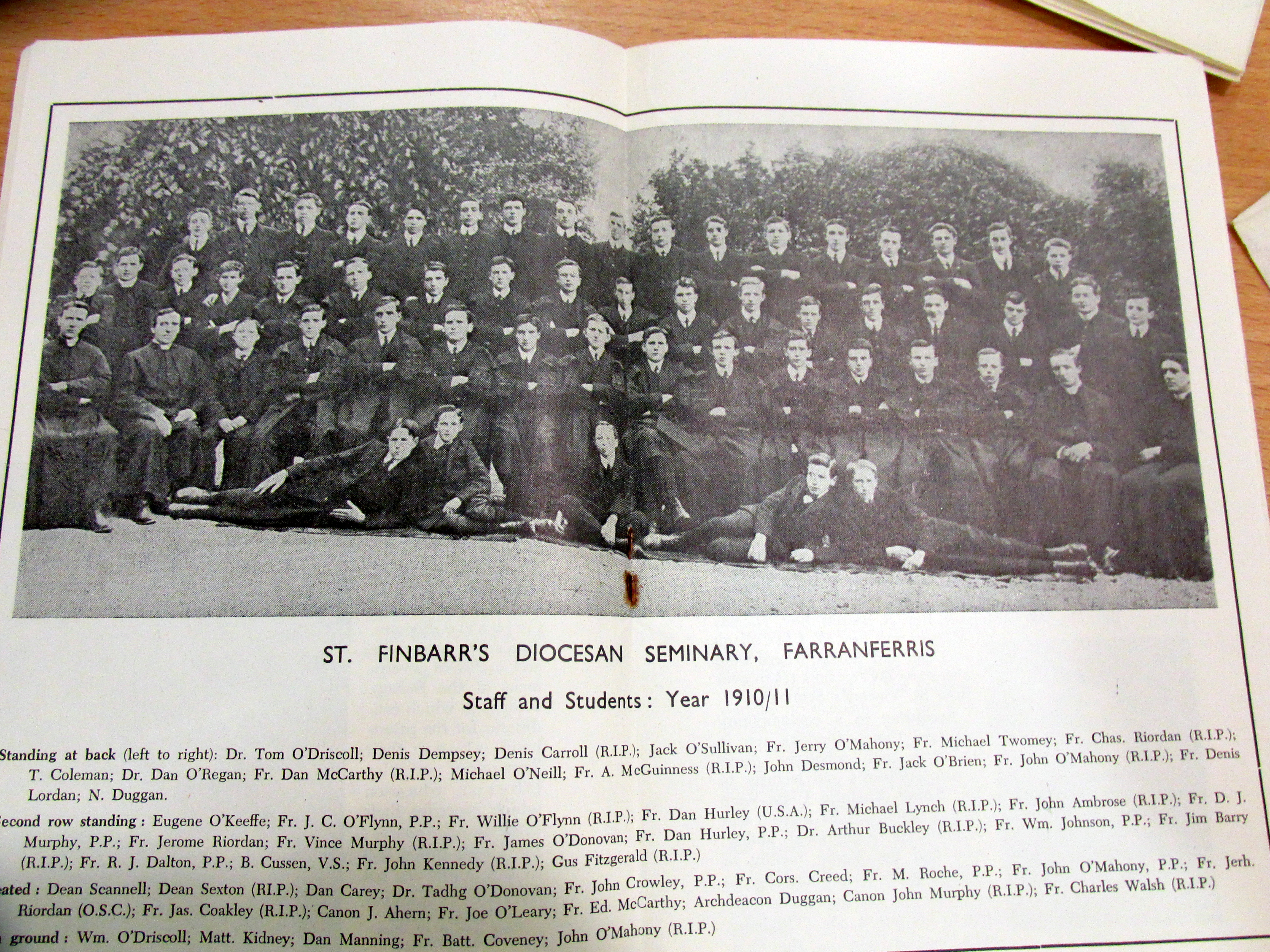
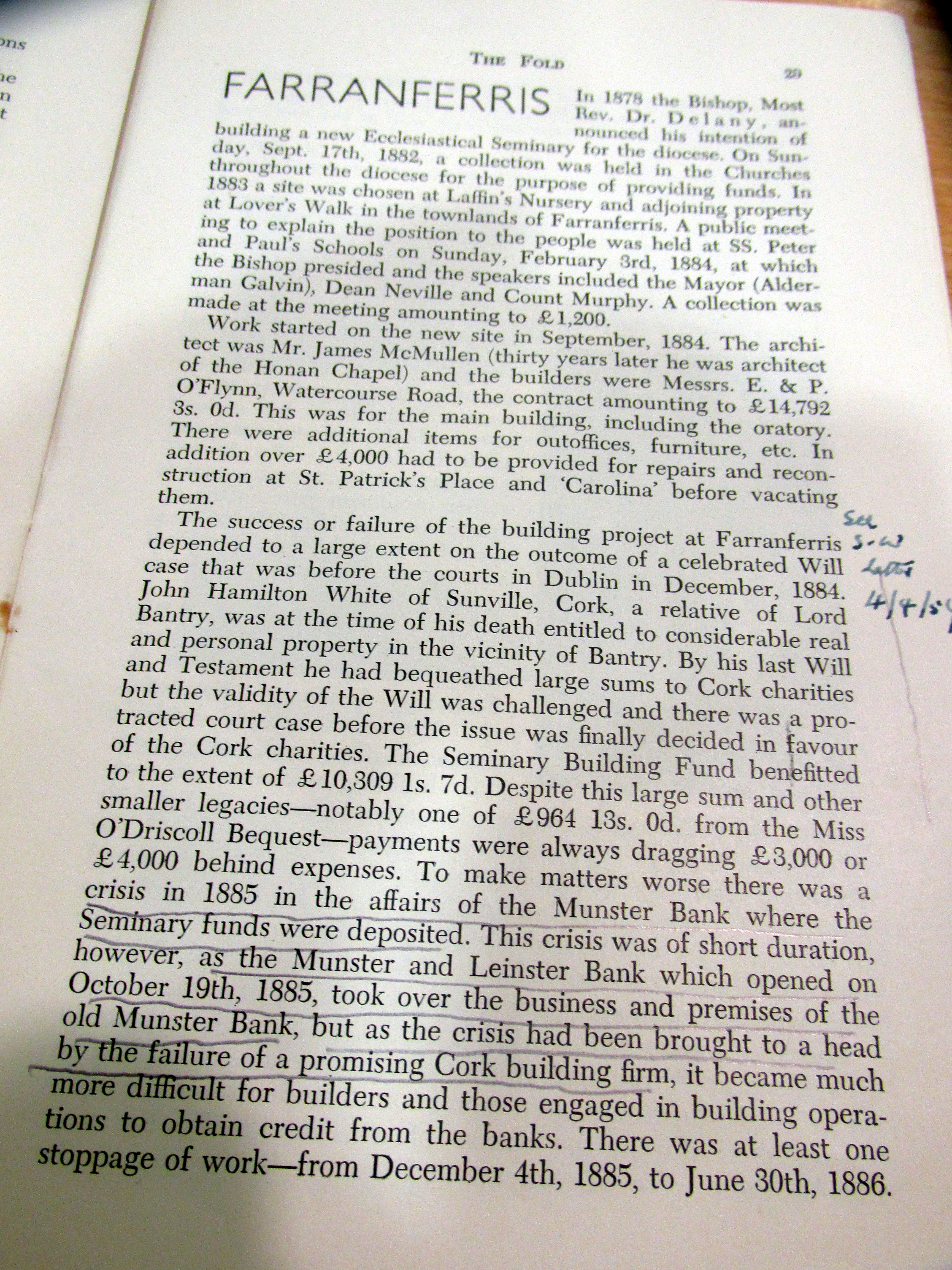 ‘The Fold’ c 1956 Diocesan Magazine.
13 Tuesday Jan 2015
Posted in Uncategorized
Opening of Drinagh Co-Op Creamery, 1933, Durrus by Father Crowley, Drinagh assisted by Canon McManaway
Father Crowley was the founder of the Drinagh Creamery group and Roscommon, Canon McManaway, was the driver behind getting the Durrus Branch opened. Canon McManaway was an inspiring figure, he had the first Church of Ireland school, in the Free State, St. James built at Ahagouuna. He was also involved in having the mountain road from Coomkeen to Bantry built as a relief measure in the 1930s. He was the subject of a poem of praise of local poet Charlie Dennis.
There were various private creameries in West Cork in the 19th century and an early Co-Op was set up in Bandon in 1903. The English Co-ops dipped their toes into Irish waters but withdrew with the advent of the troubles. The Drinagh Co-Op was set up by Canon Crowley who was a man of considerable talent. During a strike in Cork which stopped the export of pigs, he chartered boats to export from Bantry. From the 1920s on there was increasing legislation to improve dairy production standards and this assisted the development of Co-Ops such as Drinagh.
A major influence in establishing the creamery in 1933 was the Church of Ireland Canon McManaway. It was largely built by cross community voluntary labour. The contractor was Cahalanes of Drinagh who built Drinagh Church and the main creamery there. Work started in 1933 and it opened in the spring of 1934 with the formal ceremony in July. At the opening which was performed by Fr Crowley from Drinagh he singled out Canon McManaway for special praise and he set the machinery in motion saying that he regarded Fr Crowley as a special friend.. Farmers gave a week at a time with horses and carts. Gravel was sourced from the strand and rock was quarried east the Ballycommane Road, the ground was soft and took a great deal of fill. It was necessary to register 1,000 cows and guarantee £1,000 over 3 years. Canon McManaway was also involved in starting the creamery at Dunmanway, and worked closely with Fr. McSweeney. He may have had some involvement in the starting of the creamery in Kilcrohane in 1938 where the prime movers were the National Teacher Mr Fitzsimons and two progressive small farmers Danny Daly of Dromnea and James Daly of Caher.
The report of the opening of the Durrus creamery stated that the most modern equipment available was utilised and its operations beat all expectations. The creamery was opened before those at Caheragh, Kealkil and Bantry and apart from Durrus farmers, others suppliers from those areas sent their milk there on floats carrying 15 or more churns of milk. Included was Eddie Hurst of Beach House, Bantry (now owned by Mrs Wagner) he was known as a very progressive farmer. Before the creamery, butter was sold to Jeremiah O’Sullivan’s (Jer the shop) stores for 4d a lb and was packed in 56lb. boxes. It went from his store by horse and cart to Durrus Road Station and thence to Cork.
Apart from taking in milk, the creamery operated as a general store where farmers could make purchases against their cheques. It purchased chickens and turkeys and supplied meal and other farm supplies. The creamery was a huge benefit to the smaller farmers who were extended credit over the winter and this was paid off from the summer milk deliveries. The creamery had a mill which ceased operations during the war, due to a lack of fuel. It was an important social outlet where news was exchanged and daily contact made. When milk collection at the creamery ceased this was a major loss to the community. Improvement in 1939 included a new water supply and a milk heater. In the late 1930 and 1940s Tom Deane and J. Clarke from Durrus were on Management Committees of Drinagh Co-Op. Tom Deane’s brother Barnabas was on the Committee of Management in 1956. Creamery Managers from the 30s included M.Meigan, Jack O’Sullivan, Mr O’Mahony from 1944, and Sean Keane Dan Hurley.
In 1948 the creamery managers including the Durrus manager had a case before the Labour Court seeking a pay increase to £6 10s a week. Evidence was given that Drinagh Co-Op was generally doing very well milk had increased significantly in price, and the management countered that many of the managers has sidelines in the turf and flax industries and pointed out that they were unable to secure the services of a manager in Kilcrohane. In the end the Court awarded £5 5s.
In 1956 Drinagh Co-Op with the other West Cork Co-Ops set up the South West Cattle Breeding Society. Up to the early 1970s farmers received the skim milk back which was fed to pigs and calves. From that time on all the milk was processed at the Carbery Milk Plant in Ballineen, which the West Cork Co-Ops had set up with Express Dairies and was run by the late Bernie Cahill. In 1991 with the other West Cork Co-Ops it purchased the outstanding 80% interest in Carbery Milk Products Ballineen. In its heyday the creamery had 150 suppliers this has now dwindled to 14 and their milk is collected by bulk tanker for processing in Ballineen. Sadly both the creamery in Durrus and Kilcrohane are now closed and for sale (2007). Jim Dukelow, Coomkeen has lived to see the creamery built and closed in his lifetime.
There was an agricultural show which started in 1936 and the committee and the judges in 1937 included Canon McManaway, Tom Deane (Ballycomane), Jim Pyburn (Dunbeacon), Richard Sweetnam, Eddie Hurst (Beach Bantry), and Jack Minihane. The show was held in Philip’s yard opposite the school on the main street and in the village hall. It had a major effect in raising the educational standard of agriculture and had over 600 exhibits coming from all over west Cork and from Waterford. There were sections on Farm produce, Home Industries, Agriculture, Horticulture, Egg and Poultries and an Industries Section.
Year
Gallonage
Suppliers
Average
1933
1956
271,230
107
2,535
1973
330,000
54
6,111
2008
477,154
18
26,507
13 Tuesday Jan 2015
Posted in Uncategorized
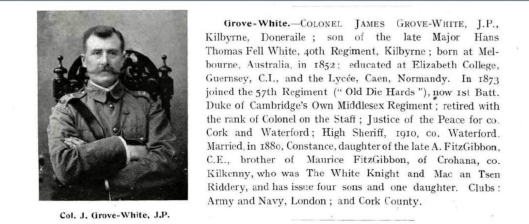
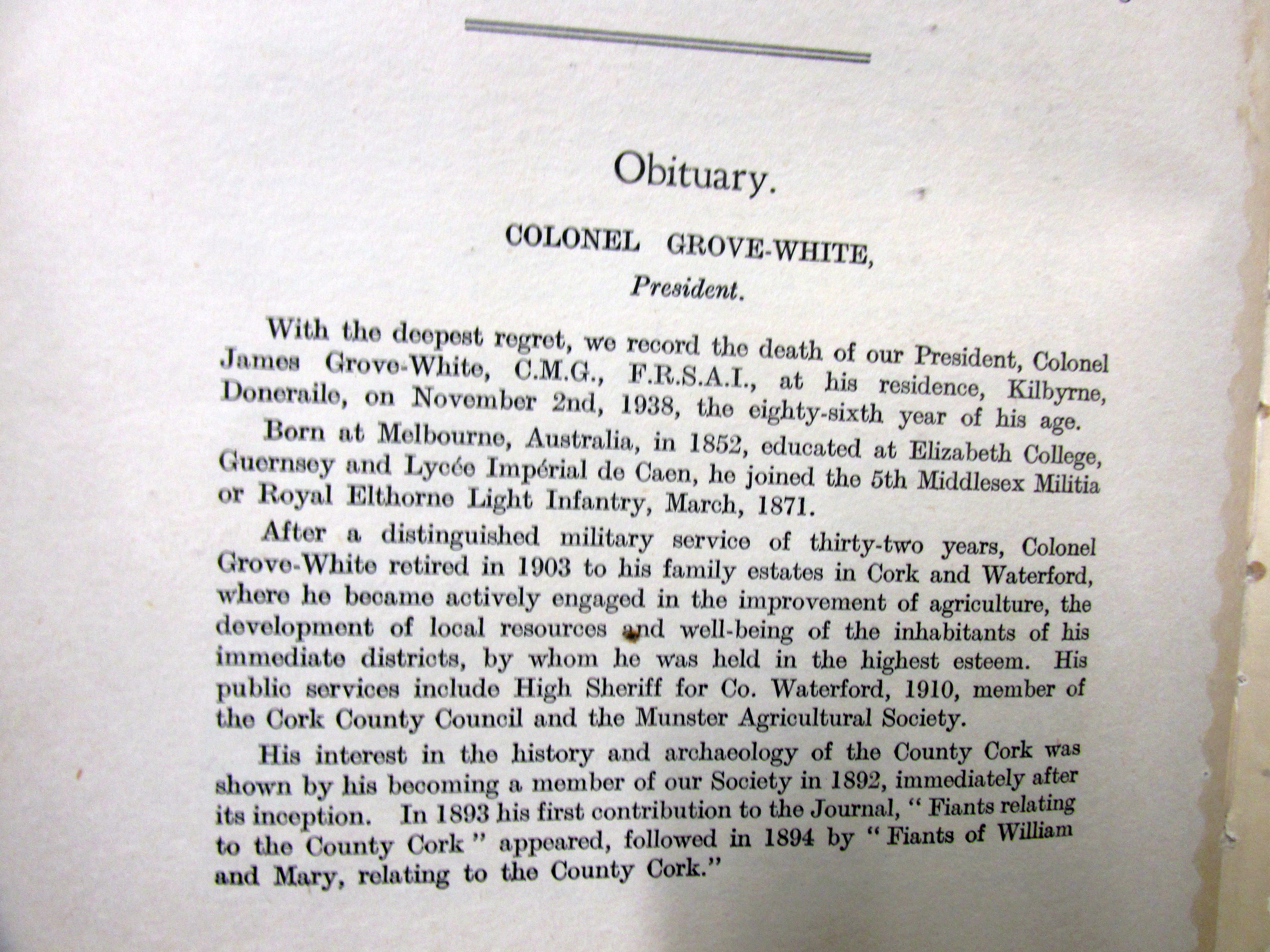
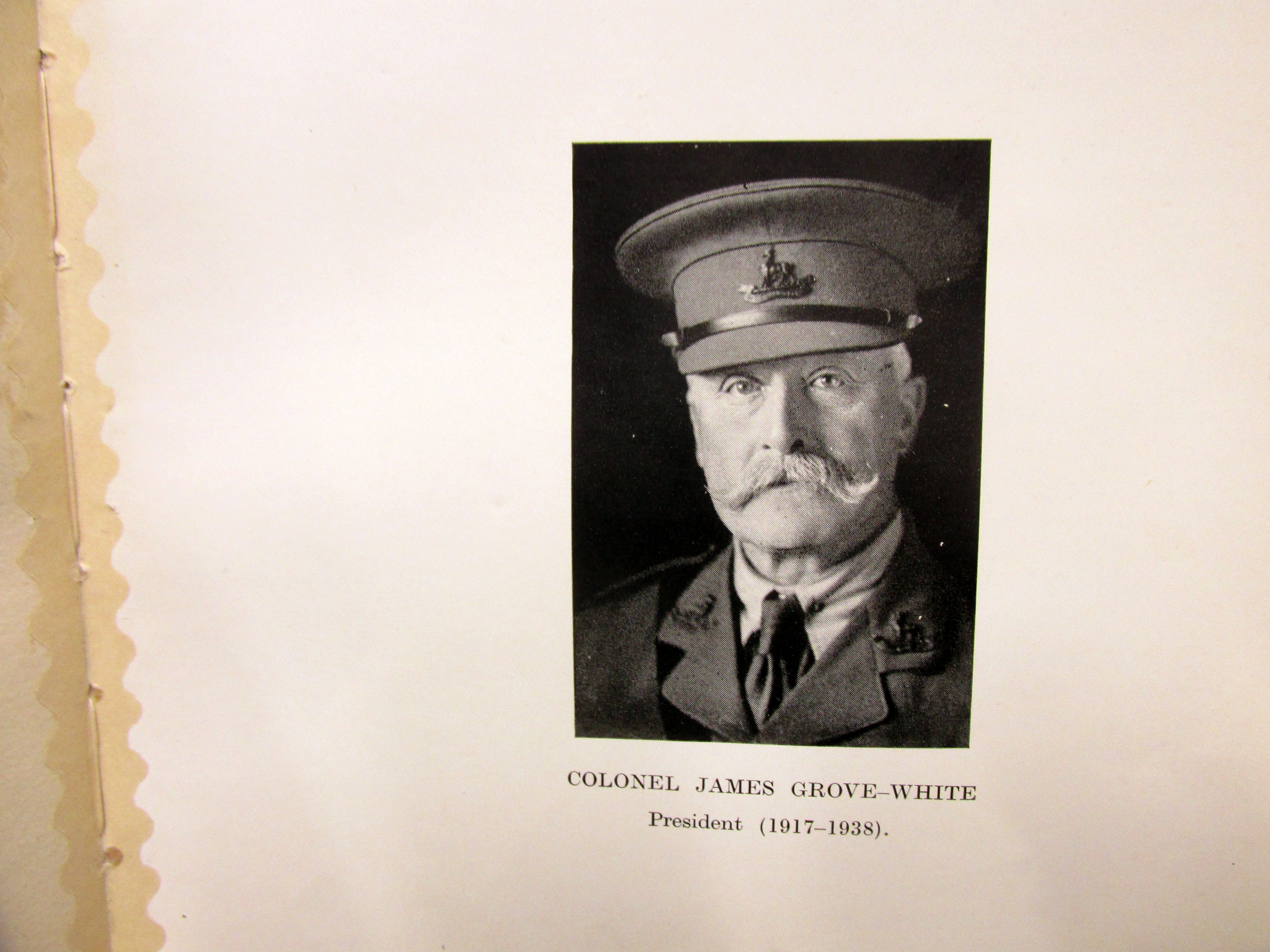
Colonel Grove White, Born Melbourne, Australia 1852 died Cork 1938, Cork Antiquarian, Member County Council, Munster Agricultural Society, Brother-in-Law, Maurice FitzGibbon, ‘The White Knight and Mac an tSen Riddery
Another Australian born Cork figure in the 19th century was Richard Townsend, of Dunbeacon, Durrus Ireland’s oldest Magistrate.
13 Tuesday Jan 2015
Posted in Uncategorized
Galways/Galweys of Munster, Genealogy, Penal Laws Religon Change.
Courtesy 1965 JCHAS
https://plus.google.com/photos/100968344231272482288/albums/6103798184696047809
 West Cork History