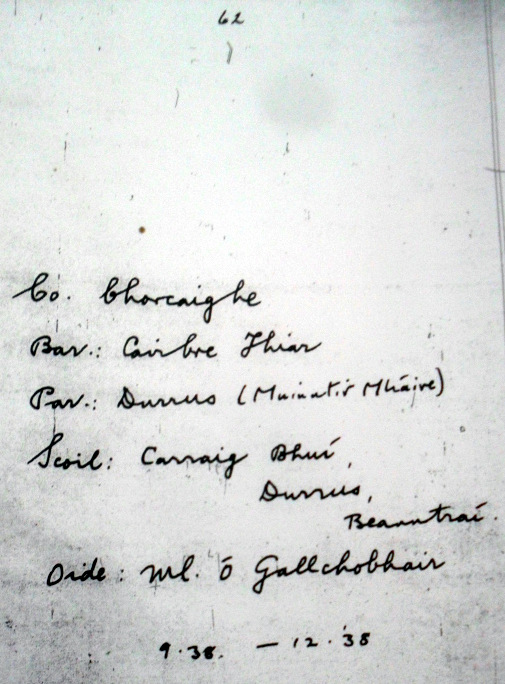
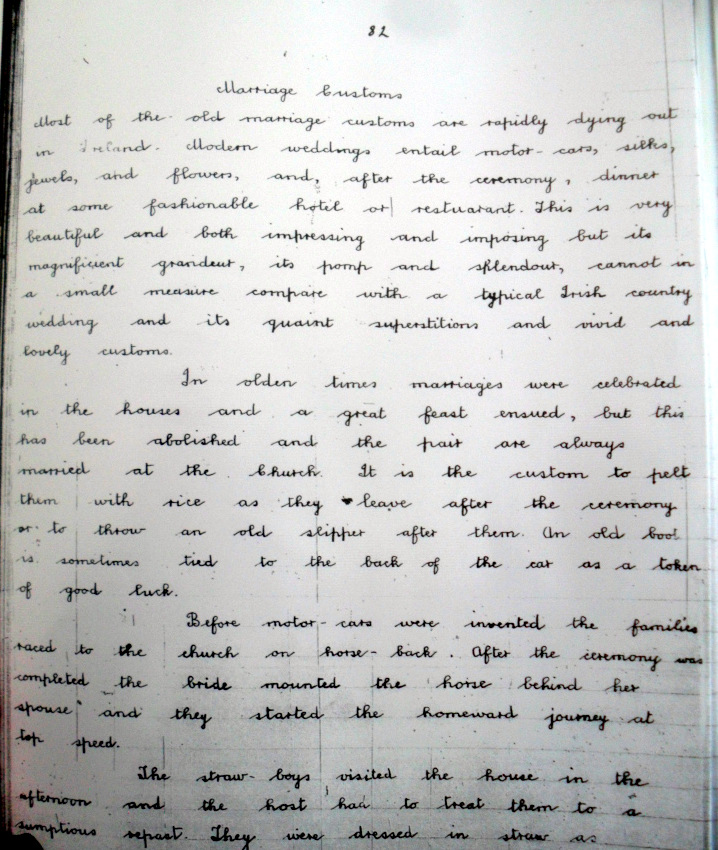
Marriage Customs from 1938 School Folklore Collection, Carrigboy National School, Durrus, West Cork and Wedding Stone Kilcrohane.


Marriage Customs from 1938 School Folklore Collection, Carrigboy National School, Durrus, West Cork.  There is an ancient Wedding Stone in Kilcrohane used by couples to bethrow each other by jointly inserting their hands therein.

From Breda McCarthy, Coolcuaghta.

1938 School Folklore Project, Sarah Dukelow, Clashadoo, Durrus, Co. Cork.

The American Clock as a wedding present and late 19th century and clock by R.H.Evans, Ballydehob, West Cork

3-SAM_8734 4-SAM_8735 1-SAM_8713 2-SAM_8733

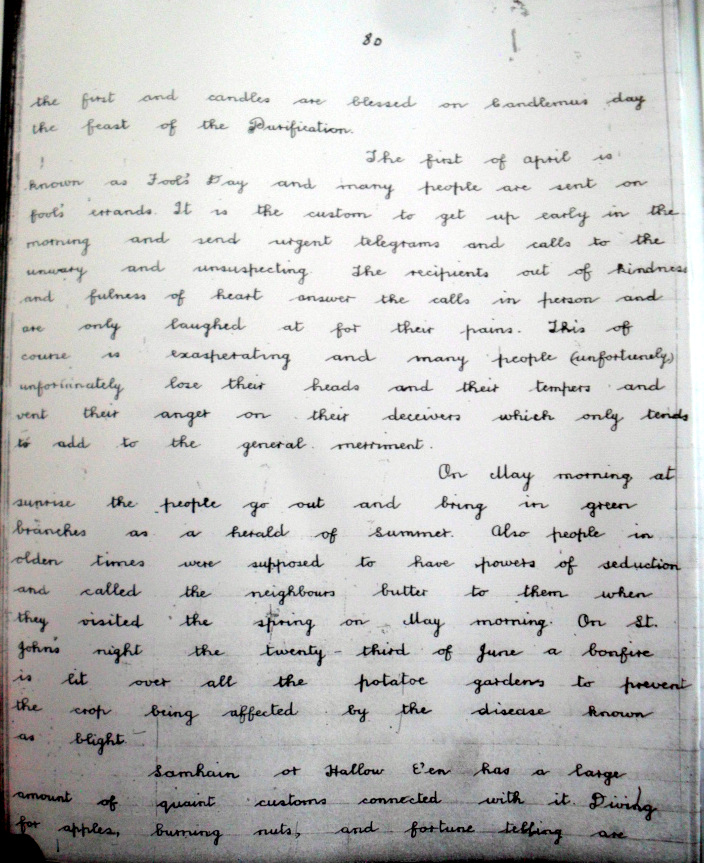
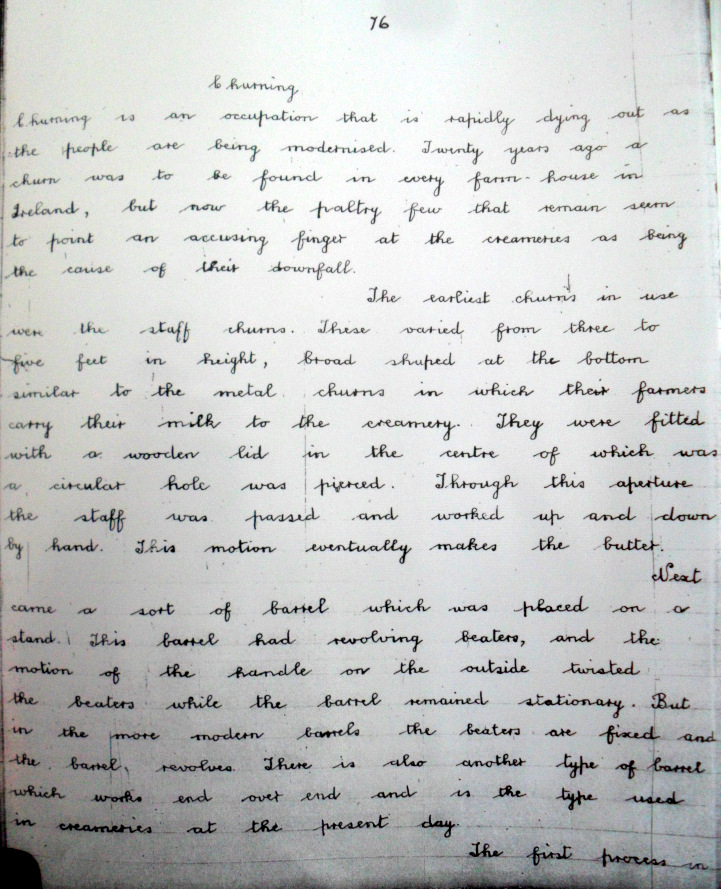
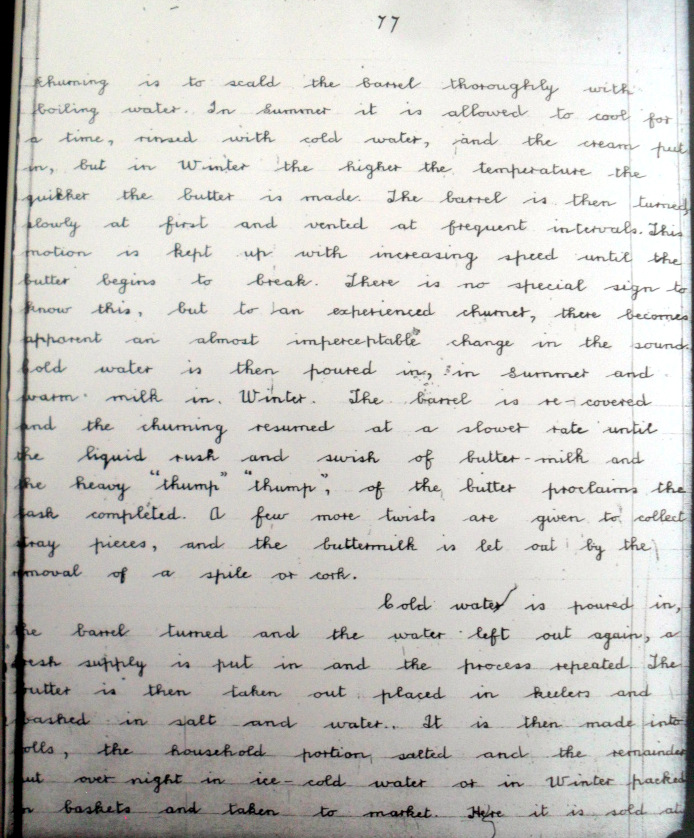
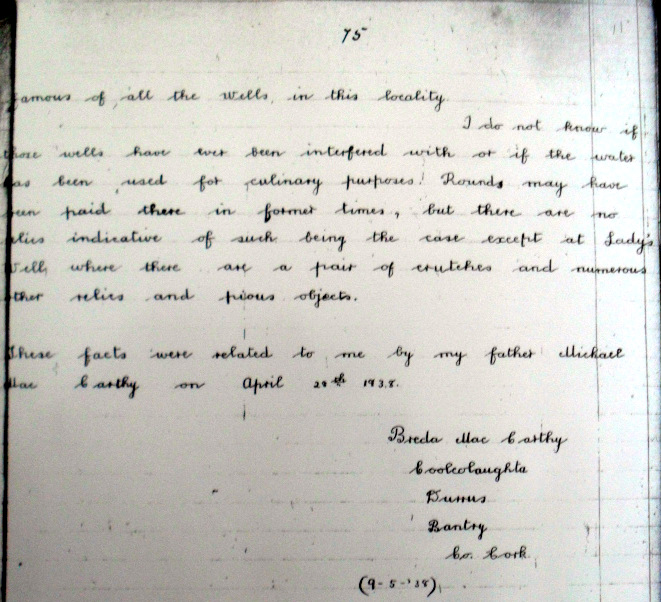
These Customs will Live In Ireland as long as Grass Grows and Water Runs and Oppression and Slavery have Failed to Destroy Them, Visiting the Spring on May Day Morning, St. John’s Eve, Skellig, Samhain from 1938 School Folklore Collection, Carrigboy School, Durrus. West Cork.


These Customs will Live In Ireland as long as Grass Grows and Water Runs and Oppression and Slavery have Failed to Destroy Them, Visiting the Spring on May Day Morning, St. John’s Eve, Skellig, Samhain from 1938 School Folklore Collection, Carrigboy School, Durrus. West Cork.

Breda McCarthy, Coolculaghta.

Dinnsheanchas (Irish-Place Folklore), and the Goddesses of Ancient Ireland, fertility, sexuality, war, personifications of Ireland, and the obliteration of old customs and beliefs

1-SAM_8730 2-SAM_8731 3-SAM_8732

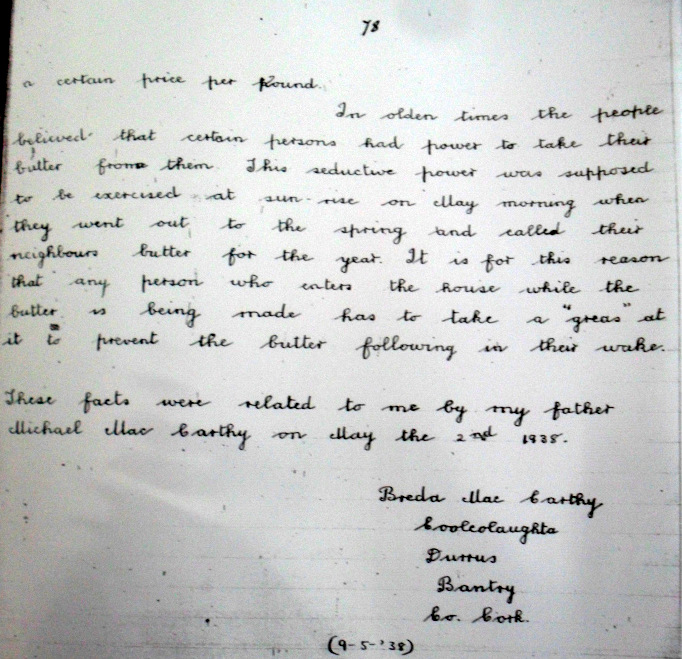
Taking a ‘Greas’ at the Butter being Churned before the Days of the Creamery, from 1938 School Folklore Collection, Carrigboy National School, Durrus, West Cork.


Taking a ‘Greas’ at the Butter being Churned before the Days of the Creamery, from 1938 School Folklore Collection, Carrigboy National School, Durrus, West Cork.

Ancient butter making, Líam English 18th century poet, Miosgan of buter, Bog Butter, 18th century Christian and Pagan incantation on butter making

Opening of Drinagh Co-Op Creamery, 1933, Durrus by Father Crowley, Drinagh assisted by Canon McManaway

1-Scan 1520

Scan 1522

1-SAM_8727 2-SAM_8728 3-SAM_8729

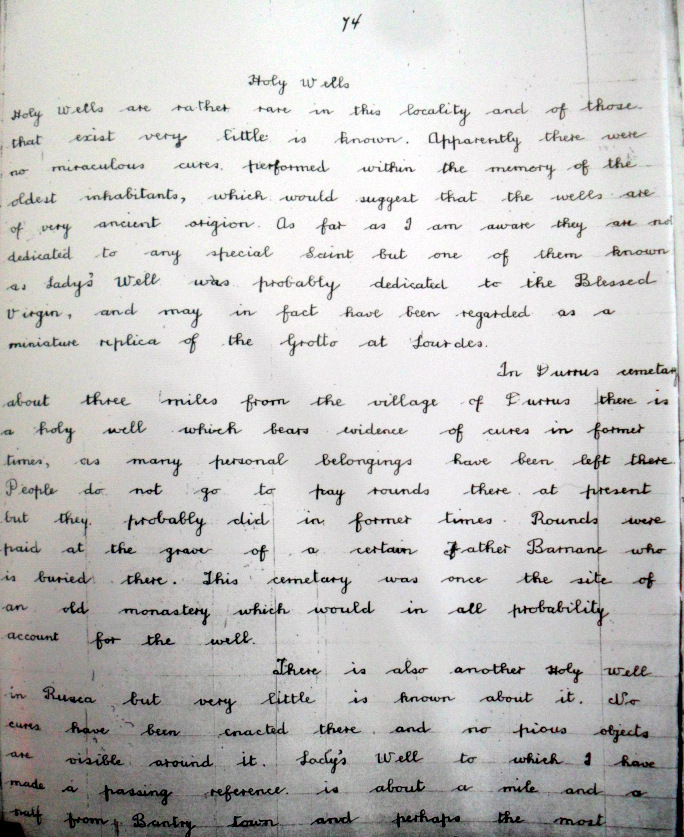
Rounds, Holy Wells, at Rooska, Moulivard and Father Bernane from 1938 School Folklore Collection, Carrigboy National School, Durrus, West Cork.


Rooska:

https://www.google.ie/maps/place/Rooska+West,+Co.+Cork/@51.6494923,-9.5463847,15z/data=!3m1!4b1!4m2!3m1!1s0x48457573e84b9b47:0xfb22e18bb8d9ea03

Moulivard:

https://www.google.ie/maps/place/Maulinward,+Co.+Cork/@51.6357817,-9.4701095,15z/data=!3m1!4b1!4m2!3m1!1s0x4845a00bc351e139:0x479cba81b0121135

Rounds, Holy Wells, at Rooska, Moulivard and Father Bernane from 1938 School Folklore Collection, Carrigboy National School, Durrus, West Cork.

From Breda McCarthy, Coolcuaghta.

Devotions to Father Bernane, Moulivard, Durrus, 28th June, Holy Well Visitation at Kil-na-Comoge, Kealkil, Lady’s Day 15th August, Pilgrimage to St. Finbarr, Gougán Barra, West Cork, 25th September.

1-SAM_8713

1-SAM_8725

2-SAM_8726

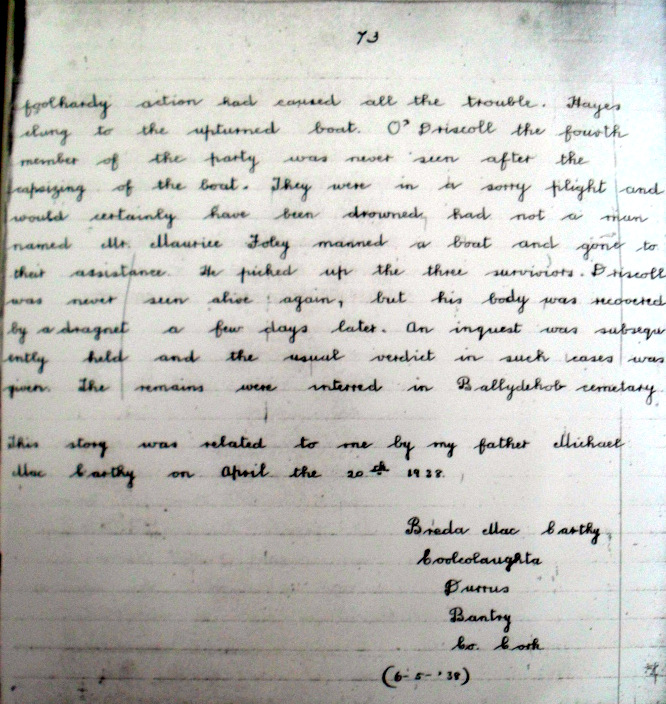
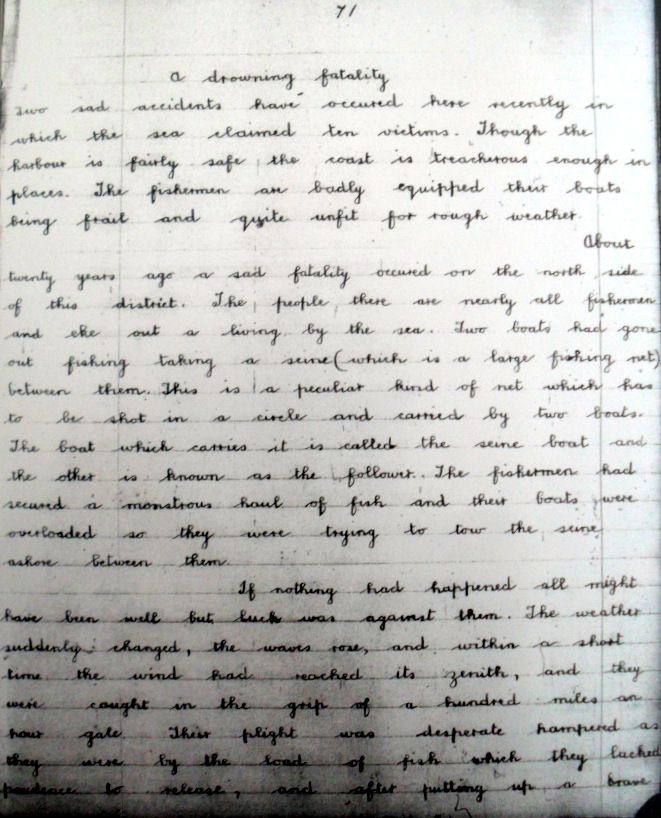
Two Maritime Tragedies in Bantry and Dunmanus Bay from 1938 School Folklore Collection, Carrigboy National School, Durrus, West Cork.


Two Maritime Tragedies in Bantry and Dunmanus Bay from 1938 School Folklore Collection, Carrigboy National School, Durrus, West Cork.

From Breda McCarthy, Coolcuaghta.

The Bantry Bay disaster is probably late 1890s when almost 20 fisherman drowned fishing for mackerel from the north side of the Muinter Bhaire peninsula.

1-SAM_8713

2-SAM_8723 3-SAM_8724 1-SAM_8722

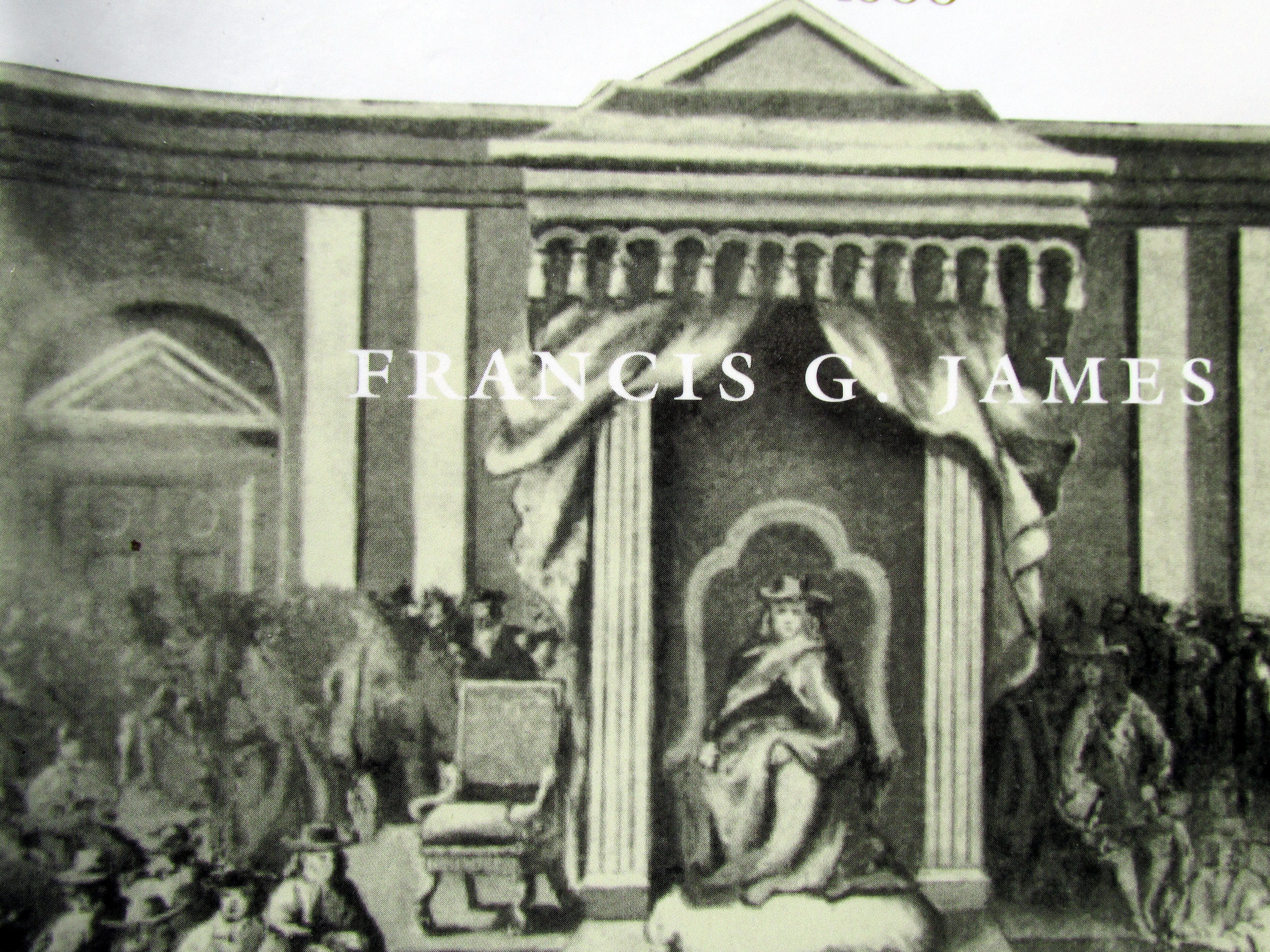
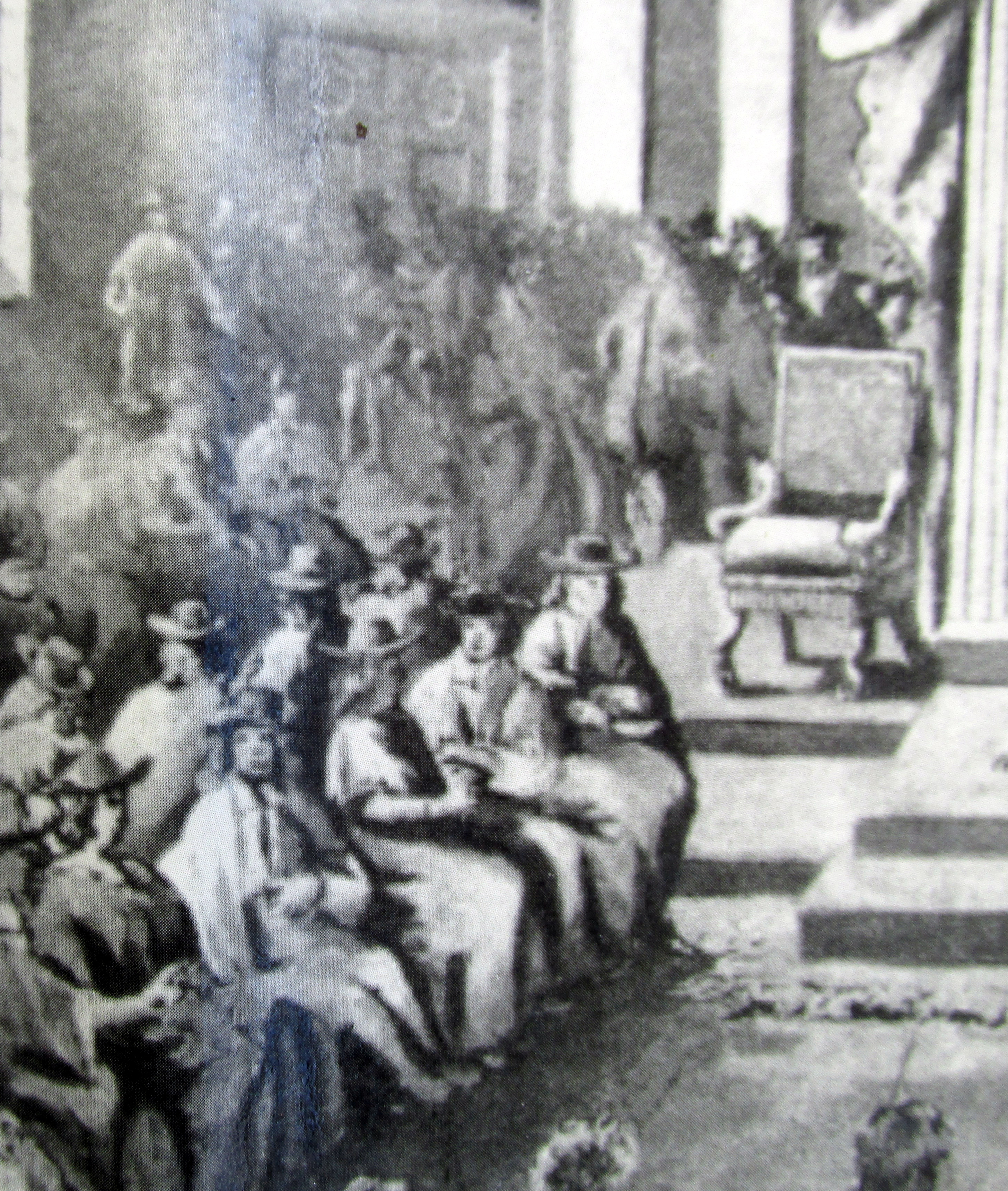
The Parliament of Ireland, 1704, with the Duke of Ormond on the Throne, and Alan Broderick (Midleton, Co. Cork) to his left.


The Parliament of Ireland, 1704, with the Duke of Ormond on the Throne, and Alan Broderick (Midleton, Co. Cork) to his left.

From ‘The Lords of the Asendancy’, The Irish House of Lords adn Its Members, Francis G James, 1995, Irish Acdemic Press.

Based on a French Print, ‘Parlement d’Irelande’.

The only picture of the Irish House of Lords in Session 1704, Chichester House, Dublin.

Chichester House, same Location:

Sale by Cant (Highest Bidder) in Chichester House, Dublin 1703 of Galwey lands in East and West Carbery Forfeited, Kilfaghna, Drombeggy, Cullinagh, Dirryleigh, Shrilane, Gortard, Balliisland and ten small islands, Knockeeridane, Castlehaven, Gortard, Creaghm, Coney Island, Baltimore, Raghmore, Cloghanmore, Cloghanbeg, Lissangel, Caheragh, Gortnamuckla Lisalchorig with some tenants listed, Coppingers, Hollow Blade Company, South Sea Bubble.

The Legal Quarter:

An interesting account of ‘Hell’ from the Dublin Penny Journal.

6-IMG_1871 5-IMG_1870 4-IMG_1869 3-IMG_1868 2-IMG_1867 1-IMG_1866

Before the Bull Man in his black Anglia (AI, Artificial Insemination), Payment of Maid’s wages in part by her father allowed 10 services of employer’s Bull, A Day’s Hire or at Turf or Hay for Insemination, Underemployed Gardaí after Noxious Weeds, Dog Licences and Scrub Bulls.


Before the Bull Man in his black Anglia (AI, Artificial Insemination), Payment of Maid’s wages in part by her father allowed 10 services of employer’s Bull, A Day’s Hire or at Turf or Hay for Insemination, Underemployed Gardaí after Noxious Weeds, Dog Licences and Scrub Bulls.

AI came in c late 1940s before that few farmers could afford a bull the larger farmer kept one and allowed neighbours the use.  When a Miss Levis c 1920 went to work on the large Sweetnam farm in Caheragh part of her annual wages was her father being permitted to let his cows be bulled by her employer’s bull.

In the Durrus area the Shannons of Clashadoo (now Johnsons)had pedigree bull  often bought in Cork of a very high standard and the general understanding was that a day at hay or the use of a horse would be forthcoming.

Before 1970 the countryside was vastly over policed a legacy from the RIC.  In Kilcrohane there were two Garda, in Durrus a Sergeant and at times more than two.  In a period of little crime much time was spent prosecuting farmers for Buachallans (ragworth) or thistles, chasing people for not having dog licenses.  Bulls without a licence were a constant source of activity.  In the Bantry district one family had a bull kept in an enclosure ostensible a large hayrick in which the bull was sheltered with success over a number of raids.
Reconstruction of Famine House and outbuildings, with Sean-Fhocals from Aristocle, Skackleton, Skakespeare.Kilcohane, West Cork with Cowlachts, Landing Places on the south side of Bantry Bay Mining areas.


Reconstruction of Famine House and outbuildings, with Sean-Fhocals from Aristocle, Skackleton, Skakespeare.Kilcohane, West Cork with Cowlachts, Landing Places on the south side of Bantry Bay Mining areas.

The house has been a labour of love for a man from the district who has a great love ol local traditions.  Like some other houses there is no sigh of a fireplace and when the site was being cleared a lot of external ashes were recovered suggesting that major cooking was doe outside.  The house has a loft which would have been common.  In the early 20th century one of the local families had 1 children who slept on the floor of the loft on straw.

The other house are cowlachts or ruined houses not yet or maybe never to be rebuilt.

The landing places are carved into the side of the cliffs and were hazardous.  This part of Bantry Bay was the scene of numerous marine tragedies in the 19th century.

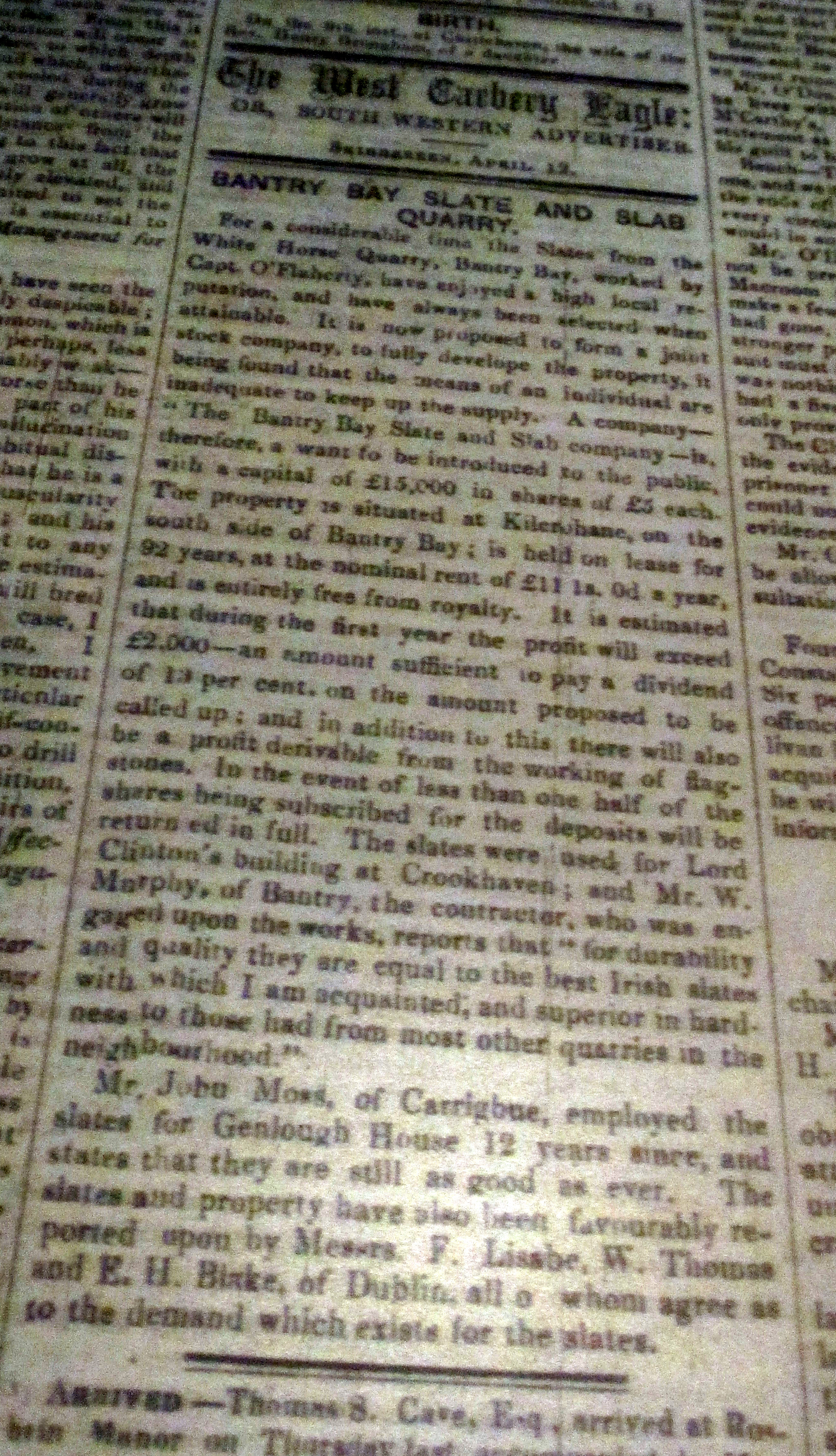
Another shot hows the locality of the Bantry Bay Slate Quarry which fizzled out in the mid 1860s.

1-IMG_1607

https://plus.google.com/photos/100968344231272482288/albums/6129838164844337169

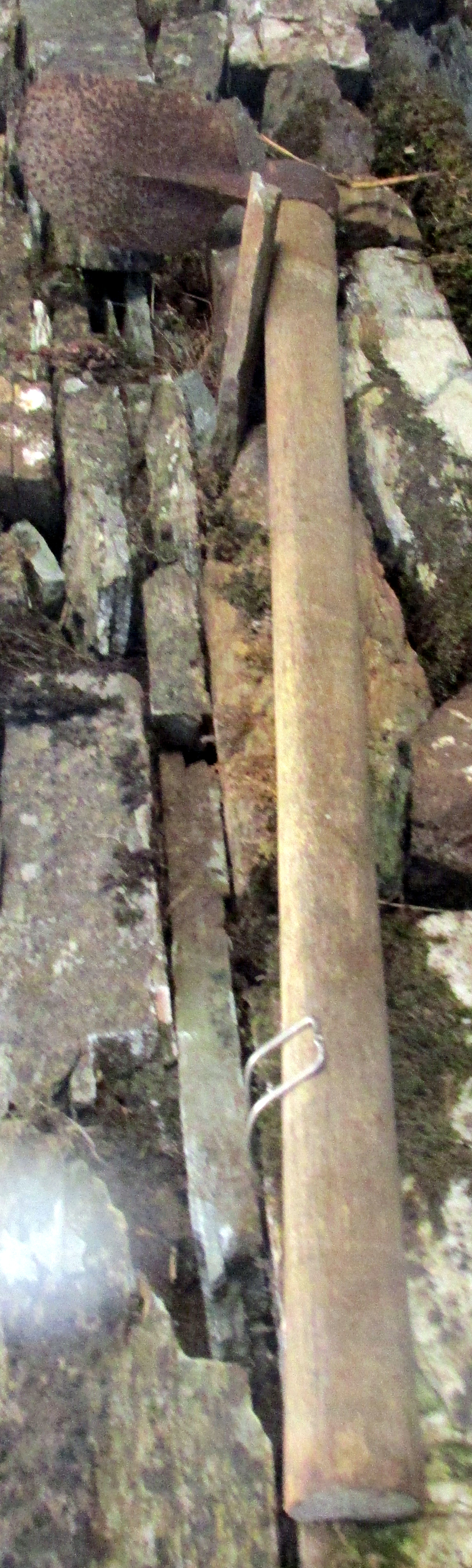
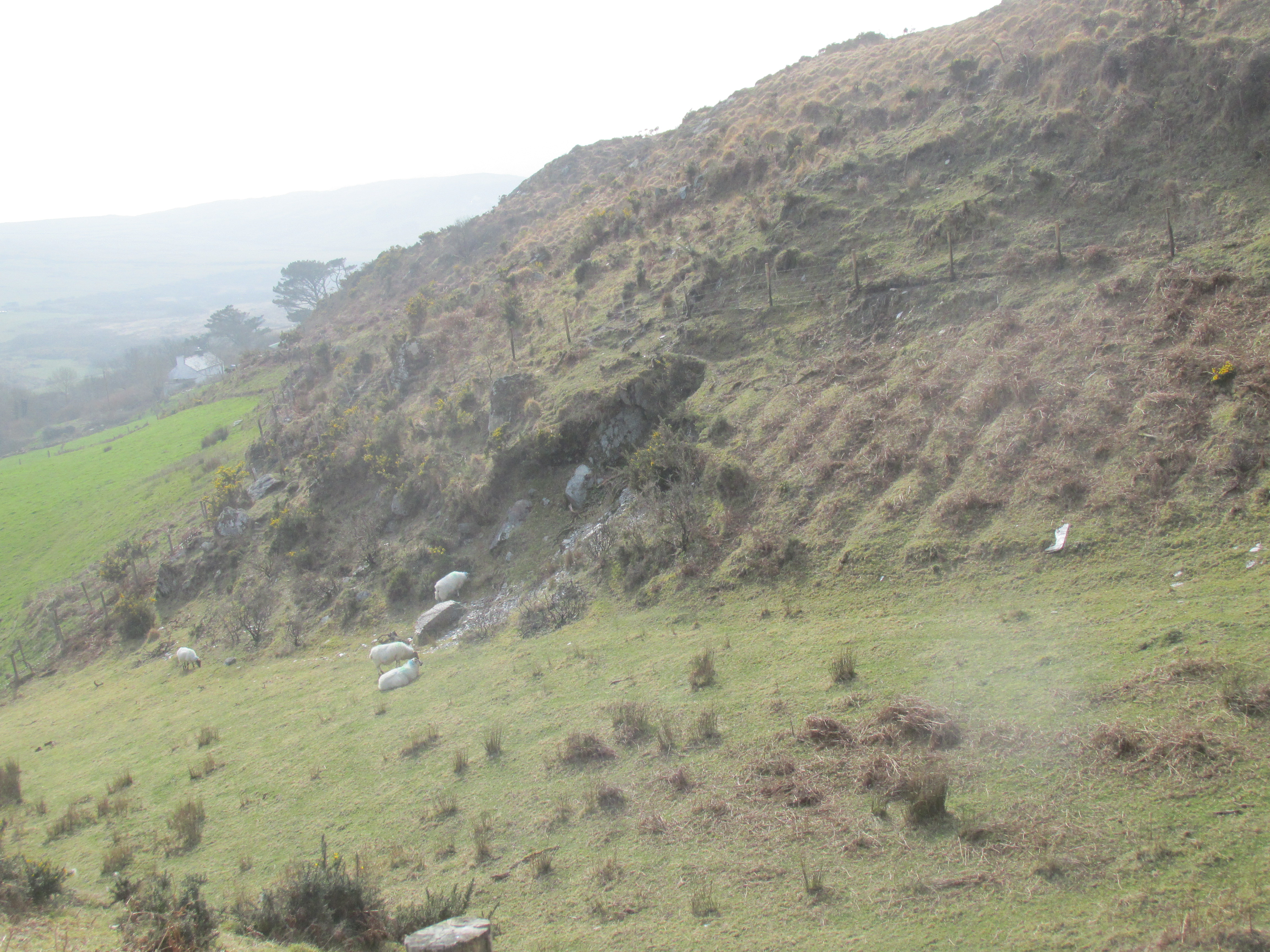
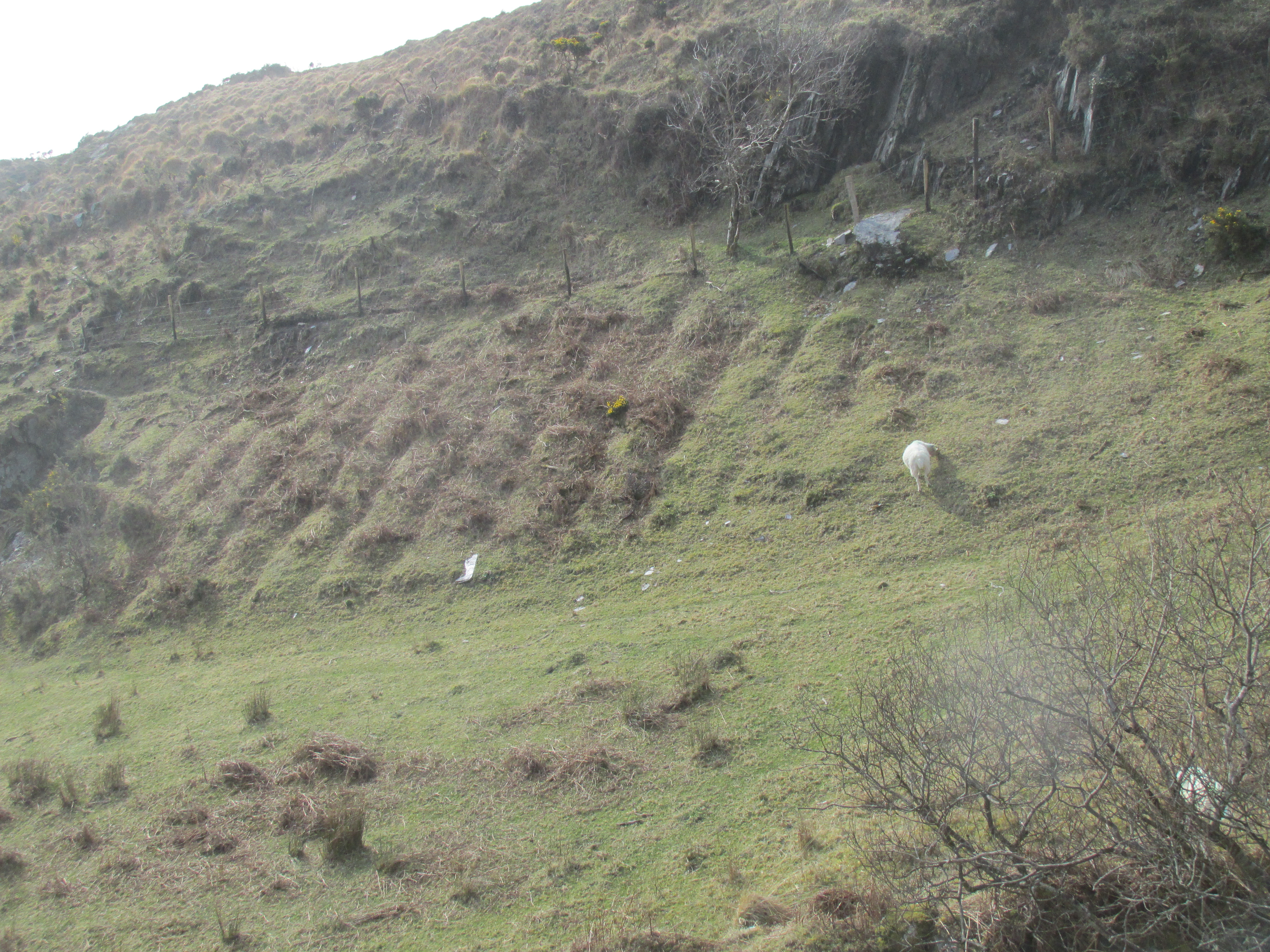
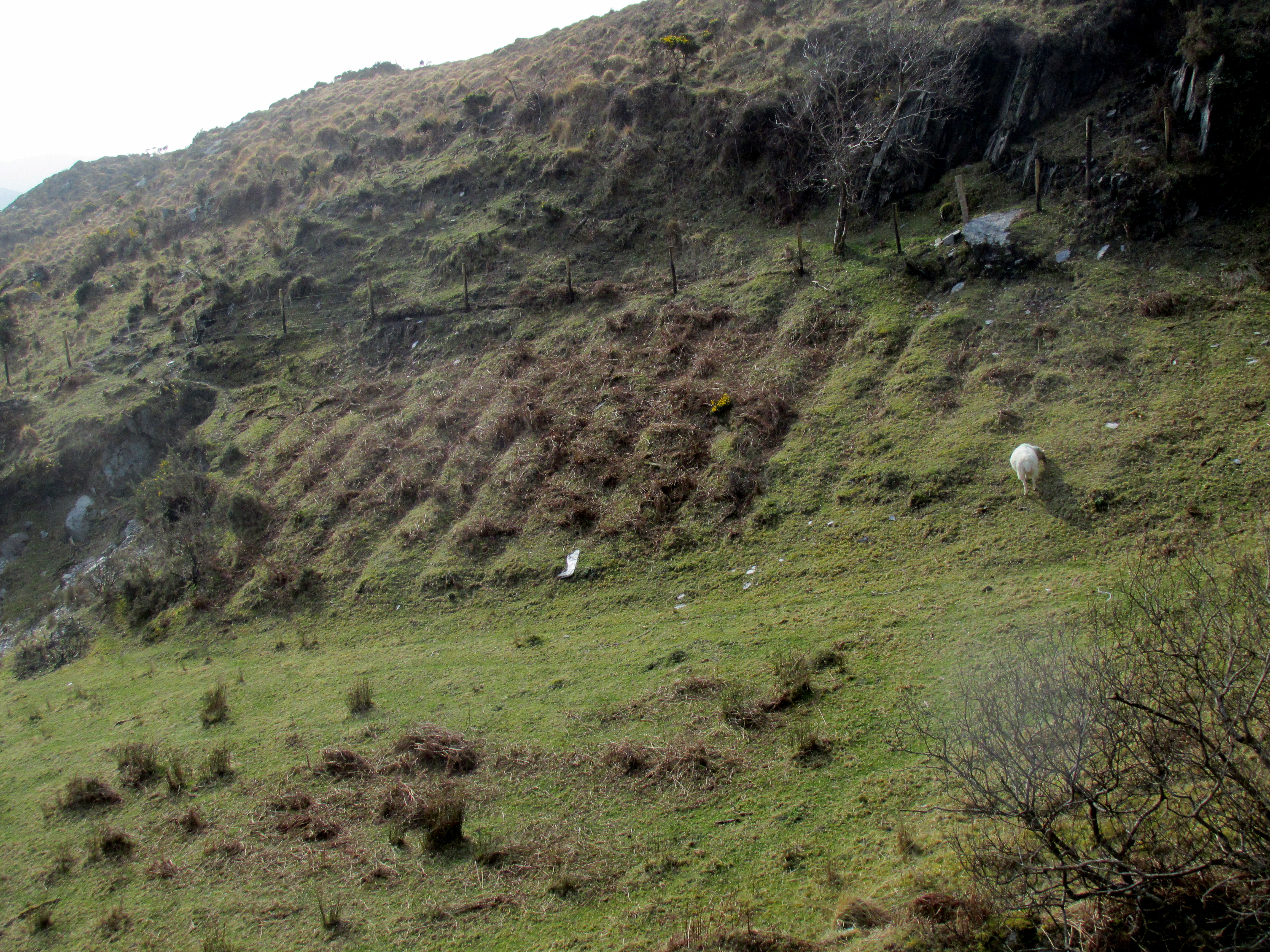
The Grufán and the Spade, Abandoned Famine Lazy Potato Beds, Kicrohane, West Cork.


https://www.google.ie/maps/place/Kilcrohane,+Co.+Cork/@51.5723601,-9.7696701,18z/data=!4m2!3m1!1s0x484582d45a68d7bf:0xa00c7a99731a160

The Grufán and the Spade, Abandoned Famine Lazy Potato Beds, Kicrohane, West Cork.

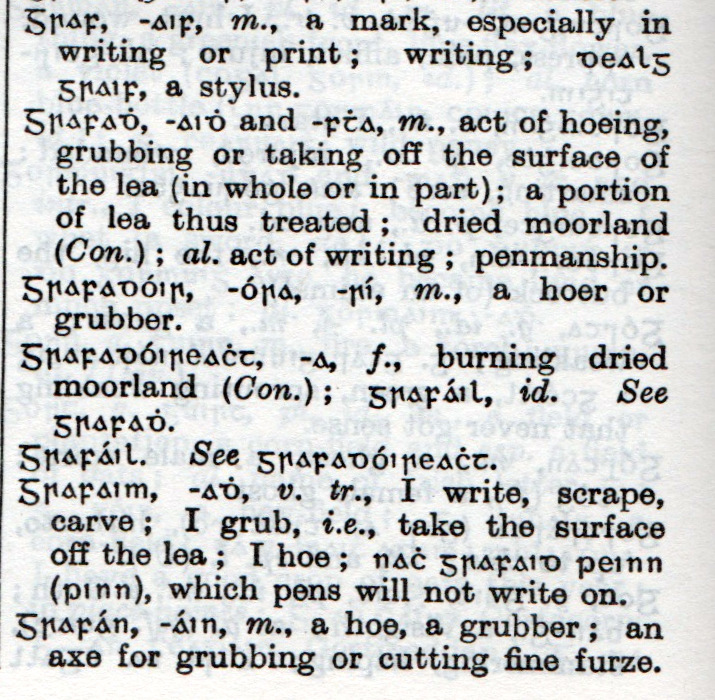
The Grufán is a tool used in famine times to grub out plots from sods where a spade would not be suitable.  It is still used to batted down clods after ploughing.

West of Kilcrohane there are a number of exampled of lazy beds abandoned after the famine, never dug.  In 1841 the Munitervara Peninsula had a population of around 10,000, one of the most densely populated non urban areas in the world excluding bog, mountain and lake  There are around 1,00o now on the Peninsula.

Pre 1965 farming practices West Cork, Red Elephant and Epicure potatoes, working with the grufán, threshing with the steam engine, winnowng of wheat and oats, working in the bog.

1-Scan 1520 2-Scan 1521

1-IMG_1814

3-IMG_1846 2-IMG_1845 1-IMG_1844