Forgotten Contributions, Bishop William Nicolson (1655-1727), English Born, Compiler of First Bibliography of Irish History drawing on Gaelic, Latin, French and English sources,dedicated to William Conolly Irish Born Speaker of Irish House of Commons, ‘A Patriot”, ‘A Zealous Antiquary and a learned Historian and Philologist.” “He fell into many errors in this work, for want of sufficient acquaintance with the Irish manuscripts and language. But notwithstanding that, much thanks are due to him for the extraordinary pains he took to inform himself about the materials which may be had for improving Irish history.” O’Curry speaks of his “valuable Irish Historical Library.”


Forgotten Contributions, Bishop William Nicolson (1655-1727), English Born,  Compiler of First Bibliography of Irish History drawing on Gaelic, Latin, French and English sources,dedicated to William Conolly Irish Born Speaker of Irish House of Commons, ‘A Patriot”, ‘A Zealous Antiquary and a learned Historian and Philologist.”  “He fell into many errors in this work, for want of sufficient acquaintance with the Irish manuscripts and language. But notwithstanding that, much thanks are due to him for the extraordinary pains he took to inform himself about the materials which may be had for improving Irish history.” O’Curry speaks of his “valuable Irish Historical Library.”

Conolly was probably, in the early 18th century, the richest man in Ireland.  He was from obscure Catholic origins in Donegal, a Protestant and refused all attempts to grant him titles.

Courtesy Francis G. James, ‘Lords of the Ascendency, The Irish House of Lords and its members 1600-1800, Irish Academic Press, 1995.

A significant number of the members of the Irish House of Lords were Protestant Bishops of the State Church, that of the Church of Ireland.  Irish Sees were lucrative with an income ranging from £2,000 to £8,000 in the 1770s according to Arthur Young.

Courtesy Library Ireland:

Nicolson, William, Archbishop of Cashel, was born in Cumberland in 1655, was in 1702 consecrated Bishop of Derry, and in 1726 advanced to the archbishopric of Cashel, and died of apoplexy, 15th February 1727. He deserves notice as author of the Irish Historical Library, printed in Dublin in 1724, containing a valuable list of authors and records in print and manuscript on subjects relating to the history of Ireland. Cotton styles him “a zealous antiquary and a learned historian and philologist.” Harris’s Ware says: “He fell into many errors in this work, for want of sufficient acquaintance with the Irish manuscripts and language. But notwithstanding that, much thanks are due to him for the extraordinary pains he took to inform himself about the materials which may be had for improving Irish history.” O’Curry speaks of his “valuable Irish Historical Library.”

Sources

196. Irishmen, Lives of Illustrious and Distinguished, Rev. James Wills, D.D. 6 vols. or 12 parts. Dublin, 1840-‘7.

260. O’Curry, Eugene: Manuscript Materials of Ancient Irish History. Dublin, 1861.

339. Ware, Sir James, Works: Walter Harris. 2 vols. Dublin, 1764.

Forgotten Contributions:
Forgotten Contributions, John Byrne and Young OPW Architects in 1937 Dublin Airport Terminal J J O’Leary Co-Founder of Aer Lingus ‘Grandfather’ of European Low Cost Aviation, Ryanair, GPA, Aircraft leasing

Forgotten Contributions, Belfast in the 1880s the most ‘Irish’ City in Ireland, Bulmer Hobson Quaker and IRB Man, Alice and Seaton Milligan and the birth of the Irish Cultural Revival, Belfast as an Industrial Colossus 1850-1910

Forgotten Heroes: Jack Woodfull, Boilermaker, Inchicore Railway Works, Dublin, Brilliant but Simple Innovation during Emergency/WW2, Innovation, on the Mississippi River Boats, Secret British Government Cabinet Committee headed by Lord Cranbourne restrictions of Supplies to Ireland to Secure Treaty Ports, Comparison with other Neutral Countries Rail Systems in Sweden, Portugal and Argentine, near starvation in Holland, Todd Andrew’s assertion ‘In Ireland no one starved or went without heat to cook a meal’, closure of Schull to Skibbereen Railway, the Foresight of Dr. Thomas McLaughlin and Paddy McGilligan in the Shannon Scheme making Ireland uniquely almost self sufficient in Electricity.

Irish College Paris, a Green Oasis in the in the Latin Quarter, from 1605, Refuge of the Irish in Times of Persecution, Modern Cultural Centre of the Irish Arts in France and its Digital Archive.


https://www.google.ie/maps/place/Centre+Culturel+Irlandais/@48.8445981,2.3455557,17z/data=!4m7!1m4!3m3!1s0x47e671e7d297c973:0xe5eb004f23a758!2zUGFudGjDqW9u!3b1!3m1!1s0x0000000000000000:0x5fc66c9df1c03fdc

Irish College Paris, a Green Oasis in the in the Latin Quarter, from 1605, Refuge of the Irish in Times of Persecution, Modern Cultural Centre of the Irish Arts in France and its Digital Archive.

http://www.centreculturelirlandais.com/en/

http://en.wikipedia.org/wiki/Irish_College_in_Paris

Digital Archive:

http://archives.centreculturelirlandais.com/r_tinventaire_resu_rech_gb.php

https://plus.google.com/photos/100968344231272482288/albums/6140086833530585601

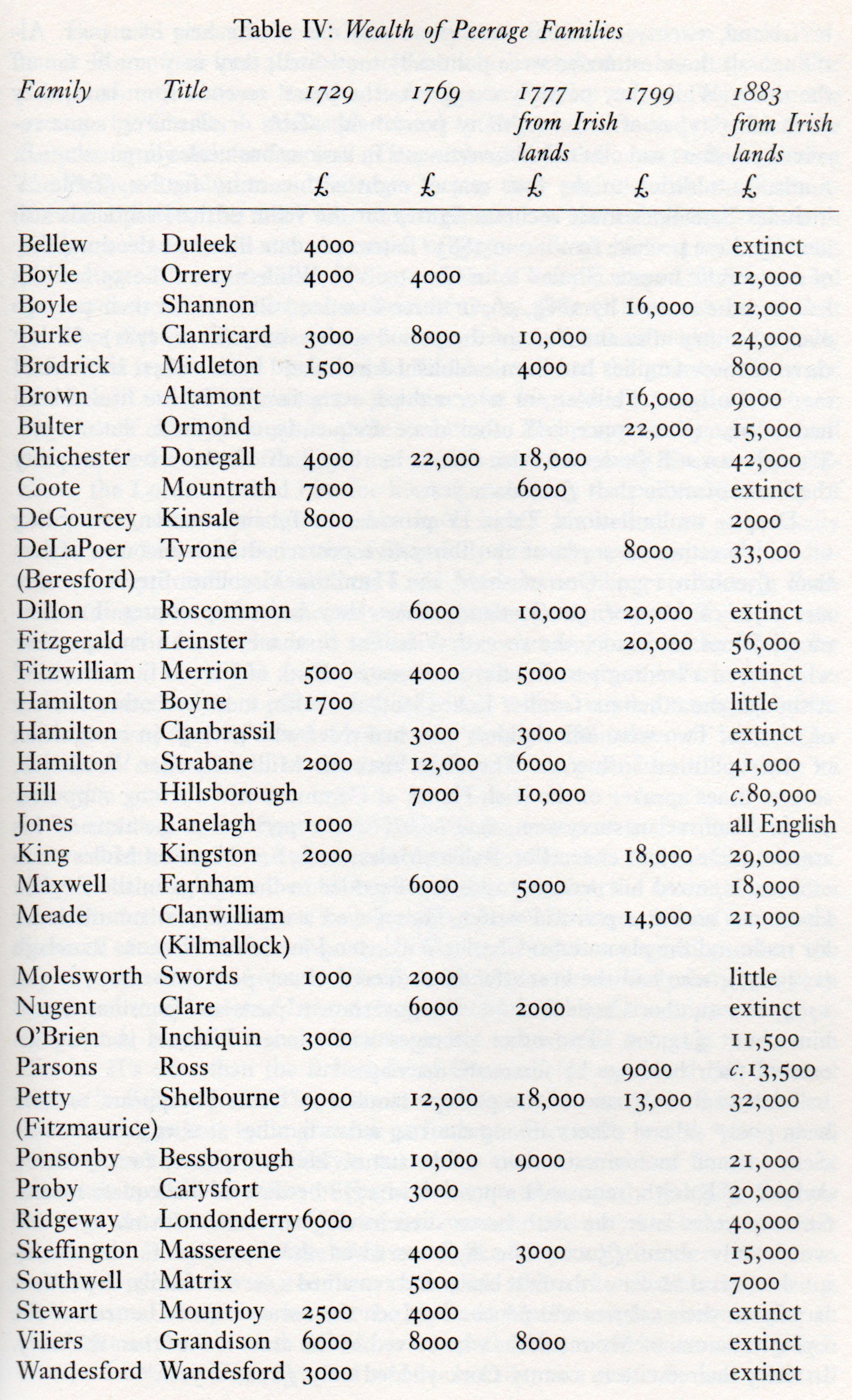
Rent Roll of Irish peerage Families 1729-1883, Stipends of Judges Sitting in the Irish Houses of Lords, Value of Iris Sees 18th Century, the Table of Archbishop Parker of Tuam 1674 ‘Daily laden with sixteen dishes fro dinner and twelve for supper, with a large variety of wine.


Rent Roll of Irish peerage Families 1729-1883, Stipends of Judges Sitting in the Irish Houses of Lords, Value of Irish Episcopal Sees 18th Century, the Table of Archbishop Parker of Tuam 1674, ‘Daily laden with sixteen dishes for dinner and twelve for supper, with a large variety of wine’.  This is according to William King appointed as chaplain to the Archbishop, instead of his humble fare as a student.

The Bishops were commonly English but made a major contribution to Ireland’s intellectual, architectural history. Included were Narcissus Marsh who built Dublin’s first Endowed Public Library, Henry Jones who donate the Book of Kells to TCD, Archbishop Robinson on Armagh Cathedral, school, hospital.

Courtesy Francis G. James, ‘Lords of the Ascendency, The Irish House of Lords and its members 1600-1800, Irish Academic Press, 1995.

A significant number of the members of the Irish House of Lords were Protestant Bishops of the State Church, that of the Church of Ireland.  Irish Sees were lucrative ranging from £2,000 to £8,000 in the 1770s according to Arthur Young.   The Judges stipends ranged  from the Lord Chancellor on £7,500 to the lesser Judges on £1,150 to £3,250 peer annum.   Their Judicial salaries were presumably additional as were other sources of judicial income.

The value of £1 in 1722 would equate to £19,000 by one estimate nowadays so the rental value of the Petty Estate in Kerry might be worth c €170 Million.

https://wordpress.com/post/28206803/3834

The Parliament of Ireland, 1704, with the Duke of Ormond on the Throne, and Alan Broderick (Midleton, Co. Cork) to his left.

1-Scan 1732

Bi-lingual signage in Clonakilty, West Cork, Ireland, The work of the sign artist Tomás Tuipéar who has promoted the Irish language in his fine quality signage for the past 30 years.


https://www.google.ie/maps/place/Clonakilty,+Co.+Cork/@51.6215054,-8.8886995,15z/data=!3m1!4b1!4m2!3m1!1s0x484456e82a9da0bd:0xa00c7a99731a490

Bi-lingual signage in Clonakilty, West Cork,  Ireland, The work of the sign artist Tomás Tuipéar who has promoted the Irish language in his fine quality signage for the past 30 years.

Thanks to Cáit Conneely for drawing attention to Tomás’s work.

Business signs in Irish in Clonakilty, West Cork

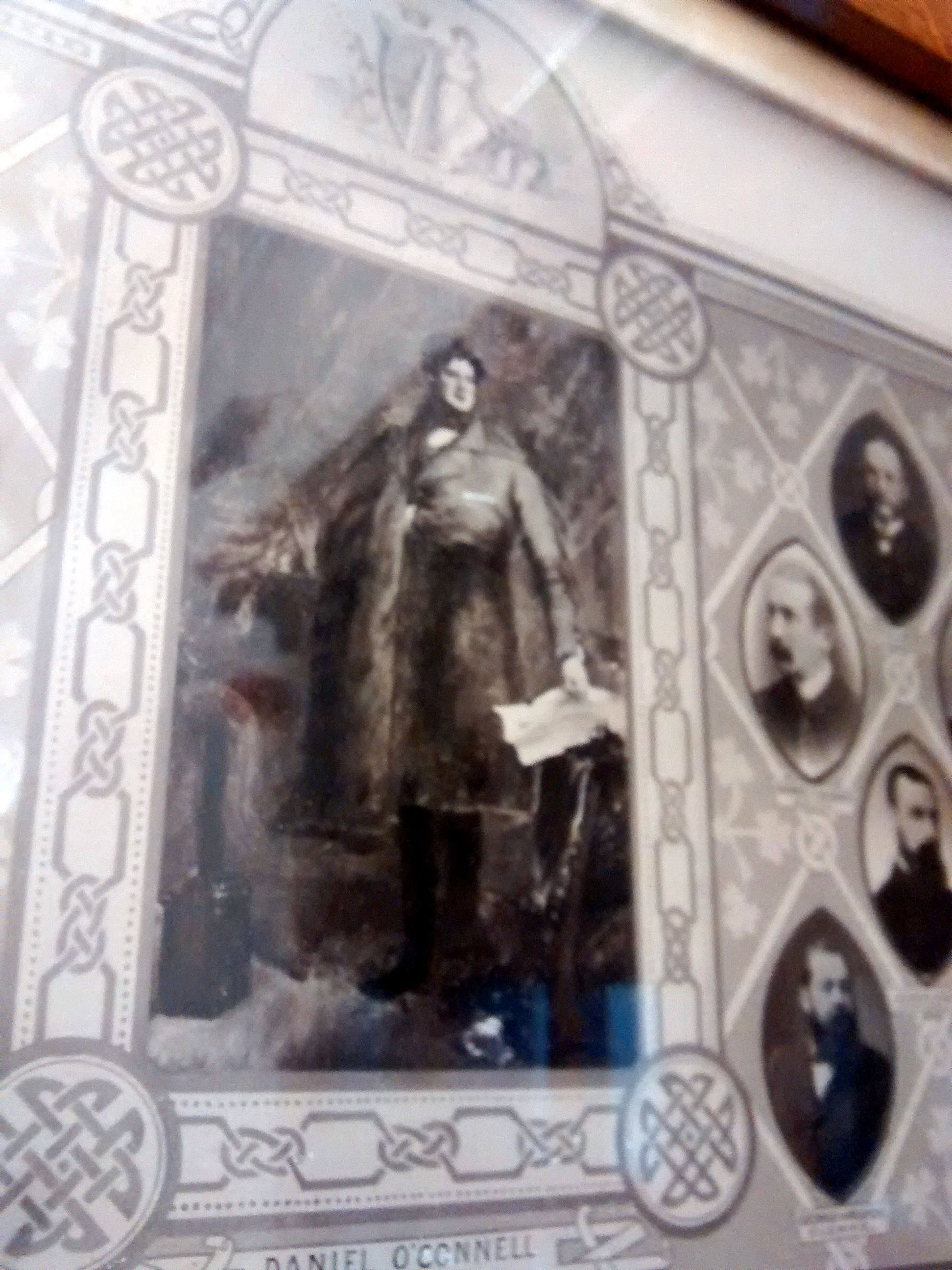
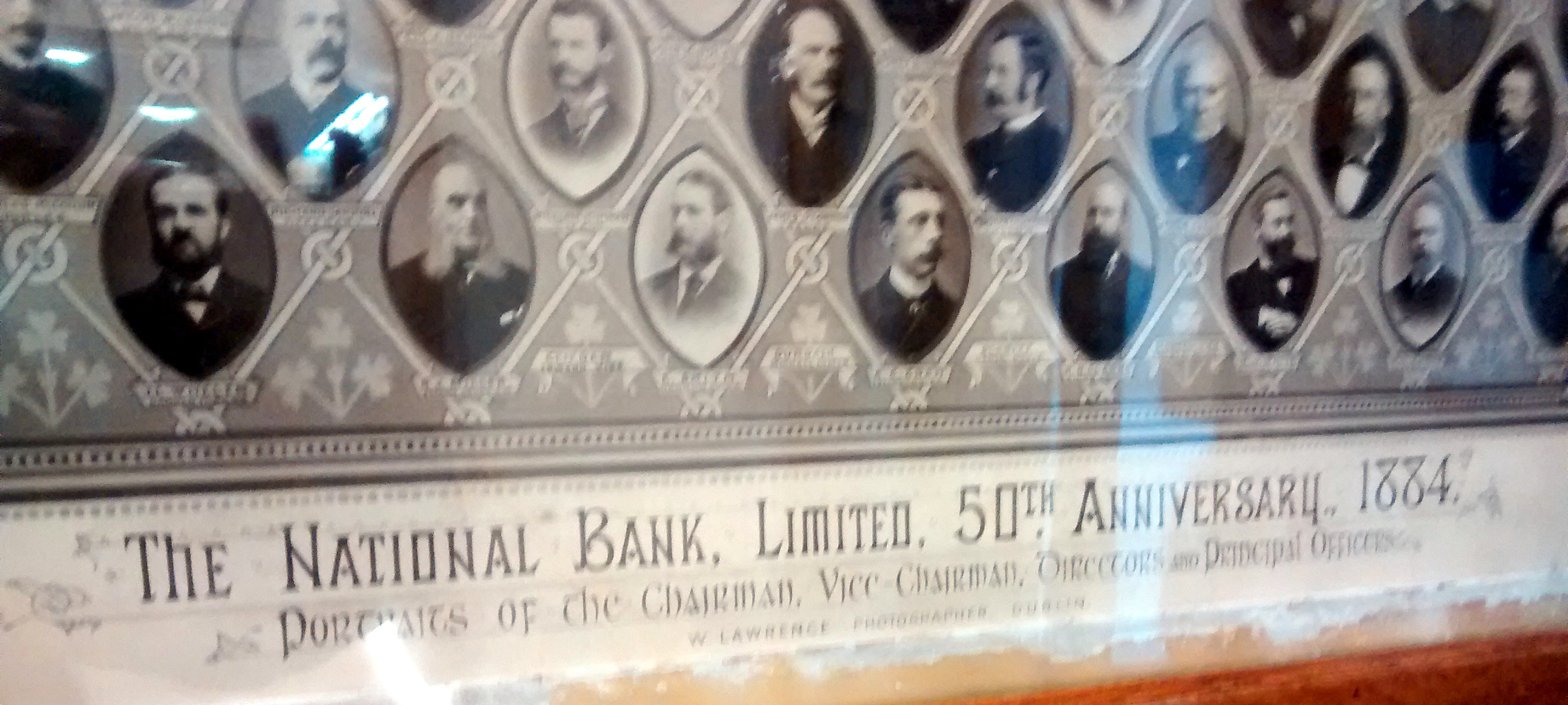
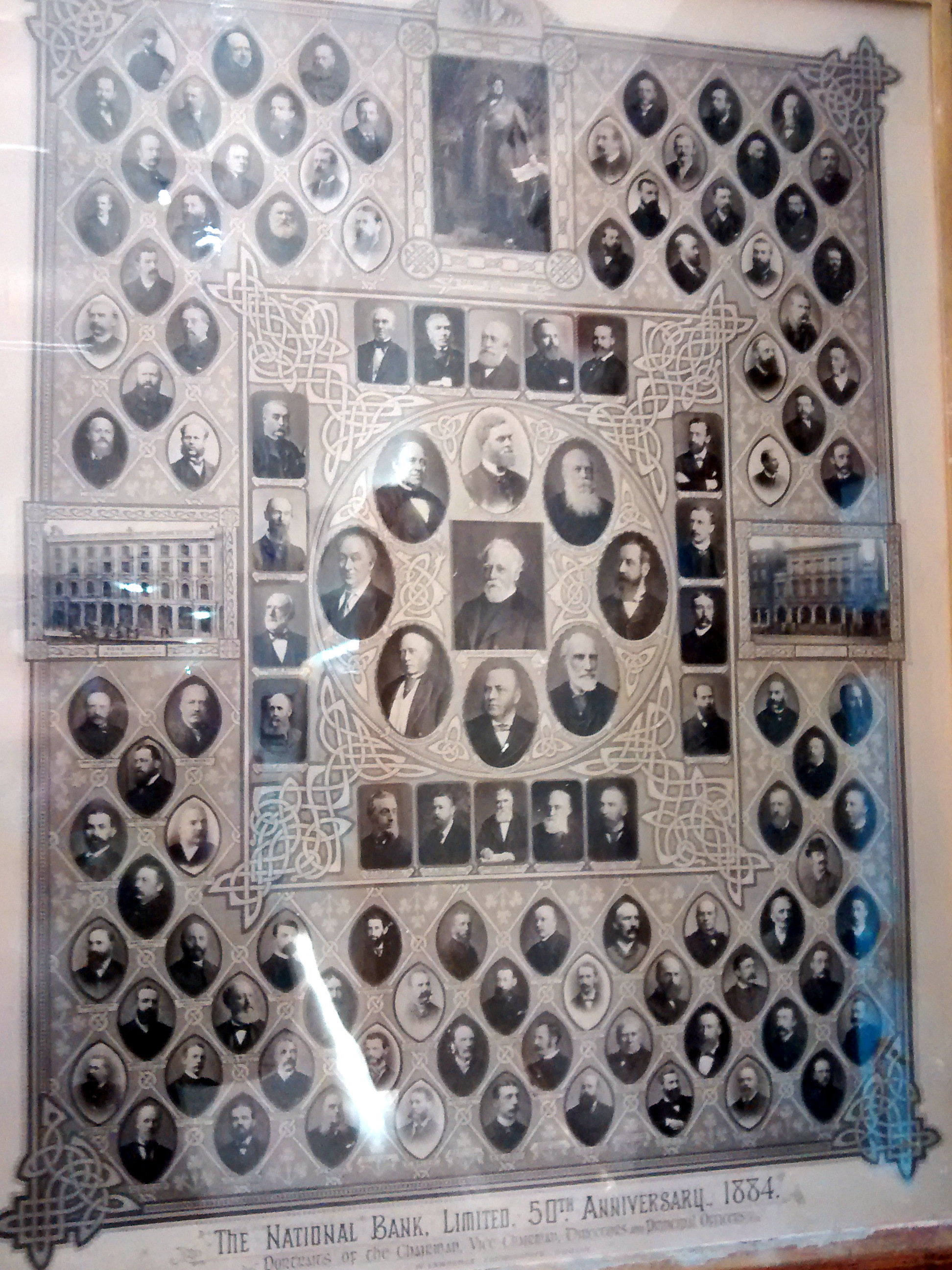
Lawrence Portrait, 1884 of Chairman, Vice Chairman, Directors, Principal Officers on the 50th Anniversary of National Bank including one of the Founders, the Liberator, Daniel O’Connell, Cork Murough Family.

Tags

, , ,


Lawrence Portrait, 1884 of Chairman, Vice Chairman, Directors, Principal Officers on the 50th Anniversary of National Bank including one of the Founders, the Liberator, Daniel O’Connell, Cork Murough Family.  A number of the Murroughs a Cork Stockbroking family are named as managers of various branches.

National Bank:

http://heritagearchives.rbs.com/companies/list/the-national-bank-ltd.html

C. M. (McCarthy) Tenison formerly Collins JP, BL, MRIA, Barrister, Bank Manager, Hobart, Tasmania, Author of ‘History, Law and practice of Baking’ and article 1893 on Early Cork Banks, Hoare’s Bank, Hoare’s Lane (1675-1729), Pikes Hoare’s Lane (1729-1825), Falkiner and Co., near the Custom House (1760, Leslie and Co. Failed 1820, Hewitts and Co., South Mall (1776-1789), Newenhams, Patrick St., (1800-1821), (1824-1825), South Mall, Rogers Travers and Shears (c1750-c1798), Nile St., Cotter and Kellett (1775 Bankrupt 1807), Galweys Bank Mallow (not in article), The Pike Family the Debt Cork owes them as Bankers, Merchants,  Shipbuilders, Reclaimers of Marshes and Mrs Pike a Quaker standing by her son in Celebrated Defamation action (Pike V Beamish ), 1894, for Alleged Cheating at Cards.

3-3-IMG_20150415_123553209 2-2-IMG_20150415_123547159 1-1-IMG_20150415_123539712

Glen of Ghosts


Finola's avatarRoaringwater Journal

glen

There are some places in this world that touch you deeply in the soul. Derrynablaha has that affect on me. I first went there a few years ago and immediately felt that it was alive with ghosts. I was in search of Rock Art then, and Finola had told me about her experiences in the early 1970s – an intrepid young student on an old Honda 50 loaded down with sheets of cellophane and measuring rods. She had met the O’Sullivans who dwelt in the single farmstead there – they plied her with tea and directed her to the rocks above the house where treasures awaited. When I drove into that valley 40 years later I found only the ruins of the O’Sullivan cottage. It was a poignant moment – the mountains were empty: in some ways it felt like the loneliest place on earth, yet also one of the most beautiful.

View original post 496 more words

Carrigboy, Durrus, School Folklore Collection, 1938


https://www.google.ie/maps/place/Durrus,+Co.+Cork/@51.6497011,-9.4265841,11z/data=!4m2!3m1!1s0x48459fe7ccd270df:0x231e3744ac95441a

Carrigboy, Durrus, School  Folklore Collection, 1938,

1938 School Folklore Project, Sarah Dukelow, Clashadoo, Durrus, Co. Cork.

The End of Gaeltacht an Aird, Clonakilty, West Cork, School Folklore Collection, 1938, Water from a Foot Bath, The Magic of May Day, Voyage to Ring, The Curse of Castlefreke Wood, Lament for Father Power.

Gortnagrough, Ballydehob, in School folklore Collection 1937 and Folk Museum and West Cork Methodism.

Herbal Cures cobwebs to stop bleeding 1930s Folklore Collection on Traditional Cures, Sweathouses, Ancient Irish Herbal Tracts, Traditional Medical Families, herbal Science Degree CIT

https://durrushistory.com/2014/09/20/daniel-oconnell-in-folklore/     https://plus.google.com/photos/100968344231272482288/albums/6137836682416283729

Orthography of Durrus District, West Cork, Name origin of Townlands from old Irish with Gaelic Script, English names Settled by Dr. John O’Donovan L.L.D., Ordnance Survey, 24th September 1842, with Landlord by Townland with Agents, Archaeological Features, Population, Land Description.


https://www.google.ie/maps/place/Durrus,+Co.+Cork/@51.6212816,-9.5479125,13z/data=!4m2!3m1!1s0x48459fe7ccd270df:0x231e3744ac95441a

Orthography of Durrus District, West Cork, Name origin of Townlands from old Irish with Gaelic Script, English names Settled by Dr. John O’Donovan, Ordnance Survey, 24th September 1842, with Landlord by Townland with Agents, Archaeological Features, Population, Land Description.

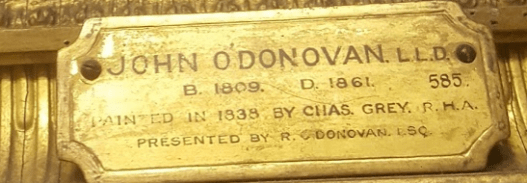
Portrait of Dr. John O’Donovan (1809-1861), Scholar, National Gallery  on loan to Royal Irish Academy.

..

Screen Shot 2018-08-27 at 07.41.28

..

Screen Shot 2018-08-27 at 07.42.08

.

http://www.osi.ie/Products/Professional-Mapping/Historical-Mapping.aspx

Click to access notesmaps.pdf

https://plus.google.com/photos/100968344231272482288/albums/6137508717372500689

Tsunami, December 1942, Dunmanus Bay, Kilcrohane, Ahakista, West Cork, Devastates Remaining Seine Boats and evidence of earlier 1755 Tsunami uncovered in 1968 building of Barley Cove Hotel, Swimming Pool.


https://www.google.ie/maps/place/Kilcrohane,+Co.+Cork/@51.580608,-9.7043771,15z/data=!3m1!4b1!4m2!3m1!1s0x484582d45a68d7bf:0xa00c7a99731a160

Tsunami, December 1942, Dunmanus Bay, Kilcrohane, Ahakista, West Cork, Devastates Remaining Seine Boats and evidence of earlier 1755 Tsunami uncovered in 1968 building of Barley Cove Hotel, Swimming Pool.

When the pool was being built the builder had to go down 18 feet to reach solid ground through sand. Atthe bottom they located an anchor.

Over a very short period a tsunami came in dried up the sea bed and then swept all in front including a umber of seine boats.  The O’Mahony family ran a fishing business from Letter, in Kilcrohane, their seine boats were destroyed as were the sheds and ancillary equipment.

The tsunami extended as far in as Ahakist devestating any boats on the coast/

That fishery had been badly affected by the outbreak of war but the tsunami by breaking up the boats put another nail in its coffin.

The experience was witnessed by a local man then a youth who later became prominent.

It occurred at  a point some 70 to 80 yards inland from the pier in Kilcrohane which  was reached by a freak tide one winter when he was a teenager.

It occurred in 1755. It originated as the result of a huge earthquake on the seabed off the coast of Lisbon, the capital of Portugal. It occurred on All Saints Day, the 1st. November, at about 9.40AM, when the churches were full of worshippers at Mass in the city.
Between 30,000 and 40,000 people died in Lisbon as a result of the earthquake, the resultant fires and the huge tsunami which followed. Most of the Atlantic coastline of North America and Europe, which included Ireland, was affected by the Tsunami. It is speculated that the sand dunes of Barley Cove originate from this.