1642 West Cork Men Indicted in Youghal for ‘Rebellion’
1642 West Cork Men Indicted in Youghal for ‘Rebellion’
15 Tuesday Nov 2022
Posted in Uncategorized
15 Tuesday Nov 2022
Posted in Uncategorized
1642 West Cork Men Indicted in Youghal for ‘Rebellion’
12 Saturday Nov 2022
Posted in Uncategorized
https://docs.google.com/document/d/1Fh89WiU9uQf-h1hqm1Agm66d_nRLVzIrk9zM3VC5jxg/edit#
J J Callanan
Death in Lisbon, p.1
Teacher, p.1
Background, p.3
Gougan Barra, p.6
Songs Of the Munster Poets, p. 7
Dr. Thomas Burke, Bantry, p.16
Extended Callanan Medical Family, 17
Appraisal, p. 20
Denis Florence Mccarthy, p. 22
National LIbrary Catalogue, p. 24
The Irish Poems of JJ Callanan, p. 25
Dictionary of Irish Biography, p 26
J J Callanan
Callanan, J. J. [Cork] city
At Lisbon, on the evening of the 19th of September, 1829, Mr. J. J. Callanan. He was a
native of this City, and had distinguished himself by his poetical compositions, which
were of the first order of merit.‘ Cork Constitution (05/11/1829)
Teacher for a brief Period in Cork:

..
JJ James (Jeremiah) Joseph Callanan, 1786 died Lisbon 1829, Cork Poet bridging Gaelic Ireland with Irish Literature in English, Aonghus Ó Dalaigh, poems.
The Trinity Alumni records record him as Pensioner admitted 6th July 1801, aged 15, Roman Catholic, son of John Physician educated Mr. Lee Vernon 1805 see Allibone.
Presumably a brother slightly different spelling ‘Callinan’ Thomas educated Mr. Barrington admitted 5th July 1802.
Walker’s magazine records a marriage in November 1779 between John Callanan MD and Miss Cooper, Barry’s Court, daughter of William. It is possible that Cooper is a version of Coppinger and might account for his schooling in Cobh.

From Dr. Casey collection.
It is forgotten but a section of the Catholic population survived and some thrived during the Penal Laws. The Callanans appear as apothecaries in Cork, Doctors, and are close to McCarthys, Nagles and O’Learys (of the ‘outlaw’ family Raleigh Macroom) and form a close network. It is from this background that JJ Callinan came. Later his friend Crofton Croker would comment that he spent years living with various friends who were Doctors, Schoolteachers and surprisingly Policemen. One such Doctor was Doctor Burke who practised in the Square in Bantry and was from A Caheragh Landowning family probably associated with the McCarthys according to the late Cork Historian John T Collins. It was in Bantry he wrote Gougán Barra.
https://docs.google.com/spreadsheet/ccc?key=0AqhnQGE3ANjzdDA2VHduY1pNUHllbFFHbzJKRUhzU3c#gid=0
In the online edition of the Kings Inns Admission papers (Irish Manuscript Commission) p 92 online p 72 text the admission records of James Joseph Callanan gives his date of birth as the 17th January 1786, 3rd son of father John Medical Doctor mother Catherine Coppinger. TCD 1805, MT M 1806 E (Admitted King’s Inns) 1809. The mother’s name is interesting, as the Coppingers are of Danish descent and his friend Crofton Croker describes him as ‘fair’.
A possible cousin also appears on the list for 1800 James Callanan born 1783 2nd son of Michael Apothecary and Elizabeth McCarthy.
The Callinan’s were the hereditary physicians of the McCarthys:
To continue the McCarthy connection JJ Callanan at one time tutored from a well to do McCarthy family in Millstre
10 Thursday Nov 2022
Posted in Uncategorized
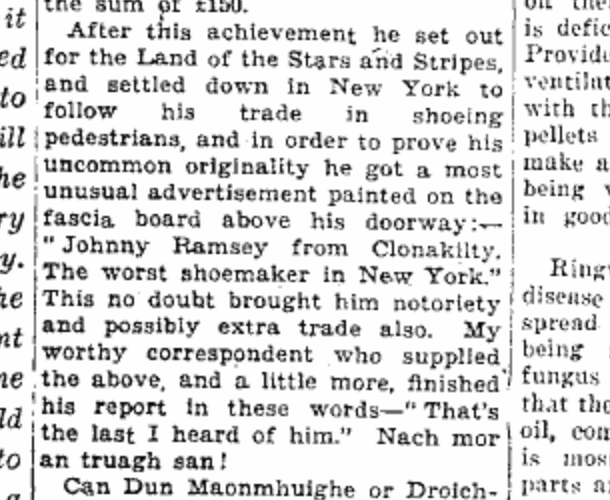
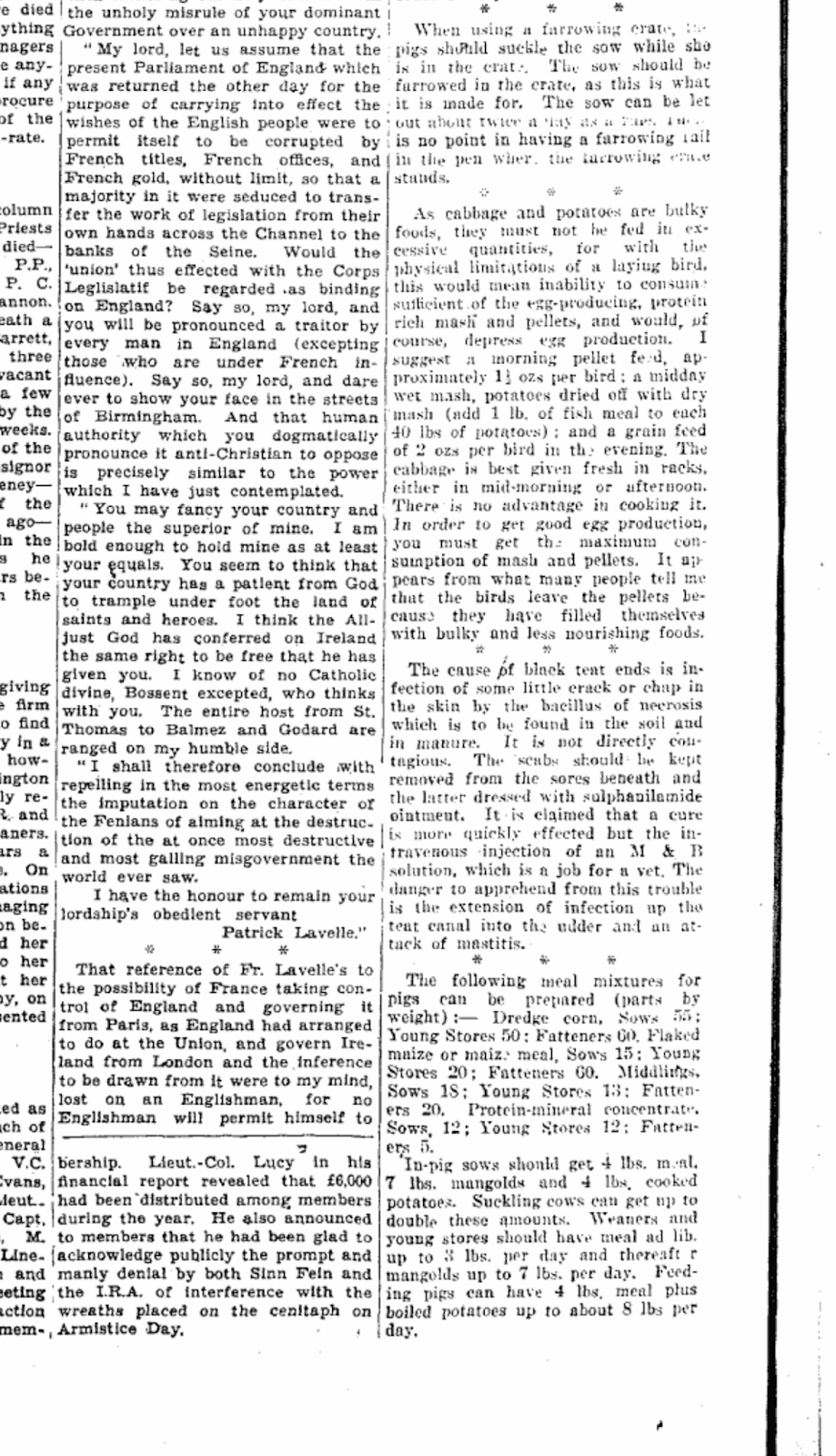
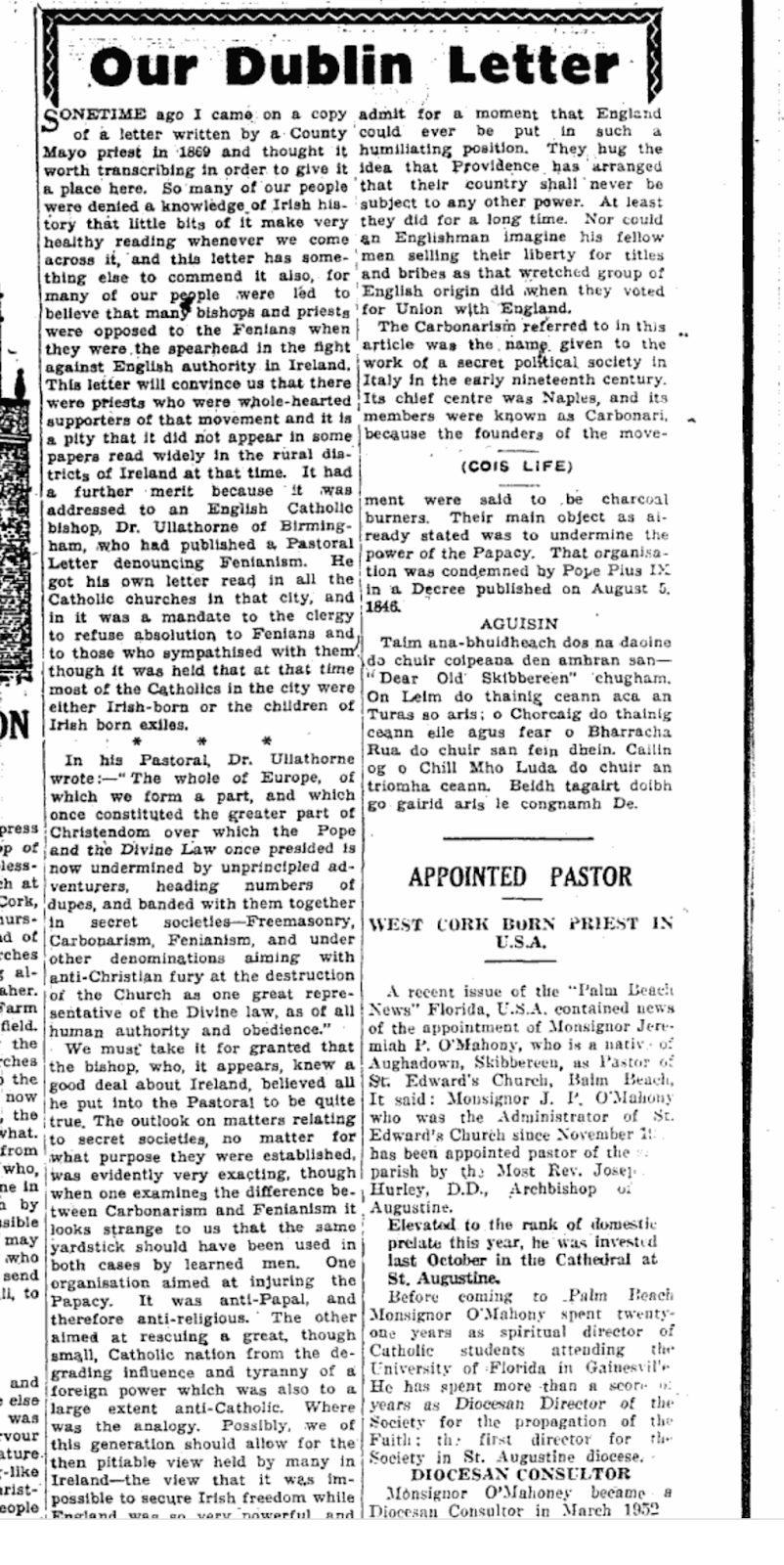
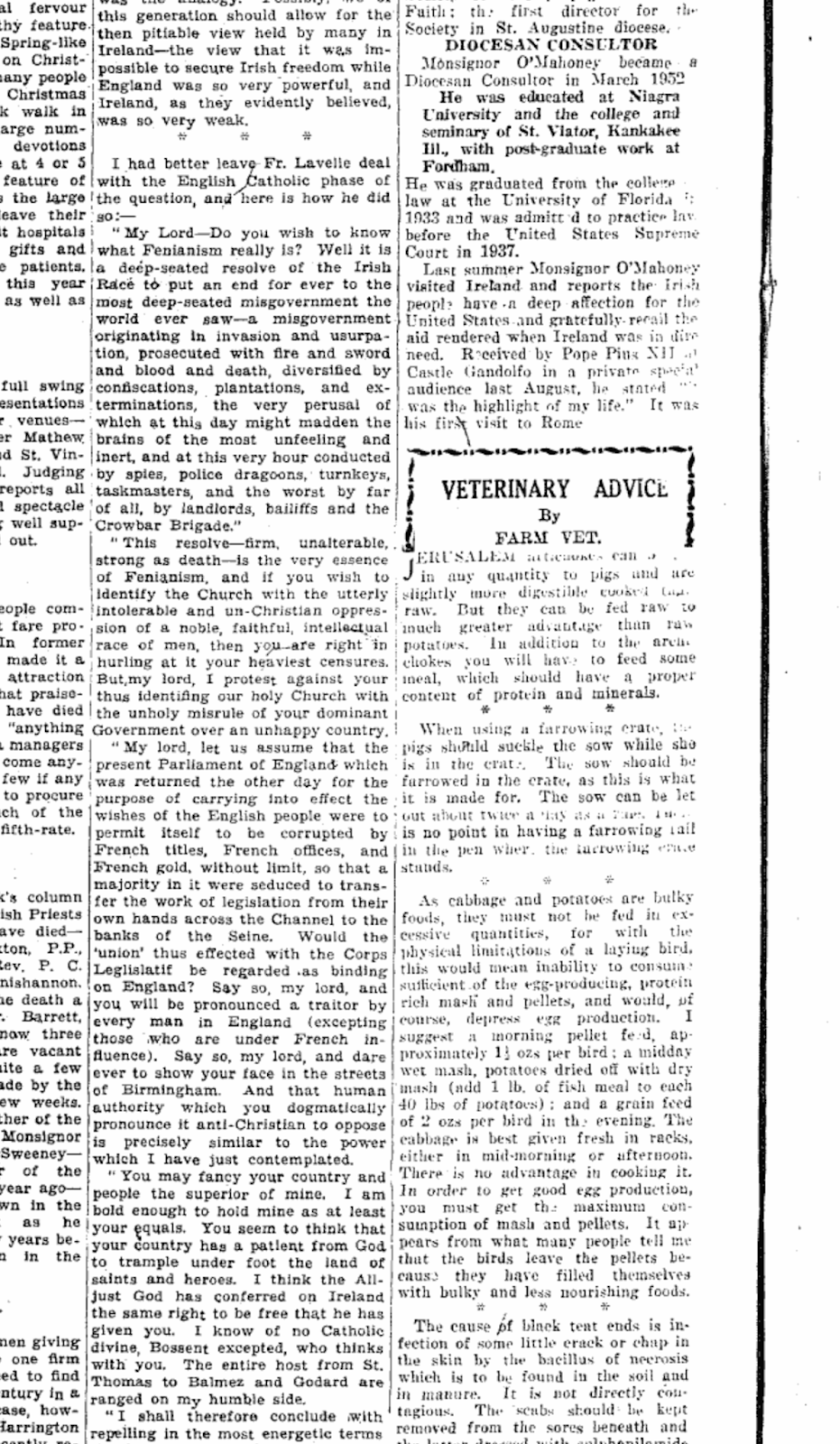
Re Peadar Ó hAnnracháin, (11873-1985). Peadar was a wonderful Conradh na Gaeilge organiser throughout a number of counties including Cork and he wrote several books as Gaeilge. He also wrote on the Southern Star as ‘Cois Life’ in the 1940s and 1950s. In that period he worked in the Pigs and Bacon Commission in Dublin. The column often wandered over long lost history, family relationships and there was a touch of the ‘Seanachaí’ about them. The daughter of the Gaelic Scholar, landowner and businessman in Ballydehob Thomas Swanton, Crianlarich, gave him her father’s papers.
One of 13 children, 10 of whom survived and the majority emigrated.
In Colaiste Chairbhe/The Convent (owned by Judge Devoy, New York, Peadar Ó hAnnracháin. Peadar the Southern Star as ‘Cois Life’
..
..
07 Monday Nov 2022
Posted in Uncategorized
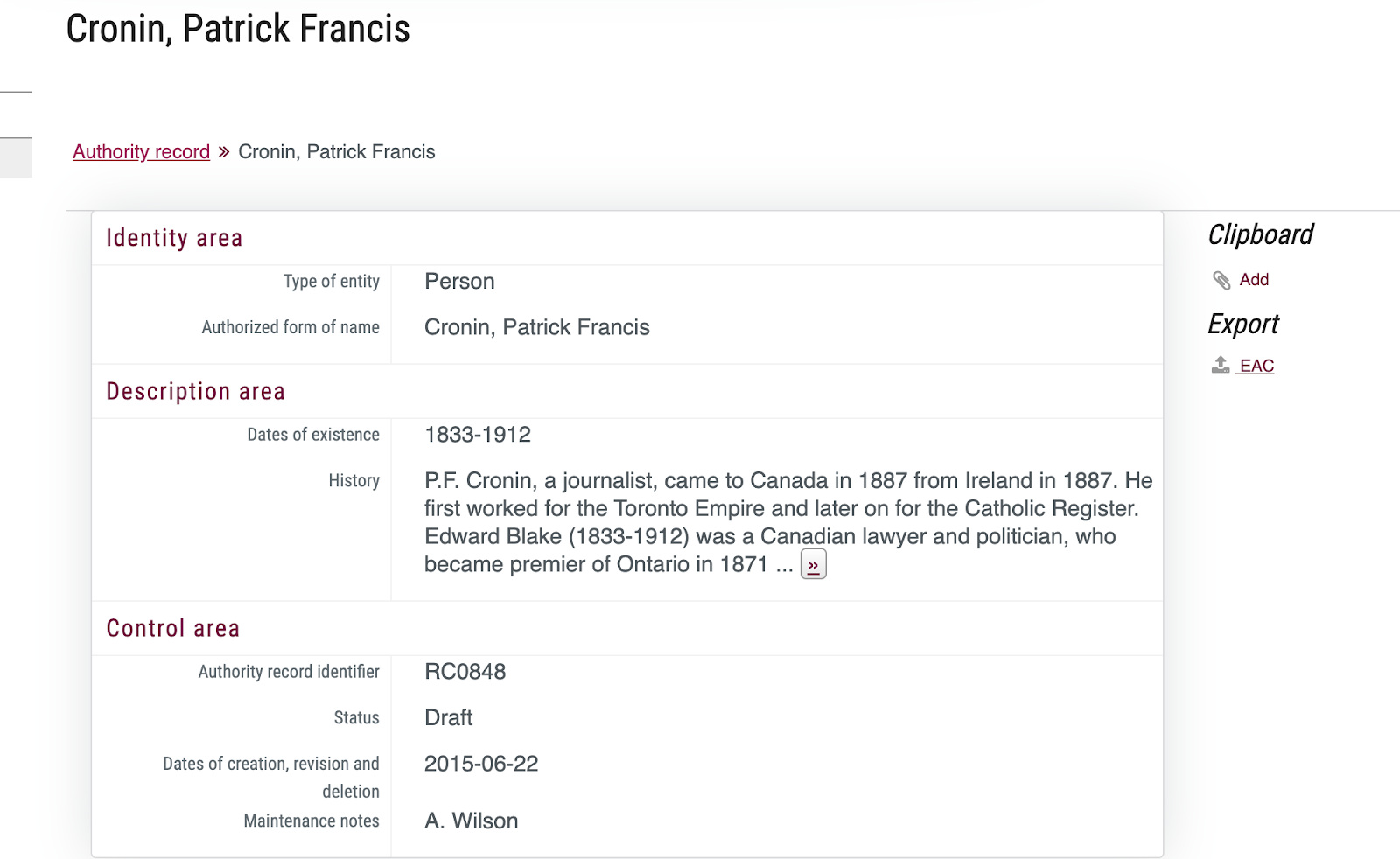
Patrick Francis Cronin, (1865-1953), Bantry Born Canadian Journalist and Political Activist. Burned Eviction Papers for Glenbeigh Evictions, Dedication of Celtic Cross at Grosse Île Quarantine Station, Quebec, To Honour Those Irish Who Perished from Famine Fever.
https://docs.google.com/document/d/1-4JRf0go3P94hAfdjRqefJ0gfp2CHjxT8zzWt53M090/edit#
..
In the 19th century, an increasing stream of people was leaving Europe to rebuild their lives in North America. Around 1830, an average of 30,000 immigrants arrived annually in the City of Québec, the main port of entry to Canada. Approximately two-thirds of these newcomers were from Ireland. This unprecedented immigration on the St. Lawrence River took place at a time when major cholera and smallpox epidemics were sweeping through Europe. In order to help control the spread of the diseases, the quarantine station at Grosse Île, located in the St. Lawrence River downstream from the City of Québec, was established in 1832 and operated until its closure in 1937.
In 1974, the old quarantine station became a national historic site under the jurisdiction of Parks Canada. More information on Grosse Île and the Irish Memorial National Historic Site of Canada is available on the Parks Canada Web site.
Data on immigrants was compiled by Parks Canada from a number of different records held in various archives. Under an agreement between the Québec Service Centre of Parks Canada and Library and Archives Canada, this database regarding immigrants who passed through Grosse Île is now available on this website.
..
Canadian Collections:
01 Tuesday Nov 2022
Posted in Uncategorized

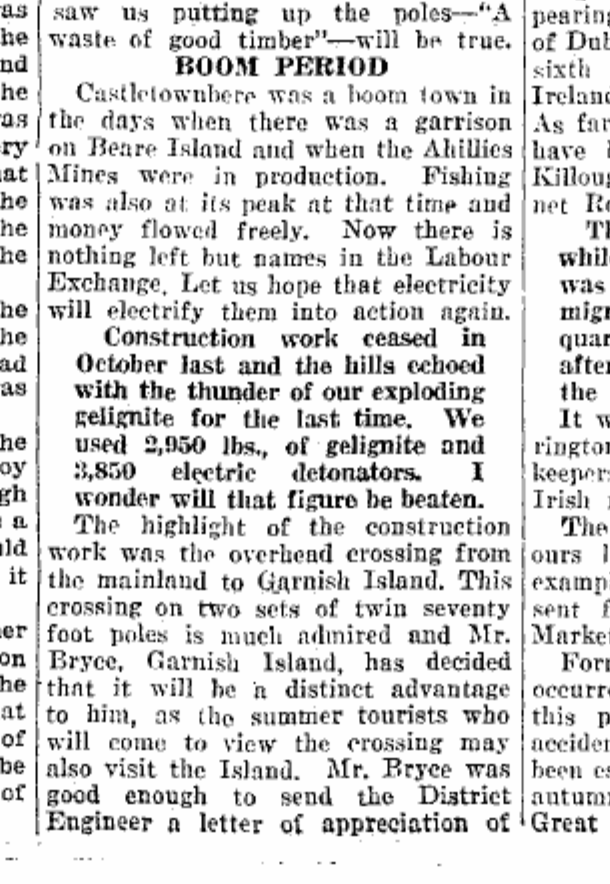
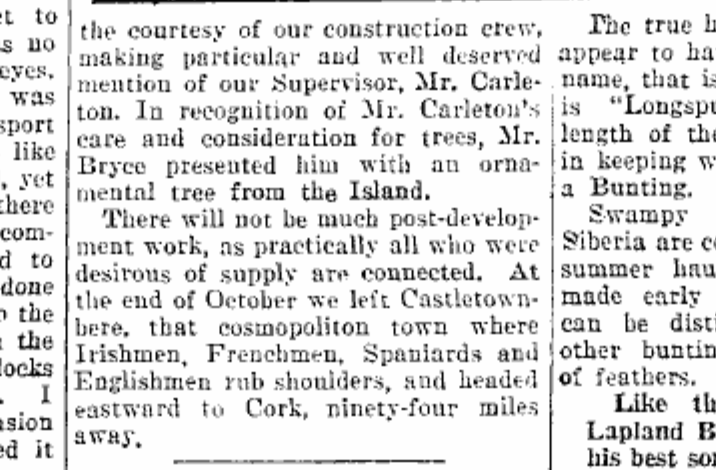
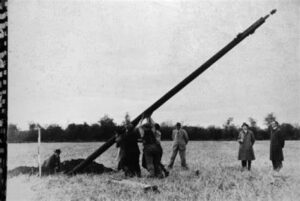
Work did not start on rural electrification until the end of the Second World War or as it was called in Ireland the ‘Emergency’.
It was not until the Rural Electrification Scheme (1946) and the Electricity Supply Amendment Act (1955) were passed that the electricity network started to reach the most rural and isolated communities in the country.
Dr Thomas McLaughlin, the driving force behind the Shannon project and now the Managing Director of the ESB believed that rural electrification represented:
‘the application of modern science and engineering to raise the standard of rural living and to get to the root of the social evil of the “flight from the land”.‘ (5)
It was hoped that electrification would ‘raise the standard of rural living and get to the root of the social evil of the “flight from the land”.‘
The task that faced the ESB was herculean, a suitable modern-day comparison would be the challenge the state has in installing rural broadband. Thankfully in the ESB the state had an organisation with men and women up to the task.
The State was divided into 792 areas – roughly along parish boundaries. This was a clever strategy as the ESB recruited at least one local influencer in each area who could encourage their friends and neighbours to sign up to get connected to the new network.
Rural electrification began in earnest when the first pole in phase one was raised on November 5th, 1946, at Kilsallaghan, in north Co Dublin. The first lights of the scheme were switched on at Oldtown, Co Dublin, in January 1947. (6)
One of the most potent propaganda tools in rural Ireland at the time was the parish priest in the pulpit. Throughout rural Ireland the ESB worked with the local clergy, who were then used to extoll the virtues of the new technology and the benefits of electrification.
Although it would never be economically viable to connect some sparsely populated areas the strategy was simple, the more people who wanted a connection the sooner their area would be visited and worked upon.
The approach in every district was the same. The ESB asked householders if they wanted to sign up for electricity, then held local information meetings.
In the first long phase of electrification, which ran from 1946 to 1965, it was sometimes your hard luck if you wanted to be connected but your nearest neighbours did not.
From the 1940s to the 1960s, householders signed up voluntarily to be connected to electricity. Not all wanted, or could afford to.
This was because the ESB deemed it uneconomic to run lines to just one house. The areas with the highest take-up were first to be connected.
Although some people did not want change, and others worried about whether the wires might set their thatch roofs on fire, most people who refused connection did so for financial reasons.
That “uneconomic acceptance” was a category on the forms which showed how widespread rural poverty was. The scheme was heavily subsidised, but, depending on the size of the premises, householders had to pay a connection fee, along with future bills, and to wire their homes before they were connected.
The people who first agreed to sign up but then changed their minds were called ‘backsliders’.
In May 1954, in Ballivor, Co Meath, 290 people said they wanted electricity. Nineteen changed their minds, for reasons that are stark examples of poverty in 1950s rural Ireland such as:
“No funds. House semi-derelict.” “Refused supply due to lack of funds.” “Has large family and could not pay fixed charge.” “Both labourers out of work.” “Recently widowed. No funds.” (7)
Throughout the length and breadth of Ireland politicians of all political shades lobbied the ESB for their area to be electrified. It wasn’t just politicians who tried to exert their influence
In July 1957, the parish priest of Ballycroy county Mayo wrote to the Rural Electrification Office. He said that his parishioners were anxious and that they believed he could influence decisions at the Dublin head office. “Sometimes people get an idea that the PP isn’t taking any interest in these matters. I need not add that I have a very deep interest in the light coming to Ballycroy.” (8)
Sadly, his appeal fell on deaf ears, due to economics and it wasn’t until April 1964 before electricity at last came to the parish.
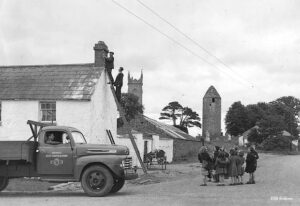
The Rural Electric Scheme was a massive project, the work would require over 1 million poles erected with 78,754km of wire used. It would eventually cost £36m equivalent to €1.5bn today.
The first phase of the scheme ended in 1965 and by then, over 300,000 homes were connected.
Post-development plans and extensions ran until 1978 when Blackvalley, Co Kerry received electricity. By 1975, 99% of Irish homes were connected to the same electricity grid.
The Rural Electrification Scheme employed up to 40 separate units of 50-100 workers, spread across 26,000 square miles. Many of these units were stationed in remote localities, and daily face-to-face communication was impossible. (9)
By 1975, 99% of Irish homes were connected to the same electricity grid.
Such a widely dispersed workforce presented the Rural Electrification Office (REO) with a challenge – how could it ensure fast and efficient communication among its staff?
The solution was suggested by the chief engineer in charge of the project William Roe who quickly recognised the vital importance of good communication across the nation to ensure the success of the scheme. He told the ESB:
“If a high standard of performance was to be achieved, the staff needed not alone to be well briefed and motivated from the start, but to be constantly refreshed with information on the progress of the scheme, advised of developments in all aspects of the work, sustained when difficulties arose and motivated to give of their best at all times” (10)
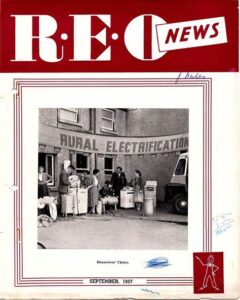
Roes’ solution was simple but innovative for the time he created a magazine for employees called REO news.
In December 1947, the first edition informed all those working on the scheme that:
“In order to keep the rural staff informed of the progress of the rural Electrification scheme it is intended to issue REO news monthly”. (11)
It covered a variety of topics, including personnel and transfers of staff; the delivery and distribution of materials; sales figures and league tables; area notes; engineer and progress reports; news items and articles of interest; as well as sports and social pages, letters to the editor, and photographs.
A focus on progress, staff league tables and sales figures all succeeded in instilling a sense of rivalry among the workers, inspiring them towards greater effort.
There were 168 issues of REO News published between December 1947 and November 1961, growing from 3 to over 20 pages. In 1953, the magazine was given a glossy cover, and included a number of black and white photographs, and by 1959, REO News was published in a fully printed format. From 1948, REO News also printed a special December issue. (11)
29 Saturday Oct 2022
Posted in Uncategorized
https://docs.google.com/document/d/1shNGzYzomOmInrFl2gYT-XJSutgGh7fKsa133QOdR3M/edit
1886 Address from Some of Bantry Inhabitant to the Earl of Bantry, on His return from Abroad. 1885, House of Commons, London, A Lash of Tim Healy’s , MP, Tongue, The Earl of Bantry Off Chasing Kangaroos in Australia instead of Sitting on Cork Lunacy Board
..
William Hedges Eyre, 4th Earl of Bantry (1801-1884), who until then lived at Macroom Castle, which he had inherited from his great-uncle, Robert Hedges Eyre. William (who became the 3rd Earl of Bantry in 1868) married Jane Herbert (1823-1898) of Muckross House, Killarney, Co. Kerry, and they had five daughters, Elizabeth, Olivia, Ina, Jane, and Mary, and an only son, William (1854-1891). In 1884 William became the 4th and last Earl of Bantry. 1885, House of Commons, London, A Lash of Tim Healy’s , MP, Tongue, The Earl of Bantry Off Chasing Kangaroos in Australia instead of Sitting on Cork Lunacy Board
In 1886, William married Rosamond Petre (d. 1942). They had no children and on William’s death in 1891 the title of the Earls of Bantry became extinct. The estate passed through his eldest sister, Lady Elizabeth (1847-1880), the wife of Egerton Leigh of High Leigh, Cheshire, England, to their son, Edward Leigh (1876-1920). He assumed the additional name of White in 1897.
At the time of the address in 1886 politics locally was fairly fraught with the Land War in the background multiple evictions. The cabal who signed the address would be the local conservative/loyalist section aligned to the Bantry Estate and its local agent Mr. Payne. He unsuccessfully ran for election as an MP and James Gilhooly of the Irish Parliament Party, many times jailed, was elected.
28 Friday Oct 2022
Posted in Uncategorized
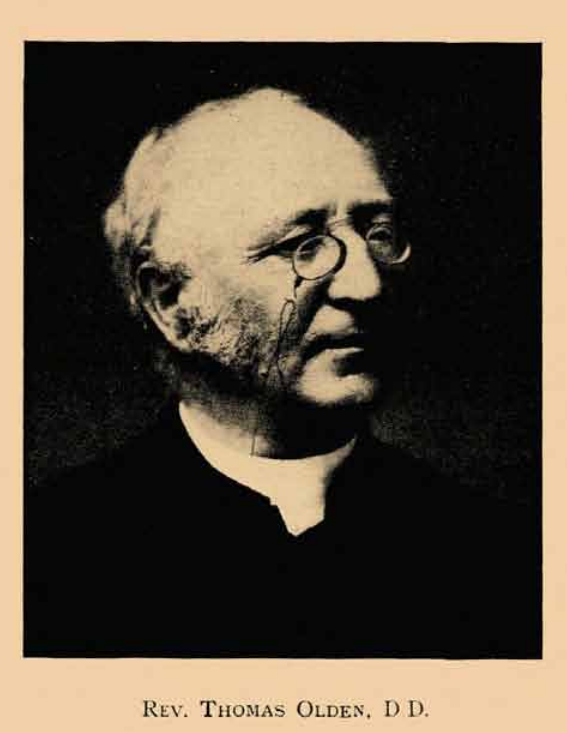
‘Tá lampa dFocal do mo mar Choraibh’ Thy words are a lamp unto my feet. Sacred to the memory of Thomas Olden, D.D., M.R.I.A.,, Historian of Church of Ireland, Gaelic Scholar, for thirty years Vicar of Ballyclough Parish, Co. Cork. Born 1st March, 1823. Died 29th October 1900. An eminent Irish Scholar, Antiquarian and Church Historian. He served God in his generation. Erected by a few friends.
From Colonel Grove White:
Click to access gw1_141-150.pdf
Thomas Olden, son of Robert Olden, of Cork. T.C.D.; B.A., 1846′ M.A. 1888; B.D. 1897; D.D. (Honoris Causa) 1898; M.R.I.A. 1870. Obtained honours in science, gold medal in logic and ethics, and first-class Div. Test. He was ordained deacon, 12th July, 1846, at Down, for the curacy of Cullen, Cork; and priest, 30th May, 1847, at Midleton, by * Laban signifies mud, dirt, or perhaps the meaning may be Leath (Lah), Half-La-bawn, half-bawn. REV. THOMAS OLDEN, D D. » I – • • BALLYCLOUGH (LAVAN ) PARISH AND CASTLE ’47 Bishop of Killaloe. Wa s curate of Tullilease, Cloyne, i860, and vicar of same, 27th August, i860 to 1868 (vide his important work in that parish). He married on 28th July, 1853, Sophie Elizabeth, dau. of the Rev. James Morton, V. Clonfert (Brady), and by her, who died 27th December, 1899, had issue—1. James Morton Ruxton Fitzherbert, b. 25th May, 1854, who was unfortunately drowned, together with his cousin, Robert Aidworth, when at Rossal College, in Lancashire, in 1868; 2. George Gustavus, ob. juv. ; 1st, Olivia; 2nd, Sophia Jane Louisa; and 3rd, Dorothea Emily Morton, wife of Rev. John Harding Cole, B.A., last R.V. of Leighmoney, Cork. Dr. Olden was a scholar of much distinction, a learned antiquarian, and well versed in the Irish language. He published many valuable writings, amongst them being—The Epistles and Hymn of St. Patrick (3rd ed. S.P.C.K., 1894); A History of the Church of Ireland (2nd ed., 1895); ZTre Scriptures in Ireland One Thousand Years Ago, a translation from the Wurtzburg Glosses; sixty-three “Lives of Distinguished Irishmen,” in the Dictionary of National Biography; numerous papers in the Proceedings of the Royal Irish Academy, the Royal Society ‘of Antiquaries, and the St. Paul’s Ecclesiological Society, etc., etc. In recognition of his merits, his University conferred upon him (Honoris Causa) the Degree of D.D. in 1898. Dr. Olden resigned Ballyclogh, owing to ill-health, in July, 1899, but retained his stipend and glebe; and the parish of Ballyclogh, with Dromdowney was added to Castlemagner union (q.v.) Dr. Olden died at his vicarage, Ballyclough, on the 29th of October, 1900, aged JJ years. Of him, the Bishop of the Diocese said, in his annual pastoral letter, January, 1901 :—”We were proud of him in this diocese. We felt it to be an honour that he was numbered amongst our Clergy. By his learning and ability he has done a great work for the Church. As an Irish scholar, there were not many that could surpass him. But it is as the historian of the Church of Ireland that he will ever be remembered. Although he was so learned, and so distinguished, hse was kind and gentle and unassuming in his manner, and was dearly loved by his family and his friends, and by the people amongst whom hie ministered for thirty-one years. A mural tablet has been erected to his memory in Ballyclough Church by his parishioners and friends.” The late Rev. Dr. Olden also wrote:— St. Patrick and his Mission, Dublin, 1894, an(* a now very scarce and valuable pamphlet: Some Notices of St. Colman of Cloyne, Bishop and Poet. Cork: T. Morgan, 1881. To the Journal of the Royal Society of Antiquaries he contributed a paper on ” The Voyage of St Brendan,” 4th quarter, 1891. To the Cork Historical and Archceological Journal he contributed a paper on “Kilmaclenine” in No. 39, July-Sept., 1898, besides some interesting notes to the article on St. Beretchert of Tullylease, that appeared in the No. for February, 1895, and he also contributed still more frequently to the Transactions of the Royal Irish Academy, Dublin, of which he was a ember. The wording of his mortuary tablet will be found later on in the portion of the present series relating to Ballyclough Church. . (Lewis, pub. 1837), under “Ballyclogh”
…..
 ..
..
….
1822, The Troubles of a Struggling Farmer, Mud Cabin, Heavy Taxes, Tithes, Cess, and Rack Rents, Wintry Wind, by Poet Mícheál Óg Ó Longáin (1766-1837), Caheragh, (lived later Glanmire), Co. Cork.
Life
1766–1837),poet and scribe; born to the Ó Longáin learned family in Carrignavar, Co. Cork.
1766-1837; b. Carrignavar, Co. Cork; son of Mícheál mac Peadair; orphaned young, his parents dying in 1770 and 1774; employed as cowherd; returned to education, 1784; assisted United Irishmen, 1797-98; wrote for Whiteboys, 1785; ‘Buachaillí Loch Garman [Boys of Wexford]’, 1798; m. 1800; worked as scribe, labourer, and teacher in Co. Cork; settled in north Kerry and East Limerick, 1802-07; wrote on poverty and oppression; employed as a teacher and scribe by Rev. John Murphy, Bishop of Cork, 1814; copied manuscripts, 1817-1820; sons Peadar and Pól, and Seosamh, also became scribes; died. on his son Pól’s 11-acre holding in eleven acres in Knockboy in Carrignavar.
[ top ]
Criticism
Breandán Ó Conchúir, Scríobhaithe Chorcaí 1700-1850 (1982)
It is likely that poet JJ Callanan sent quite a while in Caheragh through Bantry Doctor Dr. Thomas Burke in the 1810s who had associations in the area.
The Ó Longáin Family
… http://blogs.ucc.ie/wordpress/theriverside/2015/09/09/o-longain-family/
From the 18th century to the late 19th century the surname ‘Ó Longáin’ was synonymous with ‘scribes.’ Working as a scribe meant copying stories, poetry, histories and religious texts from manuscripts and printed works for patrons. Working as a scribe also involved translating texts from Irish to English. Frequently their patrons were from Cork merchant families, were Cork scholars themselves such as John Windele or from Cork clergy such as Bishop John Murphy. Working as a scribe had previously been a position of privilege but as the Gaelic order disintegrated following the Flight of the Earls in 1607, scribes found their living situation growing perilous and frequently lived in poverty. Micheál mac Peattair, his son Micheál Óg and his grandson Peadar were based in Carrignavar, Cork. Grandsons Pól and Seosamh were primarily based in Dublin. Seosamh transcribed manuscript facsimiles for publication on behalf of the Royal Irish Academy. The Ó Longáin preserved a tradition and ensured access to countless texts through their scribing endeavours.
https://langangeorge.wordpress.com/
Caheragh Poets:
https://wordpress.com/post/durrushistory.com/19786
Courtesy Father Patrick Hickey, Famine in west Cork.
Fuacht na scailpe-se, deathach is gaoth gheimhridh,
Cruas na leapsa-sa’s easpa braith lae’s oíche,
Muarcuid teascnna, deachmaithe’s glaoch cíosa,
Tug buartha cáthach mé, easpaitheach éagaoinaointeach.
The cold of the mud cabin, smoke adn wintry wind,
The hardness of this bed and the lack of a mantle day or night,
Heavy taxes, tithes, and rack-rent demands,
Have made me troubled, in want, and lamenting.
Campaign against ‘Irishry’ from the 17th Century Plantations of Co. Cork, Attempted Eradication of Irish Place names and Townland Names, Bandon,Mossgrove/Garranaghooney, Carrigaline, Hoddersfield/Moneyvrin, Ringabroe and Killacrow, Doneraile, Annsgrove/ Ballynmock, Among Others.
The undertakers in the plantation were exhorted to eradicate all traces of ‘Irishry’ in language, dress, religion, culture and local place names and impose English ones. In the listing of the Cork Magistracy from 1650 to 1922 there are very exotic names given to the Magistrates Castles and Demesnes. They would sit comfortable in the West County of England but sounds strange in the wilds of West or North Cork. In many ways the English West Country and Cork form a common economic zone with the short sea crossing.
The Cork Magistracy on one reading can be viewed akin to the US Military Forts in ‘Injun Country’ keeping the wild Irish in check. The policy of cultural subjudication has a long one in human history. The current example being ISIS and their systematic destruction of Christian and pre Islamic cultural manifestations in the Middle East.
In Ireland the area with the lowest level of survival of Gaelic placenames is Leinster where the Normans transformed the landscape from the 12th century. Surprisingly the highest level of survival in in Presbyterian Ulster.
Magistrates:
https://docs.google.com/document/d/1ZvT84JCKTIhMqqZjJsF_AUJLH8S820ksObykwOty3wg/edit
https://wordpress.com/post/durrushistory.com/18665
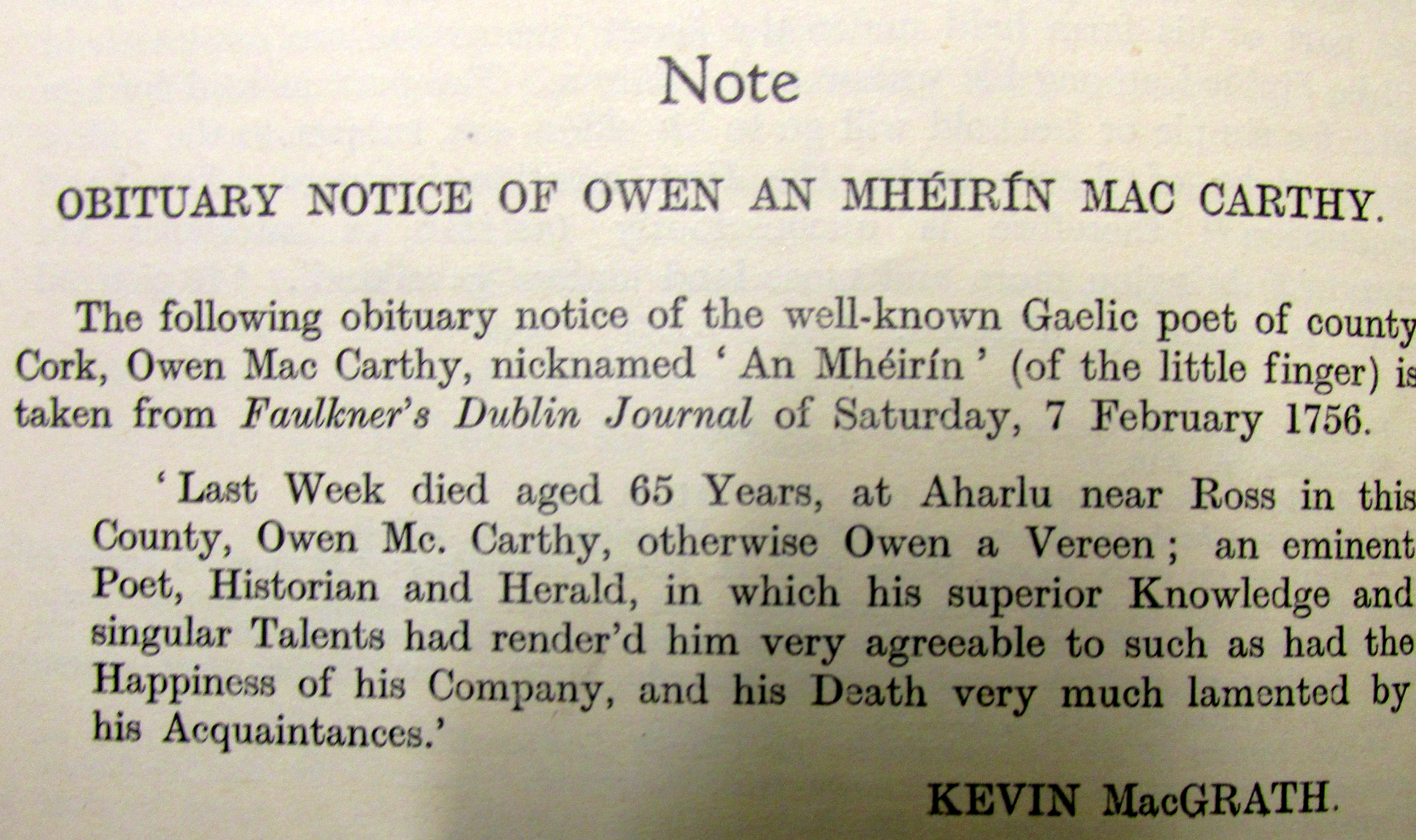
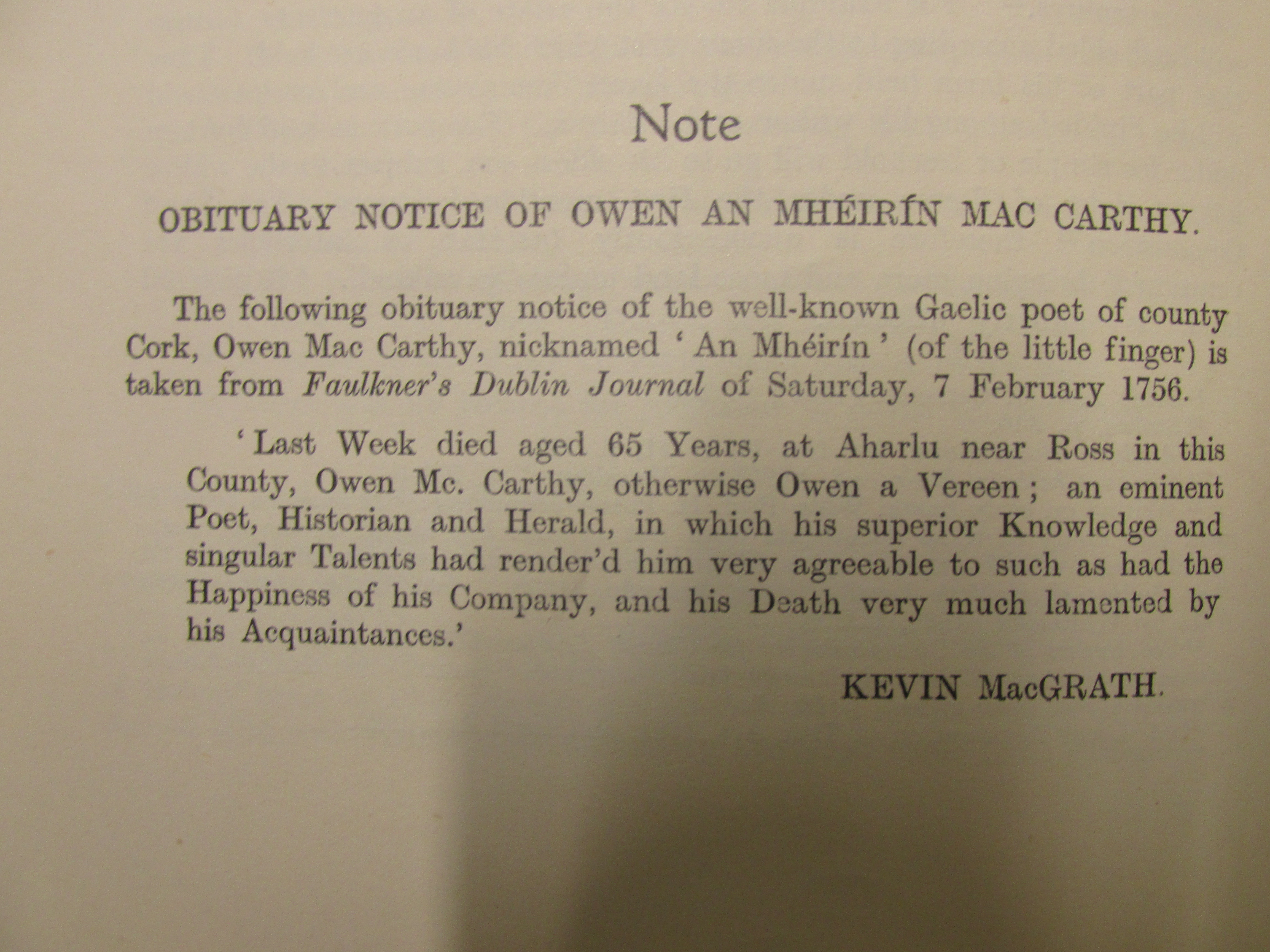
Obituary, Faulkner’s Dublin Journal, 7th February 1756, Owen An Mheirín (The Little finger) McCarthy, at Aharlu, near Ross, Co. Cork, Well Known Gaelic Poet, Historian and Herald, in which his Superior Knowledge and Singular Talents had rendered him very agreeable to such as had the Happiness of his Company.
26 Wednesday Oct 2022
Posted in Uncategorized
Snippets from the Life of a Busy Solicitor. P. J. O’Driscoll, Bandon
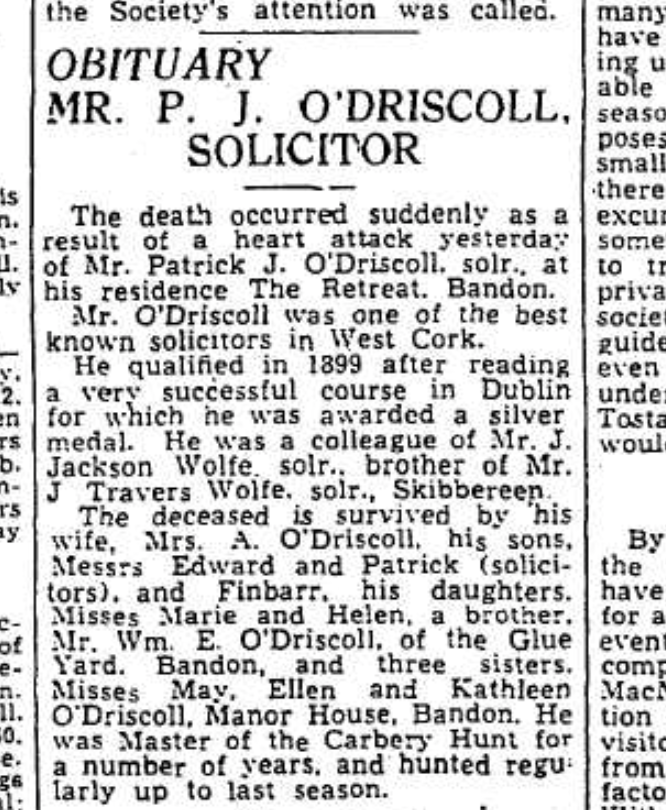
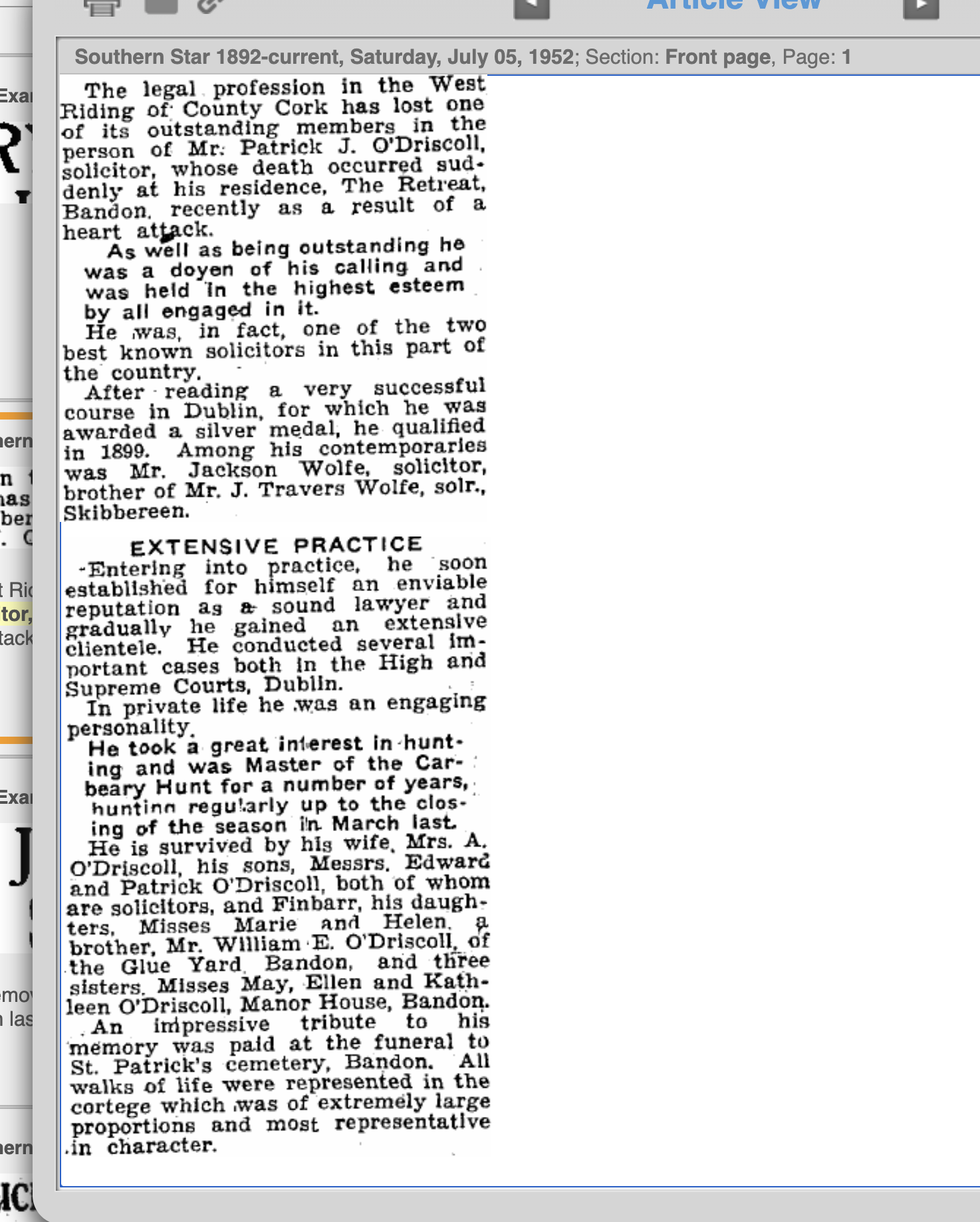
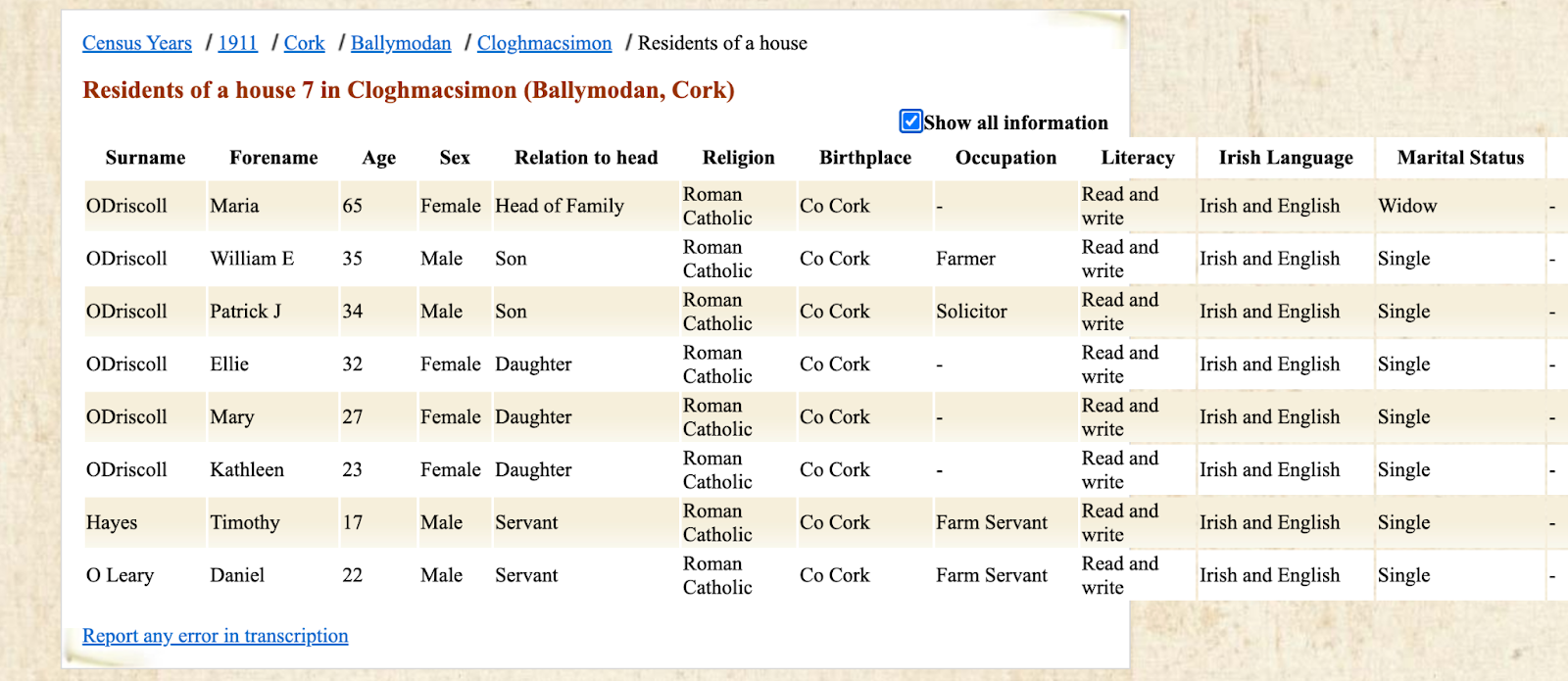
Patrick J. O’Driscoll Solicitor, Cloughmacsimon, Bandon. 1898, apprenticed to Patrick Joseph McCarthy From farming family Knockanreigh, 1901 has Irish. 1911 all the family and servant have Irish. South Main St. 1914 secretary Bandon Agricultural Show. District Council 1914 assentors to Peter Murphy, Cavendish Quay. Attending funeral 1933, Joseph Cullinane, Solicitor, Clonakilty. 1933 Dr. J. J.Hennessy, P.J.O’Driscoll, Solicitor, J. Neville, Solicitor settling difference between shareholders of Bandon Co-Op. 1932 involved in company trying to attract sugar beet factory to Bandon. Message of sympathy 1923, Mrs. Nora O’Leary nee McCarthy Courtmacsherry, Woodlands, Dunmanway. Wife of Jeremiah O’Leary Solicitor. Funeral of Maurice Healy (1859-1923), Bantry Born Solicitor, Funeral 1941, Mrs. Rachel Wolfe nee Wood, Snugboro, Skibbereen, aged 95, mother of Jasper Wolfe, Solicitor buried Aughadown,. Southern Star 25th January 1941 1944, 1947 Master Carbery Hunt. 1937 Judge Calnan Later High Commissioner, India Funeral 1930 Mrs. Margaret nee Crowley, widow of Joseph Calnan, mineral water manufacturer and stout bottler, Kilmoyle, Bandon Her brother late Joseph Crowley, Chief Commissioner, Somerset House, London . 1944 Master Carbery Hunt. Attending the funeral 1950 of brother in law Father William Holland, PP Ardfield. Father William Holland, Ardfield, Clonakilty, (1876-1950). 1949 History of West Cork. Included genealogies of Barrys, De Courceys, McCarthys, O’Crowleys, O’Driscolls, O’Heas, O’Hurleys, O’Mahonys, O’Sullivans.

Shebeen Dances. 1936 Solicitor Jasper Wolfe Attacks Pseudo-Virtuous Acts of Parliament. Charge of A Breach of Dance Hall Acts by Denis McCarthy, Bookmaker, Kilcrohane of having a Dance in His House. Dismissed by Justice.
https://wordpress.com/post/durrushistory.com/40513
1928. Busy Bees Barred at Crookhaven But they Buzz Boisterously at Skibbereen Court. Jurisprudence of Bees in Crookhaven, Bees are Animals. Bees when Burned Evaporate. Music Hath Charms to Soothe The Savage Bee. You Can’t Bring The IRA Now!’ A Swarm of Bees in May is Worth a Load of Hay, in June A Silver Spoon, July not Worth a Butterfly.
Apart From the quarrelling neighbours the solicitors were Jasper Wolfe, still alive in West Cork folklore for his wit. One time Crown Prosecutor for West Cork later Independent TD and President of the incorporated Law Society.
The Other solicitor Thomas Healy, state solicitor for West Cork
1884, 1917 Jasper Travers Wolfe Solicitor, Crown Solicitor, TD “Norton, Skibbereen, 1st place Law Society Final Exam, Director Skibbereen Eagle member Governing Body, UCC. subscriber Zenith Marine Disaster, Baltimore, 1895. 1895 Funeral and wreath of Bantry Solicitor Daniel O’Donovan aged 26. Native Skibbereen:Returning officer west Cork constituency election agent James Gilhooley MP. 1906 consortium Richard Wheeler Doherty, Solicitor, Bandon, John Walsh, businessman, director Allmans Distillery, Bandon, Hugo Flinn, Fish buyer, Cork, Jasper Travers Woulfe, solicitor, Skibbereen, took over Skibbereen Eagle on death of previous owner. 1909 attending the funeral of Dr. William Jennings, J.P. 1914 RDC election nominated by Parish Priest Fr..Michael O’Callaghan. 1935 funeral of Dr.Edward Shipsey, Schull. 1937 attending Ned Roycroft, funeral. Roycroft had nominated him and supported him as TD,
https://wordpress.com/post/durrushistory.com/39617
1952, Enormous Funeral, Skibbereen Closes Down, of Jasper Travers Wolfe, Born 1872, Solicitor, Crown Prosecutor West Cork, Three Times Elected TD, ‘He Had all of Munster as His Client’, First Corkman to be President Incorporated Law Society.
The Wolfes are probably part of the migration of English Protestants mainly from the West County to the Bandon area from the 1590s. Ironically many were no conformist. In time many of these families broke into three separate segments: Church of Ireland, Catholic and Methodist. From church and other records it is likely that the Wolfes migrated westward from Bandon to the Skibbereen area and to the Mizen from the late 17th, early 18th century.
Letitia Camier nee Kingston who with her late husband Tommy Camier runs the Gotnagrough Folk Museum outside Ballydehob has the Wolfe Genealogies. Included is Danno Mahony, Dereenlomane, World Wrestling Champion a Wolfe.
James Gilhooley (1847-1916), Fenian 1867, Irish Parliamentary Party MP, West Cork, Member ‘Bantry Band’, children at Four Mile Water (Durrus) National School. In later years his election agent was Jasper Woulfe, Solicitor, Crown Prosecutor and later TD, Skibbereen.
1813-1879,1835, 1847 Timothy McCarthy Downing “Apprenticed to F.H. Downing, Kenmare. Solicitor in Skibbeeen 1836. , MP. His parents were Eugene and Nellie. Eugene was from Kenmare and Nellie hailed from Kilfadamore ? Back in 1876 Timothy proposed to change the name of Skibbereen to Illenmore or Illentown, which was voted down. ” Skibbereen 1847 distress meeting. as Clover Hill. Addressed meeting 1848 in Skibbereen to celebrate Liberation of William Smith O’Brien. Seeking equality of endowment in Catholic education Prospect House 1859. Rental income from his estates £2,000. From around Kenmare and brother of Roger Downing, Merchant, Bantry also active in Repeal Told O’Donovan Ross he was a ’48’ man he had a cherished possession a green cap the 48 men had when they were on the run and he would have been the first to handle a pike if he thought it would be of any use but not with England’s Army and Navy.. “Downing McCarthy, (M.P. for Co. Cork) ; second son of Eugene Downing, Esq, of Kenmare, co. Kerry b. 1814 ; m. 1837. Is a J.P. and D.L. of co. Cork. First elected, 1868. Res.—Prospect House, Skibbereen, co. Cork; Reform Club, S. W.
1942 Patrick Walsh O’ Donovan, Solicitor, Clonakilty aged 74, Funeral. Came of Old Stock. Taught by Master Madden, at The Mountain, Ardfield, who also taught Michael Collins, Sam Maguire. Apprenticed to Henry T. Wright, Crown Solicitor whose Practice he Acquired. Admitted a Solicitor 1891. President West Cork Bar Association. 1903 One of the 3 Founders of Clonakilty Agricultural Society, Honorary Treasurer of Carbery Hunt and Race Committee. Tourism Pioneer. Built Inchydoney Hotel 1932. The Wright Brothers of Lawyers , Clonakilty
24 Monday Oct 2022
Posted in Uncategorized
The basic function of a placename is to establish identity and to assist communications. Placenames are a valuable part of our cultural inheritance.
The history of placenames in the Ordnance Survey began in November 1824 when the first survey of Ireland by the British Ordnance Survey commenced. The survey was at a scale of 6 inches to one mile.
At that time, local taxes were based on the Valuation of Townland units. Detailed mapping of townlands was required to make the tax system more equitable. There are over 51,000 townlands in the Republic of Ireland and each one is named. In this extract from the 6 inch plan Donegal 004-01, the townlands are outlined in red.

Special instructions, concerning the treatment of Placenames, were issued by the officer in charge of the survey Lt. Col. Thomas Colby.
This data was recorded in Namebooks which are now stored in the National Archive.
From 1830, Irish civilians were employed by the survey to collect and examine the evidence for the purpose of deciding a suitable English language spelling for each name which had not already an accepted standardised English orthographic form.
Generally speaking, the spelling in English of the names of towns and of some physical features had already been standardized. Most of the work still to be done was related to the numerous townlands [over 51,000][/over].
The vast majority of the names originated in the Irish language and the standardised forms were to be anglicisations.
There are many examples, here are a few of the more common ones:
Baile_________ became Bally__________,
Cill___________ became Kil____________,
Dún_________ became Dun___________ or Down__________. etc.,
The most famous of the researchers was John O Donovan from Kilkenny. Others involved were Eugene Curry from Clare and Thomas O Connor from Monaghan. The rise of Nationalism in the 1900’s led to renewed interest in the Irish language. The Gaelic League published a book in 1905,written by Seosamh Laoide. The book was called Post-Sheanchas and it gave the Irish language form of the names of the Post Offices in Ireland.
Around the same time Dublin Corporation began erecting bilingual street nameplates.
In 1946 An Coimisiún Logainmneacha was established.
The Placenames Branch of the Ordnance Survey was established with the purpose of researching the placenames of Ireland in order to provide authoritative Irish language forms of those names for both official use and for use by the general public. The research was focused on the names of the administrative units and the physical features.
Many sources were available when attempting to ascertain the original Irish forms of Placenames.
These sources include surviving native materials written in Irish and Latin between the 7th and 19th Centuries.
However, the majority of Irish placenames are found only in anglicised versions.
These include:
The Placenames branch provided Irish placename forms for a number of the Ordnance Survey’s maps. In the 1970’s , it was decided, as far as possible, that all the administrative names, townlands, baronies and electoral districts would be bilingual. Larger Geographical features were also to be bilingual.
The following extract from the OSi Act 2001 describes administrative units and how they evolved.

Extract from Sheet 3175-A showing the names of the E.D. and the townland bilingually.

Extract from 1:50,000 Discovery series showing the official English language version and official Irish language version of the mountain name.

Extract from Road Atlas of Ireland, 4th Edition, Page 34 showing the official English language version and official Irish language version of some town names.

Information extracted from Ordnance Survey In Ireland and The Placenames of Ireland in the Third Millennium.
These publications will help with any research.
There is also a Gazeteer in The Complete Road Atlas of Ireland.
22 Saturday Oct 2022
Posted in Uncategorized
https://docs.google.com/document/d/1tmq2VhqdtiGCz2F8LGo3QKUWI7feHwvx9d_4IK3ScHo/edit
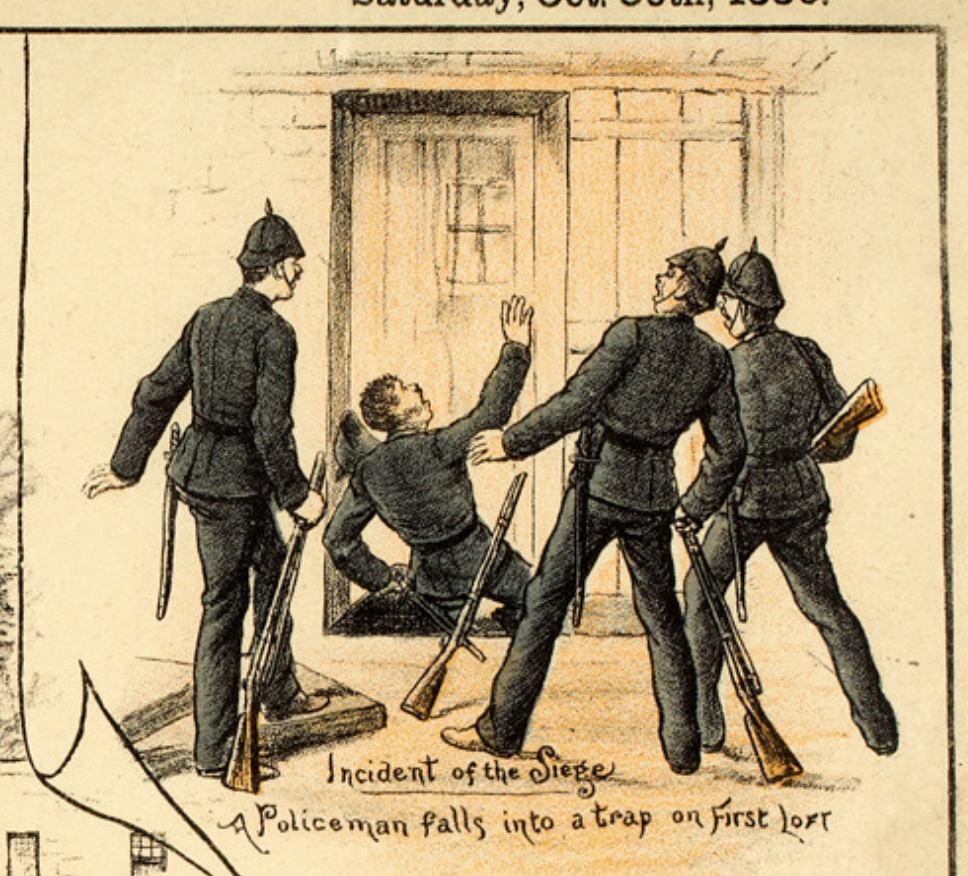
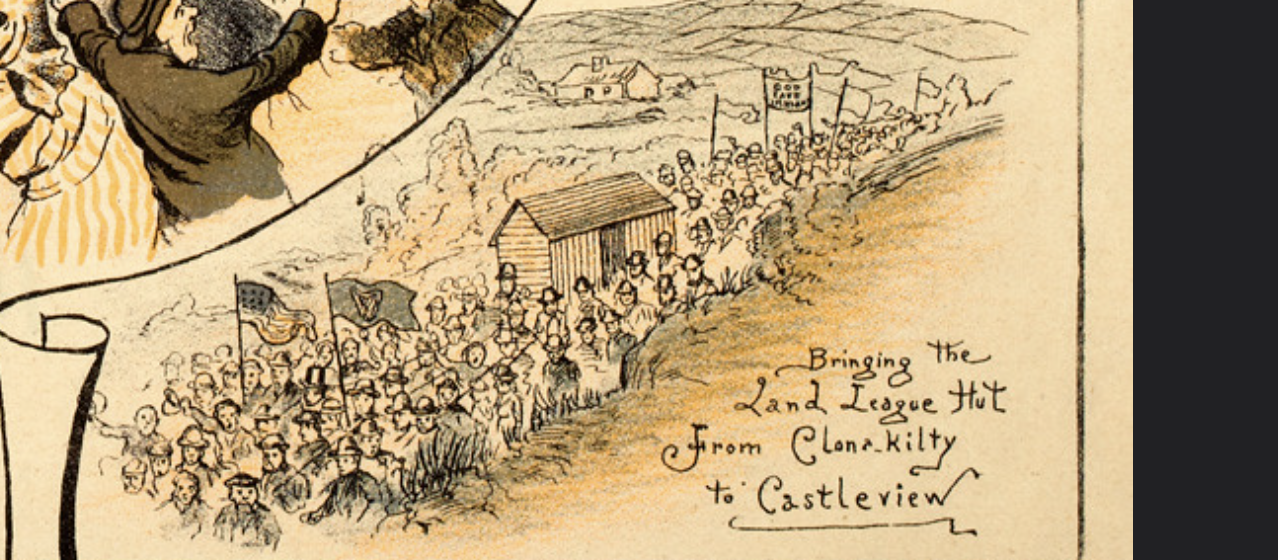
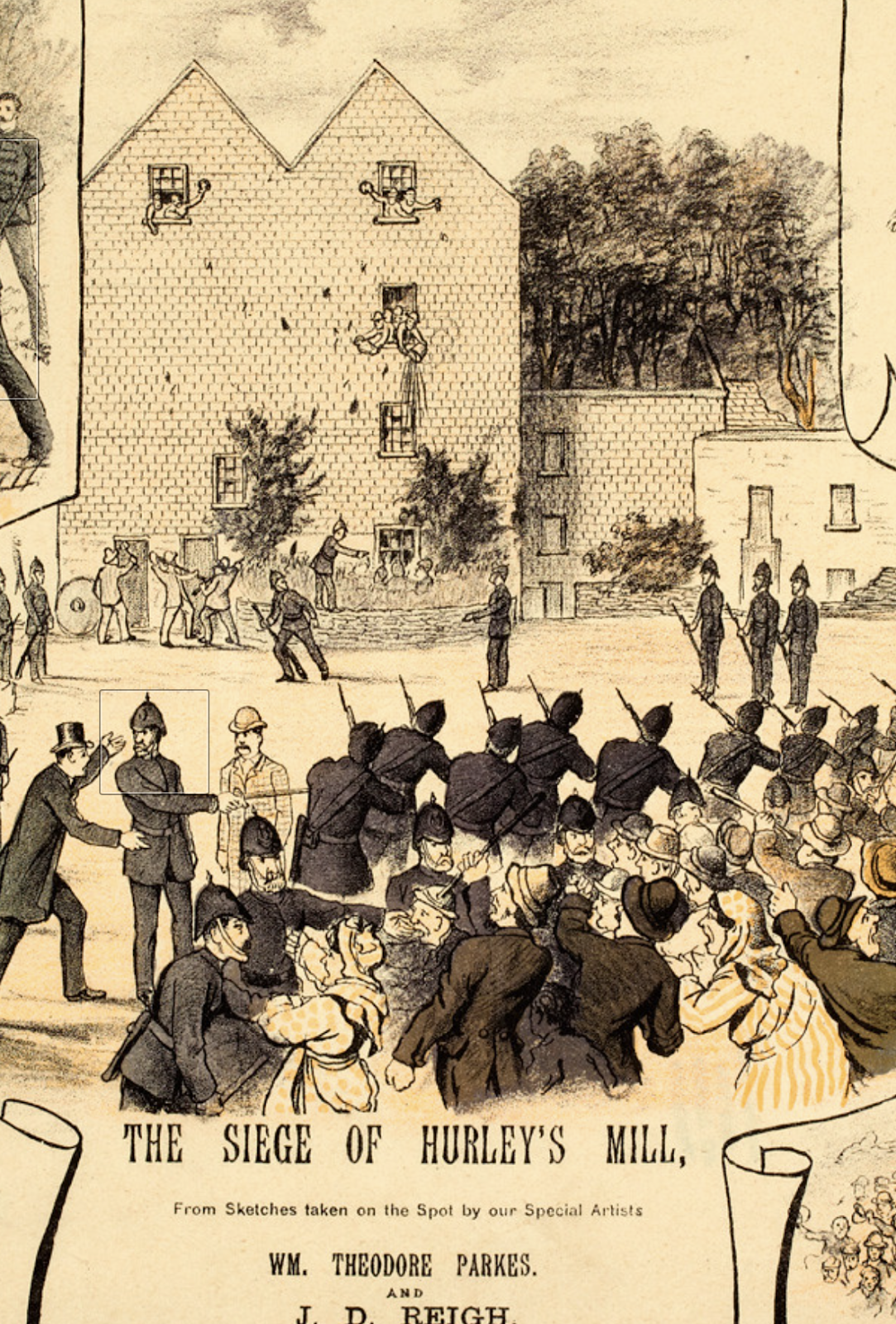
888. Eviction in Colour At Least 35 Redcoats (British Army ) Armed in Attendance
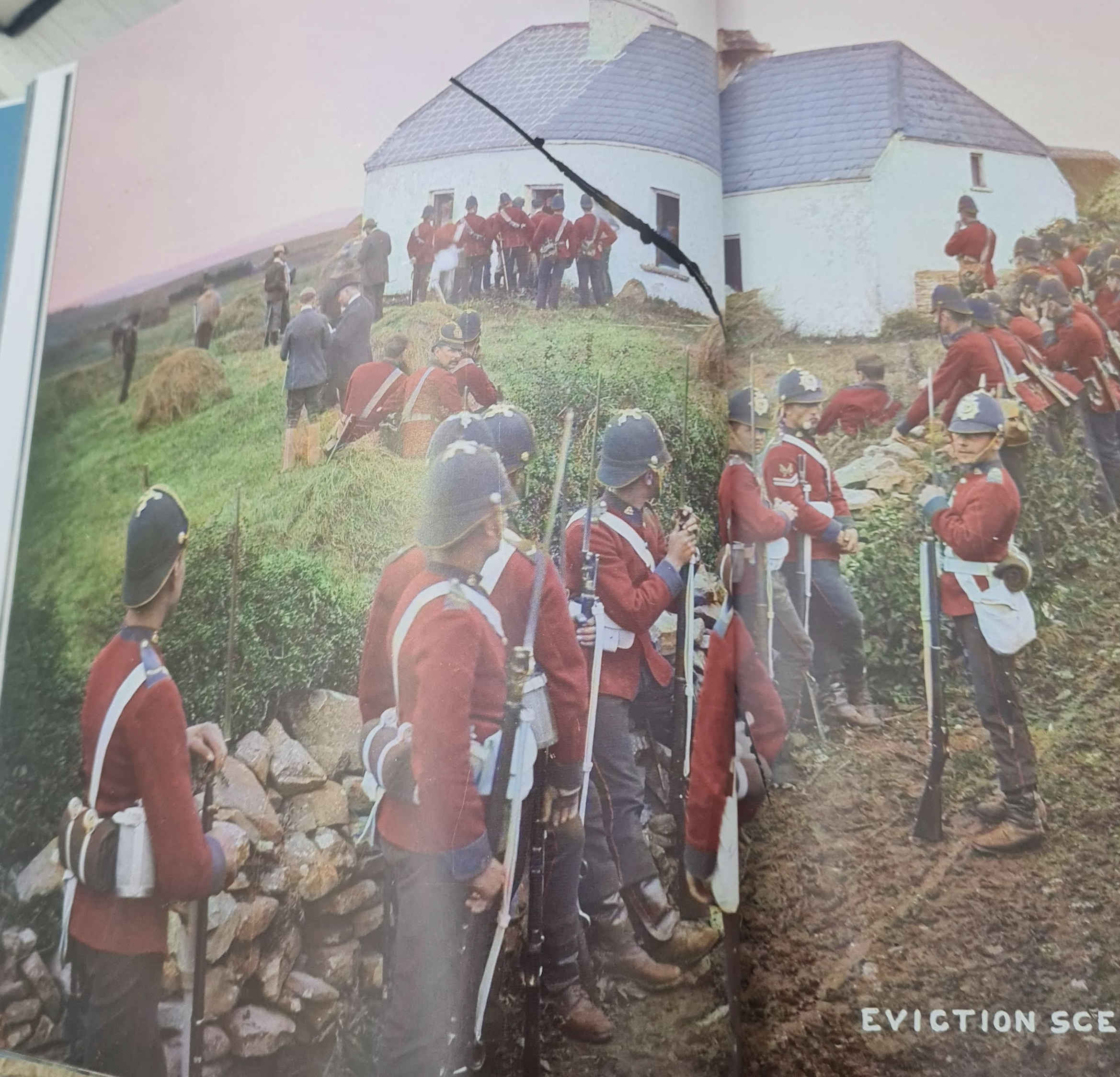

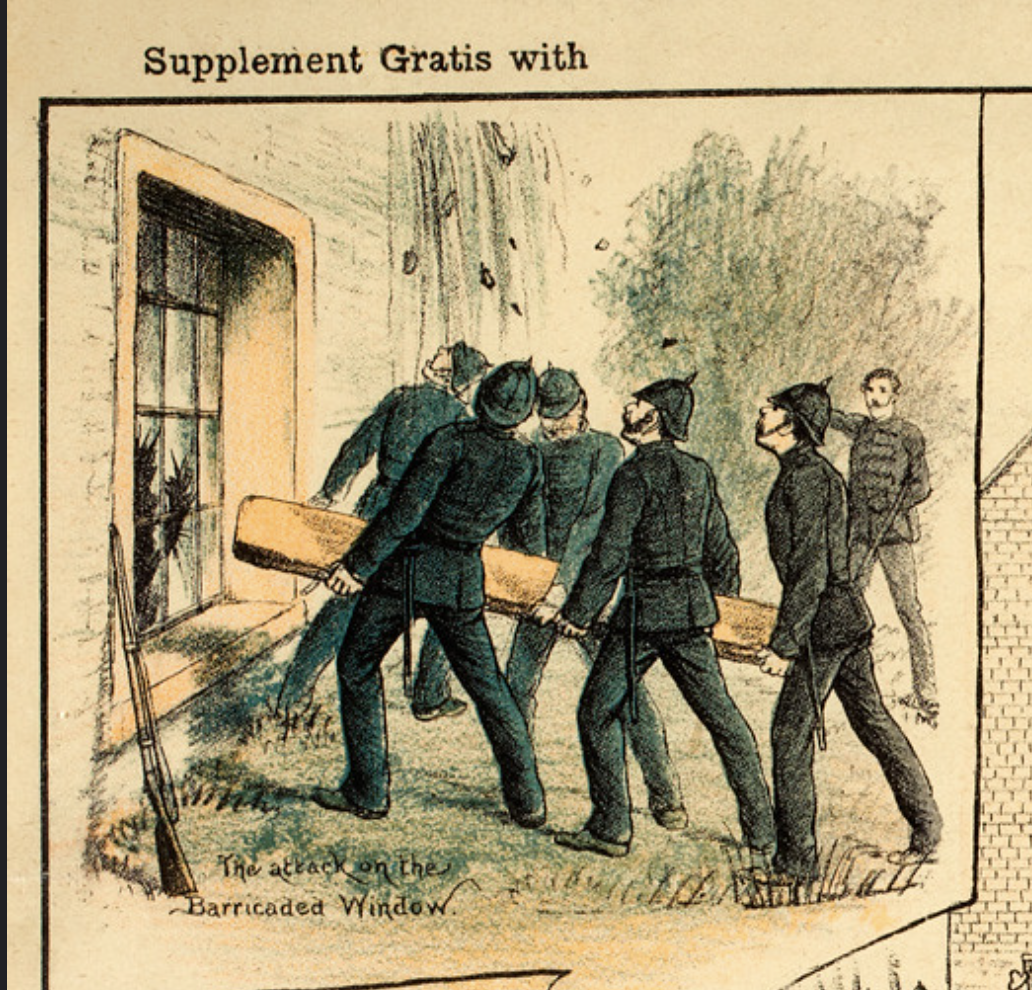
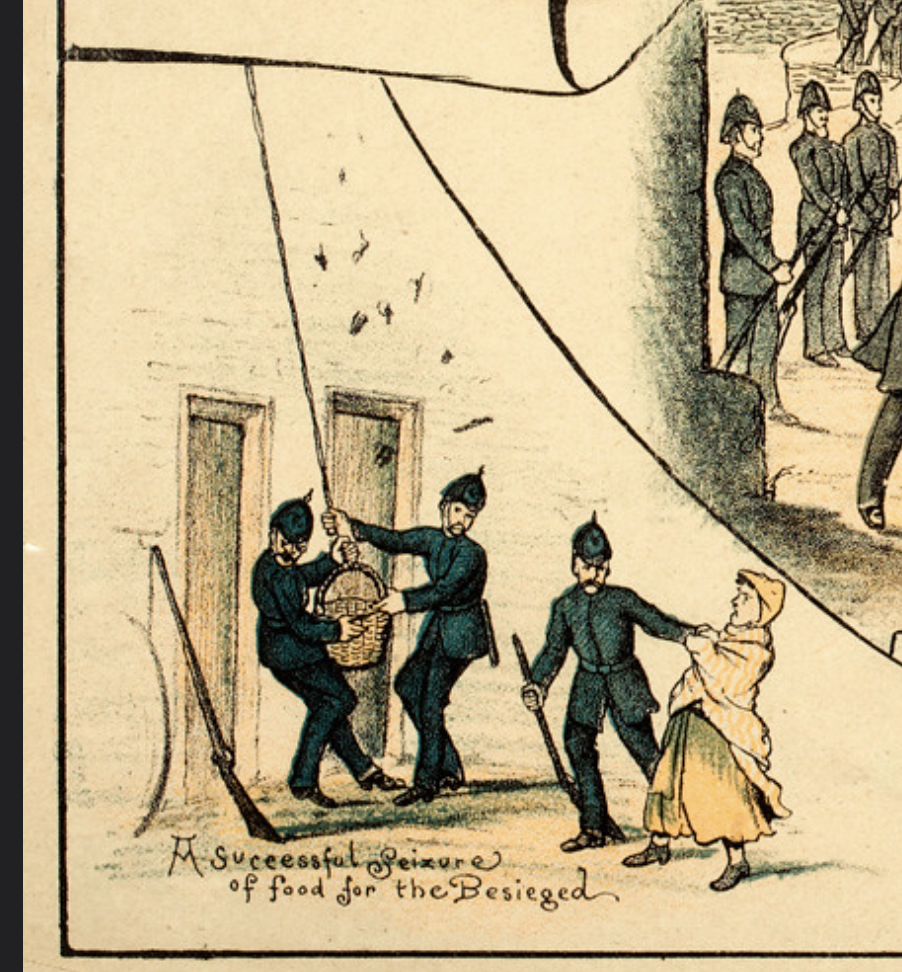
1886 Attempted Eviction and Siege at Tim Hurley’s Castle (Mill and Farm) , Castleview, Clonakilty. Landlord Francis Evans Bennett, (1824-1888), Cregan Manor, Rosscarbery.
The eviction eventually succeeded but was a pyrrhic victory as all the mill machinery had been moved and no one could be found to take the evicted farm.
To the present day relations of the extended Hurley thrive in various businesses in the locality.
..
..
Bantry, 1842. The town is most picturesquely situated, climbing up a wooded hill. with numbers of neat cottages here and there, an ugly church with an air of pretension, and a large grave Roman Catholic chapel the highest point of the place. The Main Street was as usual thronged with the squatting blue cloaks, carrying on their eager trade of butter-milk and green apples, and such cheap wares. With the exception of this street and the quay, with their whitewashed and slated houses, it is a town of cabins.
‘The wretchedness of some of them is quite curious: I tried to make a sketch of a row which lean against an old wall, and are built upon a rock that tumbles about in the oddest and most fantastic shapes, with a brawling waterfall dashing down a channel in the midst. These are, it appears, the beggars’ houses: anyone may build a lodge against this wall, rent-free; and such places were never seen! As for drawing them, it was in vain to try; one might as well make a sketch of a bundle of rags. An ordinary pigsty in England is really more comfortable. Most of them were not six feet long or five feet high, built of stones huddled together, a hole being left for the people to creep in at, a ruined thatch to keep out some little portion of the rain. The occupiers of these places sat at their doors in tolerable contentment, or the children came down and washed their feet in the water. I declare I believe a Hottentot kraal has more comforts in it: even to write of the place makes one unhappy, and the words move slow. But in the midst of all this misery there is an air of actual cheerfulness; and go but a few score yards off, and these wretched hovels lying together look really picturesque and pleasing’.
He prophesied the demise of the Landlord system in a way everyone involved was shackled and no winners.


 West Cork History