Sand Boat Landing Sand from Carbery Island, Dunmanus Bay, Sandboat Being Built By Jack Attridge, West Cork and Threshing Machines.


Sea Lodge:

https://www.google.ie/maps/place/Sea+Lodge+Bed+and+Breakfast/@51.5888057,-9.6016769,13z/data=!4m2!3m1!1s0x0000000000000000:0xb8ae982071583dfd

Sand Boat Landing Sand from Carbery Island, Dunmanus Bay, West Cork and Threshing Machines.

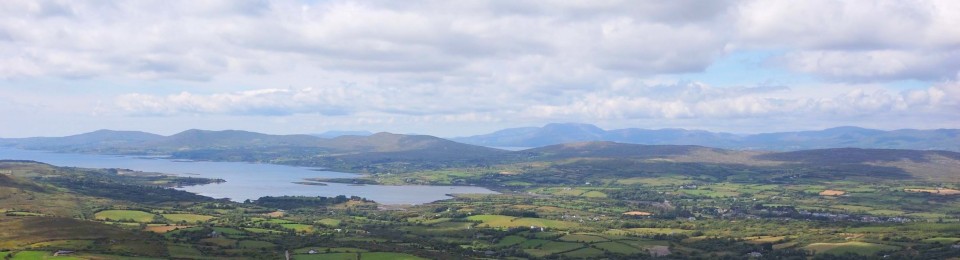
Before the advent of chemical fertilisers in the late 1950s the poor soils of West Cork benefited from sea coral and beach sand rom ares such as Barley Cove which added lime to the soil. In the early 20th century the Arundel family of Ahakista operated a large sand boat. The sand was dredged from a large bank in shallow waters off Carbery Island with a crew of 3-4. Typically 14-15 horse cart loads would be landed. The sand was landed at the Sea Lodge Pier.

Sand was landed at the Abbey in Bantry up to about 1960.

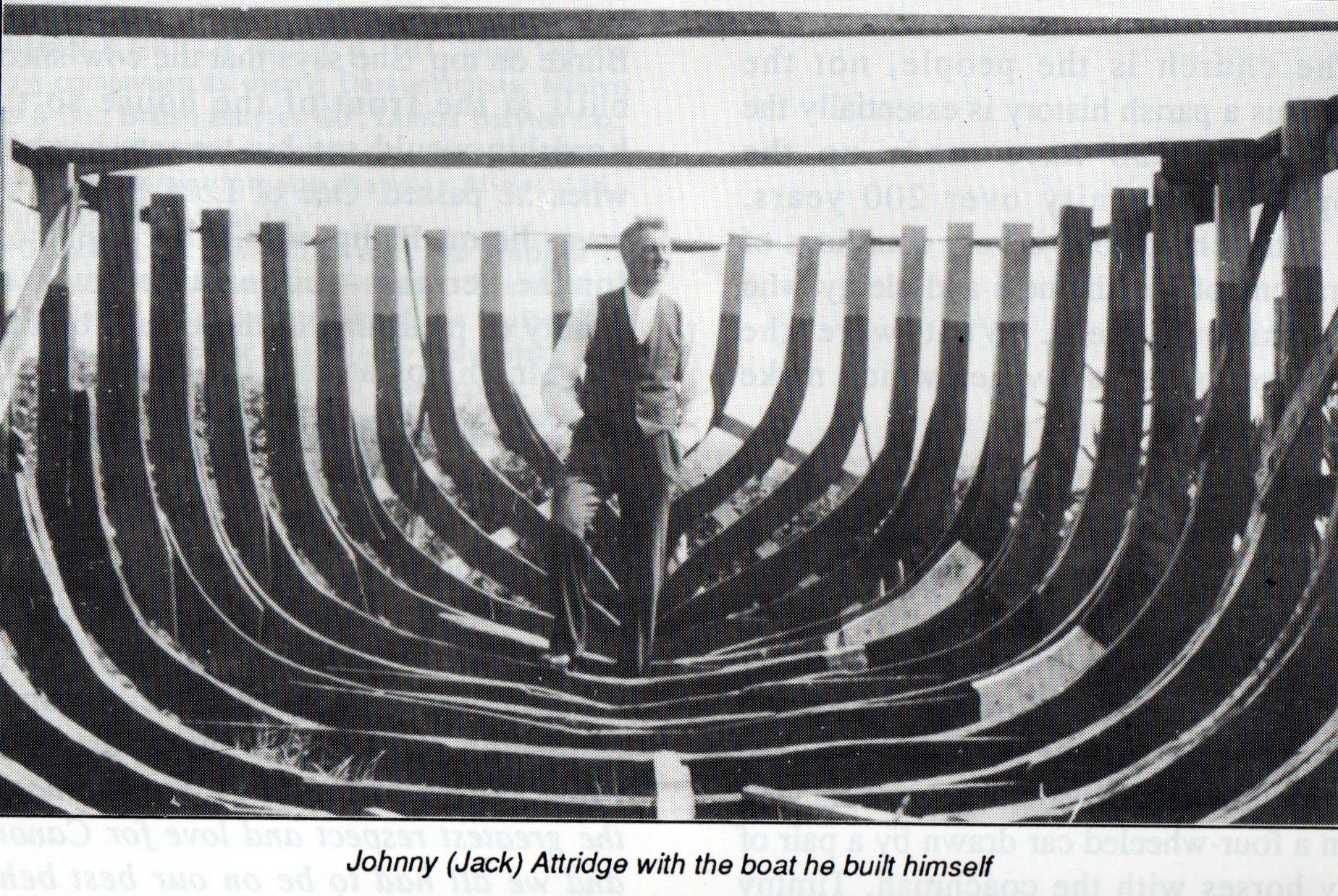
Jack Attridge, Gearhameen, Durrus, West Cork, c 1920-50 with Skeleton of his Boat on Dunmanus Bay and Home Made Threshing Machine.

Courtesy St. James History.

The boat was built with timbers felled from around the Grain Store at Friendly Cove across the bay. They were then floated across the bay to the Priest’s Gate, Gearhameen. The boat was probably a sand boat. The winch was installed but not the engine so it never went into service but would be representative of that type of craft.
1-Scan 1

1-Scan 1

Caesar Otway, Publisher Dublin Penny Journal, Skull to Bantry, 1822.

Lease of 1836, Reenvanagh, Whiddy Island, ‘Covenant to lay out by Lessee (Tobin) Ten Boat Loads (each containing thirty horse loads) of Best Coral Sea Sand Annually of Premises under a penalty of £10.

Among the threshing machines in the Bantry area was one operated by Peter O’Neill (Peter Neal), he was also a cattle dealer of Ballycomane. It was jointly owned by Jacky Cronin a local businessman but Peter worked it with his crew who included Eugene Crowley, Ahagouna, Jack Connolly, Gearhameenn, Bernie Kelly Ballycomane, later Sonny Hosford, Kealties. Like the Whellys of Mealagh the machine went to Waterford when the local threshing was done. The machine ended up rusting in Pete’s yard after the combine harvester came in.

Jeremiah Wholey, Pete Neil (Peter O’Neill, Ballycomane), Bringing the Iron Wheeled Threshing Machine from The Mealagh Valley, West Cork from the 12th October to West Waterford in the 1940s and others in the area, 1910 Threshing Photographs, Coomkeen, Durrus, Jack Attridge’s home built Threshing Machine. Gashes Threshing Machine of Tracton 1950s:

Tim Healy Governor General Irish Free State Census Return 1901


durrushistory's avatarWest Cork History

Tim Healy had a sardonic sense of humour as witnessed by his census return ‘religon’.

Surname Forename Townland/Street DED County Age Sex Birthplace Occupation Religion Literacy Irish Language Relation to Head of Household Marital Status Specified Illnesses

Healy Timothy Michael Mountjoy Square North Rotunda Dublin 45 M Co Cork Barrister Idolator Read and write Irish and English

View original post

Memoir of Willie Kingston (1885-1975), Skibbereen, Co. Cork, Solicitor and Historian, World War 1 in Skibbereen attendance at Dáil Courts.


durrushistory's avatarWest Cork History

Willie Kingston was born into a Methodist family in Skibbereen. He qualified as a solicitor and later worked in the office of his first cousin Jasper Woulfe :

(http://en.wikipedia.org/wiki/Jasper_Wolfe).

He describes WW1 and its effects on Skibbereen and attendance as a Solicitor at Dáil Courts. This memoir was published some years ago in the journal of the Skibbereen Historical Society. He describes his upbringing, the town and the effects locally of WW1. He refers to the huge prosperity the war caused locally and the positive effect on his own family finances. The troubles, are described, in particular the sense of panic that gripped Protestants in West Cork after the killings of firstly Mr. Fitzmaurice, Solicitor in Dunmanway and many other within a few days. He left Ireland at this period and went to South Africa. He later returned and resumed his legal career. He was a founder member of the…

View original post 42 more words

Early Irish History and Antiquities and the History of West Cork By Rev. W. O’Halloran 1916, O’Driscoll Genealogy.


durrushistory's avatarWest Cork History

From: Early Irish History and Antiquities and the History of West Cork By Rev. W. O’Halloran 1916, O’Driscoll Genealogy.

The O’Driscolls of West Cork
The O’Driscolls were not exterminated by the newcomers, and remained independent until the year 1232, when Cormac Goth, third son of McCarthy Mor, acquired dominion over the entire region. To the end of the sixteenth century they still possessed Baltimore, Sherkin and Cape Clear, also the adjoining lands, Kilcoe, Creagh, and Aghdown. Having received little quarter at the hands of Irish chiefs, it is no wonder they became loyal to the English crown.
An English title was bestowed on Fineen O’Driscoll for his loyalty, and he so conformed to English customs, as to take his lands by letter patent from Elizabeth.
The O’Driscolls were almost always engaged in petty warfare, smuggling, pirating, and raiding. It was the custom of the country at the time. During the…

View original post 706 more words

Early Irish History and Antiquities and the History of West Cork By Rev. W. O’Halloran 1916, O’Mahony Genealogy.


durrushistory's avatarWest Cork History

From: Early Irish History and Antiquities and the History of West Cork
By Rev. W. O’Halloran
1916

The O’Mahonys of West Cork

Dr. Smith says: ” These Mahowns derive their pedigree from Kean Mac Moyle More, who married Sarah, daughter to Brian Boru, by whom he had Mahown, the ancestor of all the sept. It is from this Kean the village of Iniskeen, in Carbery, has its name, and from this sept that Bandon is sometimes called Droghid Mahon. Mahon was the ancestor of the Mahonys, or O’Mahonys.”
The O’Mahonys, whose stronghold was in the neighbourhood of Bandon (Drohid Mahon), were the first to encroach on the territory of the O’Driscolls. This occurred long before the Anglo-Norman invasion. They possessed themselves of the western portion of Corca Laidhe called Ivahah, which comprised the parishes of Kilmoe, Schull, Durrus, Kilchrohane, Kilmacougue, and Caheragh. They had fourteen strongly built castles.
The Rosbrin…

View original post 217 more words

Maps of proposed roadworks and waterway improvements from Chief Secretary Papers 1818-1822 Cappoquin, Inchigeela, Granard, Kilorglin, Clodagh River, Kinsale, Kilmichael, Tramore Strand, Lough Derg.


durrushistory's avatarWest Cork History

These maps are taken from the papers of the Chief Secretary 1818-1823, Dublin castle a précis of which is now on line. They are drawn in a very attractive fashion very pleasing to the modern eye. It is unknown which of the proposed works went ahead.

+Maps of proposed road and warerways improvements from Chiel Secretary papers, Dublin Castle, 1819-1822

View original post

Letter 1807 from Rev. Fitzgerald Tisdall, Crookhaven, Co. Cork to Sir Arthur Wellesley (Duke of Wellington) re exchange of livings.


durrushistory's avatarWest Cork History

From University of Southhampton, archive.

Docref=WP1/179/90 Letter from the Reverend F.Tisdall to Major General Sir Arthur Wellesley, informing him of Mr. Canning’s support for his request for an exchange of livings, 21 December 1807

Letter from the Reverend Fitzgerald Tisdall, Dublin, to Major General Sir Arthur Wellesley: as his professional duty requires him to lose no time in reaching his residence at Crookhaven, in the extremity of County Cork, almost two hundred miles from Dublin, on or before the following Thursday [24 December 1807], and he fears he would not be able to procure an audience with Wellesley that day, he has adopted this mode of addressing him, and will state his reason for so doing.

A few days previously, he had occasion to wait on Mr. Secretary Canning (to whom he has the honour of being closely related) in London, in order to negotiate, through his interference, an exchange…

View original post 183 more words