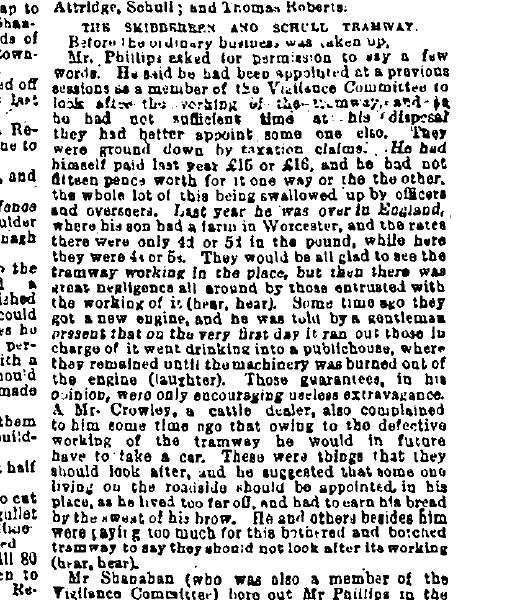
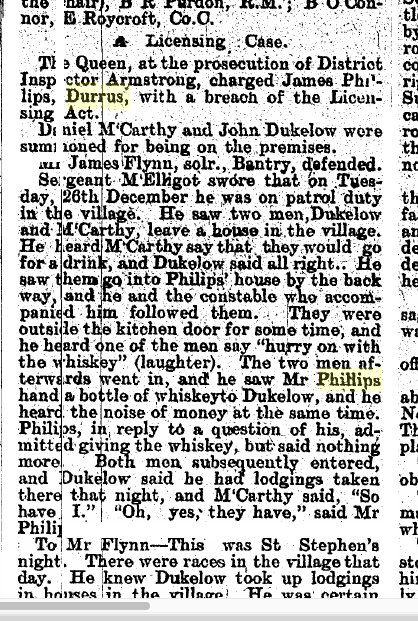
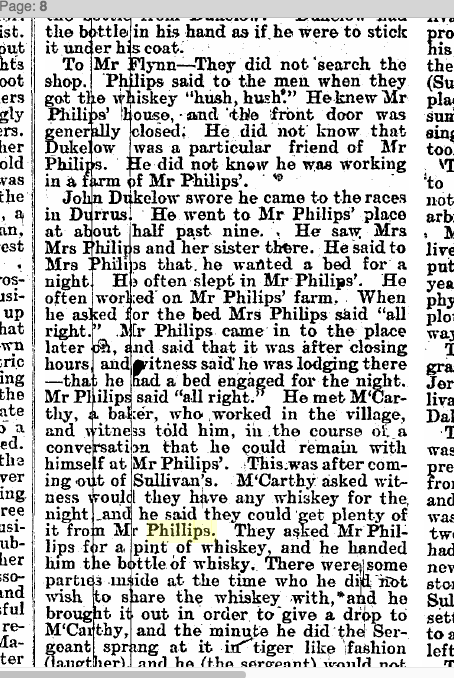
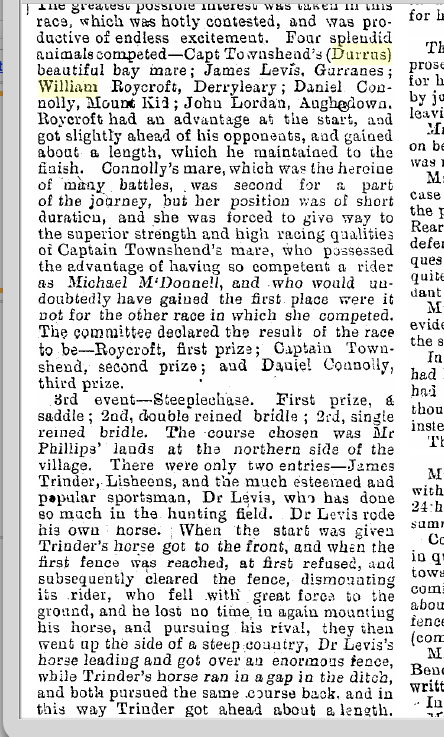
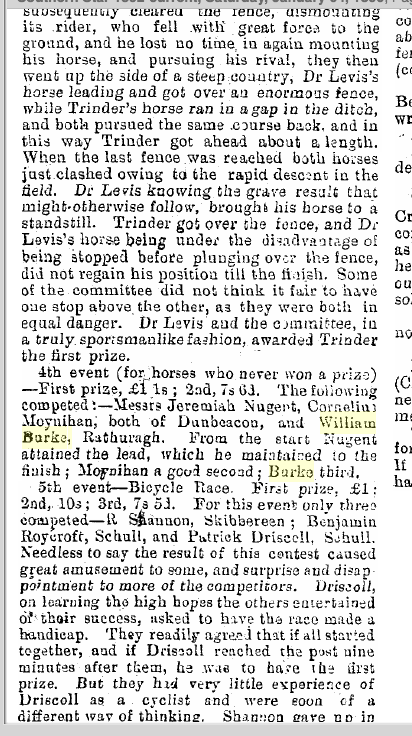
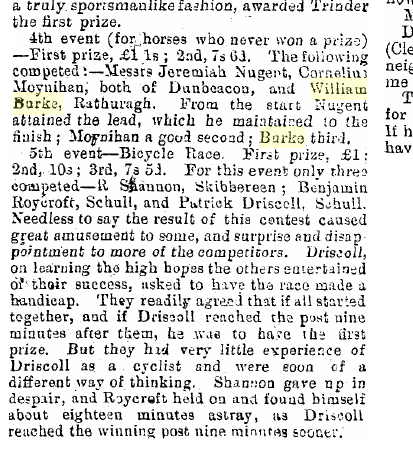
1889. Shennanigans on the Skibbereeen to Schull Tramway. Alleged that on First Day of New Engine Operatives Went on the Tear, Leaving the Machinery to Burn out on the Engine. A Bottle of Whiskey at Phillips Pub on Durrus Race Day.
1889. Shennanigans on the Skibbereeen to Schull Tramway. Alleged that on First Day of New Engine Operatives Went on the Tear, Leaving the Machinery to Burn out on the Engine. A Bottle of Whiskey at Phillips Pub on Durrus Race Day.
James Phillips referred to had a substantial farm in Durrus, ran a coaching operation and the Bandon Arms Hotel. He was a pretty forceful character and active electorally as a Conservative Candidate. His grand daughter Kathleen Dukelow donated the ground for the Durrus Community Centre and a very substantial sum to build it about 15 years ago. The Philips probably originate in Bandon and came to Durrus when Lord Bandon recovered the estate ro the Evansons.
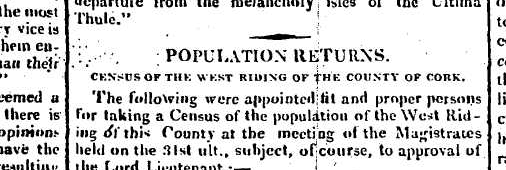
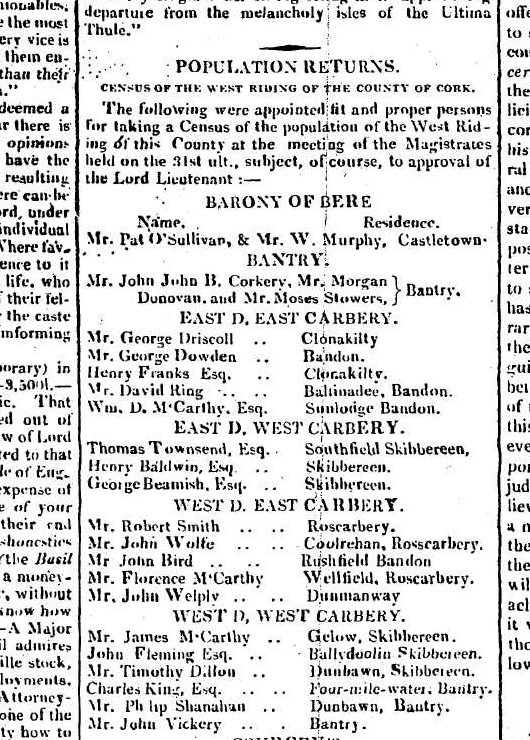
Shahanan is Phil Shanahan, Dunbeacon, either he or his father was in charge of gatherng the 1831 census for the West Division of West Cabery. Family intermared to Tobins and O’Mahonys of Kilcrohane. Probably descend partly from a Catholic branch of the Townsend family.
The tramline features a lot in local lore along the lines of Percy French’s West Clare Railway.
1831 Persons Appointed Fit and Proper Persons to Taking a Census, Barones Bere, Bantry, East Division, East Carbery, East Division, West Carbery, West Division, East Carbey, East Division, West Carbery, Courseys, Ibane and Barryroe, Kilmmeaky (Bandon)
Including Phil Shanahan (1796-1892), Dunbeacon, a very prominent local family:
He married Maria Moss of Durrus. One of her sisters married Jeremiah O’Mahony of prominent Kilcrohane family, he later became a Magistrate
Dunbeacon Graveyard:
6th March 1867 Mrs. Ann T.(ownsend) Shanahan Probably Dunbeacon Philip probably died 1892 aged 96 58 Grave: Erected by Philip Shanahan ot the memory of hs wife Ann T d 26th March 1867 aged 58 ” Philip Shanahan. was born Abt 1796; d.5 Aug 1892-Dunbeacon, County Cork, Ireland. Philip married Anne TOWNSEND on 14 Nov 1826 in East Schull, County Cork, Ireland . Anne was born about 1812. She died on 26 Mar 1867 in Dunbeacon. County Cork, Ireland. “
1892 Philip Shanahan Probably Dunbeacon Philip 1892 aged 96 96 Grave: Erected by Philip Shanahan ot the memory of is wife Ann T d 26th March 1867 aged 58
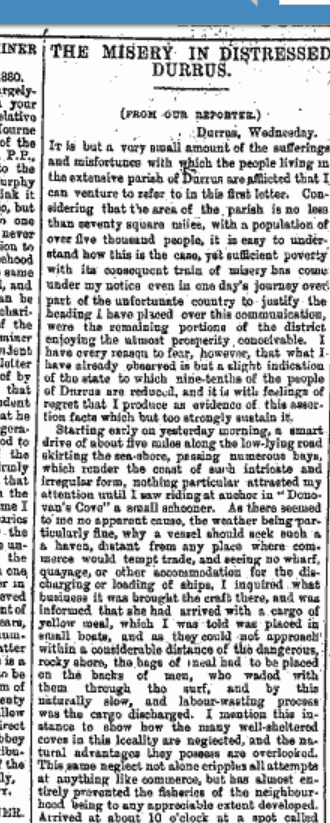
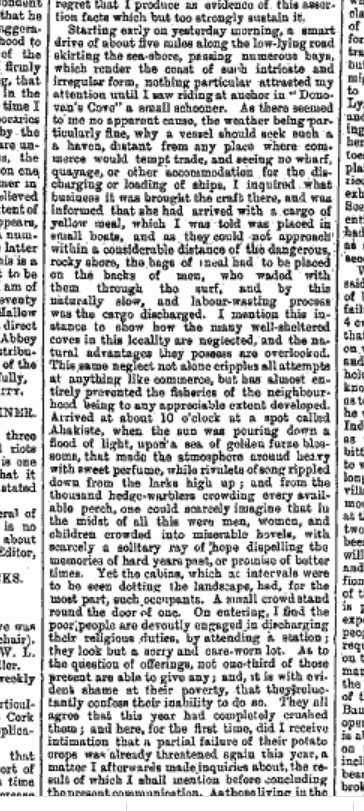
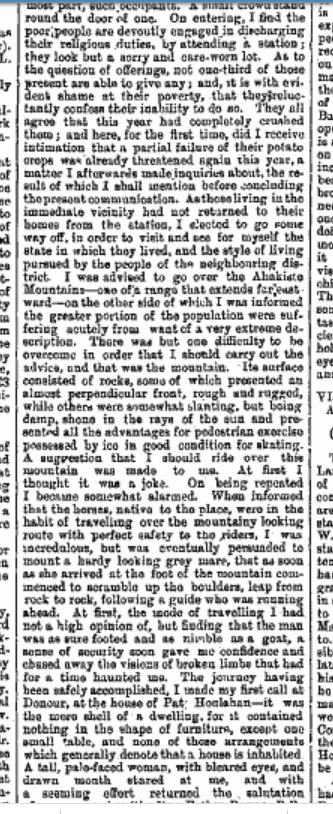
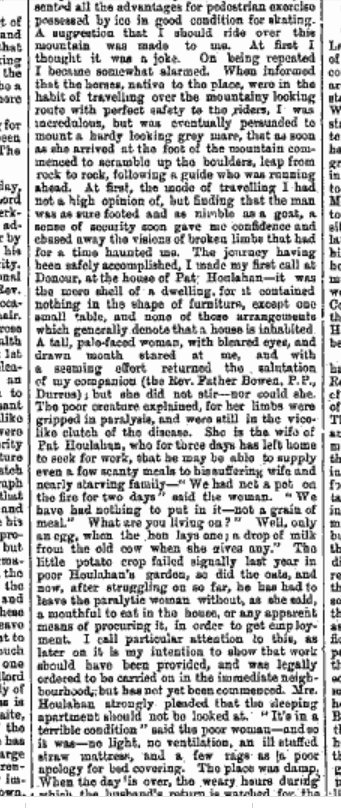
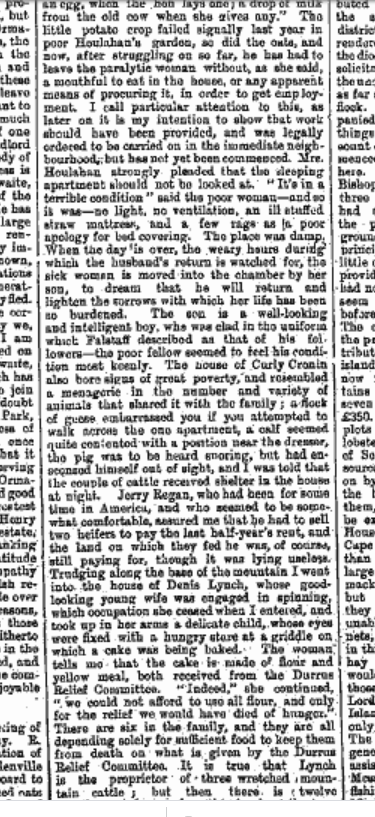
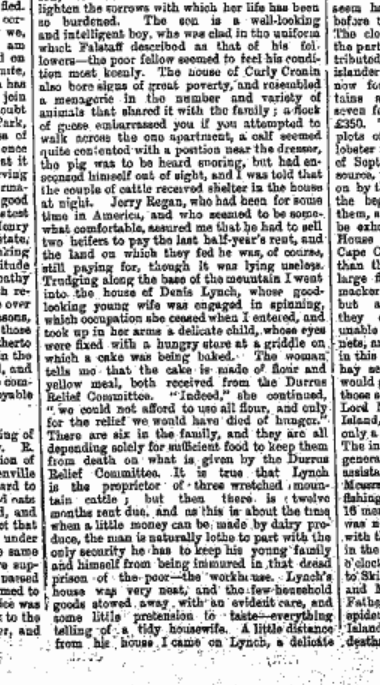
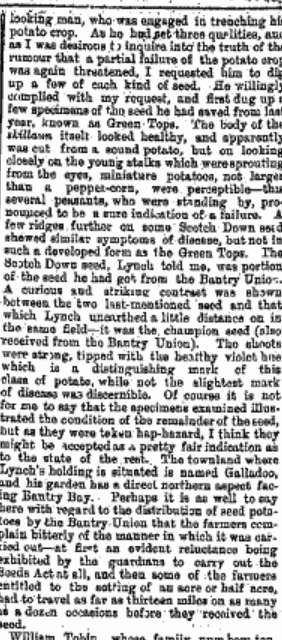
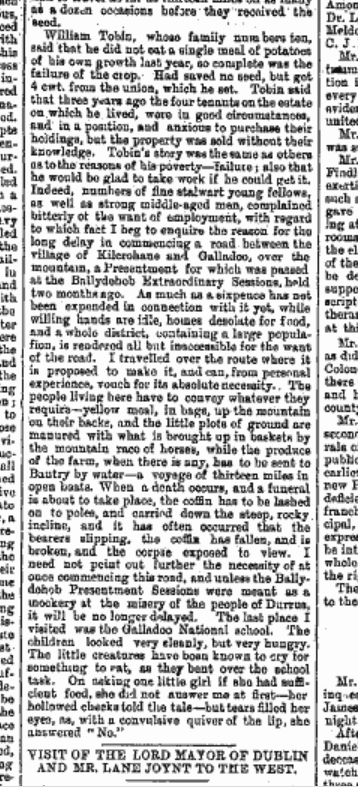
1880 The Misery in Distressed Durrus, Yellow Meal Arriving by Schooner to O’Donovans Cove, off loaded by men on their bare back through the surf. Hungry Children at Gouladoo Natinal School. Only a Third Able to Give an Offering at the Stations. When a Death Occurs the Corpse is Lashed onto Poles and Carried down Steep Slopes. Cattle overnighting in Houses.
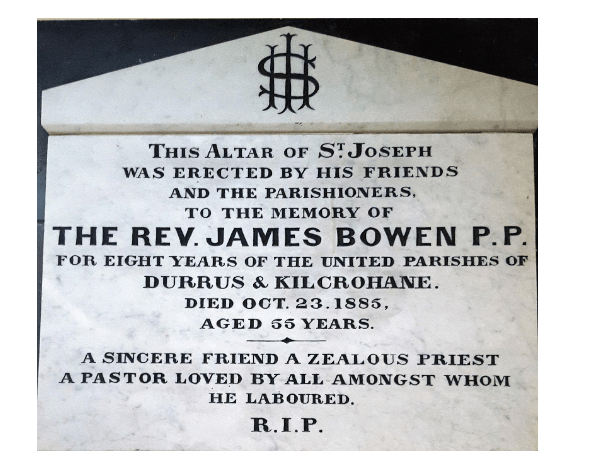
Rev James Bowen P.P. 5 July 1877-1885, there is a tablet in his memory in the church. An article in the Cor Examiner in April 1880 refers to him taking the reporter around the parish which was in widespread distress at the time. In 1880 lived at the former Evanson house at Ardogeena, Coolculaghta now occupied by Peter Gallagher. 1884 living at Blair’s cove. A branch of the Land League was set up in Durrus in January 1881 with Father Bowen in the chair. Also lived at Rawling’s house (Slated) Rossmore, Rawlings went bankrupt and later had a pub in Bantry and was a carman. Probate to brother William, farmer, Ballywilliam, Doneraile, £400.
A few comments. The presence of the schooner would suggest that the pier at Sea Lodge about 3km towards Durrus and the stores were build after this time probably by the Bandon Estate.
Intermittent distress and crop failures occured into the mid 1890s.
Thee is a referne to a woman spinning, there was a lot of spinning and weaving in the area from the mid 18th century.
The traditional West Cork farm house 2 storesy three windows upstairs on of each side of the door only come in from the late 1880s. Even prospereous farmers lived in thatched houses, the Ordnance Survey field books in the 1830 note the almost complete absence of slated roofs.
Surviving accounts of visitors into the early 1900s note even in prosperous farms livestock and poulty being in houses.
Mr. Regan has come back from America. It was common enough for people to spend a few years away and come back. Some of the Swantons from Ballydehob wee going back an forwad to New York in the 1790s. Young wmen often spent years working in Boston or New York and returned with enough to pick a spouse and he was then enabled to buy a fam or busisness.
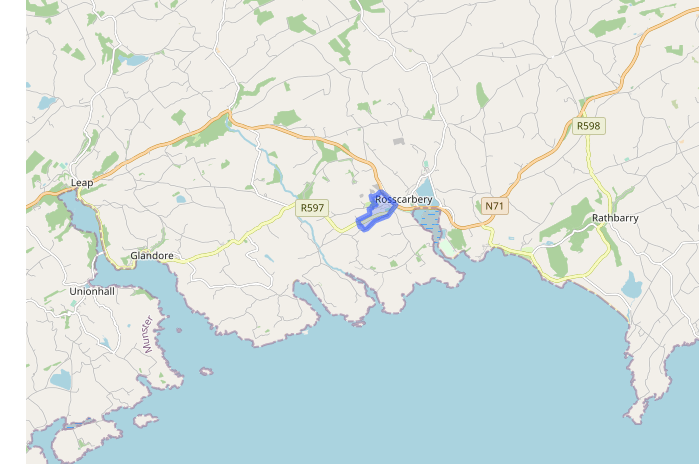
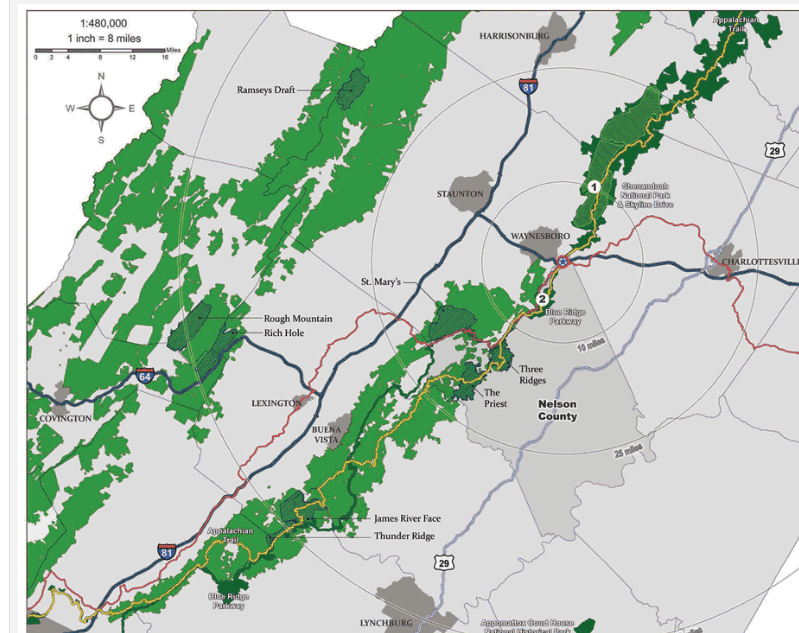
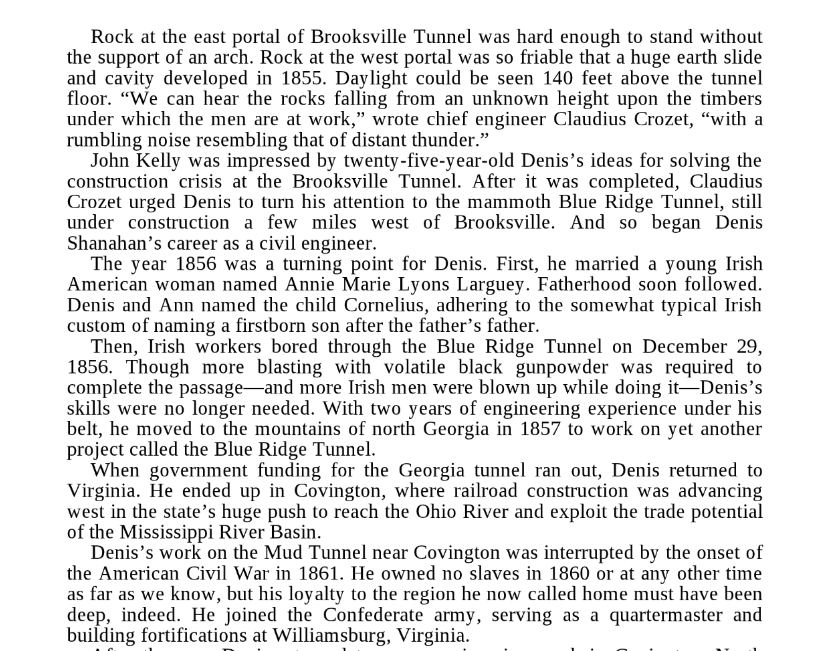
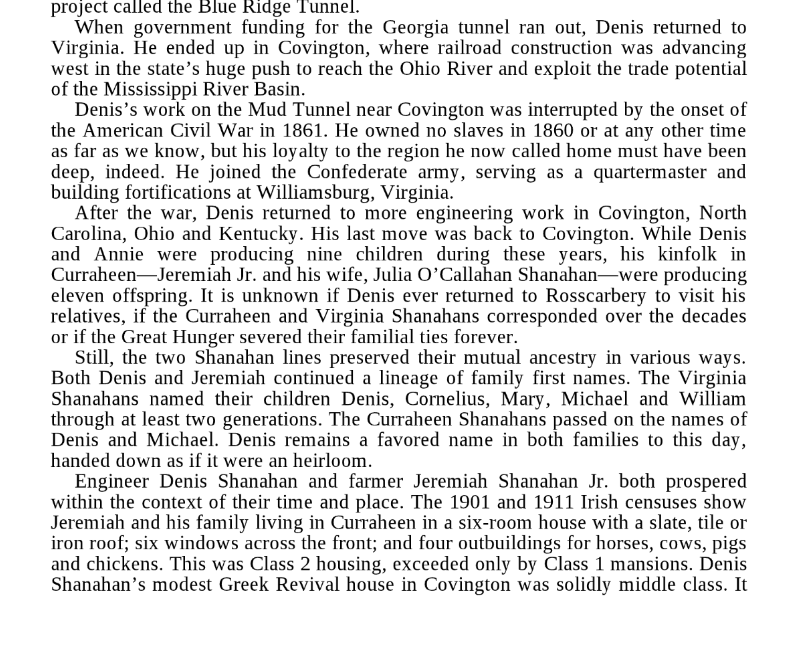
Denis Shanahan, Curaheen, Rosscarbery, Self Taught Engineer on Blue Ridge Tunnel, USA, 1850s and Other Major Projects
Denis Shanahan, a first generation Irish immigrant whose largely self-taught engineering skills brought him recognition as a keen problem solver during construction of the Blue Ridge Tunnel and other tunnels throughout the Albemarle County region.
The races still continue but on New Years Day and the course has changed to from the old creamery to Ballycomne. One of the last road raes in West cork.
Always a day of great reelry.
The former Bandon Arms Hotel owned by Dick Philips only opened on the day to preserve its licence. That licence was one of those which went to open the West Lodge Hotel in Bantry in the early 1970s.
Dr. Levis, Durrus.
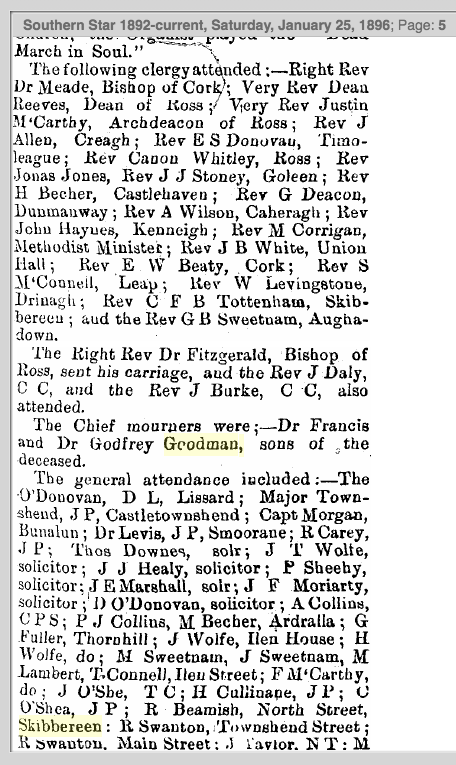
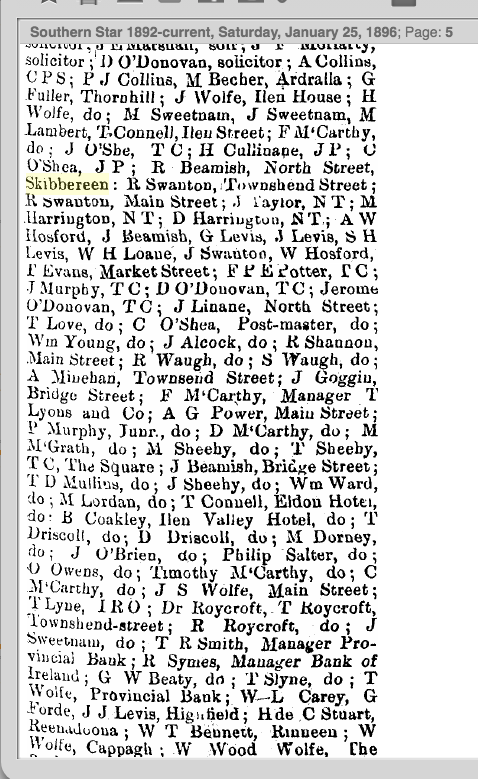
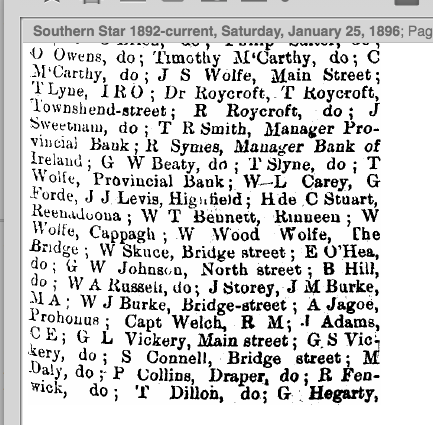
Dr. Wood Levis MD Doctor, Durrus. Wood Levis M.D. Father of Violet Elizabeth Levis b 1889, qualified Edinburgh surgeon and physician “Dr John Wood Levis (trained Edinburgh) 1901, died 1913 after 26 years service in Durrus. In 1894 he was submitting reports to the Bantry Union warning of the danger of fever in Durrus the village pump had been sent to Perrots in Cork for repair and five months later w The village was taking its water form the river which was polluted with the sewage of the village and dead dogs and cats. He applied for a salary increase in 1904, he had been receiving £100 with £10 as of Health, at the time the nurse’s salary was £30. In 1910 together with T Shannon, Brahalish he was an assentor to James Gilhooley MP. 1895 Durrus The Steeplechase was over Philip’s land in Rusheenaniska and included Dr Levis as a rider, he was noted horseman. Durrus Regatta was advertised in August 1893 and 1894 and in 1902 the regatta was held on Wednesday the 27th August. The committee consisted of the Catholic clergy and the Minister together with Dr Levis, to the flag boat where Dr Levis was the judge.
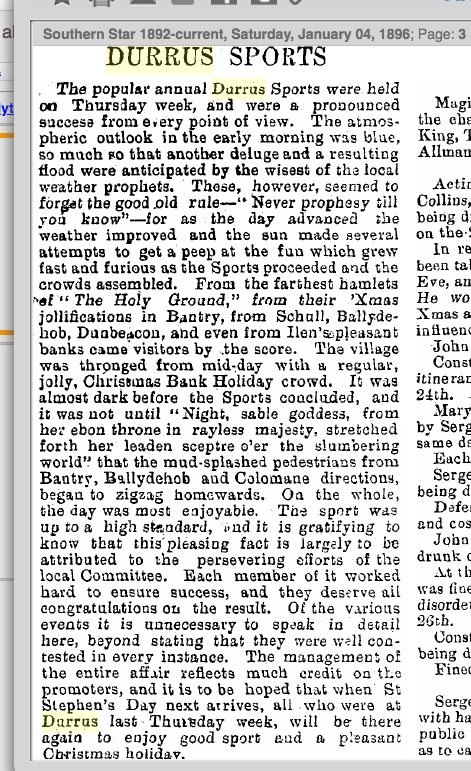
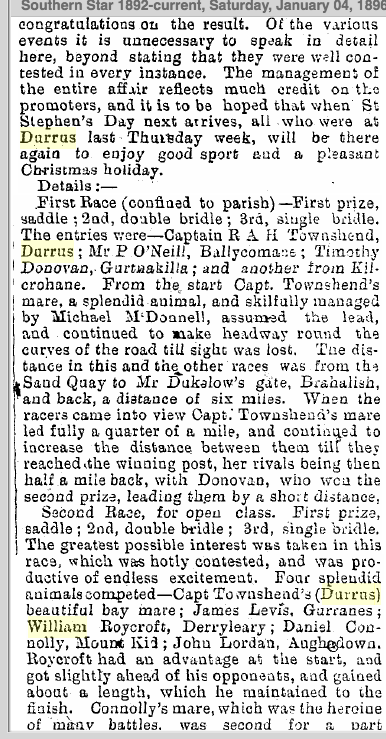
Durrus Races
Held on New Year’s Day, cancelled due to the outbreak of Foot and Mouth disease in England in 1967. The Races are advertised as the ‘Durrus Races and Athletic Sports’ from the early 1890s. The 1895 races featured trotting matches, athletic sports, a steeplechase and a bicycle race and were held on Stephen’s Day. The Steeplechase was over Philip’s land in Rusheenaniska and included Dr Levis as a rider, he was noted horseman. The road race was from the Sand Quay to Mr Dulelow’s gate in Brahalish (Red Cliff) and back a distance of 6 miles. William Dukelow died returning from Durrus Races 26th December 1896. He had been walking around Coísín, near the bridge in Bahalish when he was struck by a man with a horse. At that time there was no wall and he fell into the sea. The family were searching for him. jack Dukelow, Brahalish He had a sidecar which the family did not use after his death. In earlier years he would have a horse racing at Durrus Races on Stephen’s Day. The same year in a case in Bantry in January 1926 it was stated that the Gardai in Durrus had drawn batons in an altercation after the Races and an action for assault against the gardai was thrown out by the Court and the offending persons were convicted of being drunk and disorderly. Political excitement was provided by a new political party ‘Clann Na Poblachta’. They campaigned for the 1948 election with an address after the Races on Stephens Day 1947. Shaun Dillon of Clashadoo had inherited licensed premises and house property from his aunts near the railway station in Bantry and for a period this was a centre of political gathering for the new party. Fine Gael started a branch in Durrus in 1947 under Timothy Hurley. Fianna Fail used the opportunity afforded by losing the election of February 1948 to regroup and Sean Lemass addressed an after Mass meeting in Durrus on the 29th May 1949.
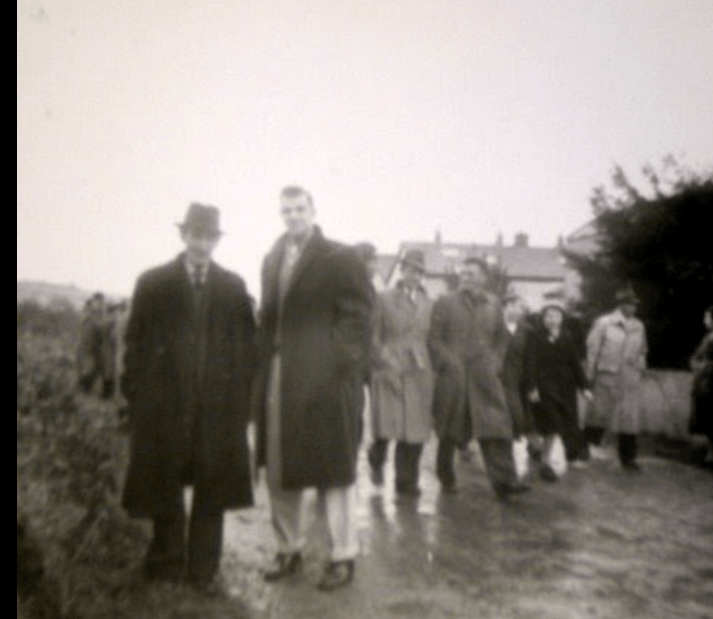
1950 Durrus Races
Photo tall man 2nd from left a Coughlan of Schull descendant on leave from US Forces in Germany.
Athletics
Athletics
In the post famine era there was despondency and mass emigration. By the 1870s athletics became very popular and the school’s folklore project has many references to races, weight throwing and events in Kilcrohane and Ahakista. It was common for people to cross Dunmanus Bay for events on the other side or to meet half-way in Carbery Island. From Kilcrohane there was also traffic across Bantry Bay to Bere Island to dances. The older people have stories of weight throwing of the half-hundred in the village in the 20s and 30s of the last century, with relations of Danno Mahony, Eugene Sullivan, Crotees and Jack Burke Coomkeen involved. John (Jack) McSweeney DMG, Moulivard, was in the War of Independence later in the Free State Army in the Gardai where he was a well known detective in Dublin. In earlier days he a runner-up in the hammer throwing contests in the British Empire Games. Ireland was represented as one country in these games which started in 1930. Michael Hurley, Ballycomane organised athletics in the 30s, and there was the odd meeting in Ahakista for inter parish games. Jim Roycroft, The Gap Mount Gabriel, later a County Councillor and grand father in law of the former Ceann Comháirle, John O’Donoghue was a noted athlete in the late 1930s. Another noted athlete was Dan Dinneen.
Noel Hickey, whose father Pat had a pub in the village was a champion athlete and often competed on behalf of Presentation College which he attended against Finbarr O’Sullivan Gearhameen who was in Farranferris (the Diocesan college) at the time, he had earlier attended Mr. J.P. Harte’s Academy in Dunmanway 1940 staying with a relation and working on the bog for the summer. He was later attached to the Cork Drapers Athletic Club and competed in Kilcrohane in 1947 when Danno Mahony and his brothers Florrie and Dermot were present. Kilcrohane saw the start of Danno’s career in 1930. Noel was offered a sports scholarship to Villa Nova University in the US. Finbarr O’Sullivan’s father Denis was a noted athlete and was known as ‘Dinny the Runner’. Sean O’Donnell from the village and his brother Larry (later National School Teacher, Bishopstown Cork) were noted athletes as was George Shanahan, Dunbeacon.
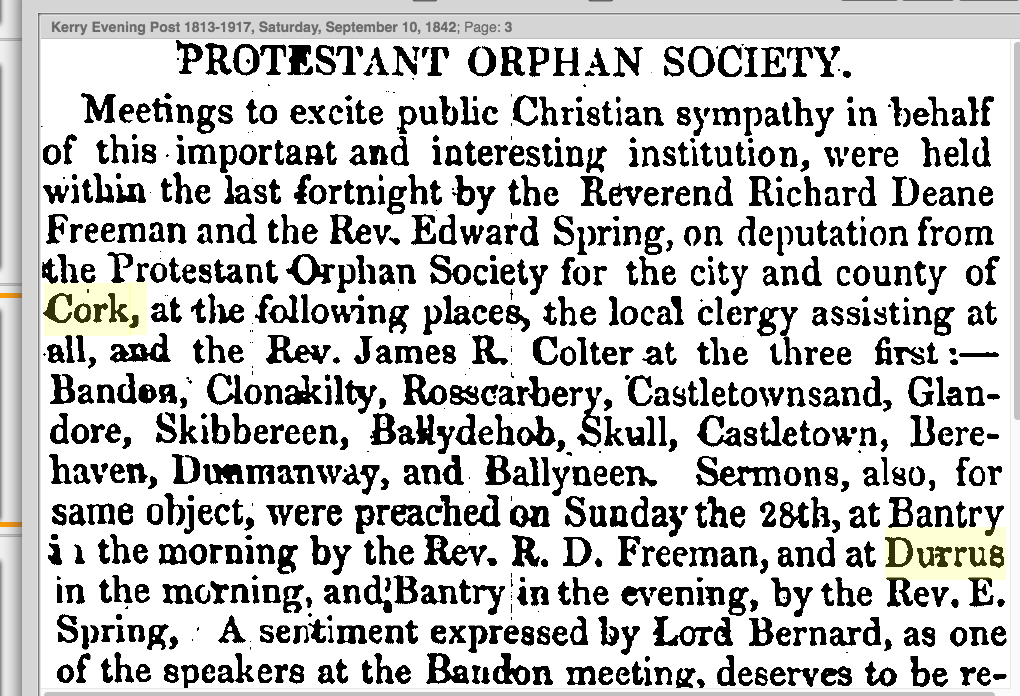
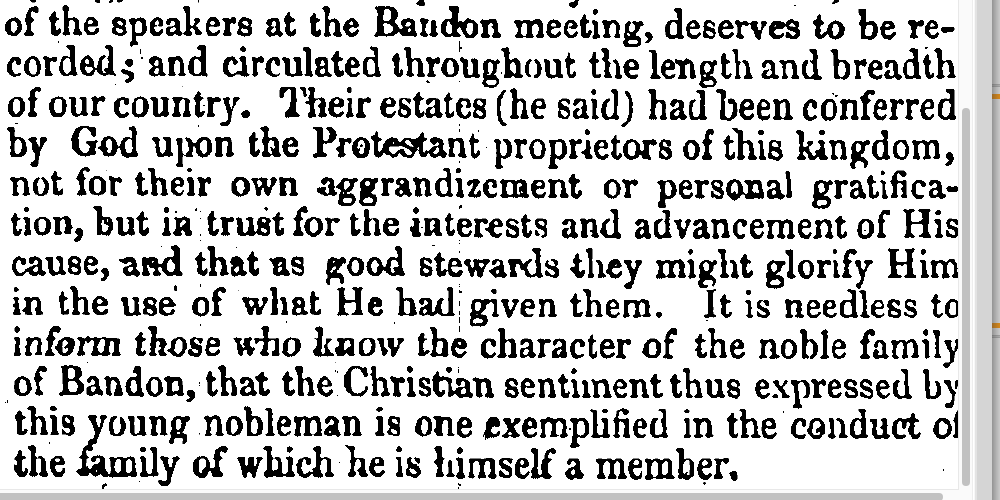
1843, Meetings for Protestant Orphan Society held by Reverend Edward Spring (Agressive Proselytiser) at Bandon, Clonakilty, Rosscarbery, Castletownsend, Glandore, Skibbereen, Ballydehob, Schull, Castletownbere, Dunmnway, Ballineen, Sermons at Durrus, Bantry. At Bandon Meeting Lord Bandon Sentiment ‘Deserved to be Recorded, Their Estates had Been Conferred by God upon the Protestant Proprietors of This Kingdom in Trust for The Advancement of His Cause
The Rev. Spring was part of a band of agresive proselytisers including the Rev. Crosthwaite of Durrus, Fishe of Teampall na mBocht (Altar), Charles Doonovan, Ballydehob and others. Most were Irish speaking.
Like the Chinese Rice Christiasn when condition improved most of their flock reverted to theri original faith.
The local Protestant Gentry probably regarded their coming as a visitation of the plague with the consequential heightening of community tensions. An exception was Lord Bandon and his wife substantial donors to various Protestant fundementil societies.
The local Protestant Gentry in the late 18th and early 19th century especially in the more remote areas and on the smaller estate were probaby at least partially bilngual.
Google Books have made available the reports of the Coast and Island Society for the period 1854-1861
The Society was a Protestant Evangelical organisation dedicated to outlining the ‘errors’ of ‘Romanism’ and seeking converts through missionary work and the education of the young.
It operated a mission station of Cape Clear the remains of which are still present. This was headed by the Rev. Daniel Spring also the Professor of Irish at Trinity College Dublin. There is reference to a publication by him of a journey in the South in 1840. His brother the Rev. Edward Spring also ministered there.
Edward James Alcock 1805-1842, son of Rev. Mason Alcock. May have lived at Sea Lodge, built old rectory (Glebe House) in 1831. 1822 involved in famine relief with Father Quinn. He sat on a committee in Bantry in 1824 to petition against the withdrawal of the bounty on linen production as had been agreed in the Act of Union. Magistrate. Involved in prosylesytisong. His proctors, 1833, attempted to seize Father Quin’s bed while mass was being said in is house to secure tithe payment only the intervention of Protestant neighbours stopped it. Most of the tithes were the property of Nathaniel Evanson so it may be he who sent the proctors otherwise all outstanding tithes collected in one day.
William Moore Crosthwaite 1842-1854. He was fluent in Irish which was remarked upon at the time as making his suitable for the parish. His family said that his death was brought on by a fever contacted in the famine when he was doing relief work. In London in 1847 seeking to raise funds for relief and wrote to London Times. He attended the opening of the new Church of Ireland Church on Cape Clear in October 1849 when the Vicar, the Rev. Edward Spring preached in Irish. The itinerant preacher Rev. Daniel Foley, accompanied by Rev. Fisher of Altar and Toormore, visited his parish in early 1849. He had a Curate, paid for by the Irish Society in London. It is probable that he was involved as a minor figure in the ‘Second Reformation’ being associated with controversial figures in West Cork and Kerry, Seamus Ó Suilleabháin, the Irish poet employed in the area as a scripture teacher was associated with the Rev Joseph Baylee who ministered in the Rev Nagle’s mission in Achill and later in Liverpool.
Curate Bell, 5th February 1851, paid for by Irish Society London, had a church for a period in Kilcrohane, withdrawn 1853
View of Tempol na mBocht, (The Church of the Poor, Crookhaven), Mizen Peninsula, West Cork, with Parsonage and Sandboat in Foreground on Pamphlet from Rev. William Fisher 1851, setting out History of St. Brendan’s Church, Built 1714, by Bishop Brown, original Protestants gone over as Romanists their descendant ‘Bitter Romanists’ until lately few Protestants left on ‘Protestant Hill’, Plea for Funds, list of Subscribers.
Right Honourable Honourable James 2nd Earl of Bandon, Custos Rotorum, (1785-1856), Castlebernard, FRANCIS (1st EARL of BANDON) and HARRIET (Boyle) had James (heir and 2nd Earl born 14th June 1785 in Bandon and died 31st October 1856 at Castle Bernard) m 13th March, 1809 in Cashel Mary Susan Brodrick eldest daughter of Charles, Archbishop of Cashel and sister of Charles, 6th Viscount Midleton. Mary was born 9th October 1787 and died 23rd April 1870, buried in Bandon. Due to rising war related prices land rents estimated 1811 at £30,000. Succeeded to title and estate after his father’s death in 1830. Following a large Protestant meeting 1834 at Castlebenard nominated to prepare a petition to the British King and Parliament with the Rev. Somers Payne, Councillor Mannix, Lords Berehaven and Bandon. Subscriber Lewis Richard Dowden papers: 1837. 1842 Subscriber Jacksons Co. and City Directory. 1844 Printed handbill/notice , ‘Cork Art Union for the promotion of the fine arts in the South of Ireland’, annual subscription appeal. President is Lord Viscount Bernard MP (Lord Bandon). Printed by W Scraggs, 102 Patricks Street. (1p) Subscriber John Ryan, 1845 ’20 Years of Popish Persecution’. Made huge efforts during the Famine to secure relief. Co. Grand Master Orange Order. Fellow Royal Society 1845. Member Commission on Magistrates 1838 subscriber, 2 copies, 1861 to Smith’s History of Cork. Bandon 1869.









 West Cork History