1859-1913, died 1915 Dr. Jerry Cotter MD MCH, QUI, FRCSI 8 Sydney Place, Governor UCC, Board North Infirmary Dr Jerry of Sidney pl, Cork city is one of mine, a New Zealand relation, b 1859, Derryginah Bantry, died 1915 in Clonakilty (his McCarthy wife was from there). Him & a brother in London were the first doctors of the family & inspired others including here in NZ to follow suit, although one of his sons chose law instead. At the 1901 funeral Mrs Cotter is his mother Mary Gallagher 1826 of Summerhill, whose sister Mary 1840 married Patrick Burke. I don’t know about the Scullys, but Jeremiah of Breenymore’s brother was William 1858, rate collector. He married Julia Creedon, g’daughter of James Cotter of Derryginah (uncle of Dr Jerry 1859). When Julia died, he married Mary Cassey. From Bantry mother Scully I see he was b. 18 Jan 1859, mother was Mary Scully. There was a tribe of the Scully family descended from Catherine Anne Gallwey who m. James Scully JP but no issue m. to any Cotter that I can find despite several by the name of Mary. 1891 subscriber North Infirmary. 1901 funeral of Mrs. Cotter, Bantry sons Dr. P. J. Cotter, London, Dr. J. Cotter, Cork, nephew Dr. Patrick Burke, London 1886 Committee member of proposed Graduate Reform Association of Queens College Son 1909, 1911 Francis McCarthy Cotter B.A. Barrister “8, Sydney Place, Cork. 1911 Member Cork Historical and Archaeological Society 1912 attending funeral of Rev. Charles Walsh, Rector, Farranferris. Paddy O’Keeffe papers. 1913 car owner. Probate 1915 to widow, Mary, Clonakilty, £10,253
(SR 13/2/1817) – BREWERY – TO BE LET, AND IMMEDIATE POSSESSION GIVEN – THAT Remarkably well Circumstanced BREWERY; Situate at BANTRY, together with the UTENSILS, MALT-HOUSES and CONCERNS thereto Belonging – which have the Advantage of an Uninterrupted supply of Fresh Water, and being in a thickly Inhabited Corn Country, contiguous to the Sea, are worthy of Prompt Attention. – Proposals to be made to Simon White, Esq., Glengarriff, Bantry, or Richard Foott, Attorney, Cork, at whose Office a Plan of the whole may be seen. – Mr. James Cotter of Bantry, will shew the Concerns.
Richard Caulfield, Cork antiquarian who was intimately involved in clearing the graveyard for the new construction was a Gosnell on his mothers side. The family in West Cork around Kilmeen since probably early 17th century.
Caulfield, Richard (1823–87), antiquary and local historian, was born 23 April 1823 in Cork, one of five sons of a merchant, William Caulfield, and his wife Catherine, who was the daughter of Henry Gosnell, a Cork doctor and surgeon. Richard was educated at Bandon endowed school, entered TCD in October 1840, and graduated BA in 1845, LLB in 1864, and LLD in 1866. He abandoned early plans of entering the church to concentrate on antiquarian research, and in 1854 published Sigilla ecclesiae hibernicae illustrata, a book on ecclesiastical seals, in two volumes.
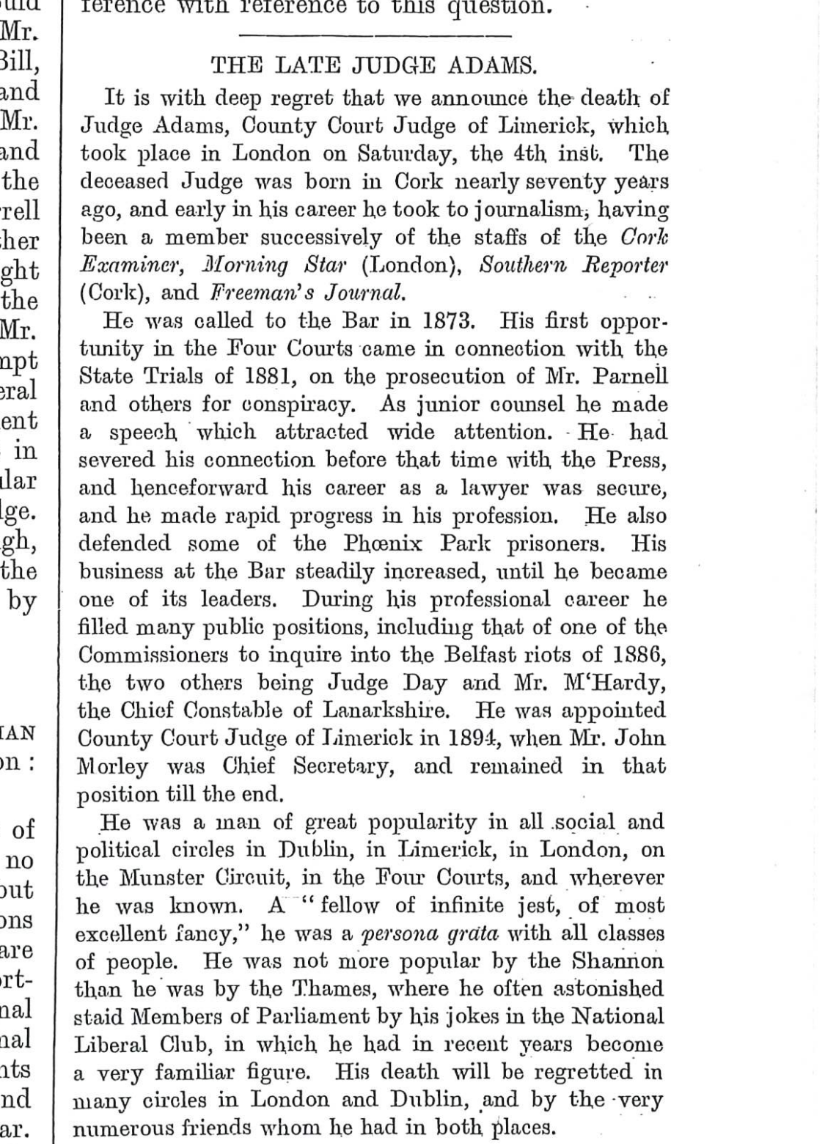
B 1843-1908 Richard (Dick) Adams Journalist, Barrister Inns 1873, Q.C., 1869.Judge County Court Limerick 1894, Down Born Castletownbere, eldest son Brian Port Surveyor, Customs and Excise mother Frances (Fanny) O’Donovan sister of Doctor O’Donovan, Skibbereen. First cousin of Skibbereen O’Donovan family, Doctor Daniel and his 2 Doctor sons, they are of ‘Island’ branch and once owned town of Ross. 1880 Munster Bar, 20 Mountjoy Square, Dublin. Born Castletownbere, eldest son Brian Port Surveyor, Customs and Excise mother Frances (Fanny) O’Donovan sister of Doctor O’Donovan, Skibbereen. First cousin of Skibbereen O’Donovan family, Doctor Daniel Famine Doctor, his 2 Doctor sons, are of ‘Island’ branch and once owned town of Ross. 1880 Munster Bar, 20 Mountjoy Square, Dublin. Prosecuted Parnell for conspiracy and became Crown prosecutor for Cork. Journalist Cork and Freemans Journal, Defended James Fitzharris in Phoenix Park Murders, noted wit. From James Joyce ‘Ulysses’, ‘Dick Adams (Castletownbere born), the besthearted bloody Corkman the Lord ever put the breath of life in’ Journalist, Barrister, Defender of Parnell, Later County Court Judge Limerick
Ulysses: 7.679-80″ Buried St. Marys, Kensal Rise, London. Obit ILTSJ1908, 89 “Courtesy Ruth Cannon: from the Cork Examiner, 6 April 1908, this loving tribute to one of the Irish Bar’s most famous humorists, Limerick County Court Judge Richard Adams (b-l). Adams got much mileage out of his resemblance to King Edward VII (b-r), who he alleged once messaged him in the spa resort of Homburg requesting they dress differently to avoid confusion.
“Those who knew the late Judge Adams well will find it hardest to believe that he is dead. “Those who knew the late Judge Adams well will find it hardest to believe that he is dead. For with his personality, they associate all that was brightest and most vivifying in life.
“That said, the future judge does not appear to have greatly distinguished himself in his early days. His first professional calling was that of a bank clerk in the National Bank in Cork. He was entrusted with the duty of opening letters containing bank notes in separate halves, a favourite way of sending money in those days, and then gumming the two halves together. But his lack of acumen for bank business was such that he frequently gummed the wrong halves together – a terrible misadventure in any well-organized bank.
Having regard to this, and a general unsuitability for bank life, Richard Adams decided that he had mistaken his vocation. Accordingly, he subsequently got called to the Bar in the Hilary term of 1873. In actions for breach of promise of marriage his services were particularly sought, and it was one of the treats of the Four Courts to hear a speech on that congenial topic from one who was a master of humorous exposition. His admission to the Inner Bar was soon followed by his elevation to the Bench as County Court Judge of Limerick.
While not a profound lawyer, he did not himself at all mind jesting on the subject of his legal knowledge, and would tell how once he came into one of the Dublin Courts after the luncheon interval and heard a well-known solicitor proclaiming from the solicitors’ table to a cluster of minor lights ‘Adams! Oh, he has a fine nisi prius prescendi, but he knows absolutely no law,’ whereupon Adams himself put his genial countenance over the side barrier and said, ‘Look here, that’s slander of me in my business trade and profession, and it is actionable without proof of special damage, so look out for a writ.’ This was of course said with glorious good humour.
Judge Adams loved to go to health resorts on the continent. These sojourns were rendered doubly enjoyable by reason of his resemblance to the present King. ‘When in Homburg,’ he said, ‘the King’s Equerry came up to me and said ‘Mr. Adams, the King commands me to ask you as a personal favour not to be going about in a tall hat and frock coat. It is very embarrassing for his Majesty to be so often whacked on the back, and to be shouted at by gentlemen in Dublin accents, ‘Hello Dick, old man, how are all the boys in Dublin…’’
1808-, Edinburgh, died 1877 Dr. Daniel Donovan Senior MD Ed. Mr. Armstrong Classic School Rosscarbery, Dublin, Edinburgh. Doctor, Dispensary Officer Union Hall, Glandore 1830-1839, 1840. Magistrate, Donovan Daniel, sen, North street Retired 1870 suceeded by son. “Skibbereen 1847 distress meeting. Seeking equality of endowment in Catholic education 1859. Born at Ross of ‘island’ branch who formerly owned Ross town. Son Henry Solicitor died 1873. Probate to widow Henrietta £800 1877. 1859, Thomas Burke, M.D.,Skibbereen. Estate £1,500. Named Daniel Donovan, M.D., David Hadden, M.D., Daniel McCartie, brewer. 1877. Opening Skibbereen Railway
Daniel Donovan
David Hadden
John Levis, Glenview
S. W. Levis, Coroner
Dr. McCormack, Goleen
Dr. Popham, Bntry
Samuel Robinson
Dr. Swanton, Bantry
Dr. Sweetnam, Schull
” “In 1835 Dr Dan married Henrietta Flynn and they had a family of six daughters and five sons. In 1839
he was appointed to the Skibbereen Dispensary and he was elected the first medical officer of the
new Skibbereen Workhouse. Famine Diary of Doctor O’Donovan, Dispensary Doctor, Skibbereen, 1877 in poor circustances plea by British Medical Assocaio for inceased pension. 1854 attendig Patriotic Concert, Skibbeeen in aid of Crimean war widows and orphans. 1862 donor Skibbereen Relief Fund. 1846 attending famine relief meeting Bandon, Magistrates attending famine relief meeting Bandon, Cork Examiner 28th August 1846. The Earl of Bandon, Colonel Bernard, D. Conner, J.Wheeler, Masekelyne Alcock, R.H.H. Beecher, Rev., T. Tuckey, James Gillman, George Robinson, William J.Payne, Charles Evanson, James Swanston, Arthur Hutchinson, Lionel Fleming, Samuel Townsend,
By Philip O’Regan, Skibbereen Heritage Centre.1877 Funeral Attendance of Dr. Daniel Donovan, Skibbereen, Procession Nearly a Mile and a half in Length. Buried in Family Tomb at Rosscabery of The O’Donovans of The Islands. Sons Dr.Daniel Junior, Dr.John Donovan, Ballincollig.” “Cholera, Myross, Board of Health. CSO/RP/1832/1813/2. Chairman, Richard Townsend, J.P.,
Names of persons interested in the Board:
Rev. Charles Bushe, Rector, Castlehaven
Rev. James Tuckey, curate
Rev. P. crowley, P.P
Rev. William Goulding, R.C. curate
Rev. ..Bert.., R.C. curate
Thomas Somerville, J.P
Thomas Townsend, Lieutenant, R.N.
Ralph Mansfield, J.P.
Daniel Donovan, M.D.”
1808-, 1822, 1840, 1859 Dr. Daniel Donovan Senior MD Ed. Mr. Armstrong Classic School Rosscarbery, Dublin, Edinburgh. Doctor, Dispensary Officer Union Hall, Glandore 1830-1839, 1840. Magistrate, Donovan Daniel, sen, North street 1847 seconded resolution at tenants rights meeting Skibbereen. Skibbereen 1847 distress meeting. Seeking equality of endowment in Catholic education 1859. Born at Ross of ‘island’ branch who formerly owned Ross town. Son Henry Solicitor died 1873. 1810, 1831, 1840, 1846 “In 1835 Dr Dan married Henrietta Flynn and they had a family of six daughters and five sons. In 1839
he was appointed to the Skibbereen Dispensary and he was elected the first medical officer of the
new Skibbereen Workhouse. Famine Diary of Doctor O’Donovan, Dispensary Doctor, Skibbereen, West Cork, Bodies Buried Coffinless in the Dead of Night in Dunmanus Weighed Down By Stones, to Prevent Starving Dogs From Getting At The Bodies, The Funeral Cry No Longer heard.
1837 sponsor for baptism of Micahel Galwey. Skibbereen workhouse 1855. Matron Honora Attridge, £30, Medical Officer Daniel Donovan £100, Apothecary, Jeremiah Crowley £35, Nurse Margaret Corcoran, £8, Julia Hurley £5, https://virtualtreasury.ie/item/ParliamentUK-10-32-165-143
https://mail.google.com/mail/u/0/#inbox/164a5605c1527277?projector=1&messagePartId=0.1″ 1840 testimonial to Captain Lyttelton Lyster Esq. Union Hall, Rosscarbery, Subscriber Lewis Topographical Praised on leaving Union Hall 1840 for managing dispensary Loan Funds established by the Countess of Kingston, and given plate by Richard Townsend JP, Point House, Major Allen, Stoneville, Richard Townsend Junior, Clontaff, JP, Philip Somerville, Union Hall, Rev. Edward P. Thompson, Henry Townsend JP, Castletownsend, Thomas Somerville JP, Drishane, Rev James E. Somerville, DD, Union Hall, Richard Adams, Glandore Lodge, John Fitzhenry Townsend, J.R. Barry, JP, Glandore House, Lionel J Fleming, New Court, Father James Mulcahy, Myross, William Baldwin, Baltnathona “Dr Daniel Donovan – heroic figure of the Famine in Skibbereen
By Philip O’Regan, Skibbereen Heritage Centre”
First Cousin
1866, 1875, died 1880 Dr. Daniel Donovan Junior MD Doctor, Royal Navy, West Coast of Africa Daniel, jun, North street 1876 Public lecture 1867 on Madeira, Lisbon, Jamaica Skibbereen. Died typhus Skibbereen & West Carbery Eagle; or, South Western Advertiser 13 April 1867. Author Sketches in Carbery. Died aged 37. Son of Dr. Daniel O’Donovan. 1871 funeral Skibbereen, Timothy McCarthy Downing, solicitor, MP, landlord
Barry, John Milner (1768–1822), physician, was born in Kilgobbin Castle, Ballinadee, Co. Cork, eldest among two sons and nine daughters of James Barry (d. 1804) and Elizabeth Barry (née Milner), co-heiress of William Milner of Dunmanway, Co. Cork. Educated at a school near Bandon, Co. Cork, he graduated MD (1792) at Edinburgh University and subsequently returned to Cork, where he established a medical practice.
(1768-1822), 1802, 1805, 1809, 1812, 1820, 1823 Dr. John Milner Barry, Edinburgh Doctor, Marlboro St living 1805, 1812 Cook St. Cork Fever Hospital Eldest son of James Barry and Elizabeth Milner, KIlgobbin, Bandon. John Milner M.D. “for the benefit rendered to the City in the Establishment of Fever Hospitals to which he so materially contributed”. Freedom. From Bandon. Son TCD admissions, BARRY Edward Milner 1843 23 John Medicus Cork 1801-1802, Committee for Conducting and Regulating the House of Recovery. John Milner Barry and Charles Barry, M.D. Physicians 1807 subscriber Cork Institution. 1816 corresponding member Kings and Queens College of Physicians of Ireland. 1820 subscriber Cork Library. 1823, Corresponding member College Physicians of Ireland. 822 committee Cork Branch Auxiliary Hibernian Scripture Society. 1809 Printed 7th annual report of the Cork House of Recovery for the Prevention and Cure of Fevers. Total admitted 278 persons. With descriptions by John Milner Barry MD and Charles Daly MD, including observation of a large number of females admitted in the summer, the appearance of Scarlet Fever in different parts of the town. Ballinadee There is a memorial plaque to Dr John Milner Barry credited with founding Cork Fever Hospital city to prevent the spread of Typhus Fever in 1802 “Cork committee 1818 Lancastrian system Milner Barry continued “A meeting of the Fever Hospital Committee took place in the Crawford Institute of Science and Arts in Cork, 136 years ago today on 20 February 1890.
The symptoms of typhoid fever were described in medical journals at the time of Hippocrates in the fifth century BC. However, it was not until the first half of the nineteenth century that typhoid fever was clearly distinguished from other such diseases. In the eighteenth and early-nineteenth centuries, the principal infectious diseases that threatened public health in Ireland were tuberculosis, smallpox and fever (a generic term that covered typhus, relapsing and typhoid). Hunger, poverty, dirt and overcrowding were the main causes.
” “The Irish people had an unrivalled knowledge of fever, its symptoms and its consequences. Experience taught them that the disease was contagious and the fear of infection drove them to quarantine those who contracted the illness. By the opening decades of the nineteenth century, ‘fever huts’ were established where the sick were placed.
They consisted of a few stakes, covered with long sods called scraws and a small portion of straw or rushes. The stakes and sods were usually placed against the fragment of a wall, the gable of a tumbled house or against a ditch. The middle and upper classes attempted to isolate the infected within their own homes, but domestic segregation did little to check the spread of disease.
Popular attempts to address and mitigate the impact of fever were paralleled by institutional ones. Fever hospitals were established in Dublin, Cork, Waterford, Kilkenny, Belfast and Limerick under special Acts of Parliament in the late eighteenth and early nineteenth centuries. These hospitals were complemented by three distinct types of publicly-funded fever hospitals that were established following legislation in 1807, 1818 and 1843.
Typhoid is contagious and the bacteria, Salmonella typhosa, may be found in contaminated food or water — especially water polluted by sewage — and is transmitted through the mouth. Typhoid was practically endemic in armies, a factor which contributed to the spread of the disease here, Cork City in Ireland having been a garrison city for centuries.
In 1800, there was a virulent outbreak of typhoid in Cork and not less than 4,000 persons were treated. The disease affected all classes but especially the poor, who lived in extremely unhygienic and insanitary conditions. Unemployment and poverty were major contributory factors.” “In 1802 John Milner Barry established the first fever hospital in Cork City in Ireland which was located at the top of the appropriately named Fever Hospital Steps adjacent to and east of Our Lady’s Well Brewery in Blackpool and west of Victoria Barracks. The response to his appeal to the citizens for financial help was immediate and generous. At the first meeting of the Fever Hospital Committee, the Church of Ireland Bishop, Thomas Stopford, presided. The following were Vice-Presidents: Dr Moylan, Catholic Bishop; John Longfield MD; John Callanan MD; William Beamish; Richard Lane, and Cooper Penrose. From then on the Fever Hospital served the citizens well through many outbreaks of typhoid.
Dr Milner Barry introduced vaccination into Cork in 1800, and was the first to make it known to any Irish city. In 1824, a monument with a long laudatory inscription was erected to his memory in the grounds of the Fever Hospital by Corkonians.
In 1890, the Chief Medical Officer was able to report to the Annual General Meeting of the Committee that there had been only 143 patients with the disease during the previous year.
John Milner Barry, Bandon Born, Shinach in Irish to Prevent Small Pox
In a pamphlet published in Cork in 1800, Barry observed that for the previous half century and more country people were familiar with cowpox, which they termed ‘shinach’, from the Irish word sine, meaning teat (of an animal); they recognised the mildness of the cowpox infection and its ability to provide immunity from smallpox.
A Church of Ireland clergyman in the parish of Moviddy in east Muskerry informed Barry that ‘shinach’ was well known in the locality and had long been deemed a preventive of smallpox.
Barry had encountered several individuals who as children had been deliberately exposed to cowpox infection.
Fifty-year-old Joanna Sullivan related that when she was 13 she and a number of other children were taken to a dairy, where they were made to squeeze the cows’ teats until their hands were covered with ‘the fluid matter of the disorder’, which they called the ‘shinach’.
Cowpox appears to have been endemic in mid- and west Cork in the middle decades of the 18th century and, according to one of Barry’s informants, whose account was substantiated by his octogenarian grandmother, country people exposed themselves deliberately to the disease, such was the general belief that those who contracted cowpox were ever after protected from the more virulent smallpox.
Barry concluded that popular belief in the anti-variolous power of cowpox was as old as the disease itself.
Bit surprised by this. The Hewitts Protestants iof greater Bandon area. Maybe close ties between Britain and Portugal.
685 186 471134 1815 Jan 16 Assignment HEWITT J[?] H Lieutenant Colonel Portuguese Service WD WM A 4 Feb 1815 A assigned to C, in trust, her rights to a moiety of leases of properties in St Marys Abbey Lands & Camphill, Liberties of Kinsale, Co Cork, to pass to G after her death. This corrected her error in earlier deeds, of assigning the entire leases. RonPrice K 11 Feb 2026 384
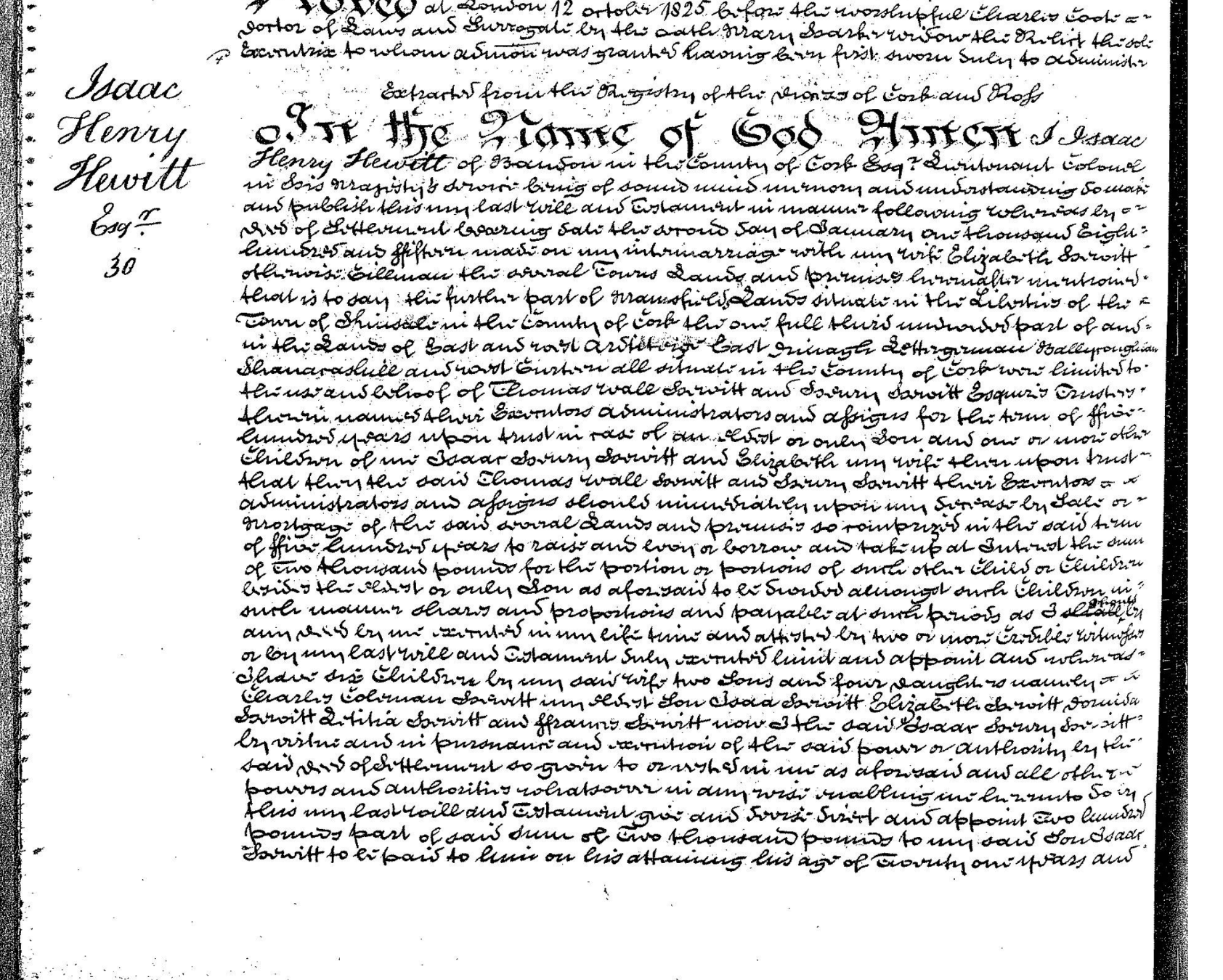
Will Isaac Henry Hewett
A
PROB 11/1704/247
This is the last Will and Testament of Isaac Henry Hewitt of Saint Marylebone in the County of Middlesex Esquire.
I Isaac Henry Hewitt being of sound mind memory and understanding do make publish and declare this as and for my last Will and Testament in manner following (that is to say)
First I direct that all my just debts funeral and testamentary expences be paid and satisfied as soon as conveniently may be after my decease.
I give and bequeath unto my dear wife Sarah Hewitt all my household goods furniture plate linen china books prints wines and liquors and all other my personal estate whatsoever and wheresoever not herein otherwise disposed of for her own absolute use and benefit.
Also I give and devise unto my said dear wife Sarah Hewitt all those my freehold messuages lands tenements and hereditaments whatsoever and wheresoever situate with their and every of their rights members and appurtenances unto and to the use of my said wife Sarah Hewitt her heirs and assigns for ever.
And I do hereby nominate constitute and appoint my said dear wife Sarah Hewitt sole Executrix of this my Will hereby revoking all former and other Will and Wills by me at any time heretofore made and declaring this only to be my last Will and Testament.
In Witness whereof I have hereunto set my hand and seal this twelfth day of October One thousand eight hundred and twenty five.
Isaac Henry Hewitt
Signed sealed published and declared by the said Isaac Henry Hewitt as and for his last Will and Testament in the presence of us who in his presence at his request and in the presence of each other have hereunto subscribed our names as witnesses.
[Witness signatures unclear]
This is a best-effort transcription from the handwriting, which appears to be an early-19th-century Prerogative Court of Canterbury will.
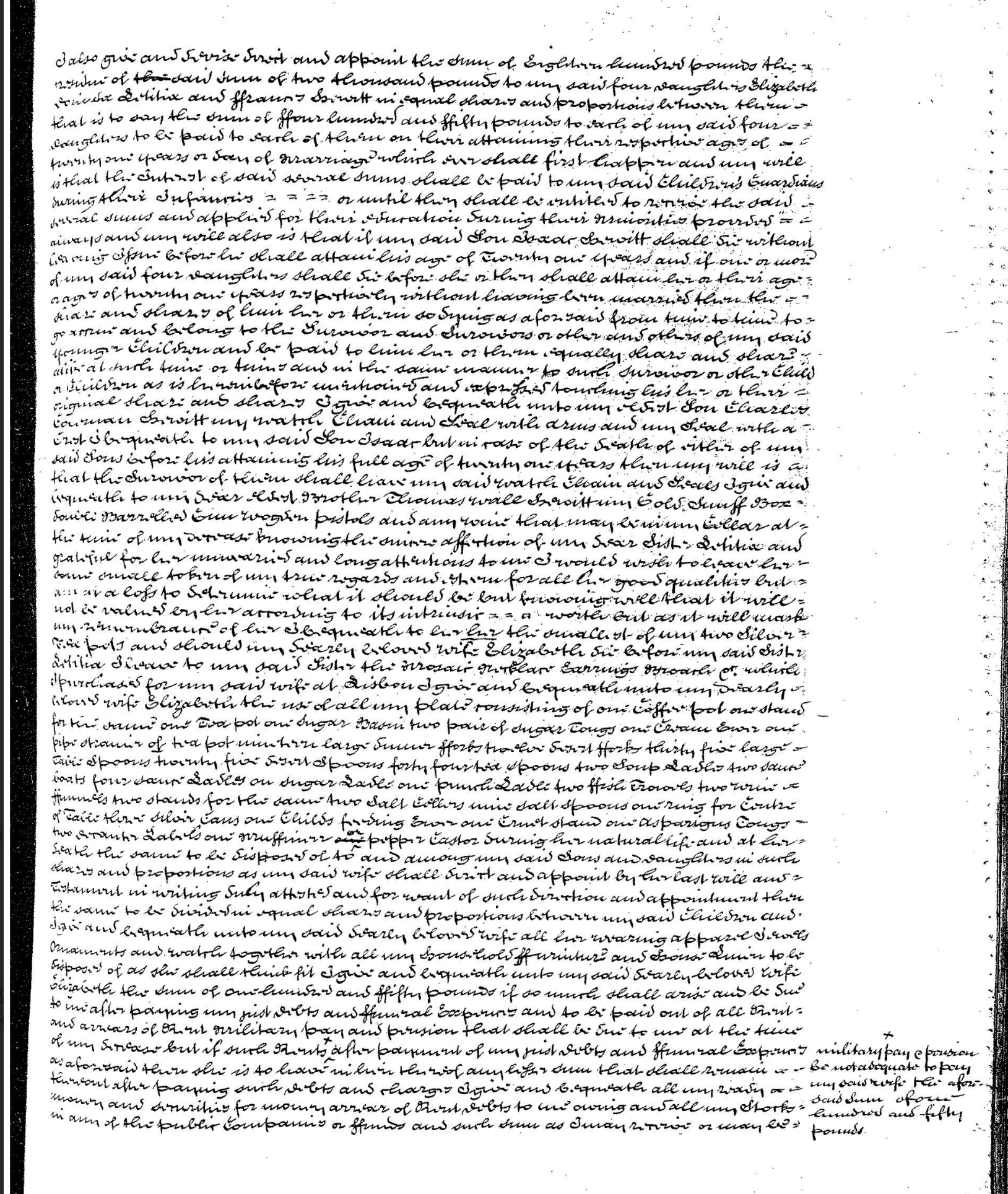
Page 2
I also give and devise unto and appoint within of the said sum of two thousand pounds residue devise and bequeath that if to any the sum of four thousand pounds which is to be paid to each of them within one year or soon or conveniently after the decease of the survivor of said devise and during their respective lives and after his decease and as between them and any wife also is hereby given before his death attached of any said four daughters shall be paid to any of them or to the heirs and assigns or at their or survivor of them and belong to the survivor of them and be paid to and among them or their heirs in the situation as is hereinafter mentioned original share and share equally between them and every of them and the survivor and survivors of them equally share and share alike.
Trust to and appointed to my said son Isaac Henry Hewitt before his attaining his full age that the survivor of them shall be invested in any three good and sufficient Government or real securities or mortgages of freehold or copyhold hereditaments to or in the name or names of two or more trustees to and declared upon trust and to pay the interest dividends and produce thereof unto my said daughter [unclear] during her life separate and apart from her husband and not subject to his debts control or disposition and without power of anticipation and from and after her decease upon trust to pay and transfer the same unto and amongst such persons and in such manner as my said wife shall direct or appoint by any writing or writings signed by her and attested and in default of such direction then unto my said son Isaac Henry Hewitt his executors administrators and assigns.
And as to the said two thousand pounds and all other the rest residue and remainder of my estate and effects whatsoever and wheresoever and of what nature or kind soever I give devise and bequeath the same unto my said wife Sarah Hewitt her executors administrators and assigns upon trust nevertheless and to and for the intents and purposes hereinafter expressed and declared of and concerning the same.
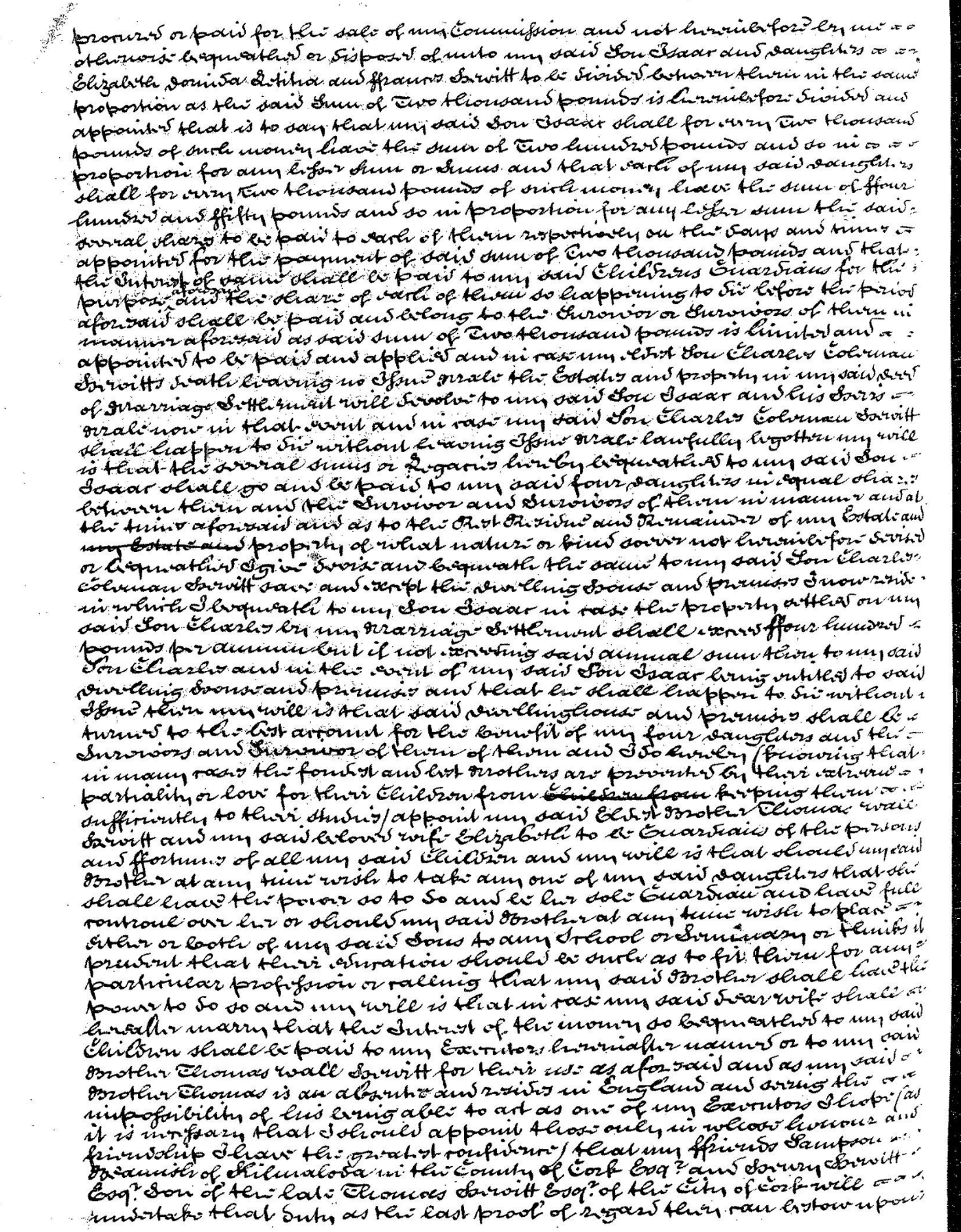
Page 3
…proceeds or profits for the sale of my Commission and not hereinbefore by me otherwise appointed or disposed of unto my said Executrix and subject to and chargeable nevertheless with the several legacies herein contained in the same proportion as the said sum of two thousand pounds is hereinbefore devised and appointed that is to say that my said son Isaac shall for any three thousand pounds of and upon having the sum of two thousand pounds and so in proportion for any higher sum or sums and that one of my said daughters shall for any two thousand pounds of like amount have the sum of fifteen hundred pounds and so in proportion for any higher sum then and several legacies to be paid out of the sum respectively on the same and my said Executrix for the payment of this sum of two thousand pounds and that the legacies thereinbefore bequeathed to him and shall be paid at the expiration of one year next after my decease and that in the meantime and until the expiration of one year next after my decease the interest of the said sum of two thousand pounds shall be paid to my said Executrix for her own use and benefit and subject thereto upon trust and to and for the several intents and purposes hereinbefore expressed and declared of and concerning the same.
And I hereby declare my will and mind to be that if my said son Isaac shall depart this life in my lifetime leaving lawful issue then and in such case I give and devise all and singular my estate whatsoever unto my said son Isaac and his heirs and assigns for ever but if my said son Isaac shall depart this life in my lifetime without lawful issue then and in such case I give and devise all and singular my estate whatsoever unto my said daughters equally between them share and share alike as tenants in common and not as joint tenants.
And I further declare my will and mind to be that if any of my said daughters shall depart this life in my lifetime leaving lawful issue then and in such case such issue shall take and be entitled to the share which his her or their parent would have taken if living but if any of my said daughters shall depart this life in my lifetime without lawful issue then and in such case the share of her so dying shall go and accrue to and be equally divided between and amongst the survivors and survivor of them share and share alike.
And I hereby nominate constitute and appoint my said Executrix sole Executrix of this my Will hereby revoking all former Wills by me at any time heretofore made and declaring this only to be my last Will and Testament.
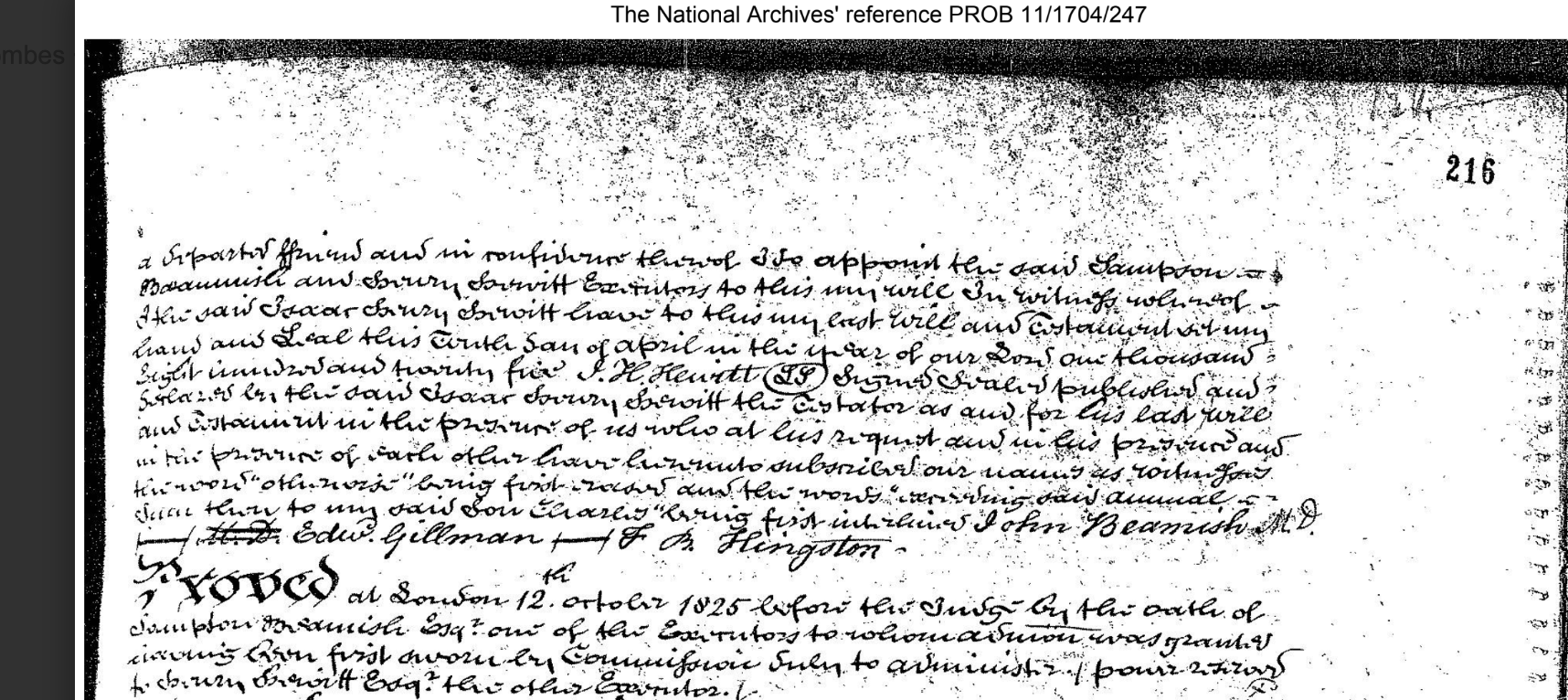
In Witness whereof I have hereunto set my hand and seal this [unclear] day of [unclear] One thousand eight hundred and twenty five.
Signed sealed published and declared by the said Isaac Henry Hewitt as and for his last Will and Testament in the presence of us who at his request and in his presence and in the presence of each other have hereunto subscribed our names as witnesses.
Pg 4
…signed sealed published and declared by the said Isaac Henry Hewitt the Testator as and for his last Will and Testament in the presence of us present at the same time who at his request in his presence and in the presence of each other have hereunto subscribed our names as witnesses
Edwd Gillman
Thos Jennings
John Bowman
PROVED at London 12 October 1825 before the Judge of the Prerogative Court of Canterbury by the oath of Sarah Hewitt widow the relict and sole Executrix named in the said Will to whom administration was granted having been first sworn duly to administer.
In Dei Nomine Amen George the Fourth by the Grace of God of the United Kingdom of Great Britain and Ireland King Defender of the Faith To all to whom these presents shall come Greeting Know ye that at London the twelfth day of October in the year of our Lord one thousand eight hundred and twenty five the last Will and Testament of Isaac Henry Hewitt late of Saint Marylebone in the County of Middlesex Esquire deceased was proved and approved before the Worshipful Sir John Nicholl Knight Doctor of Laws Master Keeper or Commissary of the Prerogative Court of Canterbury lawfully constituted by the oath of Sarah Hewitt widow the relict of the said deceased and sole Executrix named in the said Will to whom administration of all and singular the goods chattels and credits of the said deceased was granted she having been first sworn duly to administer.
I certify the underwritten to be a true copy of the original Will of Isaac Henry Hewitt deceased and of the probate thereof which is now remaining in the Registry of the Prerogative Court of Canterbury.
Dated this 29th day of October 1825
Geo: Hetherington
I John Brooks Deputy Registrar of His Majesty’s Prerogative Court of Canterbury do hereby certify that the foregoing is a true copy of the original Will and probate thereof of Isaac Henry Hewitt deceased remaining in the Registry of the said Court.
Summary
Confirmed individuals (explicitly named)
1. Isaac Henry Hewitt
The deceased (testator)
Lived in Saint Marylebone, Middlesex
Status: Esquire
Died before 12 October 1825
2. Sarah Hewitt
His wife
Described as his widow (“relict”)
Sole executrix of the will
Primary beneficiary
Inherited:
All household goods
Personal possessions
Residue of estate (subject to trusts and legacies)
Control over certain trusts for daughters
3. Isaac Henry Hewitt (son)
Only son mentioned
Major heir
Entitled to substantial inheritance
If he died before his father:
His children would inherit his share
Confirmed but unnamed individuals
Four daughters (names not fully legible in the copy you provided)
Each daughter:
Received £4,000 (significant sum at the time)
Had inheritance protections:
Money held in trust
Protected from husbands’ control or debts
If a daughter died:
Her children inherited her share
If no children, her share went to surviving siblings
Grandchildren (conditional, unnamed)
The will anticipates:
Children of the son
Children of each daughter
These grandchildren would inherit only if their parent died before the testator or before distribution.
These individuals witnessed the will but are not necessarily relatives:
Edward Gillman
Thomas Jennings
John Bowman
Asked it to find the daughters:
I’ve re-examined the original manuscript carefully. The daughters’ names are listed on page 2, but the scan quality makes parts difficult to read with absolute certainty. From the clearest legible sections, the daughters appear to be:
Identified daughters of Isaac Henry Hewitt
Elizabeth Hewitt — clearly legible
Sarah Hewitt — clearly legible
Ann Hewitt — clearly legible
Frances Hewitt — clearly legible
These four names appear in sequence in the clause beginning:
“I also give and devise unto and appoint unto each of my daughters Elizabeth Hewitt … Sarah Hewitt … Ann Hewitt … and Frances Hewitt …”
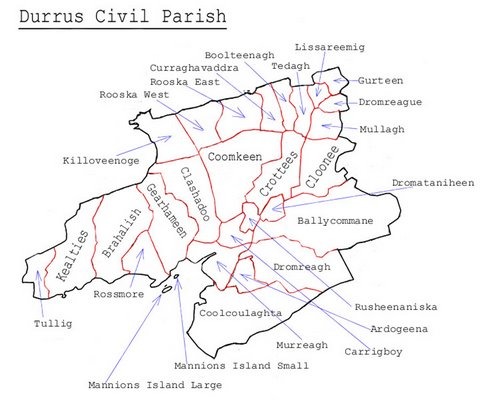
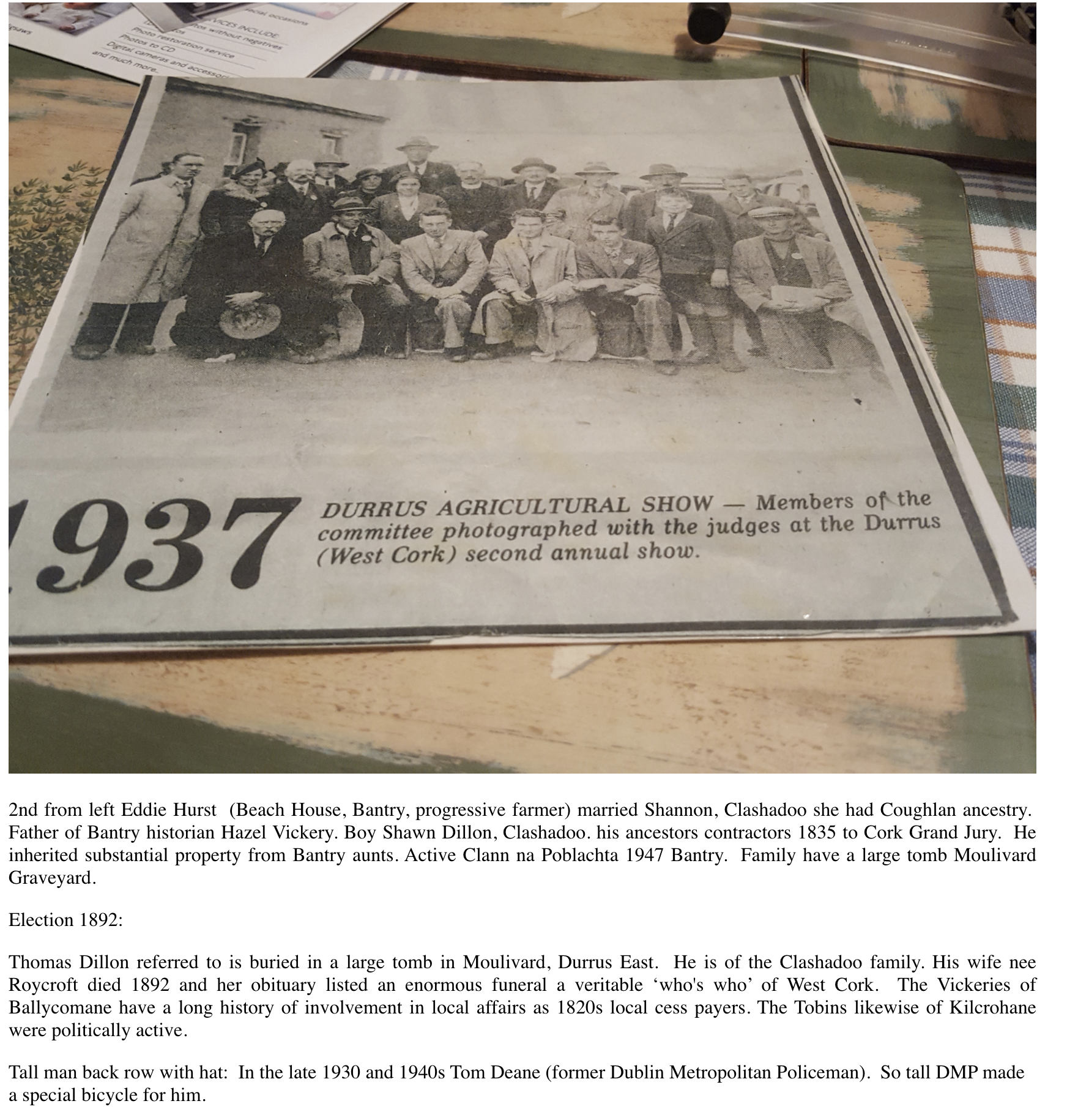
1892 Funeral of Mrs. Dillon, wife of Thomas Dillon, Poor Law Guardian, sister of Charles Roycroft, J.P., Macroom, Aunt of Bishop of Waterford, Rev. Dr. Sheehan. Thomas Dillon married Jane (Raycroft) Roycroft, Durrus, 1854, witnesses Sarah Roycroft
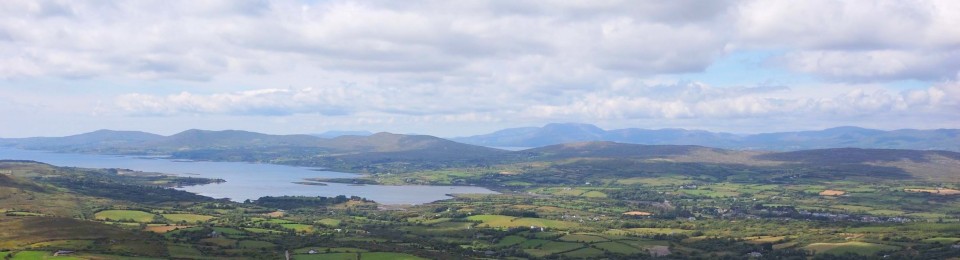
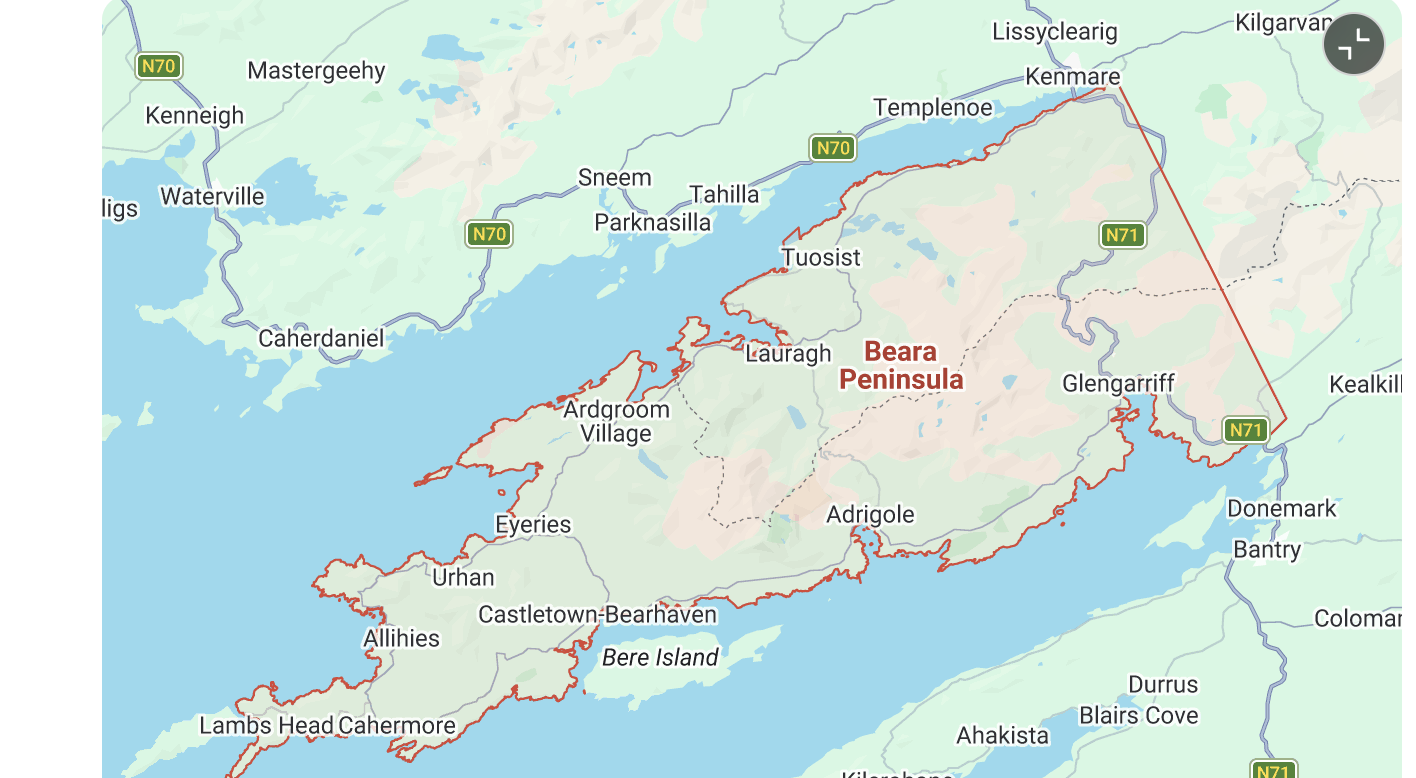
Most but not all of the Beara Peninsula is in Co. Cork with a section in Co. Kerry. The Barony referred to was notorious as it was in effect ruled by the Whites of Bantry (later Lord Bantry) and various Septs of the O’Sullivans mostly but not all Catholic. In theory they lost everything but in fact retained effective control allied closely to the Whites of Bantry and also Lord Kenmare. Most of their tenants who they rackrented would have been far better off under Protestant Landlords
There is a significant amount of correspondence in the Cork Archive in the Paddy O’Keeffe (Bantry businessman and historian ) papers with Lyne. Ranging on genealogy and history.
Courtesy Irish Times
Gerard Lyne was keeper of manuscripts at the National Library of Ireland (NLI) and a noted scholar of 19th-century agrarian Ireland. Born in 1944, he was brought up on the Kerry side of the Cork/Kerry border on the Beara peninsula where, near Ardgroom, in the 17th century, his first known direct ancestor, Dr Dermot Lyne, took a lease of lands. In 1698, Dr Lyne extended his holdings to Kerry, a small portion of which remains in Lyne’s family.
From this link derived his interest in Irish social history which lead to contributions to learned journals, notably, the Kerry Archaeological and Historical Society. He was co-founder, with Canon Thomas Looney, of Éigse Sheáin Úi Shúilleabháin (UCD folklorist) and regularly wrote for his parish’s award-winning Tuosist Newsletter . In 2005 he received the annual Kerry Heritage award.
A kinsman also to Daniel O’Connell, his history studies at UCD led him to a master’s on O’Connell and the Catholic Association and an assignment as assistant editor of the Correspondence of Daniel O’Connell.
Much of this work was carried out in the National Library of Ireland, where he became a permanent staff member in 1973 following a period teaching in Dublin, a stay in London and a time as a sub-editor in The Irish Times. He remained in the NLI until his retirement in 2009.
While, occasionally, wistfully saying that he would like to have been a journalist, he developed and retained a deep love for the NLI where he held various positions in Periodicals, the Genealogical Office, becoming surveyor of manuscripts and later keeper of manuscripts.
It was in this role as keeper of manuscripts that he came into his own. Operating, initially, in a period of tight financial restraint where, frequently, bidding on the open market for important items had to be foregone; happily, his tenure of office saw the pendulum swing allowing for many important acquisitions. Inter alia, whether through donation or purchase, papers of James Joyce, Seamus Heaney, Edna O’Brien and IQA (Ireland’s LGBT Society) were acquired.
Attending auctions, he was always cautious with the public purse. His convivial disposition ensured that he was on good terms with booksellers and literary figures; thus, he frequently got “the nod” when items were coming on stream which might, otherwise, have been missed. And his natural rapport with writers and accessibility are attested to in his many acknowledgements in contemporary publications.
During this period of financial largesse he oversaw the cataloguing of neglected estate papers which became the domain of specially employed archival students, thus ensuring a rich vein of native material for future scholars. He had an unerring eye for recruitment and loved seeing staff develop under his tutelage. Scholarly and knowledgeable, his helpfulness befitted his sense of the library’s serving learning and scholarship.
Becoming secretary of the almost defunct NLI Society, he revived its fortunes through his enthusiasm and a programme of stimulating lectures.
His ability with English was first endorsed when, in 1963, while a student at Cistercian College, Roscrea he won first prize in an all-Ireland schools’ essay competition. But despite being advised that it was cramping his imagination, he chose history rather than English for further studies.
His unique insight into the mindset of the dispossessed Gaelic aristocracy and the Catholic middleman within the new social hierarchy of a planted Munster underpin his books: The Lansdowne Estate in Kerry under WS Trench 1849-72 (2001) and Murtaí Óg (2017). The. (2017). The former was awarded the biennial NUI Irish historical research prize inspiring the RTÉ documentary Land is Gold.
The writer Eugene McCabe noted the “other-worldly aura of his personality” and his valuing “of a folk ballad full of awkward rhymes and unscanned lines as much as great lyrics by Yeats.” McCabe wrote of his ability “to spot the nugget of gold where others see only dross and fix it in that phenomenal memory of his.”
Being himself able to hold a note and deliver expressive renditions of folk song and ballad, Lyne’s liked nothing more, whether in Kerry or Dublin, than to visit a hostelry where a sing-song might ensue before evening’s end.
He passed away on June 5th, 2019 and is survived by his brother, Vincent , sister, Annette, sister-in-law, Elizabeth; nephews, Joseph and John; nieces, Anne Marie, Deirdre and Fionnuala. Suaimhneas síoraí dó.
 .
.

 West Cork History