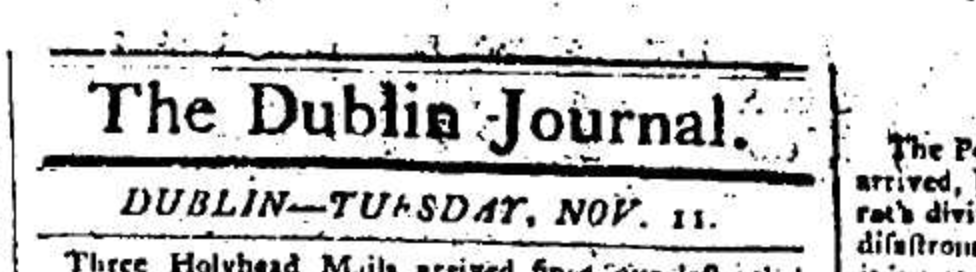
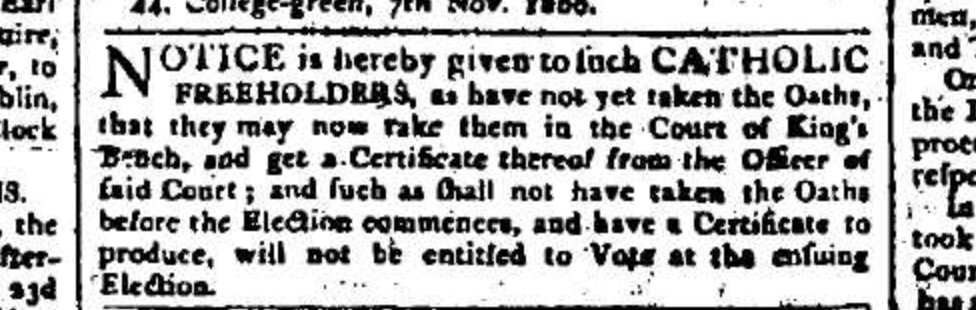
1804 Justice of the Peace (Magistrate) Guide, Papist Warrants including Committal of a Popish Priest for Marrying Contrary to Law.
Even in 1804 these measures were a throwback to the Penal Laws of the early 18th century and had fallen into abeyance. The marriage stipulation features in a major case c 1770s involving one of the Bantry Whites (later Lord Bantry family). He had married a Miss Dillon, a Catholic. He later had the marriage annulled as it was illegal having been performed by a ‘Popish Priest’
Effect of Penal Laws. Sons Of Irish Catholic Aristocratic Families Requirement to Produce Genealogical Proof for Crown Service on the Continent 17th 18th and 19th centuries.
1840 Legal Action on 1740 Deed Whereby Thornhill acted as Trustee for Galweys on Hedges Eyre Macroom, Co. Cork, Estate to Circumvent Penal Laws and Ejectment Action by Hedges Eyre estate in 1840.
Miss Mary Twomey from Schull near Skibbereen reads her Recantation from The Errors of The Church of Rome and Embraced the Protestant Religion at St. Nicholas Church, Cork.
Sometimes this would be done on inter-faith marriage, other time an empty formula for conveyancing or professional purposes to technically comply with the Penal Laws.
1763, Death at age of 102 of Henry Galwey Esq., Bantry From a Former Very Opulent Family Honest people Reduced in Recent Years Of Frequent Seizures Falling On Hard Time
Penal Laws in Co. Cork early 18th century, Father Donogh Sweeney, Doctor of Sorbonne, Paris, , arrested like common criminal for saying Mass by Richard Hedges, Macroom, Warrant 16th October 1712. Petition of 1717 of Samuel Potter Innishannon to Lord Liutenant re ‘Bringing to Justice’ two Popish priests Charles Carthy and Teige Mahony for saying Mass and a Popish Schoolmaster Owen Cartie and who has shown great diligence in apprehending and prosecuting many secular and regular Popish clergy
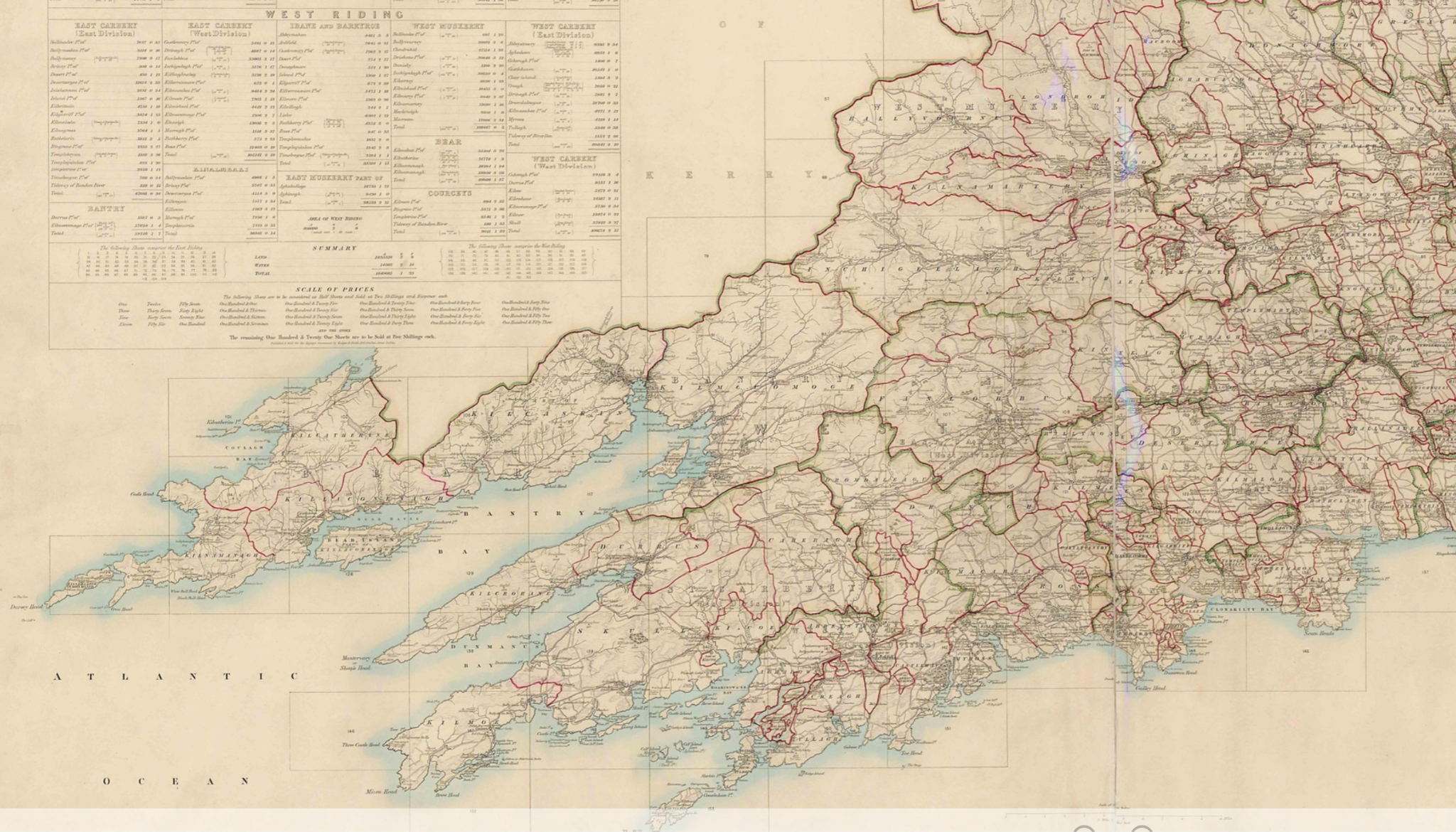
Hedges was associated with the Whites then of Whiddy later Bantry House dn the Blairs Dunmanway/Bantry/Durrus, Davies Macroom and the Fenwicks of Dunmanwya in acquiring large blocks of land from the London Hollow Blade Company. They were later involved in smelting, forest clearing, and Bantry fisheries.
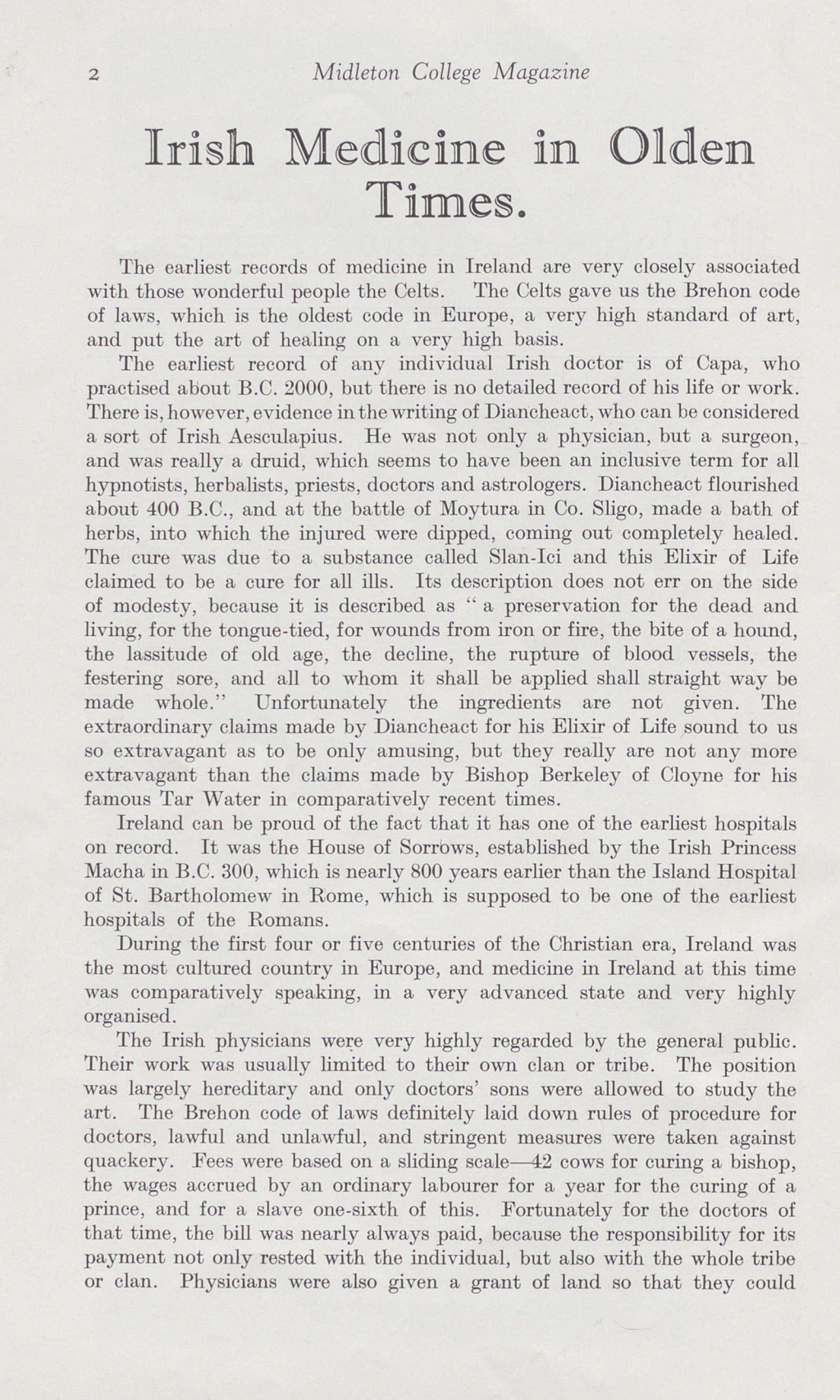
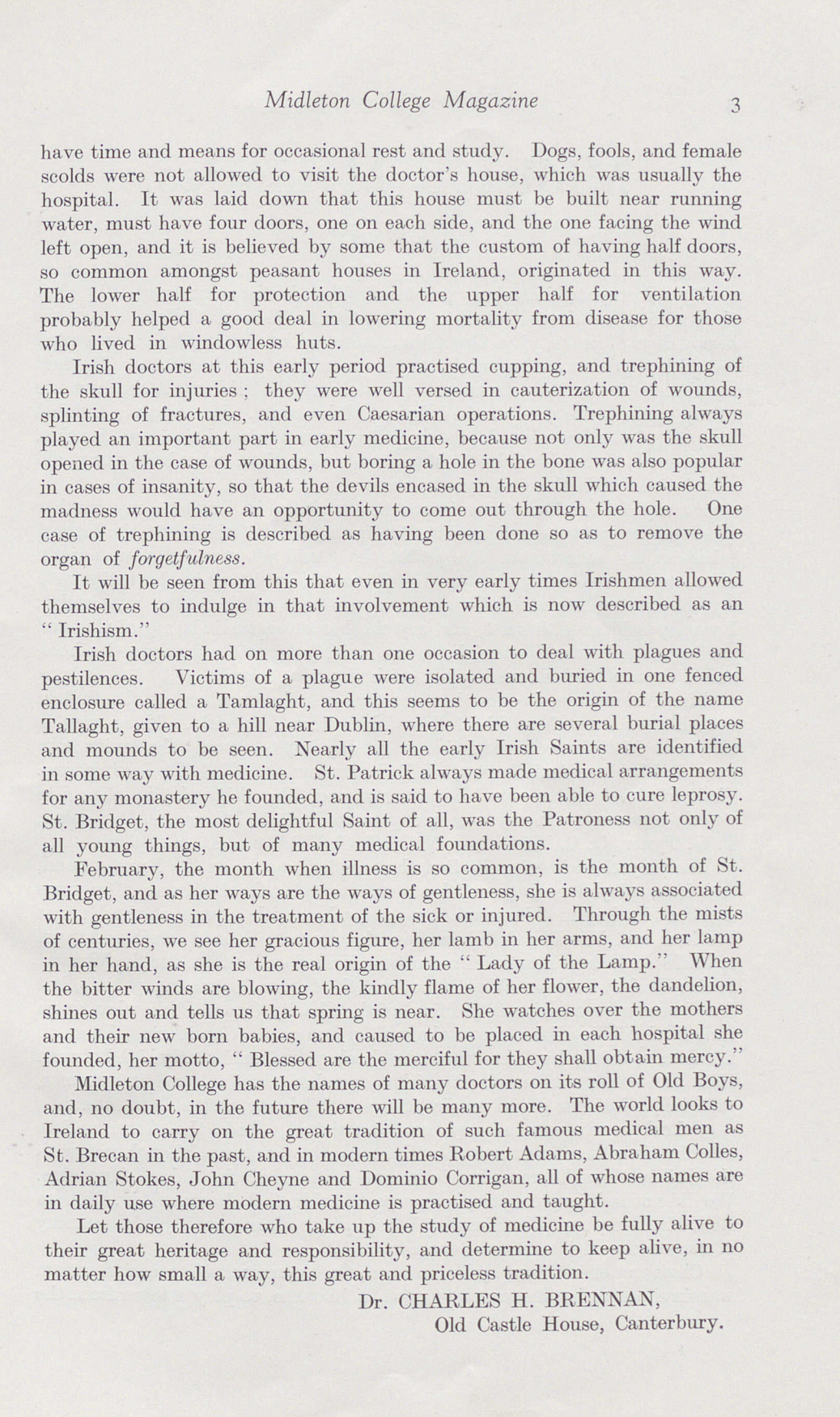
The “House of Sorrows” (or Broin Bearg / Broin Dearg) is a legendary ancient Irish hospital said to have been founded around 300 BC by the mythological Irish Sovereignty Goddess and Queen Macha at Navan Fort (Emain Macha) in County Armagh. [1, 2, 3]
Show all
Rooted in early Irish lore and texts like the Seanchus Mór, tradition cites it as the earliest recorded hospital or house of healing in Ireland. [1] Purpose: Built to care for the wounded warriors of the Red Branch Knights. [1, 2] Legacy: The site allegedly served as a royal Ulster residence and sanctuary until its destruction in AD 332. Modern institutions, such as Altnagelvin Hospital in Derry, have historically linked their spiritual lineage back to Princess Macha’s foundational myth. [1, 2]
Barry, John Milner (1768–1822), physician, was born in Kilgobbin Castle, Ballinadee, Co. Cork, eldest among two sons and nine daughters of James Barry (d. 1804) and Elizabeth Barry (née Milner), co-heiress of William Milner of Dunmanway, Co. Cork. Educated at a school near Bandon, Co. Cork, he graduated MD (1792) at Edinburgh University and subsequently returned to Cork, where he established a medical practice.
1859-1913, died 1915 Dr. Jerry Cotter MD MCH, QUI, FRCSI 8 Sydney Place, Governor UCC, Board North Infirmary Dr Jerry of Sidney pl, Cork city is one of mine, a New Zealand relation, b 1859, Derryginah Bantry, died 1915 in Clonakilty (his McCarthy wife was from there). Him & a brother in London were the first doctors of the family & inspired others including here in NZ to follow suit, although one of his sons chose law instead. At the 1901 funeral Mrs Cotter is his mother Mary Gallagher 1826 of Summerhill, whose sister Mary 1840 married Patrick Burke. I don’t know about the Scullys, but Jeremiah of Breenymore’s brother was William 1858, rate collector. He married Julia Creedon, g’daughter of James Cotter of Derryginah (uncle of Dr Jerry 1859). When Julia died, he married Mary Cassey. From Bantry mother Scully I see he was b. 18 Jan 1859, mother was Mary Scully. There was a tribe of the Scully family descended from Catherine Anne Gallwey who m. James Scully JP but no issue m. to any Cotter that I can find despite several by the name of Mary. 1891 subscriber North Infirmary. 1901 funeral of Mrs. Cotter, Bantry sons Dr. P. J. Cotter, London, Dr. J. Cotter, Cork, nephew Dr. Patrick Burke, London 1886 Committee member of proposed Graduate Reform Association of Queens College Son 1909, 1911 Francis McCarthy Cotter B.A. Barrister “8, Sydney Place, Cork. 1911 Member Cork Historical and Archaeological Society 1912 attending funeral of Rev. Charles Walsh, Rector, Farranferris. Paddy O’Keeffe papers. 1913 car owner. Probate 1915 to widow, Mary, Clonakilty, £10,253
(SR 13/2/1817) – BREWERY – TO BE LET, AND IMMEDIATE POSSESSION GIVEN – THAT Remarkably well Circumstanced BREWERY; Situate at BANTRY, together with the UTENSILS, MALT-HOUSES and CONCERNS thereto Belonging – which have the Advantage of an Uninterrupted supply of Fresh Water, and being in a thickly Inhabited Corn Country, contiguous to the Sea, are worthy of Prompt Attention. – Proposals to be made to Simon White, Esq., Glengarriff, Bantry, or Richard Foott, Attorney, Cork, at whose Office a Plan of the whole may be seen. – Mr. James Cotter of Bantry, will shew the Concerns.
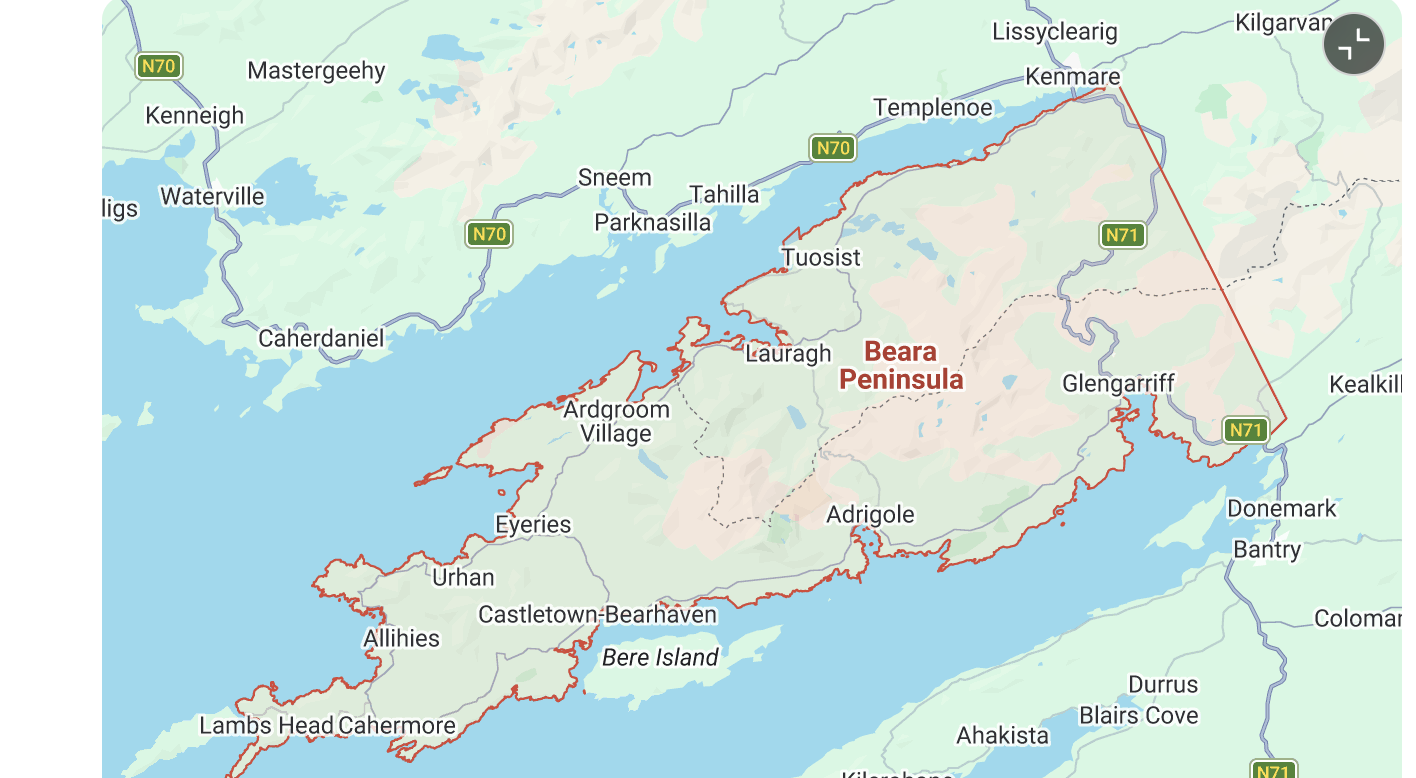
Most but not all of the Beara Peninsula is in Co. Cork with a section in Co. Kerry. The Barony referred to was notorious as it was in effect ruled by the Whites of Bantry (later Lord Bantry) and various Septs of the O’Sullivans mostly but not all Catholic. In theory they lost everything but in fact retained effective control allied closely to the Whites of Bantry and also Lord Kenmare. Most of their tenants who they rackrented would have been far better off under Protestant Landlords
There is a significant amount of correspondence in the Cork Archive in the Paddy O’Keeffe (Bantry businessman and historian ) papers with Lyne. Ranging on genealogy and history.
Courtesy Irish Times
Gerard Lyne was keeper of manuscripts at the National Library of Ireland (NLI) and a noted scholar of 19th-century agrarian Ireland. Born in 1944, he was brought up on the Kerry side of the Cork/Kerry border on the Beara peninsula where, near Ardgroom, in the 17th century, his first known direct ancestor, Dr Dermot Lyne, took a lease of lands. In 1698, Dr Lyne extended his holdings to Kerry, a small portion of which remains in Lyne’s family.
From this link derived his interest in Irish social history which lead to contributions to learned journals, notably, the Kerry Archaeological and Historical Society. He was co-founder, with Canon Thomas Looney, of Éigse Sheáin Úi Shúilleabháin (UCD folklorist) and regularly wrote for his parish’s award-winning Tuosist Newsletter . In 2005 he received the annual Kerry Heritage award.
A kinsman also to Daniel O’Connell, his history studies at UCD led him to a master’s on O’Connell and the Catholic Association and an assignment as assistant editor of the Correspondence of Daniel O’Connell.
Much of this work was carried out in the National Library of Ireland, where he became a permanent staff member in 1973 following a period teaching in Dublin, a stay in London and a time as a sub-editor in The Irish Times. He remained in the NLI until his retirement in 2009.
While, occasionally, wistfully saying that he would like to have been a journalist, he developed and retained a deep love for the NLI where he held various positions in Periodicals, the Genealogical Office, becoming surveyor of manuscripts and later keeper of manuscripts.
It was in this role as keeper of manuscripts that he came into his own. Operating, initially, in a period of tight financial restraint where, frequently, bidding on the open market for important items had to be foregone; happily, his tenure of office saw the pendulum swing allowing for many important acquisitions. Inter alia, whether through donation or purchase, papers of James Joyce, Seamus Heaney, Edna O’Brien and IQA (Ireland’s LGBT Society) were acquired.
Attending auctions, he was always cautious with the public purse. His convivial disposition ensured that he was on good terms with booksellers and literary figures; thus, he frequently got “the nod” when items were coming on stream which might, otherwise, have been missed. And his natural rapport with writers and accessibility are attested to in his many acknowledgements in contemporary publications.
During this period of financial largesse he oversaw the cataloguing of neglected estate papers which became the domain of specially employed archival students, thus ensuring a rich vein of native material for future scholars. He had an unerring eye for recruitment and loved seeing staff develop under his tutelage. Scholarly and knowledgeable, his helpfulness befitted his sense of the library’s serving learning and scholarship.
Becoming secretary of the almost defunct NLI Society, he revived its fortunes through his enthusiasm and a programme of stimulating lectures.
His ability with English was first endorsed when, in 1963, while a student at Cistercian College, Roscrea he won first prize in an all-Ireland schools’ essay competition. But despite being advised that it was cramping his imagination, he chose history rather than English for further studies.
His unique insight into the mindset of the dispossessed Gaelic aristocracy and the Catholic middleman within the new social hierarchy of a planted Munster underpin his books: The Lansdowne Estate in Kerry under WS Trench 1849-72 (2001) and Murtaí Óg (2017). The. (2017). The former was awarded the biennial NUI Irish historical research prize inspiring the RTÉ documentary Land is Gold.
The writer Eugene McCabe noted the “other-worldly aura of his personality” and his valuing “of a folk ballad full of awkward rhymes and unscanned lines as much as great lyrics by Yeats.” McCabe wrote of his ability “to spot the nugget of gold where others see only dross and fix it in that phenomenal memory of his.”
Being himself able to hold a note and deliver expressive renditions of folk song and ballad, Lyne’s liked nothing more, whether in Kerry or Dublin, than to visit a hostelry where a sing-song might ensue before evening’s end.
He passed away on June 5th, 2019 and is survived by his brother, Vincent , sister, Annette, sister-in-law, Elizabeth; nephews, Joseph and John; nieces, Anne Marie, Deirdre and Fionnuala. Suaimhneas síoraí dó.
Meeting of Select Vestry, Skibbereen, West Cork, 10th May 1832, to appoint Officers of Health under Statute of the 59th year of His Late Majesty, King George 3, p. 31
Early Church Wardens, 1699, Bishop Mann Visitation of Church of Ireland Dioceses of Cork. Ref D121.1. 1827 Parliamentary Return of Vestries, 1851, 1861 Visitations, p. 31
1824. Cover letter and memorial from the church wardens of the parish of Fanlobbus, Dunmanway, County Cork, concerning prosecution of Sabbath profaners, p. 32
West Cork Select Vestries. 1885-1890, p. 32
March 1798. Rosscarbery, Drimoleague, Castletownbere, Select Vestries meeting to Levy a Rate to provide Four Men to Serve in Militia and to Levy Seven and a Half Pence Per Gneeve. Further meeting August 1803 to levy £1-6-o per ploughland to raise 5 men for Militia and £5-13-9 on town of Rosscarbery. Cost of Levy for Cork City and County, p. 32
Late 18th early 19th Century Interplay of the Select Vestries of the Church of Ireland (State Church) in Local Administration, Barony of Carbery, Castlehaven, Drimoleague, Durrus, Cess Payer Representatives Named, p. 32
1851 Visitation Book West Cork, Church of Ireland parishes, Population 1834 and 1851, Schools, Parish Clerks, Church Wardens.p. 32
1830 keeping the Sabbath in Clonakilty, p. 32
Townlands and Placenames, 1794 Principal Inhabitants Thanks to Government, 1870 Registered Vestrymen, Kilmeen Parish History, 1975 Dan O’Leary, Funded by Jerry Beechinorp. 32
1793-1803. Cork Grand Jury Returns including provision for Militia from 1795., p. 32
The Military Levy was raised through parishes by the Churchwardens, the parishes were subject to a levy or a bounty to be paid in lieu. The surviving records of Drimoleague and Castlehaven Select Vestries confirm this., p. 33
1757 Castlehaven, (Skibbereen), Select Vestry Records, shows interaction of parishes in road building: Cullane, Daniel, app. Director of the High Way in CTend 37. VM 4 OCT 1757., p. 33
March 1798. Rosscarbery Select Vestry meeting to Levy a Rate to provide Four Men to Serve in Militia and to Levy Seven and a Half Pence Per Gneeve. Further meeting August 1803 to levy £1-6-o per ploughland to raise 5 men for Militia and £5-13-9 on town of Rosscarbery, p. 33
Cork Grand Jury (Civil Jurisdiction) To 1899, p.33