
Rooska:
Moulivard:
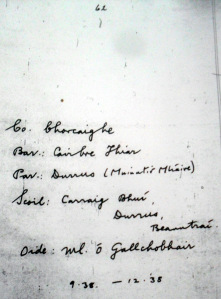
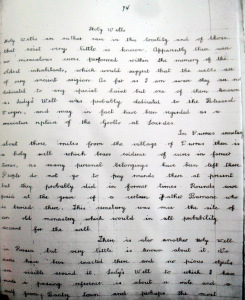
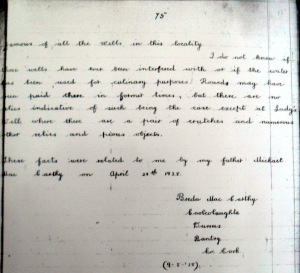
Rounds, Holy Wells, at Rooska, Moulivard and Father Bernane from 1938 School Folklore Collection, Carrigboy National School, Durrus, West Cork.
From Breda McCarthy, Coolcuaghta.
06 Wednesday Apr 2016
Posted in Uncategorized
Rooska:
Moulivard:
Rounds, Holy Wells, at Rooska, Moulivard and Father Bernane from 1938 School Folklore Collection, Carrigboy National School, Durrus, West Cork.
From Breda McCarthy, Coolcuaghta.
06 Wednesday Apr 2016
Posted in Uncategorized
• Ahagouna (Irish: Ath Gamhna, meaning ‘Ford of the calves’). In Clashadoo town land.
• Ardogeena (152 acres) (Irish: Ard na Gaoine, meaning ‘Height of the flint stones’). On the east side is Lisdromaloghera (Irish: Lios Drom Luachra, meaning ‘Fort of the rushy ridge’)
• Ballycomane (1349 acres) (Irish: Baile an Chumain, meaning ‘town of the little valley’). Part of it is Ballinwillin with a boulder burial,with the remains of a millrace which may have been used by monks at the nearby church of Mouliward, ringfort and standing stone pair. Mass rock in Vincent Hurley’s farm. Former graveyard in Sam Attridge’s lands no remains. The oldest family are probably the Hurleys (Vincents), they moved from Ballnacarriga outside Dunmanway and Darby Hurley who held Ballycomane Middle was evicted by Lord Carbery when a rent payment was missed, the farm was then given to the Vickerys c 1770…
View original post 1,367 more words
05 Tuesday Apr 2016
Posted in Uncategorized
Taken from a dark microfilm quality poor. Skibbereen Eagle, National Library, Dublin.
Denial March 1862 by John P Hayes, that he compiled ‘Skellig List’, circulating in Skibbereen accompanied by Statutory Declaration.

05 Tuesday Apr 2016
Posted in Uncategorized
05 Tuesday Apr 2016
Posted in Uncategorized
Skellig Lists, Bandon 1843, Ballydehob 1912, Celebration of Skellig Night, South Mall, Cork 1845.
http://www.irishcultureandcustoms.com/ACalend/SinglebyAshWed.html
https://irelandsotherpoetry.wordpress.com/2008/03/28/the-skellig-lists/
http://sources.nli.ie/Record/PS_UR_021652
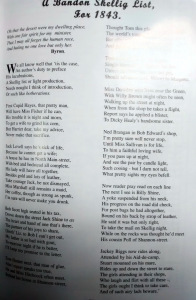
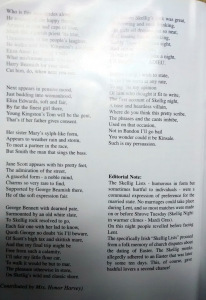

The Skellig
(2nd edition and supplement)
1910
By John Thomas (Jack) Roycroft b. Jan. 2, 1889, son of Samuel James Roycroft and Martha Skuce
The closing night of Shrove is here
All dark and stormy wild and dear
While o’er the road to Skellig Rock
The lads and lasses are seen to flock
Alone I stand and view the scene
Well knowing what this march doth mean
An even number forth doth go
Forth to that rock for weal or woe,
I scan the figures as they pass,
Along o’er the heather and dewy grass,
I think I’ve counted about two score
Yet indeed there may have been many more.
Some faces look merry, some look grave,
While dresses flutter and tresses wave.
And the stars through the clouds peep merrily down
To…
View original post 2,737 more words
05 Tuesday Apr 2016
Posted in Uncategorized
Day with Destiny, Michael Collins, leaving Eldon Hotel, Skibbereen, West Cork, 22nd August 1922. 
 22nd August 1922
Courtesy De La Salle Past Pupils Union, Skibbereen, ‘And Time Stood Still
05 Tuesday Apr 2016
Posted in Uncategorized
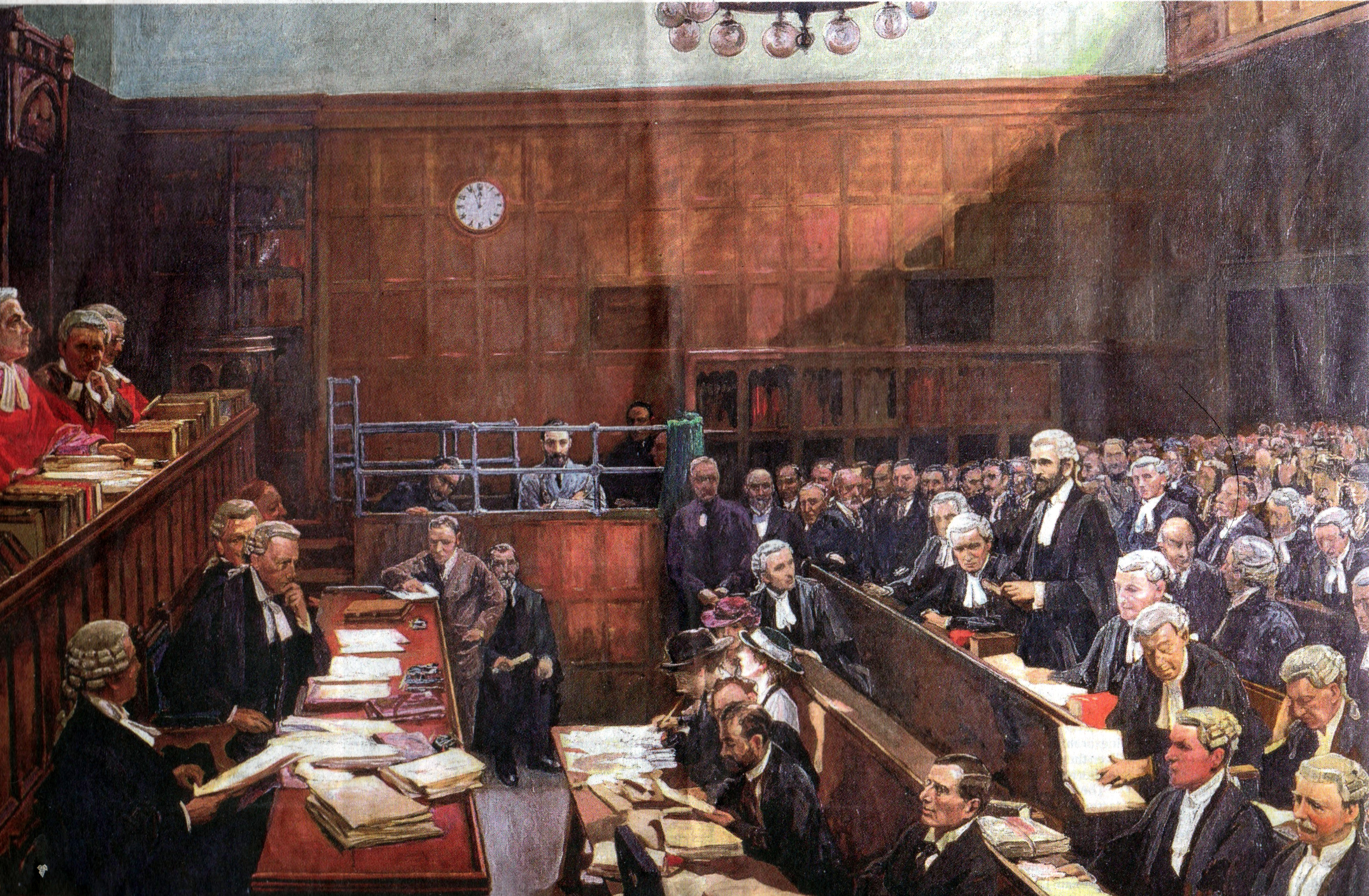
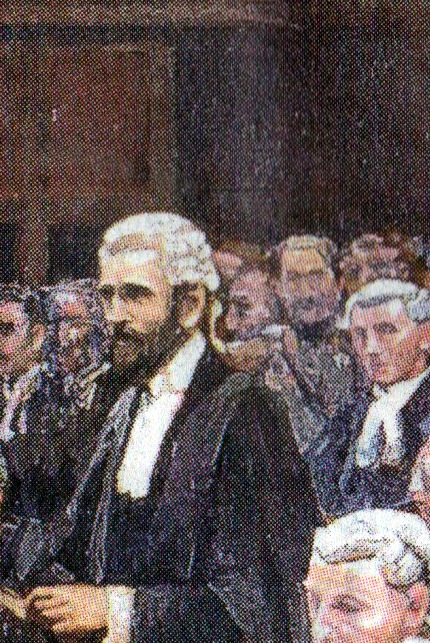
Sir John Lavery’s 1916 oil painting, High Treason, Court of Criminal Appeal: The Trial of Sir Roger Casement, is a major 10×7 foot artwork documenting the 1916 appeal of Irish nationalist Roger Casement. Painted from the jury’s perspective, it captures the courtroom scene, featuring over 40 portraits, with Casement central
The painter was a rather unlikely presence: Sir John Lavery, born into a Catholic family in Belfast, was renowned for his portraits of English high society, and his studio had been visited by royalty. He had been invited to record the appeal trial by the presiding judge, Sir Charles Darling, a former client of his. Yet, as Casement noted, the painter “came perilously near aiding and comforting” the prisoner in the way he “eyed Mr Justice Darling’s delivery” of the verdict confirming the death sentence. Casement also noted that Lavery’s wife, Hazel, looked “very sad” at the same moment. The uneasy relationship between Lavery’s position as part of the imperial artistic establishment and his growing sympathies with Irish nationalism would produce a painting at once monumental and hard to place.
Lavery’s record of this moment in history is literally the work of an insider: it is possible only because Lavery was respectable enough to be given privileged access to the trial. Lavery later claimed that Darling had commissioned the work. Yet the result is not the grand image of imperial justice that might have been intended. The conventions of the genre are honoured in the large scale – three metres wide and two metres high – and the meticulous portraits of dozens of individuals. A sense of dramatic moment is created by the slanting light and by the clock that approaches the fatal hour of 12.
But the judges are almost statuesque. All the animation is given to Casement’s defence counsel. And the centre of the picture is occupied by Casement himself, who seems simple and human amid the pomp. He looks not at his judges but at the viewer. This is to be the judgment not of a mere court but of history.
This ambivalence marked the fate of the painting itself. Lavery did not complete it until the 1930s. If Darling commissioned it he did not pay for it: it remained in Lavery’s studio until his death, in 1941. The painter left it in his will to the National Portrait Gallery, in London, and the Royal Courts of Justice, but neither institution especially wanted it. After years in storage at the NPG it was hung in the office of the senior clerk of the court of criminal appeal in London, removed from the public gaze, for fear of arousing the wrong kind of attention from “people who considered Casement a martyr”.
The painting was lent to the Honorable Society of King’s Inns, in Dublin, in 1951. The message from the lord chancellor’s office accompanying the loan said, “We can adopt the suggestion of lending it to the King’s Inns on indefinite loan, which means that we can forget to ask for its return.”
Yet Lavery surely knew what he was doing when he left High Treason to British institutions in his will. For what he had produced was not an Irish painting or a British one but an image of two histories intertwined and at odds.
You can read more about this week’s artwork in the Royal Irish Academy’sDictionary of Irish Biography; see ria.ie


05 Tuesday Apr 2016
Posted in Uncategorized
For post on Freke- Evans estates
https://durrushistory.wordpress.com/2011/10/09/carberyevansevans-freke-estate-durrus/
Another survey of the Shuldham Estate in Dunmanway in the general area was done in 1801-3 possibly for raising a mortgage on the estate.
https://plus.google.com/photos/100968344231272482288/albums/5930280599610320513
A surveyor Thomas Sherrard prepared maps of the estates of Sir John Freke-Evans including Ballycomane in Durrus which map was done in 1788. In the mid 1500s the Ballycomane lands came into the possession of the Coppinger family by way of mortgage from the McCarthys and were still Coppinger lands at the time of the Down survey 1660s.
The Map divides the townland into
West 210 acres arable and mountain pasture
Middle 266 acres arable and pasture
Lisheen 305 acres arable and mountain
Mountain 318 acres coarse mountain
East 213 acres arable and mountain
The owners of nearby townlands are given
Glenlough, Moulivard and Clonee Hugh Hutchinson.
West Clonee Arthur Hyde (probably of Castlehyde House, Fermoy now…
View original post 49 more words
05 Tuesday Apr 2016
Posted in Uncategorized
The Ó Dalaighs (Dalys) of Muintervara, West Cork, Rymers/Poets to the McCarthys and O’Mahonys from c 1300, founders of Bardic School, by Oral Tradition where the Sons of the King of Spain Attended.
Courtesy Dr. Jane Fitzpatrick, Four Courts Press.
http://www.thesheepsheadway.ie/index.cfm/page/kilcrohanechurch
Click to access odaly-bardic-school-kilrohane.pdf
View original post 116 more words
04 Monday Apr 2016
Posted in Uncategorized
The Linen and Flax Industry in Dunmanway, West Cork, Fines for Steeping Flax in the River Bandon and other Rivers , 1835.
View original post 46 more words
 West Cork History