The obituary of the Rev. Charles ~Donovan in the Skibbereen Eagle in 1893 is most unusual insofar as it included a very detailed genealogy. Maybe the Rev. Charles or one of the family wrote it; it looks like it relies on family papers. His career is ironic as a rabid Proselytiser preying on the starving Catholics of the Mizen Peninsula; you would not imagine his genealogy. His ancestor Daniel O’Donovan, head of Clan Cahill fought with his O’Donovan Regiment for King James in the battle of the Boyne in which four of his sons dyed. HIs grandfather Richard O’Donovan on his marriage to an English woman had to change his name to Donovan, he may have been a Catholic as he had to post a bond for £1,00 to the Church of Ireland Bishop of Cork. HIs son Charesl was a senior civil servant in Bengal and a Magistrate. His Indian born grandson Dr.Charles Donovan was a world renowned medical scientist. In a sense it shown family survival consequential on the Penal laws and adaptation.
Rev. Charles Donovan (1812-1893), p.1
Funeral and genealogy, p. 3
Among the funeral attendance, p. 14
Proselytiser, 16
1847 Plea for the preservation of the poor in Schull.p. 14
1849 Protection Meeting Ballydehob, p. 16
1849 Opening of Rev. Spring Protestant Church, Cape Clear, p. 18
1856 attending funeral of James 2nd Earl of Bandon, p. 19
1889 funeral of Archdeacon of Ross, Rev. Dr. Woodroffe, p. 20
Charles Donovan, JP., Bengal, died 1915 aged 74. His son known in Ballinadee as Judge Donovan, p. 21
1905 Judge Donovan, Courtmacsherry Regatta, p. 23
Grandson Colonel Doctor Charles Donovan, (1863-1951), p. 24
His ancestor Daniel O’Donovan, head of Clan Cahill fought with his O’Donovan Regiment for King James in the battle of the Boyne in which four of his sons died., p. 28
His grandfather Dr. Richard O’Donovan surgeon of Nohoval, p. 30
Title: The O Heas of southwest Cork Author: Collins, John T. Journal of the Cork Historical and Archaeological Society, 1946, Vol. 51, No. 174, page(s) 97107 Published by the Cork Historical and Archaeological Society Digital file created: July 16, 2015
Chancery Rolls, 1624, Bantry Pilchards, c 1600 Landing Spanish Soldiers in Kinsale, Unbought Wine Left Behind, c 1600 Donnogh O’Leary, Kilbarry, Dunmanway or Muskerry, 1628 O’Driscoll, Baltimore/McCarthy, Kilbrittain, James Gallway, Ibane (Clonakilty), O’Sullivan/Coppinger/O’Driscoll, Baltimore, c 1600 Whitcomb, Merchant, Kinsale, Daniel and Dominic Roche v William and Dorothy Gage, lands at Crookhaven, Kinsale, 1625 Morrogh O’Hea
1656. Petition of The Following, ‘That Daniell O’Donovand als O’Donovane of Curraghnylickey (Drinagh), Most Knew Him before 1641 Rebellion, as a Civil Honest, and Quite Gentleman’, Samuell Browne, Edward Renys, Edward Clerke, Francis Barnett (Mark) Mathew Perrott, Amos Bennets, Robert Osborne, Dermod O’Mahowby, Samuel Skinner, William Holcombe, Thomas Attridge, Barnabe Witcherly, Der. Coughlan, Will Corlless, Thomas Recraft (Roycroft), Mathew Sweethman (Sweetnam), Geyles Smith (Mark), Timothy Coughlane, Ja? Base, Abel Marshall, John Vallyes (mark), Ralph Fuller, Teig Has (O’Hea?), Phillip Otrrydge (Attridge), John Baily, John Abbott, Philip Madoxe, Rowland Neild, William Ottrydge (Attridge), Thomas Hungerford, Samuel Poole, James Dyer, Richard Nobbs, John Chamberlen (Mark), Bart Philpot, Richard Skines (Skuse?) (Mark), Henry Abbott (Mark), Richard Chambers (Mark), Thomas Duggen.
1718. Will of James O’Hea, Killkeirane, Clonakilty, Co. Cork, be be Buried in Ancestral Tomb, Timoleague, O’Heas in Convert Rolls.
On the forfeiture of O’Hea lands due to rebellion some held in trust by Townsend family on their behalf. later substantial lot of townlands let on favourable terms
James O’Hea, 1795, Greenfield. Son of James O’Hea, Kilkerran will dated 1720. Brother James, a Barrister, other brother John, officer North Cork Militia served in Wexford 1798. 1791 Meeting as ‘James Hea’, at the Kings Arms Tavern Cork of Members of Hanover Association (Landowners/Magistrates) re Whiteboys.
John O’Hea Esq, -1847), listed 1838, Shannon Square, Clonakilty. 1828 seeking reform of the House of Commons. Honoria Deasy who was a Daughter of Rickard Deasy married John O’Hea (Magistrate from 1838-1843) in 1826 and they had 10 children, the youngest Alfred who was born in 1847 just a few months before the death of his father. Attending an 1843 meeting in Clonakilty of Cork, Kinsale, Skibbereen Turnpike Trust. Resigned 1843 over dismissal of Magistrates for attending Repeal Meetings. Following a report to the Lord Chancellor regarding the activity of Magistrates sympathetic or attending a dinner in honour of Daniel O’Connell and Roche a number were superseded or resigned. Testimonial of John O’Hea, Esq., 1847 distribution for Clonakilty of New England Relief Committee Famine Relief. Died Clonakilty, Co. Cork, 1847. Included Thomas Allen, J.P., Allin and Co Shannonvale, James Redmond Barry Fishery Commissioner, J.P. Glandore, W. J. F. Barry son of Redmond Glandore, Rev. J. Beamish, Kilmalooda, Francis Bennett, Clonakilty, William Bennett Clonakilty, John Callaghan Clonakilty, Daniel Clanchy, J.P., Charleville, John Coghlan Clonakilty, James Comyn Cobh, C. Connell and Co Ballinascarthy, J. Nelson Crofts, Clonakilty, Eyre Croke Croker, Ballyra, Thomas Deasy, Clonakilty, Patrick Desmond Clonakilty, Richard Dennehy, John Donovan, Clonakilty, Jeremiah Donovan brother of Rickard, Midleton, Rickard Donovan, Clerk of Crown (State Solicitor) Cork, Joseph Dugan, Clonakilty, William Ffolliott, M.D. Clonakilty, Henry Franks Clonakilty (Probably of extended Kearney Garretstown House family), Alexander Grant Clonakilty, P. B. Grifin, G. F.Hardy Cork, Miss Anne Gallwey, Kilkerran, Charles Gallwey Kilcoleman, Michael Gallwey J.P. KIlkieran House, Henry Gallwey, Greenfield, William Gallwey, Kilcoleman, Major Hill Late 54th Regiment Clonakilty, Daniel Kelly Clonakilty, M. Irwin Clonakilty, J.E Lucas, Ring, Clonakilty, Dr. Lucas, Richsfordstown, O.H. Marmion, Skibbereen, Nicholas Daniel Murphy, Cork, Major J.H.O. Moore, 35th Regiment Jersey, Daniel McCarthy Skibbereen, John McCarthy Clonakilty, T. McCarthy Downing Solicitor, Skibbereen, Richard Boyle Norcott, Skibbereen, F.J. Power, Bank Manager, Clonakilty, Rev. J. Quarry, Clonakilty, Patrick Scott, Dublin, William Scott, Mamore House, Rev. Henry Stewart, Rathbarry, James Sweeny, Clonakilty, Daniel Sullivan, Clonakilty, James Toohig, Clonakilty, Winispeare Toye, Clonakilty, Thomas Richard Wright, Solicitor Clonakilty. Michael O’Hea, (1866-, 1895, Rock Cottage, Timoleague, listed 1913. Farmer, has Irish. 1896 donor Rosscarbery Church organ fund. 1901 Subscriber Clonakilty Agricultural Society. 1901 Officer Clonakilty Agricultural Show. Attending 1898, enormous funeral of Dan O’Leary, JP, aged 71, Clonakilty, probably draper. Contributor the indemnity fund 1899 for the election petition of John Walsh. Butlerstown, Vice Chairman, 1904 Timoleague Athletic Sports. 1910 member Courtmacsherry Regatta Committee. March 1916 Courtmacsherry recruitment drive. In the early years of World War 1 there was strong support from all classes regardless of religion or politics in Ireland towards recruitment to assist the British. There was hardly a townland in the country that did not have recruits. Additionally the farmers prospered due to high food prices. However at least in nationalist Ireland from mid 1916 and into 1917 when conscription was suggested the mood changed. Perhaps around 50,000 Irish born men perished for nothing, an epic disaster for young Irish men. Ireland was a colony, in contrast to another small Northern European State, Denmark was independent and neutral. It is thought that about 800 Danes died in the conflict.
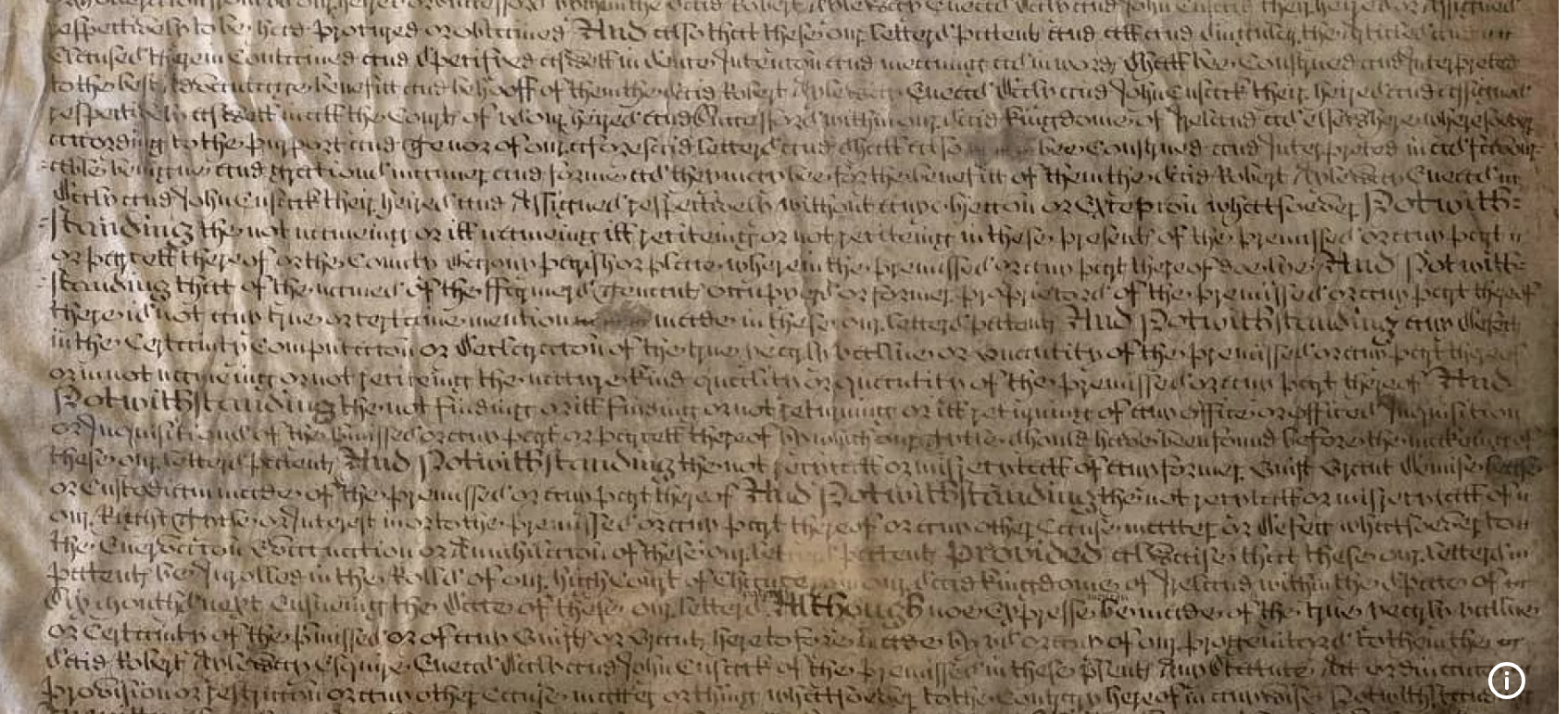
A meticulous conservation project has begun to safeguard one of Ireland’s oldest surviving paper documents, The Guardian writes, dating back to the medieval period.
The document in question is an ecclesiastical register, approximately 650 years old, that once belonged to Milo Sweteman, the archbishop of Armagh from 1361 to 1380. Experts at the Public Records Office of Northern Ireland (PRONI) are now working to repair its fragile pages as part of a broader initiative to preserve vital historical records from the medieval period. The register, which contains drafts and copies of legal papers, letters, receipts, and wills, offers a fascinating glimpse into the ecclesiastical workings of the time.
Sarah Graham, the head of conservation at PRONI, explained the rarity of such documents, noting that paper of this age is incredibly scarce in Ireland. “Paper that pre-dates 1450 is particularly rare,” she said, adding that the material used in the Sweteman register likely came from Italy and Spain, regions that the archbishops frequently visited. This discovery came from research into the document’s watermarks, shedding light on the trade of paper in medieval Europe.
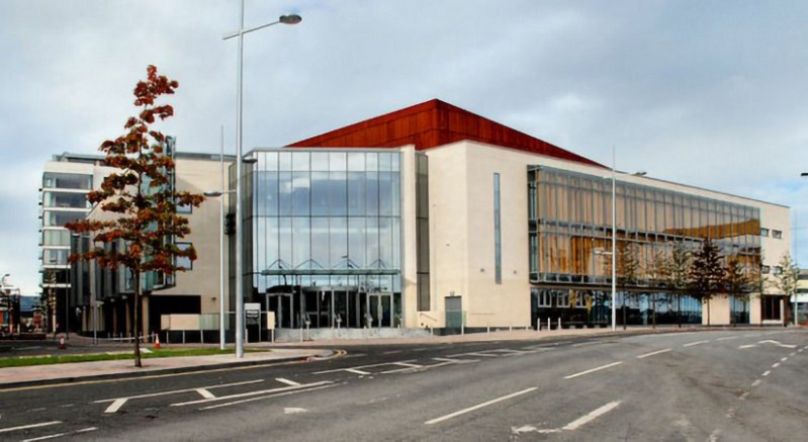
The Public Records Office of Northern Ireland, Belfast.Albert Bridge / CC licence
The Sweteman register is not the first to undergo this meticulous conservation process. The register of Archbishop John Swayne, dating from 1418 to 1438, has already been completed, with a digitised copy and translated summary now available online. This project is part of the Virtual Record Treasury of Ireland, an effort to reconstruct the nation’s historical archive, which was largely destroyed in a fire during the Irish Civil War in 1922.
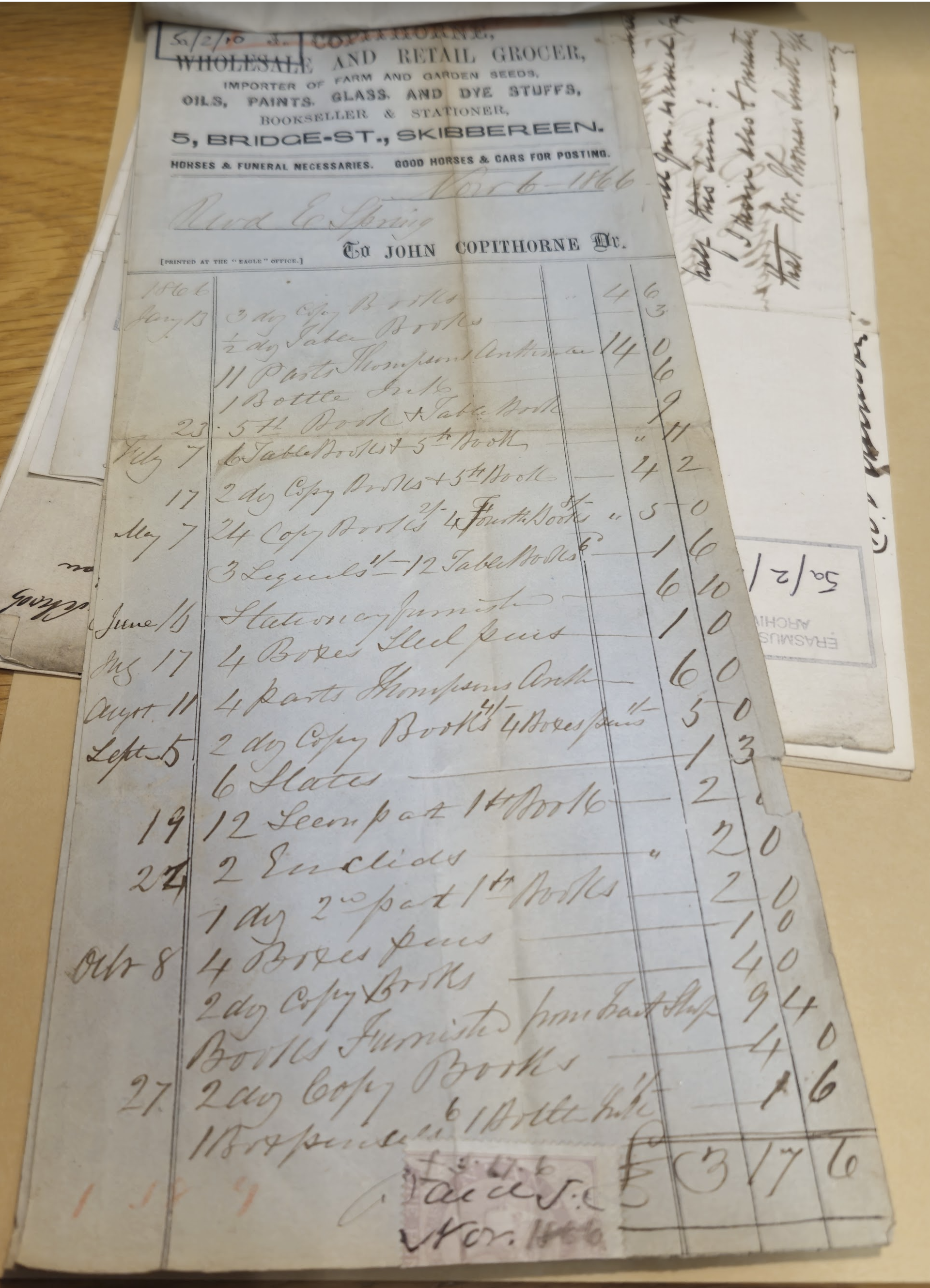
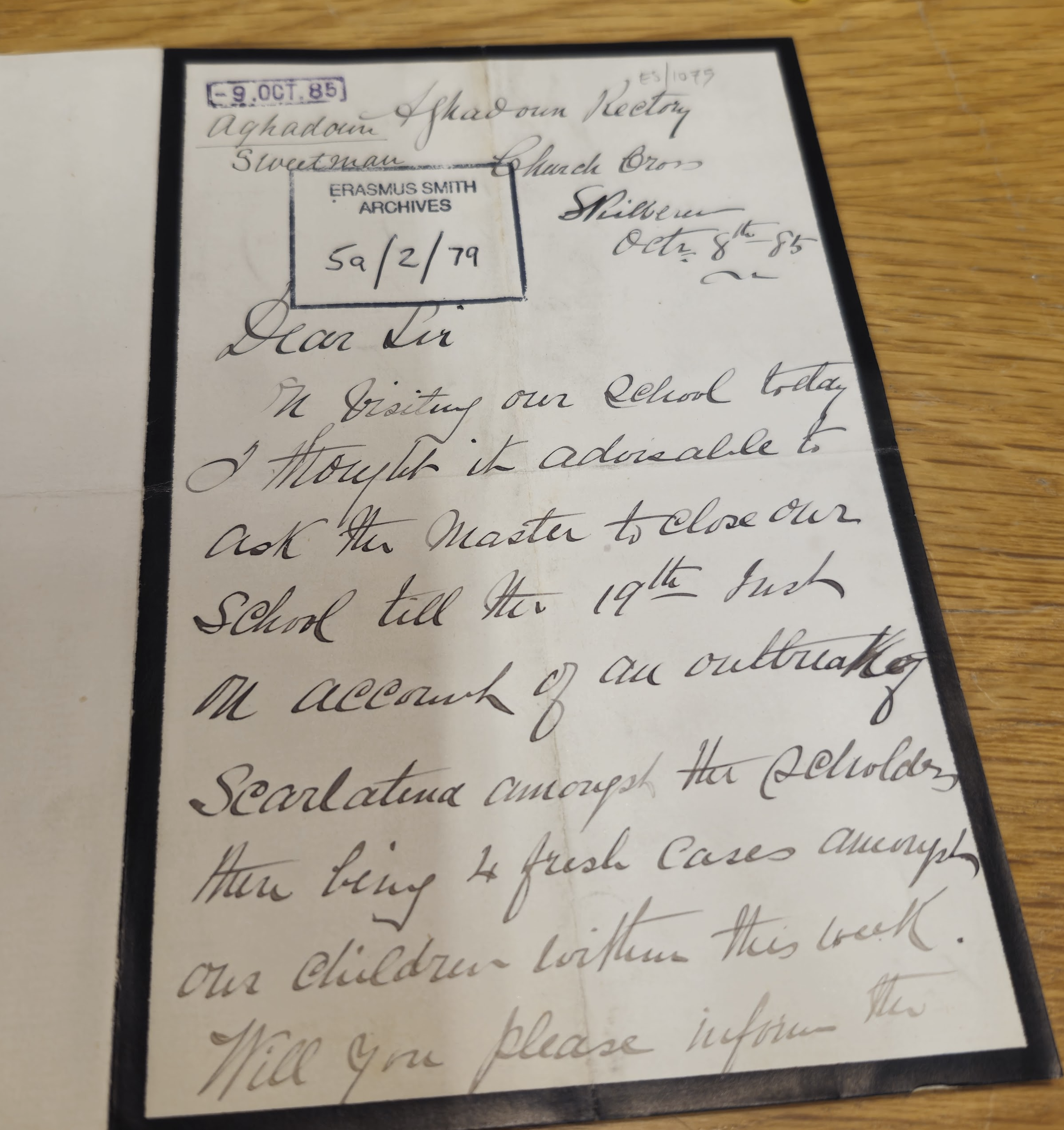
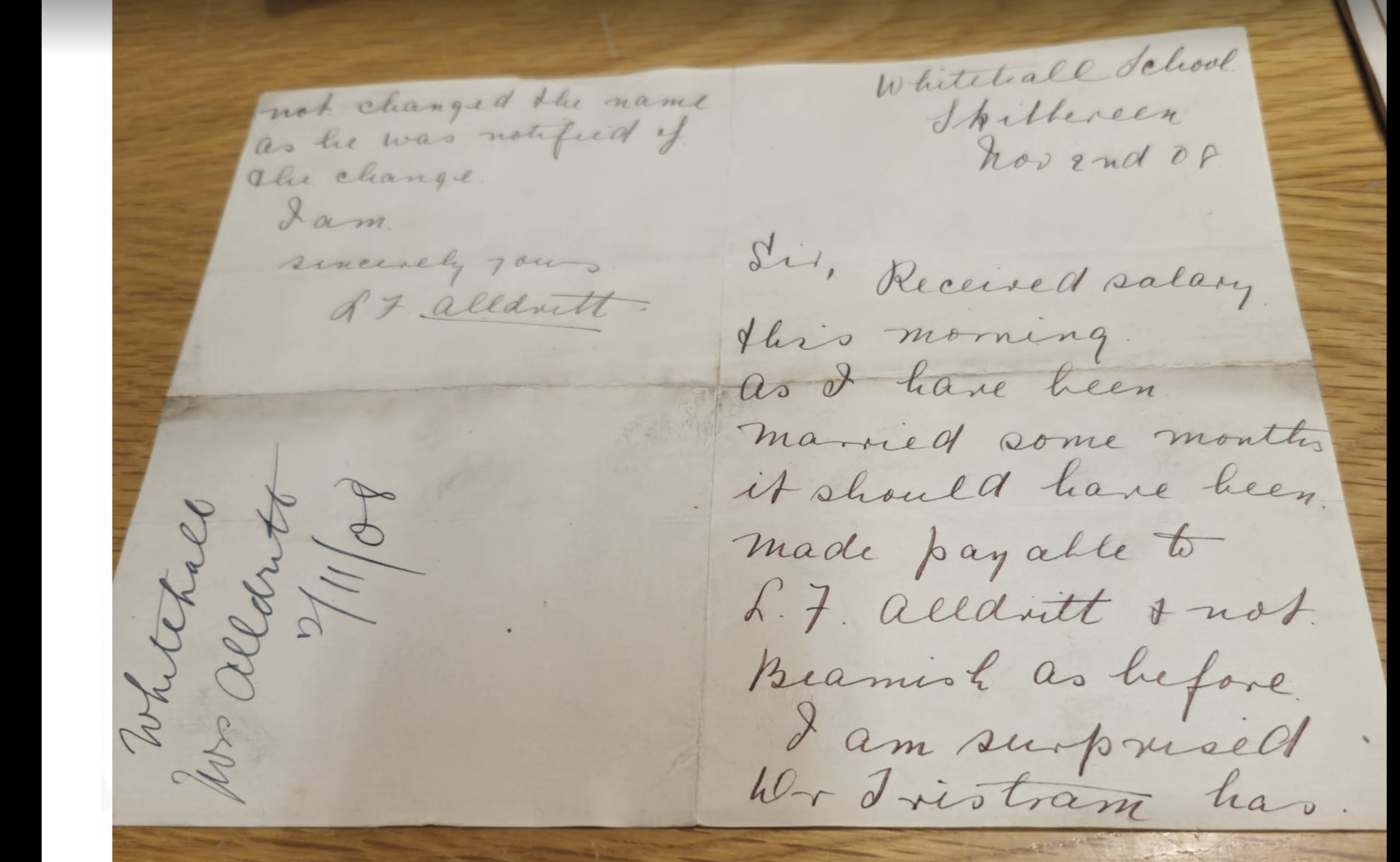
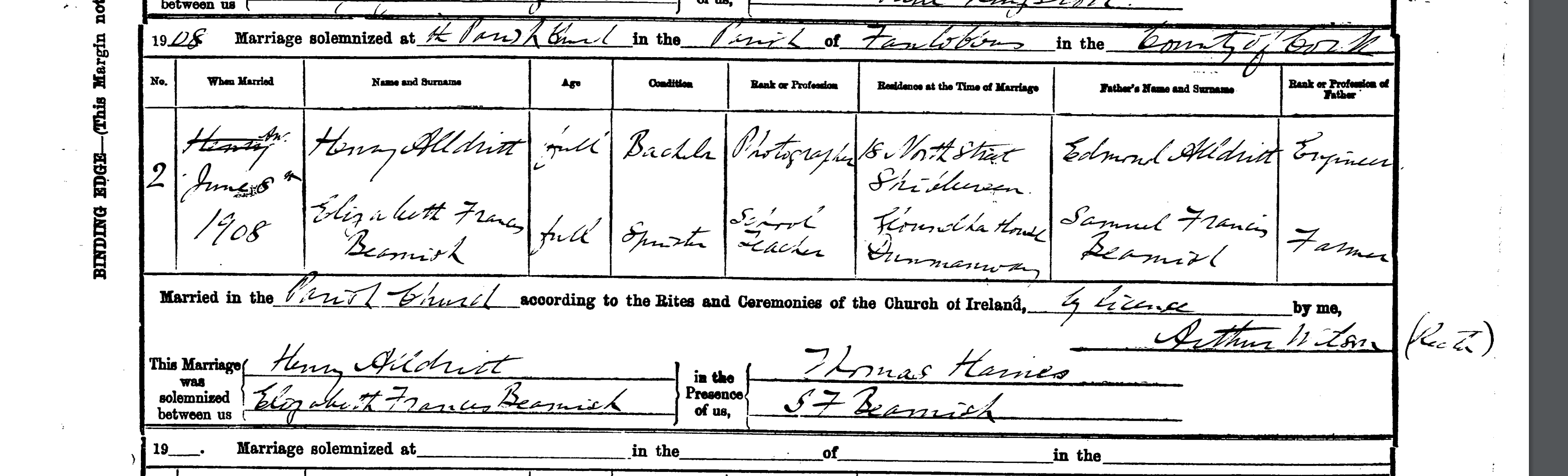
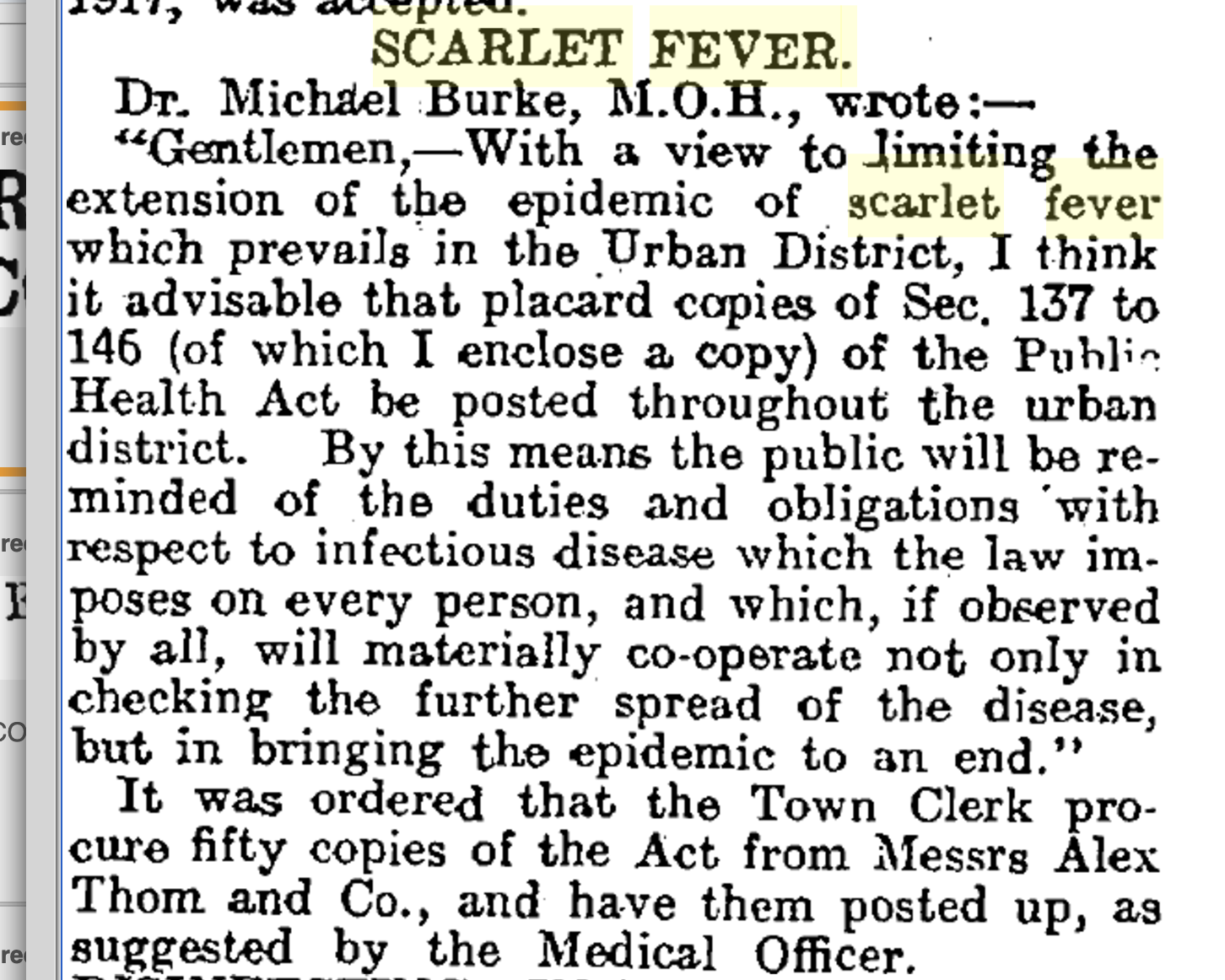
Aughadown (Erasmus Smith) School. 1866 Invoice From John Copithorme, Skibbereen for School Supplies. School Closure 1885 for Outbreak of Scarlatina. 1909 Letter from Mrs. Alldritt teacher (Nee Elizabeth Frances Beamish, Dunmanway) seeking payment of her Salary to her Husband.
.
..
English School Summary School Name Aghadown, Whitehall County Cork
Property Documents Correspondence 1866-1887, 1888-1919 Architectural Plans 1812 Date of Sanction 1828
Notes Patron Rev. H. H. Beecher Grant £ Salary Discontinued 1919 Other Place Names
School Name Baltimore County Cork
Property Documents Correspondence 1882-1918 Architectural Plans Date of Sanction 1883
Notes Patron Rev. J. Jones Grant £ Salary Discontinued 1916 Other Place Names
School Name Bandon County Cork
Property Documents Correspondence 1867-1882 Architectural Plans Date of Sanction 1821
Notes Patron Grant £ Salary Discontinued 1882 Other Place Names
Captain Edmund Anderson Shuldham, Coolkelure, Dunmanway, listed 1854, A.D.C. to Lord Lieutenant, subscriber 1861 to Smith’s History of Cork. Niece Georgina, Countess of Bandon. Built Coolkelure Church, Dunmanway, 1865. Dunmanway Shouldhams descend from Shouldham/McCarthy marriage c 1720. Land record, Major Shuldham, 1870, 13,039 acres.
Leopold Shuldham 1856, Coolkelure, Dunmanway, Resident
W.L. Shuldham Esq., Coolkelure, Dunmanway, sitting Dunmanway 1835, 1835 Subscriber Lewis Topographical Dictionary of Ireland 1837.
Convert Rolls from Catholic to Church of Ireland, Penal Laws:
Anstace Shuldham, possibly nee McCarthy
1737
Spinster, Co. Cork
The Shouldham Estate in Dunmanway West Cork comprised over 10,000 and arises from the marriage of Shouldham from Kerry/Limerick to a McCarthy heiress in Dunmanway in the early 1700s. This lady may be her or her daughter.
In August 1766 800 or 900 acres at Gleanarough wee advertised during the minority of Master Shuldam aged 7 apply Dr Creagh or James Galway Tullyglass, Enniskeane
Magistrate:
Leopold Shuldham 1856, Coolkelure, Dunmanway, Resident
From Landed Estates Database University College Galway
Shuldham/Shouldham – The Shuldhams were originally from Norfolk. In 1690 Shouldham from Dunmanway, the Solicitor General for Ireland, married one of the Whites of Whiddy Island later this line became the Whites of Bantry House. In the early 18th century Edmond Shuldham of Ardtully, County Kerry married Mary MacCarthy, daughter and heiress of MacCarthy Spaniagh of Dunmanway, county Cork. Their eldest son, Edmond Shuldham, held lands in the counties of Cork, Limerick and in the city of Dublin. He was a subscriber to Smith’s History of Cork in 1749. Many members of the family followed military careers. Arthur Lemuel Shuldham of Dunmanyway, and of Pallas Green, county Limerick, had a son Edmond William who was Quarter Master General at Bombay for a number of years. At the time of Griffith’s Valuation General Shuldham owned an estate in the parishes of Oola and Tuoghcluggin, barony of Coonagh, county Limerick. Thomas Apjohn of Pallas was agent for the Shuldhams circa 1840. In 1851, Maj. Gen. Edmund Anderson Shuldham was among the principal lessors in the parishes of Drinagh, Fanlobbus and Kilmichael, barony of East Carbery, county Cork. His estate in county Cork in the 1870s amounted to over 13,000 acres.
Major General Shuldham was involved in famine relief in Dunmanway and was Chairman of the Workhouse Committee taking an active interest in promoting the inmates welfare. This is dealt with in the Cork Archives Dunmanway Board of Guardian papers referred to below.
From the early 18th century marriage the Dunmanway Shoudhams are a sept of the McCarthys through the female line showing the resilience of this line over the millenia.
From Convert Rolls, Anstace Shuldham, possibly nee McCarthy 1737 Spinster, Co. Cork. The Shouldham Estate in Dunmanway West Cork comprised over 10,000 and arises from the marriage of Shouldham from Kerry/Limerick to a McCarthy heiress in Dunmanway in the early 1700s. This lady may be her or her daughter.
Cork Evening Post had an ad on the 25th August 1766 letting 800 or 900 aces Gleanrough apply to Dr. Creagh or James Galway at Tullyglass near Enniskeane during the minority of Master Shouldam 7 years old.
In the 1880s Colonel Shuldham was involved in evictions from the Estate which is referred to in the Dunmanway Board of Guardians Minutes now in the Cork Archives: http://www.corkarchives.ie/media/BG83web.pdf
Grave of Shuldham family, Coolkelure,Church of Ireland, courtesy Gordon Kingston. Other family members are buried in Dunmanway graveyard and in Dunmanway church there are stained glass windows to the family one erected late 19th century by O’Donovan D.L. as a memorial to his brother-in-law William Lemuel Shuldham (Cole)
The predecessor of the Cork Archives acquired the papers of the former firm of Wheeler Doherty, Bandon, Solicitors and Land Agents to the estate of the Earl of Bandon in 1971. It is an enormous collection and part was recently archived the inventory runs to over 70 pages.
The Bandon Estate was somewhat unusual insofar as it was not acquired by conquest but on the earnings of Francis Bernard as a barrister in Dublin in the early 18th century and added to later by judicious marriages and purchase.
Reading the inventory it is possible to look at the estate as a commercial concern, the rents paid by the tenants supported a large organization employing many in Bandon in Castle Bernard. At its height the estate ran to over 40,000 acres mainly in Co. Cork but in Dublin and other parts of the country. It was managed professionally from the late 18th century and was audited by Dublin accountants. Apart from the Bandon/Bernard family it supported pensioners and endowed various worthy causes.
In the western estate it recovered the lands in Durrus from the Evansons (it seems it have bought the estate off them in the 1720s and leased it back) it demolished the village of Durrus then a collection of miserable mud cabins. The Archive has rent receipts for the 1730 from the Bernards to Nathaniel Evanson and Jeremy (or Jeremiah) Coughlan, who married his sister around 1700. The Coughlans of Carrigmanus were a little unusual insofar as an old Gaelic family they had become Church of Ireland by 1600 and a long line of clergymen came from the family. It is probable that Jeremy was the grandfather of Frances Coghlan, Upper Clashadoo who married Thomas Dukelow from Cruttees in 1818 and he married in. Thus many of the Durrus Dukelow have a Coghlan descent line and have ancestors who would have ben on the Mizen and Muinter Mhaire Peninsula for perhaps 3,000 years. Jeremy Coughlan was an attorney, the Senescal of Dungarvan and was the Agent of the Devonshire Estates in Wesr Waterford with Andrew ??
The village was lid out with court house, shops, pubs, a hotel dispensary and housing and its present structure dates from this period. The rental shows rent commencing for the houses from 1858.
The ledgers are sometimes difficult to read and names and townlands are not always clear. This is a work in progress.
It might be noted that the estate moved tenants around within townlands or for example from Dromnera to Crottees, from Ballyourane in Caheragh to Clashadoo, from Carrigboy to the Mizen Townlands. There is some evidence that families were moved from the Durrus area to vacant farms in the Bandon part of the estate.
In the 1890s and early 1900s Lord Bandon used Durrus Court as a summer house and enjoyed yachting in the Bay. In the history of St James Church 200th anniversary edited by Francis Humphries there is a reference to Mrs. Roberts of Bandon recalling Lord Bandon in Durrus when she was a child.
The Bernards of Bandon became the Earls of Bandon in 1800. The first of the line originated in Westmoreland in the reign of Queen Elizabeth and his son was Lord of the Manor in Castle-Mahon, Bandon on the outbreak of the rebellion in 1641. After 1702 Francis Bernard invested heavily in land forfeit during the Jacobite years which came onto the market. On 1742 the Durrus lands were purchased from Charles Moore of Tipperary by Stephen Bernard in trust for Frances Bernard. The lands included a fish palace at the Island/Brahalish. and included here are the Durrus lands.
Sometime in the 1850s they came into possession of estates in Durrus, on the expiration of the Evanson’s lease (this was rented at £540 a year), comprising townlands around the village and west to Ahakista referred to in various deeds as ‘six ploughlands of Coolnalong alias Four Mile Water with the sub-denominations of Dromenea and Brahalish. The current village was laid out replacing a collection of mud cabins and a weavers colony during their tenure and they built a hotel naming it the ‘Bandon Arms’, this later became the property of the Philips family. Lord Bandon is reputed to have built the folly at Droumnea, Kilcrohane as relief work in 1847. Their efforts were praised in the local paper in November 1867 where it was said that every inducement is given to tenants to improve their holdings and the good results of liberal landlordism as in the case of the Bandons was to be seen in their estates in the west.
Captain Thomas the mining engineer produced a pamphlet in 1865 and said that a few years ago a few mud thatched cabins were the only habitations to be seen in Carrigbui. In their place neat labourer’s cottages, good shops, police barracks, dispensary, post office and an ornamental and well built hotel under the patronage of the Earl of Bandon can be seen. The exports weekly are some 40,000 eggs with quantities of butter and cattle
Mary Catherine Henrietta Bernard of Castle Bernard daughter of Lord Bandon married Colonel Aldworth on the 30th July 1863 and an address and copy of ‘God’s Holy Word’ was sent by Rev Freke and the tenantry of Durrus to which she returned thanks. At Dreenlomane Mine (operating until c1920) owned by Lord Bandon, Captain Thomas set tar barrels alight on Mount Corrin which illuminated the sky all night and the 150 miners and their wives were treated to refreshments and similar celebrations were held in Carrigbui.
Lord Bandon was an enthuastic exponent of flax growing in the 1860s. On the 22nd February 1864 he addressed a meeting at Carrigbui Courthouse attended by Rev James Freke, Richard Tonson Evanson, and a large assemblage of ‘the yeoman farmers’ of the neighbourhood. He addressed a similar meeting in Bantry a few days before. He mentioned the Munster Flax Society, the imminent coming of the railway, and the establishment of scutching mills to rebut charges of previous failure. He suggested a reduction in the area devoted to potatoes and a little flax to be added. Persons were appointed to do an assessment of what would be planted in each townland next season and bring this to a meeting to be held the following week. Later the Royal Dublin Society appointed a Mr Wilson from the North to provide technical assistance and a flax market was functioning in Ballineen in 1865. A full flax mill was established outside Bandon by James H Swanton in 1865. it might be remembered that the American Civil war was raging at the time making cotton scarce, the growing of flax in West Cork had always thrived during was but declines after. While there are numerous flax ponds in the area the crop never took off like it did in Northern Ireland.
James Francis Bernard (1850-1924) was the 4th earl of Bandon and Lord Lieutenant of County Cork. May Roberts, Brahalish remembers Lord Bandon arriving in the area with a four wheeled car and the Coachman Timmy Burke on top a going to his hunting lodge at the present Durrus Court. Lord Bandon was in Durrus in 22nd February 1864 to promote flax growing. The large farm at Gearamin, Cummer now owned by a German was part of the hunting area. There was some association between the Philips family and Lord Bandon. They managed the estate and their home farm was extensive from Ahagouna to Rusheeniska taking in some of Clashadoo and Gearamin.
Much of the land in Durrus was owned by the Bandon Estate and was managed by the Wheeler Doherty Family (their estate papers are in the Cork Archive Institute but some are still uncatalogued). The previous managers of the estate Edward Appelby and Colonel Henry Boyle Bernard had left it heavily in debt and R.W. Doherty was appointed in 1877. Colonel Bernard (of the Cork Light Infantry Militia) acquired an interest by way of family settlement of 1848 and mortgaged lands including those in Durrus in 1878. In July 1882 Richard Wheeler Doherty Jnr. complained that tenants ‘but principally those of Durrus near Bantry had paid no rent since 1880, his father had said in September 1881 ‘The Land Leagues are destroying the country and a lot of Protestants have joined them … the Protestants at Durrus would pay no rent unless allowed 25% off. More like savages then human beings’.
In 1895 the West of England Insurance Company applied to have the Bandon estate sold to satisfy borrowings of 1814 and further advances in the 1870s. Presumably this was settled as the Bandon Estate had title to sell to the various Durrus tenants under the Land Acts.
In the 19th Century the great land owning families of Co Cork such as the Bandons controlled the administration of the County with the Grand Jury which met as the time of the legal Assizes and decided on matters of policy. When the County Council was established under the Local Government Act of 1898 power passed to the elected councillors and public officials. A family which in 1870 has over 40,000 acres in Co Cork sold the vast bulk of it under the Land Acts to the tenants and now their successors have only a modest bungalow on the once extensive Castle Bernard Estate in Bandon.
In Estudios Irlandes Vol 5, there is a fascinating article by Peter Clarke, of UCD, on the history of bookkeeping in Hedge Schools in the 18th and 19th centuries.
In the Report of The Commissioners of Irish Education 1826 it transpired that over 500,000 children over 70% of Irish children were being educated in hedge schools. Their curriculum was flexible and many included basic business education.
In the 18th century Irish Emigrants to the US including Cornelius Lynch 1740, and Terence O’Neill 1789 taught bookkeeping in New York. In Australia John Kenny taught double entry book keeping in Sydney in 1793.
Peter Clarke’s article suggests that the hedge schools had an important influence through Irish teachers on the curriculum of the American mid west and frontier.