Re smuggling in the 17th century it is worth recalling the context.
After the end of the English Civil War when Parliament prevailed there was a strong view that the English army should be abolished as they might present a threat to the new dispensation. The compromise was a largely reduced army with a standing garrison of 15,000 to be based in new barracks in Ireland. This was to be a charge on the Irish Exchequer. The building of these barracks gave arise to the Irish Barack towns, many of which only closed in the last 30 or so years.
So whenever an old lad in the 1740s had a smathán or smoked his pipe not only was he contributing to the British occupation of Ireland but paying for their garrison.
Clearly when the ‘legal’ price of excitable items excess the market price by a wide margin the opportunities for smuggling are immense.
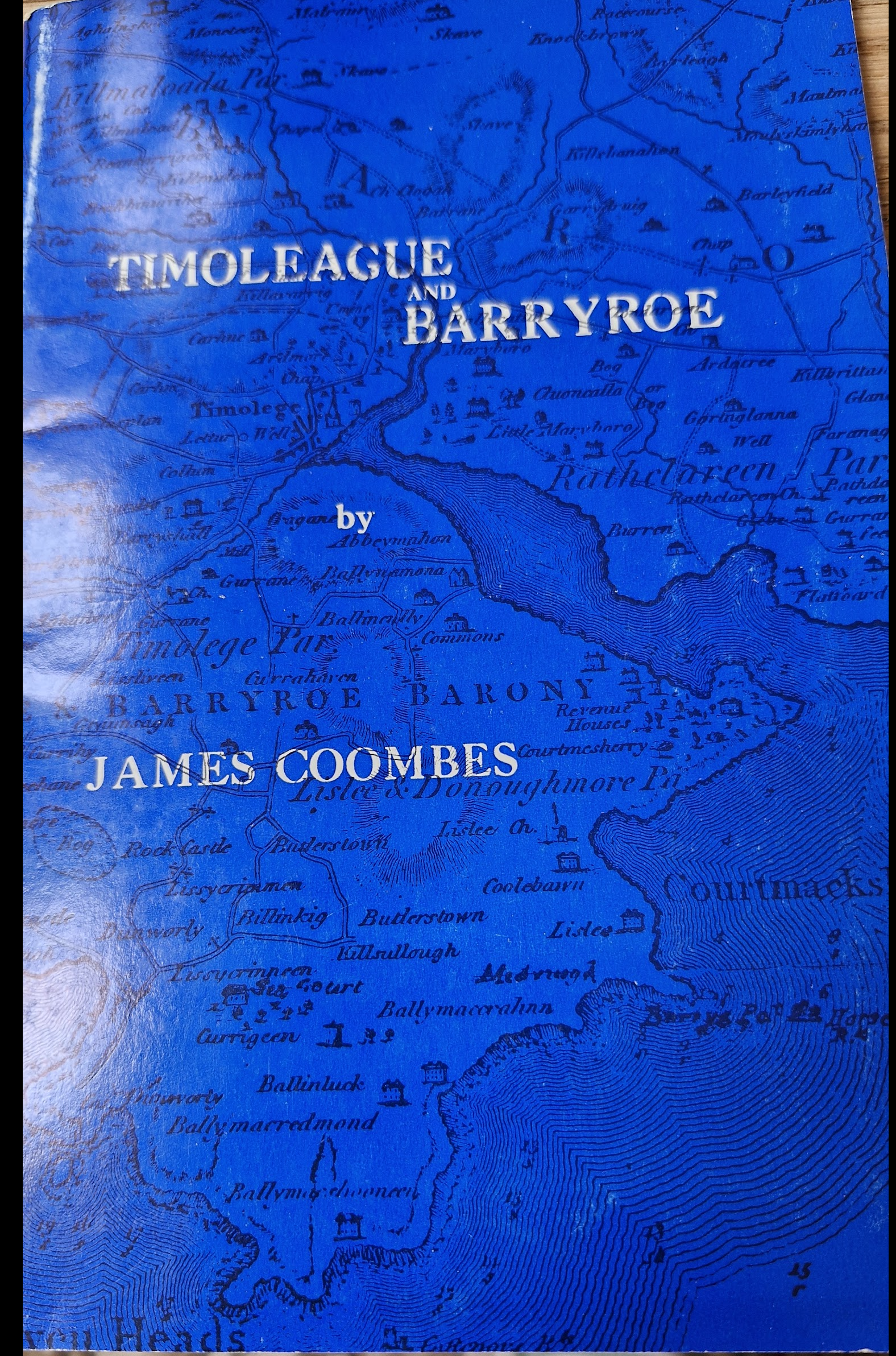
From Father James Coombes History 1969.
Thanks Pat,
That is interesting reading. It’s all true. Edward was the guy transported leaving his wife and six kids. So we’re others near Skibbereen. The Kilkeran ones brought boats into the local “lake” and stored stuff in the basement, allegedly with an underground tunnel. Family fortunes were hard hit. Family were installed in Bordeaux, Nantes, Oporto etc to look after that end of it. There are de Gallweys in France.
Arthur Hutchins, Landlord and Magistrate, Ardnagashel, Bantry married 1802, Matilda O’Donnell, (Smugglers), Erris, Co.Mayo, descendant of Niall of the Nine Hostages, West Cork Crowleys, Descendants of Niall of the Nine Hostages
1740. a Memorial of Several Gentlemen Residing at or near Berehaven in West Cork, setting forth the necessity of having a Barrack built for one company and half of foot to prevent running of Goods and the Shipping Off of Men to Foreign Service
refers to the inaccessibility of the region around Crookhaven harbour and the persistence of smuggling which is difficult to check due to ‘the numerous creeks and inlets on the coast’; includes letter from Griffith, Skull, to Gregory, acknowledging invitation of the Lord Lieutenant to meet for interview in Dublin but to request the date is deferred to enable his attendance at the assizes of counties Kerry and Cork. izes of counties Kerry and Cork.
In the North it became the practice to put studs into horse shoes.
Studs are small metal projections that screw into the horse’s shoes. They’re used to give him better grip on various types of footing, from firm and slippery to soft and boggy. They’re great if the horse loses his focus in less-than-ideal footing or to give him extra traction when doing road work.
For some reason studs were illegal in the Free State.
The Canon wished to bring some down from one of his northern trips. He took the saddle off his bike and filled the hollow of the frame with studs and replaced the saddle. The bike passed over the border no problem and the Canon and his bike with studs arrived safely in Durrus.
When my mother was about to be confined she went to Bandon to be under the care of an old friend and relative who lived an a small house in Castle St. close to the river. Here on the morning of the lst May 1829 at 6 O’C am I was ushered into this world to undergo a training for eternity. The term of that training time has been a little more than the psalmist’s reckoning and on the whole I ought not to complain. My most painful time was during my childhood, the very times which should be the easiest if not the happiest portion of the training time. My grandfather was very old with an old mans ideas when I came under his care. I was naturaly dull and nervous and if I could lot learn as others I must be made to if possible no matter at what cost of pain or misery to the poor dullard. When about five years of age the old people came to live in the town of Bantry. Then I was sent to the usual infant school where I presume I learnt something as when about eight a more advanced school was chosen. Unfortunately there was no great choice, the national school then newly established or a private one conducted by a man named Healy. The Irish protestants from the very first were prejudiced against the national system of schools describing them “poor schools”. The result being they were almost from the commencement under the wing of the R.C. priests. Healy the teacher of the small private school was a self taught man attaining as many self-taught men do a fair knowledge of mathematics but seemingly holding in contempt all other branches of learning. He was a little man essentially a tyrant cruel to a degree whose great delight was to make the unfortunate little come trembling and sobbing into his presence. In certain aspects of his character he exceeded any thing depicted by the pen of Dickens. The treatment I received thus early in my life at this man’s hands must have had an ill effect on me throughout life. He was a Roman Catholic but my grandfather insisted that I should learn so many verses of the bible every day. In the repeating of these and other lessons the rod was continually shaking over us and that rod was usually a well seasoned holly one with the sharp points adhering. I had to endure it all silently having no one to complain to. As an instance of his treatment I may relate the following. The school room was a rough one with an open roof, over one of the rafters one day he threw a small rope tied under my arms and then hoisted me up swinging me too and fro at the same time letting me feel the holly rod greatly to the amusement of the other boys. His wife happened to see him at this, to his pleasant, occupation when she rushed in and released me at the same time giving him some of her mind. He was eventually had up before the Magistrates and fined for cruelly treating some other scholars whose friends became aware of the fact. On our parents death there was some understanding that Robt Edwards of Bandon and our father’s brother James should be our guardians. The one who really took an active interest, at least in life history was Mrs Edwards as good a hearted woman as could be met with but most unwise in all her dealings with young people especially boys. She seemingly could not resist any appeal from her own sons, their father taking little interest in them, so that the sons without exception were a burden instead of a help to their parents. A young couple with whom she was acquainted decided to establish a private school in Bandon and it was thought well that I should be put under their care. When I was ten years of age I together with my cousin George son of adult Bess- came to reside as borders with Mr and Mrs Thomas Robinson.
1886 Address from Some of Bantry Inhabitant to the Earl of Bantry, on His return from Abroad. 1885, House of Commons, London, A Lash of Tim Healy’s , MP, Tongue, The Earl of Bantry Off Chasing Kangaroos in Australia instead of Sitting on Cork Lunacy Board
1909 Bantry Feis. Patrons include Canon (Church of Ireland) O’Grady, James Gilhooley, M.P., Tim Healy King’s Counsel,M.P., Maurice Healy, M.P., The Earl of Kenmare, Magistrates, Dr. O’Mahony, Benjamin O’Connor, M. O’Driscoll, William Martin Murphy, Alexander Martin Sullivan, King’s Counsel, Dr. M. J. McCarthy, Patrick (Rocky Mountain) O’Brien, Dromore. Prizewinners, Industrial Section.
Emigration from Gearhies, Muintervara, to Joliet, Illinois, America. Visit of Bantry Born MP, Tim Healy 1881, Hotbed of Fenians, Hibernian Activity, Pro Boer Meeting Attended by Many Irish.
Bantry Gang: Healy Brothers, Thomas, Solicitor, M.P., Timothy, M.P. , Queen’s Counsel, Governor General Irish Free State, Tim, Sullivan Brothers, Alexander Martin, Owner ‘The Nation’, Founder Irish Parliamentary Party, M.P. Queen’s Counsel, Timothy Daniel, M.P. Composer ‘God Save Ireland”, Donal, Secretary Irish Parliamentary Party, M.P, Lord Mayor of Dublin, Harrington Brothers, Tim, Teacher, Journalist, Author of The Plan of Campaign, M.P., Barrister, Lord Mayor of Dublin, Ned, Organiser, M.P., William Martin Murphy, International Businessman, Railway Contractor, owner Irish Independent, Dublin United Tramways, M.P., James Gilhooley, Fenian, M.P.
Genealogy of O’Healy/Healy Family of Donoughmore, Co. Cork ancestors of Tim Healy, Bantry, Governor General and John Hely-Hutchinson/Earls of Donoughmore and 1850 census of St. Anne’s Parish, Shandon, Cork.
Transferred to Richard Burke, Rathara, Schull, 11/10/1934
Barnett Denis
Brahalish
82
Beamish, R.A.
Ardogeena
89
Burke, Denis
Drishane
94
Baker, John
Rooska
105
Brooks, Edward
Dromreagh
113
Burke, John
Coomkeen
149
Burke, Daniel
Coomkeen
151
Brooke, Herbert
Dromreagh
157
Burke, William
Clashadoo
137
Son in law of Jehr Cronin
Burke, Michael
Brahalish
160
Brooks, Walter
Brahalish
167
Barry?, John
Mureigh
169
Coughlan, Bridget
Coolculaghta
5
Cotter, Rev. Fr Michael
Durrus P.P. 1933
13
Marked zero share later
Cronin ?, John
Rusnacahara
14
Crowley, Robert
Ballycomane
19
Crowley, Patrick
Clashadoo (Ahagouna)
34
Clarke, Goodhand
Glanlough
35
Later Rockmount, Drimoleague
Crowley, Con
Droumreagh
49
Cahalane?, Mrs
Ballycomane
51
Later Durrus village
Coughlan, Burd
Mount Gabriel
57
Later cancelled never subscribed
Cleary, Cornelius
Dunbeacon
66
Connolly, Michael
Colomane
74
Creedon, Daniel
Gurtnalasa, Bantry
110
Cancelled after 1936
Connolly, Thomas
Glenlough
114
Transferred to A.W. Derman, Drimoleague 14/12/1938
Cronin, John
Parkan
126
Coughlan, Daniel
Coolculaghta
135
Cronin, Jehr
Clashadoo
137
Father in law of Wm. Burke
Cleary, James
Ballycomane
132
Later transferred to Rhea, Kilcrohane (son)
Coughlan, John
Dromreagh
140
Crowley, Mrs Irene
Durrus Court
159
Admitted 1958- wife of John staff member
Dukelow, Robert
Dromantanaheen
18
Bantry Road
Dillon, Timothy
Clashadoo
26
Dukelow, Charles
Clashadoo
29
Dukelow, Thomas
Droumatanaheen
32
Transferred to Micjhael Hegarty, Clashadoo 11/10/1933
Dukelow, Peter
Droumreagh
36
Dukelow, John
Crottees
42
Dukelow, John
Rossmore
44
Dukelow, Richard M
Brahalish
46
Deane, Barnabas
Ballycomane
50
Dukelow, Thomas
Clashadoo
81
Donovan, Thomas
Glenlough W
87
Dukelow, Robert
Coomkeen
90
Dukelow, Bert
Blair’s Cove
93
Dungan, Herbert
Ballydehob
108
Later Ballymodan Bandon
Driscoll, James
Dunbeacon
54
Transferred form Patrick J. Barry
Dukelow, Richard
Crottees
118
Transferred to daughter Mable? Salter, Castlehaven, 1975
Donovan, Daniel
Ballycomane
120
Dukelow, John
Coolculaghta
128
Draper, John
Scart
33
Dukelow, John
Droumateenaheen
81
Deane, Thomas
Ballycomane
14
Dinan? A W
Post Office, Drimoleague
114
Of Drimoleague PO should read Donnan
Donovan, Timothy
Kealties
131
Originally Timothy Sullivan, Clonee
Dukelow, Ernest H
Droumatinaheen
165
O’Donovan, Jeremiah
Kealties
172
Transferred from Kilrohane 16/6/1977
Evans, Mrs Kathleen
Moreagh
45
Transferred from pat Hurley, Ballycomane
Flynn, John
Parkana
64
Transferred to Colomane 28/5/1957
Fitzgerald, James
Letterlicky
103
Transferred from John Hegarty 1956
Gay, Richard
Dromreagh
55
Hayes, Daniel
Dunbeacon
1
Hegarty, George M
Rossmore
43
Hurley, Patrick
Ballycomane
45
Harnedy, Tim
Droumreagh
52
Hayes, Daniel
Dunbeacon
62
Hayes, Thomas
Dunbeacon
62
Harrington, John
Brahalish
86
Hegarty, Michael
Clashadoo
32
Hurst, Edwin
Beach, Bantry
111
Transferred to Bantry 1937
Hurley, Mrs Dora
Ballycomane
115
Hurley, Joseph
Ballycomane
123
Holland, Timothy
Dunbeacon
136
Transferred to Timothy Donovan, Kealties (nephew)
Hosford, William John
Brahalish
6
Harrington, Daniel
Kealties
150
Later Blackrock Road, Bantry.
Hegarty, James
Letterlickey
103
See 103 above
Hurley, Daniel
Ballycomane
152Back Row, left to right. Teacher/Trainee? Teacher Mrs Annie Sweetnam, Dunbeacon, not qualified not sure if it was because she had no Irish. Good teacher for writing, hymns, sent her two daughters to Ballydehob. School closed mid 1940s. Some pupils went to St. James Durrus Some to Dunbeacon Catholic. Lack of Irish meant that pupils used to go to St. James probably to Líam Blennerhassett from Kerry he had excellent Irish. No. 2 Richard (Sonny) Pyburn, b 1919, all Pyburns Dunbeacon, farmer. May have spent some months in St. James, Durrus. Front: No. 2 Victor Sweetnam, Lahern, brother to Nan Sweetnam, farmer, never married. No 3. Nan Levis, Cashelane, lived with her single brother neither married, farmers. No. 4. Georgina Pyburn, Dunbeacon, married George Bower (He is buried St. James, Durrus), Co. Louth, he was a horticulturalist with Guinness at Birr. 2 boys, Raymond, Bert, 1 girl. No. 5. Susan Pyburn, married Charlie Gilliard, mechanic, London, 1 boy 1 girl. No. 7 Vera Pyburn, m Ernie Splaine, Riverstick, KInsale,, Son Robert (Show jumping champion) Freida, Jean 3 small boys don’t know names possibly one a Phillips from Dunbeacon or William Levis no family married into farm.
Transferred to Patrick Moynihan, 152 and 155
Hill, Michael A
Blair’s Cove
162
Admitted 11/10/1962
Hickey, Francis
Durrus Village
170
Admitted 19/2/1973
Johnson, Frank M
Fahane, Gortalasa, Bantry
101
Transferred to Thomas Johnson, Clashadoo 12/8/1958
Keohane, Daniel
Clonee
17
Transferred to Daniel Sullivan 18/10/1955
Kelly, Timothy
Ballycomane
127
Kingston, Samuel J
Kealties
166
Admitted 19/11/1968
Lynch, Con
Clashadoo
28
Transferred to John O’Sullivan, (son-in-law) 23/2/1971
Levis, George M
Shountellig
61
Now Gurteenakille
Levis, Samuel
Kealties
161
Transferred from Kilcrohane 19/5/1960
Minihane, John
Parkana
22
Transferred from Mrs Mary Neill 1943
Moynihan, Patrick
Coomkeen
155
Transferred to John Draper, Scart, 11/3/1936
Mahony, Daniel
Ahagowna
33
Mahony, John
Coolculaghta
20
Murnane, Patrick Joseph
Coolculaghta
23
Later Ballydehob
Murphy, Gerry
Airhill, Schull (Drouogh)
53
Murnane, Daniel M
Letterlickey East
63
Transferred to Colomane 1941
Moynihan, John
Shauntullig
67
Marked zero shares after 1933
Murnane, Patrick P
Letteralickey
76
Transferred to Colomane 1940
Murnane, Michael
Letterlickey
98
Transferred to Colomane 1940
Mehigan, Mark
Drishane
116
Transferred to Lowertown
Mahony, John
Brahalish
121
transferred to Julia Teresa Connolly (niece-in-law) 1965
Mahony Daniel
Letterlickey
78
Transferred to Colomane 1941
Moynihan, Patrick
Ballycomane
152
See 155 above
McManaway, Rev T.J.
Durrus
11
Transferred to Dunmanway (17)
McCarthy, Florence
Letterlickey Middle
15
McCarthy, Charles
Coolculaghta
21
McCarthy, Denis
Droumreagh
40
McCarthy, Jeremiah
Droumreagh
41
McCarthy, John
Scart Bawn
75
Transferred to Colomane
McCarthy, Mrs
Parkana
79
McCarthy, Denis
Ardhra
88
Transferred to Colomane
McCarthy, John
Blair’s Cove
99
Later Ardogeena
McSweeney, Ellen
Murreagh
104
Transferred to son Mortimer, Friendly Cove 1971
McCarthy, Timothy
Ardra
124
Transferred to Colomane
McCarthy, Jerome M
Brahalish
133
McCarthy, Michael
Coolculaghta
154
McCarthy, Charles
Glanlough
156
McCarthy, Timothy
Ballycomane
163
Admitted 1963
McCarthy, Patrick
Tullig, Durrus
173
Transferred from Kilcrohane 1977
Neill, Mary
Ballycomane
22
Transferred to John Minihane, Parkana, 1943
Neill, James
Ballycomane
47
Nugent, Jeremiah
Derryfunchion, Dunbeacon
100
Neill, John
Friendly Cove
139
Transferred to Annie Regan, Friendly Cove, 1946
Newman, Jeremiah
Scart
65
Transferred from Denis Sweeney 1936
O’Driscoll, Jehr
Shantullig
100
Transferred to Jehr Nugent, Dunbeacon, 16/8/1935
O’Driscoll, James
Dunbeacon
117
O’Brien, Daniel
Durrus
146
Transferred from Bantry
O’Regan, Mrs Annie
Blair’s Cove
139
Transferred from John Neill, Friendly Cove, 1946
O’Sullivan, Timothy
Ballybrack
77
Transferred from John Miller, Coolculaghta, 1950
O’Sullivan, Stephen T.
Gloun, Schull
89
Transferred from RA Beamish, Ardogeena, 1952
O’Sullivan, Denis J
Durrus
87
O’Sullivan, Daniel
Clonee
17
Transferred from Daniel Keohane 18/10/1955
Pyburn, John M
Dunbeacon
48
Pyburn James
Dunbeacon/Coomkeen
109
Pyburn, William
Dunbeacon
119
Transferred to Lowertown
Roycroft, James
Mount Gabriel
59
Marked zero shares after 1934
Sullivan, William M
Ballycomane
148
Transferred to Mary and Donal Hayes 1994
Shannon, David
Ardogeena
153
Later Dromreagh
Sullivan, Denis
Durrus
24
1948
Shannon, Miss Usher M
Brahalish
84
Transferred from David Shannon 1951
Slater, Owen
Ardoguna
158
Admitted 1955
O’Sullivan, John
Clashadoo
28
Transferred from Con Lynch (father-in-law)
O’Sullivan, Cornelius
Ballycomane
171
Admitted 1974
Shanahan, John
Dunbeacon
2
Marked zero shares 1933
Shannon, Robert M
Brahalish
3
Sullivan, William
Morreagh
4
Sullivan, John
Ardogoena
6
Transferred to William Hosford Brahalish 1943
Shannon, William M
Brahalish
7
Shannon, James
Rossmore
8
Shannon, Robert
Brahalish
9
Sullivan, Patrick
Coomkeen
12
Swanton, James
Ahagoheen
16
Shannon, John
Glanlough
24
Shannon, Robert
Dunbeacon
25
Sweetnam, William
Dunbeacon
31
Shannon, William
Rossmore
27
Sullivan, Denis
Geerahameen
38
Marked zero shares 1947
Shannon, john
Cashelane
56
Transferred to Lowertown 1956
Spillane, Tom
Moulward
58
Sweetnam, John
Lahern
60
Sweeney, Denis
Moulivard
65
Transferred to Bantry 1943
Sweetnam, William
Mount Gabriel
68
Sweetnam. Sam
Raheen
69
Sweetnam, John
Dunbeacon
73
Shannon, Thomas
Clashadoo
83
Shannon, David
Brahalish
84
Shannon, Thomas
Brahalish
85
Swanton, Sam
Clonee
91
Swanton, George
Aughagoheen
92
Spillane, Timothy
Ballycomane
95
Shannon, Mrs Maria
Maulnamill
97
Shannon, John J
Brahalish
102
Marked ‘in England’ 1968
Swanton, James
Mullagh
106
Transferred to Bantry 1939
Sullivan, James
Upper Tedagh
107
Transferred to Bantry 1940
Sullivan, Daniel
Droumacousane
112
Transferred to Bantry 1943
Sweeney, Mrs Kate
Moulavard
130
Swanton, Benjamin
Clonee
134
Sullivan, Jer
Clonee
131
Transferred to Timothy Donovan Kealties 1955
Sullivan, Eugene
Crottees
141
Shannon, Tomas
(Clashadoo), Brahalish
144
Shannon, William
Clashadoo
145
Lissamarig, Skibbereen, transferred to Skibbereen 14/5/76
Samuel Jervois, Brade, Skibbereen. Samuel Jervois , 1769, Brade, Skibbereen, in 1777 chasing Banditti in Murdering Glen outside Bantry with Richard and John Townsend and Daniel Callaghan. Member at Bandon Hanover Association meeting Cork 1791 re Whiteboys. 1792 as Provost of Bandon convened a meeting on foot of a requisition of 200 where it was resolved to support the Protestant Ascendancy. 1799 Supporter of the Act of Union Between Ireland and Great Britain. Maybe the father of Samuel who married Lucinda Allen. Purchased 1770 Shandon Castle Cork (now Irish Ballet Company). Elizabeth Murphy, widow of John Murphy of Newtown, is the sister of Samuel Jervois of Brade. In this deed Samuel Jervois is creating an indenture of 14 hundred pounds on the mortgage of Castledonovan to provide a dowry for his niece Martha (Elizabeth’s daughter), on her marriage to Dr Henry Baldwin Evanson in 1828. Among a number of Magistrate who at a meeting in 1812 in Skibbereen offered substantial monies towards the apprehension of those responsible for the murders of Ellen and Simon Loardan whose bodies were discovered in a lake at Bawnlahan and Glandore Harbour.
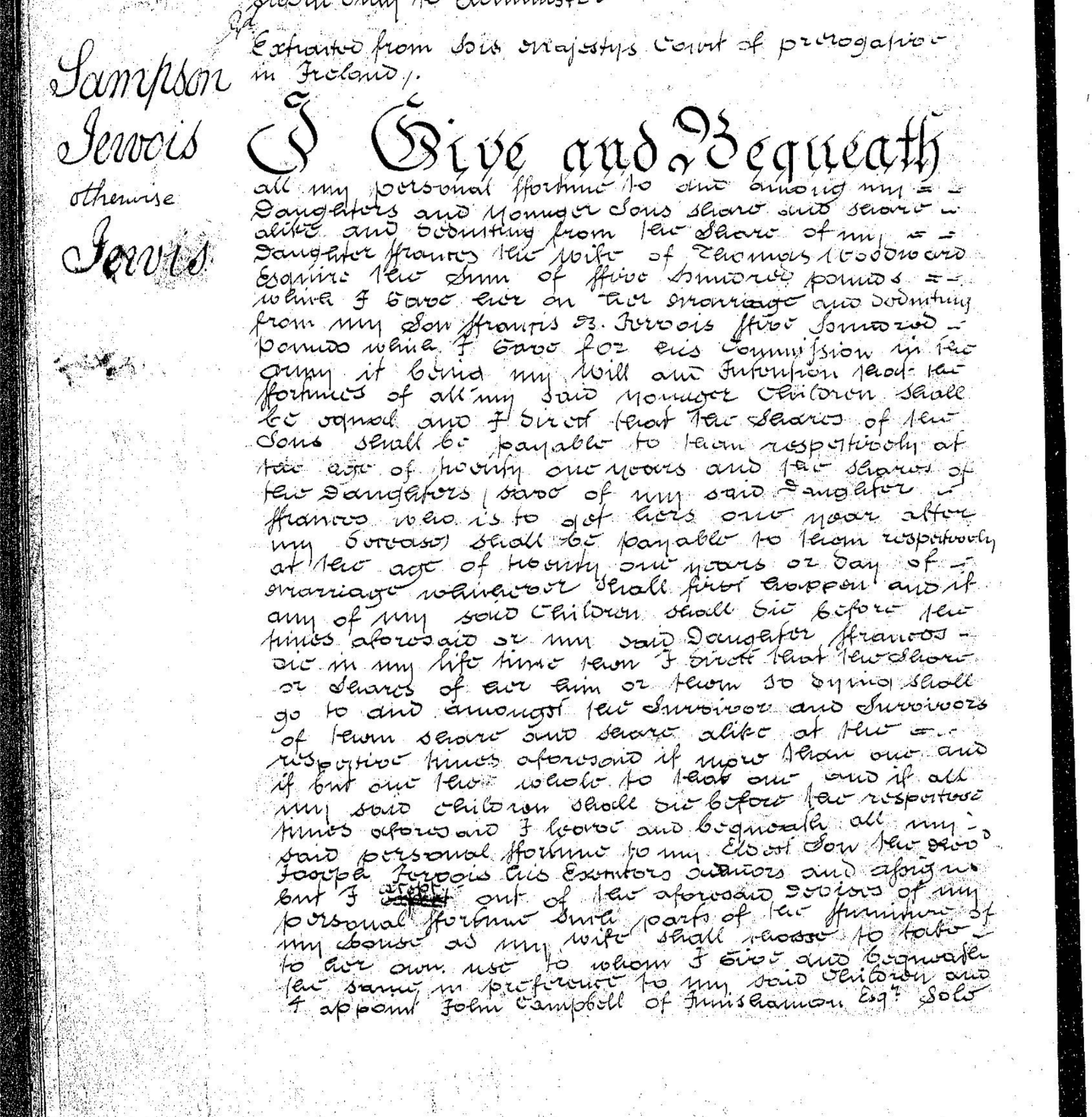
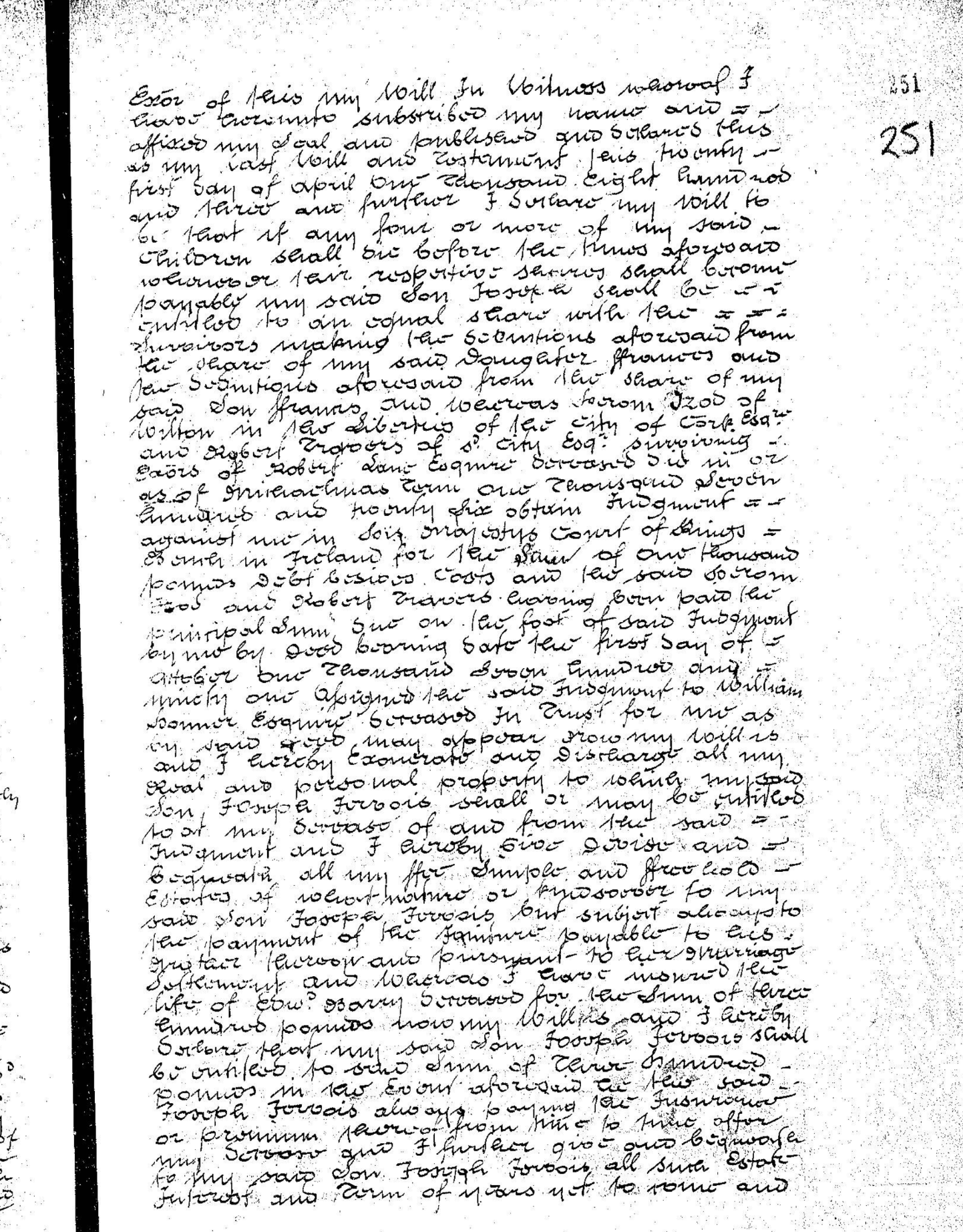
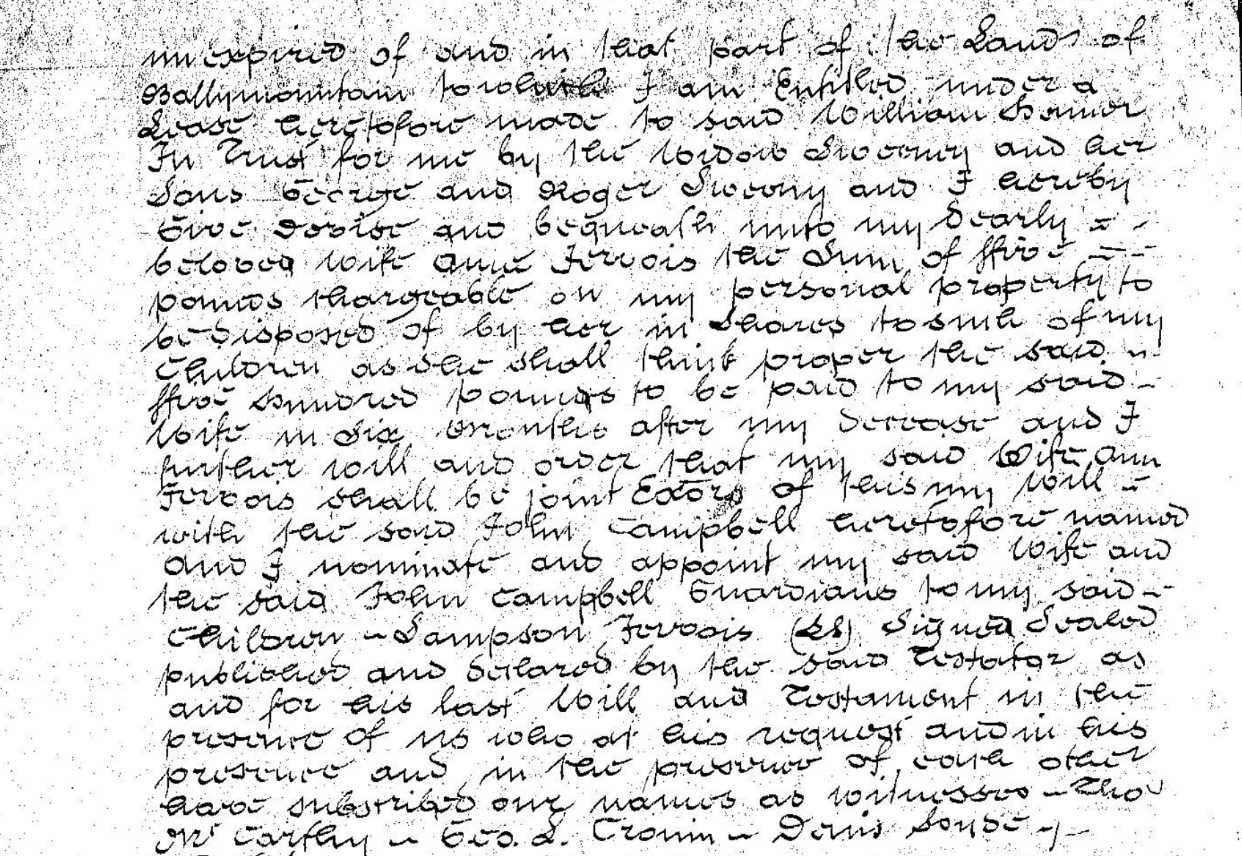
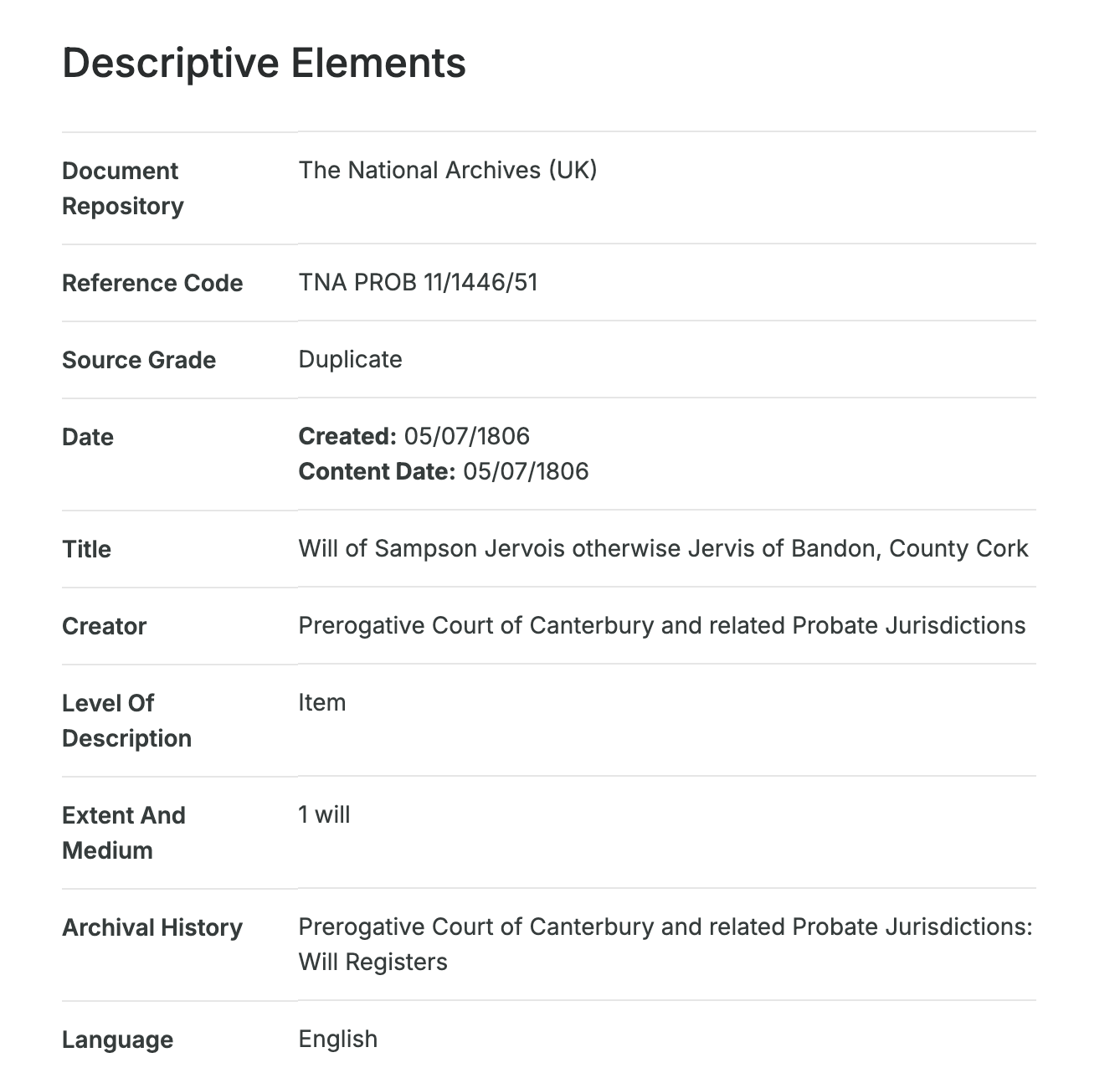
The only thing I’m not sure about is whether the lands at Castledonovan came into Samuel Jervois’s hands through his marriage to Lucinda Alleyn, or if they were Jervois lands all along, or perhaps even both families had interests in them. They are mentioned as “family lands” in his post-marriage settlement to Lucinda in 1818, but it’s not clear which family is meant, so Samuel may have already swapped whatever lands Lucinda originally brought into her marriage for the lands at Castledonovan. There is an earlier mortgage linking the Jervoises to Castledonovan (don’t know the date off-hand), but they may have been one of many families who acquired some portion from Daniel O’Donovan or when Lieut. Nathaniel Evanson mortgaged Castledonovan and moved to Four Mile Water. I suspect these lands were passed back & forth many times, probably each time someone married! Members of the Jervois family held over 450 acres in county Cork in the 1870s. In October 1855 and January 1856 over 100 acres of their property in the parish of Nohaval, barony of Kinalea, were offered for sale in the Encumbered Estates Court. The original lease, dating from 1710, was between the Busteed and Hodder families. In 1853 Samuel Jervois was among the principal lessors in the parish of Dromdaleague, barony of West Carbery. Townsend notes the discovery of copper on the estate of Samuel Jervois, at Leap, before 1810. Family history sources suggest that an earlier Samuel Jervois had come to Ireland with the Cromwellian forces in the mid seventeenth century. He had been granted land around Glandore. Will dated 1803 described as of Bandon extracted 1806.
Meeting of Select Vestry, Skibbereen, West Cork, 10th May 1832, to appoint Officers of Health under Statute of the 59th year of His Late Majesty, King George 3, p. 31
Early Church Wardens, 1699, Bishop Mann Visitation of Church of Ireland Dioceses of Cork. Ref D121.1. 1827 Parliamentary Return of Vestries, 1851, 1861 Visitations, p. 31
1824. Cover letter and memorial from the church wardens of the parish of Fanlobbus, Dunmanway, County Cork, concerning prosecution of Sabbath profaners, p. 32
West Cork Select Vestries. 1885-1890, p. 32
March 1798. Rosscarbery, Drimoleague, Castletownbere, Select Vestries meeting to Levy a Rate to provide Four Men to Serve in Militia and to Levy Seven and a Half Pence Per Gneeve. Further meeting August 1803 to levy £1-6-o per ploughland to raise 5 men for Militia and £5-13-9 on town of Rosscarbery. Cost of Levy for Cork City and County, p. 32
Late 18th early 19th Century Interplay of the Select Vestries of the Church of Ireland (State Church) in Local Administration, Barony of Carbery, Castlehaven, Drimoleague, Durrus, Cess Payer Representatives Named, p. 32
1851 Visitation Book West Cork, Church of Ireland parishes, Population 1834 and 1851, Schools, Parish Clerks, Church Wardens.p. 32
1830 keeping the Sabbath in Clonakilty, p. 32
Townlands and Placenames, 1794 Principal Inhabitants Thanks to Government, 1870 Registered Vestrymen, Kilmeen Parish History, 1975 Dan O’Leary, Funded by Jerry Beechinorp. 32
1793-1803. Cork Grand Jury Returns including provision for Militia from 1795., p. 32
The Military Levy was raised through parishes by the Churchwardens, the parishes were subject to a levy or a bounty to be paid in lieu. The surviving records of Drimoleague and Castlehaven Select Vestries confirm this., p. 33
1757 Castlehaven, (Skibbereen), Select Vestry Records, shows interaction of parishes in road building: Cullane, Daniel, app. Director of the High Way in CTend 37. VM 4 OCT 1757., p. 33
March 1798. Rosscarbery Select Vestry meeting to Levy a Rate to provide Four Men to Serve in Militia and to Levy Seven and a Half Pence Per Gneeve. Further meeting August 1803 to levy £1-6-o per ploughland to raise 5 men for Militia and £5-13-9 on town of Rosscarbery, p. 33
Cork Grand Jury (Civil Jurisdiction) To 1899, p.33
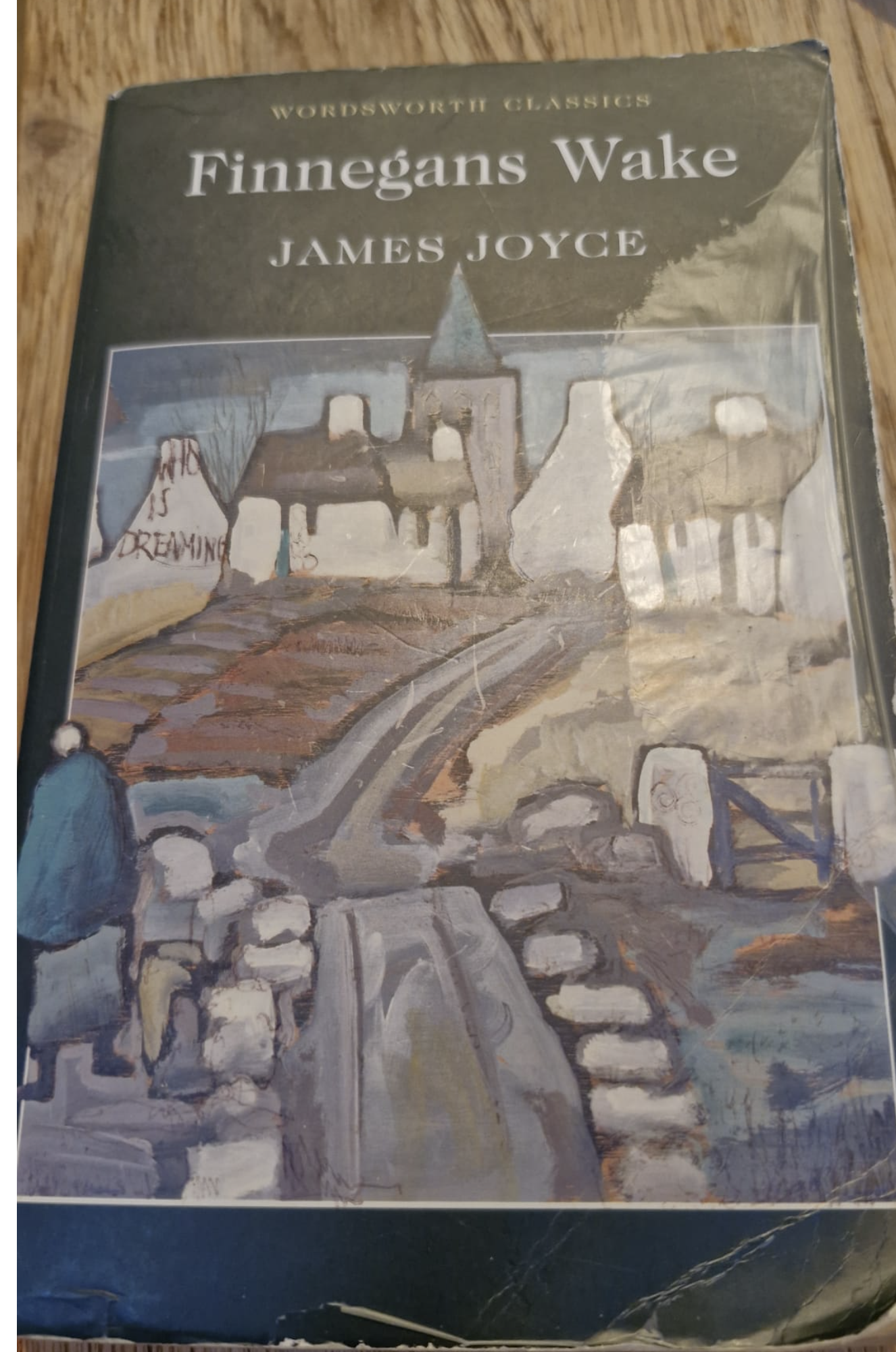
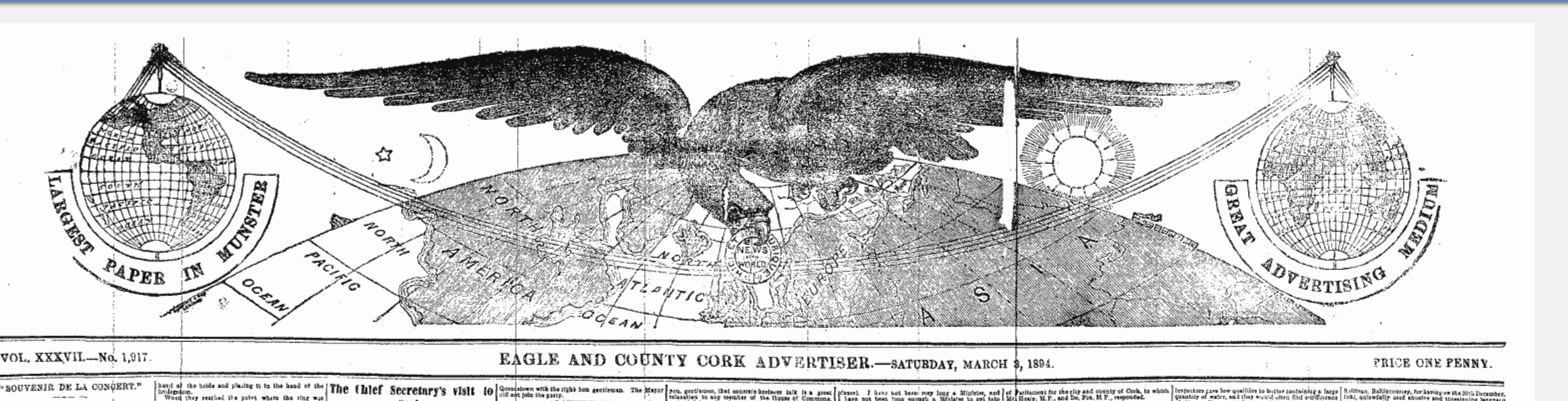
593.5: “Have sea east to Osseania:” HCE to Oceania! On the one hand, Oceania, the eastern sea, being about as distant as possible from Ireland, supports the claim to world-wide coverage. On the other hand, Ireland (the land of Ossian) represents the opposite. Contraries converging, or maybe just plain overweening provincialism: The Skibbereen Eagle once warned the Czar of Russia that it had its eyes on him. Compare Stephen’s sardonic “(European and Asiatic papers please copy” (P 251).
EXACTLY 125 years ago this year, in September 1898, The Skibbereen Eagle instilled fear into the Russian Tsar, a butterfly effect not replicated until the West Cork fishermen saw off the Russian navy last year.
AD
The eye of The Skibbereen Eagle focused on the Tsar’s success in securing an ice-free warm-water base for the Russian Navy on China’s Yellow Sea.
The Southern Star
Share
00:30
00:00
But only two weeks earlier, in something akin to modern day political sports-washing, Tsar Nicolas II sent an unexpected invitation to every government accredited to his Imperial Court.
The Tsar’s rescript invited these governments to a conference ‘to occupy themselves with the grave problem of excessive armaments.’
In truth it disclosed his military vulnerability dressed up as his pursuit of world peace.
The Tsar told the world that he was keen to ensure to all people ‘the benefits of a real and durable peace, and above all of putting an end to the progressive development of the present armaments.’
With his Chinese warm water naval port now secured, Tsar Nicholas II set out to achieve this worthy ambition ‘by means of international discussion’ at his peace conference.
And it met with great success, for within only a few months the Tsar’s peace conference created the Permanent Court of Arbitration where the arbitration and peaceable resolution of (some) disputes between nations continues down to this day.
The peace conference also developed ‘Rules of War’ for the treatment of prisoners of war. It even banned, for the next five years at least, the discharge of projectiles and deleterious gases from balloons.
Under Bismarck, the plethora of small German states had coalesced as the increasingly powerful German Empire, with the dynamo of its Prussian siege engine massed on its border with Russia.
AD
Acutely conscious that his guns could never match those of his neighbour, Tsar Nicholas II set out to prioritise peace over his inevitable defeat.
Andrew Carnegie, the philanthropist who built 80 libraries across Ireland also funded the construction of the Tsar’s dream home for the Permanent Court of Arbitration at the Peace Palace in The Hague, Netherlands.
The list of signatories to this Peace Convention today reads as an eerie who’s who of hubris and history – powerful people whose memory is neither remembered nor honoured.
It included the Prince of Montenegro and the Prince of Bulgaria and the long-forgotten Kings of Bohemia, Hungary, the Hellenes, Italy, Portugal, Serbia and Siam.
Imperial majesties, such as the Shah of Persia and Her Majesty the Queen of the United Kingdom of Great Britain and Ireland, Empress of India also signed, as did the Emperors of Of course, the ‘Emperor of all the Russias’ also signed up.
In the same month as the Tsar’s call to action in 1898, the son of a Corkman – claiming a connection to Daniel O’Connell – enrolled at Cardinal Newman’s University on St Stephen’s Green in Dublin from where he graduated in 1902. While it seems to scholars that young James Joyce was possessed of a stunning awareness and broad knowledge, much of his texts are derived from or informed by the newspapers of his time.
For the impecunious Joyce, local, national and international newspapers were readily and freely available to read in public libraries.
Today, these same public libraries act as ‘warm banks’ – places to visit to stay warm in the face of impossible domestic energy bills caused by Russia’s invasion of Ukraine.
But Joyce was not the only one reading English language newspapers.
They were being read in Moscow and St Petersburg as well.
We know this from the Tsar’s father, Nicholas I, who boasted during the Crimean War (1853-1856) that he had no need of spies.
He was learning everything he needed to know by reading Dubliner William Howard Russell’s account of the Crimean War published by the Times of London and read by embassies everywhere.
Joyce was nothing if not up-to-date when he weaved the Tsar’s Rescript and notions of world peace and international arbitration into Stephen Dedalus’ conversations with his fellow students at Newman House on St Stephen’s Green where they gathered around the Tsar’s portrait collecting signatures.
They were preparing to send the Tsar a testimonial of gratitude for his pursuit of world peace and the arbitration of disputes among nations. They had every reason to believe that a Tsar name-checked by The Skibbereen Eagle would read the praise of their Testimonial.
Joyce was clearly impacted by the Tsar’s Rescript and The Skibbereen Eagle as he threads the debate about world peace and international arbitration from Stephen Hero, begun in 1903 just after his graduation, to Portrait of the Artist as a Young Man published before World War I and again, after the horrors of that war, to Ulysses, published in 1922.
Clearly, the watchful eye of The Skibbereen Eagle had spawned an imitator in Joyce and a reader in the Tsar.
Perhaps, it is time now for The Skibbereen Eagle to re-send its impactful historic note to the current Tsar.
National and international papers, please copy!
Joycean Brendan Kilty, above, has examined the links between Joyce’s Ulysses and the Skibbereen Eagle’s references to Tsar Nicholas II.
• Brendan Kilty SC is a senior counsel, arbitrator and Joycean.
His human rights book ‘101 Reasons Not to Execute Someone’ is due to be released in 2023.
Dick Adams:
B 1843-1908 Richard (Dick) Adams Journalist, Barrister Inns 1873, Judge County Court Limerick 1892, Down Born Castletownbere, eldest son Brian Port Surveyor, Customs and Excise mother Frances (Fanny) O’Donovan sister of Doctor O’Donovan, Skibbereen. First cousin of Skibbereen O’Donovan family, Doctor Daniel adn his 2 Doctor sons, they are of ‘Isladn’ branch and once owned town of Ross. 1880 Munster Bar, 20 Mountjoy Square, Dublin. Born Castletownbere, eldest son Brian Port Surveyor, Customs and Excise mother Frances (Fanny) O’Donovan sister of Doctor O’Donovan, Skibbereen. First cousin of Skibbereen O’Donovan family, Doctor Daniel Famine Doctor his 2 Doctor sons, they are of ‘Island’ branch and once owned the town of Ross. 1880 Munster Bar, 20 Mountjoy Square, Dublin. “Journalist Cork and Freemans Journal, Defended James Fitzharris in Phoenix Park Murders, noted wit. From James Joyce ‘Ulysses’, ‘Dick Adams (Castletownbere born), the besthearted bloody Corkman the Lord ever put the breath of life in’ Journalist, Barrister, Defender of Parnell, Later County Court Judge Limerick
Ulysses: 7.679-80″ Buried St. Marys, Kensal Rise, London “Courtesy Ruth Cannon: from the Cork Examiner, 6 April 1908, this loving tribute to one of the Irish Bar’s most famous humorists, Limerick County Court Judge Richard Adams (b-l). Adams got much mileage out of his resemblance to King Edward VII (b-r), who he alleged once messaged him in the spa resort of Homburg requesting they dress differently to avoid confusion.
“Those who knew the late Judge Adams well will find it hardest to believe that he is dead. For with his personality, they associate all that was brightest and most vivifying in life.
That said, the future judge does not appear to have greatly distinguished himself in his early days. His first professional calling was that of a bank clerk in the National Bank in Cork. He was entrusted with the duty of opening letters containing bank notes in separate halves, a favourite way of sending money in those days, and then gumming the two halves together. But his lack of acumen for bank business was such that he frequently gummed the wrong halves together – a terrible misadventure in any well-organized bank.
Having regard to this, and a general unsuitability for bank life, Richard Adams decided that he had mistaken his vocation. Accordingly, he subsequently got called to the Bar in Hilary term of 1873. In actions for breach of promise of marriage his services were particularly sought, and it was one of the treats of the Four Courts to hear a speech on that congenial topic from one who was a master of humorous exposition. His admission to the Inner Bar was soon followed by his elevation to the Bench as County Court Judge of Limerick.
While not a profound lawyer, he did not himself at all mind jesting on the subject of his legal knowledge, and would tell how once he came into one of the Dublin Courts after the luncheon interval and heard a well-known solicitor proclaiming from the solicitors’ table to a cluster of minor lights ‘Adams! Oh, he has a fine nisi prius prescendi, but he knows absolutely no law,’ whereupon Adams himself put his genial countenance over the side barrier and said, ‘Look here, that’s slander of me in my business trade and profession, and it is actionable without proof of special damage, so look out for a writ.’ This was of course said with glorious good humour.
Judge Adams loved to go to health resorts on the continent. These sojourns were rendered doubly enjoyable by reason of his resemblance to the present King. ‘When in Homburg,’ he said, ‘the King’s Equerry came up to me and said ‘Mr. Adams, the King commands me to ask you as a personal favour not to be going about in a tall hat and frock coat. It is very embarrassing for his Majesty to be so often whacked on the back, and to be shouted at by gentlemen in Dublin accents, ‘Hello Dick, old man, how are all the boys in Dublin…’’
Paul DUELOS, A.M., vicar of Ballymodan. He died in 1717 or 1719.
French Prisoners, Freemasons, Bandon 1746-1747, p. 177
David la Touche Colthurst (1828 – 19 January 1907)[1] was an Irish Home Rule League politician. He was elected Home Rule Member of Parliament (MP) for County Cork at the 1879, p. 178
..
From the mid 17th to early 18th century something around 5,000 Huguenots moved to Ireland from religious persecution in France. The bulk arrived after the Revocation of the Edict of Nantes in 1685. Dr. Alicia St. Ledger the historian of the Cork Huguenot community puts the number in Cork mid 18th century at around 300. In Cork City where many settled they had a French speaking church and minister. This group tended to be well educated, affluent, and involved as merchants, apothecaries, surgeons and as property developers reclaiming the Cork City marshes. Over time they became English speaking and drifted into the mainstream Church of Ireland and gradually into the wider Catholic community.
No one knows for definite when the various Huguenot families arrived in the Mizen/Durrus areas. In the main they were unlike their co religionists in Cork as they were artisans, small to medium farmers or labourers and coopers. Oral tradition has it that they arrived by boat to Dunmanus Bay. They arrived perhaps c 1750s co incident with various attempts throughout West Cork by Landlords to develop weaving, linen and flax. The old village of Carrigbui (Durrus) was sometimes described as a weaver’s colony.
About 1750 around 60 Huguenots arrived in Cork on board the galley ‘Redhead’ destined for Innishannon with their pastor Rev. Peter Cortes.
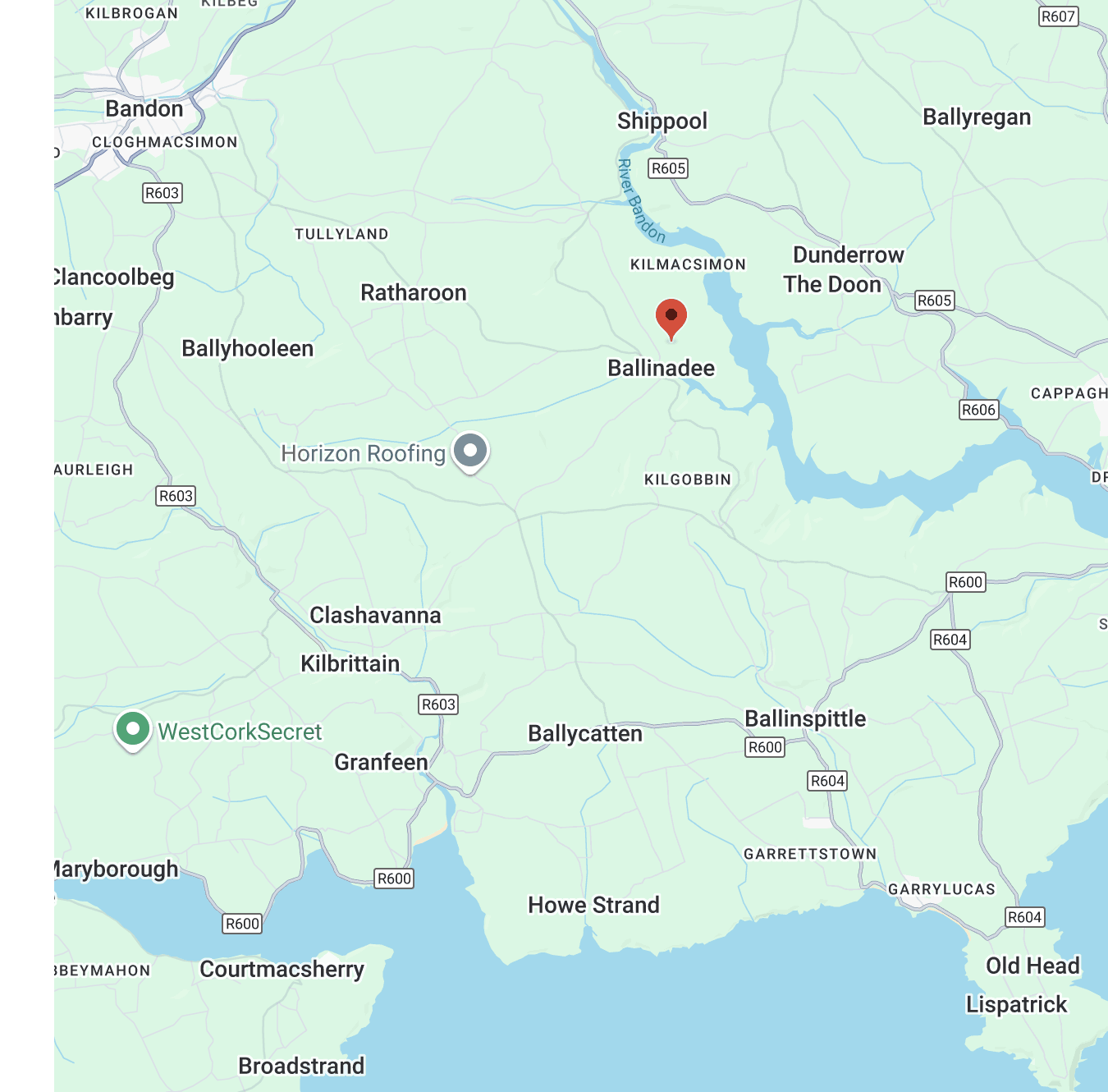
They may have been being involved in Thomas Addisons failed silk enterprises in Innishannon and left Kilmacsimon Quay for Dunmanus Bay.
The obituary of the Rev. Charles ~Donovan in the Skibbereen Eagle in 1893 is most unusual insofar as it included a very detailed genealogy. Maybe the Rev. Charles or one of the family wrote it; it looks like it relies on family papers. His career is ironic as a rabid Proselytiser preying on the starving Catholics of the Mizen Peninsula; you would not imagine his genealogy. His ancestor Daniel O’Donovan, head of Clan Cahill fought with his O’Donovan Regiment for King James in the battle of the Boyne in which four of his sons dyed. HIs grandfather Richard O’Donovan on his marriage to an English woman had to change his name to Donovan, he may have been a Catholic as he had to post a bond for £1,00 to the Church of Ireland Bishop of Cork. HIs son Charesl was a senior civil servant in Bengal and a Magistrate. His Indian born grandson Dr.Charles Donovan was a world renowned medical scientist. In a sense it shown family survival consequential on the Penal laws and adaptation.
Rev. Charles Donovan (1812-1893), p.1
Funeral and genealogy, p. 3
Among the funeral attendance, p. 14
Proselytiser, 16
1847 Plea for the preservation of the poor in Schull.p. 14
1849 Protection Meeting Ballydehob, p. 16
1849 Opening of Rev. Spring Protestant Church, Cape Clear, p. 18
1856 attending funeral of James 2nd Earl of Bandon, p. 19
1889 funeral of Archdeacon of Ross, Rev. Dr. Woodroffe, p. 20
Charles Donovan, JP., Bengal, died 1915 aged 74. His son known in Ballinadee as Judge Donovan, p. 21
1905 Judge Donovan, Courtmacsherry Regatta, p. 23
Grandson Colonel Doctor Charles Donovan, (1863-1951), p. 24
His ancestor Daniel O’Donovan, head of Clan Cahill fought with his O’Donovan Regiment for King James in the battle of the Boyne in which four of his sons died., p. 28
His grandfather Dr. Richard O’Donovan surgeon of Nohoval, p. 30
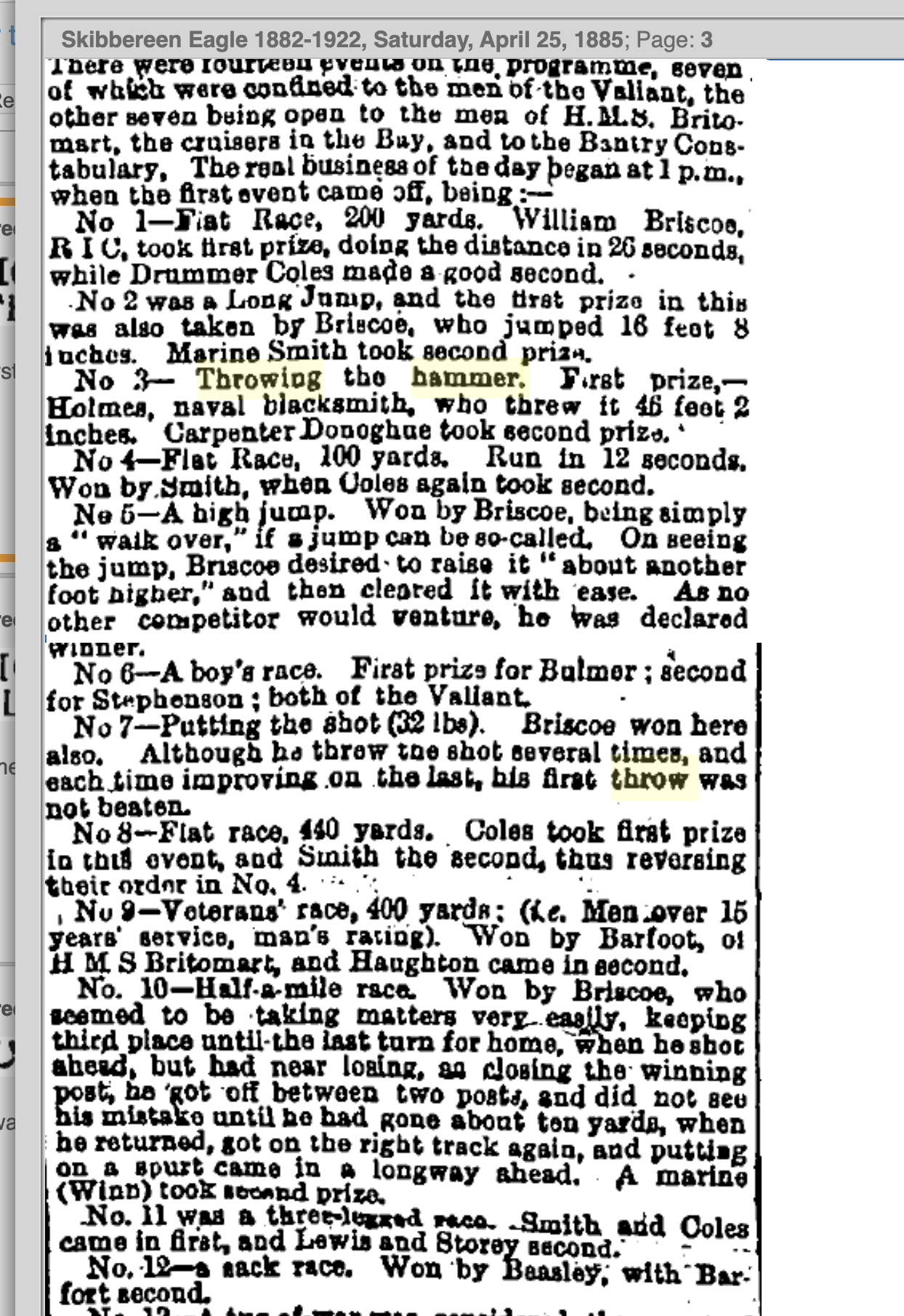
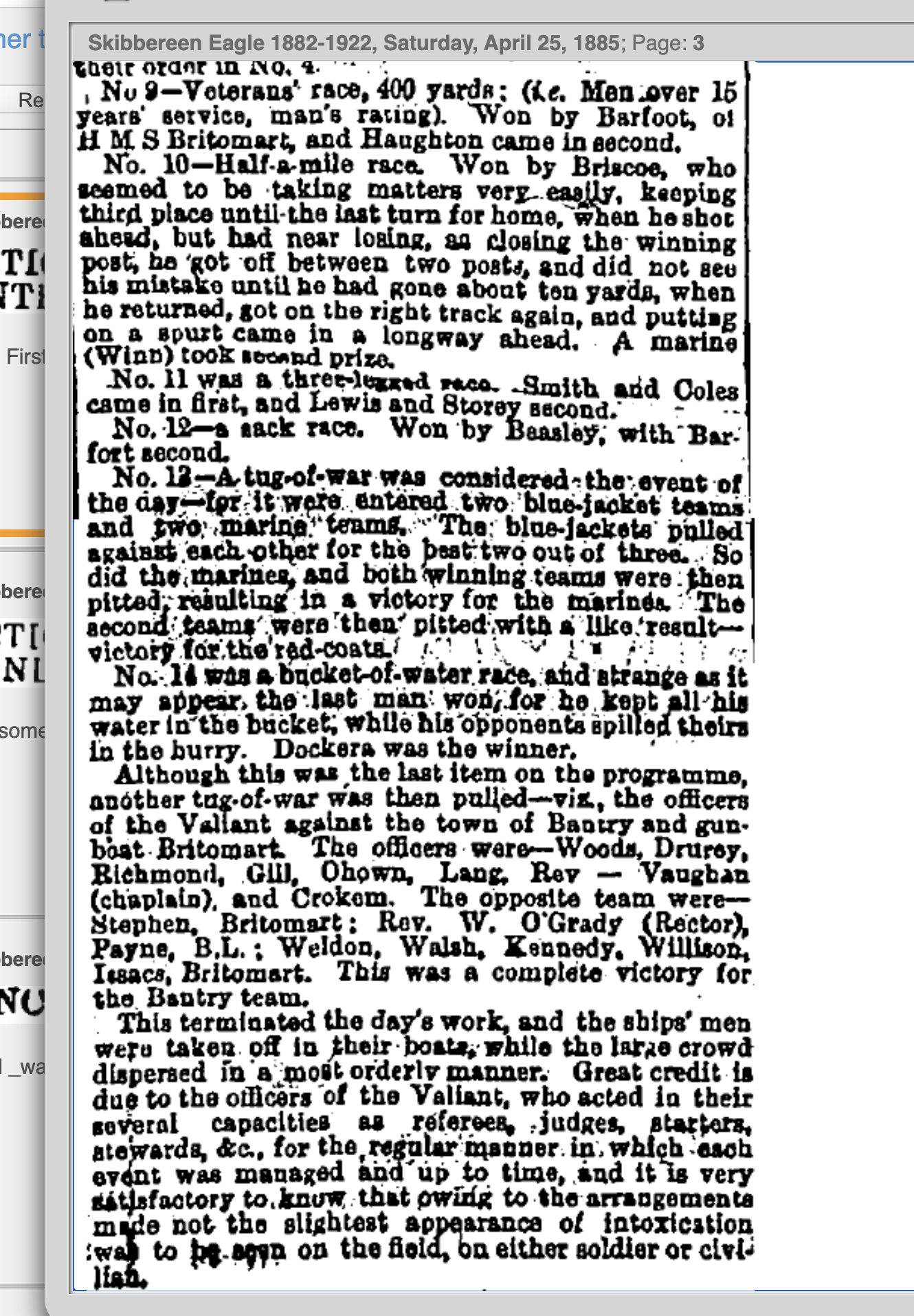
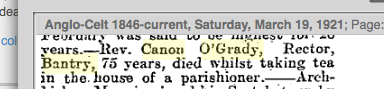
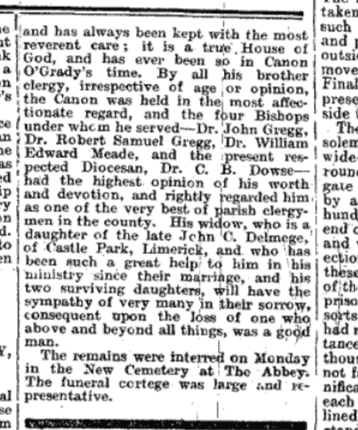
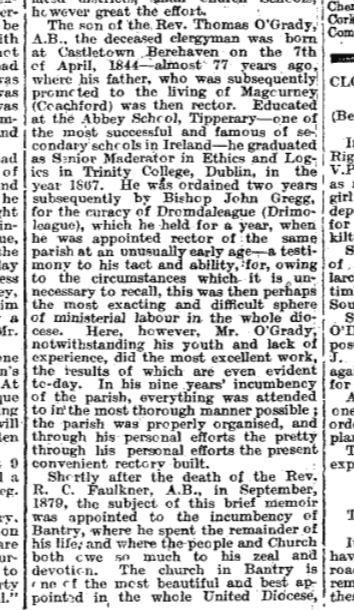
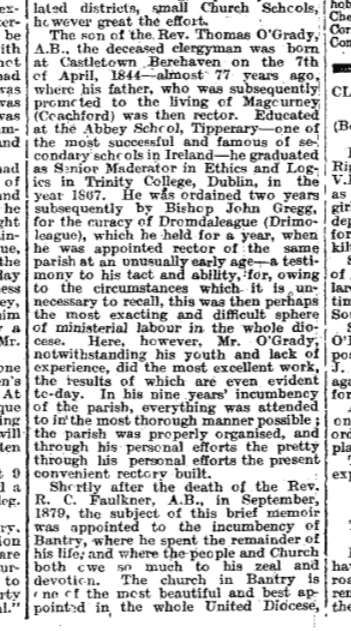
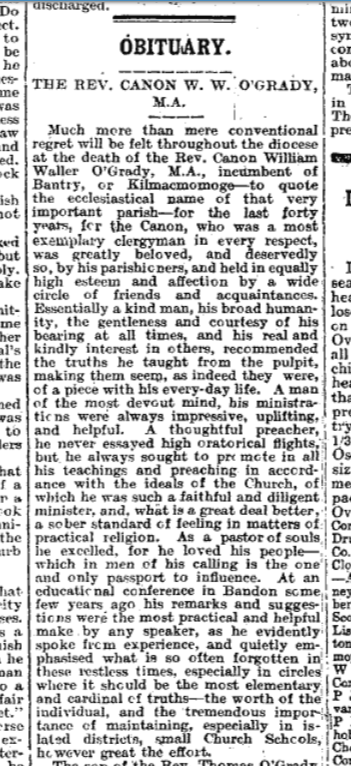
Canon William Waller O’Grady, 42 years, Rector of Bantry, died 1921 aged 76. POK page 7 grave 123
…
His brother: Carew O’Grady (1840-1919), 1875, Carrigmanus House, Goleen, farmer, Resident, £59, son of Rev. Thomas and Susan Dowe born Berehaven, m 1884, Florence, 5th d James Hingston, Aglish, Macroom?, 4 surviving children. Magistrate from 1875, 1881. 1890 Skibbereen Quarter Sessions sitting with Circuit Court Judge Ferguson on Schull licensing appeal cases. Magistrates, John K?. Barrett, William Murphy, M.P., George Robinson, Somers. H. Payne, W.S.Payne, Henry R.Marmion, Samuel Jagoe, O’Donovan, John R. H. Becher, William Norwood, Carew O’Grady. Skibbereen Eagle 14th August 1892. 1893 Unionist meeting Skibbereen. 1883 letting Carrigmanus House with a farm of 143 acres. Re a contested burial. 1894 Patron Schull Regatta. 1901 patron Crookhaven Regatta with Marconi. Co. Grand Juror, listed 1913. Brother of celebrated author and Celtic scholar Standish O’Grady and Canon O’Grady, Bantry. Probably a bee keeper. Probate to daughter Susan Maria spinster.
Probably
Somers (Henry) Payne (1854-1920), BL, 1885, Carrigmahon, Monkstown, major business figure Cork. 1892 attending funeral of Jane Dillon nee Roycroft (1843-1892). Executor James W. Payne. Barrister, Businessman, Land Agent. Somers Payne B.L. (1853-, 1885, Carrigmahon, Monkstown, son John Warren Payne, BL. Land Agent, Beech House, Bantry, he ran against James Gilhooley in election and was defeated, Bantry, ed. Rossall, Irish Bar 1875-1883, Director Munster and Leinster Bank, Bandon Railway, m 1879 Edith d John Leslie, Lee Carrow, Passage, Paynes originate Upton, Bandon, Land Agents to Bantry and other Estates, listed 1913. Somers Henry Payne, James Gilhooly MP alleged he was sitting in Durrus Petty Sessions 1887 outside his district. 1890 Skibbereen Quarter Sessions sitting with Circuit Court Judge Ferguson on Schull licensing appeal cases. Magistrates, John K?. Barrett, William Murphy, M.P., George Robinson, Somers. H. Payne, W.S.Payne, Henry R.Marmion, Samuel Jagoe, O’Donovan, John R. H. Becher, William Norwood, Carew O’Grady. Attending Cork Grand Jury 16 times 1887-1889. Irish Bar 1875, Munster bar, 115 Upper Leeson St.

 .
.
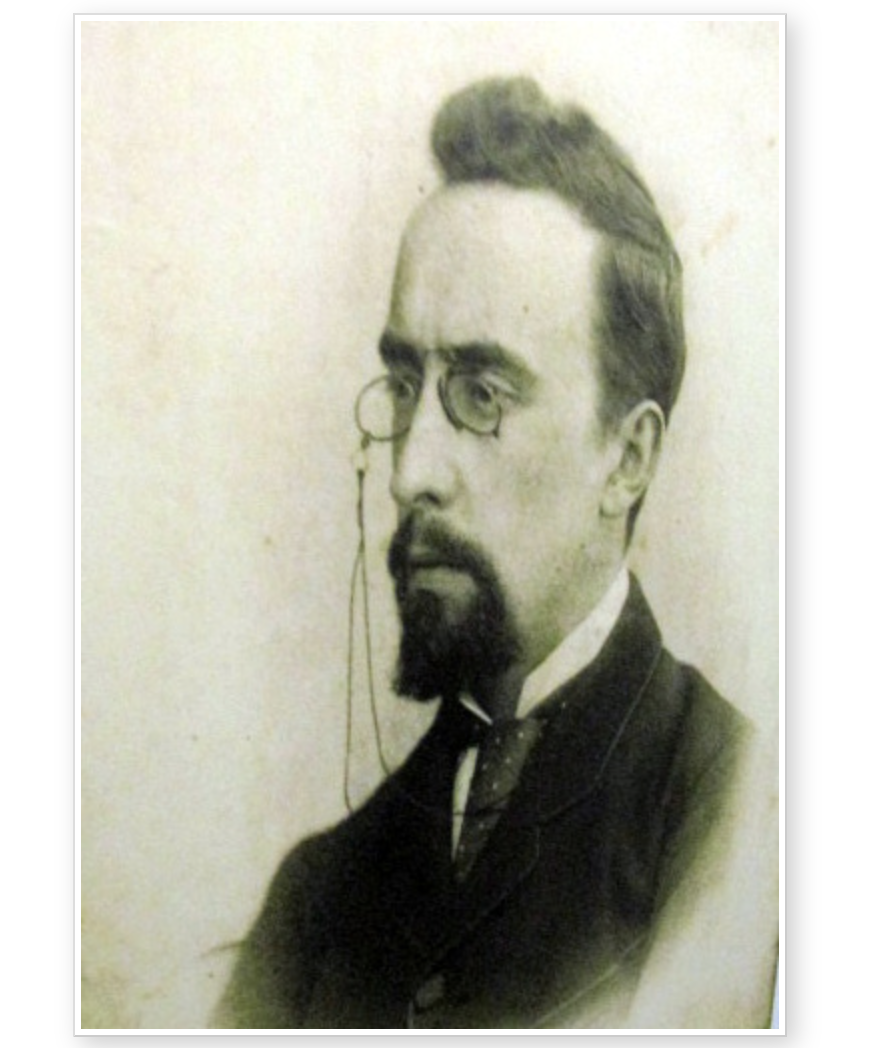
 Joycean Brendan Kilty, above, has examined the links between Joyce’s Ulysses and the Skibbereen Eagle’s references to Tsar Nicholas II.