1908 Reminiscences of Mitseyah (Timothy Hayes) a Dunmanway Man in New York, Model School Pupils c 1880s


https://docs.google.com/document/d/1I3qVrGobD4QG1KsGHWXF6kzc2LkeAAZ-e-1LxeMox8c/edit

These are a series of articles by Timothy Hayes under the name ‘Mitsegah’ and emigrated from Dunmanway to New York in 1890 among those on the trip was fellow Dunmanway man Goodhand Clarke.

In the articles he chronicles those who were pupils in the Model School in the 1880s and document their fate and ultimate foreign destination where appropriate.

You very much get the impression that America was the next parish.   Countless Irish were delighted to go to Britain to escape grinding poverty but in the main they melded into the British working class.   In contrast the perception was America was the land of opportunity.  It is interesting the a number of priests went on American tours from the 1880s to fund church building in West Cork I have not come across  such trips to England.

The illusions of American prosperity were fostered by ‘Returned Yanks’ who after years away caom home and bought drinks for all and sundry and entertained with  tales of wealth.

Here Mistegah has stories of meeting in NY with those from the locality, many in middle management positions.  A man who had been a young teacher in the Model School left after unhappy differences and in NY in the early 1890s was going to Law School at night hoping to qualify as a lawyer and become a US citizen.

The perception was that once people emigrated to the USA they were gone. However, not always true, various members of the Swanton family in Ballydehob were back and forward from NY from the 1790s. Many girls worked as domestics and after maybe 10 years returned with enough to buy a farm with a spouse or business.  Mrs.Wiseman in Durrus nee Daly, Kilcrohane was such adn weh she went about building their house and  business in Durrus recessed it from the road asn she thought in the 1930s that like America in the future the car would dominate in Ireland.

One of the Coakleys of Bantry, originally Tureen, Kilcrohane had been in the funeral business in the USA and returned to establish a funeral parlour in Bantry still in the family.

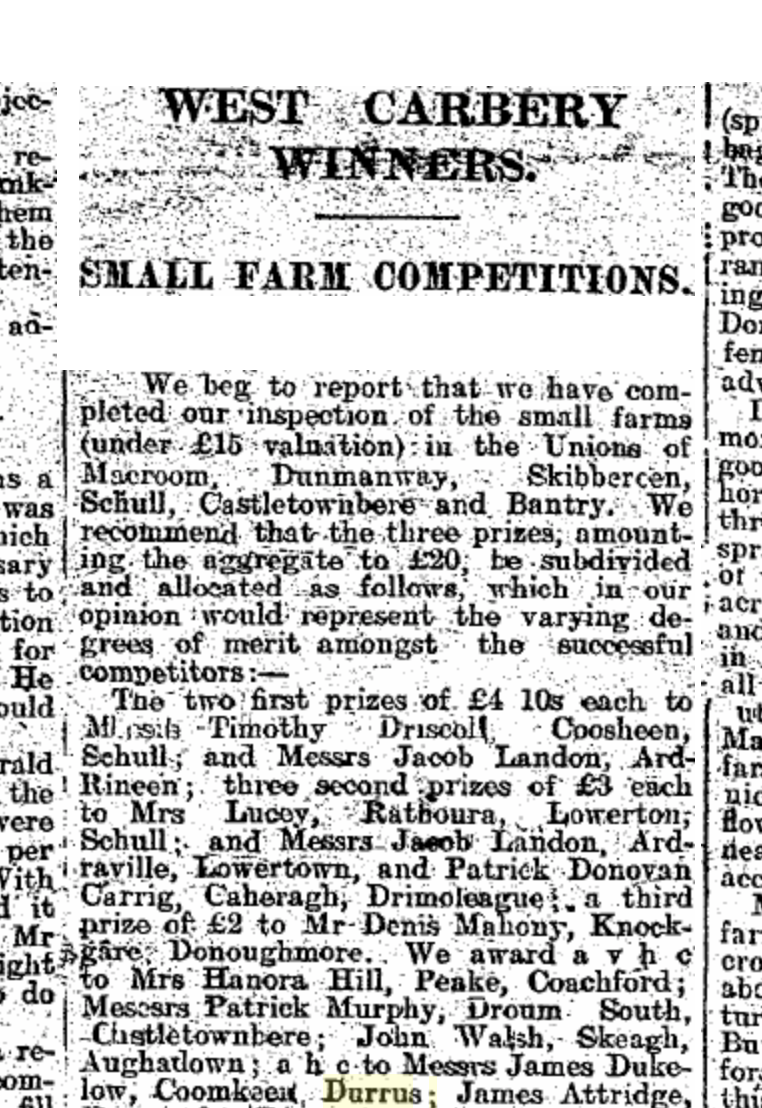
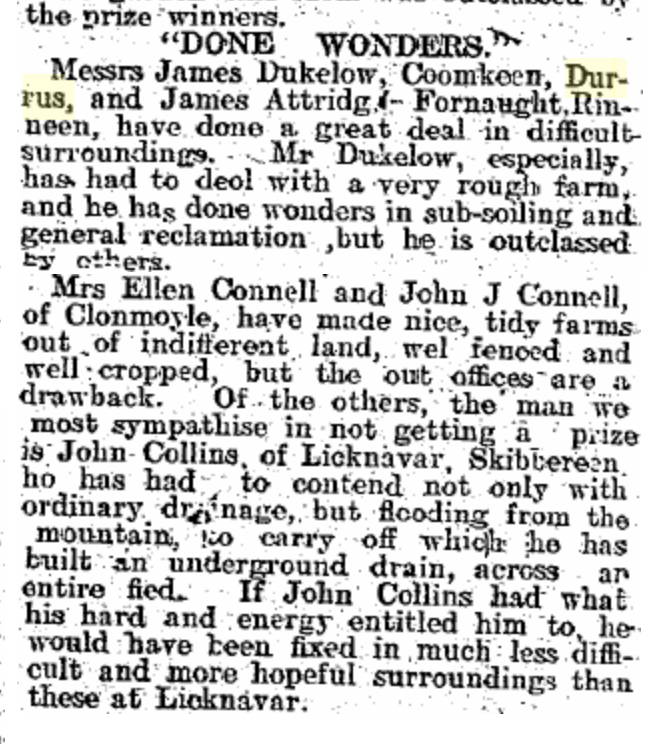
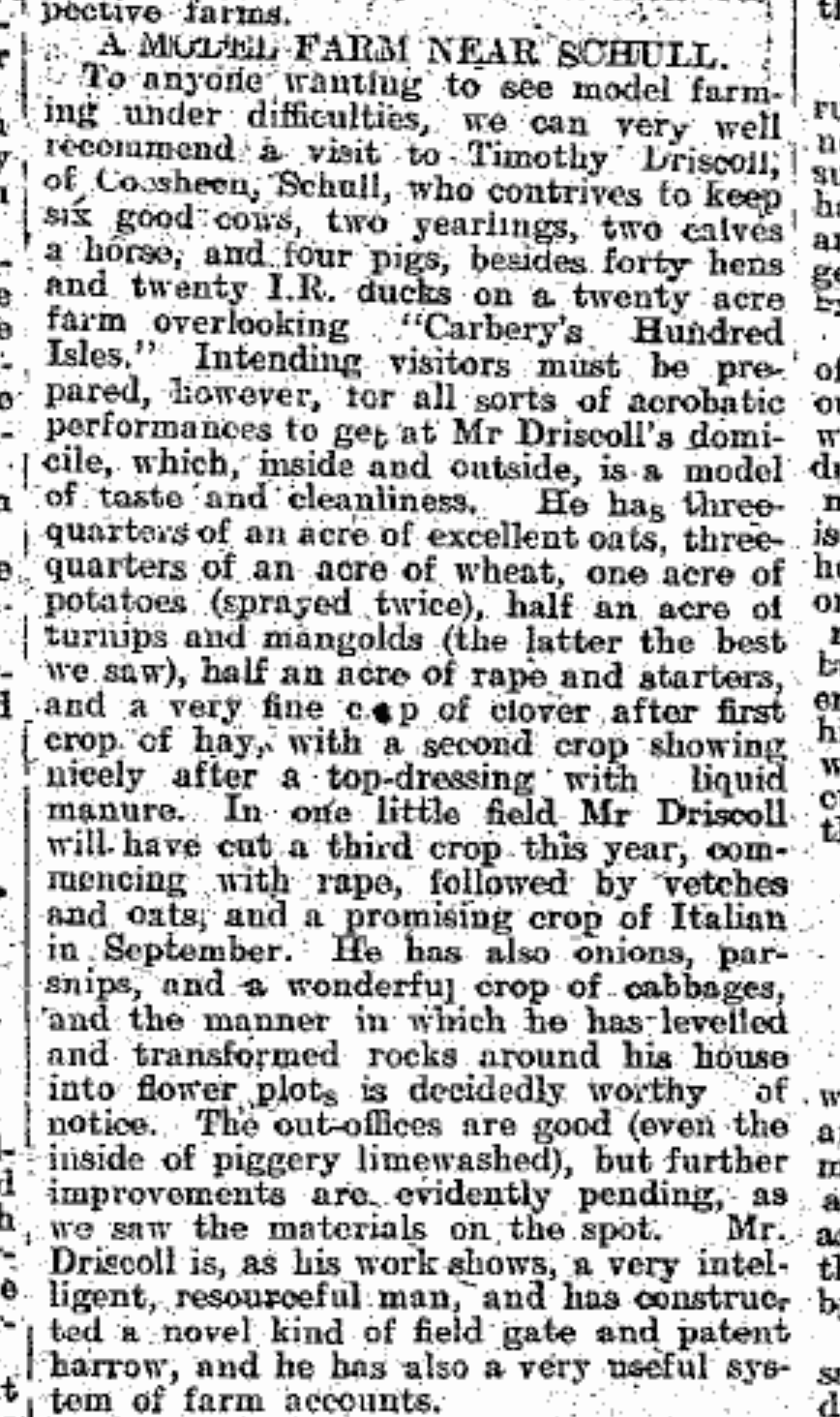
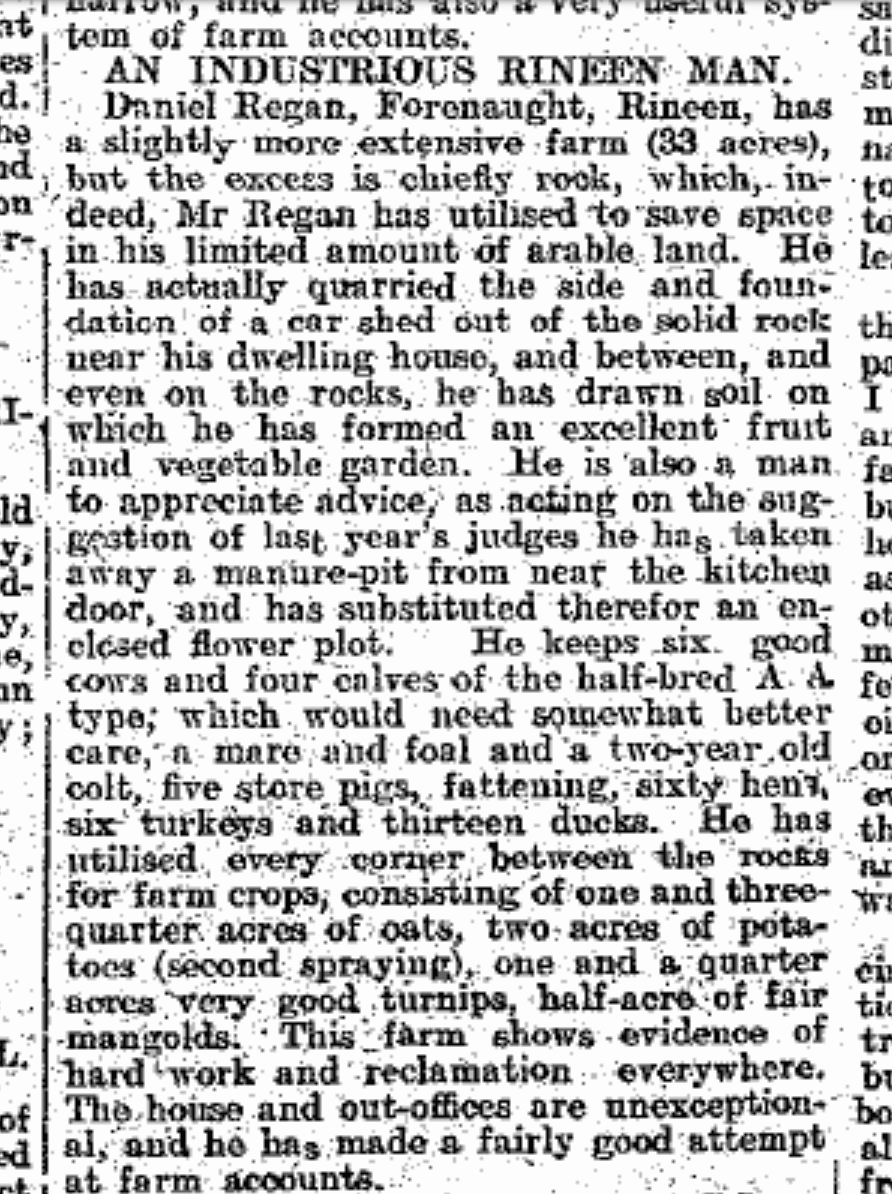
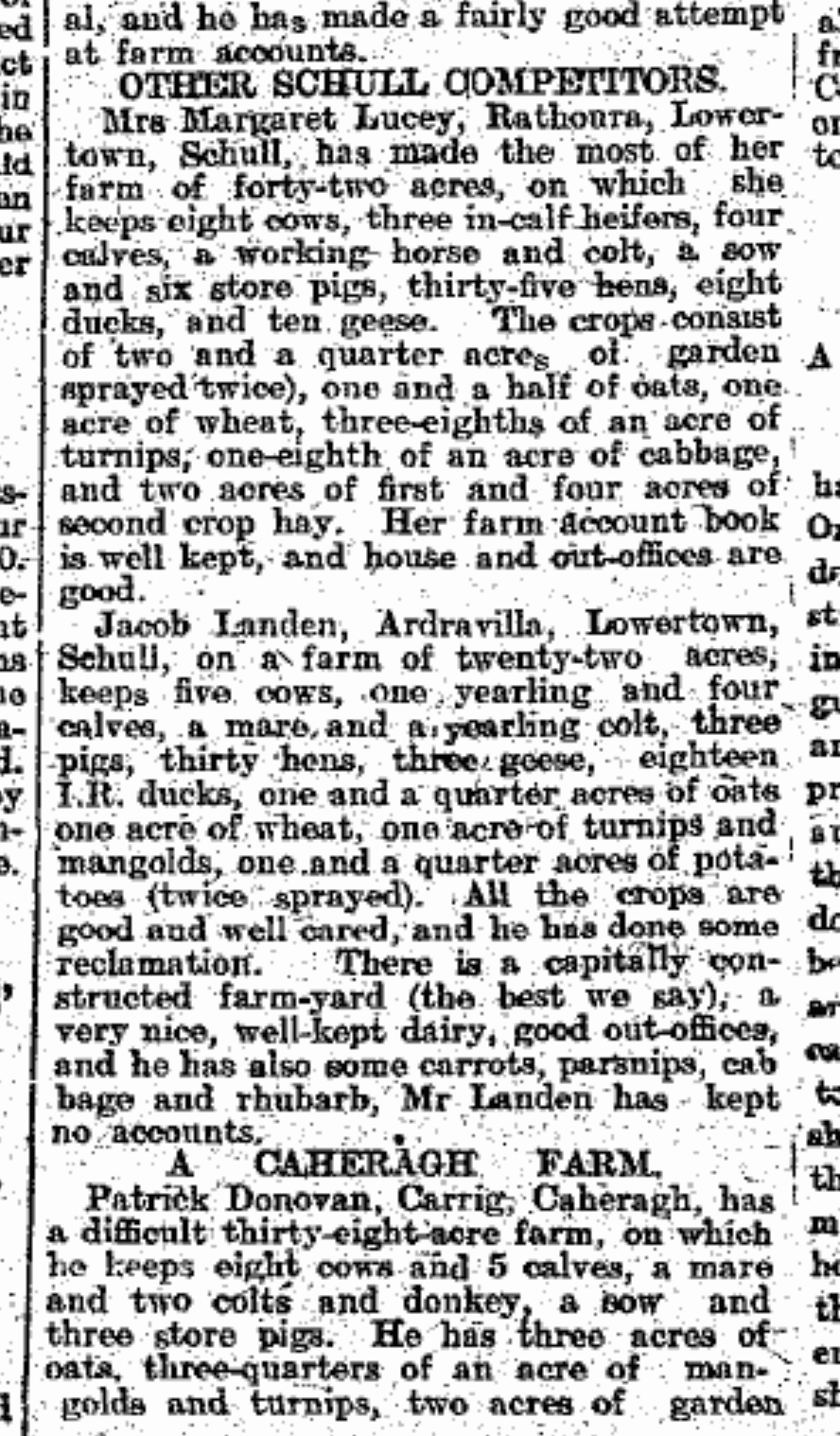
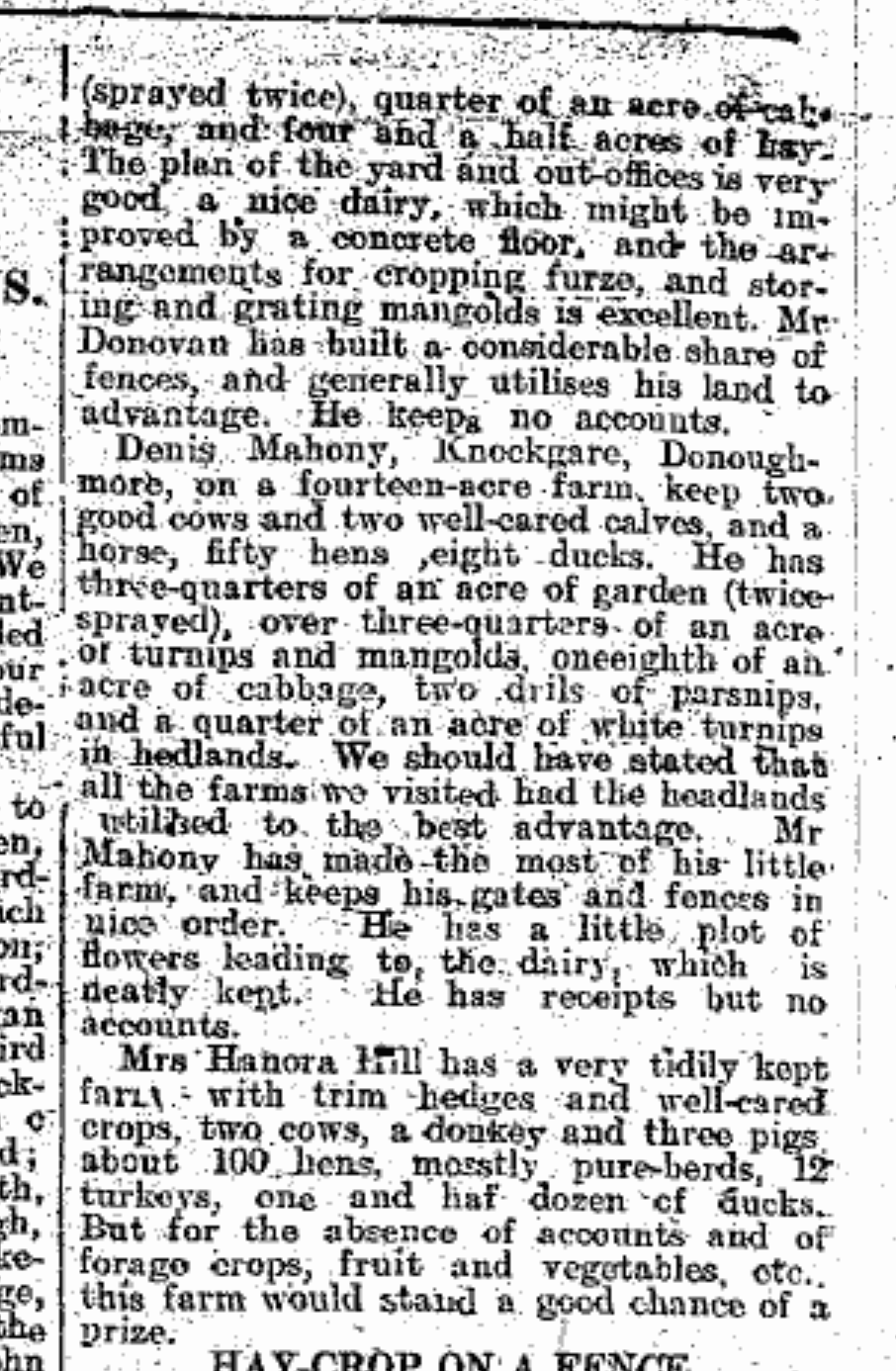
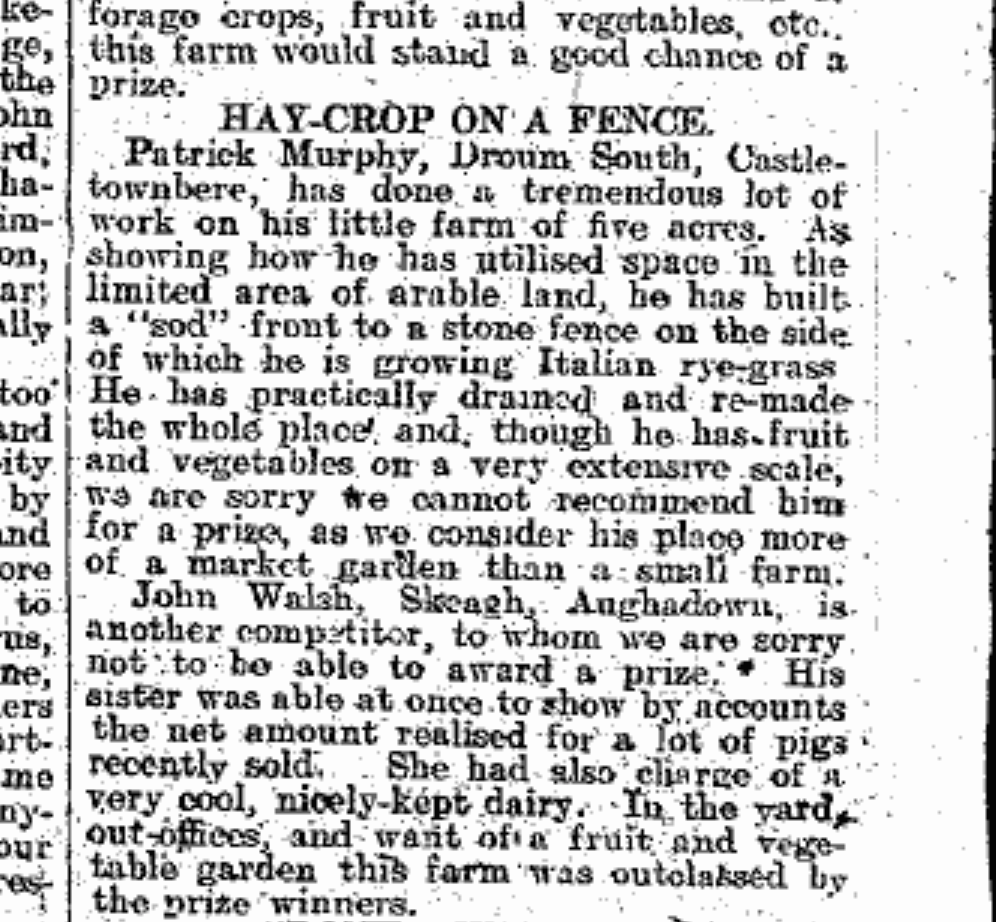
1908 Carbery Small Farm Competitions.  On one farm near Durrus and in another near Lough Hyne it is doubtful if the occupiers had spent the same number of years in Portland they would have quarried the same amount of stone or had to undergo the same amount of labour in their respective farms.  Hay Crop on a Fence


A testament to the industry of the people with meagre returns.

This was around the time the land was being vested in tenants by the Land commission. Various legal changes over the previous 20 years en the tenant would have to be compensated for improvements

In contrast in England the convention was that a third of the profit from land would go to the Landlord, a third to the tenant and a third for improvements.

These are middling farms if any observer was writing about 1840 of the extraordinary efforts to reclaim even an acre from mountain to grow potatoes

https://docs.google.com/document/d/1nfbHlasrFdfA88a7jNSUvXLAx7XBhux4PhcfFdtrQ7A/edit

Notes on the Fullers of West Cork


In the 1901 and 1911 census there are only around 100 fullers in Ireland, Cork born. Most are C of I, some Methodists and about 25% Catholic.

In Bennett’s History of Bandon he says the family came after 1590 to the Bandon are presumably from the West Country of England.

There are many in Ireland and amount the Irish Diaspora who have Fuller ancestry.

https://docs.google.com/document/d/1PZWlnGngjIXdAyDUZ5O878Yw3pRD9Lq-9DLK2s7RoMc/edit

Bennett : British Settlers in West Cork c.1590

Fuller

From a Census of Ireland 1659 with supplementary material from the Poll Money ordinances 1660-1661

Ballymodan Parish  East Gully

Number of people: 118, 47 english and 71 Irish. 

Tituladoes Names: Francis Bernard, Dan Darley, Tho Geogan, John Upcole, Raph Fuller

Middle Gully  (12)

Deresullagh (20) Joseph Abbott

Glancoolebeg  (10)  William Fuller

..

John Atkins Builder provider brother in law  of Thomas Fuller, Skibbereen Drinagh Slate Quarries company Limited shareholder

Olive G. Fuller Wife  of Thomas Fuller, Skibbereen Drinagh Slate Quarries company Limited shareholder

Members Ballineen Agricultural Society 1845-7

Ballineen 

C. Crowley, family there 1946

John Culnane, family there 1946

F. Daunt, family gone 1946

J. Fuller, family gone 1946

Castletown, Dunmanway?

W. Appelbe, family gone 1946

G. Chinnery, family there 1946

J. Cummins, family gone 1946

J. Fuller, family gone 1946

K. Fuller, family gone 1946

Early Church Wardens, 1781, Bishop Mann Visitation of Church of Ireland  Dioceses of Cork.  Ref D121.1.  1827 Parliamentary Return of Vestries, 1851, 1861 Visitations, 13th DEcember 2021

Ballymoney:

1827 Parish clerk £10, sextant £4 William Fuller, Robert Good Vestry returns for 1827, by order House of Commons, London February, 1828. http://www.dippam.ac.uk/eppi/documents/10167/page/224749

Drinagh:

1932 1932 Easter Vestry:  Church wardens, Rector, John Rossley, Peoples, J.S. Kingston, Sidesmen, R.Jennings, R.Helen, Select Vestry, Messs R. Ellis, C.J. Bryan, W. J.Levis, C. Ellis, R. Levis, G. Jennings,  A. Jagoe,  Miss E. Ellis, W. Jennings, R. Jennings, W. Fuller, A. Attridge 1931,  Easter Vestry:  Church wardens, Richard Jennings, Toughbawn, Richard Helen,  Lettergorman,Sidesmen,  Select Vestry, Messs R. Ellis, C.J. Bryan, W. J.Levis, C. Ellis, R. Levis, G. Jennings,  A. Jagoe,  Miss E. Ellis, C O’Jara, W. Jennings, W. Fuller, A. Attrid

Kilbrogan:

1823, Samuel Hornibrook, John Wright

1824, John Baldwin, William Sloan

1825, William Smith, Samuel Foulks?

1826, George and Henry Cornwall

1827, Thomas Gash, Robert Fuller

1828, William Lovell, Samuel Hosford

1829, Thomas Mountjoy, William Stanley of Carhue

1830, Jonas Bernard, Thomas Barter

1831, Thomas Bullen, Benjamin Thompson

1832,Benjamin Forde, Laurence Lovell

1827:

Robert Fuller, Thomas Gash

1870 Vestry Union of KIlmacabea and Kilfaughnabeg, Leap

1924 Churchwardens, G.Kingston, Dr. Welply, R. Travers, W. Driscoll,  J.Roycroft,  D. Jennings,  R. Wolfe, Jas.Kingston,  .S. J. Fuller, A. Sweetnam,  A. Eedy,  R. Baker, 

Kilmeen:

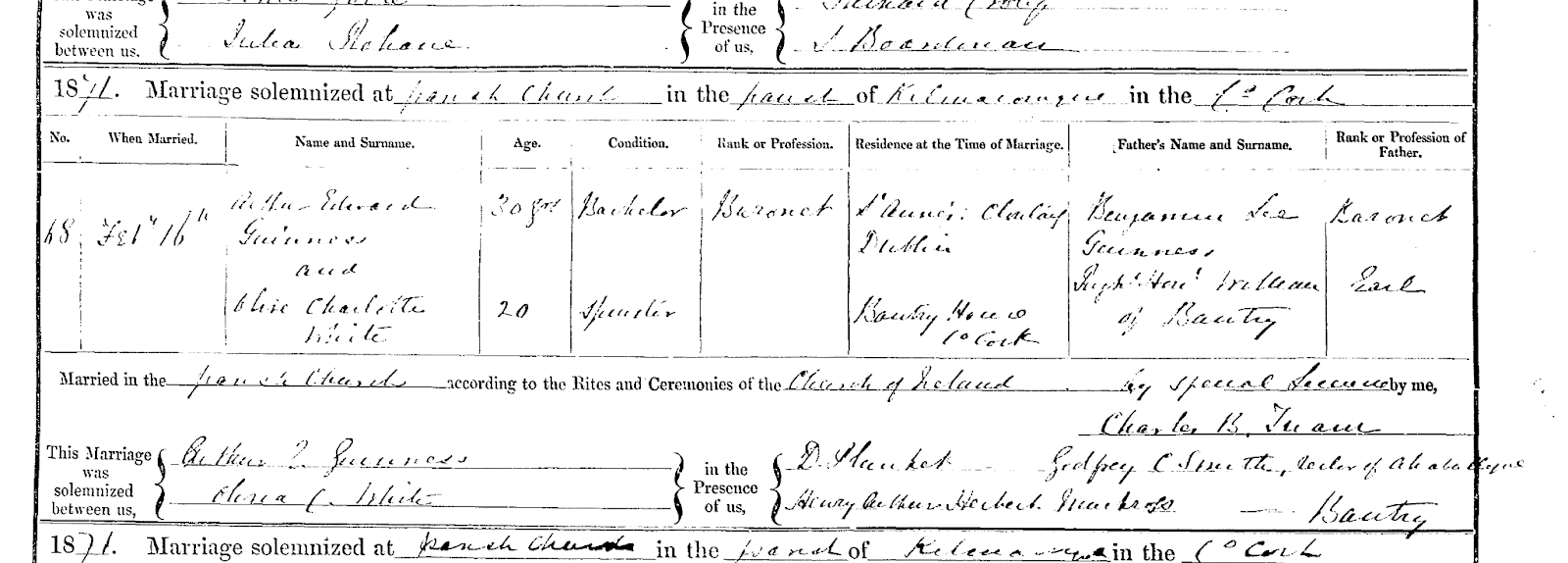
Richard Guinness, Great-nephew of Arthur Guinness. 1848 Elected M.P. Kinsale. Unseated because of Over Zealous Application of His Agent to Dispense Free Drink to Voters, Shenanigans in Sisk’s Public House on the Morning of the election, Voters Shaved. 1871 Marriage in Bantry of Lord Ardilaun to Lady Olivia Hedges-White of Bantry House.


https://docs.google.com/document/d/1aZ9hceHjvM5ni8TOJEF9s7cJ5b077LIlN7S1uk-fHvs/edit

He spent £4,000 on an ultimately unsuscbssul campaign probably roughly €500k in present money. The unfortunate girl who was to get a guinea for shaving looks like she was left short,

Kinsale Constituency:

https://en.wikipedia.org/wiki/Kinsale_(UK_Parliament_constituency)

The Guinnesses like some West Cork fame of northern origin such as the Crowleys (McDermott), Hegarty’s, O’Neills, O’Donnells, Gallaghers, Wards, probably part of the Northern Úi Neill descending from Niall of the Nine Hostages.

https://www.irishtimes.com/news/science/the-genetic-imprint-of-niall-of-the-nine-hostages-1.1771373

The Uí Néill clan trace their origins to the perhaps mythical Niall of the Nine Hostages. Niall was supposed to have lived 500 years before the Battle of Clontarf. Using genetics it is possible to trace Niall’s DNA and measure his legacy in terms of how many descendants he left. We can’t go back to AD 500 for a DNA sample, but we can look at modern O’Neills.
Ireland has one of the oldest surname traditions in the world. Also, whereas in other countries names reflect professions or townlands, Irish surnames refer to ancestors. Traditionally, surnames are passed from father to child. Barring adoption and other cases, the handing-down of this outward symbol of family is mirrored exactly by the genetic transmission of Y-chromosomes from fathers to sons. This genetic inheritance forms an unbroken chain from the past to the present.
In a survey of Y-chromosomes of Irish men, Prof Dan Bradley of Trinity College Dublin showed a small number of Y-chromosome types predominate in Ireland. In particular, one of these Y-chromosomes is very common in the northwest, being found in about one in five men there.
The close genetic relationship of these Y-chromosomes to each other suggests a single origin – one or more dominant males. This geographic area coincides with the ancestral seat of the Uí Néill family. Could this be the genetic trace of Niall of the Nine Hostages?

Snapshot of Finances of Bantry Estate, 1888, West Cork, requested by Lord Ardilaun (one of the Guinnesses married to one of Whites of Bantry House) showing rents of £11,600 for Bantry and £4,800 for Macroom, totalling £14,000 (present day €1.5 million), deficit of £2,035, with rent reductions for tenants of 25%.

In 1871 Lord Ardilaun married Lady Olivia Hedges-White, daughter of The 3rd Earl of Bantry, whose family home is Bantry House in County Cork; this was a happy but childless marriage.
.

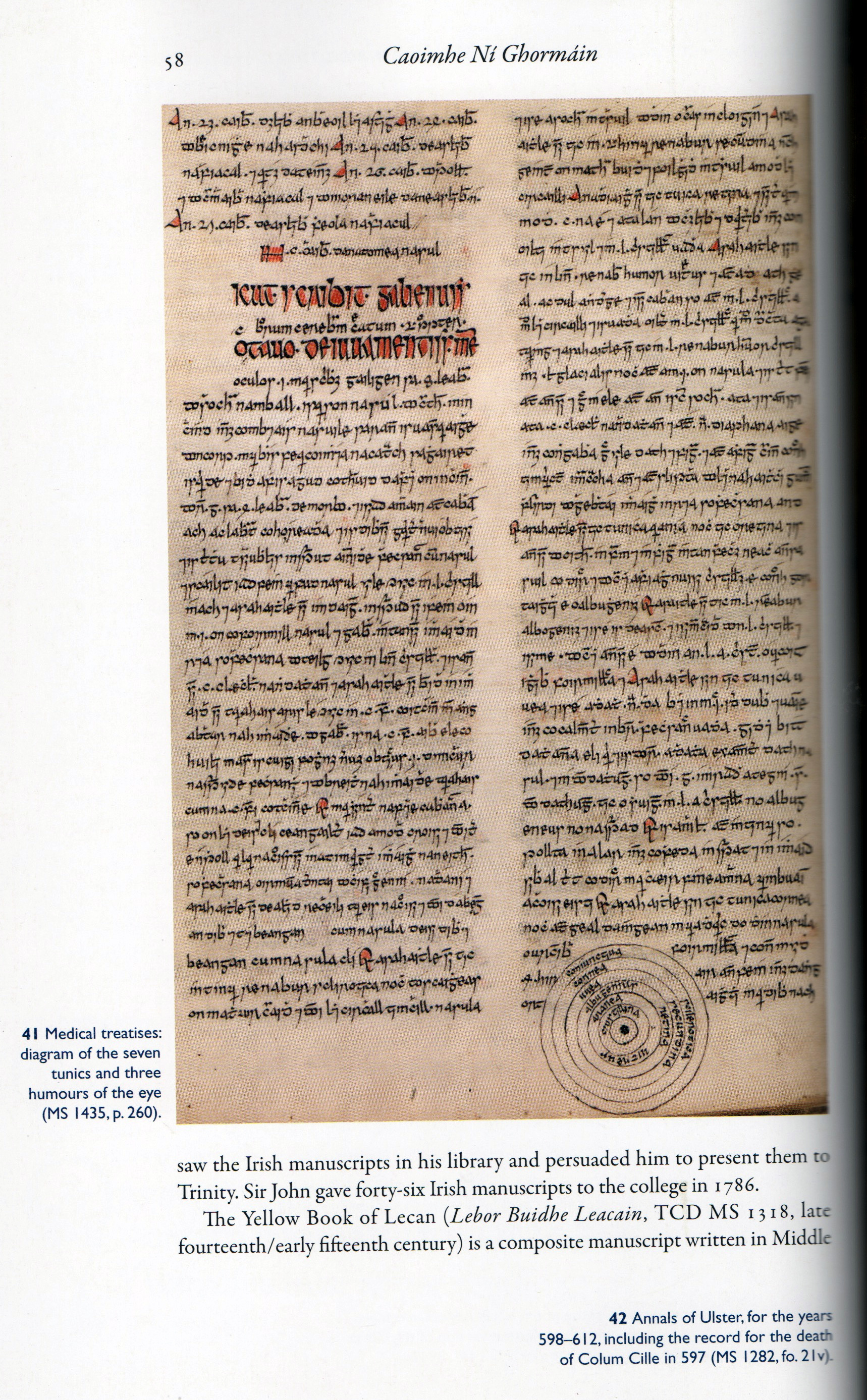
7th to 10th Century Irish Law Texts with Diagram of the Seven Tunics and Three Humours of the Eye, from Irish Medieval Medical Treatises.


7th to 10th Century Irish Law Texts with Diagram of the Seven Tunics and Three Humours of the Eye, from Irish Medieval Medical Treatises.

Courtesy Four Courts Press, ‘The Old Library’ TCD, 1712-2012

Early Irish Medicine from Dian Céch, the Irish God of Healing, Queen Macha Mong Ruadha legendary Hospital at Emain Macha pre 377 BC, Women Physicians under Brehon Laws, Arabic medical texts translated to Irish, Hereditary Medical families, the O’Cassidy Medical Manuscripts largest collection of Medical Manuscript Literature World Wide pre 1800 and the career of Doctor Richard Gumbelton Daunt (1843-1893), of Kilcascan Castle, Co, Cork family, Pioneer in Public Health Medicine, in Brazil 19th century, Genealogist.

https://durrushistory.com/2015/03/02/ilments-in-ireland-1693-few-sickly-persons-plague-is-wonderfully-rare-irish-agues-of-the-looseness/

Lawyers and Four types of Judges and their renumeration in Ireland 600-900 AD

https://durrushistory.com/2012/05/11/early-judicial-review-re-cork-gaol-28th-september-1303/

10-Scan 1748
09-Scan 1747
08-Scan 1746
07-Scan 1749
06-Scan 1744
05-Scan 1743
04-Scan 1742
03-Scan 1741
02-Scan 1740
01-Scan 1739

Seefin Electoral Area, Muintervara, (1859-1920) Landlords


https://docs.google.com/document/d/1wdNm0uAeW0xRAfNABsOeF04w42O5fzpHRJSQML0AOYY/edit

\

Seefin Electoral Area, Landlords

..

.

.

….

Screen Shot 2016-06-07 at 17.24.04.png

..

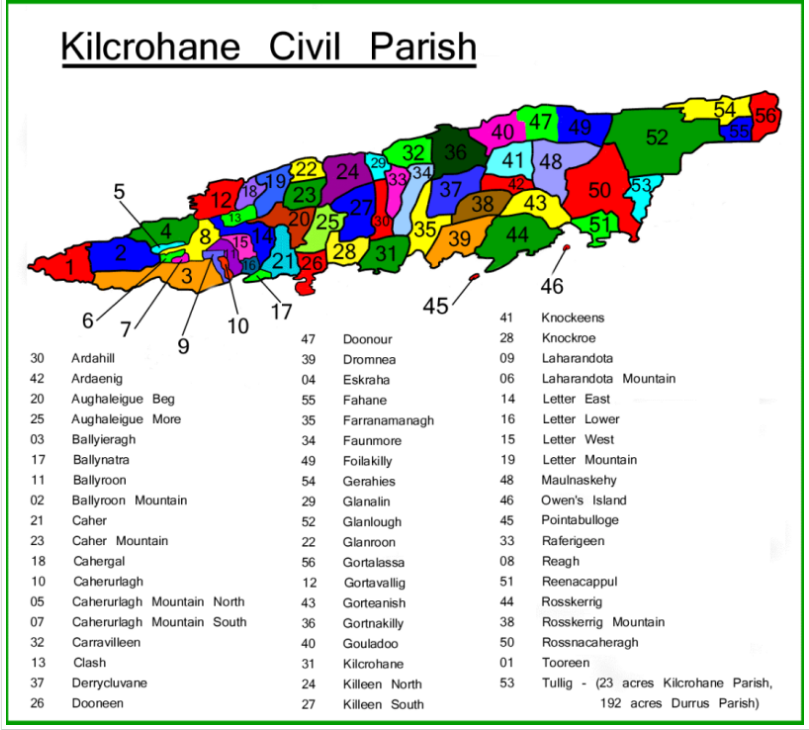
Townlands

There are 17 townlands that we know about in . This represents 100% of all the area in .

Ardahill 182 A, 3 R, 13 P

Ardanenig 137 A, 2 R, 37 P

Carravilleen 249 A, 0 R, 12 P

Derryculvane 365 A, 1 R, 9 P

Dromnea 388 A, 0 R, 32 P

Farranamanagh 323 A, 3 R, 26 P

Faunmore 263 A, 2 R, 38 P

Glanalin 99 A, 0 R, 39 P

Gorteanish 346 A, 1 R, 18 P

Gortnakilly 493 A, 1 R, 12 P

Gouladoo 294 A, 0 R, 10 P

Knockeens 312 A, 2 R, 15 P

Maulnaskehy 535 A, 3 R, 5 P

Pointabulloge Island 1 A, 2 R, 25 P

Raferigeen 196 A, 1 R, 23 P

Rosskerrig 600 A, 3 R, 26 P

Rosskerrig Mountain 284 A, 1 R, 20 P

..

..

Ardahill, 1859, James O’Connell

1873, Daniel O’Sullivan, replaced 1881 by Daniel O’Sullivan, same 1884.

\

​​Historic: title as originating with a lease of 17th March 1752 to commence 1st November 1782 by Dr John Whetcombe, Bishop of Clonfert, Kilmacduragh and Kilfenora and his wife Eliza to William Roberts of Derryclivane, lands at Kerkin, Dromnea, Gurtahilla Ruskeragh 6 gneeves for 999 years and a rent of £150 per annum. O’Donovan, Ardahill House John O’Connell  son in law of O’Donovans

Ardanenig,1859, Richard O’Donovan

Timothy Arundel, small lot

1873, Philip Wolfe

1873 Daniel O’Sullivan

1883 Reps Philip Wolfe

Historic: Richard O’Donovan, Fort Lodge, Durrus

Carravilleen, James O’Connell

Seefin Electoral Area, Muintervara, (1859-1920) Landlords

Glanlough Electoral District, Munitervara Peninsula, Landlords, 1880-1921


https://docs.google.com/document/d/1zAvCJIwL2TxVVPKV_jEgLkOuJgpxQpEF2YUVriKYtMw/edit#

Glanlough, Landlords,1880-1921

Some of the dates on the Valuation Office ledgers are difficult to interpret but this gives the broad thrust

.

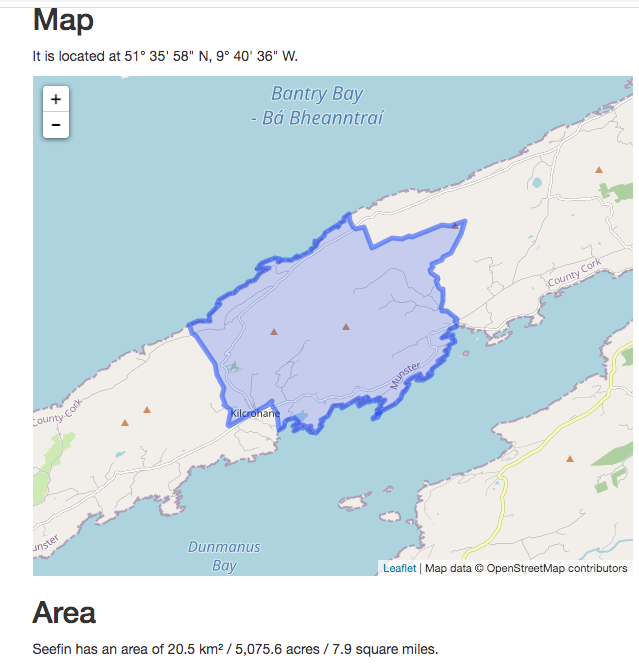
Area

Glanlough has an area of 15.5 km² / 3,830.6 acres / 6.0 square miles.

Townlands

There are 10 townlands that we know about in . This represents 100% of all the area in .

..

….

Doonour 248 A, 3 R, 16 P

Fahane 144 A, 2 R, 7 P

Foilakilly 361 A, 3 R, 30 P

Gerahies 341 A, 2 R, 20 P

Glanlough 1192 A, 0 R, 4 P

Gortalassa 265 A, 2 R, 34 P

Owen’s Island 1 A, 3 R, 31 P

Reenacappul 200 A, 3 R, 16 P

Rossnacaheragh 855 A, 1 R, 29 P

Tullig 217 A,

..

Doonour, 1891,  William and reps  Richard J.M.Gumbleton, reference to a new house slated.

1898, Mr. Gumbleton and Mrs. Gumbleton

Fahane, 1896,  William and reps  Richard J.M.Gumbleton

1898, Mr. Gumbleton and Mrs. Gumbleton

1907 sub letting to John Driscoll not sanctioned by Landlord

Foilakilly,1881, William and Richard J.M.Gumbleton.

1898, Mr. Gumbleton and Mrs. Gumbleton

Gerahies,1884, William and Richard J.M.Gumbleton.

1886, William and reps  Richard J.M.Gumbleton

John E. Barrett, then Rev. John Pratt probably former teachers house

1896, William and reps  Richard J.M.Gumbleton

John E. Barrett, Church Education Society vacant by 1884.

1898, Mr. Gumbleton and Mrs. Gumbleton

Glanlough, Catherine O’Sullivan then James O’Donovan, Lick, Skibbereen.

Mrs. Gernon

Kate O’Donovan and Mrs.Gernon

Dr. Donovan??

Kate O’Donovan them Mrs.Gernon

Miss O’Donovan and Mrs.Gernon

Kate O’Sullivan then Sullivan replaced by O’Donovan and Mrs.Gernon

Jeremiah Donovan, Lick

1890, Jeremiah O’Donovan then Daniel O’Donovan.