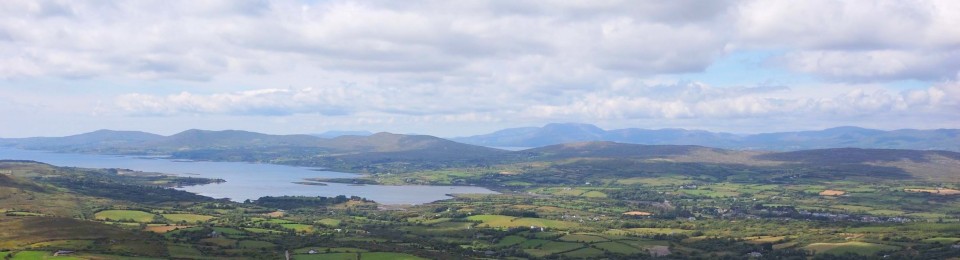
Post 1798 Arms Seizures Caheragh, West Cork.

Tags

,


In the online history of the Townsend family of Co. Cork, compiled by Colonel John Townsend in Australia,

http://www.astro.wisc.edu/~townsend/tree/record.php?ref=405

https://www.google.ie/maps/place/Caheragh,+Co.+Cork/@51.6325479,-9.3065158,15z/data=!3m1!4b1!4m2!3m1!1s0x4845a797cbacb2a1:0xa00c7a99731ea90

In the article relating to Samuel Townsend 1768-1836 of Whitehall, Aughadown there is a piece on the post 1798 situation.

The British Government employed Sir John Moore to disarm Co. Cork.  He used a scorched earth policy designed to intimidate people to hand in their arms.  In Caheragh 800 pikes were located as well as 3,400 stands of arms.  The soldiers were billeted on the local population and literally ate them out of house and home.  One exception to this was in Aughadown where the joint efforts of the Catholic Parish Priest Father Timothy O’Sullivan and the Church of Ireland Vicar Joseph Wright ensured that the local commanding officer Samuel Townsend did not billet the soldiers on the local population.

RIC/Garda Recruitment South West Cork late 19th early 20th century.

Tags

, , , ,


The RIC has enjoyed a bad press in Ireland as a quasi military force oppressing the Irish People.  In fact most of the force rarely carried firearms and apart from recruit training had no contact with arms.  Until the time of the troubles 1916-1922 most of the RIC’s duties apart from ordinary policing took in such tasks as agricultural statistics, census collection and weights and measures.  Going on memoirs for most of its history it enjoyed a reasonable relationship with the local population where it was based.  It had a well deserved reputation for honesty and lack of corruption and was used as a template for police forces in many jurisdictions.

A career in the RIC was attractive, the pay was regarded as low but a constable could retire after 30 years.  Discipline was strict and even extended to the choice of wife.  For many young men from a farming background who were not going to inherit the farm it was an attractive prospect.  Many people prominent in Irish public life had a grandparent or great great parent who was in the RIC.

The force was around 75% Catholic the balance the various Protestant denominations.  In South West Cork there were not many from a Catholic background who joined compared to parts of Beara or Kerry.   It may be that emigration was so ingrained in these districts that for a young man the first port of call was America.  There was however a fair amount of enlistment from the sons of small to middling Church of Ireland farmers who were deemed not to inherit the land.  Of those who did not marry many on reaching 30 years service at the comparatively early age of 48 would return home and resume farming at the home place or a purchased farm.  Most of the  recruits remained as constables the odd person such as Robert Warner, Reendesert, Bantry reached the rank of Chief Constable the equivalent to a Senior NCO in the Army.  The Officer corp in the RIC was distinct and there was minimal movement from the ranks.

From the establishment of the Garda there has been a fair amount of recruitment from West Cork among Catholics but little from the Church of Ireland/Methodist community, understandable in ways gived the ethos and origin of the new state but nontheless a loss of the services of the personnel who were used to policing throughout Ireland.

Foe some West Cork personnel, the records are in the National Archives in microfilmMFA 24 very tedious to extract;

https://docs.google.com/spreadsheet/ccc?key=0AqhnQGE3ANjzdEpXdDN5SlFocmpzWllNNkVSU2JqSWc#gid=0

For material collected by Head Constable John Brown in the Cork Archives re Cork 1917-21

Click to access U97web.pdf

On the Townsend Family website

http://www.astro.wisc.edu/~townsend/tree/record.php?ref=413

there is reference to Robert Townsend 1801-1872.  He was of the Whitehall, Aughadown Townsends and served in the West Carbery Armed Association probably with his father before joining the RIC in 1823 where he served variously in Mayo. Clare and Donegal as County Inspector until 1866.

Three other members of the Townsend family served with the RIC in addition to Samuel’s son Robert,   Henry Townsend [413] – they are Norman Lionel Townsend [5A03], his son Thomas Philip Barry Townsend [5A17] and Edward Synge Townsend [611]

Teaching of Book Keeping in Irish Hedge Schools in the 18th and 19th centuries.

Tags

, , , , , , , ,


In Estudios Irlandes Vol 5, there is a fascinating article by Peter Clarke, of UCD, on the history of bookkeeping in Hedge Schools in the 18th and 19th centuries.

In the Report of The Commissioners of Irish Education 1826 it transpired that over 500,000 children over 70% of Irish children were being educated in hedge schools.  Their curriculum was flexible and many included basic business education.

In the 18th century Irish Emigrants to the US including Cornelius Lynch 1740, and Terence O’Neill 1789 taught bookkeeping in New York.  In Australia John Kenny taught double entry book keeping in Sydney in 1793.

Peter Clarke’s article suggests that the hedge schools had an important influence through Irish teachers on the curriculum of the American mid west and frontier.

Click to access Peter_Clarke.pdf

Death of Owen McCarthy Esq., Blarney, 84, Lord or Master of the Preceptory of Moran, Last of the Ancient McCarthy Family. December 1790


The Hibernian Chronicle reported on the 6th december 1790 the death of Owen McCarthy Esq., ‘age 84, near Blarney,, ‘commonly called Master-na-Mona, or Lord or Master of the Preceptory of Moran, in this county.  He was the last of that ancient and respectable family, except an only son, no Governor of Miranda and Colonel of (4th?) Regiment of Horse in the Portuguese service, where by his velour, he was promoted in a  sovereign clime to  honors, which he was rendered incapable of enjoying in his native country from the severity of penal laws.  The deceased had fifteen brothers, thirteen of whom, on said account, emigrated for bread after losing their estates in this kingdom, and were promoted to high ranks in the different armies of France, Spain, Portugal,and Germany’.


http://corkgen.org/publicgenealogy/cork/potpourri/corkancestors.com/Deathsmarriages2.htm

Evidence of John Jagoe, (Grandfather of Mother Benigna, Australia and Father of John Jagoe BL), Bantry, Co. Cork, 1837 re Manor Courts to Parliamentary Commission.

Tags


1-IMG_4510In 1837 a Parliamentary Commission took evidence on the operation of Manor Courts.  It heard evidence from John Jagoe.  He was one of the main witnesses.  He was from Bantry a Fish Merchant, had sat on a Fisheries Commission had engaged in correspondence with Dublin Castle on fisheries and non-denominatinal education.  His mother was Young of the Bantry Fishing family who propably held the property, a former mill, now the Maritime Hotel on lease from the Bantry Estate. His father originated in Kilcolman, Dunmanway. At one stage he was reputed to have been a shopkeeper on the Bandon Road/Barrack St., Cork. His only son John became a Barrister. He was admitted to Grey’s Inns London in 1835 aged 34.

His wife was O’Connor may be related to Dr. Bryan O’Connor of Bantry sent to Botany Bay in Australia with Alexander McCarthy Barrister for being United Irishman.  He had three brother officers in the British Army.

He wrote a book on Irish Fishery law, 1843:


Screen Shot 2016-02-27 at 08.45.07

In his evidence he said that there were Manor Courts in Bantry  and Leamcon (Schull). They were generally held in public houses wiht a jury drawn from a low class.  The Seneshal was drawn from  a drunken class and paid £50-£80 per annum.  His evidence suggested that the jury demanded cash or whiskey from the successful party.  This was referred to as a ‘cob’.  The jury did not retire but openly debated the verdict and onlookers could hear and influence.  The more respectable class of person avoided the Manor Courts preferring the Session Courts which sat in Bantry once a year.

He had attended a Manor Court in Oughterard, Co. Galway which was entirely in Irish, he himself had only a little Irish.  He was the father of barrister John Jagoe mother O’Connor.

Screen Shot 2016-02-22 at 12.09.00

http://books.google.ie/books?id=-0oSAAAAYAAJ&pg=PA49&lpg=PA49&dq=john+jagoe+barrister&source=bl&ots=yKBtL6BuGN&sig=aymhZjMAowH6nfIPebPt780bTcU&hl=en&sa=X&ei=9DrNUfrqNs6Q7AbsvIHYBw&redir_esc=y#v=onepage&q=john%20jagoe%20barrister&f=false

John Jagoe was also a Fisheries Commissioner and took evidence sitting in Donegal.

http://books.google.ie/books?id=SHFbAAAAQAAJ&pg=PA54&lpg=PA54&dq=john+jagoe+fisheries&source=bl&ots=PjYHAjP4Qq&sig=A_N7F7gM8EgtLEuvsZ5XrmO5LyM&hl=en&sa=X&ei=f9nPUf-cCe6X7Qa5goC4Bg&redir_esc=y

He was the father of John Jagoe barrister his only son. Jago was in court appearing for an evicted O’Donovan family of long standing c 1846 who had expected their lease to be renewed by the Kenmare Estate.

He may also have been the mother of Esther Jagoe. She was the mother (Father Desmond Bantry Attorney) of Ann Marie Desmond (Mother Benigna) who set up education for women in Townsville Australia:
http://adb.anu.edu.au/biography/desmond-anna-maria-5962

Death of Mrs. Mary Spillane, aged 112 in 1899, and Mr. William Coveney aged 115, remembered French in Bantry Bay.


For Mr. Coveney 4th June 1898 Freeman’s Journal, Sydney.

http://trove.nla.gov.au/ndp/del/article/115386798?searchTerm=Bantry&searchLimits=exactPhrase|||anyWords


For Mrs. Spillane, Freeman’s Journal, Sydney, Australia 25th March 1899 http://trove.nla.gov.au/ndp/del/page/12405167?zoomLevel=1&searchTerm=Bantry&searchLimits=exactPhrase|||anyWords

Davy Crockett, Rev. James Fontaine, Battle of the Alamo and the Huguenots of Bantry Bay, Co. Cork.

Tags

,


https://www.google.ie/maps/place/Castletown-Bearhaven,+Co.+Cork/@51.6515079,-9.919085,15z/data=!3m1!4b1!4m2!3m1!1s0x48457e4fcf1360df:0x15e0b4d55c1c38fd

Davy Crocket’s ancestor James Crockett born c 1674 (may be later) was the child of one of the 13 Huguenots who worked with James Fontaine in a short lived fishing enterprise around the late 17th century  to the early 1700s.  He was  Louise de Sax Crocketagne (Anglicised to Crockett) mother Antoine.  The fishery was in the Castletown/Dursey area. Rev. Fontaine’s settlement was at Bank Harbour, 5 miles east of Castle Town Bere. The road down to the pier is the L8952.

Davy Crockett’s ancestor James Crockett born c 1674 (may be later) was the child of one of the 13 Huguenots who worked with James Fontaine in a short lived fishing enterprise around the late 17th century  to the early 1700s.  He was  Louise de Sax Crocketagne (Anglicised to Crockett) mother Antoine.  The fishery was in the Castletown/Dursey area.

From Bishop Dive Downes Tour 1700:

Interestingly Fontaine (James Fountain 1702) and his son James Fountaine Junior (1710) were appointed Justices of the Peace for Co. Cork suggesting that they were well connected.

Screen Shot 2017-09-20 at 19.12.41

Rev. Fontaine’s memoir, last chapter re West Cork

https://en.m.wikisource.org/wiki/A_Tale_of_the_Huguenots_or_Memoirs_of_a_French_Refugee_Family/15

http://familytreemaker.genealogy.com/users/w/a/c/Mary-Wacaster-Tx/FILE/0003page.html

Ancestor of Davy Crockett, Battle of the Alamo, http://www.writework.com/essay/biography-davy-crockett-and-battle-alamo

A Huguenot settlement was established here about the year 1700. The organiser of the project was Jacques de la Fontaine, the son of a French Protestant minister. This adventurer came to England and carried on some small business for a time. He then became a Protestant clergyman, and in the year 1694 came to Cork, where he ministered to a small Huguenot congregation. He heard of the fisheries at Berehaven, which he thought offered a wider field for the exercise of his energies. He repaired hither, rented some land and houses, brought over his colonists, and formed a fishing company. He was soon appointed Justice of the Peace, and in this capacity became most obnoxious to the natives.

He made himself a busy tool of the Government, and interfered in matters which scarcely concerned him. Smuggling was carried on largely at the time, and he thought he would put a stop to it. The task was beyond his powers and brought him to grief. He was fully aware of the enmity of the natives and of those engaged in the smuggling trade, and he made preparations to protect himself in case he should be attacked. Having some knowledge of erecting forts, he raised earthworks around his residence, which got the name of the ” Sodfort.” His foresight was soon justified, for in June, 1704, a French privateer entered Bantry Bay and proceeded to storm the Sod Fort. Fontaine stood well to his guns, and after an engagement that lasted from eight in the morning until four in the afternoon, the privateer withdrew with the loss of three killed and seven wounded. The Government granted him a pension of five shillings a day for his skill and bravery in the action, and he was supplied with five guns which he was authorised to mount on the battery.