‘A Thick Irish Brogue’ John Gilbert Higgins (1891-1961), Rhodes Scholar, Newfoundland Lawyer, Politician, Senator, Judge Robert Swanton (1767-1840), Ballydehob/Swantstown and New York Judge, the Atlantic Provinces of Canada and The Irish Argentinans, Crofton Croker.


‘A Thick Irish Brogue’ John Gilbert Higgins (1891-1961), Rhodes Scholar, Newfoundland Lawyer, Politician, Senator, Judge Robert Swanton (1767-1840), Ballydehob/Swantstown and New York Judge, the Atlantic Provinces of Canada and The Irish Argentinans, Crofton Croker.

In Robert A Caro’s biography of Robert Moses the man who built New York infrastructure and who poured more concrete the the Pharaohs and the Romans he refers to his friend at Oxford in 1910 John Gilbert Higgins, a Rhode Scholar which Moses was not.. He sported a long knitted scarf adn aThick Irish Brogue. Higgins came from a humble enough background and late excelled at Politics and Law. His Irish background goes back at least to his grandparents. He campaigned with success to prevent Newfoundland from being incorporated into Canada in 1948.

http://en.wikipedia.org/wiki/John_Gilbert_Higgins

On the Canadian Maritime provinces there are close Irish links from long standing emigration. In some area the links between West Waterford area strong enough to have the Waterford accent still prevailing after perhaps 200 years.

A recent TV programme on the Irish in Argentina traced the emergence of an elite group of Ranchers. They descend from emigration for Longford and west meath in the 1880s of prosperous Irish farmers. Again when speaking in English a clear Midland accent is apparent.

Robert Swanton presided over the Admiralty Court in New York in the 1820, in later years an old New York Lawyer recalled the Judges of his youth including Swanton whose impossible Cork brogue and that of his tiptaff casey made it difficult to understand what was going on.

Judge Robert Swanton (1767-1840), Ballydehob, West Cork presiding at New York Marine Court with Tipstaff Casey 1827.

Crofton Croker writing in the 1840 of his schooling in Cork in the 1810 praised the schools which were mixed in terms of religion but broke for instruction. At the time he was writing he complained that prosperous Cork families were sending their children presumably mainly boys to be educated in England. he said they came back with a cut glass English accent.

Stamp Duty of 5 shillings and 6 pence, paid in London, 1826, on £450 Purchase of Commission for Honourable Simon White Esq., Bantry.


Stamp Duty of 5 shillings and 6 pence, paid in London, 1826, on £450 Purchase of Commission for Honourable Simon White Esq., Bantry.

The National Library has a manuscript,(MS G.O. 428) which is a photographic reproduction of micro films lent by Paddy O’Keeffe, Bantry Historian c late 1950s.

This is an extract of the Account Books kept by the Rev. Somers Payne, Land Agent to Lord Bantry. The Rev Somers did not practise as a clergyman and his family hailed from Danesford, Innishannon later Upton Industrial School. It was common enough for young men of a Landed background to got to Trinity College, take Holy Orders and then do something like Land Management or Literature.

On set of the accounts in minute details notes rents, by tenant, amount townland. It is a useful guide of who lived in various townlands in the period around 1826 together with Bnatry town. Apart from cottiers there are them more comfortable farmers and the Middlemen. In the Beara area it is clear that the greater O’Sullivan family retained de facto control of much of their land. The rents are significant but well below market rents allowing a significant lifestyle from rents received from under tenants who were probably in many case rack rented. Paddy O’Keeffe had a particular interest in the various O’Sullivan Septs in the Greater Bantry area and his papers at the Cork Archives are replete with references adn genealogies of same.

On the other side of the ledges is the expenditure side and included here is an item 1826 of stamp duty paid on the British Army Commission for Simon White of £450. To get some idea of the value of this amount in the late 19th century the basic annual pay of an RIC man was £34 with allowances and housing.

In the 18th century the British Army and Navy were favoured career choices for Irish young men of the Church of Ireland. Later in the century this included well to do Irish Presbyterians and Catholics. As the 19th century progressed there was an almost limitless demand for Doctors, Lawyers an Administrators for the developing Empire and the same class provided the recruits understandable given the lack of career choices in a stagnant economy.

https://docs.google.com/spreadsheets/d/11urZxIDy4fdnr2ih_r8mtr4i1zI5dqmLgz6ipOIRhCM/edit#gid=0

Supervlu Musgraves of Cork, Warners of Bantry, Attridges of Ballydehob and Edward Barnazzian (Hadji Bey)

Tags

, , , , ,


Supervlu Musgraves of Cork, Warners of Bantry, Atridges of Ballydehob and Hadji Bey

The historian Turtle Bunbury has a piece on the Cork Musgraves and their Roscommon origins. The family of Stuart Musgrave descend on the female line from the Warners of Bantry and Attridges of Ballydehob.

The Cork Musgraves are a remarkable family developing from a small shop on the North Main Street to the present enterprise. Jack Musgrave in the early and mid 20th century guided the company from its premises at the Coal Quay. They were involved in sugar rationing and distribution for the Cork area during the War.

The family was Methodist which may account for the Warner and Attridge connection both West Cork Methodist families. Up to the late 1960s Cork business, education, medicine and other professional services was organized along religious lines. It was not possible to enter the management ranks in Musgraves unless you were family or a Protestant. They were no different then comparable firms, Michael Smurfit refers to the phenomena in Dublin until the mid 1960s in his recent biography.

Being Methodist the family kept one of their businesses the Metropole Hotel on McCurtin Street ‘dry’ until around 1970, it was also said that the hotel refused bookings for any sports which played on the Sabbath. Interestingly the Turkish Delight shop Hadji Beys founded by Edward Barnazzian formerly a Law Student at Constantinople University and fled to Cork in 1902 was within the curtilage of the hotel block.Edward Barnazzian was not in fact Turkish but one of the unfortunate Armenians who were exterminated by the Turks. The 20th century’s first example of mass extermination.

http://www.turtlebunbury.com/history/history_family/hist_family_musgrave.html

The Warners may have come to Bantry pre 1600 possibly in connection with the fishing industry. There is a probate c 1670 for a Warner in Kilcrohane. The were well established by the late 17th century middling to strong farmers with an element of Middle Men on the Bantry and Kenmare Estates. In Richard White’s rental notebook 1780s, the ancestor of the Earl of Bantry there is a reference to the family as being trustworthy, honest, hard working and who should be favoured on lease renewal. Later the family were saddle makers and in retail. Their Bantry business continued until around 1980. Their bread was a delicacy. Interestingly in the notorious case of the murder of Bird by Cadogan in Bantry 1900 his office where he was killed was over Warner’s shop on Barrack Street.

Partial transcript of trial of Tim Cadogan for murder of W.S. Bird, Bantry, West Cork. 1900 and botched Execution.

Family members went to Skibbereen where Mrs Musgrave originated.

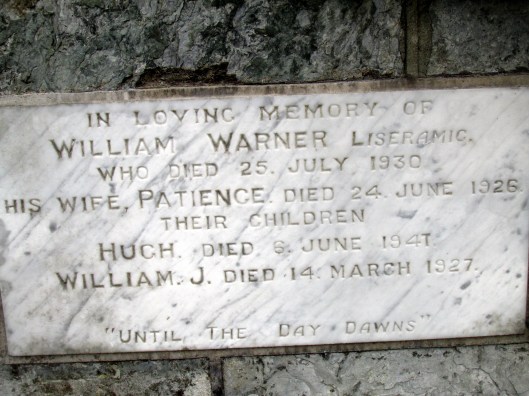
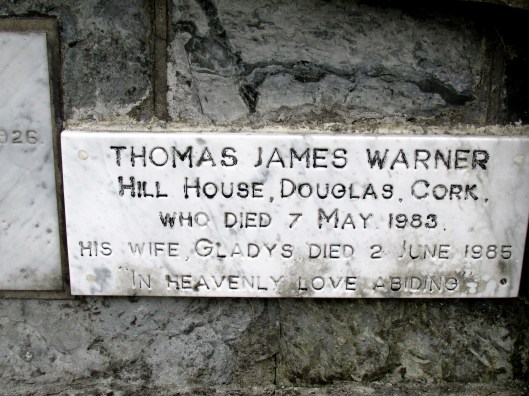
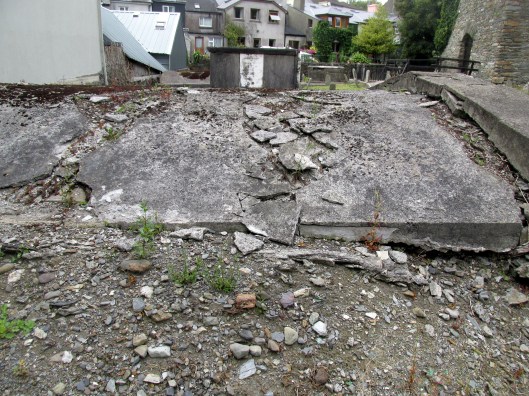
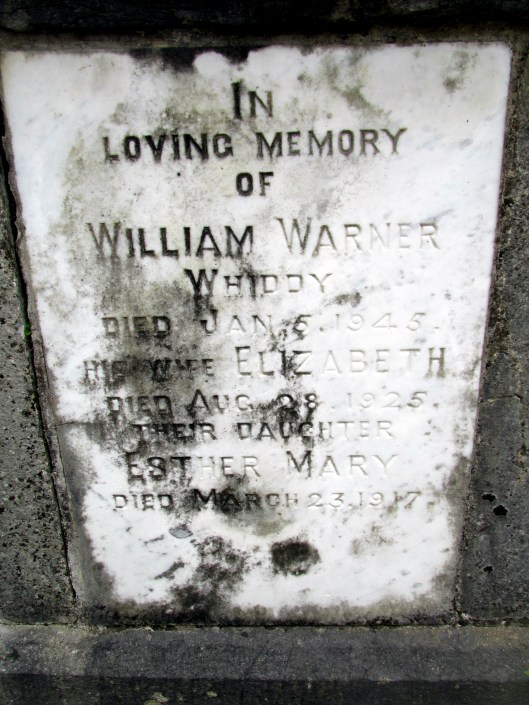
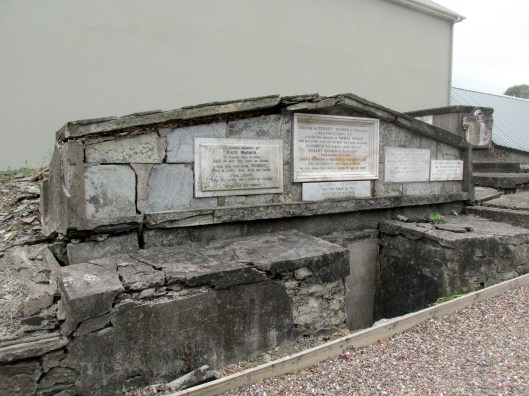
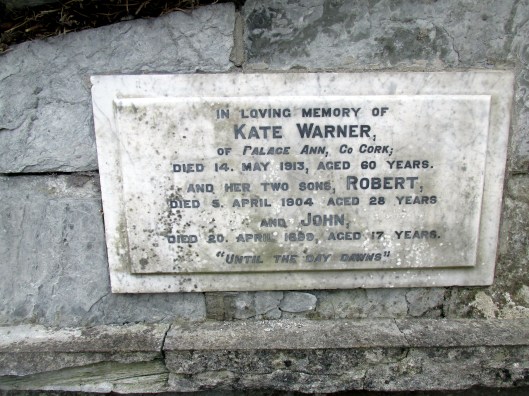
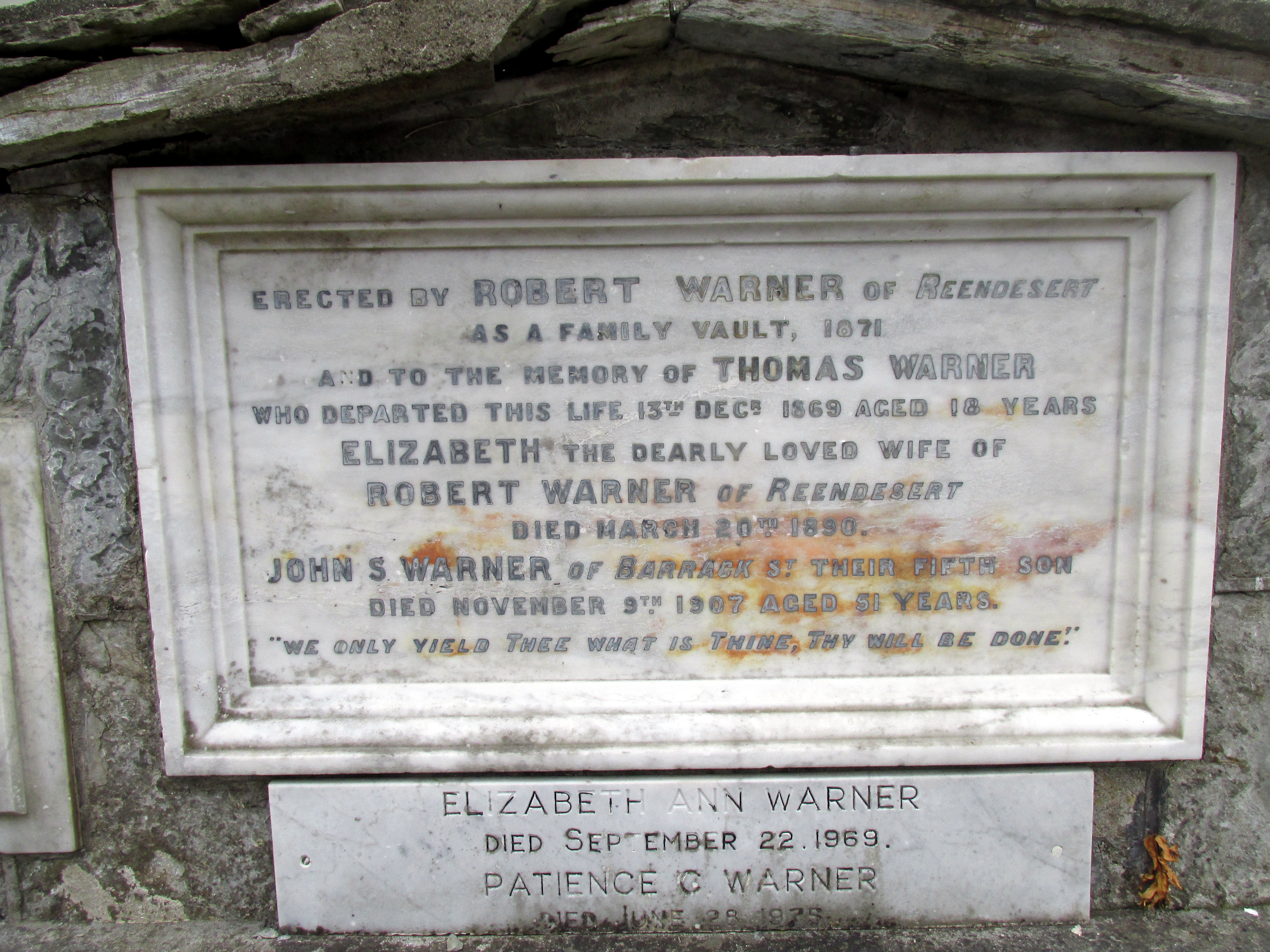
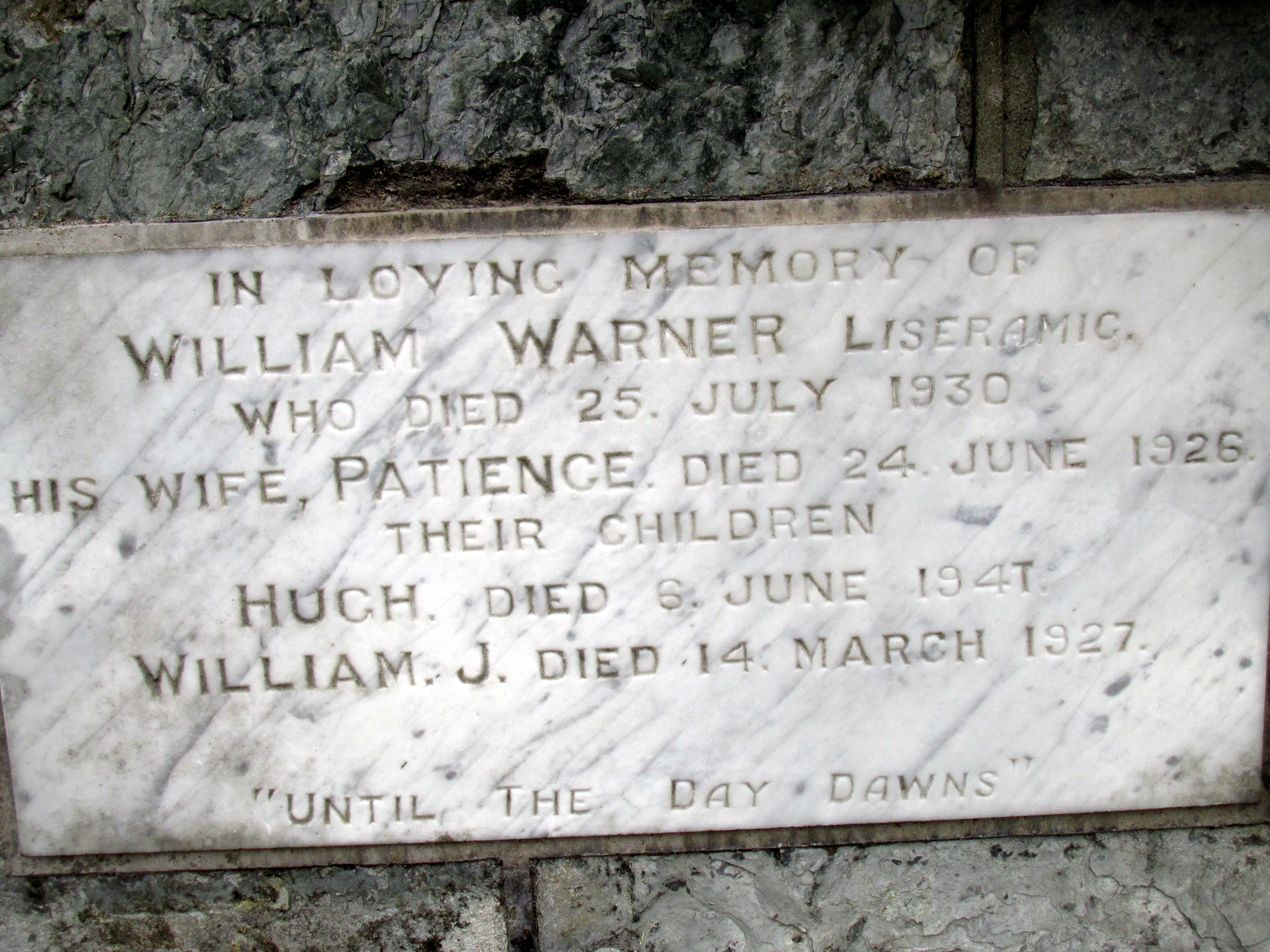
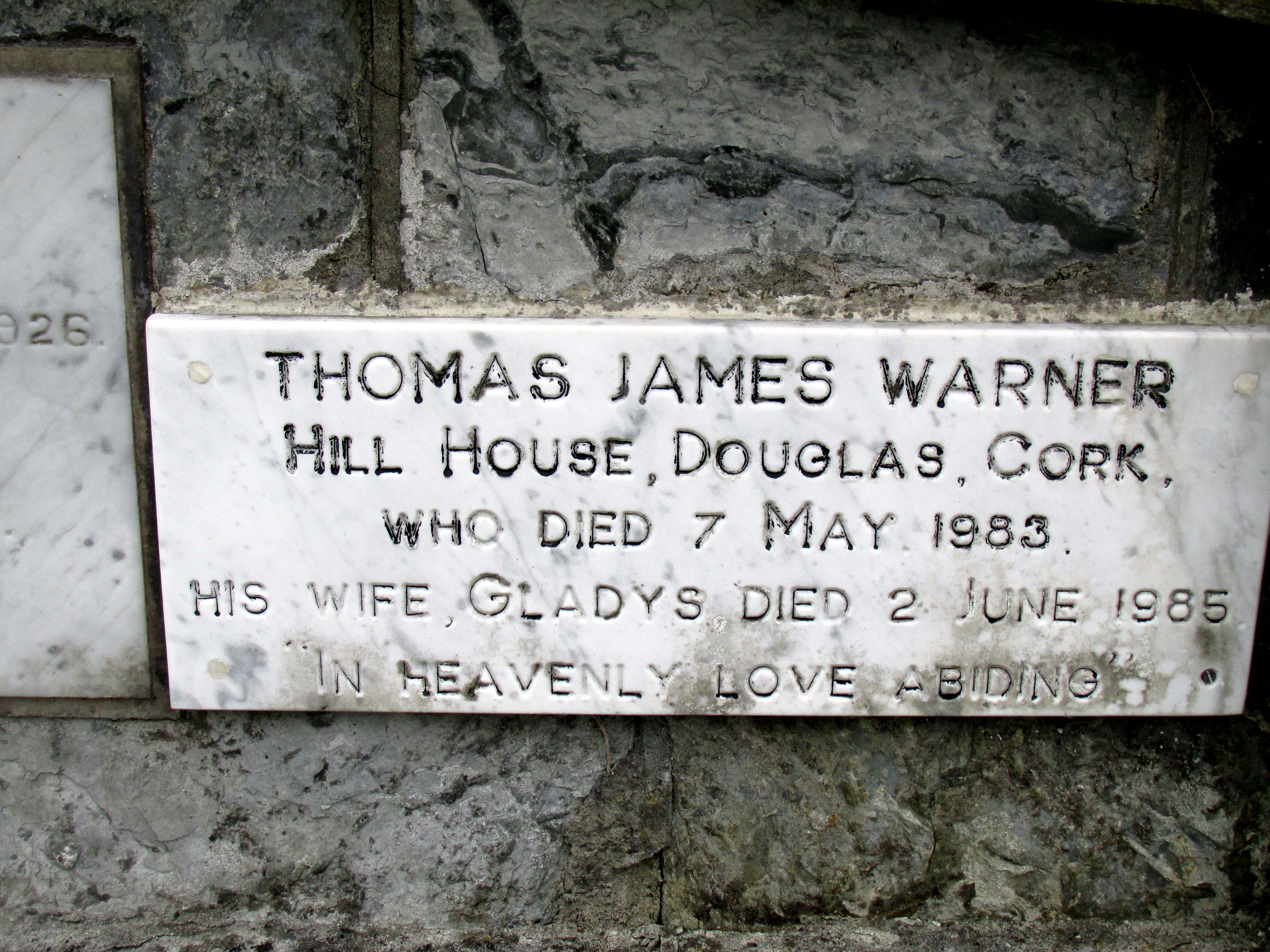
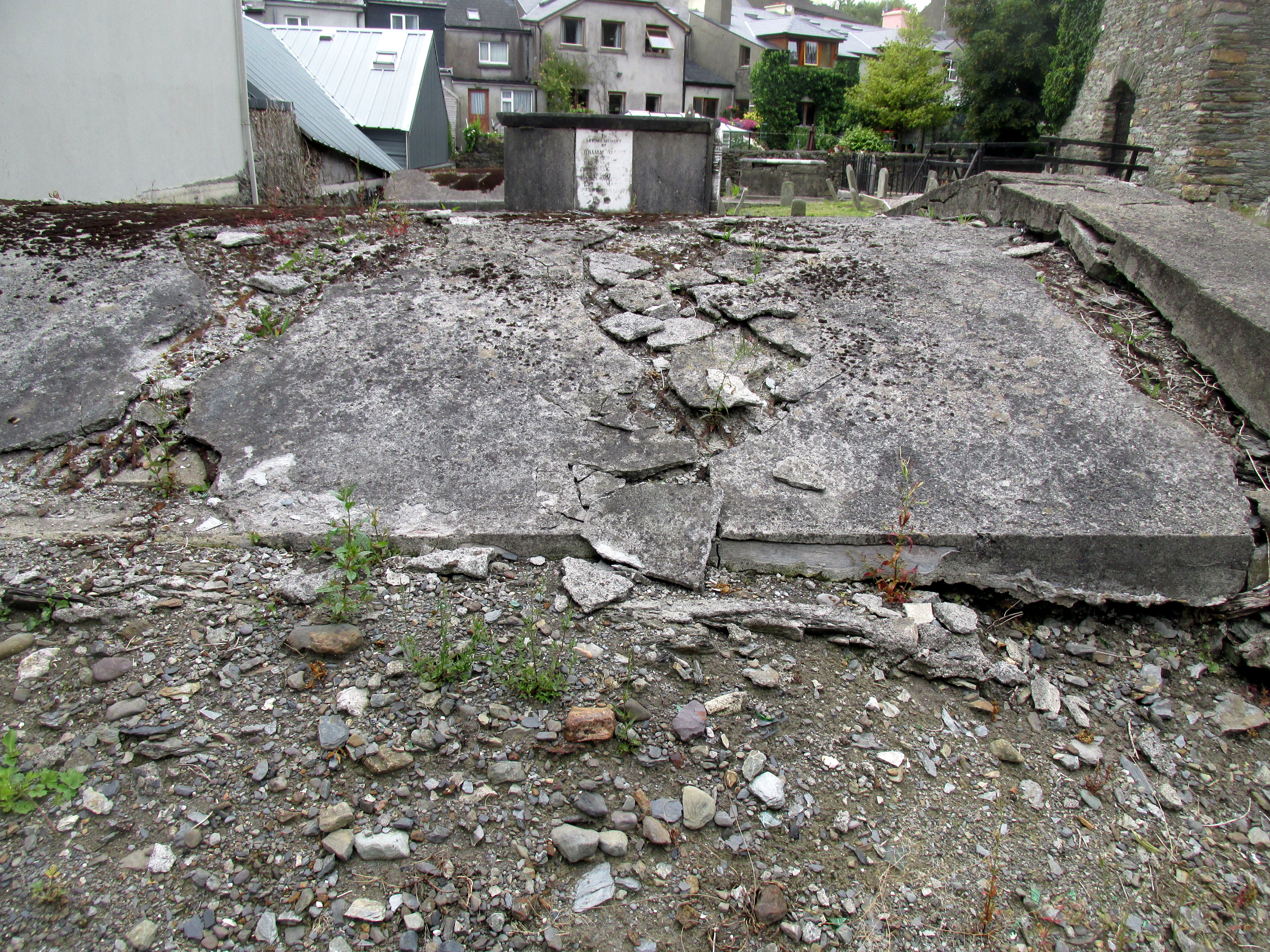
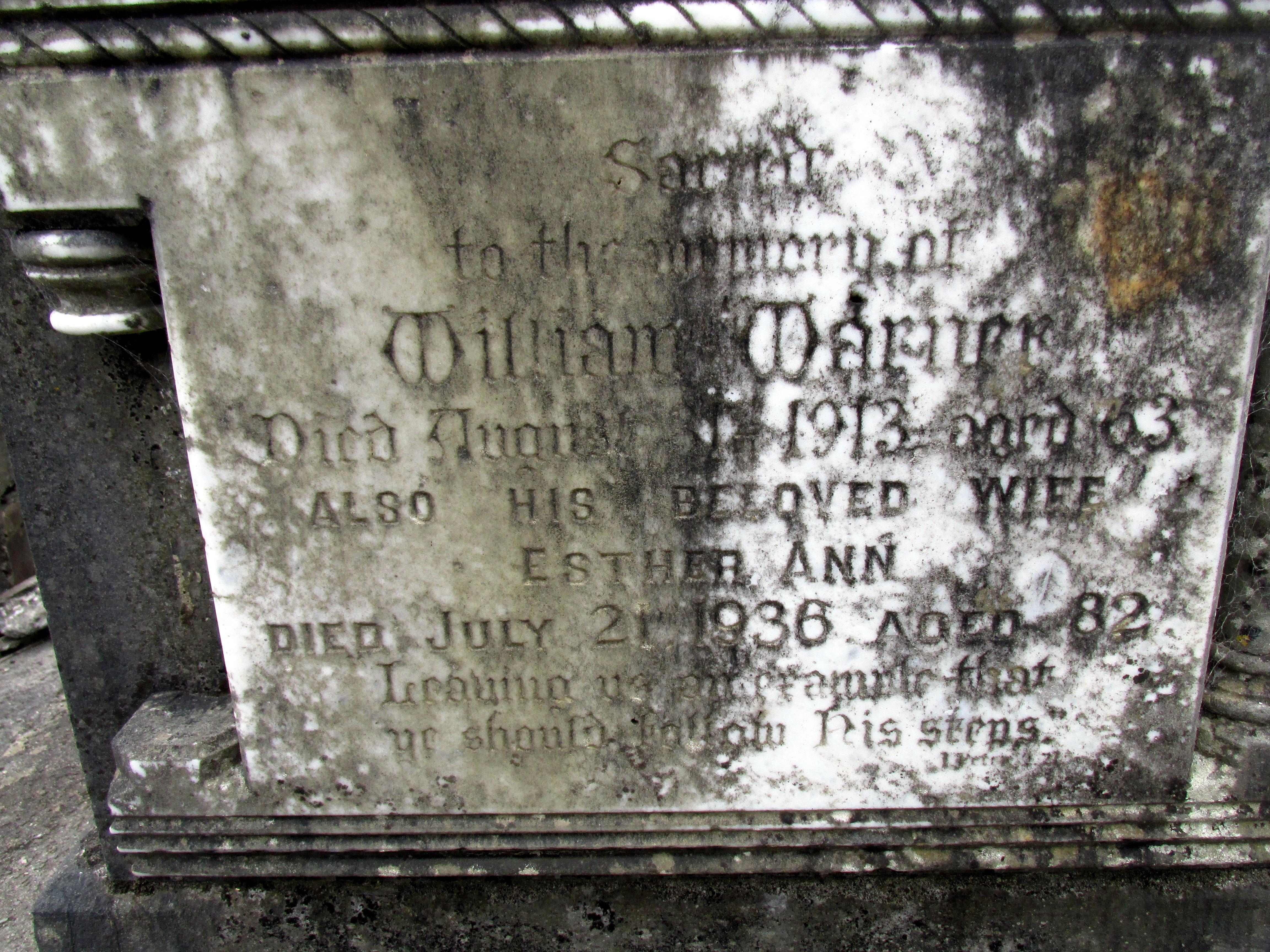
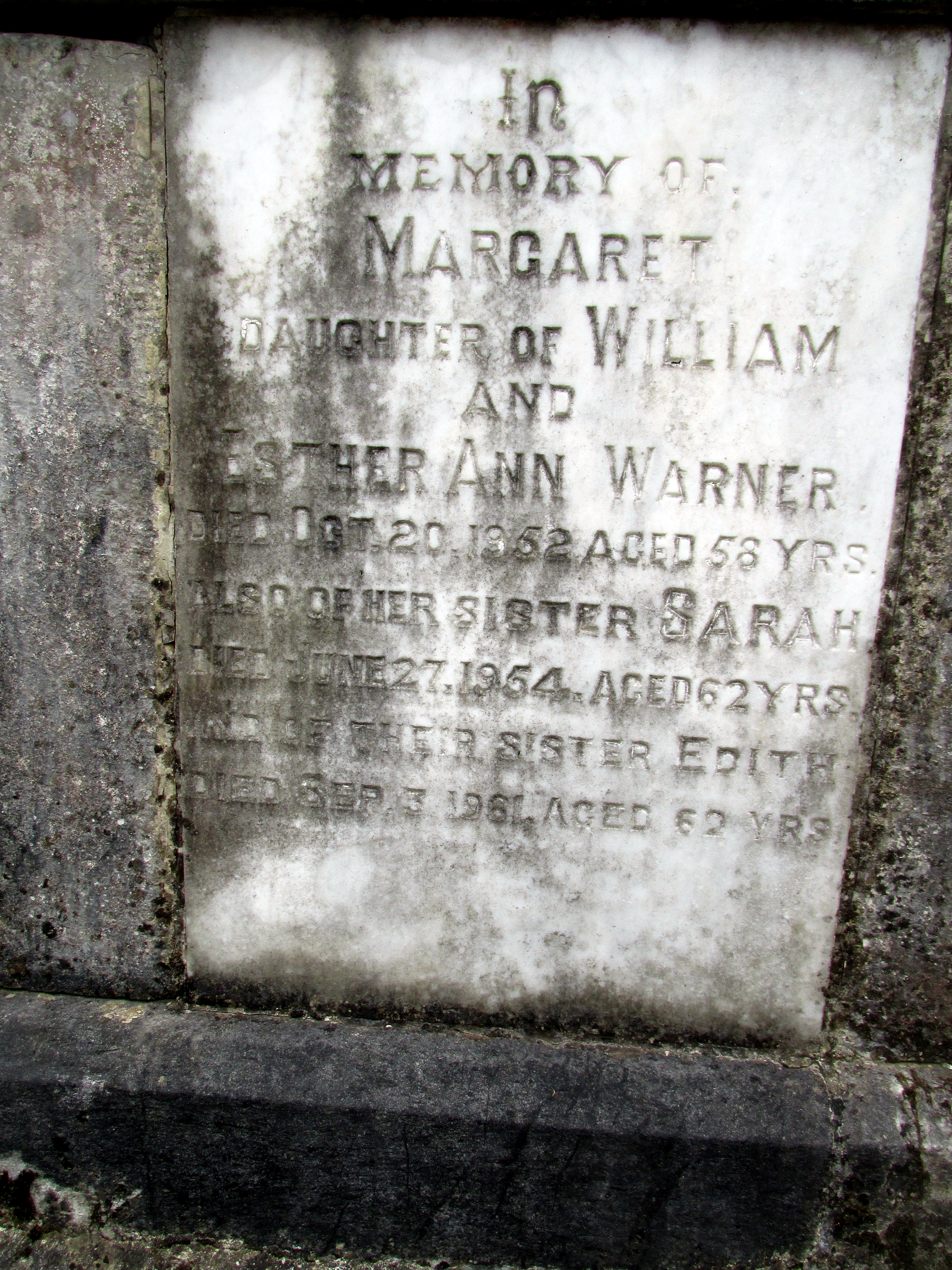
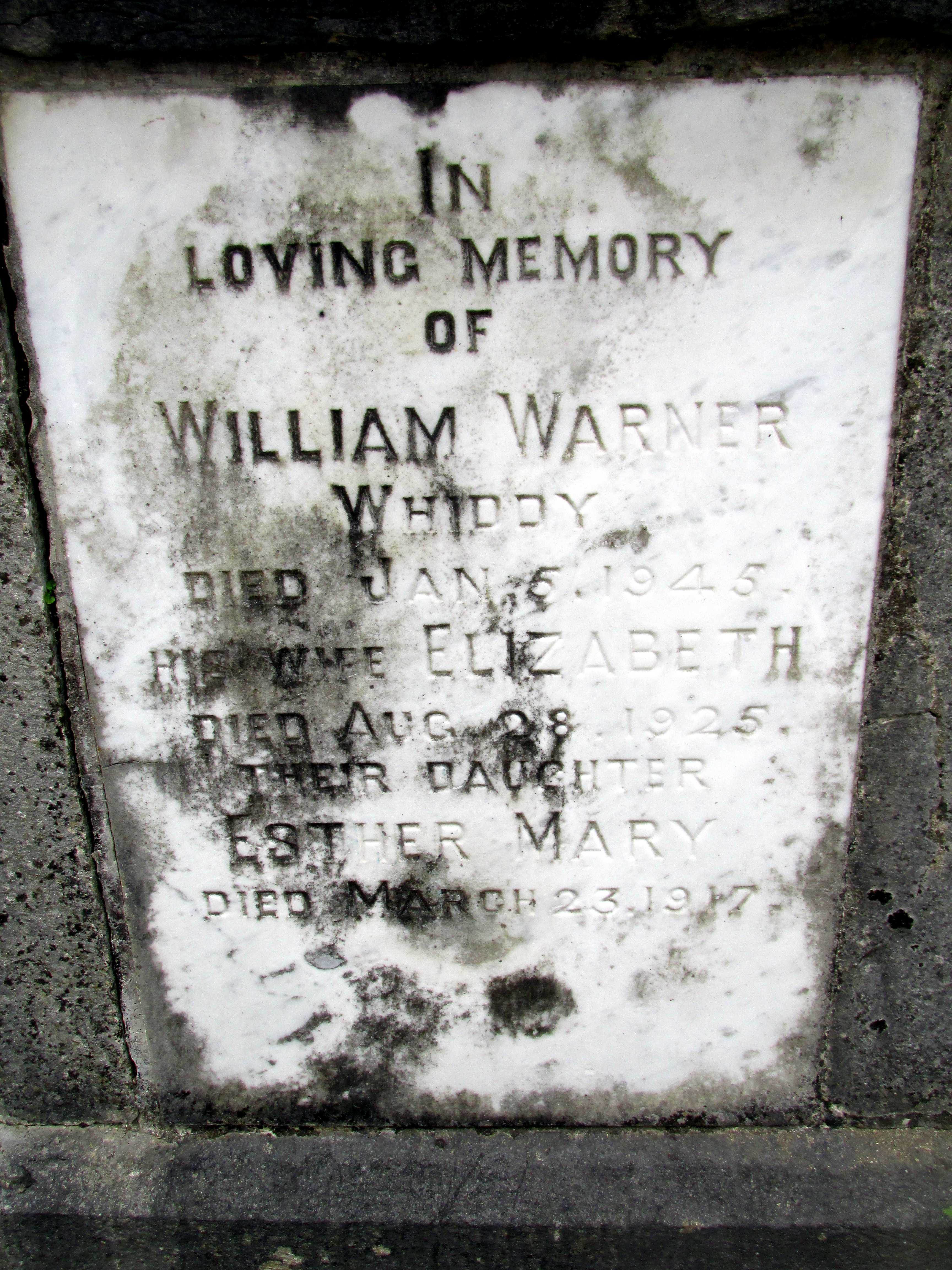
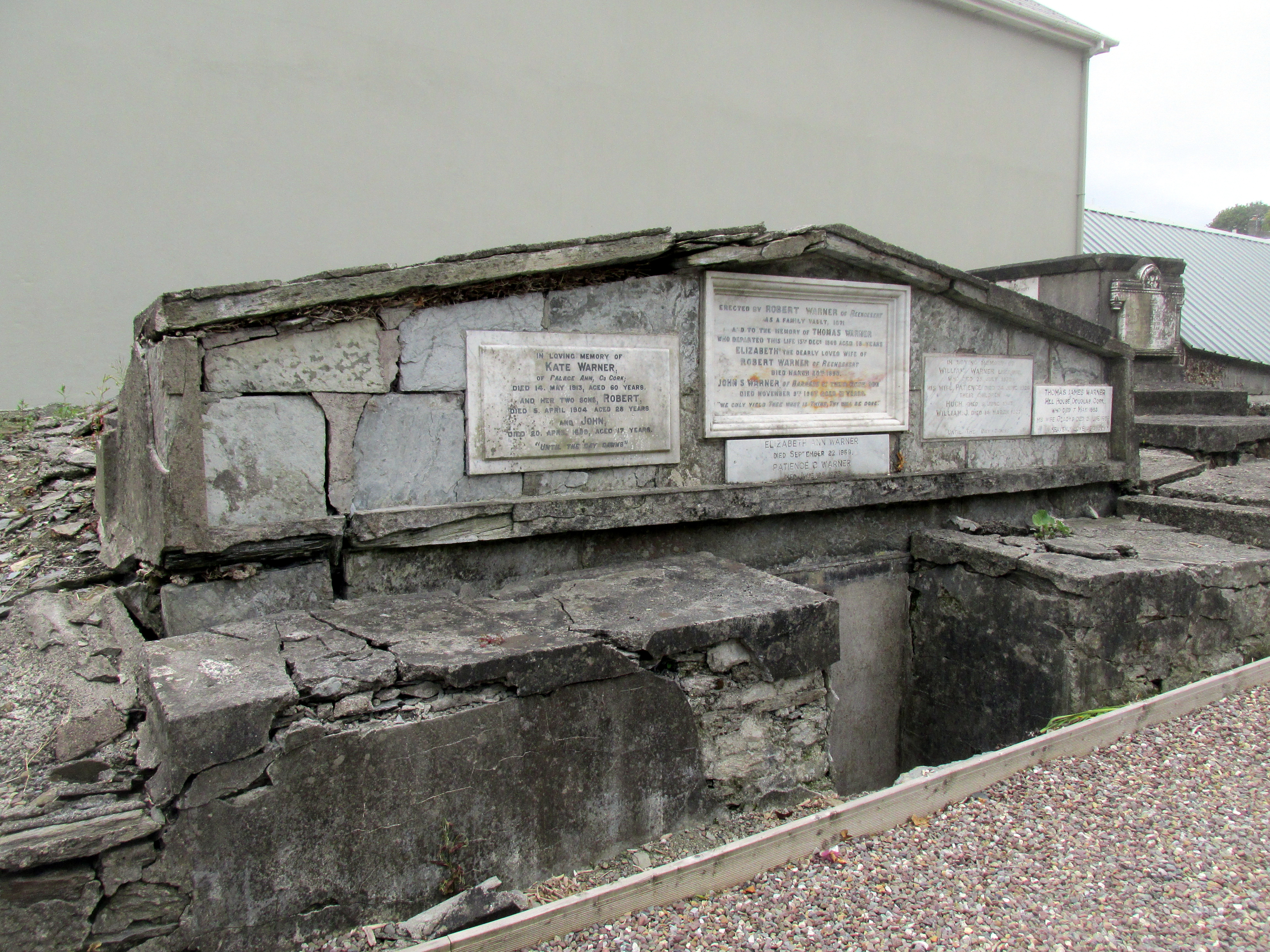
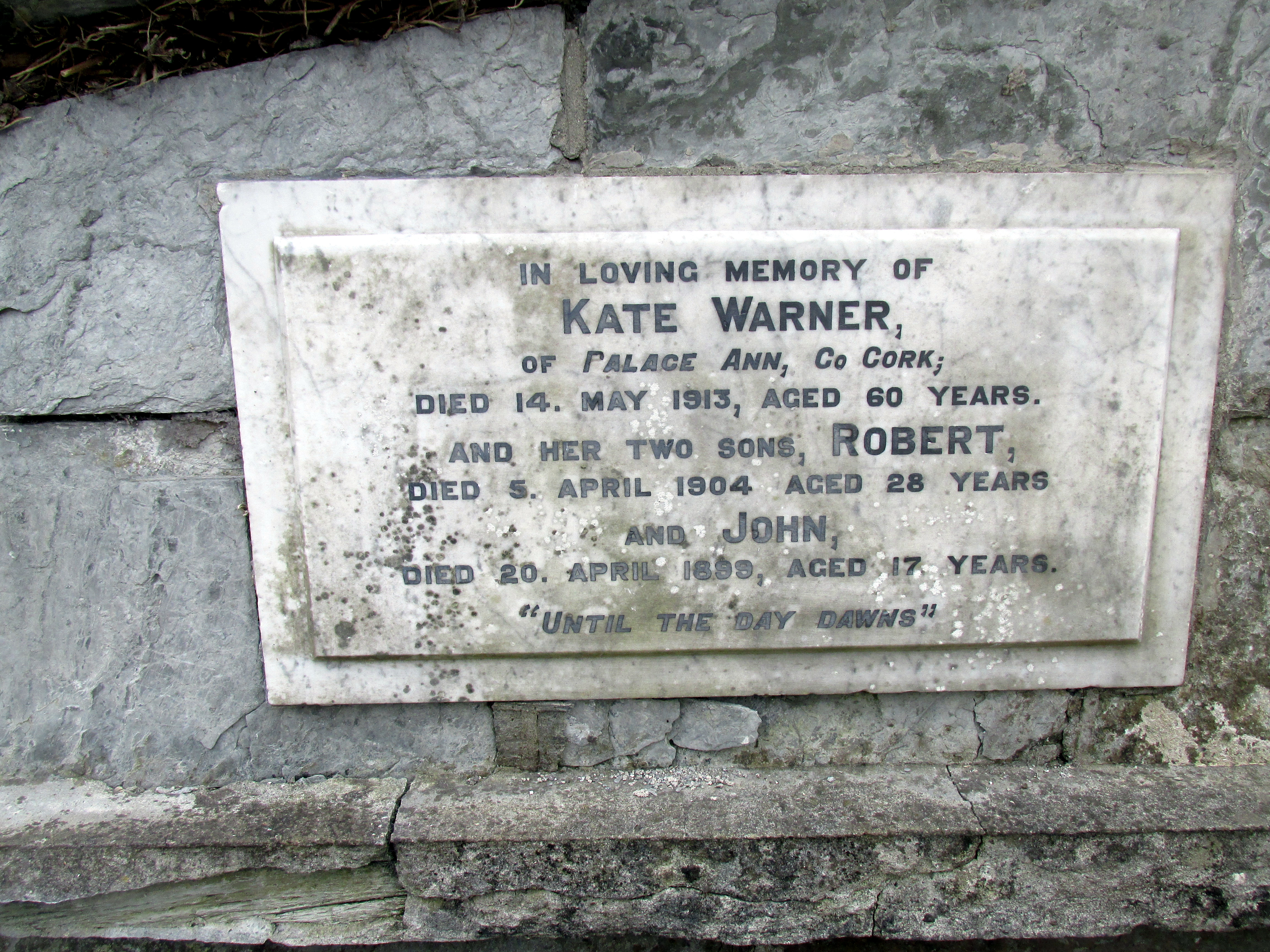
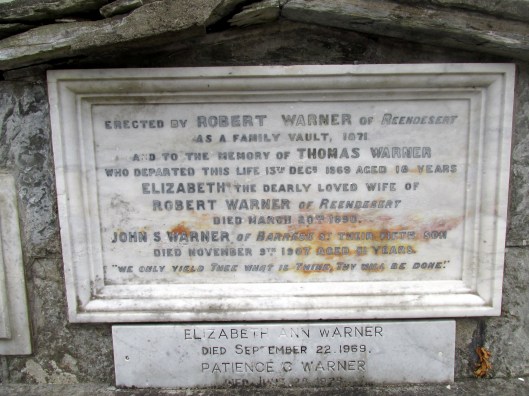
The Bantry Warners are buried in large tombs in the old Bantry Garryvucha Graveyard.

Soe details of the families genealogy are contained here.

https://docs.google.com/spreadsheets/d/1JXnNO3pHH0wnY9pfGXnfuuoptaxW6PFIAw–hsPPgAE/edit#gid=0

https://docs.google.com/spreadsheets/d/1LTWvIzA2OnZhTlF131mGucPtr_e-XX9NMUzTJdZcuaY/edit#gid=0

https://docs.google.com/spreadsheets/d/1MxUD12bxA6pf1eAGbdVQARaDR0cuGZnZ7Z0uwNS6fD8/edit#gid=0

The Attridges are very numerous in the Skibbereen Durrus area with Church of Ireland, Methodist and Catholic families.
1-IMG_3531

2-IMG_3532

3-IMG_3533

4-IMG_3534

1-IMG_3535

2-IMG_3536

3-IMG_3537

4-IMG_3538

5-IMG_3529

6-IMG_3530

Gortnagrough, Ballydehob, in School folklore Collection 1937 and Folk Museum and West Cork Methodism.

Tags

, ,


Gortnagrough, Ballydehob, in School folklore Collection 1937 and Folk Museum and West Cork Methodism.

Gortnagrough:

https://www.google.ie/maps/place/Gortnagrough,+Co.+Cork/@51.5943296,-9.4603759,15z/data=!3m1!4b1!4m2!3m1!1s0x4845a1cc4b46bbdd:0x3f23013d1fd67148

In Mary Driscoll story about her homeplace she says that a couple over 70 then in 1937 have stories in Irish and English, Mr and Mrs. Sam Kingston. They are probably the grand parents of Letia Camier who with her husband Tommy runs the Folk Museum in the same townland.

Gortnagrough Folk Museum

Gortnagrough Folk Museum

James Hutchinson Swanton J.P., 1815-1891, Grandmother, Margaret O’Sullivan, Ballagahadown, Caheragh, Leading Methodist and Businessman, Gortnagrough, Ballydehob and Rineen Co. Cork and Wesley College, Carrisbrook House, Ballsbridge, Dublin.

Beginning of Methodism in West Cork, 1779 John Bredin, Swantons of Gortnagrough, Ballydehob, 1783, John Hamilton 1898 Henry Deery. Membership 1799 was 160 and in 1810 was 320.

Durrus Folklore Project:

School Folklore Project 1937-8, Durrus, Co. Cork, Schools Church of Ireland, Catholic.

http://digital.ucd.ie/view/ivrla:26612

Cork Grand Jury/Agents 1765.

Tags

, ,


Cork Grand Jury/Agents 1765.

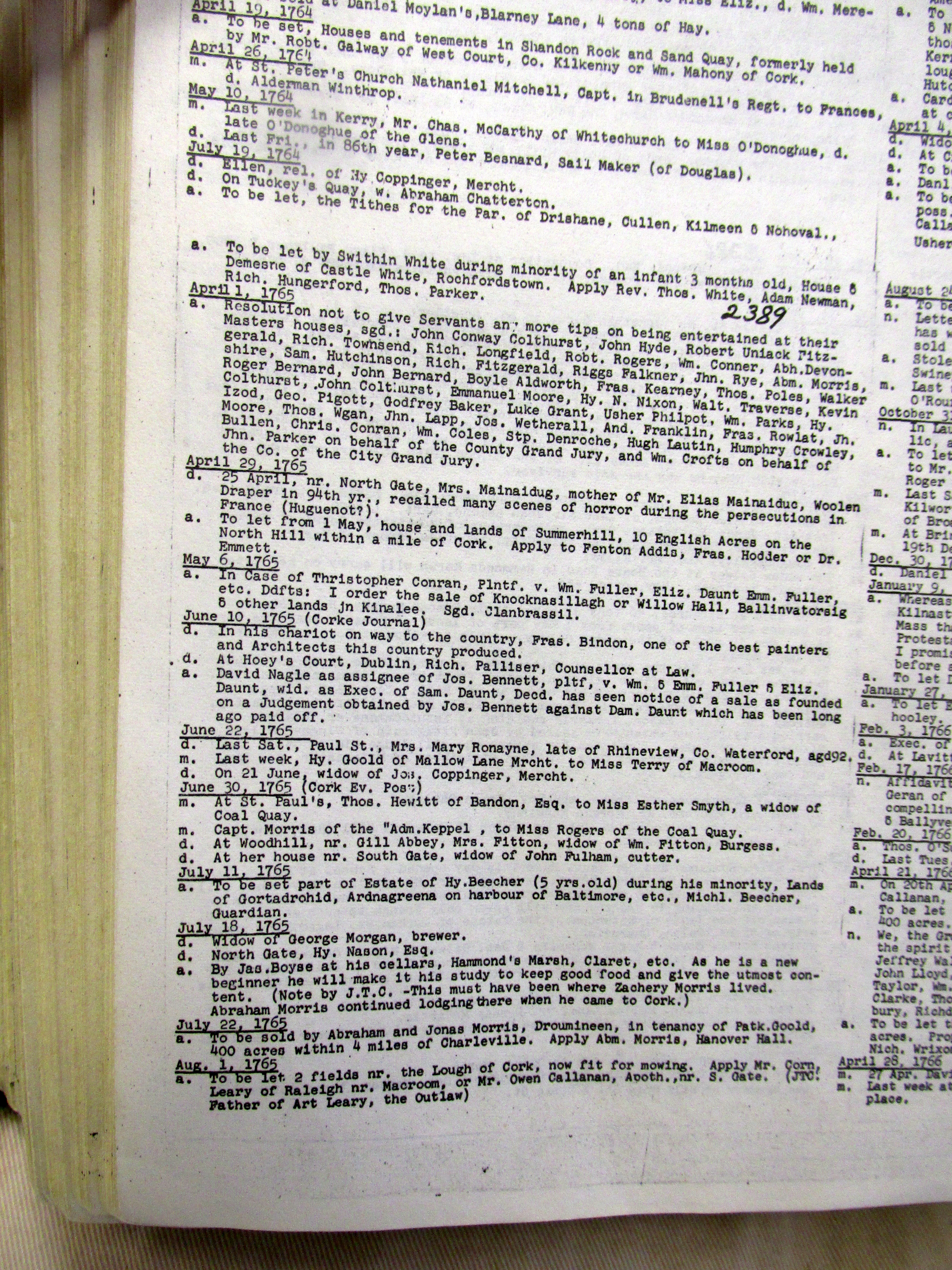
The Grand Jury was 23 in number and was dominated by the same Protestant families. It is sometimes forgotten that they and the Quakers and Huguenots created the modern Cork from the ruins of 1690 to the thriving port and trading centre of 1800. The entirety of the modern city centre was reclaimed much of it by these families in the 18th century with Dutch assistance.
The excerpt is from John T Collins Newspaper extracts.
1-IMG_1234