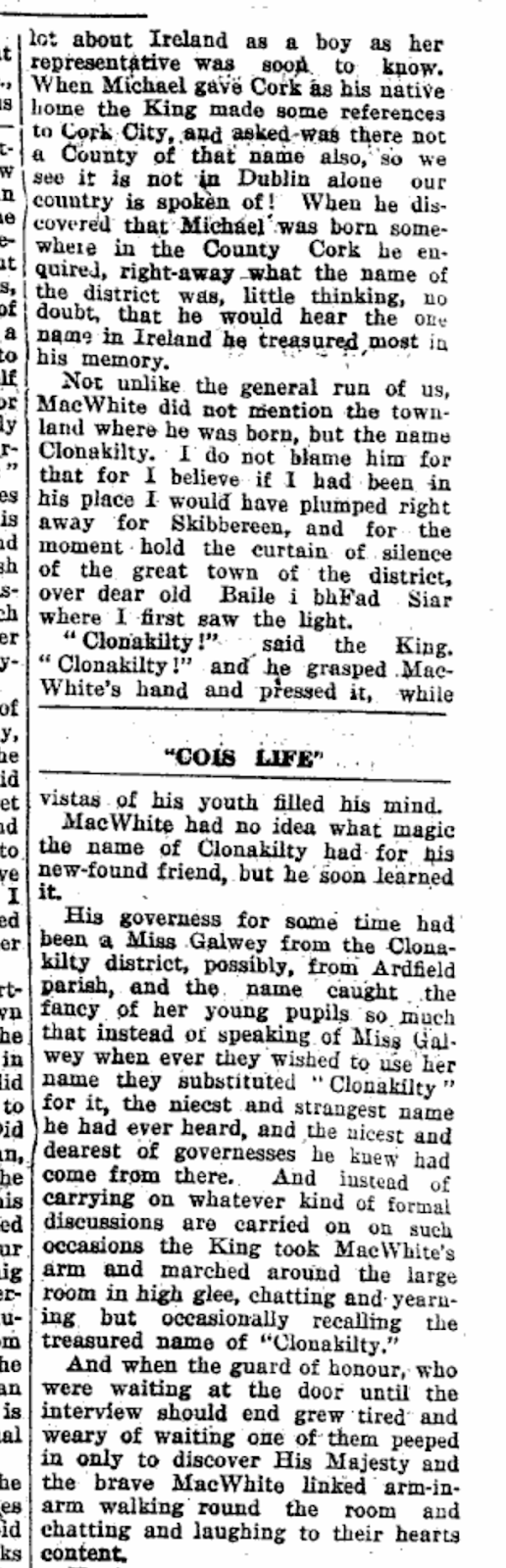
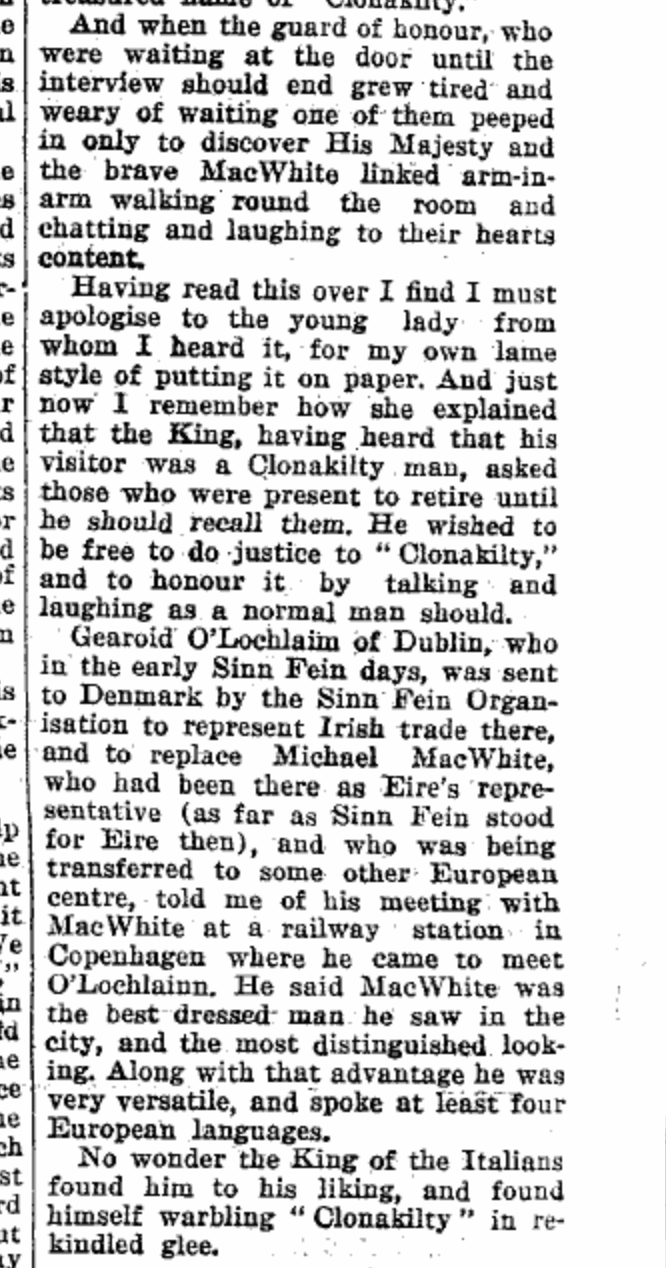
Miss Galwey, Clonakilty Governess to Later King of Italy
Courtesy Tim Galwey:
She was the daughter of Michael Gallwey Resident Magistrate of Abbeyfeale and her husband died in the Indian Mutiny after which she got the job of Governess to the Prince before he became King.
Profile last modified 4 Apr 2019 | Created 17 Jul 2017
This page has been accessed 448 times.
Biography
1. Year of birth and day of death given in ref 6 by courtesy of Aine Ni Chonaill as follows: “1884 April 3 Thursday: Poor Mrs Lee finally breathed her last this morning at 7.20 – attended to the end by the Marchioness and the Princess [ladies in waiting to the Queen] who spent the whole night at her bedside. I ,too [tutor], was present at the death and gave the news to His Majesty, the King, and the Prince”. 2. Info from ref 4 appears to be unreliable. 3. Marriage info from ref 3.
After her wedding she accompanied her husband to India with his regiment but the marriage was not a success due to religious disagreements. Her husband was killed in the Indian Mutiny but she survived by hiding in a fissure. She was fortunate in having friends who recommended her as a suitable person to be put in charge of the nursery of the Princess Margherita of Savoy, later Queen of Italy. From the day of birth of her son (in November 1869), the Prince was consigned completely to her charge and authority, and later as his Governess. He wrote to her every day until the day of her death from fever at the Royal Palace of Quirinal in Rome in the spring of 1884. “She was a woman of great judgement, in whom their Majesties placed the fullest reliance, and the admirable manner in which she trained the Prince ever met with their entire and grateful approval. During eleven years she never left the Prince and, since the appointment of his governor [three years earlier], she continued as a trusted friend and adviser to watch over all that regarded the health of her former charge, and to interest herself in every way possible in furtherance of his studies, especially in his favourite pursuit of collecting coins which illustrate Italian history” (ref 4). The funeral service was held at the parish church of SS Vincenzo and Ananasia a Trevi. The Royal household accompanied her coffin to her grave in the Campo Verano, the burial place of Italian Royalty (ref 2). She had two sons: Frederick Lee, and Michael Lee (d. young), ref 1.
Sources
1. Blackall, H., Galweys of Munster, Journal of Cork Historical and Archaeological Society Vol LXXIII No 218 (Jul-Dec 1968) p. 166.
2. Unidentified news paper cutting titled “A Prince’s Governess: Cork lady in Italian Royal household” written by Miss L O’Hanlon at the time that Vittorio Emaniele III was on the throne (1900-1946). 3. https://registers.nli.ie/registers/vtls000634898#page/48/mode/1up for marriage info 4. Limerick Chronicle 22 May 1884 obituary from the Rome correspondent of the Times. 5. Article by William White on Michael White as Ambassador to Rome in 1938 in Rosscarbery Past & Present, Vol 5, 2003. 6. La giovinezza di Vittorio Emanuele 111 nei documenti dell’ Archivio Osio, by Mario Bondioli Osio, published in Milan in 1998. The author is the grandson of the tutor, named Egidio Osio, appointed to the prince in 1881 when he was 11. On p.756, we see Elisabeth Lee (1835-1884) took up service at the birth of Victor Emmanuel in 1869.
Galwey Magistrates:
James Gallagher, Listed 1875-6, Shortcastle, Mallow. Attending Great Meeting Cork Cathedral re Intermediate Education 1859. Quarter Sessions Mallow 1865. 1870, listed 469 acres.
Charles Gallway, Kilkeran, Clonakilty. voted 1850 for Denis Galwey as High Constable for Ibane and Ballyroe (Clonakilty). Railway subscriber, 1840s, £3,750.
Christopher Galwey, Killarney, listed 1838. Listed Co. Kerry. Attended the Great Meeting in Bantry 1840 re Poor Laws. listed 1843 agent to Kenmare estate part in Cork. Long standing family associations with Bantry. Christopher Gallwey, born 1779 and died on 30/8/1861 at Tramore, Co. Waterford (Cork Examiner 3/9/1861), of Killarney, was land agent to Lord Kenmare; captain and major, 16th Regiment of Foot (Bedfordshire Regiment); DIG 1/7/183; Brother of Major John Gallwey, RIC Inspector Ballincollig, 1832, Magistrate.
Dennis Gallwey, Greenfield, Clonakilty, subscriber Dr. Daniel Donovan ‘History of Carbery, 1876. May be Denis McCarthy Gallivey, Greenfield, Clonakilty, executor of the will of Rickard Donovan, Clerk of Crown d 1883, leaving £10,164. Edward Gallwey, Skibbereen, , b. 1777, son of James Gallwey of Skibbereen, b. 1750, merchant, had a lease for lives 1791, m. Mary and died ante 1809, convicted of smuggling at Cork Assizes 1821, and transported to Australia for seven years As a result of oppressive English legislation against Irish trade (including brewing) ‘high and low, Catholic and Protestant, were enlisted in a conspiracy to defeat Revenue officers’: Froude, Ire p. 500; O’Brien, Econ Hist Ire, pp. 18, 210. But for the influence of Lord Longueville, Governor of Co Cork, Michael Gallwey, the brewer, would have been convicted of smuggling. [In 2004 my colleague Prof Frank Hodnett of University of Limerick (from Clonakilty) talked to one of the O’Donoghues in Clonakilty about the Gallweys. His comment was “Smugglers, all of them” -TJG]). Appears to have been appointed Justice of the Peace in Sydney Jun 1827, May 1834 shipping agent in Sydney, Sydney Herald May 1841 notice of him as receiver of payments from the debtors of C Roberts, in Sydney Morning Herald, 31 July 1844, the death
in Sydney on 29 of Edward Gallwey, aged 74 so b. C.1770?), formerly of Old Court, Barony of West Carbery, IRL. [Blackall says] d. 27 Aug 1844 at Sydney,
John Galwey of Lota `bred to the law and very eminent in his profession’ was admitted to Gray’s Inn 16 May 1668 and subsequently called to the Bar in Ireland.166 He was M.P. for Cork City in the Parliament of 1689 and a J.P. for the Co. and city, and was appointed a Commissioner for applotting tax for Co. Cork under King James II’s commission 10 April 1690. For his adherence to the Jacobite cause he was outlawed in 1690 and his estates forfeited. I have already related how his outlawry came to be reversed (17 June 1693), how he received a Royal Pardon (1 Aug. 1695), and how he got in and out of trouble with the Irish House of Commons in 1707 for taking young James Cotter to England. He brought three claims before the Chichester House Commissioners in 1700, of which two were successful. His will, dated 7 Feb. 1711, was proved 17 Feb. 1712/13. He was bur. in the family vault at Rathcoonev 168 He m. 1674 (‘ marriage Articles of the Lord John Galwey ‘ were dated 14 Jan. 1674) Elizabeth, dau. of Col. William Meade of Ballintubber, Co. Cork, by Elizabeth, his wife, dau. of Sir Robert Travers. Elizabeth Meade was sister of Sir John Meade, 1st Bt. (grandfather of the 1st Earl of Clanwilliam).169 By her, John Galwey had with other issue,
Major John Galwey/Gallwey, Appointed Stipendiary Magistrate 1835, Ballincollig, Sub-Inspector of Police, brother of Christopher Galwey, Magistrate, agent to Kenmare estate. Michael J. Galwey/Gallwey Esq., Jnr., Esq., Ballina House, Clonakilty, sitting Rosscarbery, 1832 Cholera. 1833 Skibbereen Quarter Session recommending pension to policeman included Alleyn Evanson. Eccles Cuthbert, Chairman, Hugh Lawton, Alleyn Evanson, Thomas Baldwin, Thomas Hungerford, Richard Ashe, Daniel Connor, W. L. Shuldham, A. O’Driscoll, Michael Gallwey, Sam Bennett, W. H. Stewart, Richard Townsend, T.
Michael Galway, R.M., Kilkieran House, Clonakilty, 1861. 1840 petition on Catholic Equality. Supporting Alexander O’Driscoll, J.P. suspended, Bandon 1841. Skibbereen 1847. Skibbereen 1847 distress meeting. Presentment sessions Ballydehob 1845 address Gortnascreena. Subscriber memorial John O’Hea J.P., Clonakilty 1847. 1846 with L. J. FLEMING, JOHN M. WRIXON, seeking relief for Ballydehob. Gallwey, Margaret, Miss, ‘not 15 years of age’, dau Michael, Esq., J.P., Skibbereen, at Gurtnascreena, Skibbereen – (CE 3/9/1845) Attending Railway meeting Drimoleague 1856. Michael, b. 15 Jan 1803, RM West Cork (appears appointed 24 May 1848), ran a stage coach service Skibbereen to Cork, later at Abbeyfeale, Co Limerick, J.P. Co Cork. When MICHAEL GALWAY passed here, after his appointment as resident magistrate, his friends lighted tar-barrels for him, and the police were by, and did not notice it. RICHARD BEAMISH, when he gained a lawsuit against his brother-magistrates, his friends lighted tar-barrels and carried them through the streets; though the police saw them they did not interfere. This is called justice here. He was said to have “some of the fine old characteristics of the real Irish gentleman, with a sympathetic knowledge of the condition of the country and 97 its people. He was a fine Gaelic scholar and speaker …” (Cork Examiner). He m. 25 Feb 1827 Ellen (d. 27 Jul 1863), dau of Daniel McCarthy of Gurtnascreeny, Co Cork. He d. 14 May 1866 (bur Templeglantine An inscription on his tomb reads ‘Ellen, who also reposes here, was the last of the McCarthy Reaghs’)
In Jan 1880 he became Registrar of Births, Marriages and Deaths for Stanthorpe district, 188 Commissioner for Affidavits CPS Stanthorpe, May 1883 acting land agent for Goondiwindi, July 1884 CPS at Dalby, Aug 1884 Registrar and Bailiff of Southern 140 District Court, Aug 1889 CPS at Ipswich [vice F W Gallwey; who was he?, h appeared again in
Michael Gallwey, (1840-1920), Brownstown, Clonakilty, 1902 magistrate in North Brisbane, resigned in Jan 1904 – TJG]. May 1890 he was made Police Magistrate at Normanton (N QLD) and reported to be aged 50 (hence b. 1840), June 1890 Justice of the Peace in registrar’s district of Burke, April 1901 Licensing Justice for Brisbane. He is listed in 1902 Brisbane Courier as attending the funeral of John the Sheriff, as his cousin. Daniel resided in 1903 d. 10 Jun 1920. r Daniel Gallwey II viz: enlisted in the Royal Irish Constabulary on 21 Dec 1857 (Service No. 22714, labourer, height 5ft 9.5 in, age 19, Catholic, native Co. Cork West, recommended by Sub Inspector Feely, Clonakilty), Constable, stationed at Waterford 14 Apr 1858, resigned 17 Sep 1861 “to better his position”, readmitted 4 Oct 1861 without loss of service, resigned 26 ? 1862 to emigrate to Queensland. In Jan 1880 he became Registrar of Births, Marriages and Deaths for Stanthorpe district, 188 Commissioner for Affidavits CPS Stanthorpe, May 1883 acting land agent for Goondiwindi, July 1884 CPS at Dalby, Aug 1884 Registrar and Bailiff of Southern 140 District Court, Aug 1889 CPS at Ipswich [vice F W Gallwey; who was he?, h appeared again in. Parents Daniel Gallwey and Anne Coghlan. Daniel m. Nov 1863 Anne Flood (b. 2 Aug 1838 Loughmore
Neal Arthur Galwey, 1875 died Patrick St. Does not appear on lists but is described in
probate papers as J.P widow Mary £6,000
Thomas Hinton Gallwey, 1864, Glenburne, Glanmire, Resident, £90, listed 1875-6. Seeking equality of endowment in Catholic education 1859. 1870, listed 282 acres. Member election committee McCarthy Downing, Skibbereen, 1868. Died 1891, Glenbourne, Glanmire, probate £26,900
William Galwey (1673-, 1733, Lota, Liberties of Cork, Son of John, MP in King James’s Parliament, Barrister, and Elizabeth d Colonel William Meade, Ballintubber, Barrister, Conformed to Church of Ireland 1720, Justice of the Peace 1733. Freeman of Cork. m 1711 Mary d Colonel John Butler, Westcourt, Kilkenny. Trustee in marriage settlement of Denis McCarthy of Cloghroe and Mary daughter of Sir. R. Meade Bart, 1728.
William Galway, 1775, Mallow.
William Galwey, Superseded 1810-30. A William Galwey Co. Freeman of Cork City voting in Cork City Election 1837.
William O’Sullivan Galwey?, (1840-), Nadrid, 1901 name difficult to discern in census
James Gilhooley (1847-1916), Fenian 1867, Irish Parliamentary Party MP, West Cork, Member ‘Bantry Band’, children at Four Mile Water (Durrus) National School. In later years his election agent was Jasper Woulfe, Solicitor, Crown Prosecutor and later TD, Skibbereen.
Collections for Evicted Tenants, Castlehaven/Myross, Myross, Ardfield, Rathbarry. 1892 Collection Ballyroe. 1893, Clonakilty Evicted Tenants Fund. Like a Mini Census. Fiery address of James Gilhooley, M.P., in Goleen on Evictions. Gilhooley ‘The Irish People Have Never Acknowledged this Right of Any Nation In the World To Govern Them.
1847. Father John Kelleher, PP. Ballydebob, on evils of Land Tenure. Townland of Kilronogue, Ballydehob, West Cork, Population 1841 445, 1847 125 Dead from Hunger, 6 from Disease, 84 Missing. 1841 74 Houses, 1847 27 Unroofed, 11 Unoccupied.
Timothy Casey McCarthy at 35 years old was the oldest man who fought at the Kilmichael ambush 20/11/1920. 1949 his friend Dick Gay, Building Contractor. Trouble with the Kinsale Unions
Timothy Casey McCarthy at 35 years old was the oldest man who fought at the Kilmichael ambush 20/11/1920. After the ambush he was `on the run` but the British army found Timothy out he was there and called to his parent’s home in Coulculloghta, Durrus to capture him accompanied by a local RIC man. They were about to shoot his parents for harbouring a `murderer` when the RIC man spoke and said `these people are Caseys and its McCarthy you are looking for` and the old pair was saved and Tim was known as Casey afterwards. Timothy ‘Casey’ McCarthy, Coolculaghta, (Captain of Durrus Company IRA) took part in the Kilmichael Ambush with General Tom Barry. He worked for 40 years with Dick Gay, Carrigaline (the Gays were from nearby Droumreagh), died December 1956 firing party old IRA under Captain Raphy P. Keyes rendered military honours at the graveside. Members included Mortimer O’Sullivan, John Keohane, Jack McCarthy, Jack Wholihan. In attendance were Tom Barry, Ned Cotter TD., Dick Gay, Senator Ted O’Sullivan attended removal from St. Finbarr’s hospital. Dick Gay was building contractor and in the 1940s got a contract to build local authority houses in Kinsale. He faced down the Kinsale unions who blacked his site as he insisted on employing his own men. Dick Gay may have served an informal apprenteship with either Timothy McCarthy or his father.
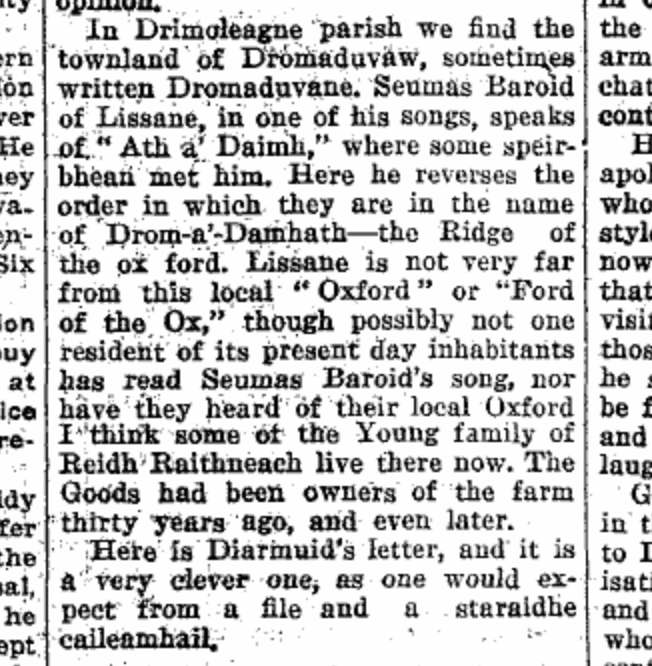
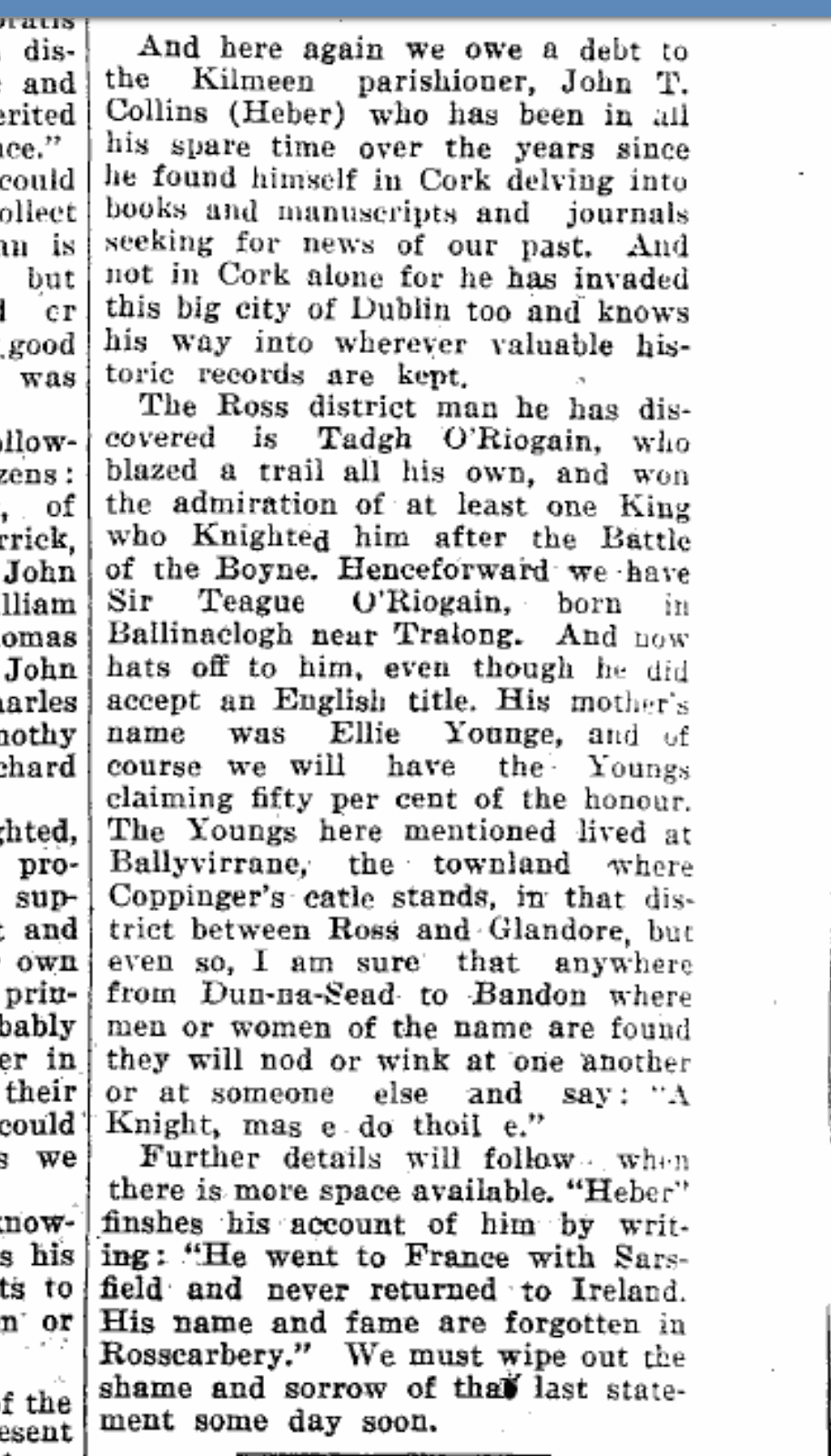
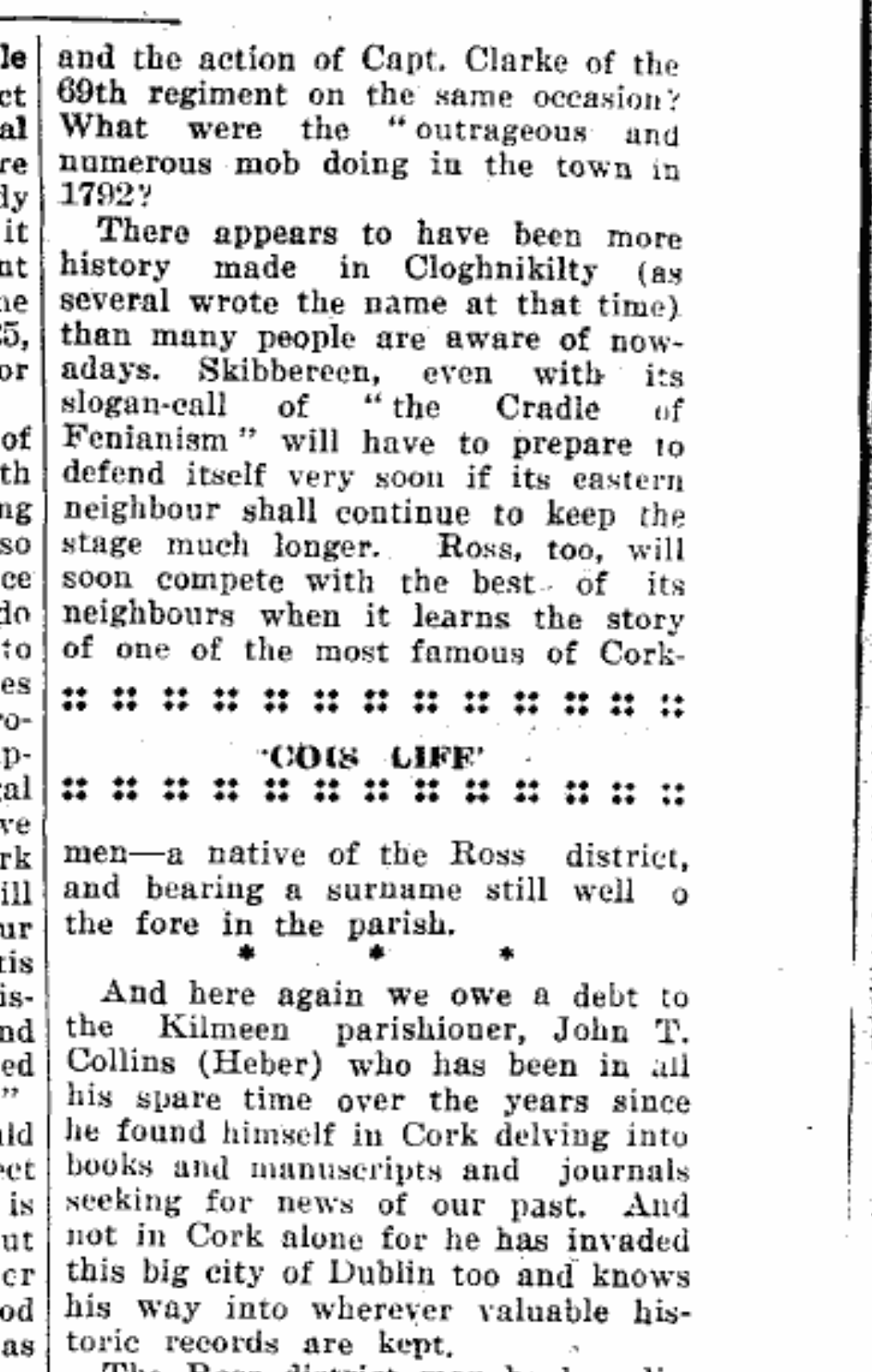
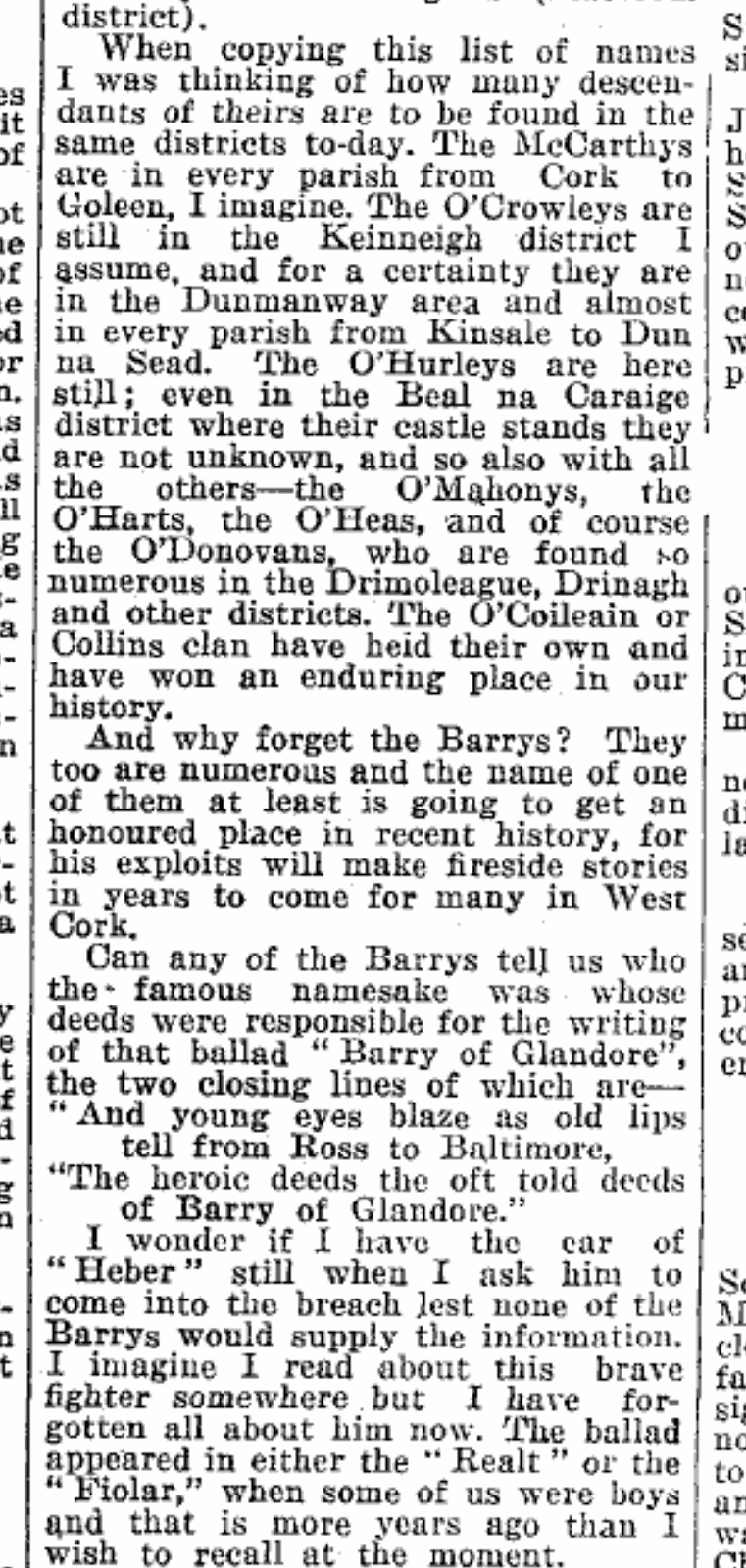
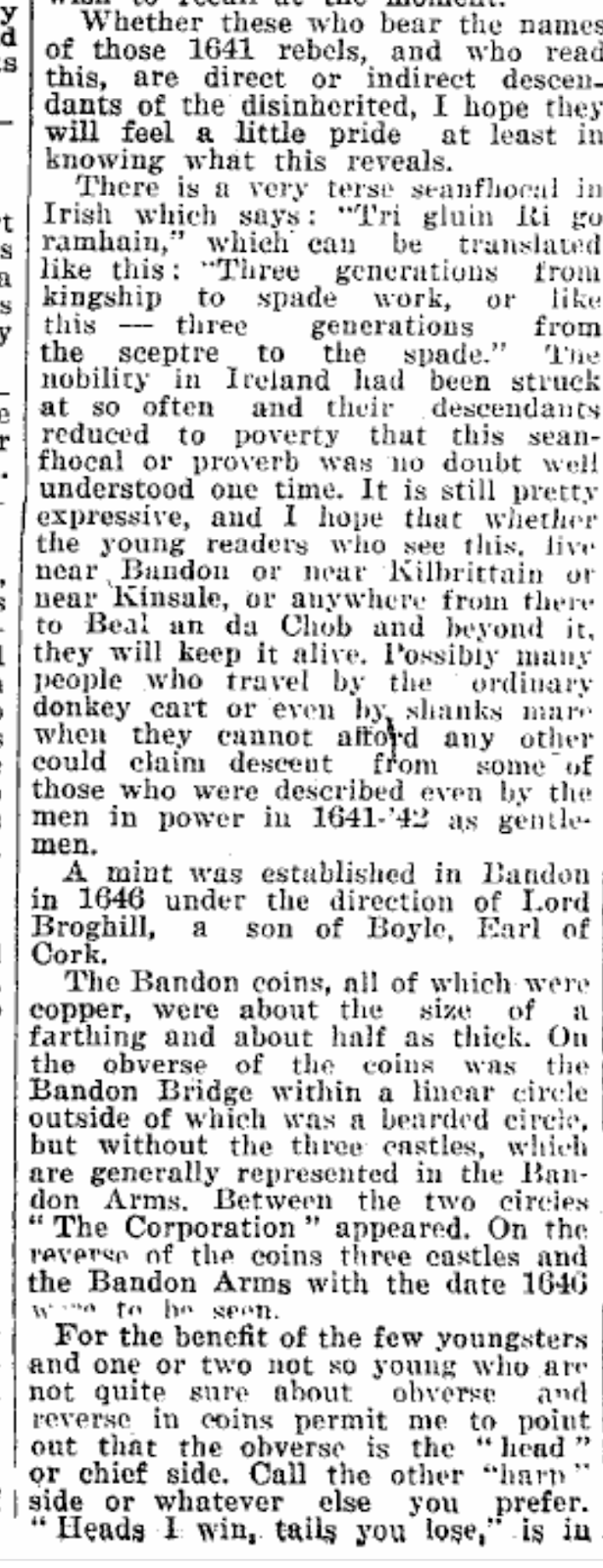
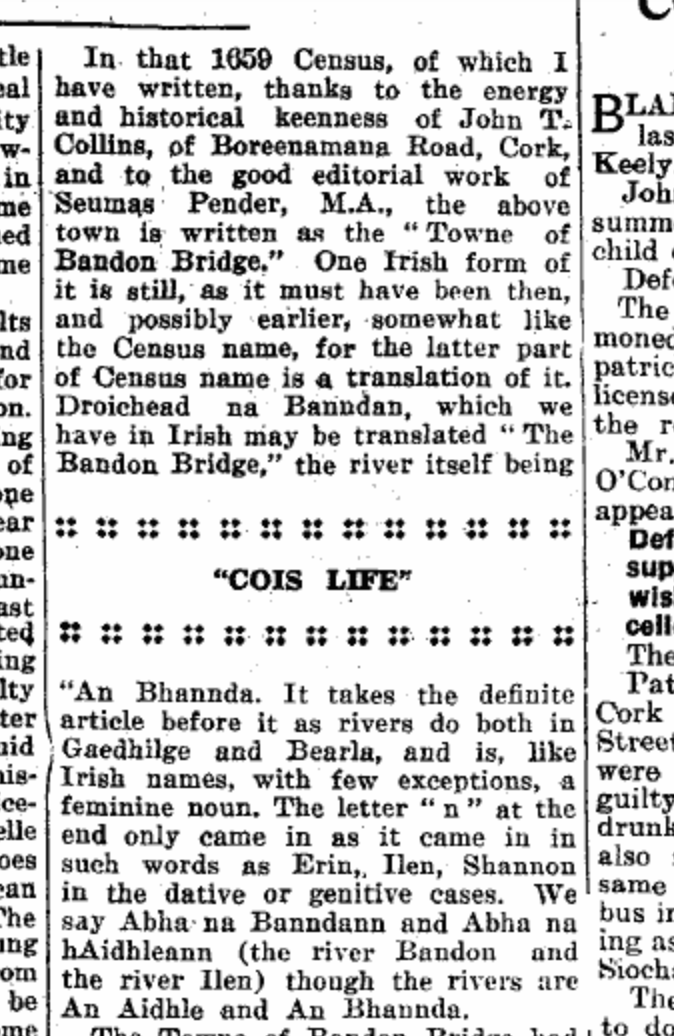
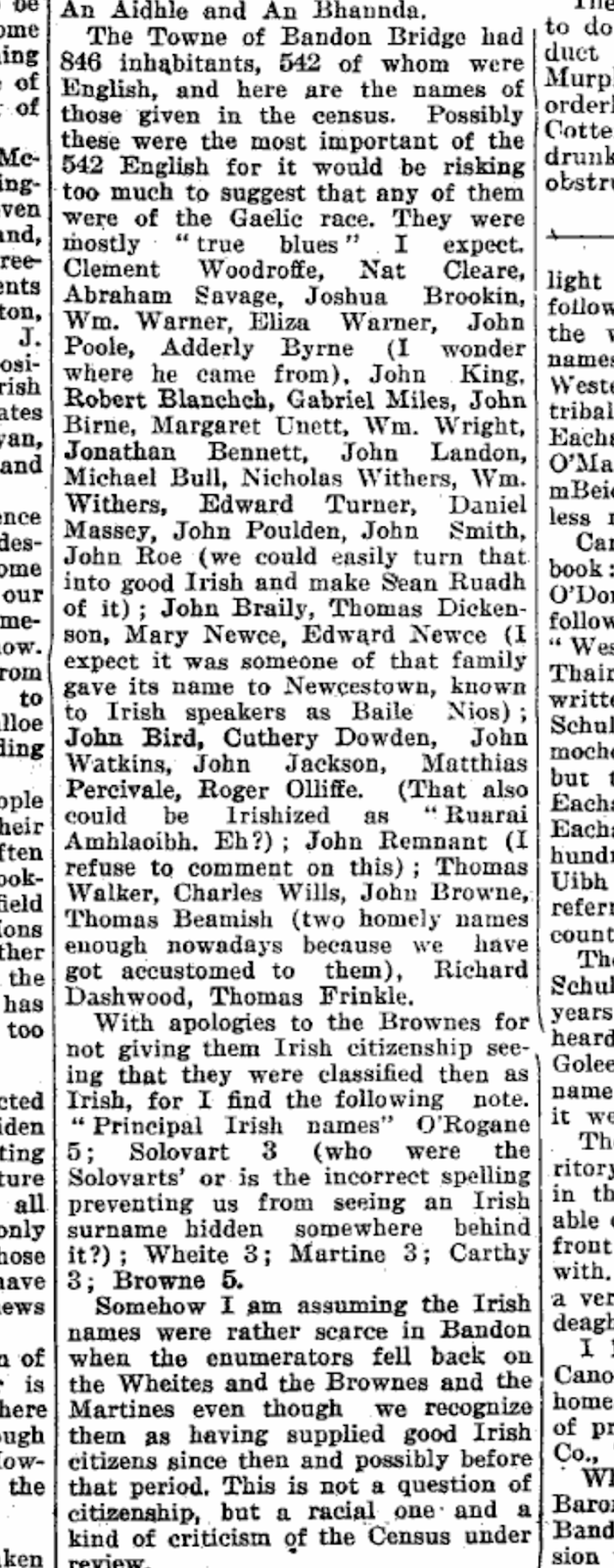
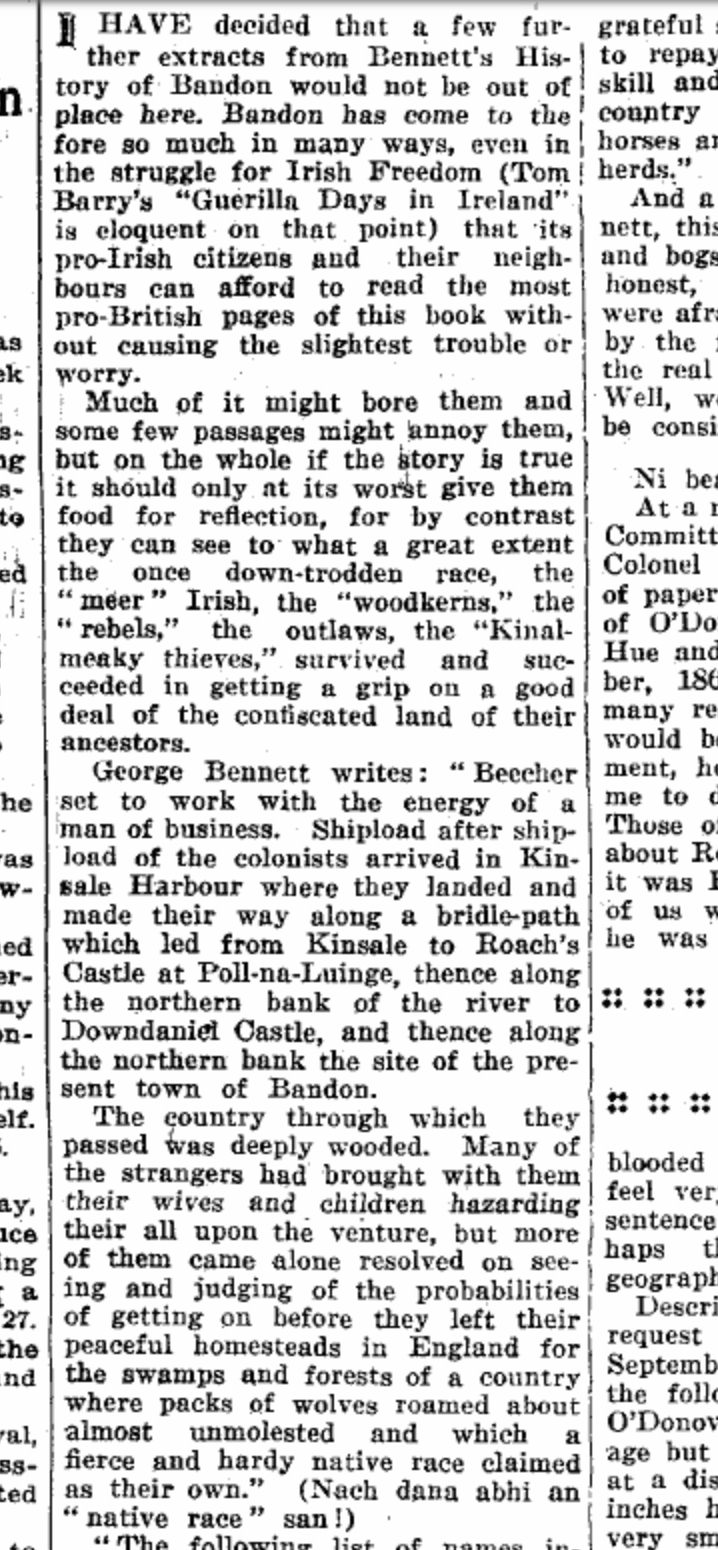
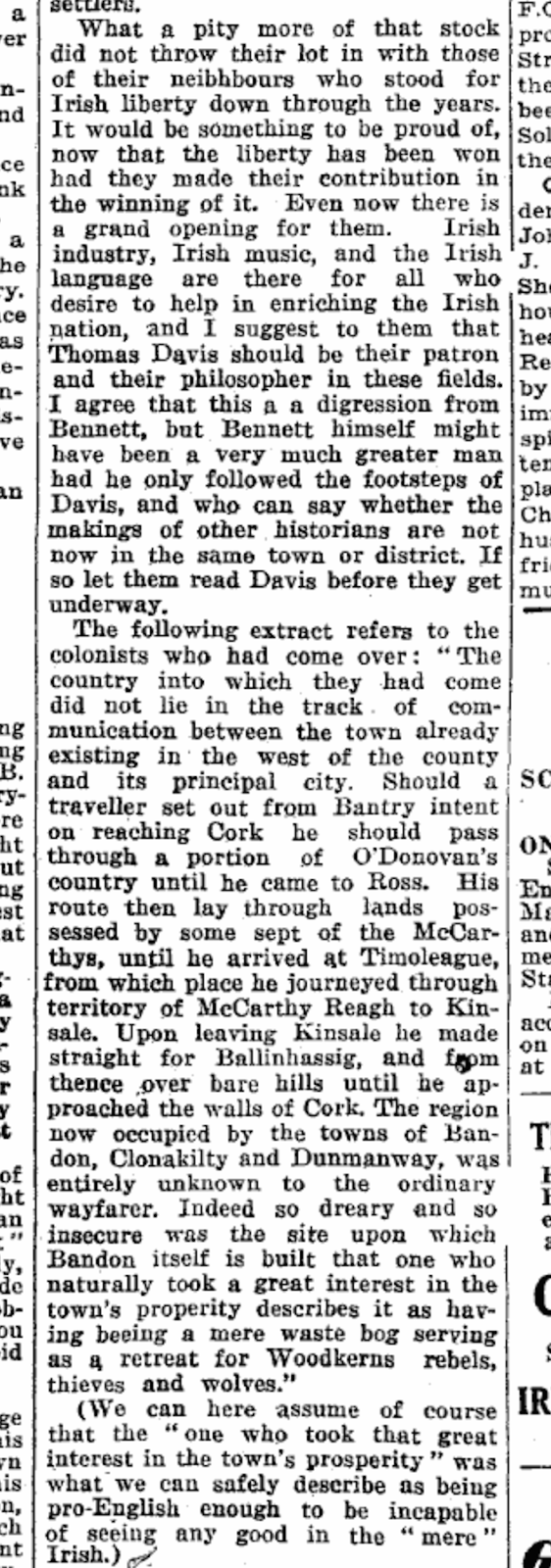
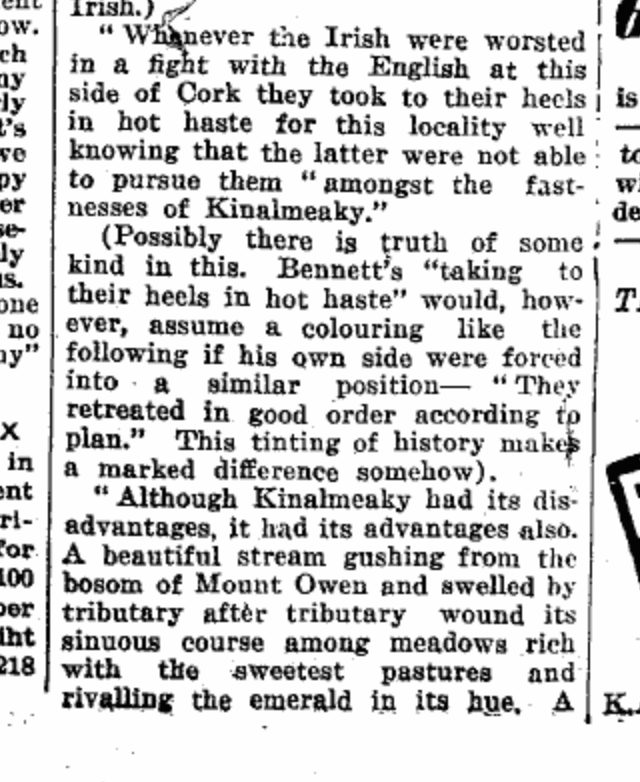
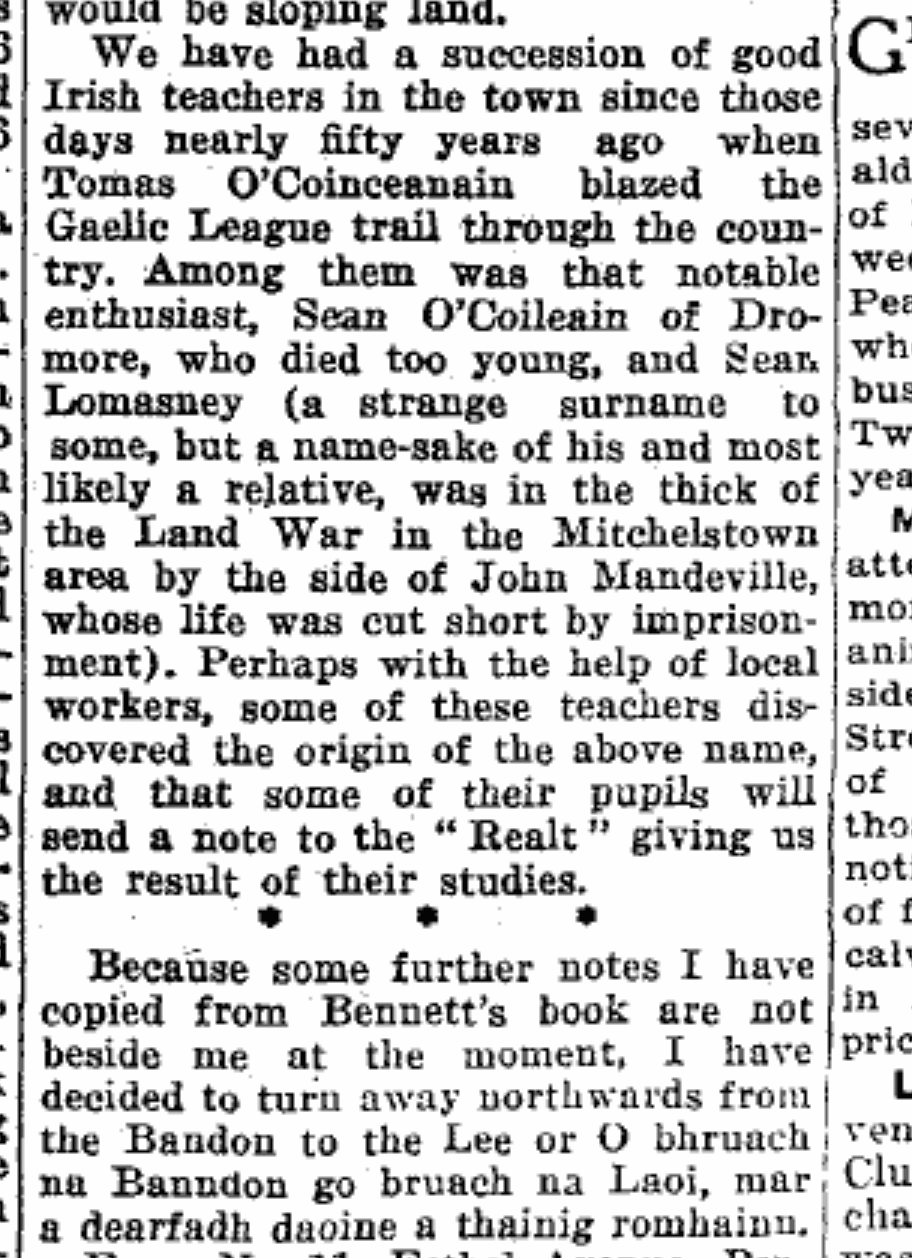
Re Peadar Ó hAnnracháin. Peadar was a wonderful Conradh na Gaeilge organiser throughout a number of counties including Cork and he wrote several books as Gaeilge. He also wrote on the Southern Star as ‘Cois Life’ in the 1940s and 1950s. In that period he worked in the Pigs and Bacon Commission in Dublin. The column often wandered over long lost history, family relationships and there was a touch of the ‘Seanachaí’ about them. The daughter of the Gaelic Scholar, landowner and businessman in Ballydehob Thomas Swanton, Crianlarich, gave him her father’s papers.
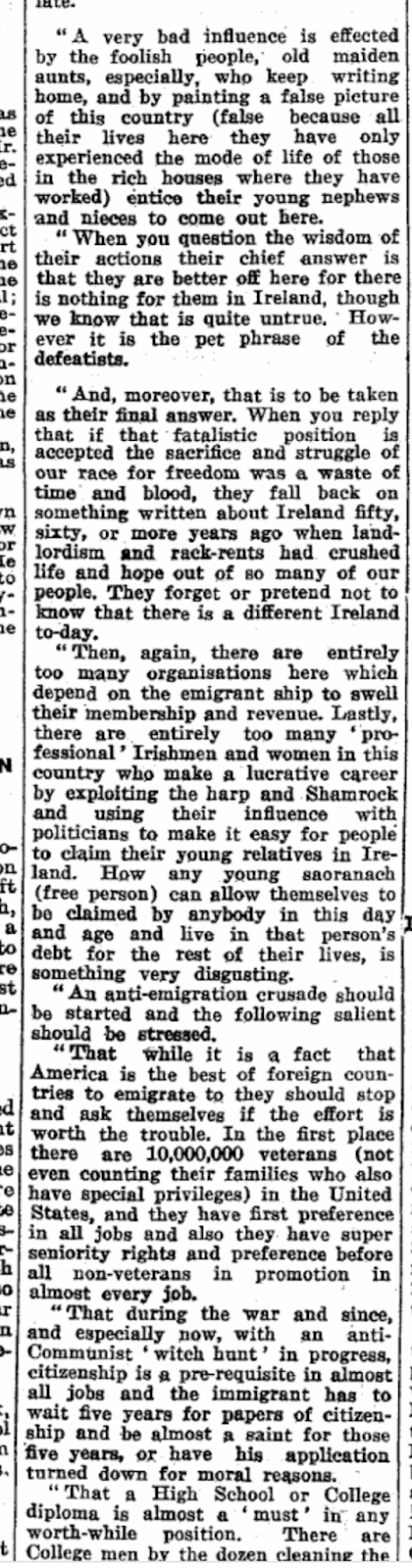
One of 13 children, 10 of whom survived and the majority emigrated.
In Colaiste Chairbhe (owned by Judge Devoy, New York, later Tony O’Reilly, former CEO, Heinz Corporation).
.
..
.
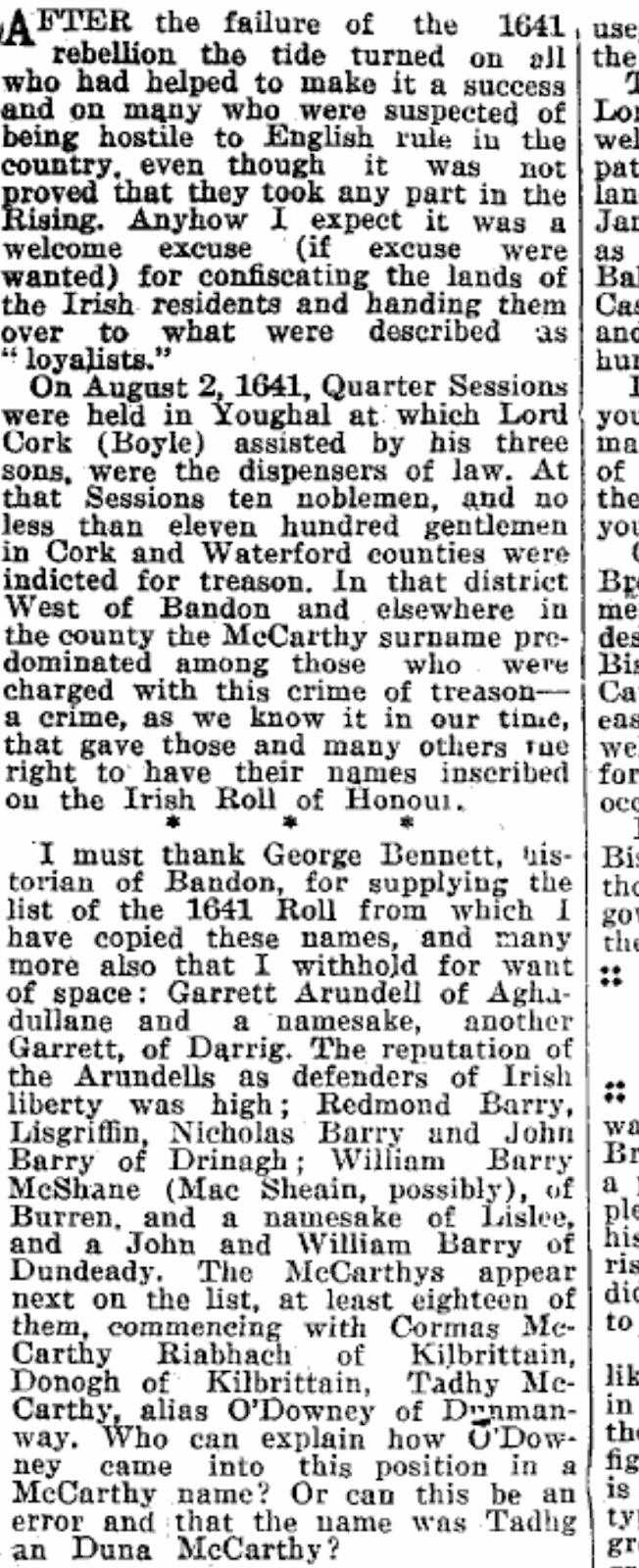
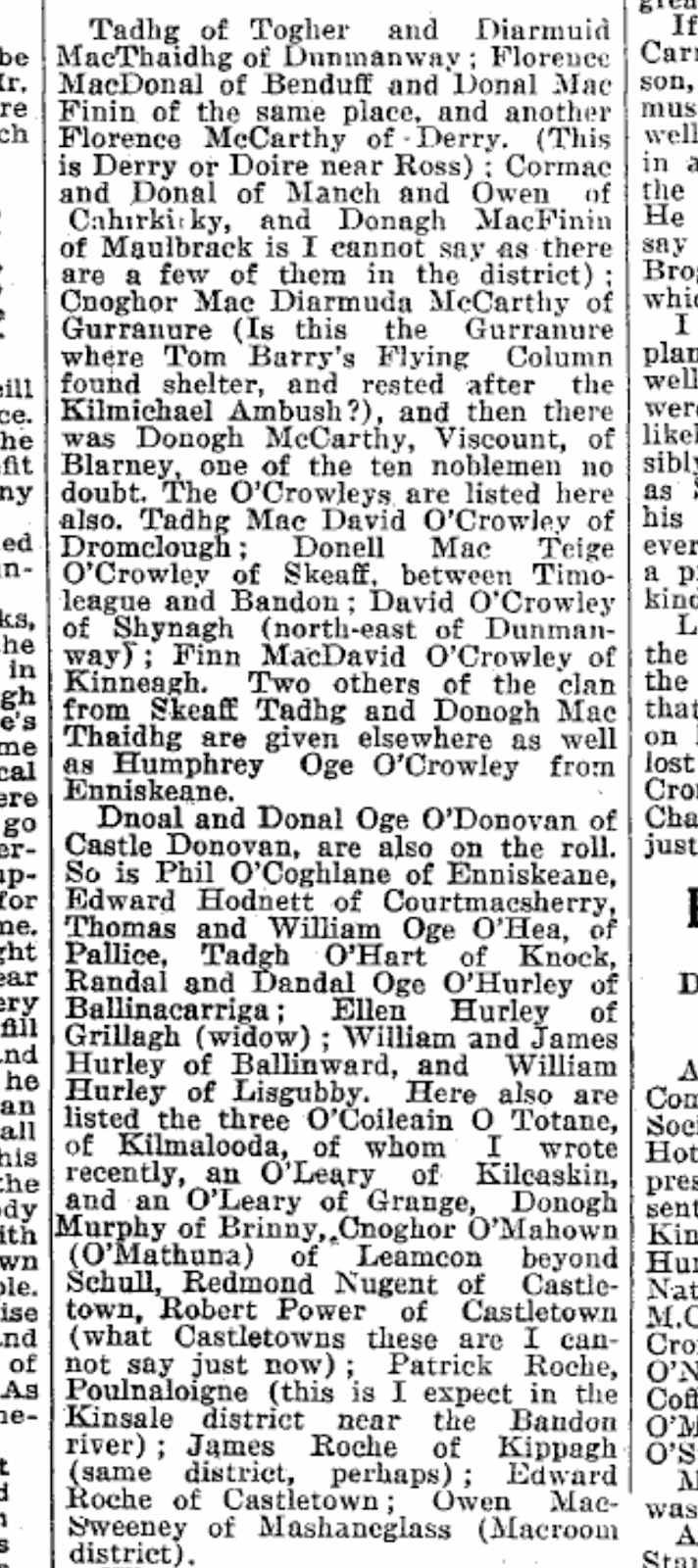
1641. Listing of West Cork Gentry Indicted for ‘Treason’ at Youghal Quarter Sessions
1826 Subscription List New Catholic Chapel Ballydehob. Some Catholic Swantons.
..
The Catholic `swantons of Kilcrohane adn Casper Wyoming descedn from a Ballydehob Mining Captain working on the Kilcrohane mines. He married a local woman. According to family tradition he continuet to worship at St.James in Durrus but the children were brought up as Catholics.
Subscription Lists, New Catholic Churches at East Schull 1825, Rosnacaheragh (Akakista) 1826, Durrus 1899.
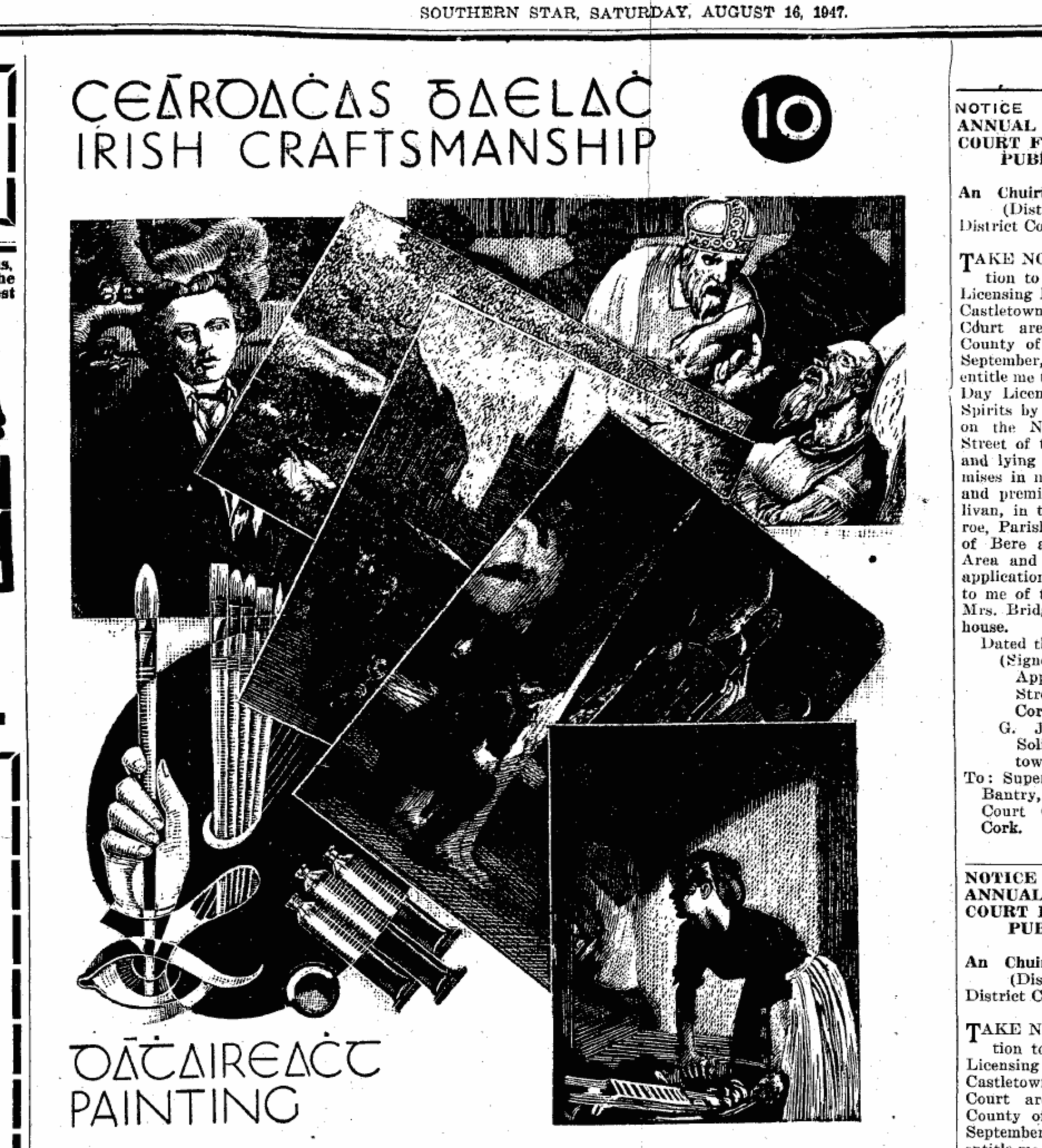
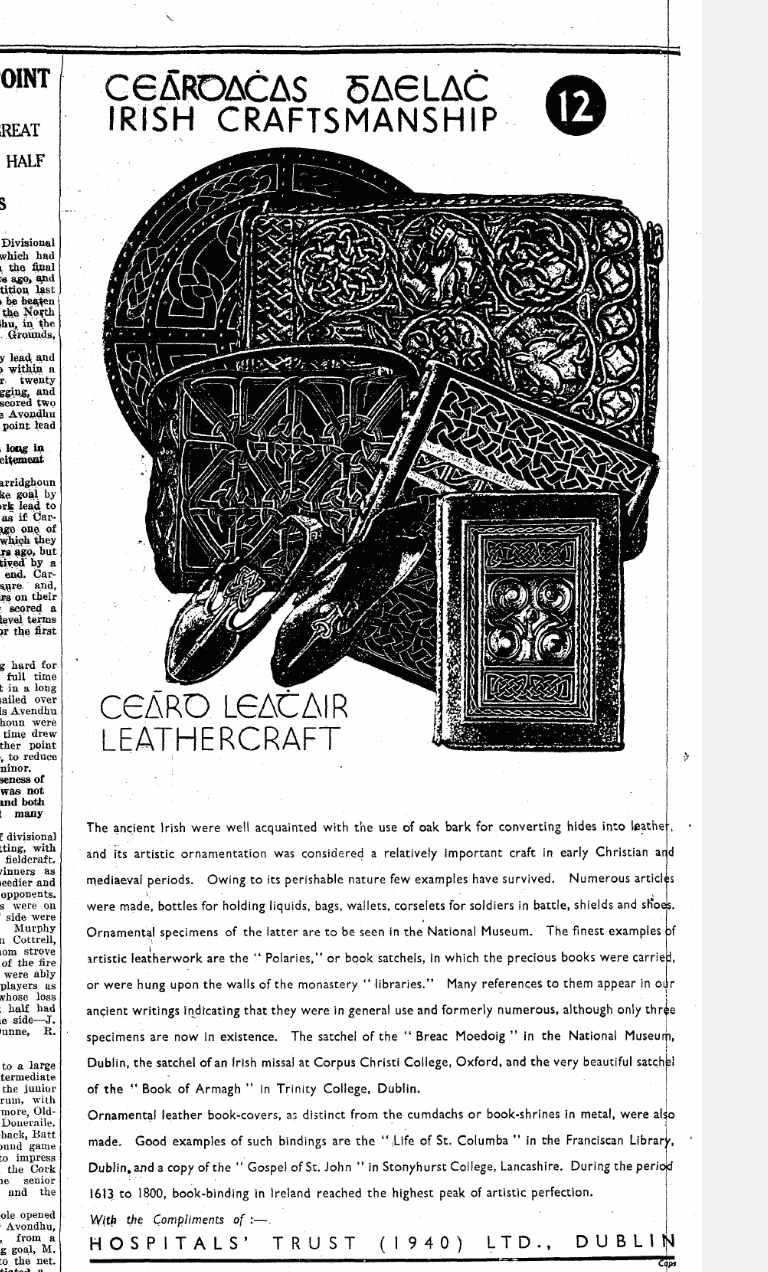
Ceárdachas Gaelach: Fíodóireacht (Weaving) in Ireland, Brehon Laws 438 A.D.
This information piece in the Southern Star was sponsored by the Hospital Trust. In later years it enjoyed a bad press but in its heyday in Ireland it brought huge amounts of foreign exchange to the county the lottery being illegal in most countries except in Ireland
Joe McGrath one of the founders later became involved in establishing Waterford Glass:


 .
.

 .
.

 .
.






 .
. .
.

 .
.
 .
.



 .
.
 .
.









 West Cork History