Some 18th Century Cork Wills from the Registry of Deeds with an Explanation of Registry procedures.
Some Welply Wills copied pre 1922 destruction:
https://plus.google.com/photos/100968344231272482288/albums/6140959251119685969
23 Thursday Apr 2015
Posted in Uncategorized
Some 18th Century Cork Wills from the Registry of Deeds with an Explanation of Registry procedures.
Some Welply Wills copied pre 1922 destruction:
https://plus.google.com/photos/100968344231272482288/albums/6140959251119685969
23 Thursday Apr 2015
Posted in Uncategorized
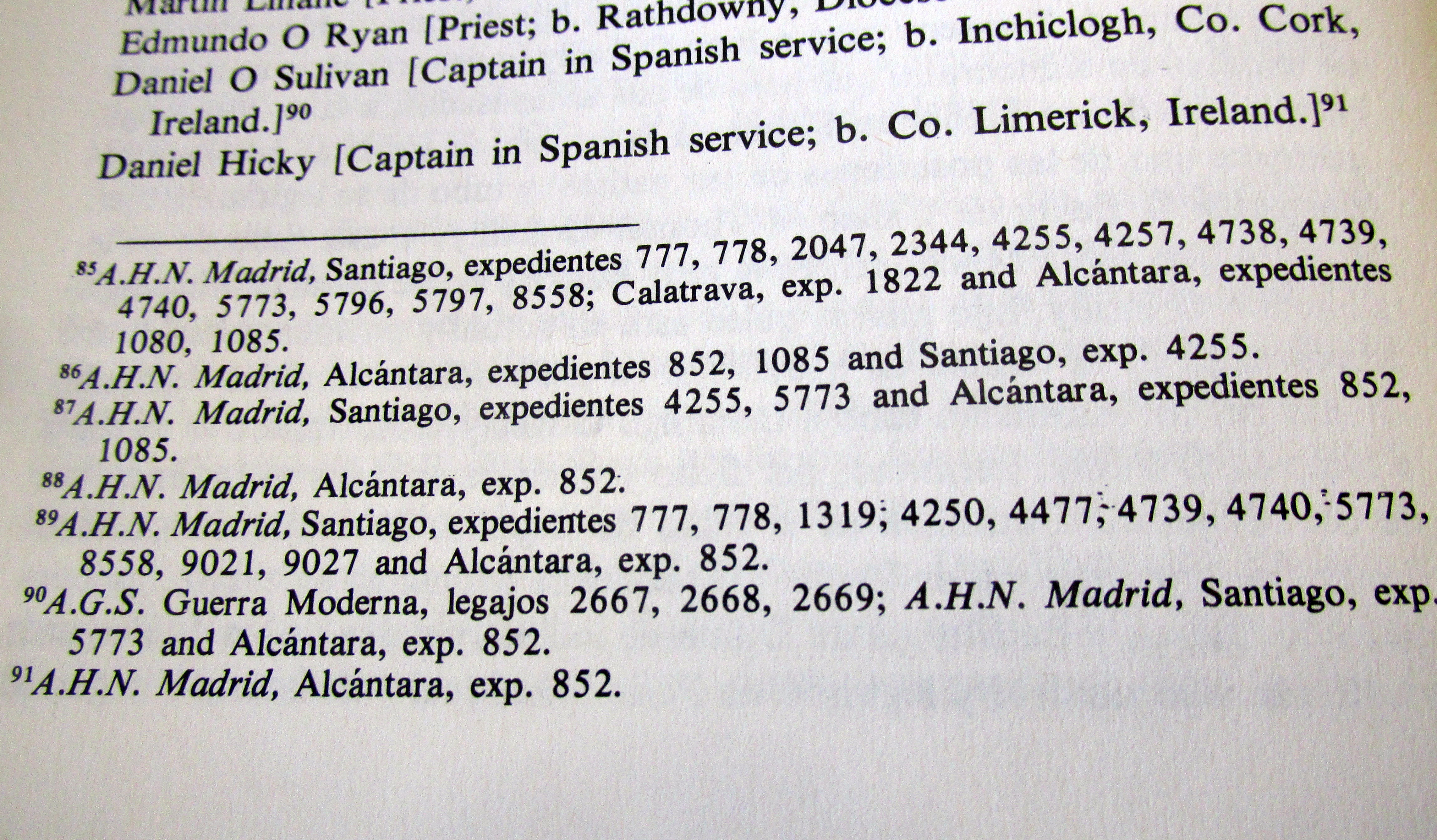
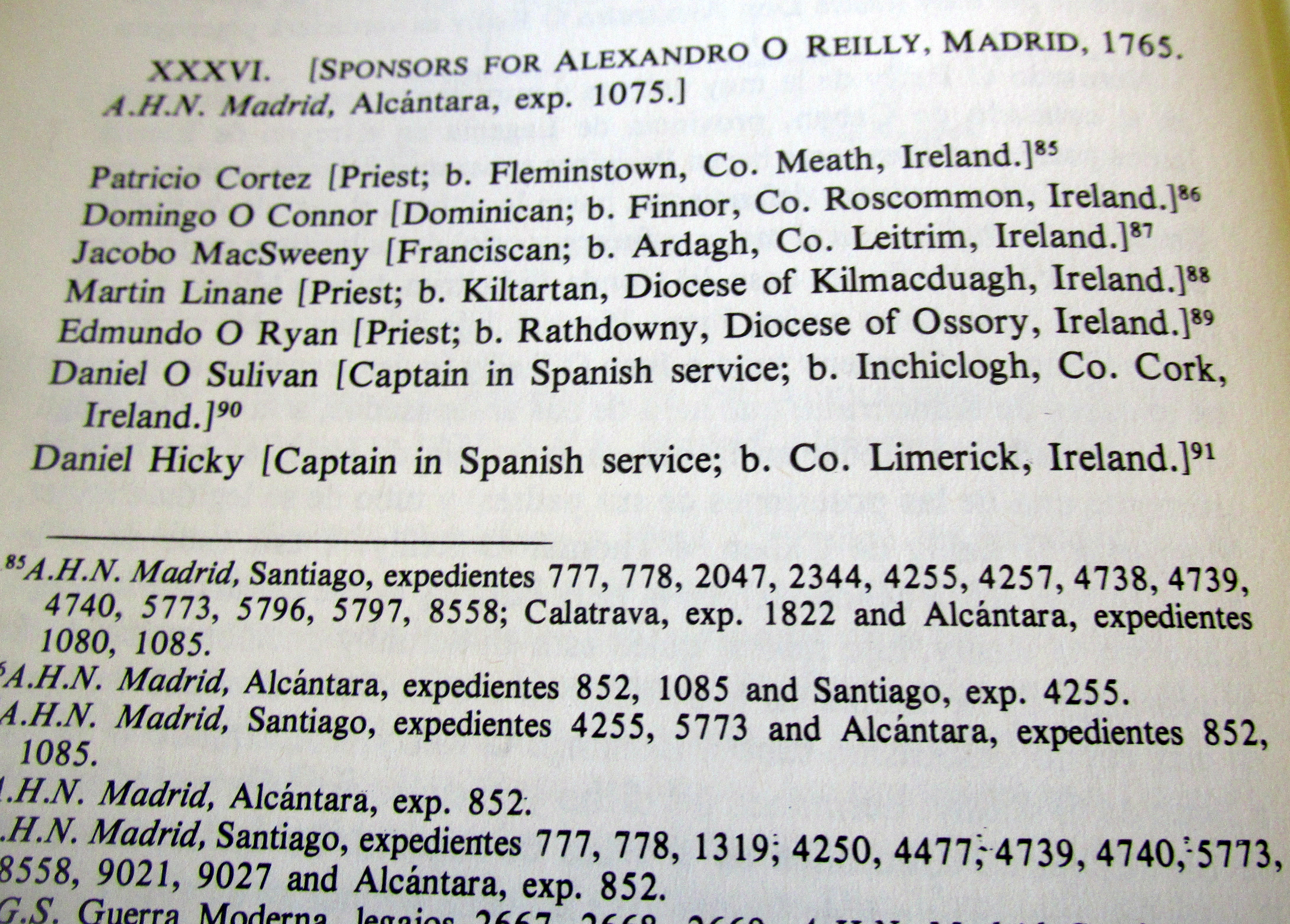
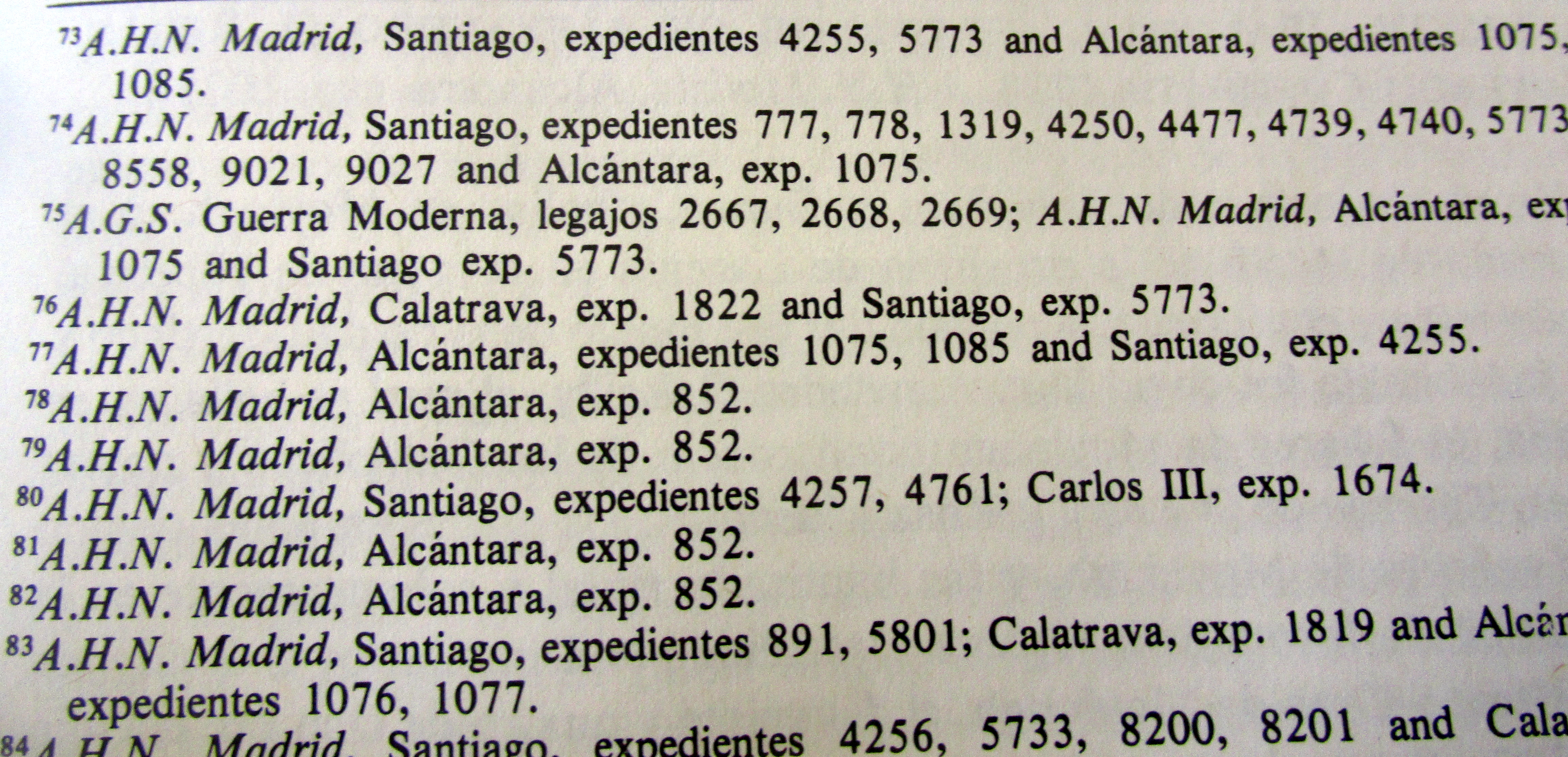
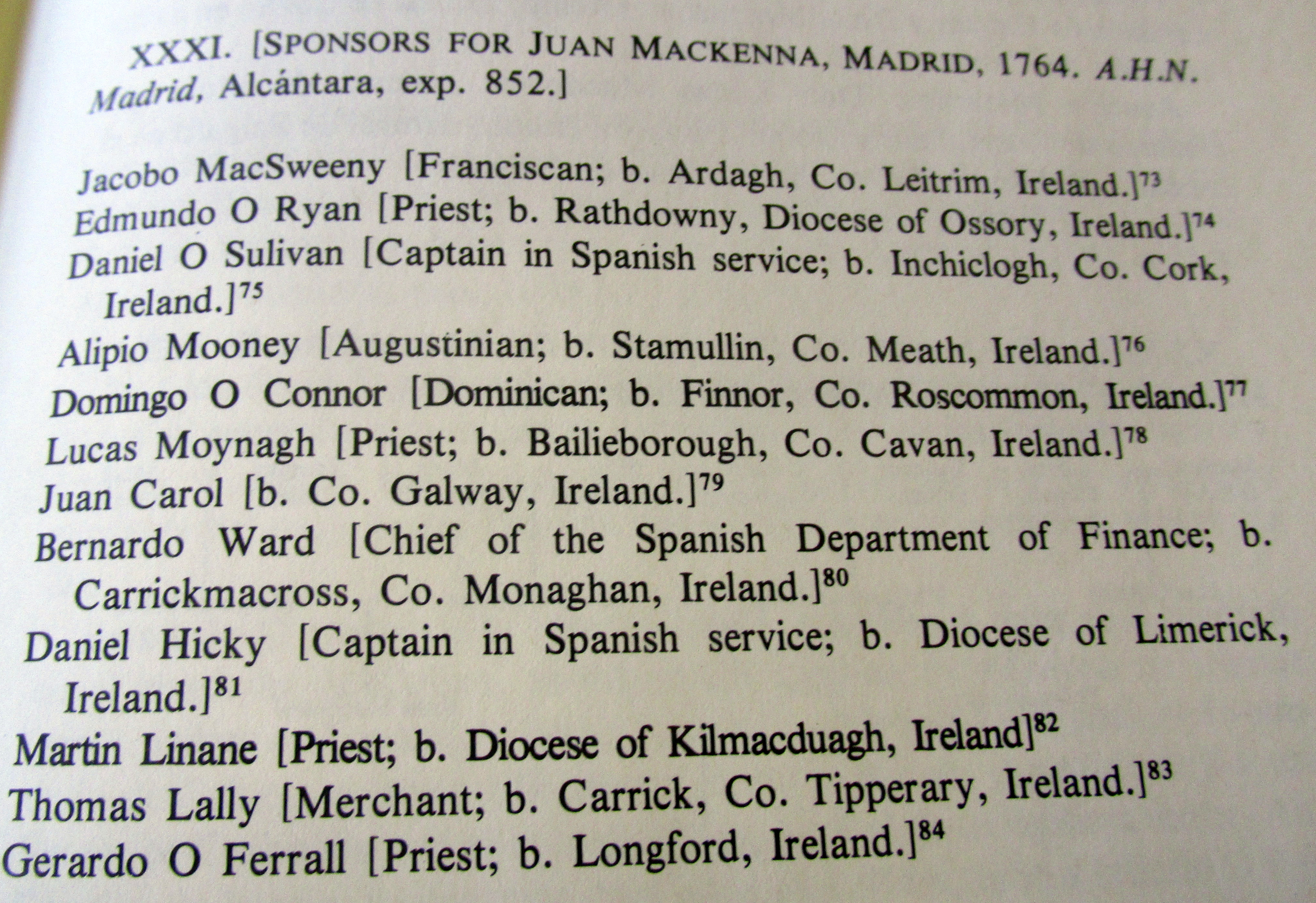
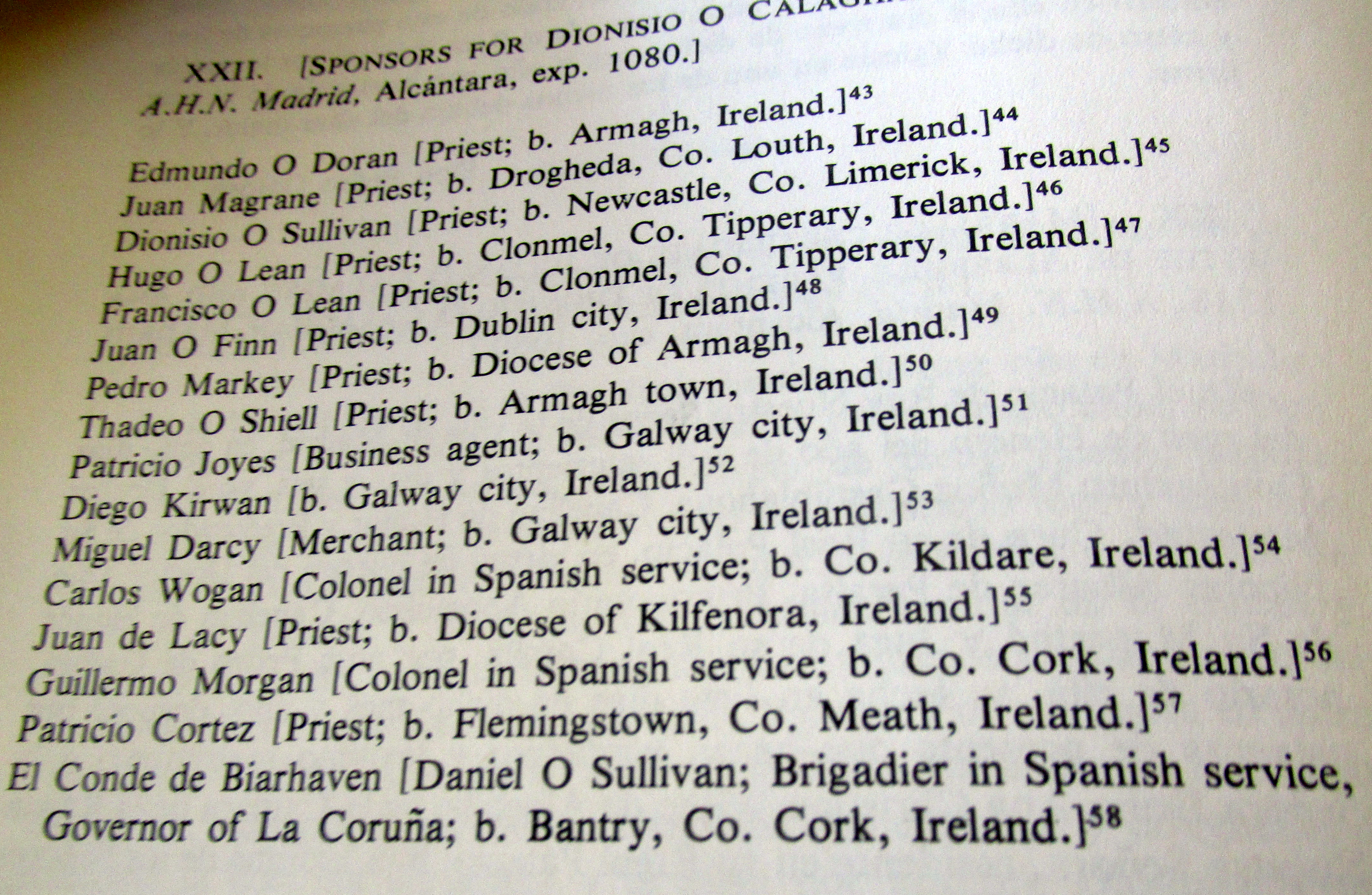
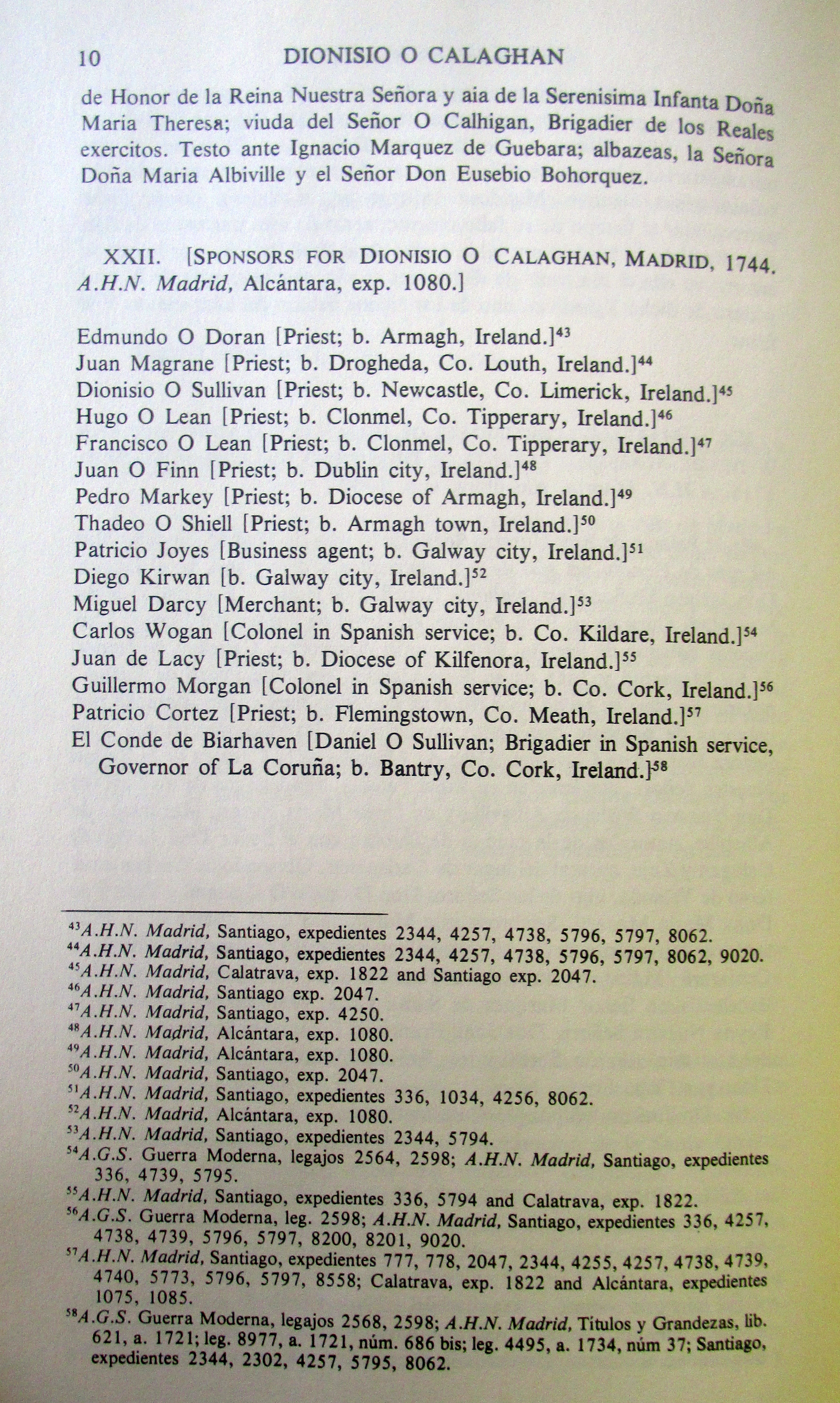
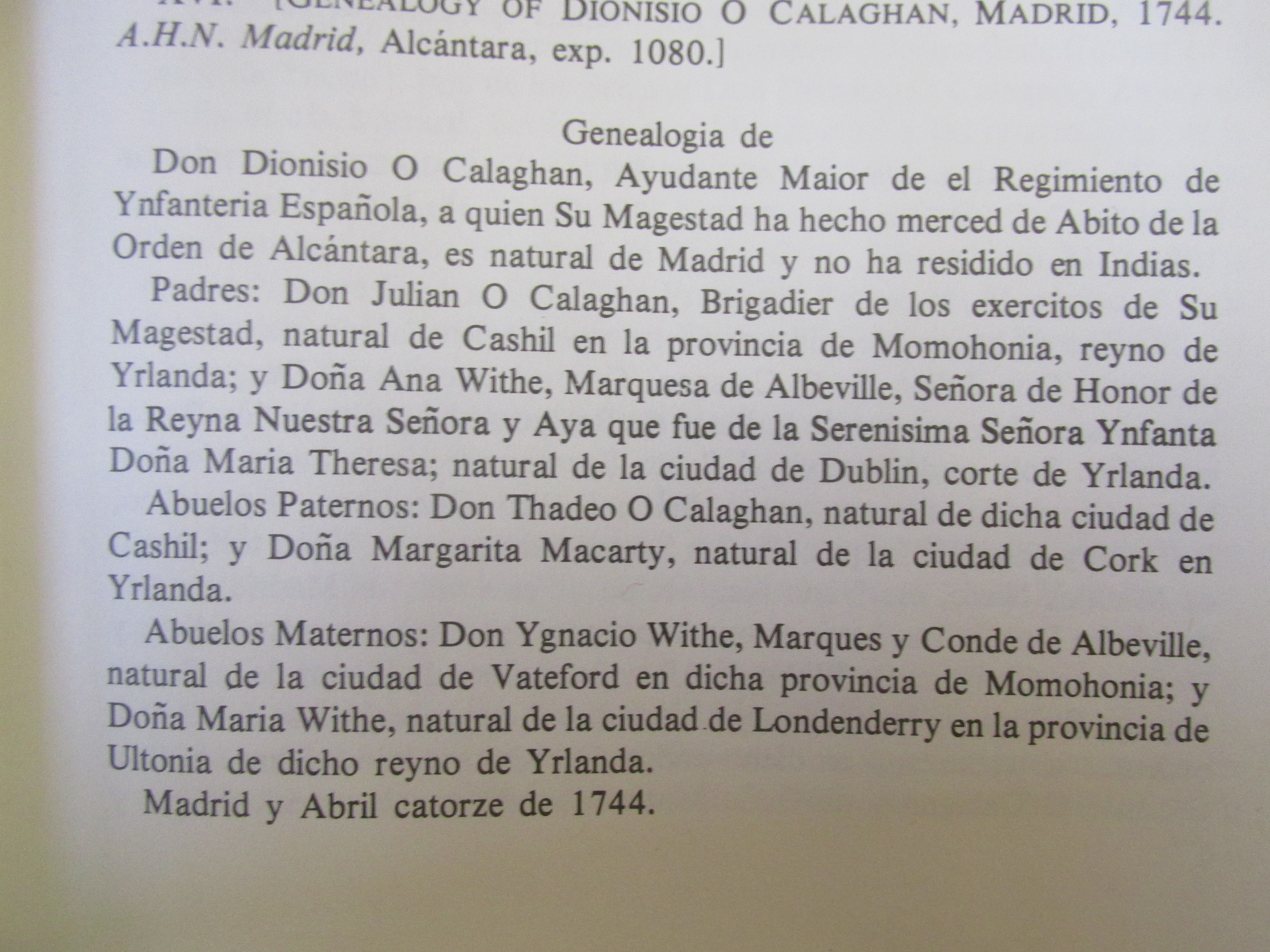
Spanish Knights of Irish Origin, The Count of Berehaven, Brigadier Daniel O’Sullivan, Governor of Coruna, born Bantry, West Cork, sponsor of Dionisio O Calaghan born Madrid 1718, Grandmother Margaret McCarthy, born Cork, Captain Daniel O Sulivan, Spanish Service born Inchiclogh, Bantry, sponsor Juan McKenna born Madrid 1714, Alexandra O’Neill born Madrid 1765. From Micheline Walsh, for the Irish manuscript Commission, 1978. The Irish emigres on the Continent had to prove their noble status to enter the various nobilities. An example is the Genealogy compiled by the O’Neills to be allowed enter the Spanish Aristocracy: https://durrushistory.com/2014/03/27/discovery-of-lost-vellum-manuscript-documenting-oreillys-genealogy-of-breffni-cavan-over-1000-years-in-munich-2008-irish-presence-in-cuba-18th-century-and-irish-named-street-escape-castro-emba/
McMahon, France:



Marshall McMahon, (1808-1893). President of Third Republic, France, ancestor Margaret O’Sullivan married Bantry, West Cork, 1707
22 Wednesday Apr 2015
Posted in Uncategorized

Every week in the New York Irish-American a series of advertisements were run under the heading ‘Information Wanted.’ For $1 you could place a few carefully chosen lines in three issues of the paper, in the hope of finding a loved one. I find these ads some of the most emotive and powerful records of the impact of conflict. In an age before mass media and the internet, many friends and families searched fruitlessly for years in an effort to restore contact with cousins, sons and brothers. Some were successful; others received the bad news they had been dreading. Having previously explored this topic with the tragic story of Alexander Scarff and others, I wanted to take another look at this unique record of the impact of war on the Irish diaspora.
INFORMATION WANTED Of Patrick Bush, a native of Bennett’s Bridge, County Kilkenny, Ireland. When last heard from, two…
View original post 1,237 more words
22 Wednesday Apr 2015
Posted in Uncategorized
Occasionally, I am asked why any Irish impacted by the American Civil War should be remembered in Ireland. After all, the argument goes, these people left our shores, and they weren’t fighting for ‘Ireland.’ In response, I usually point out that many were Famine-era emigrants, who often felt they had little choice but to leave. There are many other reasons for remembrance, but perhaps one of the most persuasive is that these emigrants tended not to forget those at home. Whether we realise it or not, the ancestors of many in Ireland today benefited greatly from something that Irish emigrants to America sent back- money. One such emigrant was a man named Thomas Bowler from Youghal, Co. Cork. His decision to enlist in the Irish Brigade was almost certainly borne from a desire to help his wife and child, more than 3,000 miles away across the Atlantic.
I have previously
View original post 1,856 more words
21 Tuesday Apr 2015
Posted in Uncategorized
Forgotten Contributions, John Lodge, (c1710-1774), English Born, Compiler of First Bibliography of Irish History drawing on Gaelic, Latin, French and English. 1751 appointed Deputy-Keeper of Bermingham Tower Records (Dublin Castle). 1754, Peerage of Ireland was published in 4 vols. 8vo. in Dublin. In 1759 he was appointed Deputy-Clerk and Keeper of the Rolls. In 1770 he published anonymously The Usage of Holding Parliaments in Ireland.
Courtesy Francis G. James, ‘Lords of the Ascendency, The Irish House of Lords and its members 1600-1800, Irish Academic Press, 1995.
Bermingham Tower held the Irish Records until they went to the new Public Records Office in the Four Court Complex in the 19th century.
From A Compendium of Irish Biography, 1878
« Bartholomew Lloyd | Index | Archbishop Adam Loftus »
Lodge, John, the distinguished archivist, was born in England early in the 18th century, and was educated at Cambridge University. In 1744 was published at Dublin a Report of the Trial in Ejectment of Campbell Craig, taken in shorthand by him. In 1751 “Mr. John Lodge, of Abbey-street,” was appointed Deputy-Keeper of Bermingham Tower Records. Three years afterwards his Peerage of Ireland was published in 4 vols. 8vo. in Dublin. In 1759 he was appointed Deputy-Clerk and Keeper of the Rolls. In 1770 he published anonymously The Usage of Holding Parliaments in Ireland, and in 1772, also anonymously, a valuable collection of historical tracts entitled Desiderata Curiosa Hibernica, 2 vols. 8vo. Mr. Lodge died at Bath, 22nd February 1774. His wonderful collection of indexes remained in the possession of his family for nine years, until 1783, when they were deposited in the office of the Civil Department of the Chief-Secretary to the Lord-Lieutenant, in return for a life pension of £100 a year to his widow, and £200 a year to his son, the Rev. William Lodge. A transcript of a portion of these manuscripts sold at Sir William Betham’s sale for £155. These documents were largely drawn upon by Mr. Lascelles [See LASCELLES, ROWLEY] in his Liber Munerum Hiberniae.
Mr. Lodge’s first wife is reported to have been a Hamilton of the Abercorn family, his second, Edwarda Galland. He was a great expert in shorthand, and almost all his note-books are full of it. Dr. Reeves writes: “In the department of genealogy he was the most distinguished compiler that Ireland has produced. Archdall is to him what Harris is to Ware. His industry was unbounded, his appetite for compilation insatiable, and his accuracy such as stamps all that he did and all that he has left with unfailing reliability.” Mervyn Archdall, in the preface to his edition of Lodge’s Peerage of Ireland, published in 7 vols. in 1789, writes: “When I reflect on the performance which, though imperfectly, I have attempted to revise, then do I deplore, and I am sure my readers will accompany me, the death of my much valued friend the author. To the desire of improving his Peerage of Ireland, whilst in the various offices, as Deputy-Keeper of the Records in Bermingham Tower, Keeper of the Rolls in the High Court of Chancery, and Registrar of the Court of Prerogative, and to the necessary attendance on the duties of his employments, the public owe his loss.”
It is to be regretted that so little is known concerning the life of this unassuming man — one of the ablest and most painstaking that ever devoted himself to the investigation of Irish history. His son, Rev. William Lodge, born in 1742, the only survivor of nine children, was in 1790 Chancellor of Armagh Cathedral and rector of Kilmore, in the same diocese. Through him several of John Lodge’s books with marginal notes and corrections, came into the Armagh Library; and a further accession was made about 1867 by the purchase from his grandson, son of Rev. William Lodge, rector of Killybegs, of a large collection of his great-grandfather’s papers, with rough draughts of his clerical and other lists. John Lodge must not be confounded with Edmund Lodge (born 1756; died 1839), who edited the Gallery of Portraits.
Sources
128a. Exshaw’s London Magazine, 1732-’93.
233. Manuscript and Special Information, and Current Periodicals.
254. Notes and Queries (2). London, 1850-’78.
O’Callaghan, John C., see No. 186.
21 Tuesday Apr 2015
Posted in Uncategorized
Forgotten Contributions, Bishop William Nicolson (1655-1727), English Born, Compiler of First Bibliography of Irish History drawing on Gaelic, Latin, French and English sources,dedicated to William Conolly Irish Born Speaker of Irish House of Commons, ‘A Patriot”, ‘A Zealous Antiquary and a learned Historian and Philologist.” “He fell into many errors in this work, for want of sufficient acquaintance with the Irish manuscripts and language. But notwithstanding that, much thanks are due to him for the extraordinary pains he took to inform himself about the materials which may be had for improving Irish history.” O’Curry speaks of his “valuable Irish Historical Library.”
Conolly was probably, in the early 18th century, the richest man in Ireland. He was from obscure Catholic origins in Donegal, a Protestant and refused all attempts to grant him titles.
Courtesy Francis G. James, ‘Lords of the Ascendency, The Irish House of Lords and its members 1600-1800, Irish Academic Press, 1995.
A significant number of the members of the Irish House of Lords were Protestant Bishops of the State Church, that of the Church of Ireland. Irish Sees were lucrative with an income ranging from £2,000 to £8,000 in the 1770s according to Arthur Young.
Courtesy Library Ireland:
Nicolson, William, Archbishop of Cashel, was born in Cumberland in 1655, was in 1702 consecrated Bishop of Derry, and in 1726 advanced to the archbishopric of Cashel, and died of apoplexy, 15th February 1727. He deserves notice as author of the Irish Historical Library, printed in Dublin in 1724, containing a valuable list of authors and records in print and manuscript on subjects relating to the history of Ireland. Cotton styles him “a zealous antiquary and a learned historian and philologist.” Harris’s Ware says: “He fell into many errors in this work, for want of sufficient acquaintance with the Irish manuscripts and language. But notwithstanding that, much thanks are due to him for the extraordinary pains he took to inform himself about the materials which may be had for improving Irish history.” O’Curry speaks of his “valuable Irish Historical Library.”
Sources
196. Irishmen, Lives of Illustrious and Distinguished, Rev. James Wills, D.D. 6 vols. or 12 parts. Dublin, 1840-‘7.
260. O’Curry, Eugene: Manuscript Materials of Ancient Irish History. Dublin, 1861.
339. Ware, Sir James, Works: Walter Harris. 2 vols. Dublin, 1764.
Forgotten Contributions:
21 Tuesday Apr 2015
Posted in Uncategorized
Irish College Paris, a Green Oasis in the in the Latin Quarter, from 1605, Refuge of the Irish in Times of Persecution, Modern Cultural Centre of the Irish Arts in France and its Digital Archive.
http://www.centreculturelirlandais.com/en/
http://en.wikipedia.org/wiki/Irish_College_in_Paris
Digital Archive:
http://archives.centreculturelirlandais.com/r_tinventaire_resu_rech_gb.php
https://plus.google.com/photos/100968344231272482288/albums/6140086833530585601
21 Tuesday Apr 2015
Posted in Uncategorized
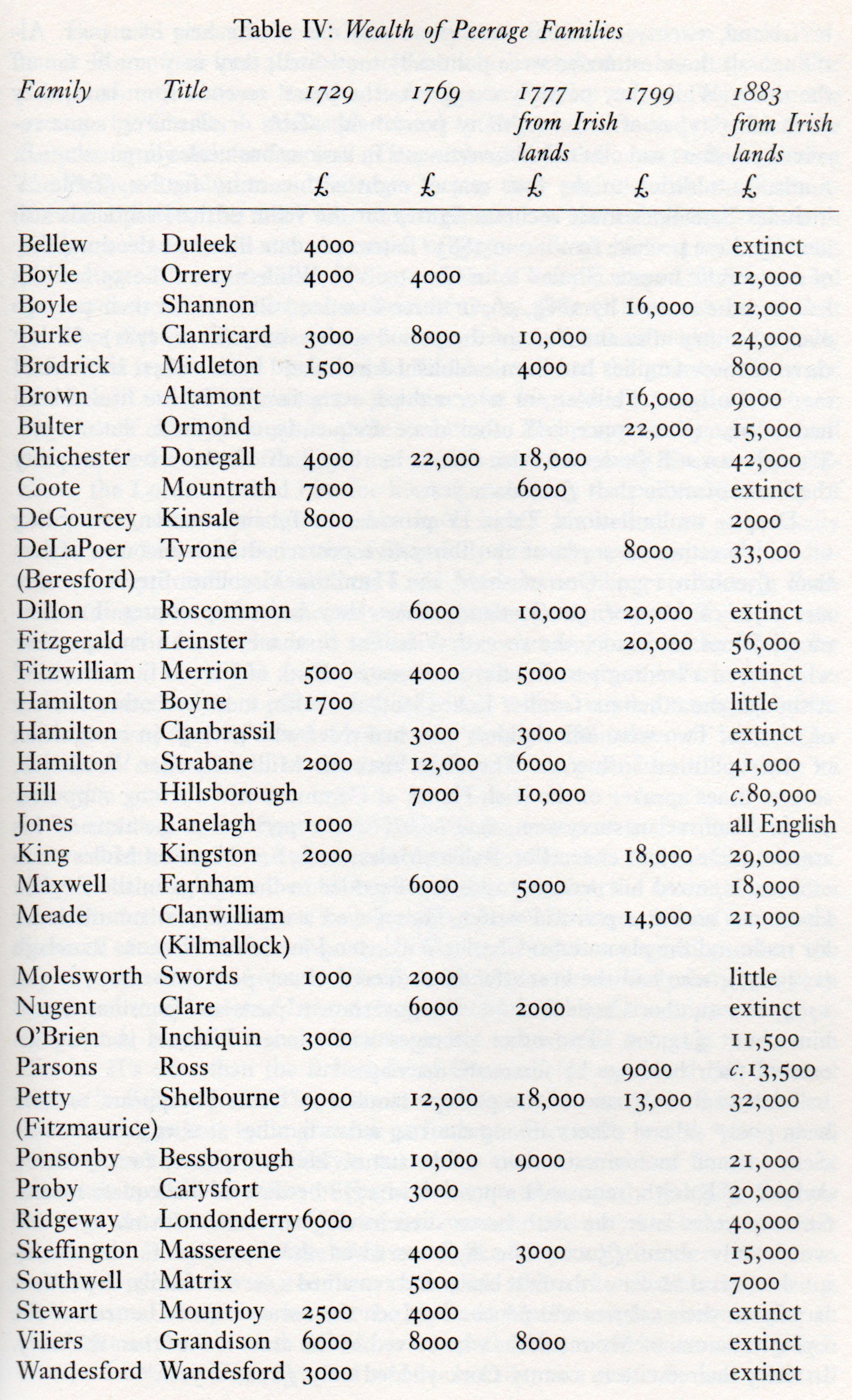
Rent Roll of Irish peerage Families 1729-1883, Stipends of Judges Sitting in the Irish Houses of Lords, Value of Irish Episcopal Sees 18th Century, the Table of Archbishop Parker of Tuam 1674, ‘Daily laden with sixteen dishes for dinner and twelve for supper, with a large variety of wine’. This is according to William King appointed as chaplain to the Archbishop, instead of his humble fare as a student.
The Bishops were commonly English but made a major contribution to Ireland’s intellectual, architectural history. Included were Narcissus Marsh who built Dublin’s first Endowed Public Library, Henry Jones who donate the Book of Kells to TCD, Archbishop Robinson on Armagh Cathedral, school, hospital.
Courtesy Francis G. James, ‘Lords of the Ascendency, The Irish House of Lords and its members 1600-1800, Irish Academic Press, 1995.
A significant number of the members of the Irish House of Lords were Protestant Bishops of the State Church, that of the Church of Ireland. Irish Sees were lucrative ranging from £2,000 to £8,000 in the 1770s according to Arthur Young. The Judges stipends ranged from the Lord Chancellor on £7,500 to the lesser Judges on £1,150 to £3,250 peer annum. Their Judicial salaries were presumably additional as were other sources of judicial income.
The value of £1 in 1722 would equate to £19,000 by one estimate nowadays so the rental value of the Petty Estate in Kerry might be worth c €170 Million.
https://wordpress.com/post/28206803/3834
21 Tuesday Apr 2015
Posted in Uncategorized
Bi-lingual signage in Clonakilty, West Cork, Ireland, The work of the sign artist Tomás Tuipéar who has promoted the Irish language in his fine quality signage for the past 30 years.
Thanks to Cáit Conneely for drawing attention to Tomás’s work.
21 Tuesday Apr 2015
Posted in Uncategorized
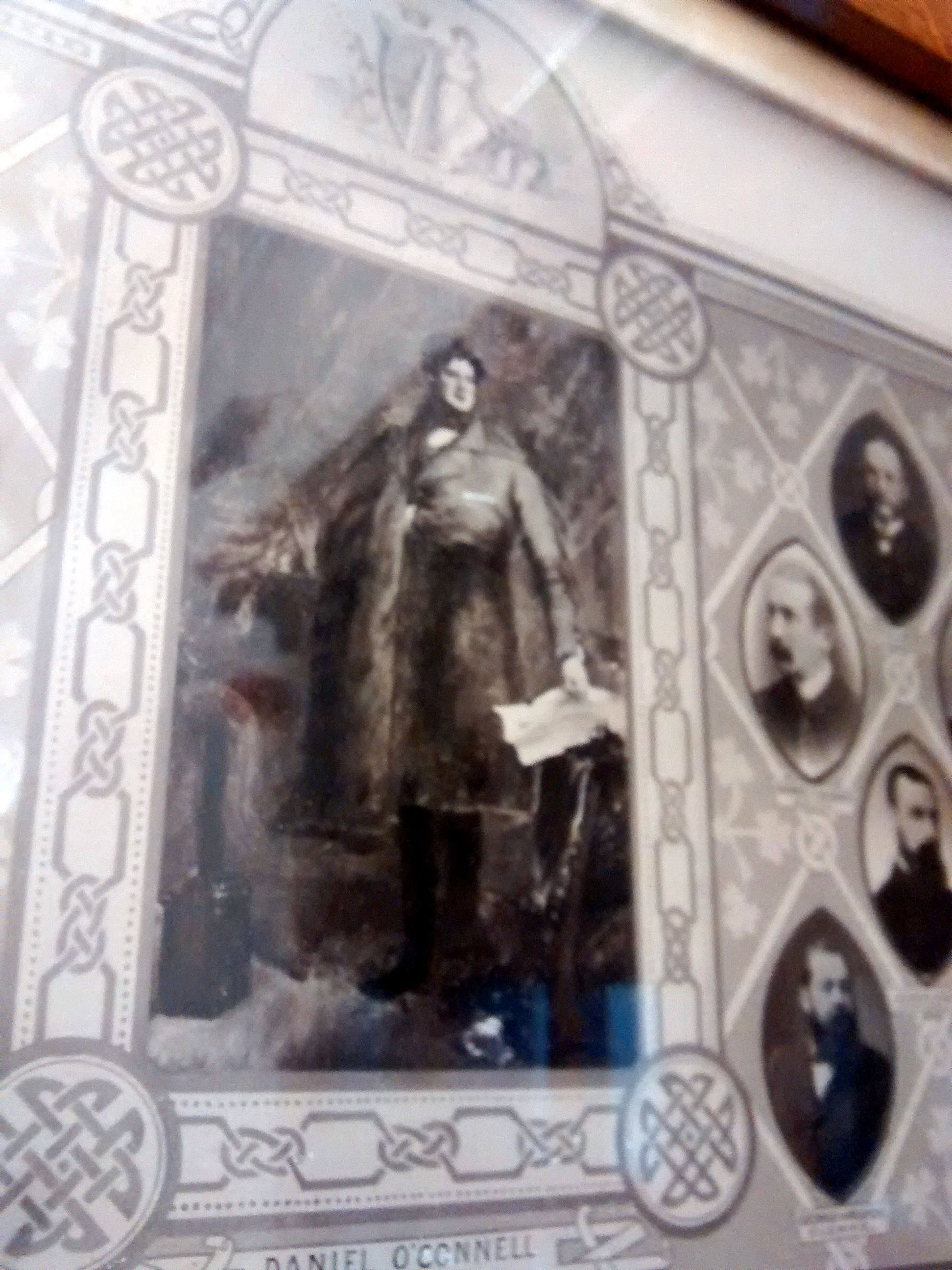
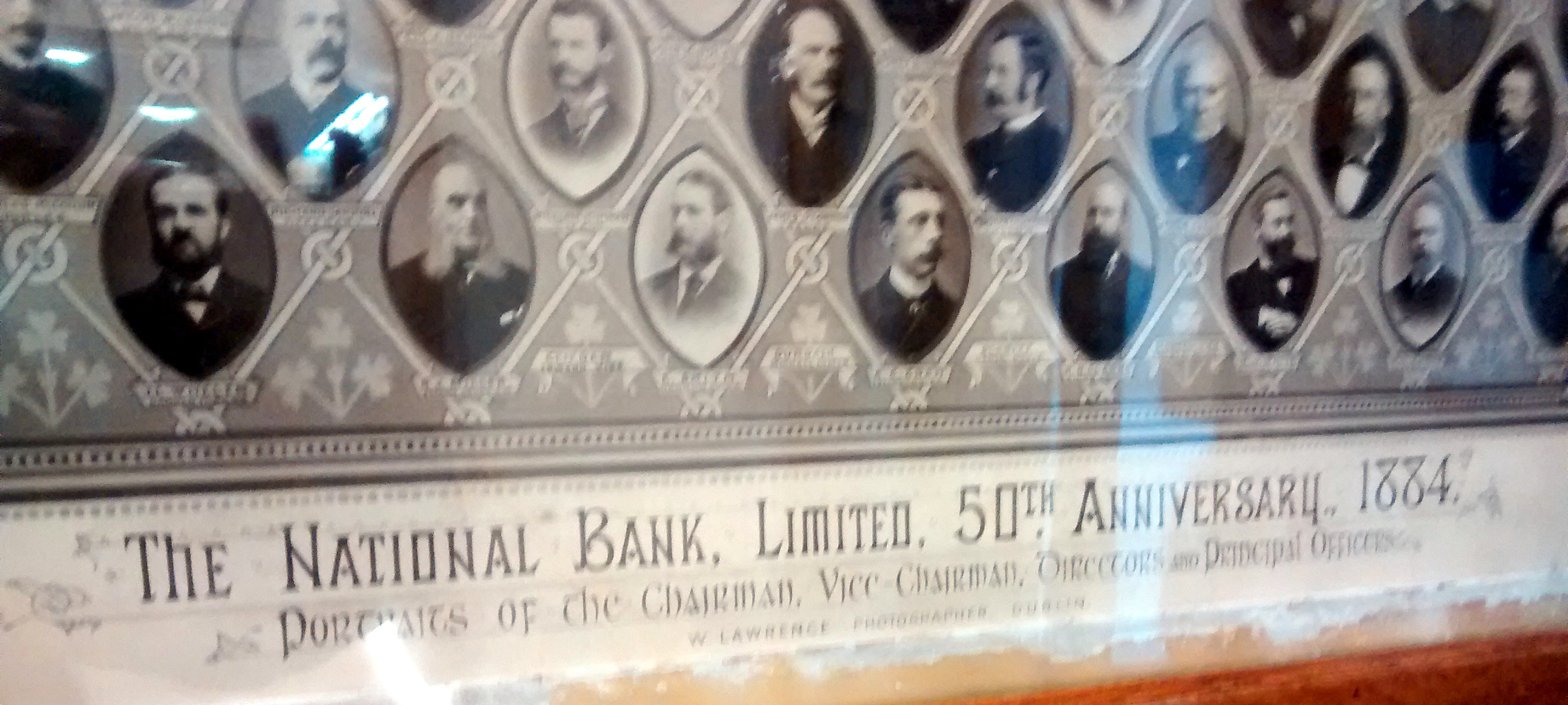
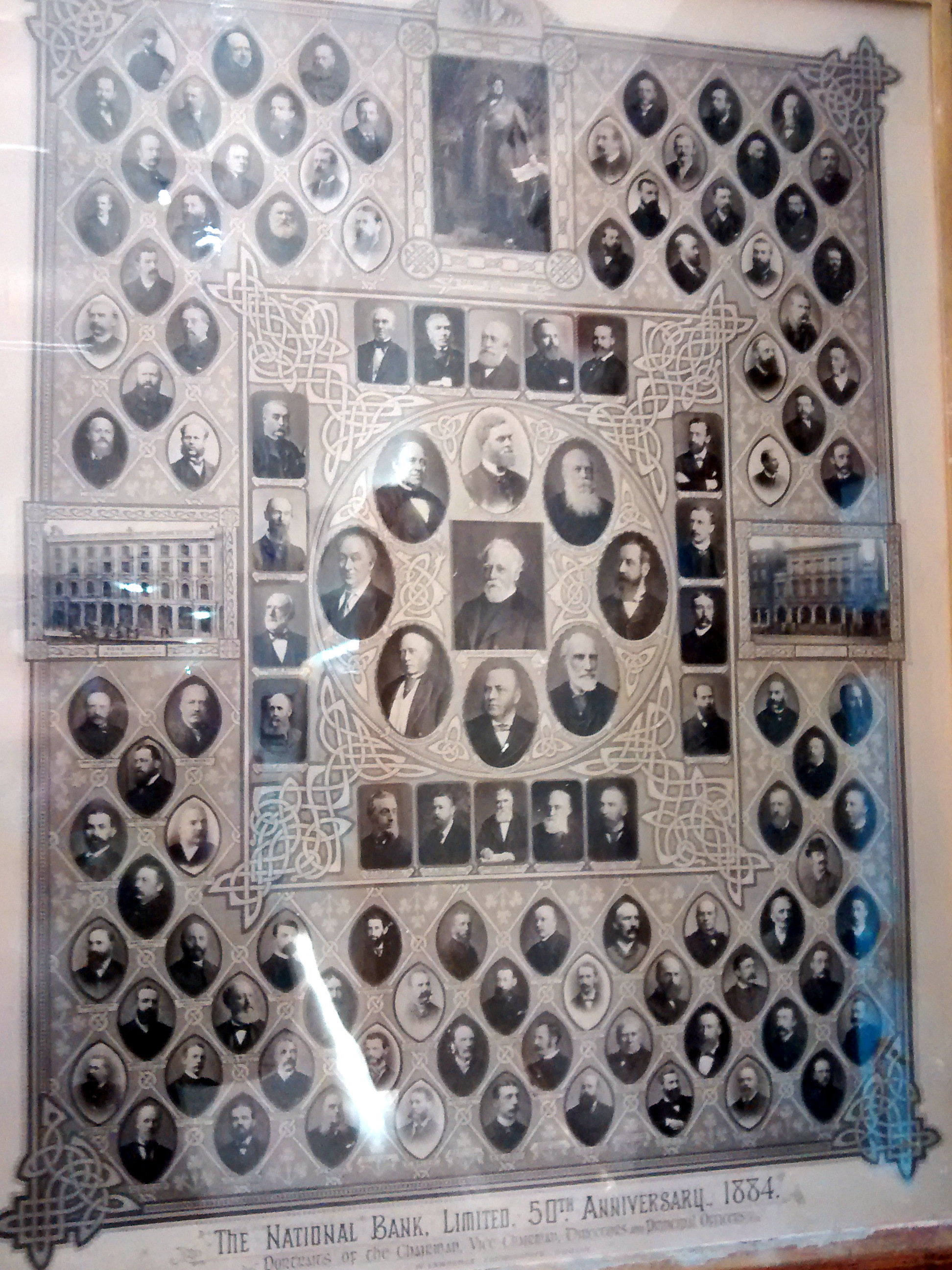
Lawrence Portrait, 1884 of Chairman, Vice Chairman, Directors, Principal Officers on the 50th Anniversary of National Bank including one of the Founders, the Liberator, Daniel O’Connell, Cork Murough Family. A number of the Murroughs a Cork Stockbroking family are named as managers of various branches.
National Bank:
http://heritagearchives.rbs.com/companies/list/the-national-bank-ltd.html
 West Cork History