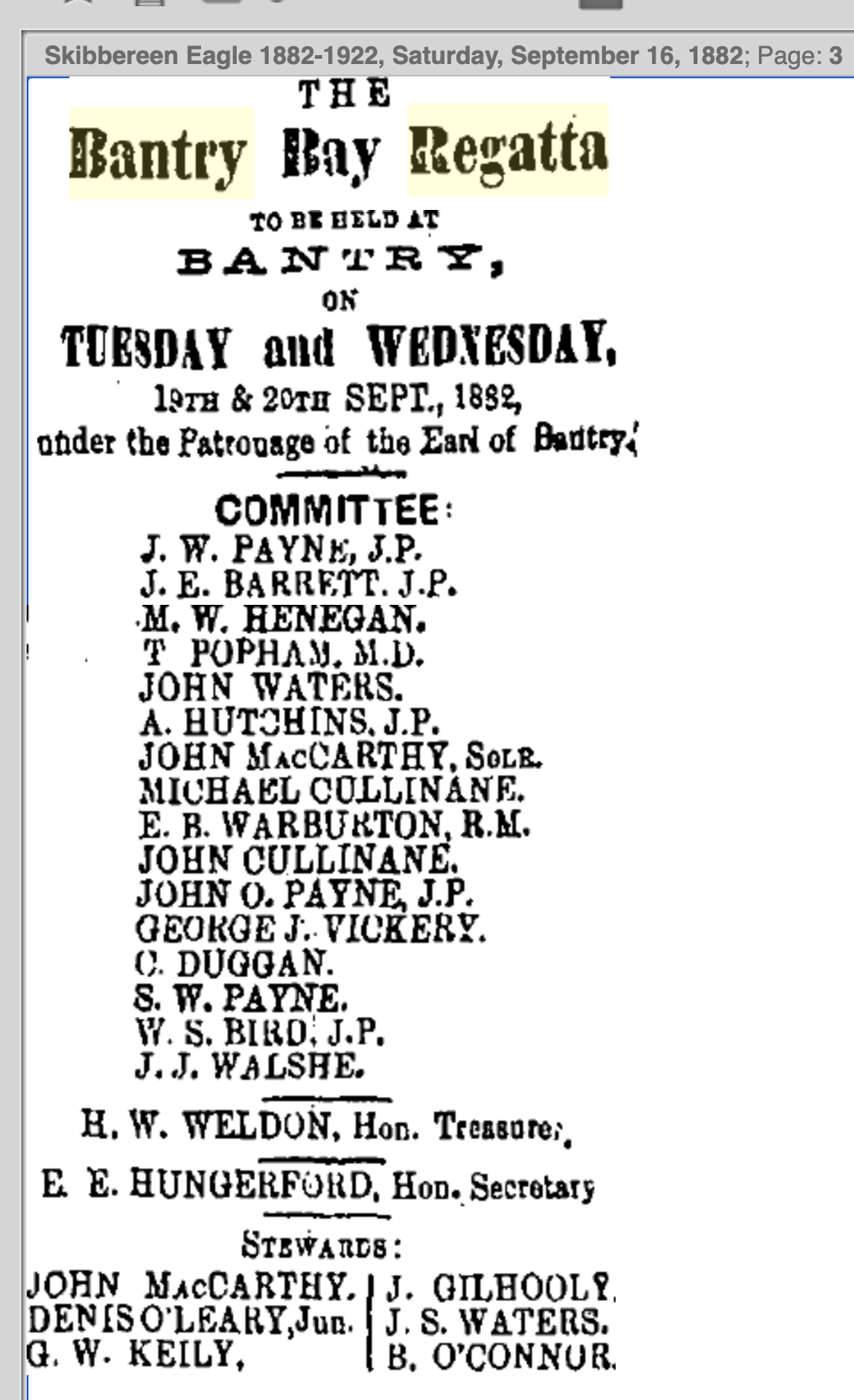
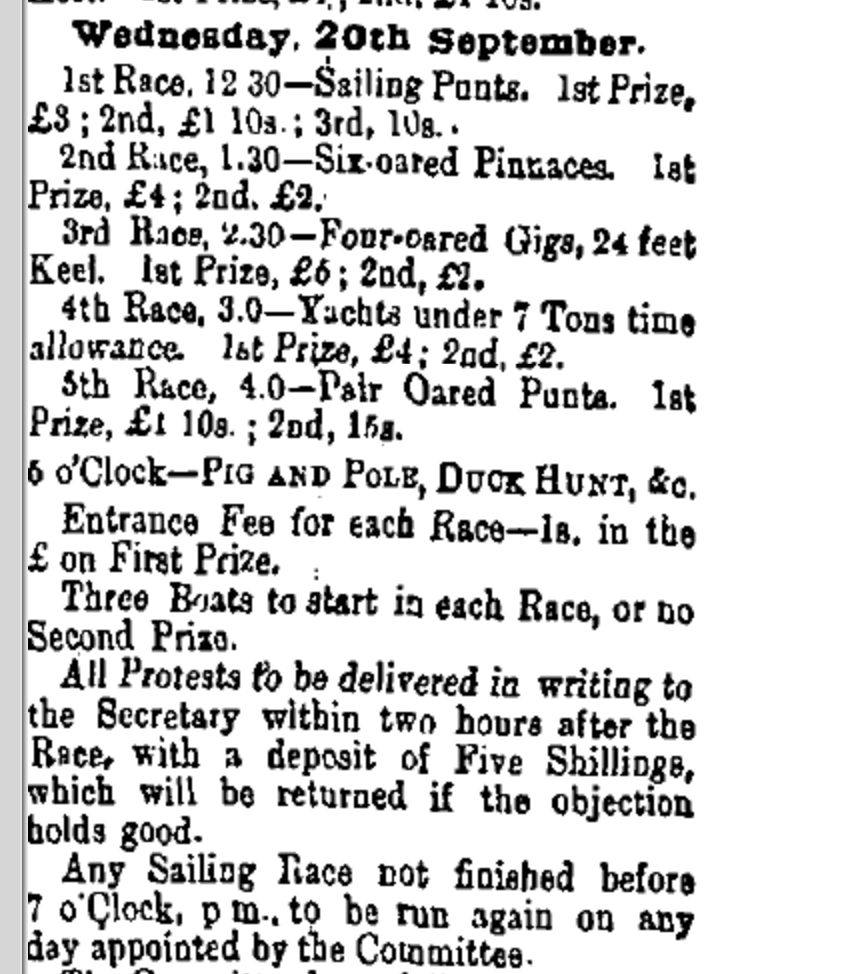
From the mid 19th century in rural Ireland events such as Regattas, Agricultural Shows, Ploughing Championships were and are still are popular. What is of interest are the organising committees composed of local ‘big shots’. In these cases nearly all men, parking their political and religious differences for the objective of having a successful show.
In relation to agricultural shows, many of the 19th century winners have families who in the 21st century are still active in stock breeding and emerging as prize winners.
1832 Charles Armstrong, Formerly 1832 Bantry Cholera Hospital, Medical Officer Crookhaven Dispensary, Physician Cork General Dispensary, Surgeon Constabulary and Coast Guard Goleen and Rock Island. Author of Petition Preying on Medical Grievances (Non payment or minimal payment for quasi legal services) presented to both Houses of Parliament in UK
MD Glasgow 1838, MRCS England 1833, FRCI 1844. Doctor, formerly Medical Officer Crookhaven Dispensary, Physician Cork General Dispensary, Surgeon Constabulary and Coast Guard Goleen and Rock island. 1857 Medical Referee various Assurance Companies During cholera epidemic 1832. 1857 Cork 34, King St. Author of Petition on Medical Grievances presented to both Houses of Parliament in UK
1849. 49 Cholera Deaths at Crookhaven, Death of Alexander O’Driscoll, Esq., Son of Tim The Gauger. Middleman and Magistrate, Norton Cottage, Skibbereen from Cholera
1849. 49 Cholera Deaths at Crookhaven, Death of Alexander O’Driscoll, Esq., Son of Tim The Gauger. Middleman and Magistrate, Norton Cottage, Skibbereen from Cholera
1832. Cholera Outbreak. Response Parish Boards of Health, West Cork
These investigations and responses in relation to Cholera appear to have been prompted by a circular letter from the Chief Secretaries Offices to the Select Vestries of the local Church of Ireland parishes. Prior to Disestablishment the Church of Ireland was Ireland’s State Church and performed many civil functions. The Select Vestry had parallel function as did the parish Clerks and Churchwardens religious as well as Civil. For the Civil function the Select Vestry was often slightly reconstituted to include influential local Catholics.
Officers of health for civil parishes were elected at vestry meetings. They normally consisted of five individuals and sanction was not need from the government to approve them. On foot of a cholera epidemic in 1832 central government introduced the option for local boards of health to be formed. Boards mainly consisted of 13 individuals and their jurisdiction often covered a parish or ecclesiastical union or a town and its hinterland. In order to have a board appointed to a specific area a public meeting had to be called by two magistrates, from which the names of nominees were submitted for approval to the Lord Lieutenant. Local boards of health had powers to introduce measures to prevent the spread of cholera and could request constabulary assistance to deal with forced burials etc. The appointment of such boards could occasionally stir up local party rivalry (CSO/RP/1832/1598).
One of the formats adopted:
Requisition signed by six householders Directed to the Magistrates of the Purpose of Appointing a Board of Health for… agreeable to the 58th George 3rd Cap 47 Section 10…
Should be made by two Magistrates authorised by meeting.
The procedure was for the agreed resolution voted or agreed on with a list of those to serve to be sent to Dublin Castle. They were if approved Commissioners for the relevant parish. The application should be signed by two or more magistrates following a meeting.
There was a central board in Dublin coordinating responses which looking at date sequences was very rapid.
The matter concluded when a warrant was sent presumably to the person making the parish application.
To understand the nature of the administrative system it is important to understand the dual role of the Church of Ireland and select vestries. Until disestablishment in 1859 the Church of Ireland was Ireland’s state church. Many ministers were magistrates. Part fro religion it had significant civil function such as Probate, the regulation of Marriage and in the day before the rolling out of dispensaries various health function. So here the select vestry which is the local parish assembly interact with the local Magistrates and report to Dublin Castle not the local diocesan office or registry.
Where records have survived for West Cork it was common to hold two select vestries, the first confined to Church of Ireland members to discuss religious matters. A later Vestry often had prominent local Catholics and dealt with civil matters.
1832, Cholera in Bantry, some Background on the Members of the Board of Health.
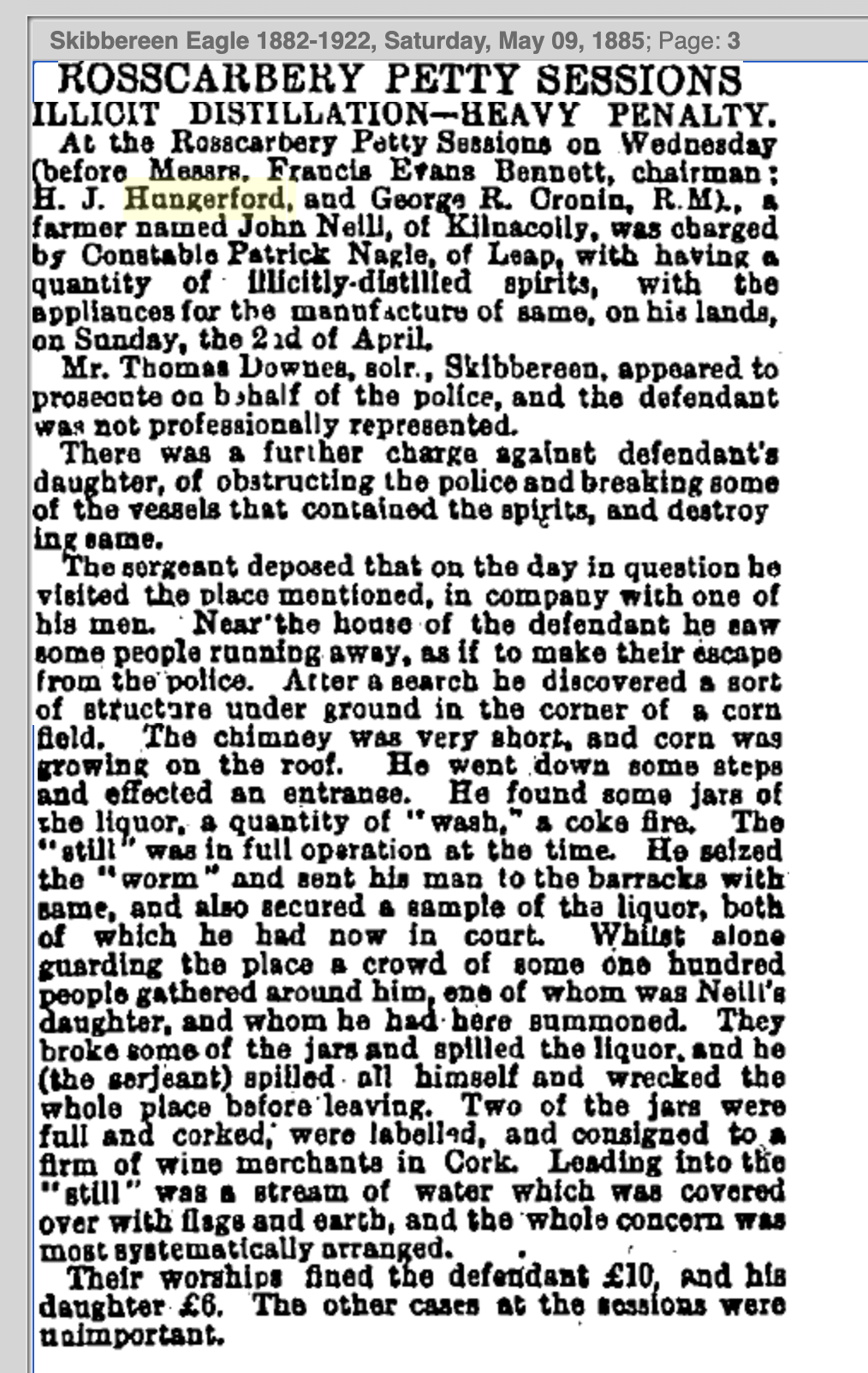
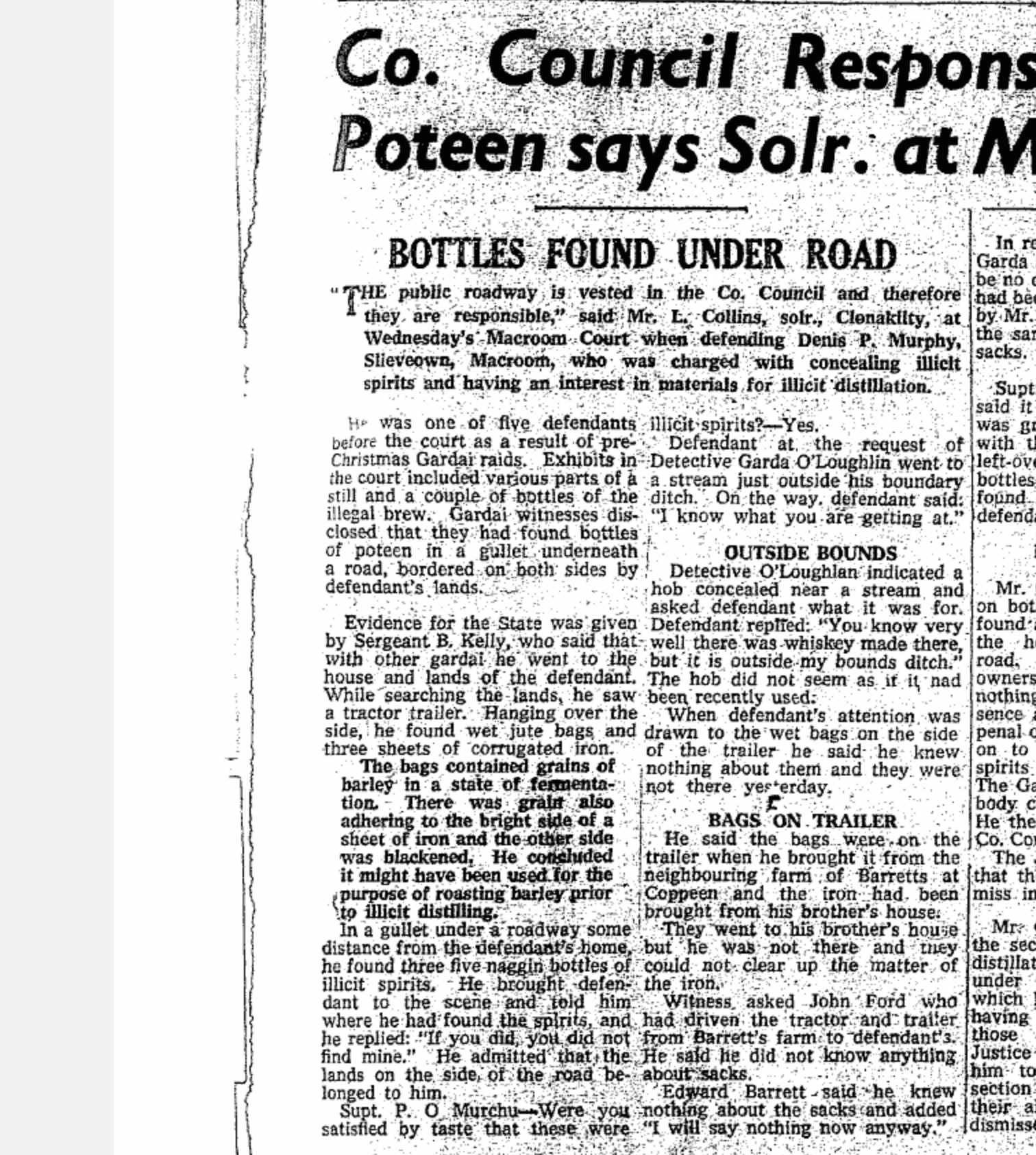
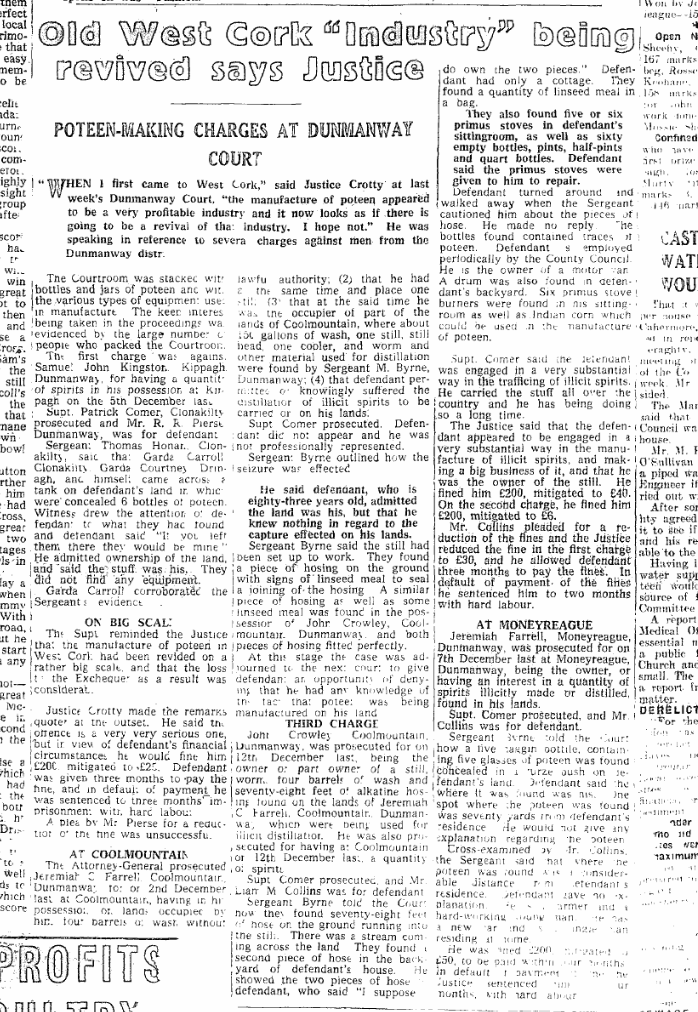
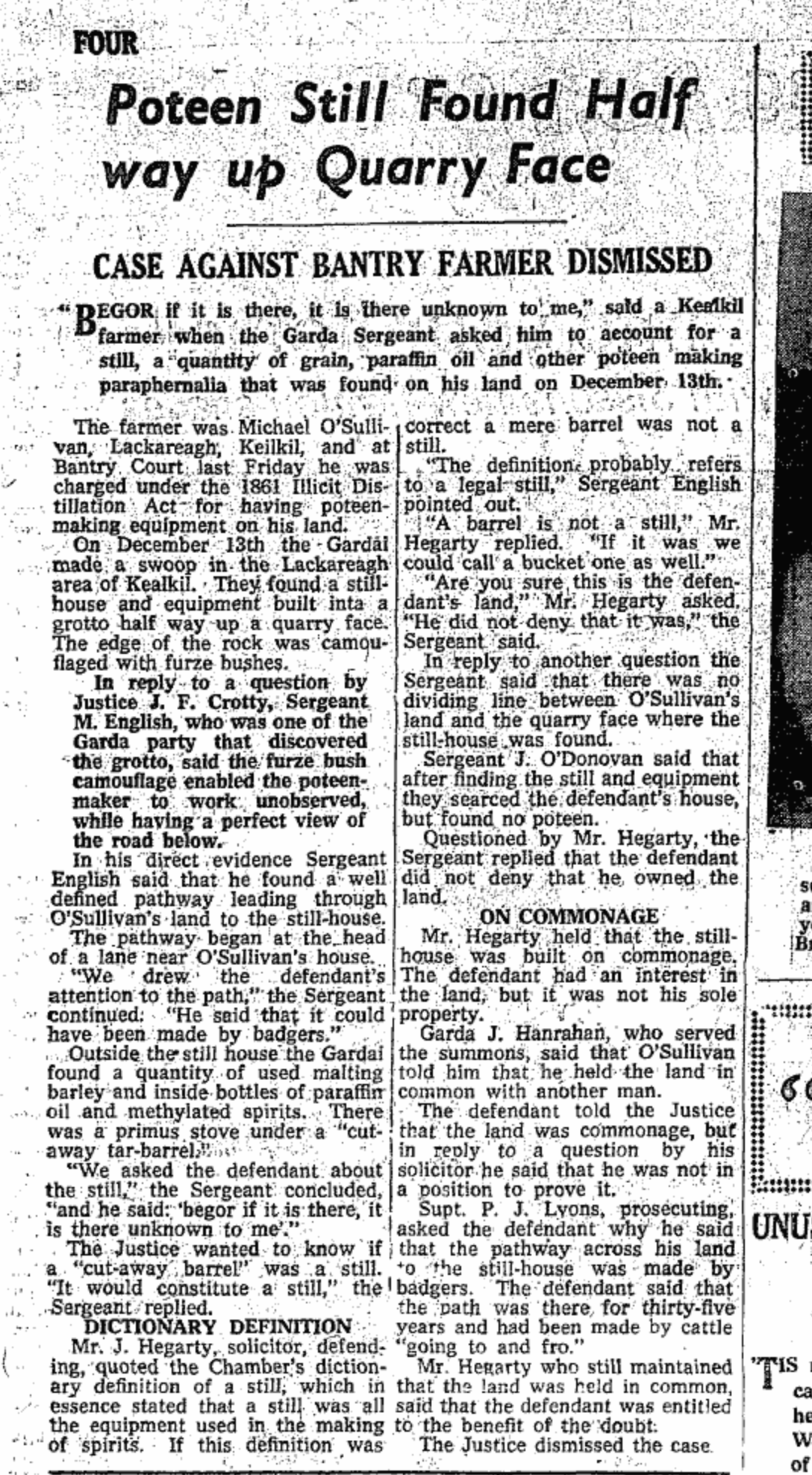
Francis Evans Bennett, 1853, dyed 1888. Cregan Manor, Clonakilty,The Square, Clonakilty, listed 1875-6. Resident, £48, Bantry Quarter Sessions 1862. 1884, signed a protest against the dismissal of Lord Rossmore, Head of Orange Order, Monaghan. Chaired Rosscarbery Petty Session poteen prosecution 1885. 1886 Attempted Eviction and Siege at Tim Hurley’s Castle (Mill and Farm) , Castleview, Clonakilty. Landlord Francis Evans Bennett, (1824-1888), Cregan Manor, Rosscarbery. The eviction eventually succeeded but was a pyrrhic victory as all the mill machinery had been moved and no one could be found to take the evicted farm. To the present day relations of the extended Hurley thrive in various businesses in the locality. Probate 1888 to widow Mary Hungerford Bennett, £816
George Roche Cronin (1831-1902), R.M., born Kerry. Pre 1874, Bandon district, Ballinadee, Bandon, 1874, 35 when appointed, had been 11 years RIC officer £300 per annum. 1884 donor Presentation Convent School, Bandon. 1895 Cobh £675, Lord Lieutenant has expressed himself satisfied of his legal knowledge under the meaning of ‘The provisions of Crime Act (Ireland) Act, 1882. 1902 probate £7,393.
Henry (Harry) Jones Hungerford, TCD, (1825-,1903) 1856, Cahermore House, Rosscarbery, Resident, £454, 1870 return 3,532 acres. Henry Jones Hungerford, the last effective owner and resident landlord of the Cahirmore Estate. He qualified as a Barrister and had little interest in the Estate. His income from rental was foolishly spent and on his death the Land Commission took it over. Mary Boone Cowper Hungerford, English.. Wife of Henry Jones Hungerford. (1870). They had nine children, most of whom emigrated. Attending the funeral, (listed as H.M. Hungerford, brother in law) 1882 Thomas Somerville Esq. D.L. (1797-1882), Drishane House, Castletownshend. 1884, signed a protest against the dismissal of Lord Rossmore, head of Orange Order, Monaghan. At the time of its destruction in 1921 Cahermore was owned by a merchant named Regan, who had purchased the property from representatives of the Hungerford family “some years” after the death of Henry J. Hungerford, J.P. Probably father 1863. We Hope We May Never See Carbery Without A Pack of Hounds. Dinner to Henry Jones Hungerford Esq., Cahermore, Rosscarbery, West Cork. 1861 executor, £13,000. Thomas Hungerford Esq, TCD, Island House, Clonakilty
1778. Page 109 dinner with Celebrated Father O’Leary, born Acres, Dunmanway, West Cork, His Father a Scholar. Salmon, Lamb, Braised Hare, Poteen, Gooseberry Wine. The Mad Parson, Poet Rev. De La Cour.
A touch of Spike Milligan’s ‘Puckoon”. life as a young RIC recruit (one of 80,000), collecting the Tillage Census in 1910 rounding up the chickens and avoid half acres, keeping an eye on ‘Returned Yanks’, searching for Poteen on Innismurray island, over policing in Cooloney, Co. Sligo from the Memoir of Jeremiah Mee
12 great Irish proverbs (seanfhocail) to use this year 0 8 Comments The Irish language is something that’s so rich in metaphor and meaning, wit and wisdom that it’s hard to compare its lyricism to anything else. There’s nothing quite like it, especially when it comes to our great Irish proverbs (seanfhocail). Here are 12 great Irish proverbs you can use throughout the year. If you’re stuck on the pronunciation check out Abair.ie here.
1. An donas amach is an sonas isteach. This is particularly apt following what was a tough year and basically means out with the badness and in with the goodness.
2. Faigheann cos ar siúl rud nach bhfaigheann cos ina cónaí. This means that ‘a walking foot comes upon something that a resting foot wouldn’t.’ In a nutshell, the most important aspect in doing so successfully is to just lift one’s foot and start a journey.
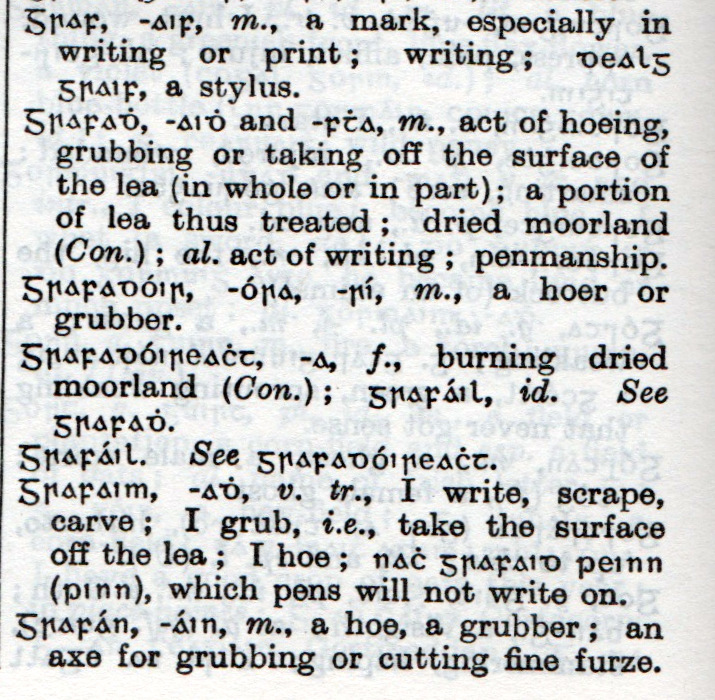
3. Leagfaidh tua bheag crann mór. This literally means that a ‘small axe can fell a big tree’ and with that in mind, it is possible to do great things through small deeds.
4. Ná bris do loirgín ar stól nach bhfuil i do shlí. This translates literally as don’t break your shin on a stool that’s not in your way but essentially means don’t go out of your way to get in trouble.
5. Is leor ó Mhór a dícheall. This means that ‘all one can do is one’s best’. Another way you could phrase it is, ‘Is é do dhícheall é’ which means that it is as much as you can do. 12 great Irish proverbs
6. Níor bhris focal maith fiacail riamh. A good point to remember when you find yourself getting the itch to throw down some words, this proverb means that a ‘good word never broke a tooth’. Another similar one is “Ní mhillean dea-ghlór fiacail” which literally means a sweet voice does not injure the teeth or that it wouldn’t kill you to be nice.
7. Is fearr clú ná conach. This straightforward proverb means that one’s character and good reputation is better than wealth.
8. Chíonn beirt rud nach bhfeiceann duine amháin. Two people see a thing that an individual does not see. In other words, two heads are better than one.
9. Ar scáth a chéile a mhaireann na daoine. One of the great Irish language proverbs whose literal meaning is ‘it is in each others’ shadow that people live’ but on reflection invokes a sense of community.
10. Aithnítear cara i gcruatán. A wise phrase that means that a good friend is known in hardship.
11. Maireann croí éadrom a bhfad. This lovely proverb means that a light heart lives long. *Note about ‘a bhfad’ instead of ‘i bhfad’. This is just an older/alternative spelling, you’ll find things like a nÉirinn for ‘in Ireland, in Éirinn’ in older texts too; since i is just pronounced as unstressed /ə, ɪ/ anyway, it doesn’t make much difference whether you write it i or a and you’ll see both.
12. Ní bhíonn an rath, ach mar a mbíonn an smacht. There is no prosperity unless there is discipline. In other words, to fully excel at something regardless of what it may be, you must be fully committed to it. BONUS: Níl aon tóin tinn mar do thóin tinn féin There’s no sore arse like your own sore arse. This is a play on the classic Níl aon tinteán mar do thinteán féin (there’s no place like home).
Also is fearr focall sa chuit ná punt sadn sporran. ‘A friend in court is worth more then a pound in the purse’. Hence lobbying.
20. “Aithníonn ciaróg, ciaróg eile” We start off nice and simple. This Irish saying translates to: “It takes one to know one.”
19. “Ní dhéanfadh an saol capall rása d’asal ” Irish people love a bit of humour to keep you going. This proverb means: “You can’t make a racehorse out of a donkey!”
18. “Fillean an feall ar an bhfeallaire” This proverb acts as a warning for the reader and means: “The bad deed returns on the bad deed-doer.”
17. “Tús maith leath na hoibre” Everyone has faced a task that seems almost impossible, but the Irish language becomes a motivator here, telling us, “A good start is half the work.” This is one of the most well-known Irish proverbs and sayings.
16. “Níl saoi gan locht” “There’s not a wise man without fault.” Everyone has their faults no matter how perfect they may seem—even you! “There’s not a wise man without fault” is a saying from Ireland
15. “An rud is annamh is iontach” “The thing that is seldom is wonderful.” Much like Ireland’s landscape, this Irish proverb tells us that the rare things in life are best.
14. “Is treise an dúchas ná an oiliúint” “Nature is stronger than nurture.” No matter how much people are taught, the Irish language informs us that nothing is as good as a brush with nature.
13. “Níl aon tinteán mar do thinteán fhéin” Translating to “There’s no fireplace like your own”, this proverb means there is no place like home. We can all appreciate that.
12. “Ní bhíonn an rath ach mar a mbíonn an smacht” To fully excel at something, you must be fully committed; “There is no prosperity without discipline.”
11. “Ní thuigeann an sách an seang” “The well-fed does not understand the lean.” This proverb is telling us that those who have may not understand the concerns of those who don’t have, and that you may need to lose a little to understand what it is like to have nothing. The top 20 Irish proverbs and their meanings include: “The well-fed does not understand the lean.”
10. “Ní neart go cur le chéile” When it comes to Irish proverbs and their meanings, this is one of the most heart-warming: “There is strength in unity” or “we are better together.” It is telling us that we can do more if we work together.
9. “An té a bhíonn siúlach, bíonn scéalach” A trip across the Emerald Isle will leave you with a bucket full of memories to pass on, and the Irish language recognises this, telling us, “He who travels has stories to tell.” This is one of the most uplifting Irish proverbs and sayings.
8. “Níor bhris focal maith fiacail riamh” “A good word never broke a tooth.” This proverb proclaims that saying a kind word never did anyone any harm.
7. “Is fearr an tsláinte ná na táinte” “Health is better than wealth.” Don’t worry about the money; look after yourself first, and you’ll be happier!
6. “Is minic a bhris béal duine a shrón” “Many a time a man’s mouth broke his nose.” Back with a bit of humour, this proverb warns that a misspoken word will have a consequence or two for your face! “Many a time a man’s mouth broke his nose” is one of the top 20 Irish proverbs
5. “Nuair a bhíonn an fíon istigh, bíonn an chiall amuigh” “When the wine is in, sense is out.” One we can all relate to!
4. “An té a luíonn le madaí, éireoidh sé le dearnaid” This proverb explains to us the dangers of mixing with the wrong people: “He who lies down with dogs comes up with fleas.”
3. “Ar scáth a chéile a mhaireann na daoine” “Under the shelter of each other, people survive.” A very Irish tradition is to look after one another, and this proverb champions this idea.
2. “Mol an óige agus tiocfaidh sí” “Encourage young people and they will get there.” A famous saying across Ireland, this is a visionary message that tells us our young people, who are the future, will do well, so long as we do our bit to help them along the way.
1. “Is fearr Gaeilge bhriste, ná Béarla cliste” You may have heard this famous saying, which translates to “Broken Irish is better than clever English.” It is a call to maintain the Irish heritage and language, and a cry to everyone to speak Irish whenever they can, no matter how well they can speak the language. Ireland has a lot to offer, from the friendly Irish people to its landscape and cities to its sports and history, and its native language is no exception. In just a single sentence, Irish proverbs and their meanings can teach you a lot, and you are sure to come away wiser. Some bonus Irish proverbs and sayings “Ní hé lá na gaoithe lá na scolb” means “a windy day is not a day for thatching.” This metaphorical saying warns the listener against future planning in times of uncertainty. “A misty winter brings a pleasant spring, a pleasant winter a misty spring” is a poignant reflection on the nature of life’s periods of ups and downs. Did you enjoy these great Irish proverbs? Want to indulge in more Irish language content? Check out 13 Irish audiobooks you can listen to for free here.
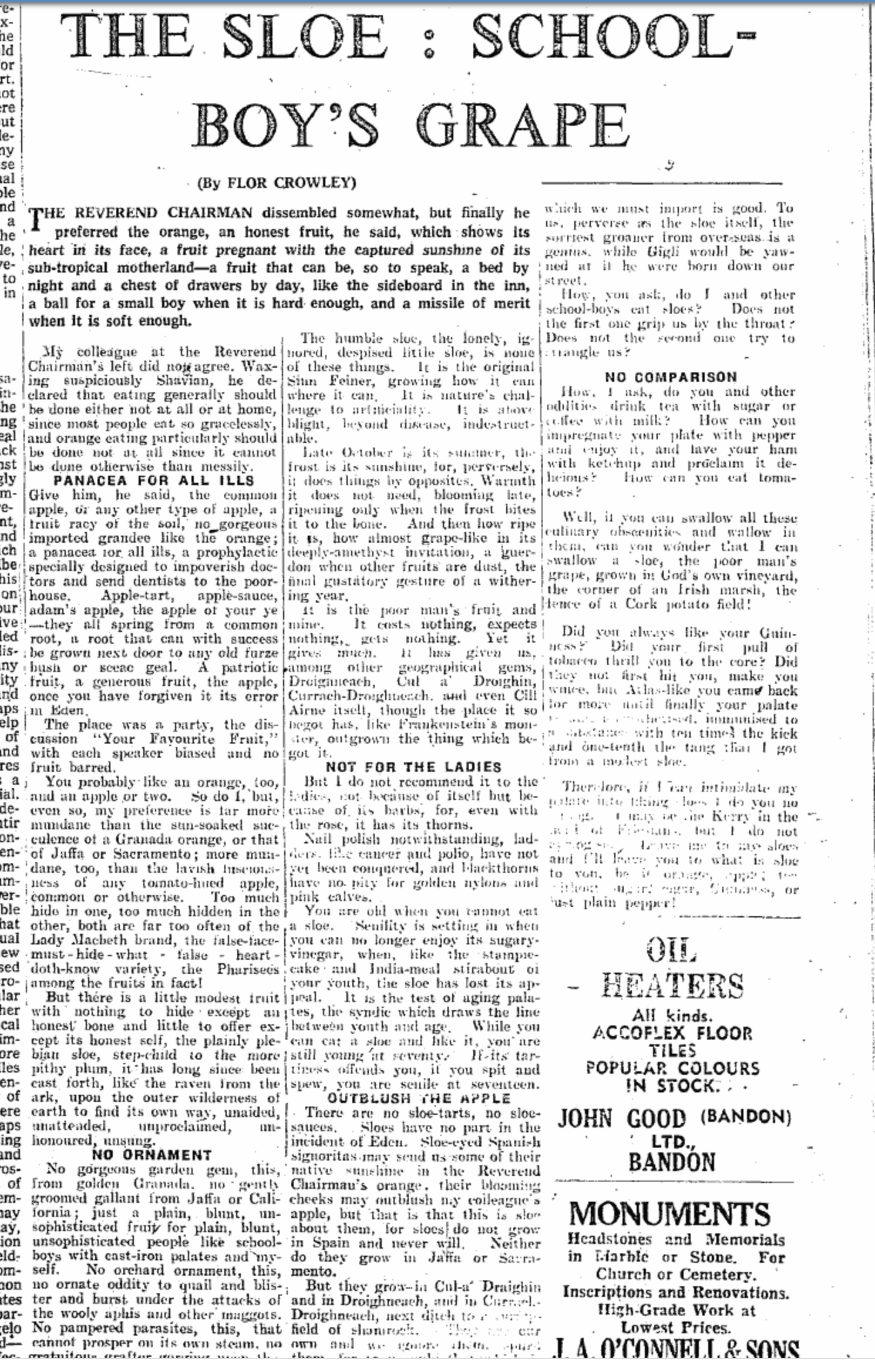
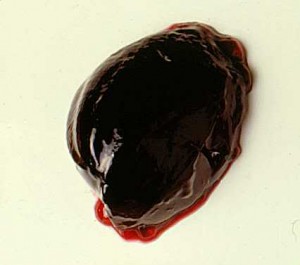
Sloe jelly (or sloe jam, if you prefer) is almost unknown, which is a shame because it’s quite possibly the finest fruit jam you can make; tart, tangy and mysteriously dark. Sloes grow on blackthorn bushes, which are prickly customers at the best of times, and ordinarily you wouldn’t get much jelly for your trouble. Happily there’s a cheat, which is the addition of cooking apples. Apple brings out the flavour of the sloes and mellows their bitterness, helps the jam to set, and plumps the jam out to three times its original volume, making those prickly little prizes go a lot further. You can also get very similar results using bullaces instead of sloes; the flavour isn’t quite so good but the bushes are less thorny and tend to yield more heavily.
How to make sloe jelly
Weigh your crop of pricked, frozen or frosted sloes in a saucepan. Add just enough water to cover the fruit, bring to the boil, and simmer until the berries are pulpy (you may need to mash them a bit).
Add twice the weight of washed, chopped apples (peel, core and all), and the juice and peel of half a lemon for every kilo (2 lbs) of apples. Bring to the boil, simmer until pulpy again, and leave to cool down a bit.
Strain the pulp through a scalded jelly bag or fine muslin into a suitable container. You shouldn’t squeeze the bag to hurry it up or you will have cloudy jelly, so leave it to dribble through overnight.
The next day, measure the juice and add 400g of sugar per 500ml (1 lb per pint). Stir it over a medium heat until it comes to the boil, and skim off any scum.
Boil the liquid until it reaches setting point (you can use a sugar thermometer for this, or just keep checking it with a cold plate), then ladle into hot jars and seal
Sloe Cordial
1kg Sloes
1 litre water
Juice of 1 lemon
Granulated Sugar (80g per 100ml liquid)
1. Bring the sloes, water and lemon juice to the boil and simmer for 5 minutes.
2. Break up the cooked sloes with a wooden spoon or potato masher, don’t bother about the stones as they will be sieved out later.
3. Simmer for a further 10 minutes.
4. Pour the mixture through a sieve. If you want your cordial to be clear you should line your sieve with a muslin and don’t push the pulp through. I didn’t do that and although the cordial is perfectly fine it isn’t clear.
5. Clean the pan and pour the juice back in, add the sugar and heat gently until the sugar has dissolved.
6. Bring to the boil and simmer for another 10 minutes. Cool and bottle in sterilised bottles.
Sloe gin is just the tipple for warming up cold days, but you have to think ahead and make it now so the rock-hard, purple-black fruits have time to flavour the gin. Your gin isn’t ready until the colour resembles a decent Beaujolais.
THE RECIPE
Prick your sloes, about 450g, with a needle or freeze them and bash with a heavy weight. Tip them into sterilised bottles, the fruit coming a third of the way up. Divide 350g of caster or granulated sugar among them then top up with gin or vodka. It will take about 750ml. Little point in using an expensive brand, by the way. Place the sealed bottles somewhere cool and dark. Leave for 8-10 weeks, turning the bottle occasionally, giving it a shake every week.
THE TRICK
For me, the hardest part of making sloe gin is keeping my patience while it mellows. Well, that and finding enough sloes. I take great pleasure in pricking each berry with a needle in several places then dropping them into a bottle with sugar and gin, but others like to freeze the sloes in a plastic bag then bash them hard with a hammer or rolling pin. It is an effortless, kind-on-the-thumb way to get the best out of your hedgerow booty, though I much prefer the slow, non-violent way. Sloes are notoriously evasive. Forage for your own or try local farmers’ markets. I found this year’s supply in a greengrocer in Bristol.
THE TWIST
Yes, warming in a glass, but have you ever thought of using it in the kitchen? Even a tablespoon will add fruit depths to everything from gravy for game birds (pour it into the roasting tin and stir over a high heat to dissolve all the roasting debris into the gravy) to a major injection of flavour to a fruit crumble. Try it with plums or – best of all – with blackberry and apple. Not a gin type? Then use vodka. Suggest a drop of vanilla
….
Autumn is the perfect time to make sloe gin or vodka. Hedgerows are full of ripe, juicy sloes and the delicious fruity liqueur will be ready in time for Christmas. So why not give it a go? It’s so easy to make and you certainly won’t regret it when, feet up in front of the fire with the wind and snow howling outside, you treat yourself to a warming tipple. Why not try one of the other Allotment Heaven easy recipes?
1 litre bottle of gin or vodka (no need to buy an expensive brand!)
450 grams of sloes
250 grams of white sugar, whose purpose is not only to sweeten the liqueur but to also extract the maximum amount of juice from the sloes.
Method
1. A few days before you’re ready to start put the sloes in a plastic bag and place them in a freezer. This will break the skins.
2. Let the sloes defrost before using.
3. Put the sloes, sugar and gin or vodka into the preserving bottle and seal.
4. Give the contents a thorough shake.
5. Shake the bottle every other day for a month.
6. Shake once a week for the second month.
7. When you’re ready to drink (see below) strain clear the liquid into the 1 litre sterilised gin or vodka bottle.
8. Add more sugar if necessary according to preference.
9. The liqueur can be drunk from the third month onward, though will improve with age.
The leftover sloes can be used to make jam.
..
To drink, add 10 parts water to one part cordial.
..
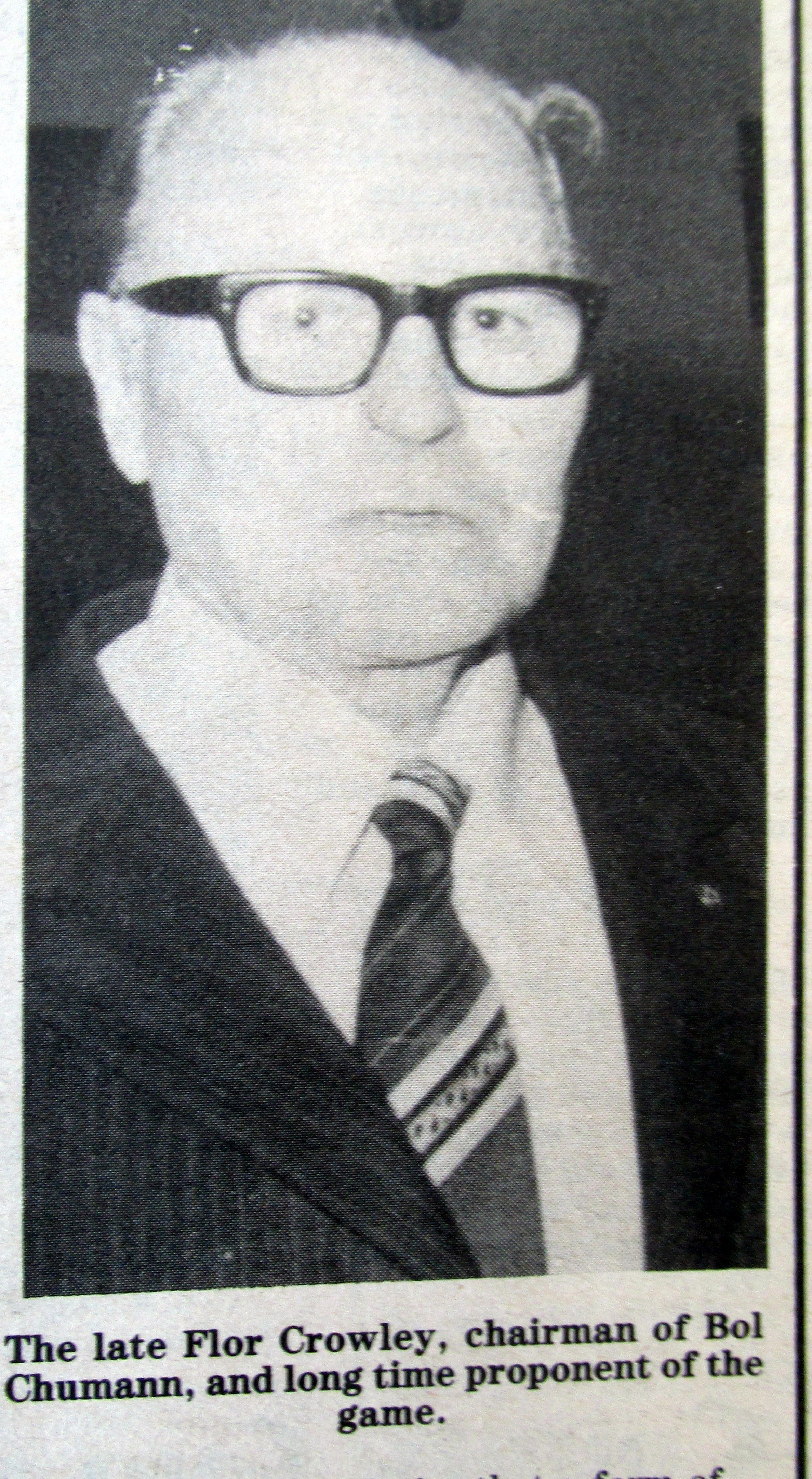
Words in Irish from Dunmanway, West Cork from Flor Crowley N.T. (National Teacher), Behigullane, Dunmanway. Flor is the short for Florence the old version of the name in Irish is Finín, Fineen, Finghín.
Pre 1965 farming practices West Cork, Red Elephant and Epicure potatoes, working with the grufán, threshing with the steam engine, winnowing of wheat and oats, working in the bog.
Flor Crowley NT, Behigulane describes farming practices in Dunmanway for small to middling farms which would have been common to Protestant and Catholic farmers from the Famine to the early 1960s. From then on, reclamation, rural electrification and specialisation spelled the end for many of the prctices described.
The page sequence in the PDF is out, note the bottom page number.
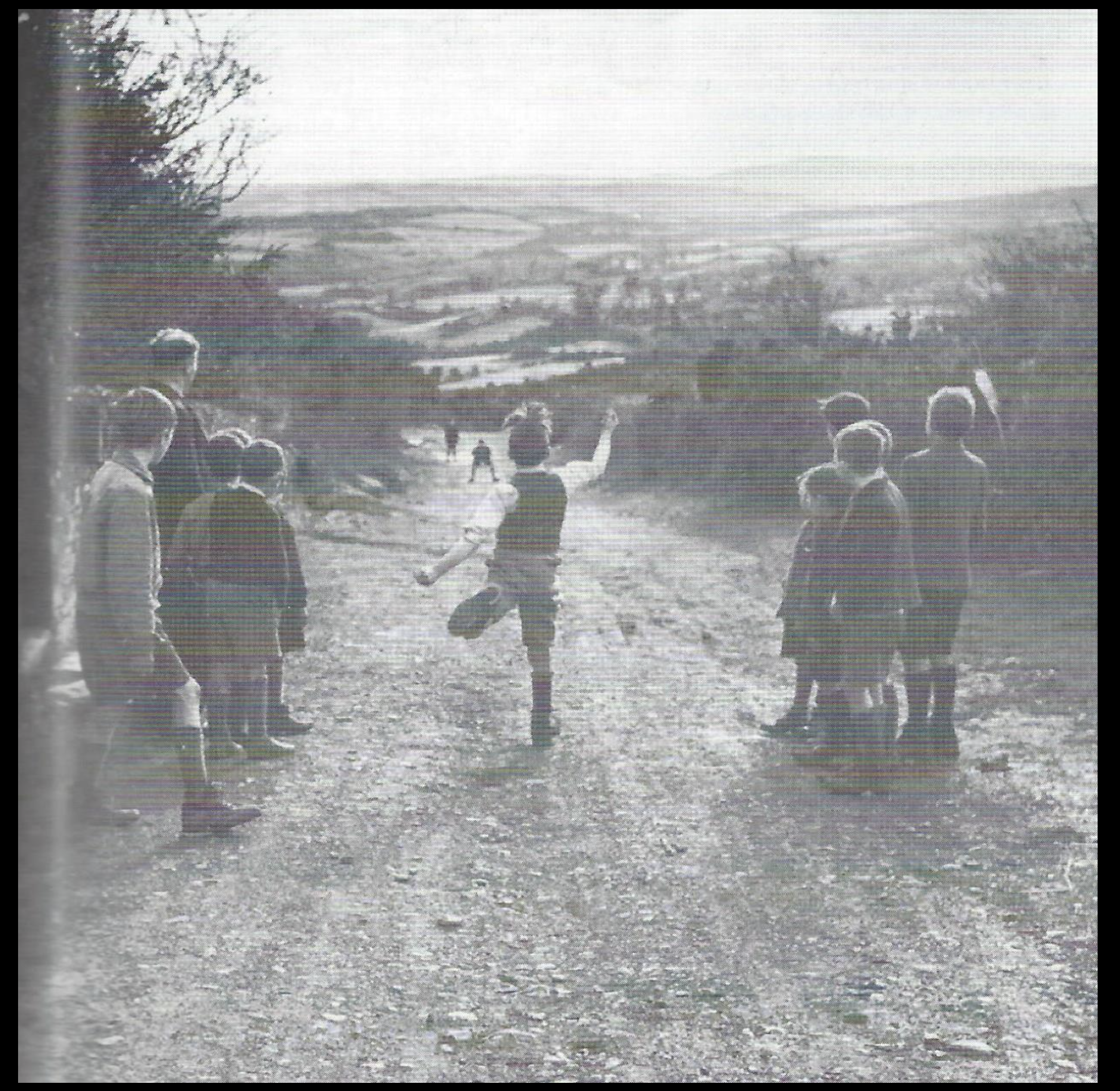
Bowlers Aughaville, Dromore, Colomane, Durrus, West Cork. Bill Barrett, Patrick O’Driscoll, Richard Barrett, John Connolly, Jimmy Crowley, J.j. Sullivan, Donald Crowley, Eugene Daly and Possible Origins in Co. Armagh and The North of England.
It has been suggested that road bowling was introduced to West Cork by weavers who came in in t18th century from the North of England.
Flor Crowley, a National Teacher from Dunmanway who taught in Bandon founded An Bol Cumann. He wrote extensively on local matters and is books are now collectors items.
Thanks to Peter O’Driscoll, San Francisco and Donal O’Mahony, Cobh.
Bill Barrett who always wore white tennis shoes. Patrick O’Driscoll of Aughavile was recognised as a reasonable good bowler he was the man that guided Bill Barrett during his early days as a bowler.
His grand son Peter O’Driscoll was told by Tom Hayes from Aughaville whom he met in San Francisco. Tom Hayes came to America & San Francisco in 1910, at the age of 17 years he was in the first World War, he died in 1974 and is buried in the Golden Gate National Cemetry. He never married. Bill Barrett in his younger days was a senior class bowler. This was before you had tar and crushed rock surfaced roads.
Richard Barrett from Colomane Wood he would be a cousin to Bill Barrett, Richard brothers were Pat, Bob, Steven and John. Older men around Colomane often said that John Barrett had the ability to a great bowler. Richard was a local good bowler not quit a senior class bowler.
John Connolly of Colomane West was a senior class bowler. Jimmy Crowley of Colomane was a local good bowler He was from the family that owned the trashing machine. Donald Crowley of Colomane Pub was a local good bowler.
J.J. Sullivan of Coomane north was a local good bowler, he came to America about 1958 he was a cousin to John Crowley’s family. My best guess is that John Crowley’s mother was J.J. Sulivan’s aunt.
The up and coming star was Eugene Daly of Dromore in 1960 and the later arrivals in San Francisco have told Peter O’Driscoll that Eugene was a senior class bowler.
Around Drimoleague and Drinagh, there was a family of Sheen’s (Sheehan?) three brothers John, Jerry and Michael. also a Humphrey O’Leary was a senior class bowler. These are bowlers that that bowled on a Sunday evening along the main road from O’Driscolls pub in Aughaville to Crowleys pub in Colomane.
The score of bowl started from the roadside sign post about two hundred yard east of the Aughaville cross-roads and ended at the sign post about two hundred yards west of Colomane pub, a distance of two miles. There are other bowlers that came from Bandon and places near Cork City to bowl from Aughaville to Colomane.
In the Durrus area Danny O’Mahony of Ahagouna reckoned to be the best 84 yard loft with Mick Barry. In his early years on the Dunbeacon Road sometimes Bill Barrett would mark for him.
In the local folklore a son of one of the O’Donovan Landlord families (either That of Timothy of the Cove or Richard of the Fort) was reckoned to be a good bowler. There is an excellent painting in the Crawford Art Gallery Cork of a member of the landlord Smith Barry family of East Cork bowling early 19th century in all his finery.
It has been said that road bowing was introduced to West Cork by weavers from the North of England. In the Durrus/Schull are the Crostons were a weaving family who may have originated in Croston, Lancashire. Another location for bowling is Armagh. Here too there were may families introduced in connection wiht weaving/linen/flax to West Cork in the early 18th century from Co. Armagh, names such as Johnson, Richardson, Shannon. Williamson and Young among others..
Alexis de Tocqueville 1835 On Irish Assizes, Grand Juries, Magistrates.
He was a French Jurist and Political Scientist. He visited Ireland in 1835 and was shocked at the poverty and degradation of the common people. The one institution he felt kept the country together was the Catholic Church and remarked on the strong bond between church and people, In contrast in France the Catholic Church was reviled. He correctly foresaw the coming of the Land Commission and Irish Independence. However he wondered in the event of independence how such a powerful institution as the Catholic Church in Ireland could be controlled.
In this 1890 account of West Cork against Parnell the clergy were very much in control. The Catholic Church is blamed for the downfall of Parnell. However the ire is misdirected. The pressure on Gladstone came from his Welsh Methodist constituents who demanded an end to the alliance with the Irish Parliament Party if it continued to be led by an adulterer as they perceived it. Parnell lived openly in South London for a number of years with Kitty O’Shea.
Remains of Protestant Denomination in Cork
A frequent narrative is the imposition of a severe yoke by Irish Protestants on the Catholics who vastly outnumber them. In the Case of Cork city he says that in 1835 there were 80,000 Catholics out of a population of 107,000. All the officers of the Corporation are Protestants.
The Corporation names the Sheriff who names the Grand Jury in which there were only two Catholics on the Grand Jury.
In the County the Sheriff is obliged to select two jurors from each Barony.
The session of the Grand Jury was in public, a recent innovation that had the effect of reducing presentment of little public interest but favouring Landlords.
Another change he did not mention was setting up a panel of Cess players for each Barony who would be involved in the quarterly presentation to approve local works. Those approved would then go to the Grand Jury for approval. Those on the panel would typically be large Catholic and Protestatn farmers.
It is reported to him that in the entire country there is no Catholic Judge.
Informers
He makes frequent reference to the Criminal Assized he attends at the frequent use of informers. As a lawyer he objects as it saves a guilty man and provides a premium for false testimony.
In criminal cases in contrast to France he is amazed at the rapidity of trials. The same man is often induced by the Grand Jury, found guilty by the Petty Jury and Condemned by the Judge in the course of an hour.
He also refers to the Court allowing policemen to tell the court of admission made to them by the accused.
Rich Catholics
There are a number of references to the Penal Laws excluding Catholics from owning property until 1782. He frequently mentions that this has resulted in ambitious Catholics amassing vast fortunes. In some cases they enter the land market and as Landlord seem as bad as the Protestants
Education
He makes a number of references to the thirst for education among the poorest of the poor
The Missing man, Tim Healy and the Bantry Gang.
Bantry born Tim healy, MP, Barrister and later Governor General of the Irish Free State is a pivotal figure in the split in the Irish Parliamentary Party after the fall of Parnell, In the works of James Joyce you would imagine he was the main culprit Joyce probably recycling tales told by his Cork born father John Stanislaus Joyce, a man heavily involved in poltics.
1853-1931 Tim Healy Journalist, MP 1883, Kings Inns 1882, 1918 King’s Counsel and Bencher Grey’s Inns, Governor General Free State 1922-1928 (Uncle Tim’s cabin) 2nd son Maurice Healy (Master workhouse) Eliza nee Sullivan. Ed Christian Brothers, Fermoy, Newcastle Upon Tyne as railway clerk. Moved to London 1878 as Parliamentary correspondent of The Nation. Nationalist MP. Achieved the ‘Healy Clause in Land Act that no rent to be charged on tenants future improvements. May be grandson of hedge school master Healy n Bantry c 1832 referred to in memoir of James Stanley Vickery written Australia c 1898. M Eliza Sullivan 1882. Commorated bust by Joseph Davidson in the Kings Inns, and the Tim Healy Pass (Conceived at Anchor Hotel, Bantry) . Buried Glasnevin. Incurred the wrath of James Joyce over going against Parnell, who as a youth wrote ‘Et Tu Healy’ which his father John Stanislaus Joyce published. Features in Ulysses ‘ He is sitting with, Tim Healy, J.J. O’Molloy, said, rumour has it, on the Trinity college estates commission…(7.800-10)
Clergy
It is clear that from the time of Daniel O’Connel and the anti tithe agitation the Catholic Clergy had a hugely influential role in politics and the Land League.
Rev. Robert Anderson, BA, TCD, (1843-1890), Protestant Home Ruler, Land Leaguer, unfortunately most of his congregation did not agree dn boycotted him he died at a young age leaving a young family in very poor circumstances.
Small and middling Protestant farmers will often appear on such lists as those subscribing to the Parnell Legal Indemnity fund and in the Durrus are joined the Catholic tenants in a rent strike on the estate of the Earl of Bandon in the 1880s during the Land War.
Parish Laity.
The only parishes where the name of the laity is given is Durrus and Kilmeen. From those listed in Durrus it is possible to get a feel for their background and connections.
Two Richard Tobin and John O’Sullivan/Sullivan own their properties outright and have purchased them in Durrus from the Estate of the Earl of Bandon. In both of their cases the family stretches back to the late 18th century. John O’Sullivan family as miller’s and merchants and Richard Tobin either a grandson or great grandson of ‘King’ Richard Tobin an illiterate local fixer in Kilcrohane died c 1795, his descendant married into many of the local prominent families over a fairly wide geographical area.
Luke Canty, Clashado elected rural district councillor related to the Dillon family of Clashadoo, Durrus, Bantry and Skibbeereen that extended famu have hotels, pubs and draperies as well as land. One of the family is Dr. Sheehan, Bishop of Waterford. In turn the Dillons are part of the Roycroft network from the borders of Durrus/Bantry that branch numbers Charles Roycroft Bantry born businessman and land owner, Magistrate Macroom, nationalist political activist.
Patrick Murnane, Letterlickey, Durrus. The extended family are listed in the Landed Estate Sale of the Hutchinson Estate 1850s as having significant lease on the estate for the 1820s.
From the late 19th and 20th century onward descendants of these families achieved prominent positions in business, the professions and education and religious sectors. There is significant intermarriage within this class of people. This can be picked up in detailed listing of funerals.
It is likely that this general patterns repeated in other parishes.
Land War Prosecution Under The Crime Act 1882 West Cork
Extracts from Skibbereen Eagle 1882-1883, p.5-78
Land War Durrus district, p. 79
Resident Magistrates, p. 82
Local Lawyers, p. 83
…
The backdrop here is the Land War:
Courtesy Lurgan Ancestry
The traditional view of the Land War in Ireland has been of the displacement of a Protestant Ascendancy class and the often absentee landlords. The former ascendancy had been on the decline since the Great Hunger of the late 1840s, and for them the problem was that previously agreed rents could not be paid after the slump in prices from 1874; some allowed generous rent rebates while others stuck to the agreements and enforced their property rights. Some were already owed rent and many had mortgaged their property and needed the rents to pay the mortgage costs. Many new landlords since the famine were Irish Catholics, but were still associated with the Ascendancy because of their wealth. A survey of the 4,000 largest Irish landlords in 1872 revealed that 71% lived on their estates or elsewhere in Ireland. By then, 43% of all proprietors were Roman Catholics, though the richest owners were mostly Anglicans.
Rent strikes often led to evictions. Land League members resisted the evictions en masse during the Land War, resulting in enforcement of evictions by court judgements for possession that were carried out by the quasi-military Royal Irish Constabulary. Murders of some landlords, their agents and policemen, as well as attacks on supportive witnesses and on their property and animals, all occurred as reprisals for evictions. In response, the British army were often deployed to back up the police, restore law and order and enforce evictions, after the Coercion Acts were passed. For protesting tenants, these Acts were a form of martial law; their opponents saw it as the only way to guarantee their legal rights.
Boycotting
The most effective method of the Land League was the boycott, which took its name from when an unpopular landlord’s agent, Charles Boycott, was ostracised by the local community. Boycotting was also applied to tenants who wanted to pay their rent, and to the police, as well as shops and other businesses who traded with boycotted people. The boycotts were often extremely effective, since they were unquestionably lawful under the common law, non-violent, and effectively punitive: since nobody is forced to join a boycott, it was a voluntary act, through private agreeme…..,.,,,












 West Cork History