On Tuesday morning [2nd], at St. Mary’s Shandon, Cork City, by the Rev. Dr. Quarry, Cornelius Callaghan, of the 3d Dragoon Guards, aged Nineteen, to Miss Jane Ford of Market St., aged Ninety-Three. Cork Constitution 4th March 1830.
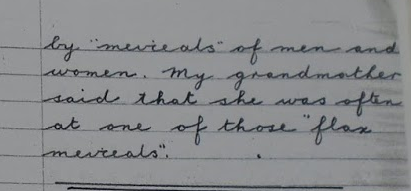
The word meitheal describes the old Irish tradition where people in rural communities gathered together on a neighbour’s farm to help save the hay or some other crop. Each person would help their neighbour who would in turn reciprocate. They acted as a team and everybody benefited in some way. This built up strong friendships and respect among those involved in the meitheal.
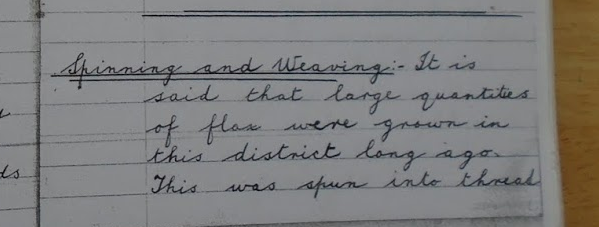
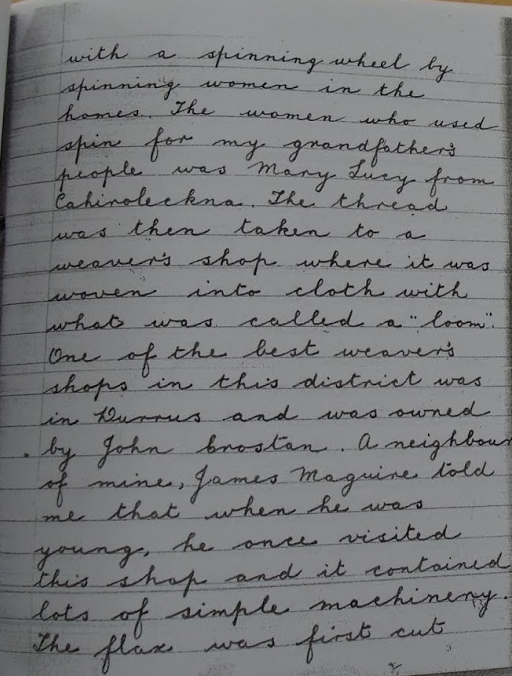
During US Civil War there was a huge boom in flax production in Ireland as cotton supplies wee cut off.
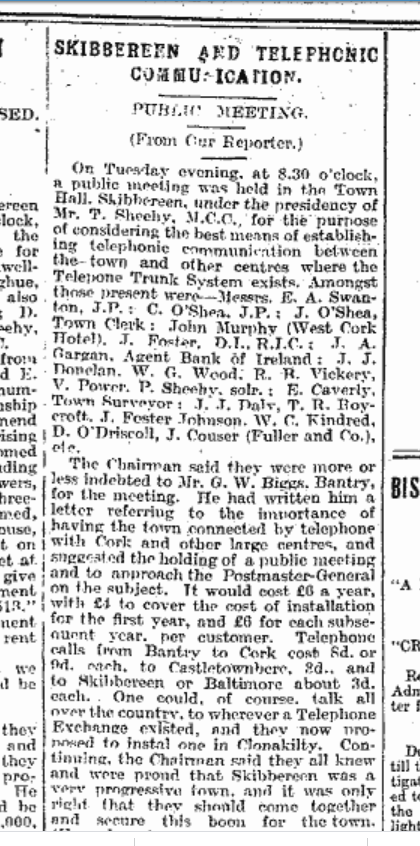
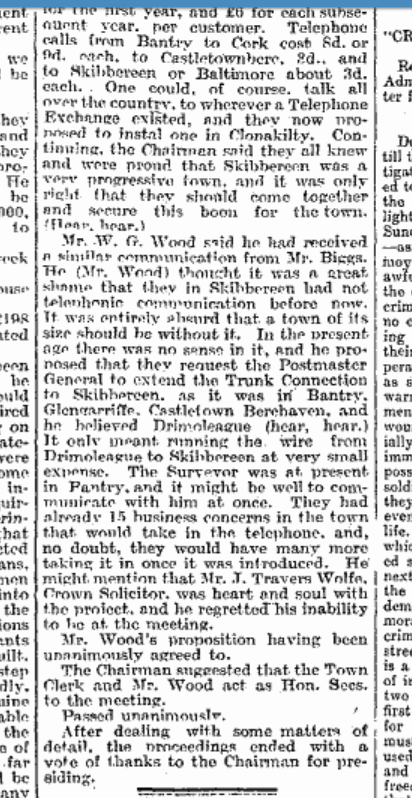
1919 Public Meeting to have Telephone Trunk System Extended to Skibbereen.
When the Tribunal into to the Betelgeuse Disaster was held at the Westlodge Hotel in Bantry the reporters ahd to race to Drimoleague to queue at the payphone. This was as far as the automatic phone system went in 1990. The Bantry phone exchange was manual and a postal strike was on which lasted about 5 months so there was no phone coverage for the manual areas as well as no post.
The start of the Communication Revolution, Picture of ‘The Atlantic Telegraph Cable Fleet’ at Berehaven, Bantry Bay, 28th July 1866, held at Cable and Wireless Archive.
Opening of new automatic telephone exchange near Macroom, County Cork. Report shows the new automatic exchange, old switchboards, operators working a manual telephone exchange system. Interview Margaret Creedon manual exchange telephone operator. Interview Johnny Creedon, Postmaster, Macroom Manual Telephone Exchange. Johnny Creedon stamping letters by hand. The reporter is Tom MacSweeney.
1863. Julius Reuter and William Siemens and the South-Western of Ireland Telegraph Company, Linking Cork to Crookhaven by Telegraph and British & Irish Magnetic Telegraph Company, Cork to Cape Clear
1863, The Fibre Optic Broadband of the 1860s, Opening of Telegraph Office Skibbereen, Wires Extended to Baltimore and Submerged Cable to Sherkin. The American Intelligence will be Received Six Hours Sooner, Cork Market News to Be Received in Morning.
An Old Man Recounts: The First Time I visited Dunmanway c 1790, The Roads were Bad, My Sister and I were in Two Panniers at Each Side of A Horse My Mother on A Saddle in Between, Then Cars with Block Wheels Sawn of of a Thick Tree Bound Round With Iron, The They Got What They Called Scotch Cars With Spokes and Felloes at Opening of The Office of The Electric and International Telegraph Company, Dunmanway, Co. Cork, 1865. Messages from Cork, London and Crookhaven.
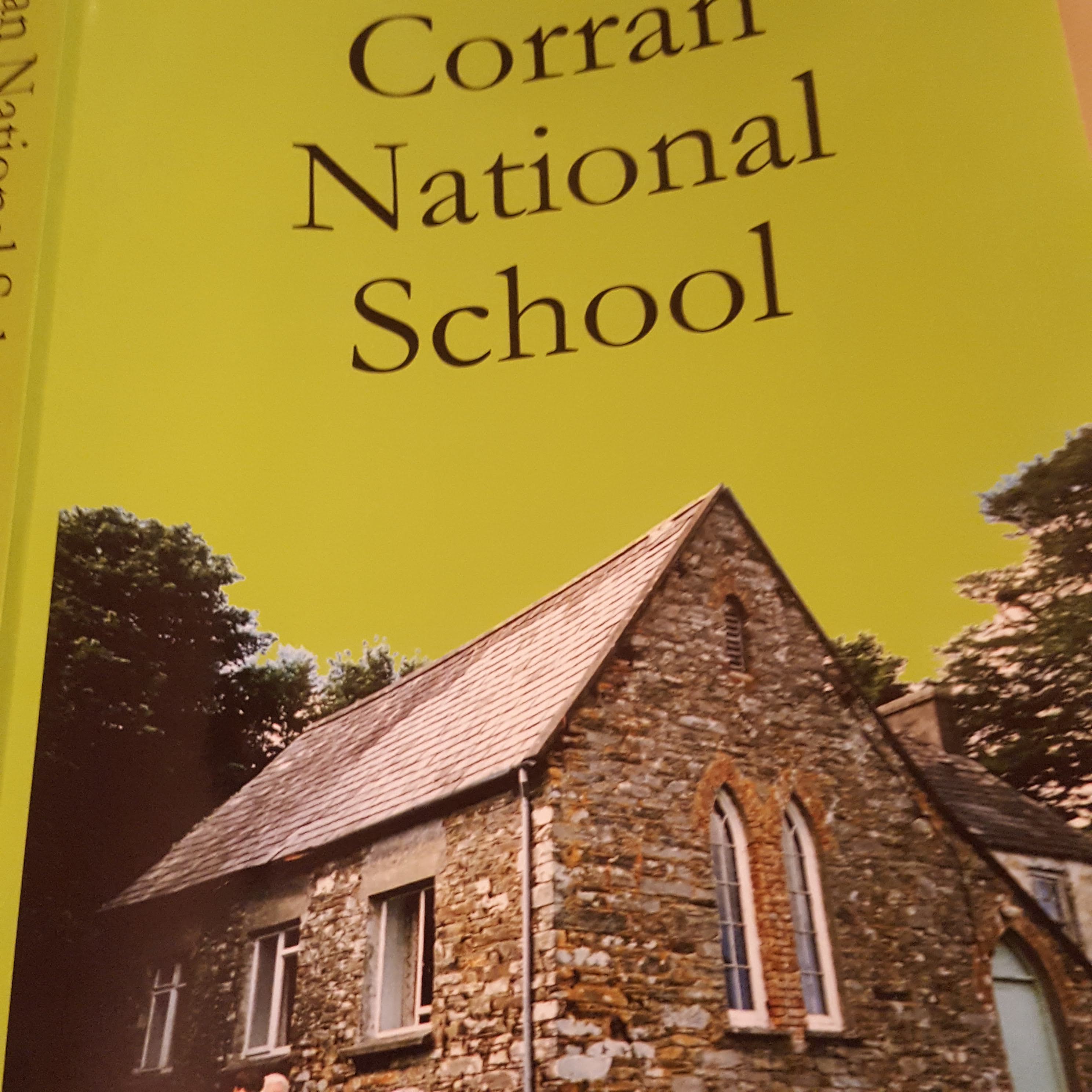
This is from a history of Church of Ireland School at Curran.
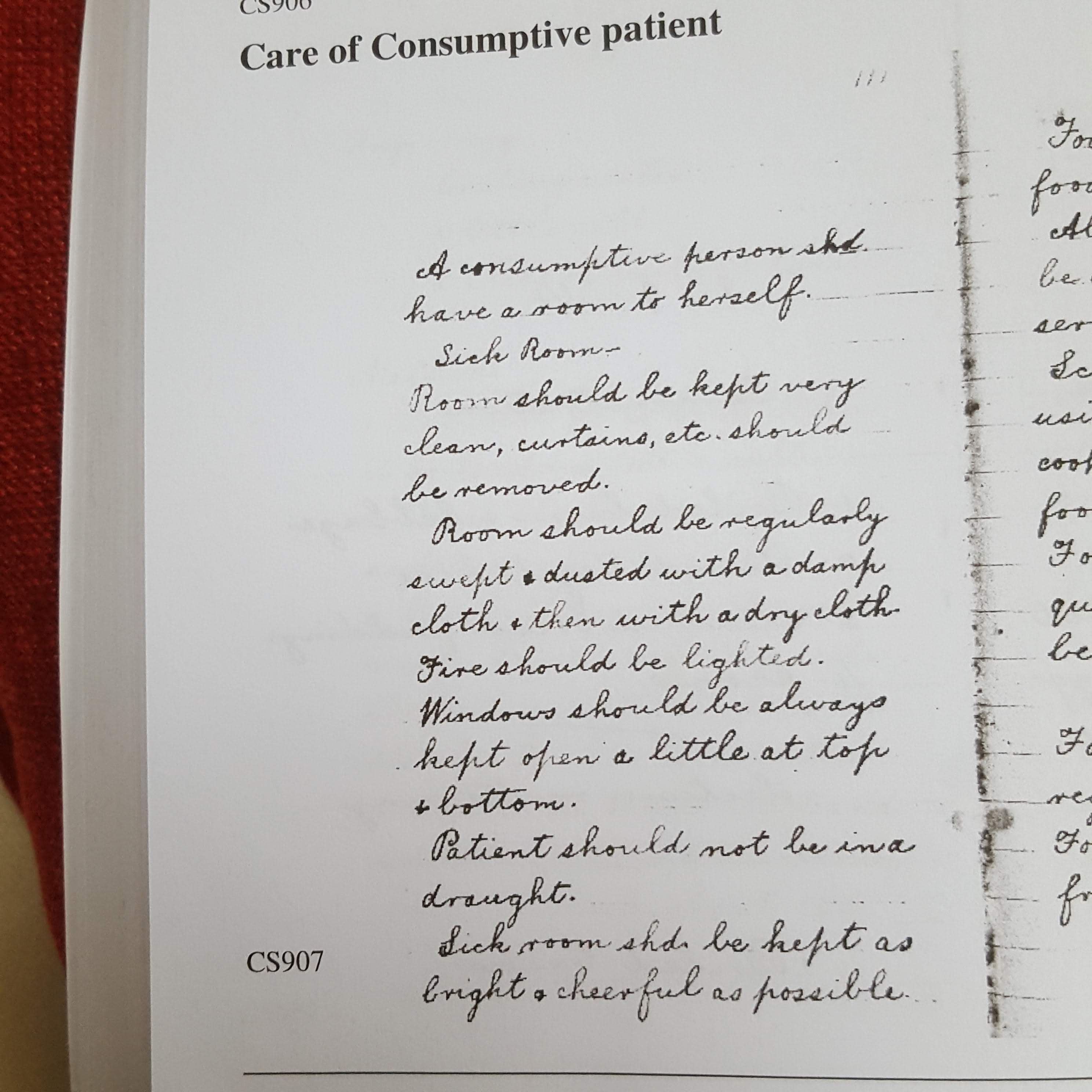
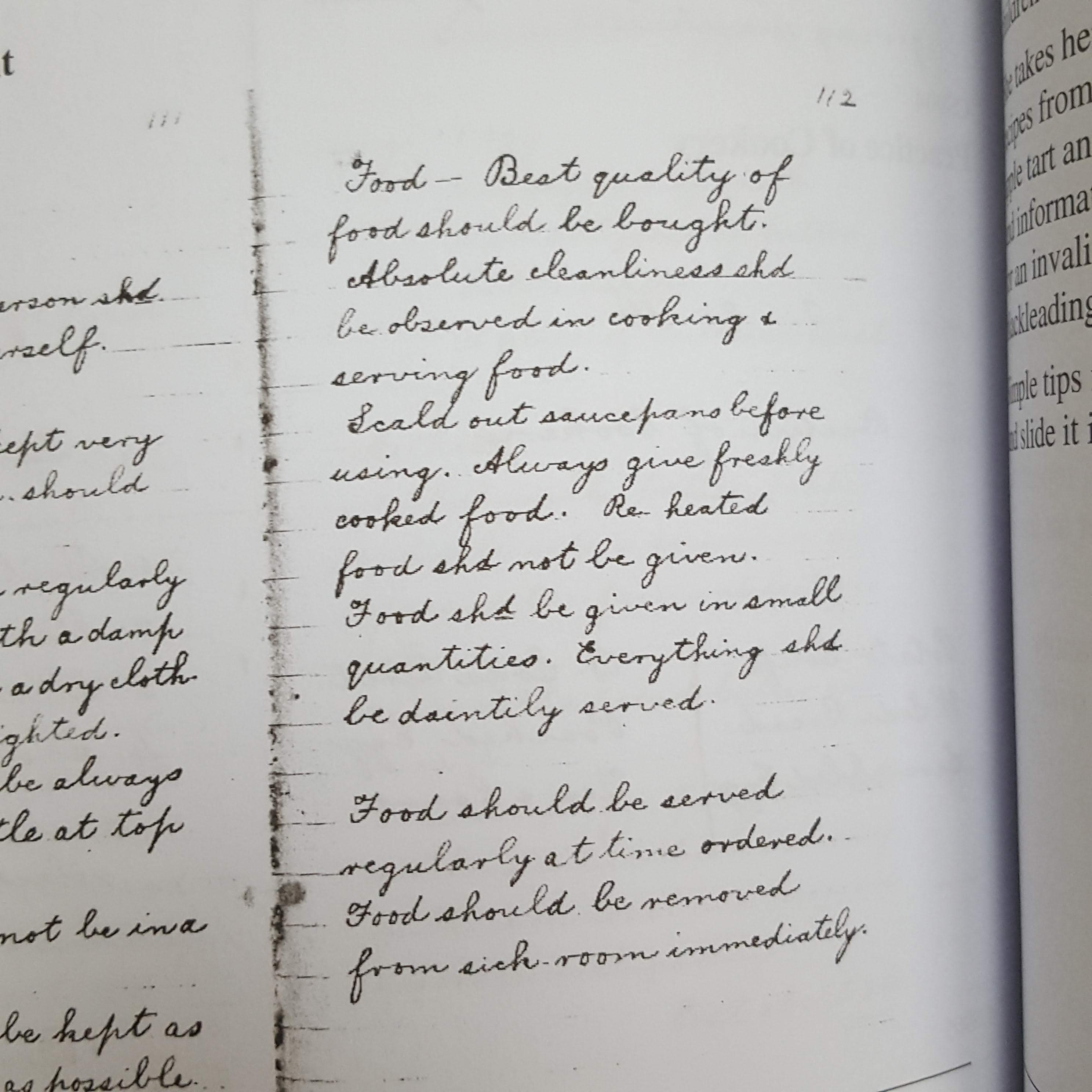
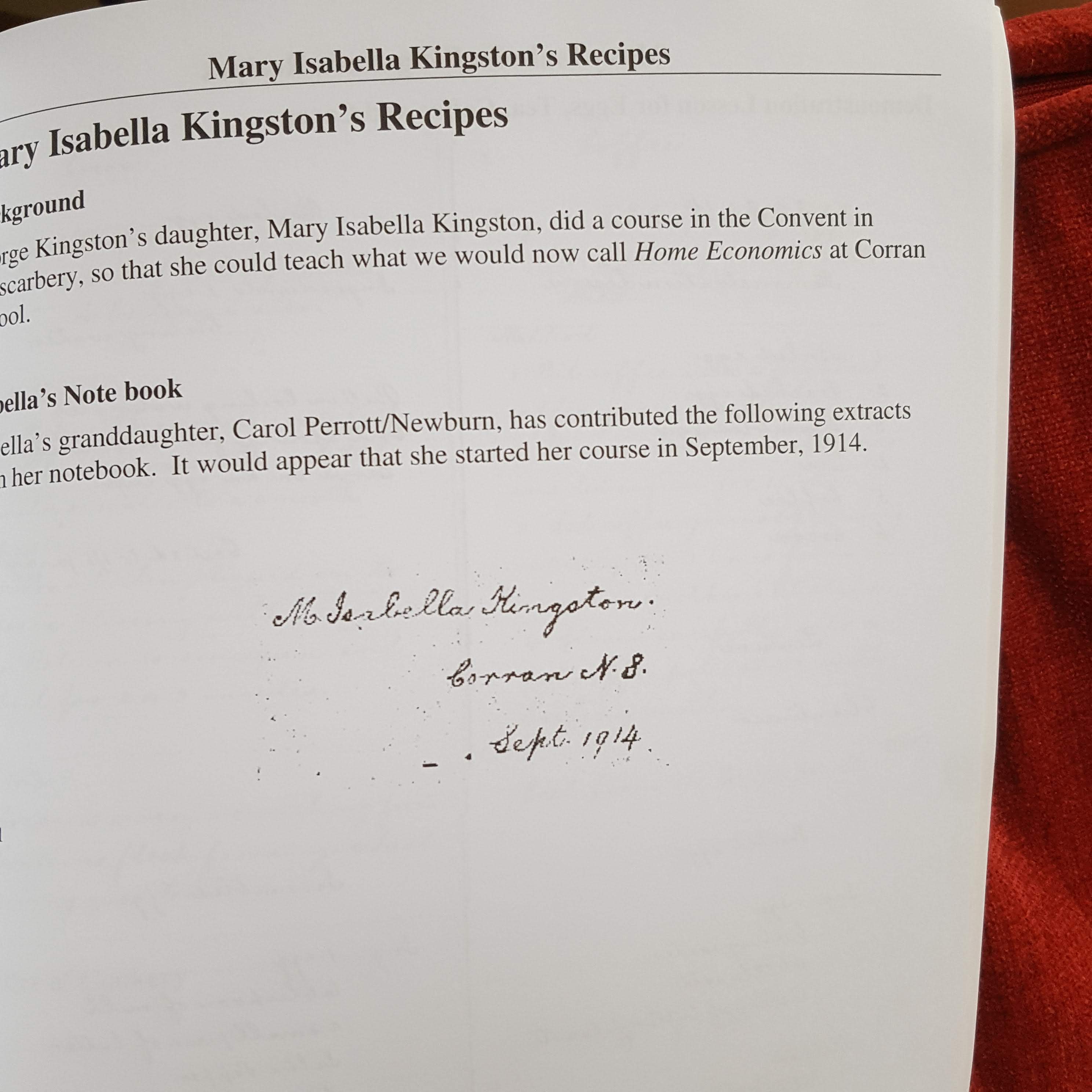
Included is a note book of recipes gathered by Mary Isabella Kingston who was a teacher at Corran National School, Myross. Her father George taught at the school for 44 years. Her grandmother was Susan Hurley of Dunmanway daughter of Cornelius, Carrigscully. She attended a cooking course at the Convent of Mercy in Rosscarbery in 1914.
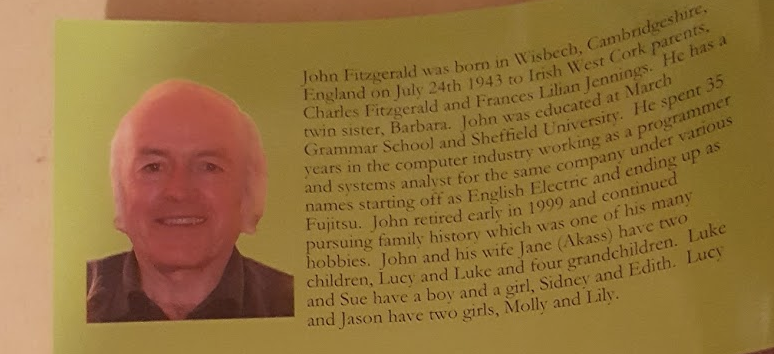
The school history was compiled by John Fitzgerald. Published by LuLu.com
TB raged through Ireland until the early 1950s. In the 1940s deaths hovered between 2,000 and 4,000 per year.
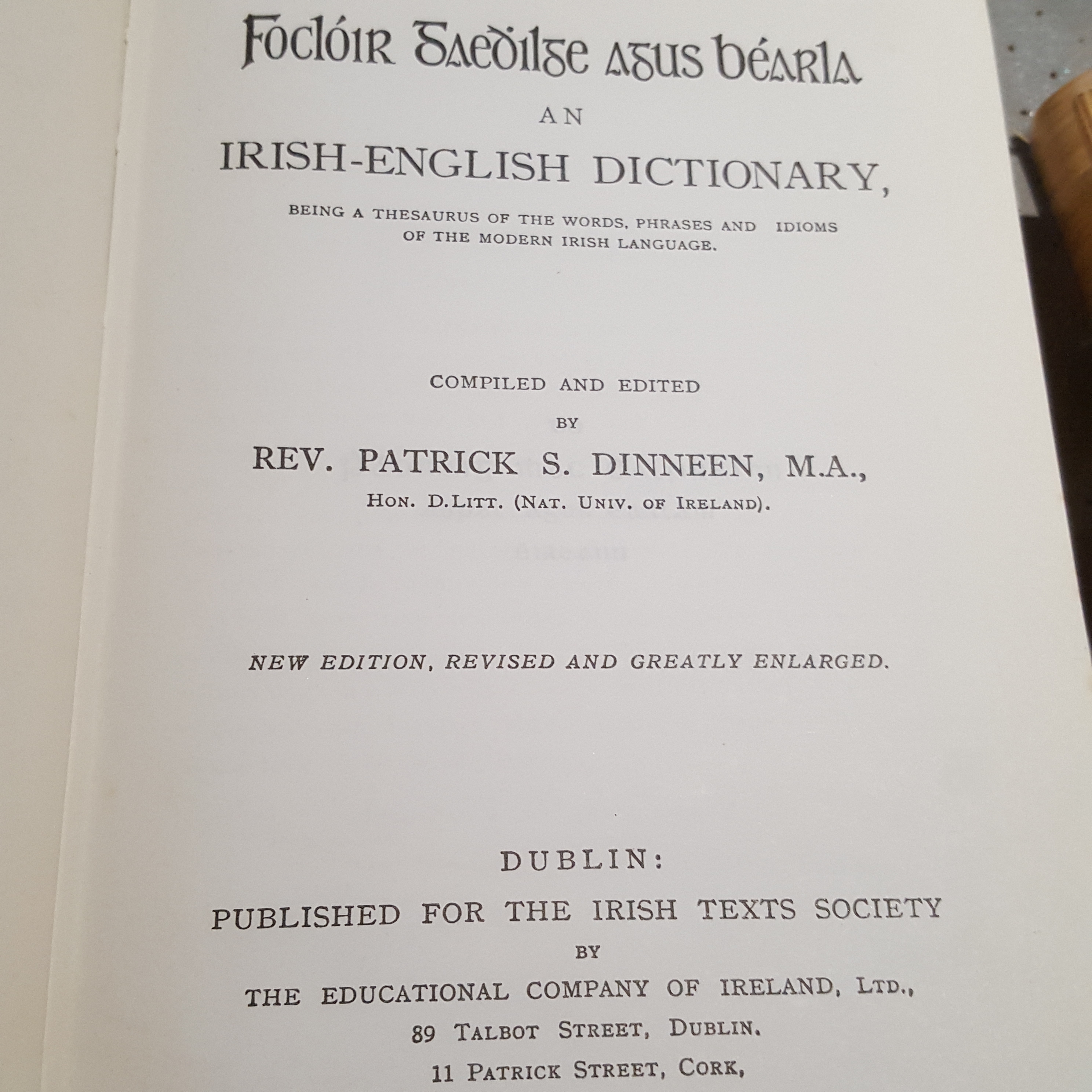
It has a long history in Ireland from Dineens Dictinary
Poverty and disease are inextricably linked. With little of a social welfare safety net, many people with active TB understandably hid symptoms and knowingly remained at large and at work in order to sustain their incomes for as long as they could. The behavioural shifts necessary to tackle community transmission could not occur with piecemeal and largely unenforced legislative efforts or in the absence of a range of financial supports.
The ground work for it eradication was laid by the States Chief Medical Officer Dr. James Deeny. He had been involved in ground breaking statical analysis in Lurgan documenting illness among poor weaver in Lurgan in the 1930s. He ws probably the only civil servant to fire a Reverent Mother. He was shocked at the appalling infant mortality statistics for the mother and baby home at Betsboro, Blackrock, Cork, and held the Reverend Mother responsible. He came under enormous pressure from Cork politicians of all parties to reverse his decision but refused to do do.
Unfortunately for him he was purged by Dr. Noel Browne when he came in as Minister for Health and went to Indonesia to work for the World Health Organisation
In the postwar era Deeny’s Mother and Child Scheme, attacked by the Catholic bishops of Ireland as socialist tampering with the family, caused the break-up of the first inter-party government of John A. Costello, in 1951.
Aged 50 Deeny began a new career with the World Health Organisation, carrying out tuberculosis surveys in Sri Lanka and Somalia, and producing a National Health plan for Indonesia. He became Chief of Senior Staff Training at WHO headquarters in Geneva, continuing to work after his retirement, writing the Fourth Report on the World Health Situation and acting as WHO’s first ombudsman.
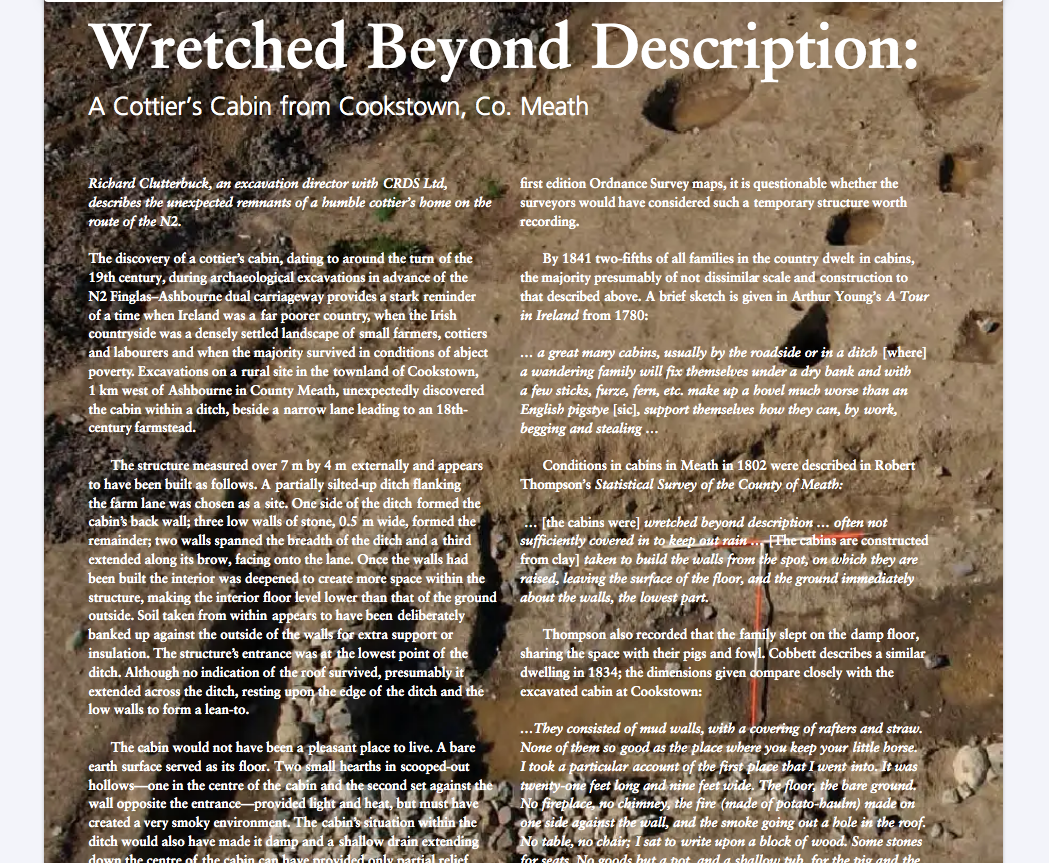
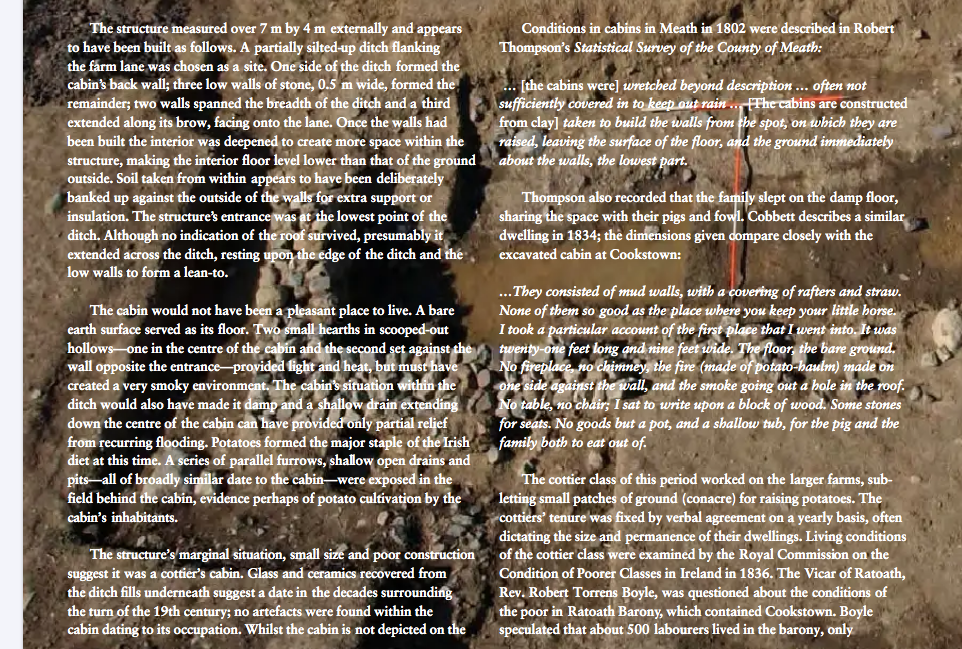
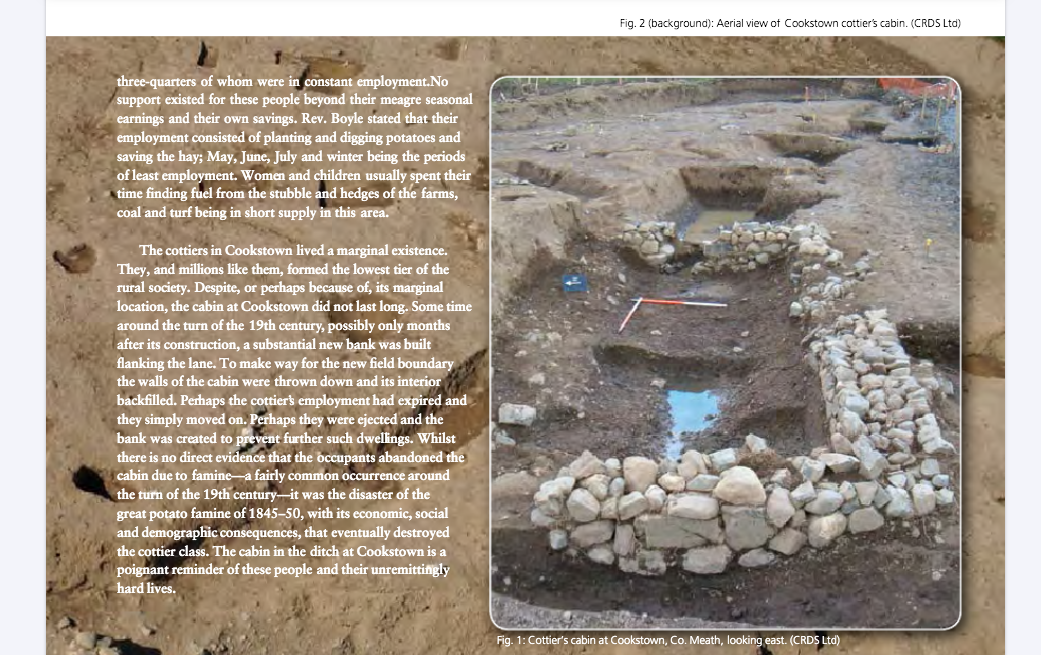
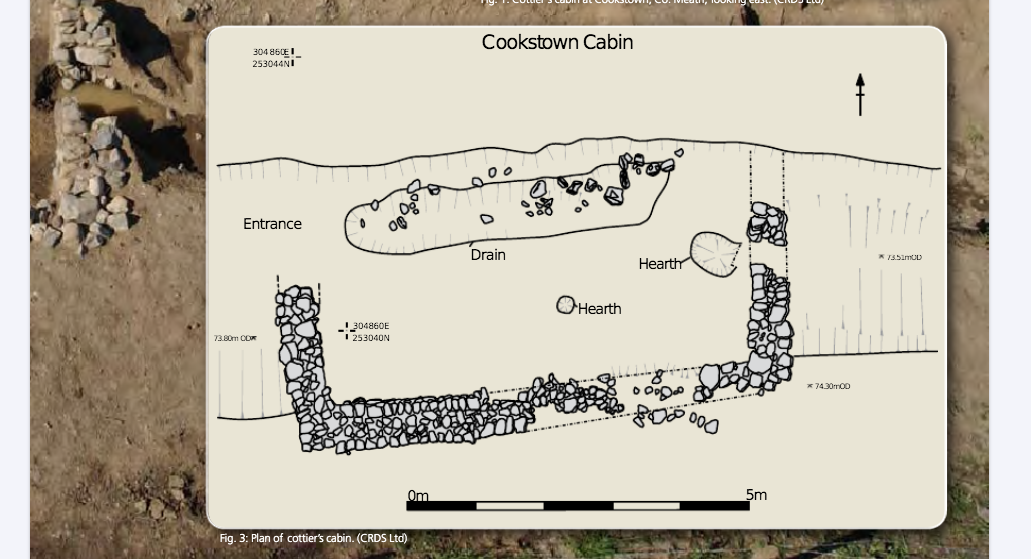
Pre famine West Cork had one of the worlds largest rurl population density. Thee wee an enormou number of cottis. The Devon commission describes they horrendous condition in detail
1849, Report of Henry J. Fawcett, Practical Instructor on Husbandry of Visit to Bantry, Kealkil, Dunmanway, Durrus, Kilcrohane, Agriculture Very Backward, Custom after taking a Corn Crop to Leave Land Fallow for 4 to 5 Years, Starving Horses, Pannier Tracks, need for Proper Roads, Ploughs A few Sticks Put Together With Pins Only Goes Down A Few Inches, Suggests Grain Crops, Drainage, Manuring, Proper Seed. Back Roads. No Shortage of Local Manures Huge Potential.
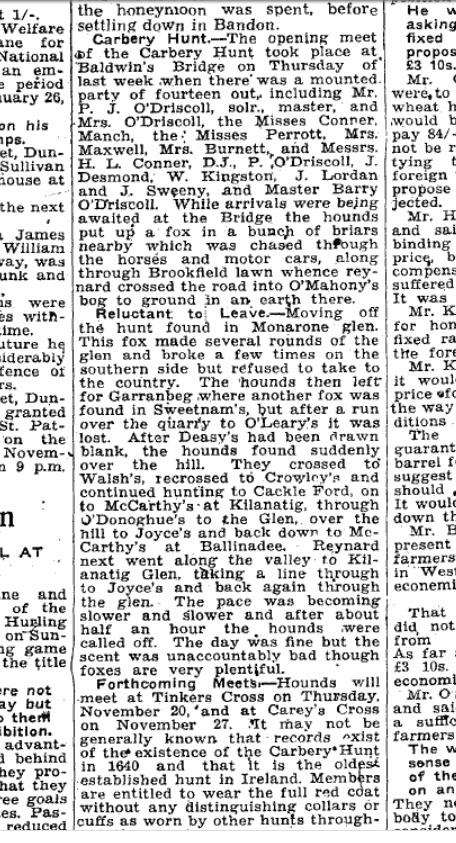
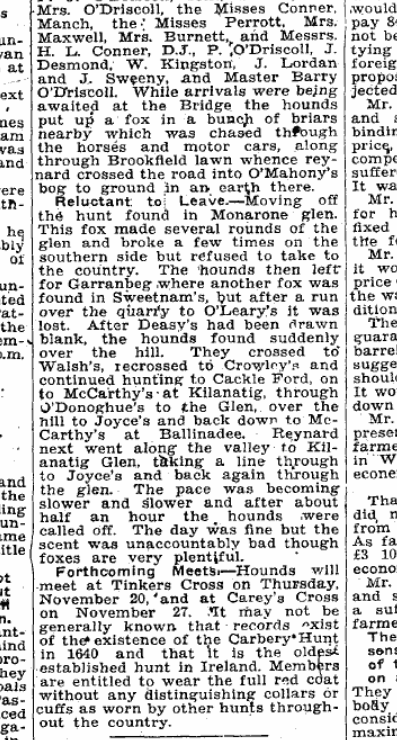
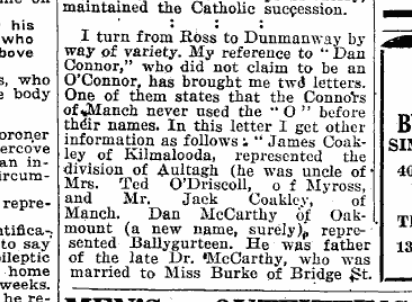
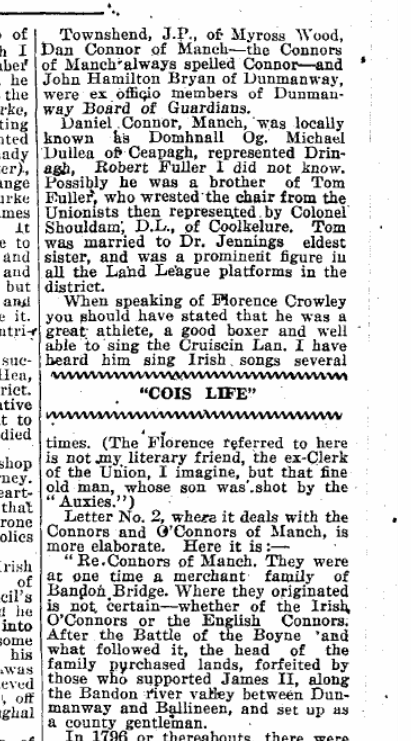
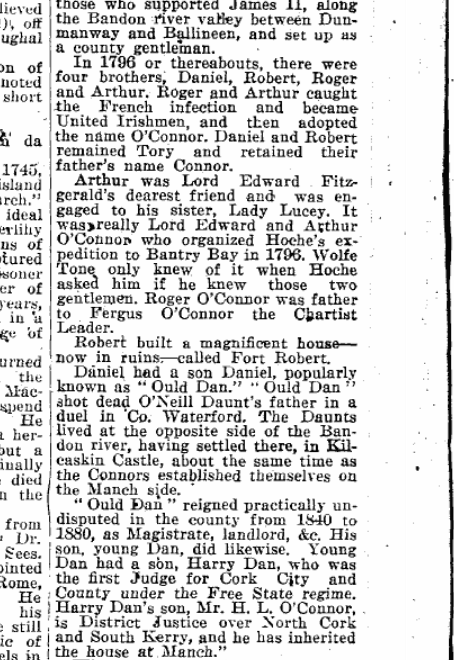
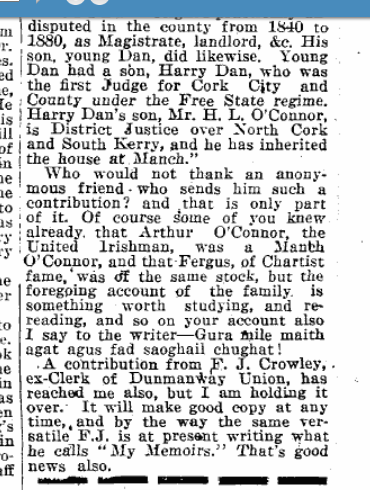
Harry Dan O’Connor First Circuit Court Judge Cork City and County From Manch, Ballineen. Of old Connor/O’Connor line His son H. L. O’Connor, District Justice, North Cork South Kerry 1940s. A cousin, a Connor relative, was a judge in Iowa here in USA. He went to Ballineen and met H.L. Connor, the justice, but was unsure if we were related to him or not. He thought Justice H.L. Connor was a bit eccentric thanks again. Member Carbery Hunt 1947. Dublin Letter Southern Star, 15th November 1947.
Master of Hunt
1898, 1917, 1931, 1940, 1947 Patrick J. O’Driscoll Solicitor 1898, apprenticed to Patrick Joseph McCarthy From farming family Knockanreigh, 1901 has Irish. South Main St. District Council 1914 assentors to Peter Murphy, Cavendish Quay. Attending funeral 1933, Joseph Cullinane, Solicitor, Clonakilty. 1933 Dr. J.J.Hennessy, P.J.O’Driscoll, Solicitor, J. Neville, Solicitor settling difference between shareholders of Bandon Co-Op. 1932 involved in company trying to attract sugar beet factory to Bandon. Funeral 1941, Mrs. Rachel Wolfe nee Wood, Snugboro, Skibbereen, aged 95, mother of Jasper Wolfe, Solicitor buried Aughadown,. Southern Star 25th January 1941 1947 Master Carbery Hunt. “1937 Judge Calnan Later High Commissioner, India Funeral 1930 Mrs. Margaret nee Crowley, widow of Joseph Calnan, mineral water manufacturer and stout bottler, Kilmoyle,Bandon Her brother late Joseph Crowey, Chief Commissioner, Somerset House, London
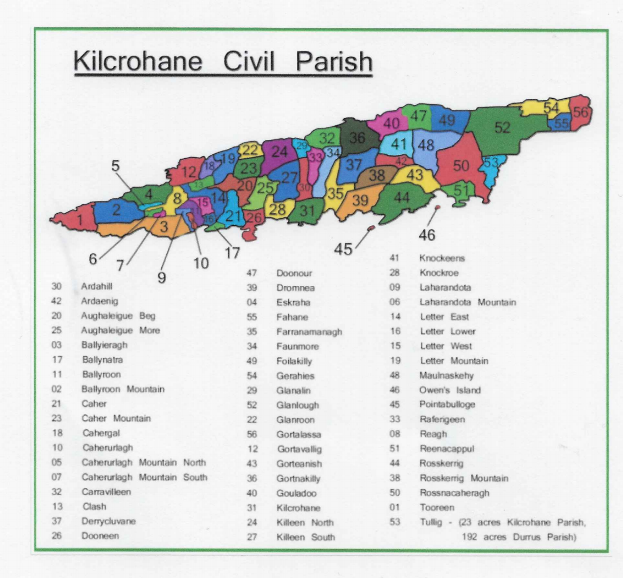
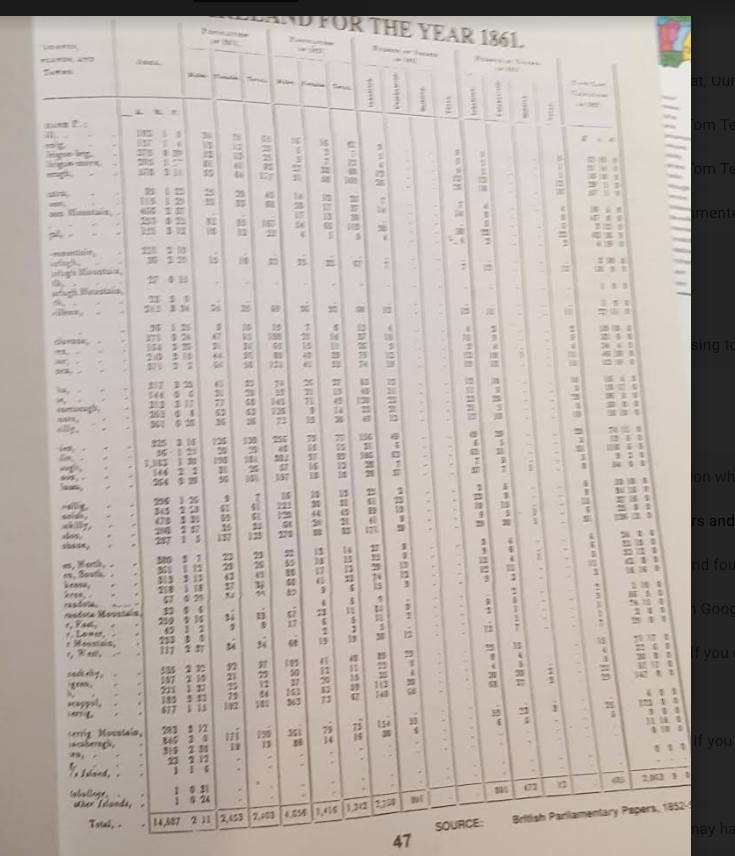
From the late Frank O’Mahony, solicitor, book on Kilcrohane. The print is not easy to use but it seems be 1841 and 1851.
In the townlands listed as being owned in Griffiths Valuation by the Rev. William Evanson, these were acquired in 1780 by his grandfather Nathaniel Evanson of Durrus comprising three ploughlands. This is turn was the property of the Dioceses Cork. It is listed in the account ledgers of St. Finbarrs Cathedrals of Cork now in RCB Library or National Archive Dublin. There are a number of other small areas listed, an island in Bantry Bay, Donemark, Letterlickey, Durrus, Rosscarbery, Schull. These are likely relicts of the limited Norman incursion. Generally they only got s far as Rosscarbery.
3 plowlands of Kilcrohane, Aghallamore, Dunneen [Dooneen], Killeen & Knuckroe, Parish of Kilcrohane, Barony of W Carbery. acquired by Nathaniel Evanson 1780 from Robert DelaCour now assigned to son Rev. Alleyn Evanson and they mortgage 1821 it to Abraham Splaine, Bandon. Note the term plougland.
It is interesting that the Rev. William townland Richard Tobin frequently. He is perhaps the 2nd King Tobin. Probably the only Norman name in Kilcrohane is Tobin. From him descend journalist Frank McDonnell and his brother, High Court Judge, Denis McDonnell. The Tobin line is probably the most influential local post 1800 west of Ahakista.
The Lands of Donogh O’Daly (Gearhies, Killovenoge), post Cromwell went to John Eyres, Sir Richard Hull got Maulanesky (Ahakista), In Durrus Parish Owen O’Daly’s part of Killtowne went to Sir Theophillius Jones. An undertaker from Waterford, Congrave got much of the O’Daly lands which were in turn later leased to the O’Donovan family of O’Donovans Cove.
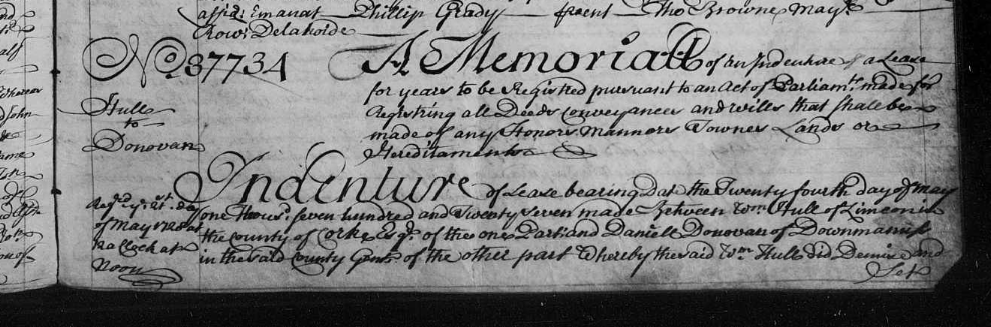
This shows I think the O’Donovan of Ardahill, I assume when the lease expired it reverted to the Hull interest. Did anyone come across him before: Cornelius Mahony, Dingle, Co. Cork, Master of Science,
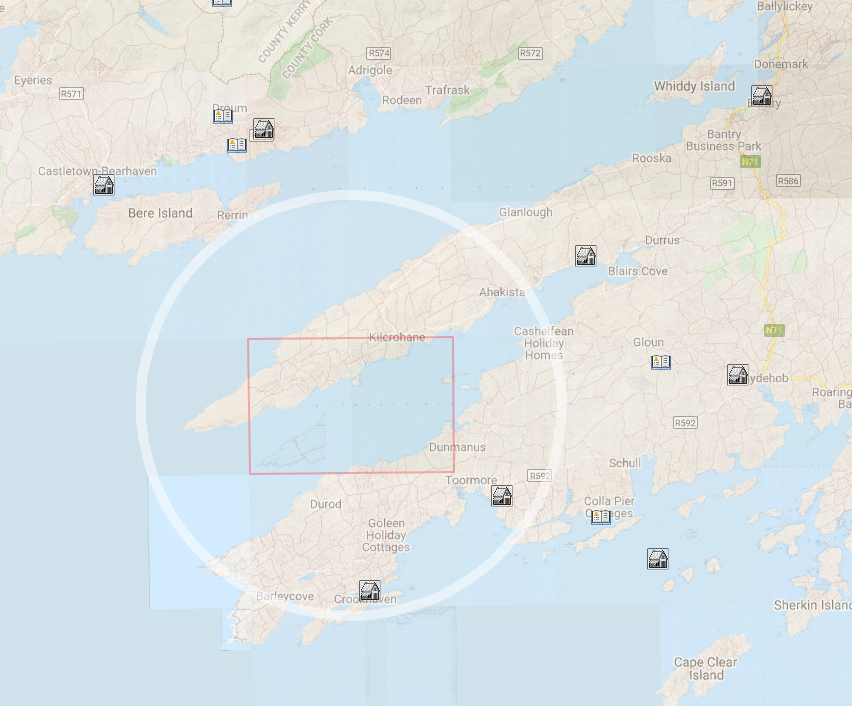
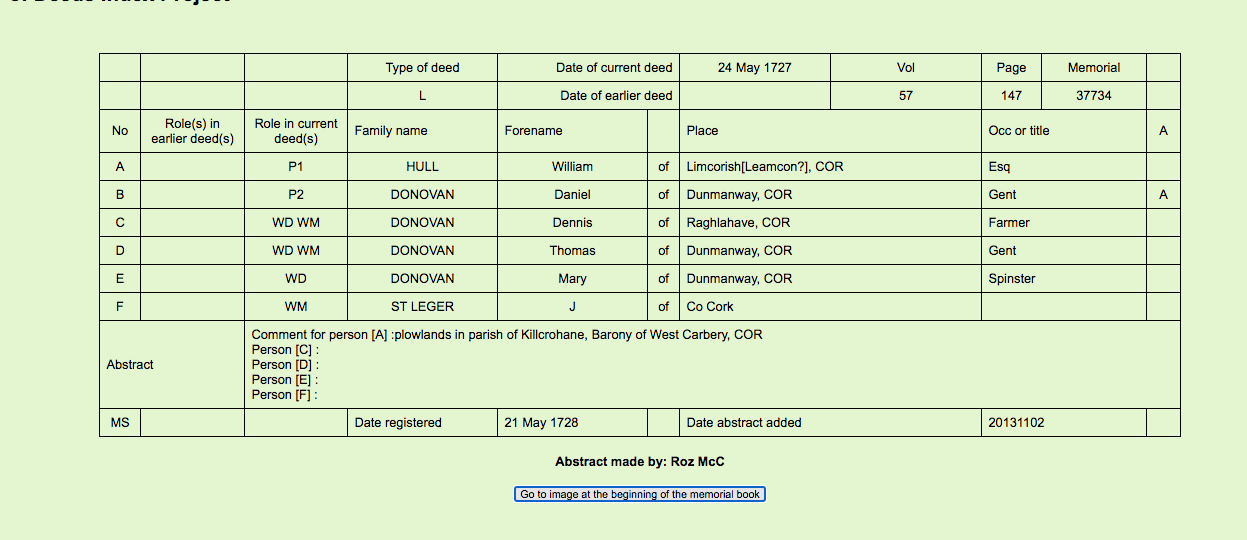
1728, Lease of three ploughlands and a half (F…, Donor, Foilakilly, Rinnacappal), for 25 years from 1727. at Kilcrohane from William Hull, Leamcon, Schull to Daniel Donovan, Dunmanway, Gent, witnesses Denis Donovan, Raghlahane, farmer, Thomas Donovan, Dunmanway, Gent., Mary Donovan, spinster, Dunmanway. J. St.Ledger, Cork. Associated deed 1727 property at Kilmore (KIlmoe?) Barony of West Carbery from William Hull, Leamcon, Schull to Daniel Donovan, Dunmanway, Gent, witnesses Denis Donovan, Raghlahane, farmer, Cornelius Mahony, Dingle, Co. Cork, Master of Science, Thomas Donovan, Dunmanway, Gent., Mary Donovan, spinster, Dunmanway, Owen Lander, Kilpatrick, J. St. Ledger, Cork.
Type of deed
Date of current deed
24 May 1727
Vol
Page
Memorial
L
Date of earlier deed
57
147
37734
No
Role(s) in earlier deed(s)
Role in current deed(s)
Family name
Forename
Place
Occ or title
A
A
P1
HULL
William
of
Limcorish[Leamcon?], COR
Esq
B
P2
DONOVAN
Daniel
of
Dunmanway, COR
Gent
A
C
WD WM
DONOVAN
Dennis
of
Raghlahave, COR
Farmer
D
WD WM
DONOVAN
Thomas
of
Dunmanway, COR
Gent
E
WD
DONOVAN
Mary
of
Dunmanway, COR
Spinster
F
WM
ST LEGER
J
of
Co Cork
Abstract
Comment for person [A] :plowlands in parish of Killcrohane, Barony of West Carbery, COR Person [C] : Person [D] : Person [E] : Person [F] :
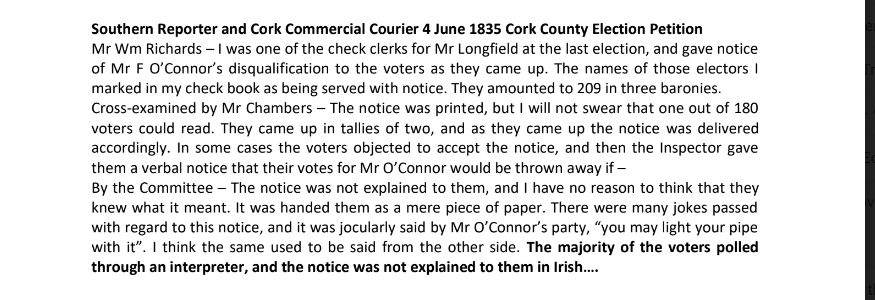
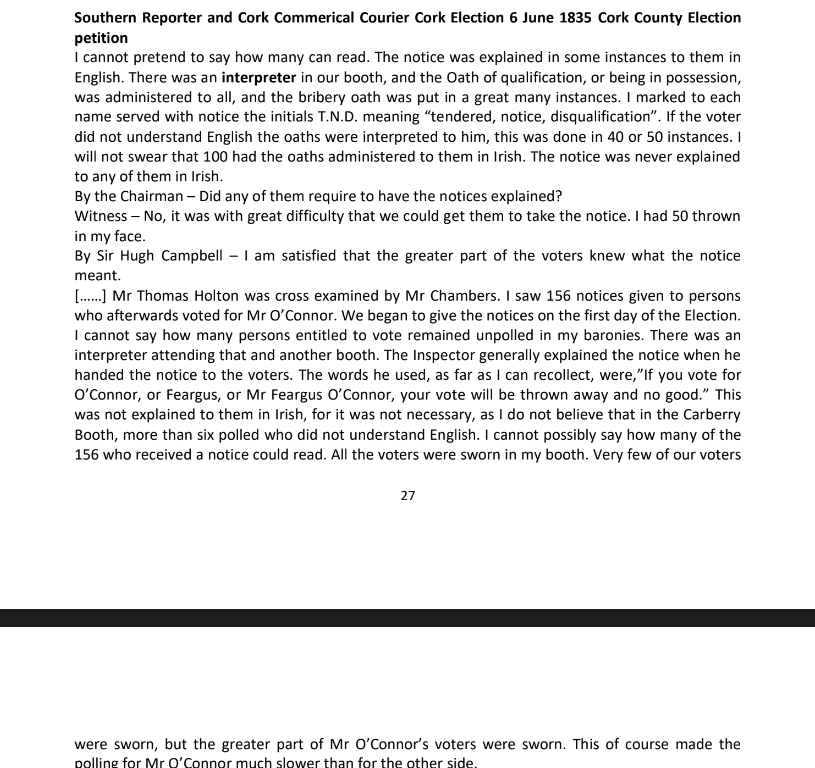
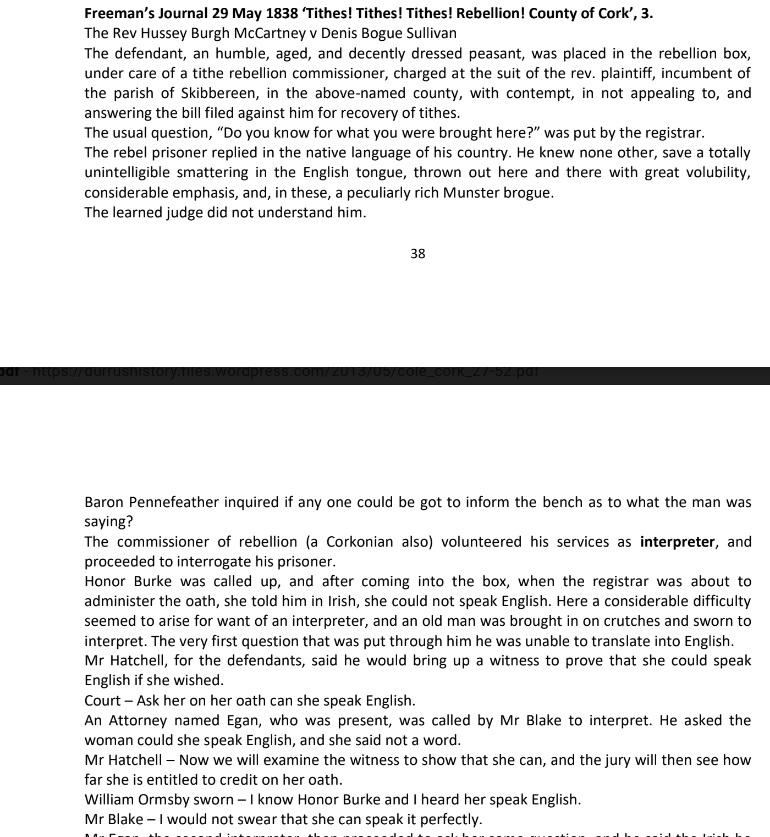
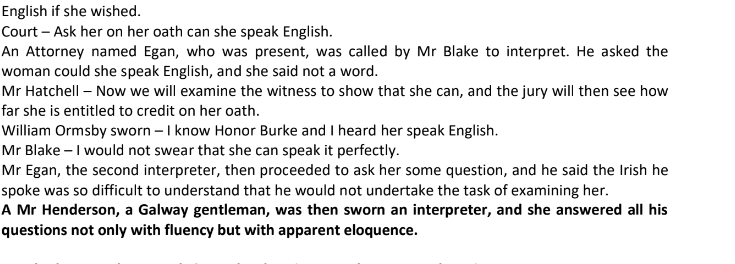
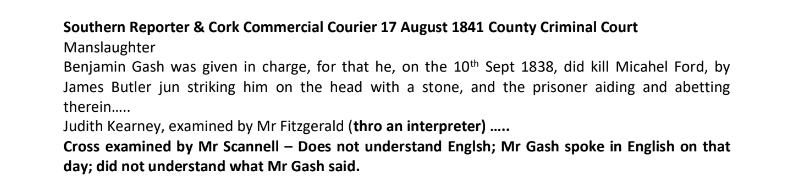
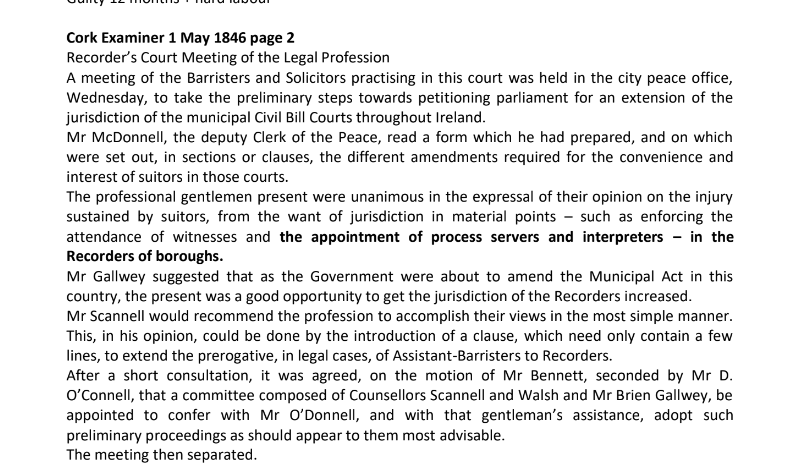
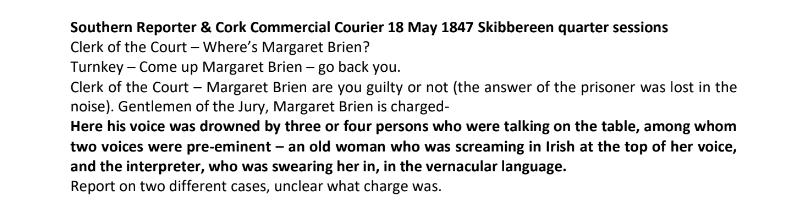
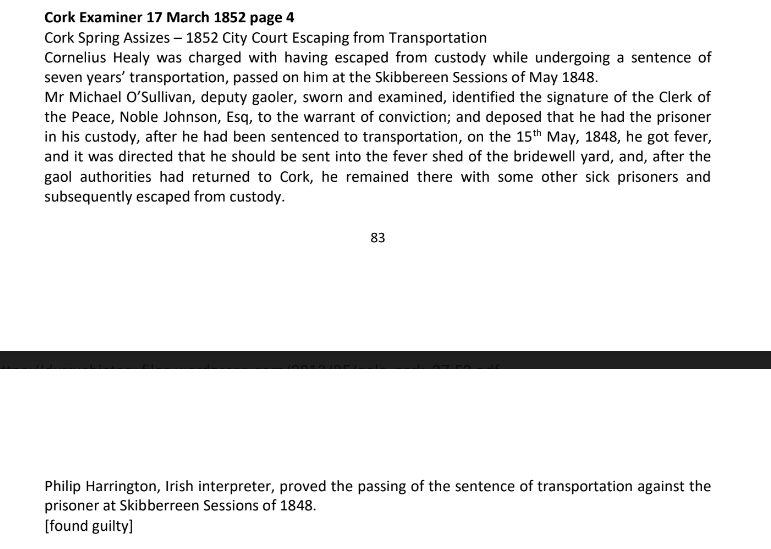
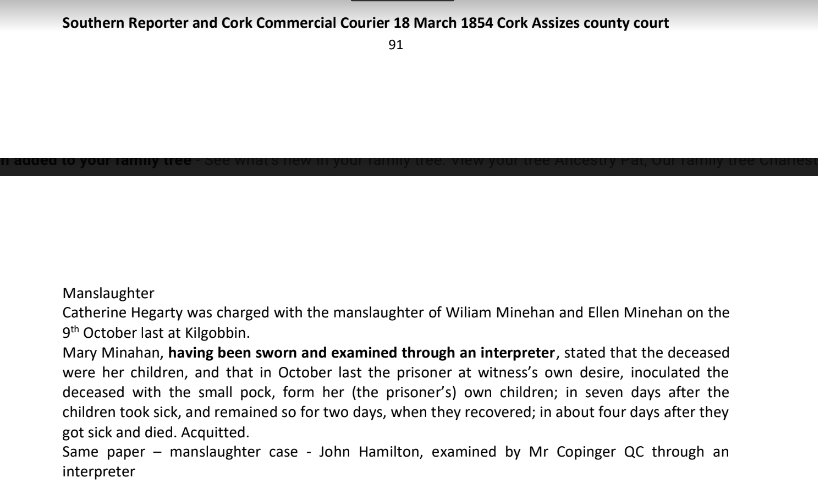
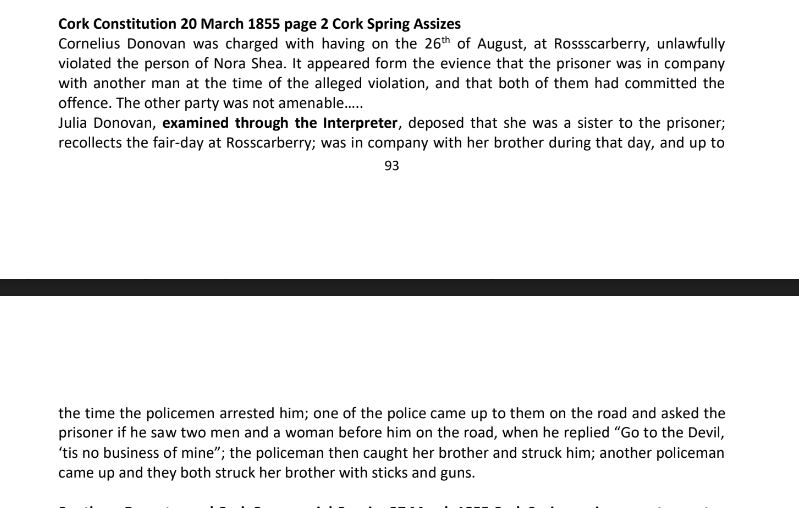
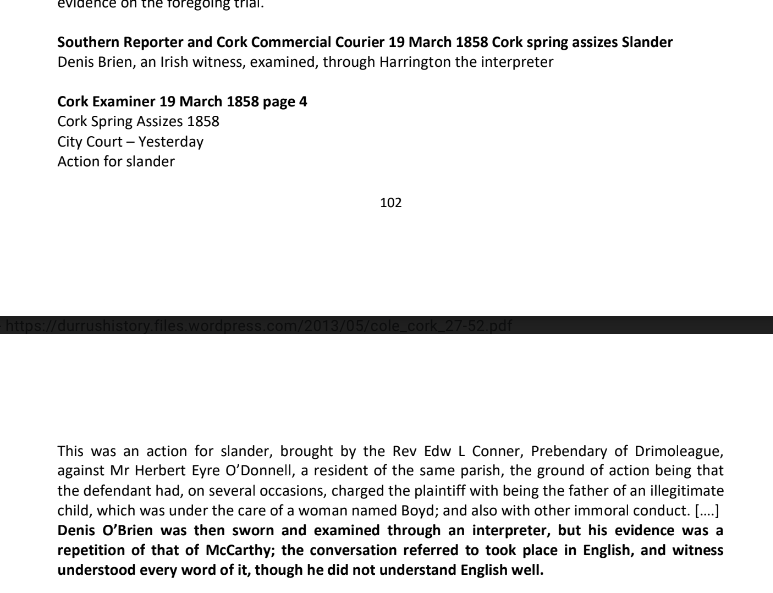
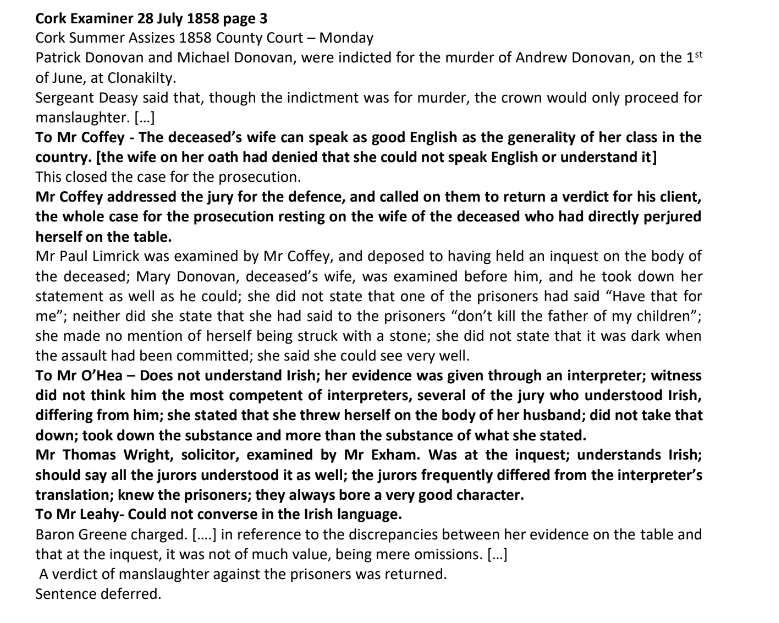
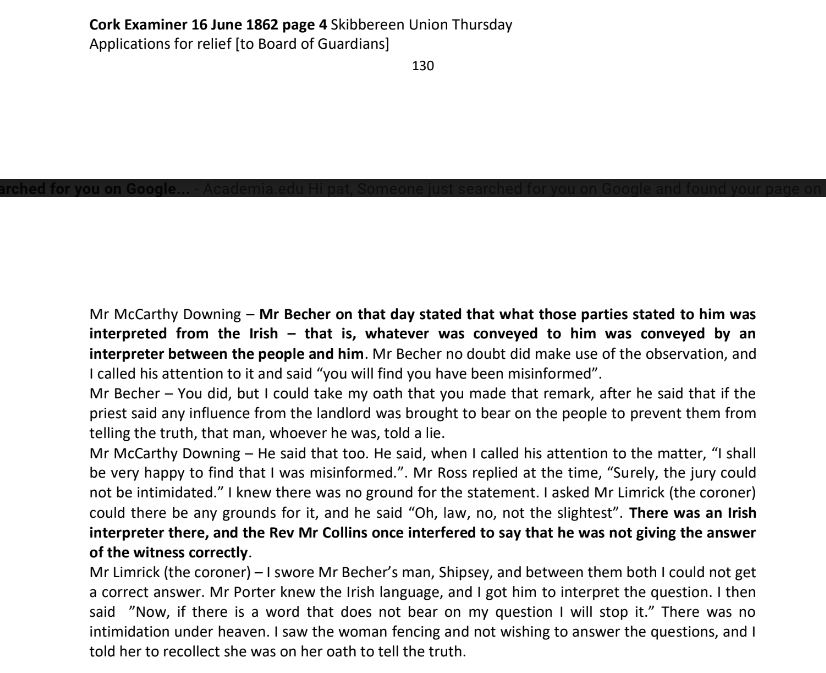
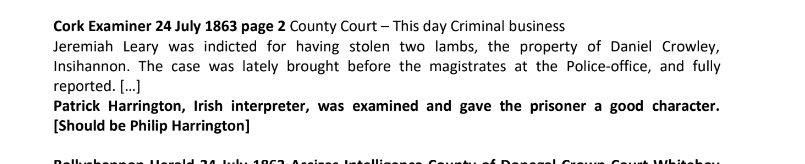
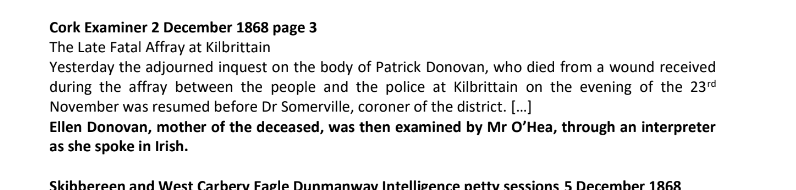
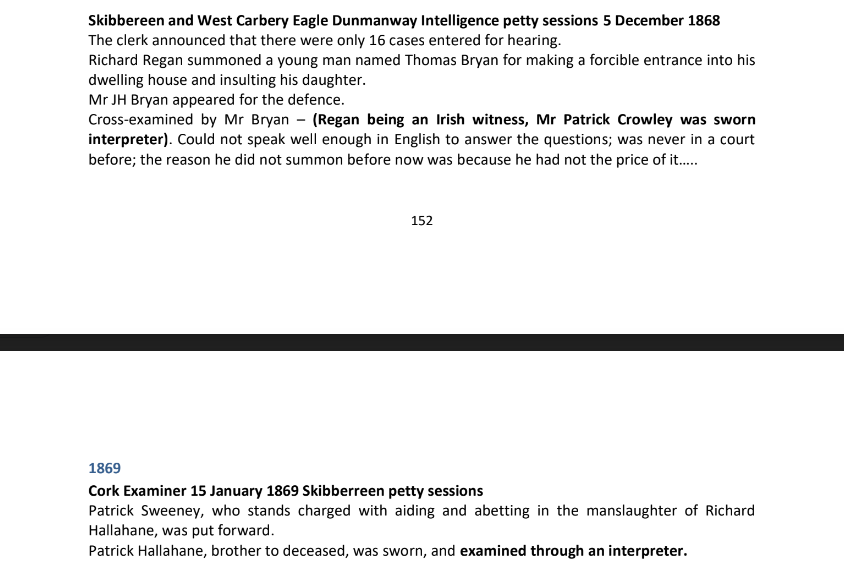
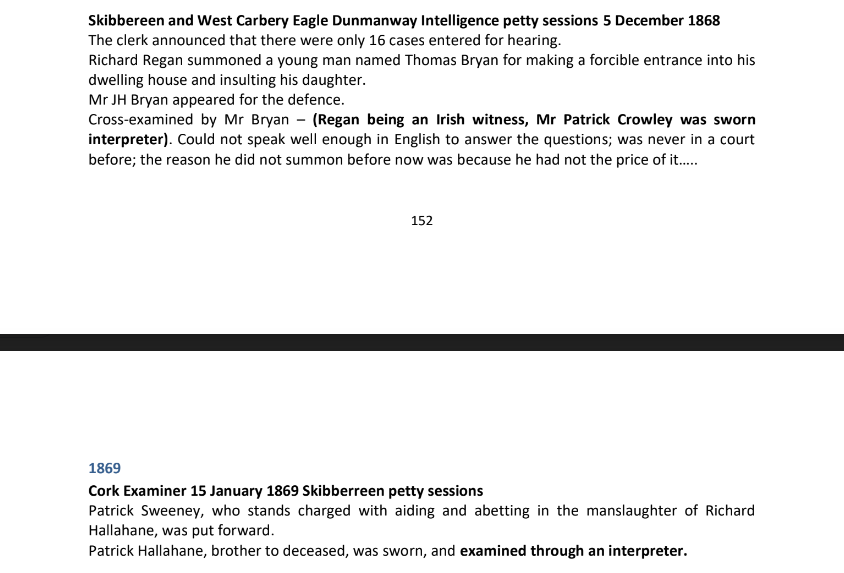
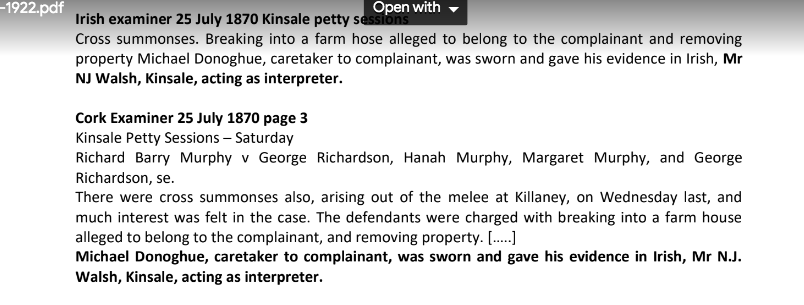
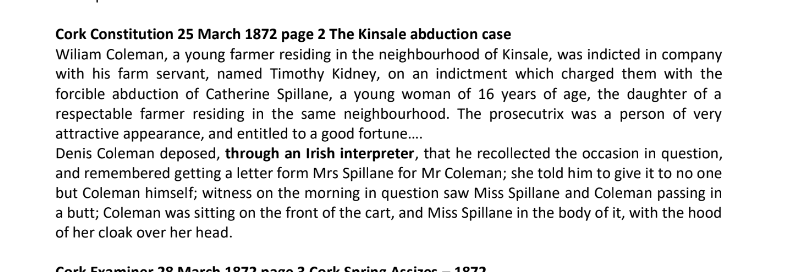
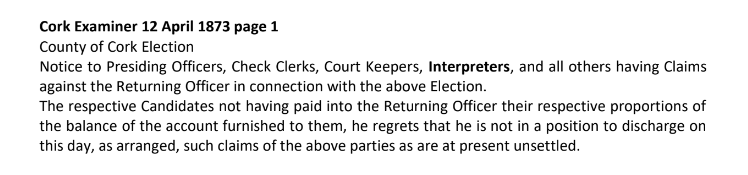
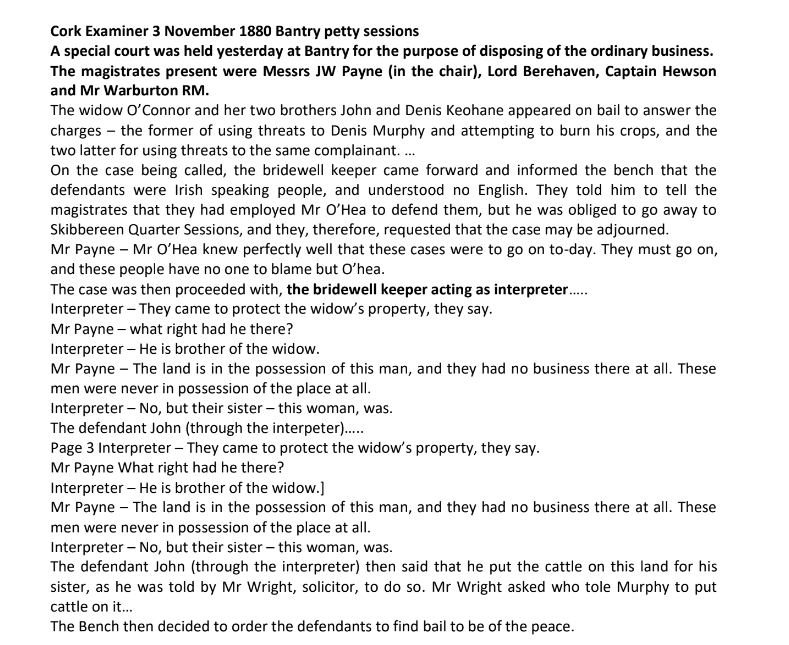
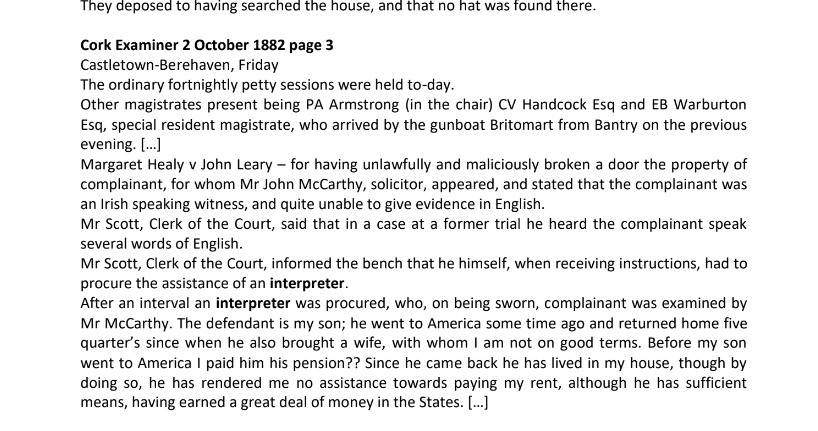
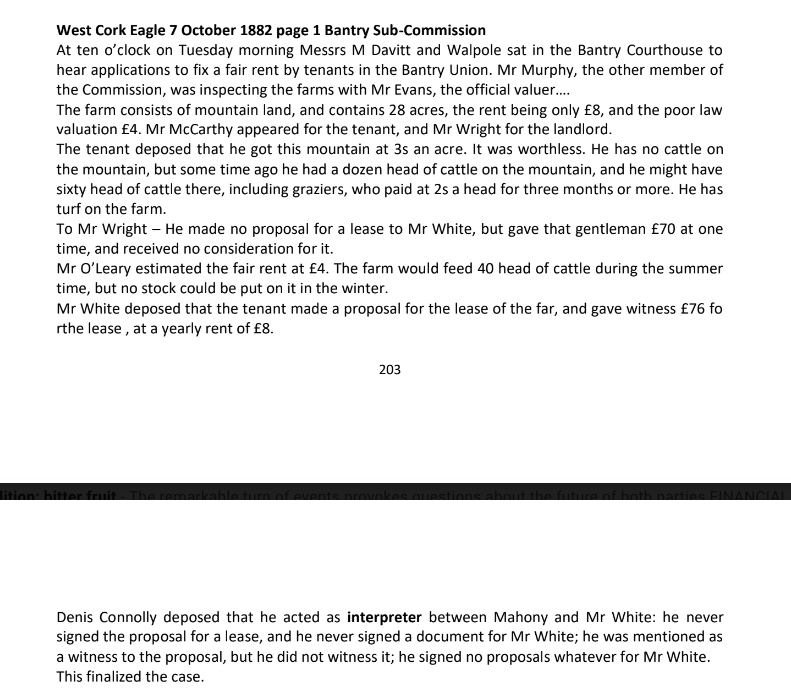
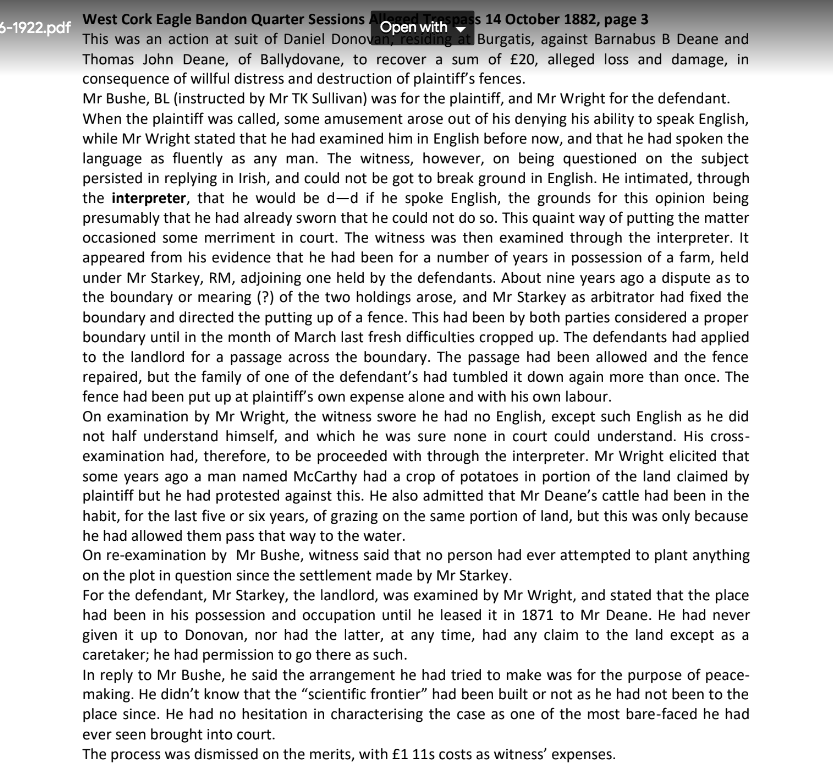
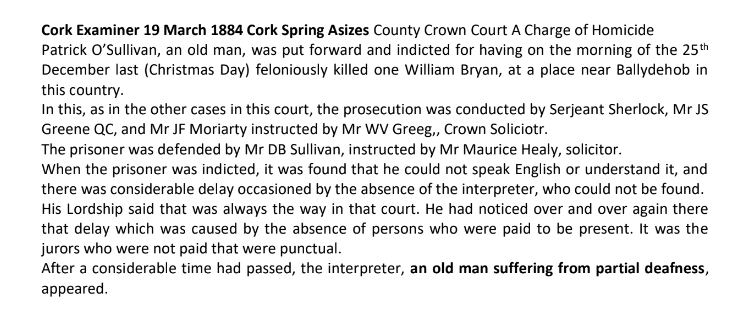
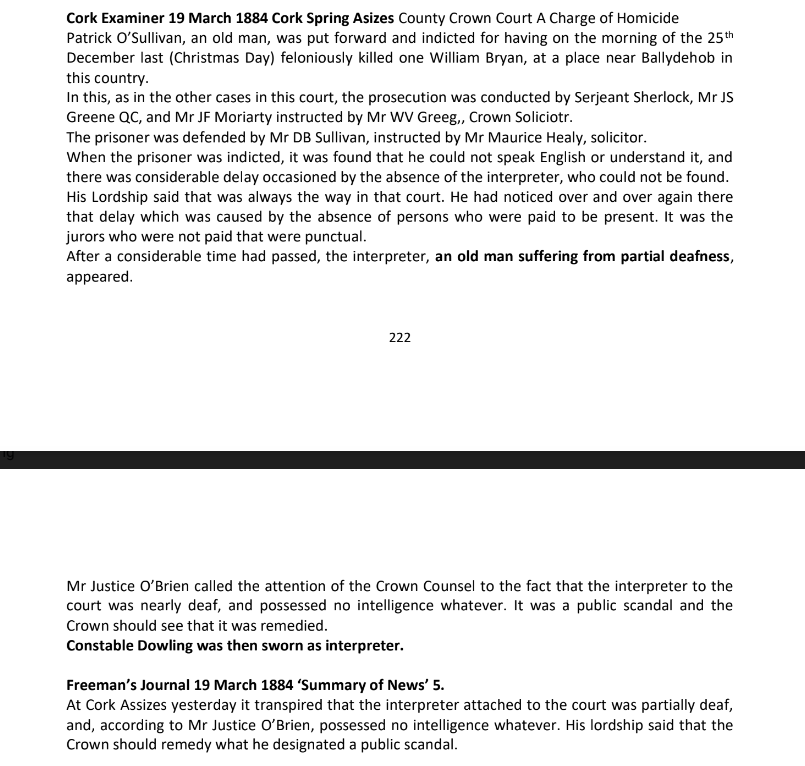
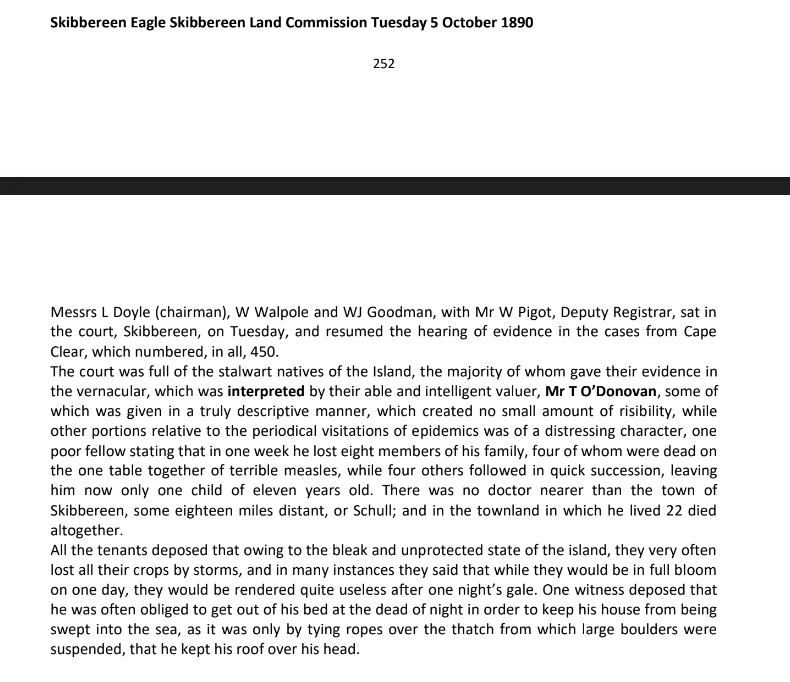
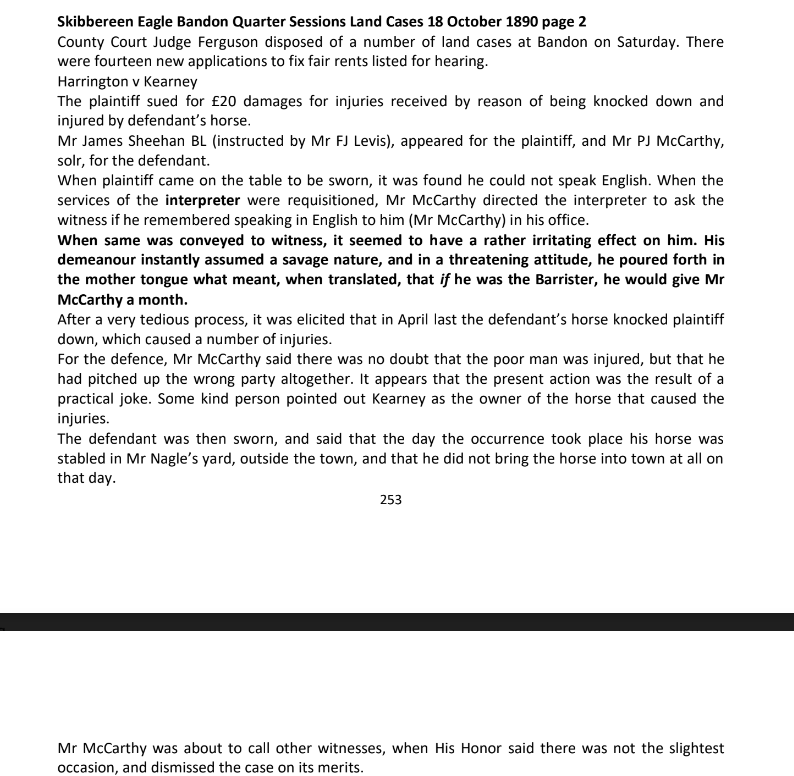
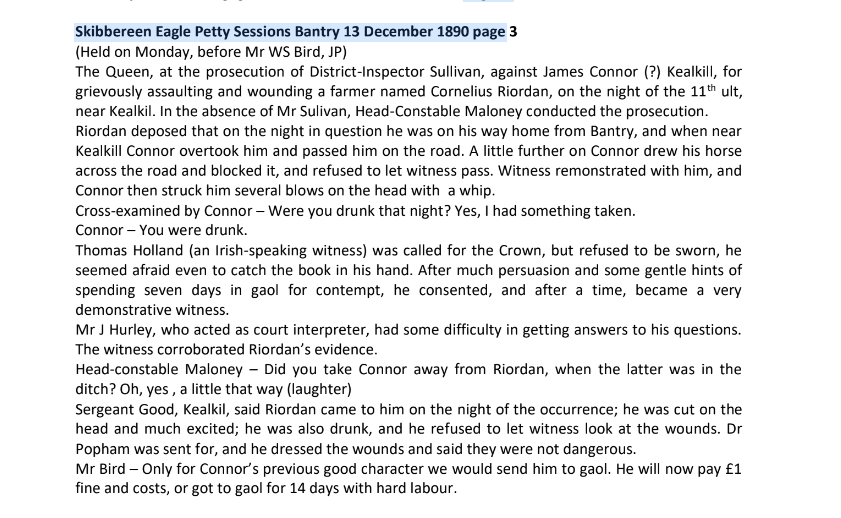
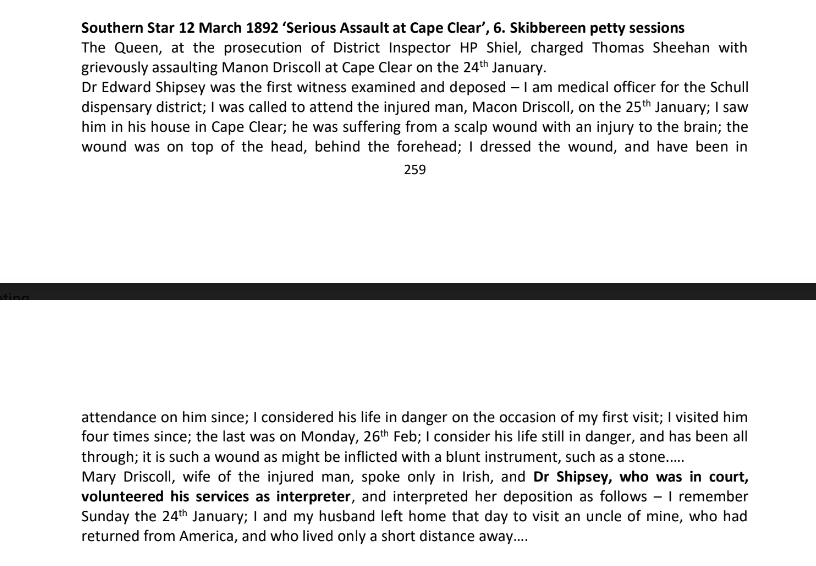
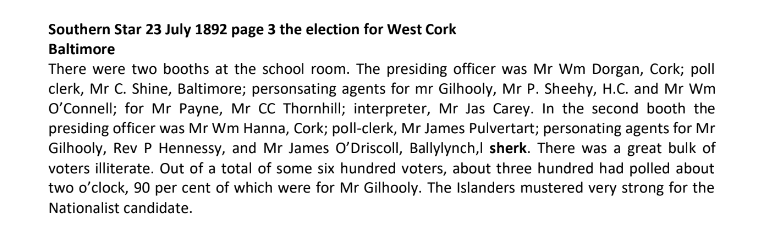
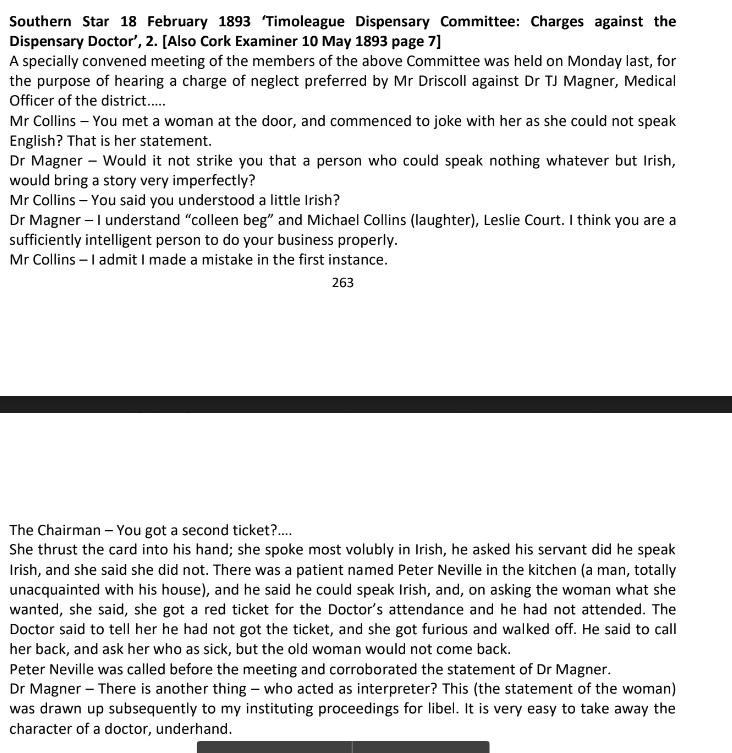
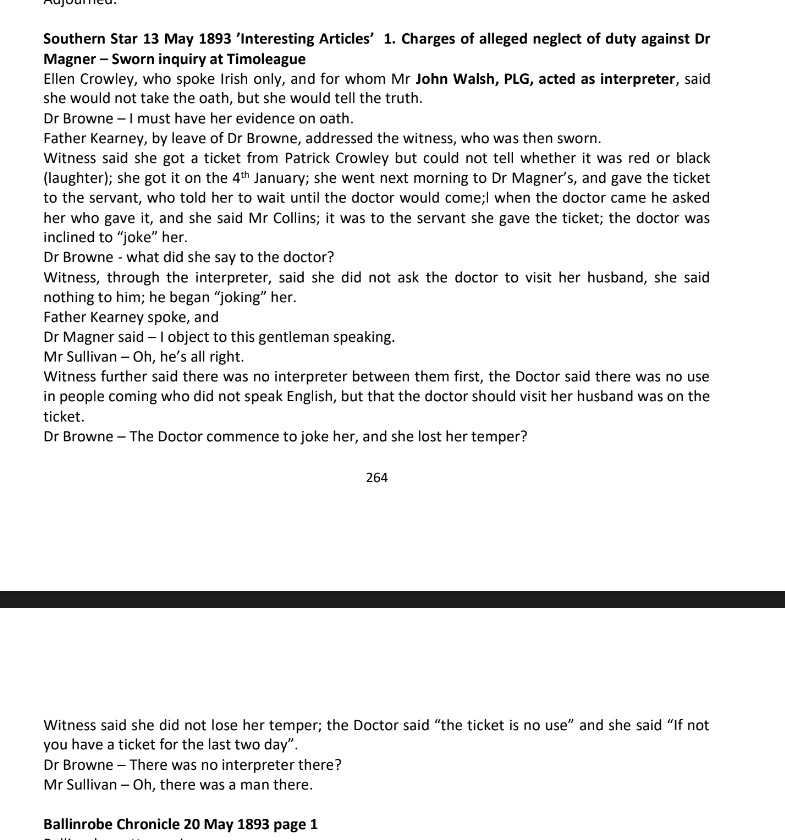
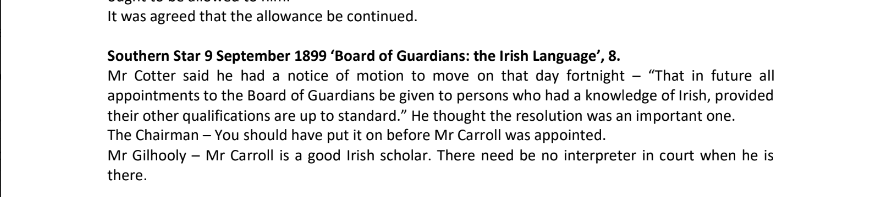
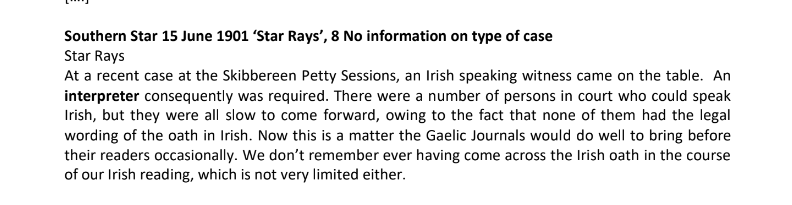
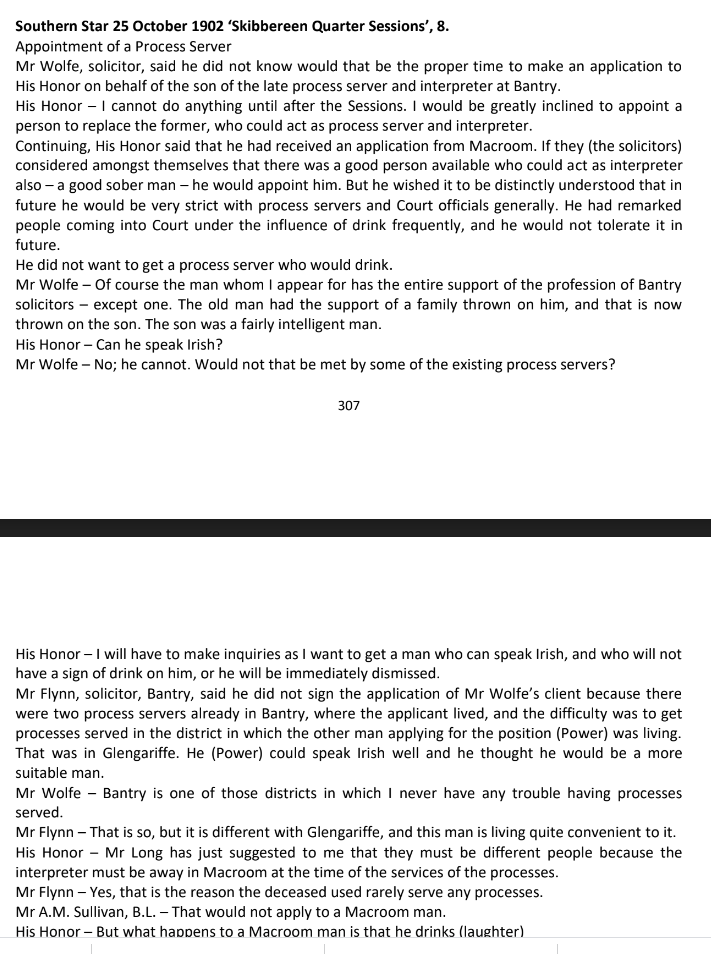
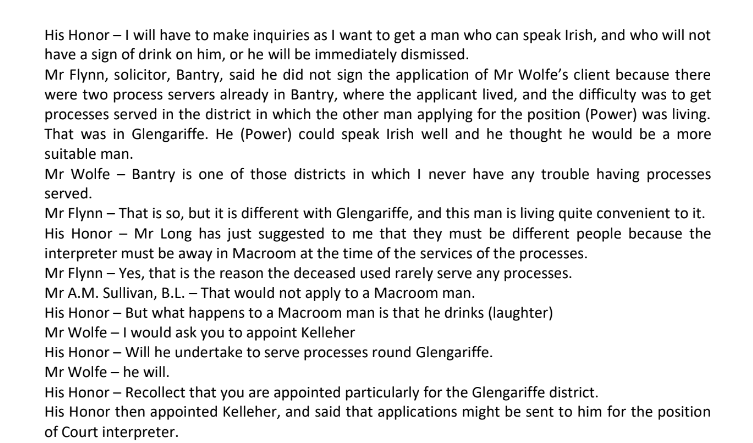
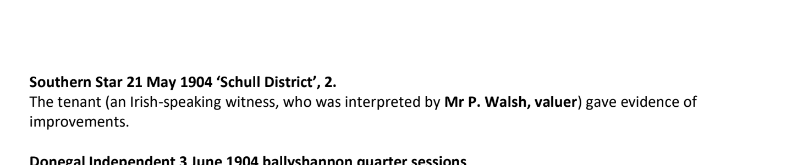
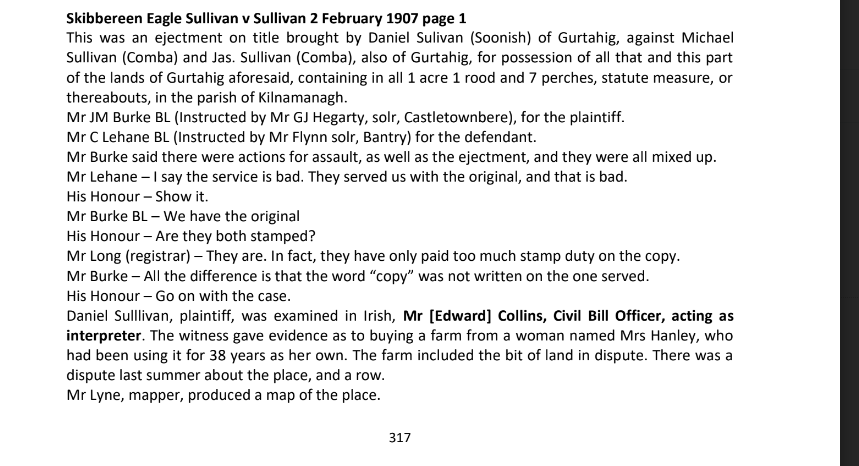
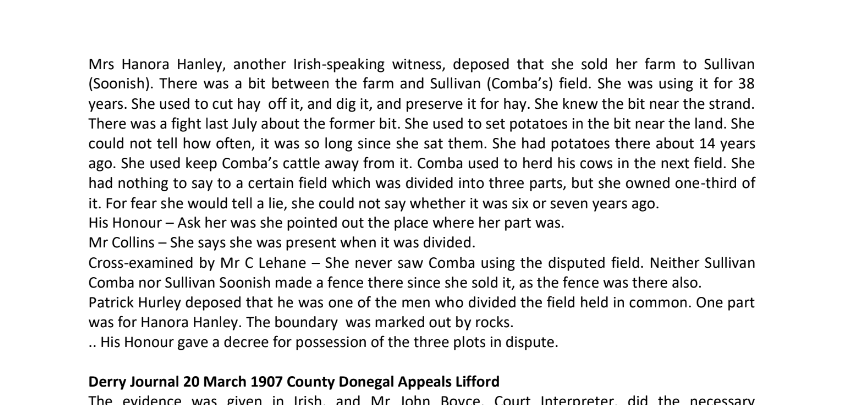
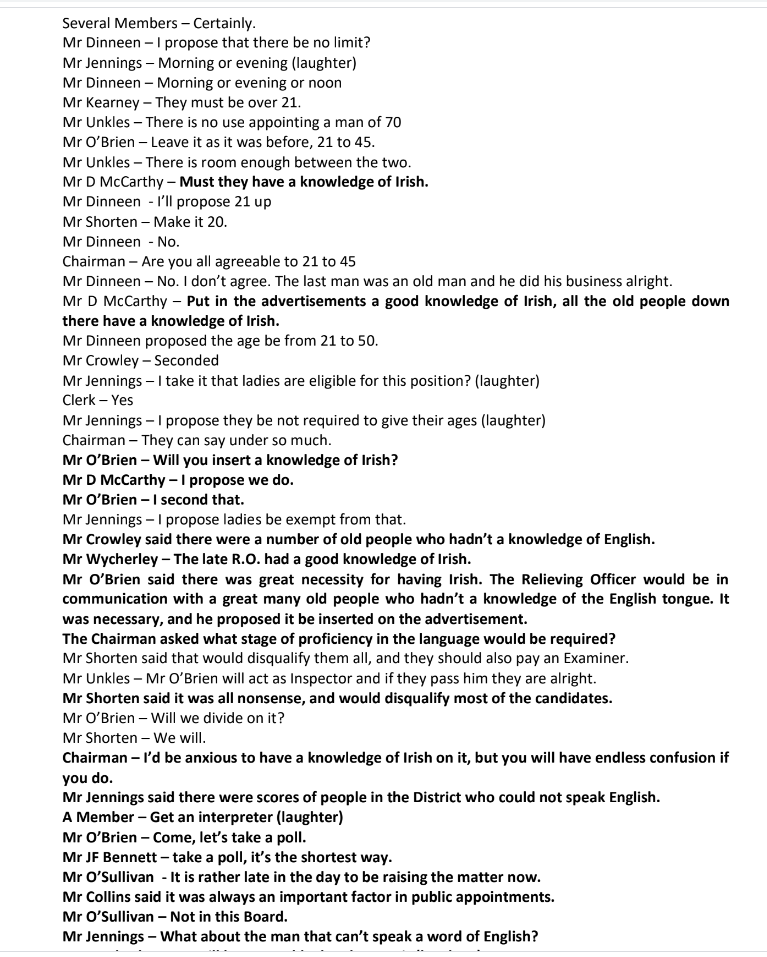
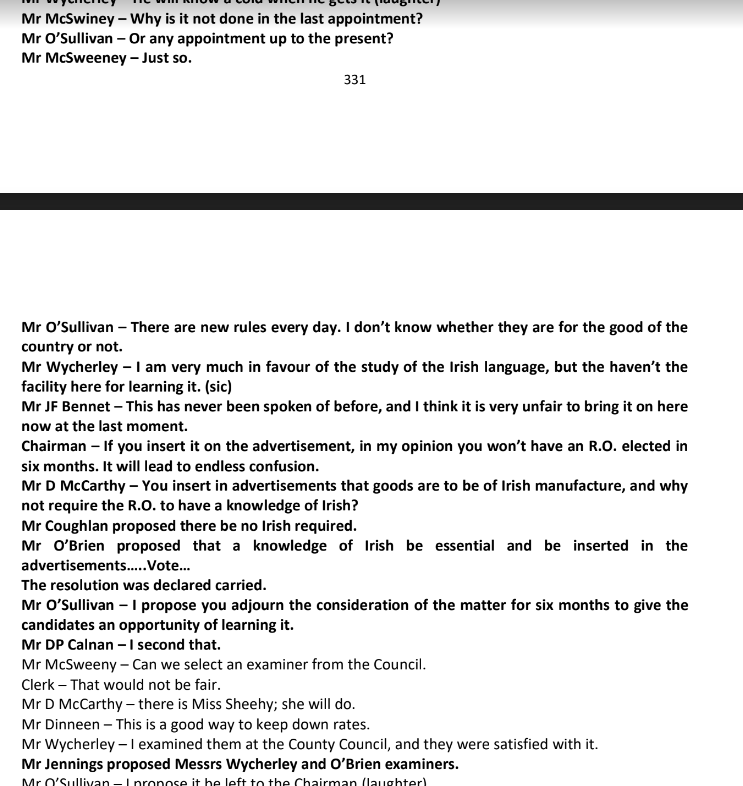
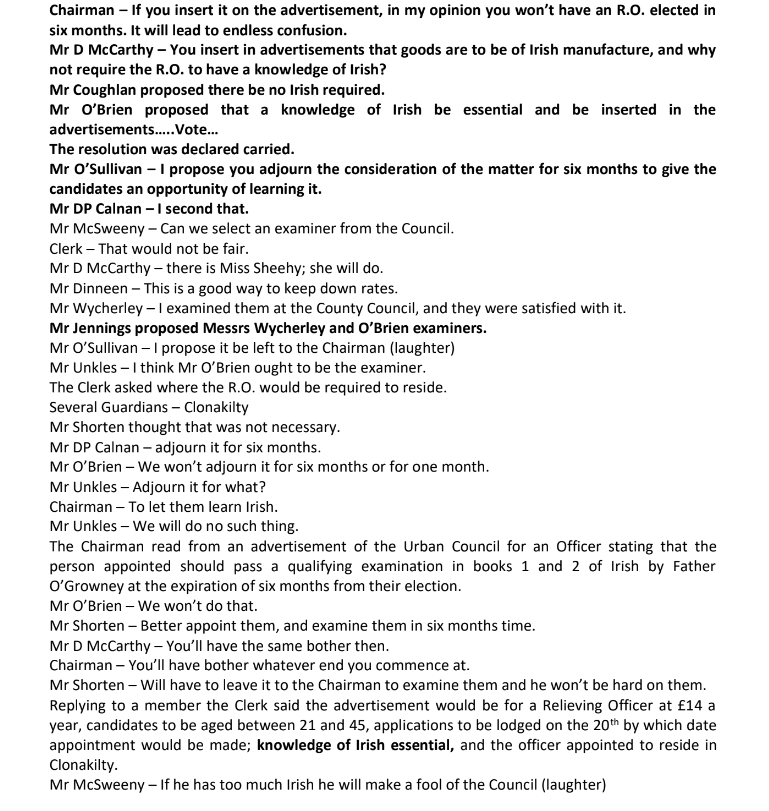
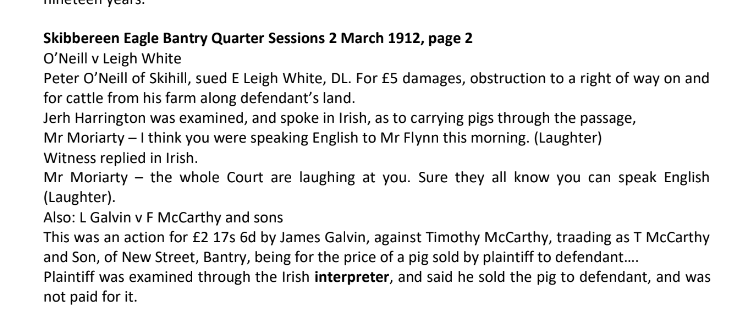
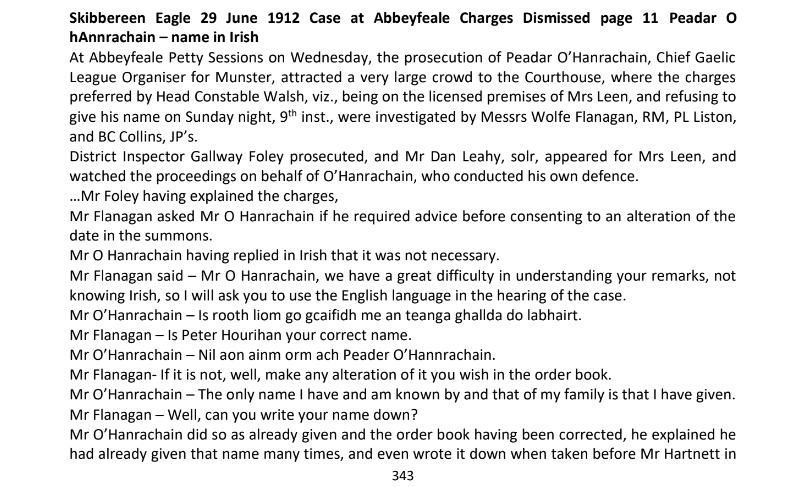
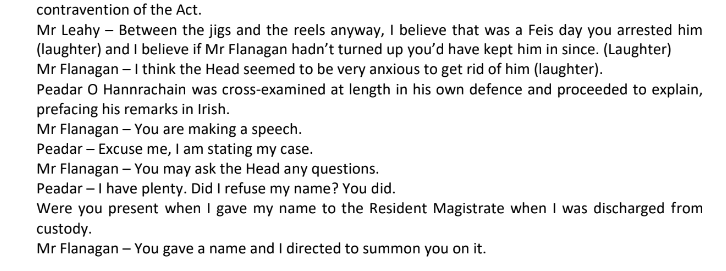
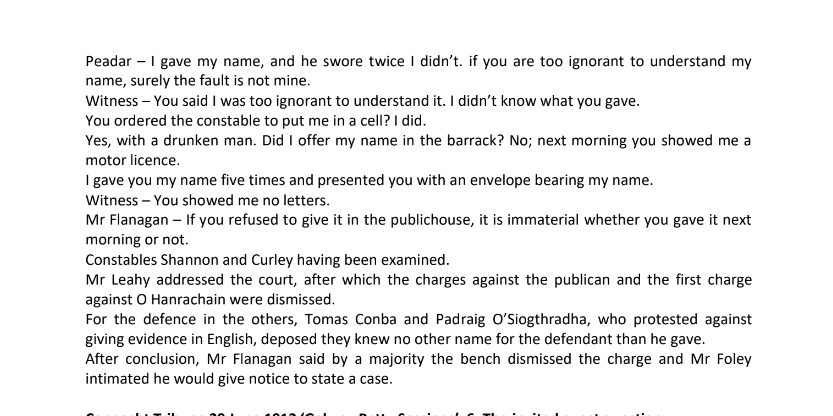
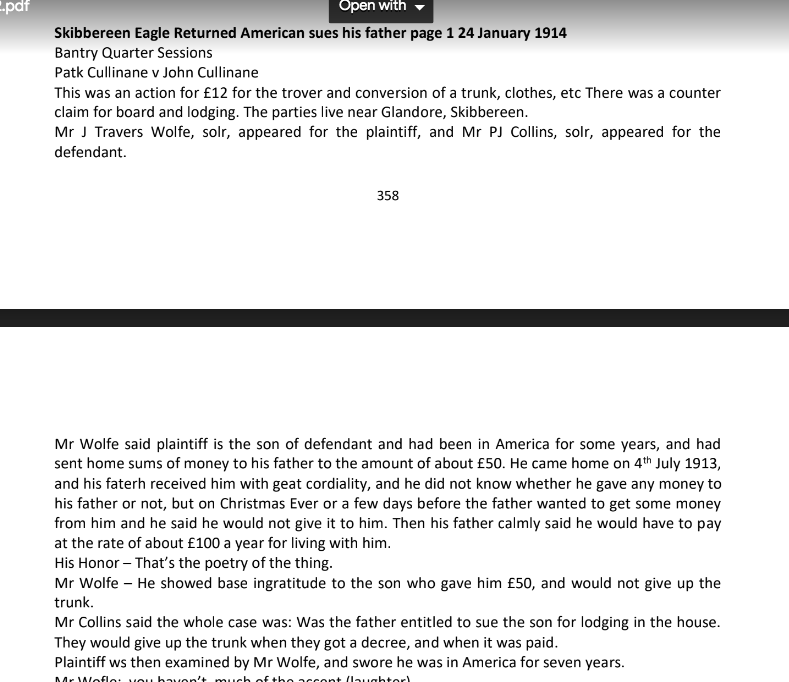
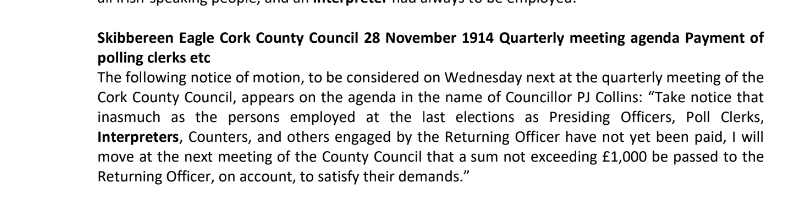
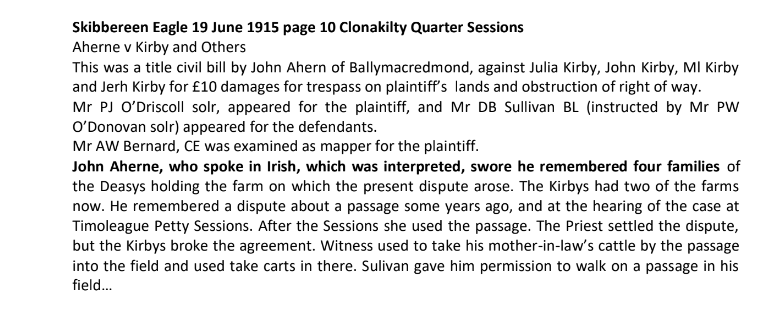
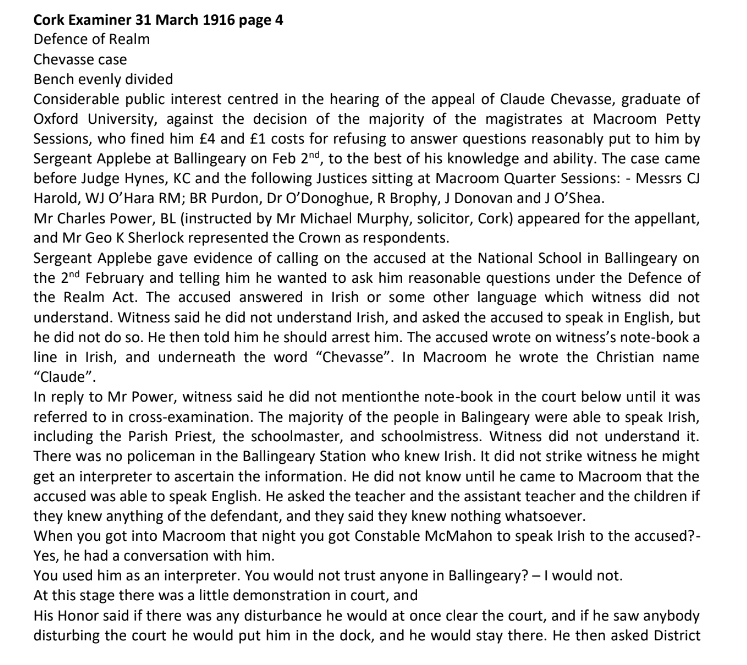
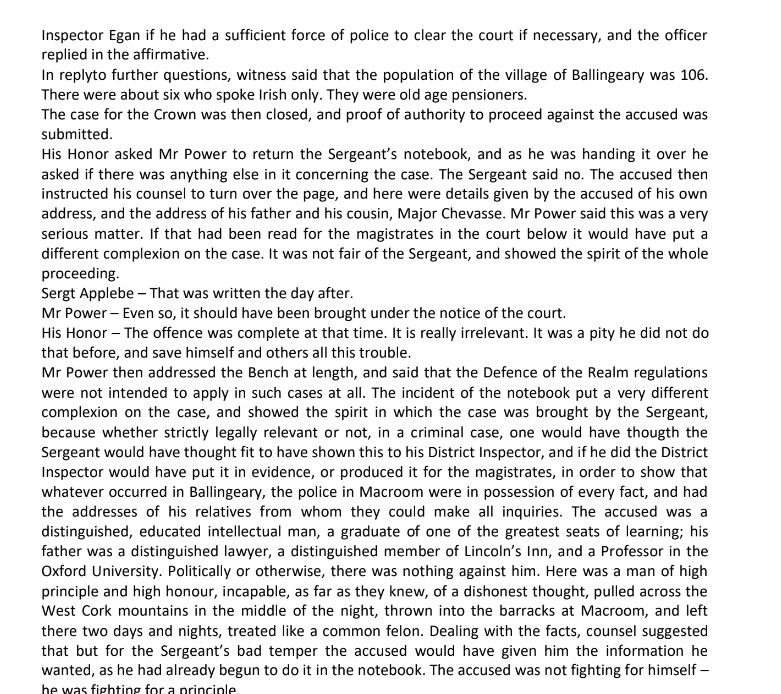
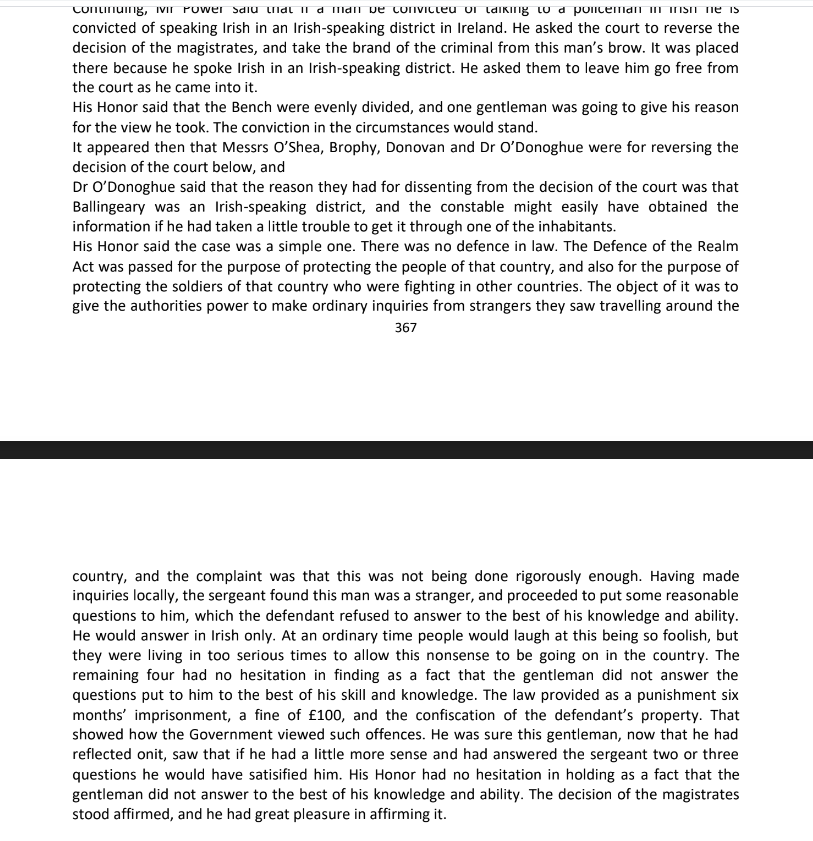
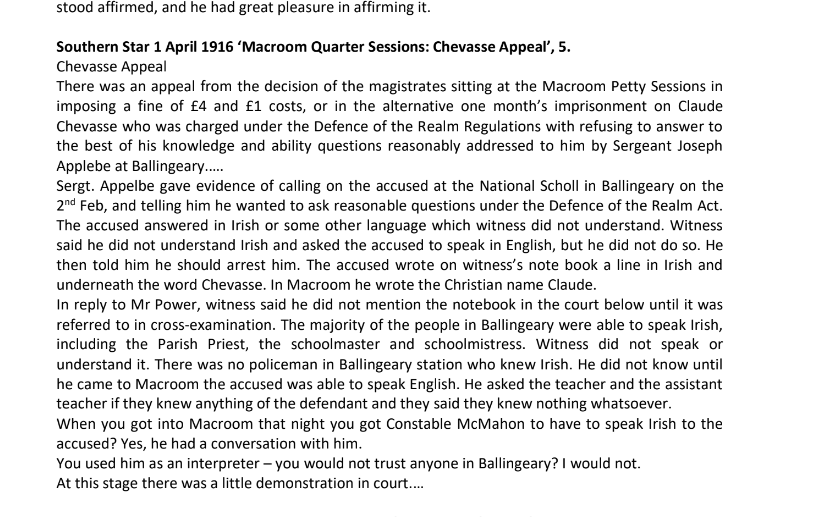
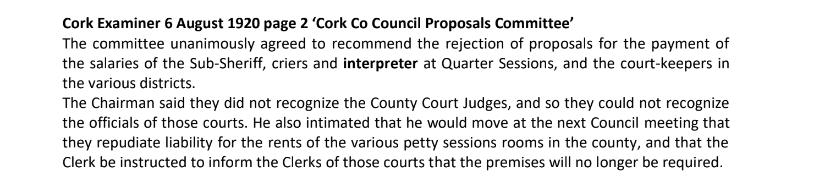
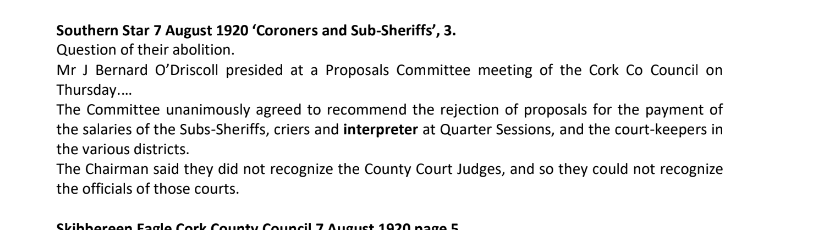
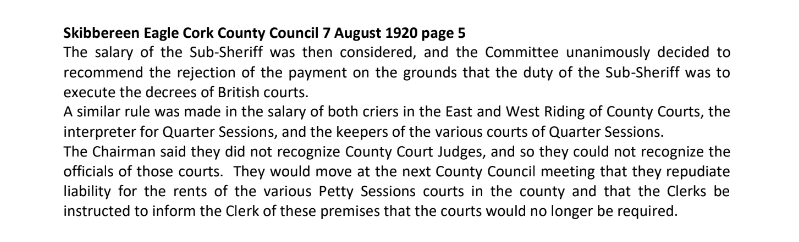
Irish Speakers, Interpreters and the Courts 1751 – 1921. Mary Phelan 286PP Four Courts Press Dublin in Association with the Irish Legal History Society. Price €55
The Administration of Justice (Language) Act (Ireland) 1737, (herein after referred to as the 1737 Act), stipulated that all legal proceedings in Ireland should take place in English, thus placing Irish speakers at a huge disadvantage, obliging them to communicate through others, and treating them as foreigners in their own country. Gradually, over time, legislation was passed to allow the grand juries, forerunners of county councils, to employ salaried interpreters. Drawing on extensive research on grand jury records held at national and local level, supplemented by records of correspondence with the Chief Secretary’s Office in Dublin Castle, this book provides definitive answers on where, when, and until when, Irish language court interpreters were employed. Contemporaneous newspaper court reports are used to illustrate how exactly the system worked in practice and to explore official, primarily negative, attitudes towards Irish speakers
Saunders’s News-Letter 7 November 1836 page 2 Court of Exchequer – Saturday Nisi Prius Chief Baron Tithes Recels – Cork William Hogarthy and William Rownan were brought up in the custody of the commissioner of rebellion, for not answering the bill filed by the plaintiff in the cause, for the recovery of tithe composition. Rownan stated that he did not get any notice to pay the money before he was arrested. Hogarthy could only speak Irish, and his fellow-prisoner was his interpreter, from whom the court learned that he was in a state of great destitution, his wife having been that day obliged to pledge an article to support him in Newgate. The prisoners were then conveyed to the Marshalsea.
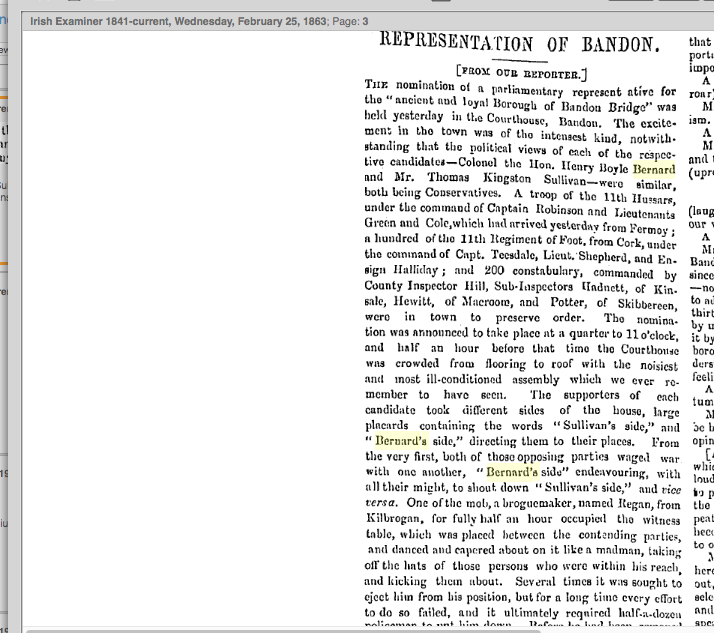
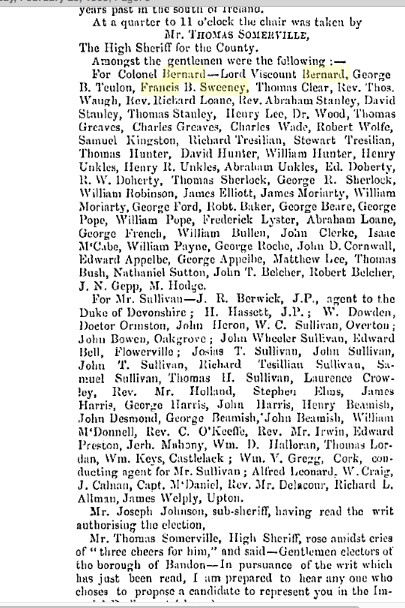
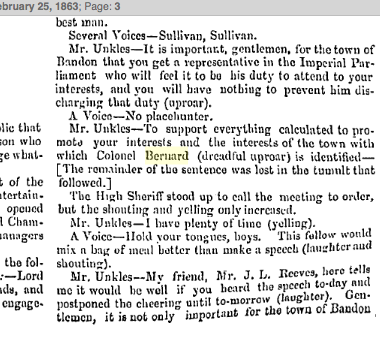
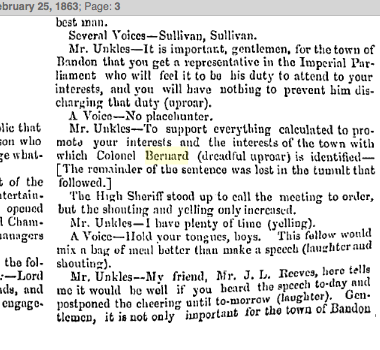
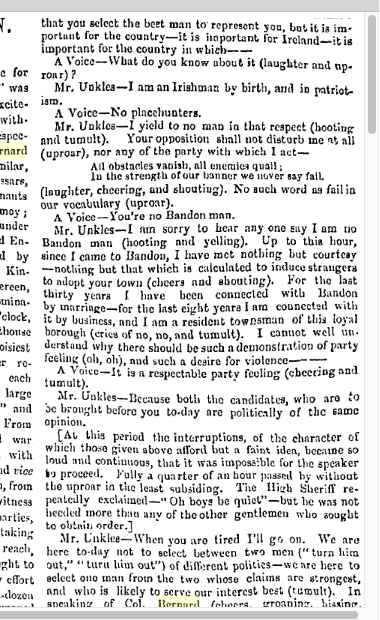
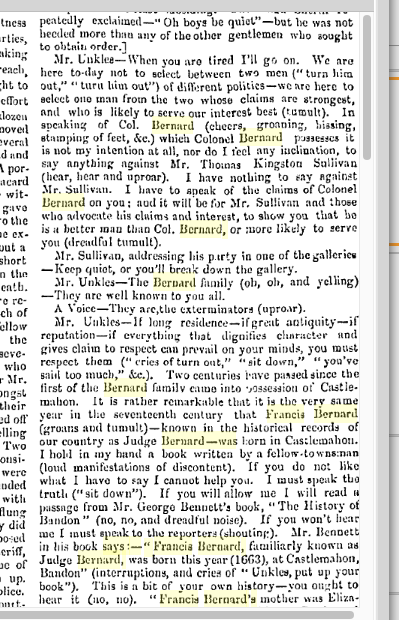
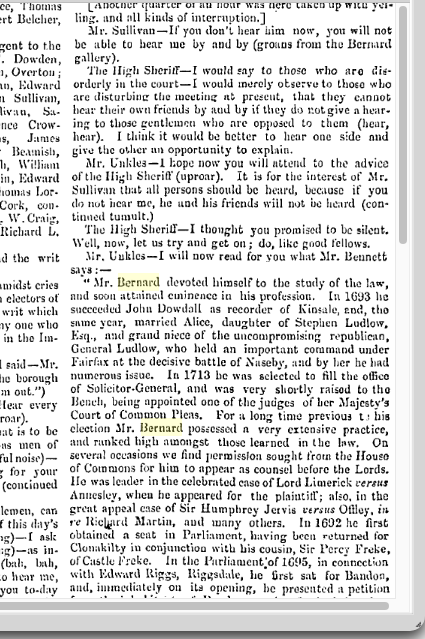
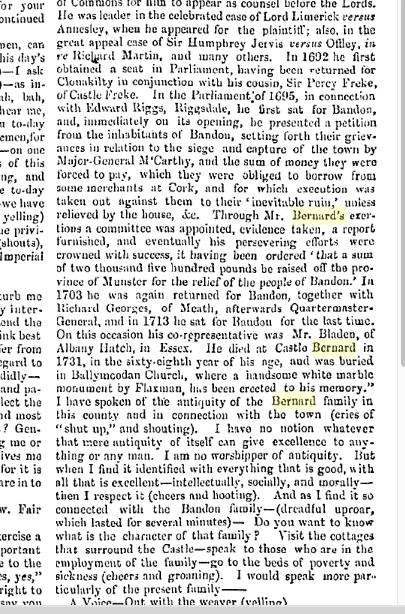
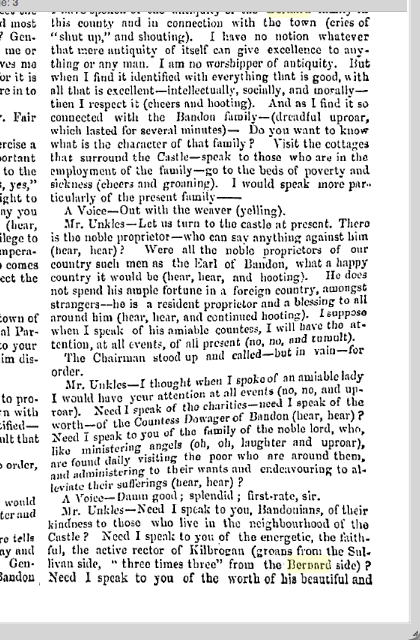
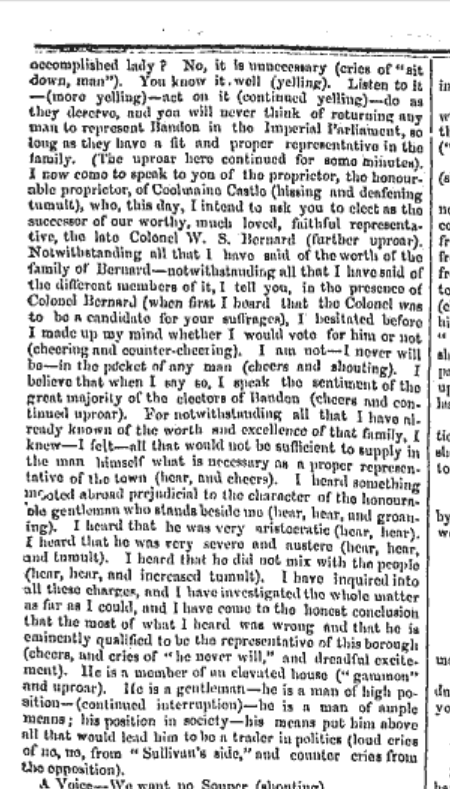
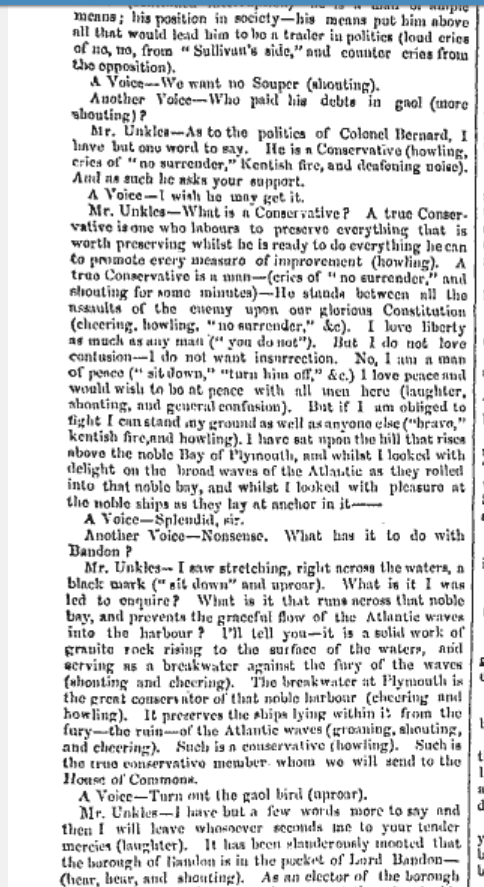
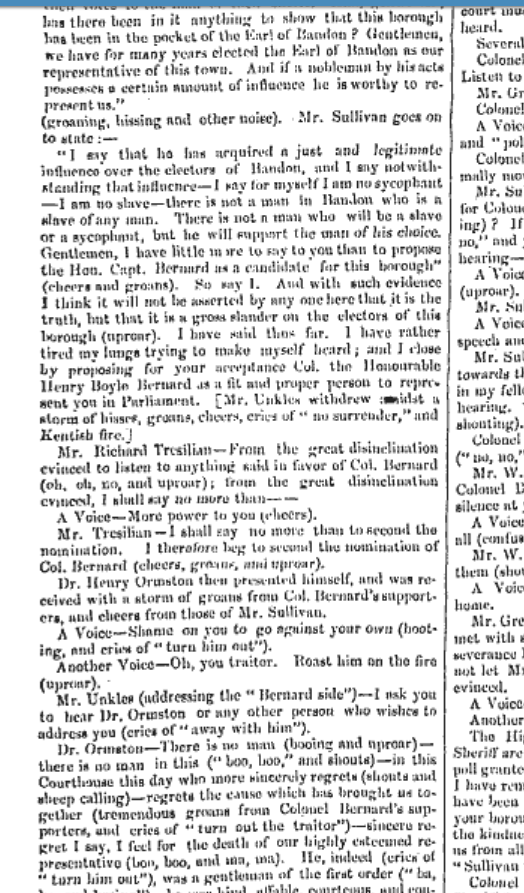
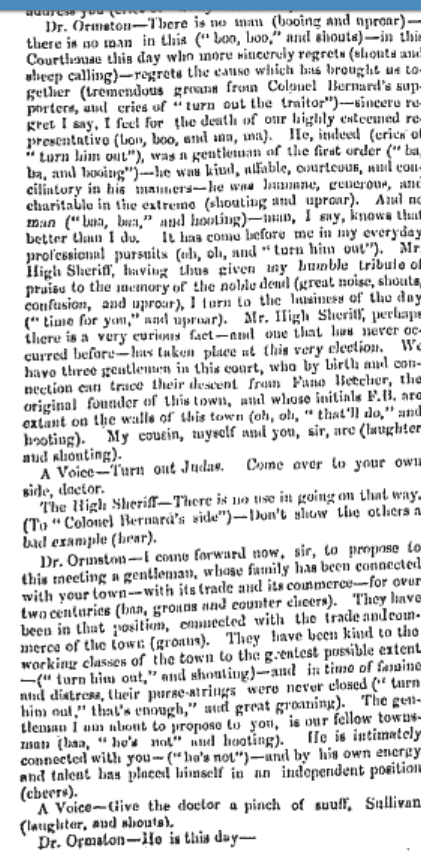
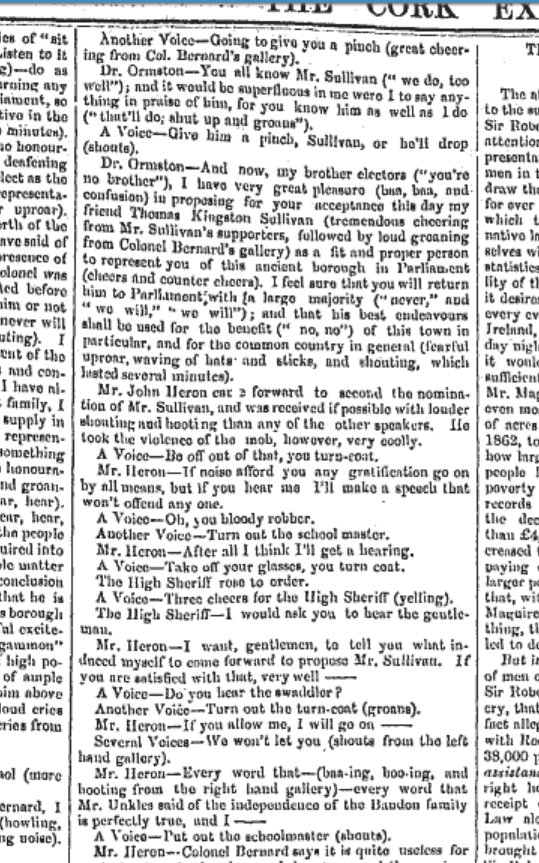
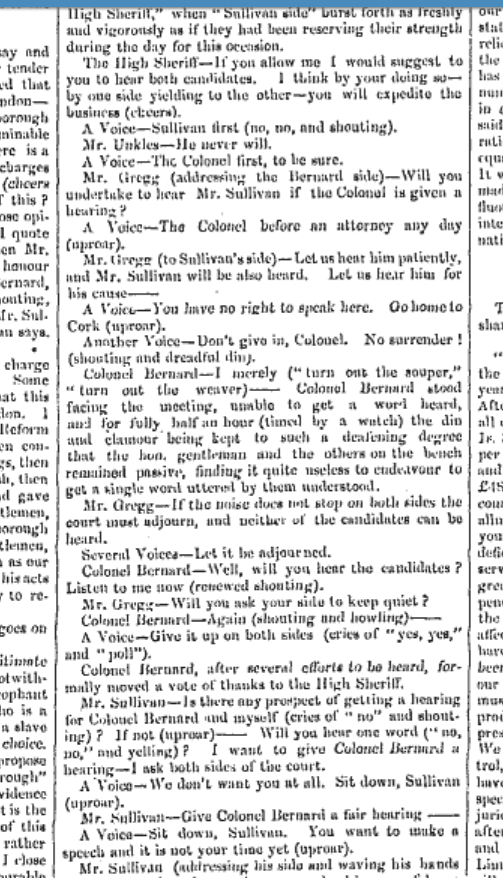
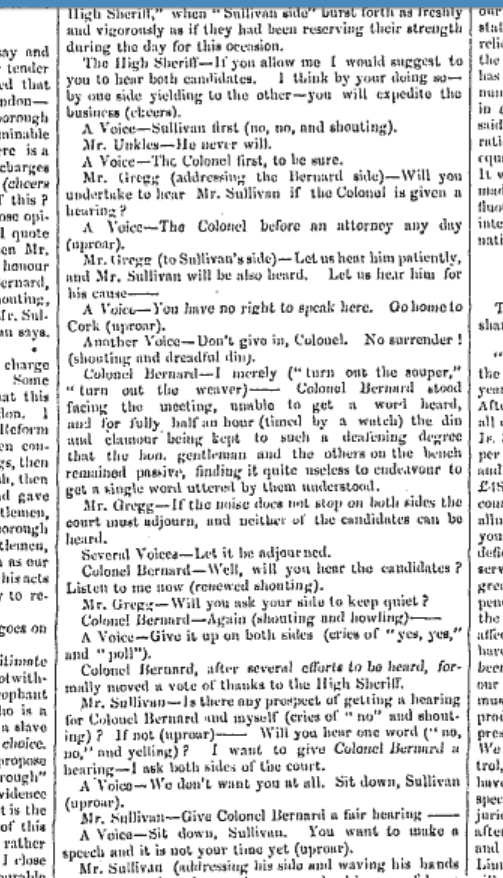
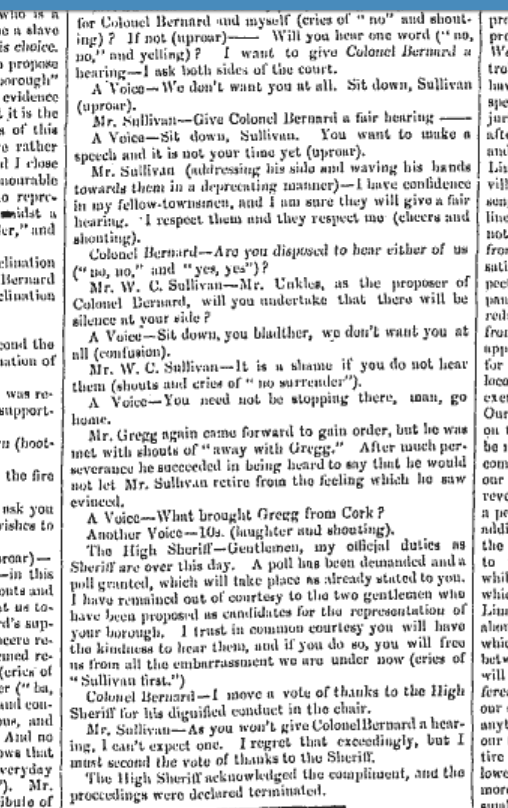
Bandon election of MP to London Parliament 1863, Honourable Henry Boyle Bernard versus Thomas Kingston Sullivan Esq., Tanner, with electors Names.
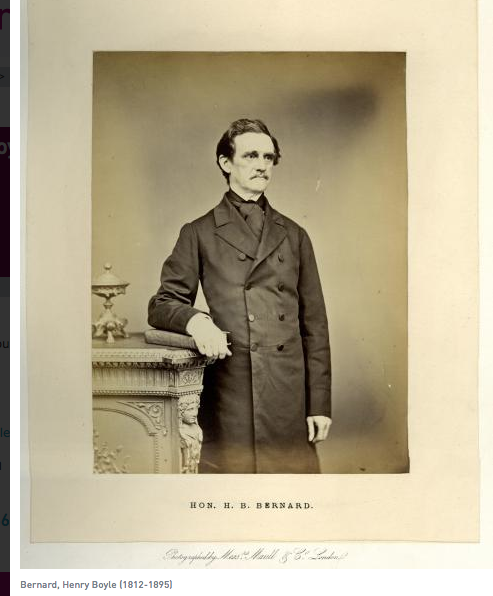
Colonel The Honourable Henry Boyle Bernard (1812-1895), Castle Bernard, Educated Eton. He was the third son of James Bernard, 2nd Earl of Bandon (1785–1856) and his wife Mary Susan Albinia Brodrick. Co. Grand Master Orange Order Colonel Henry Boyle Bernard. Commanded 87th South Cork Light Infantry, Coolmain (with 48 acres leased from Stawell family), Kilbrittain in summer, 1876-6. Supporting Alexander O’Driscoll, J.P. suspended, Bandon 1841. He was elected at a by-election in February 1863 as the Member of Parliament for Bandon, filling the vacancy caused by the death of his uncle William Smyth Bernard (a son of the 1st Earl of Bandon). Elected Conservative MP for Bandon in 1862? defeated Thomas Kingston Sullivan, Esq., Solicitor, defeated 1868, election by William Shaw, Bernard received no Catholic votes. Subscriber 1861 to Smith’s History of Cork. Cork Spring Assizes Juror 1863. Committee member Bandon Navigation Scheme 1842. Member provisional Committee projected Bandon to Bantry Railway 1845. Anti-Repeal Meeting, Dunmanway 1845. 1861 Ringarone Schools funded by incumbent, gratuities and Church Education Society. School at Coolmain western end maintained by Hon. Colonel Bernard. Used to bring Regiment to Coolmain after exercises in Bandon prior to being disbanded for the harvest. Prior to death declared bankrupt. 1884, signed a protest against the dismissal of Lord Rossmore, Head of Orange Order, Monaghan.
William Conner Sullivan Esq., (1809-1886), Overton, Bandon, tannery proprietor, married 1838 Dora, 4th daughter of R. Treselian. Churchwarden Kilbrogan, 1833. Hill House, Bandon, William C. Sullivan was leasing this house from the Devonshire estate in 1851 when it was valued at £20. It is labelled Barrett’s Hill House on the 1st edition Ordnance Survey map but as Hill House on the 25-inch edition of the 1890s. It does not appear to be extant now. 1845 publicly thanked the Bandon Agricultural Society for endeavours in bringing the railway to Bandon which would shortly advocate for land improvement. In 1886 probate to widow £10 probably transferred its properties prior to death. Brother of Thomas Kingston Sullivan, solicitor major property owner, whose granddaughter Anne Winifred Sullivan became the Ann W Sullivan was the fourth wife of the 2nd Duke of Westminster, the Sullivans were tanners and it was from that Tanning family that the second Duchess of Westminster – Ann Sullivan – was descended so to get from tanning in Bandon to that position in society is staggering given that it was only a handful of generations.
Associate of Thomas Kingston Sullivan:
John Hurley, Esq., Brewer, Malster and Hop Merchant, Chapel Lane, Bandon. 1832 election voted for Biggs. with Eugene O’Neill invited Daniel O’Connell to a dinner of the Reformers of West Riding. 1841 meeting to improve navigation on Bandon River. 1842 O’Connell Tribute, Bandon. Involved in Bandon Agricultural Society advocate land improvement and use of native resources, 1845 publicly at the Show. Donor to Bantry Convent of Mercy. Part of a group of local improvers cross political and religious what Dean Swift would, call Irish patriots who make 2 blades of grass where 1 grew before, including William Connor Sullivan and T. J. Biggs, Garryhankerdmore. Will 1855 proven 1849 leaves his mill, brewery, farm to brothers in law, John Hassett, Forest, Macroom, Henry Hassett, attorney, Cork in trust for wife Johanna nee Hassett. Probably the father of Charles Francis Hurley, brewer died 1874.
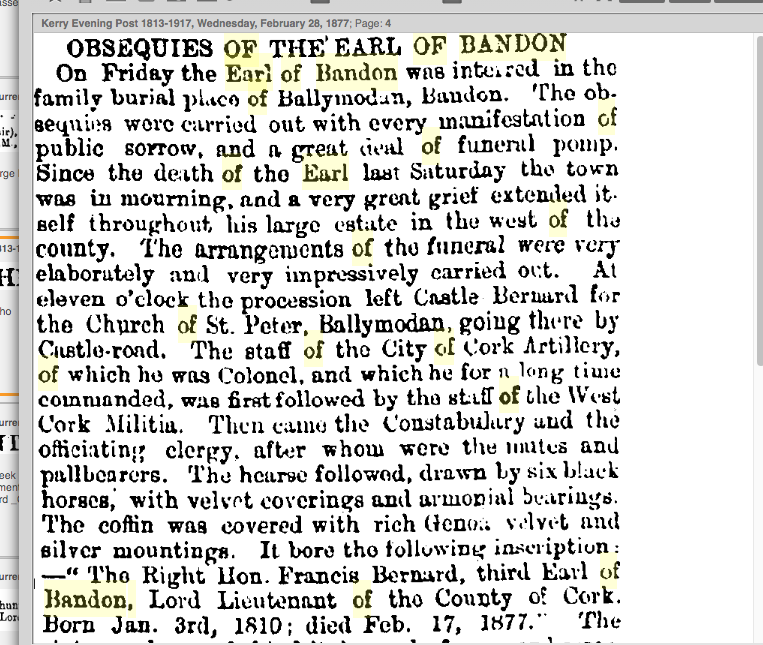
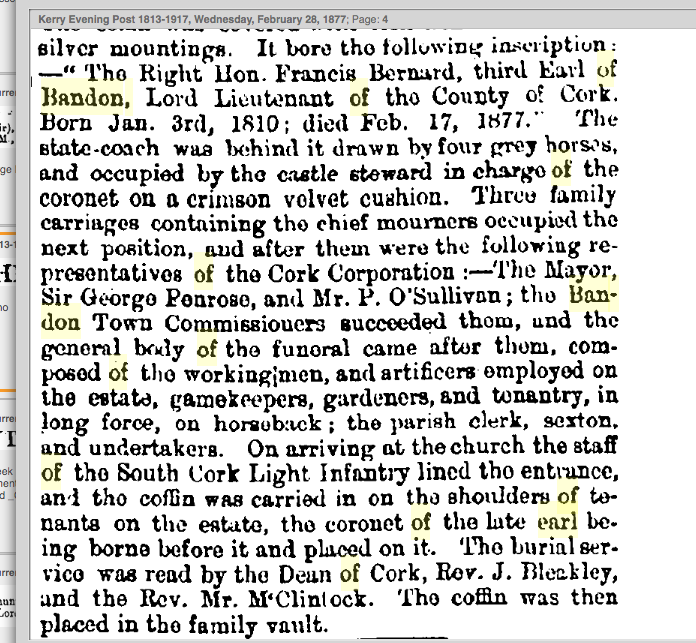
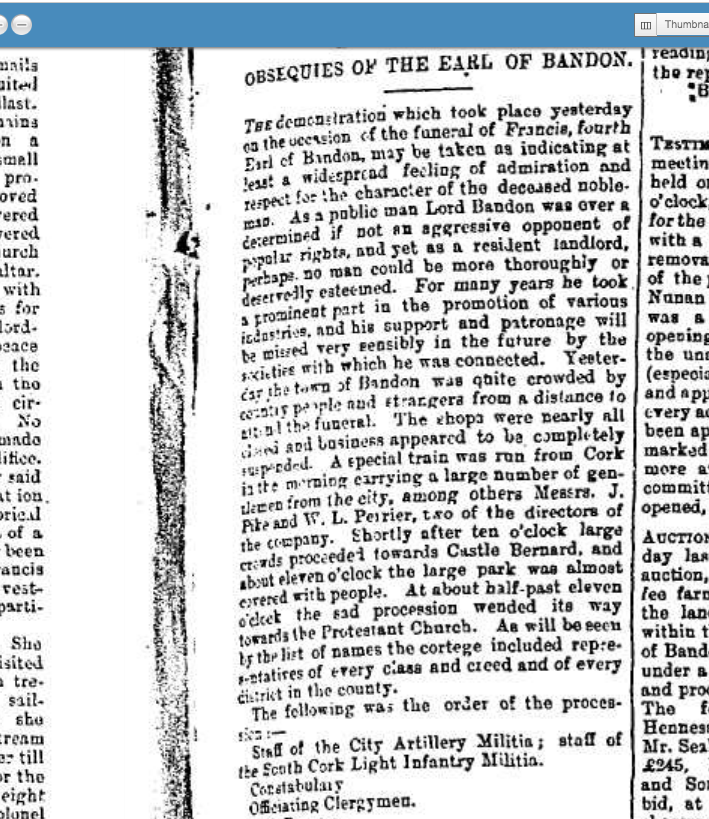
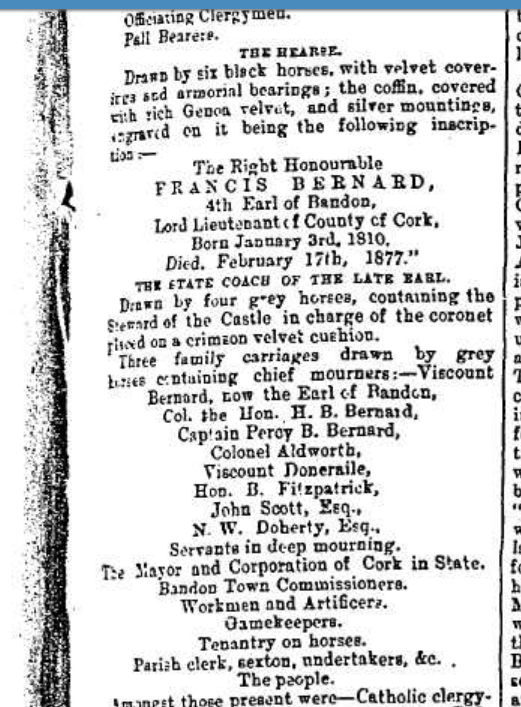
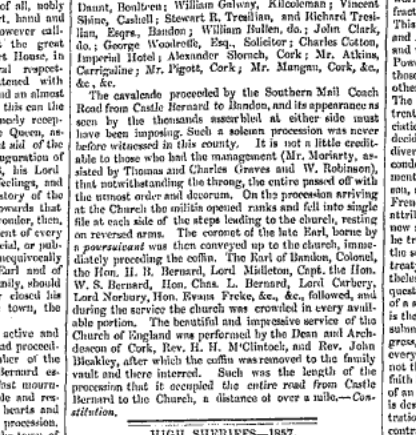
According to Burke, the first Francis Bernard settled in Ireland around the time of Elizabeth I. In 1703 Francis Bernard purchased parts of the Earl of Clancarty estate in the barony of Muskerry, including Ballytrasna. A descendent, also Francis Bernard, was created Viscount Bernard and Earl of Bandon in 1800. The Earl of Bandon’s estate in county Cork amounted to almost 41,000 acres in the 1870s. At the time of Griffith’s Valuation, the estate was among the principal lessors in the parishes of Skull, barony of West Carbery, Ballinadee, Ballymoney, Desertserges, Kilmaloda, Kinneigh, barony of East Carbery, Ardfield, Castleventry, Kilkerranmore, Kilmeen, Lislee and Ross, barony of Ibane and Barryroe, Liscarroll and Buttevant, barony of Orrery, Kilmore, Knockavilly, barony of Kinalea, Athnowen, barony of East Muskerry, Caherlag, Carrigtohill, barony of Barrymore and Ballymodan, barony of Kinalmeaky. A Colonel Bernard, resident in India, was the owner of over 900 acres in county Waterford in the 1870s. The Waterford estate derives from Anne Bernard, who married Robert Foulkes of Youghal in the eighteenth century but bequeathed her estate to her nephew, Stephen Bernard. Sadleir, referring to the 1770s, mentions “Barnard of Prospect Hall, lives mostly in London” and notes that Stephen Bernard was MP for Bandon, 1727-1757.The newspaper account differ in the colour and number of the horses at the funeral
Like the nearby Devonshire Estate the Bernard/Bandon Estate seems to have tested the tenant relatively well. Unlike Viscount Berehaven of Bantry and his O’Sullivan cronies on Beara such as Patrick O’Sullivan, Esq, Millcove, or Patrick O’Sullivan, Esq., Carriganass, Kealkil. Most Protestant Landlords treated their tenant better then the Catholic O’Sullivans
The Bernards/Earls of Bandon were largely resident even though they hd a London house. The were active in promoting local railway and agricultural development. The had an extreme form of Protestantism active in funding proselytising such s that of the Rev. Fisher in Toormore and others.
Around 1810 the central estate at Castlmahon employed 200 had its own schools dn the Estate pid pensions.
There was an annual dinner for the more substantial tenants in Bandon this was a sober severe affair.
The Bernard Kerry Estate in contrast a completely different type of celebration for the mostly Catholic large tenants. Drink flowed, plenty of Irish music fiddlers, uileean pipe players.
On both the Devonshire and Bandon Estate contrary to common perception there were quite a number of substantial Catholic tenants such as the Crowleys of Ballyourane in Caheragh one of the largest tenant farmers in West Cork.
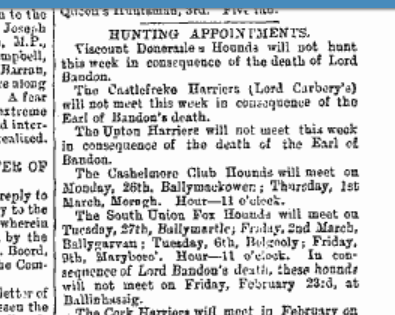
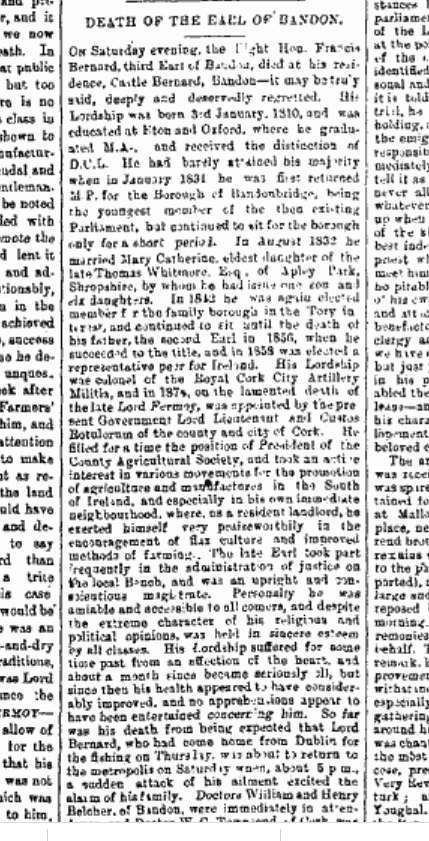
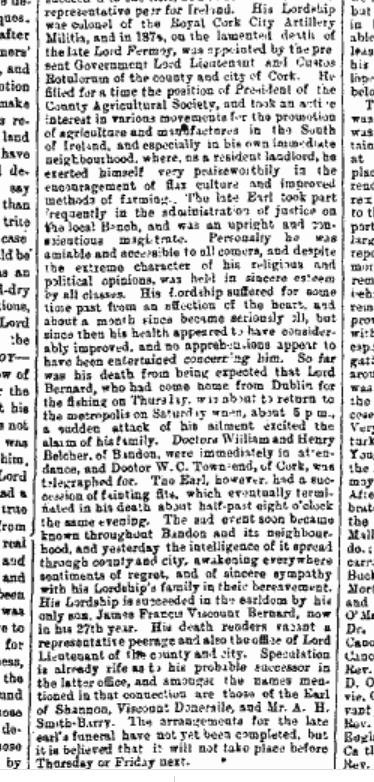
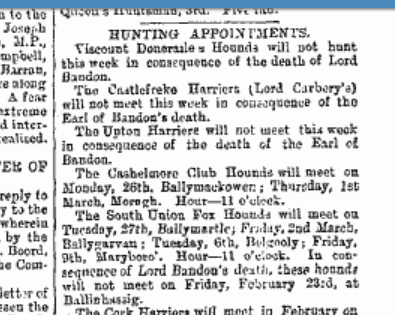
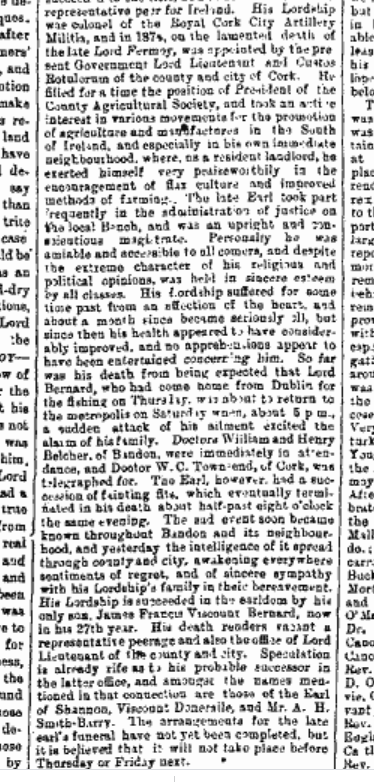
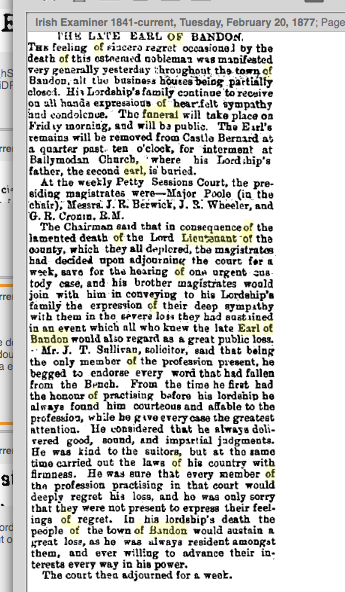
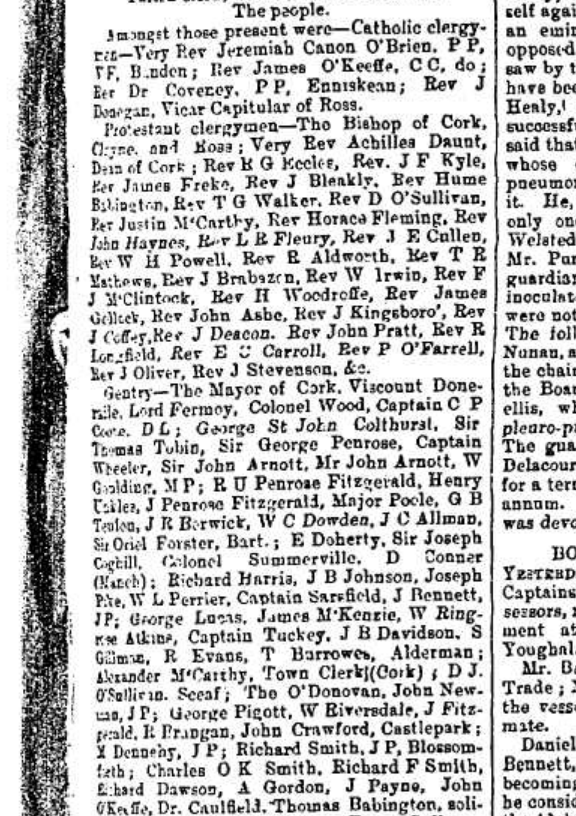
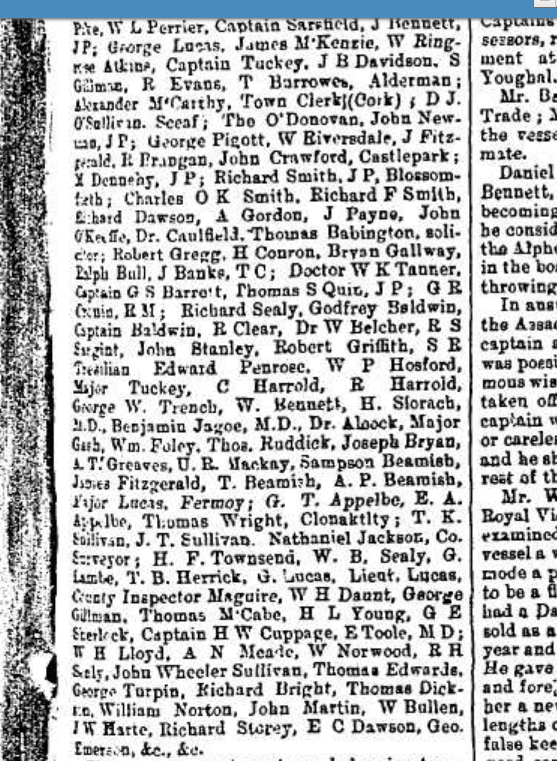
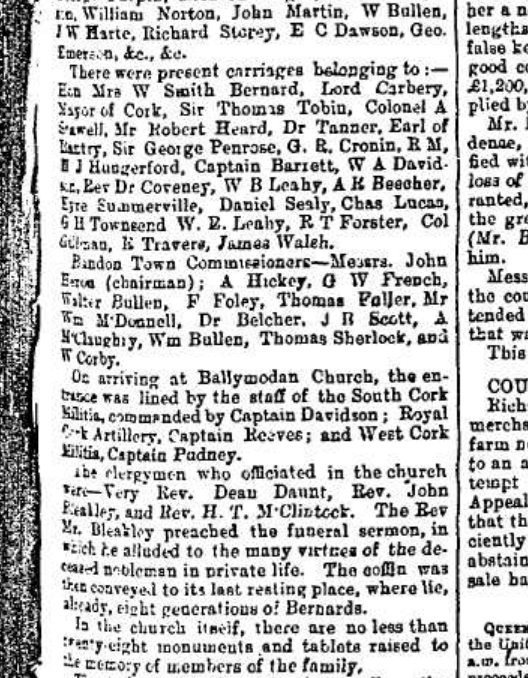
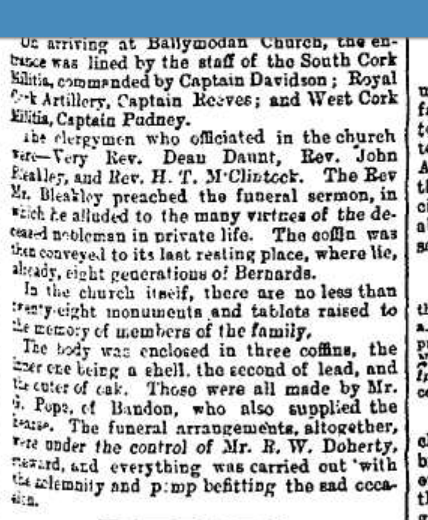
Right Honourable Francis Bernard, 3rd Earl of Bandon, Eton, M.A., D.C.L, Oxford (1817-1877), Castlebernard, son Francis 2nd Earl of Bandon (1755-1830) and Mary Susan Albina Brodrick. MP Bandon 1831. Chairing Famine Relief Meeting Dunmanway 1846. 1857 member Kilkenny and South-East of Ireland Archaeological Society. Member Irish Society Antiquaries 1861. Colonel Royal Cork Artillery Militia. Subscriber 1861 Rev. Gibson’s History of Cork. Promoter flax growing West Cork 1850s. Promoting mineral development in West Cork including barytes mines on his Dereenlomane property, Ballydehob. 1870 appointed Lord Lieutenant and Custos Rotorum of Cork County. His obituary noted that despite his extreme political religious views he was allegedly held in high esteem by all classes. Frequently sitting in Bandon Petty Session Court which adjourned for a week on his death. His funeral to family crypt Ballymodan attended by Royal Cork Artillery Militia, South Cork Infantry Militia. West Cork Militia. Probate 1877, executor James Francis Bernard, 4th Earl £18,000
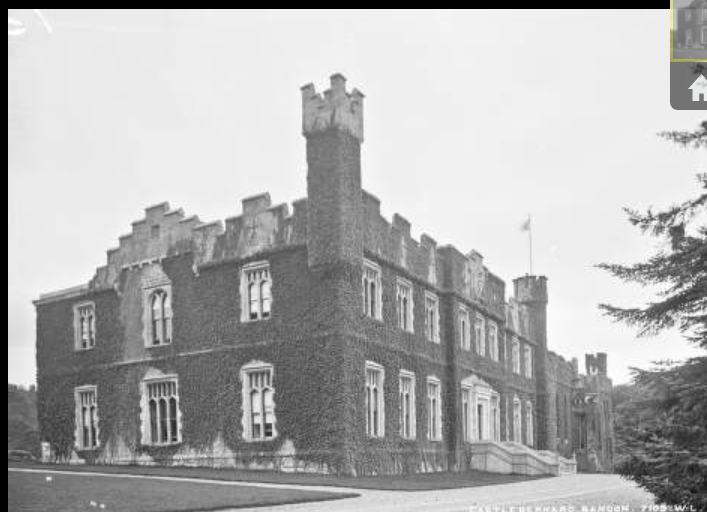
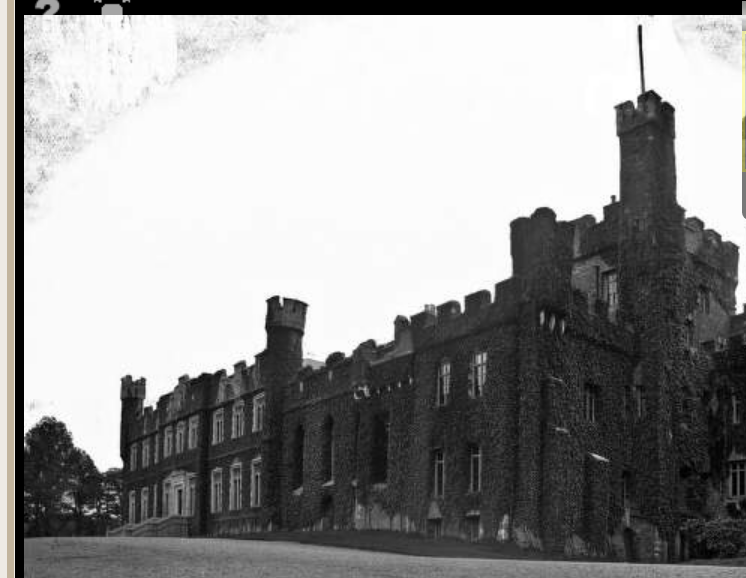
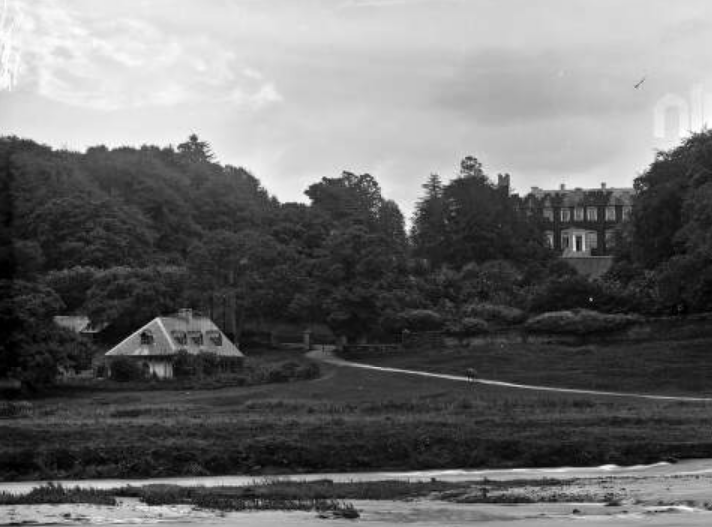
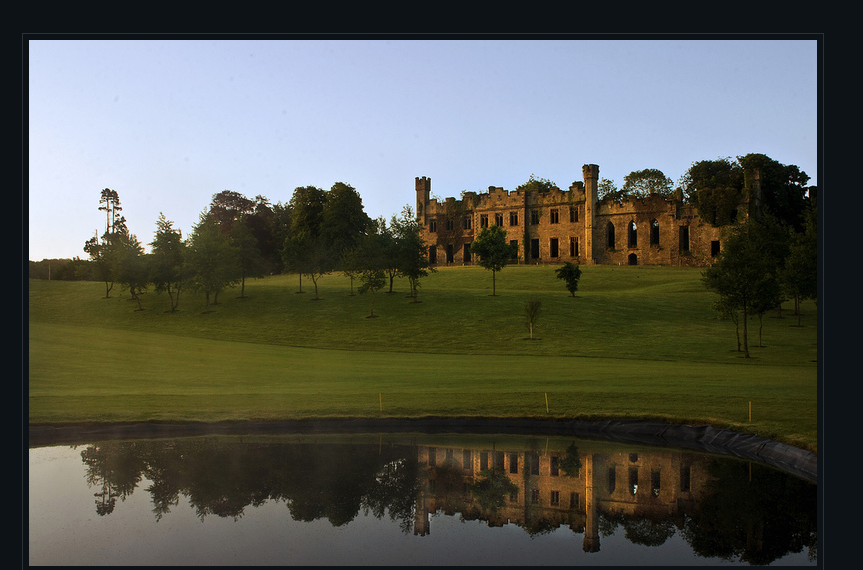
Castle Bernard, built on site of O’Mahony Castle, Burned by IRA During the Troubles:
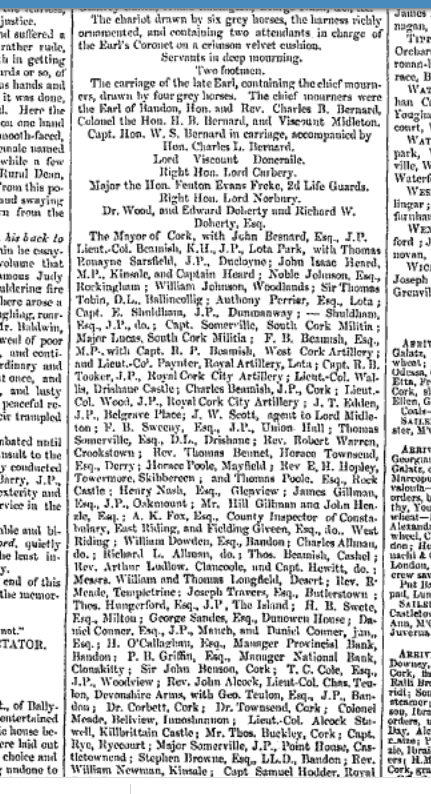
Among the mourners listed are Wheeler Dohertys. Land Agents and solicitor. By advancing mortgages to the Bernards they ended up de facto owning a large part of the estate in the late. Genealogically the Doherty are part of th Northern Uí Neill and descend from Niall of The Nine Hostages.
Around 1971 Cork County Librarian, Paddy Madden acquired their papers which are now the Bandon Estate Collection in the Cork Archives
1871 Western Tenantry Entertained by Lord Bandon on coming of age of Lord Bernard, at Durrus Court (Gearhameen). Dinner provided by James Philips of Durrus and Mrs. Fitzgerald, Cork. 1871, Meeting Courthouse, Durrus, Patrick’s Day re Alarming Spread of Smallpox
Right. Hon. James Francis 4th Earl of Bandon (1850-1924), (see also Bernard) K.P., 1871, Castlebernard, Bandon. Registered Vestryman of Christ Church, Kilmeen, 1870. 1903, Sale. Lord Bandon gives notice of his intention to sell his estates in Co Cork – extensive holdings with some 15,000 tenants. Chairman Irish Landowners Association 1910 Listed 1913, listed 1922. 1888. Landlords, Lord Bandon, Duke of Devonshire, Lord Bandon owns 40,941 acres in Co Cork, Duke of Devonshire has 32,550 acres. Two of the three largest landowners in the Co.. Grand Secretary Freemasons from 1875 – 1895 and Provincial Grand Master of Munster. Married Georgina Dorothy Evans Freke d 7th Lord Carbery and wife Harriet Shouldham, the Dunmanway Shouldhams are descended in the female line from a McCarthy heiress who converted. Castlemahon burned by IRA and kidnapped 1921
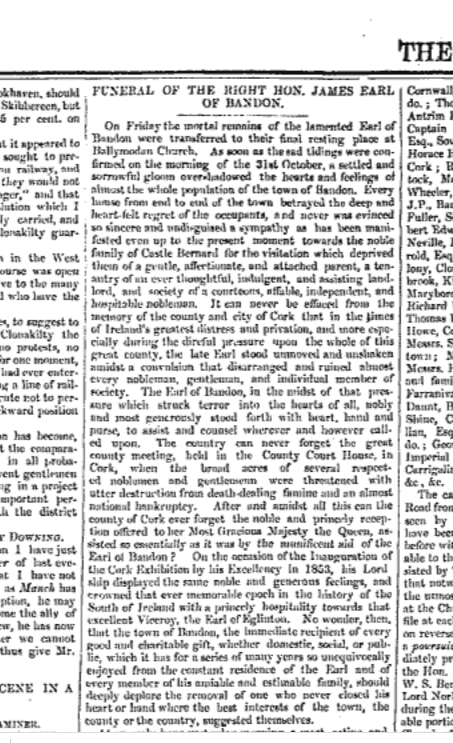
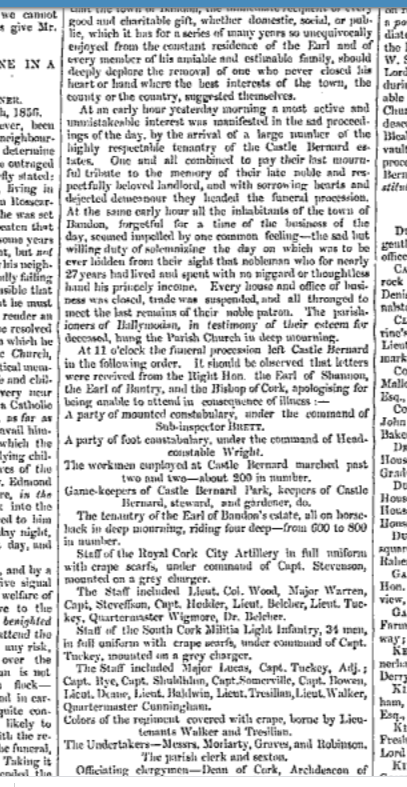
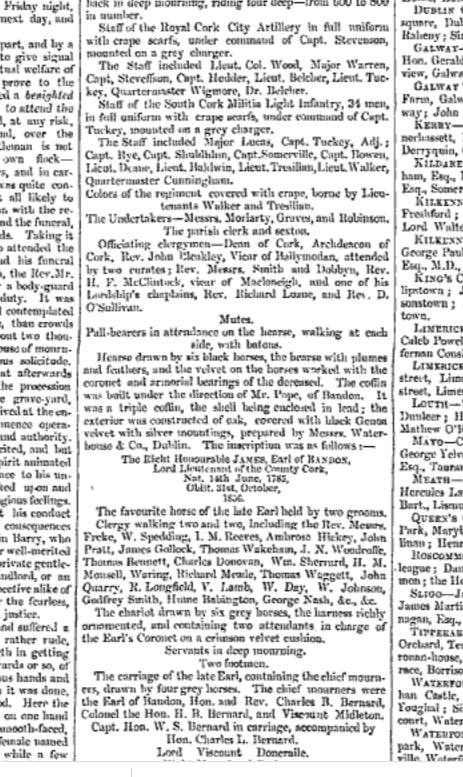
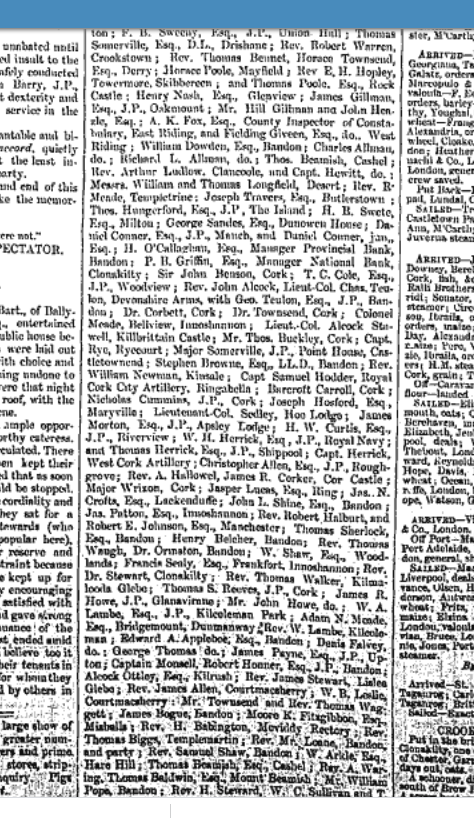
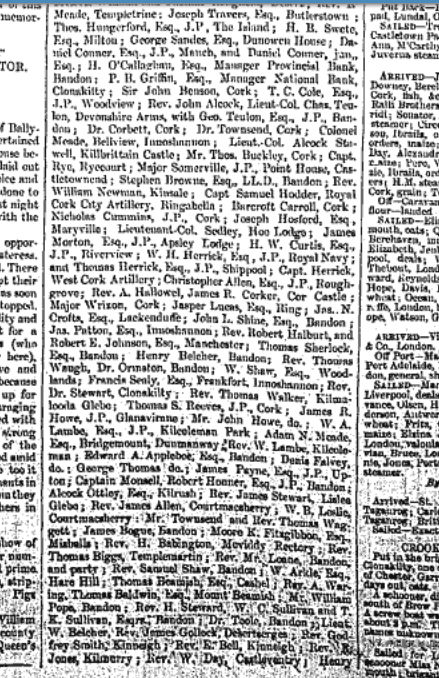
Funeral Right Honourable James Earl of Bandon 1856.
































 .
.

 West Cork History