
06 Friday Jan 2023
Posted in Uncategorized
04 Wednesday Jan 2023
Posted in Uncategorized
https://docs.google.com/document/d/1qyfnyDqmGhVbEOL_oQ7D8Sqp1bifZCHvGfnpHxXPw2g/edit?pli=1#
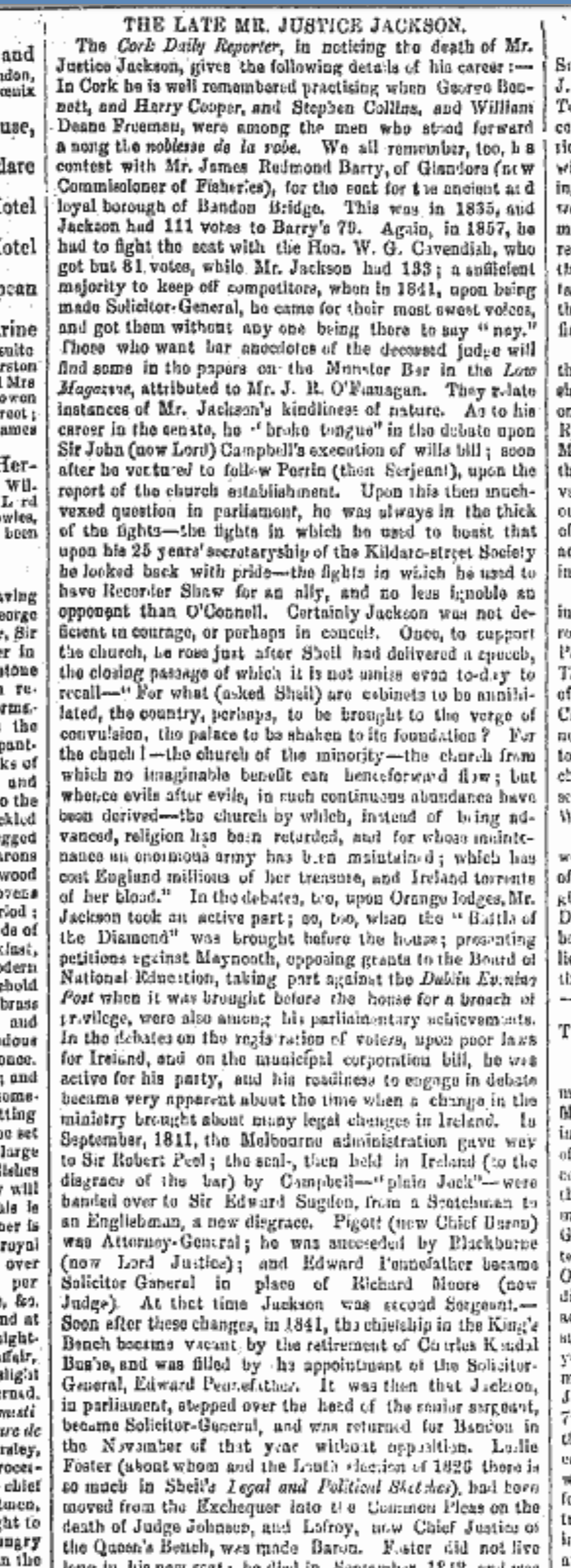
The various obituaries refer to his tenure as a Judge in complementary fashion, Like many before him he discarded his sectarian and Orange baggage on entering the 4 Courts as a newly appointed Irish Judge in 1842 and in the long tradition of Irish Judges gave a fair and impartial hearing to those who appeared before him. It would seem that in the criminal cases he was lenient in sentencing.
The 1835 Banadon election is noteworthy for the tiny size of the electorate. He won He fought the 1835 election for Bandon bridge perceived as the nominee of the Orange faction getting 111 votes against James Redmond Barry, the Liberal who got 79
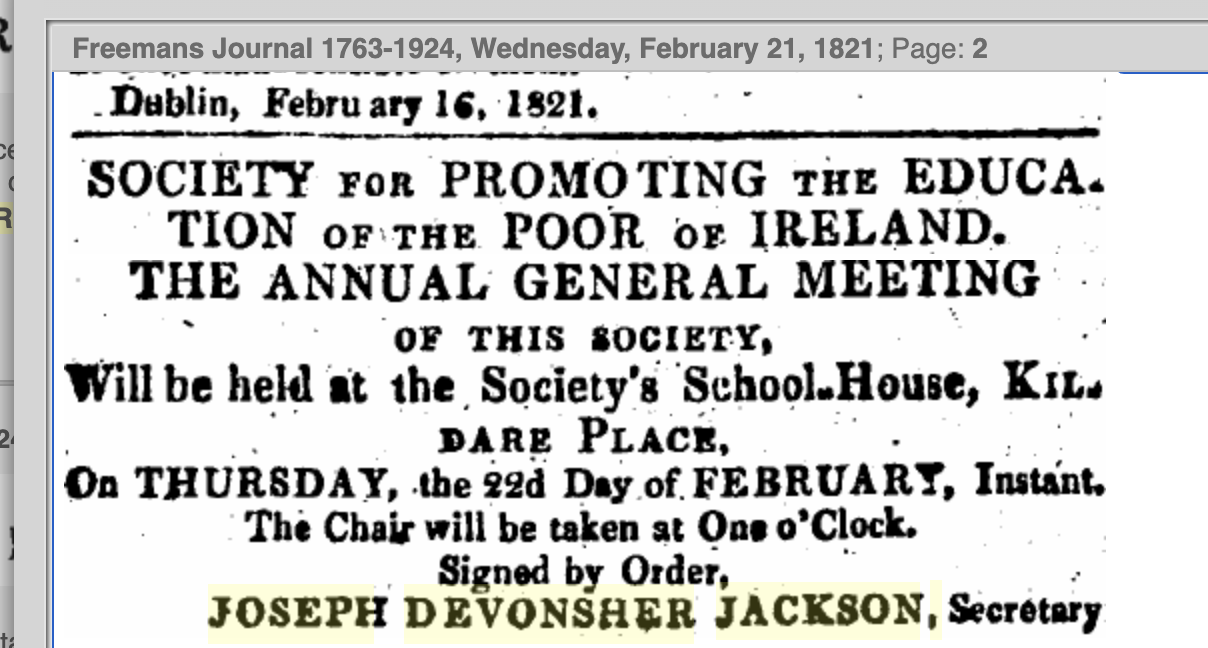
Kildare Place Society, p.2
Chairman of Co. Derry, p.11
Daniel O’Connell’s apprehensions, p.13
Conservative speech at Bandon, p. 14
James Redmond Barry, opponent at 1835 Bandonbridge election, p.23
Levee for Protestant Clergy, Bandon, p.27
Anti Jackson pamphlet, p.29
Support for the National Agricultural Movement, p.29
Appointment as Judge of Common Pleas. p.30
Support for Rev. Fisher’s proselytising mission at Altar, Mizen and other subscribers, p.32
Possible Quaker ancestry, p. 32
Memorials of deeds involving his father, p.46
Obituaries, p. 51
Probate, p.56
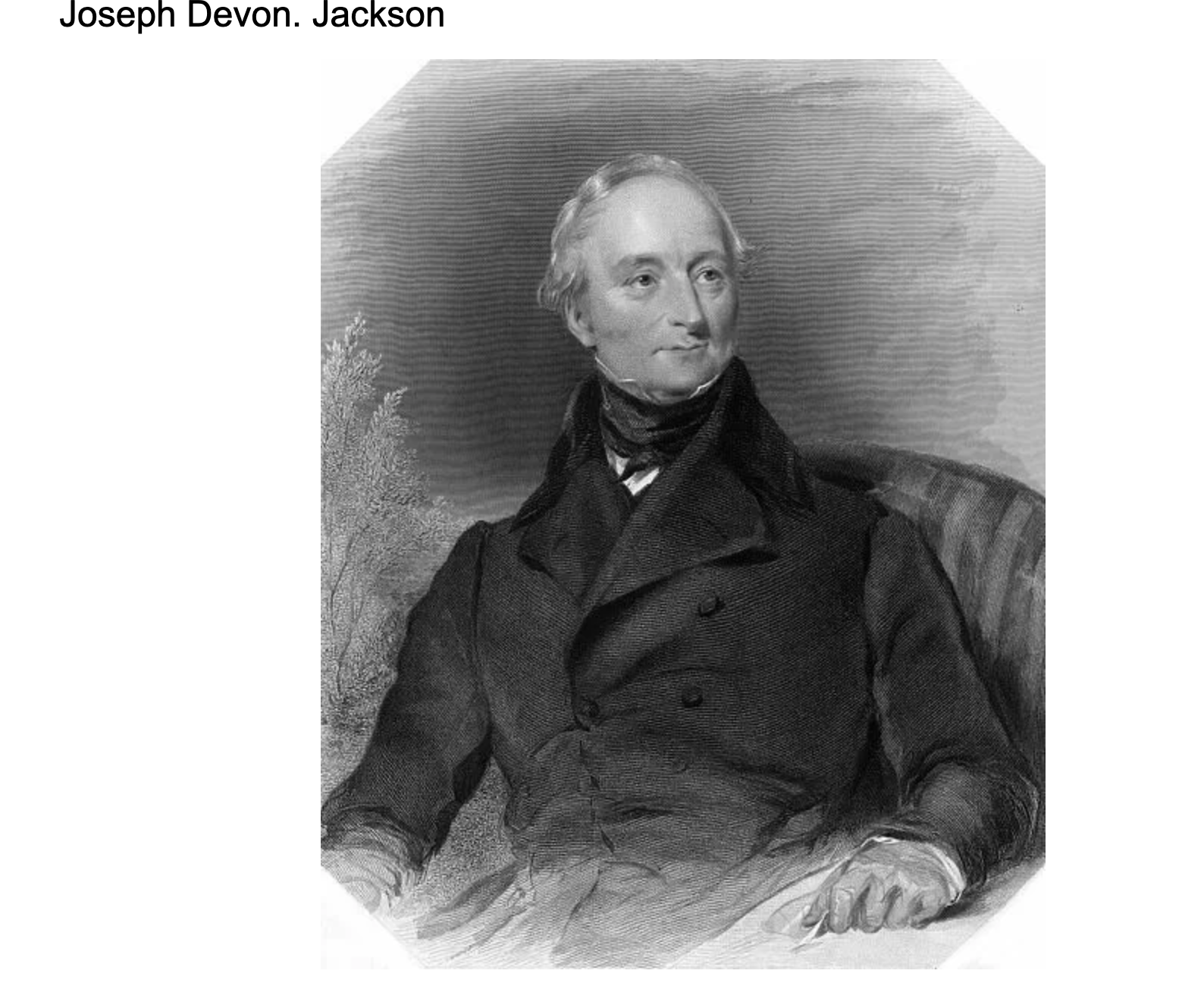
Joseph Devonsher Jackson Esq, MP, Sergeant at Law, etc (engraving) by English School, (19th century); Private Collection; (add.info.: Joseph Devonsher Jackson Esq, MP, Sergeant at Law, etc. Illustration for Ryalls Portraits of Eminent Conservative Statesmen (James Fraser, c 1830s).
..
..
Trinity College Dublin:
JACKSON Joseph Devonsher 1800 17 Strettell Portitor Co. Cork Irish Bar 1806;PC; Judge of Common Pleas (I)
Kings Inns Admission Papers:

1811
HISTORICAL BACKGROUND: THE KILDARE PLACE SOCIETY
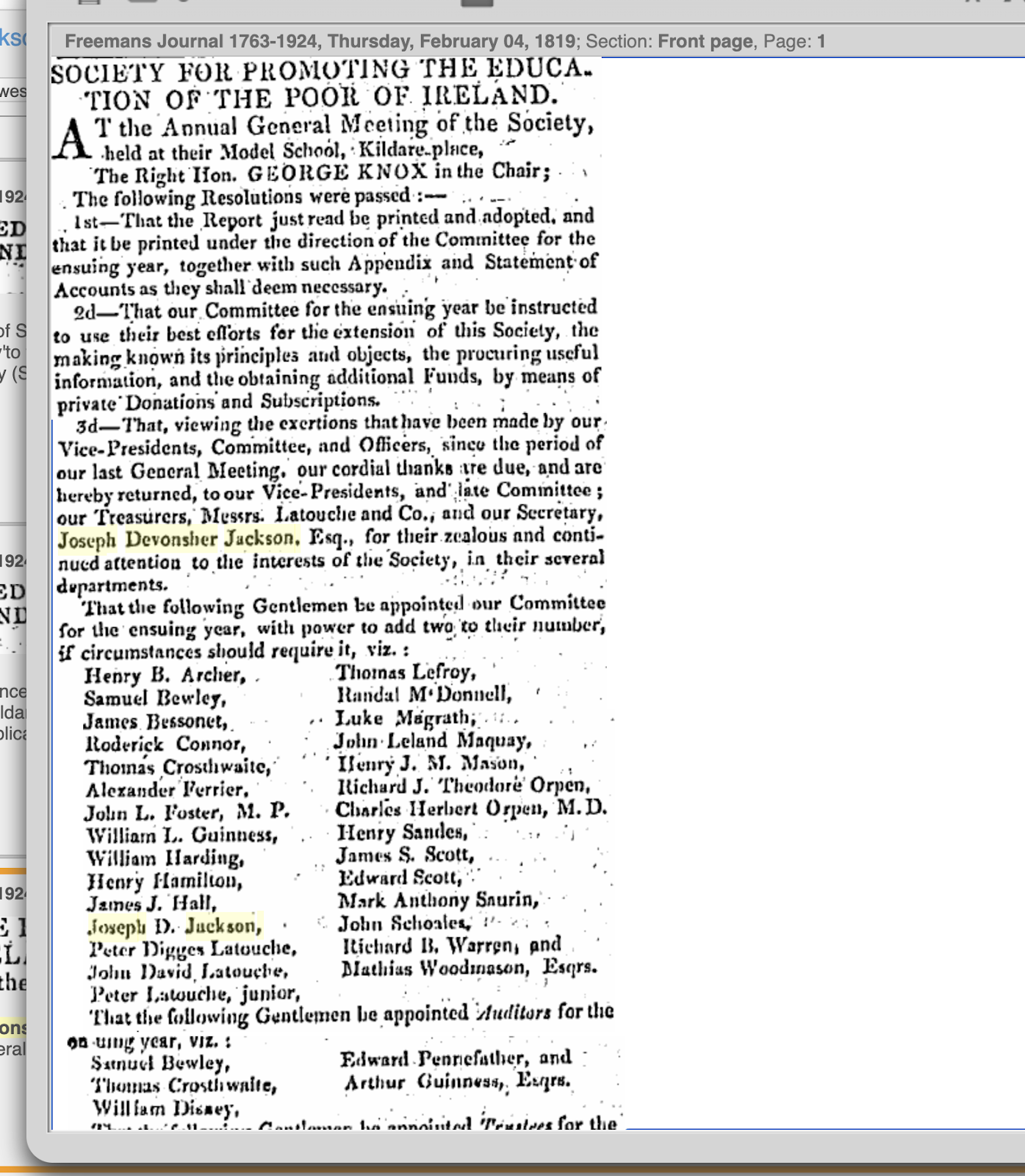
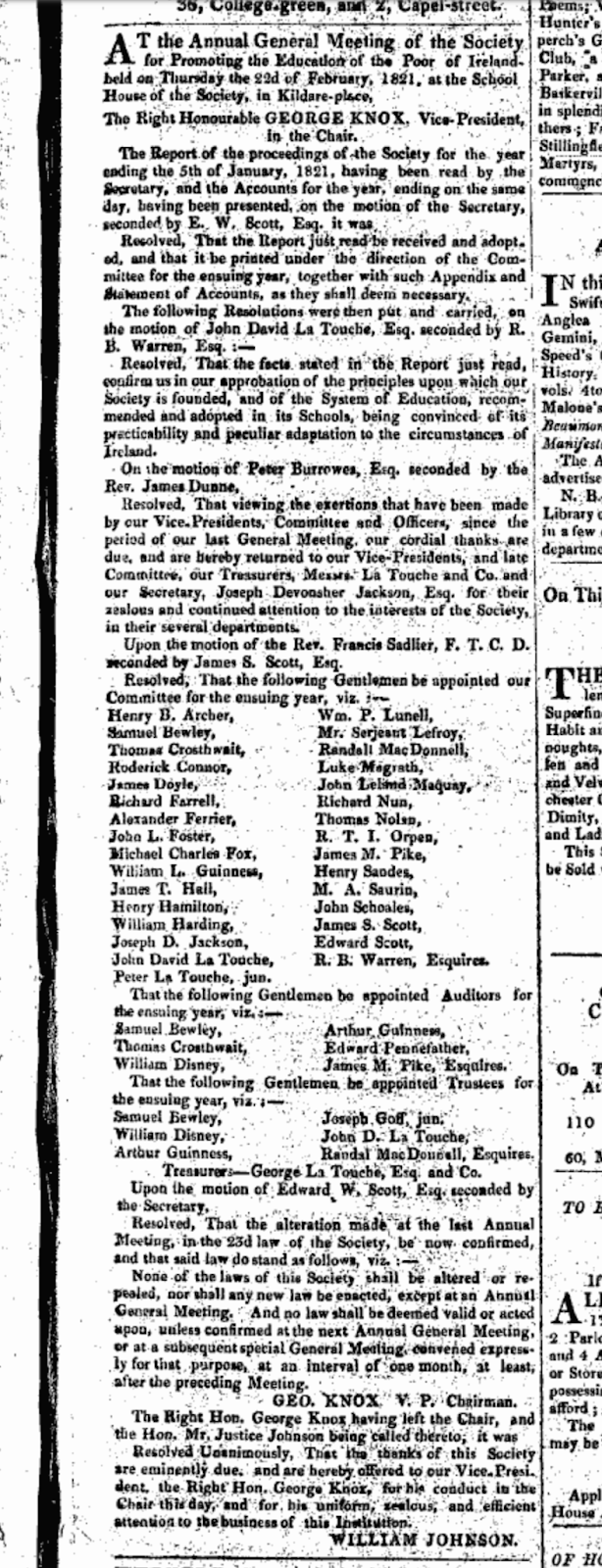
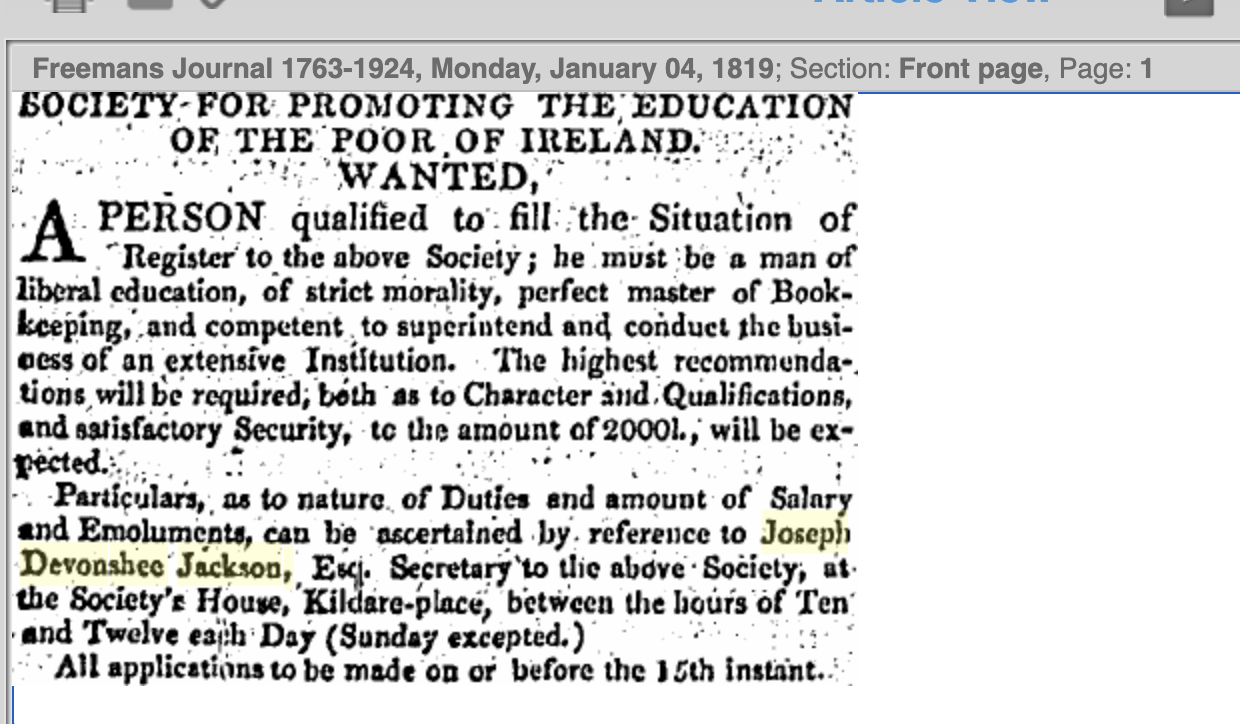
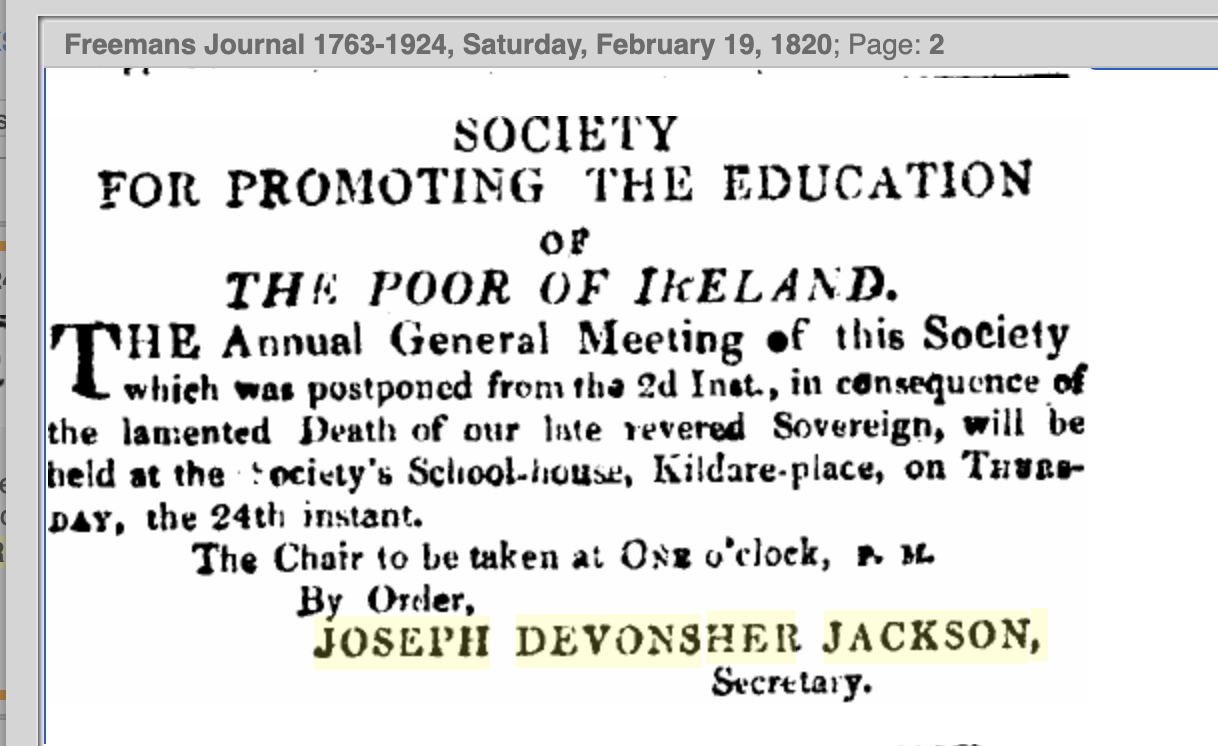
The Society for the Promotion of the Education of the Poor in Ireland, more famously known as the Kildare Place Society, was established in 1811 by a group of Philanthropic men such as Samuel Bewley, J.D La Touche, William L Guinness and Joseph Devonsher. This society was set up as a non- denominational society however; its rules stated that the bible would be read in schools ‘without note or comment’[1]. This rule caused outrage from the Catholic Church authorities and proved to be an unacceptable rule as Catholic children began to be withdrawn from the schools.
Presumably this should be Joseph Devonsher Jackson.


1826 From Chief Secretaries Letters:
| NAI REFERENCE: | CSO/RP/1826/1005 |
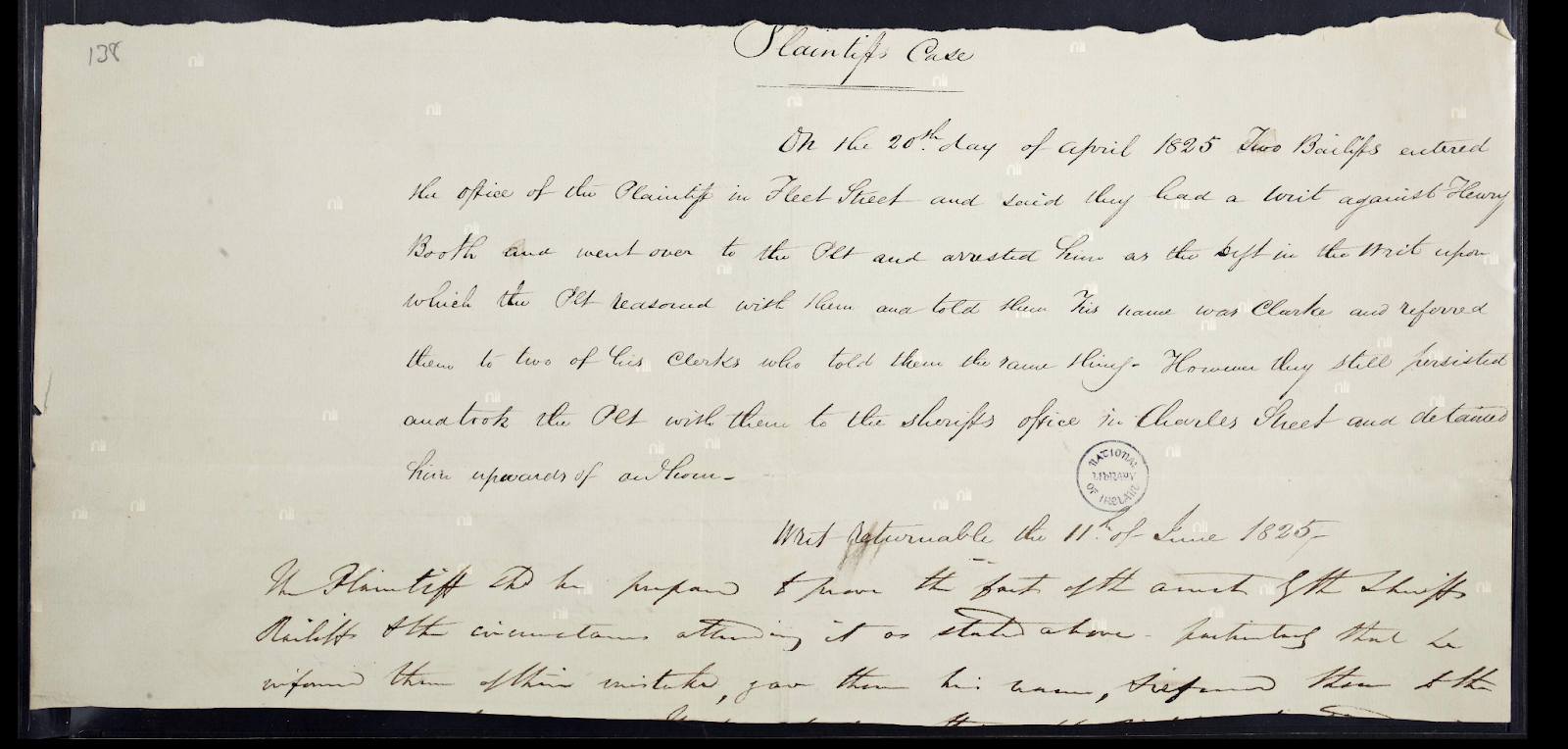
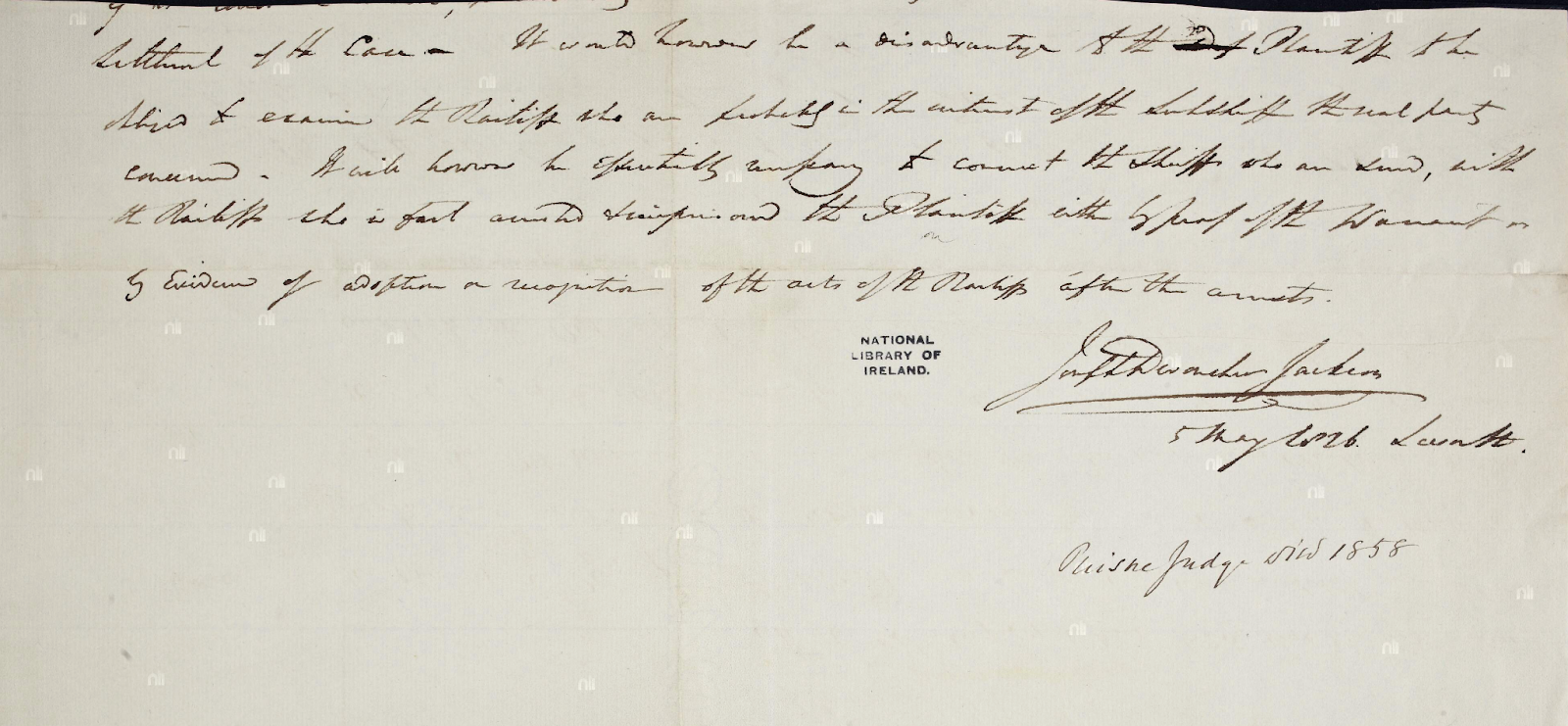
| TITLE: | File of letters from Joseph Devonsher Jackson, Secretary [to Society for Promoting the Education of the Poor of Ireland], Kildare Place, Dublin, concerning diminished government funding of the society |
| SCOPE & CONTENT: | Letters from Joseph Devonsher Jackson, Secretary [to Society for promoting the education of the poor of Ireland], Kildare Place, Dublin, to Henry Goulburn, Chief Secretary, soliciting further parliamentary grants for the [Kildare Place Society] and noting that any curtailment of funding will be attended with great prejudice to the cause of education in Ireland. Adding that they have reluctantly agreed not to provide funding towards the establishment of new schools and to limit funding to existing schools. Also copy of letter from Jackson, to William Gregory, Under Secretary, stating that the committee have agreed to abstain from making grants from its funds in support of schools in connection with other societies. |
| EXTENT: | 5 items; 15pp |
| DATE(S): | 2 Jun 1825-2 Jul 1825 |
| DATE EARLY: | 1825 |
| DATE LATE: | 1825 |
| ORIGINAL REFERENCE: | 1826/14157 |
02 Monday Jan 2023
Posted in Uncategorized
;
.
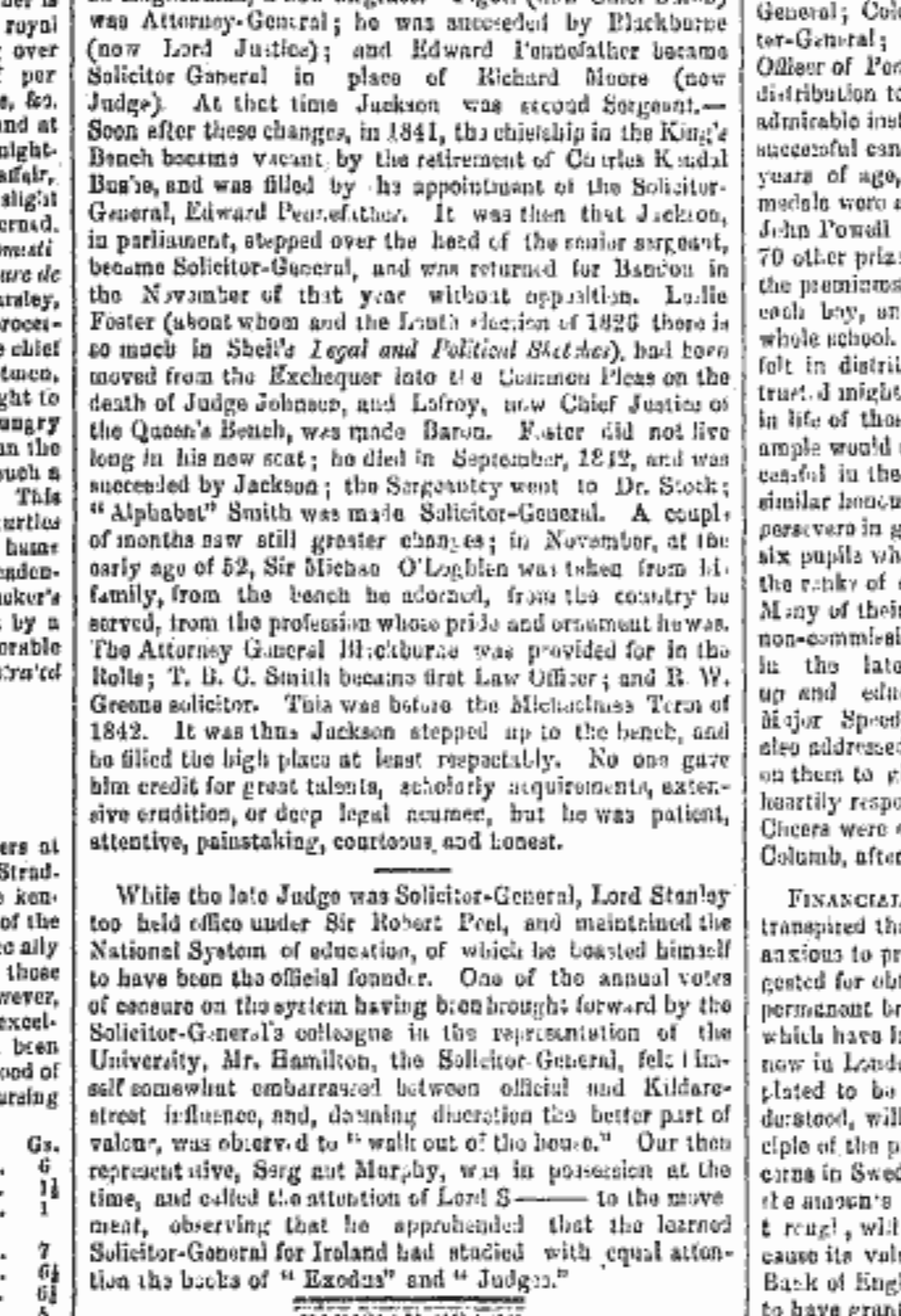
James Redmond Barry,(1790 -1879), Pre 1820, Glandore and 11 Great Denmark St., Dublin, Fishery Commissioner advocate of fishery development in West Cork, Improving Landlord, Petitioned House of Lords to Vote 1821 as Representative of dormant title of Viscount Buttevant from 1405. 1818 encouraging Flax growing with mother’s assistance, mentions his farm of around 300 acres population 328 of whom one third at linen. 1821 request to Chief Secretary with Rev. Armiger Sealy, John Swete, Thomas Walker that military be sent to Timoleague re Captain Rock disturbances. 1822 Cork Trustee for The Encouraging Industry in Ireland. 1828 Quarter Session Bandon. 1828 seeking reform of the House of Commons. 1832 cholera. Involved with Richard Townsend, and Thomas Somerville, Drishane in setting up Agricultural and Country Bank in Skibbereen, April 1835. Subscriber Lewis Topographical Dictionary of Ireland 1837. Attended Reformers Dinner Bandon 1839 for Daniel O’Connell, MP,. Attending Famine Relief Meeting Dunmanway 1846. Subscriber at Dublin 1861 Rev. Gibson’s History of Cork. In October 1861 at O’Donovan’s Cove married Anne Mary J 3rd daughter of Timothy J.P. to David Fitzjames Barry, 2nd son to Redmond Barry, Commissioner of Fisheries Esq. (and a political ally of Timothy). She is later Executrix of her father’s estate then a widow. Listed 1870, Dublin, 439 acres. Member election committee McCarthy Downing, Skibbereen, 1868. Son Captain FitzJames Barry, J.P., grandson Richard Fitzwilliam Barry, J.P., solicitor, Clerk of the Crown, King’s Co., listed 1885-6. Left £1,500. Subscriber memorial John O’Hea J.P., Clonakilty, 1847. Member as James, Bandon, Commission on Magistrates 1838. attended Reformers Dinner, Bandon, 1839 for Daniel O’Connell, MP. Petition 1840 on Catholic Equality. Invitation by Henry Townsend DL, 1839, on behalf of The Reformers of the West Riding of Cork to Daniel O’Connell MP to Dinner in Bandon, Co Cork, with 200 Liberals in attendance including, Francis Bernard Beamish MP (1802-1868), Rickard Deasy (1766-1852) Brewer Clonakilty, James Clugston Allman Distiller Bandon, James Redmond Barry J.P., Commissioner for Fisheries, Edward O’Brien, Masonic Lodge Bandon, John Hurley Brewer, Major E. Broderick, Henry Owen Beecher Townsend (1775-1847), Major Mathew Scott J.P. (1779-1844), Philip Harding, Carrigafooka, Macroom, Richard Dowden (1794-1861) Unitarian, Frances Coppinger Esq., Parkview, Bandon. 1858 member Kilkenny and South-East of Ireland Archaeological Society.
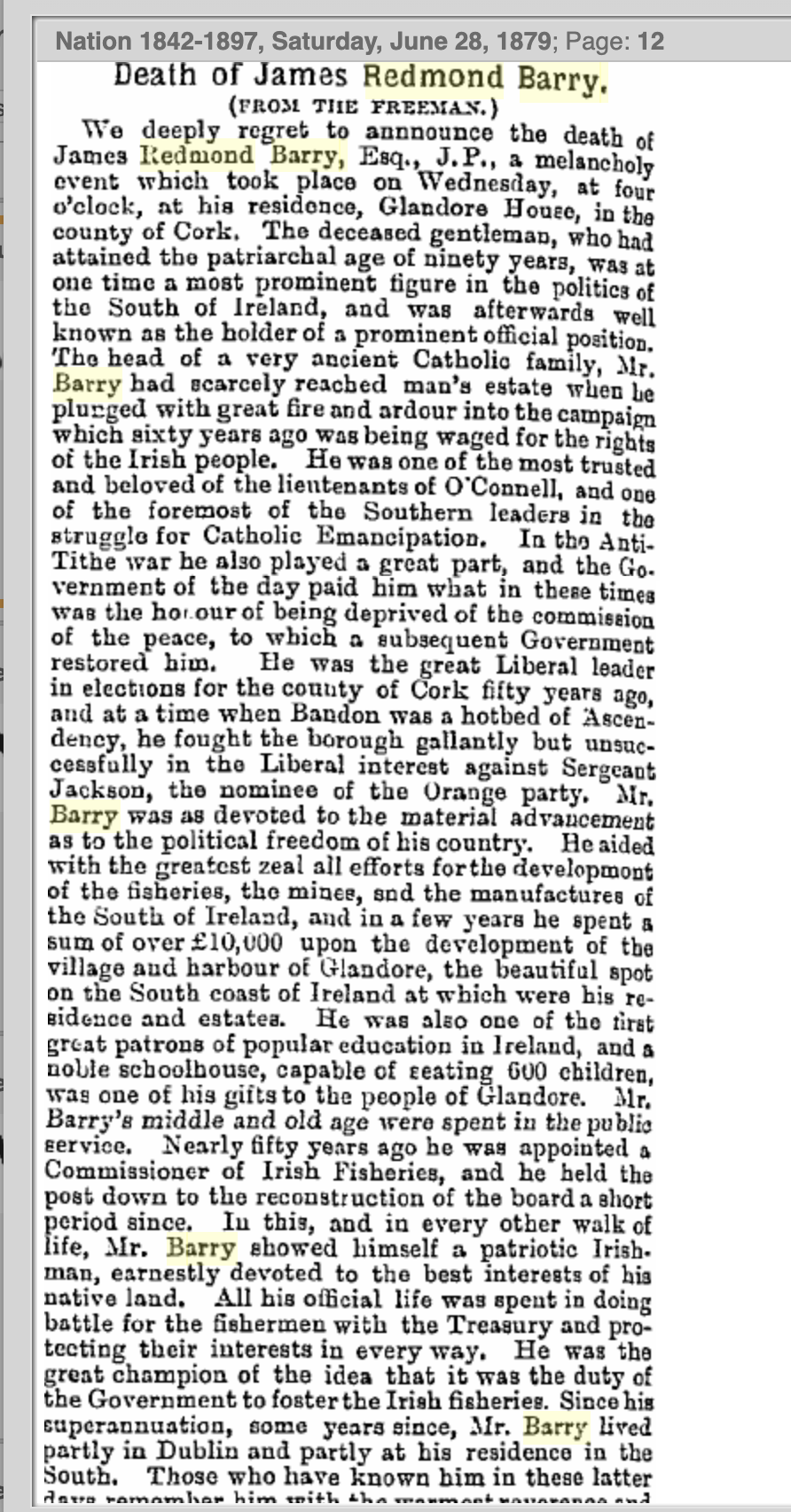
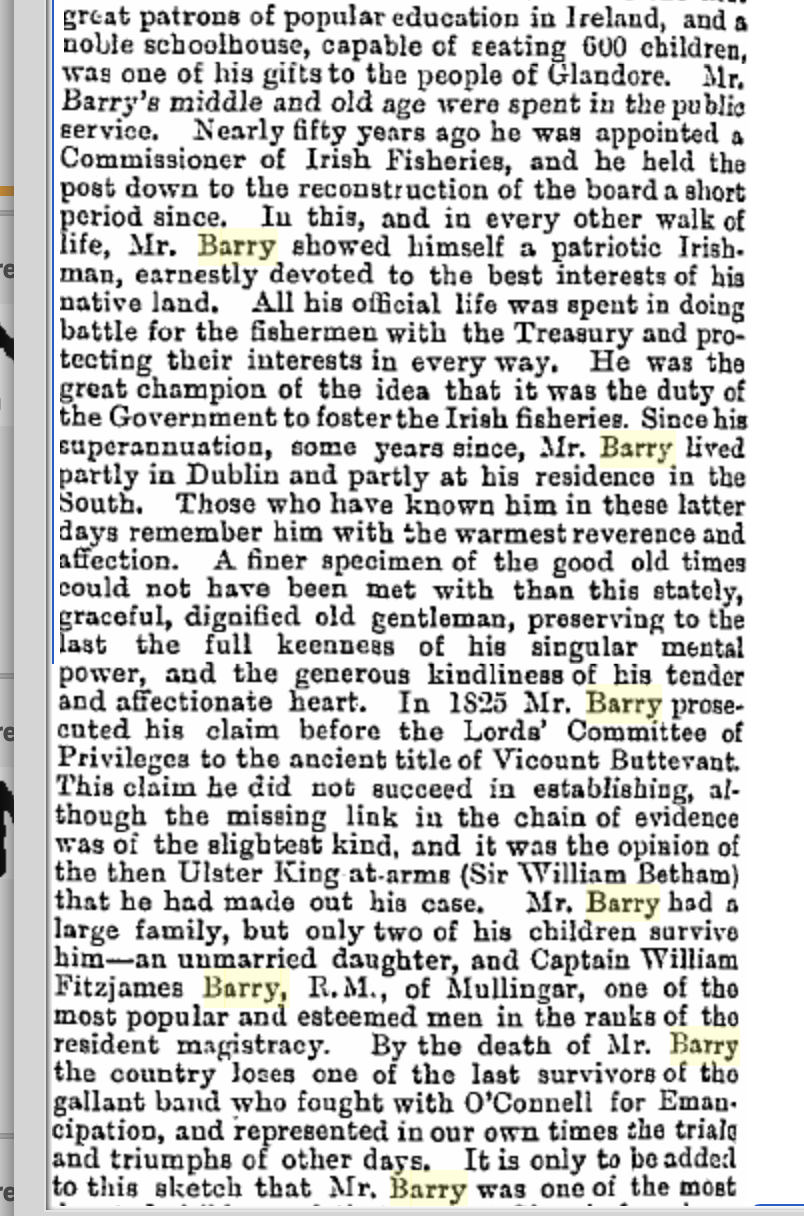
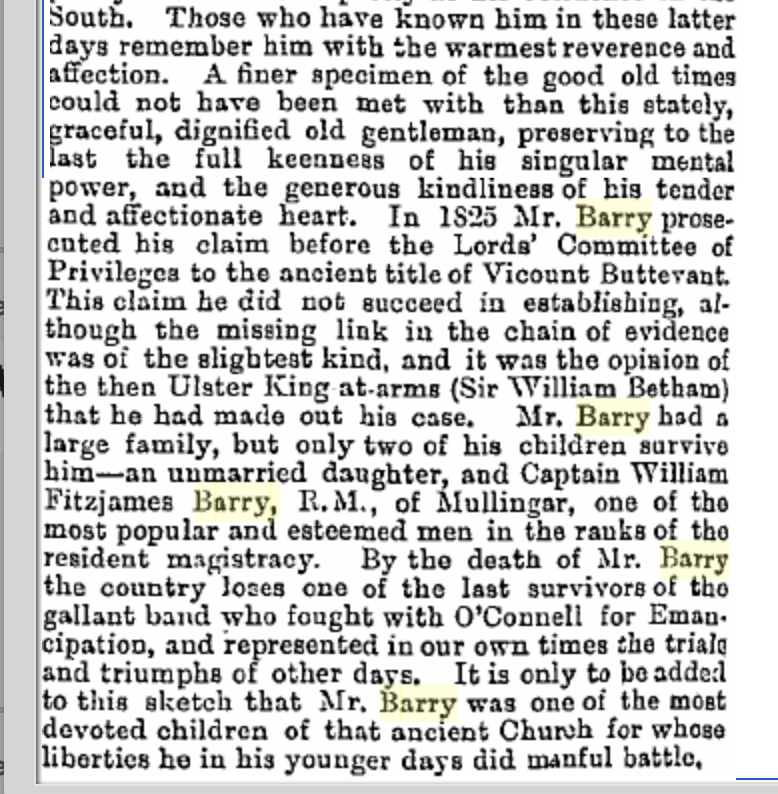

His opponent in the 1835 Bandon Election66
Courtesy Leap Village:
The Famine
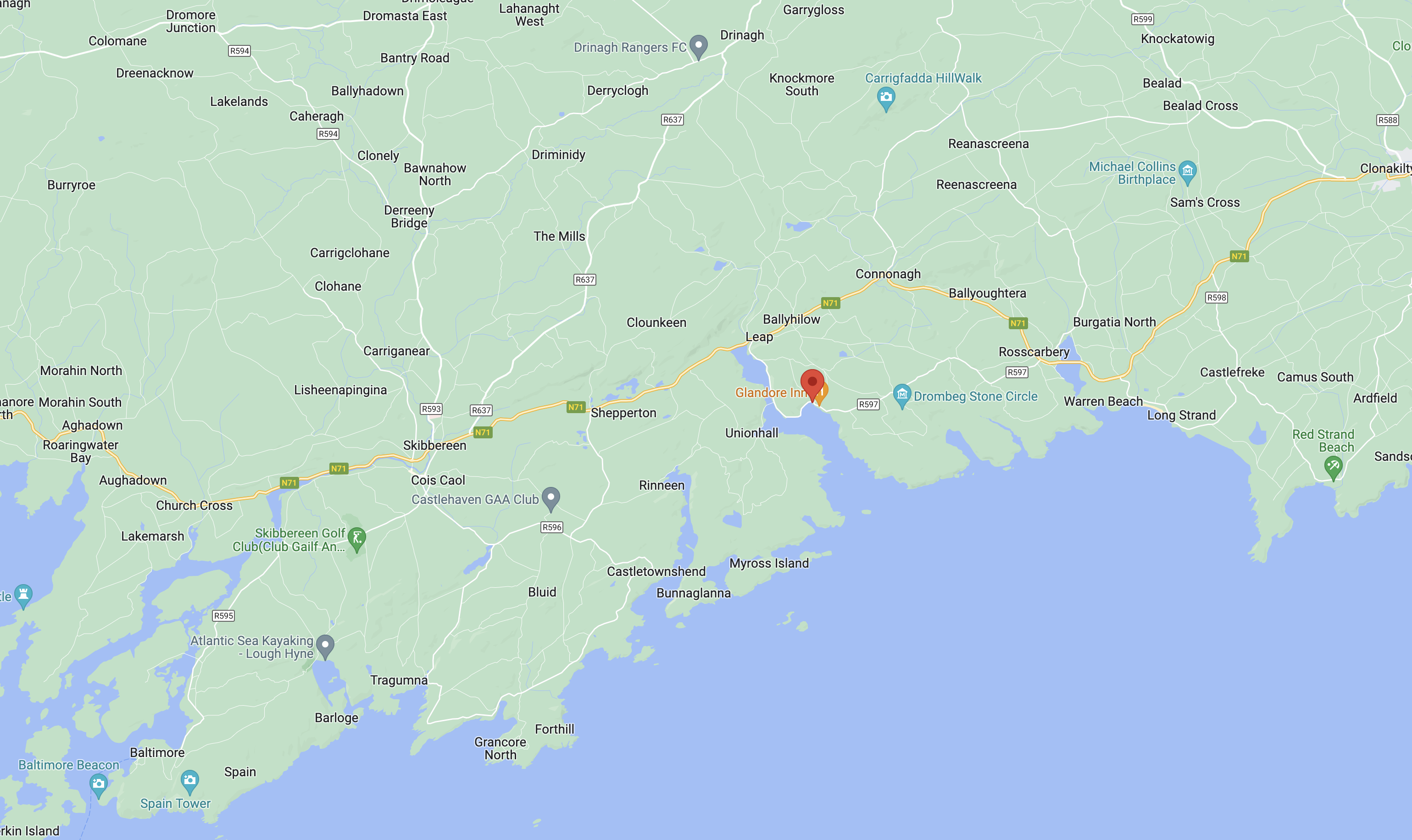
The Famine struck in 1845 and West Cork was one of the worst affected parts of Ireland, especially Skibbereen and the Mizen Peninsula. One would think that the people living near the coast would be better provided for to meet the ravages of hunger than the inlands parts. However, the fishermen were not sufficiently geared to meet the crisis. It is said that the first death from starvation in West Cork was a fisherman from South reen in Myross. The parish priest of the united parishes of Kilmacabea and Kilfaughnabeg, Fr. Joseph Sheahan wrote many letters to the newspaper during the Famine years, drawing attention to the plight of the people. Fourteen parishioners were waked in the parish on Christmas night, 1846. In a letter published in the Cork Examiner on December, 19th, 1846, Fr. Sheahan wrote that Kilmacabea had no resident landlord and that those in Kilfaughnabeg were “so few, or so incompetent, as to be of no avail. There is one exception, the benevolent family of James Redmond Barry, who are using every possible means which human effort could devise to administer to their distressed and starving fellow creatures”. Over one hundred were given relief every day at Glandore House, whether they belonged to his estate or not. Barry established a soup kitchen in Glandore. In September, 1846, 2500 pounds had been voted for relief work for Kilmacabea which would give employment. The men employed on the making of the roads were too weak for the back-breaking work. Some of them haven’t eaten for several days. The coastal road from Glandore to Leap was the most important project undertaken. It must have been very difficult to construct, most of it quarried out of the rock. Although Fr. Sheahan praised Barry for his efforts to help the needy, the curate, Fr. Walsh, accused Barry of paying very low wages (sixpence per day). In February 1847, H.M.S. Tantarus visited several ports in West Cork, calling first to Glandore. Barry gave an account of conditions in the Glandore area, which was published in the Cork Constitution of 11th March, 1847. “Six months ago the place had 2500 inhabitants; now all have died or run away [emigrated]. Fever, dysentery and starvation stare you everywhere … children of nine or ten years old mistaken for decrepit old women”. In the decade of 1841 – 1851, the population of Glandore town fell from 402 to 131 (70% decrease); Rushanes from 265 to 126 (53% decrease); Gortyowen fell from 54 to 8; Carriglusky 51 to 23. In the Famine years wretched life and hunger came which broke the people’s strenght and spirit. There was nothing to do but to try to stay alive. All fellow feeling was lost. All sport and merriment disappeared. Poetry and singing and dancing were no more. An ancient culture was lost and forgotten and when things improved in other ways, it never came back as it had been. The famine killed everything. In 1847 Ireland was predominantly Irish-speaking outside the cities. Her people were a virile folk, big of body and spirit, exuberant in manner. Their life with their boisterous fairs, the fireside seanchaí, the country dance, the flowing wit and ready song, has lingered in the Gaeltacht up to now. But the Gaeltacht, which covered most of the country side on the Faimne’s eve, shrunk rapidly and a new puritanical, dourer Ireland emerged.
In his book ‘Leap and Glandore; Fact and Folklore’, author Eugene Daly considers James Redmond Barry to be one of the most prominent figures in Glandore’s history.
The philanthropic landlord arrived in the area in 1824, and had the foresight and financial means to build the 136ft long pier in the town, in a bid to develop the local fishing industry.
He also built a hotel and school in Glandore. Unfortunately, all of his efforts to grow the local economy ended up in smoke when the famine hit. West Cork was so badly affected by the famine, that it lost 45pc of its population.
02 Monday Jan 2023
Posted in Uncategorized

Earls of Bandon/Lord Bandon
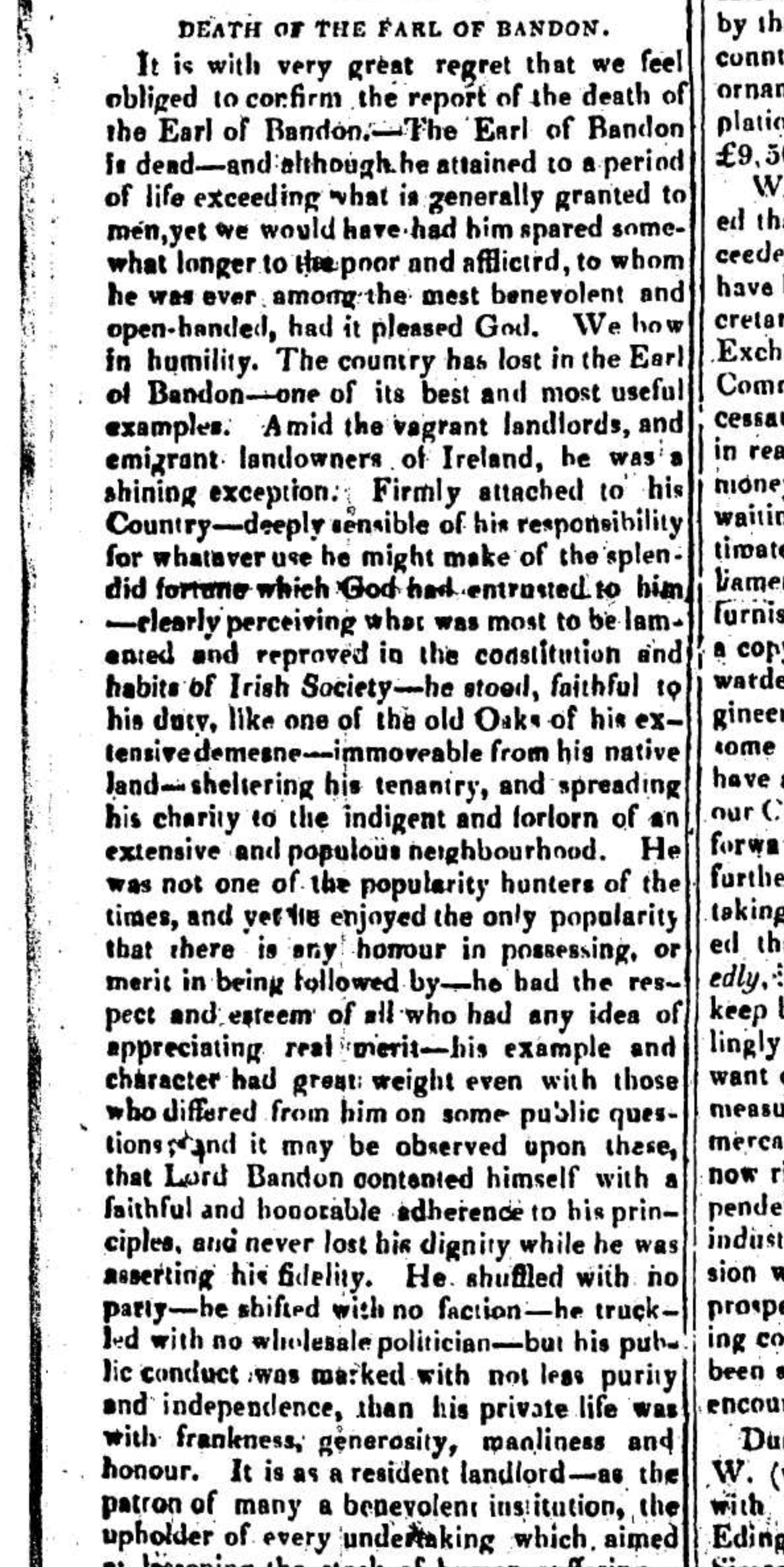
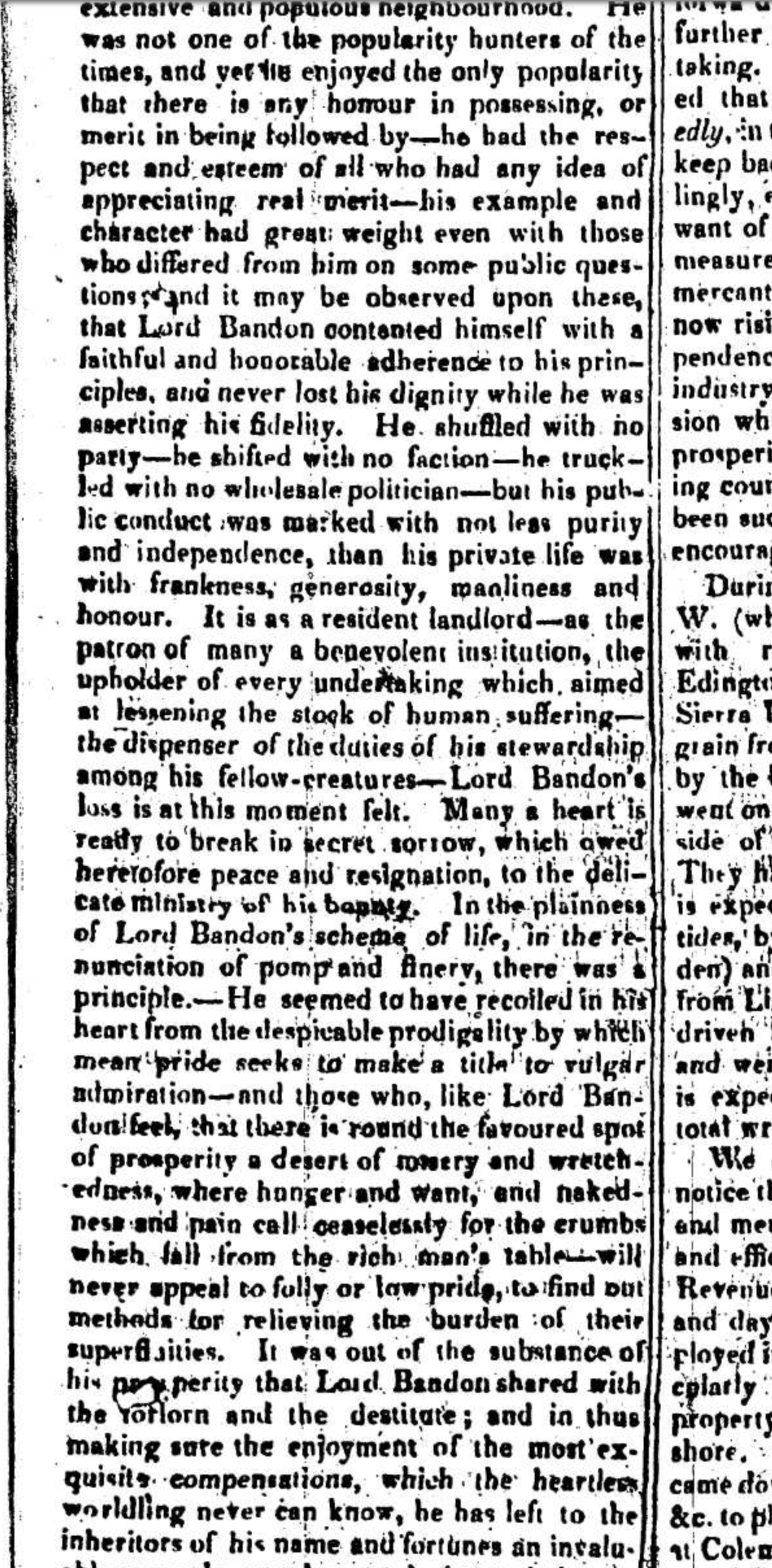
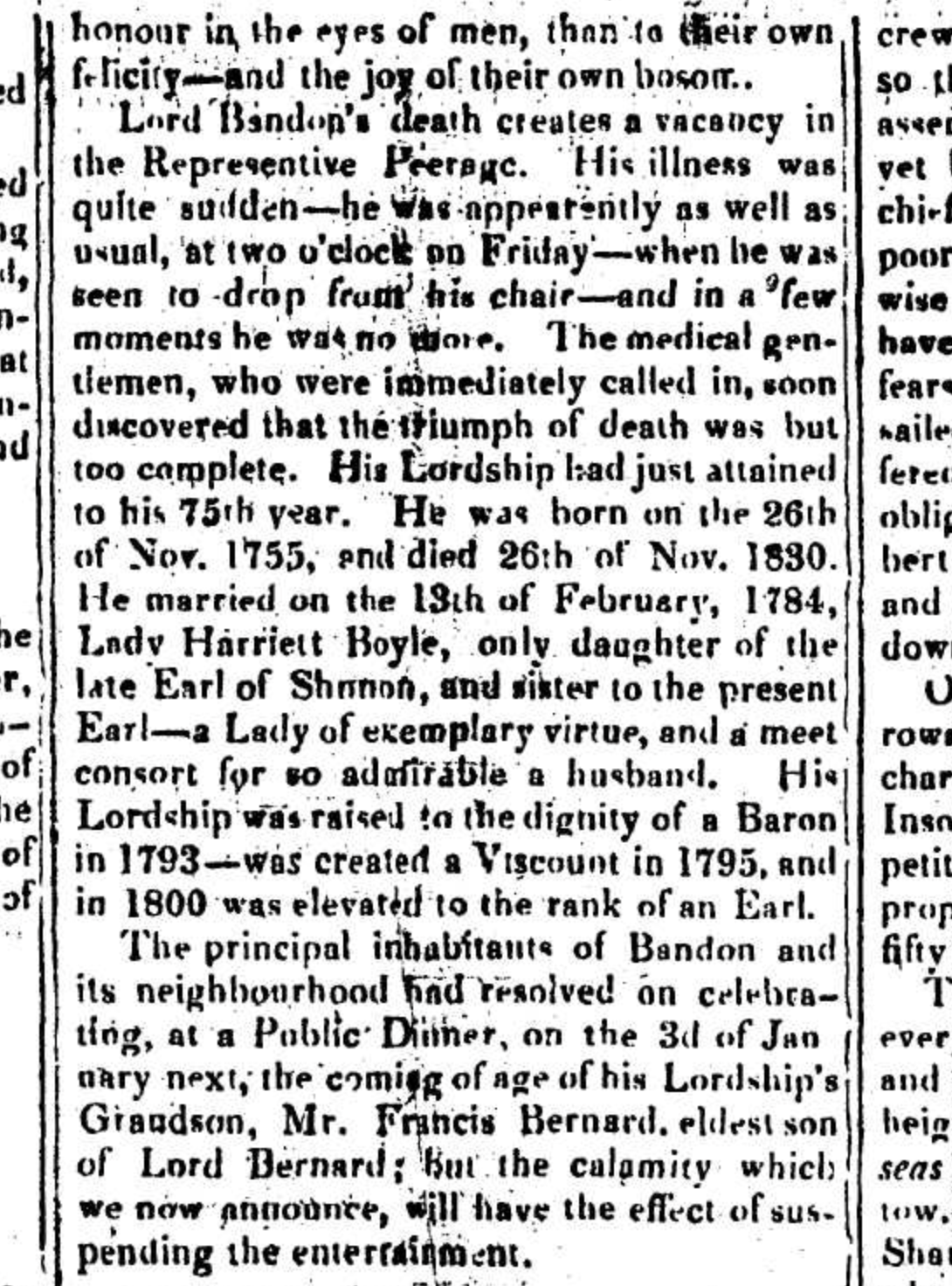
Francis Bernard, 1st Earl of Bandon (1755-1830), 1772, Castle Bernard, Bandon, only son James Bernard and Esther Smith d Percy Smith. M Lady Catherine Henrietta Boyle d Richard, 2nd Earl of Shannon. MP Ennis 1778-83, Delegate 1783 to Irish Volunteer convention. Subscriber, James Mullalla, Review of Irish Affairs 1688-1795. She arranged for donation of site for Gallows Hill catholic Church in thanks for Fr. Shinnick curing her son later 2nd Earl quested to be president of Bandon Brunswick Constitutional Club 1828 donated £50. Non marital children. Bandonbridge in the Irish Parliament until 1790. Lady Charlotte Bernard, 2nd daughter married 3rd Viscount Doneraile. Freeman of Cork 1777. 1805 Return by Commissioners Appointed under Act 40, George 111, cap.34, King of England Compensation for Abolition of Pocket and Rotten Boroughs. 1819 Member of the Association Incorporated for Discontinuancy Vice and Promoting the Knowledge and Practise of The Christian Religion. Rathcormac, Francis Earl of Bandon, Sampson Stawell (Kinsale) Viscount Doneraile, Trustees in will of Lord Riversdale, 1787, (Hull, Schull family), £15,000/£17.3 Million. Glowing obituary to him as a resident Landlord
Right Honourable Honourable James 2nd Earl of Bandon, Custos Rotorum, (1785-1856), Castlebernard, FRANCIS (1st EARL of BANDON) and HARRIET (Boyle) had James (heir and 2nd Earl born 14th June 1785 in Bandon and died 31st October 1856 at Castle Bernard) m 13th March, 1809 in Cashel Mary Susan Brodrick eldest daughter of Charles, Archbishop of Cashel and sister of Charles, 6th Viscount Midleton. Mary was born 9th October 1787 and died 23rd April 1870, buried in Bandon. Due to rising war related prices land rents estimated 1811 at £30,000. Succeeded to title and estate after his father’s death in 1830. Following a large Protestant meeting 1834 at Castlebenard nominated to prepare a petition to the British King and Parliament with the Rev. Somers Payne, Councillor Mannix, Lords Berehaven and Bandon. Subscriber Lewis Richard Dowden papers: 1837. 1842 Subscriber Jacksons Co. and City Directory. 1844 Printed handbill/notice , ‘Cork Art Union for the promotion of the fine arts in the South of Ireland’, annual subscription appeal. President is Lord Viscount Bernard MP (Lord Bandon). Printed by W Scraggs, 102 Patricks Street. (1p) Subscriber John Ryan, 1845 ’20 Years of Popish Persecution’. Made huge efforts during the Famine to secure relief. Co. Grand Master Orange Order. Fellow Royal Society 1845. Member Commission on Magistrates 1838 subscriber, 2 copies, 1861 to Smith’s History of Cork. Bandon 1869.
Right Honourable Francis Bernard, 3rd Earl of Bandon, Eton, M.A., D.C.L, Oxford (1817-1877), Castlebernard, son Francis 2nd Earl of Bandon (1755-1830) and Mary Susan Albina Brodrick. MP Bandon 1831. Chairing Famine Relief Meeting Dunmanway 1846. 1857 member Kilkenny and South-East of Ireland Archaeological Society. Member Irish Society Antiquaries 1861. Colonel Royal Cork Artillery Militia. Subscriber 1861 Rev. Gibson’s History of Cork. Promoter flax growing West Cork 1850s. Promoting mineral development in West Cork including barytes mines on his Dereenlomane property, Ballydehob. 1870 appointed Lord Lieutenant and Custos Rotorum of Cork County. His obituary noted that despite his extreme political religious views he was allegedly held in high esteem by all classes. After his funeral a meeting of his tenant was held at the Devonshire Arms Hotel, in Bandon and he and his father were praised for their treatment of tenants honouring leases unlike other local landlords through theri agent his uncle Colonel Bernard for 40 years. . Frequently sitting in Bandon Petty Session Court which adjourned for a week on his death. His funeral to family crypt Ballymodan attended by Royal Cork Artillery Militia, South Cork Infantry Militia. As a consequence of his death the following meets were cancelled, Viscount Doneraile Hounds, Castlefreke Hounds, Castlemore Hounds, Upton Harriers, South Union Fox Hounds. Probate 1877, executor James Francis Bernard, 4th Earl £18,000
Right. Hon. James Francis 4th Earl of Bandon (1850-1924) , (see also Bernard) K.P., 1871, Castlebernard, Bandon. Registered Vestryman of Christ Church, Kilmeen, 1870. 1903, Sale. Lord Bandon gives notice of his intention to sell his estates in Co Cork – extensive holdings with some 15,000 tenants. 1874-1877 on the staff of the Lord Lieutenant of Ireland, the Duke of Abercorn. Chairman Irish Landowners Association 1910 Listed 1913, listed 1922. 1888. Landlords, Lord Bandon, Duke of Devonshire, Lord Bandon owns 40,941 acres in Co Cork, Duke of Devonshire has 32,550 acres. Eviction of some Bantry tenants 1880s, somewhat surprising as the Earl of Bandon were of the better class of Landlord. Two of the three largest landowners in the Co. His 41,000 acres were sold post 1903 to the Land Commission on what was regarded as fair terms. At the time 15,000 tenants. It is likely that his Land Agents the Dohertys Bandon Solicitors received a considerable amount of the proceeds as they had advanced multiple mortgages to Lord Bandon over the years. 1877 appointed Lord Lieutenant for Co. Cork, a position held by his father and grandfather. Married Georgina Dorothy Evans Freke d 7th Lord Carbery and wife Harriet Shouldham, the Dunmanway Shouldhams are descended in the female line from a McCarthy heiress who converted. 1883 President Cork Industrial Exhibition and in 1902-3 patron of Cork Industrial Exhibition. 1900 Knight of St. Patrick. Chairman Bandon Board of Guardians and Bandon Town Commissioners. 1919 elected President of a group proposing a War Monument for Cork. Castlemahon was burned by IRA and kidnapped in 1921. Compensation paid by the Irish Government as follows for the house £37,000, furniture £43,300. Francis Bernard, great-grandfather of the first Earl, was a lawyer and politician while Francis’ younger brother Arthur is the 7th-great grandfather of Justin Trudeau, Prime Minister of Canada.[4][5] James Bernard, father of the first Earl, was a politician. He died at Princes Gardens London. His funeral service in London was attended by officers of the Cork Artillery.
The family seat, Castle Bernard, built on ruins of former O’Mahony Castle, was one of the great houses burned during the troubles by the IRA under Sean Hales on 21 June 1921. The home was burned as a counter-reprisal measure against British policy of burning the homes of suspected Irish republicans.
Lord Bandon was kidnapped and held hostage for three weeks being released on 12 July. The IRA threatened to have him executed if the British went ahead with executing IRA prisoners. During his captivity, Bandon reportedly coolly played cards with his captors, who seem to have treated him fairly well. Reportedly, Lord Bandon would give one of his captors, Daniel (Dan) O’Leary (also known an Leabhair, Irish for ‘Book’, based on the fact he was so well read), money each day for Leabhair to travel from the house in Kilcolman townland, to Slatterys pub in Ahiohill to purchase Clonakilty Wrastler (a local beer).
Unlike other West Cork estates that were founded on forfeiture of the former owners for ‘Rebellion” the Bandon Estate was largely assembled by the legal fees generated by Francis Bernard, Bandon born Dublin Barrister and later judge.
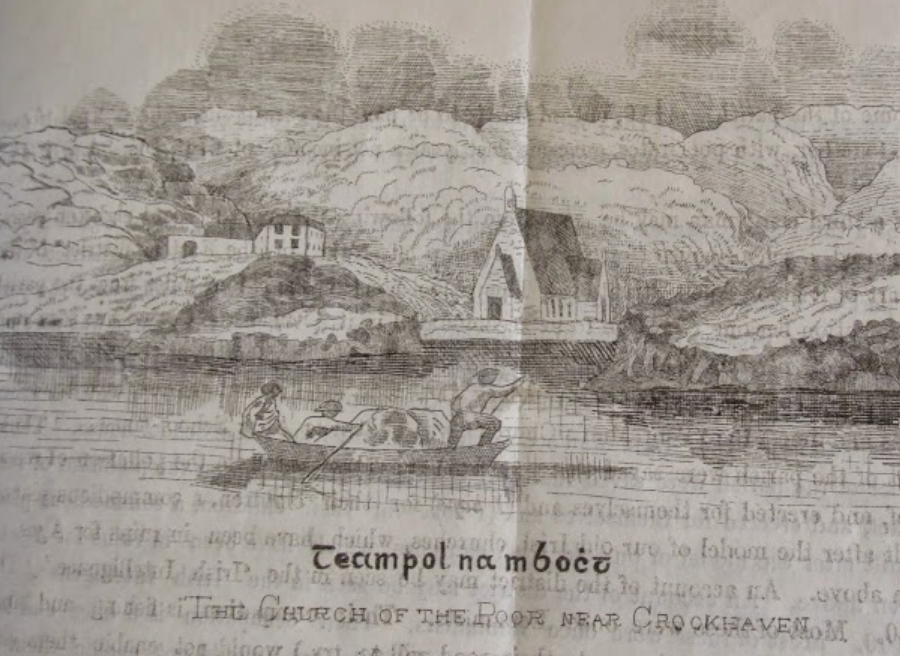
In 1877 the Cork Examiner in a comment piece referred to the families public spirited nature in promoting native industries, n being a Landlord family who lived locally. However it mentions that the reputation was blighted by a deep sectarian streak and a hostility to the Catholic religion that of the majority of the Irish population. The Earl and his wife were deeply involved in Protestant evangelicals and proselytization including support in the case of the Earl of the REv. Fisher mission at Teampall n mBocht in the Mizzen Peninsula
Despite its ruinous condition, this imposing castellated country house has retained its historic form and a great deal of its fabric. Built in the Classical style in the final years of the eighteenth century for Francis Bernard, the first earl of Bandon, it was remodelled and extended in the nineteenth century in the Gothic Revival style. The main block displays classically inspired proportions, breakfronts and bowed rear bay, while the later battlemented stone parapet walls, turrets, bartizans, balistrariae, arrow-loops and panel-tracery mask its regular classical character. The attached ruined medieval tower house of the O’Mahoney clan which was acquired by the family in early seventeenth century adds archaeological interest. Burnt as a symbol of British occupation in 1921, the house and its related buildings remain a spectacular addition to the architectural heritage and are a reminder of the wealth and prosperity of the demesne in the past.
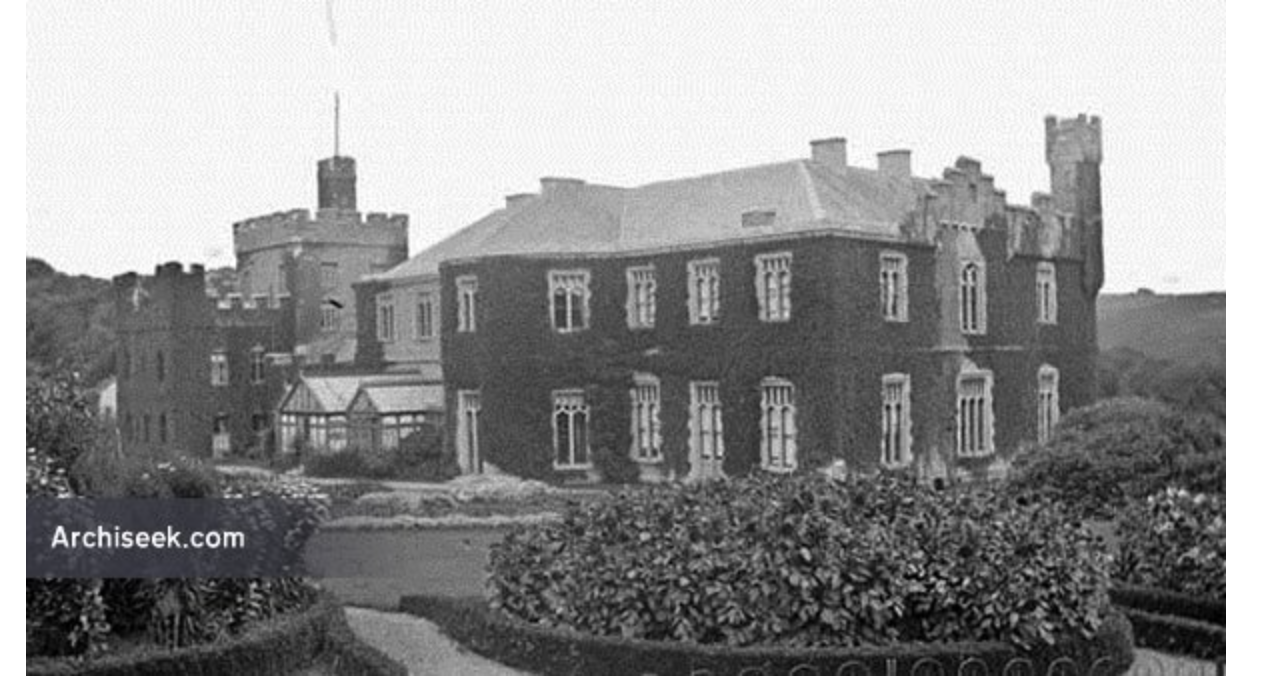
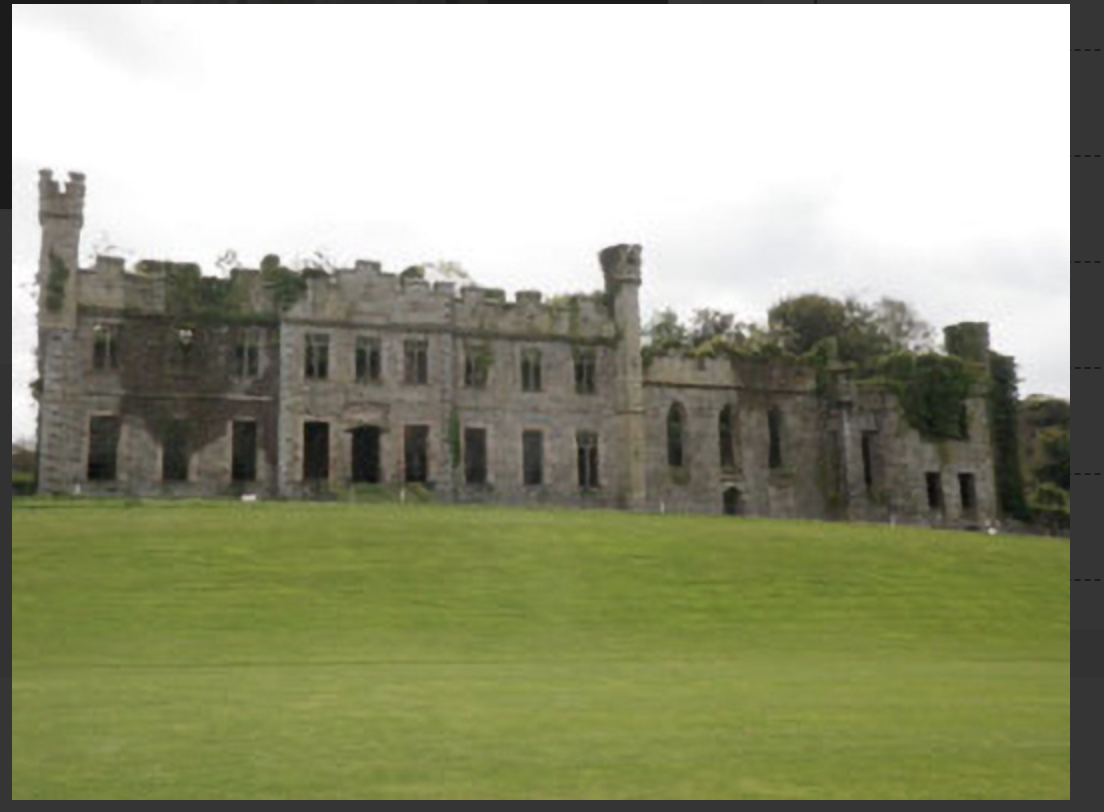
Around 1971 Paddy Madden the Cork County Librarian acquired the papers of the Bandon Estate which are now in the Cork Archives, largely uncatalogued: https://corkarchives.ie/
According to Burke, the first Francis Bernard settled in Ireland around the time of Elizabeth I. In 1703 Francis Bernard purchased parts of the Earl of Clancarty estate in the barony of Muskerry, including Ballytrasna. A descendent, also Francis Bernard, was created Viscount Bernard and Earl of Bandon in 1800. The Earl of Bandon’s estate in county Cork amounted to almost 41,000 acres in the 1870s. At the time of Griffith’s Valuation, the estate was among the principal lessors in the parishes of Skull, barony of West Carbery, Ballinadee, Ballymoney, Desertserges, Kilmaloda, Kinneigh, barony of East Carbery, Ardfield, Castleventry, Kilkerranmore, Kilmeen, Lislee and Ross, barony of Ibane and Barryroe, Liscarroll and Buttevant, barony of Orrery, Kilmore, Knockavilly, barony of Kinalea, Athnowen, barony of East Muskerry, Caherlag, Carrigtohill, barony of Barrymore and Ballymodan, barony of Kinalmeaky. A Colonel Bernard, resident in India, was the owner of over 900 acres in county Waterford in the 1870s. The Waterford estate derives from Anne Bernard, who married Robert Foulkes of Youghal in the eighteenth century but bequeathed her estate to her nephew, Stephen Bernard. Sadleir, referring to the 1770s, mentions “Barnard of Prospect Hall, lives mostly in London” and notes that Stephen Bernard was MP for Bandon, 1727-1757.
https://landedestates.ie/family/2500
Bandon Estate Rental Records, Durrus area 1854
https://docs.google.com/spreadsheets/d/1LVgcai4i4QWpyLFvKhEgQAMjtdhjI6VhRrBr2XMWC2U/edit#gid=0
31 Saturday Dec 2022
Posted in Uncategorized
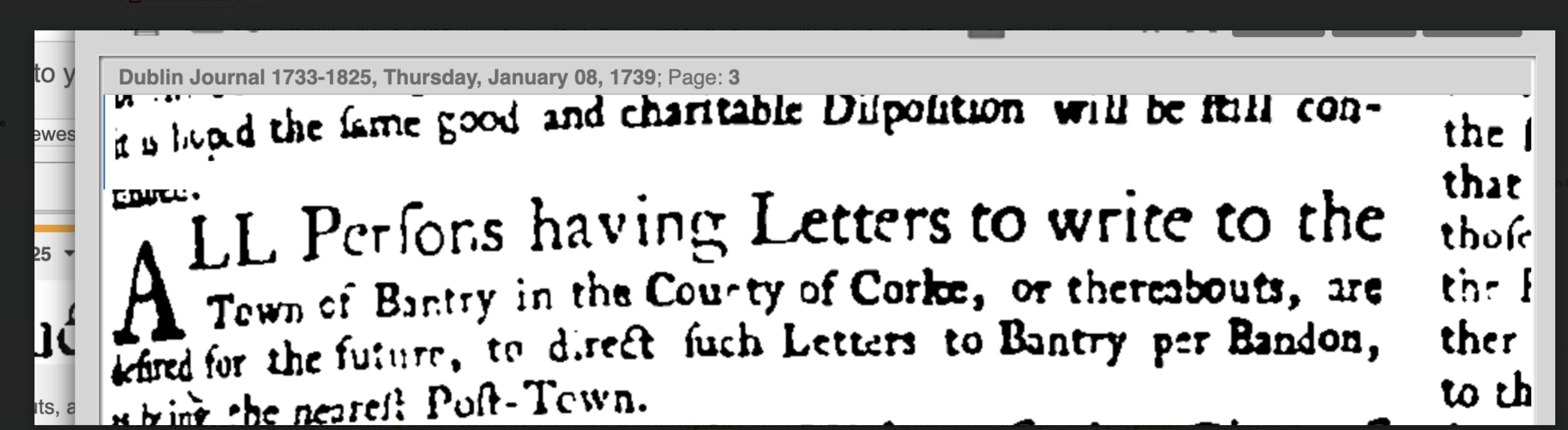
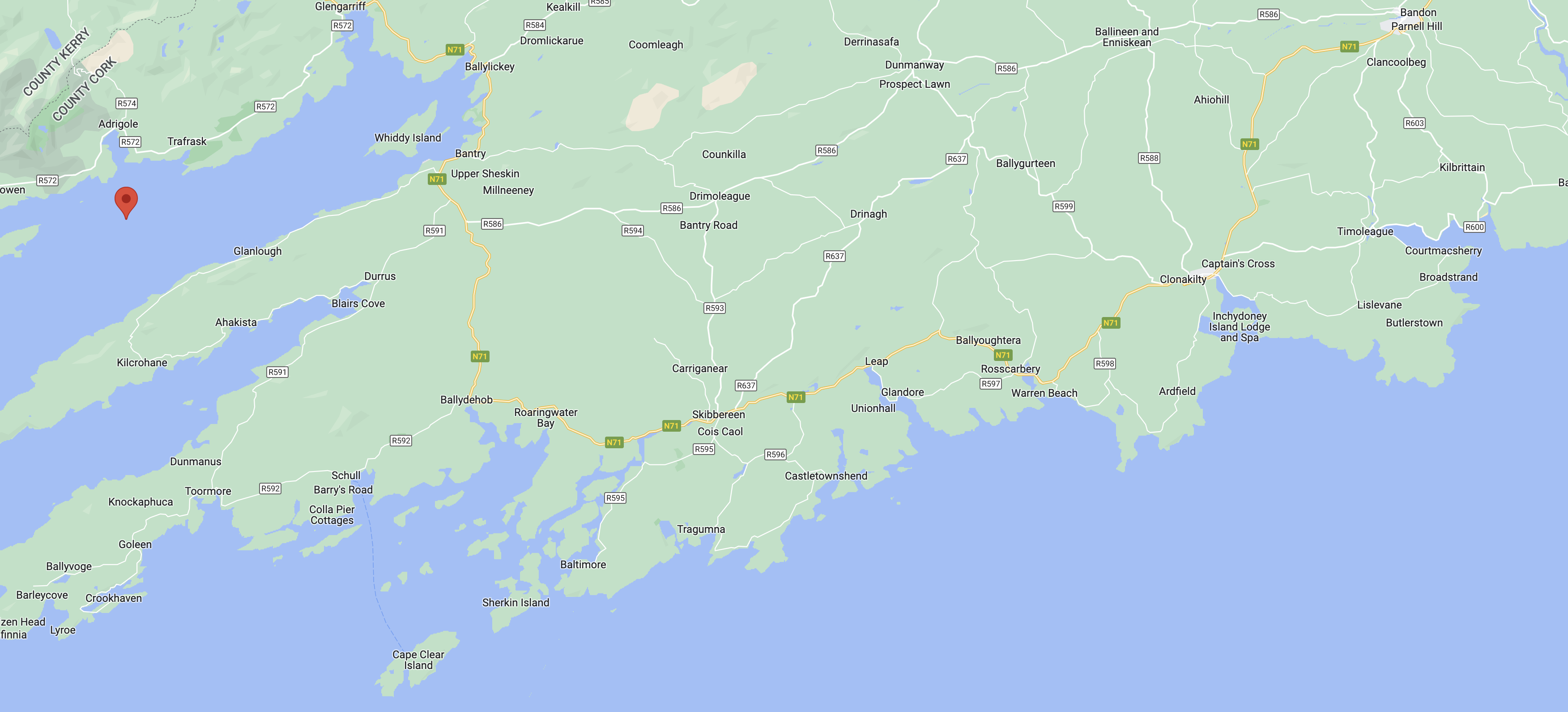
General Charles Vallancey (1731-1812) Survey Report 1778
He was sent to Ireland to assist in a military survey, remained and became an authority on Irish antiquities.
He fathered at least 15 children by three wives. He learnt Irish and became fluent in it. Some of his theories are now regarded with a degree of scepticism. He wrote a report on the West Cork area which should also hold true for Durrus at the period: ‘There was only one road between Cork and Bantry; you may now proceed by eight carriage roads beside several horse tracks branching off from these great roads, from Bantry the country is mountainous and from the high road has the appearance of being barren and very thinly populated; yet the valleys abound with, corn and potatoes and the mountains are covered with black cattle. In 1760, twenty years ago it was so thinly inhabited, an army of 10,000 men could not possibly have found subsistence between Bantry and Bandon. The face of the country now wears a different aspect: the sides of the hill are under the plough, the verges of the bogs are reclaimed and the southern coast from Skibbereen to Bandon, is one continued garden of grain and potatoes except the barren pinnacles of some hills and the boggy hollows between which are preserved for fuel’ This would suggest that the major population expansion may have dated from c 1775. Wakefield in 1809 estimated the number of houses on the Muintervara peninsula occupied by Catholics and Protestants at 600. In the 1831 Census the population of Durrus East is 1,620. In 1838 the population was 8,340 of whom around 800 were Protestant
27 Tuesday Dec 2022
Posted in Uncategorized
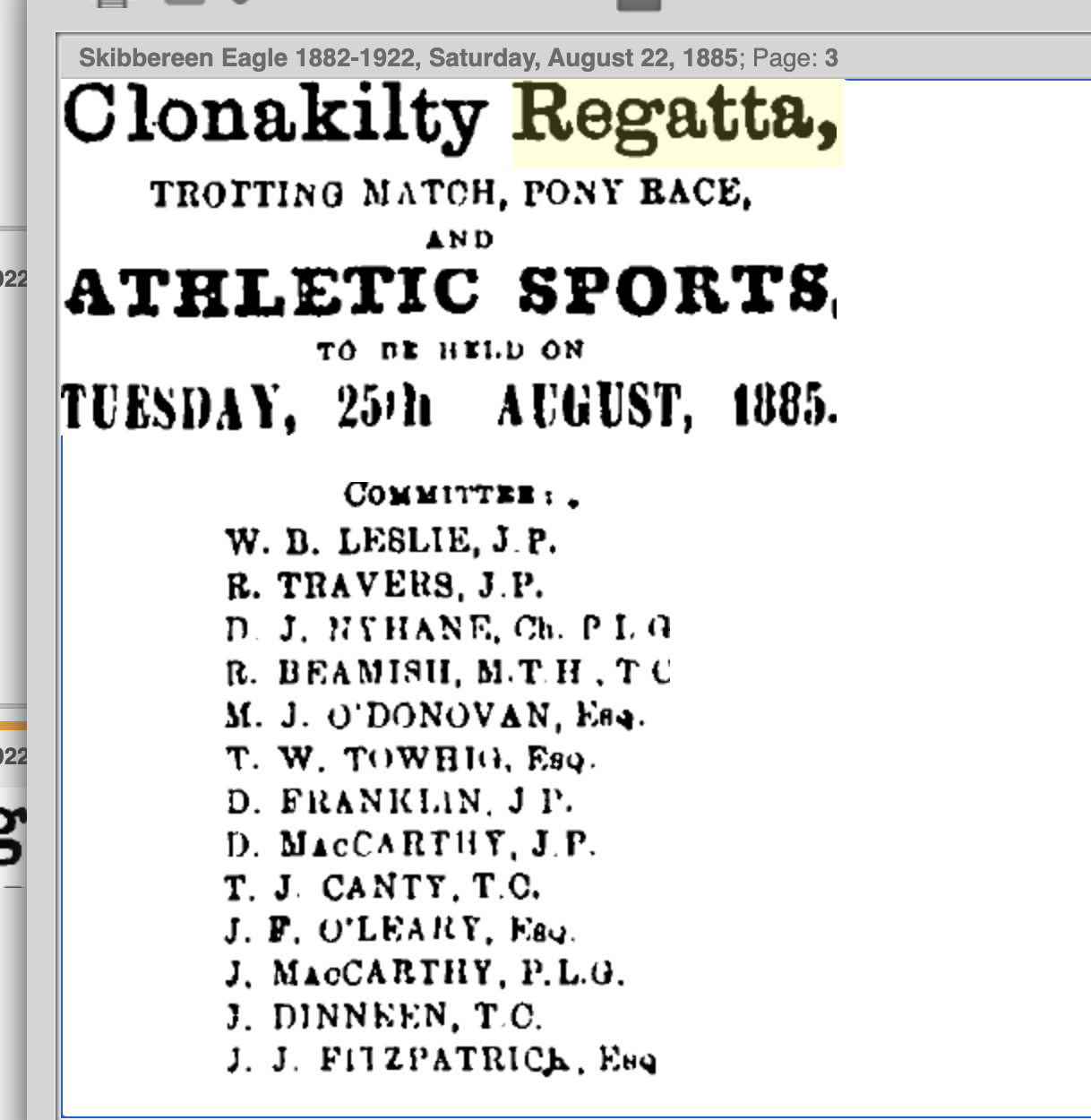
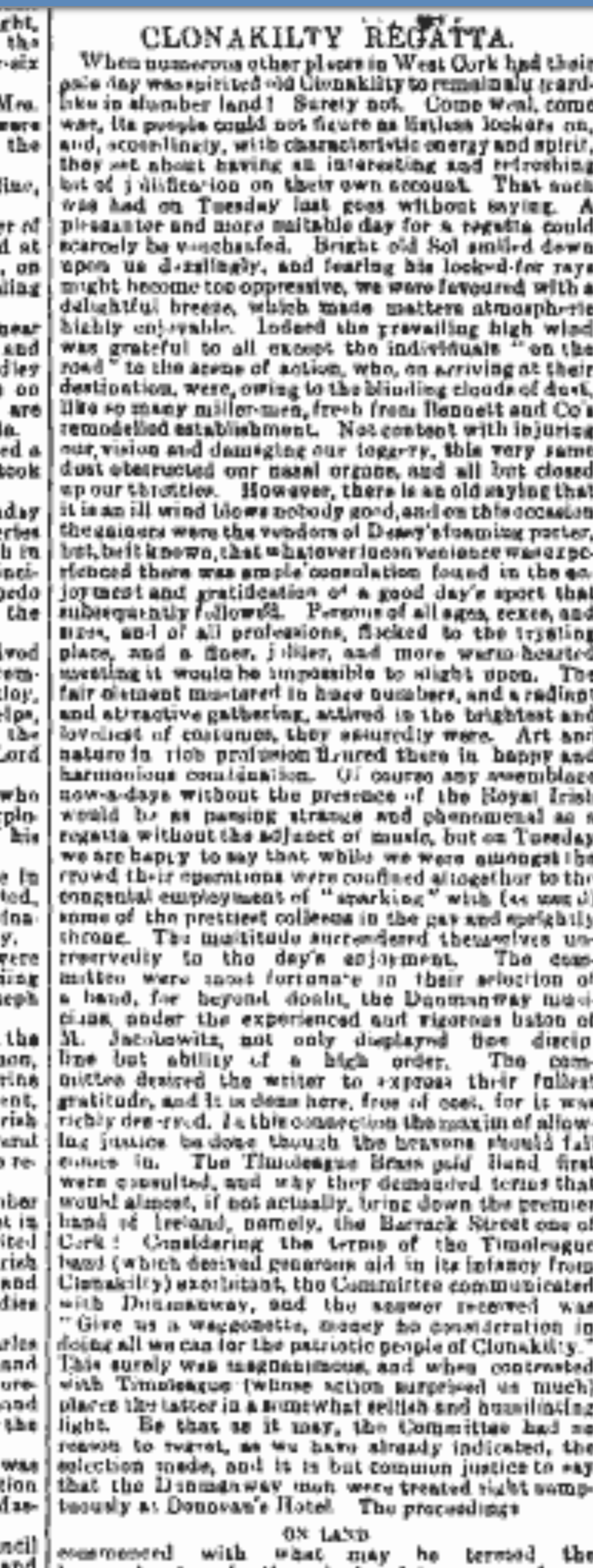
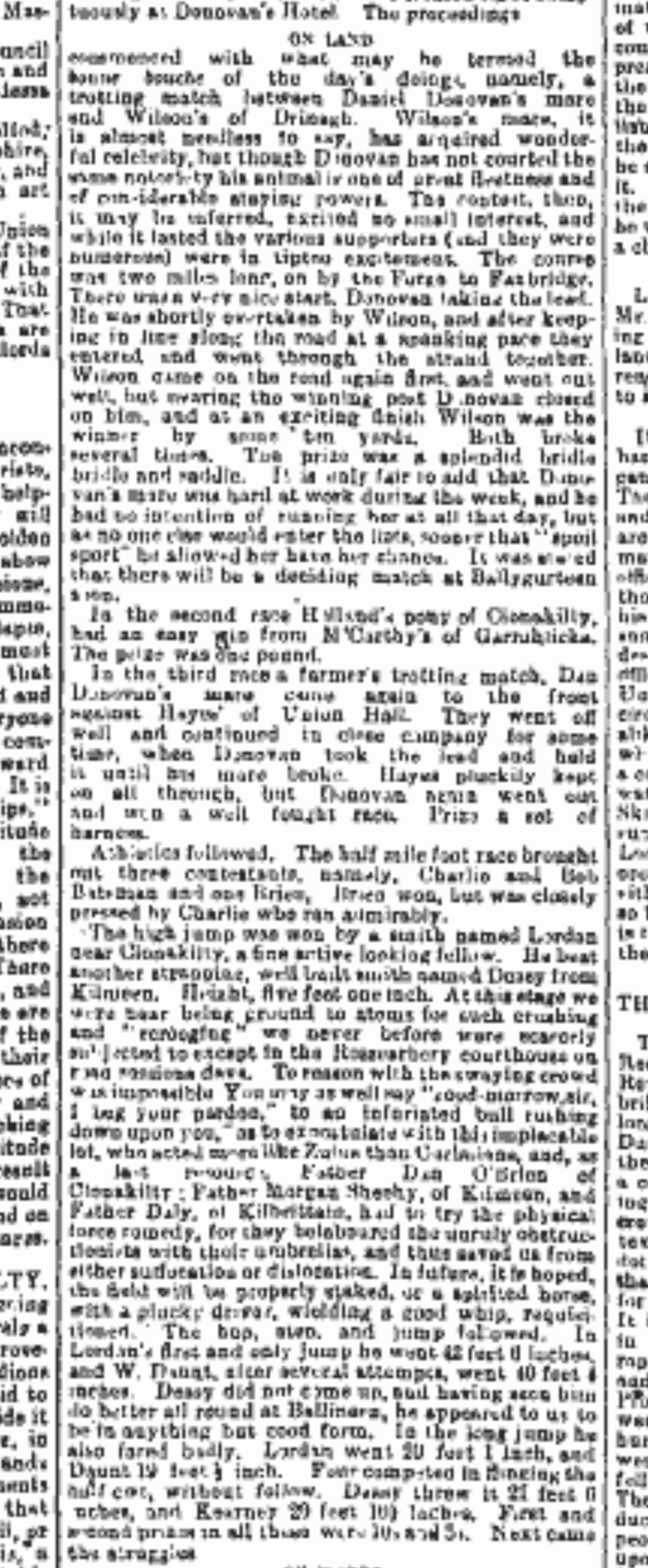
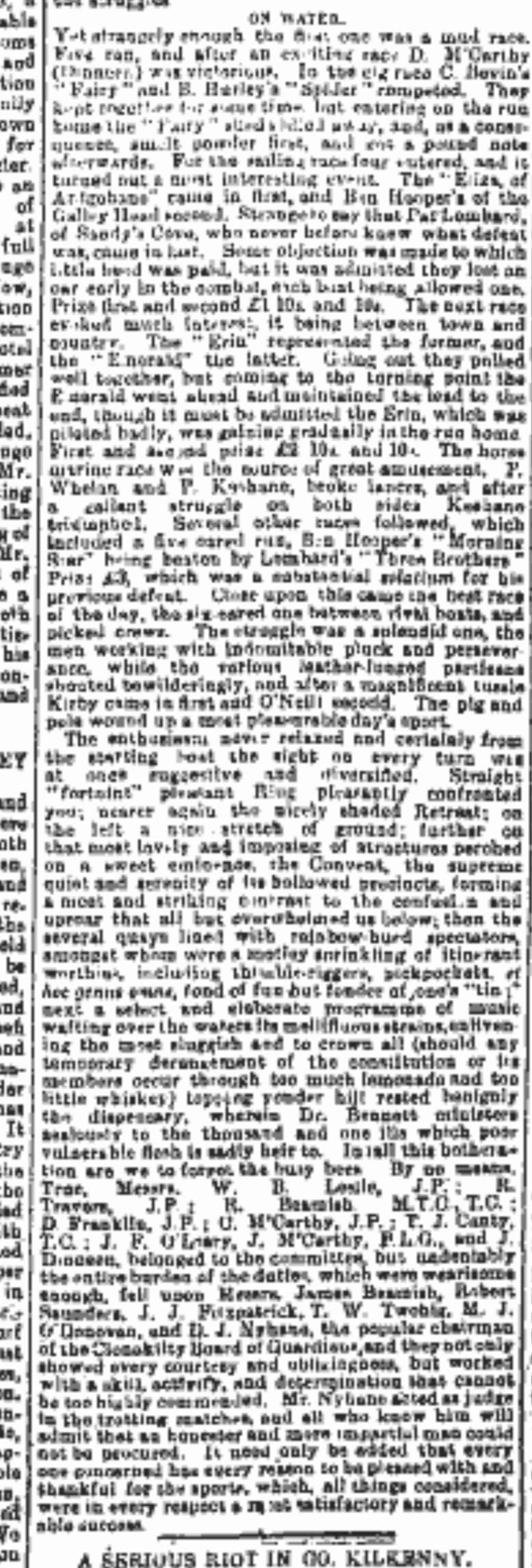
Clonakilty Regatta 1885
.
William Burton Leslie, 1873, Kincraigie (Woodview), Courtmacsherry, Resident, £40, extensive gardens open to the public, listed 1886-6. William Leslie, Committee member Bandon Navigation Scheme 1842. Juror Cork Spring Assizes 1863 address Lislee. Donor to the church bell fund, 1869, St. Nicholas, Cork. 1882 donor to the new Catholic Church,
Barryroe. Clonakilty Board of Guardians 1885, attended by following Magistrates: W. B. Leslie, J. J. Hungerford, H. B.Travers, M. A. T. Becher, C. McCarthy, W. Hungerford, Colonel Longfield. 1885 Clonakilty Regatta Committee. 1885 in an account of Courtmacsherry Regatta praised for his welfare of the people of the area. Attending with carriage 1898, enormous funeral of Dan O’Leary, JP, aged 71, Clonakilty, probably draper. Attended 31 Grand Jury Presentments. Woodview was being leased by the Ladies Boyle to William B. Leslie at the time of Griffith’s Valuation, when it was valued at £19 15s. Lewis refers to the seat of J. Leslie in Courtmacsherry in 1837. The property later became Kincraigie where William lived with his wife, Jane Florence McCartie, the widow of Horace Townsend. Jane’s son, also Horace, owned the house until the early twentieth century. Later the home of the Travers family. On his death Timoleague Petty Session adjourned as a matter of respect chaired by Robert Travers and attended by R. Longfield, E. B. Croker, T. Beamish. Probate 1900 £20,584 to Robert Henry Leslie, Secretary Cork, Bandon and South Coast Railway and his step son Captain Horace Townsend. Bequests to Catholic and Protestant clergy.
Denham Franklin, (1836-1910), Wellington Place, Cork. Native Clonakilty. Married 1871 Ellen Harvey her father John Fennell Harvey Secretary Cork Savings bank his father solicitor, Clonakilty. Railway Company Secretary. 1883 Treasurer to testimonial to departing RIC County Inspector, J. C. Mills, from Clonakilty. Contributor to Cork Historical and Archaeological society, probate 1910 to widow Ellen, £5.
Timothy Joseph (TJ) Canty, (1844-1929), 1887, The Square Clonakilty, son of Timothy, ed Endowed School, Clonakilty, Managing Director Deasy’s Brewery, Director railway Companies, member Cork Co. Council. 1885 Clonakilty Regatta Committee. M Ellen d Dr. P. O’Hea, Clonakilty, Officer Clonakilty Agricultural Show 1901. Secretary to Committee for Testimonial for RIC, County Inspector Mills, Departing Clonakilty. Signed requisition 1905. Cork Junction Railway Bill. Requisition to the Right Honourable The Earl of Bandon K.P., to Call a meeting for the purpose of Approving the Cork Junctions Railway Bill. Cork Co. Council 1901, listed 1921, listed 1922, listed 1916. 1911 executive committee Carbery Show. Attending 1898, enormous funeral of Dan O’Leary, JP, aged 71, Clonakilty, probably draper 1911 Member Cork Historical and Archaeological Society. Week ending Feb. 19, 1887. Car owner 1913. Mr. T.J. CANTY, Square, Clonakilty, has been appointed to the commission of the Peace. His brother in law Pat O’Hea, Cork Solicitor secretary to Parnell Nationalist MMP for West Donegal 1885-1890. Family home originally Ballygurteen later location of O’Sullivan’s pub. 1906 on sub committee of Clonakilty to promote Irish goods. 1910 member Clonakilty Committee Feis and Aeridheach. 1911 everyone in the household has Irish. March 1916 recruitment drive Courtmacsherry.
Robert Augustus Travers, (1830-1904), Timoleague. Gentleman farmer. Magistrate for over 50 years. 1901 four servants. Took a leading part in Cork Grand Juries. Ex-Officio Guardian Clonakilty workhouse. Founded Timoleague Dairy. Attending 1898, enormous funeral of Dan O’Leary, JP, aged 71, Clonakilty, probably draper. On the death of William Burton Leslie Timoleague Petty Session adjourned as a matter of respect chaired by Robert Travers and attended by R. Longfield, E. B. Croker, T. Beamish. 1901 Officer Clonakilty Agricultural Show. Ran unsuccessfully for new County Council his speech was very liberal. Enormous funeral glowing tributes, referred to his belief in the Nationalisatio of the land of Ireland, the promotion of the resources of Ireland. Probate.£8,331.

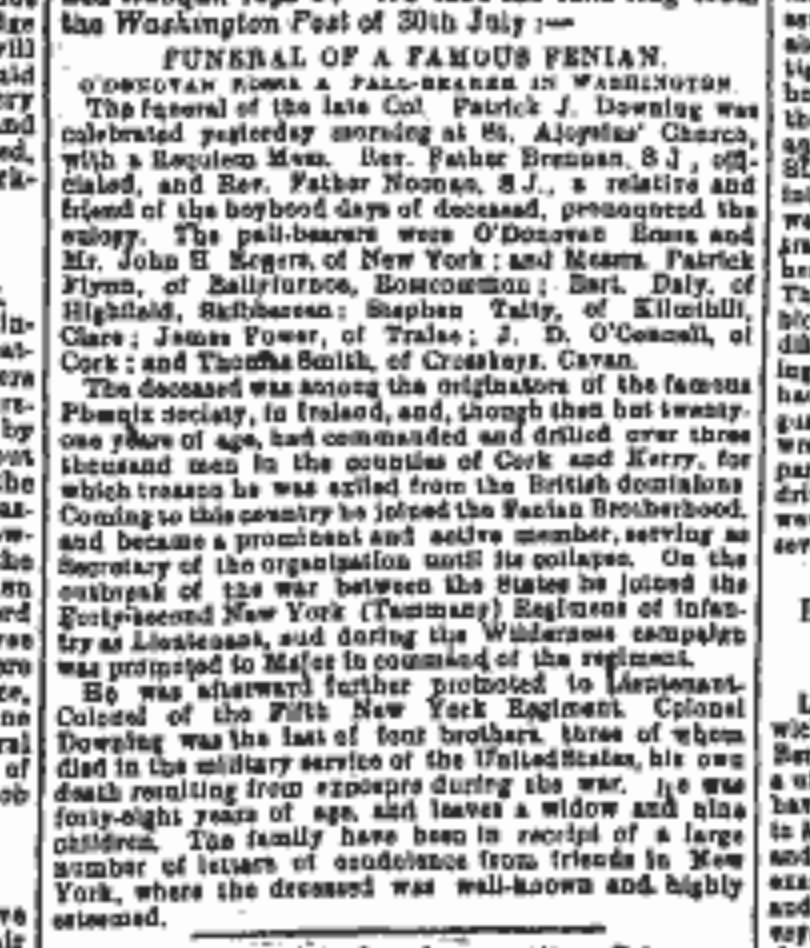
Death of Colonel Patrick J.Downing, Skibbereen, Famous Fenian Pallbearers included Jeremiah O’Donovan Rossa and Bart Daly of Highfield Skibbereen.
24 Saturday Dec 2022
Posted in Uncategorized
Regattas, Bantry 1882, Baltimore, 1885, Goleen (and Athletic sports) 1894
https://docs.google.com/document/d/1fL8K3V2NUk_ZwXodq1YHv6DPc-b5iCUqKTHh_mEzGlM/edit
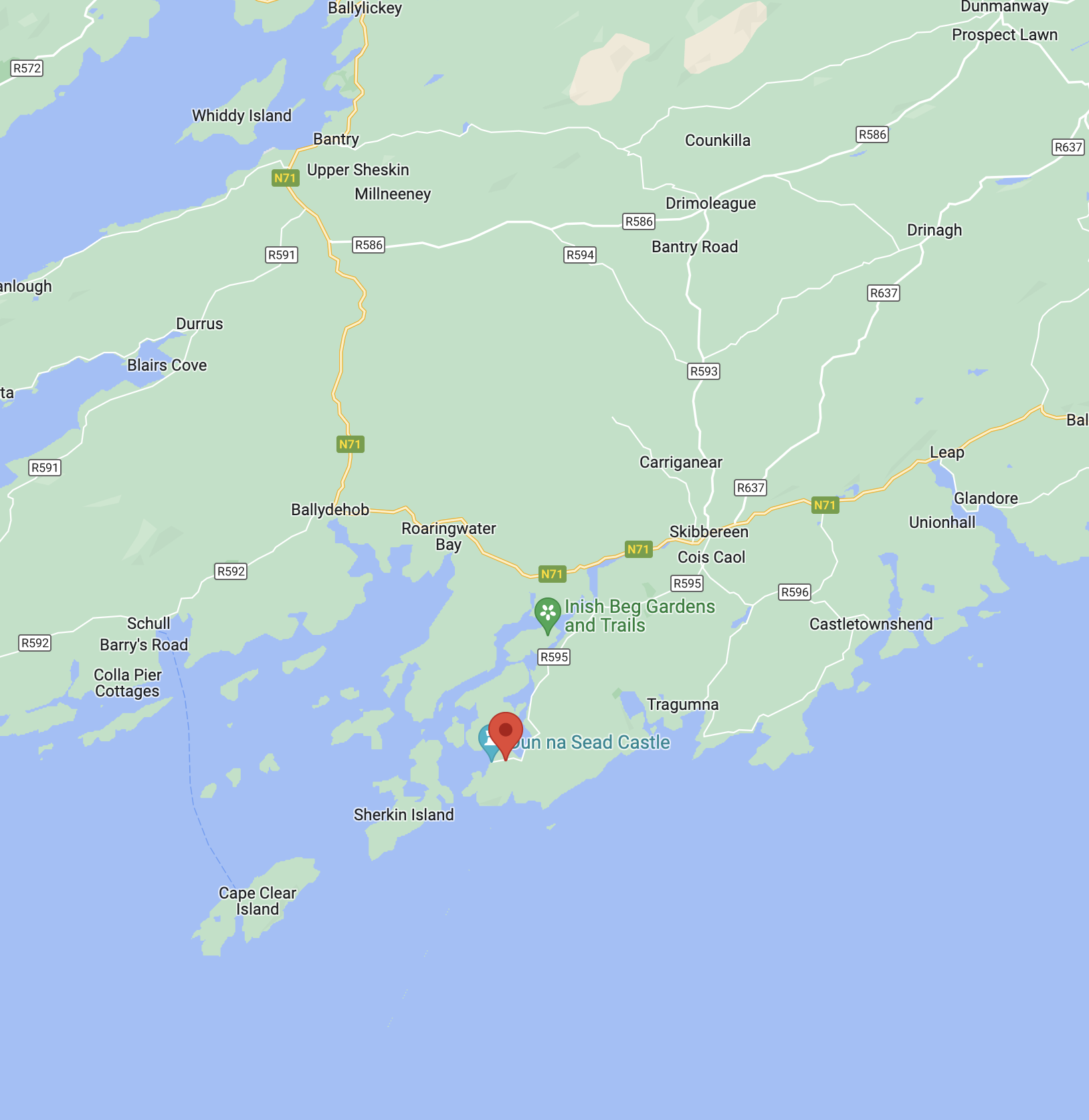
Baltimore Regatta. 1885
.
.
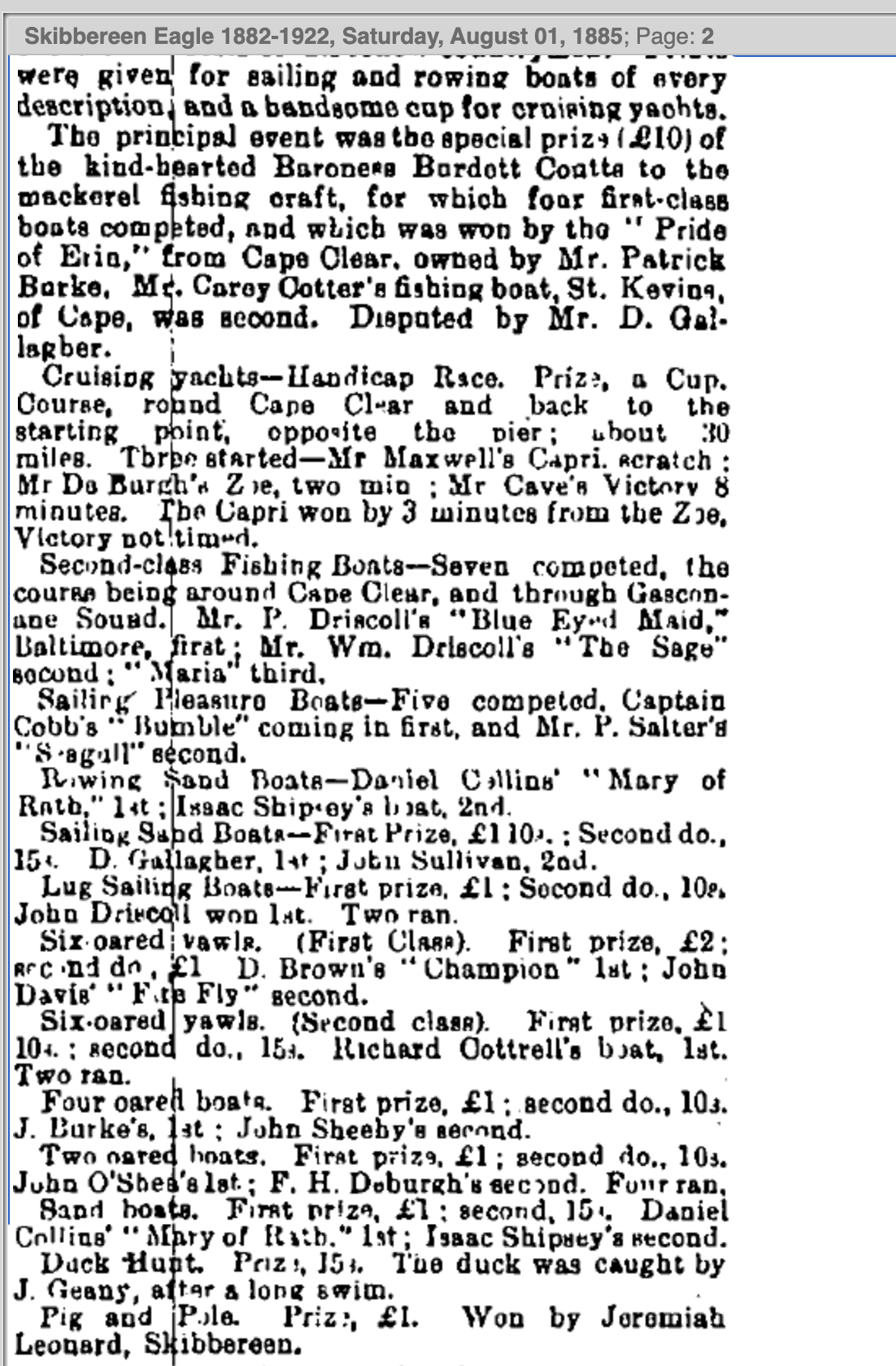
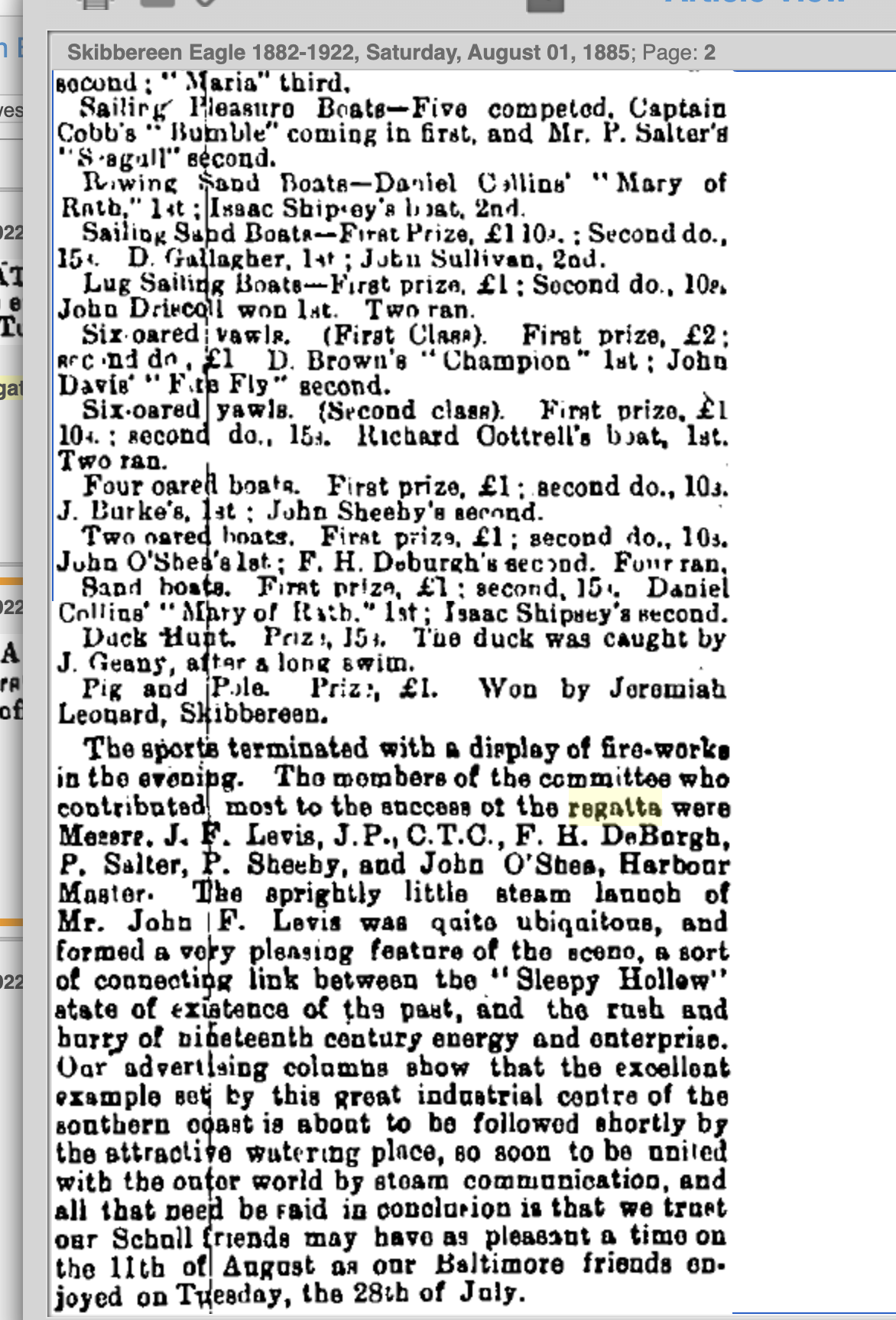
John Francis Levis, (1830-1887) listed at Baltimore Regatta as J.P., mention is made of his steam launch, merchant, Skibbereen, probate 1887 to widow Alice, £4,020. Married 1856 Alice Beamish, Skibbereen, her father George Beamish, corn merchant.
Coutts, Angela Georgina Burdett
Contributed by
Clarke, Frances
Coutts, Angela Georgina Burdett- (1814–1906), Baroness Burdett-Coutts, philanthropist, was born 21 April 1814 in Piccadilly, London, the youngest of the six children of the one-time radical politician Sir Francis Burdett (1770–1844) and his wife Sophia, daughter of the London banker Thomas Coutts. In 1837 she inherited the Coutts fortune from her grandfather’s second wife, the former actress Harriot Mellon, then duchess of St Albans. Having succeeded to this fortune, then that of her parents, who both died in 1844, she took the name Coutts by royal licence. As one of the most famous and wealthy heiresses in England she was a familiar figure in leading literary, social and political circles, but to the British public she was always best known for her philanthropy. While grieving the loss of her parents she became so friendly with Arthur Wellesley, duke of Wellington (qv), that rumours circulated they would soon marry, despite the substantial difference in age. She flouted convention by proposing herself, and, while Wellesley refused, they remained close, though their views on Ireland differed. He offered sound advice on financial matters, which proved useful in her philanthropic work.
Among the causes she assisted were the Church of England, ragged schools, the rehabilitation of prostitutes, scientific research, colonial missions and programmes for rehousing people living in poverty in London’s East End. With Charles Dickens, with whom she collaborated from 1840 to 1857, she founded Urania Cottage for former prostitutes and homeless women in Shepherd’s Bush, Middlesex. Dickens dedicated Martin Chuzzlewit to her. An energetic member of the Royal Society for the Prevention of Cruelty to Animals and president of the ladies’ committee, she provided many drinking troughs in public places. As president of the British Goat Society, she promoted goat-keeping among the disadvantaged to encourage self-reliance.
Like her father before her, she was committed to the notion that Ireland should have its own viable economy, and that measures to relieve distress should go hand in hand with lasting improvements. Her connection with Ireland lies in the support she provided west Cork from 1862, when she first received an appeal for financial assistance from the parish priest of a distressed district, Fr Charles Davis (1827–92). In keeping with her policy of avoiding the ‘demoralising effects’ of handouts, she funded relief stores where basic foodstuffs were sold at minimum cost at Cape Clear and Sherkin Islands, still distressed by the famine. In 1863 she financed the first of three Canadian immigrant parties from the region. Her long-term plan was to promote local industries and agriculture, and with this in mind she sent over a flock of sheep and encouraged an English market for Irish crafts, embroidery in particular. With west Cork facing renewed crisis in 1879 she was again contacted by the local clergy. Acting on the advice of Fr Davis, parish priest of Baltimore, she provided interest-free loans of up to £10,000 to fishermen to obtain the latest boats and fittings for mackerel fishing. The scheme proved highly successful, so that much of the loan was later repaid, leading The Times to comment in 1887 that ‘her confidence in the honour of the poor people has been amply justified’.
Visiting Ireland for the first time in 1884, she was received enthusiastically by the local people, who affectionately dubbed her the ‘Queen of Baltimore’. She returned in August 1887 to open an industrial fishery school in Baltimore, which provided instruction in navigation, boat-building and net- and rope-making. Funded by the government, she and Sir Thomas Brady (d. 1904), the fisheries inspector, had encouraged its establishment. Though in 1880 the British government did not accept her offer of an advance of £250,000 for the purchase of potato seed on the failure of the crop, it took its own measures. In all her dealings with Ireland she remained politically neutral. One of the first women to receive a peerage in her own right (in 1871), she was also the earliest woman to receive the freedom of the cities of London (in 1872) and Edinburgh (in 1874). Despite the disapproval of many relatives and friends, among them Queen Victoria, she married her American-born private secretary, William Lehman Ashmead Bartlett (1851–1921), in February 1881. She died 30 December 1906 at her London residence, and was buried in Westminster Abbey.
Sources
Times, 18 Aug. 1887, 31 Dec. 1906; DNB, suppl. 2; Micheal O’Riordan, Catholicity and progress in Ireland (1905); Edna Healey, Lady unknown: the life of Angela Burdett Coutts (1978) (with portraits and photographs); Diana Orton, Made of gold: a biography of Angela Burdett Coutts (1980) (with portraits and photographs); John De Courcy Ireland, Irish sea fisheries: a history (1981); ODNB
PUBLISHING INFORMATION
DOI: https://doi.org/10.3318/dib.002113.v1
Originally published October 2009 as part of the Dictionary of Irish Biography
Last revised October 2009
F. H. De Burgh, possibly Ms. Frances Hussey de Burgh of Kilfinan Castle, Glandore, her father:
The two vast tombs stand side by side (above) in an odd juxtaposition. We scratched our heads in wonder and searched for clues of names and dates while we were there in the churchyard and, later, in records online. Very little is revealed. There are several inscriptions set on carved stone plaques on the pyramid – all impossible to read because of the moss and lichen growth. Over the iron doorway is a lintel inscribed with – I believe – the name John Hussey de Burgh.
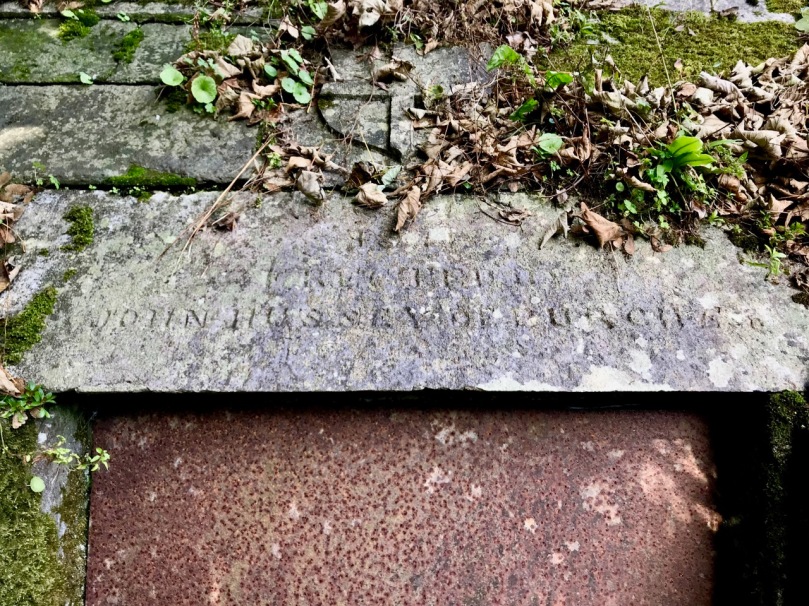
Later searches revealed the following:
. . . John de Burgh was born on 10 June 1822 and died 25 April 1887. Page 159 of The Calendar of Wills and Administration 1858-1922 in the National Archives of Ireland records that the will of “John Hamilton Hussey de Burgh late of Kilfinnan Castle Glandore County Cork Esquire”, who died on 25 April 1887 at the same place, was proved at Cork on 6 July 1887 by “Louis Jane de Burgh Widow and FitzJohn Hussey de Burgh the Executors”. Effects £1,246 11s 1d . . .
Isaac Shipsey, fish merchant, Skibbereen. Extended family doctors heavily involved in nationalist politics.
Father Davis:
The reason for Baltimore’s emergence as the leading centre of the mackerel industry towards the end of the 19th century and the accompanying prosperity – after more than two centuries of social obscurity and economic stagnation – are explored in this work. Baltimore’s importance as a landing place for mackerel was primarily dependent on non-local fishermen with superior catching power. English fish buyers dominated the marketing and distribution of fresh mackerel to England and cured mackerel to America in the absence of a viable home market. However, the arrival in 1879 of Fr. Davis in Baltimore as parish priest and his collaboration with English philanthropist Baroness Burdett-Coutts, enabled Baltimore to capitalise on the new opportunities afforded by fortuitous changes in the mackerel industry. Despite the short term nature of the economic success of Baltimore as a centre of the mackerel industry, the author shows how this industry created a cosmopolitan blend of people and saw the development of its marine infrastructure and onshore services.
Cave. Probably Cave, Arthur Saunders Oriel: His father, Thomas Saunders Cave, had developed mines at Ballycummisk and Cappagh in the 1850s and 1860s (Cowman and O’Reilly 1988, pp 115-6). Arthur was born in 1854 and his father died unexpectedly in a railway station when the boy was 13. At some stage Arthur lost his sight in a shooting accident (Macay typescript) and was recorded as blind in 1901. He registered himself then as a “mining agent” with his 17 and 18 year old sons as “assistant mining agents”. He had a younger son and older daughter and along with his wifeJane, and two servants lived in a ten to twelve roomed house at Coosheen. In 1889 he commenced mining for baryte on Mount Gabriel and took over Dereenalamone in 1899 in which year he also built a baryte mill on his land as described below. Much of his energy went into raising capital in London but is unlikely that he or anyone else made money out of the mines. By 1911 none of the Cave family were in County Cork.
Schull Regatta 1894
.
..
23 Friday Dec 2022
Posted in Uncategorized
Regattas, Bantry 1882, Goleen (and Athletic sports) 1894
https://docs.google.com/document/d/1fL8K3V2NUk_ZwXodq1YHv6DPc-b5iCUqKTHh_mEzGlM/edit?pli=1
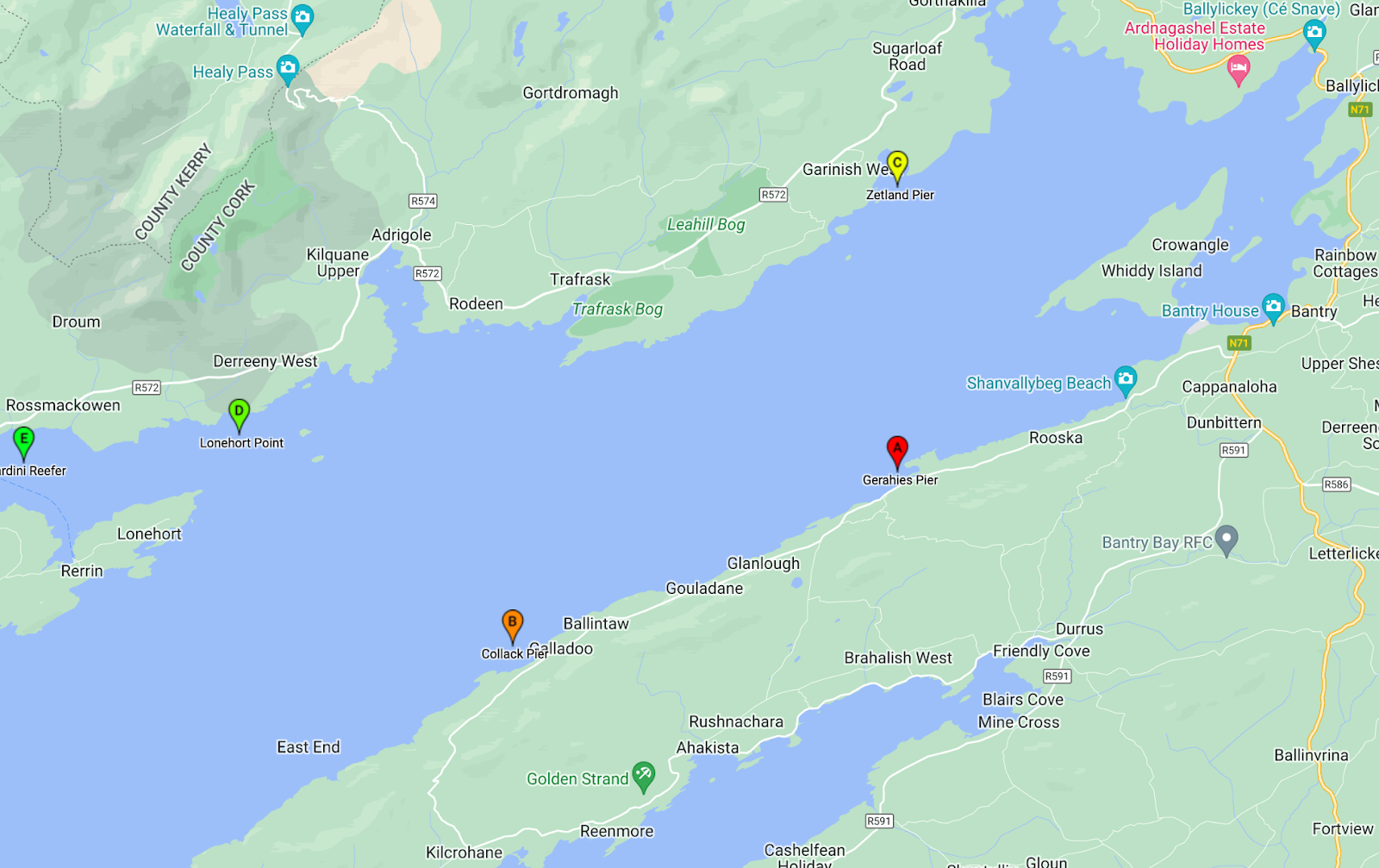
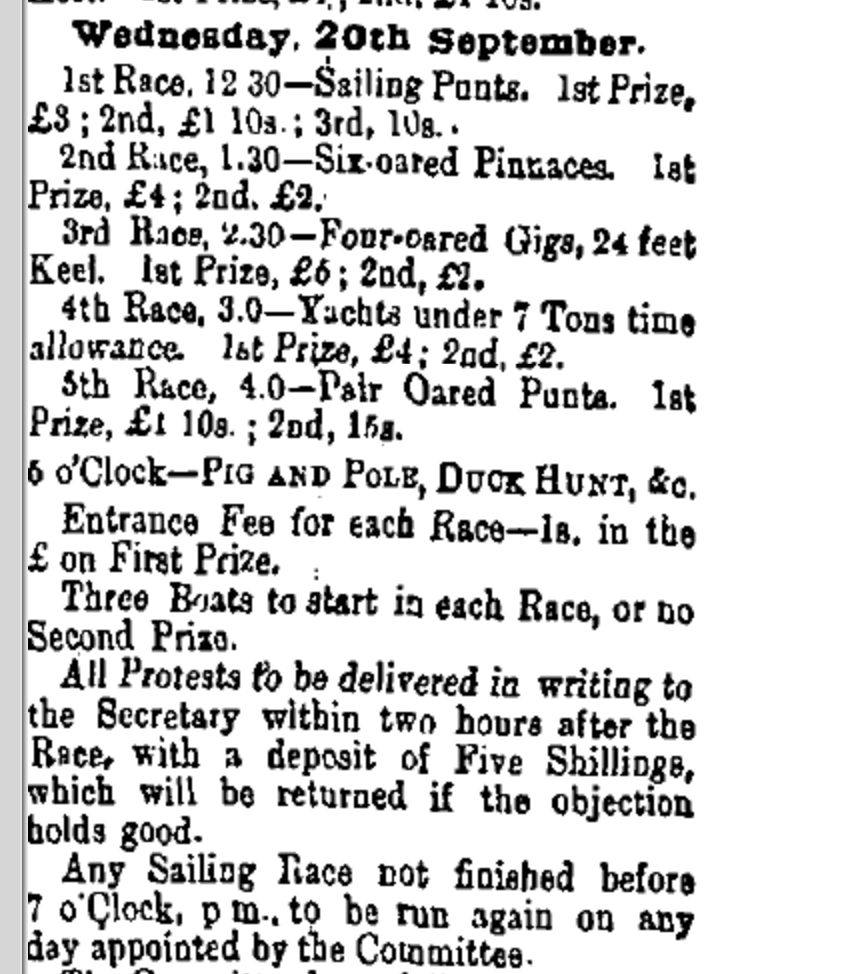
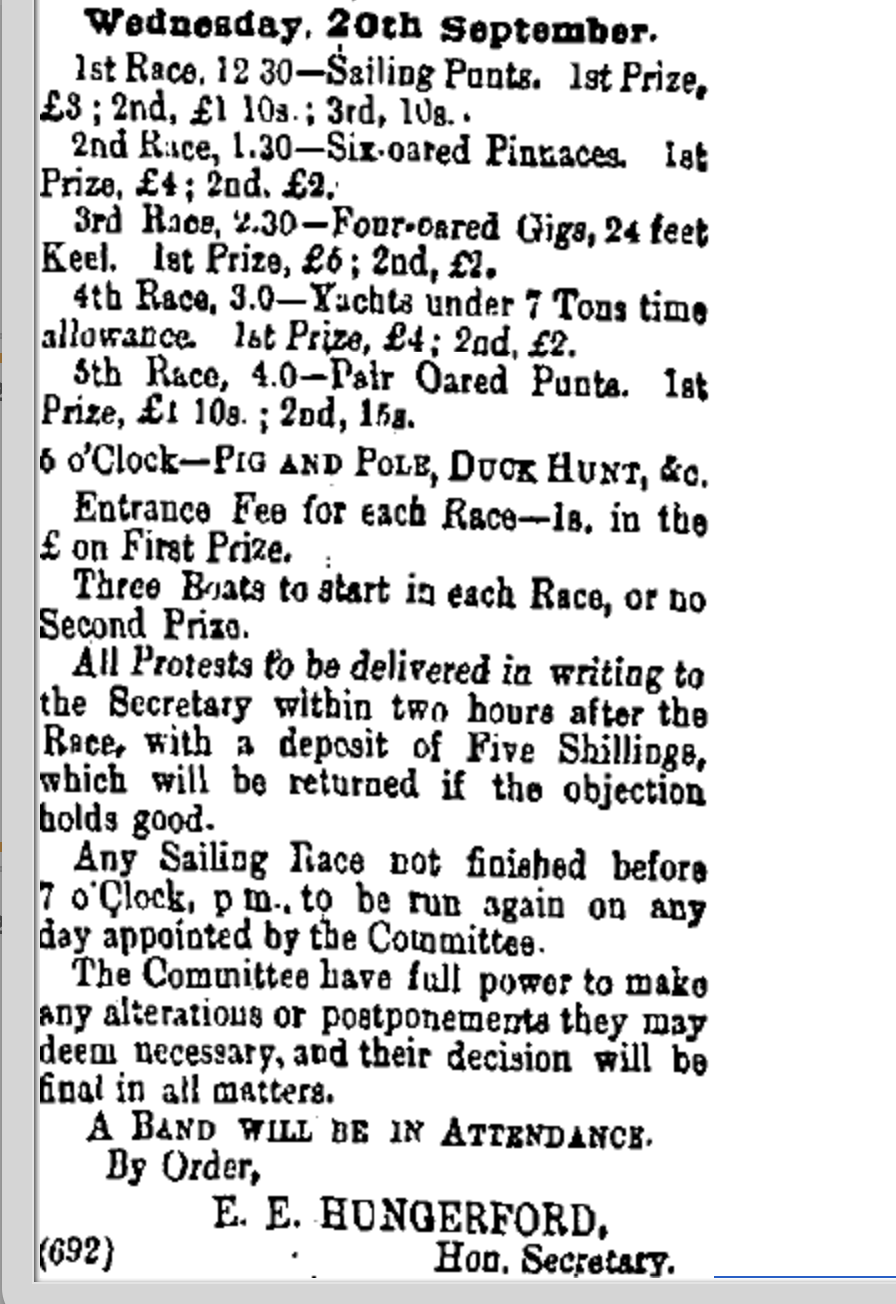
From the mid 19th century in rural Ireland events such as Regattas, Agricultural Shows, Ploughing Championships were and are still are popular. What is of interest are the organising committees composed of local ‘big shots’. In these cases nearly all men, parking their political and religious differences for the objective of having a successful show.
In relation to agricultural shows, many of the 19th century winners have families who in the 21st century are still active in stock breeding and emerging as prize winners.
..

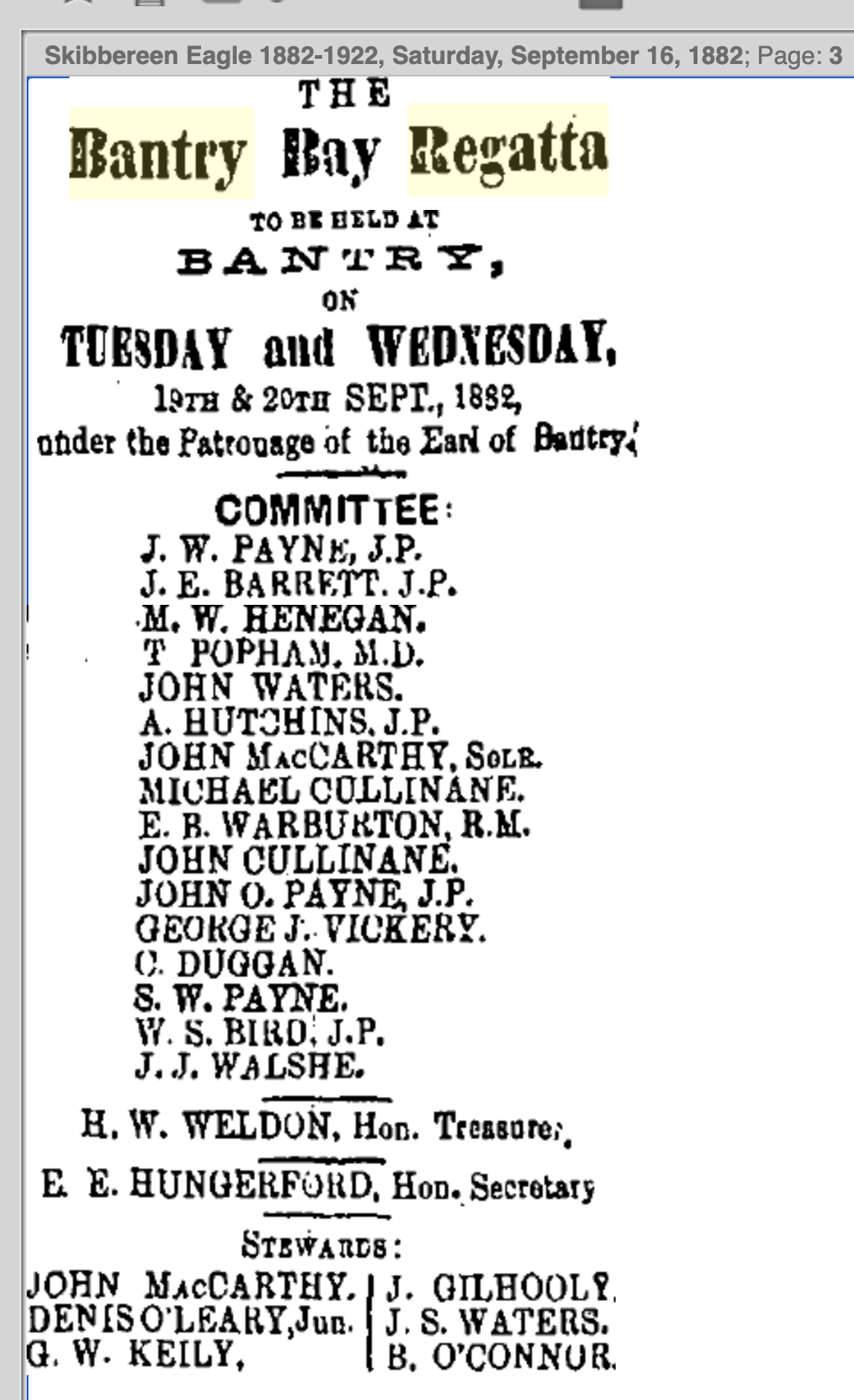


Patron:
22 Thursday Dec 2022
Posted in Uncategorized
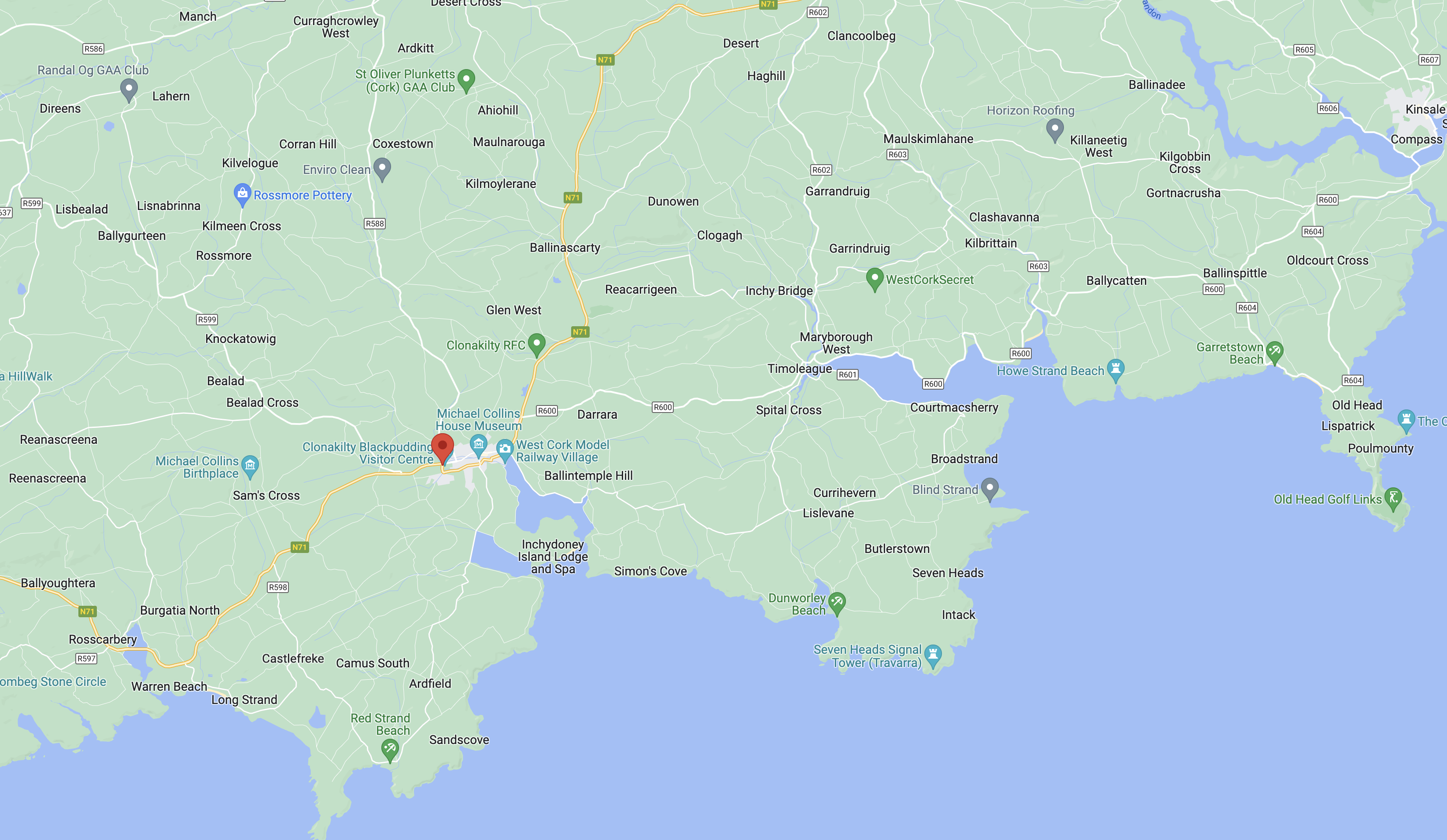
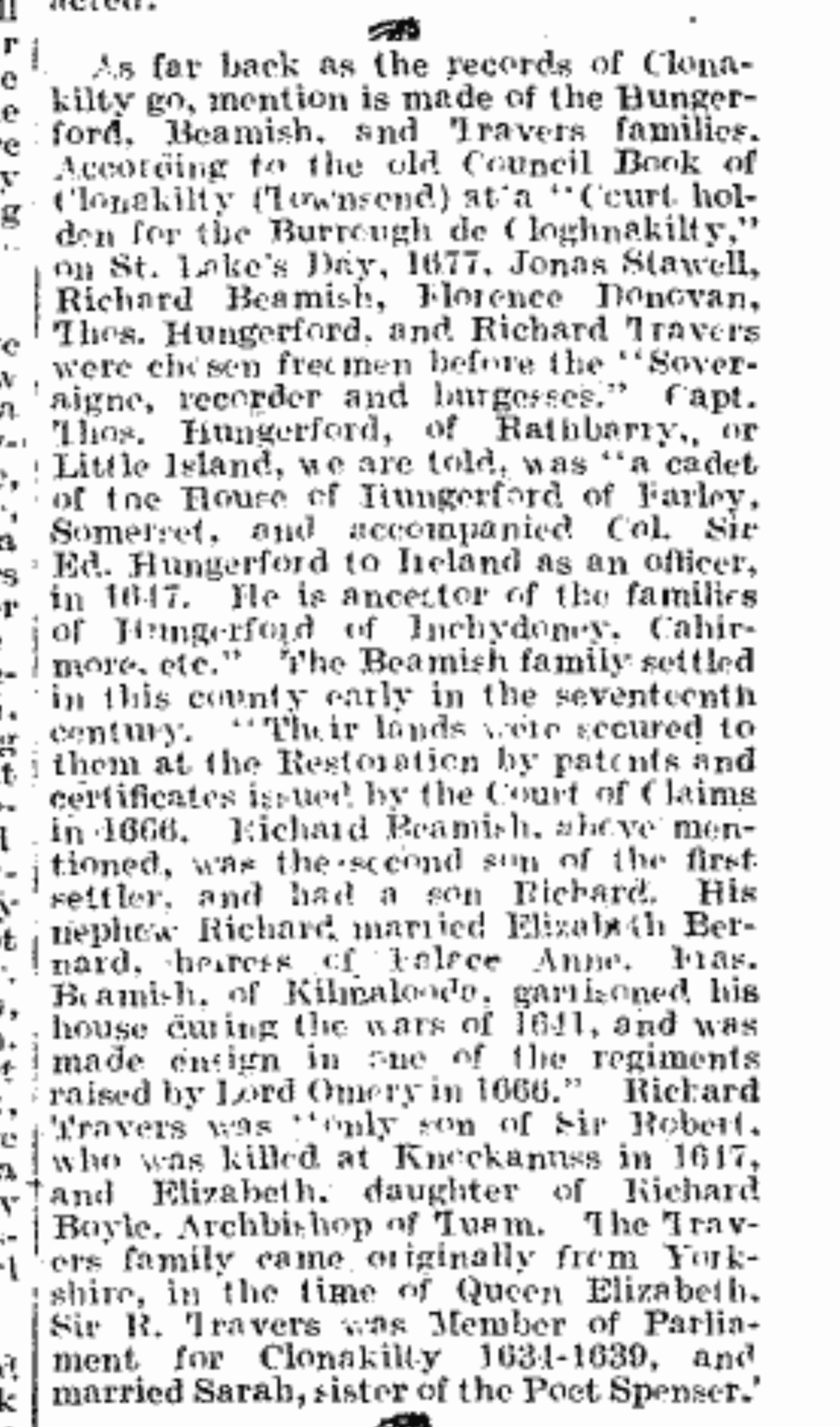
Ancestry of the Hungerford, Beamish and Travers Families of Clonakilty

Page 4
21 Wednesday Dec 2022
Posted in Uncategorized


 West Cork History