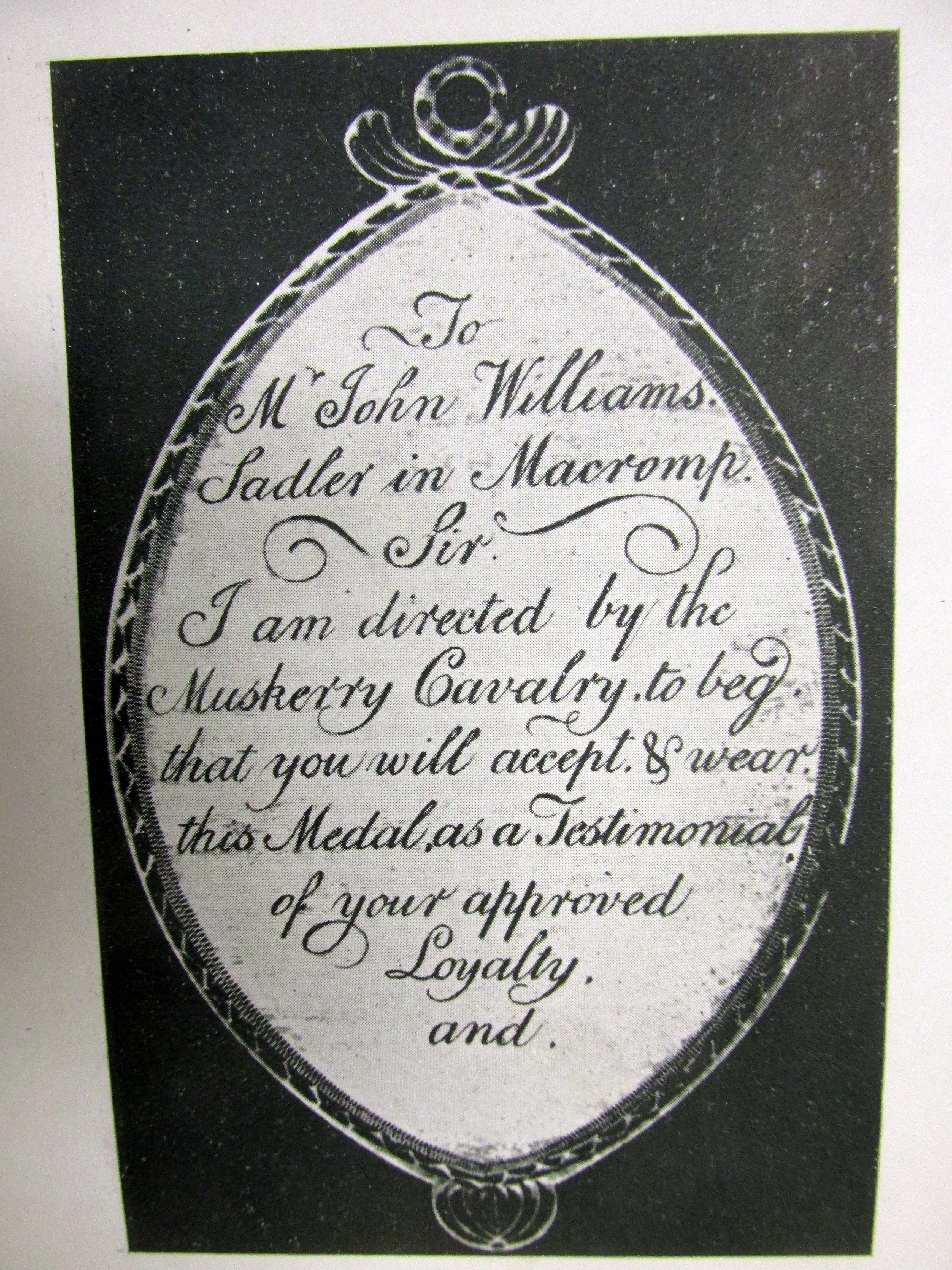
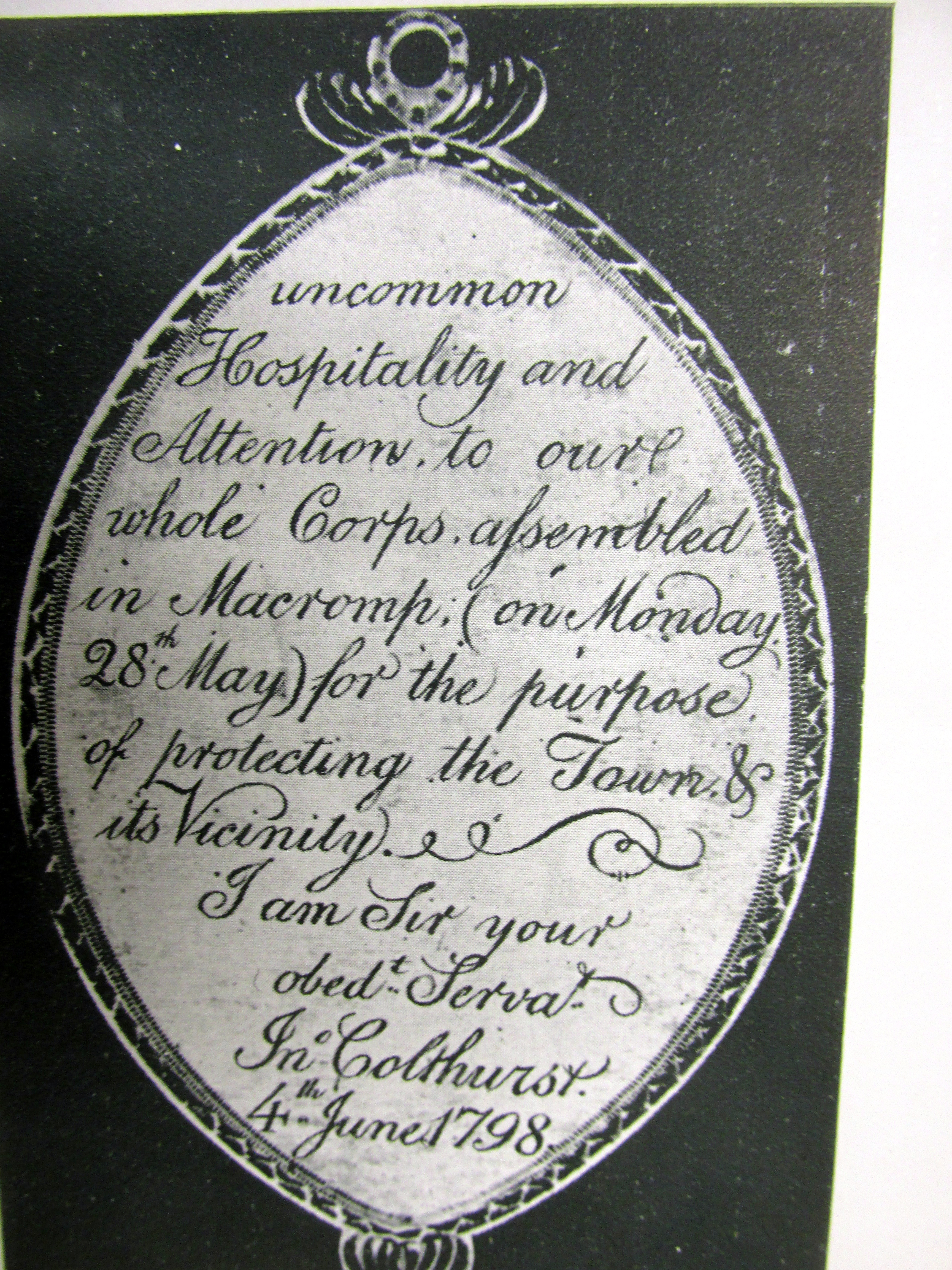
Medal for John Williams, Sadler, Macromp (Macroom), Co. Cork,for Loyalty and protection of Macromp Town and Vicinity signed by John Colthurst, 4th June 1798.
16 Tuesday Dec 2014
Posted in Uncategorized
Medal for John Williams, Sadler, Macromp (Macroom), Co. Cork,for Loyalty and protection of Macromp Town and Vicinity signed by John Colthurst, 4th June 1798.
16 Tuesday Dec 2014
Scart, off Bantry/Cork Road.
Cool-na-Long, Gearhameen:
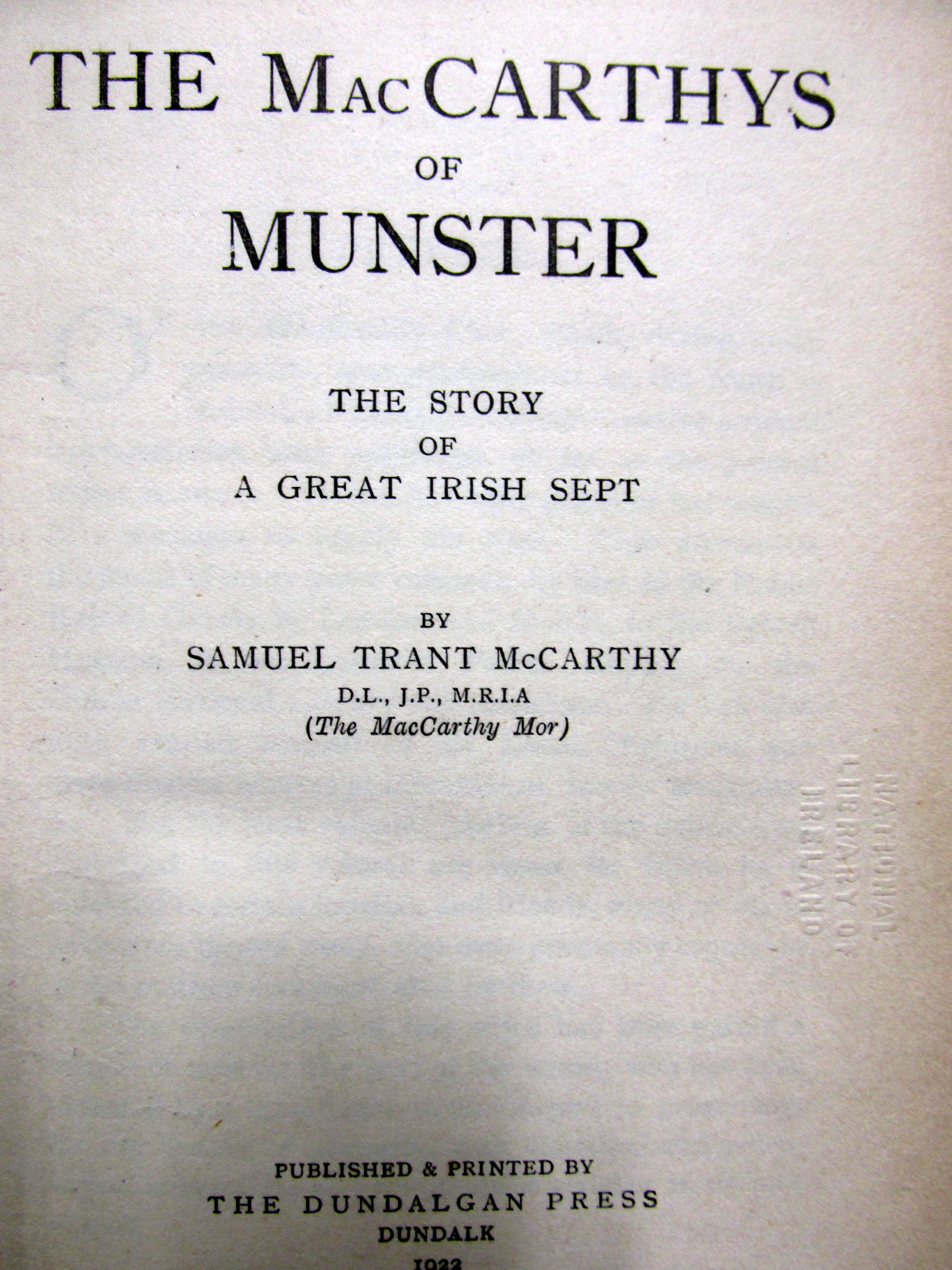
Genealogy of McCarthy (Muclagh/Clann Tadhg Ruaidh-na-Scairte) family of Scart (Durrus/Bantry), West Cork, later Cul-na-long, from 1185 AD including descendants of Father/Reverend Daniel McCarthy from Samuel Trant McCarthy, High Sheriff Co.Kerry, Srugrena Abbey 1912 intermarried with O’Learys Incigeela, Mccarthys Kilcoe, O’Donovans, O’Mahonys Dunbeacon, McCarthys Dunmanway, Blairs Bantry/Coolculaghta/Blair’s Cove among others, 18th century family members in France.
From Judge Samuel Trant McCarthy’s General McCarthy History.
The Castle was in the townland of Scart around a mile from Durrus Cross adn the family moved to the then new Castle at Cul-na-Long, Gearhameen, Durrus s till well preserved. Their lands partly came into possession of Sir. Walter Coppinger (the Coppingers are of Hiberno-Danish descent) who went into possession when they defaulted on the mortgage c 1640 these would be the eastern end Caheragh and Ballycomane. His land was forfeit due to rebellion and eventually came into the possession of the Frekes, Lord Carbery,
The Western was forfeit due to rebellion and passed to Colonel Reid, then to Evansons who disposed of to the Bernards of Bandon who leased it back to the Evanson. Their lease fell in around 1850 and Bernards the the Earls of Bandon resumed possession. They built the village of Durrus with dispensary, courthouse, housing and shops. The western end ran from around the current Bog Road bounded by the Durrus River and the Northern Hills to Kealties far out into the Muintervara peninsula.
Recently some beautiful stonework from the Castle was located.
The family moved from Scart c 1615 to Cul-na-Long in Gearhameen, Durrus. The substantial Castle still stands in reasonable repair. The family were called ‘Mucklagh’ from their herds of pigs which grazed the then oak woods in hte Durrus lowlands. Interestingly the Dukelow family in Coomkeen Durrus live in a sub-townland called Scrahan na muice (Scrathán na Muice) the hollow of the pigs. In Spain the most expensive cured ham is that from oak acorn fed pigs.
https://plus.google.com/photos/100968344231272482288/albums/6116181749266144993
1834 Cool-na-Long Castle, Gearhameen, technically wrong name Cool-na-Long is 1 mile further west the site of an earlier McCarthy castle adjoining a very deep pool in Dunanus Bay. McCarthy built c 1620 undefended, acquired by Colonel Reid post confiscation, used as British Army Barracks, acquired by Evansons c 1690, thye sold their interest to Francis Bernard (ancestor of Earl of Bandon) c 1710 and re leased it.
16 Tuesday Dec 2014
Posted in Uncategorized
Tags
Bank of Ireland, Bank of Ireland Clerkships, Daniel O'Connell, London, Select Committee of House of Commons
Evidence of Daniel O’Connell, Esq., 1st March 1825 to Select Committee of House of Commons, London, on state of Legal Administration, Function of Assistant Barrister in Court, Grand Juries selected from Improper Persons, Low persons Vendors of Spirits and Beer, The Bar in Cork, Mr. Wagget, Recorder of Cork, of Private Means with a small salary which he refuses to to be increased, outside Cork the sessions conducted by Attorneys of low repute the relaxation of Popery Laws has given a better class of Attorney then what existed before., The Mode of Administering the Criminal Law by the Magistrates in Ireland has been very bad, particularly in relation to Tithes, for the last two-an-twenty years Roman Catholic have been eligible to the situation of Directors of the Bank of Ireland but not one elected although an immense deal of Bank Stock belongs to the Catholics, up to 10 Catholics in Bank of Ireland Clerkships.
From Google Books from page 58 others matters are also dealt with.
16 Tuesday Dec 2014
Posted in Uncategorized
Updated :
Meziere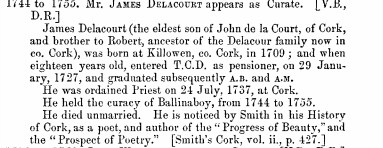 Brady:
The Wit, Epigrams and Poetry of the Reverend De La Cour ‘The Mad Parson’, Blarney, Co. Cork.
http://www.ricorso.net/rx/az-data/authors/d/Delacour_J/life.htm
http://landedestates.nuigalway.ie:8080/LandedEstates/jsp/estate-show.jsp?id=2893
From Crofton Croker:
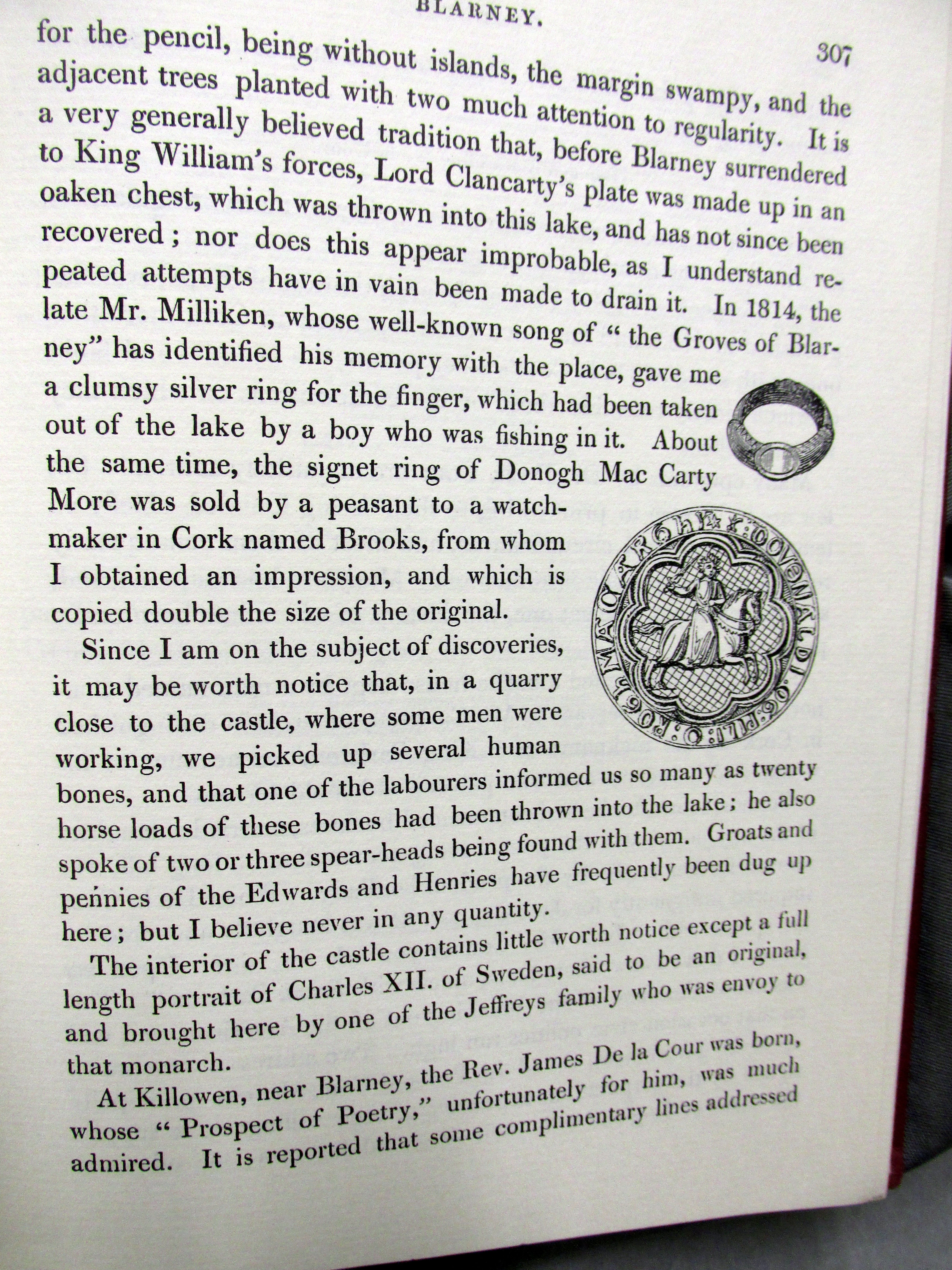
At Killowen, near Blarney, the Rev. James De la Cour was born, whose ‘ Prospect of Poetry,’ unfortunately for him, was much admired. It is reported that some complimentary lines addressed
p.308
to him on this publication, by Thomson, the author of the Seasons, commencing with Hail, gently warbling De la Cour,’’
James Thomson, The Seasons London: Henry Woodfall for A. Millar (1744)
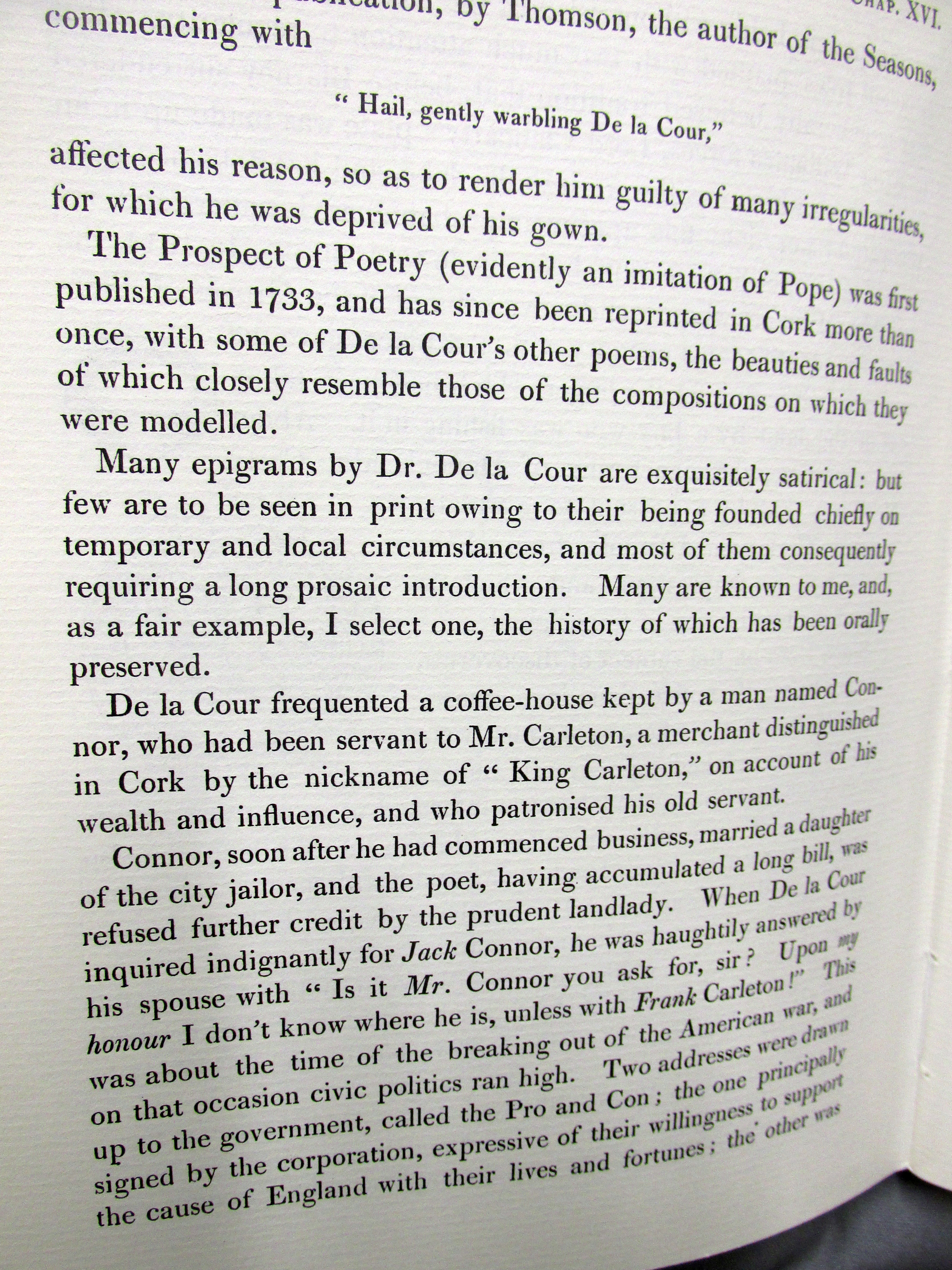
affected his reason, so as to render him guilty of many irregularities, for which he was deprived of his gown.
The Prospect of Poetry (evidently an imitation of Pope) was first published in 1?33, and has since been reprinted in Cork more than once, with some of De la Cour’s other poems, the beauties and faults of which closely resemble those of the compositions on which they were modelled.
Many epigrams by Dr. De la Cour are exquisitely satirical: but few are to be seen in print owing to their being founded chiefly on temporary and local circumstances, and most of them consequently requiring a long prosaic introduction. Many are known to me, and, as a fair example, I select one, the history of which has been orally preserved.
De la Cour frequented a coffee-house kept by a man named Connor, who had been servant to Mr. Carleton, a merchant distinguished in Cork by the nickname of ‘King Carleton,’ on account of his wealth and influence, and who patronised his old servant.
Connor, soon after he had commenced business, married a daughter of the city jailor, and the poet, having accumulated a long bill, was refused further credit by the prudent landlady. When De la Cour inquired indignantly for Jack Connor, he was haughtily answered by his spouse with ‘Is it Mr. Connor you ask for, sir? Upon my honour I don’t know where he is, unless with Frank Carleton!’ This was about the time of the breaking out of the American war, and on that occasion civic politics ran high. Two addresses were drawn up to the government, called the Pro and Con; the one principally signed by the corporation, expressive of their willingness to support the cause of England with their lives and fortunes; the other was
p.309
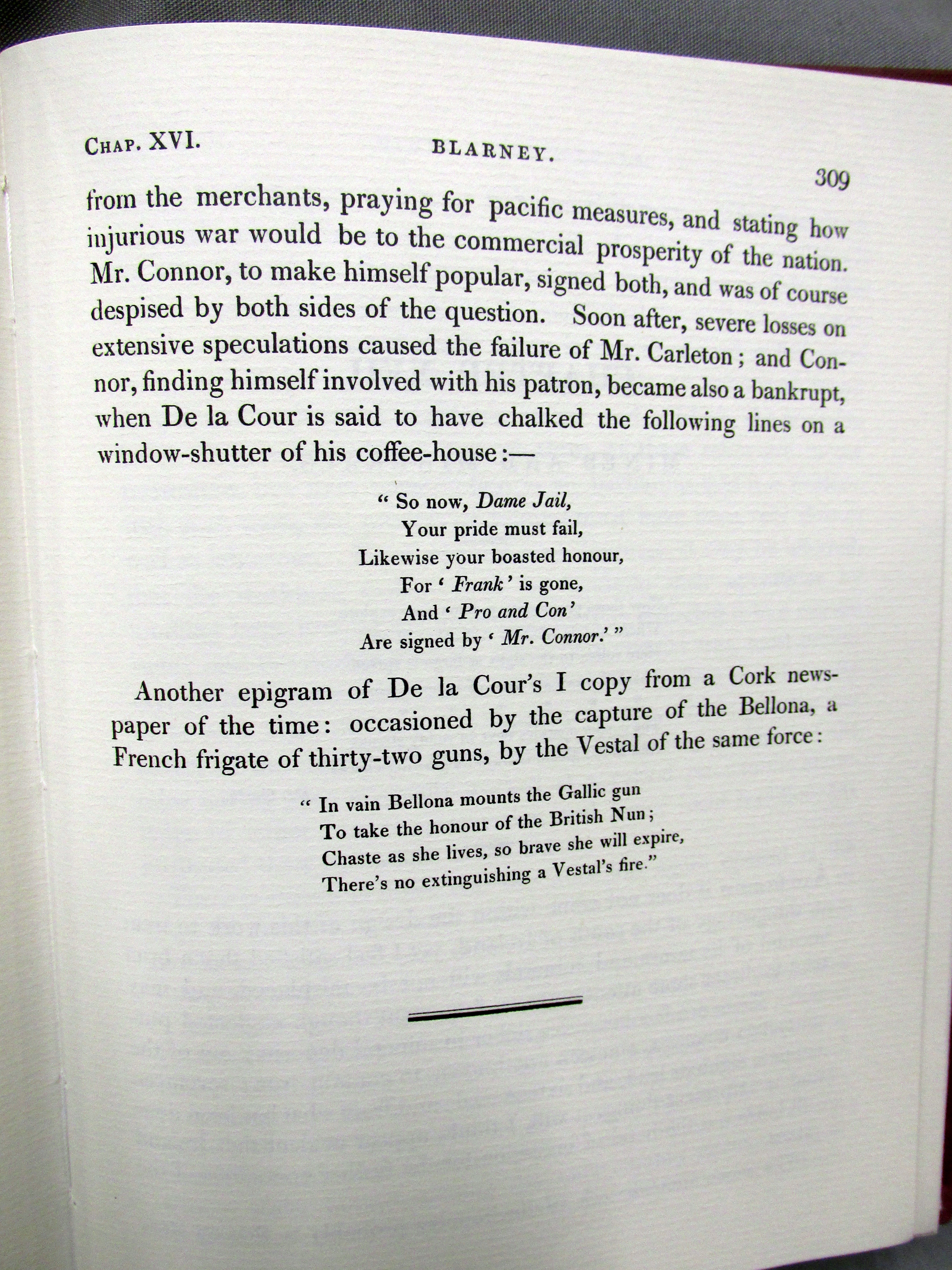
from the merchants, praying for pacific measures, and stating how injurious war would be to the commercial prosperity of the nation. Mr. Connor, to make himself popular, signed both, and was of course despised by both sides of the question. Soon after, severe losses on extensive speculations caused the failure of Mr. Carleton; and Connor, finding himself involved with his patron, became also a bankrupt, when De la Cour is said to have chalked the following lines on a window-shutter of his coffee-house:
So now, Dame Jail,
Your pride must fail,
Likewise your boasted honour,
For ‘Frank’ is gone,
And ‘Pro and Con’
Are signed by ‘Mr. Connor.’
Another epigram of De la Cour’s I copy from a Cork newspaper of the time: occasioned by the capture of the Bellona, a French frigate of thirty-two guns, by the Vestal of the same force:
In vain Bellona mounts the Gallic gun
To take the honour of the British Nun;
Chaste as she lives, so brave she will expire,
There’s no extinguishing a Vestal’s fire.
16 Tuesday Dec 2014
Posted in Uncategorized
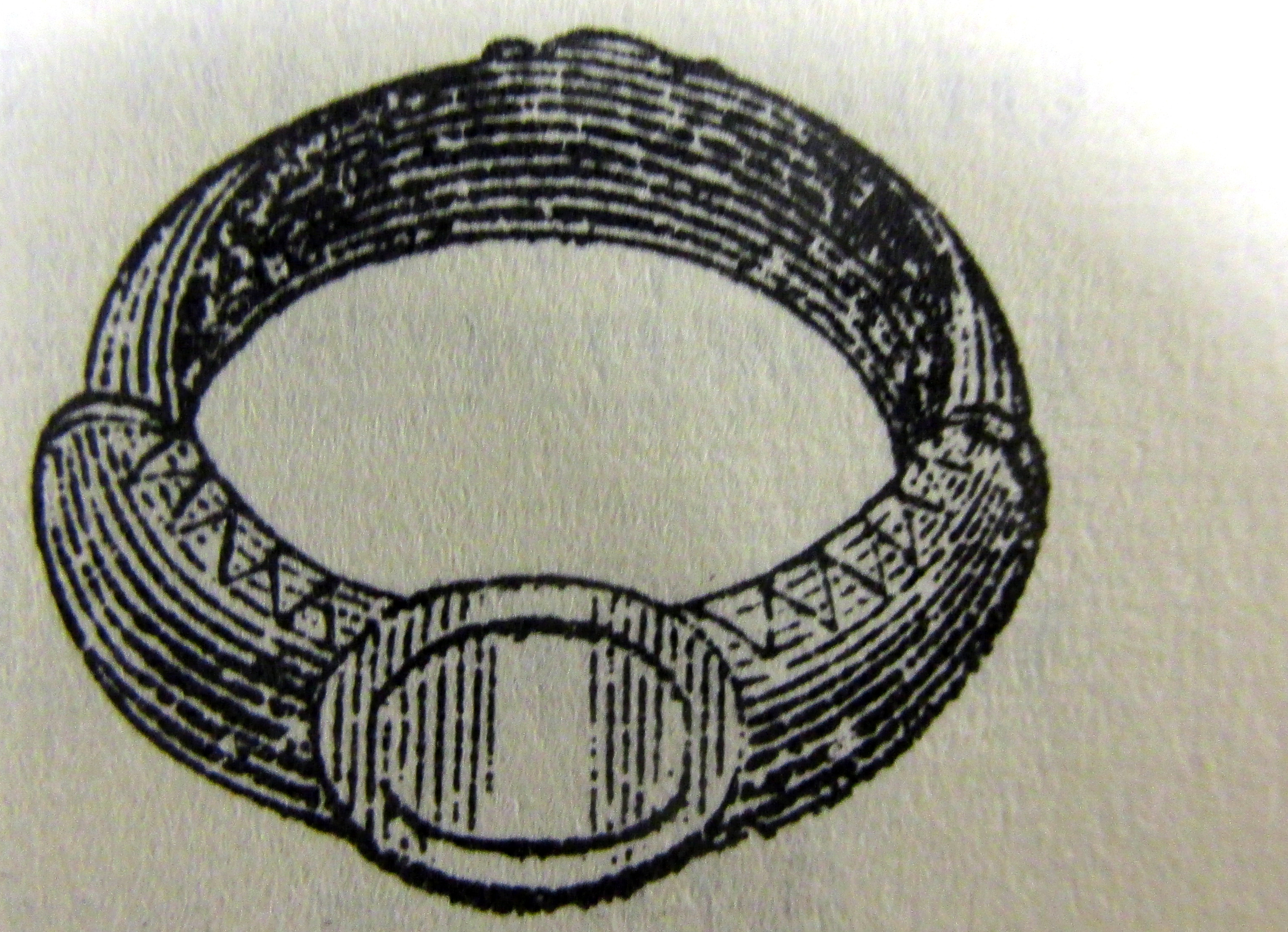
Signet Ring of Donogh MaCarthy More with Family Crest. Found 1814, Blarney.
Crofton Croker.


16 Tuesday Dec 2014
Posted in Uncategorized
View original post 559 more words
16 Tuesday Dec 2014
Posted in Uncategorized
All over Ireland, January 6 marks the end of the Christmas season – it is the day on which the fairy lights, the Christmas tree, the decorations and the Christmas cards are taken down and put away for another year. It is considered bad luck if decorations remain displayed after this date! January 6 has many titles – Epiphany, Little Christmas, 12th Night , Women’s Christmas, Women’s Little Christmas,and Nollaig na mBan. Such an important day to have 6 different names!
 Epiphany: The 3 Kings arrive with gifts
In Ireland, ‘Little Christmas’ (‘Nollaig Bheag’ in Irish) is one of the traditional names for January 6, the feast of the Epiphany. Epiphany is a Christian celebration of the day on which the Magi arrived with gifts of gold, frankincense and myrrh to honour the new-born baby Jesus, the day on which Jesus is revealed to the gentiles. Epiphany is one of the oldest Christian holy days that originated in the Eastern church and was…
View original post 356 more words
16 Tuesday Dec 2014
Posted in Uncategorized
Souvenir of Funeral of O’Donovan Rossa (1831-1915), pieces by Arthur Griffith, Curtis O’Leary, James Connolly, McDonagh among others.
Courtesy John Tobin saved from destruction.
16 Tuesday Dec 2014
Posted in Uncategorized
15 Monday Dec 2014
Posted in Uncategorized
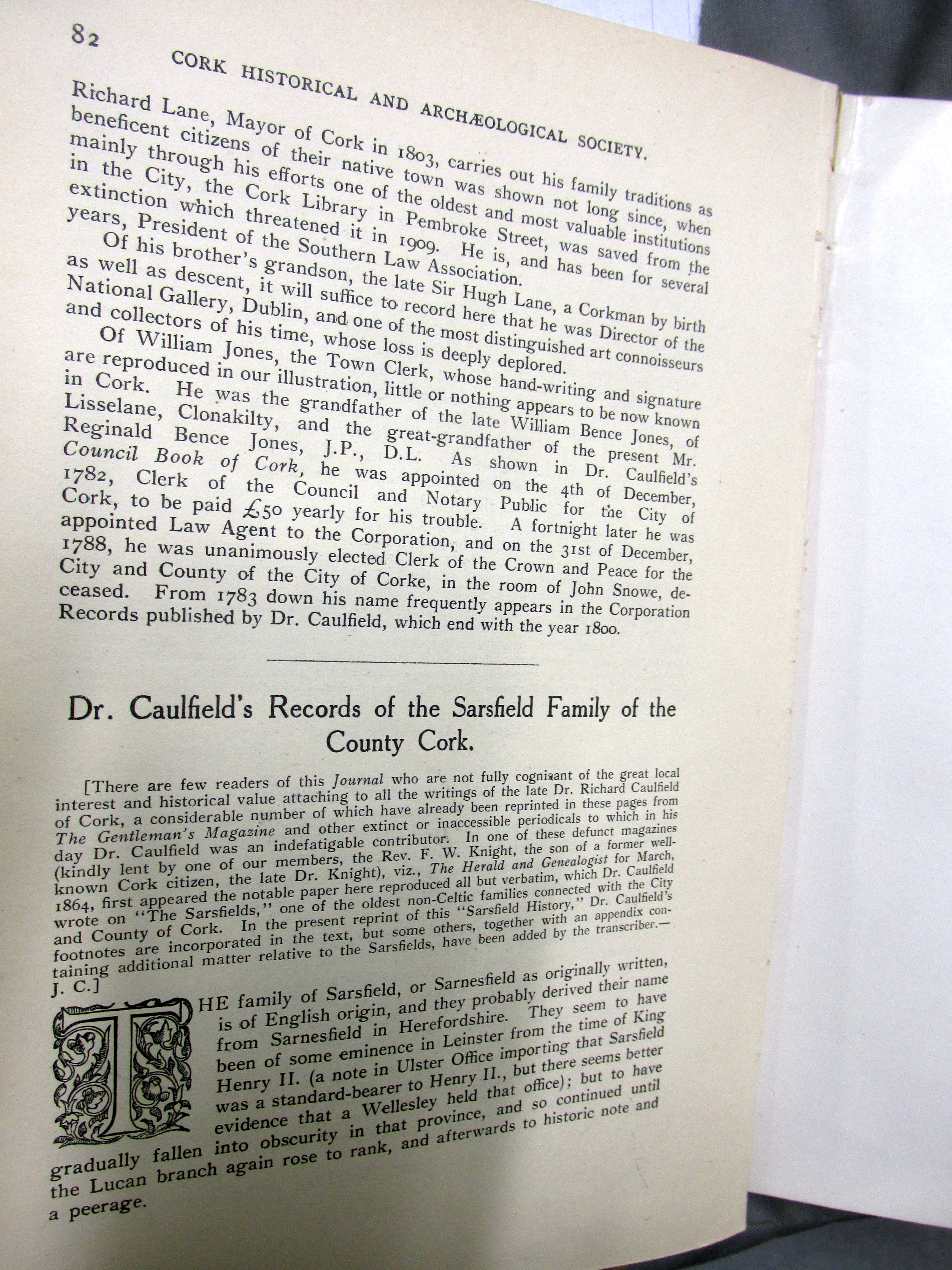
Invitation to the Cork Council Reception at the Mansion House, 1802 signed by William Jones, Town Clerk (he was also Clerk of the Crown for the City and County of Cork and Notary Public from 1782)
Some Cork Lawyers:
https://docs.google.com/spreadsheet/ccc?key=0AqhnQGE3ANjzdEkxdVM0YVNzbzFHbV8tRGxNM2pmMWc#gid=0




 West Cork History