1861, MAC CARTHY, D. (Glas/Green in Irish), Hants, Mac Carthy, D.,Glencurrah (Skibbereen) MacCarthy Glas/Duna. As patrilineal descendants of the 4th Prince, but not the 5th Prince, the MacCarthys of Dunmanway, belonging to the MacCarthy Glas. Subscribers to Rev. Gibson History of Cork
MAC CARTHY, D. (Glas), Hants, Mac Carthy, D., Glencurrah (Skibbereen)
From a Copy at the University of Southern California digitized by Google.
As patrilineal descendants of the 4th Prince, but not the 5th Prince, the MacCarthys of Dunmanway, belonging to the MacCarthy Glas[9][10][11] and MacCarthy Duna[12][13] septs, are not technically MacCarthys Reagh. However, most historians and genealogists refer to all descendants of Donal Gott as MacCarthys Reagh, and it is the case that, should the “senior line”, descendants of the 5th Prince, fail, then the MacCarthys of Dunmanway would become the “new” Princes of Carbery.
Teige-an-Duna MacCarthy, Lord of Glean-na-Chroim – ancestor of several surviving septs, he died at the house of Timothy O’Donovan, Magistrate, O’Donovan’s Cove, Durrus c 1830.
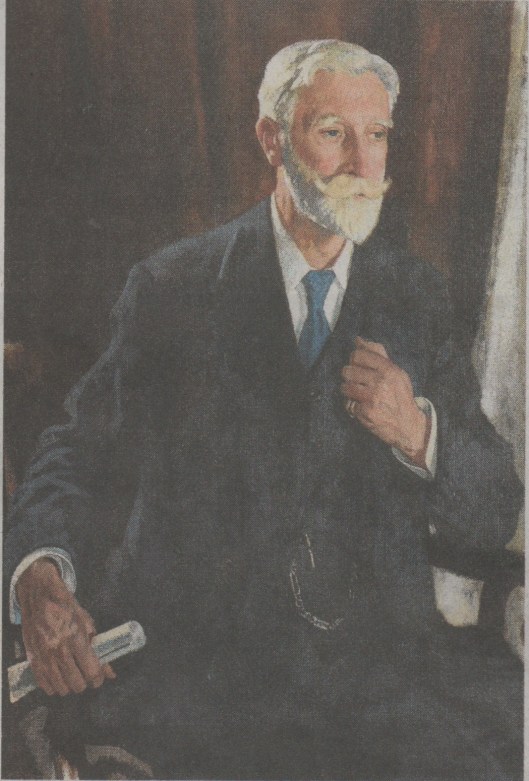
WILLIAM HENRY O’DRISCOLL, Esq., of Stoke, near Plymouth. He was born on the 16th of June, 1803, and, though a fine specimen of the old Irish chieftain race, he is still unmarried. The senior line of the O’Driscolls is, therefore, likely to become extinct in the British Islands, and the genealogist of the next century will probably have to look for it in the United States of America: though, according to a wild tradition in the country, there are fishermen on Cape Clear and on other islands off the Coast of Carbery, who are lineally descended from the youngest son of Sir Finghin, or Florence, of 1602. The Rev. James O’Driscoll, P.P. of Kilmichael in the County of Cork, is said to be the great-grandson of Denis O’Driscoll of Dunbeacon Castle, who is remembered by tradition for his skill in performing on the Irish harp, who was the son of…
Effect of Penal Laws. Sons Of Irish Catholic Aristocratic Families Requirement to Produce Genealogical Proof for Crown Service on the Continent 17th 18th and 19th centuries.
Biographical data from Kerry Evening Post 1824-1864 and other papers including Cork details gleaned by O’Connell Brothers (Basil and Donal) in the 1950s. They were descendants ofDaniel “Connell and Basil wrote the O’Connell Tracts.
Dr. Casey has this in Vol 6 and 7 of the O’Kiev Cishe Mang
1802. Dr. Bryan O’Connor Born c 1766, Bantry, West Cork, Transported to Australia for United Irishmen Offences . Papers from Australian Archives 1802.
The Limrick family. My great great grandmother (Mark O’Connor, Australia) was Ann Limrick Starkey (Starkie) born in Rosscarbery to Wm Starkie and Anna Maria Alcock, (her father was the nephew of Henry Alcock of wilton in Co. Wexford. Her father was Wm Henry Loftus Alcock, transported with his brother in law Dr Bryan O’Connor of Bantry to Australia for being United Irishman and Wm for visiting Dr Bryan O’Connor in Goal.
Dr Bryan O’Connor’s wife was Jane McCarthy. A Florence McCarthy and another McCarthy were transported to Australia with Bryan. Florence must have died as he was not heard from again.
The marriage of Dr. Bryan O’Connor would explain his association with Barrister Alexander McCarthy. Caheagh is Jane McCarthy’s her home place about 7 miles from Bantry possibly of one of the McCarthy family the major landowner pre 1650 of the area later probably middle men
Dr Bryan O’Connor did in fact return to Ireland after receiving a full pardon in 1809, his brother in law, Wm Henry Loftus Alcock, never did return to Ireland from Australia. Dr O’Connor had a medical practice in Clonakilty, where he lived with his wife Jane until he passed away in Clonakilty in 1830 from Basil O’Connell Newspaper Extracts, Dr Casey:
…..
Mark O’Connor found Bryan O’Connor courts martial but was unable to locate either Wm Alcock’s courts martial papers or information on his uncle General Prescott.
Both the Alcock and Loftus families were mad at him because he married a Catholic woman, Mary Lavina O’Connor, and visited his rebel brother in law in goal. His uncle Henry Alcock who had inherited the Wilton estate, had told the British his tenants were loyal to the crown and there was no need to search them for pikes. Of course, when the rebellion started, Wilton tenants had pikes and joined the fight. They may have wanted William punished to show loyalty to the crown
To His Excellency Governor King &c &c &c The Memorial of William Henry Alcock
Your memorialist on the presumption that his name is among those Your Excellency has now the goodness to transmit to Government humbly approaches your Excellency with a Very few Lines.
That your memorialist previous to his being sent here, had served in His Majestys Troops, both of the line and Militia, abroad & at Home; the space of eleven Years –and during the Whole of the late Rebellion, actually fought; and to the utmost of his abilities, acted against those very Men as one of whom he has been sent here! That, visiting Dr O’Connor, his Brother in Law in prison; was construed into a correspondence with the Rebels – Doubly criminal in him as a British Officer: at least, rendered so by the complexion of the Times; and immediately laid hold of by a party more of family than political; who succeeded, notwithstanding the unblemished character given him even by his prosecutor; in working his ruin. Inshort could he lay before your Excellency the proceedings of the Court Martial; they alone he trusts, would exculpate him from even the shadow of suspicion. They were so unsatisfactory to his Excellency the Marquis Cornwallis, that he ordered them to be revised. But his Family prevailed; and, your memorialist fill a Sacrifice.
That your memorialists situation here is more irksome & unpleasant, than can be easily imagined [Page 67]
cut off from that Part of society to which he feels he belongs and his former habits of life, also, rendering him unable to help himself manually as others, he is actually in want of all the comforts; & many of the necessaries of Life .
That as your memorialist came out here stigmatised with the appellation of Rebel; and that every member of his Family is firmly attached to the sacred person of His Sovereign; Your memorialist wishes not to return to Europe until he has by his conduct, evinced to them & to the World his similarity of sentiments, & thereby insured to himself their countenance. But if your Excellency would grant him a conditional pardon he would with your Excellency’s permission & approbation go to India, where he has near relations high in the Service of the Government – His Uncle General Prescott & Family by whose influence, he might again be received in the military line; and hereafter return to Europe with credit.
In granting this you Excellency would be the means of restoring your memorialist to that character he has, in the World’s Eye, lost, and to all the comforts of a Rank, not the lowest in Society – His gratitude would then be equal to that respect & veneration with which he now is –
Your Excellency’s
Most Obedient humble ServantWm. H. Alcock
Philip Gidley King – letters received and other papers, 1794 – 1807 MLMSS 710
Mitchell Library, State Library of NSW
Letter from Bryan O’Connor to P.G. King, 1 May 1802 Sir
Your Excellency will humanely forgive this Mode of addressing you as the only means I have of most humbly assuring you nothing was even more foreign to my mind than an Idea of giving you, Sir, any offence, by any remark I might, from the impulse of the moment have been led to make in you presence.
Unconscious of having committed any offence, my feelings were wounded, but I trust to your Clemency to pardon any impropriety they might have hurried me into, and I remain, Sir,
Your Excellency’s most obedient And faithful humble Servant
Bryan O’Connor Sydney Goal May 1st. 1802
[Page 69]
Letter from Bryan O’Connor to P.G. King, undated
His Excellency Philip Gidley King Esqe.
Governor of New South Wales
The Dutiful and Humble petition of Bryan O’Connor Most Respectfully sheweth
That your Excellency’s forlorn Petitioner feels & has felt the sincerest Contrition for having unfortunately Offended your Excellency.
That the most sacred Consciousness of Innocence, as to any Seditious or turbulent principles in the mind of your Excellency’s petitioner, your humble petitioner confidently makes his appeal to that God, who knows the secrets of all hearts, and trusts that the time will come when your Excellency will be convinced that there is not in the Colony a man, whose mind is more disposed to obedience, or whose Heart is less tainted with vicious or evil propensities, and if your Excellency will graciously deign to permit him to remain in this Territory, your petitioner will find Ample Security to any amount for his future quiet, consistent, loyal and dutiful Conduct. And in Gratitude bound will ever pray for you Excellency and the prosperity of the Country.
Bryan O‘Connor
You may be aware that Bryan O’Connor went out to Norfolk Island as assistant to the surgeon William Redfern. I am not sure of the circumstances but O’Connor ended up in gaol in 1802. Here are letters from him and his brother in law, William Alcock to Governor King.
1817, William Hutchinson, Clonee, Gent., assigns to William Symms, Enaghotra, Goleen, a rent charge to cover debt, witnesses, William Dealy, farmer, Durrus, Bryan O’Connor, Doctor of Physic, Clonakilty. Dr. O’Connor was exiled to Australia for United Irishmen offences but left home later. His sister married John Jagoe (his father Kilronan, Dunmanway), Bantry his mother Young of fishing family related to Gosnells. John Jagoe had a son John Jagoe a Barrister died in London c 1852 his descendants in Australia. 1814, marriage William Hutchinson, Mary Dealy.
Transportation to Botany Bay, Australia of Doctor O’Connor and Alexander McCarthy, Barrister, Both Bantry, West Cork, after Abortive United Irishmen Rising, Ireland, 1789. Plea for Clemency Arthur Hutchins, Ardnagashel, Bantry.
This is an incidental to Paddy O’Keeffe (Bantry Businessman and Antiquarian ) researches into Blair family of Durrus. McCarthy may be an attorney does not appear in Kings Inns records for Bantry.
Dr. O’Connor had three brothers at the time officers in the British Army.
Extended Jagoe/O’Connor family early draft document:
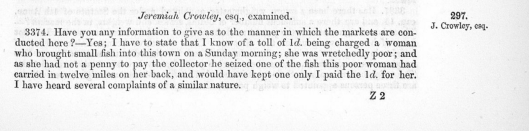
Evidence of John Collins, substantial farmer 1844 re Local Loan funds 1844 Witnesses at Skibbereen (into Her Majesties Commissioners into The Law and Practice of Occupation of Land in Ireland.