• About
  • Customs Report 1821-2 (and Miscellaneous Petitions to Government 1820-5) and some Earlier Customs Data, including staffing, salaries, duties including, Cork, Kinsale, Youghal, Baltimore, with mention of Bantry, Crookhaven, Glandore, Berehaven, Castletownsend, Enniskeane, Passage, Crosshaven, Cove, Clonakilty, Cortmacsherry.
  • Eoghan O’Keeffe 1656-1723, Glenville, Co. Cork later Parish Priest, Doneralie 1723 Lament in old Irish
  • Historic maps from Cork City and County from 1600
  • Horsehair, animal blood an early 18th century Stone House in West Cork and Castles.
  • Interesting Links
  • Jack Dukelow, 1866-1953 Wit and Historian, Rossmore, Durrus, West Cork. Charlie Dennis, Batt The Fiddler.
  • Kilcoe Church, West Cork, built by Father Jimmy O’Sullivan, 1905 with glass by Sarah Purser, A. E. Childs (An Túr Gloine) and Harry Clarke Stained Glass Limited
  • Late 18th/Early 19th century house, Ahagouna (Áth Gamhna: Crossing Place of the Calves/Spriplings) Clashadoo, Durrus, West Cork, Ireland
  • Letter from Lord Carbery, 1826 re Destitution and Emigration in West Cork and Eddy Letters, Tradesmen going to the USA and Labourers to New Brunswick
  • Marriage early 1700s of Cormac McCarthy son of Florence McCarthy Mór, to Dela Welply (family originally from Wales) where he took the name Welply from whom many West Cork Welplys descend.
  • Online Archive New Brunswick, Canada, many Cork connections
  • Origin Dukelow family, including Coughlan, Baker, Kingston and Williamson ancestors
  • Return of Yeomanry, Co. Cork, 1817
  • Richard Townsend, Durrus, 1829-1912, Ireland’s oldest Magistrate and Timothy O’Donovan, Catholic Magistrate from 1818 as were his two brothers Dr. Daniel and Richard, Rev Arminger Sealy, Bandon, Magistrate died Bandon aged 95, 1855
  • School Folklore Project 1937-8, Durrus, Co. Cork, Schools Church of Ireland, Catholic.
  • Sean Nós Tradition re emerges in Lidl and Aldi
  • Some Cork and Kerry families such as Galwey, Roches, Atkins, O’Connells, McCarthys, St. Ledgers, Orpen, Skiddy, in John Burkes 1833 Commoners of Great Britain and Ireland:
  • Statement of Ted (Ríoch) O’Sullivan (1899-1971), Barytes Miner at Derriganocht, Lough Bofinne with Ned Cotter, later Fianna Fáil T.D. Later Fianna Fáil TD and Senator, Gortycloona, Bantry, Co. Cork, to Bureau of Military History, Alleged Torture by Hammer and Rifle at Castletownbere by Free State Forces, Denied by William T Cosgrave who Alleged ‘He Tried to Escape’.
  • The Rabbit trade in the 1950s before Myxomatosis in the 1950s snaring, ferrets.

West Cork History

~ History of Durrus/Muintervara

West Cork History

Monthly Archives: August 2016

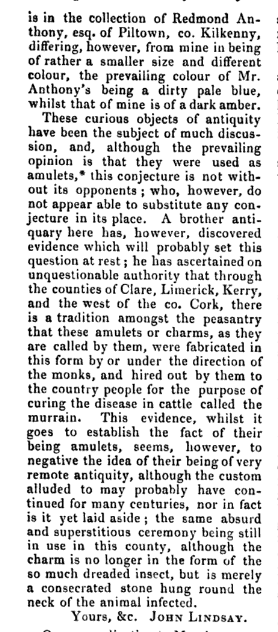
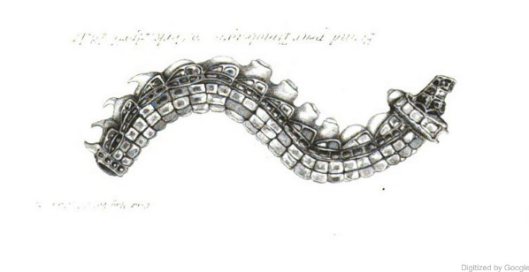
1844. Discovery of Amulet, Remnant of Antiquity near Timoleague, Where there Was A Franciscan Monastery Thought to Be Used As A Charm Against Caterpillars (Couac or Murrain)

28 Sunday Aug 2016

Posted by durrushistory in Uncategorized

≈ Leave a comment


1844. Discovery of Amulet, Remnant of Antiquity near Timoleague, Where there Was  A Franciscan Monastery Thought to Be Used As A Charm Against Caterpillars (Couac or Murrain)


Screen Shot 2016-08-28 at 08.27.03

Screen Shot 2016-08-28 at 08.28.13


1787-1870 John Lindsay TCD, Esq Kings Inns 1812. Barrister, little practise independently wealthy. Lindville/Maryville, Blackrock, son of Thomas Barrister, Mary dau of Samuel Maylor, Merchant Lord Mayor 1766, m Annie d Peter Morgan, Bridestown, 5 sons 1 daughter, only daughter Mrs. Carlton. Member 1832 Cork Friendly Club. 1861 Member Society Irish Antiquaries. Lucas Directory 1787 Published ‘View of the Coinage of Ireland’ enormous collection of coins c 1835 if it is the same man. Contributor to ‘Gentlemans Magazine” on coinage. Associate of Richard Sainthill. Obituary by Richard Caulfield Kilkenny Journal of Archaeology. John Windle. “May be the same Lindsay, John, Esq. Lindville, Blackrock Road. On Sunday morning [21st], at Lindville, on the Blackrock road…aged 60 years. He was a most affectionate husband, a tender and indulgent parent, and a truly honest man.‘ CC (23/09/1828)
“


Similar Type


Screen Shot 2016-08-28 at 08.27.28

Screen Shot 2016-08-28 at 08.27.35

Screen Shot 2016-08-28 at 08.27.03
Screen Shot 2016-08-28 at 08.27.28
Screen Shot 2016-08-28 at 08.27.35
Screen Shot 2016-08-28 at 08.28.13


https://books.google.ie/books?id=z4k4AAAAYAAJ&pg=PA645&lpg=PA645&dq=Michael+William+Phipps+solicitor+cork&source=bl&ots=9M3EdhLPfP&sig=TKDh-fdVTMVx5pO2uYj9RGkIs9k&hl=en&sa=X&ved=0ahUKEwimjuapyePOAhXHIsAKHb86AGY4ChDoAQhTMAk#v=onepage&q=%20cork&f=false

Cashelane Church of Ireland School, 1906 -c 1945. Parish of Schull, West Cork Photo of Pupils early 1930s

26 Friday Aug 2016

Posted by durrushistory in Uncategorized

≈ Leave a comment


Screen Shot 2016-08-26 at 20.15.04

Cashelane Church of Ireland School, Parish of Schull, West Cork Photo of Pupils early 1930s
Cashelane Church of Ireland School early 1930s


The school was initially supported by the Church Education Society.  There was an application by the Rev. R. H. Carroll, the manager of Altar rectory, Toormore, for a grant to build a new school.  This was in his name, and that of Rev. J.T. Levis of Durrus and Rev. Brady of Ballydehob. The existing school was unsuitable due to distance for pupils.  The school would have 30 children mixed; that it had been inoperative since 1902, as a teacher could not be located.  In 1902 the average attendance was 10.7-11.  The nearby Catholic School at Dunbeacon had an average attendance of 54.8-68.3, and included 11 Established Church children, and had an assistant teacher.  It was expected that the enrolment of the new school would be 21 males and 13 females. There were no objections to the development from Rev. O’ Callaghan P.P but Fr. O’Connor whose school at Dunbeacon would lose 11 children, objected as did Rev. W. Caldwell, the Morreagh manager of the Methodist School.  The previous teacher Mrs. Griffin resigned in December 1902 and the school was technically taken off the school register from that date, to be restored on completion of the new school on July 1906.  Ms. Trinder, who had qualified from the Church of Ireland College in 1894, and had taught at Kilcoe/Corrovally was appointed and the new manager was Rev. A.J. Brady, as the school was now in his parish.  In October 1906 the attendance was 10 boys and 10 girls out of a possible enrolment of 22.


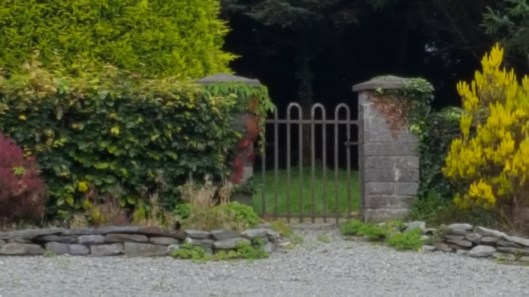
The school is built on a site at Old Mill Farm, Dunbeacon just off the Durrus Toormore Road.  The site was donated by the Sweetnam family.  The school closed around 1945 and has been converted to a private residence. Only the gate suggests the former use.
 

20160824_144629 


Mrs Sweetnam from Raheen who taught in the school was married to a second cousin of this family.  She had no Irish which caused difficulty post Independence.  In the late 1930s Lizzie Jermyn who had good Irish and was young taught Irish a few days a week.

After the school closed the pupils dispersed some to Durrus and Ballydehob an som ot the local Catholic school at dunbeacon around the corner.


Teachers


Mrs. Griffin, -1902 Ms. Trinder, 1906-


Photograph c 1933.


Screen Shot 2016-08-26 at 20.19.23


Back Row, left to right.  Teacher/Trainee?  Teacher Mrs Annie Sweetnam, Dunbeacon, not qualified not sure if it was because she had no Irish.  Good teacher for writing, hymns, sent her two daughters to Ballydehob.  School closed mid 1940s.  Some pupils went to St. James Durrus Some to Dunbeacon Catholic.  Lack of Irish meant that pupils used to go to St. James probably to Líam Blennerhassett from Kerry he had excellent Irish.


No. 2  Richard (Sonny) Pyburn, b 1919, all Pyburns Dunbeacon, farmer.  May have spent some months in St. James, Durrus.


Front:


No. 2 Victor Sweetnam, Lahern, brother to Nan Sweetnam, farmer, never married.


No 3. Nan Levis, Cashelane, lived with her single brother neither married, farmers.


No. 4.  Georgina Pyburn, Dunbeacon, married George Bower (He is buried St. James, Durrus), Co. Louth, he was a horticulturalist with Guinness at Birr.  2 boys, Raymond, Bert, i girl.


No. 5.  Susan Pyburn, married Charlie Gilliard, mechanic, London, 1 boy 1 girl.


No. 7 Vera Pyburn, m Ernie Splaine, Riverstick, KInsale,, Son Robert (Show jumping champion) Freida, Jean


3 small boys don’t know names possibly one a Phillips from Dunbeacon or William Levis no family married in to farm.


The school was initially supported by the Church Education Society.  There was an application by the Rev. R. H. Carroll, the manager of Altar rectory, Toormore, for a grant to build a new school.  This was in his name, and that of Rev. J.T. Levis of Durrus and Rev. Brady of Ballydehob. The existing school was unsuitable due to distance for pupils.  The school would have 30 children mixed; that it had been inoperative since 1902, as a teacher could not be located.  In 1902 the average attendance was 10.7-11.  The nearby Catholic School at Dunbeacon had an average attendance of 54.8-68.3, and included 11 Established Church children, and had an assistant teacher.  It was expected that the enrolment of the new school would be 21 males and 13 females. There were no objections to the development from Rev. O’ Callaghan P.P but Fr. O’Connor whose school at Dunbeacon would lose 11 children, objected as did Rev. W. Caldwell, the Morreagh manager of the Methodist School.  The previous teacher Mrs. Griffin resigned in December 1902 and the school was technically taken off the school register from that date, to be restored on completion of the new school on July 1906.  Ms. Trinder, who had qualified from the Church of Ireland College in 1894, and had taught at Kilcoe/Corrovally was appointed and the new manager was Rev. A.J. Brady, as the school was now in his parish.  In October 1906 the attendance was 10 boys and 10 girls out of a possible enrolment of 22.


The school is built on a site at Old Mill Farm, Dunbeacon just off the Durrus Toormore Road.  The site was donated by the Sweetnam family.  The school closed around 1945 and has been converted to a private residence. Only the gate suggests the former use.  Mrs Sweetnam from Raheen who taught in the school was married to a second cousin of this family.  She had no Irish which caused difficulty post Independence.  In the late 1930s Lizzie Jermyn who had good Irish and was young taught Irish a few days a week.

After the school closed the pupils dispersed some to Durrus and Ballydehob an som ot the local Catholic school at dunbeacon around the corner.


Teachers


Mrs. Griffin, -1902 Ms. Trinder, 1906-


Photograph c 1933.


Back Row, left to right.  Teacher/Trainee?  Teacher Mrs Annie Sweetnam, Dunbeacon, not qualified not sure if it was because she had no Irish.  Good teacher for writing, hymns, sent her two daughters to Ballydehob.  School closed mid 1940s.  Some pupils went to St. James Durrus Some to Dunbeacon Catholic.  Lack of Irish meant that pupils used to go to St. James probably to Líam Blennerhassett from Kerry he had excellent Irish.


No. 2  Richard (Sonny) Pyburn, b 1919, all Pyburns Dunbeacon, farmer.  May have spent some months in St. James, Durrus.


Front:


No. 2 Victor Sweetnam, Lahern, brother to Nan Sweetnam, farmer, never married.


No 3. Nan Levis, Cashelane, lived with her single brother neither married, farmers.


No. 4.  Georgina Pyburn, Dunbeacon, married George Bower (He is buried St. James, Durrus), Co. Louth, he was a horticulturalist with Guinness at Birr.  2 boys, Raymond, Bert, i girl.


No. 5.  Susan Pyburn, married Charlie Gilliard, mechanic, London, 1 boy 1 girl.


No. 7 Vera Pyburn, m Ernie Splaine, Riverstick, KInsale,, Son Robert (Show jumping champion) Freida, Jean


3 small boys don’t know names possibly one a Phillips from Dunbeacon or William Levis no family married in to farm.


Dunbeacon, West Cork, National School 1902 -c 1975


Caesar Otway journey Mount Gabriel 1822.


Courtesy Peter Clarke:


http://sheepsheadplaces.net/dunbeacon-national-school


Around the corner was the former Church f Ireland school at Castlefean 1904-c 1945.  It has been tastefully restored as  a private residence.  Only the gate gives evidence of its former state.


20160824_144258

20160824_144242


Gallery

Miracles Attributed to Father John Power (1764-1831), born Deelish, Skibbereen, PP Kilmacabea, West Cork his Nephew, Dr. Maurice Power, (1811-1870), Magistrate, MP. Governor St. Lucia Substantial Property Owner Manhattan and 2,000 acres in Ireland.

23 Tuesday Aug 2016

Posted by durrushistory in Uncategorized

≈ Leave a comment

This gallery contains 23 photos.


Originally posted on West Cork History:
Miracles Attributed to Father John Power (1764-1831), born Deelish,  Skibbereen, PP Kilmacabea, West Cork his Nephew,…

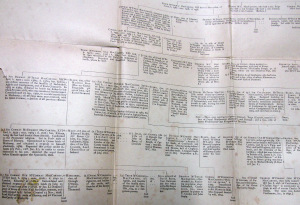
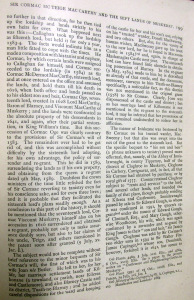
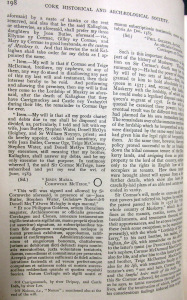
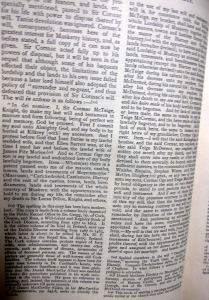
Genealogy of MacCarthys, Lords of Muskerry, Co. Cork, from 1380-1641.

22 Monday Aug 2016

Posted by durrushistory in Uncategorized

≈ Leave a comment


durrushistory's avatarWest Cork History

Genealogy of MacCarthys, Lords of Muskerry, Co. Cork, from 1380-1641.

By Herbert Webb Gillman BL JP, 1892.

Herbert Webb Gillman (1832-1898), Clonteadmore, Coachford, Co. Cork, Judge Ceylon, Antiquarian, Authority on Castles of Co. Cork and Author of Index to the Licence Bonds of Cork and Ross.

Courtesy JCHAS 1892.

Genealogy of McCarthys of Glenachram from 1366 and history of Dunmanway, Togher Castle, West Cork.

https://durrushistory.com/2012/08/28/genealogy-of-mccarthy-family-of-gleannacroim-dunmanway-co-cork-from-c1150-ad-by-daniel-maccarthy-glas/

Genealogy of McCarthy (Muclagh/Clann Tadhg Ruaidh-na-Scairte) family of Scart (Durrus/Bantry), West Cork, later Cul-na-long, from 1185 AD including descendants of Father/Reverend Daniel McCarthy from Samuel Trant McCarthy, High Sheriff Co.Kerry, Srugrena Abbey 1912 intermarried with O’Learys Incigeela, McCarthys Kilcoe, O’Donovans, O’Mahonys Dunbeacon, McCarthys Dunmanway, Blairs Bantry/Coolculaghta/Blair’s Cove among others, 18th century family members in France.

https://durrushistory.com/2014/10/25/probably-mccarthy-muclaghs-of-gearhamen-durrus-court-west-cork-cartie-daniell-mcteige-of-belamoyre-co-cork-4th-son-of-teige-of-same-married-honora-daughter-of-cormuck-cartie-of-kilcoe-c/

https://durrushistory.com/2014/11/22/genealogy-of-mccarthy-family-clan-dermod-skibbereen-west-cork-and-father-daniel-mccarthy-muclagh-parish-priest-of-durrus-1761-1826/

4-IMG_66993-IMG_66982-IMG_66971-IMG_66968-IMG_67077-IMG_67066-IMG_67055-IMG_67043-IMG_67024-IMG_67032-IMG_67011-IMG_6700

View original post

Extract from letter ‘Very Bad Mutton and Beef, you Can’t Conceive of the Wretchedness of it’, of Godwin Swift (Customs Man), 16th May 1757 from Crookhaven, West Cork, Ireland.

22 Monday Aug 2016

Posted by durrushistory in Uncategorized

≈ 1 Comment


durrushistory's avatarWest Cork History

https://www.google.ie/maps/place/Durrus,+Co.+Cork/@51.5507517,-9.689226,11z/data=!4m5!3m4!1s0x48459fe7ccd270df:0x231e3744ac95441a!8m2!3d51.6217112!4d-9.521993?hl=en

https://wordpress.com/post/durrushistory.com/16278

1845, John Coughlan of Crookhaven, West Cork Owner of Whaler ‘The Wild Irish Girl’. Rescues Schooner British America (Canada) ‘Exile’.

Courtesy:

Toby Bernard, Mizen Journal 2004

Extract from letter ‘Very Bad Mutton and Beef, you Can’t Conceive of the Wretchedness of it’, of Godwin Swift (Customs Man), 16th May 1757 from Crookhaven, West Cork, Ireland.

‘Now with regard to the place and provisions: you are to know that you see nothing here but mountains of rock (not cliffs) and yet those rocks are more dear to poor people or strangers as the lands within 2 miles of Dublin.  There is here undoubtedly great plenty of fish, yet the people are so lazy they’d rather live on salt mackerel and potatoes then give themselves the trouble to take fresh fish.  There is no garden stuff here, very bad mutton and lamb, and no beef, not a tree or even…

View original post 277 more words

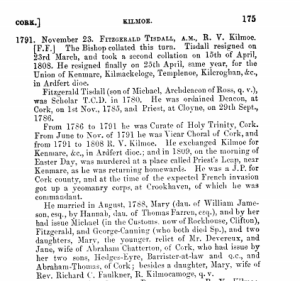
Rev. Fitzgerald Tisdall, Rector of Kilmoe (Goleen), West Cork, Founder and Commandant of Crookhaven Yeomanry Corps, Murdered at Priest’s Leap, 1809.

22 Monday Aug 2016

Posted by durrushistory in Uncategorized

≈ 2 Comments


durrushistory's avatarWest Cork History

Rev. Fitzgerald Tisdall, Rector of Kilmoe (Goleen), West Cork, Founder and Commandant of Crookhaven Yeomanry Corps, Murdered at Priest’s Leap, 1809.

From Meziere Brady

In the 19th century Tisdalls married into the Murphy family of Bantry who in Newtown were millers, middling landowners, and were auctioneers. family members appear as jurors, and local administrative bodies.  The impressive ruins of the mills are about a mile outside Bantry on the Glengariff road.

Léim an tSagairt (Priest’s Leap) 1612 or possibly Earlier from Francis 1589 map

Screen Shot 2015-10-19 at 11.17.14

View original post

Gallery

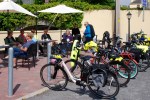
Cycling the Sheep’s Head

21 Sunday Aug 2016

Posted by durrushistory in Uncategorized

≈ Leave a comment

This gallery contains 16 photos.


Originally posted on Roaringwater Journal:
The joy of cycling! The fresh air! The wind in your face! The sun on your…

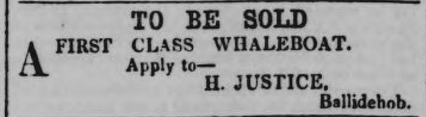
1864. For Sale A First Class Whaleboat, Apply H. Justice, Ballydehob, West Cork.

21 Sunday Aug 2016

Posted by durrushistory in Uncategorized

≈ Leave a comment


1864. For Sale A First Class Whaleboat, Apply H. Justice, Ballydehob, West Cork.


Skibbereen & West Carbery Eagle; or, South Western Advertiser 19 November 1864


1845, John Coughlan of Crookhaven, West Cork Owner of Whaler ‘The Wild Irish Girl’. Rescues Schooner British America (Canada) ‘Exile’.


Extract from letter ‘Very Bad Mutton and Beef, you Can’t Conceive of the Wretchedness of it’, of Godwin Swift (Customs Man), 16th May 1757 from Crookhaven, West Cork, Ireland.


Screen Shot 2016-08-21 at 21.07.46


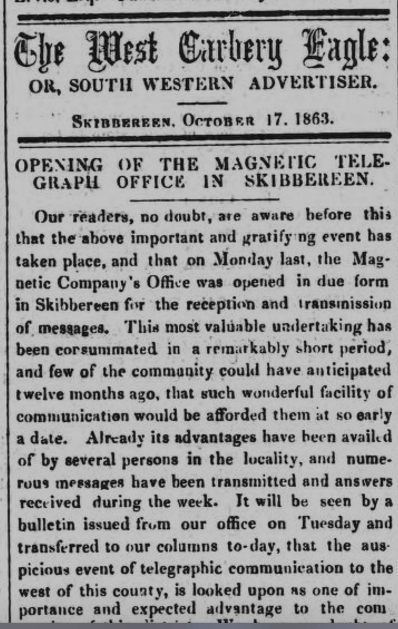
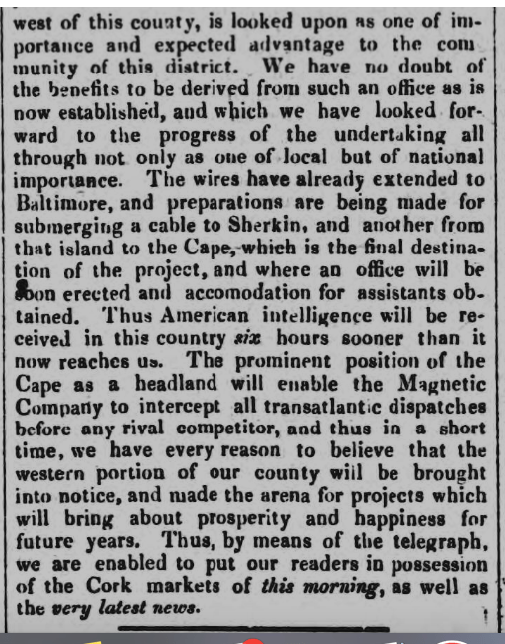
1863, The Fibre Optic Broadband of the 1860s, Opening of Telegraph Office Skibbereen, Wires Extended to Baltimore and Submerged Cable to Sherkin. The American Intelligence will be Received Six Hours Sooner, Cork Market News to Be Received in Morning.

21 Sunday Aug 2016

Posted by durrushistory in Uncategorized

≈ 1 Comment


Screen Shot 2016-08-21 at 20.55.09


1863, The Fibre Optic Broadband of the 1860s, Opening of Telegraph Office Skibbereen, Wires Extended to Baltimore and Submerged Cable to Sherkin. The American Intelligence will be Received Six Hours Sooner,  Cork Market News to Be Received in Morning.


An Old Man Recounts: The First Time I visited Dunmanway c 1790, The Roads were Bad, My Sister and I were in Two Panniers at Each Side of A Horse My Mother on A Saddle in Between, Then Cars with Block Wheels Sawn of of a Thick Tree Bound Round With Iron, The They Got What They Called Scotch Cars With Spokes and Felloes at Opening of The Office of The Electric and International Telegraph Company , Dunmanway, Co.Cork, 1865. Messages from Cork, London and Crookhaven.


The start of the Communication Revolution, Picture of ‘The Atlantic Telegraph Cable Fleet’ at Berehaven, Bantry Bay, 28th July 1866, held at Cable and Wireless Archive


Áiteanna Iar-Ghualta (Backward places) or Centres of the Information age? Valentia Island Telegraph Station and Crookhaven Marconi Radio Station 1902.


Cartography of the Internet the Digital age commences with functioning of Telegraphic Cable from Valentia, Co Kerry to Newfoundland on the 16th August 1858


Skibbereen & West Carbery Eagle; or, South Western Advertiser 17 October 18


Screen Shot 2016-08-21 at 20.45.46

Screen Shot 2016-08-21 at 20.46.09


Image

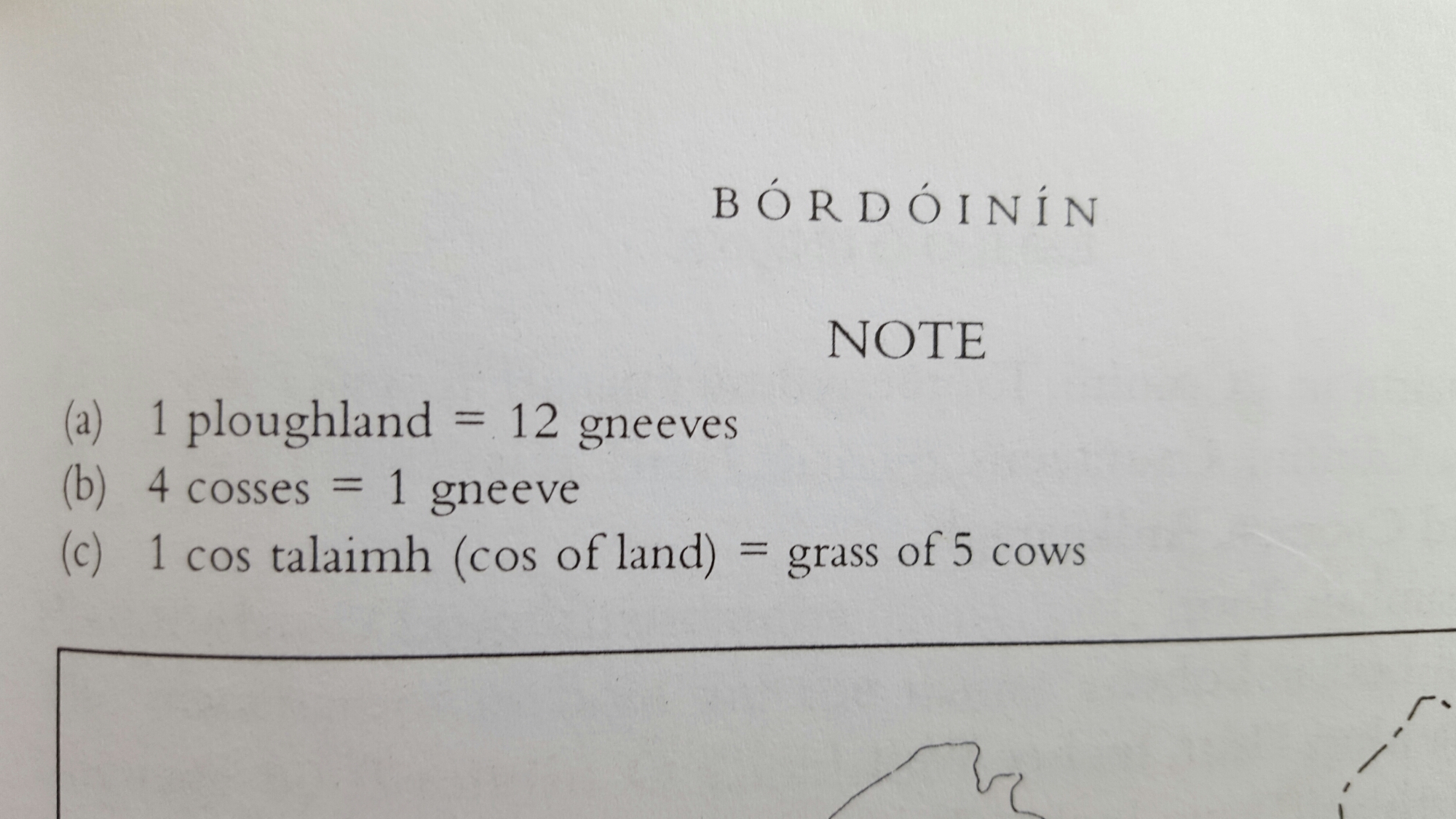
Old Irish Land Measurements Ploughlands and Gneeves Cosses

20 Saturday Aug 2016


Historical definition of Townland as the area that could be ploughed by a Seisreach (A Six-Horse team) in Forty Eight Days.  This is from Pádraig Ó Loingsigh history of the parish of Caherdaniel.

Old Irish Land Measurements Ploughlands and Gneeves frequently appear as land measurements in estate surveys, and deeds, leases, mortgages, marriage settlements up to the early 19th century.  From the time of the Ordnance survey adn Griffith’s Valuation 1850 they disappear.

In Gaelic society wealth was often computed by the number of cows a man had i.e. ‘Fear dhá bhó’ (a man of two cows).  There can be variation depending on soil fertility as as in Irish Féar dhá bhó, the grass of two cows, etc

Example of a deed:

1798, Richard Tonson Evanson, Mornhill, Co. Cork, and Nathaniel Evanson, Janeville, Co. Cork, eldest son of said Richard demise to William Swanton, Ballydehob, for various lives, part of the ploughland of Ardogoinagh lately in the occupation of William Justin and son to the westwards of the line of road from Carrigbui to Skibbereen, containing 9 Gneeves and the grazing of 13-14 collops at on the mountain of East Droumreiagh given to William Justin and son at a rent of £20 a year for 6 years and  thereafter.


From the book, “Census of Ireland, 1901: General Topographical Index…”, comes this explanation: “The Townlands and Baronies, which varied in different Provinces, are the most ancient divisions, and they existed under other names prior to the introduction of Christianity. The Barony or Trioca céad consisted of Ballybetaghs or Townlands, Ploughlands, Seisreaghs or Carrows, Tates or Ballyboes, Sessiaghs, Gneeves and Acres. The following is a Table showing these divisions: — 10 acres = 1 Gneeve. 2 Gneeves = 1 Sessiagh. 3 Sessiaghs = 1 Tate or Ballyboe. 2 Ballyboes = 1 Ploughland, Seisreagh or Carrow (120 aacres). 4 Ploughlands = 1 Ballybetagh or Townland 30 Ballybetaghs = 1 Trioca céad or Barony.


From Wikipedia:

A collop (Irish: cológ) is a measure of land sufficient to graze one cow. In Irish tradition, a collop is defined as the amount of land deemed capable of producing enough to support one family, or the number of cattle that the family could rear by pasture on it. It was the basis for the division of common land in the western parts of Ireland in the 18th and early 19th centuries. As in the Rundale system, the collop was scattered over several different fields, so that good and bad land was equally divided.[1] In Eric Cross’s The Tailor and Ansty, Timothy “the Tailor” Buckley describes a collop as “an old count for the carrying power of land”, noting that it was the grazing of one cow, or two yearling heifers, or six sheep, or twelve goats, or six geese and a gander, while a horse would require three collops. He describes it as a superior method of reckoning land to the acre, noting a man whose holding of 4,000 acres of barren land produces scarcely enough to feed four cattle.   


Posted by durrushistory | Filed under Uncategorized

≈ 3 Comments

← Older posts
Newer posts →

Blog Stats

  • 840,565 hits

16th Regiment of Foot assisted female emigration australia ballyclough bantry bay caithness legion cavan regiment of militia cheshire fencibles coppinger's court inbhear na mbearc Irish words in use 1930s lord lansdowne's regiment mallow melbourne ned kelly new brunswick O'Dalys Bardic Family. o'regan Personal Memoirs rosscarbery schull sir redmond barry sir walter coppinger st. johns sydney Townlands treaty of limerick Uncategorized university of Melbourne victoria

16th Regiment of Foot assisted female emigration australia ballyclough bantry bay caithness legion cavan regiment of militia cheshire fencibles coppinger's court inbhear na mbearc Irish words in use 1930s lord lansdowne's regiment mallow melbourne ned kelly new brunswick O'Dalys Bardic Family. o'regan Personal Memoirs rosscarbery schull sir redmond barry sir walter coppinger st. johns sydney Townlands treaty of limerick Uncategorized university of Melbourne victoria
Follow West Cork History on WordPress.com

Enter your email address to follow this blog and receive notifications of new posts by email.

Join 518 other subscribers

Feedjit

  • durrushistory's avatar durrushistory

Archives

  • December 2025
  • November 2025
  • October 2025
  • September 2025
  • August 2025
  • July 2025
  • June 2025
  • May 2025
  • April 2025
  • March 2025
  • February 2025
  • January 2025
  • December 2024
  • November 2024
  • October 2024
  • September 2024
  • August 2024
  • July 2024
  • June 2024
  • May 2024
  • April 2024
  • March 2024
  • February 2024
  • January 2024
  • December 2023
  • November 2023
  • October 2023
  • September 2023
  • August 2023
  • July 2023
  • June 2023
  • May 2023
  • April 2023
  • March 2023
  • February 2023
  • January 2023
  • December 2022
  • November 2022
  • October 2022
  • September 2022
  • August 2022
  • July 2022
  • June 2022
  • May 2022
  • April 2022
  • March 2022
  • February 2022
  • January 2022
  • December 2021
  • November 2021
  • October 2021
  • September 2021
  • August 2021
  • July 2021
  • June 2021
  • May 2021
  • April 2021
  • March 2021
  • February 2021
  • January 2021
  • December 2020
  • November 2020
  • October 2020
  • September 2020
  • August 2020
  • July 2020
  • June 2020
  • May 2020
  • April 2020
  • March 2020
  • February 2020
  • January 2020
  • December 2019
  • November 2019
  • October 2019
  • September 2019
  • August 2019
  • July 2019
  • June 2019
  • May 2019
  • April 2019
  • March 2019
  • February 2019
  • January 2019
  • December 2018
  • November 2018
  • October 2018
  • September 2018
  • August 2018
  • July 2018
  • June 2018
  • May 2018
  • April 2018
  • March 2018
  • February 2018
  • January 2018
  • December 2017
  • November 2017
  • October 2017
  • September 2017
  • August 2017
  • July 2017
  • June 2017
  • May 2017
  • April 2017
  • March 2017
  • February 2017
  • January 2017
  • December 2016
  • November 2016
  • October 2016
  • September 2016
  • August 2016
  • July 2016
  • June 2016
  • May 2016
  • April 2016
  • March 2016
  • February 2016
  • January 2016
  • December 2015
  • November 2015
  • October 2015
  • September 2015
  • August 2015
  • July 2015
  • June 2015
  • May 2015
  • April 2015
  • March 2015
  • February 2015
  • January 2015
  • December 2014
  • November 2014
  • October 2014
  • September 2014
  • August 2014
  • July 2014
  • June 2014
  • May 2014
  • April 2014
  • March 2014
  • February 2014
  • January 2014
  • December 2013
  • November 2013
  • October 2013
  • September 2013
  • August 2013
  • July 2013
  • June 2013
  • May 2013
  • April 2013
  • March 2013
  • February 2013
  • January 2013
  • November 2012
  • October 2012
  • September 2012
  • August 2012
  • July 2012
  • June 2012
  • May 2012
  • April 2012
  • March 2012
  • February 2012
  • January 2012
  • December 2011
  • November 2011
  • October 2011

Blog at WordPress.com.

  • Subscribe Subscribed
    • West Cork History
    • Join 518 other subscribers
    • Already have a WordPress.com account? Log in now.
    • West Cork History
    • Subscribe Subscribed
    • Sign up
    • Log in
    • Report this content
    • View site in Reader
    • Manage subscriptions
    • Collapse this bar
 

Loading Comments...