• About
  • Customs Report 1821-2 (and Miscellaneous Petitions to Government 1820-5) and some Earlier Customs Data, including staffing, salaries, duties including, Cork, Kinsale, Youghal, Baltimore, with mention of Bantry, Crookhaven, Glandore, Berehaven, Castletownsend, Enniskeane, Passage, Crosshaven, Cove, Clonakilty, Cortmacsherry.
  • Eoghan O’Keeffe 1656-1723, Glenville, Co. Cork later Parish Priest, Doneralie 1723 Lament in old Irish
  • Historic maps from Cork City and County from 1600
  • Horsehair, animal blood an early 18th century Stone House in West Cork and Castles.
  • Interesting Links
  • Jack Dukelow, 1866-1953 Wit and Historian, Rossmore, Durrus, West Cork. Charlie Dennis, Batt The Fiddler.
  • Kilcoe Church, West Cork, built by Father Jimmy O’Sullivan, 1905 with glass by Sarah Purser, A. E. Childs (An Túr Gloine) and Harry Clarke Stained Glass Limited
  • Late 18th/Early 19th century house, Ahagouna (Áth Gamhna: Crossing Place of the Calves/Spriplings) Clashadoo, Durrus, West Cork, Ireland
  • Letter from Lord Carbery, 1826 re Destitution and Emigration in West Cork and Eddy Letters, Tradesmen going to the USA and Labourers to New Brunswick
  • Marriage early 1700s of Cormac McCarthy son of Florence McCarthy Mór, to Dela Welply (family originally from Wales) where he took the name Welply from whom many West Cork Welplys descend.
  • Online Archive New Brunswick, Canada, many Cork connections
  • Origin Dukelow family, including Coughlan, Baker, Kingston and Williamson ancestors
  • Return of Yeomanry, Co. Cork, 1817
  • Richard Townsend, Durrus, 1829-1912, Ireland’s oldest Magistrate and Timothy O’Donovan, Catholic Magistrate from 1818 as were his two brothers Dr. Daniel and Richard, Rev Arminger Sealy, Bandon, Magistrate died Bandon aged 95, 1855
  • School Folklore Project 1937-8, Durrus, Co. Cork, Schools Church of Ireland, Catholic.
  • Sean Nós Tradition re emerges in Lidl and Aldi
  • Some Cork and Kerry families such as Galwey, Roches, Atkins, O’Connells, McCarthys, St. Ledgers, Orpen, Skiddy, in John Burkes 1833 Commoners of Great Britain and Ireland:
  • Statement of Ted (Ríoch) O’Sullivan (1899-1971), Barytes Miner at Derriganocht, Lough Bofinne with Ned Cotter, later Fianna Fáil T.D. Later Fianna Fáil TD and Senator, Gortycloona, Bantry, Co. Cork, to Bureau of Military History, Alleged Torture by Hammer and Rifle at Castletownbere by Free State Forces, Denied by William T Cosgrave who Alleged ‘He Tried to Escape’.
  • The Rabbit trade in the 1950s before Myxomatosis in the 1950s snaring, ferrets.

West Cork History

~ History of Durrus/Muintervara

West Cork History

Yearly Archives: 2013

Travels in West Cork, 1790 of French Consul. Charles Étienne Conquebert De Montbret

15 Sunday Sep 2013

Posted by durrushistory in Uncategorized

≈ 1 Comment

Tags

Garretstown Kinsale Bandon


In 1973 Silé Ní Chinnéide took extracts from De Montbret, French Consul, of his journal covering his journey in West Cork in 1790 from papers in the Bibioléque Nãtionale in Paris and published it in two articles in the Journal of the Cork Historical and Archaeological Society.

Of interest are the extensive pieces in relation to Michael Kearney an extensive farmer in Garretstown and a listing of the various textiles manufactured in Bandon.

Interestingly the Kearneys collected mid 18th century Cork Newspapers which in the mid-20th century ended up with Mr. Cousins, a Limerick Solicitor. John. T. Collins was given access, from which he compiled genealogical data, which he publishes in the CHA Journal.

Some additional Cork Newspaper Extracts from 1754 of a Genealogical and Historical interest extracted by John T. Collins.

https://plus.google.com/photos/100968344231272482288/albums/5923984015652759761

Bandon Estate Rentals 1854-8, 1874-7, part Durrus, Caheragh, Mizen, West Cork and the Evanson, Dukelow and Jeremy (Jeremiah) Coghlan/Coughlan (Ó Cochláin) family of Carrigmanus Mizen

08 Sunday Sep 2013

Posted by durrushistory in Uncategorized

≈ 3 Comments

Tags

Bandon, castle bernard, co.cork, cork, County Cork, Dublin, durrus, Earl of Bandon, ireland


https://www.google.ie/maps/place/Durrus,+Co.+Cork/@51.6217107,-9.521993,11z/data=!4m2!3m1!1s0x48459fe7ccd270df:0x231e3744ac95441a

The predecessor of the Cork Archives acquired the papers of the former firm of Wheeler Doherty, Bandon, Solicitors and Land Agents to the estate of the Earl of Bandon in 1971.  It is an enormous collection and part was recently archived the inventory runs to over 70 pages.

The Bandon Estate was somewhat unusual insofar as it was not acquired by conquest but on the earnings of Francis Bernard as a barrister in Dublin in the early 18th century and added to later by judicious marriages and purchase.

http://en.wikipedia.org/wiki/Francis_Bernard_(lawyer)

Reading the inventory it is possible to look at the estate as a commercial concern, the rents paid by the tenants supported a large organization employing many in Bandon in Castle Bernard.  At its height the estate ran to over 40,000 acres mainly in Co. Cork but  in Dublin and other parts of the country.  It was managed professionally from the late 18th century and was audited by Dublin accountants.  Apart from the Bandon/Bernard family it supported pensioners and endowed various worthy causes.

In the western estate it recovered the lands in Durrus from the Evansons (it seems it have bought the estate off them in the 1720s and leased it back) it demolished the village of Durrus then a collection of miserable mud cabins.  The Archive has rent receipts for the 1730 from the Bernards to Nathaniel Evanson and Jeremy (or Jeremiah) Coughlan, who married his sister around 1700. The Coughlans of Carrigmanus were a little unusual insofar as an old Gaelic family they had become Church of Ireland by 1600 and a long line of clergymen came from the family. It is probable that Jeremy was the grandfather of Frances Coghlan, Upper Clashadoo who married Thomas Dukelow from Cruttees in 1818 and he married in. Thus many of the Durrus Dukelow have a Coghlan descent line and have ancestors who would have ben on the Mizen and Muinter Mhaire Peninsula for perhaps 3,000 years. Jeremy Coughlan was an attorney, the Senescal of Dungarvan and was the Agent of the Devonshire Estates in Wesr Waterford with Andrew ??

The village was lid out with court house, shops, pubs, a hotel dispensary and housing and its present structure dates from this period.  The rental shows rent commencing for the houses from 1858.

The ledgers are sometimes difficult to read and names and townlands are not always clear.  This is a work in progress.

It might be noted that the estate moved tenants around within townlands or for example from Dromnera to Crottees, from Ballyourane in Caheragh to Clashadoo, from Carrigboy to the Mizen Townlands.  There is some evidence that families were moved from the Durrus area to vacant farms in the Bandon part of the estate.

In the 1890s and early 1900s Lord Bandon used Durrus Court as a summer house and enjoyed yachting in the Bay.   In the history of St James Church 200th anniversary edited by Francis Humphries there is a reference to Mrs. Roberts of Bandon recalling Lord Bandon in Durrus when she was a child.

https://docs.google.com/spreadsheet/ccc?key=0AqhnQGE3ANjzdDJPRHFMTEZmbjczbUF1b2IxcC1nNlE#gid=0

In the Cork Archives 1854-8, ledger, U137/RL/A/026

1874-1, ledger, U137?Rl?B/005

http://www.corkarchives.ie

1830 Tithe Aplottments from Skib Girl’s site

http://www.corkgen.org/publicgenealogy/cork/titheapplot/durrus/tithe.html

Griffith’s Valuation 1852

http://www.askaboutireland.ie/griffith-valuation/index.xml?action=doPlaceSearch&Submit.x=44&Submit.y=11&Submit=Submit&freetext=durrus&countyname=CORK&baronyname=&unionname=&parishname=

Lord Bandon

The Bernards of Bandon became the Earls of Bandon in 1800.  The first of the line originated in Westmoreland in the reign of Queen Elizabeth and his son was Lord of the Manor in Castle-Mahon, Bandon on the outbreak of the rebellion in 1641.  After 1702 Francis Bernard invested heavily in land forfeit during the Jacobite years which came onto the market.  On 1742 the Durrus lands were purchased from Charles Moore of Tipperary by Stephen Bernard in trust for Frances Bernard.  The lands included a fish palace at the Island/Brahalish. and included here are the Durrus lands.

Sometime in the 1850s they came into possession of estates in Durrus, on the expiration of the Evanson’s lease (this was rented at £540 a year), comprising townlands around the village and west to Ahakista referred to in various deeds as ‘six ploughlands of Coolnalong alias Four Mile Water with the sub-denominations of Dromenea and Brahalish. The current village was laid out replacing a collection of mud cabins and a weavers colony during their tenure and they built a hotel naming it the ‘Bandon Arms’, this later became the property of the Philips family. Lord Bandon is reputed to have built the folly at Droumnea, Kilcrohane as relief work in 1847.  Their efforts were praised in the local paper in November 1867 where it was said that every inducement is given to tenants to improve their holdings and the good results of liberal landlordism as in the case of the Bandons was to be seen in their estates in the west.

Captain Thomas the mining engineer produced a pamphlet in 1865 and said that a few years ago a few mud thatched cabins were the only habitations to be seen in Carrigbui.  In their place neat labourer’s cottages, good shops, police barracks, dispensary, post office and an ornamental and well built hotel under the patronage of the Earl of Bandon can be seen.  The exports weekly are some 40,000 eggs with quantities of butter and cattle

Mary Catherine Henrietta Bernard of Castle Bernard daughter of Lord Bandon married Colonel Aldworth on the 30th July 1863 and an address and copy of ‘God’s Holy Word’ was sent by Rev Freke and the tenantry of Durrus to which she returned thanks.  At Dreenlomane Mine (operating until c1920) owned by Lord Bandon, Captain Thomas set tar barrels alight on Mount Corrin which illuminated the sky all night and the 150 miners and their wives were treated to refreshments and similar celebrations were held in Carrigbui.

Lord Bandon was an enthuastic exponent of flax growing in the 1860s.  On the 22nd February 1864 he addressed a meeting at Carrigbui Courthouse attended by Rev James Freke, Richard Tonson Evanson, and a large assemblage of ‘the yeoman farmers’ of the neighbourhood. He addressed a similar meeting in Bantry a few days before. He mentioned the Munster Flax Society, the imminent coming of the railway, and the establishment of scutching mills to rebut charges of previous failure.  He suggested a reduction in the area devoted to potatoes and a little flax to be added.  Persons were appointed to do an assessment of what would be planted in each townland next season and bring this to a meeting to be held the following week.  Later the Royal Dublin Society appointed a Mr Wilson from the North to provide technical assistance and a flax market was functioning in Ballineen in 1865.  A full flax mill was established outside Bandon by James H Swanton in 1865.  it might be remembered that the American Civil war was raging at the time making cotton scarce, the growing of flax in West Cork had always thrived during was but declines after.  While there are numerous flax ponds in the area the crop never took off like it did in Northern Ireland.

James Francis Bernard (1850-1924) was the 4th earl of Bandon and Lord Lieutenant of County Cork.  May Roberts, Brahalish remembers Lord Bandon arriving in the area with a four wheeled car and the Coachman Timmy Burke on top a going to his hunting lodge at the present Durrus Court.  Lord Bandon was in Durrus in 22nd February 1864 to promote flax growing.  The large farm at Gearamin, Cummer now owned by a German was part of the hunting area.   There was some association between the Philips family and Lord Bandon.  They managed the estate and their home farm was extensive from Ahagouna to Rusheeniska taking in some of Clashadoo and Gearamin.

Much of the land in Durrus was owned by the Bandon Estate and was managed by the Wheeler Doherty Family (their estate papers are in the Cork Archive Institute but some are still  uncatalogued).  The previous managers of the estate Edward Appelby and Colonel Henry Boyle Bernard had left it heavily in debt and R.W. Doherty was appointed in 1877.  Colonel Bernard (of the Cork Light Infantry Militia) acquired an interest by way of family settlement of 1848 and mortgaged lands including those in Durrus in 1878. In July 1882 Richard Wheeler Doherty Jnr. complained that tenants ‘but principally those of Durrus near Bantry had paid no rent since 1880, his father had said in September 1881 ‘The Land Leagues are destroying the country and a lot of Protestants have joined them … the Protestants at Durrus would pay no rent unless allowed 25% off.  More like savages then human beings’.

In 1895 the West of England Insurance Company applied to have the Bandon estate sold to satisfy borrowings of 1814 and further advances in the 1870s.  Presumably this was settled as the Bandon Estate had title to sell to the various Durrus tenants under the Land Acts.

In the 19th Century the great land owning families of Co Cork such as the Bandons controlled the administration of the County with the Grand Jury which met as the time of the legal Assizes and decided on matters of policy.  When the County Council was established under the Local Government Act of 1898 power passed to the elected councillors and public officials.  A family which in 1870 has over 40,000 acres in Co Cork sold the vast bulk of it under the Land Acts to the tenants and now their successors have only a modest bungalow on the once extensive Castle Bernard Estate in Bandon.
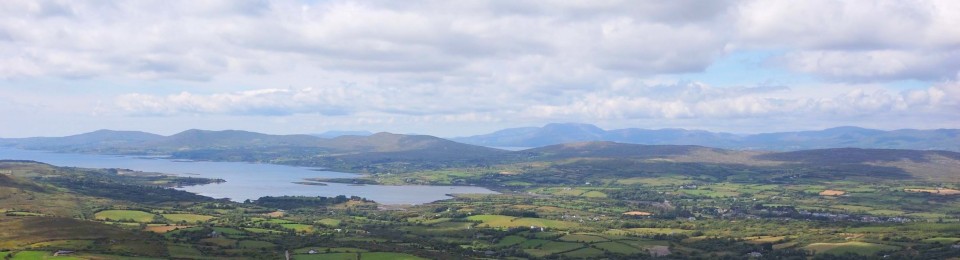
History of Durrus District, West Cork.

02 Monday Sep 2013

Posted by durrushistory in Uncategorized

≈ Leave a comment


For any comments, errors or amendments  pat25a@gmail.com


https://docs.google.com/document/d/1Dl1Srmq3ltY-N8QIPPdtjaIpk7Kx9hxNg1lpjThUBzM/edit


District Inspector Samuel Waters RIC, Castletown Bere, Co. Cork 1874-1877.

19 Monday Aug 2013

Posted by durrushistory in Uncategorized

≈ 1 Comment

Tags

Sentinel, Tim Harrington MP


Samuel Waters 1844-1936 was an RIC Officer and both his father and grandfather had been policemen. He started on £125 per annum and perpetually in scrapes due to his inadequate income.  He was posted to Castletown in 1874 at the time a quiet district and enjoyed hunting and fishing.

He was interested in amateur dramatics and in the capacity met the then 17 year old Tim Harrington later to become a Home Ruler MP.  Although on opposite sides politically they became friends he was also friendly with Tim’s brother Edward who was a newspaper editor ‘The Sentinel’, in Tralee.

His memoir is in the Public Record Office of Northern Ireland  (Gore-Booth Papers D/4051/14), on Lisaddell House he recounts the pastime of him and fellow officers in the evening of rat catching in the kitchen as a member of the Pig and Whistle Club.


The memoir has been edited by Stephen Ball and published under the Irish Narrativve Series 1999 by Cork University Press


https://plus.google.com/photos/100968344231272482288/albums/5913736201264135841/5913736265830626626?pid=5913736265830626626&oid=100968344231272482288

‘Down memory Lane’, site by Mr.Gerdie Harrington, Castletown Bere covers some of this ground and the connection with the Armstrong Family.

http://www.gerdie.bhs.ie/diwalters.htm

Jennings Family West Cork to New Zealand, Australia, USA 1800-1985

12 Monday Aug 2013

Posted by durrushistory in Uncategorized

≈ Leave a comment


Gregg N. Jennings compiled a history of the family assisted by other members in the early 1980s.  A copy of the book is available on line:

http://www.familysearch.org/

  • https://dcms.lds.org/view/action/ieViewer.do?dps_pid=IE188601&dps_dvs=1376342404515~630&dps_pid=IE188601&change_lng=en
  • Title: “The Jennings families, 1800-1985 : West Cork to new worlds”
  • Author: “Jennings, Gregg N., 1916-“
  • Description: “Descendants of Jennings families of West Cork, Ireland in 19th century. Descendants immigrated to Australia, New Zealand and United States.”
  • Language: English;English;English
  • Provenance: Owning Institution:Genealogical Society of Utah d.b.a FamilySearch; http://www.familysearch.org/
  • Patron Usage Instructions: https://www.familysearch.org/terms; Public
  • Title Number: 342762

Bantry Protestant Militia and Volunteers 1779

11 Sunday Aug 2013

Posted by durrushistory in Uncategorized

≈ 3 Comments

Tags

bantry


Various corps of volunteers were raised in Cork City and County to oppose the United Irishmen.  These are listed in the Rev. Gibson’s History of Cork Vol 2, 1861

BANTRY VOLUNTEERS. Enrolled 1779. Force: 1 company. Uniform: scarlet, faced white. Officers in 1782 – Colonel, Hamilton White; Captain, Richard Blair; Lieutenant, David Melefont; Ensigns, Henry Galway and John Young; Adjutant, Henry Galway; Secretary, Francis Hoskin.

Magistrate:

Hamilton White, 1789, Bantry, probably married Lucinda Heaphy, two sons Kings Inns, 1st son Richard 1823, 2nd son John Hamilton 1826, both TCD.  BANTRY VOLUNTEERS. Enrolled 1779. Force: 1 company. Uniform: scarlet, faced white. Officers in 1782 – Colonel, Hamilton White; Captain, Richard Blair; Lieutenant, David Melefont; Ensigns, Henry Galway and John Young; Adjutant, Henry Galway; Secretary, Francis Hoskin.

Post 1798 Arms Seizures Caheragh, West Cork.

09 Friday Aug 2013

Posted by durrushistory in Uncategorized

≈ 3 Comments

Tags

aughadown, Caheragh


In the online history of the Townsend family of Co. Cork, compiled by Colonel John Townsend in Australia,

http://www.astro.wisc.edu/~townsend/tree/record.php?ref=405

https://www.google.ie/maps/place/Caheragh,+Co.+Cork/@51.6325479,-9.3065158,15z/data=!3m1!4b1!4m2!3m1!1s0x4845a797cbacb2a1:0xa00c7a99731ea90

In the article relating to Samuel Townsend 1768-1836 of Whitehall, Aughadown there is a piece on the post 1798 situation.

The British Government employed Sir John Moore to disarm Co. Cork.  He used a scorched earth policy designed to intimidate people to hand in their arms.  In Caheragh 800 pikes were located as well as 3,400 stands of arms.  The soldiers were billeted on the local population and literally ate them out of house and home.  One exception to this was in Aughadown where the joint efforts of the Catholic Parish Priest Father Timothy O’Sullivan and the Church of Ireland Vicar Joseph Wright ensured that the local commanding officer Samuel Townsend did not billet the soldiers on the local population.

RIC/Garda Recruitment South West Cork late 19th early 20th century.

08 Thursday Aug 2013

Posted by durrushistory in Uncategorized

≈ Leave a comment

Tags

Garda, Garda Síochána, ric, RIC Royal Irish Constabulary, west cork


The RIC has enjoyed a bad press in Ireland as a quasi military force oppressing the Irish People.  In fact most of the force rarely carried firearms and apart from recruit training had no contact with arms.  Until the time of the troubles 1916-1922 most of the RIC’s duties apart from ordinary policing took in such tasks as agricultural statistics, census collection and weights and measures.  Going on memoirs for most of its history it enjoyed a reasonable relationship with the local population where it was based.  It had a well deserved reputation for honesty and lack of corruption and was used as a template for police forces in many jurisdictions.

A career in the RIC was attractive, the pay was regarded as low but a constable could retire after 30 years.  Discipline was strict and even extended to the choice of wife.  For many young men from a farming background who were not going to inherit the farm it was an attractive prospect.  Many people prominent in Irish public life had a grandparent or great great parent who was in the RIC.

The force was around 75% Catholic the balance the various Protestant denominations.  In South West Cork there were not many from a Catholic background who joined compared to parts of Beara or Kerry.   It may be that emigration was so ingrained in these districts that for a young man the first port of call was America.  There was however a fair amount of enlistment from the sons of small to middling Church of Ireland farmers who were deemed not to inherit the land.  Of those who did not marry many on reaching 30 years service at the comparatively early age of 48 would return home and resume farming at the home place or a purchased farm.  Most of the  recruits remained as constables the odd person such as Robert Warner, Reendesert, Bantry reached the rank of Chief Constable the equivalent to a Senior NCO in the Army.  The Officer corp in the RIC was distinct and there was minimal movement from the ranks.

From the establishment of the Garda there has been a fair amount of recruitment from West Cork among Catholics but little from the Church of Ireland/Methodist community, understandable in ways gived the ethos and origin of the new state but nontheless a loss of the services of the personnel who were used to policing throughout Ireland.

Foe some West Cork personnel, the records are in the National Archives in microfilmMFA 24 very tedious to extract;

https://docs.google.com/spreadsheet/ccc?key=0AqhnQGE3ANjzdEpXdDN5SlFocmpzWllNNkVSU2JqSWc#gid=0

For material collected by Head Constable John Brown in the Cork Archives re Cork 1917-21

Click to access U97web.pdf

On the Townsend Family website

http://www.astro.wisc.edu/~townsend/tree/record.php?ref=413

there is reference to Robert Townsend 1801-1872.  He was of the Whitehall, Aughadown Townsends and served in the West Carbery Armed Association probably with his father before joining the RIC in 1823 where he served variously in Mayo. Clare and Donegal as County Inspector until 1866.

Three other members of the Townsend family served with the RIC in addition to Samuel’s son Robert,   Henry Townsend [413] – they are Norman Lionel Townsend [5A03], his son Thomas Philip Barry Townsend [5A17] and Edward Synge Townsend [611]

Teaching of Book Keeping in Irish Hedge Schools in the 18th and 19th centuries.

16 Tuesday Jul 2013

Posted by durrushistory in Uncategorized

≈ 4 Comments

Tags

australia, Bookkeeping, Celtic, Ethnicity, Hedge school, hedgeschools bookkeeping, ireland, Irish, Sydney


In Estudios Irlandes Vol 5, there is a fascinating article by Peter Clarke, of UCD, on the history of bookkeeping in Hedge Schools in the 18th and 19th centuries.

In the Report of The Commissioners of Irish Education 1826 it transpired that over 500,000 children over 70% of Irish children were being educated in hedge schools.  Their curriculum was flexible and many included basic business education.

In the 18th century Irish Emigrants to the US including Cornelius Lynch 1740, and Terence O’Neill 1789 taught bookkeeping in New York.  In Australia John Kenny taught double entry book keeping in Sydney in 1793.

Peter Clarke’s article suggests that the hedge schools had an important influence through Irish teachers on the curriculum of the American mid west and frontier.

Click to access Peter_Clarke.pdf

Death of Owen McCarthy Esq., Blarney, 84, Lord or Master of the Preceptory of Moran, Last of the Ancient McCarthy Family. December 1790

03 Wednesday Jul 2013

Posted by durrushistory in Uncategorized

≈ Leave a comment


The Hibernian Chronicle reported on the 6th december 1790 the death of Owen McCarthy Esq., ‘age 84, near Blarney,, ‘commonly called Master-na-Mona, or Lord or Master of the Preceptory of Moran, in this county.  He was the last of that ancient and respectable family, except an only son, no Governor of Miranda and Colonel of (4th?) Regiment of Horse in the Portuguese service, where by his velour, he was promoted in a  sovereign clime to  honors, which he was rendered incapable of enjoying in his native country from the severity of penal laws.  The deceased had fifteen brothers, thirteen of whom, on said account, emigrated for bread after losing their estates in this kingdom, and were promoted to high ranks in the different armies of France, Spain, Portugal,and Germany’.


http://corkgen.org/publicgenealogy/cork/potpourri/corkancestors.com/Deathsmarriages2.htm

← Older posts
Newer posts →

Blog Stats

  • 865,834 hits

16th Regiment of Foot assisted female emigration australia ballyclough bantry bay caithness legion cavan regiment of militia cheshire fencibles coppinger's court inbhear na mbearc Irish words in use 1930s lord lansdowne's regiment mallow melbourne ned kelly new brunswick O'Dalys Bardic Family. o'regan Personal Memoirs rosscarbery schull sir redmond barry sir walter coppinger st. johns sydney Townlands treaty of limerick Uncategorized university of Melbourne victoria

16th Regiment of Foot assisted female emigration australia ballyclough bantry bay caithness legion cavan regiment of militia cheshire fencibles coppinger's court inbhear na mbearc Irish words in use 1930s lord lansdowne's regiment mallow melbourne ned kelly new brunswick O'Dalys Bardic Family. o'regan Personal Memoirs rosscarbery schull sir redmond barry sir walter coppinger st. johns sydney Townlands treaty of limerick Uncategorized university of Melbourne victoria
Follow West Cork History on WordPress.com

Enter your email address to follow this blog and receive notifications of new posts by email.

Join 507 other subscribers

Feedjit

  • durrushistory's avatar durrushistory

Archives

  • April 2026
  • March 2026
  • February 2026
  • January 2026
  • December 2025
  • November 2025
  • October 2025
  • September 2025
  • August 2025
  • July 2025
  • June 2025
  • May 2025
  • April 2025
  • March 2025
  • February 2025
  • January 2025
  • December 2024
  • November 2024
  • October 2024
  • September 2024
  • August 2024
  • July 2024
  • June 2024
  • May 2024
  • April 2024
  • March 2024
  • February 2024
  • January 2024
  • December 2023
  • November 2023
  • October 2023
  • September 2023
  • August 2023
  • July 2023
  • June 2023
  • May 2023
  • April 2023
  • March 2023
  • February 2023
  • January 2023
  • December 2022
  • November 2022
  • October 2022
  • September 2022
  • August 2022
  • July 2022
  • June 2022
  • May 2022
  • April 2022
  • March 2022
  • February 2022
  • January 2022
  • December 2021
  • November 2021
  • October 2021
  • September 2021
  • August 2021
  • July 2021
  • June 2021
  • May 2021
  • April 2021
  • March 2021
  • February 2021
  • January 2021
  • December 2020
  • November 2020
  • October 2020
  • September 2020
  • August 2020
  • July 2020
  • June 2020
  • May 2020
  • April 2020
  • March 2020
  • February 2020
  • January 2020
  • December 2019
  • November 2019
  • October 2019
  • September 2019
  • August 2019
  • July 2019
  • June 2019
  • May 2019
  • April 2019
  • March 2019
  • February 2019
  • January 2019
  • December 2018
  • November 2018
  • October 2018
  • September 2018
  • August 2018
  • July 2018
  • June 2018
  • May 2018
  • April 2018
  • March 2018
  • February 2018
  • January 2018
  • December 2017
  • November 2017
  • October 2017
  • September 2017
  • August 2017
  • July 2017
  • June 2017
  • May 2017
  • April 2017
  • March 2017
  • February 2017
  • January 2017
  • December 2016
  • November 2016
  • October 2016
  • September 2016
  • August 2016
  • July 2016
  • June 2016
  • May 2016
  • April 2016
  • March 2016
  • February 2016
  • January 2016
  • December 2015
  • November 2015
  • October 2015
  • September 2015
  • August 2015
  • July 2015
  • June 2015
  • May 2015
  • April 2015
  • March 2015
  • February 2015
  • January 2015
  • December 2014
  • November 2014
  • October 2014
  • September 2014
  • August 2014
  • July 2014
  • June 2014
  • May 2014
  • April 2014
  • March 2014
  • February 2014
  • January 2014
  • December 2013
  • November 2013
  • October 2013
  • September 2013
  • August 2013
  • July 2013
  • June 2013
  • May 2013
  • April 2013
  • March 2013
  • February 2013
  • January 2013
  • November 2012
  • October 2012
  • September 2012
  • August 2012
  • July 2012
  • June 2012
  • May 2012
  • April 2012
  • March 2012
  • February 2012
  • January 2012
  • December 2011
  • November 2011
  • October 2011

Blog at WordPress.com.

  • Subscribe Subscribed
    • West Cork History
    • Join 507 other subscribers
    • Already have a WordPress.com account? Log in now.
    • West Cork History
    • Subscribe Subscribed
    • Sign up
    • Log in
    • Report this content
    • View site in Reader
    • Manage subscriptions
    • Collapse this bar