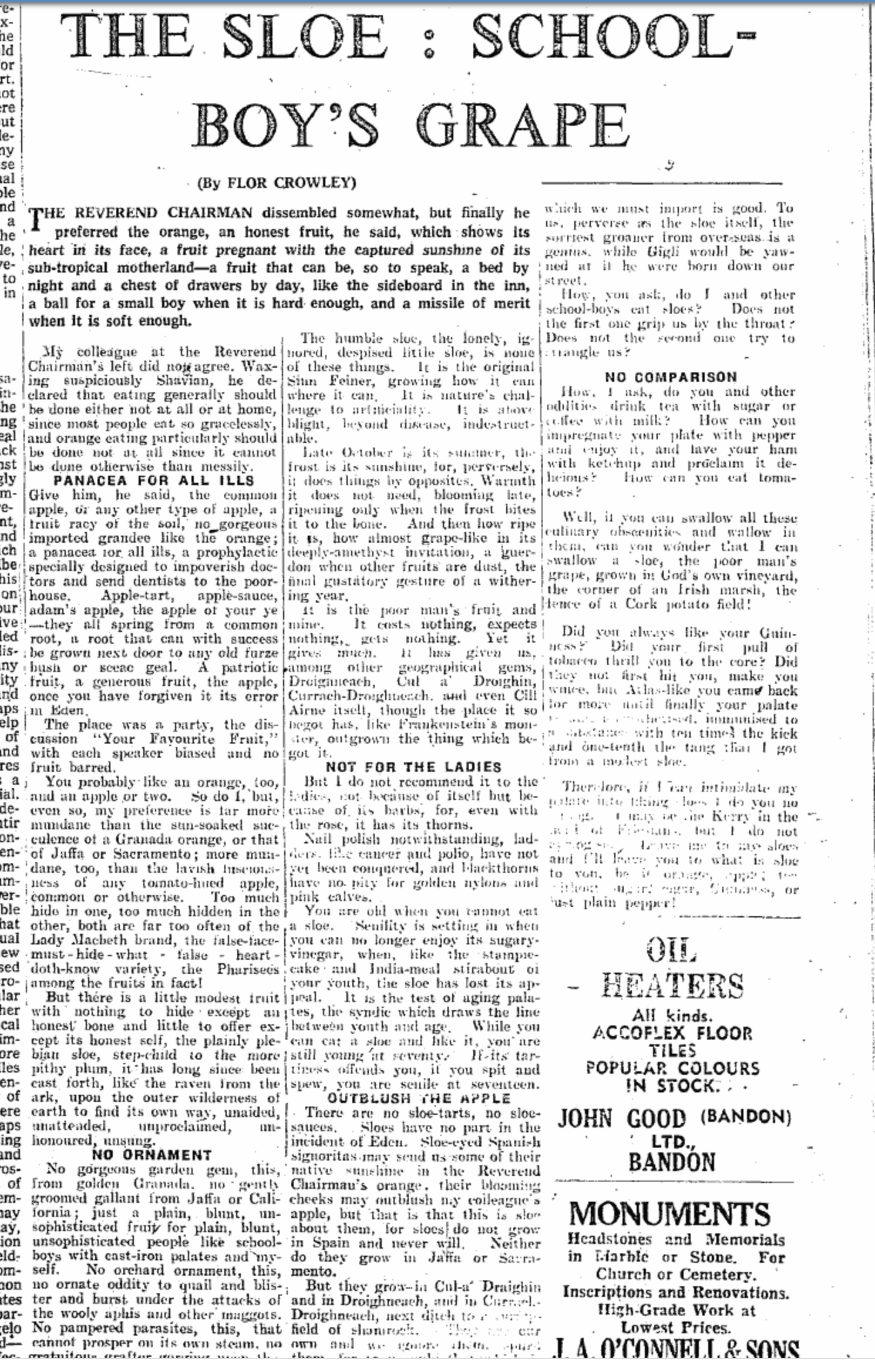
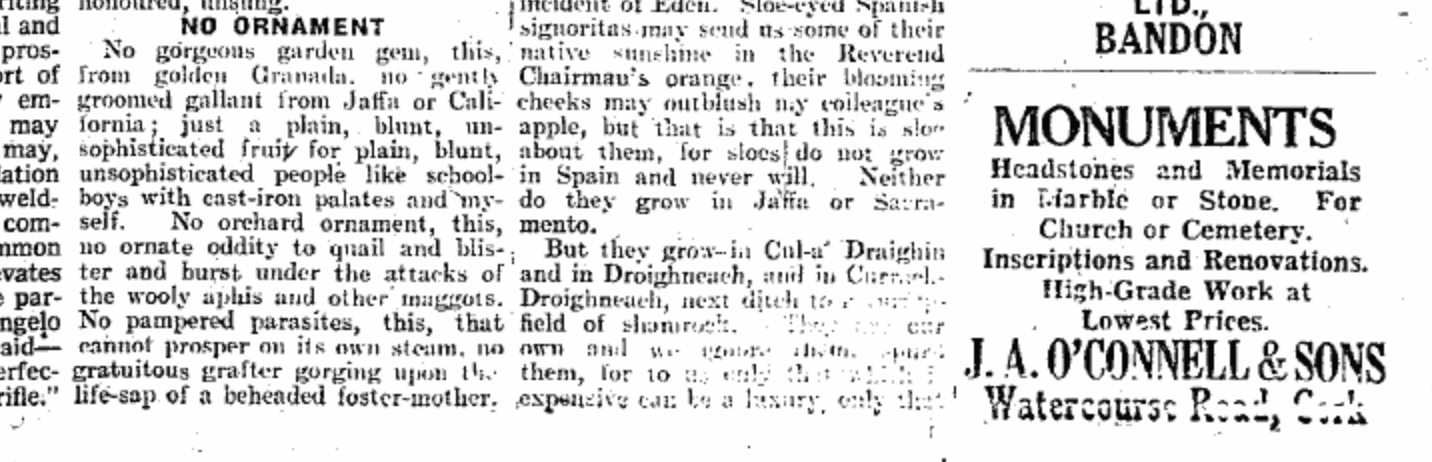
In Praise of The Humble Sloe. Flor Crowley 1959.

Featured


SLOE

Sloe jelly (or sloe jam, if you prefer) is almost unknown, which is a shame because it’s quite possibly the finest fruit jam you can make; tart, tangy and mysteriously dark. Sloes grow on blackthorn bushes, which are prickly customers at the best of times, and ordinarily you wouldn’t get much jelly for your trouble. Happily there’s a cheat, which is the addition of cooking apples. Apple brings out the flavour of the sloes and mellows their bitterness, helps the jam to set, and plumps the jam out to three times its original volume, making those prickly little prizes go a lot further. You can also get very similar results using bullaces instead of sloes; the flavour isn’t quite so good but the bushes are less thorny and tend to yield more heavily.
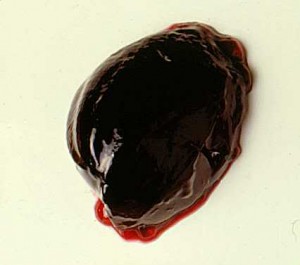
Sloe jelly, image

How to make sloe jelly

  1. Weigh your crop of pricked, frozen or frosted sloes in a saucepan. Add just enough water to cover the fruit, bring to the boil, and simmer until the berries are pulpy (you may need to mash them a bit).
  2. Add twice the weight of washed, chopped apples (peel, core and all), and the juice and peel of half a lemon for every kilo (2 lbs) of apples. Bring to the boil, simmer until pulpy again, and leave to cool down a bit.
  3. Strain the pulp through a scalded jelly bag or fine muslin into a suitable container. You shouldn’t squeeze the bag to hurry it up or you will have cloudy jelly, so leave it to dribble through overnight.
  4. The next day, measure the juice and add 400g of sugar per 500ml (1 lb per pint). Stir it over a medium heat until it comes to the boil, and skim off any scum.
  5. Boil the liquid until it reaches setting point (you can use a sugar thermometer for this, or just keep checking it with a cold plate), then ladle into hot jars and seal

Sloe Cordial

1kg Sloes

1 litre water

Juice of 1 lemon

Granulated Sugar (80g per 100ml liquid)

1. Bring the sloes, water and lemon juice to the boil and simmer for 5 minutes.

2. Break up the cooked sloes with a wooden spoon or potato masher, don’t bother about the stones as they will be sieved out later.

3. Simmer for a further 10 minutes.

4. Pour the mixture through a sieve.  If you want your cordial to be clear you should line your sieve with a muslin and don’t push the pulp through.  I didn’t do that and although the cordial is perfectly fine it isn’t clear.

5. Clean the pan and pour the juice back in, add the sugar and heat gently until the sugar has dissolved.

6. Bring to the boil and simmer for another 10 minutes.  Cool and bottle in sterilised bottles.

Sloe gin is just the tipple for warming up cold days, but you have to think ahead and make it now so the rock-hard, purple-black fruits have time to flavour the gin. Your gin isn’t ready until the colour resembles a decent Beaujolais.

THE RECIPE 

Prick your sloes, about 450g, with a needle or freeze them and bash with a heavy weight. Tip them into sterilised bottles, the fruit coming a third of the way up. Divide 350g of caster or granulated sugar among them then top up with gin or vodka. It will take about 750ml. Little point in using an expensive brand, by the way. Place the sealed bottles somewhere cool and dark. Leave for 8-10 weeks, turning the bottle occasionally, giving it a shake every week.

THE TRICK 

For me, the hardest part of making sloe gin is keeping my patience while it mellows. Well, that and finding enough sloes. I take great pleasure in pricking each berry with a needle in several places then dropping them into a bottle with sugar and gin, but others like to freeze the sloes in a plastic bag then bash them hard with a hammer or rolling pin. It is an effortless, kind-on-the-thumb way to get the best out of your hedgerow booty, though I much prefer the slow, non-violent way. Sloes are notoriously evasive. Forage for your own or try local farmers’ markets. I found this year’s supply in a greengrocer in Bristol.

THE TWIST

Yes, warming in a glass, but have you ever thought of using it in the kitchen? Even a tablespoon will add fruit depths to everything from gravy for game birds (pour it into the roasting tin and stir over a high heat to dissolve all the roasting debris into the gravy) to a major injection of flavour to a fruit crumble. Try it with plums or – best of all – with blackberry and apple. Not a gin type? Then use vodka. Suggest a drop of vanilla

….

Autumn is the perfect time to make sloe gin or vodka. Hedgerows are full of ripe, juicy sloes and the delicious fruity liqueur will be ready in time for Christmas. So why not give it a go? It’s so easy to make and you certainly won’t regret it when, feet up in front of the fire with the wind and snow howling outside, you treat yourself to a warming tipple. Why not try one of the other Allotment Heaven easy recipes?

Equipment needed

2 litre preserving bottle such as show here

Weighing scales

Ingredients needed

1 litre bottle of gin or vodka (no need to buy an expensive brand!)

450 grams of sloes

250 grams of white sugar, whose purpose is not only to sweeten the liqueur but to also extract the maximum amount of juice from the sloes.

Method

1. A few days before you’re ready to start put the sloes in a plastic bag and place them in a freezer. This will break the skins.

2. Let the sloes defrost before using.

3. Put the sloes, sugar and gin or vodka into the preserving bottle and seal.

4. Give the contents a thorough shake.

5. Shake the bottle every other day for a month.

6. Shake once a week for the second month.

7. When you’re ready to drink (see below) strain clear the liquid into the 1 litre sterilised gin or vodka bottle.

8. Add more sugar if necessary according to preference.

9. The liqueur can be drunk from the third month onward, though will improve with age.

The leftover sloes can be used to make jam.

 ..

To drink, add 10 parts water to one part cordial.

.. 

Words in Irish from Dunmanway, West Cork from Flor Crowley N.T. (National Teacher), Behigullane, Dunmanway.    Flor is the short for Florence the old version of the name in Irish is Finín, Fineen, Finghín.

Magistrate of same name:

Florence Crowley, 1895, Behagullane, Dunmanway, listed 1913.
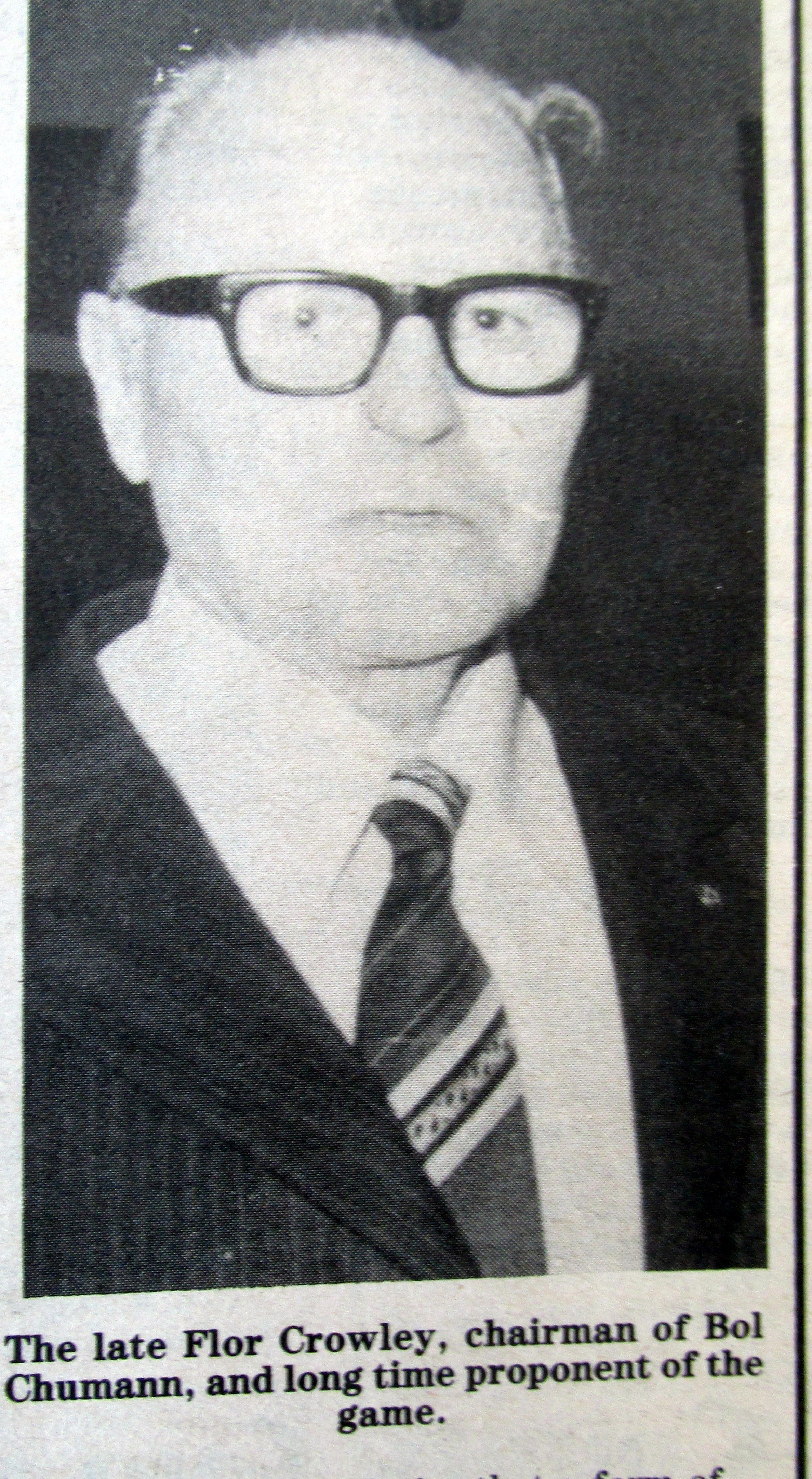
1-1-IMG_5515

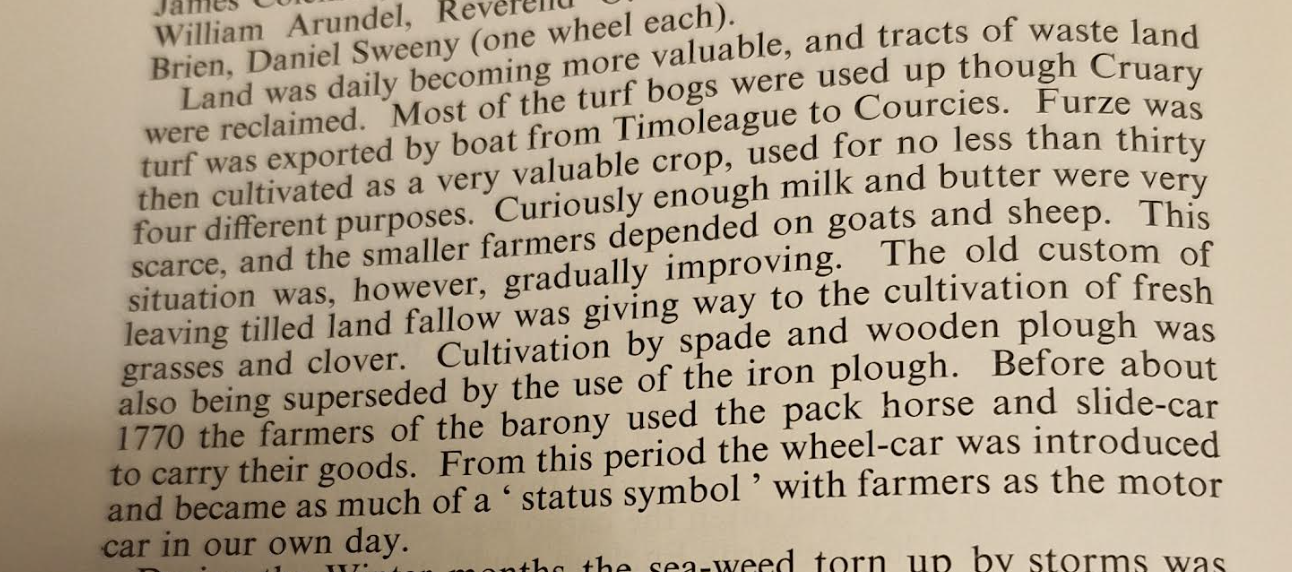
From his book ‘In West Cork Long Ago’, 1979, Mercier. Some of the practises flailing had probably gone out by the early 20th century.

Pages 9 and 10

https://docs.google.com/document/d/1dLSWVUsYRVa2ViKqOHyj5sl6Plz-tzLLVgpQgU3gvQM/edit

Drinagh 1940s

https://durrushistory.wordpress.com/2014/03/11/irish-on-ordinary-speech-drinagh-west-cork-1940s-agus-gaelige-i-measc-an-bhearla/

Pre 1965 farming practices West Cork, Red Elephant and Epicure potatoes, working with the grufán, threshing with the steam engine, winnowing of wheat and oats, working in the bog.

Flor Crowley NT, Behigulane describes farming practices in Dunmanway for small to middling farms which would have been common to Protestant and Catholic farmers from the Famine to the early 1960s. From then on, reclamation, rural electrification and specialisation spelled the end for many of the prctices described.

The page sequence in the PDF is out, note the bottom page number.

In West Cork ong Ago

1-Scan 1520
2-Scan 1521

ttps://durrushistory.com/2016/05/03/1847-bowling-score-at-castlemary-cloyne-co-cork/

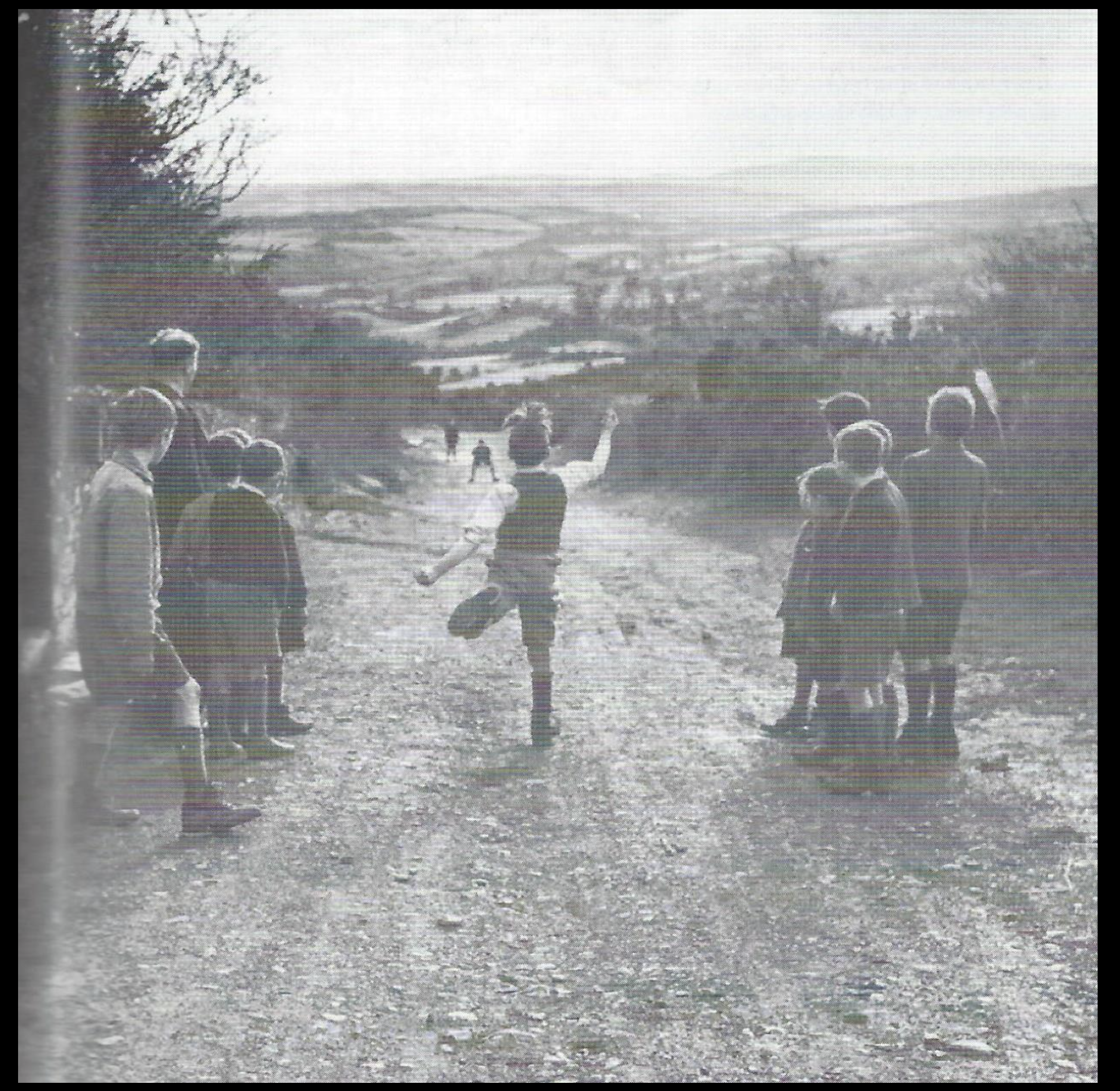
Bowlers Aughaville, Dromore, Colomane, Durrus, West Cork.  Bill Barrett, Patrick O’Driscoll, Richard Barrett, John Connolly, Jimmy Crowley, J.j. Sullivan, Donald Crowley, Eugene Daly and Possible Origins in Co. Armagh and The North of England.

It has been suggested that road bowling was introduced to West Cork by weavers who came in in t18th century from the North of England.

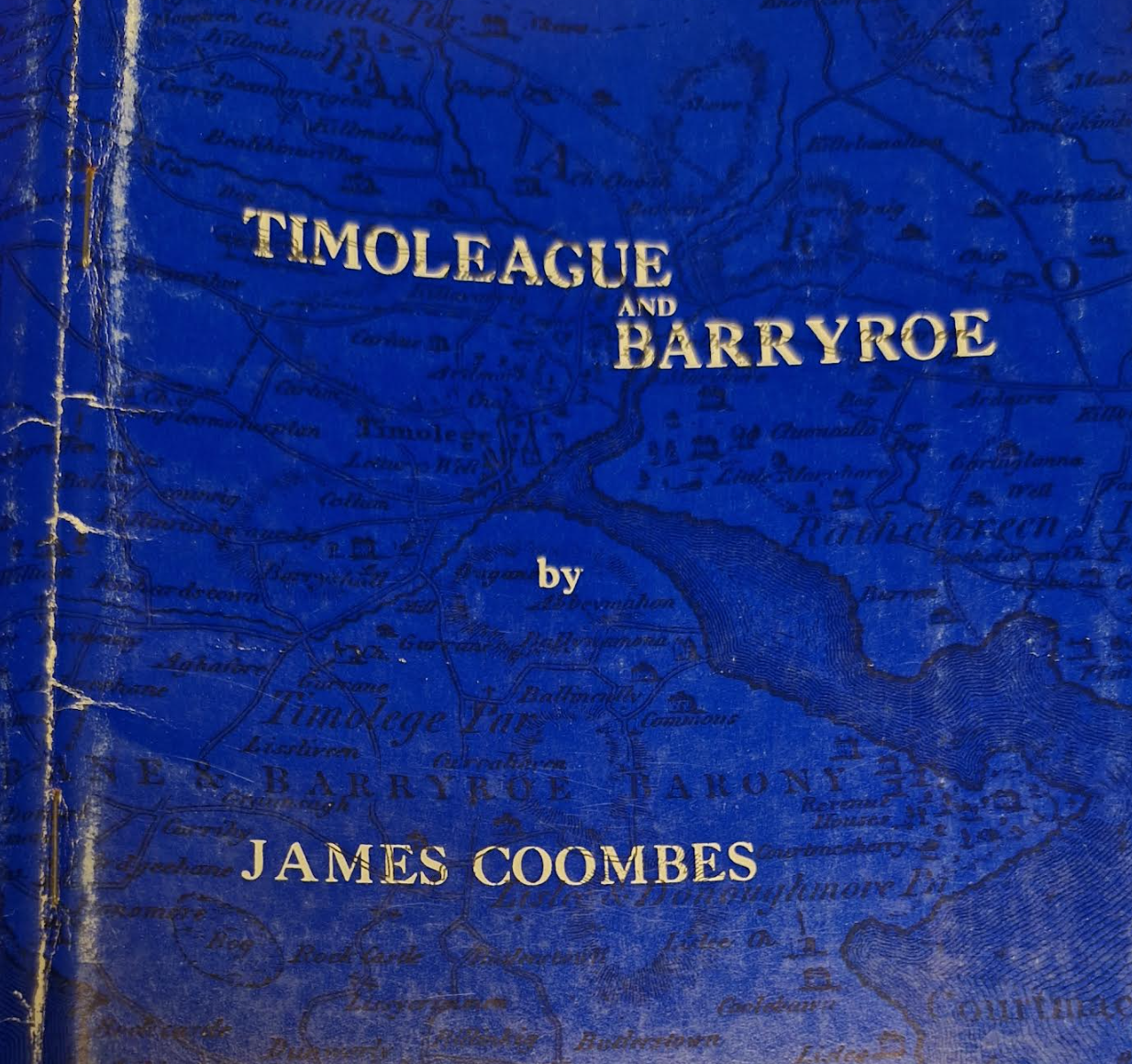
Flor Crowley, a National Teacher from Dunmanway who taught in Bandon founded An Bol Cumann.  He wrote extensively on local matters and is books are now collectors items.

Thanks to Peter O’Driscoll, San Francisco and Donal O’Mahony, Cobh.

Bill Barrett who always wore white tennis shoes.    Patrick O’Driscoll of Aughavile was recognised as a reasonable good bowler he was the man that guided Bill Barrett during his early days as a bowler.

His grand son Peter O’Driscoll was told by Tom Hayes from Aughaville whom he met in San Francisco. Tom Hayes came to America & San Francisco in 1910, at the age of 17 years he was in the first World War, he died in 1974 and is buried in the Golden Gate National Cemetry. He never married.
Bill Barrett in his younger days was a senior class bowler. This was before you had tar and crushed rock surfaced roads.

Richard Barrett from Colomane Wood he would be a cousin to Bill Barrett, Richard brothers were Pat, Bob, Steven and John.  Older men around Colomane often said that John Barrett had the ability to a great bowler.
Richard was a local good bowler not quit a senior class bowler.

John Connolly of Colomane West was a senior class bowler.
Jimmy Crowley of Colomane was a local good bowler He was from the family that owned the trashing machine.
Donald Crowley of Colomane Pub was a local good bowler.

J.J. Sullivan of Coomane north was a local good bowler, he came to America about 1958 he was a cousin to  John Crowley’s family. My best guess is that John Crowley’s mother was J.J. Sulivan’s aunt.

The up and coming star was  Eugene Daly of Dromore  in 1960 and the later arrivals in San Francisco have told Peter O’Driscoll  that Eugene was a senior class bowler.

Around Drimoleague and Drinagh, there was a family of Sheen’s (Sheehan?) three brothers John, Jerry and Michael. also a Humphrey O’Leary was a senior class bowler.
These are bowlers that that bowled on a Sunday evening along the main road from O’Driscolls pub in Aughaville to Crowleys pub in Colomane.

The score of bowl started from the roadside sign post about two hundred yard east of the Aughaville cross-roads and ended at the sign post about two hundred yards west of Colomane pub, a distance of two miles.
There are other bowlers that came from Bandon and places near Cork City to bowl from Aughaville to Colomane.

In the Durrus area Danny O’Mahony of Ahagouna reckoned to be the best 84 yard loft with Mick Barry.  In his early years on the Dunbeacon Road sometimes Bill Barrett  would mark for him.

In the local folklore a son of one of the O’Donovan Landlord families (either That of Timothy of the Cove or Richard of the Fort) was reckoned to be a good bowler.   There is an excellent painting in the Crawford Art Gallery Cork of a member of the landlord Smith Barry family of East Cork bowling early 19th century in all his finery.

It has been said that road bowing was introduced to West Cork by weavers from the North of England.  In the Durrus/Schull are the Crostons were a weaving family who may have originated in Croston, Lancashire.  Another location for bowling is Armagh.  Here too there were may families introduced in connection wiht weaving/linen/flax to West Cork in the early 18th century from Co. Armagh, names such as Johnson, Richardson, Shannon. Williamson and Young among others..

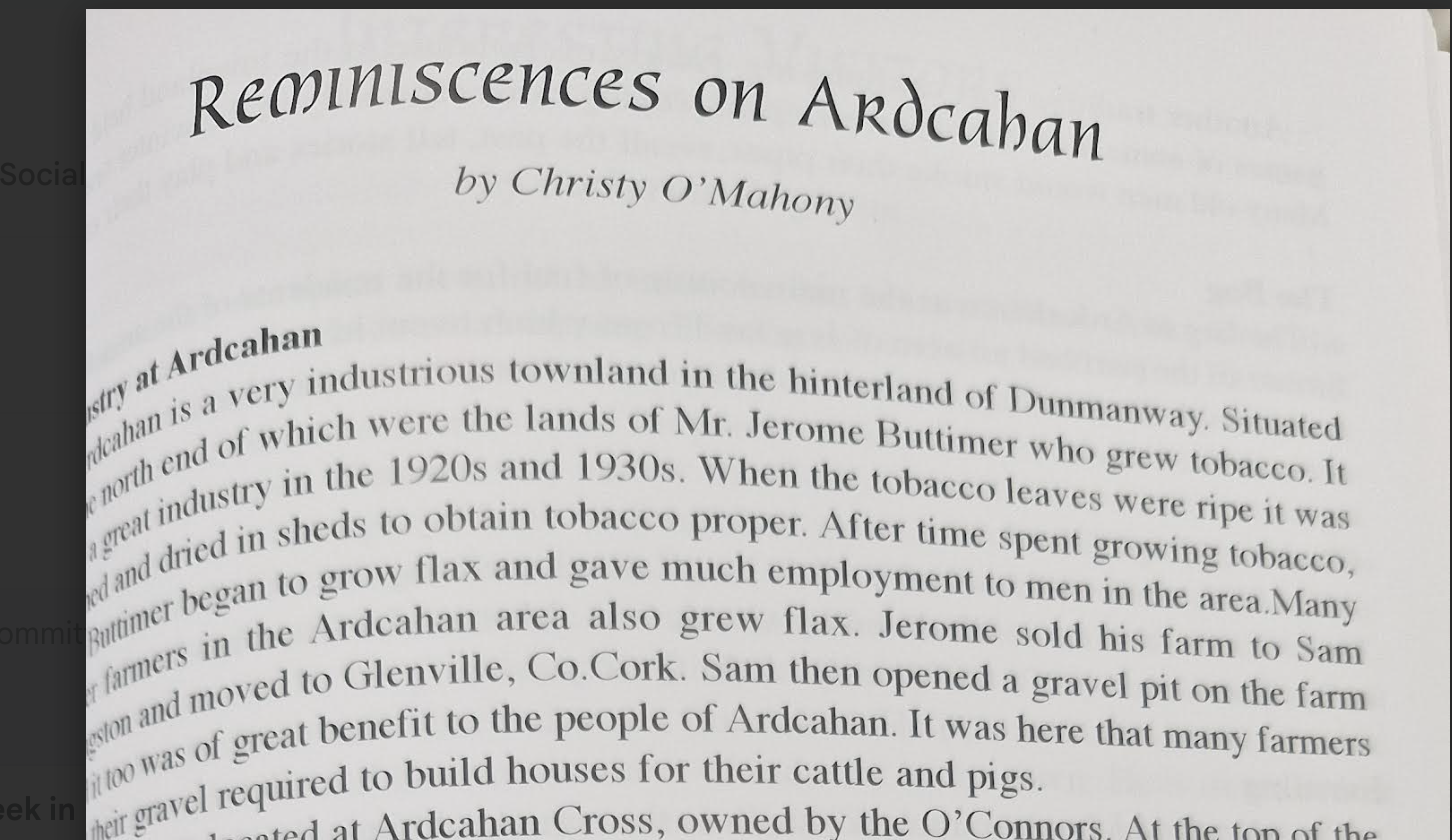
Tobacco Growing in West Cork

Tags

, , , ,


In Durrus Tom Dukelow originally from Clashadoo spent some time in Tyrone. He had sold his Clashadoo farm and on his return in the 1930s bought Sea lodge a house and a few acres across the disused pier built by Lord Bandon at Gearhameen, Durrus on Dunmanus Bay. I was told he was one of the last persons to hold a licence to grow tobacco. He also operated as a merchant. In the long hot summer of  1940 tuna and pilchards returned to Dunmanus Bay. He bought the pilchards from local fishermen and pressed them for their oil.  He ran a scoraiochting/rambling house where in the winter all the neighbours gathered.  Neither the Parish Priest nor the Minister were happy as they did not like the religions mixing but nonetheless it was always a lively venue.

Tobacco growing Co. Meath:

https://www.navanhistory.ie/tobacco/

..

The Times, 7 July 1904 ~ House of Commons

Mr. Wyndham- In 1900, 1901 and 1902 experiments under the supervision of the Department were undertaken at a number of selected centres in Ireland, the result of which have satisfied the Department that the tobacco plant can be successfully cultivated in that country.  In order, however, to determine the possible commercial value to the country of tobacco cultivation, arrangements were made for the growing of the crop on about 20 acres in the vicinity of Navan during the present year…

The Times, 29 June 1905 ~ Tobacco. House of Commons.  Irish Tobacco.

The Departments advisory committee on tobacco recommended that the experiment in 1904 should be confined to one centre – namely Navan – and that at least 20 acres should be grown there.  Others in the district having declined to offer land for the purpose Colonel Everard undertook to plant the entire 20 acres, and consequently he was the only approved grower entitled to the rebate.

The Times, 9 Oct 1905 ~

At a special meeting of the Irish Industrial Development Association Mr. R.E. Goodbody made an interesting statement about the Irish tobacco crop for 1905.  In company with an American expert, he had just visited Randlestown, Navan, where Colonel Everard had ten acres under process of saving.  He had never seen so good a yield in any country, and the expert was of the same opinion.  The yield of the ten acres was three times as great as that from a twenty plot last year.  The tobacco was a little slow in saving but smoked very well. More than 3,000 hands were employed in Irish tobacco factories.

The Times, 9 July 1906 ~

The experiments in tobacco growing in Ireland, which have now been carried out for several years by Colonel Nugent T. Everard, of Randlestown, Navan, County Meath, appear to have been brought to a successful termination and to have emerged from the experimental stage into an actual industry.  The following particulars have been forwarded to us: – In 1904 Colonel Everard, grew 20 acres of tobacco, which yielded 9,000 lbs. of cured leaf.  It was favourably reported on by experts and sold freely at ½ per lb. above the same class of American tobacco.  In 1905 13 ½ acres were grown by Colonel Everard which yielded 15,500 lb…  This year Colonel Everard is experimenting upon 25 varieties, including high class cigar wrappers, and judging from the characteristics developed in the tobacco previously grown the experiment is likely to prove a “With our present experience” writes Captain R. W. Everard “the cost of labour on one acre of tobacco is about £20 per acre, about half of which can be earned by women and boys during the winter, when in this country, there is no other employment for them”.

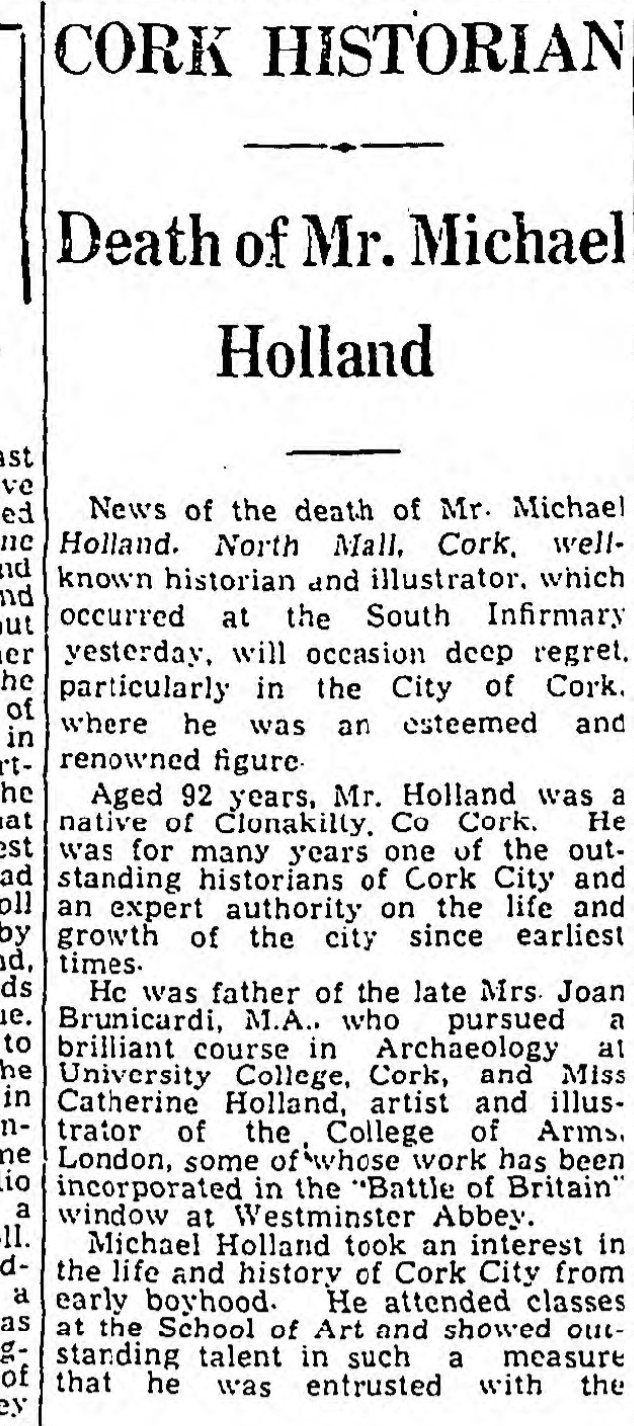
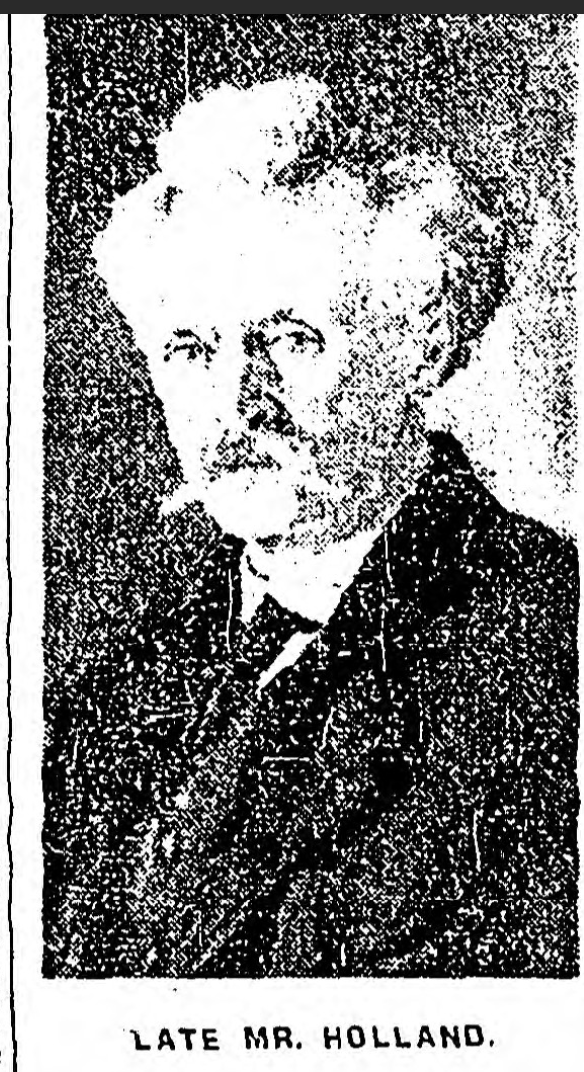
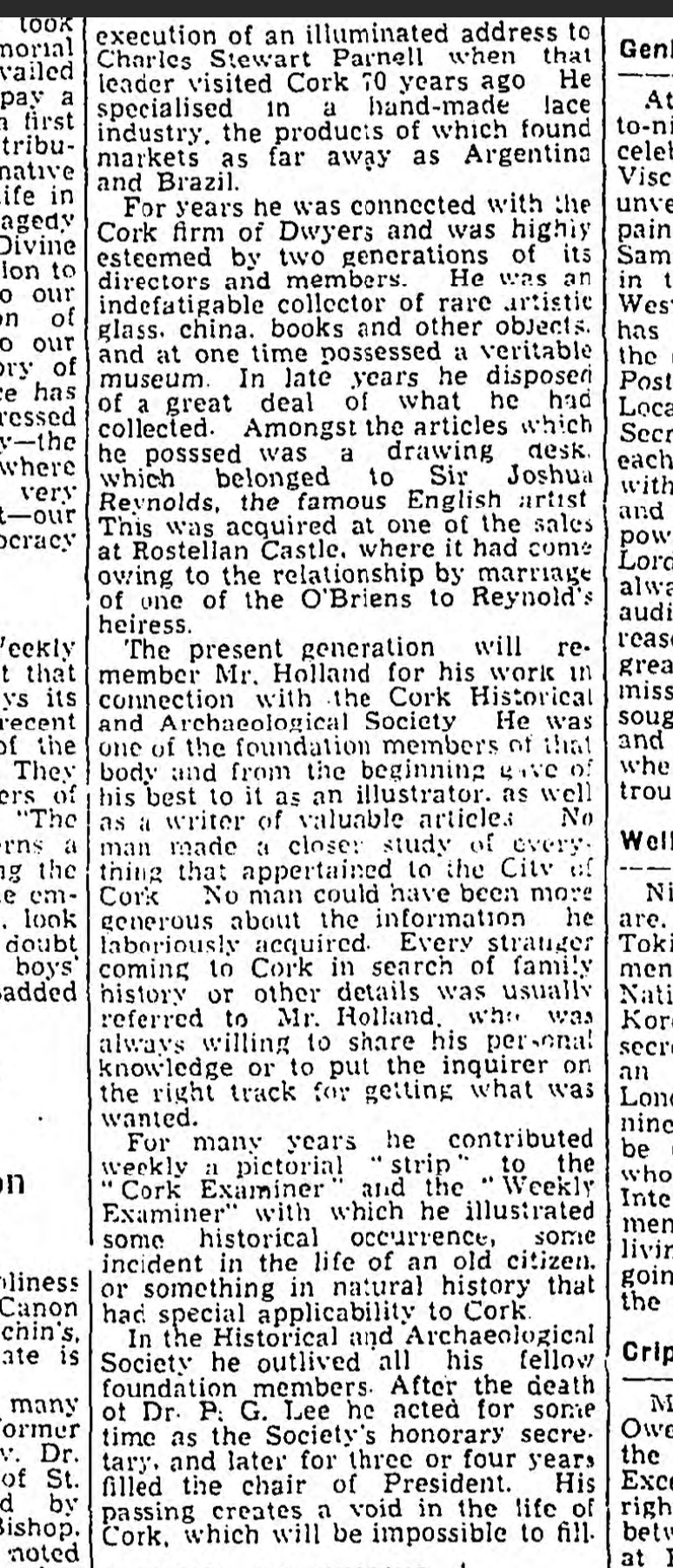
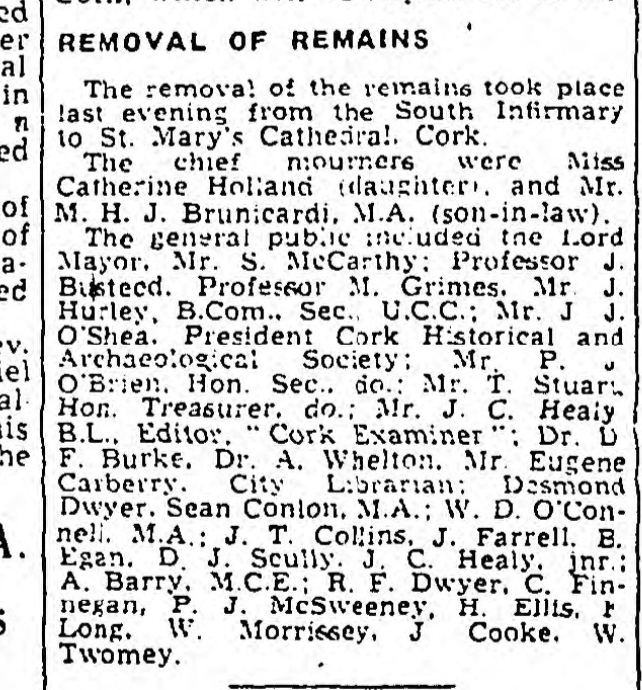
1950 Funeral of Clonakilty Born Michael Holland. Entrusted With The Execution of Address 1880 to Charles Stewart Parnell on His Cork Visit.


Possibly related to Father Holland, History of West Cork, and if so to late journalist Mary Holland. . He died the same year.

Father William Holland, Ardfield, Clonakilty, (1876-1950). 1949 History of West Cork. Included genealogies of Barrys, De Courceys, McCarthys, O’Crowleys, O’Driscolls, O’Heas, O’Hurleys, O’Mahonys, O’Sullivans.

https://photos.google.com/share/AF1QipMIfS_tZBVzk6nxPSY8FobTKXQIT0pG4UgoqVjtlzdLiwteVHZKMEcdEG3NamhszA?key=azNfNy1XamRBdUdBTWthM2p6aHB6VkZ2LWl0MXRB

His funeral is here:

https://docs.google.com/document/d/1A8vkAzsRVEhpiP2EOryWiYcEryJw0ic4DmnKe6vZEqI/edit?tab=t.0

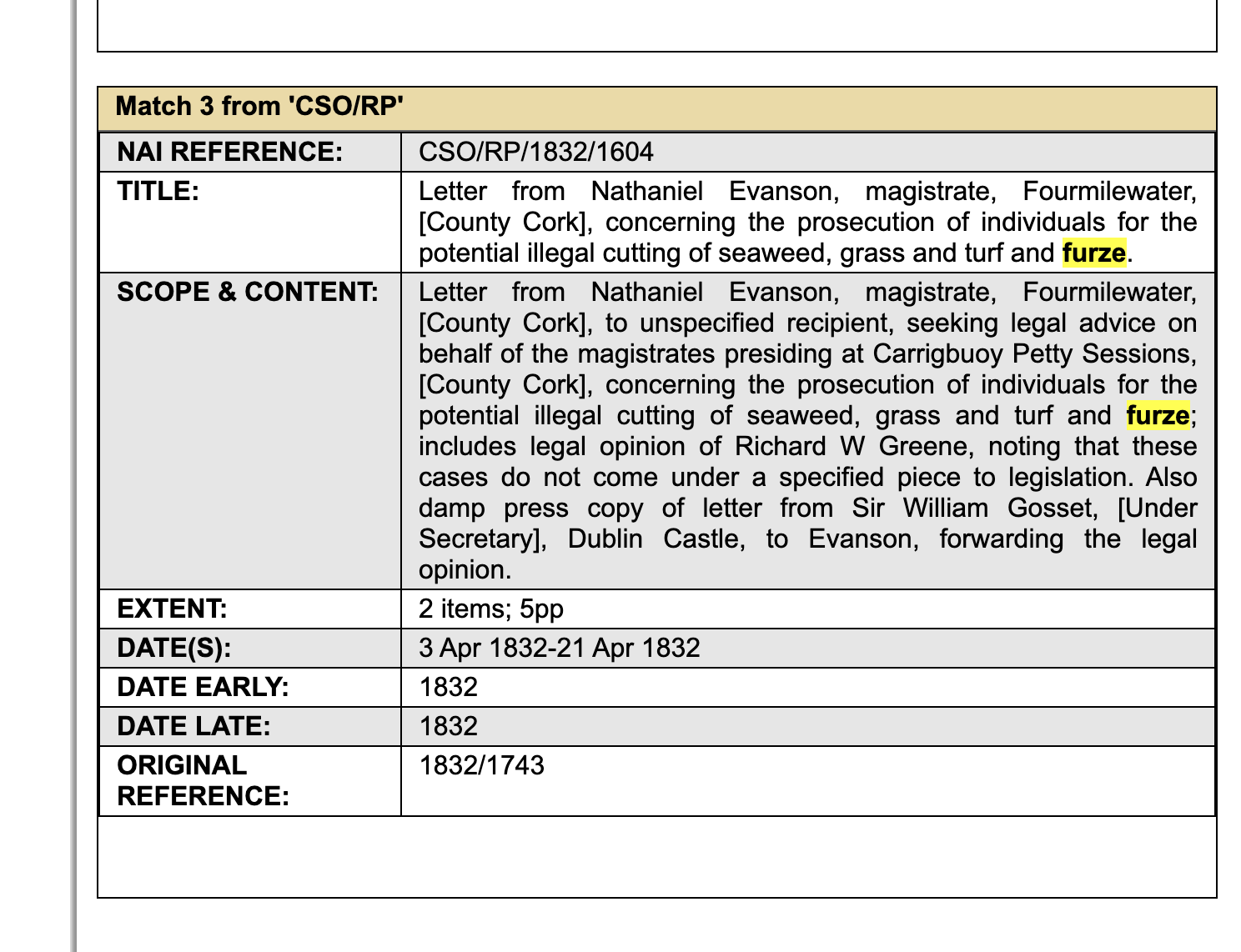
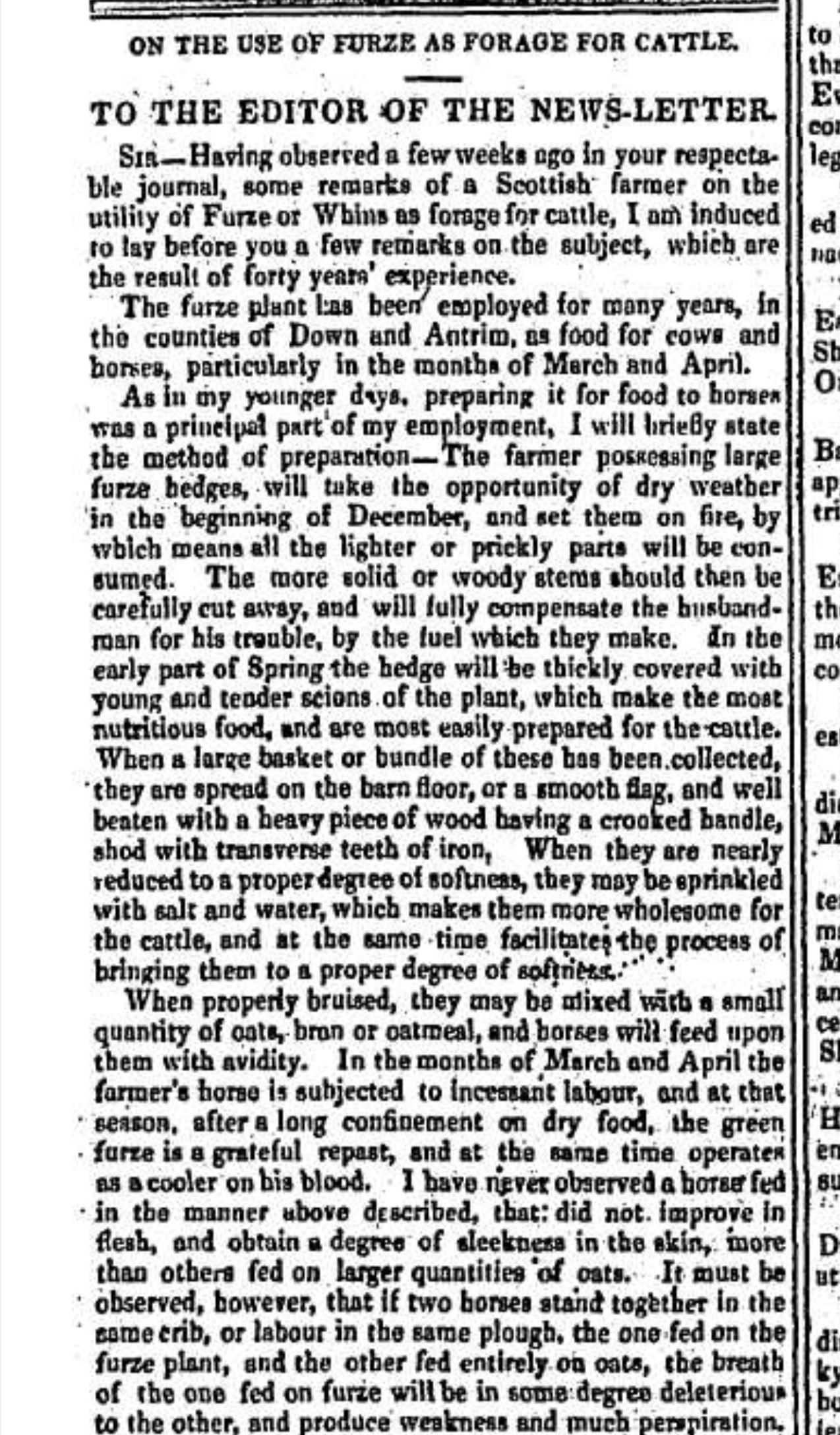
1832 Letter from Nathaniel Evanson, Magistrate, Fourmilewater, (Durrus), to the Chief Secretary concerning the prosecution of individuals for the potential illegal cutting of seaweed, grass, turf and furze on behalf of the Magistrates presiding at Carrigboy Petty Sessions


Chief Secretary Papers:

Evanson family, Durrus

https://docs.google.com/document/d/1c550F3fK7ZT0qUzH4DjP4I87TPHU5-yK-l4D-_cH-E4/edit?tab=t.0

West Cork Magistrates

https://docs.google.com/document/d/1iUWLnMdEXFgyt6IlrIj-t50Zy6-zHlB9SYcgvi7anJw/edit?tab=t.0

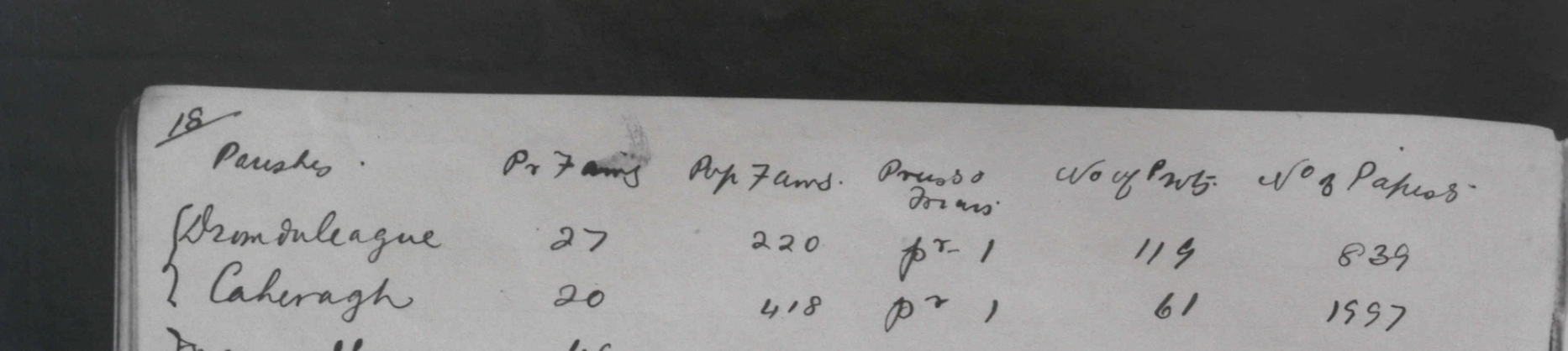
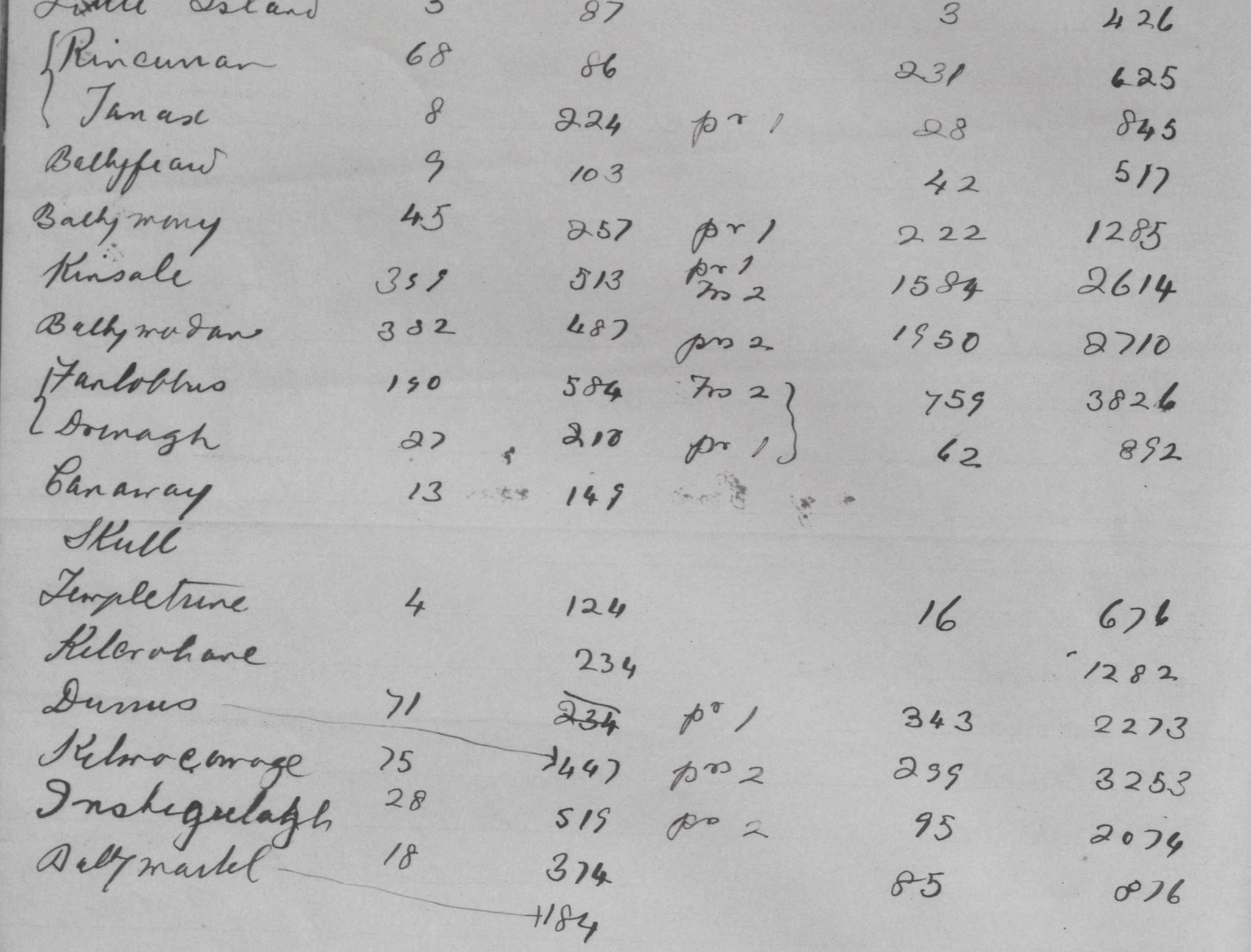
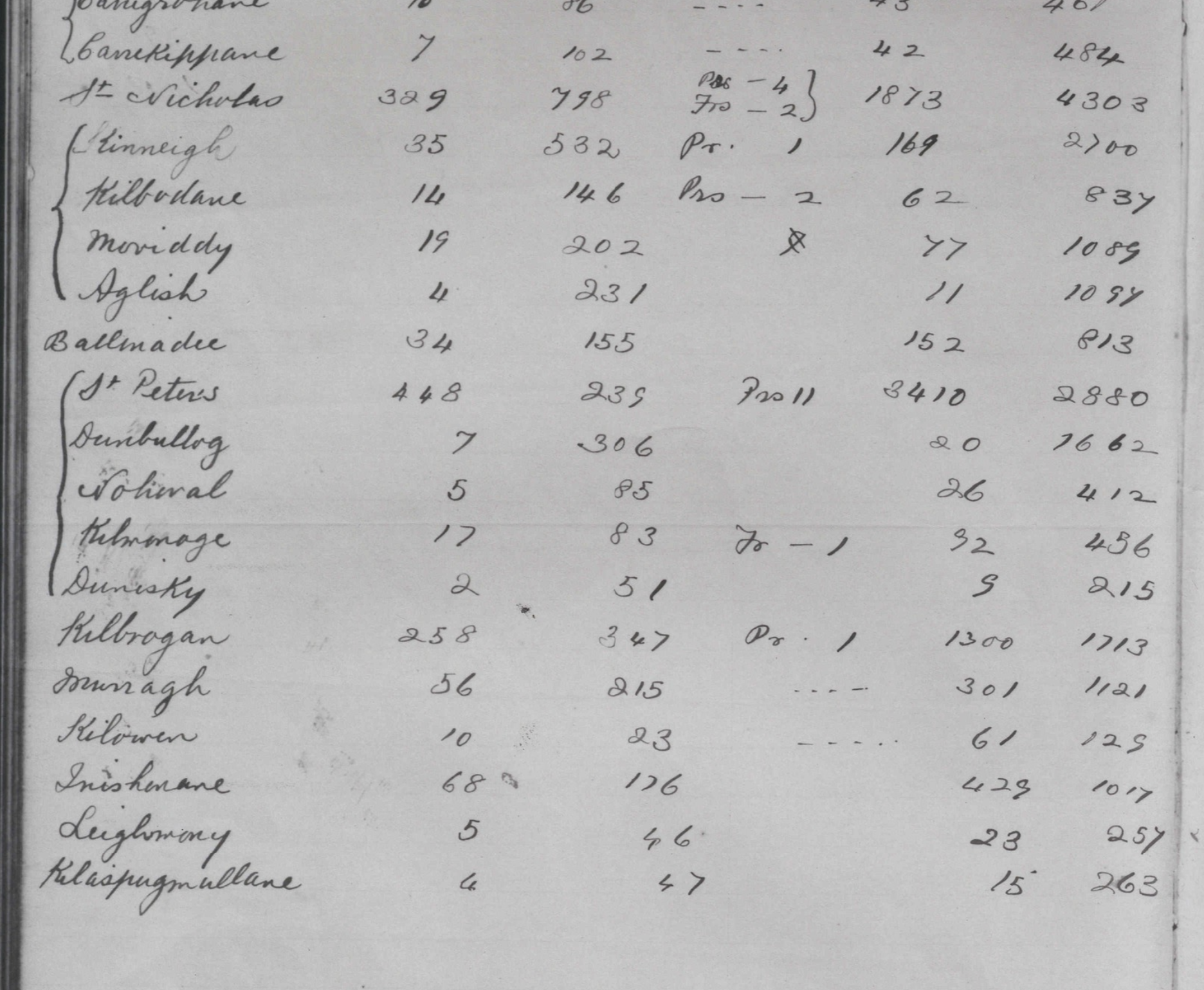
1766 Religious Census. Some West Cork Parishes. 1831 Census Parish of Durrus


https://virtualtreasury.ie/item/NAI-PRIV-M-4921

NAI PRIV/M/4921 is a facsimile copy of a volume of Cork material which includes:abstract 1766 religious census material (to parish level) for all parishes in Cork and Ross diocese1764-5 hearth-tax religious census material for some Cork parishes.

The 5 March 1766 resolution of the House of Lords instructing that a religious census be taken required parish ministers to return lists of the heads of households only. However, the instruction from the Cork and Ross Diocese to its parish ministers to conduct a census must have included a specification that population numbers were also to be returned as nearly all parishes in Cork and Ross provided population data alongside counts of the number of households. Cork and Ross was the only diocese to return both population and household counts as a general rule.

The abstract 1766 population and household numbers in this volume reflect the diocesan summary for Cork and Ross diocese, which was Parliamentary Return number 787 in the Parliamentary Return collection in the Public Record Office.

View PROI PARL 88/30/5/77/2/787 to see additional information concerning this diocesan summary.

IIIF manifesthttps://by2022-prod.adaptcentre.ie/iiif/v1/174827/manifest

1831 Census Parish of Durrus

https://virtualtreasury.ie/item/VRTI-CEN-Report-1831-3-3-2-3

Late 18th Century Furze Used in 34 Applications.


..

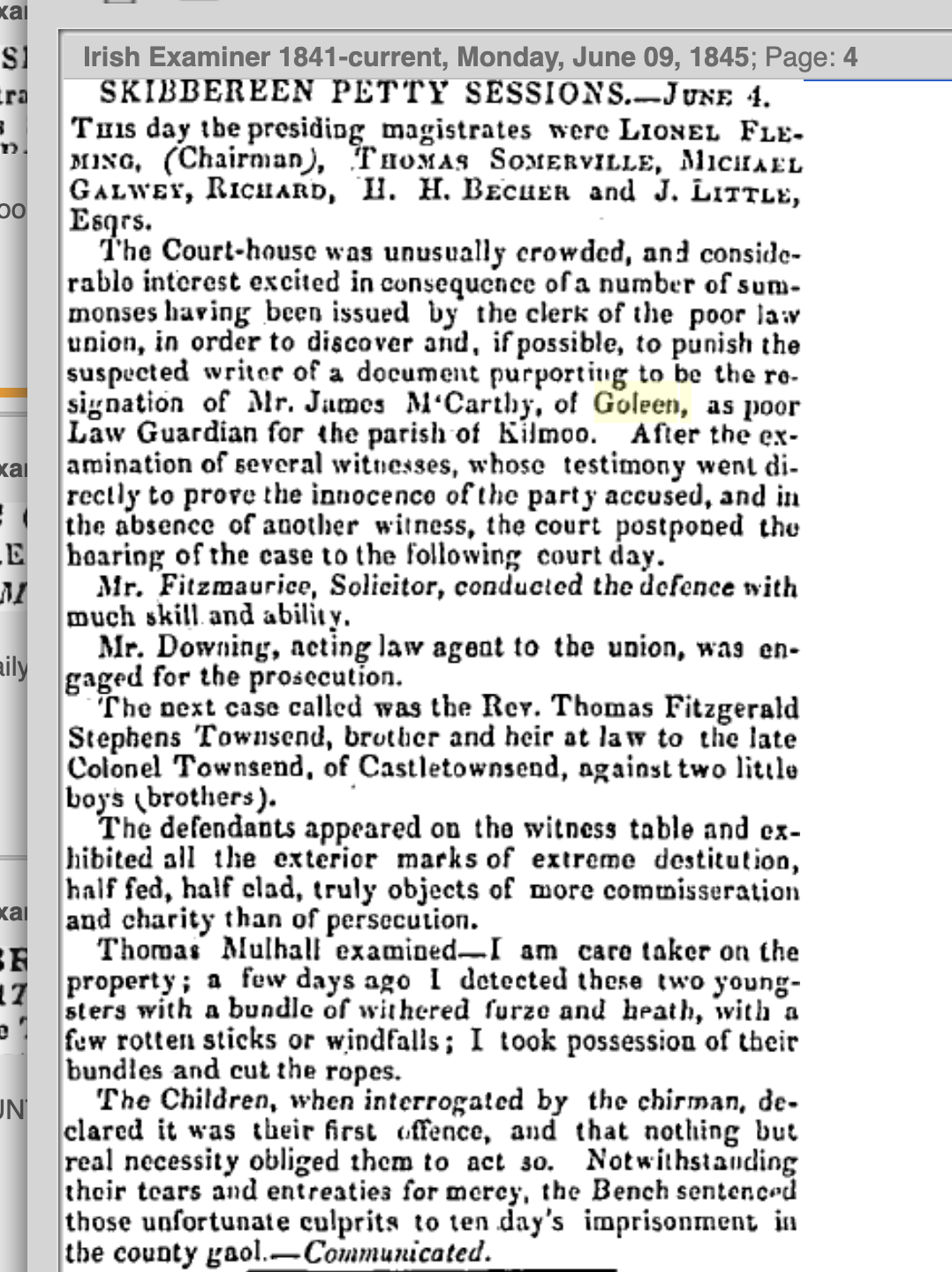
1845 Skibbereen Petty Sessions., 2 Starving Little Brothers. Half Fed Half Clad.  Sentenced to 10 Days Imprisonment in Cork County Gaol for Having a Few Bundles of Withered Furze and a Few Rotten Sticks At  the Prosecution of the Rev. Thomas Fitzgerald Stephens Townsend Brother and Heir at Law Of The late Colonel John Townsend, Castletownshend

1814, Thomas Godson Agrees at Breenybeg, Kealkil to Sow Furze Seeds and 12 Perches of Lawful Double Ditches

208

BL/EP/B/

yearly rent of £14. 14. 0, payable half yearly on the 29th September and the 25th March. Godson agrees to sow furze seeds and to erect 12 perches of lawful double ditches, failure to do so will incur an additional 12 shillings on the rent. The former lease was held by John Godson (grandfather of Thomas Godson).

  1. 878  24 Sept. 1814Renewal of a Lease made between Richard, Lord Viscount Bantry, Bantry, and Thomas Godson (Writing Clerk), City of Cork, subject to a surrender of a former lease, for the lands of Breenybeg containing 4 gneeves, in the Barony of Bantry. It is for three lives renewable, from the [24th] September last, at a878 contd.

From Bantry House Rental Records, Boole Library, UCC.

https://libguides.ucc.ie/ld.php?content_id=31762597

Evidence of Maskelyne Alcock, Esq., Magistrate, Substantial farmer, on Cultivation of Furze for Horses in Bandon 1844.

Alcock Estate:
http://landedestates.nuigalway.ie:8080/LandedEstates/jsp/estate-show.jsp?id=3001

http://www.dippam.ac.uk/eppi/documents/11941/page/282512

..,

The Brooks/Brookes of Dromreagh (Drom Riabhach, stripe, grey ridge), Durrus, West Cork coming early 19th century as Weavers from Ryelands, Raphoe, on the Abercorn Estate in East Donegal, some go to New Zealand early 20th century, and 1926 sale of family holding Dromreagh on move to Courtmacsherry, subject to ‘a trifling annuity’ with an acre and a half of furze meadow.

Pounding the furze for the mare in foal.

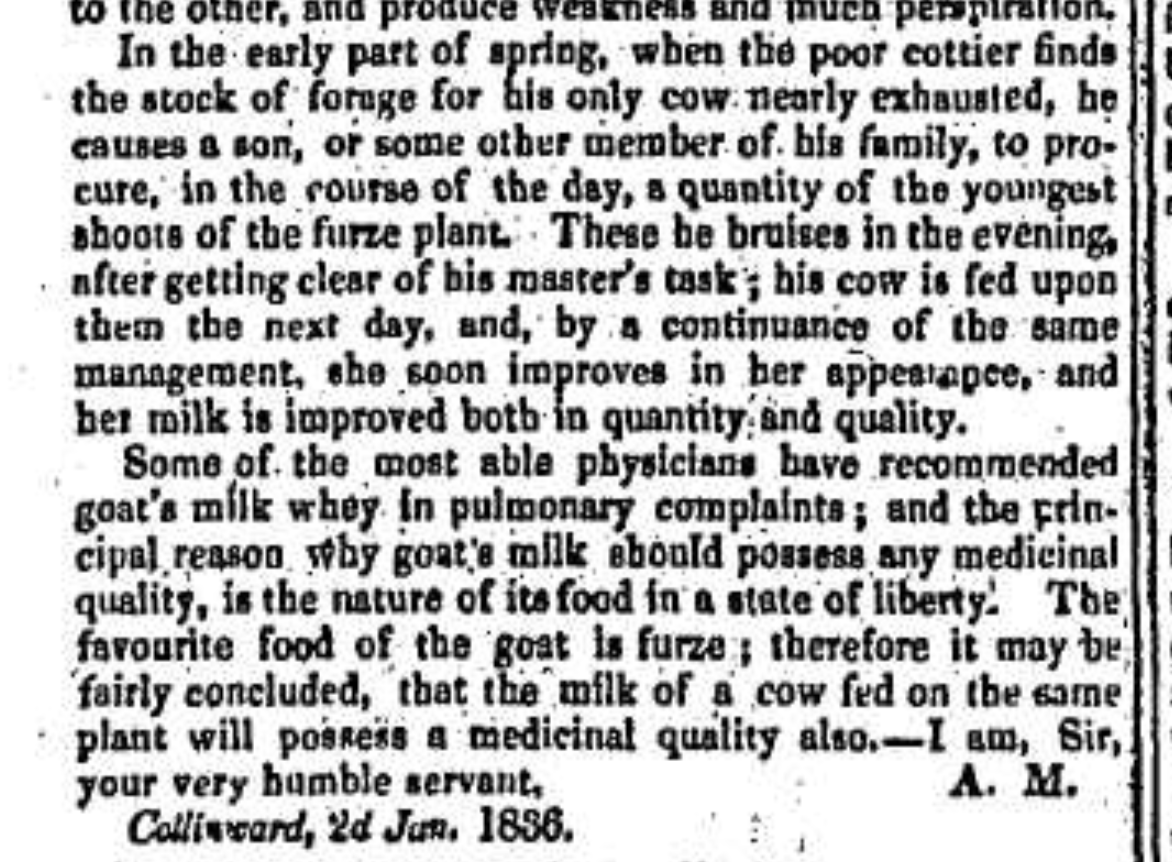
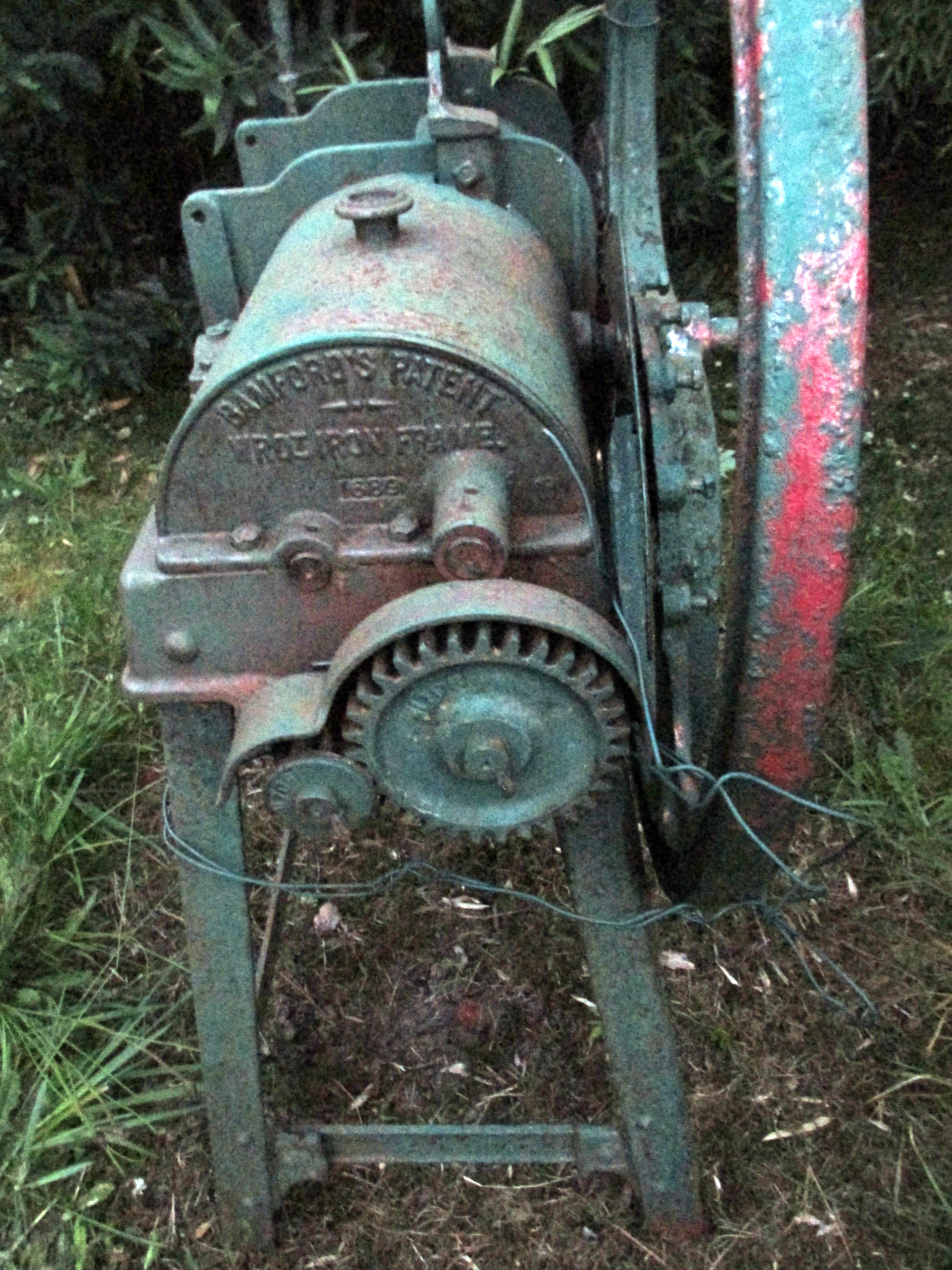
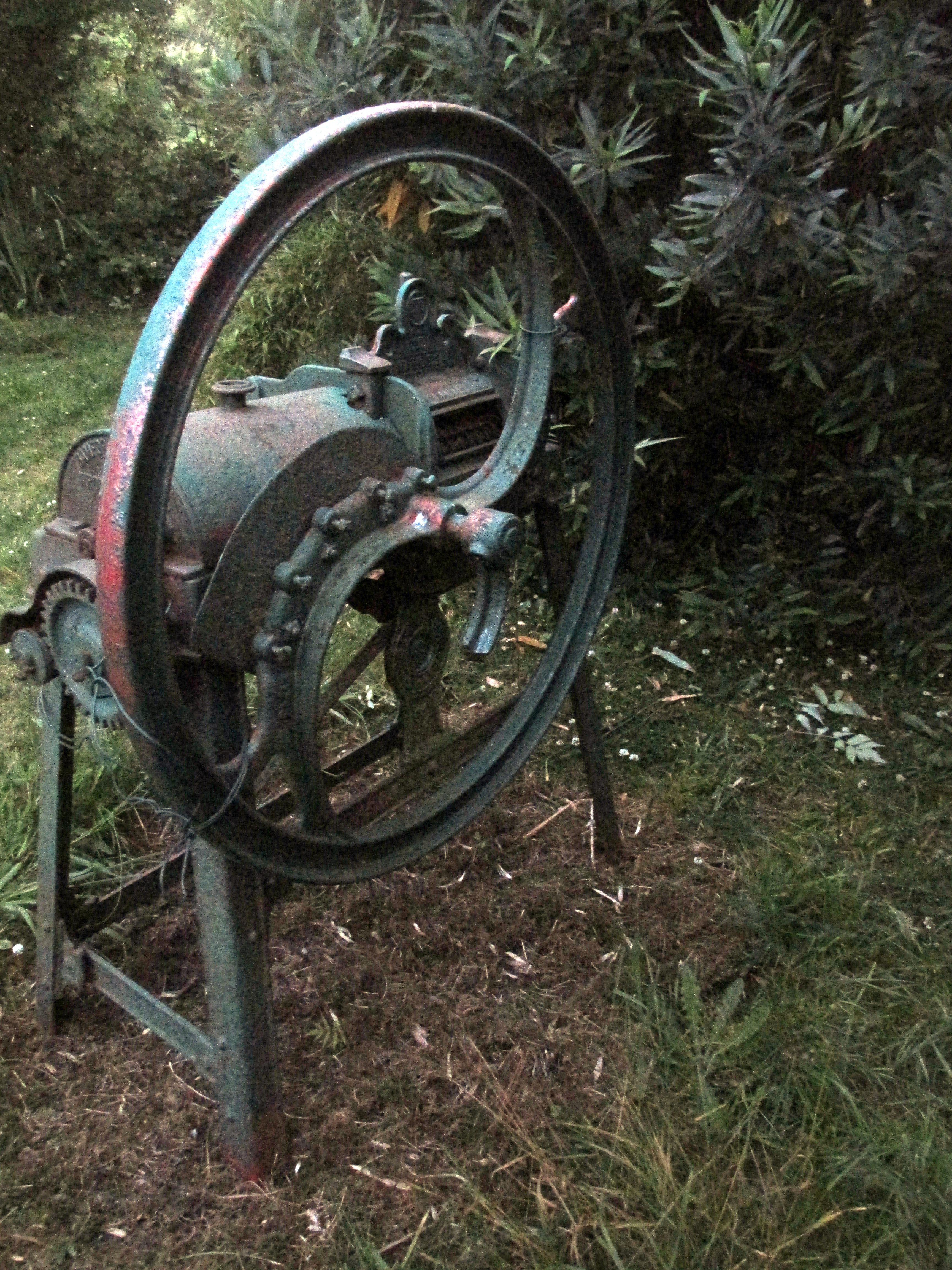
Pre the mid 1960s the workhorse on Irish farms was literally the horse. The diet was supplemented by furze (whin or gorse in some areas), chopped up with a furze machine. These sturdy machines of cast iron are still around and grinded the plant and then chopped it. Mares in foal have a delicate digestive system and the furze was further pounded to make it palatable.

Farmers would often travel a mile of so to get a cart load of furze. Brakes or waste land of up to a half an acre would often be planted with a harvest within two years

Donal Hickey Irish Examiner:

https://www.irishexaminer.com/property/homeandoutdoors/arid-30839915.html

In his book, Farming In Ireland, John Feehan mentioned many registered accounts in legal documents from the 15th and 16th centuries listing gorse being used as animal fodder: “It was especially valued in feeding horses, though cattle throve on it also, either fed on its own or as part of a mixed diet.”

Feeding gorse continued until the 19th century, with many admitting to getting more gorse per acre than they would if they made hay. Feehan also recalls how farmers, in Cork especially, grew a few acres of what was called “furze meadow”. Given current fodder shortages, maybe there’s a lesson there.

This furze machine was sold in 1889 auction as new:

https://docs.google.com/document/d/1OaTv0viw8AKxaoUtJEym5y0Dp0xAqTqZj5nE7nyitDg/edit

1-IMG_3436
2-IMG_3437

Aiteann gaelach, Tufts of furze

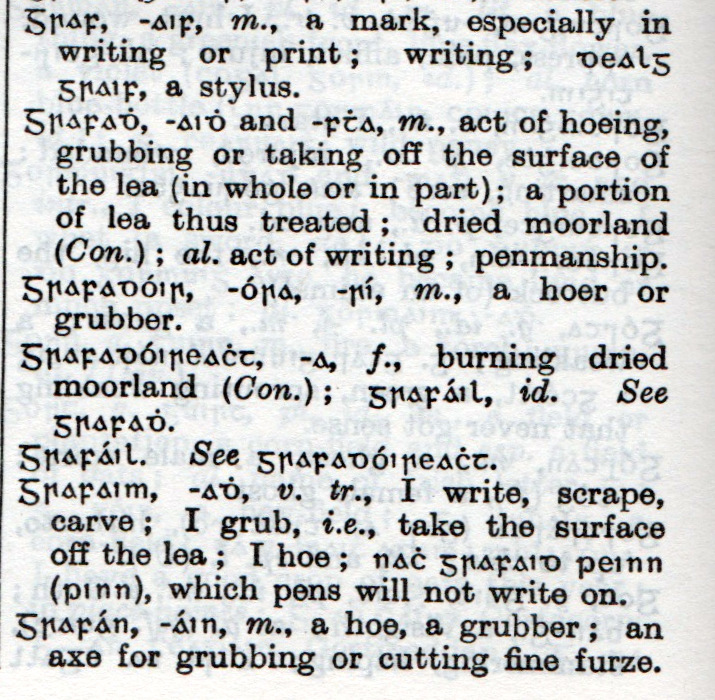
Garbhóg, forked hazel stick used in divining, a furze stick was used by an English artist who bought Sea Lodge in the 1940s to divine for water. The house had no water which was obtained from the nearby priest’s well. The English lady found a small stream near the house

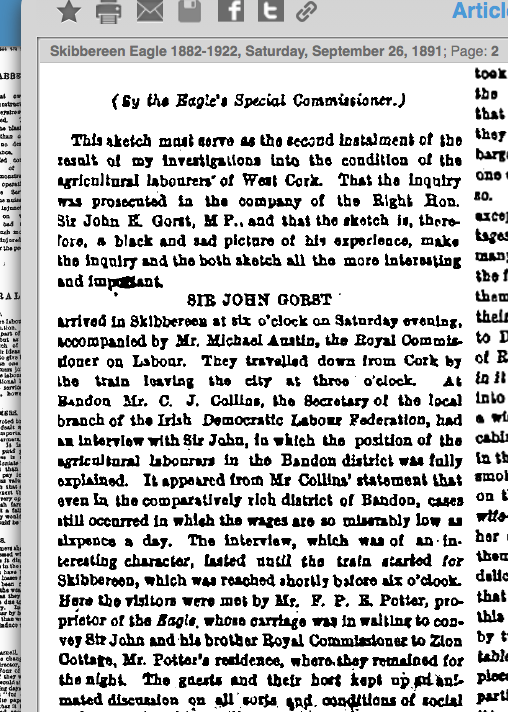
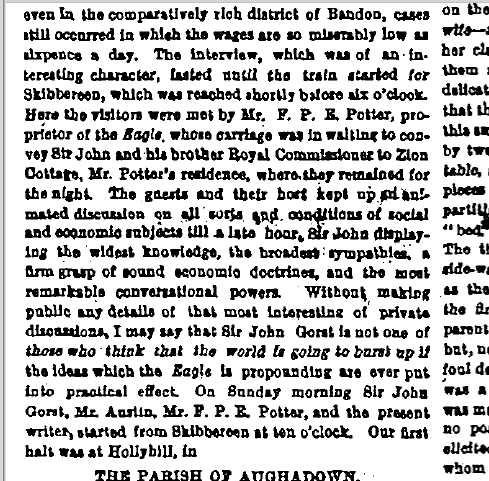
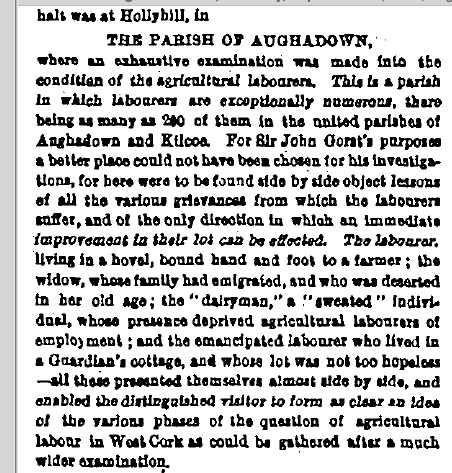
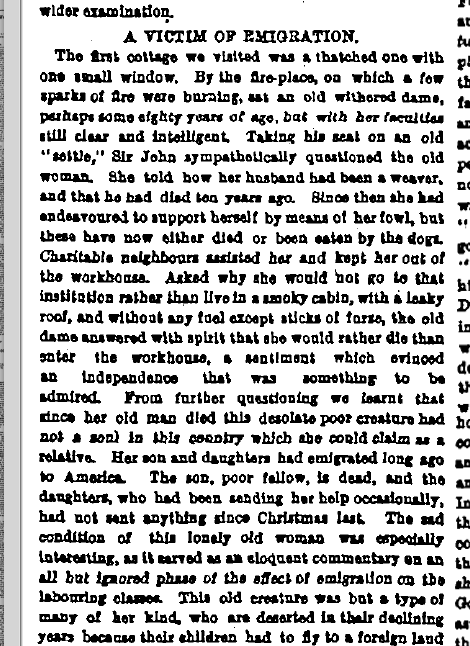
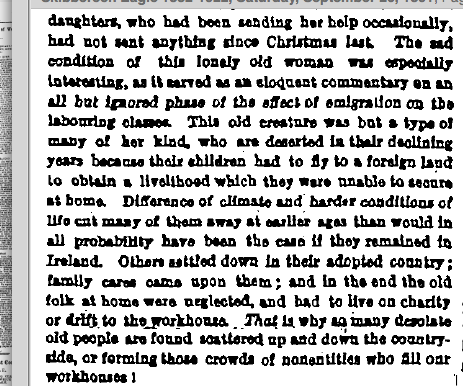
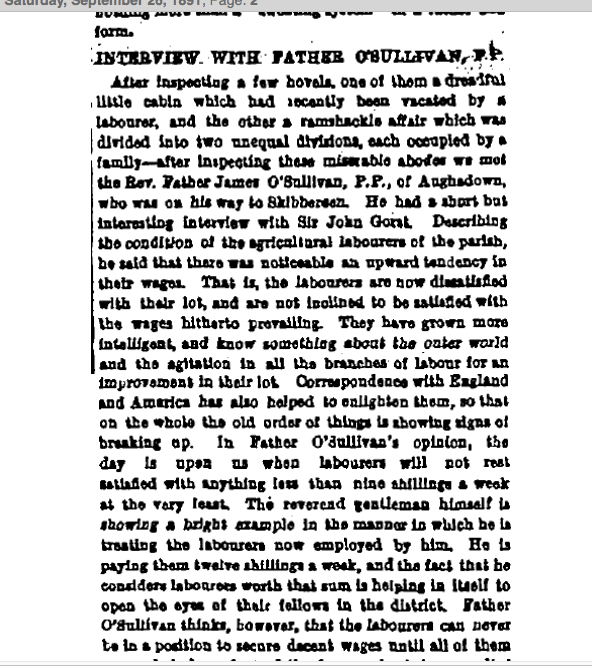
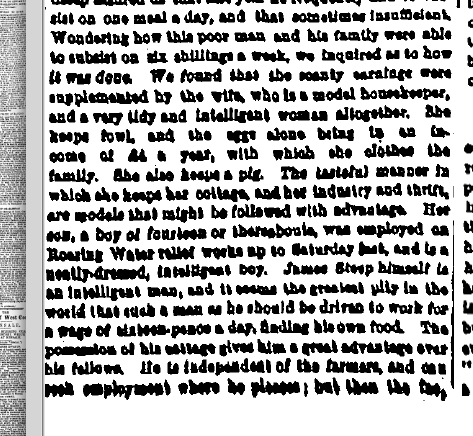
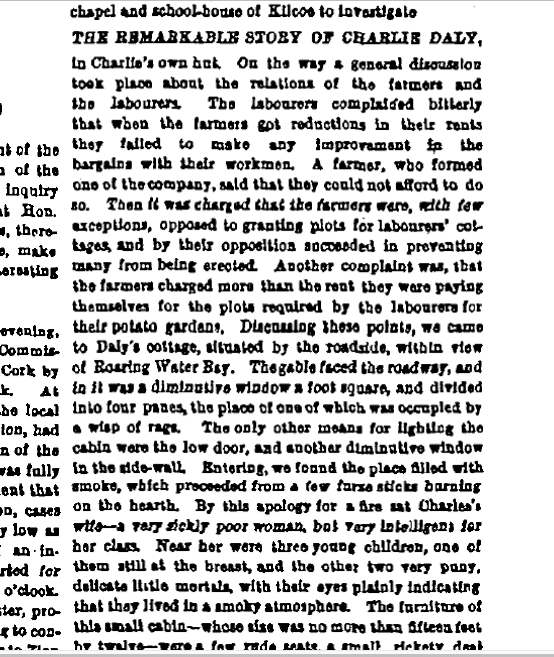
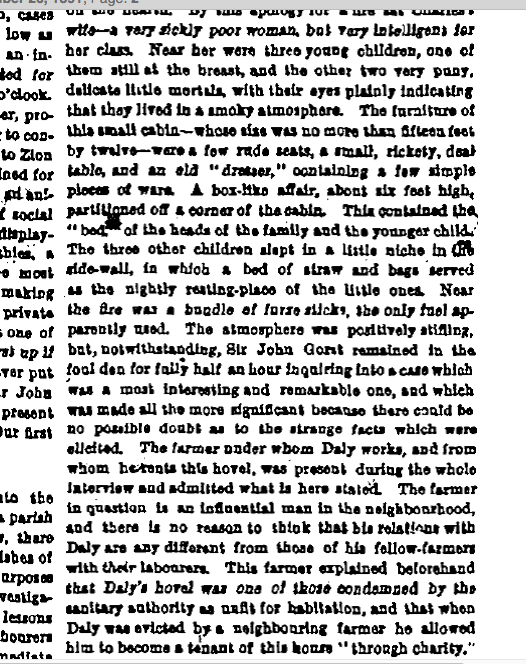
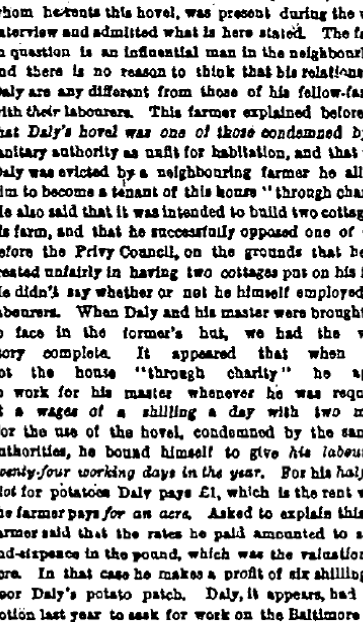
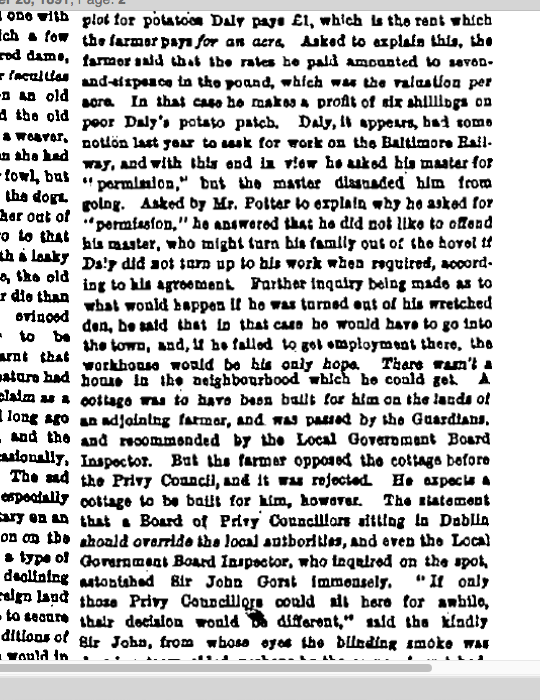
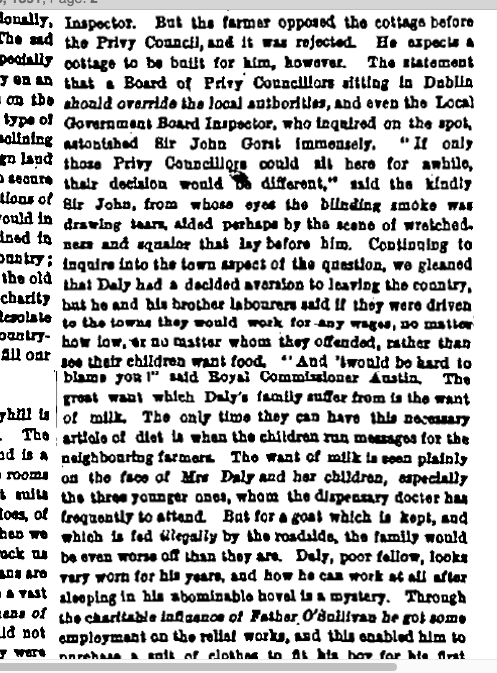
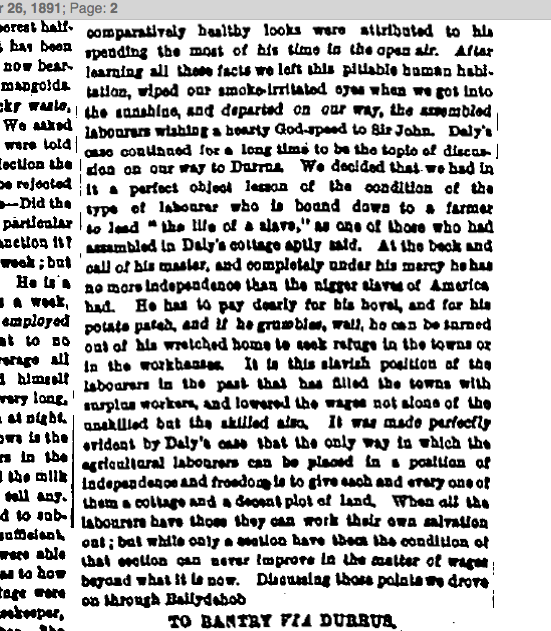
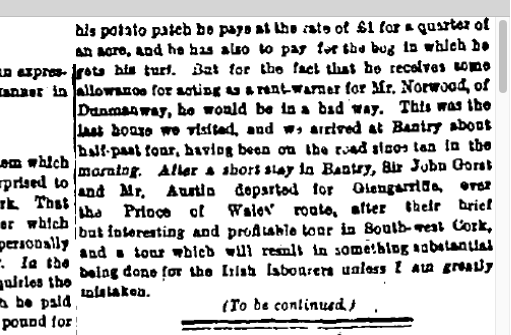
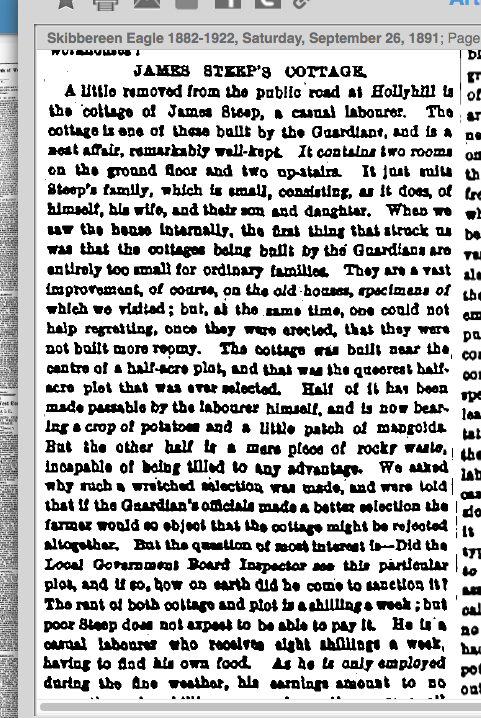
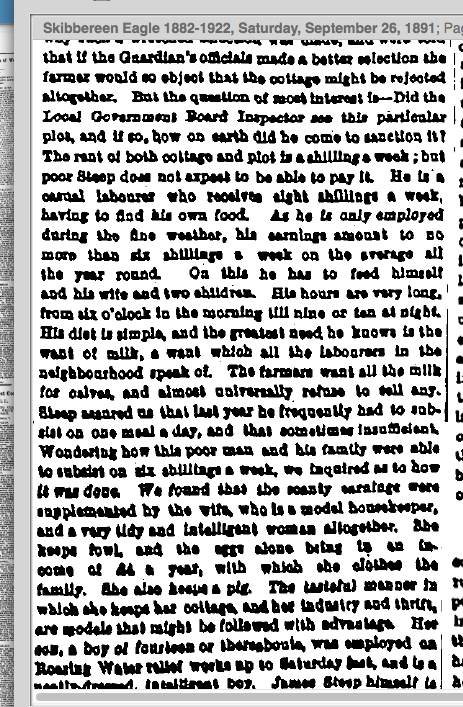
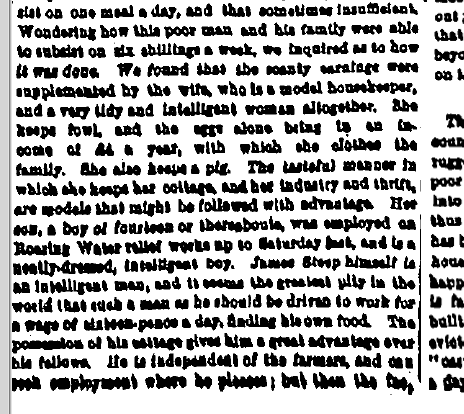
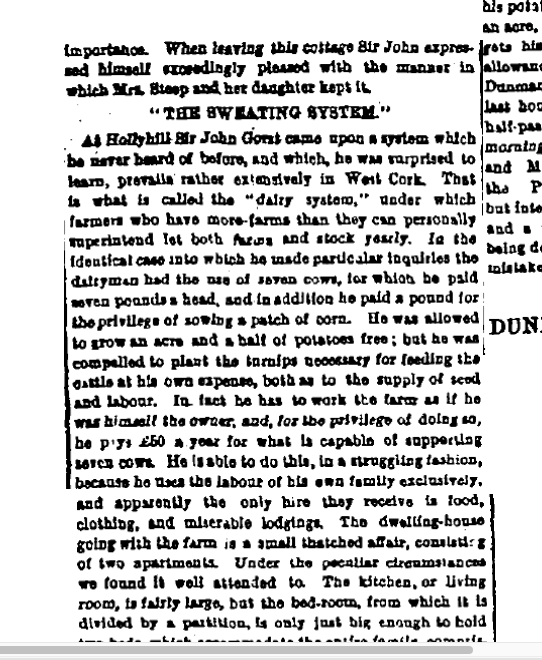
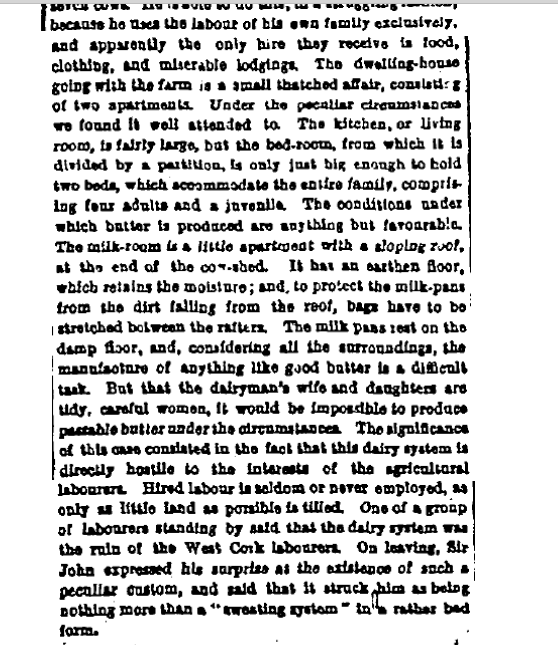
In 1891 Sir John Gorst, Reforming MP, 1891 visited Aughadown and the detailed account in the Southern Star carries description of furze sticks used as fuel:

Comments on use of furze sticks for heating.

.

.

.

,

.

.

.

.
.
.
.

.

.

Generally on Furze from Blog:

welshboy
Gorse/Furze Fuel and feed

Just been reading about the capability of gorse as a fuel or feed for cattle/horses.


Apparently it has half the protein of oats and can be harvested at a two year rotation yielding ” 2000 20lb faggots from an acre” so about 9 tons per acre per year. Cattle and horses love it once processed for them.


Furze can be used as fodder for animals. It was said that an acre of furze could provide enough winter feed for six horses. As a fuel it has a high concentration of oil in its leaves and branches, and so catches fire easily and burns well, giving off a heat almost equal to that of charcoal.


The question is how do you harvest it using modern machines ?
It grows well with us -difficulty keeping it down
http://encyclopedia.jrank.org/FRA_GAE/FURZE_GORSE.html

‘In France,’ to quote Syme and Sowerby, British Botany, 1864, ‘it is used for burning, being cut down every few years, in places where it grows naturally. In Surrey and other counties, it is used largely as fuel, especially by bakers in their ovens and is cultivated for that purpose and cut down every three years. When burned, it yields a quantity of ashes rich in alkali, which are sometimes used for washing, either in the form of a solution or lye, or mixed with clay and made into balls, as a substitute for soap. The ashes form an excellent manure and it is not uncommon where the ground is covered with Furze bushes to burn them down to improve the land and to secure a crop of young shoots, which are readily eaten by cattle. In some parts of England, it is usual to put the Furze bushes into a mill to crush the thorns and then to feed horses and cows with the branches. When finely cut or crushed, sheep will readily eat it.’
welshboy


Just what somebody does
” I tie the branches of gorse in bundles and hang them up for horses. This is an excellent addition to their winter feed and our Welsh Cobs would always leave their hay until they had finished the gorse. It also takes some time for them to eat as they are careful due to the spines; this again is a real advantage in winter and provides them with something to do. They will peel and eat every strip of bark that they can reach

The bundle of peeled sticks (a faggot) which is what you are left with when the horses have finished with it is great firewood.”

The Duchas Account 

The Duchas Irish National Folklore Collection of 1937 provides some fascinating anecdotal  information about Billy written by local schoolchildren. This confirms that he lived in the  house subsequently owned by the Donovans, but that before this he was the school master  in Ardgehane school. This is confirmed by the Commission of Public Instruction in 1835 which  states that the school was “kept by William Perrott under the supervision of the Protestant  clergyman” and that he lived rent-free in the schoolhouse. The Duchas account indicates  that he started from relatively humble beginnings: “When Billy Perrott was teaching in  Ardgehane, all he has was one brake of furze … and one cow. He used [to] have a furze  spade for bruising the furze for the cow.” However, it seems that once he moved to  Abbeymahon and opened his bank then he quickly prospered: “’Twas in the Bank Perrott  made all his money. Jer Manoney used to say that one morning after breakfast he took £9 in  Interest”. At first he conducted his business from the house, but then “he built a small house  (down from his own house) which used to be called the Bank. It had a chimney, and had 3  steps leading to the door, and had shelves on the inside round the walls”. 

https://docs.google.com/document/d/1pD0f_EX_72o_tKK8J0H8UJtHa9YJoK-s7cjISYoZ-BY/edit?tab=t.0

..

Memoirs of James Stanley Vickery, Post 1837, written c 1889 Australia.

There were minor forms of industry which kept the good housewife and her assistants well employed. After killing the fattened cow the rough fat was melted and used in the making of candles, usually by the slow process of dipping. A good washing potash lye was made from the ashes of furze or gorse.

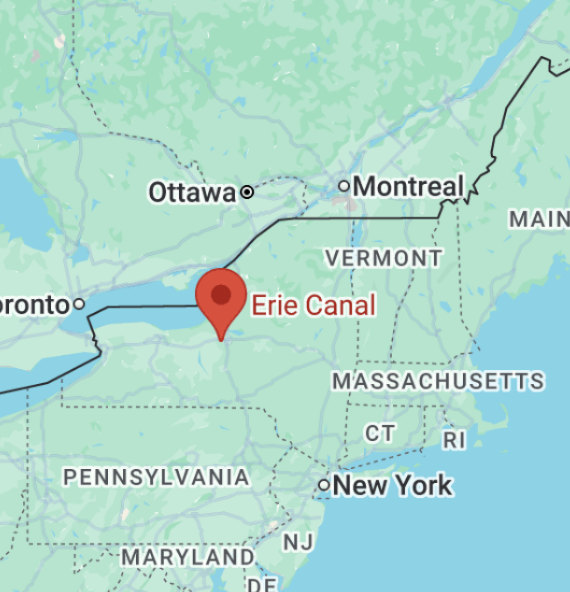
200 Years of the Erie Canal, New York, Quarter of the Workforce Irish.  Rochester NY, Boomtown Attracting Many Poor West Cork Protestants.  The 99 Cousins in Rochester.


https://share.google/sFXRK5WrCO3OWnXSP

200 Years of the Erie Canal, New York, Quarter of the Workforce Irish.  Rochester NY, Boomtown Attracting Many Poor West Cork Protestants.  The 99 Cousins in Rochester.

  • Across the Atlantic and in spite of their protestant outlook, Dukelows who immigrated to America are known to have been instrumental in forming an Irish political group in New York called ’99 cousins’. This group was the subject of a newspaper article in Rochester, New York and identified strongly with the historic Catholic experience, the nationalist political agenda, and possibly the more militant republican agenda.
  • The most compelling piece of evidence comes directly from Richard Dukelow’s grandson, Peter, who scribed some notes on The Committee of Spanish Bondholders letterhead at the beginning of the 1900s. They talk of the Irish Brigade and a peasant called Thomas Parr. The reason for these historical notes is unclear, but suggest an interest in Irish history and the plight of the poor and oppressed. His reference to the Treaty of Limerick and the end of the Irish resistance to William III displays pro-Irish nationalist sympathies. In this regard, he would not have been alone, Irish poet W B Yeats was protestant and also a member of the Irish Republican Brotherhood, a secret oath-bound military organization devoted to achieving an 
  • Dukelow Name, Durrus, Co. Cork
  • Emigration from West Cork, Rochester, NY,  The Croston’s of Bradford and Haverhill Massachusetts 
  • Emigration from West Cork, Rochester, NY, The Croston’s of Bradford and Haverhill Massachusetts Nov 2015
  • West Cork Families, in Rochester New York from St Luke and St. Simon Cyrene, Episcopal  Church Register 1844 and 1850 census and other sources

West Cork Families, in Rochester New York from St Luke and St. Simon Cyrene, Episcopal Church Register 1844 and 1850 census and other sources

Rochester, Williamson, Croston 

Rochester, Williamson, Croston etc

The Gosnells of West Cork

The Gosnells of West Cork

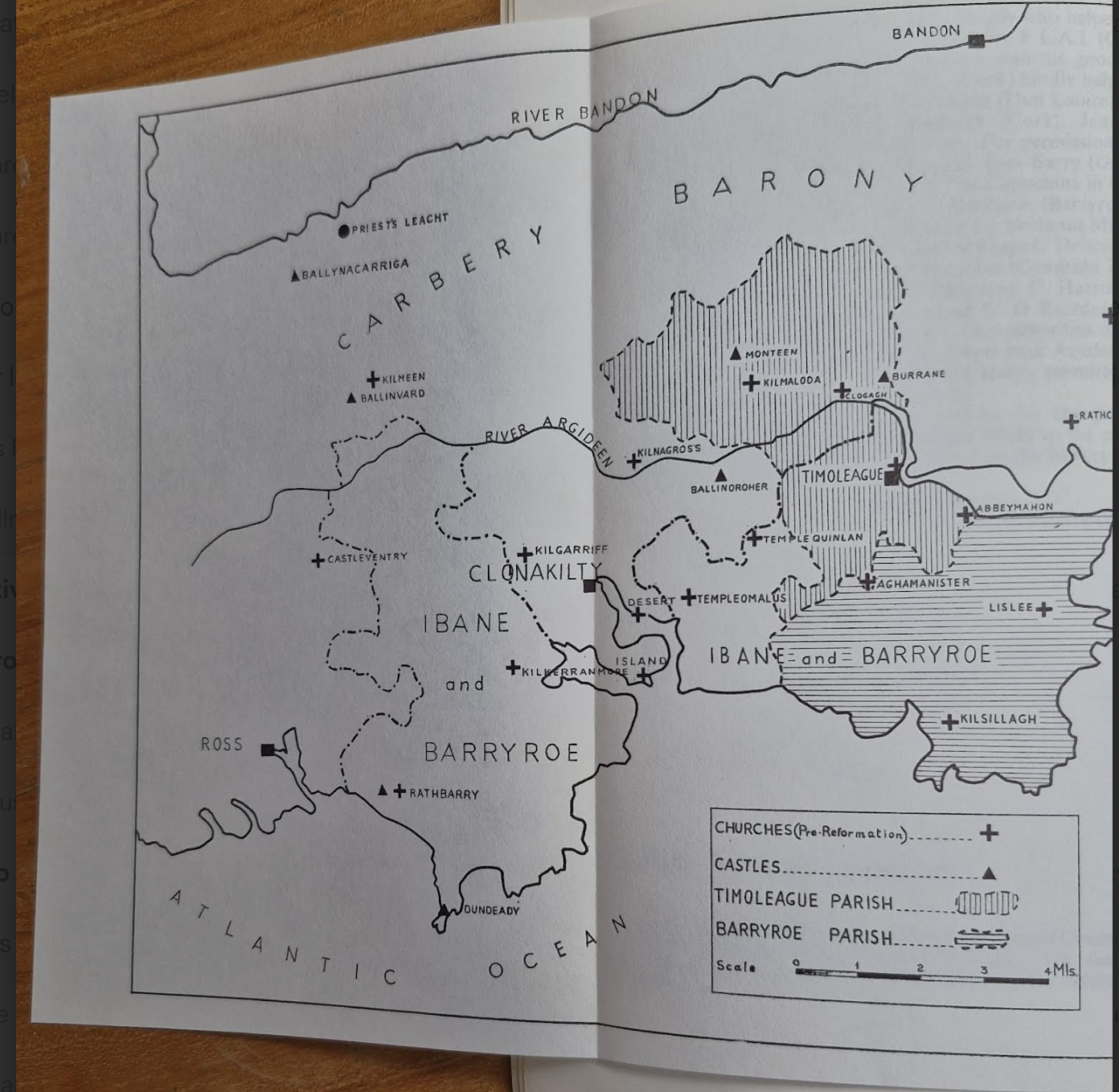
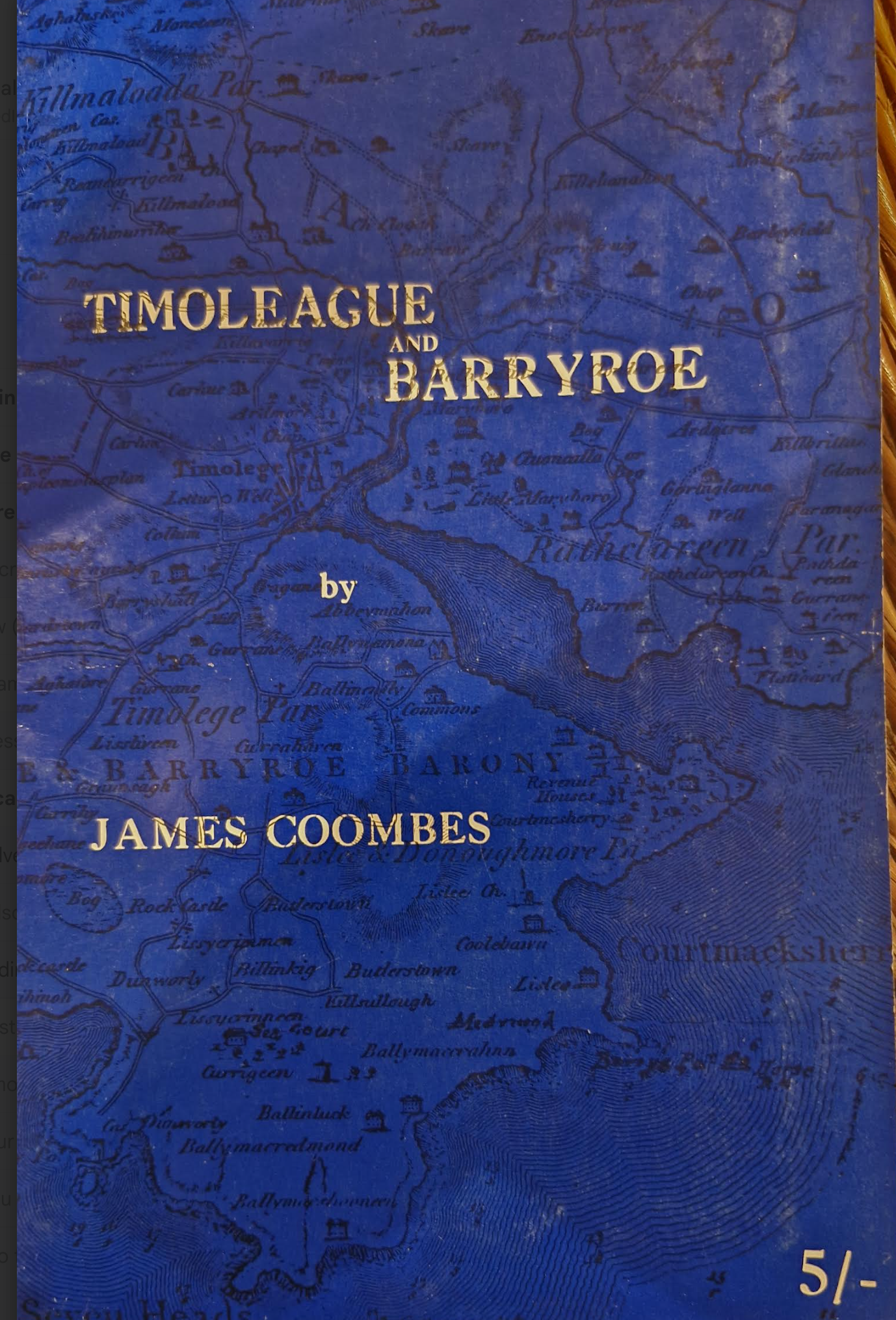
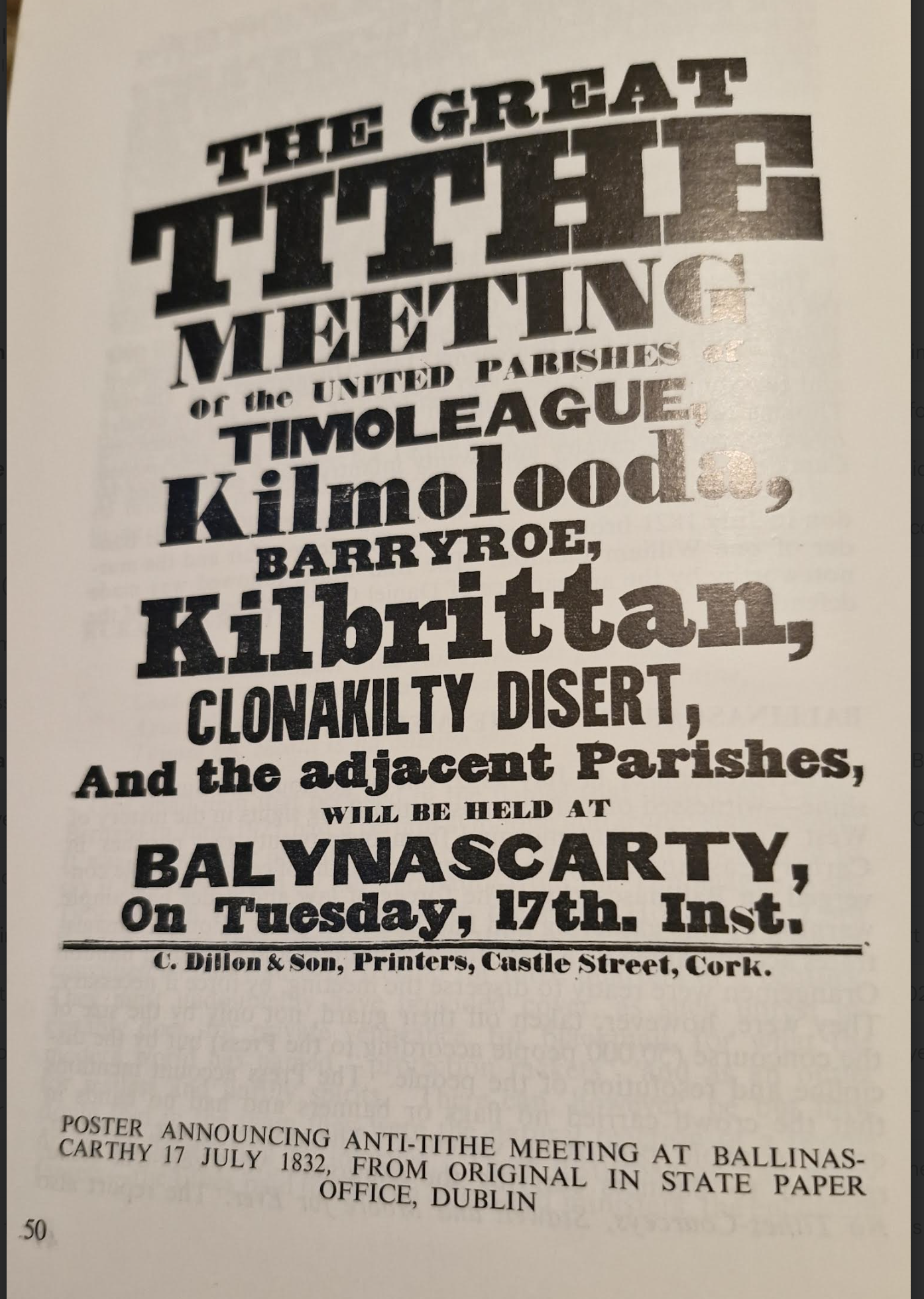
1832 GREAT TITHE MEETING OF THE UNITED PARISHES OF TIMOLEAGUE, KILMALODA, BARRYROE, KILBRITTAN, CLONAKILTY, DISIRT AND THE ADJACENT PARISHES IN BALLYNASCARTY.

Tags

, , ,


.

I969 History

1832 GREAT TITHE MEETING OF THE UNITED PARISHES OF TIMOLEAGUE, KILMALODA, BARRYROE, KILBRITTAN, CLONAKILTY, DISIRT AND THE ADJACENT PARISHES IN BALLYNASCARTY

Tithes, West Cork

https://docs.google.com/document/d/1-NCOWVhITnsanxfjQepzCtRswcV77QZATGCxxPTKkCk/edit?tab=t.0

Historical p. 3

Warning Notice posted in Drimoleague 1832, p. 50

Tithe Composition Act p. 52

1842 Skibbereen Sessions, p. 92

CUTTLE        Francis        Tythe Farmer        Dunmanway, Co Cork , p. 97

Early Mass Disobedience Tithes by West Cork Parish 1824-1834

https://docs.google.com/spreadsheets/d/1xeEzDVPPpkzz67QxfbrBpUSlVKXJoAwZ0PRy4Y_EVL0/edit?gid=0#gid=0

The Tithes in the 1820s: ‘The year’s tithe due to Mr. Alcock, the Rector Durrus, was nearly collected in one day. The summary collection was effected by the police who act as drivers. In the case referred to the determination to to obtain ‘Tithe Distress’ was so great that I have been informed that the house where the parish priest the Revered Quin was saying Mass was forcibly entered and a bed the only item of value would have been taken but for the suggestion of some Protestant who objected to that mode of insult to a Clergyman. The men from Muintervara (Durrus/Kilcrohane) who have the distinguished honour of being the first Western district to have given the death blow to the Tithe system, proceeded under the conduct of Richard O’Donovan Esq of Tullagh and Timmy O’Donovan Esq at Monster Meeting Mount Gabriel 1832

Tithe Applotments, Kilcrohane Parish

https://docs.google.com/spreadsheets/d/1qM-kVPkWSKtX3XKEQAoz3rwXUAVQS4PbqDA6p2oFl1w/edit?gid=0#gid=0

Rev. Edward Herbert Kenny, Rector of Kilmeen, Widely Praised for Work on Road and Bridges enabling Sea Sand to be used as Fertilizer in Interior of West Cork. 1832 calls in Gunboat to Clonakilty, 69th Regiment and Police in Attempt to Collect his tithes at Kilmeen and Ballygurteen. Magistrate: Rev. Edward Herbert Kenny, 1799, died 1842.  Freeman of Kinsale 1797. Subscriber, at Moviddy, James Mullalla, Review of Irish Affairs 1688-1795. Major figure in road building praised by Horatio Townsend for road work enabling sea sand to go through Kilmeen to interior. Present at enquiry Skibbereen 1823 into enquiry into fatal affray at Castlehaven caused by Rev. Morritt’s tithe extraction. 1822 received £50 for distress in Kilmeen from Lord Lieutenant.  1830 subscriber Robert O’Callaghan Newenham ‘Views of the Antiquities of Ireland’. 1833 tithes.  1831, Ballineen 1835, 1835 Son of Rev. Dr. John Kenny, rector of Kilbrogan which he spent £3. 104 on,  his father had married sister of Emmett Archbishop of Tuam. Family based in Bandon area. Subscriber at Kilmeen Glebe where he was rector for 43 years. Lewis Topographical Dictionary of Ireland  1837. Rector of Durrus for 6 years. Edward Herbert Kenney 1793-1799, a Justice of the Peace 28th May 1799.  He was later Rector Rosscarbery and his work in organising relief work (in the famine of 1822) and paying the workers in money or meal was praised by the Parish Priest for his ‘meritorious conduct’.  Family buried at Ballymartle.   County Freeman Kilmeen of Cork City voting in Cork City Election 1837.

Rev. Edward Herbert Kenny, Rector of Kilmeen, Widely Praised for Work on Road and Bridges enabling Sea Sand to be used as Fertilizer in Interior of West Cork. 1832 calls in Gunboat to Clonakilty, 69th Regiment and Police in Attempt to Collect his tithes at Kilmeen and Ballygurteen.

It is difficult to reconcile his altruism and industry wiht his tithe collecting attempts. Reading the Chief Secretary Papers the military and Dublin Castle Authorities wee thoroughly sick of him and his high handed antics.

Kilmeen Herbert Gillman, Edward O’Brien.  Rev. Edward Herbert Kenny £750 entirely to Rev. Edward Herbert Kenny.  Special Vestry chaired by Robert Sealy, William Buttomere (Buttimer), John Bateman, John Collins approved no variation for 21 years rector assented. 1833 For 7 years ending 1821 barrel of wheat £1 18 shillings 8 and a half pence grown in said country

Chief Secretary Papers:

http://www.csorp.nationalarchives.ie/search/index.php?simpleSearchSbm=true&category=27&searchDescTxt=kilmeen&simpleSearchSbm=Search#searchfocus

Chief Secretary Papers:

CSO/RP/1832/5791. Letters from EH Kenny, Rector of Kilmeen and magistrate, Clonakilty, [County Cork], to Edward Smith Stanley, [Chief Secretary], stating that his bailiff was assaulted while attempting to distrain livestock in lieu of tithe arrears in his parish and that a party of police was stoned while attempting to restore order; seeking the stationing of a military force in the parish and suggesting that the military commanders be appointed to the commission of the peace.

Also letter from Daniel Conner and NS Shuldham, magistrates, to Stanley, reporting on the incident. CSO/RP/1832/6119. Letter from the [Maj Gen Edward Blakeney, Commander in Chief], Major General Commanding, Royal Hospital, [Dublin], to Sir William Gosset, [Under Secretary], forwarding a report [not extant] from Col Wilson, commanding the 65th Reserve concerning the enforcement of tithes at Kilmeen, [possibly County Cork]. CSO/RP/1832/5562.

File containing police reports of a serious attack on the police and military while attempting to assist Rev Edward H Kenny with the enforcement of his tithes at [Ballingurteen, County Cork] CSO/RP/1832/6335.

Letter from [Arthur Chichester, 1st Baron] Templemore, Military Secretary, Royal Hospital, Dublin, to Sir William Gosset, [Under Secretary], referring to military reports from Maj Gen James Douglas and Capt Patience, 65th Reserve at Clonakilty, [County Cork], concerning an unnecessary request made to Capt Patience by Rev EW Kenny, magistrate. Also copy of letter from Gosset, Dublin Castle, to Kenny, Kilmeen, Clonakilty, informing him that the troops should not have been required to march 18 miles on unnecessary business.

1822, The Troubles of a Struggling Farmer, Mud Cabin, Heavy Taxes, Tithes, Cess, and Rack Rents, Wintry Wind, by Poet Mícheál Óg Ó Longáin (1766-1837), Caheragh,  (lived later Glanmire), Co. Cork.

Life

1766–1837),poet and scribe; born to the Ó Longáin learned family in Carrignavar, Co. Cork.
1766-1837; b. Carrignavar, Co. Cork; son of Mícheál mac Peadair; orphaned young, his parents dying in 1770 and 1774; employed as cowherd; returned to education, 1784; assisted United Irishmen, 1797-98; wrote for Whiteboys, 1785; ‘Buachaillí Loch Garman [Boys of Wexford]’, 1798; m. 1800; worked as scribe, labourer, and teacher in Co. Cork; settled in north Kerry and East Limerick, 1802-07; wrote on poverty and oppression; employed as a teacher and scribe by Rev. John Murphy, Bishop of Cork, 1814; copied manuscripts, 1817-1820; sons Peadar and Pól, and Seosamh, also became scribes; died. on his son Pól’s 11-acre holding in eleven acres in Knockboy in Carrignavar.

top ]

Criticism
Breandán Ó Conchúir, Scríobhaithe Chorcaí 1700-1850 (1982)

It is likely that poet JJ Callanan sent quite a while in Caheragh through Bantry Doctor Dr. Thomas Burke in the 1810s who had associations in the area.

The Ó Longáin Family

… http://blogs.ucc.ie/wordpress/theriverside/2015/09/09/o-longain-family/

From the 18th century to the late 19th century the surname ‘Ó Longáin’ was synonymous with ‘scribes.’  Working as a scribe meant copying stories, poetry, histories and religious texts from manuscripts and printed works for patrons. Working as a scribe also involved translating texts from Irish to English.  Frequently their patrons were from Cork merchant families, were Cork scholars themselves such as John Windele or from Cork clergy such as Bishop John Murphy. Working as a scribe had previously been a position of privilege but as the Gaelic order disintegrated following the Flight of the Earls in 1607, scribes found their living situation growing perilous and frequently lived in poverty. Micheál mac Peattair, his son Micheál Óg and his grandson Peadar were based in Carrignavar, Cork. Grandsons Pól and Seosamh were primarily based in Dublin. Seosamh transcribed manuscript facsimiles for publication on behalf of the Royal Irish Academy. The Ó Longáin preserved a tradition and ensured access to countless texts through their scribing endeavours.

https://langangeorge.wordpress.com/

Caheragh Poets:

https://wordpress.com/post/durrushistory.com/19786

Courtesy Father Patrick Hickey, Famine in west Cork.

Fuacht na scailpe-se, deathach is gaoth gheimhridh,

Cruas na leapsa-sa’s easpa braith lae’s oíche,

Muarcuid teascnna, deachmaithe’s glaoch cíosa,

Tug buartha cáthach mé, easpaitheach éagaoinaointeach.

The cold of the mud cabin, smoke adn wintry wind,

The hardness of this bed and the lack of a mantle day or night,

Heavy taxes, tithes, and rack-rent demands,

Have made me troubled, in want, and lamenting.

1828.  Petition of Parishioners of the Parish of Caheragh, County Cork, requesting aid be provided to build a parish church.  Reverend John Webb, only visits the parish once a year ‘for the purpose of Collecting his tithes’  Numbers of their community have ‘turned to mass and several have been buried without received Protestant burial’ rites.

Burials in Caheragh Parish:

https://docs.google.com/spreadsheets/d/1uiqhY6JSrv5FvdNN_x1Qs2EzisApZ4pcvkOwNOCyAT8/edit#gid=0

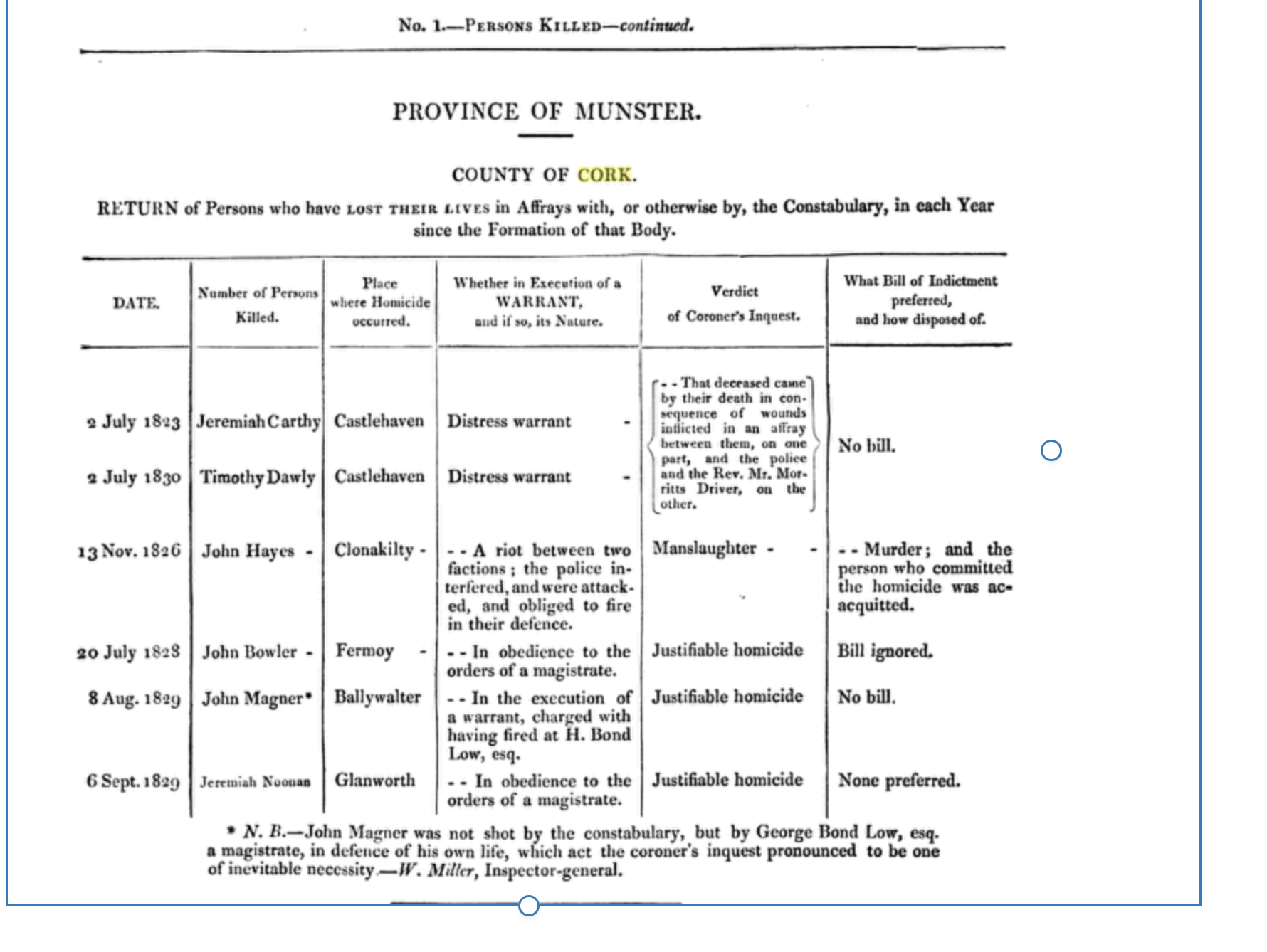
1826. Death in Faction Fight, Clonakilty and Deaths Arising From Rev Morritt’s Extraction of  tithes at Castlehaven, West Cork.

1823. Inquest into Affray Occasioned by the Rev. Robert Morritt, Rector of Creagh and Castlehaven, Notorious Extraction of Tithes, Caused at Castlehaven, West Cork, at which Fatalities Occurred, Stones Placed into Mouths of Killed Policemen, Press Excluded from Publishing Preliminary Investigation on Morritt’s Motion.

https://durrushistory.com/2016/05/06/1823-rev-robert-morritt-rector-of-creagh-and-castlehaven-west-cork-notorious-extr

1826. Death in Faction Fight, Clonakilty and Deaths Arising From Rev Morritt’s Extraction of  tithes at Castlehaven, West Cork.

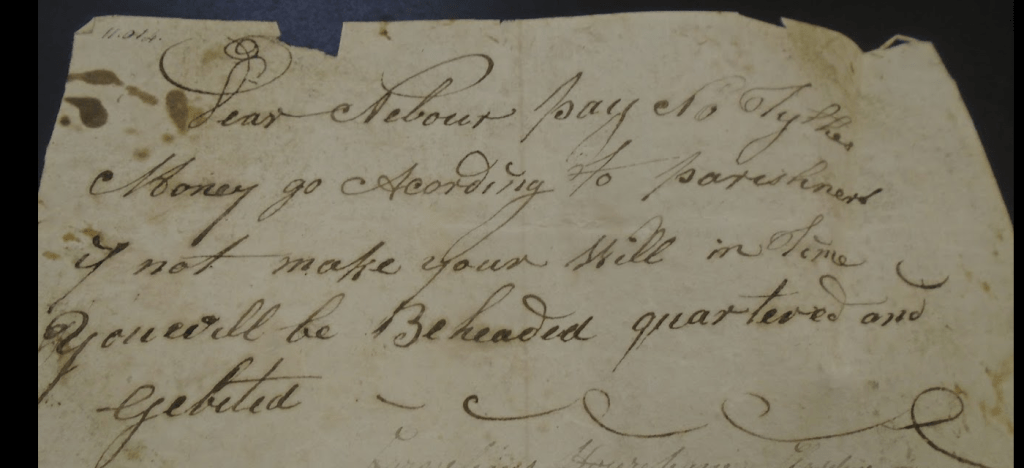
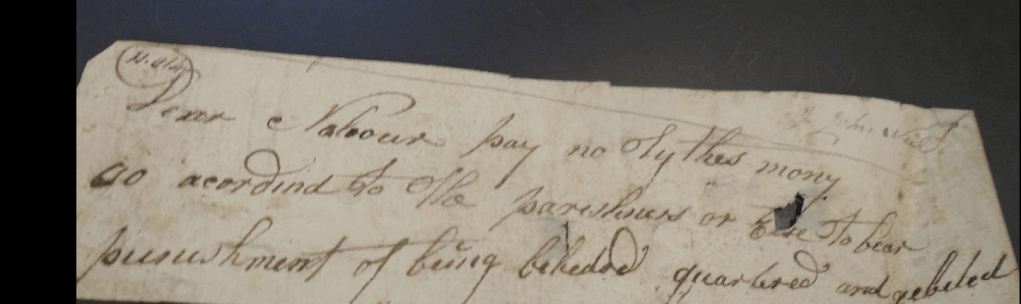
CSO/RP/1832/4660. Letter from A O’Driscoll, Shepperton, [County Cork], to Maj William Miller, [Inspector General], forwarding threatening and anti tithe notices [extant] posted in Drimoleague [Dromdaleague] and reporting on outrages in his area and recommending the strengthening of the military in the area

1832, Drimoleague, Anti Tithe Notice Posted ‘Dear Nebour Pay No Tythe Money Go According to Pereshners if Not Make Your Will or You be Beheaded Quartered and Gelded’

Captain Alexander O’Driscoll, 1827, Clover Hill, Superseded 1810-30, Restored 1843. Norton Cottage, Skibbereen (two of the same name at time), Ancestor Alexander married daughter of McFineen Dubh O’Sullivan, son of Tim ‘The Gauger’, sister Mrs Freke of Baltimore Castle.  1820 signed Memorial for new road Glengariff to Castletownbere.  Married to the daughter of Thomas Attridge, Ballydehob. Correspondence with Chief Secretary appealing dismissal of 1820.  Bridge at Bawnlahan 1820. 1822 subscriber as Clover Hill, Church Building Fund Durrus, he held tithes in Kilcrohane with Rector and Rev. Alleyn Evanson. Present at enquiry Skibbereen 1823 into enquiry into fatal affray at Castlehaven caused by Rev. Morritt’s tithe extraction. Grand Jury Presentments attending 12 from 1838-1840 at Norton Cottage.  Probably engaged with his crew in marine salvage of Clio out of Crookhaven 1825. 1826 City election voted O’Callaghan conservative. Voted 1835 election as out of town Freeman address Shepperton. Public support for him on dismissal 1835 by fellow Magistrates Lord Bantry, Simon White, John Puxley, Samuel Townsend Senior, Samuel Townsend Junior, Hugh Lawton, Thomas Somerville, Rev. Alleyn Evanson, Richard Townsend Senior.   Enquiry attended in Bandon 1841 into suspension arising from conduct with Stipendiary Magistrate J. Gore Jones and Sub-Inspector Andrew Creagh  attended Earl of Bandon, Lord Viscount Bernard, on. H. White Hedges, Macroom Castle, Henry Bernard, Castle Barnard, Abraham Morris Dunkettle, Captain Henry Wallis, Drishane Castle, Lieutenant Colonel St. John Clerke, Overton House, William Cooke Wallis Junior, Castlecook, Mathias Hendley, Mountrivers, Henry Leader, Mount Leader, George Browne, Coolcower, St. Ledger Aldworth, Newmarket, Charles Evanson, Carlemont, Cork, Sir Thomas Deane, Thomas Hungerford, The Island, Nicholas Dunscomb, Mount Desert, Richard Henry Hedges Becher, Hollybrook, Skibbereen, John Isaac Heard, Kinsale, John Wheeler, Junior, James Gillman, Retreat, MD, Clonakilty, Thomas Herrick, Coolkerry, Captain R.A. Rogers, Petersfield, Michael Gallway, Gurtnagreena, John Nason, G. Nagle, Ballinamona Castle, Samuel Wallis Goold Adams, Jamesbrook, Jeremiah E. McCarthy, Rathduane, William F. Austen, Greenshela, Thomas R. Sarsfield, Ducloyne, Arthur Pery Aylmer, Castlefreke, Thomas Cuthbert Kearney, Garretstown, Joseph Haynes, Maryland House, Charles Connell, Cloverhill, John Barter, Cooldaniel, Francis G. Woodley, Leeds, Lawrence Corban, Maryville, E. Millett, MD, Cove.  1841 supported Conservative Longfield Longueville, Mallow even though Catholic hosted meeting attending John Ross, Rossford, Thomas Morris, Mahonagh, Thomas Wood, Dereeny, Listed 1838, dead….. with address Mount Music/Bunaulin, Caheragh when daughter Kate married Herbert Baldwin Esq., 1845. 1835 Subscriber at Gortnascrena, Skibbereen, Lewis Topographical Dictionary of Ireland 1837. Suspended for a period as J.P. reinstated after altered by a sitting of over 70 Magistrates in Bandon from both political sides. 1828 Bandon Quarter Sessions. His lands managed by Bird. Member Provisional Committee projected Bandon to Bantry Railway 1845, address Norton Cottage.   Believed to have been committed to a debtors prison in Cork by his wine merchant where he died. Norton Cottage was lived in once by Dr. O’Donovan, J.P., and bought 1925 by Jasper Woulfe, Solicitor, Crown Prosecutor and TD,