26 Thursday Jun 2025
Posted in Uncategorized
26 Thursday Jun 2025
Posted in Uncategorized
16 Monday Jun 2025
Posted in Uncategorized
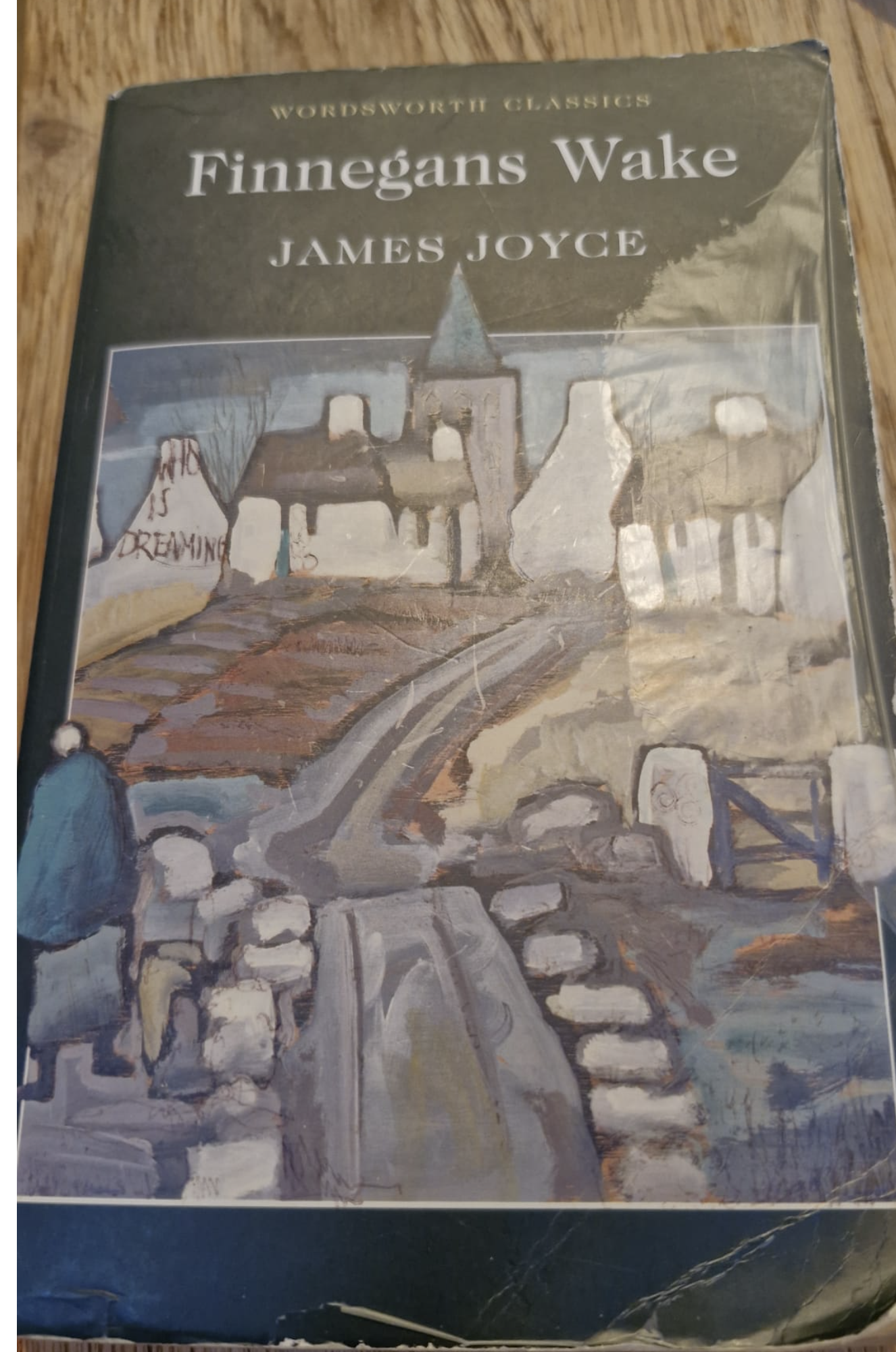
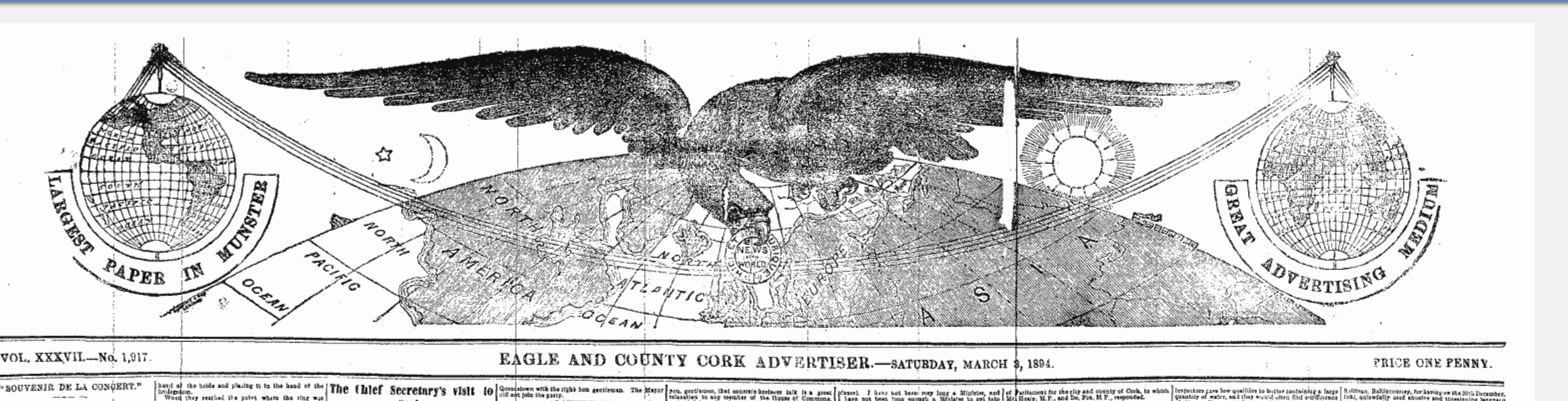
593.5: “Have sea east to Osseania:” HCE to Oceania! On the one hand, Oceania, the eastern sea, being about as distant as possible from Ireland, supports the claim to world-wide coverage. On the other hand, Ireland (the land of Ossian) represents the opposite. Contraries converging, or maybe just plain overweening provincialism: The Skibbereen Eagle once warned the Czar of Russia that it had its eyes on him. Compare Stephen’s sardonic “(European and Asiatic papers please copy” (P 251).
https://johngordonfinnegan.weebly.com/book-iv
Brendan Kilty Joycean scholar and the man who restored the house on Ushers Island, Dublin, the setting for the dea
From the ~Skibbereen Eagle

EXACTLY 125 years ago this year, in September 1898, The Skibbereen Eagle instilled fear into the Russian Tsar, a butterfly effect not replicated until the West Cork fishermen saw off the Russian navy last year.
AD
The eye of The Skibbereen Eagle focused on the Tsar’s success in securing an ice-free warm-water base for the Russian Navy on China’s Yellow Sea.
Share
00:30
00:00
But only two weeks earlier, in something akin to modern day political sports-washing, Tsar Nicolas II sent an unexpected invitation to every government accredited to his Imperial Court.
The Tsar’s rescript invited these governments to a conference ‘to occupy themselves with the grave problem of excessive armaments.’
In truth it disclosed his military vulnerability dressed up as his pursuit of world peace.
The Tsar told the world that he was keen to ensure to all people ‘the benefits of a real and durable peace, and above all of putting an end to the progressive development of the present armaments.’
With his Chinese warm water naval port now secured, Tsar Nicholas II set out to achieve this worthy ambition ‘by means of international discussion’ at his peace conference.
And it met with great success, for within only a few months the Tsar’s peace conference created the Permanent Court of Arbitration where the arbitration and peaceable resolution of (some) disputes between nations continues down to this day.
The peace conference also developed ‘Rules of War’ for the treatment of prisoners of war. It even banned, for the next five years at least, the discharge of projectiles and deleterious gases from balloons.
Under Bismarck, the plethora of small German states had coalesced as the increasingly powerful German Empire, with the dynamo of its Prussian siege engine massed on its border with Russia.
AD
Acutely conscious that his guns could never match those of his neighbour, Tsar Nicholas II set out to prioritise peace over his inevitable defeat.
Andrew Carnegie, the philanthropist who built 80 libraries across Ireland also funded the construction of the Tsar’s dream home for the Permanent Court of Arbitration at the Peace Palace in The Hague, Netherlands.
The list of signatories to this Peace Convention today reads as an eerie who’s who of hubris and history – powerful people whose memory is neither remembered nor honoured.
It included the Prince of Montenegro and the Prince of Bulgaria and the long-forgotten Kings of Bohemia, Hungary, the Hellenes, Italy, Portugal, Serbia and Siam.
Imperial majesties, such as the Shah of Persia and Her Majesty the Queen of the United Kingdom of Great Britain and Ireland, Empress of India also signed, as did the Emperors of Of course, the ‘Emperor of all the Russias’ also signed up.
In the same month as the Tsar’s call to action in 1898, the son of a Corkman – claiming a connection to Daniel O’Connell – enrolled at Cardinal Newman’s University on St Stephen’s Green in Dublin from where he graduated in 1902. While it seems to scholars that young James Joyce was possessed of a stunning awareness and broad knowledge, much of his texts are derived from or informed by the newspapers of his time.
For the impecunious Joyce, local, national and international newspapers were readily and freely available to read in public libraries.
Today, these same public libraries act as ‘warm banks’ – places to visit to stay warm in the face of impossible domestic energy bills caused by Russia’s invasion of Ukraine.

But Joyce was not the only one reading English language newspapers.
They were being read in Moscow and St Petersburg as well.
We know this from the Tsar’s father, Nicholas I, who boasted during the Crimean War (1853-1856) that he had no need of spies.
He was learning everything he needed to know by reading Dubliner William Howard Russell’s account of the Crimean War published by the Times of London and read by embassies everywhere.
Joyce was nothing if not up-to-date when he weaved the Tsar’s Rescript and notions of world peace and international arbitration into Stephen Dedalus’ conversations with his fellow students at Newman House on St Stephen’s Green where they gathered around the Tsar’s portrait collecting signatures.
They were preparing to send the Tsar a testimonial of gratitude for his pursuit of world peace and the arbitration of disputes among nations. They had every reason to believe that a Tsar name-checked by The Skibbereen Eagle would read the praise of their Testimonial.
Joyce was clearly impacted by the Tsar’s Rescript and The Skibbereen Eagle as he threads the debate about world peace and international arbitration from Stephen Hero, begun in 1903 just after his graduation, to Portrait of the Artist as a Young Man published before World War I and again, after the horrors of that war, to Ulysses, published in 1922.
Clearly, the watchful eye of The Skibbereen Eagle had spawned an imitator in Joyce and a reader in the Tsar.
Perhaps, it is time now for The Skibbereen Eagle to re-send its impactful historic note to the current Tsar.
National and international papers, please copy!

• Brendan Kilty SC is a senior counsel, arbitrator and Joycean.
His human rights book ‘101 Reasons Not to Execute Someone’ is due to be released in 2023.
Dick Adams:
B 1843-1908 Richard (Dick) Adams Journalist, Barrister Inns 1873, Judge County Court Limerick 1892, Down Born Castletownbere, eldest son Brian Port Surveyor, Customs and Excise mother Frances (Fanny) O’Donovan sister of Doctor O’Donovan, Skibbereen. First cousin of Skibbereen O’Donovan family, Doctor Daniel adn his 2 Doctor sons, they are of ‘Isladn’ branch and once owned town of Ross. 1880 Munster Bar, 20 Mountjoy Square, Dublin. Born Castletownbere, eldest son Brian Port Surveyor, Customs and Excise mother Frances (Fanny) O’Donovan sister of Doctor O’Donovan, Skibbereen. First cousin of Skibbereen O’Donovan family, Doctor Daniel Famine Doctor his 2 Doctor sons, they are of ‘Island’ branch and once owned the town of Ross. 1880 Munster Bar, 20 Mountjoy Square, Dublin. “Journalist Cork and Freemans Journal, Defended James Fitzharris in Phoenix Park Murders, noted wit. From James Joyce ‘Ulysses’, ‘Dick Adams (Castletownbere born), the besthearted bloody Corkman the Lord ever put the breath of life in’ Journalist, Barrister, Defender of Parnell, Later County Court Judge Limerick
Ulysses: 7.679-80″ Buried St. Marys, Kensal Rise, London “Courtesy Ruth Cannon: from the Cork Examiner, 6 April 1908, this loving tribute to one of the Irish Bar’s most famous humorists, Limerick County Court Judge Richard Adams (b-l). Adams got much mileage out of his resemblance to King Edward VII (b-r), who he alleged once messaged him in the spa resort of Homburg requesting they dress differently to avoid confusion.
“Those who knew the late Judge Adams well will find it hardest to believe that he is dead. For with his personality, they associate all that was brightest and most vivifying in life.
That said, the future judge does not appear to have greatly distinguished himself in his early days. His first professional calling was that of a bank clerk in the National Bank in Cork. He was entrusted with the duty of opening letters containing bank notes in separate halves, a favourite way of sending money in those days, and then gumming the two halves together. But his lack of acumen for bank business was such that he frequently gummed the wrong halves together – a terrible misadventure in any well-organized bank.
Having regard to this, and a general unsuitability for bank life, Richard Adams decided that he had mistaken his vocation. Accordingly, he subsequently got called to the Bar in Hilary term of 1873. In actions for breach of promise of marriage his services were particularly sought, and it was one of the treats of the Four Courts to hear a speech on that congenial topic from one who was a master of humorous exposition. His admission to the Inner Bar was soon followed by his elevation to the Bench as County Court Judge of Limerick.
While not a profound lawyer, he did not himself at all mind jesting on the subject of his legal knowledge, and would tell how once he came into one of the Dublin Courts after the luncheon interval and heard a well-known solicitor proclaiming from the solicitors’ table to a cluster of minor lights ‘Adams! Oh, he has a fine nisi prius prescendi, but he knows absolutely no law,’ whereupon Adams himself put his genial countenance over the side barrier and said, ‘Look here, that’s slander of me in my business trade and profession, and it is actionable without proof of special damage, so look out for a writ.’ This was of course said with glorious good humour.
Judge Adams loved to go to health resorts on the continent. These sojourns were rendered doubly enjoyable by reason of his resemblance to the present King. ‘When in Homburg,’ he said, ‘the King’s Equerry came up to me and said ‘Mr. Adams, the King commands me to ask you as a personal favour not to be going about in a tall hat and frock coat. It is very embarrassing for his Majesty to be so often whacked on the back, and to be shouted at by gentlemen in Dublin accents, ‘Hello Dick, old man, how are all the boys in Dublin…’’
More stories about Judge Adams here:
14 Saturday Jun 2025
Posted in Uncategorized
,Click here:
https://docs.google.com/document/d/1N5_IroPG-qS26s09XRXoSHlRN1IodY0fR34MSm6CHis/edit?tab=t.0
1882 Aftermath of Bantry District Evictions
West Cork Eagle, P. 2
Marquess of Waterford presumably in the British House of Lords Prevention of Crime (Ireland) Act. p. 6
Landlord and Magistrate Robert Hedges Eyre White, p. 8
Bantry White Estate, p. 9
Richard White, p. 9
The eviction related prosecution were dealt with by the Resident Magistrate under the Prevention of Crime Act 1847, Edward Bayly Warburton (1823-1888), p. 9
Other local Magistrates sitting
John Edward Barrett, p. 10
William Symms Bird, p. 13
John Warren Payne Shears or John Warren Payne, p. 13
Solicitors for Defendants
John G. McCarthy, p. 15
Joseph J. Healy, p. 15
By 1910 all was changed changed utterly
Re the transfer of Land, the Irish Land commission transferred nearly 14.5 million acres from the Landed Estates to the tenant almost 70% of the landmass of the Island of Ireland.
By my reckoning this was probably the largest voluntary land transfer in world history. It was motivated by the concept of killing Home Rule by Kindness.
From around 1895 if the Estate was willing to sell the Land Commission offered market value with a premium of 25% for selling on a voluntary basis. By that time most estates were distressed and they were only too willing to sell.
06 Friday Jun 2025
Posted in Uncategorized

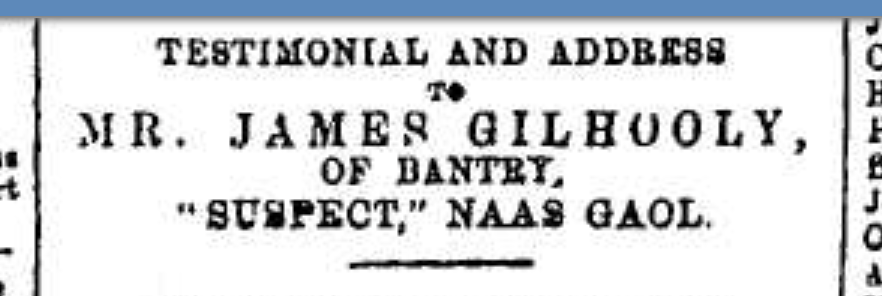
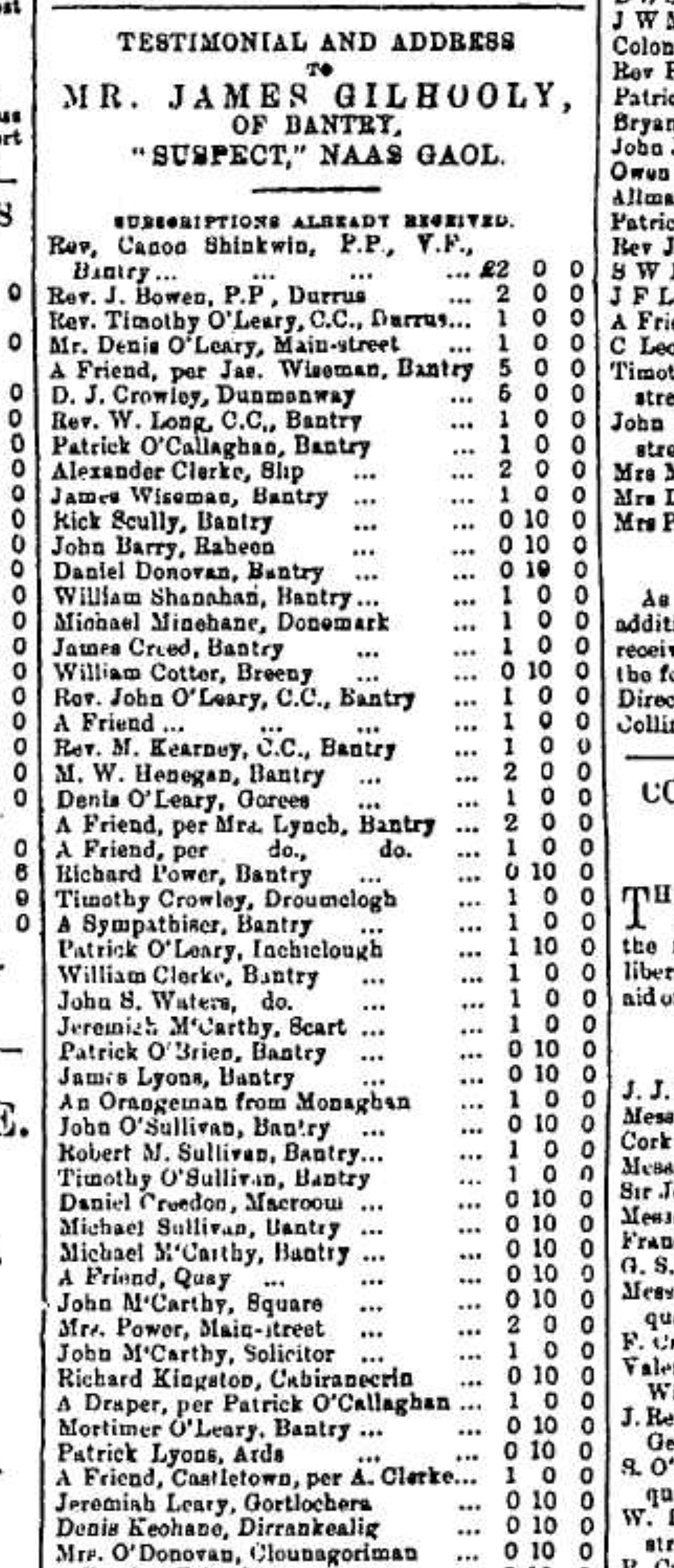
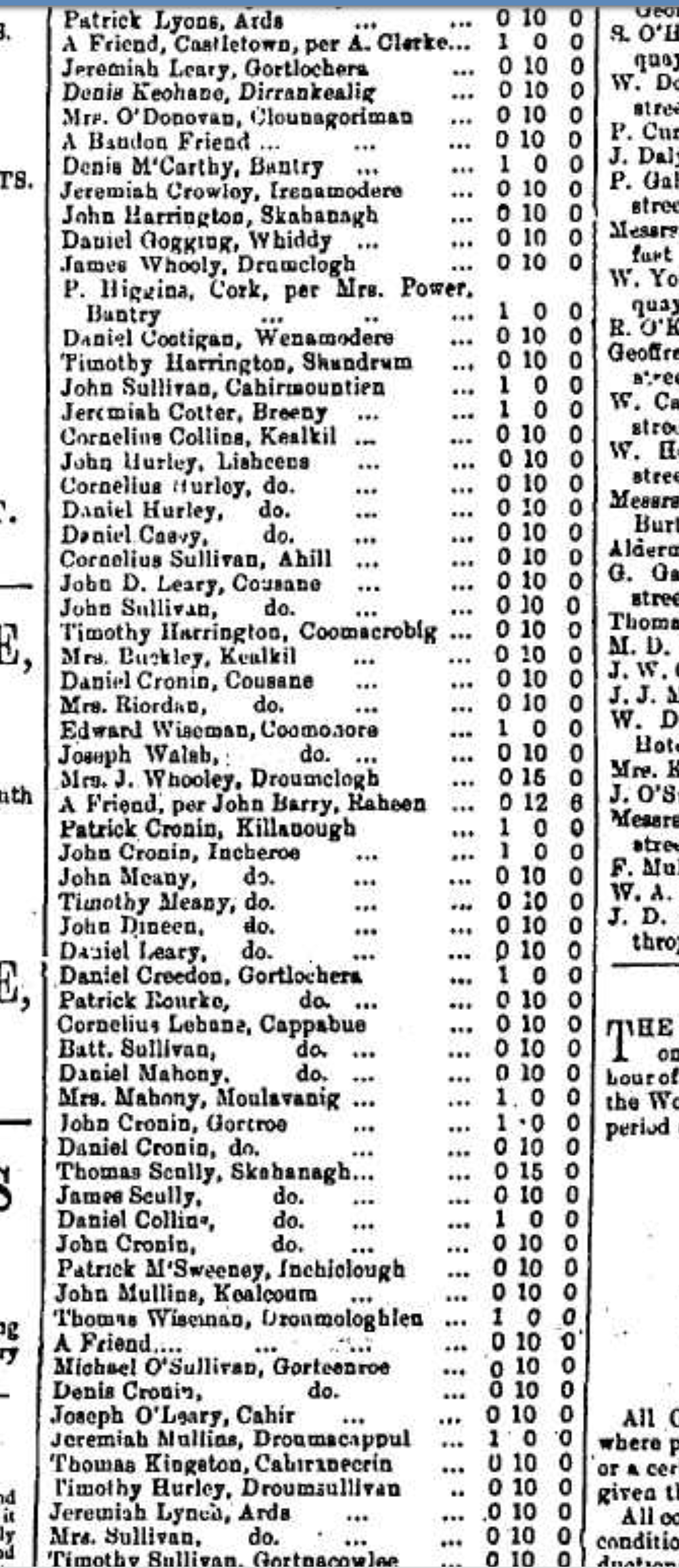
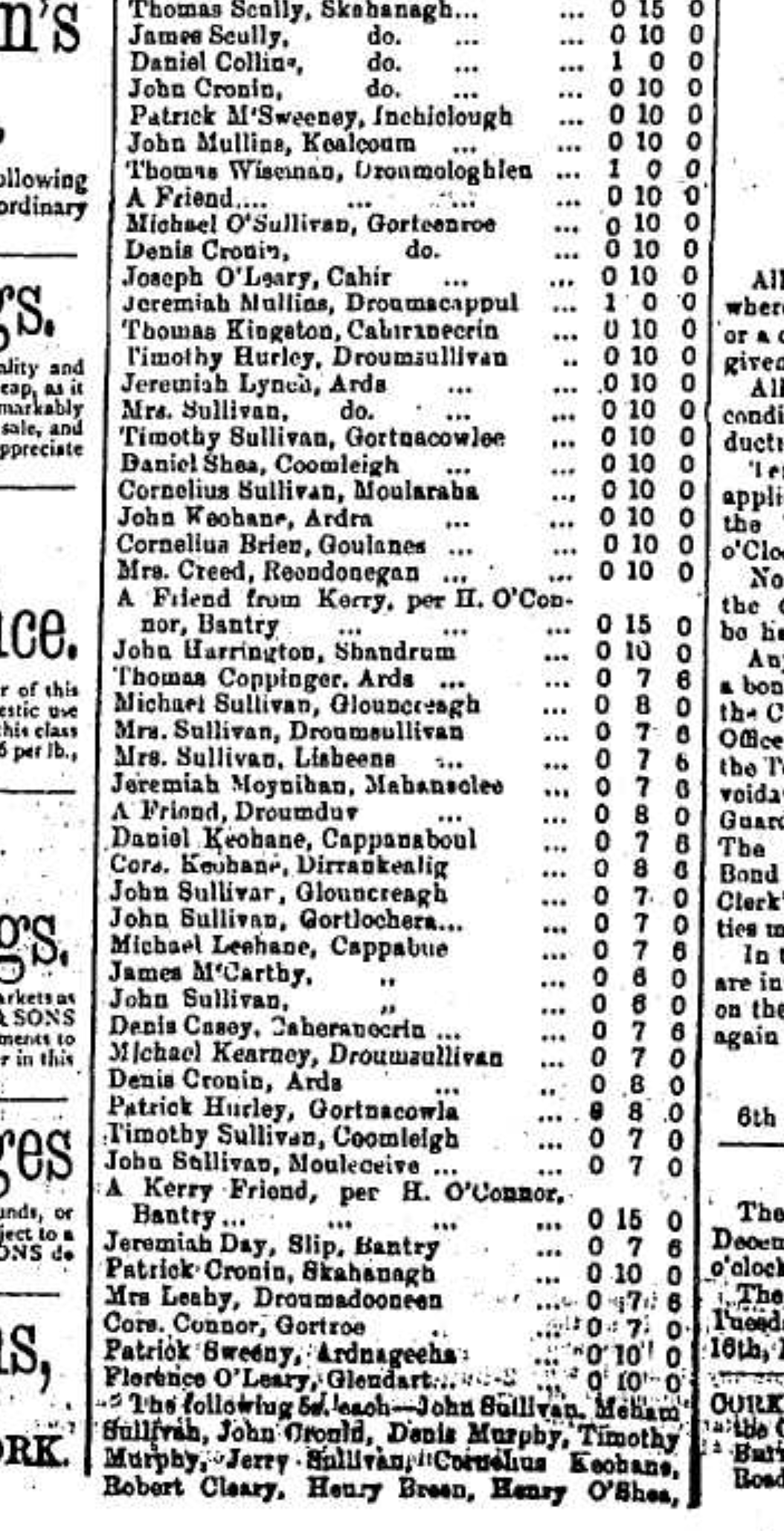
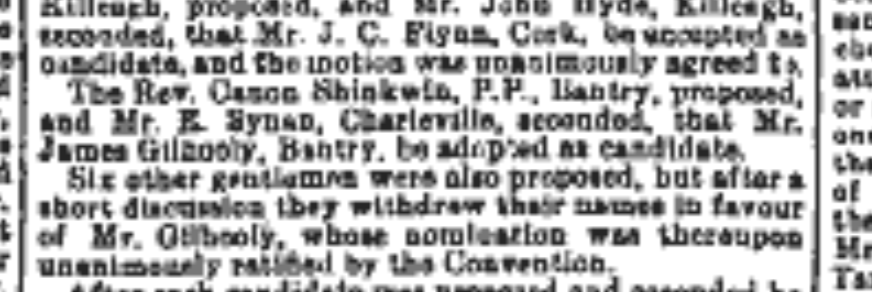
James Gilhooly (1847-1916) , Pre 1910, Main St., Bantry, son Peter, coast guard officer. Born Bantry, draper, MP for West Cork since 1885, J. Warren Payne, Stood as Conservative in West Cork Constituency General Election 1885 got 373 (9%) of the votes his opponent James Gilhooley Irish Parliamentary Party got 3,920 votes (91%). Imprisoned five times. 1882 Stewart Bantry Regatta. He was one of the Bantry Band and a Westminster MP throughout the Parnell period and then John Redmond’s leadership. He spent time in prison. There is an Address from the Inhabitants of the Bantry District presented to him on his release from prison, approving of his conduct leading to his imprisonment. 1895 Seeking assistance for widespread distress Durrus, Kilcrohane. Signed Requisition 1905. Cork Junction Railway Bill. Requisition to the Right Honourable The Earl of Bandon K.P., to Call a meeting for the purpose of Approving the Cork Junctions Railway Bill.A member Bantry RDC, Co. Council 1910, m Mary d Jeremiah Collins, Kilbarry, Dunmanway, 5 children. 1892 attending the funeral of Jane Dillon nee Roycroft (1843-1892). Attending the funeral Bantry 1899 of Miss O’Connor of merchant family.
04 Wednesday Jun 2025
Posted in Uncategorized
..
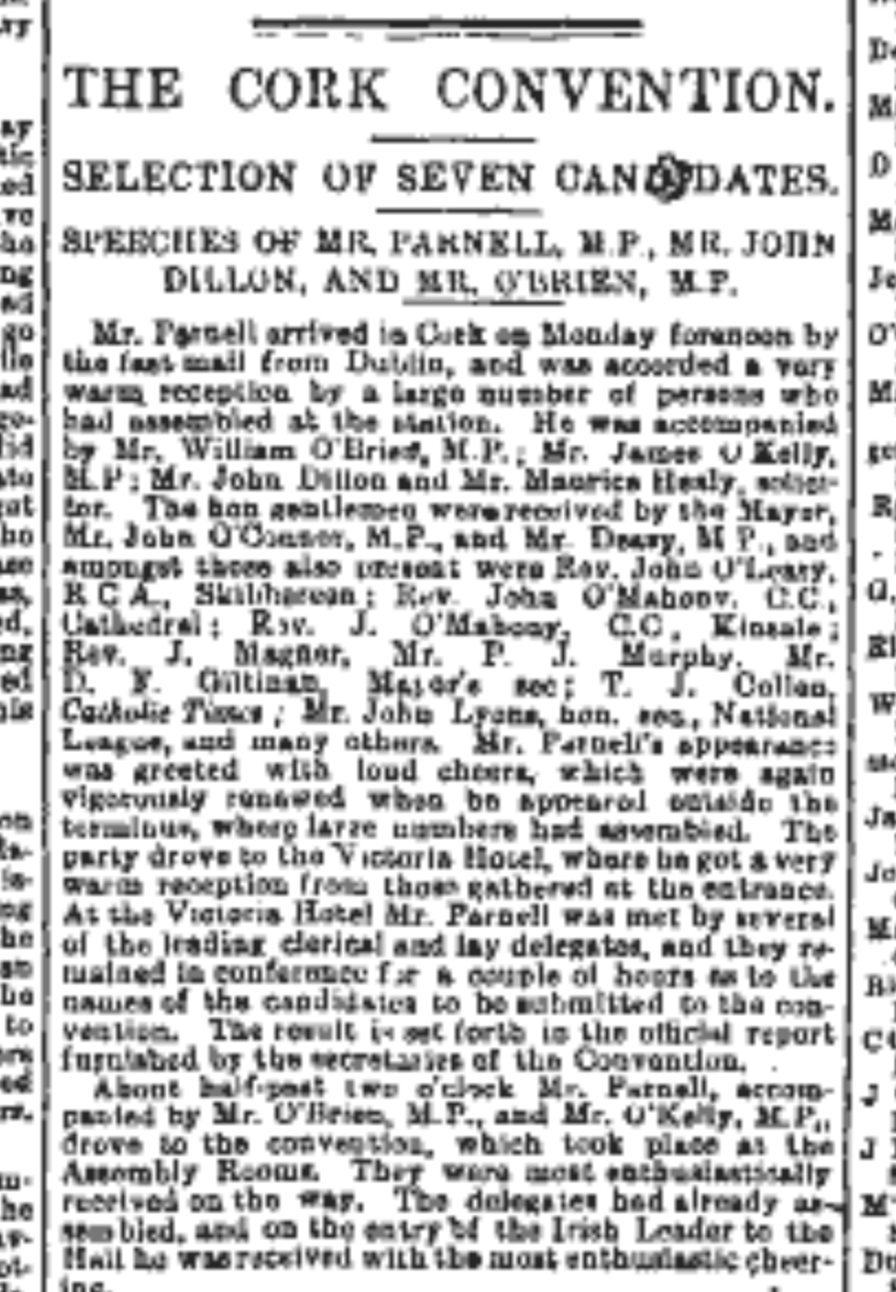
Full list of delegates:
https://docs.google.com/document/d/186BUgwJdmvib4ojOHp8Y3cmbPcgm7IXZb5zsbM8z49w/edit?tab=t.0




03 Tuesday Jun 2025
Posted in Uncategorized
From:
Continuing our journey around Ireland, this blog from Dr Stephen Ball, of our House of Commons 1832-68 project, looks at politics in the small boroughs of county Cork, where competition between the rival parties encouraged a vibrant political culture, but also prompted sectarianism, bribery, violence and coercion.

The county of Cork was widely referred to as ‘the Yorkshire of Ireland’, due to its extent, wealth and resources. However, under the Irish Reform Act of 1832, Ireland’s largest county returned just eight MPs, compared to Yorkshire’s 37, although the latter was barely twice as populous. Half of Cork’s parliamentary representatives were elected by the four single-member boroughs of Youghal, Bandon, Kinsale and Mallow. The principle that the reformed House of Commons was designed to represent specific and distinctive ‘interests’, rather than numbers, is amply demonstrated by the fact that whereas in 1831 the population of the two-member County Cork constituency was 700,366, and that of the city of Cork, which also returned two MPs, was 107,000, the population of Youghal was only 9,820, that of Bandon, 9,608, Mallow, 7,100 and Kinsale, 6,897. While the county boasted 13,351 electors in 1851, Kinsale had only 139, and Youghal, the largest of the one-member boroughs, 261. However, defenders of the reformed system argued that the continued enfranchisement of such boroughs was justified because they each represented distinct social, economic and political interests, and allowed a diverse mixture of oligarchic and popular influences to decide their own representation in Parliament.

Regarded as the county’s second town, Youghal was a busy seaport on the estuary of the river Blackwater. The pre-reform constituency had been controlled by the corporation and freemen under the influence of the town’s main landowner, the Duke of Devonshire. The Irish Reform Act expanded the electorate and consequently increased the influence of the town’s merchants, shopkeepers, artisans and publicans, making the constituency a hotbed of local politics. The curbing of the duke’s Whig influence after 1832 created opportunities for the Irish popular interest, but also raised the possibility of electoral success for organised popular Conservatism. Consequently, sectarian rivalry, intimidation and corruption were features of the borough’s seven contested elections. Daniel O’Connell’s son, John, defeated the Conservatives on the Repeal interest at the 1832 and 1835 elections, during which the town was, according to the future Chartist leader, Feargus O’Connor, frequently in ‘a state of siege’. His father’s compact with the Whigs meant that O’Connell stood aside in 1837 and at the next two general elections the duke’s nominee held off Conservative challengers before suffering defeat at the hands of another Repealer in 1847. The collapse of the repeal campaign and a loss of confidence in the Whig ministry allowed Isaac Butt to win the seat for the Conservatives in 1852. Despite moving away from orthodox Conservatism as he became increasingly critical of Ireland’s fate under the Union, Butt held Youghal until 1865, when he was easily beaten by a wealthy Liberal banker, who in 1868 was defeated by an ‘heroically corrupt’ London merchant.
Known as the ‘Derry of the South’, Bandon was Cork’s next largest borough. A handsome market town founded by the first Earl of Cork as a plantation settlement in 1610, it had served as a rallying point for Williamite forces in 1689. Its once thriving linen industry had declined by the 1820s, but the town still contained leather works, flour mills and distilleries. A ‘rotten borough’, it had been controlled by a close corporation under the Earl of Bandon before the Irish Reform Act increased its electorate from 13 to 266. Of these 70 were resident freemen who propped up the Conservative interest. Despite being only one third of the population by the 1860s, Protestants, including a substantial number of Orangemen, made up almost three-quarters of the electorate. They were efficiently organised, and the Whig influence of the absentee Duke of Devonshire could not compete with that of the staunchly Protestant and constantly resident Earl of Bandon, whose family dominated the representation until 1868. The Liberals contested six often disorderly and violent elections but could make no headway against the Bandon interest, whose agents were was not above plying Devonshire’s tenants with drink to secure their votes, as some of them were polled with the fumes of the previous night’s ‘debauch still thick upon them’.
02 Monday Jun 2025
Posted in Uncategorized
Click here:
West Cork Flax, Linen, Textiles.k here:
https://docs.google.com/document/d/1u0vIz1nxG34pJua7qC7jtTCKWLjwVY81jSl0usPdojk/edit?tab=t.0
West Cork Flax, Linen, Textiles, p. 2
1783, Linen Spinners, Co. Down., p. 9
Linen Board, p. 12
Rev. Horatio Townsend (1810), survey, p. 13
1650s, Richard Brockelsby, clothier, Cork persecuted as Quaker d 1696, p. 15
Cork linen Probates, p. 15
Miscellaneous records from 1732, p. 16
Bantry/Beara from 1796, p. 18, 24, 29
1783, Cork Election List of Freemen voters, many from the county
1835. 1st Report From His Majesty’s Commission For Inquiring Into the Condition of The Poorer Classes in Ireland, p. 26
1841 Effects of Cotton, Calico, British Competition. Evidence of William Crooke Esq., Macroom, to 1841 Enquiry on Land, p. 27
1853 Local Loan Reproduction Records, Schull, p. 32
Lord Bandon was an enthusiastic exponent of flax growing in the 1860s, p. 32
Census Extracts, p. 33
1829 Census Inchigeela p. 34
Bandon Clothiers Weavers collapse to trade, p. 39
1790 Coqueberts Irish Visit Bandon, p. 60
Adderly Innishannon, p. 61
Bandon Cotton Manufacturers, p. 85
Duke of Devonshire Estate Correspondence re weavers, p. 85
1830 Distress in Bandon. Number of Active Looks Dropped from 1,200 to 200. Deplorable State of the Cotton Trade. One sixth of Bandon’s Population in Destitution, p. 89
1851 Innishannon Encumbered estates Sale p. 101
Thomas, ‘The Industrialist’ Adderley Innishannon, p. 108
Bantry p. 116
Bantry, Durus 1937 School Folklore Project, p. 131, 408
Flax meitheals, p. 134
Clonakilty, p. 138, 158
Call for revival of flax industry this was probably Written by Eamonn O’Neill, Kinsale TD, 1945, p. 200
1954 flax pays, p. 240
Drimoleague, p. 240, 307
Dunmanway, Richard Cox, p. 263
Kinsale, p. 282
The Kinsale Cloak, p. 292
Skibbereen, p. 295
Using Linen Thread for Candles, Weaving, p. 305
Flax Ponds, p. 307
World War 2, p. 307, 340, 341
Early history, estates, p. 318
Innishannon from Bishop Pocock Tour, 1752., p. 325
The Linen and Flax Industry in Dunmanway, West Cork, Fines for Steeping Flax in the River Bandon and other Rivers , 1835, p. 330
American Civil War, 1864, p. 333
World War 1 Mills, p. 340
Flax Growing 1796, p. 343
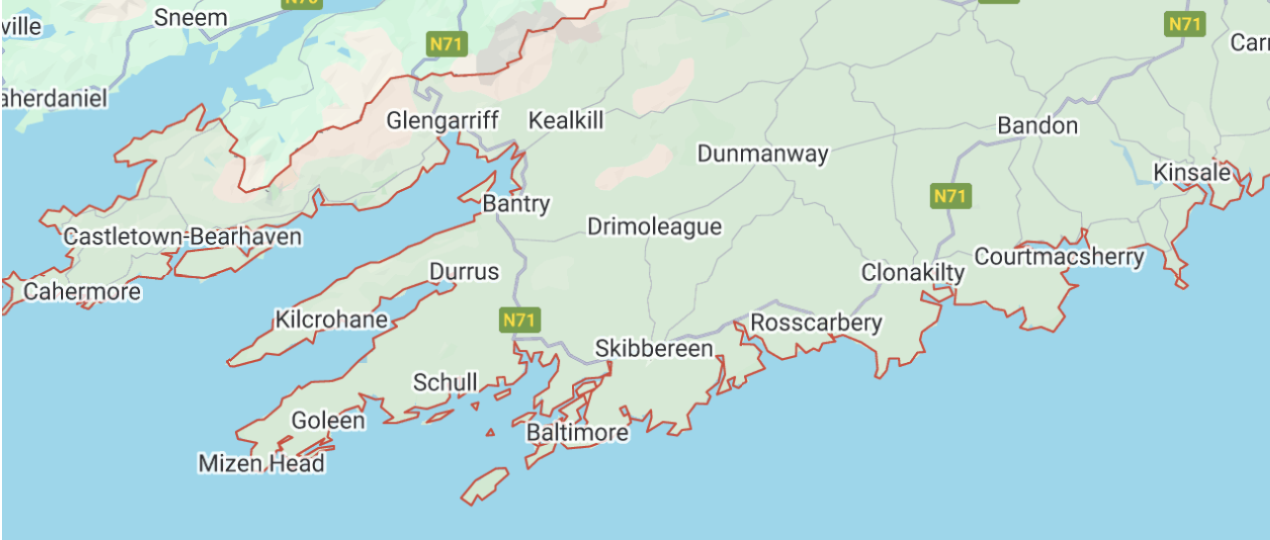
Flax Growers of Ireland, 1796 – County Cork, high concentration in Clonakilty/Drinagh/Dunmanway area, spinning wheel premium list p. 344
Exports of Cloth from Cork,1683-1777, p. 398
Distribution of Flax, Ireland, 1796, p. 400
Loom.p. 403
Exports of Linen 1791, p. 406
Fishing Nets., p. 407
Samuel Vickery (1832-1912) Reminiscences to his Daughter Martha Ellen, Evansville, Indiana, USA, Childhood in Rooska, Parish of Durrus and Reendonegan, Bantry, West Cork, p. 408
Flax Acreage Co. Cork, 1939-1945, p. 411
Gírle Guairle, from Dineen Irish Dictionary, 415
Clonakilty Linen Hall 1817 p. 415
Richard S. Harrison on Flax in West Cork, p. 416
The Sealy, Cornwall and Allin Families, Merchants and Bandon Gentry, Catherine Fitzmaurice, 2017, 422
10 Saturday May 2025
Posted in Uncategorized
From the National Archives, Chief Secretary Papers.
| Cover letter from James Doherty, F Murphy, Richard Sullivan, John Stewart and John Atkins, church wardens, parish of Fanlobbus, barony of East Carbery, Dunmanway, County Cork, to Henry Goulburn, Chief Secretary, Dublin Castle, enclosing memorial to Richard Wellesley, 1st Marquis Wellesley, Lord Lieutenant, Dublin Castle, requesting information and direction on how to pursue individuals living in adjacent parishes on charges of profaning the Sabbath. Indicates that application was made to local magistrates on the matter, but without satisfaction since they felt unable to act against offenders who lived at a distance of 10 or more miles. Also complains of not knowing how to press for punishment those who are found drunk in a public place. [Names of parish overseers have been cut away from both cover letter and memorial]. | |
| EXTENT: | 2 items; 4pp |
|---|---|
| DATE(S): | 2 Dec 1824 |
| DATE EARLY: | 1824 |
| DATE LATE: | 1824 |
| ORIGINAL REFERENCE: | 1824/10549 |
03 Thursday Apr 2025
Posted in Uncategorized
01 Tuesday Apr 2025
Posted in Uncategorized

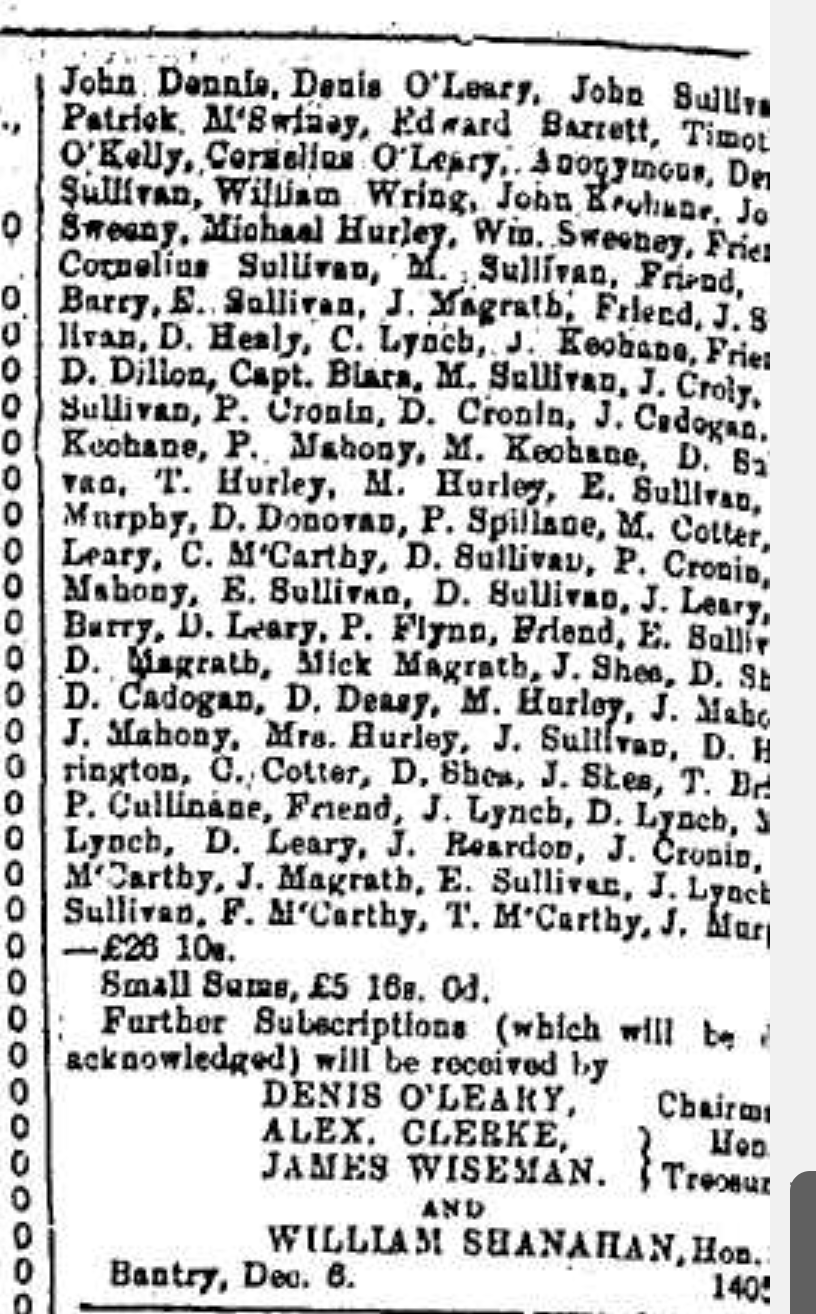
Subscribers, p. 1
1877 Dr. Donovan, Senior, Skibbereen Famine Doctor burial in the family crypt of O’Donovan of the Islands., p. 49
1880 Death of Doctor Daniel Donovan, Junior, p. 41
1880 Commemoration Dr. Daniel Donovan Junior, p. 44
Genealogy, p. 49
1877 Dr. Donovan, Senior, Skibbereen Famine Doctor burial in the family crypt of O’Donovan of the Islands., p. 50
1898, Miss Mary J, Donovan daughter of Dr. Daniel Donovan Famine Doctor, p. 54
 West Cork History