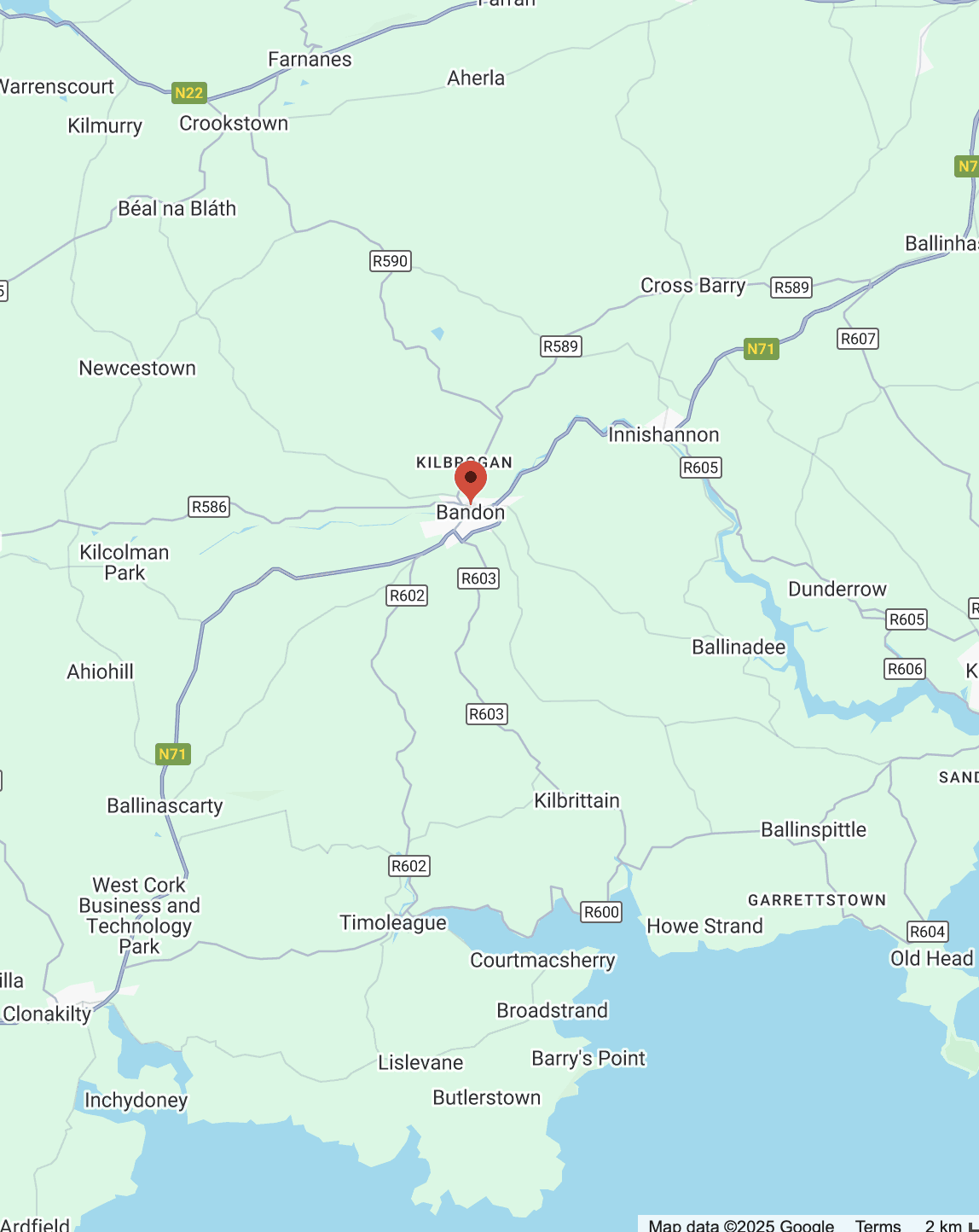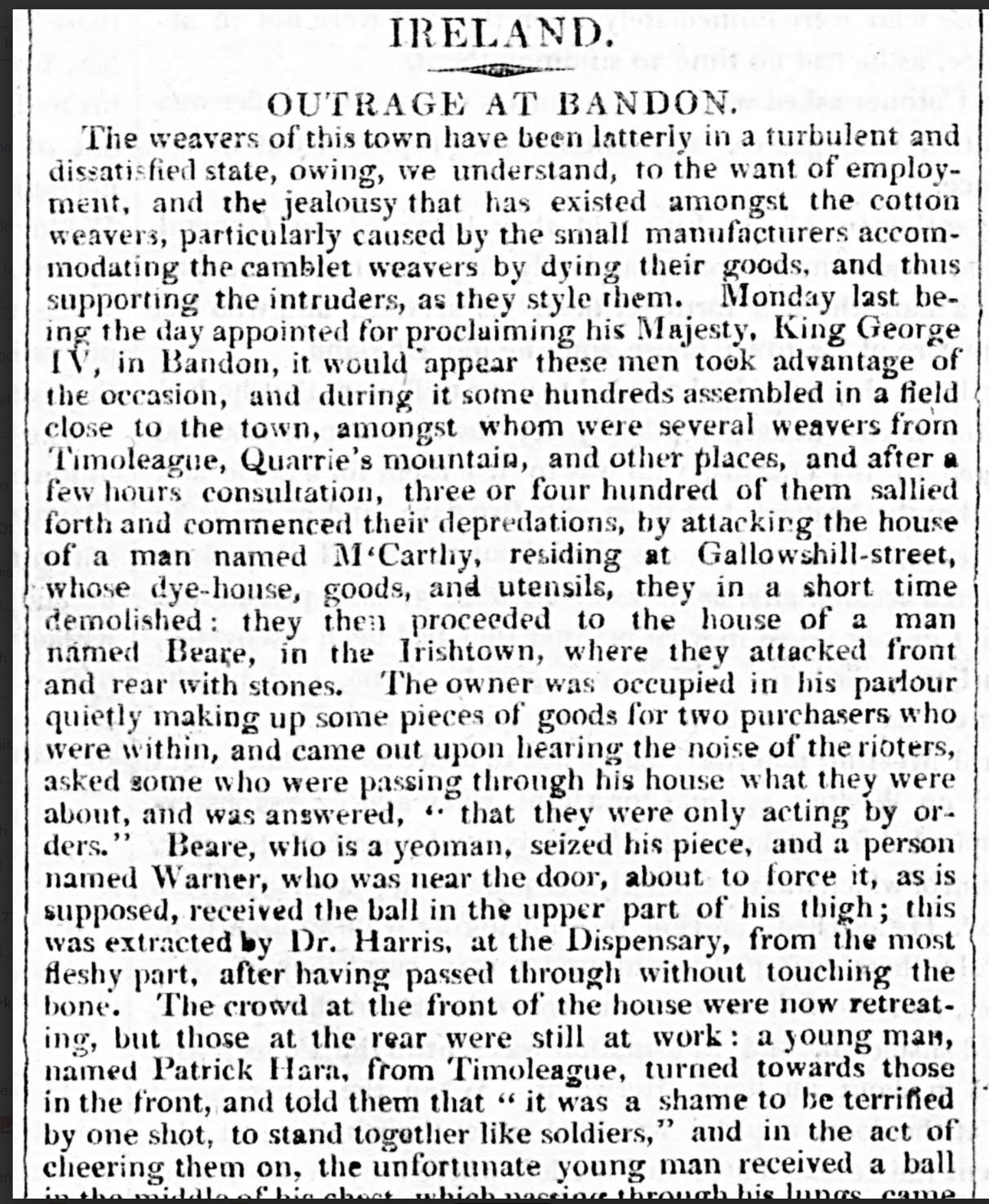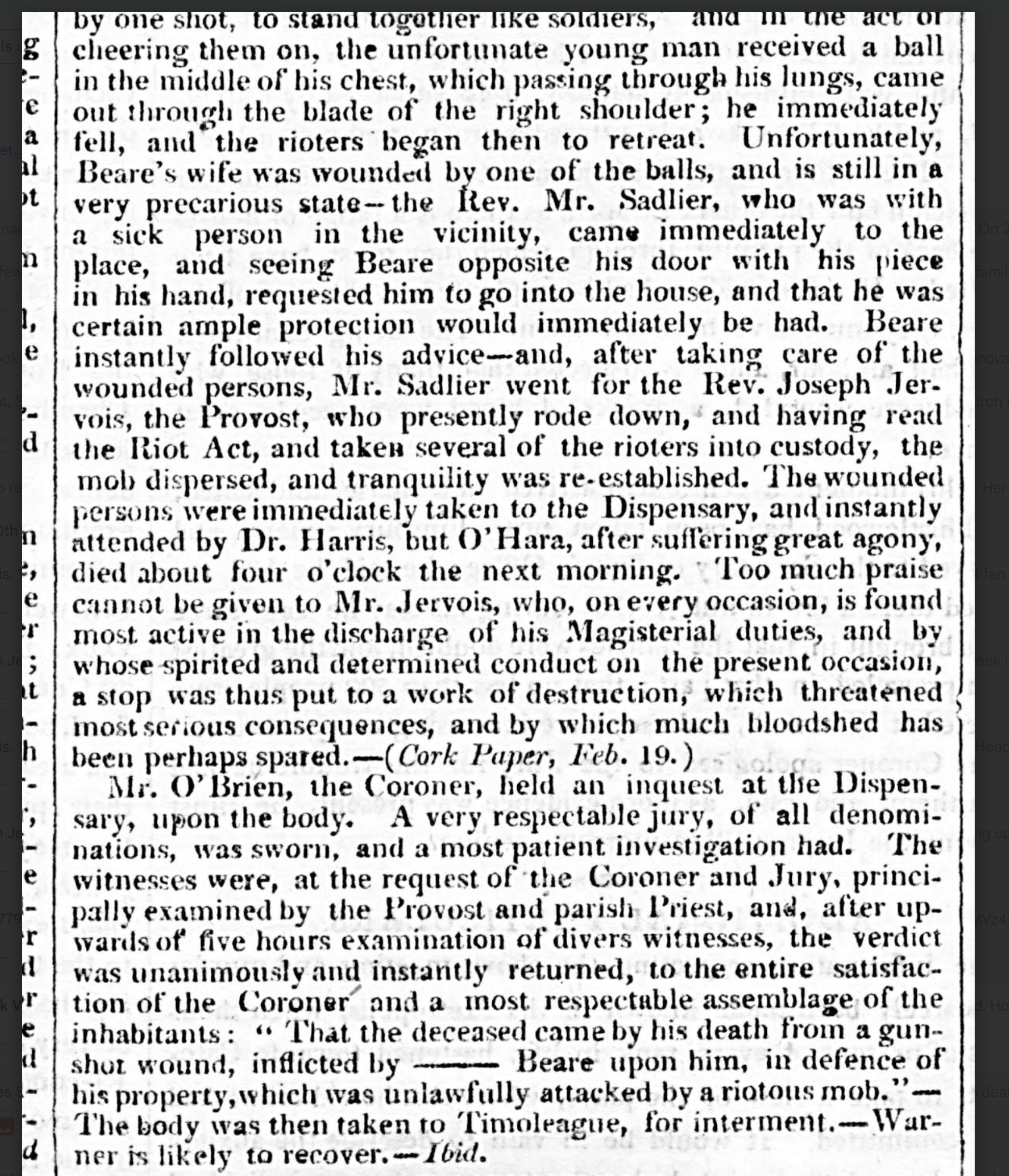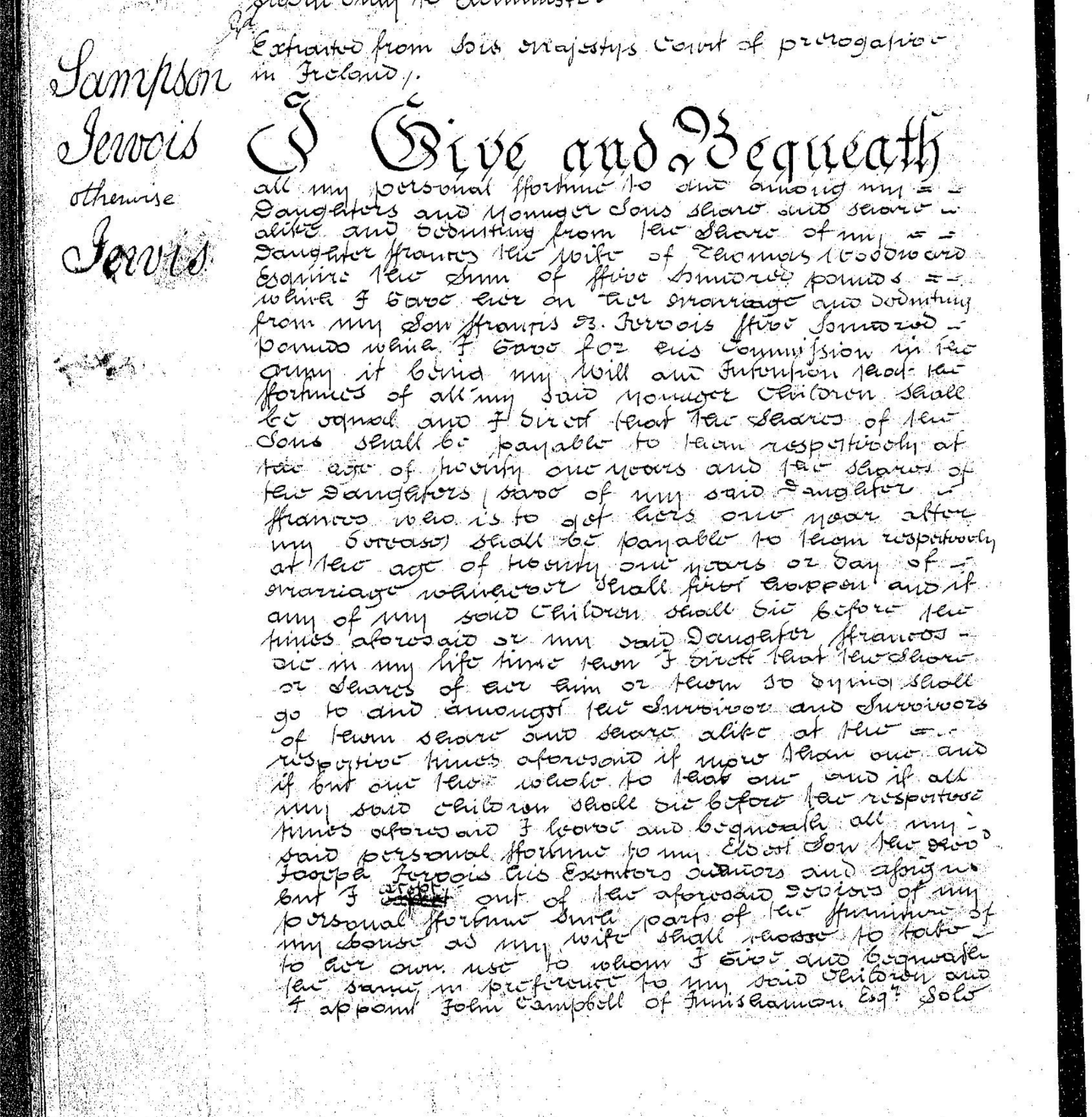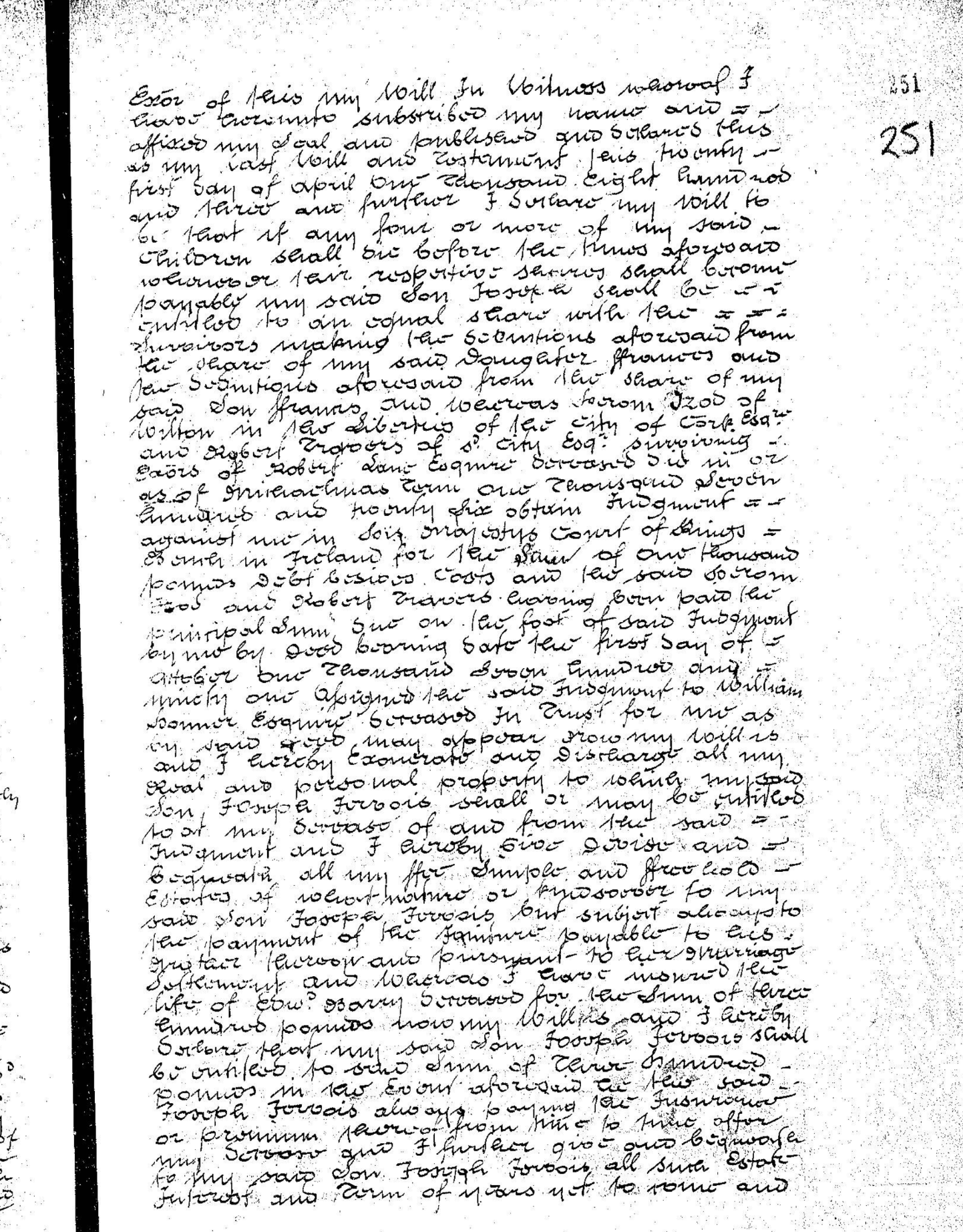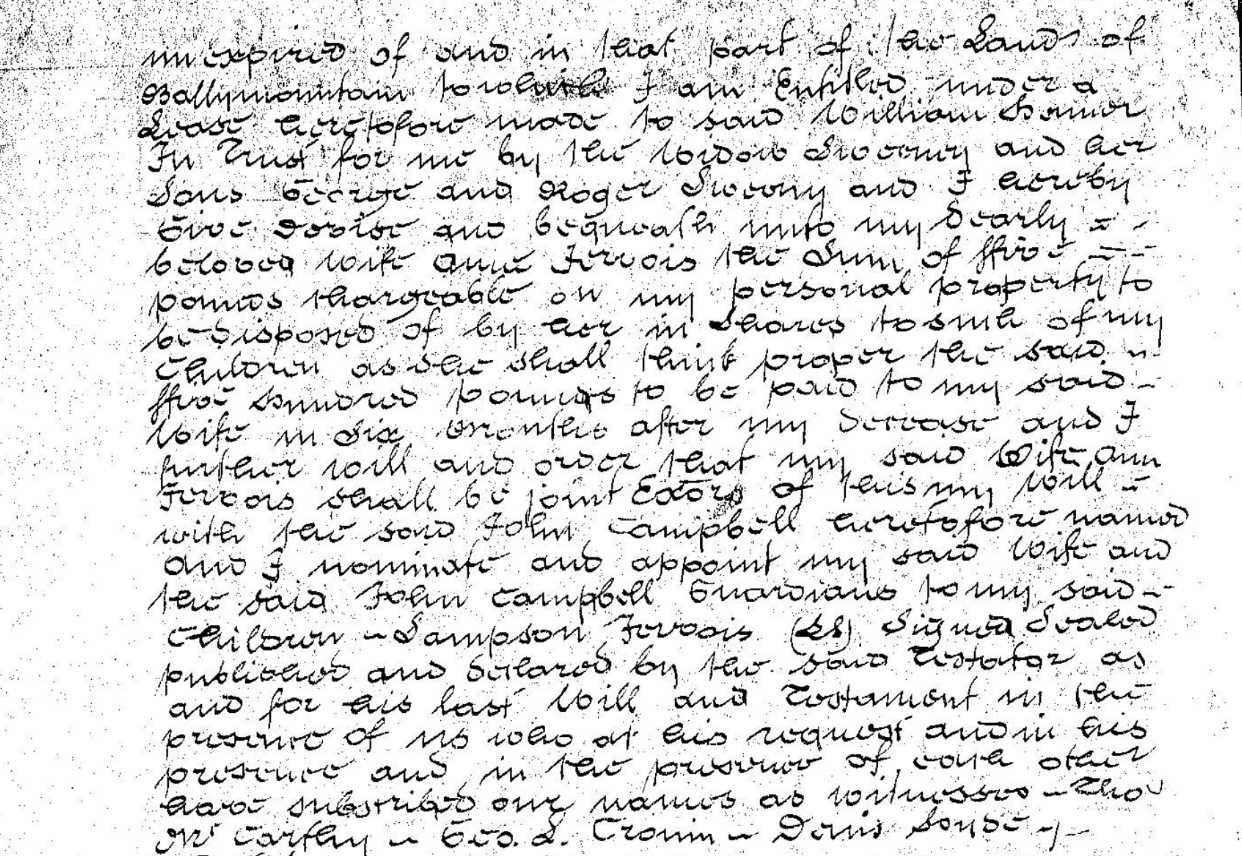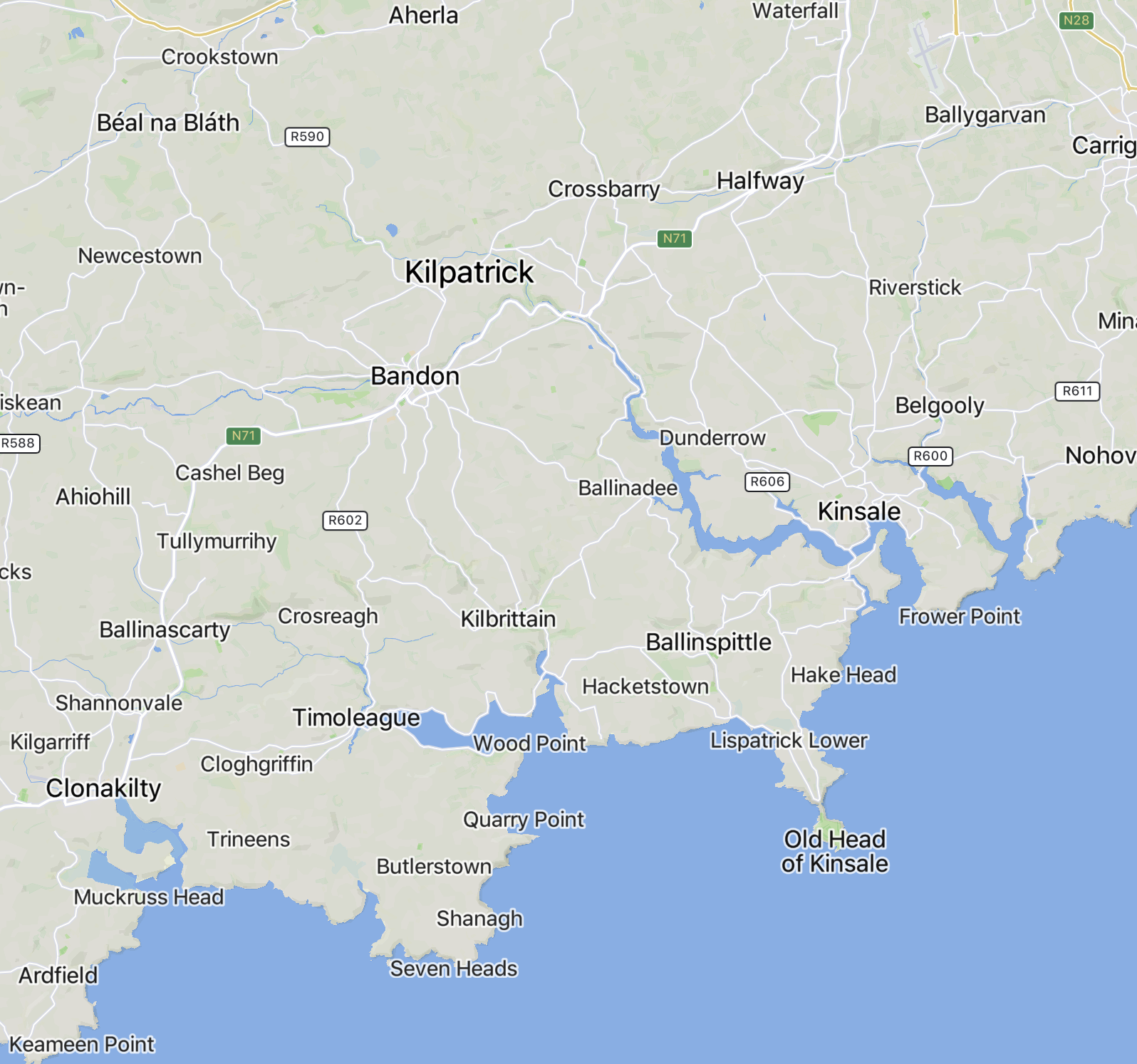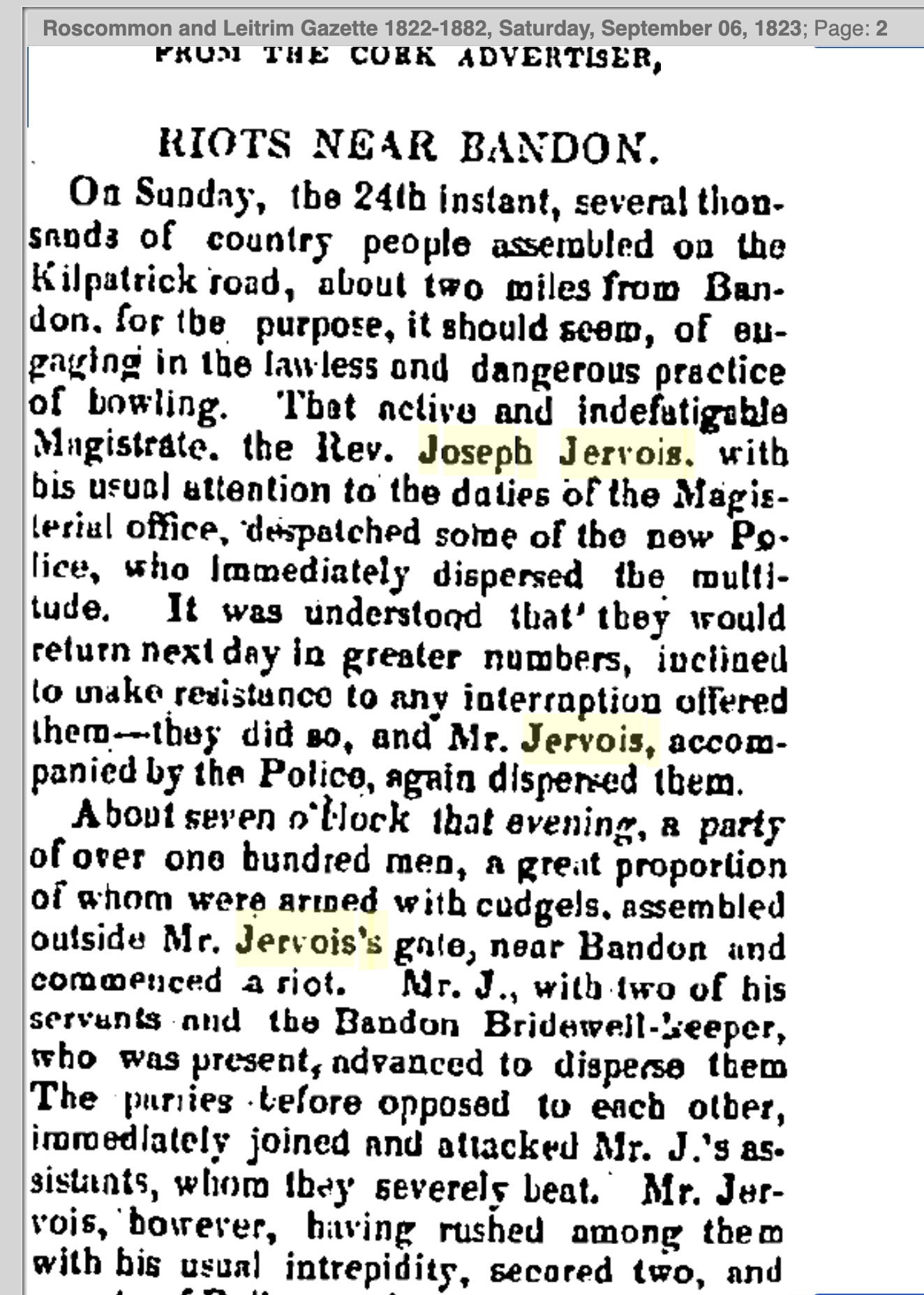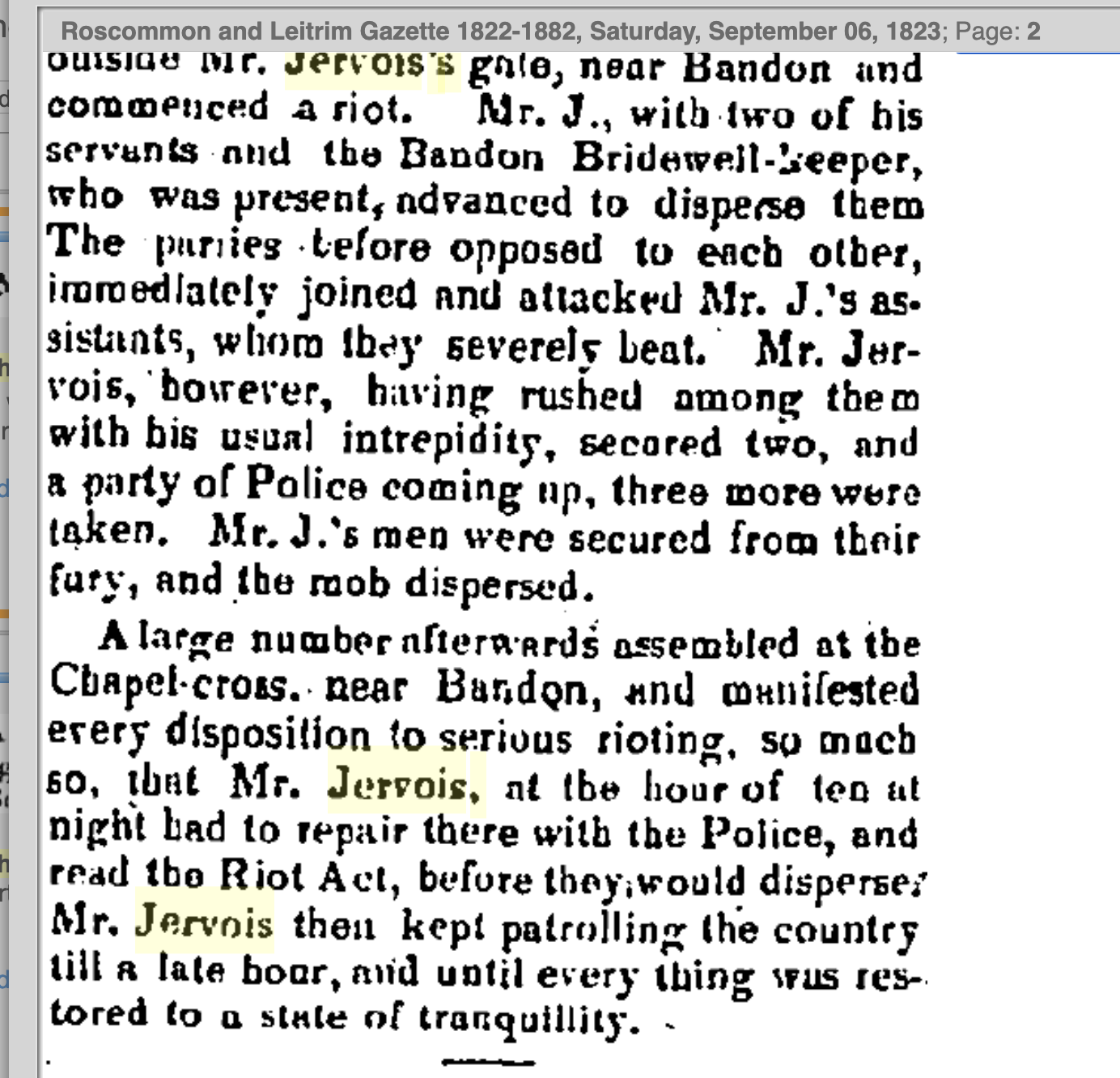
Several Thousand Assemble Kilpatrick Road, to engage in the lawless and dangerous practice of bowling near Bandon. Multitude dispersed by Rev. Joseph Jervois with some of the new Police


1823. Several Thousand Assemble Kilpatrick Road, to engage in the lawless and dangerous practice of bowling near Bandon. Multitude dispersed by Rev. Joseph Jervois with some of the new Police

Bowlers Aughaville, Dromore, Colomane, Durrus, West Cork.  Bill Barrett, Patrick O’Driscoll, Richard Barrett, John Connolly, Jimmy Crowley, J.j. Sullivan, Donald Crowley, Eugene Daly and Possible Origins in Co. Armagh and The North of England

1827 West Cork Vestries Sums Applotted and Miscellaneous Vestry Items

Tags

, , ,


835 Townland Survey, p. 1

Introduction, p. 3

With help from AI, p. 3

1827 West Cork Vestries Sums Applotted, p. 5

Miscellaneous Vestries, p. 31

Meeting of Select Vestry, Skibbereen, West Cork, 10th May 1832, to appoint Officers of Health under Statute of the 59th year of His Late Majesty, King George 3, p. 31

Early Church Wardens, 1699, Bishop Mann Visitation of Church of Ireland Dioceses of Cork. Ref D121.1. 1827 Parliamentary Return of Vestries, 1851, 1861 Visitations, p. 31

1824. Cover letter and memorial from the church wardens of the parish of Fanlobbus, Dunmanway, County Cork, concerning prosecution of Sabbath profaners, p. 32

West Cork Select Vestries. 1885-1890, p. 32

March 1798.  Rosscarbery, Drimoleague, Castletownbere,  Select Vestries meeting to Levy a Rate to provide Four Men to Serve in  Militia and to Levy Seven  and a Half Pence Per Gneeve.  Further meeting August 1803 to levy £1-6-o per ploughland to raise 5 men for Militia and £5-13-9 on town of Rosscarbery.  Cost of Levy for Cork City and County, p. 32

Click:

https://docs.google.com/document/d/1NPX5dzwIAtNG153a95PGb-B3VYJ0Ldm7DCJ1t3md46Q/edit?tab=t.0

Late 18th early 19th Century Interplay of the Select Vestries of the Church of Ireland (State Church) in Local Administration, Barony of Carbery, Castlehaven, Drimoleague, Durrus, Cess Payer Representatives Named, p. 32

1851 Visitation Book West Cork, Church of Ireland parishes, Population 1834 and 1851, Schools, Parish Clerks, Church Wardens.p. 32

1830 keeping the Sabbath in Clonakilty, p. 32        

Townlands and Placenames, 1794 Principal Inhabitants Thanks to Government, 1870 Registered Vestrymen, Kilmeen Parish History, 1975 Dan O’Leary, Funded by Jerry Beechinorp. 32

1793-1803. Cork Grand Jury Returns including provision for Militia from 1795., p. 32

The Military Levy was raised through parishes by the Churchwardens, the parishes were subject to a levy or a bounty to be paid in lieu.  The surviving records of Drimoleague and Castlehaven Select Vestries confirm this., p. 33

1757 Castlehaven, (Skibbereen), Select Vestry Records, shows interaction of parishes in road building:  Cullane, Daniel, app. Director of the High Way in CTend 37. VM 4 OCT 1757., p. 33

March 1798.  Rosscarbery Select Vestry meeting to Levy a Rate to provide Four Men to Serve in  Militia and to Levy Seven  and a Half Pence Per Gneeve.  Further meeting August 1803 to levy £1-6-o per ploughland to raise 5 men for Militia and £5-13-9 on town of Rosscarbery, p. 33

Cork Grand Jury (Civil Jurisdiction) To 1899, p.33

1830 keeping the Sabbath in Clonakilty


Chief Secretary Papers:

Match 139 from ‘CSO/RP’NAI REFERENCE:

CSO/RP/1830/1018TITLE:

File of documents regarding the question whether the police ought to assist civil powers in invigilating the keeping of the SabbathSCOPE & CONTENT:

File of documents regarding the question whether the police ought to assist civil powers in invigilating the keeping of the Sabbath. Includes letter by [Rev] CC Townsend, Rector of the Union of Kilgariffe, Clonakilty, [County Cork], to William Gregory, [Under Secretary, Dublin Castle], complaining about orders to Lieut Barry, Chief Constable, that police ought not enforce laws on the observation of the Sabbath; letters from Maj William Miller [Inspector General], Fermoy, [County Cork], alerting government to orders given to police to be employed in that way, and enclosing letter by WJ Brady, Chief Constable, Castleconnell, [County Limerick], on local churchwarden St Ledger Watkins giving orders to Constable Dennis Eagon, and also enclosing an order by magistrates Richard Mahony, Charles O’Connell, and Francis A Chute, Caherciveen petty sessions, [County Kerry], to the police to invigilate the keeping of the Sabbath. Finally, following advice from Richard W Greene, [legal advisor, Dublin], Miller prepares a circular for all police to say that the duty falls to parish constables where they exist, and that otherwise, police can be involved.EXTENT:

5 items; 17ppDATE(S):

3 Jul 1830-23 Sep 1830DATE EARLY:

1830DATE LATE:

1830ORIGINAL REFERENCE:

1830/1072

Rents and royalties owed Lord Bandon by the Dereenalomane, Ballydehob, Barytes Mines Company (later Dunmanus Bay Barytes Company)

Tags

, , , ,


Barytes Mines Company (later Dunmanus Bay Barytes Company),

Rents and royalties owed Lord Bandon by the Dereenalomane

Barytes Mines Company (later Dunmanus Bay Barytes Company),

U137 Bandon Estate Office, Rentals and Other Volumes
©Cork City and County Archives 2013
Ref.
U137/RL/A/047
Date: 1901 – 1917
Level : item
Title: Rental
Extent: 134 folios, and enclosures
Scope and Content:
Rental, with title page stating ‘Estate, Earl of Bandon, Ledger, Western, Church Lands’. This is
followed by an index of townlands: Ardentenant, Ballygourane, Balteen, Barnatonicane,
Ballyvonane, Balteen Mine, Cahirolickane, Dereenalomane, Dunkelly East, Dunkelly West, Gortduff,
Lackavaun, Kilbronoge, Lassanaroe, Rathcool, Woodlands, and Knockeens. The top of each folio
contains the following fields: OS Sheet number and number of Holding; Denominations (townland);
tenant’s name; area; rent; valuation, land; valuation, buildings; gale days; commencement of ‘stat.
tenure’; record number; and ‘Remarks’. In this last is generally noted the amount and date of fixed
rent, the Rural District, and the Electoral District. The lower part of the folio records rents and
arrears due and received. Over most of the folios notes are added in blue crayon stating the
purchase money and annuity agreed in a purchase agreement. The volume contains a number of
enclosures, stored separately:
List, ‘Bandon Estate – Purchase under LP Act 1903’ [Land Purchase Act], noting name of townland,
name of tenant, and area and rent details. [4pp and one rough list (1p)];
File of correspondence regarding rents and royalties owed Lord Bandon by the Dereenalomane
Barytes Mines Company (later Dunmanus Bay Barytes Company), 1913-20, including extract from
lease 30 November 1896 Earl of Bandon to Threlfall and Norman Leigh, draft copy advice [1915],
Letters to and from RW Doherty and George Webb, Bandon Estate Office; schedule of output at
Dereenalomane 30 April 1915, and letter regarding surrender of the lease as the mine is worked out,
8 July 1920. [24 items]

Scart and Barytes Mines Derreenlomane, (Doirín na Lomán: Little Oakwood), Ballydehob, West Cork, Barytes Mines,

https://docs.google.com/document/d/1-qw3py3ewmBM6LEUpxJUOYQm4y_Gs5ZG-p_1Wk9EGRU/edit?tab=t.0

Mellifonts Magistrates West Cork. Convert Rolls.


The Mellifonds were of N orman extraction and because of the penal Laws some conformed to the Church of Ireland.

Gilbert Melefont, Gent.        1731/32        Parish Fanlobbus (Dunmanway).  Probably Attorney, Dunmanway from 1730s                Family heavily involved in Bantry area Donemark tenants of Kenmare Estate, middle men, later Magistrates in Dunmanway        Melefont family member attained as rapparees in Balingeary area 1690, Sir Henry Blackhall on Munster Gallweys        May be brother of David of Mellifont one of family Mary Mellifont married Henry Gallwey Bantry c 1700.        Family of Norman origin prominent Kinsale        

Convert Rolls, and Public Recantations,  Co. Cork 18th and 19th Century and a Protestant Converts to be Catholic

Convert Rolls, and Public Recantations, Co. Cork 18th and 19th Century and a Protestant Converts to be Catholic 6th August 2021

Click here:

https://docs.google.com/document/d/1cDxJshei7z06pFRhOoLU_V3UMcBUeF5tX9Rl8U7Ls6U/edit?tab=t.0

1831 Census Enumerators, Co. Cork. Under Population Act, Ireland


https://www.dippam.ac.uk/eppi/documents/10766/pages/239993

1831 Persons Appointed Fit and Proper Persons to Taking a Census, Barones Bere, Bantry, East Division, East Carbery, East Division, West Carbery, West Division, East Carbey, East Division, West Carbery, Courseys, Ibane and Barryroe, Kilmmeaky (Bandon)

.

Dunbeacon Graveyard:

6th March 1867 Mrs. Ann T.(ownsend) Shanahan Probably Dunbeacon Philip probably died 1892 aged 96 58 Grave: Erected by Philip Shanahan ot the memory of hs wife Ann T d 26th March 1867 aged 58 ” Philip Shanahan. was born Abt 1796; d.5 Aug 1892-Dunbeacon, County Cork, Ireland. Philip married Anne TOWNSEND on 14 Nov 1826 in East Schull, County Cork, Ireland . Anne was born about 1812. She died on 26 Mar 1867 in Dunbeacon. County Cork, Ireland. “

1892 Philip Shanahan Probably Dunbeacon Philip 1892 aged 96 96 Grave: Erected by Philip Shanahan ot the memory of is wife Ann T d 26th March 1867 aged 58

..

1834 New Grand Jury Act. Provision for Cess Payer Representation


The Presentment system worked insofar as special Magistrates Session met locally to approve work on roads, bridges, harbours etc.   Widely seen as corrupt favouring works for certain Landlords at the expense of cess (Rate) payers.  This reform meant that prominent local citizens Catholic and Protestant farmers and business people sat at the Presentment sessions and had to approve work before they went to the Grand Jury sitting at the assizes.

.

Cork Grand Jury (Civil Jurisdiction) To 1899

https://docs.google.com/document/d/1uGCxYYvCGNEbpzypv-6tdTnz78HsuF_YJELLh9ezWvM/edit?tab=t.0

West Cork Sweetnams. Seneschals, Land Agents, Doctors. Naval Officers.


1794        John Sweetnam        Surveyor        Deed

.

1822, 1823, 1830, 1837        John Sweetnam        Last Seneschal  Aughadown and Schull Manors, later president of te Court of Justice before presumably Resident Magistrates         Daughter Frances Gertude married William Clerke (1766-1820) possibly Skibbereen Mills.  1824.  Letter from John Sweetman, seneschal of manor court of Bridgestown, Skibbereen, County Cork, to Chief Secretary’s Office, Dublin Castle, acknowledging directive for removal of four prisoners to the county gaol and communicating discomfort at prospect of releasing two debtors for fear of being sued for debts owed by the men; includes memorial from Swicham to Henry Goulburn, Chief Secretary, Dublin Castle, requesting clarification on application of a recent prison act to manor courts, especially as it relates to prisoners ‘confined for any sum not Exceeding ten pounds’, with response to same from John Sealy Townsend, KC and legal advisor to Chief Secretary’s Office, Dublin Castle.        Died February 1824 at Mardyke House, Skibbereen.  Ffolliott        1823.  Letter from William Hull, Lemcon, Skibbereen, County Cork, to Henry Goulburn, Chief Secretary, Dublin Castle, referring to his former letter, emphasising the need to provide a simpler and less expensive means for the lower classes to recover small debts owed to them. Encloses, in support of his claim, a document entitled ‘ “a Manor Court Decree” taken by Richard Connell against Edward Butler, both of Kealfada, County Cork, demonstrating that the legal costs far outstrip the amount of the original debt; decree originally signed by John Sweetnam, seneschal [of Aghadown and Schull Manors], 4 October 1823.        .

1876        Mr. John Sweetnam        Last Seneschal  Aughadown and Schull Manors,  until 1859.        Mardyke.  Married Anne d George Beamish, Dunmore, Clonakilty. Not legally qualified, ‘private gentleman’,  paid c £80 per annum not highly regarded.  Manor Courts abolished 1859.  Ballydehob with the Estate of Boyle later Duke of Devonshire.  Son George b 1848 Rectr Creagh c 1900 ed St. Bee’s College.        Evidence of John Jagoe, Bantry to Parliamentary Commission, Bantry c 1838        Correspondence with Chiel Secretary over recent 1822 Prison Act to Manor Courts        Chief Secretary papers        .

..

1821        Dr. Stephen Sweetnam MD        Doctor, Airhill, Schull                Guys        .

..

Medical

1857-, 1892, 1897        Herbert Molesworth Sweetnam,        Doctor, Skibbereen and Innishannon, General Practitioner B.A.T.C, Dublin T.N.C.S. and P.Ed and Z M: T.F.P.S.G.        “Herbert Molesworth Sweetnam, Westropp House, Innishannon, Co Cork.  Seventh son of Stephen Sweetnam, MRCS Eng of Schull, Co Cork.  Educated at Faughnan’s School, Rosscarbery and at Trinity College, Dublin where he took the degree of BA and half the MB degree.  He subsequently studied at the Royal College of Surgeons, Edinburgh and took the diplomas of LRCS and P Edin and LFM Glasgow.  After practising in Skibbereen for some years, he settled at Innishannon in general practice. Medical Officer of the Innishannon Dispensary District and medical officer to the Post Office and referee to various Insurance Companies.  Married first in December 1886 Rosa Sydney (who died 1895), daughter of Alexander John Montgomery of Dublin, and secondly in April 1898 Frances Penella, second daughter of Percival Symes Swan of Baldwinstown, Co Wexford, late agent of the Bank of Ireland, Tipperary and had issue by the second marriage, one son and one daughter

”        1899, attending funeral of R. H. Townshend, J.P., Myross Wood, Leap.  Present Airfield, Schull at death of mother Mary Jermyn Sweetnam, widow of doctor aged 83 in 1897.     “1892, attending funeral of Martin Jennings, Oldcourt, Skibbereen                        Southern Star 24th December 1892

.

1893, 1895, 1898        J. Sweetnam M.D.        Doctor        1898 donor  to Goleen relief fund        1893, attending funeral of Michael Sheehy, T. C., P.L.G., Skibbereen.  1895 Funeral of Bantry Solicitor  Daniel O’Donovan aged 26.  Native Skibbereen:        Attending the 1894 funeral of George Robinson, Landlord and Magistrate, Southern Star 3rd February 1894, magistrates attending, R. Carey, H. Cullinane, Dr. Jennings, Dr. Levis, Captain Morgan. The O’Donovan, Colonel Somerville.        .

1870        G. Sweetnam        Doctor/Medical Student?                Dary of Geoge Vickery, medical student, 1870.

Died 1879, Burma        Michael Sweetnam M/D.        ”                                                                                                                                                                                                       ”        Died from a fall from his horse in British Burma, aged 29.        “1873        Master in Surgery Queens College, 1873                https://www.dippam.ac.uk/eppi/documents/15913/pages/420259        .

..

..  1863        Dr. Richard James Sweetnam        Qualified Royal College of Surgeons 1863        Air Hill.        British Navy 1870?                        .

1807-1885, 1824, 1829,1835, 1846, 1870s        Stephen Sweetnam M.R.C.S.L. Eng        Dispensary Doctor Schull 1834-1852.  Dispensary Officer 1840.        1829 acting as trustee over Skibbeeen properties from JOhn Attridhe to JOhn Sweetnam, Esq., River Cottage, Skibbeeen.   Cert 1835.  Praised for his work during famine.  Relief Committee 1846. 1849 attending  Ballydehob meeting proposes Agricultural Society for the Schull Union and Durrus/Kilcrohane.  ListerAirfield Schull in Slater 1856        “Active as dispensary doctor in Schull during famine,  2nd wife Maria Jermyn Long 1835, She possbly Westfield, Aughadown.  Possible first wife Jane Clerke 1832.  Buried with Maria Aghadown Lower.  1877.   Opening  Skibbereen Railway

Daniel Donovan

David Hadden

John Levis, Glenview

S. W.  Levis, Coroner

Dr. McCormack, Goleen

Dr. Popham, Bntry

Samuel Robinson

Dr. Swanton, Bantry

Dr. Sweetnam, Schull

Member election committee Nicholas Leader 1865 Cork County election. ”        In the 1870s John (Swetman) Sweetnam of Skibbereen owned over 200 acres in county Cork while Stephen (Sweetman) Sweetnam MD, held over 220 acres in the Schull area. Members of this family held lands in the parishes of Abbeystrowry and Aghadown, barony of West Carbery, at the time of Griffith’s Valuation. Many were clergymen or medical practitioners. See http://www.learysweetnam.com        “The Cork Southern Reporter : Thursday 10 November 1836

THE REV. MR. BARRY, P. P. OF EAST SKULL, has commenced the erection of a NEW CHAPEL for a poor population, in a remote District.

This necessary and long contemplated object could not, through a want of resources, have been before now carried into effect.

Mr. B. returns his thanks to the benevolent persons who, notwithstanding the many similar appeals and present weighty demands for local charities, have so liberally contributed the following sums : –”        “1876        Dr. Stephen Sweetnam MD        Doctor, Airhill, Schull                Guys        “”Inscription:

Stephen Sweetnam MD

died 8th April 1885

aged 78

Maria Sweetnam

died 11th May 1897

aged 83

“”        “”Additional Information:

Dr Sweetnam was the dispensary doctor in Schull during the Great Famine. He was active in bringing relief to this area and is often referred to in famine reports from Schull. Maria Sweetnam (nee Long of Aughadown) was Dr Sweetnam second wife, his first wife was Jane Clerke of Skibbereen.””        “”        Young Clerke was admitted to membership of the Inner Temple in London in November 1821 28. Another brother Jonathan Clerke 29 gained medical qualifications in Dublin and London in 1828. Stephen, brother of Frances Gertrude Sweetnam also gained medical qualifications at the same time and in a parallel manner to Jonathan Clerke.39 Alexander Clerk

“””

1866-        George Sweetnam        Probably Skibbereen district, may have gone to TCD        1911 Minister, Co.Derry        Son Thomas William, medical student.                “Son. 1877        Frank A. Sweetnam                Father Stephen, doctor         Aged 18, Midleton College        

..

The Sweetnams were Seneschal son the Carbery/Freke Estate.

Seneschals, Petty Session Clerks

https://docs.google.com/document/d/1M_f1DiI3Qg-2GtLfe0GOo5OKgixRDKNHDw4xf9iyRtQ/edit?tab=t.0

Naval Officers

Courtesy Brian Limrick

1820 Timothy Sullivan, Bantry, Police Constable. 1825 Applcation for Pension Edward Power, Castletownbere. 14 Years Service as Sub Constable.


https://irishdeedsindex.net/mem.php?memorial=562167

   Type of deedDate of current deed29 Mar 1820VolPageMemorial 
   LeaseDate of earlier deed     83732562167 
NoRole(s) in earlier deed(s)Role in current deed(s)Family nameForename PlaceOcc or titleA
A P1BEAMISHSamuelofMount Beamish [Co Cork]Rev; Clerk 
B P2DULLEACharlesofGlaun, Parish of Ballymoney [Glan, Dunmanway], Co CorkFarmerA
C P2DULLEAEdmundofGlaun, Parish of Ballymoney [Glan, Dunmanway], Co Corkson of Charles Dullea [B]; Farmer 
D lifeDULLEAEdmundof son of Dennis Dullea [E]; aged about 40 years 
E mentionedDULLEADennisofGlaun, Parish of Ballymoney [Glan, Dunmanway], Co Cork  
F lifeDRISCOLLCorneliusof alias Behee; son of John Driscoll [G]; then aged about 44 years; Cooper 
G mentionedDRISCOLLJohnoflate of Ballincoursey, Co Corkdeceased 
H mentionedDULLEADennisof   
I mentionedDULLEAEdmundof   
J mentionedDULLEAMauriceof   
K WD WMMOOREJeremyofMaulbrack [Skibbereen], Co CorkLand StewardA
L WDSULLIVANJeremiahofMount Beamish [Co Cork]Man Servant 
M WDSULLIVANTimothyofNewtown, Co CorkPolice Constable 
N WMFALVEYDennisofBallymountain, Co CorkfarmerA
AbstractA leased to B & C, part of Glaun, Parish of Ballymoney [Glan, Dunmanway], Co Cork, for a period of lives.
MS  Date registered12 Jul 1828 Date abstract added20210502 

Abstract made by: RonPrice

Policing in Ireland

Law and Order
 Policing
 Peace Preservation Force1
 The Peace Preservation Force was established in 1814 by Sir Robert
Peel2
, as a mobile force, supplementary to the pre-existing and underresourced baronial constabulary. The new force was under the
command of stipendiary magistrates (also known as chief magistrates of
police who had the powers of justices of the peace) whose staff each
included a clerk, chief constable and sub constables. The force could be
dispatched to any district which was proclaimed by the Lord Lieutenant
as disturbed. They were paid for by local rate-payers which made the
force unpopular with landlords. Many ‘peelers’ joined the Irish
Constabulary when it was created in 1822 and the force was eventually
fully amalgamated into the Constabulary in 1836.3
 The papers reveal how the authorities began to reduce the force in the
mid-1820s. Included, for example, are requests from former Peace
Preservation Force policemen seeking appointment to the Constabulary
despite being illiterate (CSO/RP/1824/217); efforts to absorb the force
into the Constabulary in Tipperary to deal with increased outrage
(CSO/RP/1828/1631); attempts by a chief magistrate of police in
Limerick, to reverse a government order requesting him not to fill current
vacancies ‘with the view to the gradual reduction of that Force’
(CSO/RP/1829/237).
 Irish Constabulary4
 The Irish Constabulary, a centralized force, responsible for the whole
country except Dublin, was first established in 1822 by act of parliament.
It was a centrally controlled, hierarchical, armed, paramilitary force,
organised on a county by county basis. Constables and sub-constables
lived in barracks and were subject to military type discipline administered
by chief constables who in turn answered to sub-inspectors, county
inspectors, inspector generals and ultimately to the Chief Secretary. The
officer ranks were directly commissioned, with little promotional
opportunity available to the rank and file. Between 1836 and 1846 each
county contributed to the cost of their force but after 1846 the exchequer
shouldered the entire cost. In 1836 the constabulary was consolidated
with the Peace Preservation Force and from 1867 onwards was known
as the Royal Irish Constabulary.
 The papers are filled with letters from individuals seeking positions in the
force; with requests for leave of absence from chief constables and. appeals from constables for reinstatement following dismissal for
drunkenness.
 The papers demonstrate that disobedience or displays of partisanship
was not tolerated. For example constables who refused to take down an
‘Orange’ flag during the long-running dispute in Mountmellick were
dismissed (CSO/RP/1828/1524), as was Captain John Burke, chief
constable who attended a Brunswick Club meeting in Wexford
(CSO/RP/1829/160).
 The papers reveal a tension between magistrates and government over
the precise role and duties of the new constabulary at local level. The
crown law officers made clear that constables were not to be used to
enforce civil bills, magistrates’ warrants, or enforce payment of tithes and
were also not permitted to assist the Revenue police except in cases of
a breach of the peace. These duties were to be carried out by baronial
constables and other officers (CSO/RP/1826/1718).
 The papers contain letters from high-ranking police officers proposing
improvements to the force. It was suggested that policemen be moved
regularly to prevent them from becoming too familiar with their
communities (CSO/RP/1828/1712); that married constables were a
hindrance to the operation of the force (CSO/RP/1828/795) and that
chief constables, who often had military backgrounds, should not be
chosen from the gentry class and should be discouraged from displays
of military pomp (CSO/RP/1828/1361)