06 Tuesday Oct 2015
Posted in Uncategorized
06 Tuesday Oct 2015
Posted in Uncategorized
https://plus.google.com/photos/100968344231272482288/albums/5930280599610320513
From Landed Estates Database University College Galway
Shuldham/Shouldham – The Shuldhams were originally from Norfolk. In 1690 Shouldham from Dunmanway, the Solicitor General for Ireland, married one of the Whites of Whiddy Island later this line became the Whites of Bantry House. In the early 18th century Edmond Shuldham of Ardtully, County Kerry married Mary MacCarthy, daughter and heiress of MacCarthy Spaniagh of Dunmanway, county Cork. Their eldest son, Edmond Shuldham, held lands in the counties of Cork, Limerick and in the city of Dublin. He was a subscriber to Smith’s History of Cork in 1749. Many members of the family followed military careers. Arthur Lemuel Shuldham of Dunmanyway, and of Pallas Green, county Limerick, had a son Edmond William who was Quarter Master General at Bombay for a number of years. At the time of Griffith’s Valuation General Shuldham owned an estate in the parishes of Oola…
View original post 306 more words
06 Tuesday Oct 2015
Posted in Uncategorized
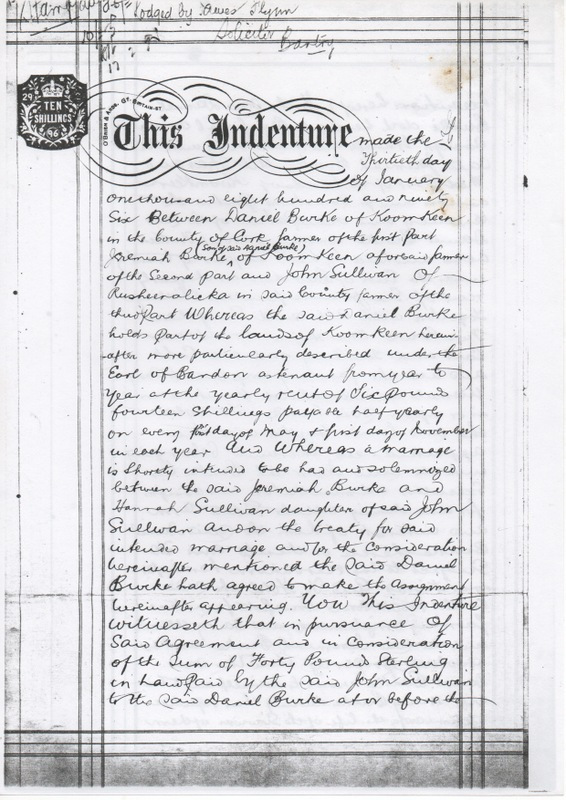
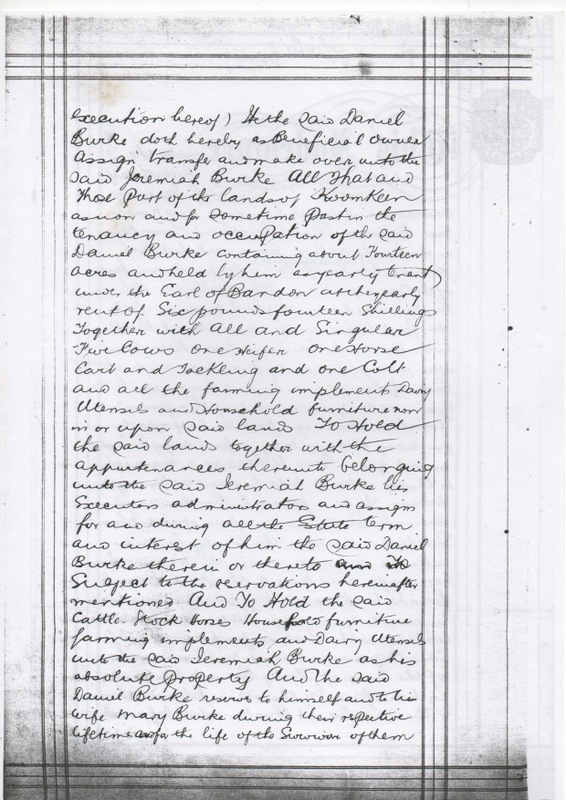
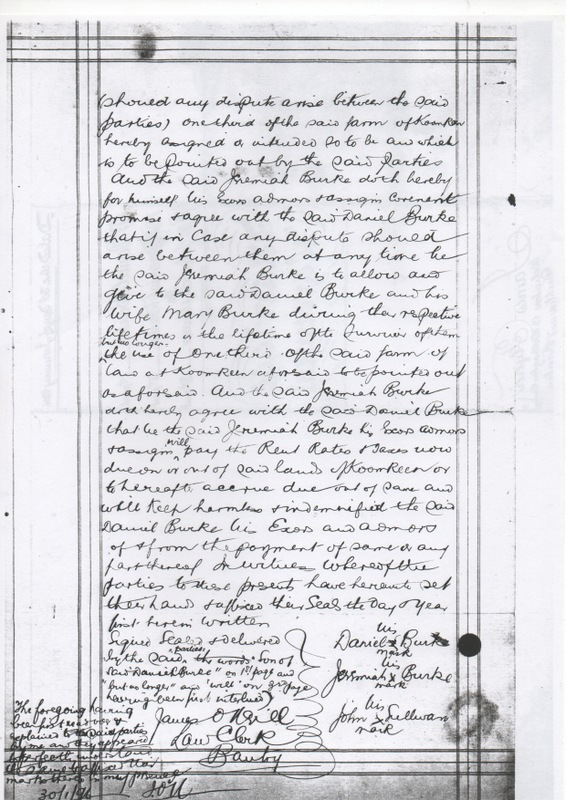
The ‘Chapel Brake’, Evidence of pre 1794 Church at Crottees (Irish: Cruiteanna, meaning ‘humpy ridges’)/Clonee (Irish: Cluain Fhia, meaning ‘meadow of the deer’ or ‘Aodh’s meadow’), Durrus, West Cork informant Dan Burke, Coomkeen, his Coomkeen Family, Lord Bandon Shooting Lodge.
Before the Durrus/Bantry road was realigned in 1794 to include the bog road and Durrus Cross it formerly went up from Crottees over high ground to Cappanaloha.
Near the boundary of Crottees and Clonee by the stream is a place still know as the ‘Chapel Brake’.
Dan Burke, Coomkeen, worked for the Vickery family in the 1920s in Crottees and went with them when they moved to French Furze, Carrigaline, Cork, and was always close to the family. He had the tradition of the old church.
Dan Burke with dog:

jack burke coomkeen 1930s, cousin of Dannon Mahony World Wrestling Champion supposed to be like Danno’s father in height physique

dan burke with dog paddy the begger coomkeen
Family group with neighbour Tom Mahony:

burkes coomkeen old house 1940s ? mother father nell dan kit tom mahony neighbour pre 1951
Dan Burke’s brother Jack:
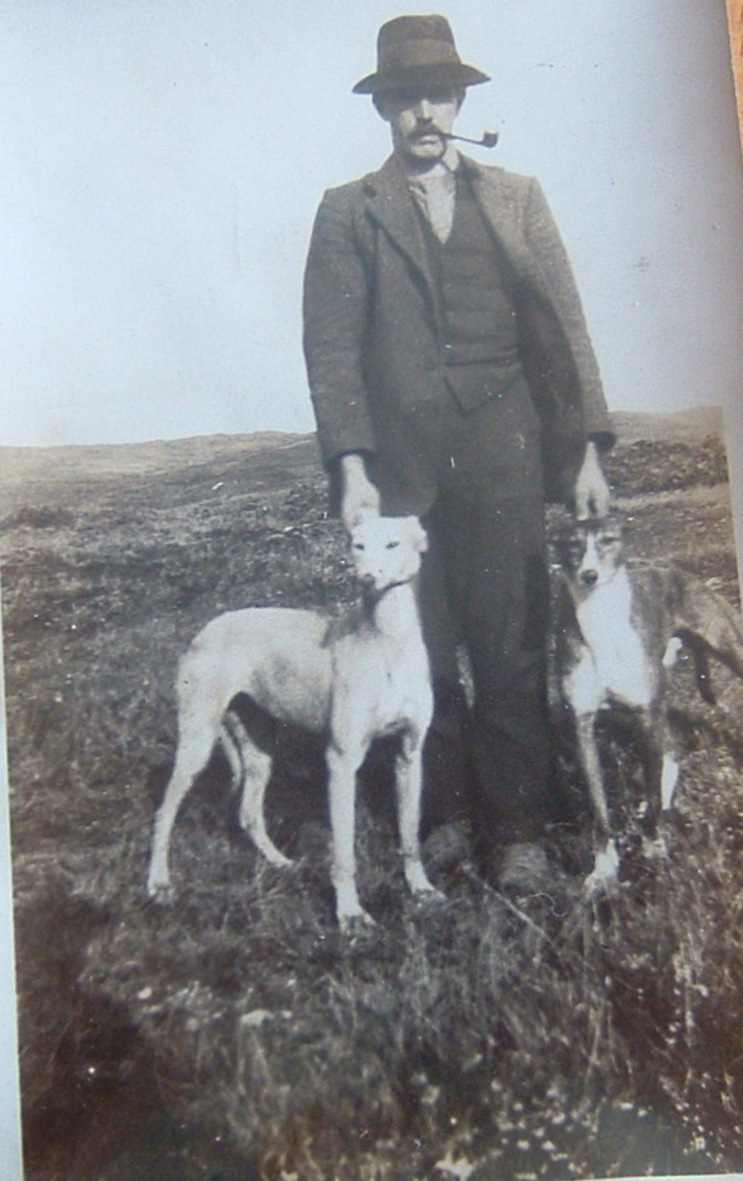
Jack Burke Coomkeen 1930s, cousin of Danno Mahony World Wrestling Champion supposed to be like Danno’s father in height physique
His family was twice related to the world wrestling champion ‘Danno Mahony’ The day before Danno was killed in a car accident the travelled to Coomkeen to see the stirs put into the new house. This was financed by the Burke girls who emigrated to Boston in the 1920s and returned to retire in 1966.
Hannie, Kit and Molly Burke the day they returned to Ireland 1966 with their aunt Bridget Crowley, nee O’Sullivan:

House in Comkeen with Nell Burke who remained in Ireland:
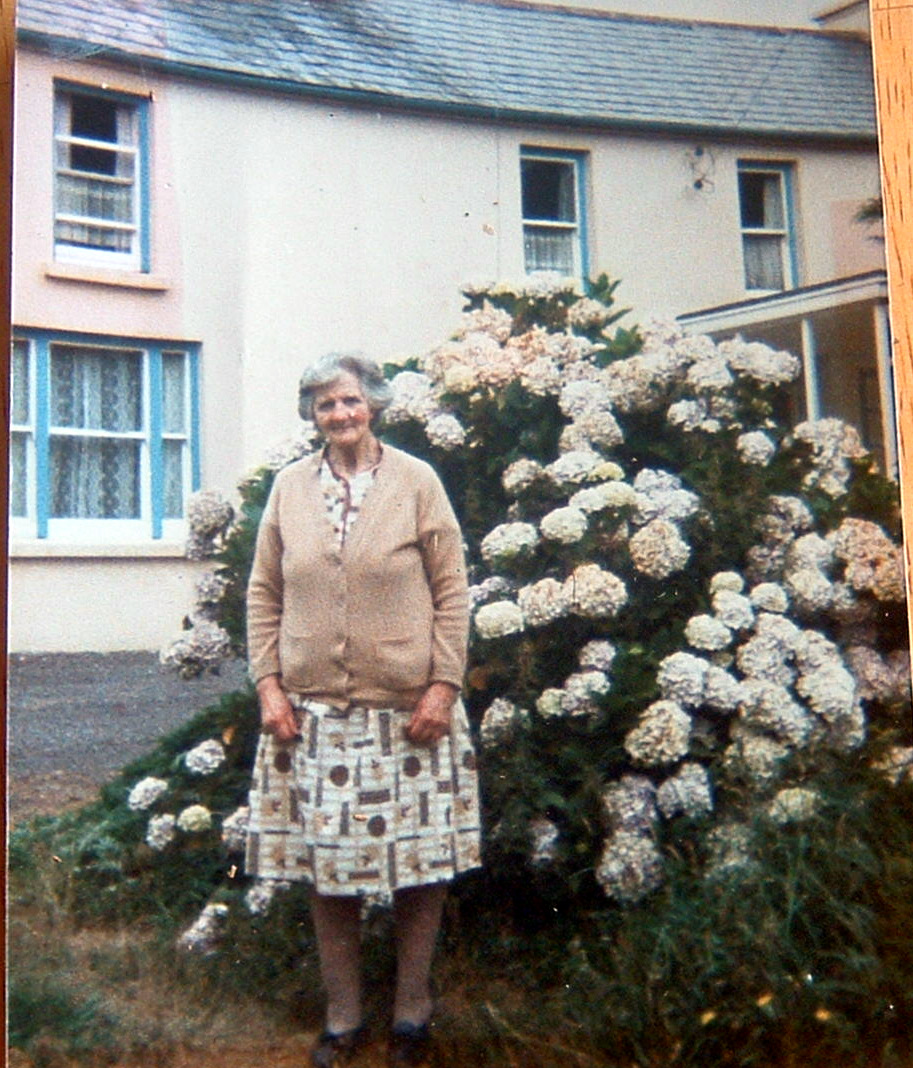
Their grand father was a part time game keeper for Lord Bandon. He used Durrus Court as shooting lodge. In the disturbed times of the 1880s during the Land War the Burke Coomken house was shot at, and a bullet lodged in a settle which was in the family possession up to some years ago.
Churches in area:
Catholic
Durrus is mentioned in a papal decretal of Pope Innocent 111 in 1199. The monastery of Gill Abbey in Cork had a claim for Durrus in the 13th and 14th centuries but it was attached to St. Catherine’s of Waterford. In medieval times the parish of Durrus was part of the deanery of Foneragh (Fionn Iarthach, the western lands) and also included were the parishes of Kilmoe, Schull, Kilcrohane, Kilmocomge and Caheragh. It is believed that there was a thatched church on the site of the Old Mill, now the housing development Cois Abhann, built around 1750. After the 1798 Rebellion and the arrival of the French Armada in Bantry the church was forced to close.
There were also Mass Rocks, one in Coomkeen in the lands of the late Timmy Whelly and one at Kealties. There are the ruins of a church at Kealties; this was a thatched church erected c.1780. There was a belief among the older people that there was a church or house of refuge at Rossmore (on the northern side of the road in George Hegarty’s farmyard) on the site indicated as a burial ground on the Ordnance Survey map.
The old Church at Durrus East, Moulivard was probably built around the 14th or early 15th century, contemporaneous with the ruined church in Kilcrohane graveyard. Inside the church is an incised cross dating from the early Christian period. This was found by Jeremiah Hurley, d. 1933, grandfather of Vincent Hurley while ploughing their farm near the creamery and then placed in the Church grounds. Another cross of this type is in Cape Clear and may denote an old monastic settlement. There had been a monastic settlement at Scartbawn under the patronage of the MacCarthy (Teig Rua sept) who had a castle in the area. This moved to Moulivard to take advantage of the water power of Four Mile Water and the mill race is still visible in Ballinvillen (townland of the mill). Moulivard Church was in good repair in 1639 and in use mid-17th century but according to Brady was in ruins by 1699. It is said that the white friars are associated with the site but there is no corroboration of this. There is a local tradition that the church was used in Penal times, when Mass was celebrated from time to time by itinerant friars. On St John’s Eve an open air mass is celebrated each year. The stone table used otherwise for coffins is used and in the course of the mass parishioners call out the names of family members buried in the graveyard for prayers.
In the 1730s the Franciscans had a limited presence in West Cork site of their former monasteries.
There is also a local tradition that a priest was hanged from a tree on the back road near Durrus Court, there were episodes of ‘priest-catchers’ in 1707, 1712 and 1717.
On the coast near Kilcrohane is an area Coosataggart (Cuas an tSagairt) where priests reputedly used to hide in a cave in Penal times. According to tradition there was a church at Coolculachta.
The former church at Chapel Rock (on the site of the present National School) was built by Fr. Quinn in 1820 and was a slated structure. Fr. Richard Quinn was from Onoyne, in Co. Tipperary and came to the parish in 1818. In 1820 he started the parish register of births, marriages and deaths. In 1835 his house was described as’ a whitewashed cottage embosomed in its snug and thriving orchard, standing further inland among verdant meadows’. A Parliamentary enquiry in 1835 stated that the attendance at mass in Durrus was 800 and 700 in Kilcrohane and increasing.
It was replaced when the Church of the Sacred Heart was built in 1901. This was built on a site of one acre by way of lease to Fr. O’Leary from the Earl of Bandon for 990 years, at a rent of 10 shillings per annum lease dated November, 1898. The first sod was cut by Dan Keohane and John Sullivan, Clonee. The contractor was Daniel O’Donovan, Bantry. The stone was provided from a quarry at Fahies, Clashadoo owned by the Shannon family and operated by the Spillane family and drawn to the site by Patrick Crowley of Ahagouna, Paul Shannon Clashadoo and Hurleys Ballycomane. In the course of drawing stone one of the carts was wrecked and a replacement was provided gratis by Bob Dukelow, Coomkeen. The cost of the church was £2,900 and the Architect was Maurice Alphonsus Hennessy from the South Mall, Cork.
The High Altar was sculpted by Davis of Cork, the lead lights by Messrs. Watson of Youghal, iron work by Messrs McGloughlin Dublin, the pulpit by Richard Power, Bantry.
There is a mural tablet to the Blair family of Blair’s cove and outside a Celtic cross in memory of the Tobin family in Irish and English. The Southern Star in a report praised the generosity of the Earl of Bandon for providing the site in contrast to Lady Bandon recently deceased who was accused of prosyleting in Durrus and Ballineen.. It described the crowd as numbering 5,000 and the village was decorated with bunting reading ‘Caed Mille Failte and Welcome’, the bulk of the expenditure was provide by the parishioners and the day was described as if out of the Garden of Eden. The church has baptism and marriage records going back to 1819, and deaths from 1920. There are also records of first communion and confirmations for years in the 1870s and 80s. Durrus (Muintervara) is now one of the 57 parishes of the dioceses of Cork.
Courtesy Peter Clarke:
Penal Mass House, Kealties
The substantial remains of a penal mass house, or early Catholic church, lie under a covering of bracken and brambles. The thick sturdy stone blocked walls of a rectangular building are still discernible. This place of worship was built in 1780 and was originally thatched. Although Penal Laws, forbidding Catholics to worship were still in force, from the 1750s onwards mass houses were being built. Previously people had had to worship in secret open air locations, at risk to themselves and to their priest. This building was eventually replaced by St Patrick’s Church in Rusnacaheragh, built 1820/30, and still in use.
There is a small walled path leading to the site.
Rosnacaheragh (Ahakista). There was probably a Mass altar near the Curate’s house the former Shiro Restaurant, where there was a temporary structure incorporating the Mass Rock. In 1828 the new church was built by Fr Quinn P.P. on a site donated by the local landlord Timothy O’Donovan, by McCarthys Builders of Drimoleague. Among the contributors was a major one from the Cork Brewers, Beamish and Crawford. Henry Arundel of the nearby pub later presented the stained glass windows in memory of is children. It probably replaced an earlier church at Kealties the remains of which are still visible. It was built before the present coast road.
Kilcrohane, the Church of Our Lady of the Sea was opened in 1897; it was built on a site donated by the landlord Mary Furlong and tenant James Tobin. Father Kearney was heavily involved in its building and in October 1895 he got permission from the Bantry Board of Guardians to remove the gable from the old ruined church at the Abbey and use the stone presumably in the building of the new church. It was designed by Samuel F.Hynes, Architect, South Mall, Cork. The builder was Patrick Sullivan, of Sheskin, Bantry and it cost £1,750 with the P.P. to supply stone, gravel, sand and carriage of materials, either to Durrus Road Railway Station or the landing place Dunmanus Bay. The seating was made from wood blown loose from cargo ships, as were the roof and flooring beams. The stone was quarried in Dromnea. It replaced the earlier church which stood where the National School now stands, and it in turn replaced the earlier church, the ruins of which still stand in the cemetery. The altar was taken from Durrus Church in 1989.
The church at Dunbeacon is in the diocese of Schull and was built in 1836; and Father James Barry in fundraising described the chapel ‘for a poor population in a remote district’
The Stations are an old tradition going back to Penal times. In each townland families took it in their turns to have Mass in their house where the parish dues were taken. It was and is a time of great importance with help from neighbours in the preparations. In other Catholic countries it is unusual to have Mass celebrated in private houses; here it has it roots in the days of the Penal Laws. A wax candle blessed on Candlemas Day February 2nd. was used. Stations used to start at 9a.m. but are now generally in the evenings.
The Annals of Innisfallen state that St. Ciarán of Cape Clear came back to his native place from Rome in 402 A.D. and introduced Christianity to the south west. The new religion became firmly established and intermingled with old practices, such as Holy Well devotions, patterns, Saint Days, and various pisheogs (superstitions) for a number of holy wells in the area. To this day the old church at Moulivard (Durrus East) has penitents leaving coins and trinkets, called rags and in fact there was a former devotion to Father Barnane at this venue.
In Frank O’Mahony’s book, Jimmy Coakley b.1915 Tooreen, Kilcrohane, says that ‘Fr. Barnane had the gift of curing; he was brought to the Bishop in Cork who reprimanded him. He wouldn’t take no for an answer. The Priest said: I’m dying, I’m in bad health, and when I’m dead. I’ll cure the same as I do now’. On the 28th.June (or St John’s Eve 23rd/24th June?) that would be his anniversary. And every year on that day, the graveyard would be full of fathers and mothers bringing their complaints and children and all to that. They used to come down from Cork, women to do the catering, boiling cans and giving out sandwiches and things like that to make a few bob. You’d be there all night. What you do is take a fist of earth from the grave, rub it to the sore, and that’s what Willie (his grandfather) did. The next thing it all died away”
There is also a Holy Well at Rooska known as Lady’s Well; this was also the site of a Mass Rock. On the 15th August each year the rounds are done consisting of 15 decades of the rosary. The tradition was to take 15 pebbles and to drop one into the well as each decade was finished and when all the decades were finished, a wish was granted. There is a reputed cure of a Drimoleague girl from from paralysis in the 1870s/80s. There is a Mass Rock in Coomkeen, Tobar an tSagart and in Ballycomane.
There are a number of genealogical websites relating to families such as the Newmans, Woulfes, Skuces, Haggerties many of whose antecedents emigrated before 1830 to Canada and the US. These have details of family members in the 18th and early 19th century. They show a degree of intermarriage from the Catholic to the Church of Ireland community. The Rev. Allen Fisher was appointed rector to the parish of Kilmoe (Crookhaven) in 1842 and lamented that ‘many families living near it whose grandfathers were of the Church of Ireland, are now bitter Romanists and Protestant Hill was without a Protestant. It might be noted that the Registers of the Catholic and Church of Ireland Churches in the 19th Century show a significant degree of intermarriage between the communities. The baptism register of the Catholic Church for the e1820s show a number of Church of Ireland neighbours standing as sponsors for the children. Up to the 1904 Ne Temere decree of the Catholic Church the convention in mixed marriages was for the boys to follow the religion of the father and the girls that of the mother.
Church of Ireland
Durrus and Kilcrohane were attached to the dioceses of Ross under Bishop Lyons in 1587 and the vicarage and parsonage had a valuation of 40s as did Kilcrohane. Brady mentions the Rectory of Durrus and Kilcrohane in 1591 being attached to the Abbey of St. Catherine of Waterford. In 1615 the vicarage of Durrus had a valuation of £6 and Kilcrohane £3. There is a church and chancel in Durrus in 1615; and the Rector Thomas Barnam says in 1639 it was in good condition unlike Kilcrohane. The Cork Directory of 1875 mentions a ruined church near Durrus Court the then residence of Lord Bandon. Bishop Peter Browne of Cork and Ross (1710-1726) improved the quality of church buildings, prayer books, plate, and clerical discipline, which the visitations of Bishop Downes of 1699-1706 had shown to be in poor order. The Protestant proportion of the population of the Durrus/Ballydehob/Schull area in 1732 was estimated as between 15% and 20% the religious census of 1766 s returned by the Cork Dioceses put the number of Protestant families in Durrus at 71 numbering 343 (13%) out of a total population of 2616 there were no Protestants in Kilcrohane which had a population 1282.. In 27 November 1792 by order of the Lord Lieutenant in Council, the parishes of Kilcrohan, Durrus and Kilmacomoge were divided and the new parish of Durrus and Kilcrohan was created. St. James, Church of Ireland, was built 1792, at a cost of £461 10s. 9.25d. The aisle was rebuilt later following a collapse; the south Aisle was added in 1867 to a design of William Atkins. The 1827Vestry made provision to lower the area around the wall by employing quarrymen perhaps from Clashadoo where later the Spillanes had a quarry where the stone for the Catholic Church was quarried.. In 1860 the parishioners numbered 536, with 130 children and three church schools, the church was one of 24 which received a grant for increased accommodation in that year.
In the 18th century the civil parish was the applotment unit for the county and local cess (tax); the vestry was the formal gathering of cess payers which consisted of the Protestant male heads of household. The rector would often be a magistrate. In 1827 the select Vestry spent £10 on the parish clerk and £2 on the sexton, the churchwardens being Thomas Duclow and William Vickery. Parliamentary Reports gave the Protestant population as 807 out of 8340 (9.7%) in 1831 and 819 out of 8621 (9.5%) in 1834.
In 1837 the Rectorial Tithes of the Parish compounded for £230 are impropriate and belong in the amount to £60 to Robert Warren Gumbleton of Cork and demised by lease renewable forever to Nathaniel Evanson, of Friendly Cove and the residue amounting to £170 belong to the Earl of Donoughmore (the Hely-Hutchinson family descended from John Hely of North Cork) and to his Lessee Alexander O’Driscoll, of Shepperton (he was a wealthy middleman who died of Cholera in a Debtor’s prison after being detained by his wine merchant).
The Rectory was built by the Rev. Edward Jones Alcock in 1831, the former Glebe being at Cappanahola near the Westlodge Hotel, Bantry. It is believed that the Rector may also have stayed at Sea Lodge, Gearhameen. The 1842 Ordnance Survey map shows the church but there is no front coast road and the area around the rectory is shown wooded and the immediate area is shown as ‘Cappanamanna’
The Irish Islands and Coast Society was involved in promoting scripture and the Rev Crosthwaite received financial assistance from the society. The Rev Spring was associated with the society and opened a new church on Cape Clear in October 1849, the Rev Crosthwaite was in attendance local clergy such as the Rev Freke of Kilcoe, Caulfield of Creagh Donovan of Ballydehob were present and the sermon in Irish was preached by the Rev Thomas Moriarty. This church later closed and the stone was used to build the current AIB Bank in Schull.
The (London) Irish Society was active in the Bantry district probably mainly in Beara from 1833 and had between 15 and 5 schools at various stages. In that year out of 348 scripture students 285 were between the ages of 15 and 50. In 1849 the Rev. Dr Daniel Foley (1815-74) of Trinity College went on a missionary tour of the South of Ireland on behalf of the Irish Society and wrote a report which he presented to the society in October of that year. He addressed 150 teachers and pupils in Bandon at a meeting attended by the Castle Bernard family and in the course of his journeys around West Cork he stayed with the Rev Spring on Cape Clear, Rev Fisher in Toormore and the Rev O’Grady in Beara, like him they were controversial religious figures. He stayed with the Rev Crosthwaite in Durrus whom he said had learned Irish since his ordination in 1832 and sometimes preached in the language. Dr Foley preached to a mixed congregation in Durrus which included ‘Romanists’ and with the Rev Crosthwaite to visit 2 of his 4 mission stations in which at one 50 teachers and pupils awaited instruction in the Irish Bible. There was obviously tension with the Parish Priest as he describes an attempt by the Priest’s driver and gig to get ahead of him on his travels with Rev Crosthwaite. He intended to preach in Bantry but this had to be abandoned as to fears of the consequences of his preaching. This was the only time he encountered difficulty in Cork and it is clear from his account that he revelled in agitation. In November 1850. the Rev John Gregg (a native of Co Clare, Irish speaker and later Bishop of Cork) and F.H.Thomas toured on behalf of the Irish Society and reported that they visited the Rev Crosthwaite who was described as zealously superintending the work of the Society and they went to a mission station 10 miles from the rectory to ‘one of the wildest spots conceivable’ near the end of the Sheep’s Head. Till lately they had never heard of a Protestant in those parts and they station they visited had between 50 and 60 children and older people studying Irish scripture and they reported that the Rev Crosthwaite visited every Sunday. Some of the stations may have been at Gortaleasa, Gearhaies and Knockroe.
The Church of Ireland was the state church until it was disestablished in 1871 and tithes then ceased to be payable. In this regard the Rev Pratt’s income of £368.1 was commutated to £4,519.
Licensed places of Worship and Glenlough and Rooska 1852-1866 these were in schoolhouses. These were built by the Rev William Moore Crosthwaite around 1850. Rooska church was closed in January 1988.
Among the vestrymen for 1866 were Francis Cole and James Philips. A gift of trees was presented to the church in 1883 by Richard Hartland of the Lough Nurseries, in Cork (His name is still carried in the naming of the local roads in that area of Cork). In 1926 the 18 acres around the rectory was advertised for conacre and continued to be rented mainly to the Crowley family, Ahagouna, these lands were later purchased by the Hegarty family of Rossmore.
In 1935 the church entrance was widened, railings were erected and gates were added. This work was done by Dick Gay and Eddie Brooks and paid for a former parishioner Mr. Hosford resident in England. Some years ago the burial area was extended and a large amount of clay was obtained from opposite the pier on former Glebe lands. This covered the rocky area of the extension. One of the parishioners Tom Deane was associated with the Diocesan Synod in the 1930s. In April 1938 the first Girl Guides were established and the inauguration was by Mrs Connor, Manch and Mrs Doherty the rector’s wife, the meeting was addressed by Mrs Leigh-White, the Deputy Chief Commissioner for Ireland and also in parade was the West Carbery Scouts.
In 1940 the Vestry Room was built, 1949 Calor Gas lighting was installed and electricity came in the early 1960s. In 1989 major renovations were carried out. In 1948 there was extensive thinning of the woods around the rectory and the sale of timber helped pay for the new hall. A parochial hall was built partly by voluntary labour at the side of the rectory and opened on the 22 August 1951. The church was looked after in the 1920s 30s and 40s by Johnny Shannon and his sister Fanny of Ahagouna. In June 1948 Bishop Hearn (his grandson Dan lives in Dunbeacon) confirmed 11 candidates and two sanctuary chairs were dedicated provided in memory of former parishioners John and Maria Clarke. There was a church choir which participated in the West Cork Choral Festival in the 1950s in Schull. The parish also had an active table tennis club in this period. The phone arrived in October 1958 Durrus 11. Electricity came to the church and school in 1960. The new rectory was completed in 1965 and involved the demolition of the Lodge. The old rectory only had a proper water supply provided in 1956. The water locally had caused illness in the Sullivan Lodge family. The builder was McCarthy of Letterlickey whose son was later to design in 2006 the new school. The current very successful fate goes back well into the of the 20th Century when the Rev Doherty was Rector there were America teas a form of bring and buy sale.. In the 1901 and 1911 census it is common for church members to describe themselves as belonging to the ‘Irish Church’.
Note, the parishes of Durrus and Kilcrohane seem to have been separated between 1634 and 1639 but reunited by 1663.
The following records were deposited in the Keeper of Records in the 19th Century and were destroyed in the Four Courts, Dublin in 1922, Baptisms 1797-1875, Marriages 1797-1827, Deaths 1828-1875. In the history of the Cole family of West Carbery there is a reference to ‘an old parchment in the Dublin Office, covering the years 1797-1827’ and there are references to Cole baptisms and marriages in Durrus for that period. The old graveyard at Moulivard was used by families such as the Dukelows, Williamsons, Shannons (Moulamill) and Hosfords among others until the early 20th century.
Rooska
Some of the services and sermons at these places of worship were in Irish c. 1850, when the Rev. Crosthwaite preached; attended by thirty converts and several poor Protestants who would have to travel six to ten miles if they attended the Parish Church. Rooska Church was built in 1866 to a design of William Atkins. The builder was William Murphy of Beara possibly the father of William Martin Murphy.The church was reopened in 1894 and in an article reproduced in Francis Humphries’s book; there is a reference to the congregation comprising 65 of the farming class. The large proportion of men especially young men here as in other West Cork parishes was in contrast to the situation elsewhere. The church underwent redecoration in 1962. This Church was closed in January 1988.
Methodist
At the turn of the 19th century there was a perception that the higher orders in the Church of Ireland were not catering for the ordinary parishioner. This perception ensured that the missionary work of John Wesley and his adherents fell on fertile ground The Methodist Congregation commenced from a visit of the preacher Zacariah Yewdll who converted the Vickery brothers, Samuel and James (1763-1842) in Roska in 1783. The preacher arrived with his horse and saddlebags. James farmhouse in Rooska and later in Moloch was often used after that for evangelical meetings. James Vickery was the first classleader in West Cork.
Rev Adam Averell, the President of the Methodist Church in Ireland, visited West Cork in 1797 and at Altar, Kilmoe he came across a little cabin ‘where assembled upwards of thirty Protestants; but they were piteous objects, clothed in rags, like sheep without a shepherd, as benighted as heathens’. In Crookhaven he preached to a large assembly of Protestants who had almost ‘gone over to the Church of Rome’. In Ballydehob preachers exhorted the crowds in Irish. Irish speaking preachers such as Graham and the famous one eyed Preacher from Galway Gideon Ousley, were in Bantry in 1802. Others included John Hamilton and Zachariah Yewdall a native of Yorkshire who died in 1830. The Bantry services were held at Fair Rock in 1821. In 1911 there were 57 Methodists in Bantry. The Church was designed by the architect Lee and built by J Murphy; the foundation stone was laid in July 1865 and opened on the 13th April 1866. It closed in the early 1980s and is now the Medical Centre of Dr. Matt Murphy.
The first church was built in 1827 as Four Mile Water Church Hall in Durrus village. The later church on the Dunbeacon Road, was built c. 1930, and closed in the early 1950s. Durrus was part of the Skibbereen Circuit which included the Berehaven Mines, Fivemile Water, Durrus and Drimoleague, with a Minister resident in the Manse in Bantry. G Clarke who was brought up in Glanlough and now lives in Ballydehob is one of the last people in the area who recalls worshiping in the Durrus church.
06 Tuesday Oct 2015
Posted in Uncategorized
Opening of Drinagh Co-Op Creamery, 1933, Durrus by Father Crowley, Drinagh assisted by Canon McManaway
Father Crowley was the founder of the Drinagh Creamery group and Sligoman, Canon McManaway, was the driver behind getting the Durrus Branch opened. Canon McManaway was an inspiring figure, he had the first Church of Ireland school, in the Free State, St. James built at Ahagouuna. He was also involved in having the mountain road from Coomkeen to Bantry built as a relief measure in the 1930s.
There were various private creameries in West Cork in the 19th century and an early Co-Op was set up in Bandon in 1903. The English Co-ops dipped their toes into Irish waters but withdrew with the advent of the troubles. The Drinagh Co-Op was set up by Canon Crowley who was a man of considerable talent. During a strike in Cork which stopped the export of pigs…
View original post 859 more words
06 Tuesday Oct 2015
Posted in Uncategorized
Rossmore (310 acres) (Irish: Ros Mor, meaning ‘large copse or large promontory’). Location of Rossmore Castle in ruins former McCarthy sometimes ascribed to O’Mahony tower house and location of former slate quarry. In the field west of Attridges off the road there is believed to be a famine graveyard as told to Nancy Dukelow by her father Tom. This may be in fact the graveyard marked ‘cillín’ on the ordnance survey map to the east of Attridges in Jimmy Hegarty’s yard which David Shannon of Rossmore says may also have been the site of an old church or a pre workhouse refuge for destitute people.
This Castle is often cited as an O’Mahony one, the stone work and the mortar binding of sea pebbles and horse blood is more consistent with other McCarthy Castles in the area.
Some years ago during reclamation work in the area cobbles were unearthed suggesting that the castle was a focus of a wider settlement.
Opposite is a deep water anchorage and locally there some steps cut into the rock suggesting commerce involving the castle.

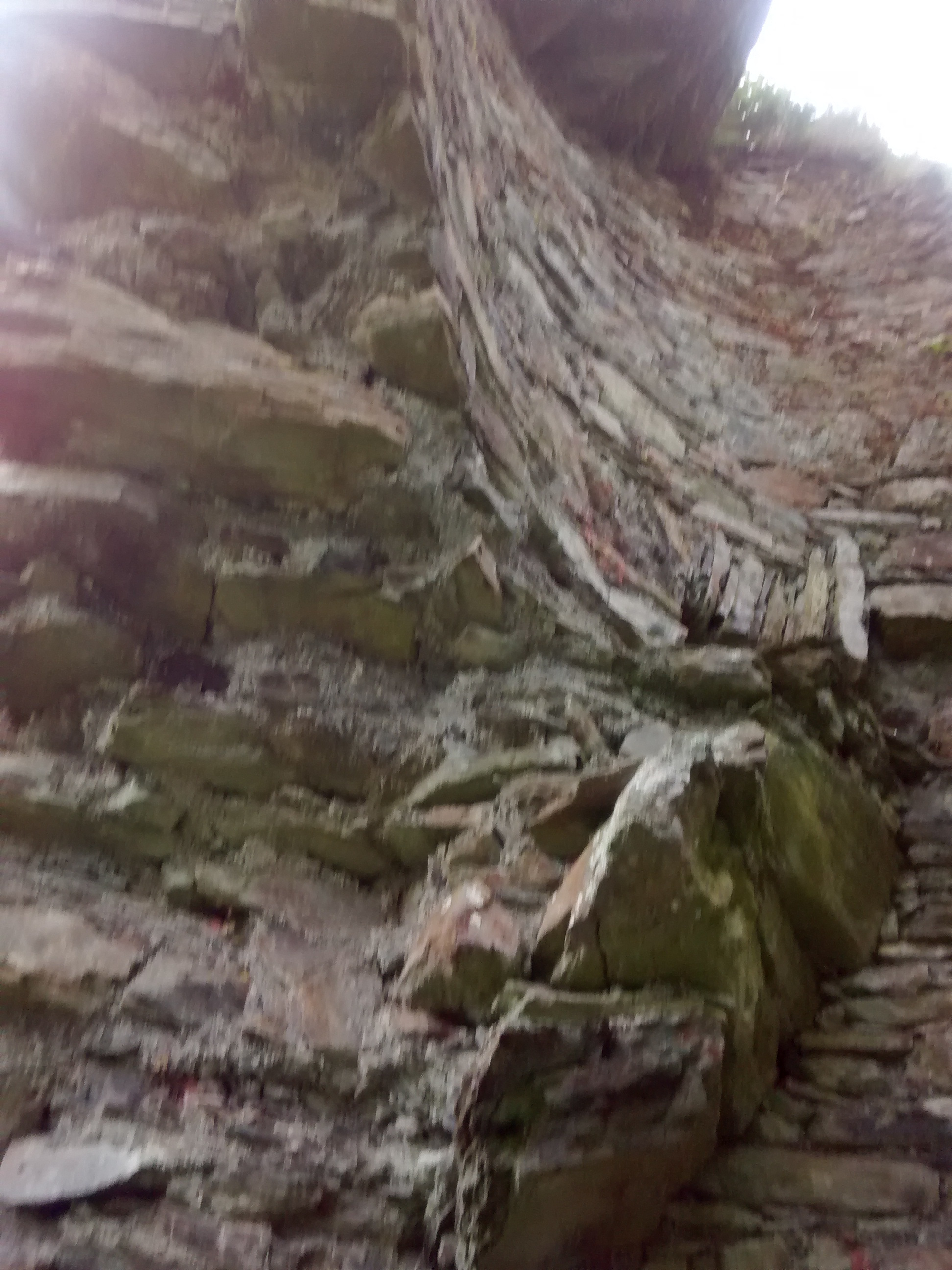
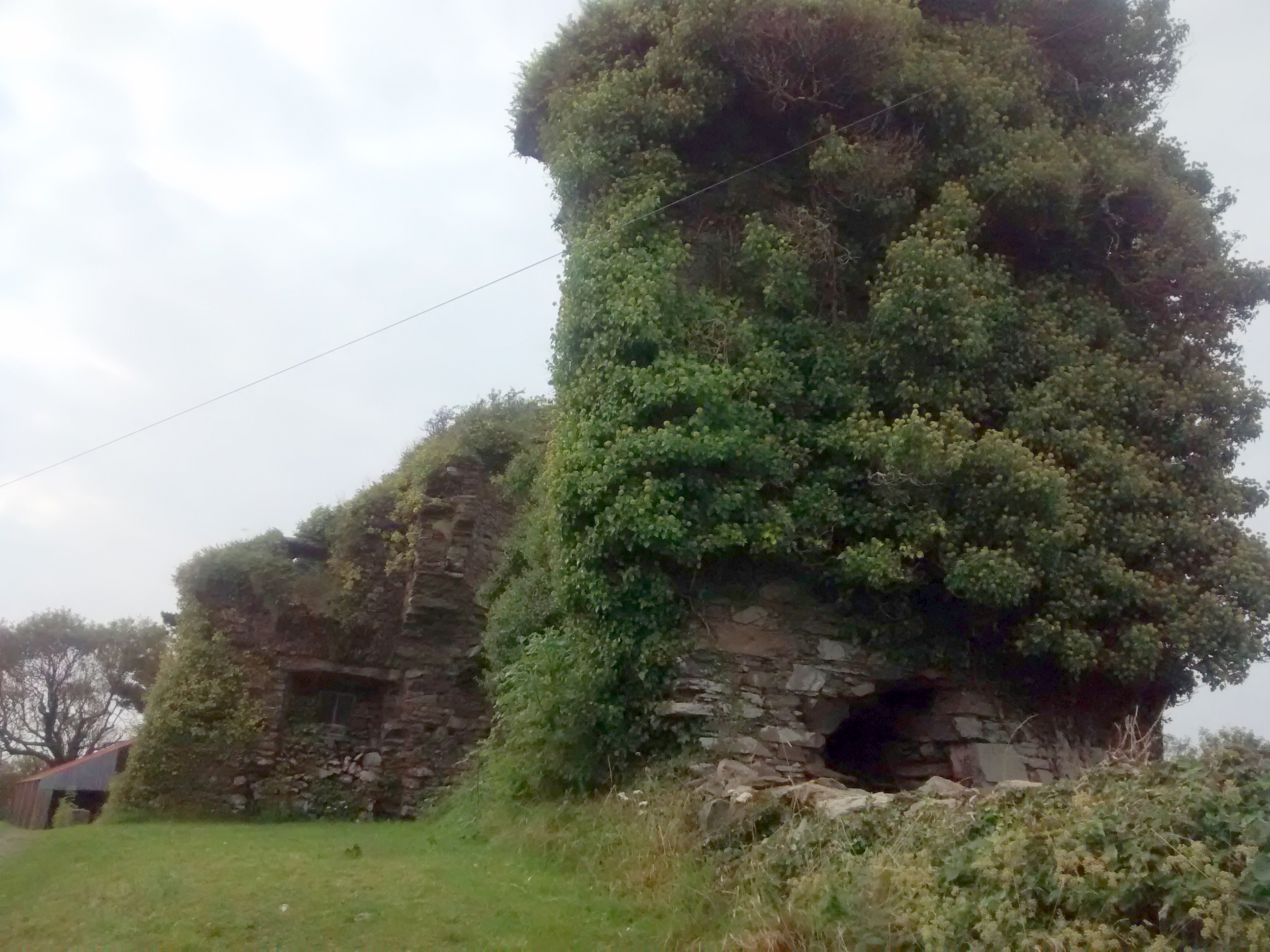
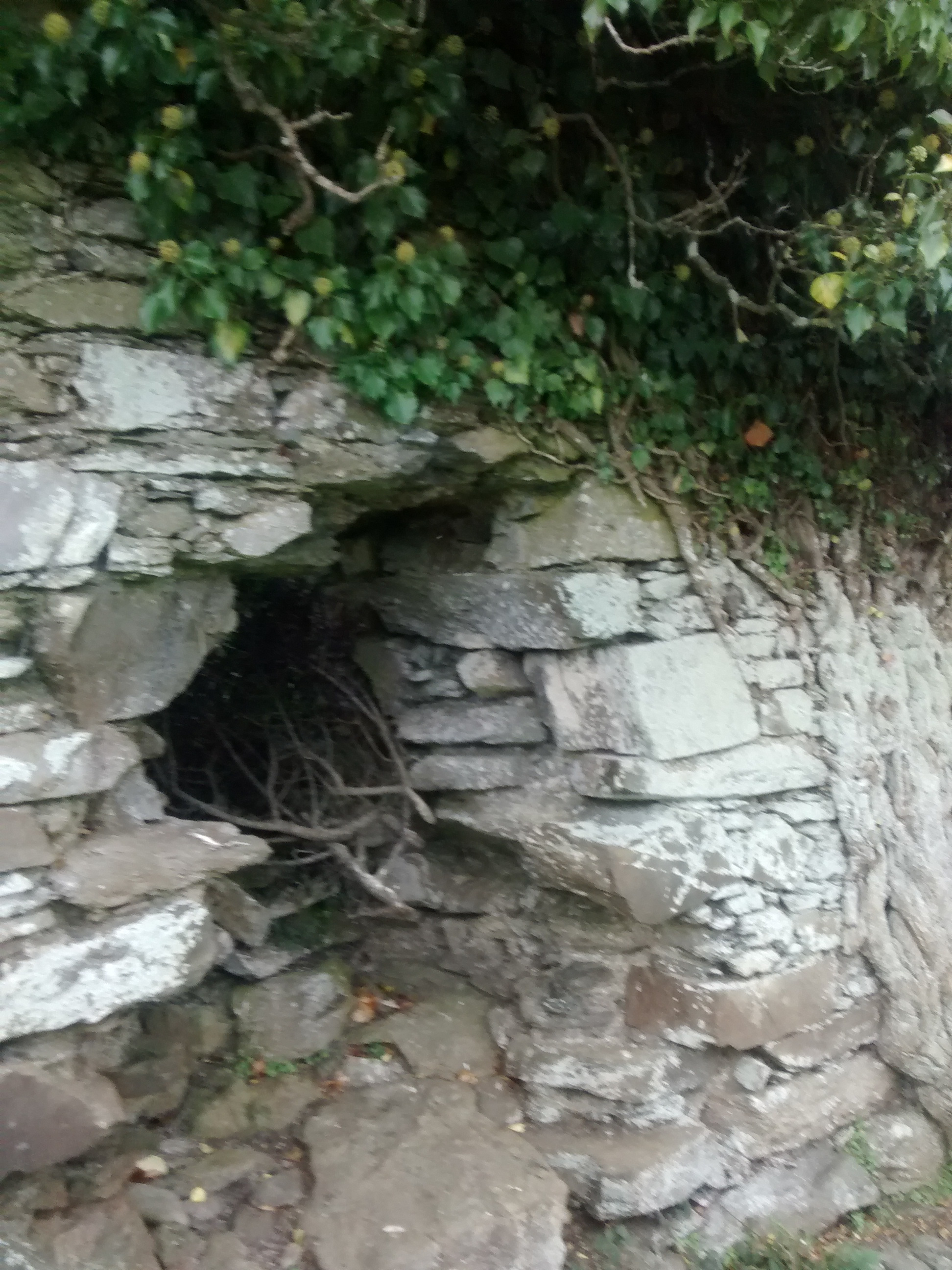

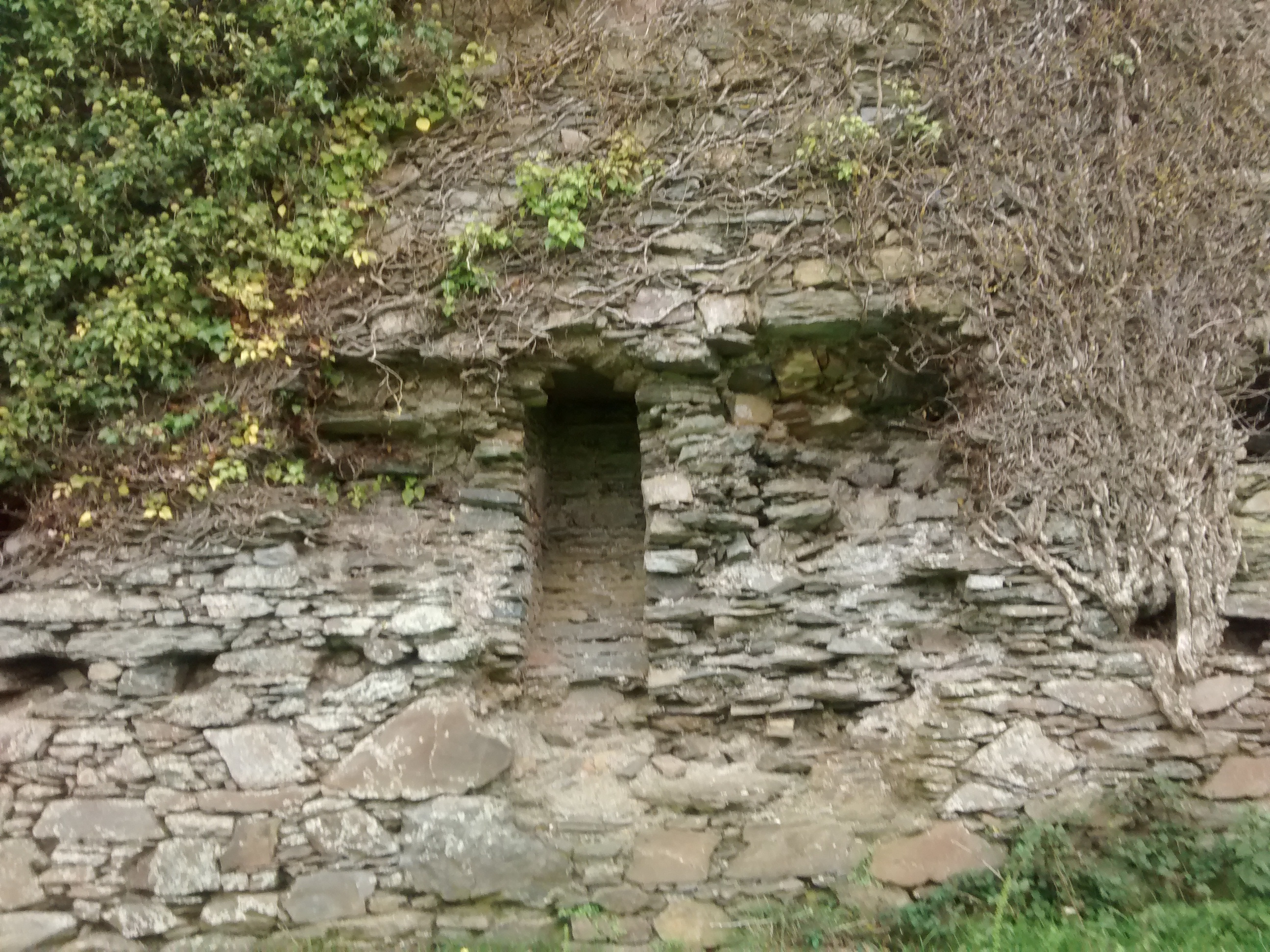
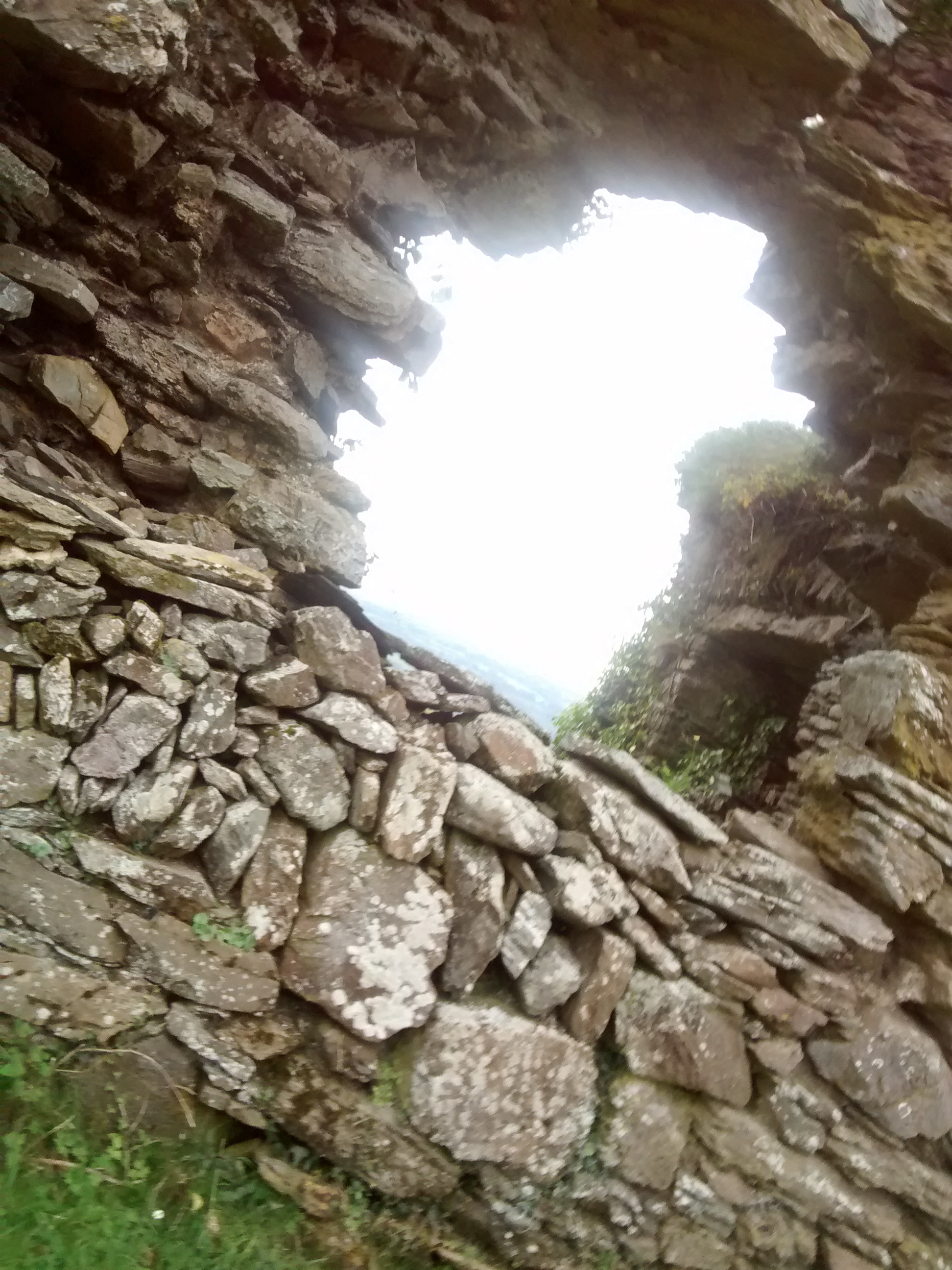


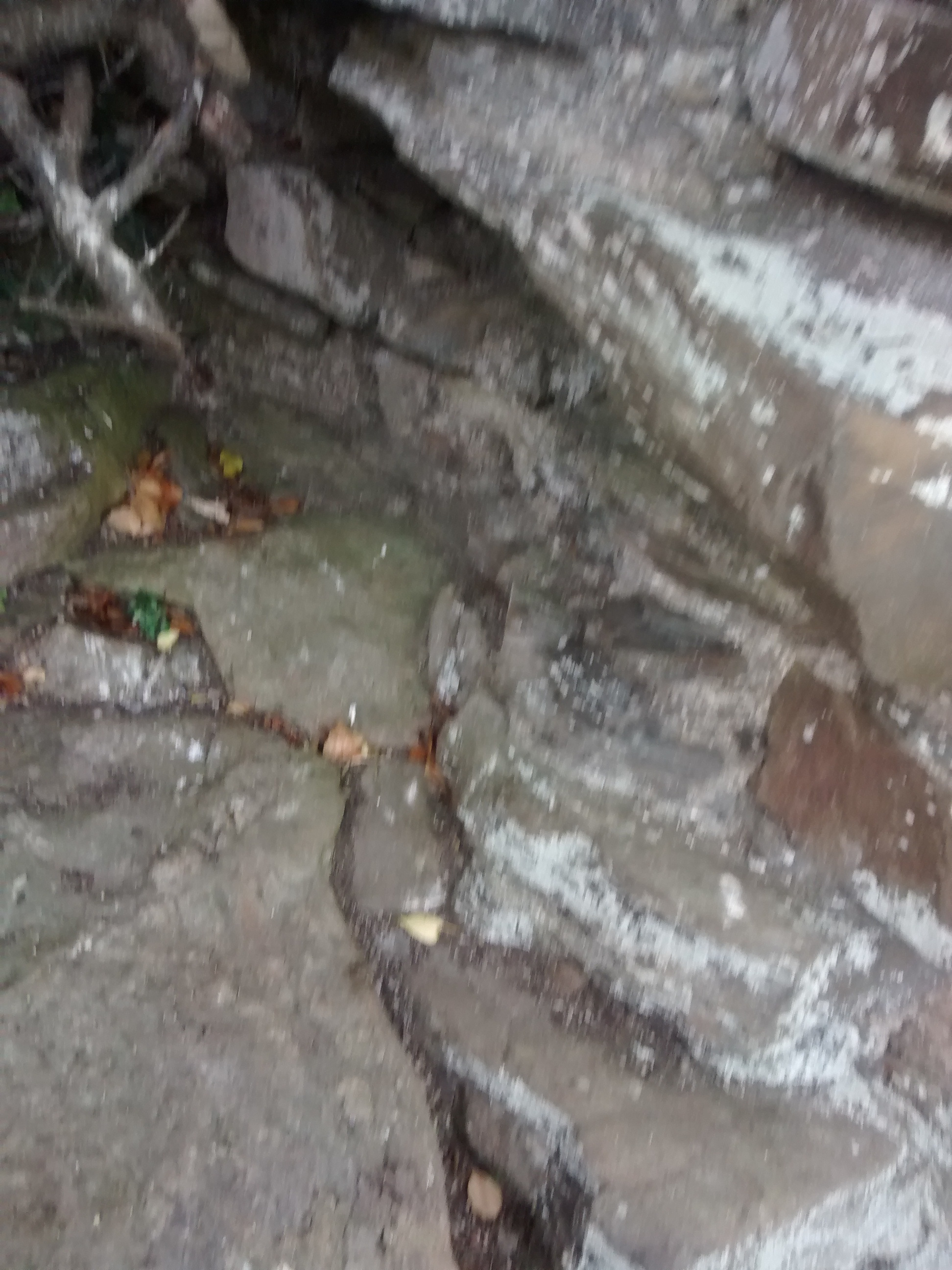
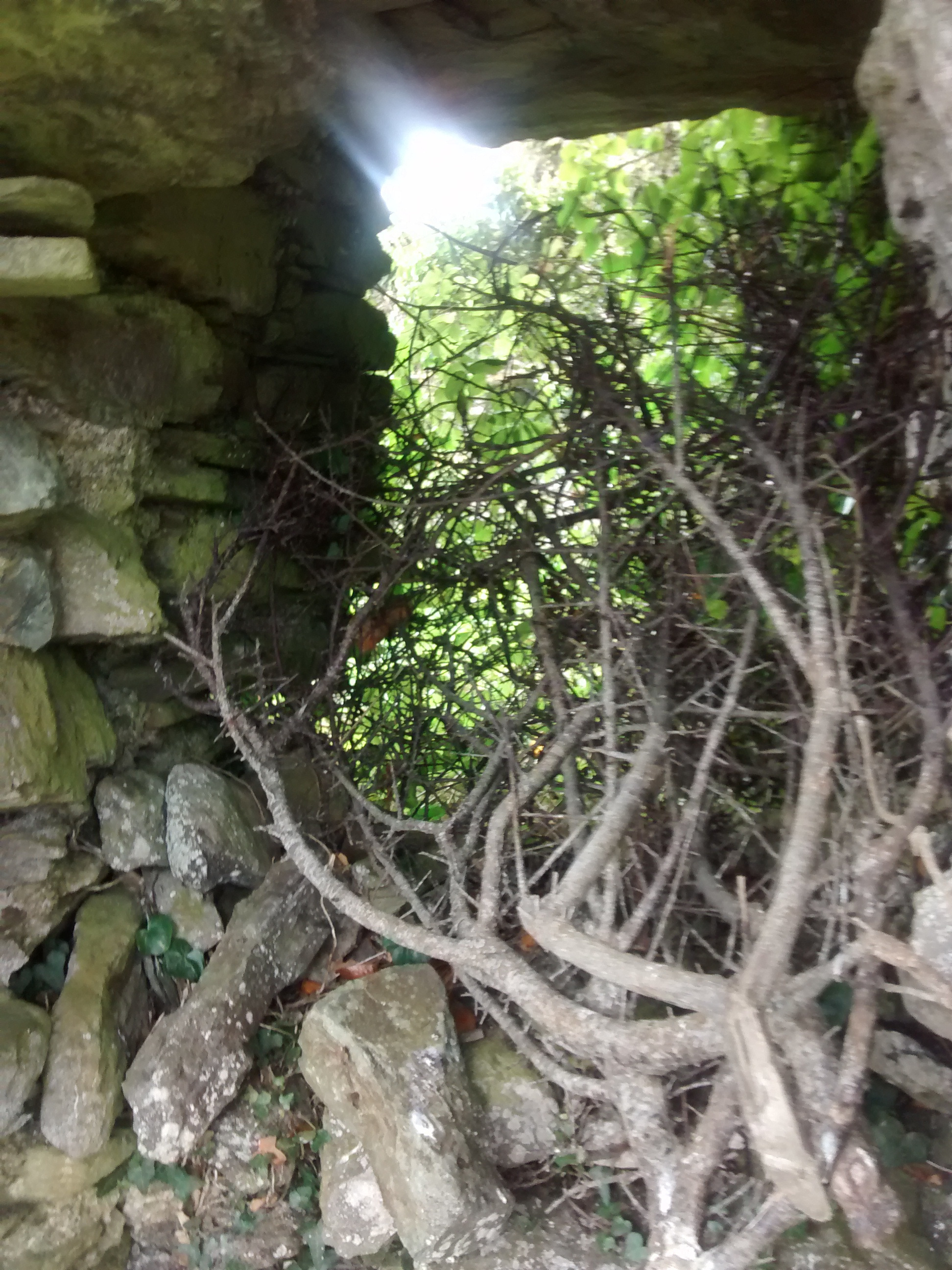
The farm yard nearby was in the Baker family and in the 19th century became Shannon by marriage. The Balers are probably in the area since the 1600s possibly in connection with fishing. The farmyard ‘on the water’ was originally a thatched fisherman’s cottage later raised and lengthened. The adjoining farm is Hegarty originally Attridge related to Hegartys by marriage the property was purchased the Hegartys from the Mizen Peninsula.
Just in front of the beach is a cluster of apple trees containing a variety never before identified, now knows as ‘George Hegarty’ adn being propogated in Seed Svers in Clare.Courtesy Peter Clarke (http://sheepsheadplaces.net/taxonomy/term/26):
McCarthy Castle, Rossmore
Tower house
The remains of an O’Mahony tower house are well hidden down a little boreen and are to be found right at the seashore gazing down into the expanse of Dunmanus Bay. Not a huge lot remains – a three storeyed wall, some windows, a chimney breast, the remains of a garderobe, a stairwell and a cluster of little outbuildings plus farm house. Probably built in the 14C, the castle seems to have been owned by the McCarthy family who later built themselves a fine modern building at Cúl na Long.
Townland: Rossmore: Ros mor, large headland
Location: Down a small track from the main Durrus to Ahakista road; private access
References: V922 409
Field notes:
This is a wonderful, well hidden spot at the end of a little boreen. The old tower house has been customised with farm buildings being built on its walls, and tiny windows placed in its original huge ones. The whole area is peppered with little buildings – a farm house right at the water’s edge and a cluster of outbuildings. A resident donkey regarded me with gentle interest.
06 Tuesday Oct 2015
Posted in Uncategorized
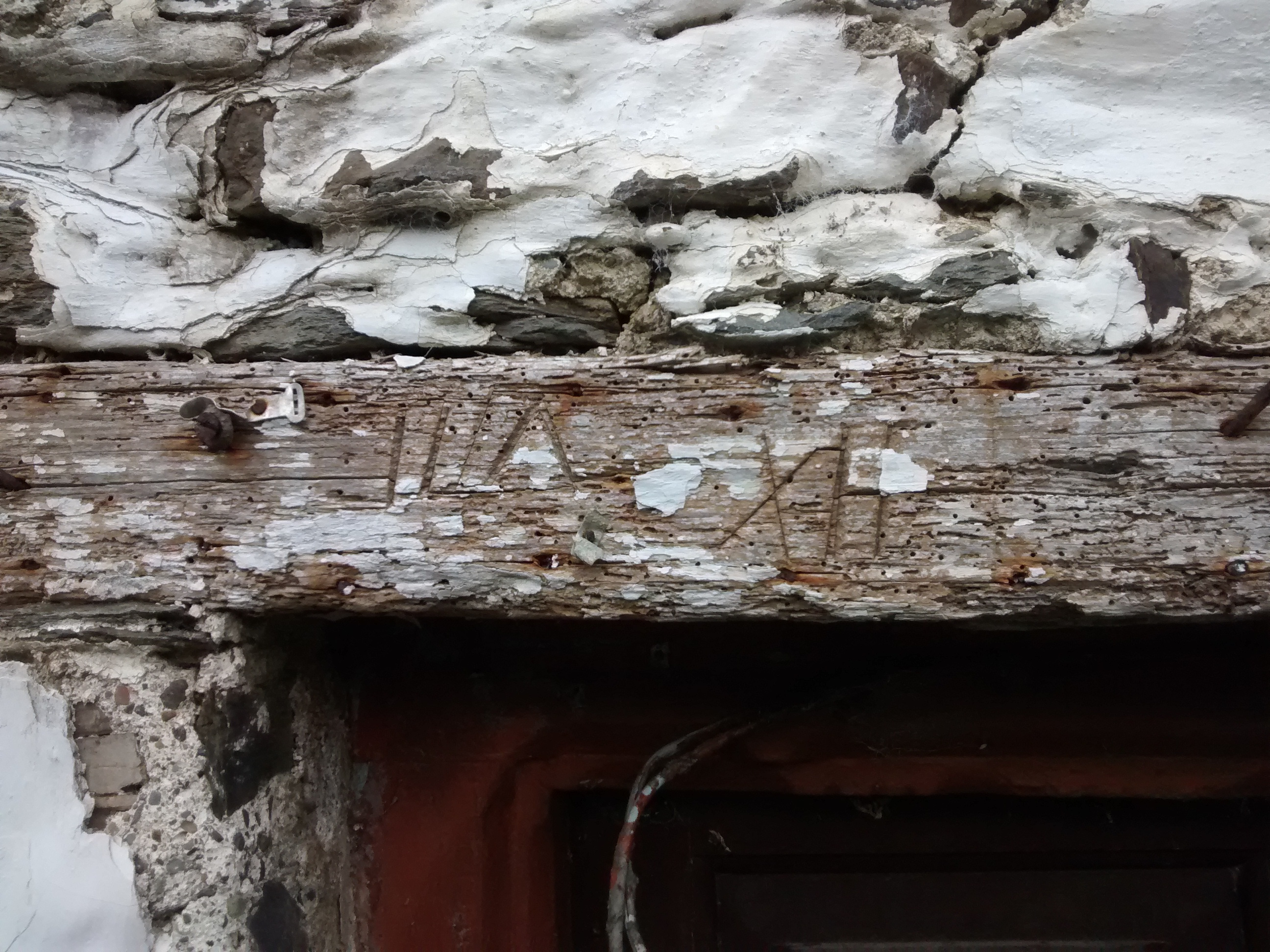
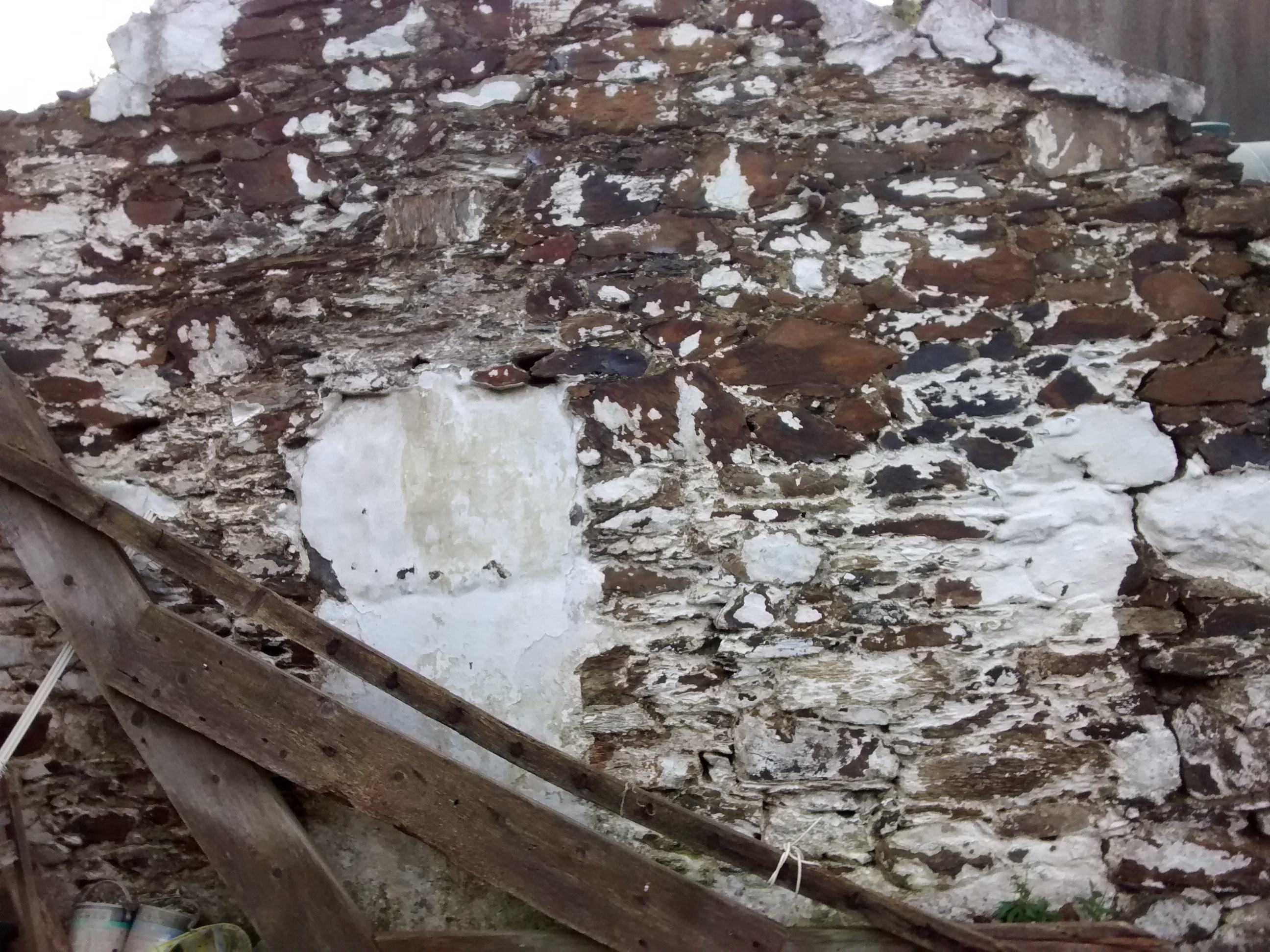
Vickery Farmhouse, Post 1784, Ballycomane (Irish: Baile an Chumáin, meaning ‘town of the little valley’), Durrus, West Cork with Carpenter’s Wood Marks.
Genealogy:
https://docs.google.com/document/d/1R5S7Ixo14SSEnX1EEHFrmTLinfdvqNyuVwQNDl3GnM0/edit
Ballycomane (1349 acres) (Irish: Baile an Chumain, meaning ‘town of the little valley’). Part of it is Ballinwillin with a boulder burial,with the remains of a millrace which may have been used by monks at the nearby church of Mouliward, ringfort and standing stone pair. Mass rock in Vincent Hurley’s farm. Former graveyard in Sam Attridge’s lands no remains. The oldest family are probably the Hurleys (Vincents), they may have moved from Ballnacarriga outside Dunmanway and Darby Hurley who held Ballycomane Middle was allegedly evicted by Lord Carbery when a rent payment was missed, the farm was then given to the Vickerys c 1770. Interestingly around this time the Marriage Licence Bonds has a Hurley/Vickery marriage.
The devolution of title is as follows, in the early 17th century, the McCarthys of either Scart or Caheragh had the townland and mortgaged it to Sir Walter Coppinger. They defaulted and he went into possession. He backed the wrong horse in 1641 and his estates were forfeit. In the late 17th century the Evans-Freke family of Welsh origin (Lord Carbery) went into possession. The Vickeries as tenant farmers acquire title under the Land Acts in the early 20th century.
https://durrushistory.wordpress.com/wp-admin/post.php?post=918&action=edit
The Vickery lease is registered in the Registry of Deeds from around 1784. The Bantry and Durrus Vickeries were heavily intermarried with the O’Sullivan Hurrig family from the marriage in the 1780s of Michael O’Sullivan and Mary Vickey of Whiddy Island. Some in the family claim descent from Michael to O’Sullivan Bere. There are a very large number of worldwide descendants from the Ballycomane Vickeries.
The Vickeries of Ballycomane were prominent n the Church of Ireland in the early 19th century as Vestrymen, the family later converted to Methodism. They were also cess payers representatives and feature prominently as progressive farmers winning prizes at Agricultural shows.
They were one of the few Protestant families in what was a densely populated townland. Other local townland had a a different religious composition depending on the Landlord. On the various Evanson Estates they probably introduced weavers and improvers from the 1730s most likely from Armagh, some like the Crostons from Lankashire going on DNA matches.
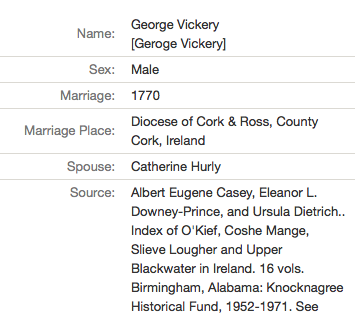
1830 Tithe Aplottment shows two Vickeries in Ballycomane with a combined valuation of almost £40, very high for the area:

George Vickery Bantry Quarter Sessions 1842:
Griffith Valuation, 1850 shows the Vickeries as both tenants of Lord Carbery and also the Lessors of a number os smaller farms:

Prizewinners Bantry Agricultural Show 1860s:
McCarthy RElief Fund 1863:
The 1901 census interestingly George Vickery has both Irish and English, in the house hold return the house is 1st class he also owns the Hurley house possibly working on farm.


From Ron Price:
Between 1981 and 1990 I made notes immediately after speaking to various Co Cork people about my Cork ancestry. I now wish to make those notes available to anyone interested. Any clarification comments added at this stage are in square brackets. I would welcome any questions or comments.
Source: Maud Vickery (b. 1896) of Donemark Falls, Bantry, Co Cork.
Notes from conversation on 4 May 1983
– A Vickery Family Bible went to the USA and is now probably lost. Someone who copied it showed the original John Vickery’s wife as Catherine Swanton.
– She thinks that the Rooska farm [lived in by earliest John Vickery] was passed to John’s son William, who perhaps had no children. Ownership then passed to the Whiddy branch who rented it out. At present a Sullivan family live in it, having bought from the Vickerys some 20-30 years ago – previously they rented. As a child she thought that the original house was a ruin but the Sullivan occupiers say it is the original.
– The original John Vickery’s tomb is in the old churchyard – straight up from the gate, slightly to the left, opposite ruined church. The Ballycommane branch kept this tomb – a tablet at its side records a 1914/16 burial.
– She thinks the [Vickery] history compiled by the Clancoole people was primarily for children & it contains a number of inaccuracies.
– She says that both Sullivans and Vickerys (she is descended from both) always said Michael Sullivan was descended from the O’Sullivan Beare of Dunboy. Michael Sullivan is mentioned in a book “The Two Chiefs of Dunboy” as a son of McFinnan Dhu (Dereen) of Dunboy Castle.
– Our branch of the Sullians were known as “the Sullivan Hurrigs”.
Notes from conversation on 5 May 1983
– Mrs Phipps [Mary nee Sullivan 1890-1977] told her that she had read that Michael O’Sullivan’s father had lost his farm through trading with the French. He, Michael, later fought a duel with the son of the new owner and lost a couple of toes as a result. Michael was very tall, very quiet and very handsome.
– Mrs Phipps also said that Michael O’Sullivan was a Catholic but allowed his wife Mary Vickery to bring up the children as Church of Ireland. He, however, remained a Catholic all his life and was buried one. He was respected around Bantry for this.
– As a child, she was shown an old wall, since gone, to the right of the present house at Rooska. However, the present occupier Mrs O’Sullivan apparently insists the present house is the original one.
Notes from conversation on 5 June 1984
– She gave credence to the story of the Sullivan family being descended from the O’Sullivan Beare because a Roger Sullivan who was generally known to be a descendant always said (in her youth) that the Sullivans of Tedagh were related to him.
Notes from conversation on 14 Aug 1985
– She heard the story of Michael O’Sullivan’s father losing his farm from Mrs Phipps (I was wrong in thinking she had read it somewhere).
– In the 1920s-30s Roger Sullivan of Reendonegan frequently told Maud they were related. She assumes that he meant through her Sullivan grandmother. It was generally accepted that he was descended from the Dunboy family – he was commonly known as “the last Chieftain”.
House October 2015 occupied up to recent years, bought by Deanes of Crottees in 1930s :


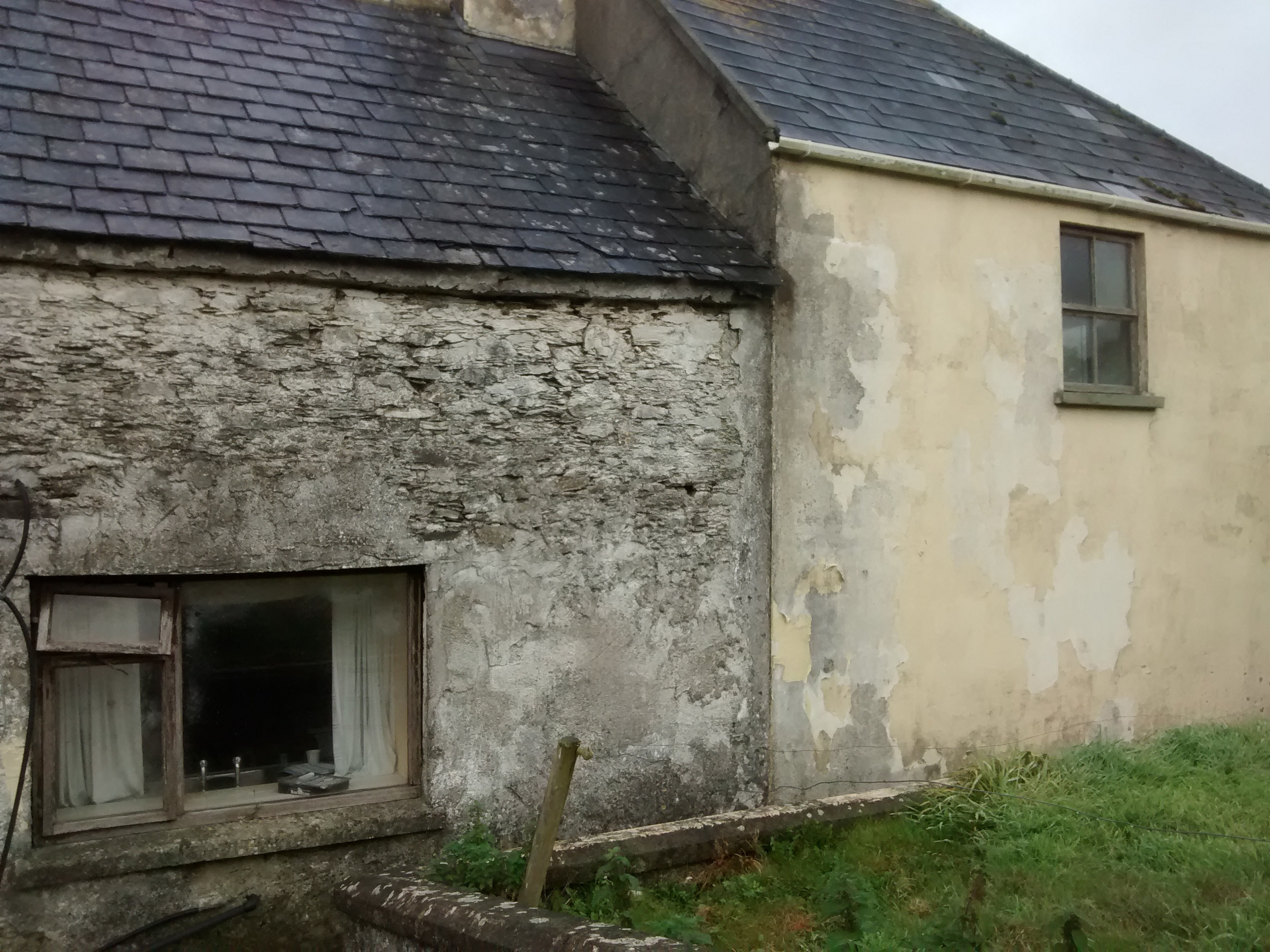

Carpenter’s Marks


05 Monday Oct 2015
Posted in Uncategorized
This gallery contains 15 photos.
Originally posted on Roaringwater Journal:
The entrance to Castle Haven. Horse Island is separated from the mainland by the charmingly named…
04 Sunday Oct 2015
Tags

Census Return 1901, unusually his daughter is an Art Student, his wife is probably of the McCarthy Letterlickey family, substantial farmers:
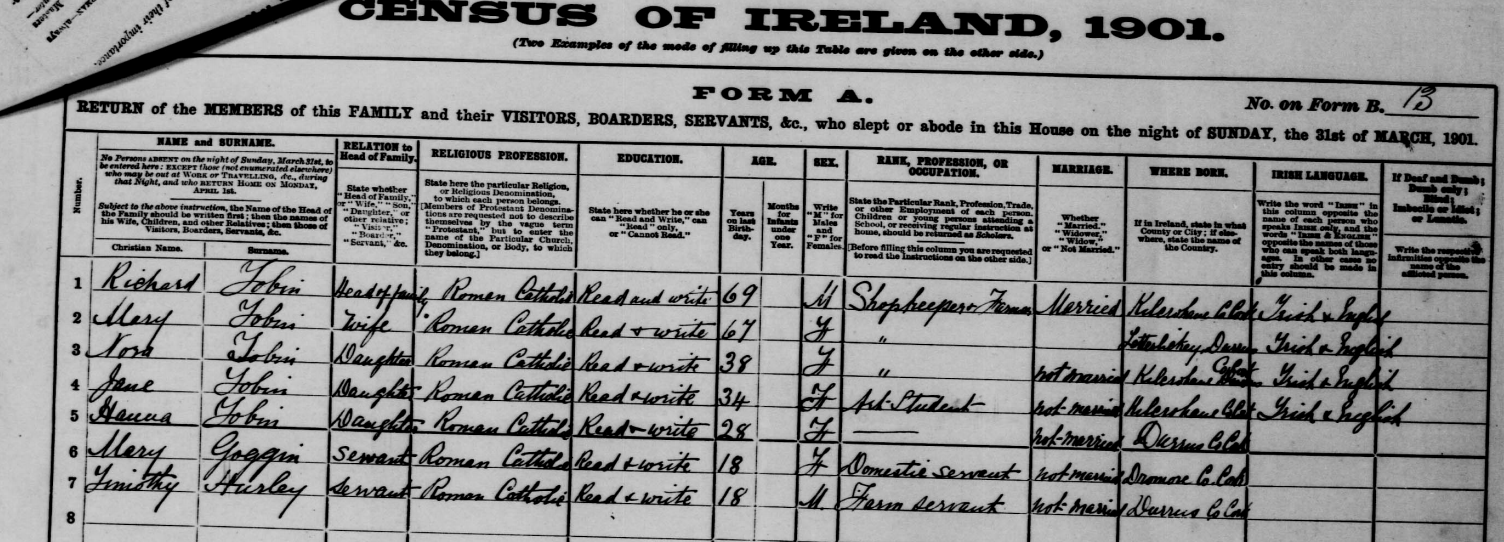
He features in the Bandon Estate records for Durrus as a substantial tenant and also paying royalties for landing sea sand (At the Sand Quay opposite the ‘Good Times Cafe’:
https://docs.google.com/spreadsheets/d/1LVgcai4i4QWpyLFvKhEgQAMjtdhjI6VhRrBr2XMWC2U/edit#gid=0
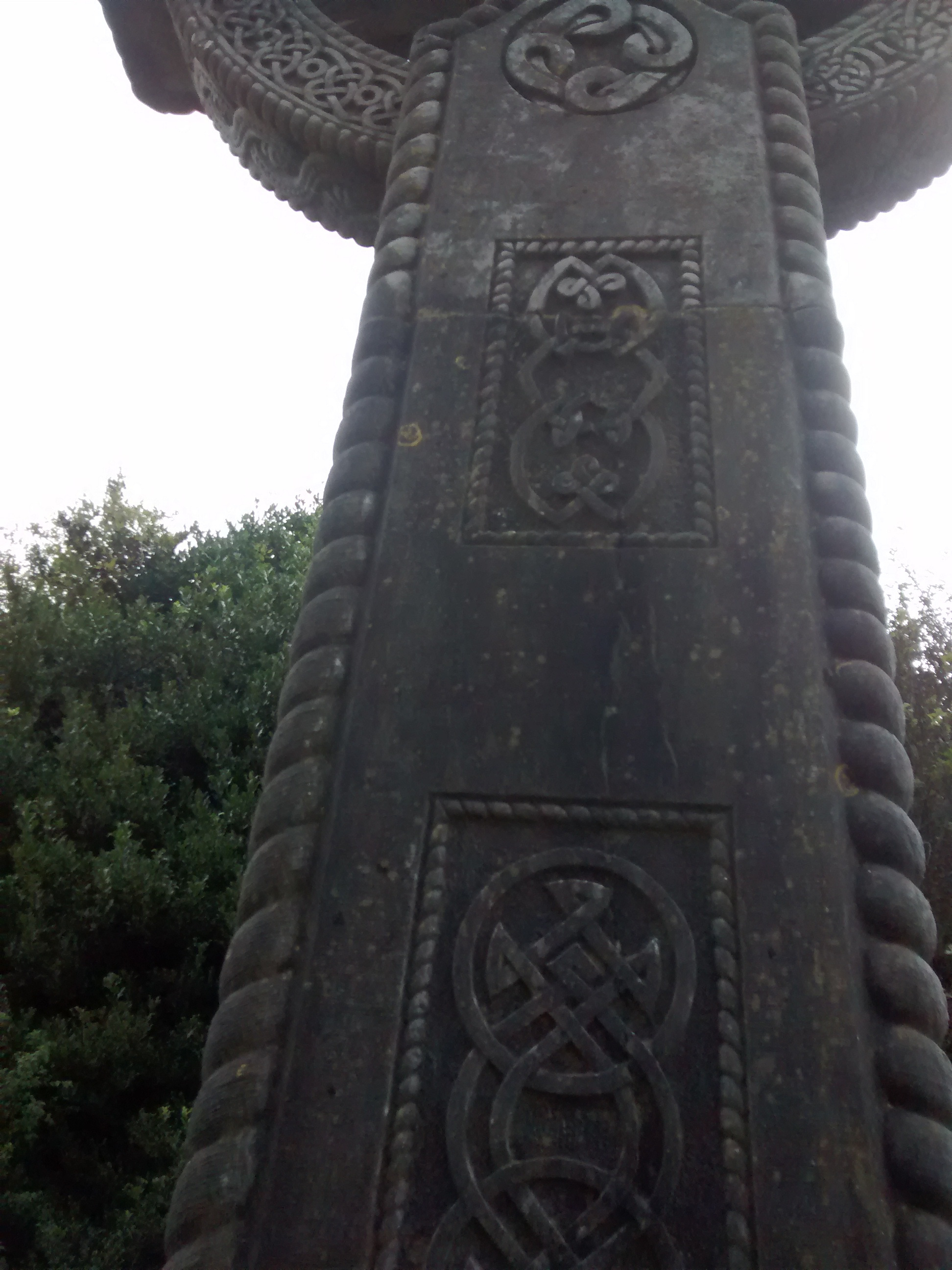
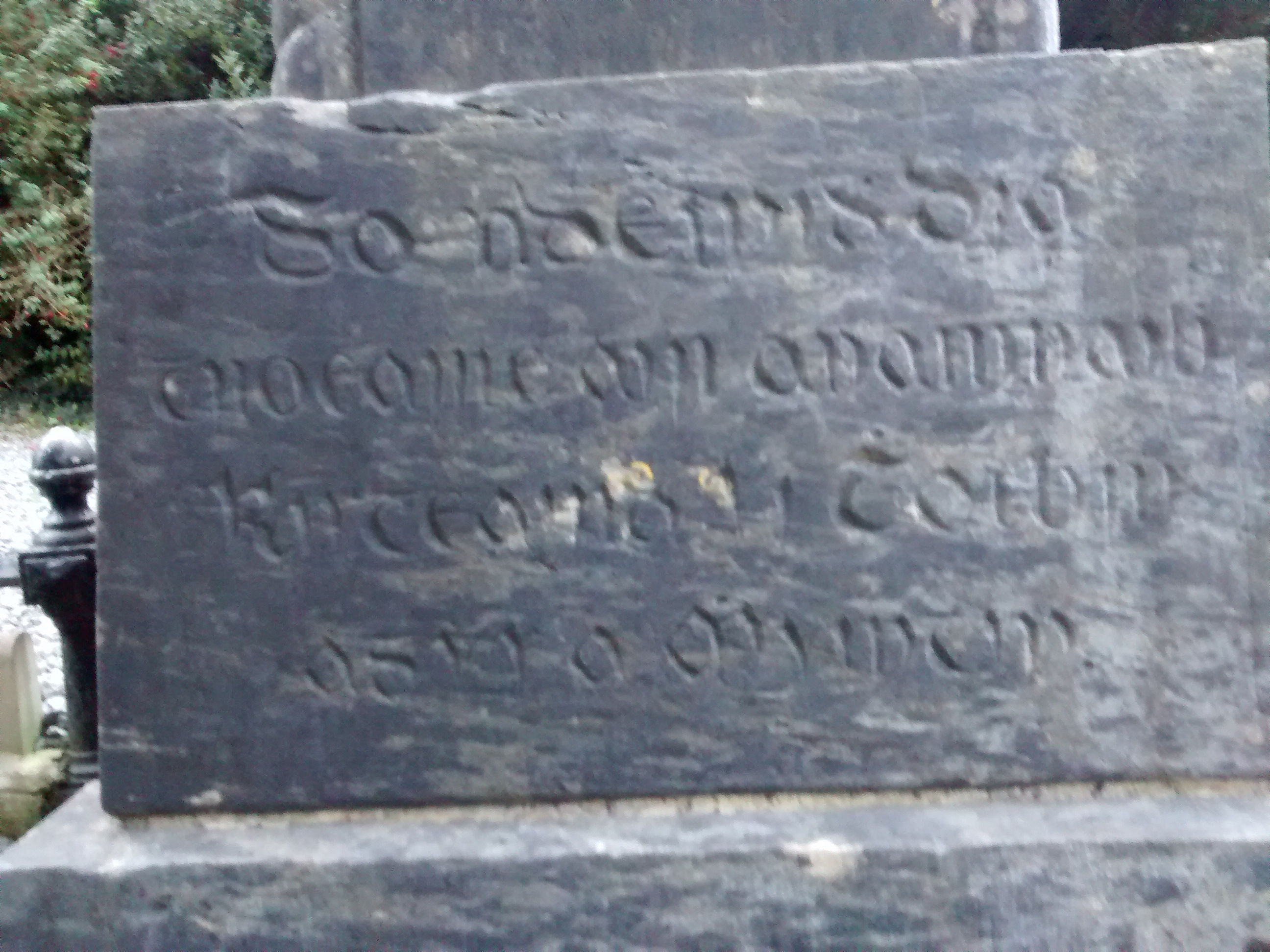





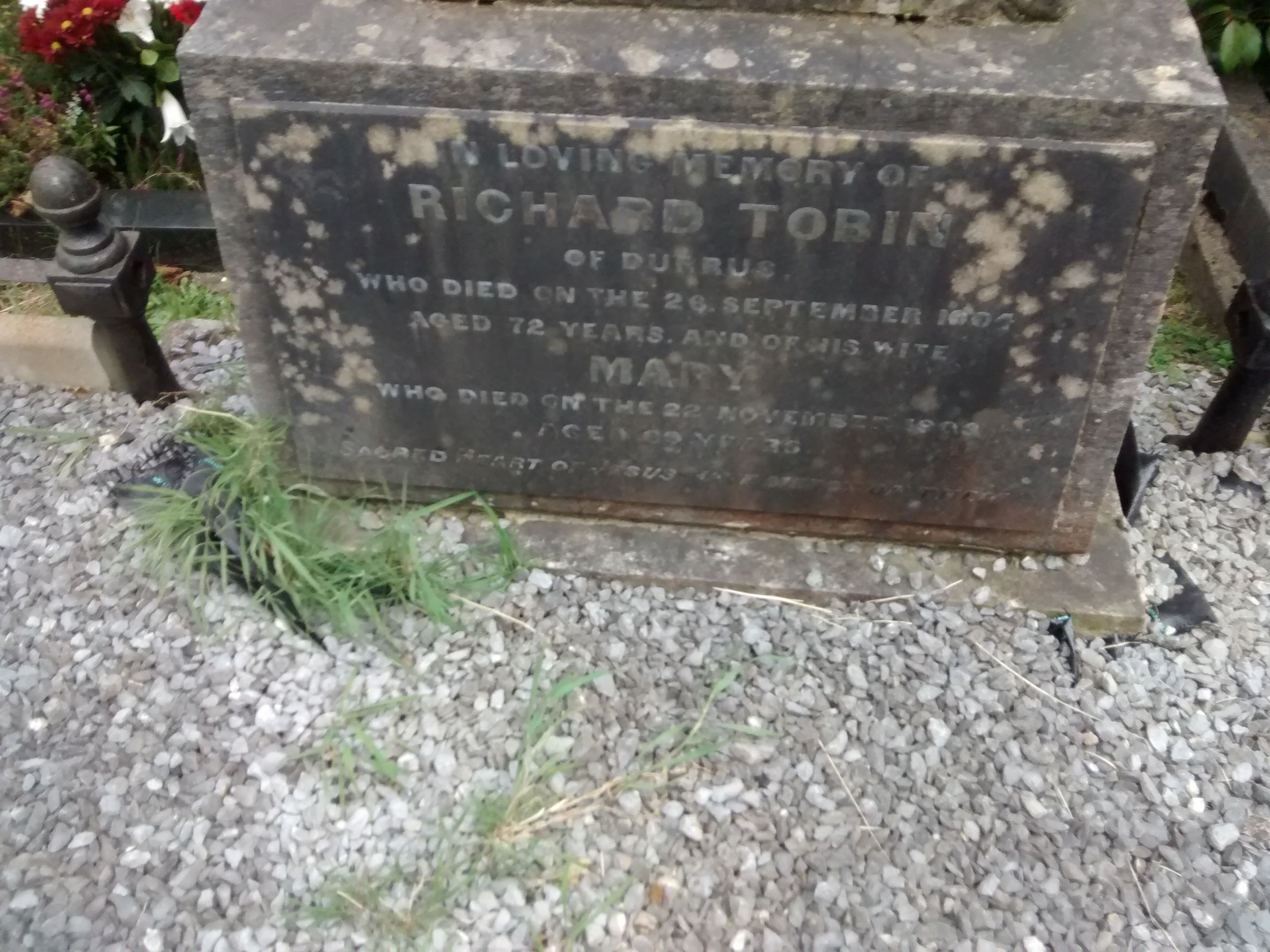




Posted by durrushistory | Filed under Uncategorized
04 Sunday Oct 2015
02 Friday Oct 2015
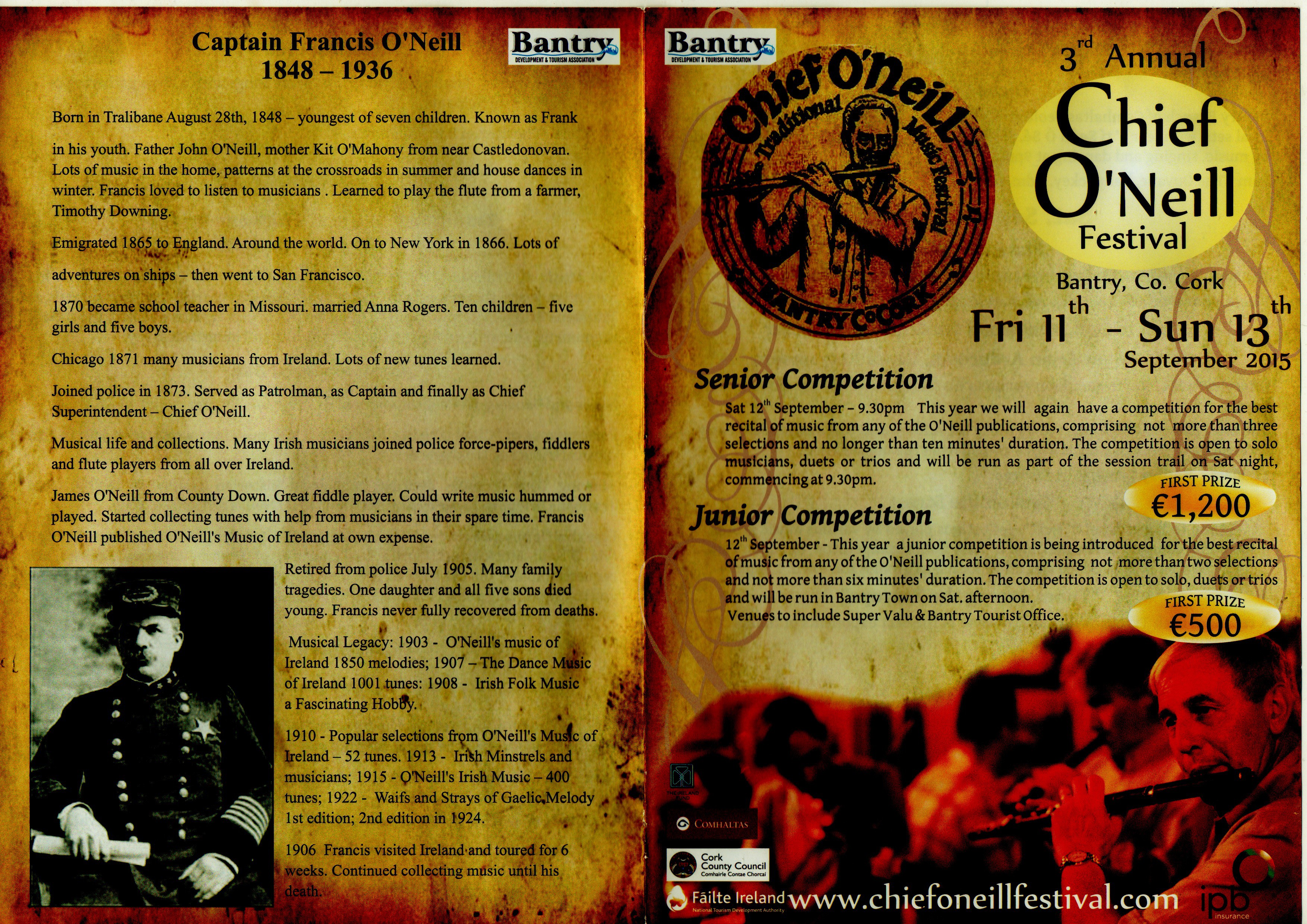
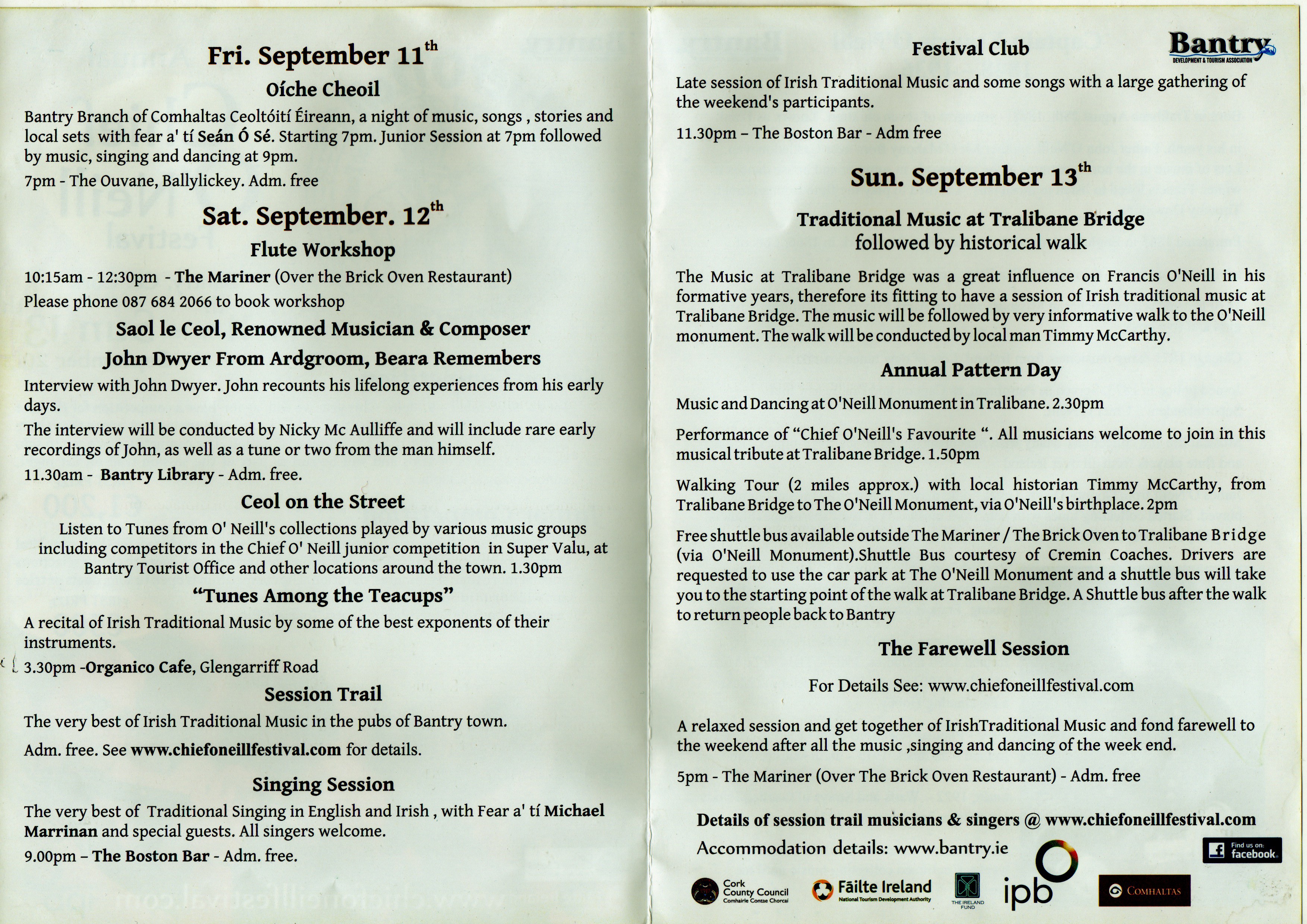

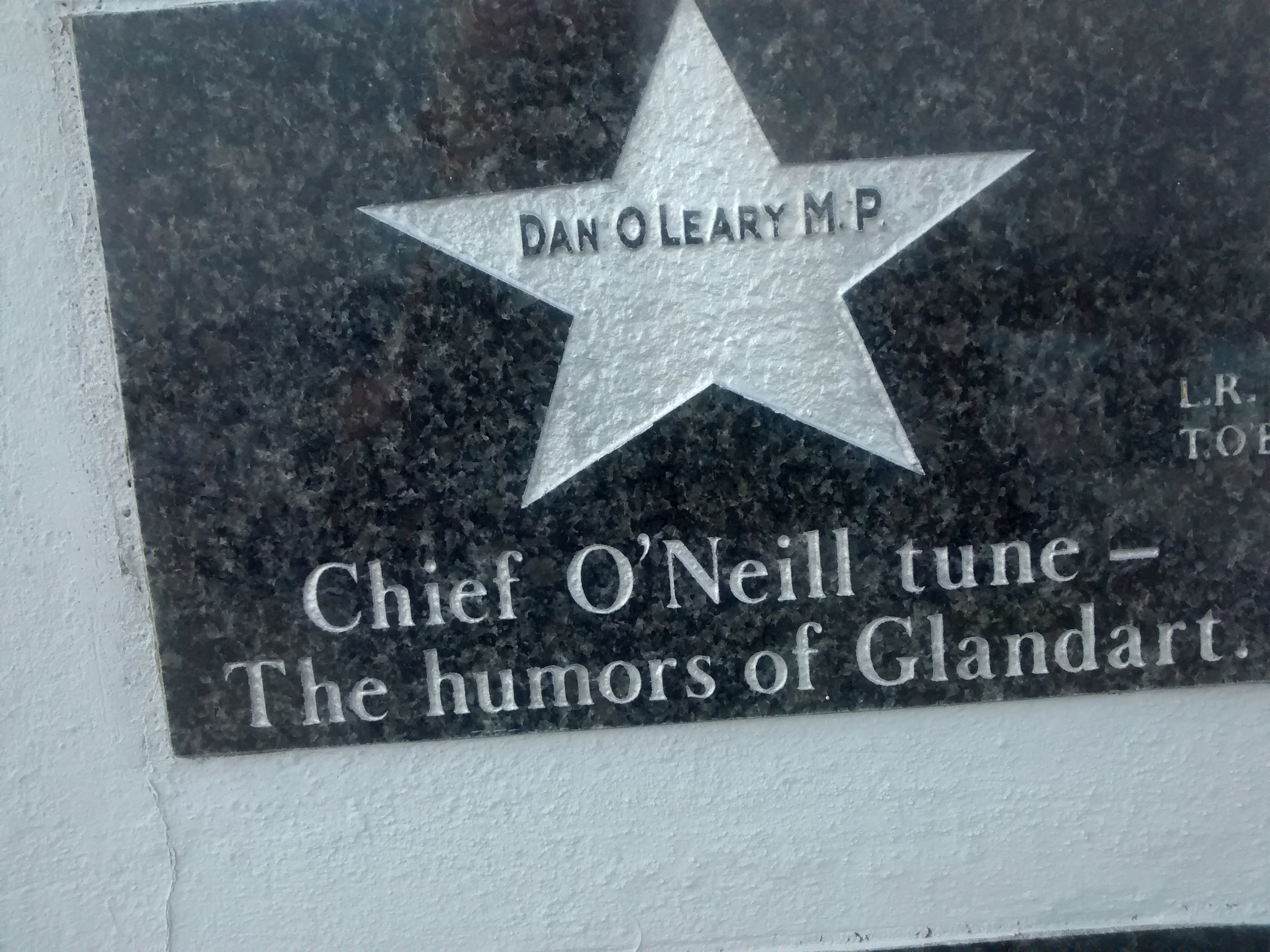
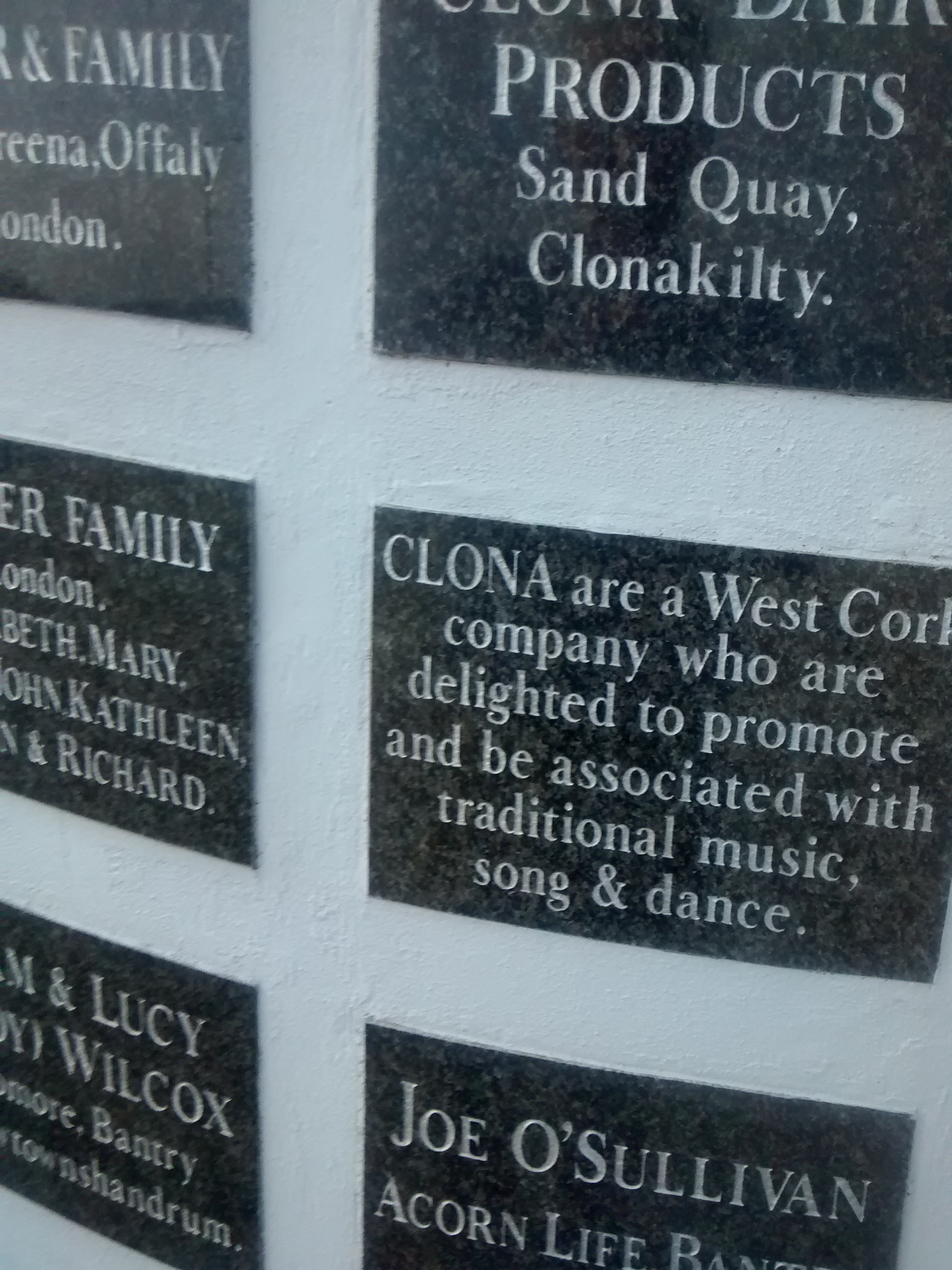
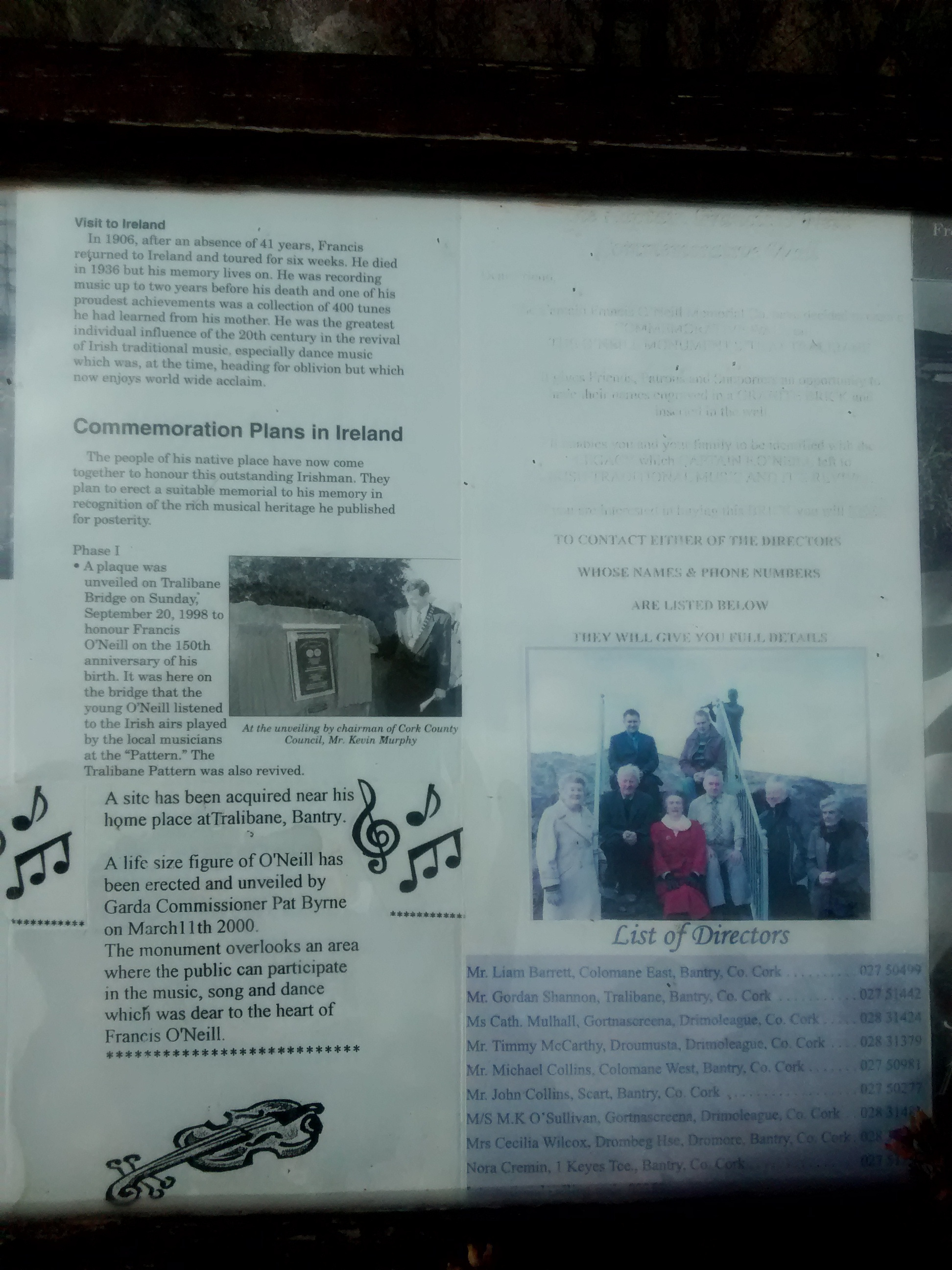
The music still lives on, John Spillane, Cork Songwriter’s mother is a few miles from the Chief:
Subscriber to Durrus Church Building 1900:
https://durrushistory.wordpress.com/wp-admin/post.php?post=8576&action=edit



















Posted by durrushistory | Filed under Uncategorized

 West Cork History