Philip O’Hea of Barryroe, Co. Cork at risk of Losing Seven Ploughlands during Penal Laws, Makes them Over to Colonel Townsend and Receives the Townland of Listonkin, Rent Free For Life Ancestry of John O’Hea, Justice of the Peace, Clonakilty, 1840.


durrushistory's avatarWest Cork History

https://www.google.ie/maps/place/Durrus,+Co.+Cork/@51.6147448,-8.8545178,14z/data=!4m2!3m1!1s0x48459fe7ccd270df:0x231e3744ac95441a

Philip O’Hea of Barryroe, Co. Cork at risk of Losing Seven Ploughlands during Penal Laws, Makes them Over to Colonel Townsend and Receives the Townland of Listonkin, Rent Free For Life Ancestry of John O’Hea, Justice of the Peace, Clonakilty, 1840.

Genealogy of the The O’Hea Family of South West Cork from c 1295 AD.

View original post

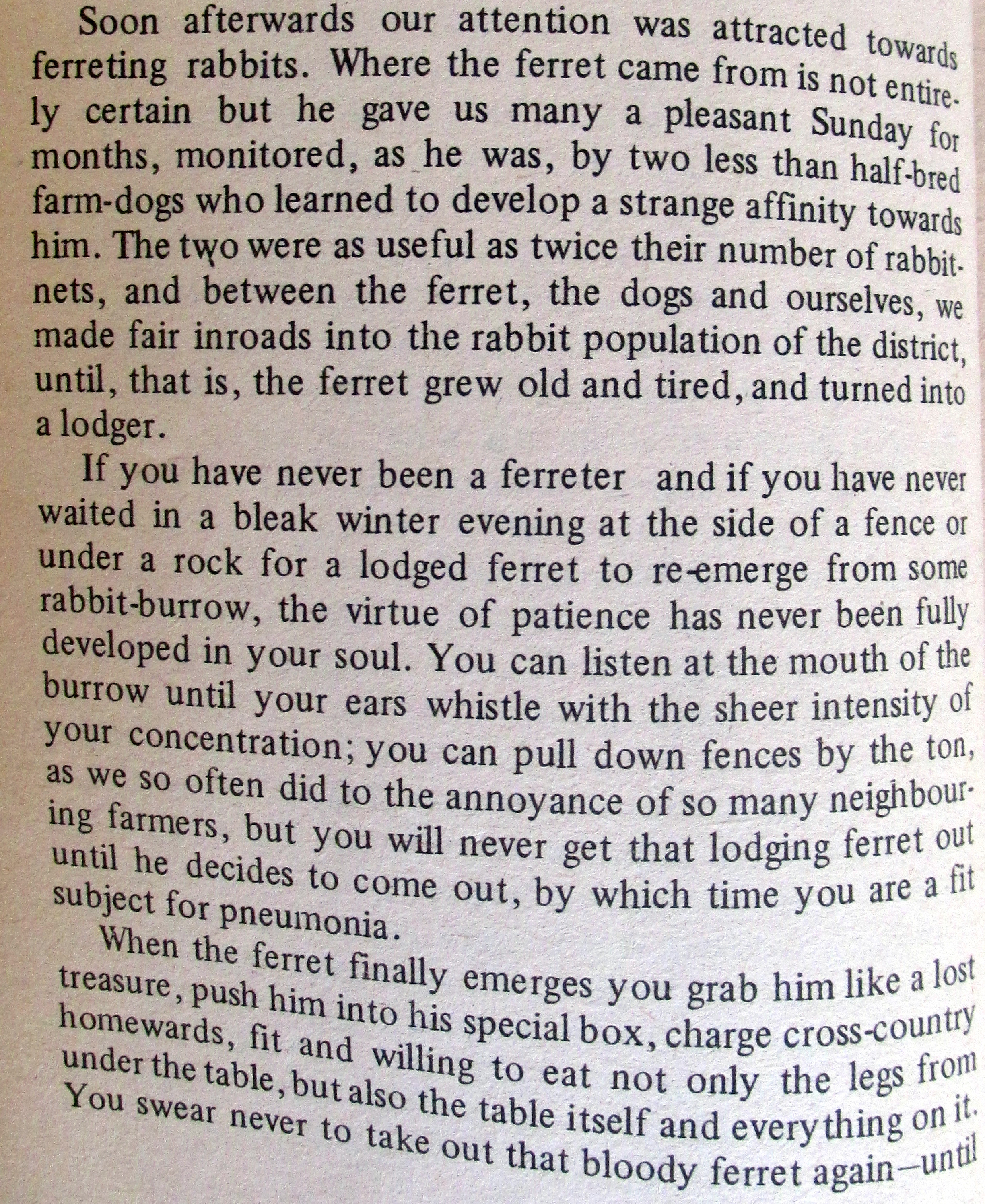
Out for a day with the Ferret in Dunmanway, West Cork, Long Ago.


durrushistory's avatarWest Cork History

Out for a day with the Ferret in Dunmanway, West Cork, Long Ago.

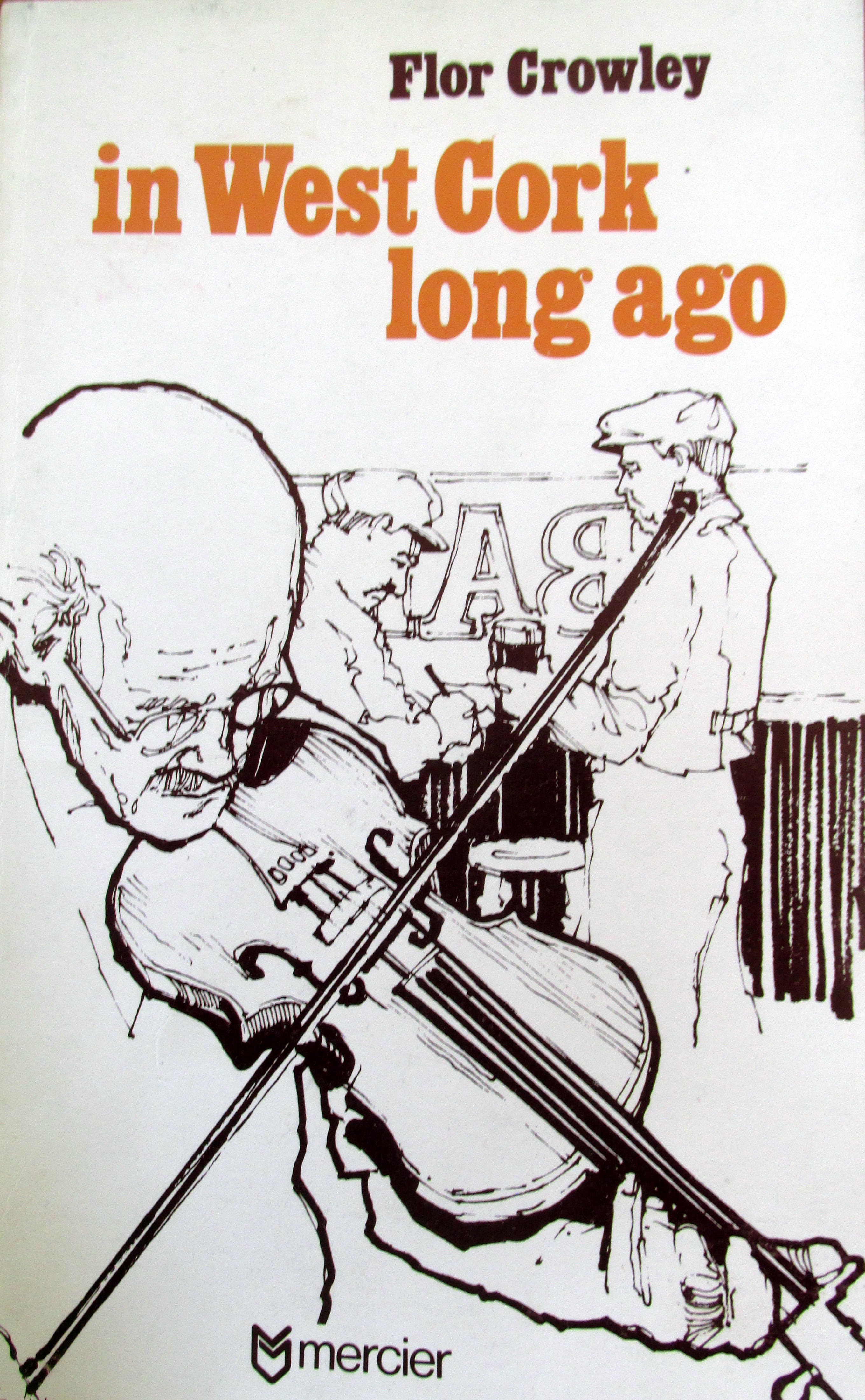
From Flor Crolwey’s book ‘In West Cork Long Ago’. Mercier Press 1979. A fascinating account of old times. He was from Behigullane, Dunmanway a National Teacher at Behagh National School. He was a founder of ‘An Ból Chumann na hÉireann’ in 1954 the body regulating road bowlng.

http://www.askaboutireland.ie/reading-room/sports-recreation/sport/road-bowling/bol-chumann-na-heireannth/
The book is redolent of De Valera’s Ireland of the mid 20th century, the views now seems narrow.

1-IMG_4567

2-IMG_4568

3-IMG_4569

Rabbits:
https://durrushistory.wordpress.com/the-rabbit-trade-in-the-1950s-before-mymamatosis-in-the-1950s-snaring-ferrets/

View original post

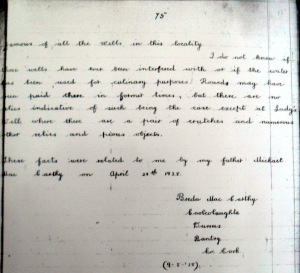
Rounds, Holy Wells, at Rooska, Moulivard and Father Bernane from 1938 School Folklore Collection, Carrigboy National School, Durrus, West Cork.


List of Durrus Townlands


durrushistory's avatarWest Cork History

• Ahagouna (Irish: Ath Gamhna, meaning ‘Ford of the calves’). In Clashadoo town land.

• Ardogeena (152 acres) (Irish: Ard na Gaoine, meaning ‘Height of the flint stones’). On the east side is Lisdromaloghera (Irish: Lios Drom Luachra, meaning ‘Fort of the rushy ridge’)

• Ballycomane (1349 acres) (Irish: Baile an Chumain, meaning ‘town of the little valley’). Part of it is Ballinwillin with a boulder burial,with the remains of a millrace which may have been used by monks at the nearby church of Mouliward, ringfort and standing stone pair. Mass rock in Vincent Hurley’s farm. Former graveyard in Sam Attridge’s lands no remains.  The oldest family are probably the Hurleys (Vincents), they moved from Ballnacarriga outside Dunmanway and Darby Hurley who held Ballycomane Middle was evicted by Lord Carbery when a rent payment was missed, the farm was then given to the Vickerys c 1770…

View original post 1,367 more words

Denial March 1862 by John P Hayes, that he compiled ‘Skellig List’, circulating in Skibbereen accompanied by Statutory Declaration.


durrushistory's avatarWest Cork History

Taken from a dark microfilm quality poor. Skibbereen Eagle, National Library, Dublin.

Denial March 1862 by John P Hayes, that he compiled ‘Skellig List’, circulating in Skibbereen accompanied by Statutory Declaration.

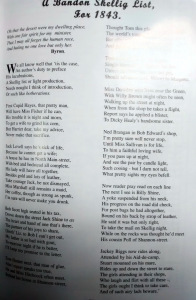
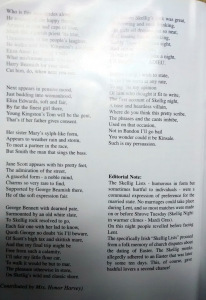
The Skellig Lists

Skellig Lists, Bandon 1843, Dunmanway 1846, Ballydehob 1912, Celebration of Skellig Night, South Mall, Cork 1845.

1-IMG_1599

View original post

Skellig Lists, Bandon 1843, Ballydehob 1912, Celebration of Skellig Night, South Mall, Cork 1845.


durrushistory's avatarWest Cork History

Skellig Lists, Bandon 1843, Ballydehob 1912, Celebration of Skellig Night, South Mall, Cork 1845.

http://www.irishcultureandcustoms.com/ACalend/SinglebyAshWed.html

https://irelandsotherpoetry.wordpress.com/2008/03/28/the-skellig-lists/

http://sources.nli.ie/Record/PS_UR_021652

1-IMG_20140805_1518326032-IMG_20140805_151845040

1-IMG_20140805_151903597

The Skellig
(2nd edition and supplement)

1910

By John Thomas (Jack) Roycroft b. Jan. 2, 1889, son of Samuel James Roycroft and Martha Skuce

The closing night of Shrove is here
All dark and stormy wild and dear
While o’er the road to Skellig Rock
The lads and lasses are seen to flock
Alone I stand and view the scene
Well knowing what this march doth mean
An even number forth doth go
Forth to that rock for weal or woe,
I scan the figures as they pass,
Along o’er the heather and dewy grass,
I think I’ve counted about two score
Yet indeed there may have been many more.
Some faces look merry, some look grave,
While dresses flutter and tresses wave.
And the stars through the clouds peep merrily down
To…

View original post 2,737 more words

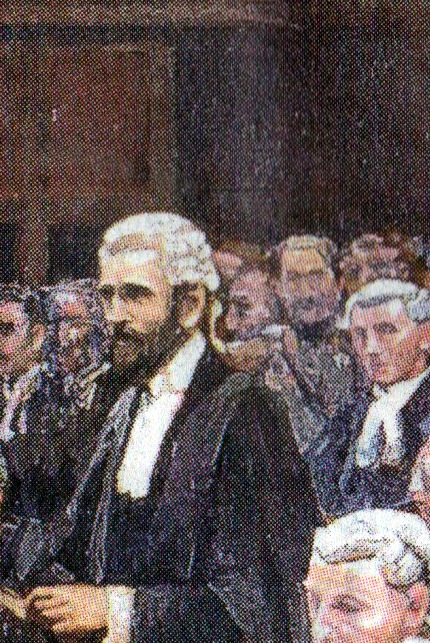
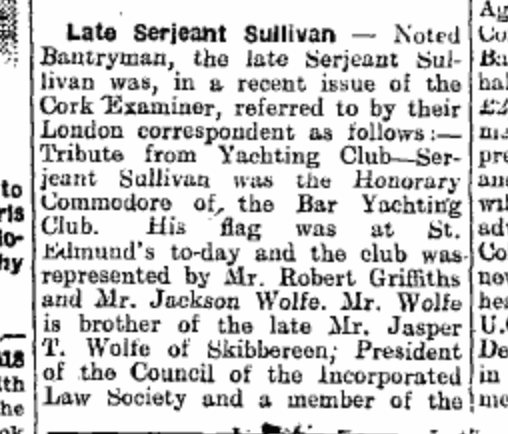
Sergeant Alexander Martin Sullivan (1871-1959), defending Roger Casement, on his grave in Glasnevin he is ‘The last Sergeant of The Kingdom of Ireland’. Celebrated Painting Shows Charles Gavan Duffy, Instructing Solicitors, female Relation Attend Court by Special Permission, A First on Attorneys Bench. Constitutional Conundrum does The Kingdom of Ireland Still Exist?


Sergeant Alexander Martin Sullivan, defending Roger Casement, on his grave in Glasnevin he is ‘The last Sergeant of The Kingdom of Ireland.  Celebrated Painting May Show Women Solicitors on Attorneys Bench. Constitutional Conundrum does The Kingdom of Ireland Still Exist?
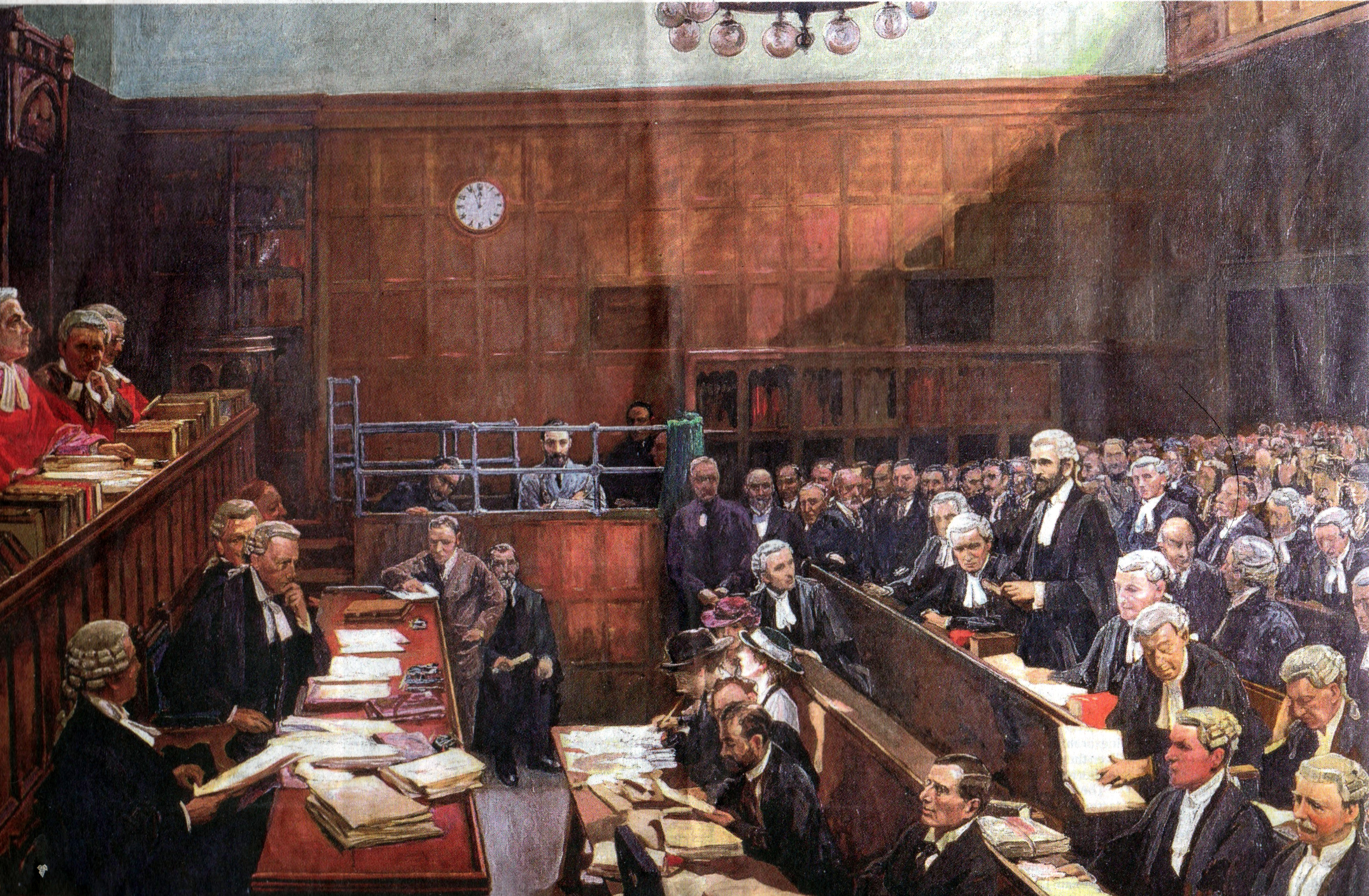
The famous painting of the treason trial of Roger Casement, is now in the Kings Inns, in Dublin.

Sir John Lavery’s 1916 oil painting, High Treason, Court of Criminal Appeal: The Trial of Sir Roger Casement, is a major 10×7 foot artwork documenting the 1916 appeal of Irish nationalist Roger Casement. Painted from the jury’s perspective, it captures the courtroom scene, featuring over 40 portraits, with Casement central

There are  women sitting on the Attorneys bench were they apprentices or recently qualified solicitors?
The 2nd woman in Ireland to qualify as a Solicitor in the  mid 1920 was Dorothea Brown. She grew up in Durrus, one of 8 children left orphaned in 1900, when her father an RIC Sergeant died in the Mitchelstown Workhouse from cholera.   Her mother was O’Mahony from Ahagouna and late ran a pub in Durrus ‘Mrs. Browns’.   Dorothea was apprenticed to Jasper Woulfe she and her husband later a Fine Gael senator and Taxing Master of the High court founded PF O’Reilly Solicitors which still thrives.   Her sister was the first woman Medical Officer of Health in East London in the UK.  Her brothers, one of whom was a mining executive served in the Australian forces in WW1 one killed.
The figure standing up is Sergeant Alexander Martin Sullivan, defending Roger Casement, on his grave in Glasnevin he is ‘The last Sergeant of The Kingdom of Ireland.
His father A. M. Sullivan from Bantry was one of the extended Sullivan/Healy/Murphy family ‘The Bantry Band’ who took to Law like ducks to water.
When the Irish Legal  History Society some time ago passed his grave it gave rise to an animated argument as to whether the Kingdom of Ireland still exists.  The Kingdom dates from Norman times when the Island of Ireland shared a Monarch with England and Wales and from 1700 Scotland.
The theory that it does exist s that the Act of Union of 1800 only united the Parliaments of  Ireland and Britain, neither the Treaty nor  the 1937 Irish Constitution makes reference to it.  So it may still have a theoretical existence.  It was a very frequent phrase in pre partition Ireland maybe its day will come again.
Courtesy Irish Times:

The painter was a rather unlikely presence: Sir John Lavery, born into a Catholic family in Belfast, was renowned for his portraits of English high society, and his studio had been visited by royalty. He had been invited to record the appeal trial by the presiding judge, Sir Charles Darling, a former client of his. Yet, as Casement noted, the painter “came perilously near aiding and comforting” the prisoner in the way he “eyed Mr Justice Darling’s delivery” of the verdict confirming the death sentence. Casement also noted that Lavery’s wife, Hazel, looked “very sad” at the same moment. The uneasy relationship between Lavery’s position as part of the imperial artistic establishment and his growing sympathies with Irish nationalism would produce a painting at once monumental and hard to place.

Lavery’s record of this moment in history is literally the work of an insider: it is possible only because Lavery was respectable enough to be given privileged access to the trial. Lavery later claimed that Darling had commissioned the work. Yet the result is not the grand image of imperial justice that might have been intended. The conventions of the genre are honoured in the large scale – three metres wide and two metres high – and the meticulous portraits of dozens of individuals. A sense of dramatic moment is created by the slanting light and by the clock that approaches the fatal hour of 12.

But the judges are almost statuesque. All the animation is given to Casement’s defence counsel. And the centre of the picture is occupied by Casement himself, who seems simple and human amid the pomp. He looks not at his judges but at the viewer. This is to be the judgment not of a mere court but of history.

This ambivalence marked the fate of the painting itself. Lavery did not complete it until the 1930s. If Darling commissioned it he did not pay for it: it remained in Lavery’s studio until his death, in 1941. The painter left it in his will to the National Portrait Gallery, in London, and the Royal Courts of Justice, but neither institution especially wanted it. After years in storage at the NPG it was hung in the office of the senior clerk of the court of criminal appeal in London, removed from the public gaze, for fear of arousing the wrong kind of attention from “people who considered Casement a martyr”.

The painting was lent to the Honorable Society of King’s Inns, in Dublin, in 1951. The message from the lord chancellor’s office accompanying the loan said, “We can adopt the suggestion of lending it to the King’s Inns on indefinite loan, which means that we can forget to ask for its return.”

Yet Lavery surely knew what he was doing when he left High Treason to British institutions in his will. For what he had produced was not an Irish painting or a British one but an image of two histories intertwined and at odds.

You can read more about this week’s artwork in the Royal Irish Academy’sDictionary of Irish Biography; see ria.ie
1-Scan 1
2-Scan 2