Early Church Wardens, 1699, Bishop Mann Visitation of Church of Ireland Dioceses of Cork. Ref D121.1. 1827 Parliamentary Return of Vestries, 1851, 1861 Visitations.
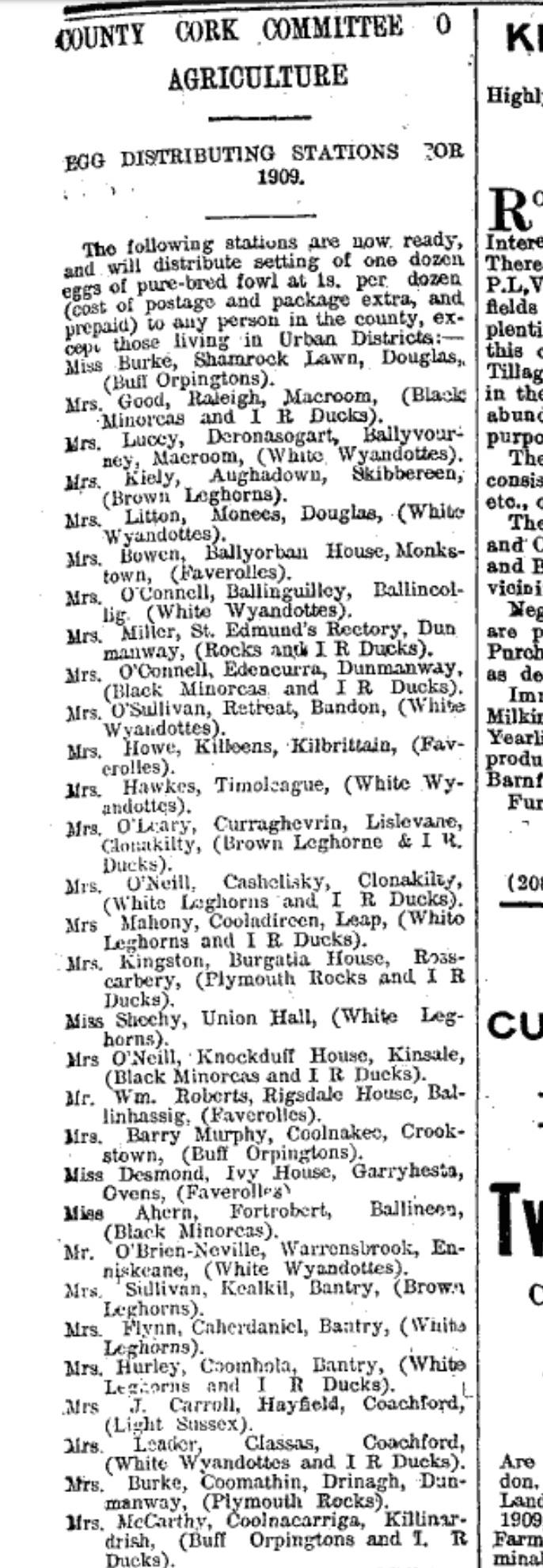
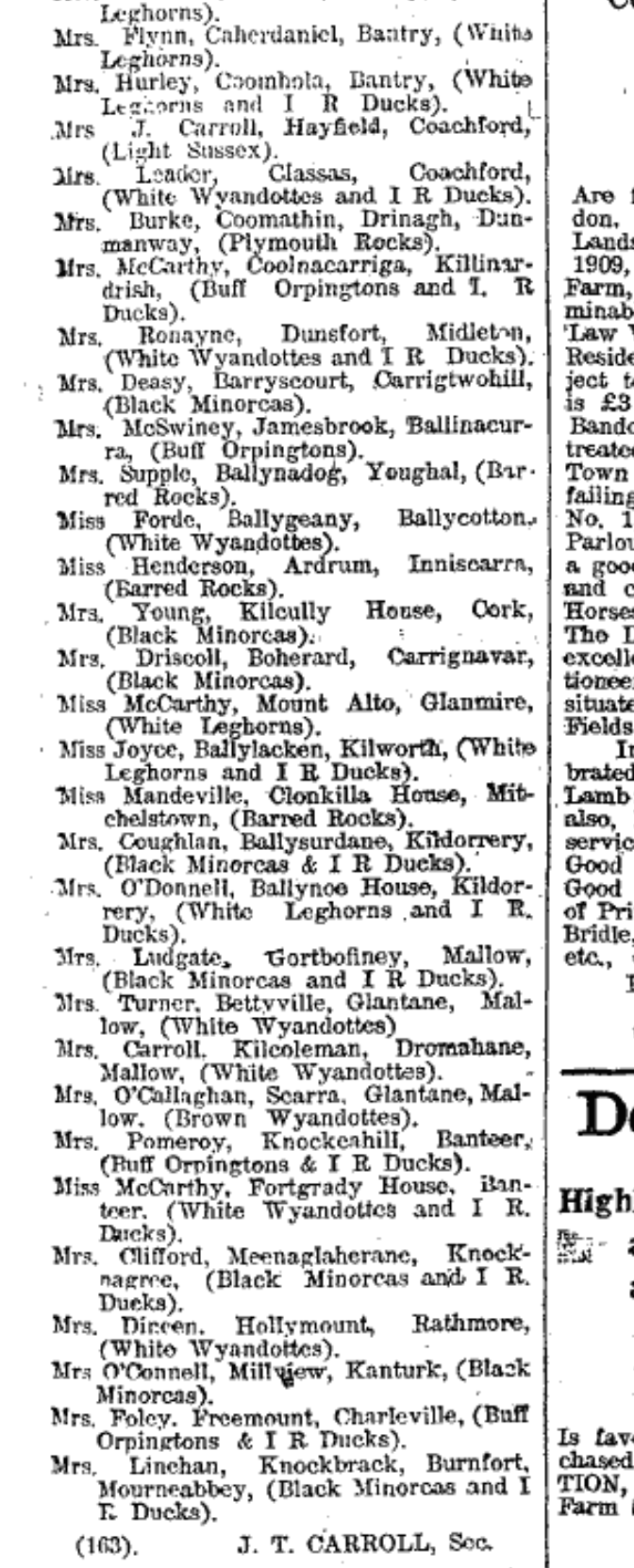
The context here is the effort of the new Department of Agriculture to improve farming stock. Poultry was seen as the women demesne. Similar notice for stud farms and breeding cattle and sheep are nearly always men. In 1909 most of the Landed Estates were in the process of being vested in the former tenants.
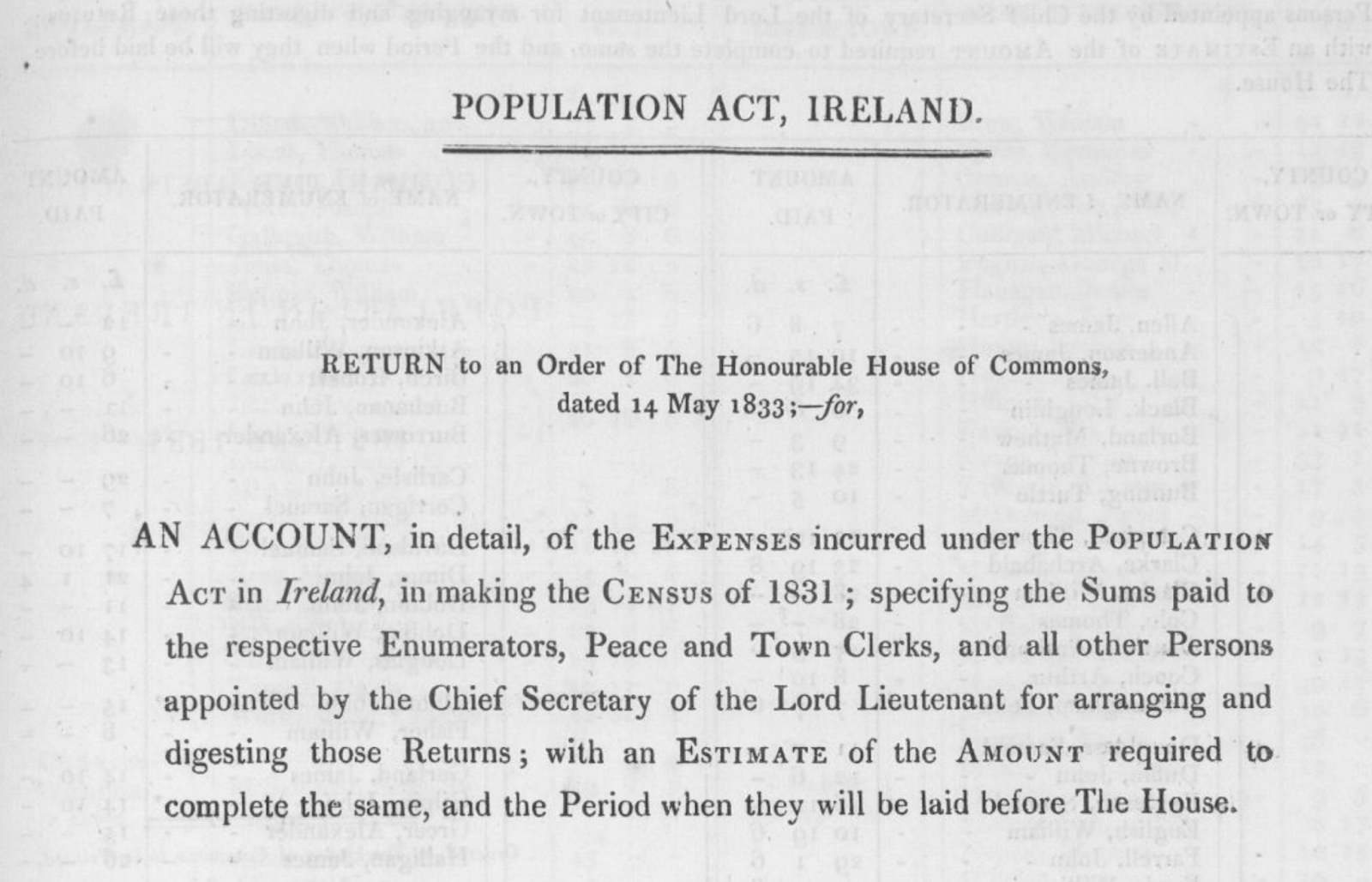
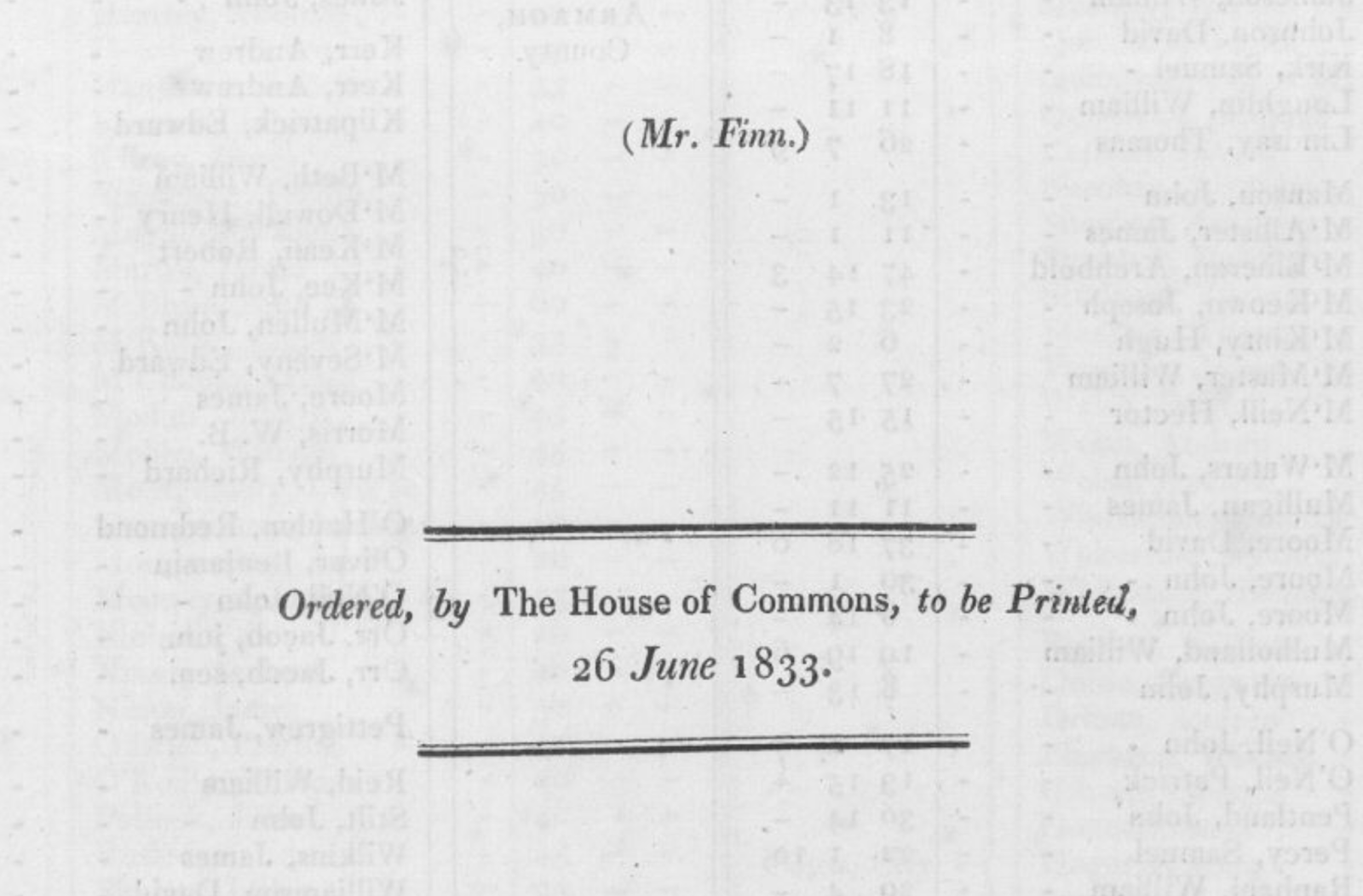
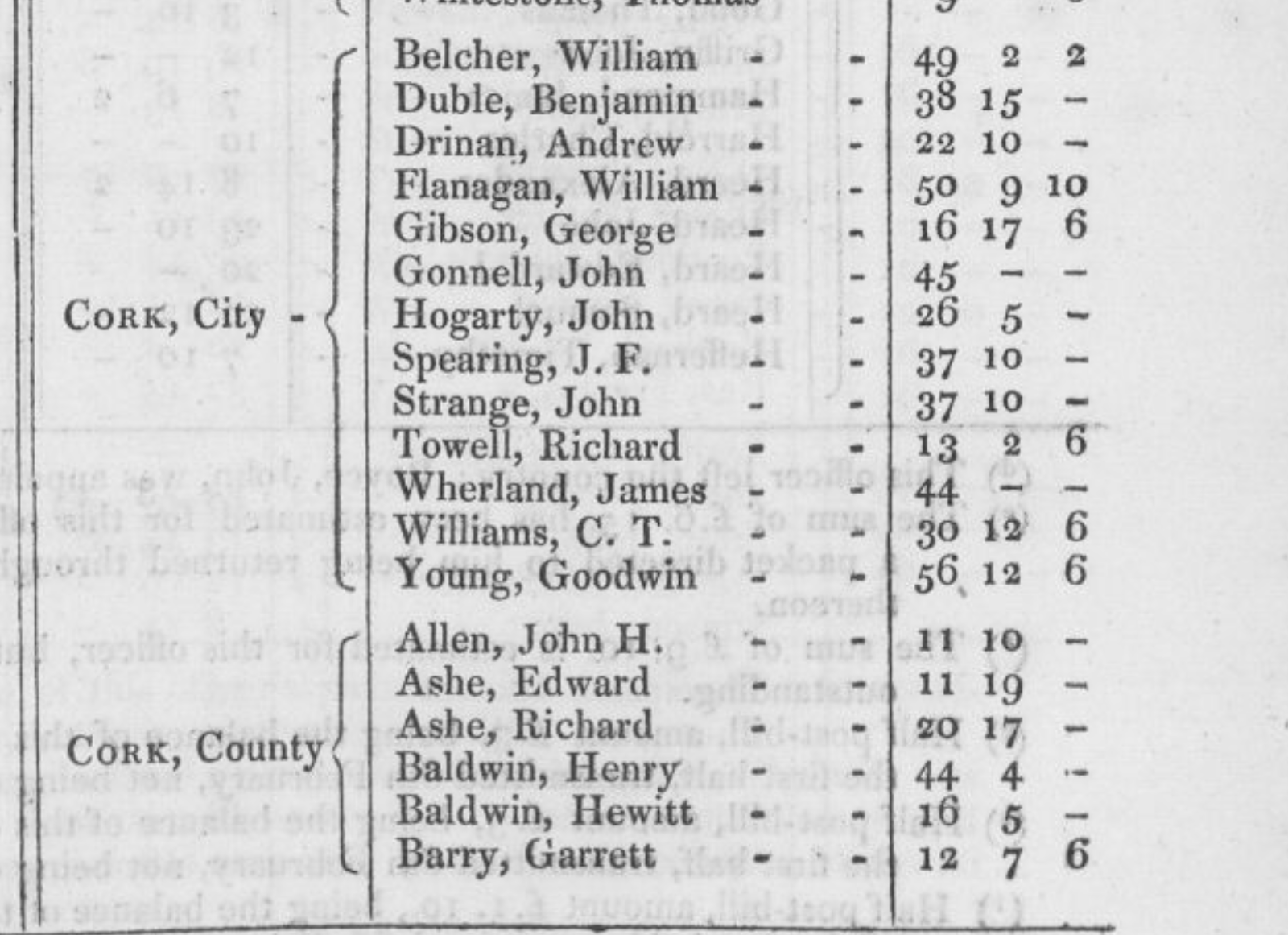
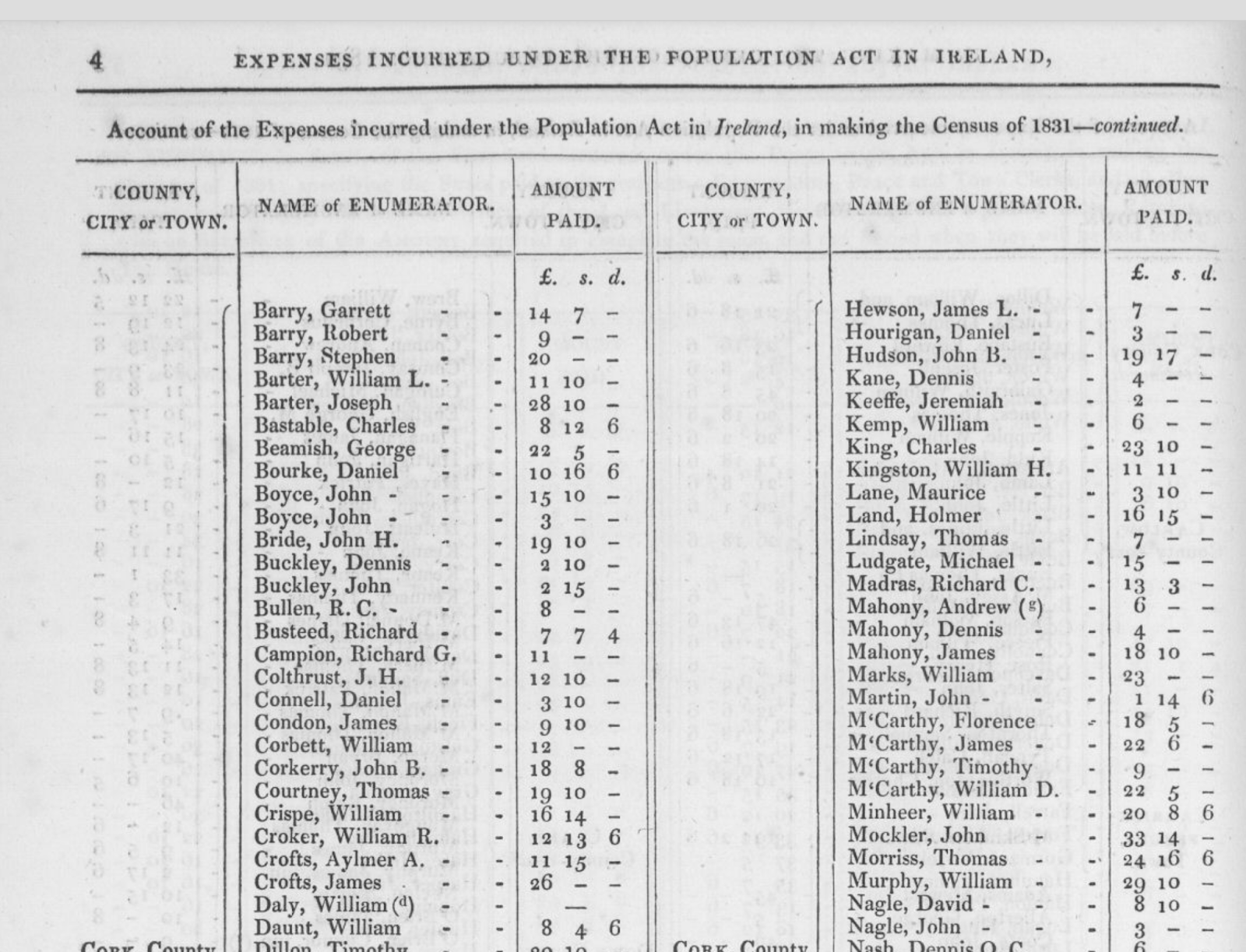
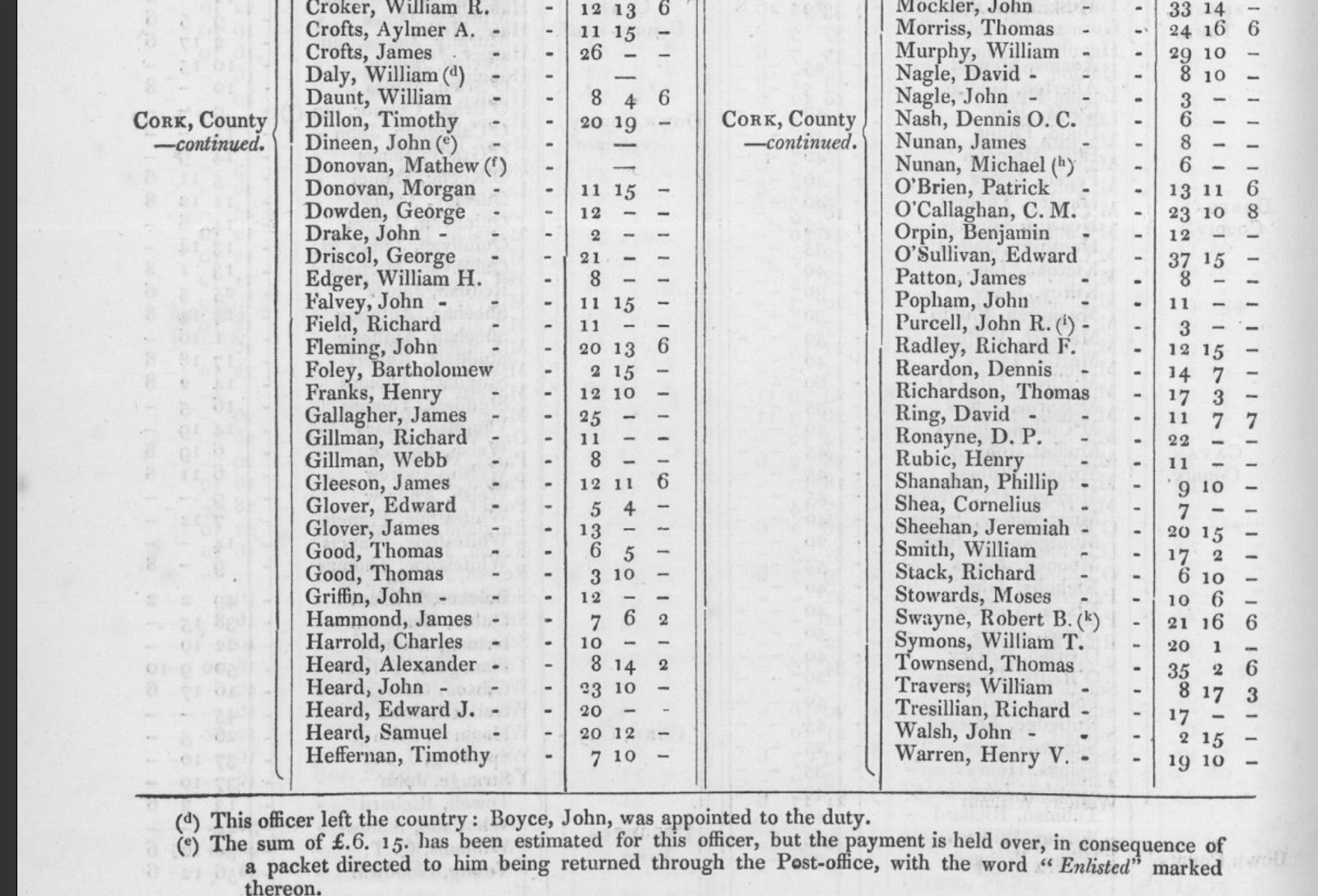
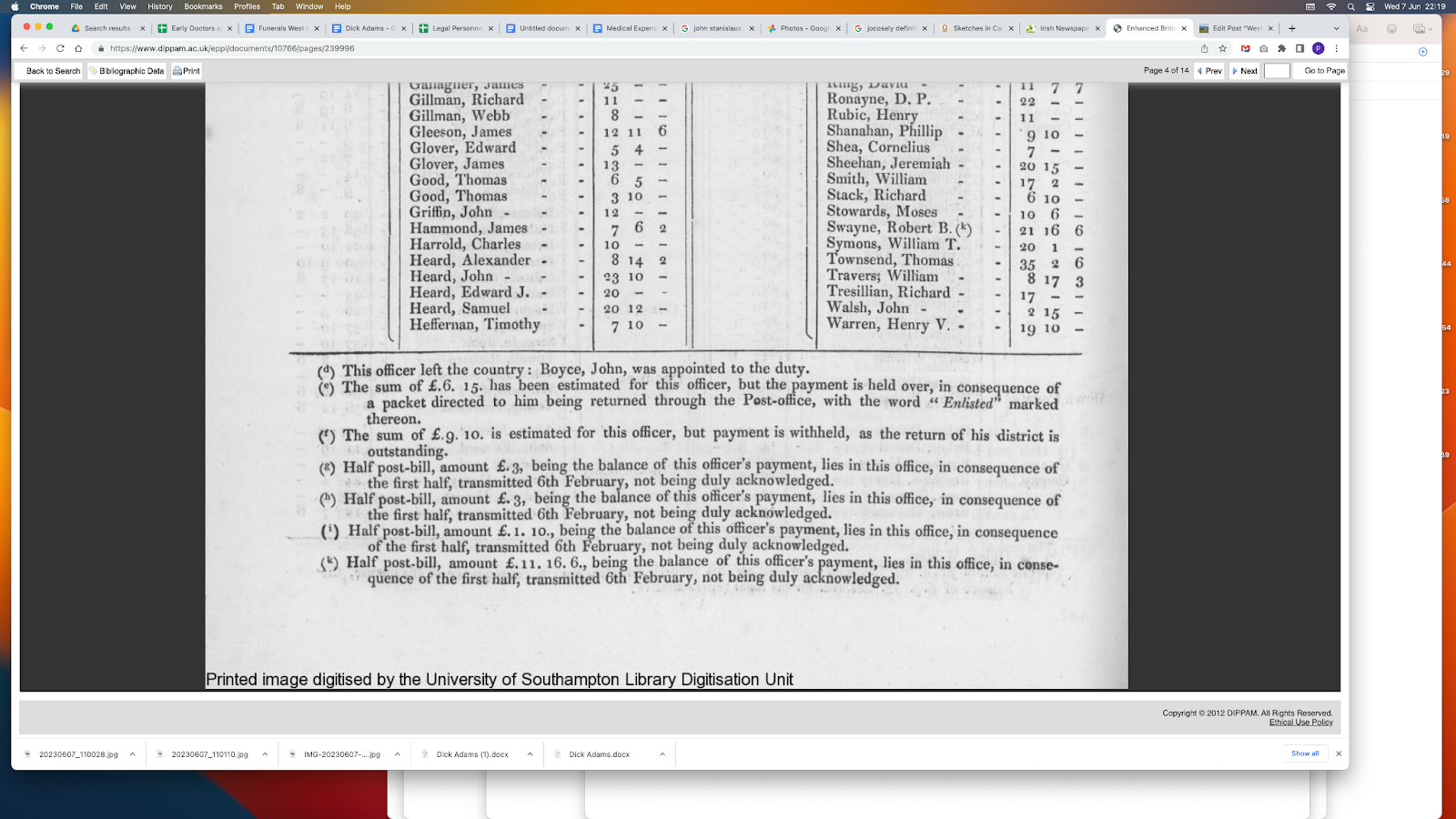
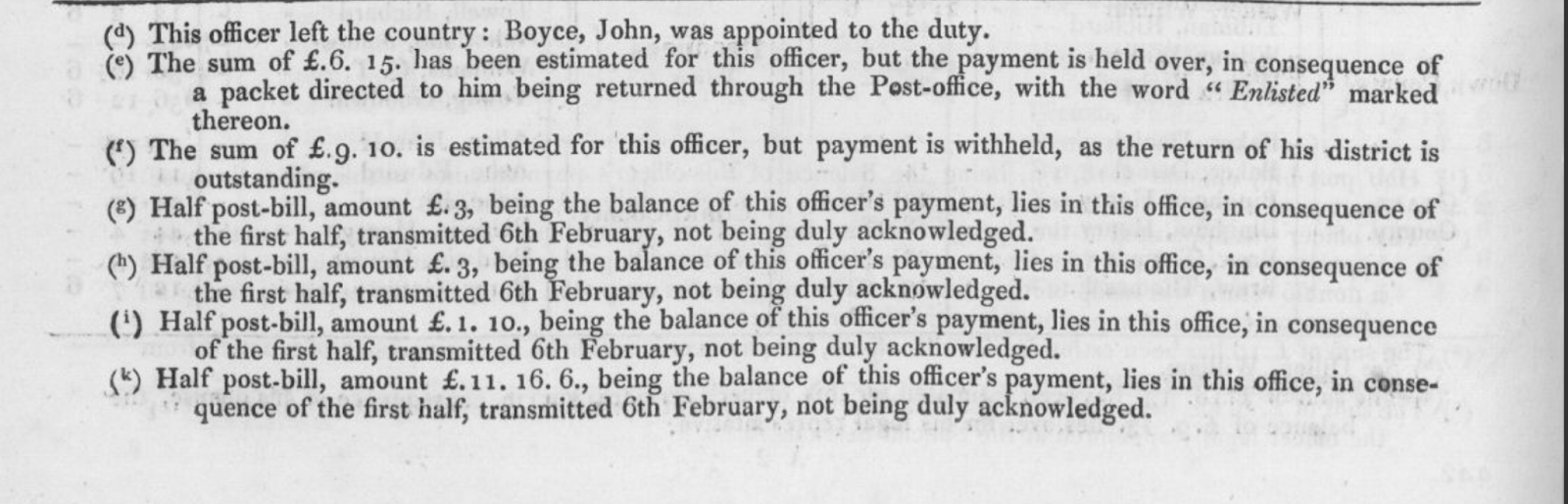
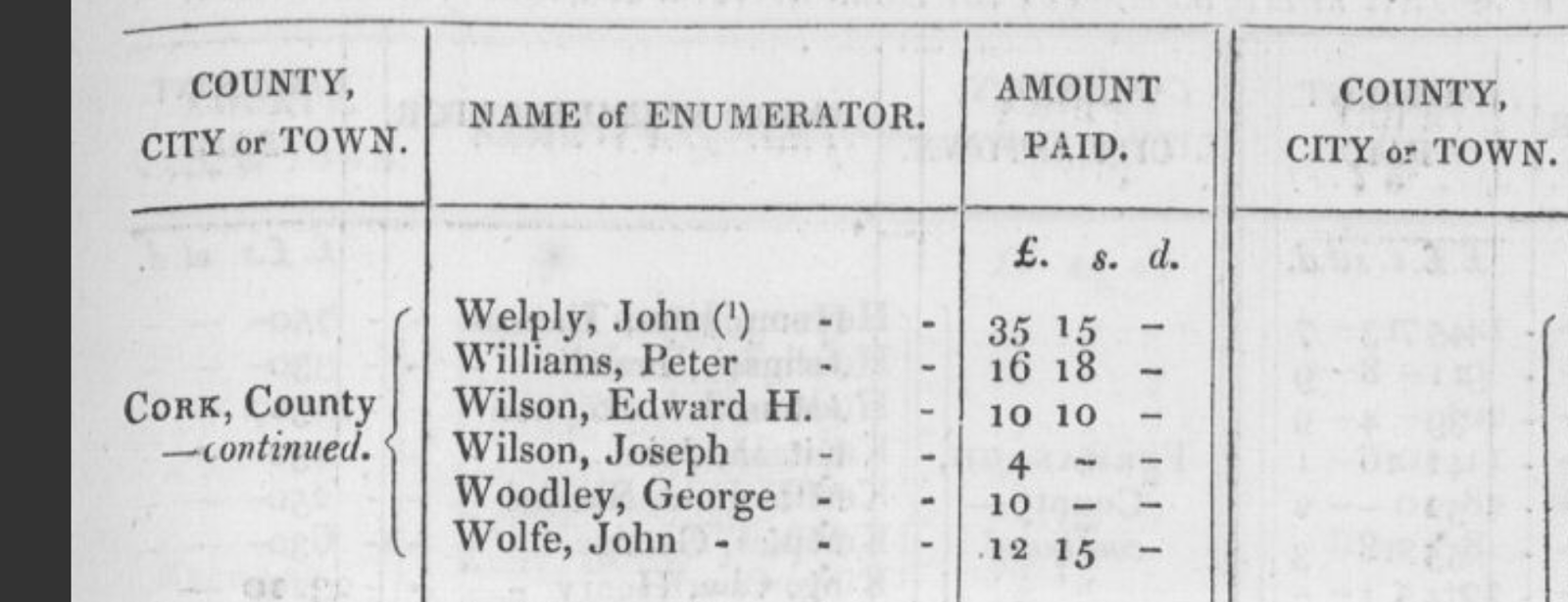
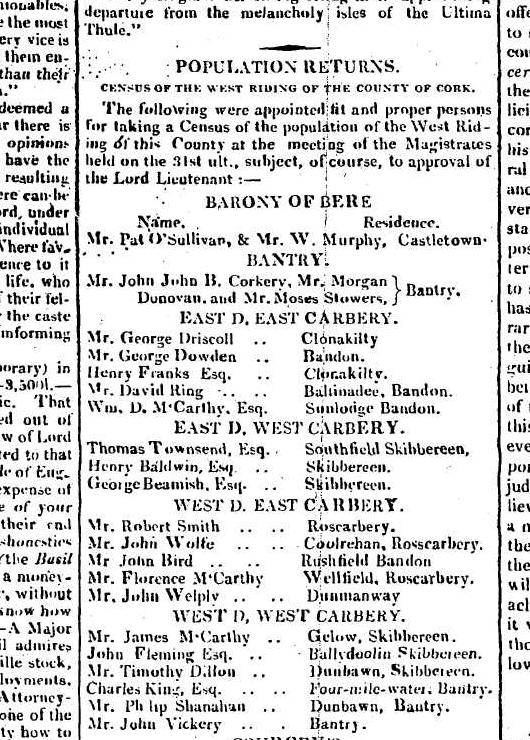
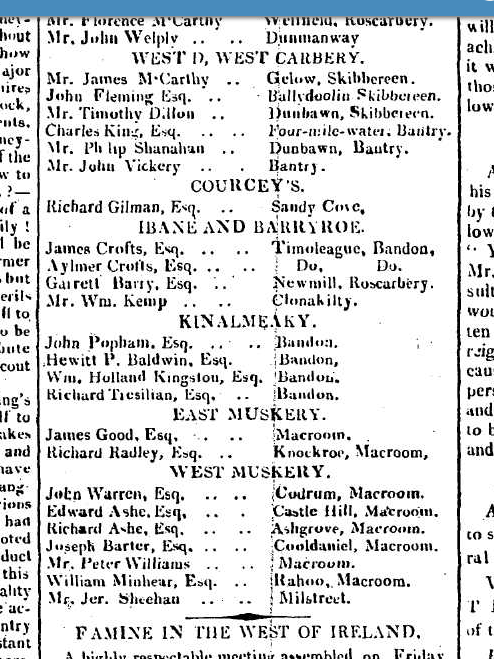
1831 Persons Appointed Fit and Proper Persons to Taking a Census, Barones Bere, Bantry, East Division, East Carbery, East Division, West Carbery, West Division, East Carbey, East Division, West Carbery, Courseys, Ibane and Barryroe, Kilmmeaky (Bandon)
1831 Persons Appointed Fit and Proper Persons to Taking a Census, Baronies of Bere, Bantry, East Division, East Carbery, East Division, West Carbery, West Division, East Carbey, East Division, West Carbery, Courseys, Ibane and Barryroe, Kilmmeaky (Bandon). Including Phil Shanahan (1796-1892), Wife Anne Townsend, Dunbeacon, a vey prominent local family. His Son Phil married Maria Moss of Durrus.
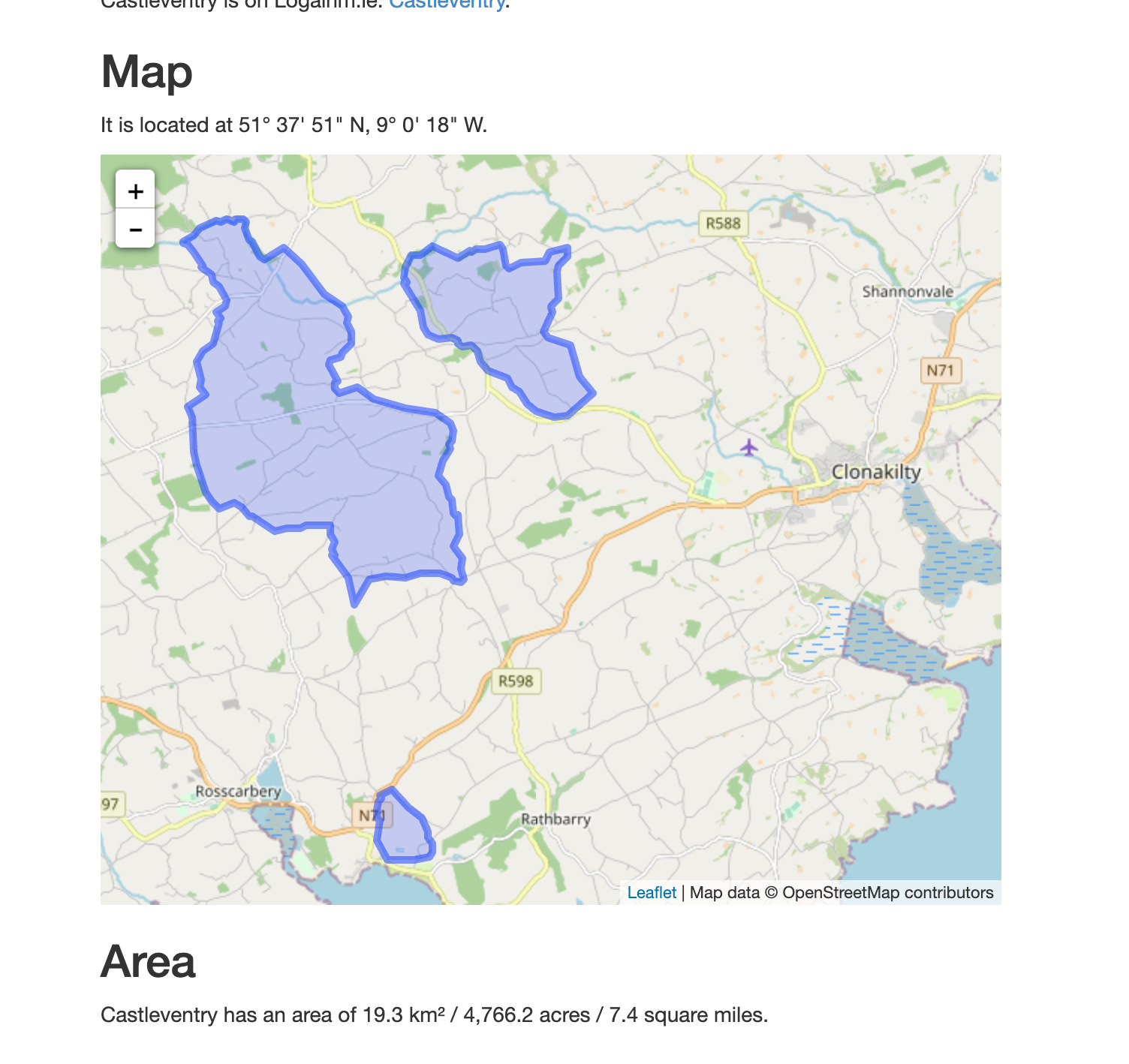
Castleventry, Scene of Eviction on the Misses Georgina and Hanora Hungerford Estate:
Alexis de Tocqueville 1835 On Irish Assizes, Grand Juries, Magistrates.
‘In our open diligence there were two young men both very uproariously drunk. They talk to and made jokes at almost every passerby. All, men and women, answered with laughter and other pleasantries. I thought I was in France.
..Bantry, 1842. The town is most picturesquely situated, climbing up a wooded hill. with numbers of neat cottages here and there, an ugly church with an air of pretension, and a large grave Roman Catholic chapel the highest point of the place. The Main Street was as usual thronged with the squatting blue cloaks, carrying on their eager trade of butter-milk and green apples, and such cheap wares. With the exception of this street and the quay,
Castleventry, Scene of Eviction on the Misses Georgina and Hanora Hungerford Estate:
Watching a deluge of rain the other evening was reminded of the phrase Storms in May Fill The Barns With Straw and Hay. Must have heard it when I was a child.
The sub editor of the Cork Examiner in penning the article of Skibbereen Protestant was probably too severe to depict it as ‘Anti Popery Petition’ The Cork Examiner was very firmly the organ of the emerging Nationalist and Catholic party in Cork. It was more in the format of later petitions in relation to the Disestablishment of the Church of Ireland, a doomed attempt to preserve a status quo which no longer existed
Interestingly here over 240 names, all men, are appended to the petition. In contrast in Cork only 112 names from three Parishes and it was alleged that many had given no permission for their name to be used,
All the evidence was that the people of the general Skibbereen District regardless of their religion or politics pulled along pretty well as evidenced by shared interest attendance at funerals etc. This was in contrast to the Bandon Valley where sectarianism and party feeling remained high up to the 1830s.
The listing could be viewed as a mini census. The presumption is that all those listed were Protestants. There is a divergence between the Church of Ireland and Methodism. Families such as some of the Swantons, Vickeries, Warners, Woulfes were Methodists.
Interestingly in many cases the occupation is given. The disaster of the Famine in Skibbereen is well known. What is not widely appreciated is that since the mid 18th century as well as penury, mass poverty there existed a market economy with quite a number of prosperous people. Here we have bankers, cabinet makers, painters, watchmaker, engineer, pawnbroker, saddler, multiple merchants, doctors, lawyers, wine merchant. Quite a number of Gentlemen as well as those of the Governing elite, Magistrates, Customs and Excise Officials as well as clergy.
The people described have multiple origins, many would have originated in the Bandon Valley area from the West Country of England and gradually drifted westward from the mid 17th century. There are those of a Huguenot background, Connell (Quesnell), Levis. Additionally names like Shannon and possibly Lannin may have migrated from the Northern ……
Men of the Baronies of the Carberies and Adjoining Baronies to Meet the Liberator, the Beloved Son of Erin on the 19th June 1843 to Repeal the Odious Act of Union
Bantry Area family of Derrynane, Co. Kerry, O’Connell’s, signature of ‘The Liberator’ Daniel O’Connell, his sister Honoria married Daniel O’Sullivan, Reendonegan, Bantry, their son Daniel, Magistrate, Dominica West Indies, his sister married Naval Officer in Tsar’s Navy. areas mentioned Coolagh, Borlin some names include Donovan, Lucy, Galway, O’Hea-Cussen, Cronin, compiled by Basil Morgan O’Connell, of Lakeview Branch, 1946 he Head of CID, Malaysia.
On the 1st July the Lancaster Gazette carried a report on the Monster Meeting addressed by Daniel O’Connell. Quoting the ‘Cork Examiner ‘, it repeated the reputed number of attendees of 500,000.
Daniel O”Connell arrived heading four stage coaches and a battalion of bands. Parishes from all over West Cork were represented by crowds headed by the respective clergy of each parish.
Among the parishes were,
Bantry, Thomas Barry P.P.
Drimoleague, John Ryan P.P., John Creedon C.C.
Kilmaceba, Joseph Sheehan P.P.
Castlehaven, James Mulcahy P.P., Daniel Freeman C.C., Michael Ross C.C.
Aughadown, Maurice Geary P.P.
Durrus, Richard Quin P.P.
In his address to the crowd Daniel O’Connell stated the it was for the right of every man over 20 years of age having a house, so they would all have a vote except some idle gorsoons (young fellas), without a dwelling and who could not get some honest girl to marry him (cheers and laughter).
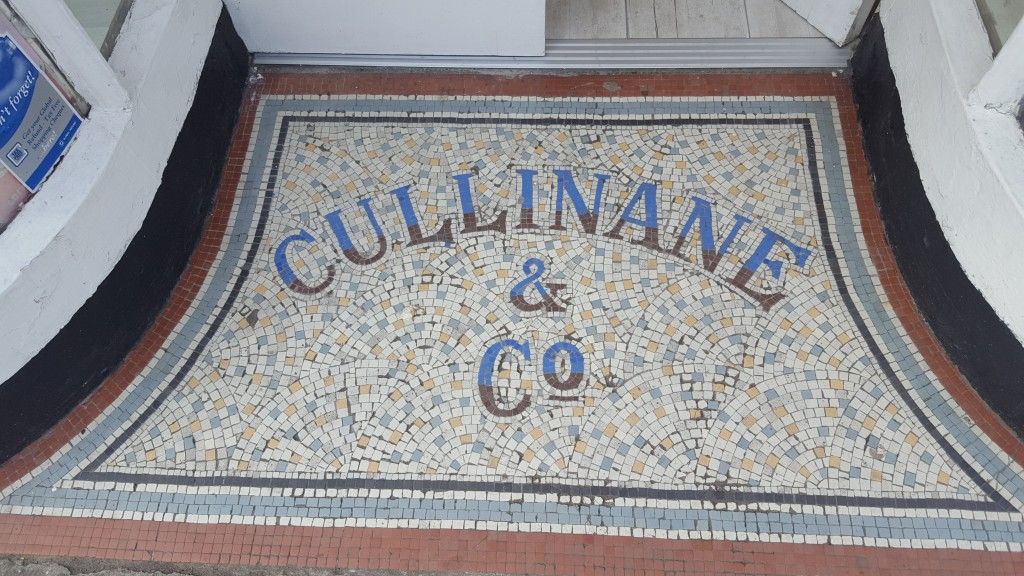
The Cullinanes in particular those of Bantry and Skibbereen were probably of old Gaelic stock with an infusion of Protestant Swanton blood. In the earlier references it is not possible to say if this is the Cullinane family due to the variety of spelling variation of Irish names to English.
In the Baronies of the Carberies and Bantry and Bere from the mid 18th century emerged a class of Catholic and Protestant of business families with no connection to the local Landlords or their agents. Through acute business acumen they prospered in a bleak landscape. The Catholic ones from the early 19th century were actively engaged in politics, anti tithe agitation, Rereal, Fenian Activity, the Land League, the Irish Parliamentary party ultimately culminating in independence for the greater part of the Island of Ireland in 1922.
There is little memory now of the Cullinanes; it seems the relations are those of Australia descendants of Jeremaih Cullinane, forced as a political exile to flee his native land from British oppression. He and his family prospered in Australia.
What is contained here is largely newspaper snippets in which it throws light on many aspects of local circumstance such as the emergence of the Catholic Church, political activism than the Cullinanes a s power brokers and their involvement in local administration. They and their allies deposed the Earl of Bantry and his agent the Pauynes as local overlords from the late 19th century.
There are ironies here in 1889 in Mr. Culinane in Bantry places his yacht at the disposal of the distinguished (unidentified) visitor. This visitor was of considerable interest to the authorities of Dublin Castle and he was tailed by the RIC. It shows the wealth of the Cullinanes. Similarly supported the Land League and they were also Landlords.
The Cullinanes were part of ‘The Bantry Gang’ Often used as a term of decision comprising a network of individuals and families from or with associations from the greater Bantry area. Tim Healy’s position was not helped by constant derision in the works of James Joyce for his perceived part in the downfall of Charles Stewart Parnell The Cullinanes were related by marriage and close to William Martin Murphy. Perhaps one of Ireland’s greatest businessmen. He had the misfortune to be in charge of the employer federation during the infamous 1913 lockout. Since then a cottage industry has grown up to discredit him.
The Cullinanes of Clonakilty, Skibbereen, Bantry, Gympie, Queensland, Australia. Jeremiah and Patrick Cullinane Associates of Jeremiah O’Donovan Rossa.
Introduction, p, 7
Australian Cousins, p, 8
Swanton ancestry, p. 11
Cullinane Magistrates, p., 11
]1895 dearth Charles Cullinane, Bantry, p.12
1900 Death J. Cullinane Bantry, p. 13
1935 funeral of JOhn G.Cullinane, Clonakilty, p. 15
1414. Treatise on Medicine translated by John O’Cullinane physician to Donal McCarthy Reagh and his tutor Pierce Ó h-Uallacháin, begun at Kilbrittain Castle 1414.,
1560s. Fiants of Queen Elizabeth 1 of England with West Cork References Multiple Pardons (McCarthys. O’Driscolls/Crowleys/O’Crowleys/Dalys/O’Mahonys/O’Cullanes/Collins for ‘Rebels’. The format of the surnames is different to that now used. Might be Cullinane.p.19
1585. Earliest representation of West Cork person, 1585, Catherine Cullinane, Ballynacarriga (Townland of the Stones) Castle, Dunmanway., p.19
Kinsale (St. Multose) Register 1692, p.19
1691 Convert Rolls, p.19
Dorothy Callanan 1752 Creagh Ross Dr Casey has a Dorothy Cullinane marrying Daniel Pearse 1752 name different but more associated with Creagh then Callanan, p.19
Margarett Holmes Will 1732 and other wills, p.19
..
1414. Treatise on Medicine translated by John O’Cullinane physician to Donal McCarthy Reagh and his tutor Pierce Ó h-Uallacháin, begun at Kilbrittain Castle 1414., p.13
1560s. Fiants of Queen Elizabeth 1 of England with West Cork References Multiple Pardons (McCarthys. O’Driscolls/Crowleys/O’Crowleys/Dalys/O’Mahonys/O’Cullanes/Collins for ‘Rebels’. The format of the surnames is different to that now used. Might be Cullinane. p.13
1585. Earliest representation of West Cork person, 1585, Catherine Cullinane, Ballynacarriga (Townland of the Stones) Castle, Dunmanway., p, 13
Kinsale (St. Multose) Register 1692, p. 13
1691 Convert Rolls
Dorothy Callanan 1752 Creagh Ross Dr Casey has a Dorothy Cullinane marrying Daniel Pearse 1752 name different but more associated with Creagh then Callanan, p. 13
Margarett Holmes Will 1732, p. 13
1744 Denis O’Cullane aged 24 Drimoleague claim to ancient properties in East Carbery, p. 15
1761 Cork Cullinane, p. 18
1783. Hamilton White, Esq., Bantry lease, p. 18
Irish Flax Growers, 1796, p. 19
Tobin weddings, p. 19
1825 Myross Select Vestry, p., 25
1829 – Kilmacanogue Tithe Applotment (Partial) Index, p. 20
Bantry Anti-Tithe meeting October 1832., p., 20
1835 Bantry Catholic Rent. listed in order of amount., p.21
1842 Jeremiah Culliane, Skibbereen, an old extensive trader, p. 23
It is not immediately obvious why some people from outside the area contribute. However in most cases there is a local link. Judge Berwick probably has Symms ancestry. The Symms as the Dowes/Coughlans/O’Callaghans/Notters are all small Protestant Landlords on Mizen closely linked, The Cagneys are fabulously wealthy Cork butter merchants and acquire an estate in the area in the 1850s Encumbered Estates Sales
A bit of a mystery is the largest donation of £27 collected by the Rev. Dr. Lynch President of the Irish College in Paris






 .
. .
. .
. .
.
 .
.
 West Cork History