Tags
Re smuggling in the 17th century it is worth recalling the context.
After the end of the English Civil War when Parliament prevailed there was a strong view that the English army should be abolished as they might present a threat to the new dispensation. The compromise was a largely reduced army with a standing garrison of 15,000 to be based in new barracks in Ireland. This was to be a charge on the Irish Exchequer. The building of these barracks gave arise to the Irish Barack towns, many of which only closed in the last 30 or so years.
So whenever an old lad in the 1740s had a smathán or smoked his pipe not only was he contributing to the British occupation of Ireland but paying for their garrison.
Clearly when the ‘legal’ price of excitable items excess the market price by a wide margin the opportunities for smuggling are immense.
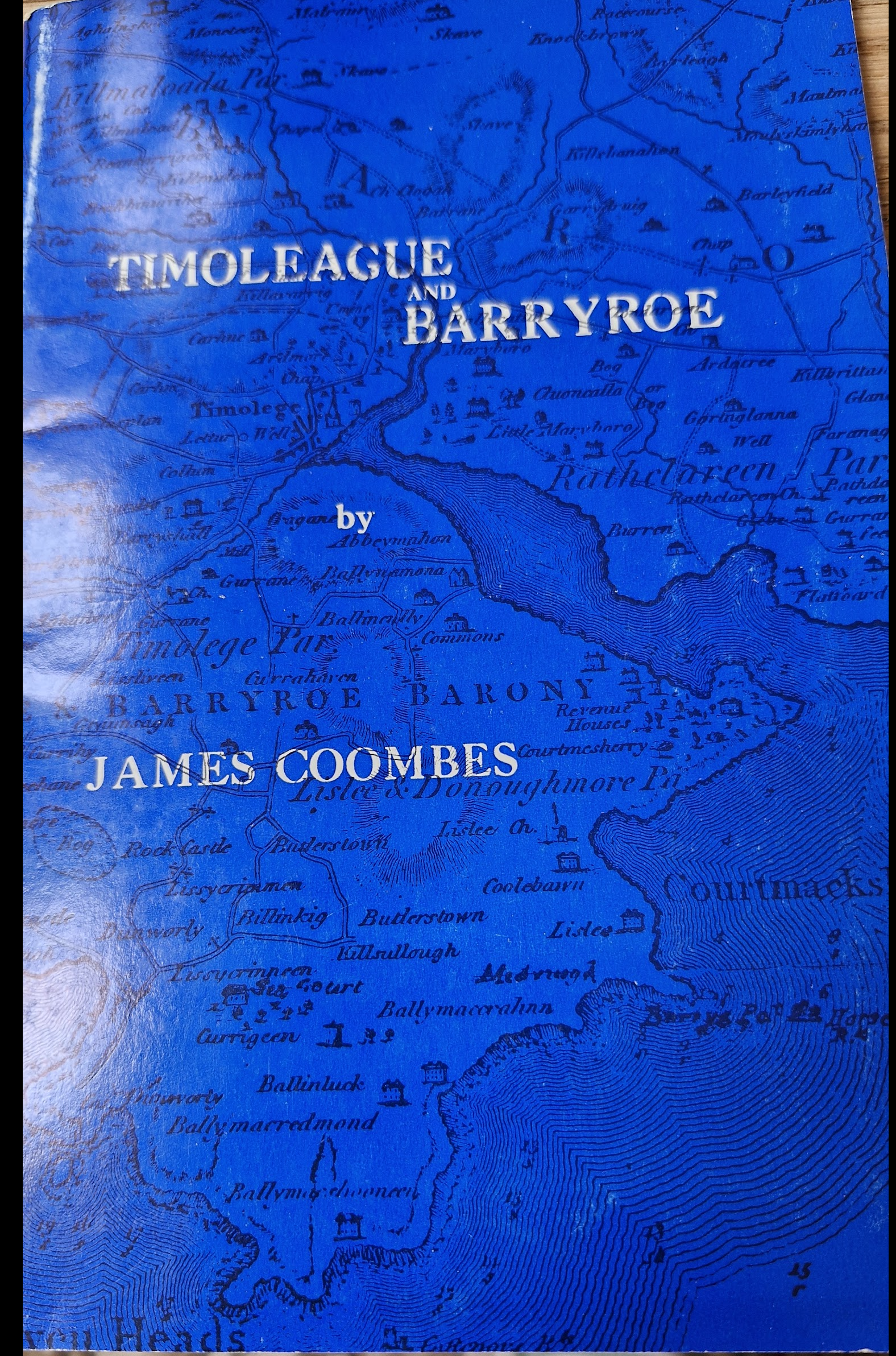
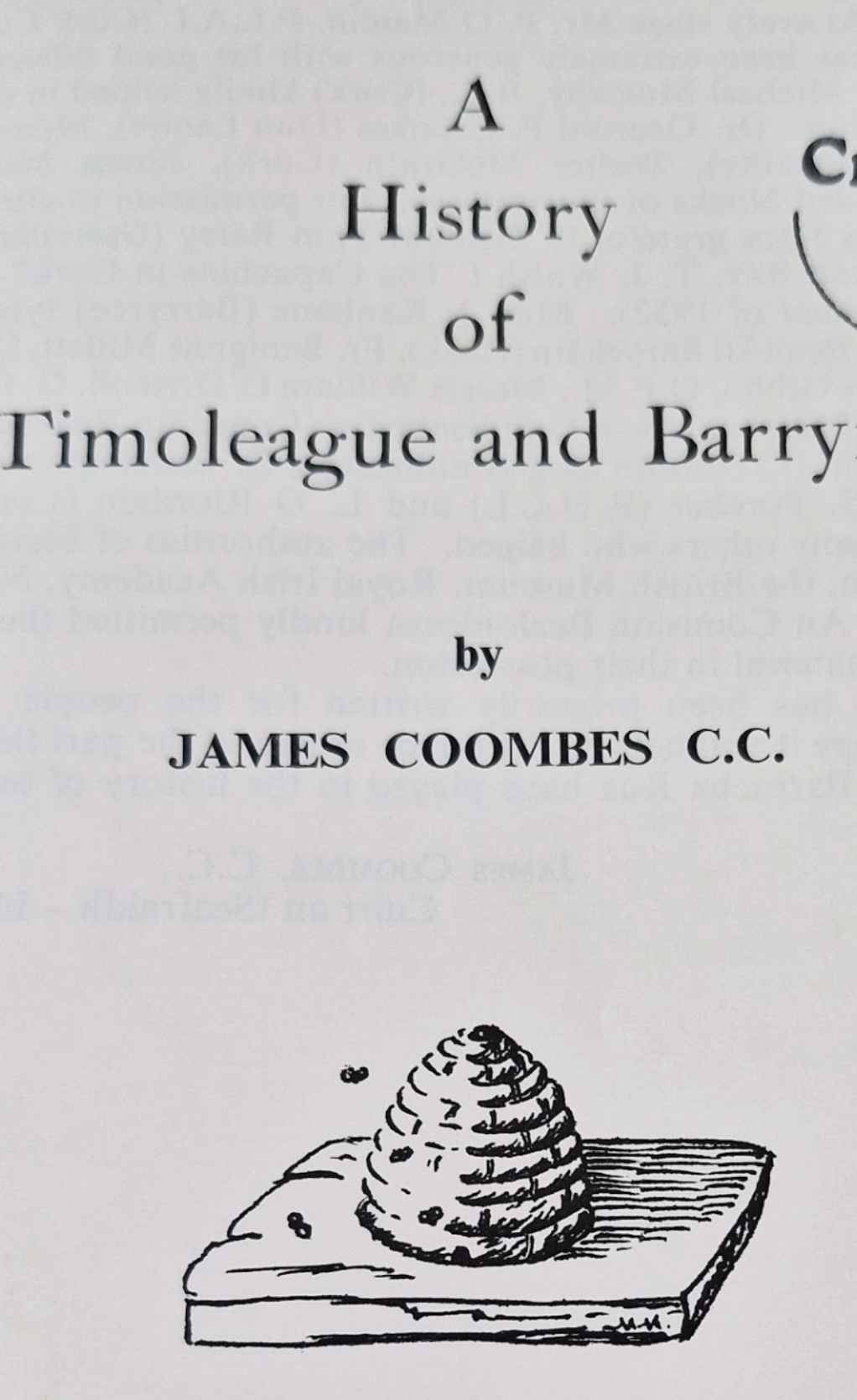
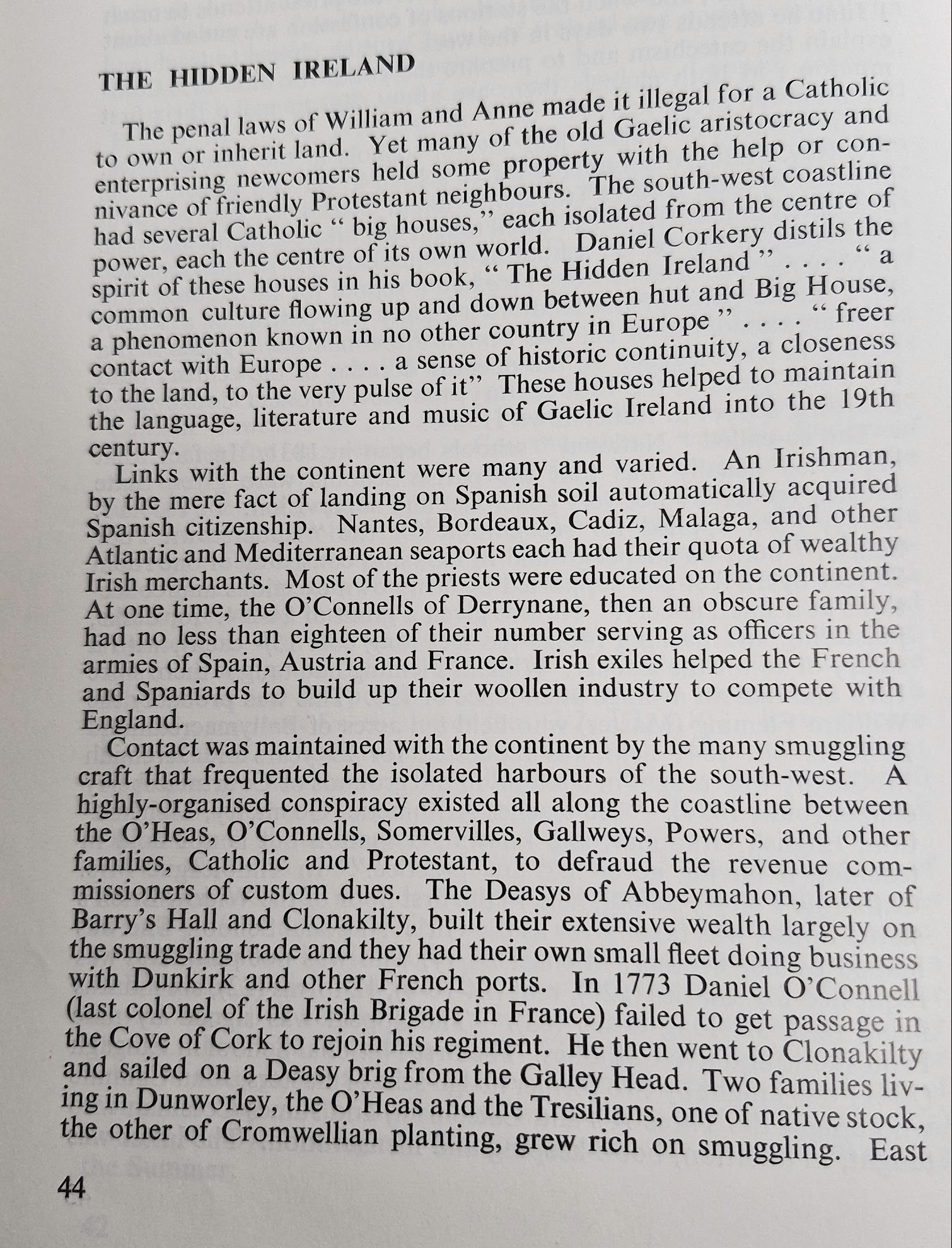
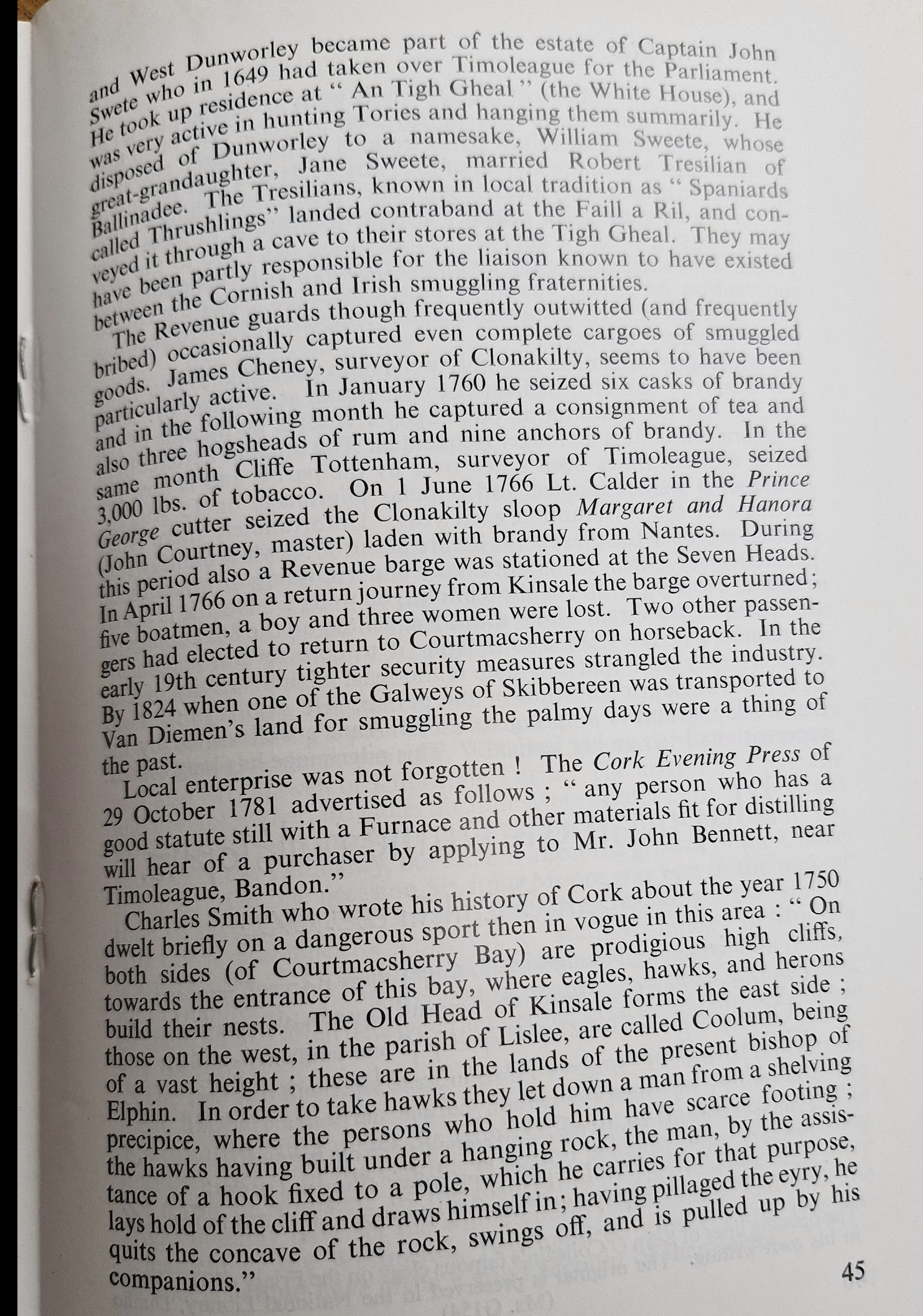
From Father James Coombes History 1969.
Thanks Pat,
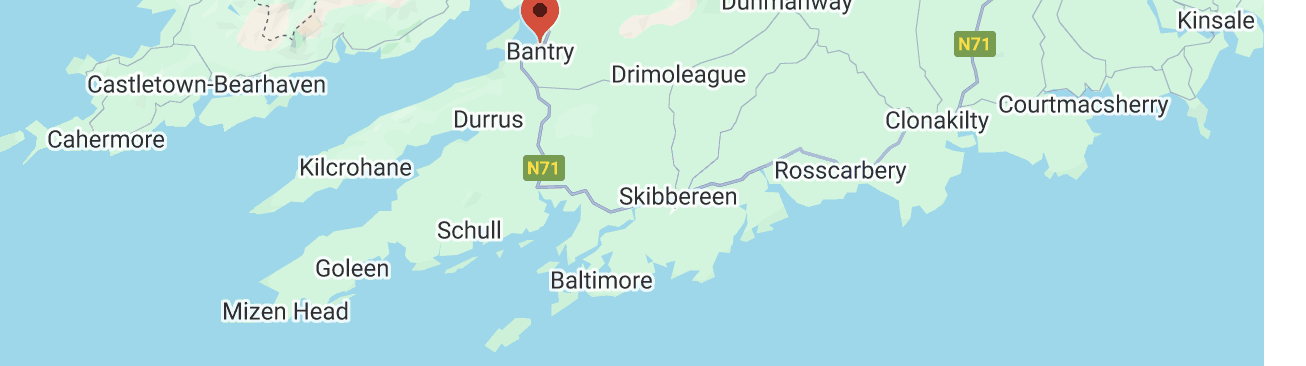
That is interesting reading. It’s all true. Edward was the guy transported leaving his wife and six kids. So we’re others near Skibbereen. The Kilkeran ones brought boats into the local “lake” and stored stuff in the basement, allegedly with an underground tunnel. Family fortunes were hard hit. Family were installed in Bordeaux, Nantes, Oporto etc to look after that end of it. There are de Gallweys in France.
.
1822. Lord Bantry not renewing lease of any of his Tenantry involved in Smuggling.https://durrushistory.wordpress.com/wp-admin/post.php?post=25396&action=edit
Canon Johnny McManaway MA, Rector, 1930s Durrus, smuggling horseshoe stubs into the Free State
Arthur Hutchins, Landlord and Magistrate, Ardnagashel, Bantry married 1802, Matilda O’Donnell, (Smugglers), Erris, Co.Mayo, descendant of Niall of the Nine Hostages, West Cork Crowleys, Descendants of Niall of the Nine Hostages
1740. a Memorial of Several Gentlemen Residing at or near Berehaven in West Cork, setting forth the necessity of having a Barrack built for one company and half of foot to prevent running of Goods and the Shipping Off of Men to Foreign Service
Richard Griffith letter to Dublin Castle on progress of road from Skull to Crookhaven, Co. Cork where ‘upwards of 3,000 are employed’, 1822.
refers to the inaccessibility of the region around Crookhaven harbour and the persistence of smuggling which is difficult to check due to ‘the numerous creeks and inlets on the coast’; includes letter from Griffith, Skull, to Gregory, acknowledging invitation of the Lord Lieutenant to meet for interview in Dublin but to request the date is deferred to enable his attendance at the assizes of counties Kerry and Cork.
izes of counties Kerry and Cork.
In the North it became the practice to put studs into horse shoes.
Studs are small metal projections that screw into the horse’s shoes. They’re used to give him better grip on various types of footing, from firm and slippery to soft and boggy. They’re great if the horse loses his focus in less-than-ideal footing or to give him extra traction when doing road work.
For some reason studs were illegal in the Free State.
The Canon wished to bring some down from one of his northern trips. He took the saddle off his bike and filled the hollow of the frame with studs and replaced the saddle. The bike passed over the border no problem and the Canon and his bike with studs arrived safely in Durrus.
 West Cork History
Why can’t I open these web links?.
Slán
Noel Howard
LikeLike
If you email at pat25a@gmail.com will try that way
LikeLike