My very first lesson in how to speak like you’re from West Cork featured the many ways in which we use the word grand. (Skip to the end to see links to previous posts on West Cork Speak.) It seems, though, that I really didn’t do it justice, as it turns out that You’re Grand is, in fact, a phrase that sums up an entire philosophy and way of life. To understand this better, I highly recommend the comedian Tara Flynn’s book You’re Grand: The Irishwoman’s Secret Guide to Life.
Tara tells us:
…no matter how bad things get, sooner or later everything will be Grand. Even when it won’t. In fact, especially then. Simply asserting that “You’re Grand” puts you in a state of mind that instantly makes you feel better…
She goes through the variations: Grand Out, Grand Altogether…
We in Ireland (or rather the Republic of Ireland) have a lazy, solipsistic tendency to think we are the greatest little country in the world (and not just to do business in). I have spent most of the past fortnight in another small country on the far side of the world which, I would contend, can lay far better claim to that title.
Chile is a long thin snake of a country squeezed between the Andes mountains and the Pacific ocean and running from the Atacama desert (the driest place on earth) in the north, through the Mediterranean climes and cool rain forest of the centre, to the sub-Antarctic tundra of Tierra del Fuego in the south. It contains the oldest inhabited site in the Americas (12,500 years); the finest wine in the Southern hemisphere; breathtaking mountain and lake scenery that surpass anything in the Alps or the Rockies, and…
Sergeant Pritchard, Royal Engineers, 1901, Probable Re-survey Ordnance Survey, Durrus, West Cork, Chainmen, Surveyors, Sappers, Other Chain Men, Charles Mccarthy Fawnmore, Kilcrohane, Jeremiah O’Donovan Gortnakilla, George O’Mahony, Rosskerig.
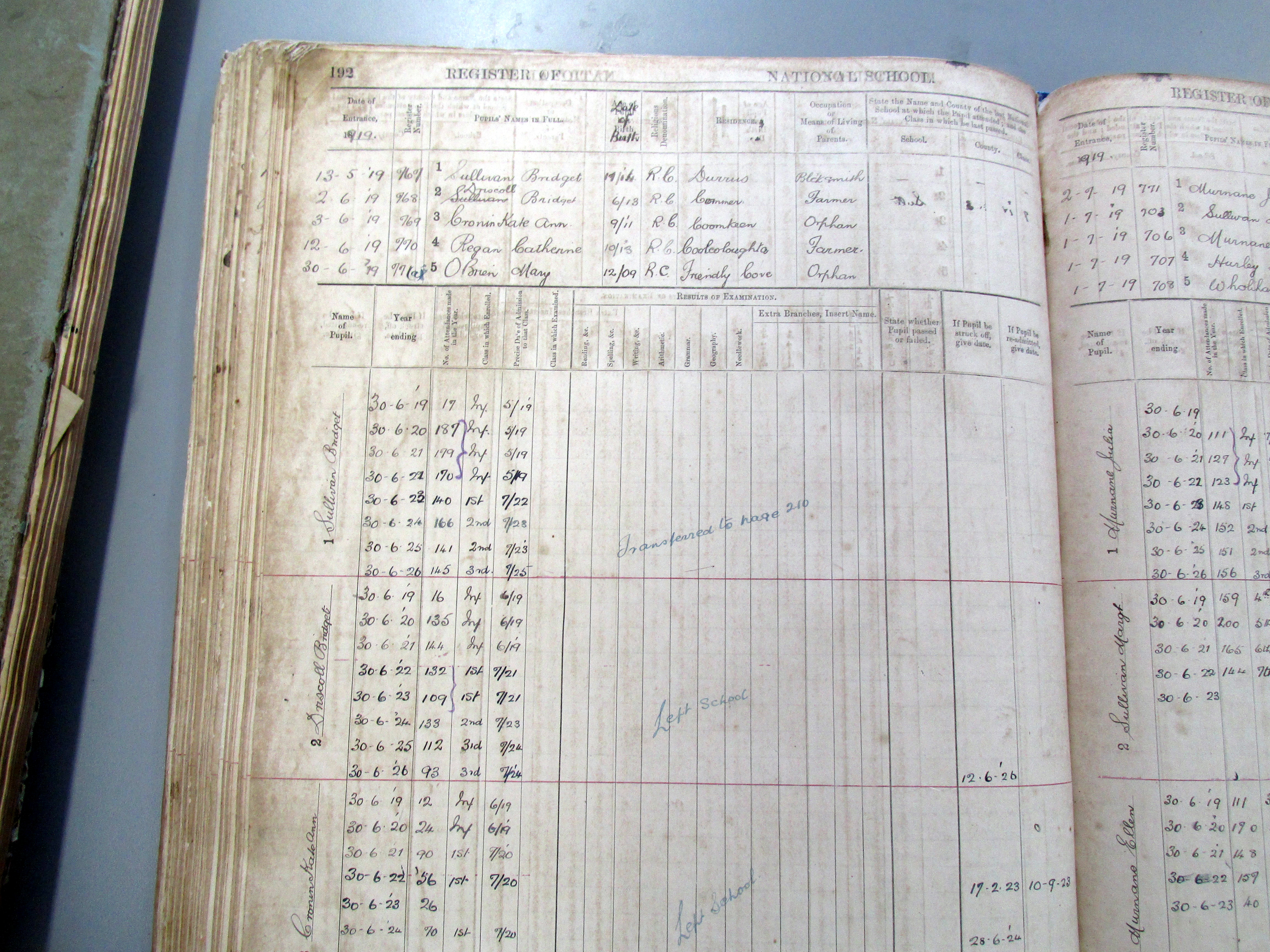
In the Carrigboy Girls School record there are entries for Beatrice and Dorothy Pritchard their father a Sergeant Royal Engineers for 1901, they seem to have been in the school for a about a year.
At the time local young men were employed as chain men or surveyors probably in connection with a re survey by the Ordnance Survey. It is likely that they operated under the supervision of someone like Sergeant Pritchard. There are quite a number of such men and include one of the Skuses of Clashadoo who when the period of local employment ceased joined the Royal Engineer as a sapper. Looking at some of the RE records this was a common form of entry.
Charles McCarthy (born approx 1880) from Fawnmore, Kilcrohane, later joined the Royal Engineers and went overseas (reported missing in action missing for a few weeks but pulled himself out of some hole and was decorated for bravery and engineering skill, buried in South Hampton)
His brother in law Jerhmiah O’Donovan, Gortnakilla was also a sapper, as was George O Mahony from Rosskerrig
His neighbour Jeremiah Crowley, Ahagouna was also so employed and in his Ellis Island entry to the USA c 1904 he is described as surveyor. He went on to run a very sucessful business in San Francisco. Even in National School he was doing book keepin at the age of 9.
More Scaraveens (‘scairbhíní’)‘, Garbh Mí na gCuach’ (the Rough Month of the Cuckoo), the period between April 15 and May 15, Alexander Buchan, Scottish Meteorologist.
Henry Morgan Esquire, Sketches and Drawings on Stone, 1860s Views of Cork Harbour, Seine Fishing, Early Trains, Steam Paddle Ships, Trabolgan the Seat of W.B. Roche Esq. M.P., Cork Harbour Light House, Haulbowline and White Point, Coolmore and Carrigaline River, Cross Haven, Queenstown named by Her Majesty Queen Victoria, August 3rd 1849, on Her Graciously landing There, Belgrove and East Ferry Church, East Grove East Ferry, Monkstown Bay, Belvelly Bridge and Castle, Monkstown, The Giant Stairs and Monkstown Reach, Monkstown Baths, Carrigaloe, Horsehead, Foaty Bay, Lough Mahon Inchera, Blackrock Castle, The Glanmire Channel, Tivoli, Cork from The Navigation Wall, Lithographer, Spreat, Lith, Exeter, with Pre Amble from Father Prout





 West Cork History