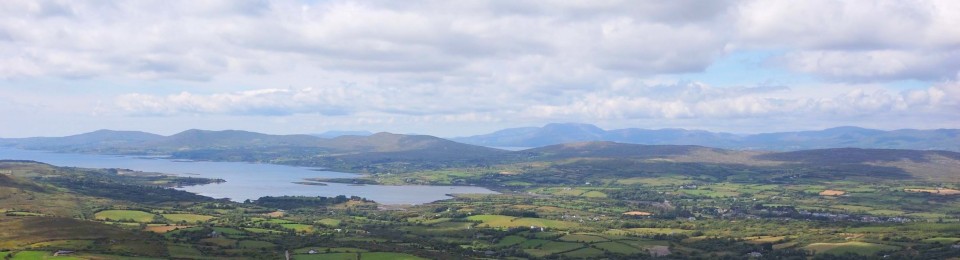
Victorian Social Mobility. James Skuse, from Clashadoo, Durrus, West Cork to Schoolmaster, Businessmen, Resident Blackrock Castle, Ship Owner Cork, Died 1913 Estate £18,137, Blackrock, Cork.

Tags


James Skuse, from Clashadoo, Durrus, West Cork to Schoolmaster, Businessmen, Resident Blackrock Castle, Ship Owner Cork, Died 1913 Estate £18,137, Blackrock, Cork.

His residency at Blackrock Castle owned by the Cork harbor Commissioners may have been connected to him being a ship owner.

The Skuses may descent from a Cork soldier in the East Company whose son was born in India and returned presumable home to Derrynafulla, Glengariff. The family were involved as bailiffs and policemen and lived in Clashadoo, Durrus either on the present McCarthy farm or on a house attaching.

James Skuce married in 1853 in Rathelaren  (Church of Ireland) parish church,  his profession  was  School Master, resident in  Ballycotton, Co. Cork, he married Miss Catherine Harris who was a School Mistress, also resident in Ballycotton.   The birth record and baptism of their eldest son in 1856 in Drimoleague and James was described as a school master then. At the time of his wife Catherine’s  death in 1868  James’s  occupation was given as Clerk.  James later remarried, this marriage was to Miss Rebecca Sophia Lester, a spinster resident in Kinsale, the marriage was in St Stephen’s Church in Dublin.

In 1875 when James and Catherine’s eldest daughter married, James’s profession is then given as Merchant.

The letter 1881 letter written by James to his brother, James  states about his work pursuits, and mentions about  one of the ships that he part owned.  An Irish newspaper item mentioning another ship which he owned and this was in a collision with another vessel.

Irish Examiner May 5th 1876 page 3

James is mentioned in the English newspaper in Buckinghamshire and in the Commercial Gazette London in connection with The London and County Banking Company.

Bucks Herald
Saturday, February 22, 1879

The London and County Banking Company
Persons of whom the Company or Partnership consists.
Name. Residence. Occupation.
Skuce, James, Arbutus-place, Blackrock-road, Cork, Esq.

He also had shares in the T. Lyons and Co. Ltd, so could this have been the corn store he had been a Manager of prior to his retirement ?

The Irish Times
Friday, March 1, 1912
Page 11

  1. Lyons and Co. LTD – Annual Meeting … held yesterday at the warehouse, South Main street, Cork. …

Shareholders present: – … J. Skuce ..

The 1901 Census gives that James Skuce was aged 70, and was a  retired Manager of a Corn Store. James died in 1913, he had been a very successful business man as he  left a small fortune, which was left  to his young widow and his unmarried daughters.

In the 1881 letter to his nephew, James Skuce states he was Chief Manager to the Chief Merchant in Cork, who was also part owner of his two ships, the “Glennarow”, a large iron ship 1500 tons, then on passage to Australia; and the “Assyrian” a 2 year old large timber ship, 1800 tons, then on route to Boston. USA. His son was second officer on the “Glennarow”.

In the 1901 Census he gives On the 1901 Census, James Skuce, Head of family, Church of Ireland., can read and write, 70, Retired Manager of Corn Store, Retired from Business, married, Born in Co. Cork.

May  have been a manager of RH Halls Company.  In the early 20th century extended family working in Cork Grain companies.

The letter 1881 letter written by James to his brother, James states about his work pursuits, and mentions about one of the ships that he part owned. I have this weekend found a Irish newspaper item mentioning another ship which he owned and this was in a collision with another vessel.

Irish Examiner May 5th 1876 page 3

these newspaper items below.

James Skuce married in 1853 in Rathelaren (Church of Ireland) parish church, his profession was School Master, resident in Ballycotton, Co. Cork, he married Miss Catherine Harris who was a School Mistress, also resident in Ballycotton. I found the birth record and baptism of their eldest son in 1856 in Drimoleague and James was described as a school master then . At the time of his wife Catherine’s death in 1868 James’s occupation was given as Clerk. James later remarried, this marriage was to Miss Rebecca Sophia Lester, a spinster resident in Kinsale, the marriage was in St Stephen’s Church in Dublin.

In 1875 when James and Catherine’s eldest daughter married, James ‘s profession is then given as Merchant.

The letter 1881 letter written by James to his brother, James states about his work pursuits, and mentions about one of the ships that he part owned. I have this weekend found a Irish newspaper item mentioning another ship which he owned and this was in a collision with another vessel.

Will:

Will of Mr Skuce, Cork, of St John’s, Blackrock Road. Cork, who died on the 31st October last, left personal estate in the United Kingdom valued at £18,137 10s., of which £5,201 5s is in England, and probate of his will, dated 23rd September, 1913, has been granted to his widow, Mrs Sophie Rebecca Skuce, of St John’s aforesaid, and his daughter, Miss Mary Skuce, of Clonfina, Kenilworth Road, Leamington, Warwick, and his nephew, Mr Allan Skuce, of the National Bank, Dundalk, Co. Louth, Ireland. Bank Official. The testator left £500 to his daughter, Mary, and the residue of his estate upon trust for his wife, and his daughters, Sophie, Emily and Dorothy, in equal shares.

Irish Examiner May 5th 1876 page 3

Interesting to see  the custom of that time was to support unmarried family and so his married offspring did not get anything which must have been a hard disappointment.

19th Century Upward Social Mobility. Snapshot of a West Cork family, 1881 letter from James Skuce to his Nephew in Canada from Canadian Archives, from Derrrynafulla, Glengariff, Clashadoo, Durrus to teaching, Businessman, Shipowner, Occupier of Blackrock Castle Cork, Probate £18,000, family Emigration, RIC.

19th Century Upward Social Mobility. Snapshot of a West Cork family, 1881 letter from James Skuce to his Nephew in Canada from Canadian Archives, from Derrrynafulla, Glengariff, Clashadoo, Durrus to teaching, Businessman, Shipowner, Occupier of Blackrock Castle Cork, Probate £18,000, family Emigration, RIC.

Comment:

The connections keep on coming. I was researching James Skuce as he was a witness to a Cork City marriage between Watkins Harris and Mary Wilson in 1862. Watkin’s address is listed as White Street in Cork. Nine years earlier Skuce had married Catherine Harris in Rathclarin – likely a cousin of Watkins. An 1867 directory has James Skuce as superintendent of the ‘Industrial Ragged School’ – in White Street. (I was following this line of reasoning to try to tie Watkins back to the Harris families in Ballycatteen townland in Rathclarin.)

I found the two ships he mentioned in the 1883 Lloyds’ Register of Shipping – the ‘Glenavon’ of Cork (owner R.C. Hall) and the ‘Assyrian’ of Cork (owners R.C. Hall and A. Herbert). No mention of Skuce’s ownership (maybe he only had a fractional share and might not then be listed) but it does seem to link him to the grain business of R&H Hall.

It looks like one of the Halls occupied Blackrock Castle in the late 19C – so perhaps that is how Skuce came to be associated with the castle. I can find no clear reference to Skuce ever having lived there. For many years he lived at Arbutus Place on the Old Blackrock Road. He lived at St Johns – around the corner – at the time of his death in 1913.

Christian names West Cork 1690-1860 and a Guide to Irish Christian Names, Los Angeles.


durrushistory's avatarWest Cork History

Updated:

https://drive.google.com/file/d/0B6hnQGE3ANjzNk8tRGY3OUl3RFlDYnYzTUZRVjNTOUhtZW40/view?ts=56096dad

Courtesy Danny Tobin.

  Catholic Records 1760-1840.

The names are taken from a sample of the births registered in the parish of Muintervara for the period 1820-1840.  As the parents and the sponsors are named it is assumed that on average they were born from 1790.  The sample is divided into the period 1790-1820 for the parents and sponsors and 1820-40 for the children.

Female

1790-1820

Mary 56  Catherine 34  Ellen 24  Hanora  16  Anne 14  Brigid   13  Margaret 13 Elizabeth  10  Jane 7  Judith 7  Grace  5  Julia 4    Nancy  2  Norry  2  Nano  2  One each Frances, Mercy, Sarah, Maria, Ella, Susan, Sally, Joan.

1820-40

Mary  16  Catherine  9  Ellen 7  Anne  7  Margaret  6    Hanora  5  Johanna  5  Brigid 4 Judith  4  Julian  3  Helen 2  Eliza  2   One each Martha, Nancy, Jane.

Male

1790-1820

John 31  Denis  30  Daniel  30…

View original post 257 more words

Ahakista, West Cork looking at the proposed site for a stone festival, involving the possible conservation of a cluster of Bardic stone buildings, from the 11th to 12th century.


Ahakista, West Cork looking at the proposed site for a stone festival, involving the possible conservation of a cluster of Bardic stone buildings, from the 11th to 12th century.

https://m.facebook.com/jim.fahy1/posts/pcb.485321724979331/?photo_id=1191106420905606&mds=%2Fphotos%2Fviewer%2F%3Fphotoset_token%3Dpcb.485321724979331%26photo%3D1191106420905606%26profileid%3D100002142968290%26source%3D48%26refid%3D18%26cached_data%3Dfalse%26ftid%3Du_0_p&mdf=1

Beecher Estate Improvement from 1841, Voluntary Surrender of 200 holdings , reallocations, new roads.


Robert Swanton, Ballydehob, (1764-1840), West Cork, United Irishman, Emigre to New York, Businessmen, Lawyer, US Political Activist, Judge, Home to Die With His Own People, Grave Early Example of Inscription in Irish Old Gaelic Script and Graveyard Inscription in old Irish, Gaelic Script, Port Fairy, Victoria, Australia for native of Co. Clare, Ireland, Aindriás Landrach (Andrew Landers), Fíor Gael, 1828-1912, with Photograph of Grave.


Updated:

Robert Swanton, Ballydehob, (1764-1840), West Cork, United Irishman, Emigre to New York, Businessmen, Lawyer, US Political Activist, Judge, Home to Die With His Own People, Grave Early Example of Inscription in Irish Old Gaelic Script and Graveyard Inscription in old Irish, Gaelic Script, Port Fairy, Victoria, Australia for native of Co. Clare, Ireland, Aindriás Landrach (Andrew Landers), Fíor Gael, 1828-1912, with Photograph of Grave.

Australia old Irish Inscription:

Graveyard Inscription in old Irish, Gaelic Script, Port Fairy, Victoria, Australia for native of Co. Clare, Ireland, Aindriás Landrach (Andrew Landers), Fíor Gael, 1828-1912, with Photograph of Grave

His niece is buried in the same crypt she married Nathaniel Evanson of Durrus.

Judge Robert Swanton (1764-1840), Ballydehob, New York, Ballydehob, West Cork, US Citizenship application 1800, Officer New York Militia 1811, Marriage New York, Appointment as Judge, Republican Politician.

‘A Thick Irish Brogue’ John Gilbert Higgins (1891-1961), Rhodes Scholar, Newfoundland Lawyer, Politician, Senator, Judge Robert Swanton (1767-1840), Ballydehob/Swantstown and New York Judge, the Atlantic Provinces of Canada and The Irish Argentinans, Crofton Croker.

Judge Robert Swanton (1767-1840), Ballydehob, West Cork presiding at New York Marine Court with Tipstaff Casey 1827.

US Senator Hammett, Dunmanway and Mississippi (1799-), Senator Patrick Joseph Sullivan (1835-1935), Kilcrohane and Wyoming, Judge Robert Swanton (1764-1840), New York and Ballydehob, New York Maritime Court, Frank O’Neill, Bantry and Chicago, Chief of Police

Robert Swanton, 1767-1840, Ballydehob, West Cork, United Irishman, Active in US Politics and Supporter of Martin Van Buren and Judge of the Marine Court New York

http://www.graveyards.skibbheritage.com/Gravestone.aspx?GravestoneID=655

Aughadown, Skibbereen, Here lyeth the body of Colonel Thomas Becher Eminent for justice and love of his country died aged 69 on 10th October 1708 Elizabeth his widow who departed this life. The Bechers were major landlords in Aughadown. Colonel Thomas was aide-de-camp to King William of Orange at the Battle of the Boyne, 1690..


Aughadown, Skibbereen, Here lyeth the body of Colonel Thomas Becher eminent for justice and love of his country died aged 69 on 10th October 1708 Elizabeth his widow
who departed this life. The Bechers were major landlords in Aughadown. Colonel Thomas was aide-de-camp to King William of Orange at the Battle of the Boyne, 1690..

?? 1720 age
Michael Becher
??

The Burial Place
of
The Becher Family

Additional Information:
The Bechers were major landlords in Aughadown. Colonel Thomas was aide-de-camp to King William of Orange at the Battle of the Boyne.

Report of Engineer, Joseph Conroy, Esq., C.E. 1851, on sale of Becher Estate on Islands and West Carbery, ‘The Tenantry on the Islands are industrious, and very well conducted and like those on the Mainland are generally more intelligent then might be supposed by those unacquainted with of many parts o the country not so remote. Rents are punctually paid.

Patent of Charles 2, 1668 of England to Lands in West Cork to Henry and John Beecher and John Bayley

http://www.graveyards.skibbheritage.com/Gravestone.aspx?GravestoneID=184

Died 1906, Buried Abbeymahon Graveyard, Skibbereen, Frederick Peel Eldon Potter was the founder of the Eldon Hotel and the newspaper the “Skibbereen Eagle”. He was most famous for his comment that he was “Keeping his Eye on the Tsar of Russia”.


Died 1906, Buried Abbeymahon Graveyard, Skibbereen, Frederick Peel Eldon Potter was the founder of the Eldon Hotel and the newspaper the “Skibbereen Eagle”. He was most famous for his comment that he was “Keeping his Eye on the Tsar of Russia”.

http://www.graveyards.skibbheritage.com/Gravestone.aspx?GravestoneID=653

Writers, ranchers and revolutionaries: tales of the Irish in Argentina and Emigration of Lantrys/Lanktree from Dunmanway to The Argentine Republic 1890s.


Letter From Father Tim Mahony

Timothy “Father Tim” J. Mahony was born in Brasher, New York. A distant cousin of mine, he was ordained in Louvain, Belgium, July 15, 1901. While studying for the priesthood, Father Tim visited West Cork where he met many relatives, including my own great-great grandmother, Julia Lantry McCarthy from the Parish of Tullough, Inchigeelagh. This letter was given to me by Lois Lantry Steffey of California. Father Tim, Lois and I are all descended from Barnaby Lantry, who was born in the Parish of Caheragh, County Cork approximately 1745-1753. He married Hanora O’Leary of Inchigeelagh, a Catholic, and allowed his nine children to be raised Catholic. Barnaby eventually converted to Catholicism. Father Tim’s letter was one of the first introductions to Ireland for his family. Years later we followed his path and visualized the land our ancestors left. The letter is his testimonial to our family.

Louvain, Belgium
Oct. 16, 1900
Dear Sister and all hands:
Pretty late to write about my vacation, but “better late than never.”

Well, I left Louvain August 5th in company with a Buffalo chap, and we spent two weeks together having a peep at the Exposition and seeing something of London. In London we separated; and I went on to Ireland by way of Manchester and Liverpool, arriving in Dublin August 21st. The next day I went to Cork and the same evening to Monkstown on Queenstown Bay. I was received by a man of 64 years of age, a very strong built man of over average height. Well, this man proved to be Canon Lyons and a finer, kinder or more hospitable man I have never met. He did everything possible for me and at the end of five days I was really lonesome leaving him.

The second day he took me out to Dunmanway and from there we drove out to Lagher where I remained all night. [The next day] Canon Lyons and myself walked over to Droumdeegy where Grandpa Lantry lived, and if in former times the place as as it is today, I do not wonder that the family emigrated. There is a man Hurley living there at present, and perhaps he may be unusually shiftless, but at any rate, you people cannot imagine the filth of that place. The hens and pigs were making themselves right at home around the turf fire and they seemed to be on the best of terms with three of the rosiest, healthiest looking little children that you would care to see, while on the rafters were hanging big hunks of pork to dry and smoke. I have been considering the matter since, and I have come to the conclusion that it was the dirtiest place I saw in Ireland, and I saw some pretty bad cases of filth. When I came out of the place my head began to reel and my pride to tumble way down. However, I understand that it was in better condition when grandfather Lantry lived there.

That evening Canon Lyons went back to Dunmanway and I remained with the Murphy family. Mr. Murphy and I drove over by Coolmountain toward Pipe Hill in the Inchigeelagh direction to see a Mrs. Charles McCarthy, whose name was Julia Lantry, a daughter of Thomas Lantry, who was a first cousin of Mother, and son of Charles Lantry, our grand-uncle. She and her daughter were in a field binding grain. Two of her sisters, who were very beautiful, are in Cork City. They married Protestants and are widows today. She has brothers in Jersey City and sons and daughters in that city and Chicago. Her daughter who was working in the field with her was a fine looking girl also. In fact the Lantrys were quite genteel people, fond of fine dress and fine manners, and generally to be seen in more genteel society than their neighbours.

The next morning one of the Murphy boys drove me on towards Ballyvilone, and we met Canon Lyons on the road after we had walked five Irish miles, so you see he is a strong active man. In fact he gave me many a hard push across country, and I am considered an A-1 walker. We called on several very old men on the road to Ballyvilone, but they all appeared to have forgotten grandpa Mahony except a James Nynan who directed us to Drumfean where grandpa Mahony and his brother John lived together, and were Pa was born and lived. This James Nynan, who is a man closing onto ninety years, directed us to the home of the last Mahony in that part of the country.

On the road to Enniskeane we passed by a little thatched hut about half the size of our hen-house and there lived the last Mahony Leader in Ireland. A sorry sight he is. His name is Tom Mahony and as near as I could make out, he is a second cousin of ours. His hut is built right on the road and there is not a foot of land with it, and the Lord only knows how the old couple lives. In the evening we returned to Cork and Monkstown.

I then – on leaving Monkstown – went out of Kilmurry and met the Misses Bride and Ann O’Mahony. Connor O’Mahony was attending the National Synod at Maynooth, so I was deprived the pleasure of meeting the most talented man in Ireland. His sisters are very intelligent and ladylike, and also very entertaining. They received me as one of their own, and I had a grand old time there for three or four days. Miss Ann is an O’Mahony through and through and they both took great pleasure in talking about the past history of the family. We worked out the degree of relationship as follows:

CONNOR O’MAHONY
Connor ———–brothers———–John (probably)
John Tim
James James (grandpa)
[Fr] Connor, Ann, Jeremiah & Bride Tim (father)
James (little boy) Ourselves

This old Connor O’Mahony with five brothers fought in the Battle of Aughrim in 1691. His five brothers were killed on the field. The O’Mahonys were always great fighters since the time of Brian Boru, and at faction fighting they never met their equals. Before Cromwell’s time and Penal Laws the family was very well off and so powerful that the English determined to drive every one of the name in Cork “to hell or Connaught”.

But they went neither place but settled down in Kerry and earned their livelihood by teaching Latin and Greek.

You must not let your heads get too big when you read this and as a preventative I would suggest that you now and then think of that old Tom Mahony whom I ran across near Enniskeane. I left Kilmurry for Bantry.

In the afternoon two Australians and myself climbed to the top of a mountain and obtained the most extensive view that I have so far seen. The whole of Bantry Bay lay at our feet, and we could see far out into the ocean, besides a great part of the Co.Cork and the mountains of Kerry. This is a beautiful place as far as natural scenery is concerned, but a herd of goats would starve here. Yet, quite a population exists there. How, I can’t imagine. Next morning we started on our party mile drive to Killarney.

[While] in Dublin I looked up Mr. Barnaby Lanktree, a son of Henry Lanktree, who was a first cousin of Mother’s. He has a splendid position in the Metropolitan Police Force, being Supt. of the Dept. of Detective. Personally he is a tall handsome man and a Lantry through and through, being just a little addicted to bragging, but in a very pleasant way. He has a brother, Charles, in London acting as Inspector of Police; also a sister, Charity, and two brothers in the Argentine Republic, South America; also a sister Mother Superior of a Convent in New Zealand. He is very well posted on the past history of the family.

The Lantrys formerly came from Devonshire, England in the time of Cromwell and settled on land taken from the Irish. They were all Protestants until our great-grandfather was converted four years before his death at the age of ninety-eight. He is buried in the Protestant Cemetery at Dunmanway beside his brother, who died the same week but who was eight or ten years the elder. There is not a Lantry living in Co. Cork today, but there are two other branches of the original stock in northern Ireland. One a Protestant family, Langtry in Belfast; another Catholic family, Lanktree in Westmeath. It is rather strange to think that the Lantrys were not only Englishmen but also Cromwellians and Puritans. But a mixture of blood strengthens the race, ‘tis said. Well, I saw Dublin quite thoroughly and I think it ranks next to Paris and Brussels –a beautiful city.  I then crossed the Irish Sea once more and landed in Liverpool where I remained a few hours. England is a rich and beautiful country, but “the bloody bloke of an Englishman” did not take my fancy. He is too reserved, “don’t you know.”

On my return I remained a few days in London to get a better idea of the Metropolis.

I assure you I enjoyed my vacation very much and it was principally owing to the liberality of you people in America and the kindness of friends in Ireland.

Love and greetings to all,

T. J. Mahony

andypollak's avatar2 Irelands together

How many people know that the man who raised the Irish flag over the GPO at Easter 1916 was from Argentina?  I didn’t know this until I was told it earlier this month in Buenos Aires by Guillermo MacLoughlin, one of the leading members of the Irish community in Argentina and editor of its newspaper, the Southern Cross. The Southern Cross, founded 140 years ago – making it the oldest Irish newspaper in the world outside Ireland – has a particular resonance for me:  on the day I started my first journalistic job in the old Hibernia magazine in Dublin in September 1972 I found it lying on my desk.

That 1916 rebel’s name was Eamon Bulfin, and he was the son of William Bulfin, who arrived in Buenos Aires in 1884, and was to become a close friend of Arthur Griffith, the best-selling author of Rambles in Eirinn

View original post 1,031 more words