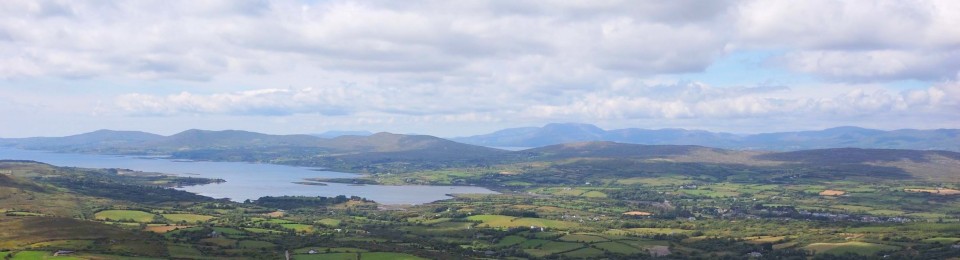
Thomas ‘The Industrialist’ Adderly, (1721-1791) Innishannon, Co. Cork, Industrialist, MP Armagh, Wide Street Commissioner Dublin, Developed flour mill, carpet, linen, silk, salt, corduroy, cotton, industry in Innishannon, involved in setting up Charter School. Collapse of Silk Industry may have Propelled Huguenot Workers Westwards.


https://www.google.ie/maps/place/Inishannon,+Co.+Cork/@51.7646279,-8.6652905,15z/data=!3m1!4b1!4m2!3m1!1s0x4844f4b80e9b51a3:0x0a00c7a997319490

Thomas Adderly, (1721-1791) Innishannon, Co. Cork, Industrialist, MP Armagh, Wide Street Commissioner Dublin, Developed flour mill, carpet, linen, silk, salt, corduroy, cotton, industry in Innishannon, involved in setting up Charter School. Collapse of Silk Industry may have Propelled Huguenot Workers Westwards.

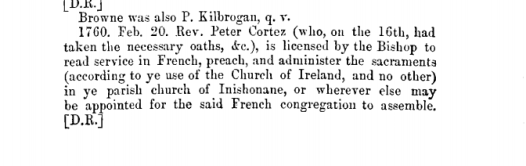
Thomas Adderly , Innishannon, Co. Cork, Industrialist, MP Armagh, Collapse of Silk Industry may have Propelled Huguenot Workers Westwards.  After the silk industry collapsed apparently the damp climate did not suit mulberries on whom the silk worms depend the workforce dispersed.   He had introduced Huguenot craftsmen.  The Dukelow name appears in the area early 18th century and it may be that the family later settled in Durrus.  Other Huguenots such as Camier my have been involved.
 

Screen Shot 2018-07-18 at 09.15.08

Magistrates:

Matthew Adderley, 1728, Dromkeene, Bandon.

Thomas Adderly (1712-1791), 1761, Innishannon,   Son Francis and Elizabeth Fowkes, family originate in Alderly, Gloucestershire.  Developed flour mill, carpet, linen, silk, salt, corduroy, cotton, industry in Innishannon,  involved in setting up Charter School, m 1. widow 3rd Earl Charlemont, 2. Margaret Bourke, Oory, Co. Mayo.  MP Armagh.


Courtesy Scoil Eoin, Innishannon/Inis Eonáin:


http://innishannonschool.com/our-school/local-history/thomas-adderly


M.P. and landowner, for whom see Edith Mary Johnston Liik, History of the Irish Parliament 1692-1800 (Ulster Historical Foundation, 1992), III, 56-59, and Dictionary of Irish Biography (2009).   While there is no evidence that Thomas Adderley was an architectural amateur, he was involved with several building projects in his various capacities.  When he was still a child, he inherited the estate of his father, Francis Adderley, in Co. Cork. As proprietor of the land, he built the town of Innishannon, Co. Cork, to which he brought sixty Huguenot families in 1747 to establish a linen manufactory. A charter school was built there in 1752.  In 1753 he built Marino House on property he had acquired at Donnycarney, Dublin, presenting it in the following year to his stepson, James, fourth Viscount Charlemont, who was then on his travels.  While Charlemont was away – abroad and in London – Adderley developed and managed the Marino estate on his behalf.(1)  In 1757 he was appointed one of the Dublin Wide Streets Commissioners and two years later Commissioner and Overseer of the Barracks and Public Works, a position which he held until 1769.  He was appointed treasurer to the Barrack Board in 1772 but was dismissed in 1782 after a clerk was convicted for embezzzlement.  A hospital and stables erected by the Board at Navan, Co. Meath, in 1776, were described as ‘lately built under the direction of Mr Adderley’.(2)

References

(1) See Ruth Musielak (ed. Rose Anne White), Charlemont’s Marino: portrait of a landscape (Dublin: Office of Public Works, 2014), 17-30.
(2) F. Elrington Ball, ‘Thomas Adderley of Innishannon, M.P.’ in Journal of the Cork Historical and Archaeological Society, III, 50-?; JIHC 8, appendix p.lxxx.


1847 Report on memorial presented to the Lords of the Admiralty with regard to the Harbours and Lighthouses of Co. Cork mentioning the catchment of the River Bandon, Innishannon, Kinsale Fishery and Harbour, Courtmacsherry, Illen Skibbereen, Baltimore, Schull, Carrig-na-Melia off Castle Island, the Cosheen Fishing and Mining Company rescue of East India Man ‘Charlotte’ by Cosheen fishermen.


durrushistory's avatarWest Cork History

1847 Report on memorial presented to the Lords of the Admiralty with regard to the Harbours and Lighthouses of Co. Cork mentioning the catchment of the River Bandon, Innishannon, Kinsale Fishery and Harbour, Courtmacsherry, Illen Skibbereen, Baltimore, Schull, Carrig-na-Melia off Castle Island, the Cosheen Fishing and Mining Company rescue of East India Man ‘Charlotte’ by Cosheen fishermen.

http://www.dippam.ac.uk/eppi/documents/12615/page/316582

View original post

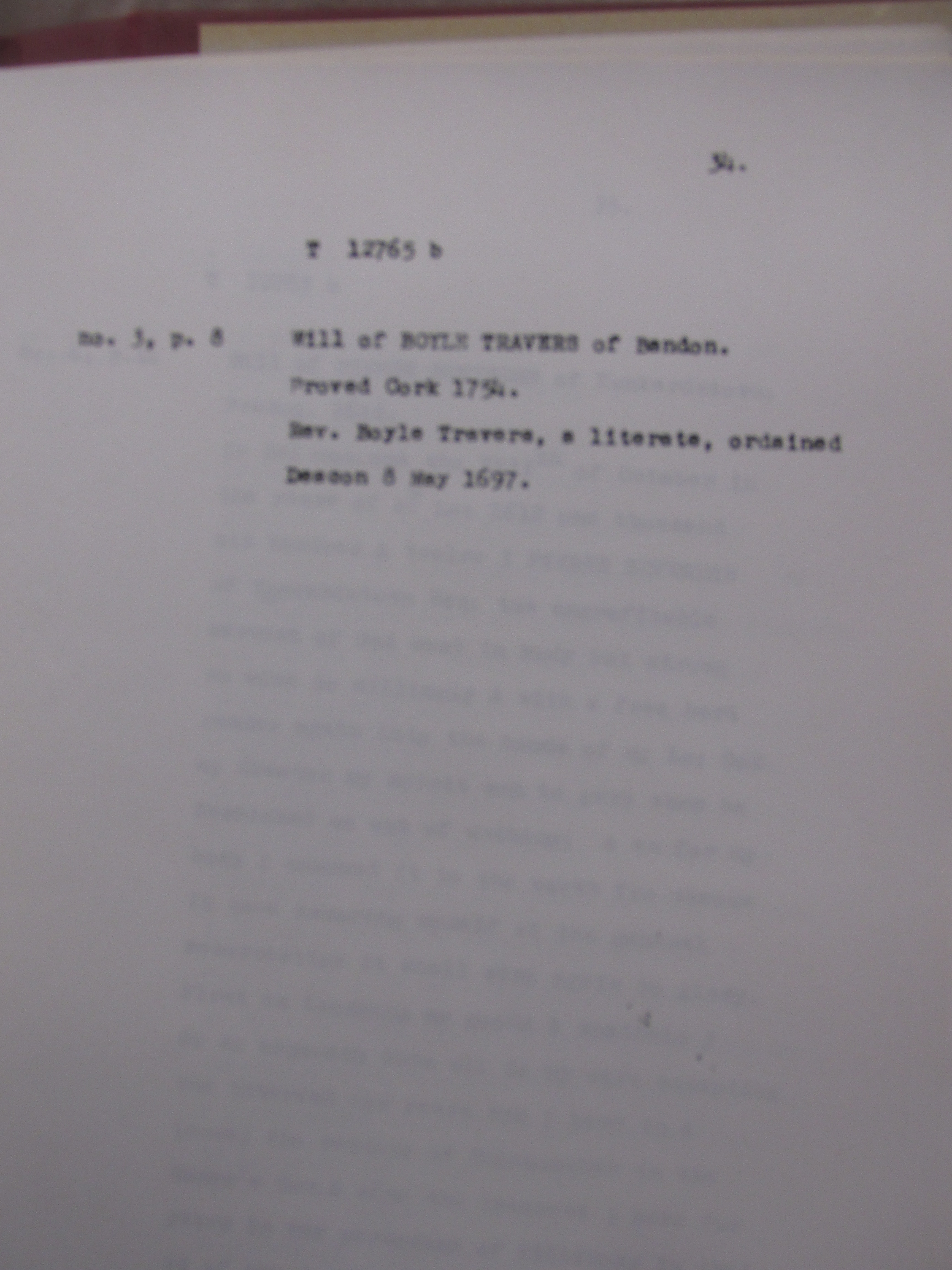
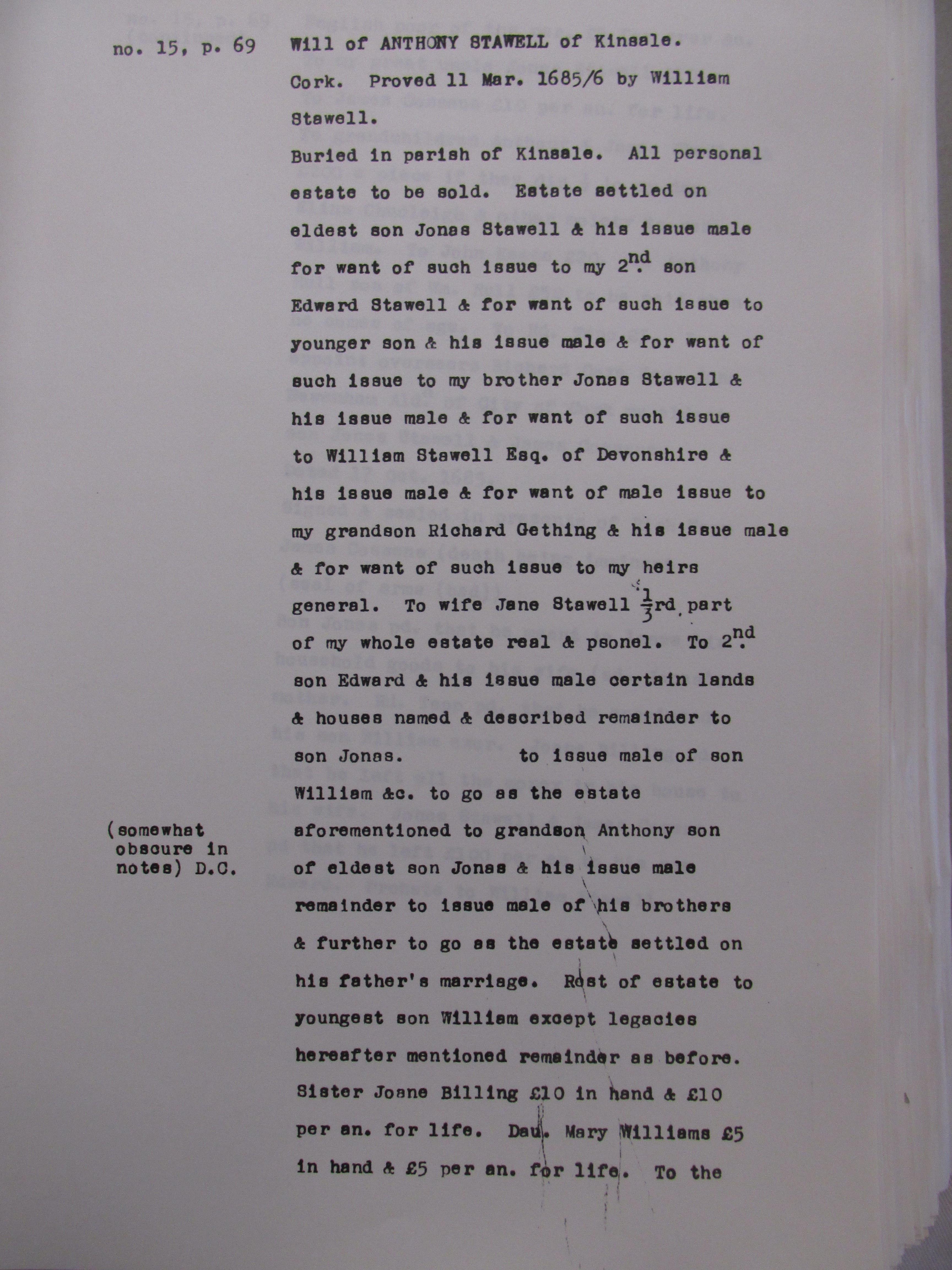
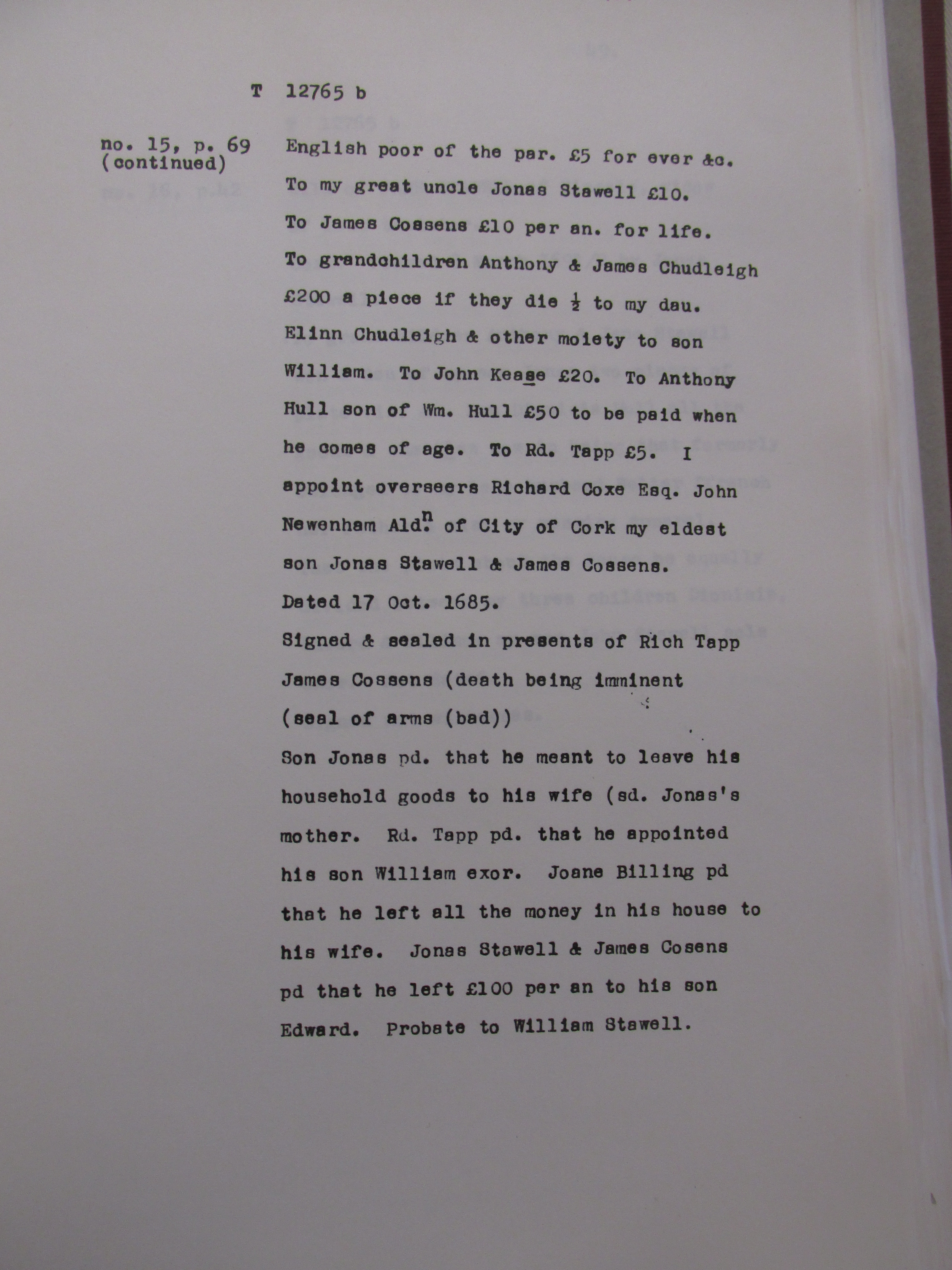
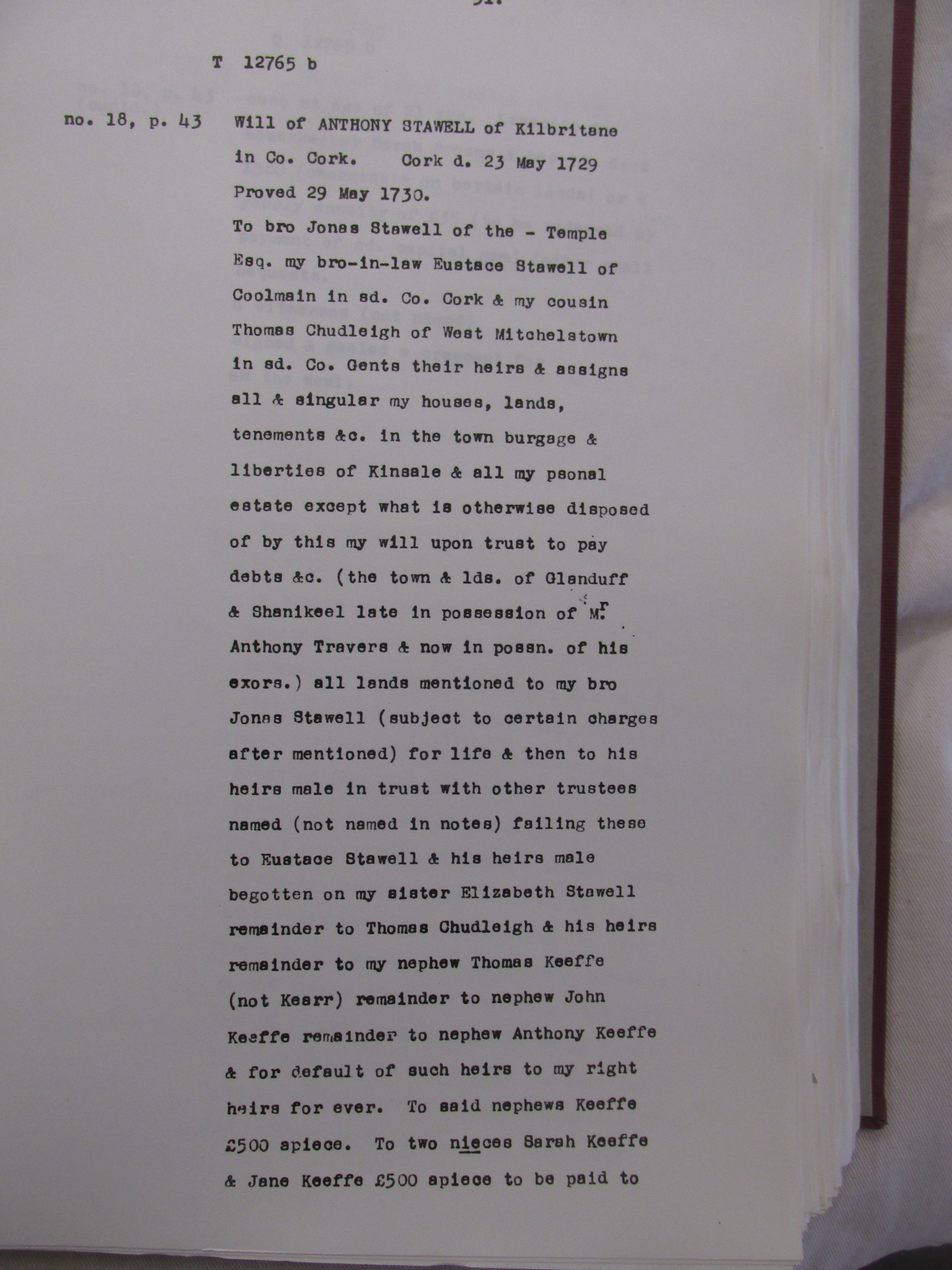
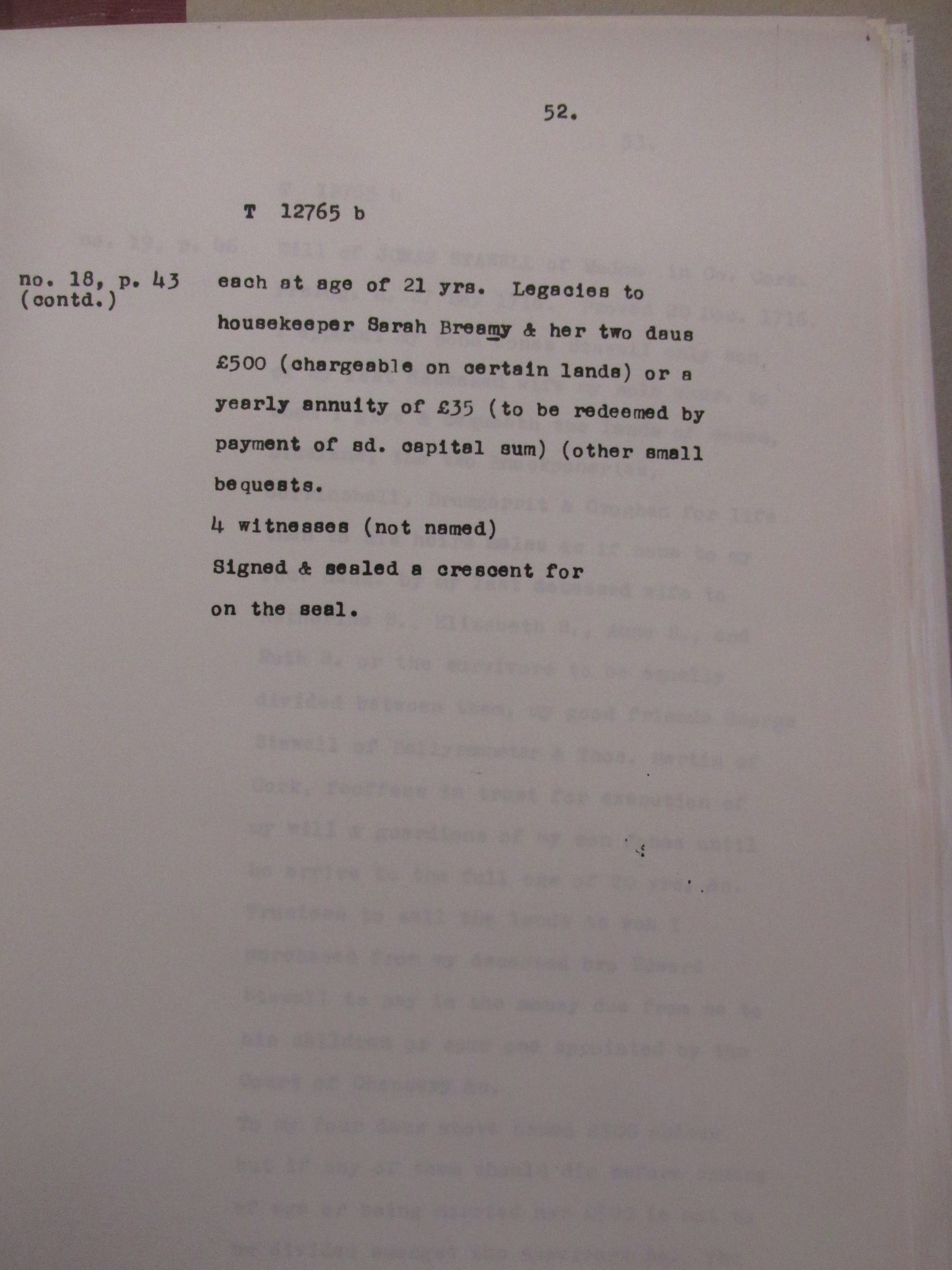
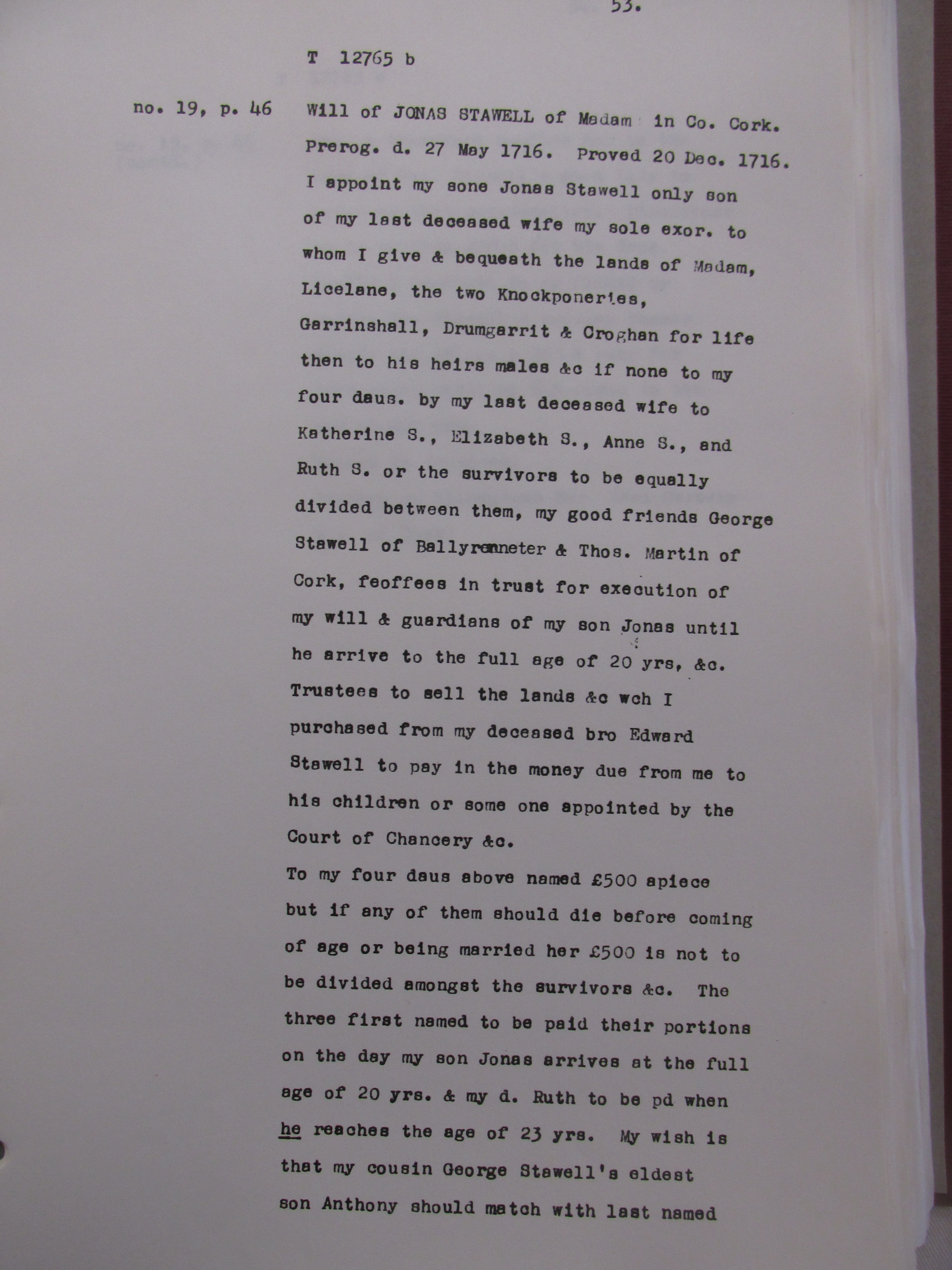
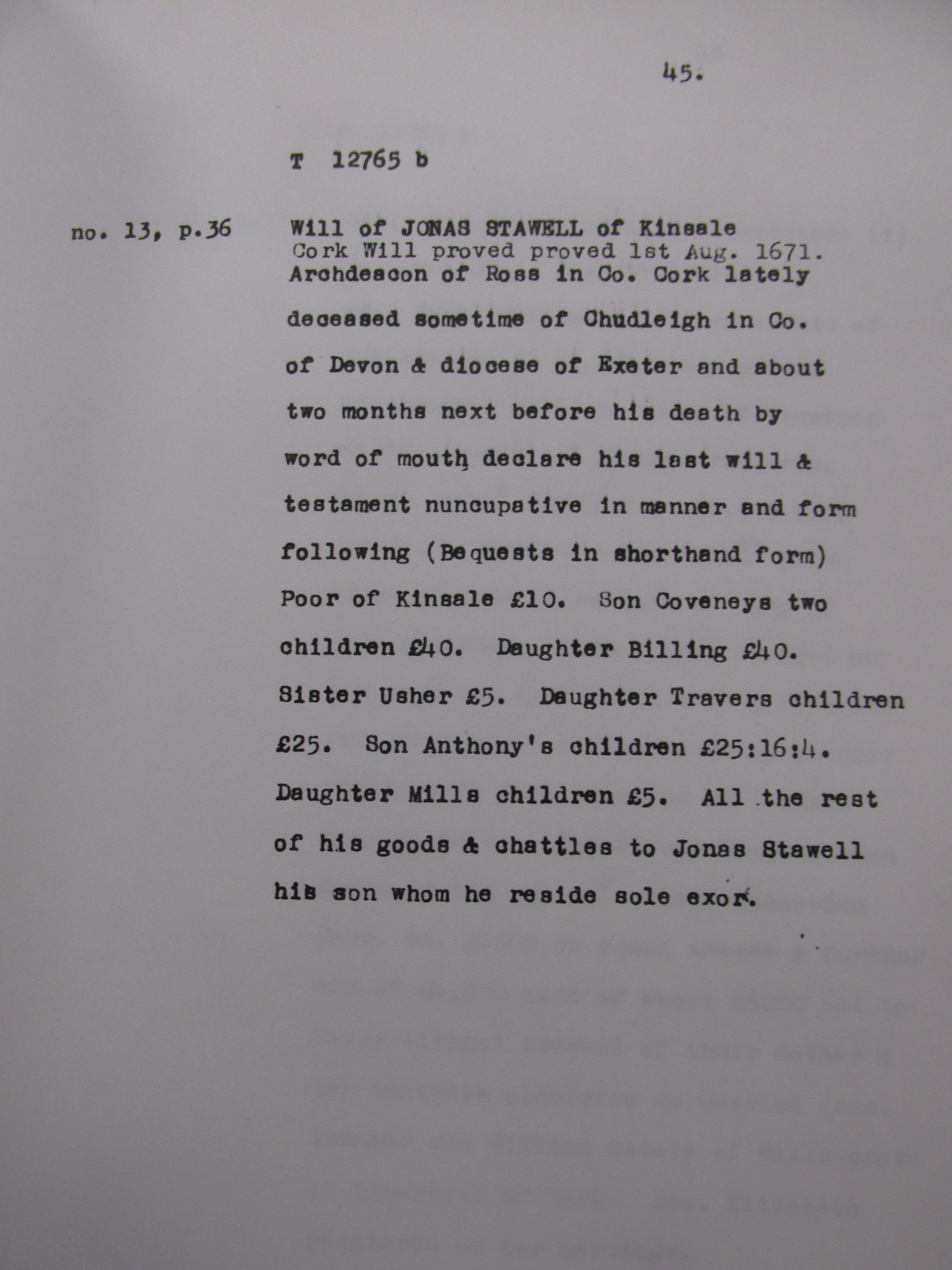
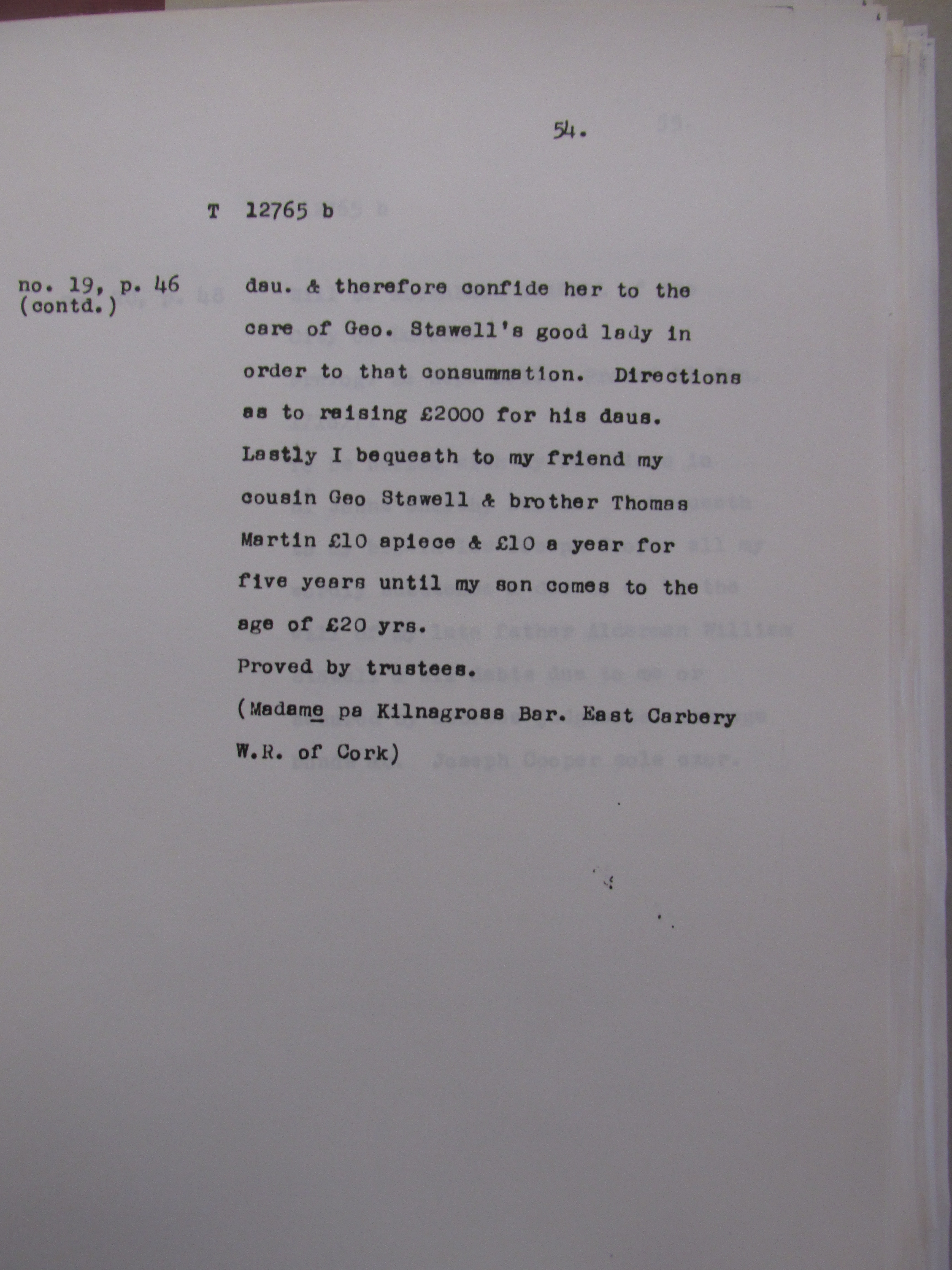
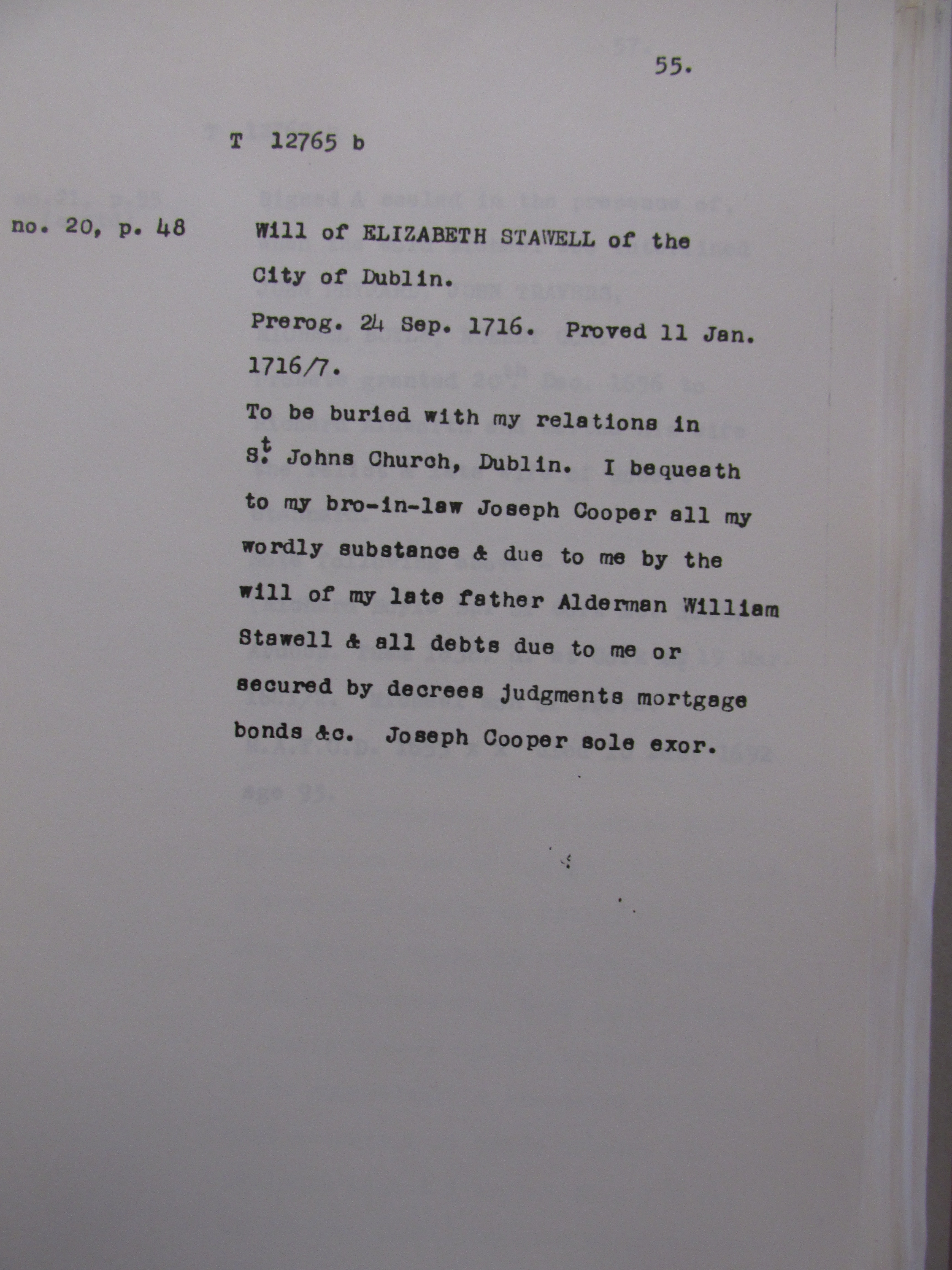
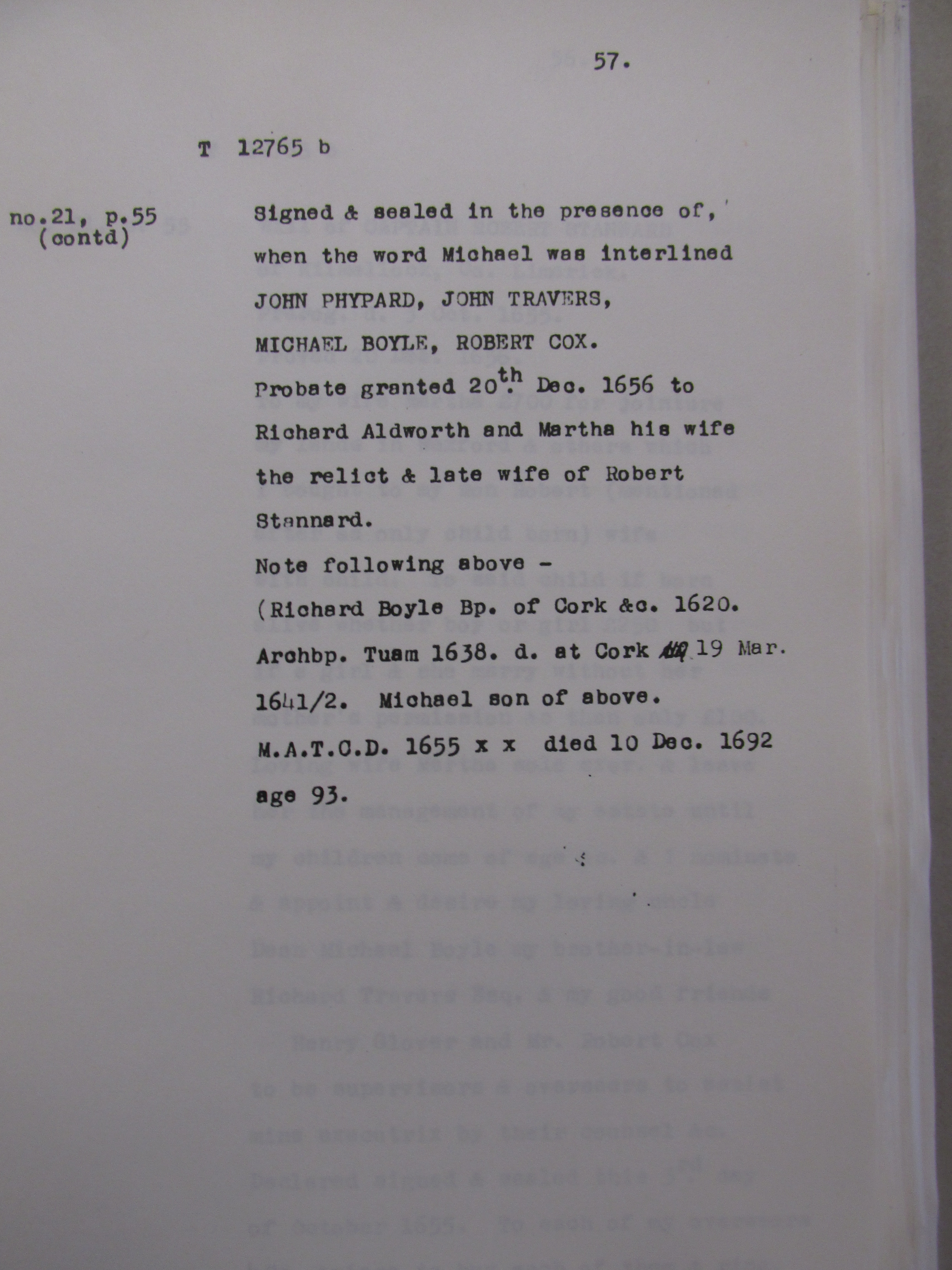
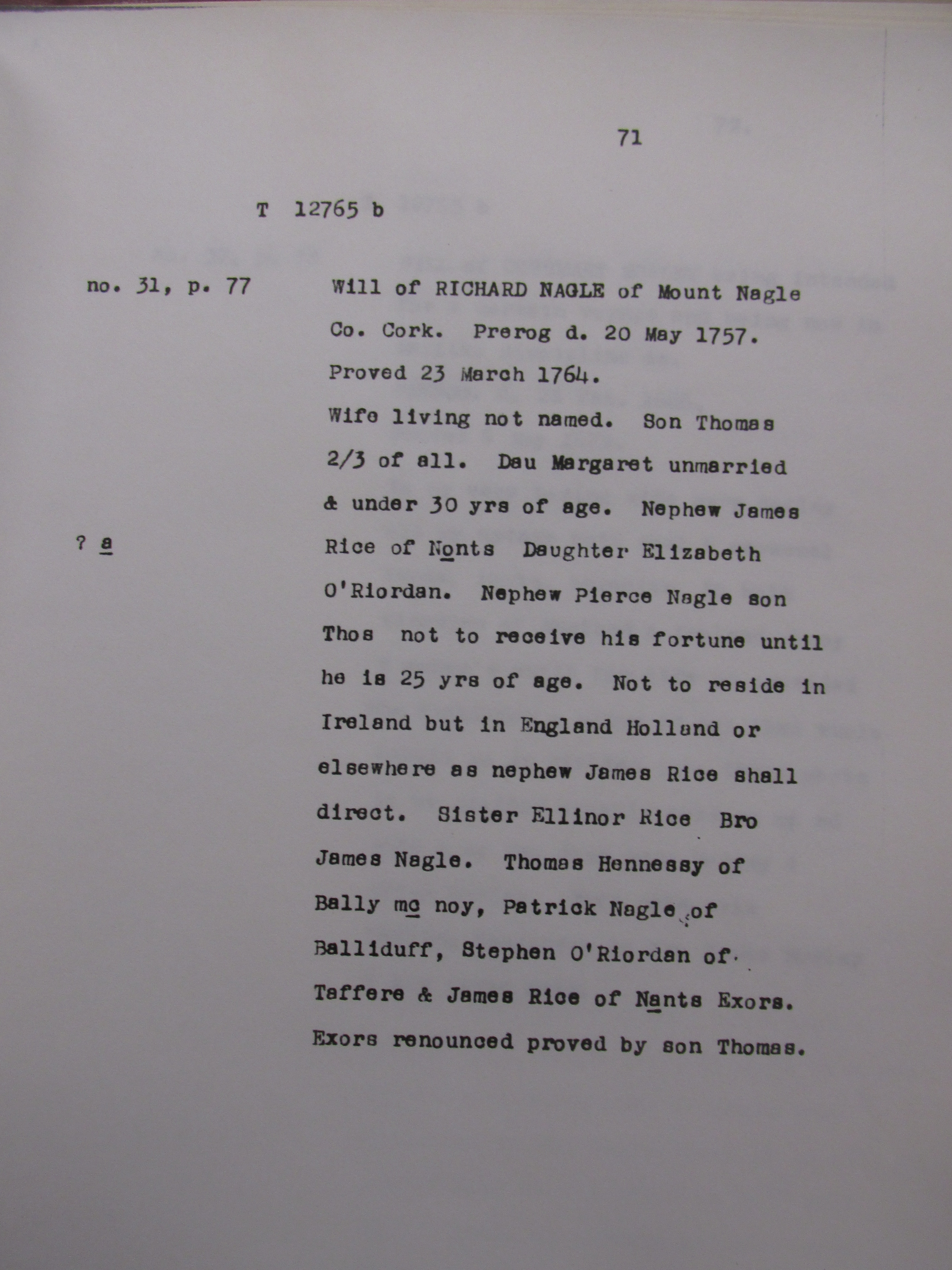
Wills associated with the Stawell family, Kinsale, Co.Cork from the 1690s. The Stawells were a Landed family associated with the Kinsale area. Among names mentione , Travers, Bldwin, Crone, Aldworth, Allen, Cox, Hull, Spiller, Chudlegh, Keefe/O’Keeffe, Mills, Nagle, O’Riordan, Rice.


durrushistory's avatarWest Cork History

Wills associated with the Stawell family, Kinsale, Co.Cork from the 1690s. The Stawells were a Landed family associated with the Kinsale area. Among names mentione , Travers, Bldwin, Crone, Aldworth, Allen, Cox, Hull, Spiller, Chudlegh, Keefe/O’Keeffe, Mills, Nagle, O’Riordan, Rice.

http://landedestates.nuigalway.ie/LandedEstates/jsp/estate-show.jsp?id=2865

Thew were also MPs for the area in the 18th century ad had a close connection with the British Naval Establishment.

Wills from the Dr. Casey collection:

1-IMG_4067

2-IMG_4068

01-IMG_4070

02-IMG_4071

03-IMG_4072

04-IMG_4073

05-IMG_4074

06-IMG_4075

07-IMG_4076

08-IMG_4077

09-IMG_4069

10-IMG_4078

11-IMG_4079

12-IMG_4080

1-IMG_4081

2-IMG_4082

View original post

What a Methodist preacher apparently wore in the 1830’s


jrirish's avatarIrish Methodist Genealogy

Recently I came across a letter relating to the first Ordnance Survey of Ireland in the 1830’s. It concerned the progress of the field work being carried out in County Cavan but began with an interesting insight.

Virginia (County Cavan) May 25th 1836

Dear Sir

Is it not a most extraordinary thing that I should be taken for a Methodist? I wear a black coat, a black waistcoat and black trousers and most generally a black shirt, a very appropriate colour to represent the dark designs of one who intends to make protestants of the townlands* and yet the friary who were holy men belonging to God wore very black clothes. I assure you that I was refused lodgings in several places in consequence of looking so like a swaddling (Methodist) preacher……

  • Irish townland names were being anglicised for the purposes of the Survey.

View original post

Pounding the furze for the mare in foal.


durrushistory's avatarWest Cork History

Pounding the furze for the mare in foal.

Pre the mid 1960s the workhorse on Irish farms was literally the horse. The diet was supplemented by furze (whin or gorse in some areas), chopped up with a furze machine. These sturdy machines of cast iron are still around and grinded the plant and then chopped it. Mares in foal have a delicate digestive system and the furze was further pounded to make it palletable.

Farmers would often travel a mile of so to get a cart load of furze. Brakes or waste land of up to a half an acre would often be planted with a harvest within two years

1-IMG_3436

2-IMG_3437

Aiteann gaelach, Tufts of furze

Garbhóg, forked hazel stick used in divining, a furze stick was used by an English artist who bought Sea Lodge in the 1940s to divine for water. The house had no water which was obtained…

View original post 450 more words