The 1766 religious census return for the Union of Kilmocomoge
The original return provided a list of householders’ names, as was required by the resolution of the House of Lords (see comment below about list of householders in Bantry), but only household and population numbers have survived.* The parishes in the union were Kilcrohane, Durrus and Kilmocomoge.
The numbers reported by Barry were:
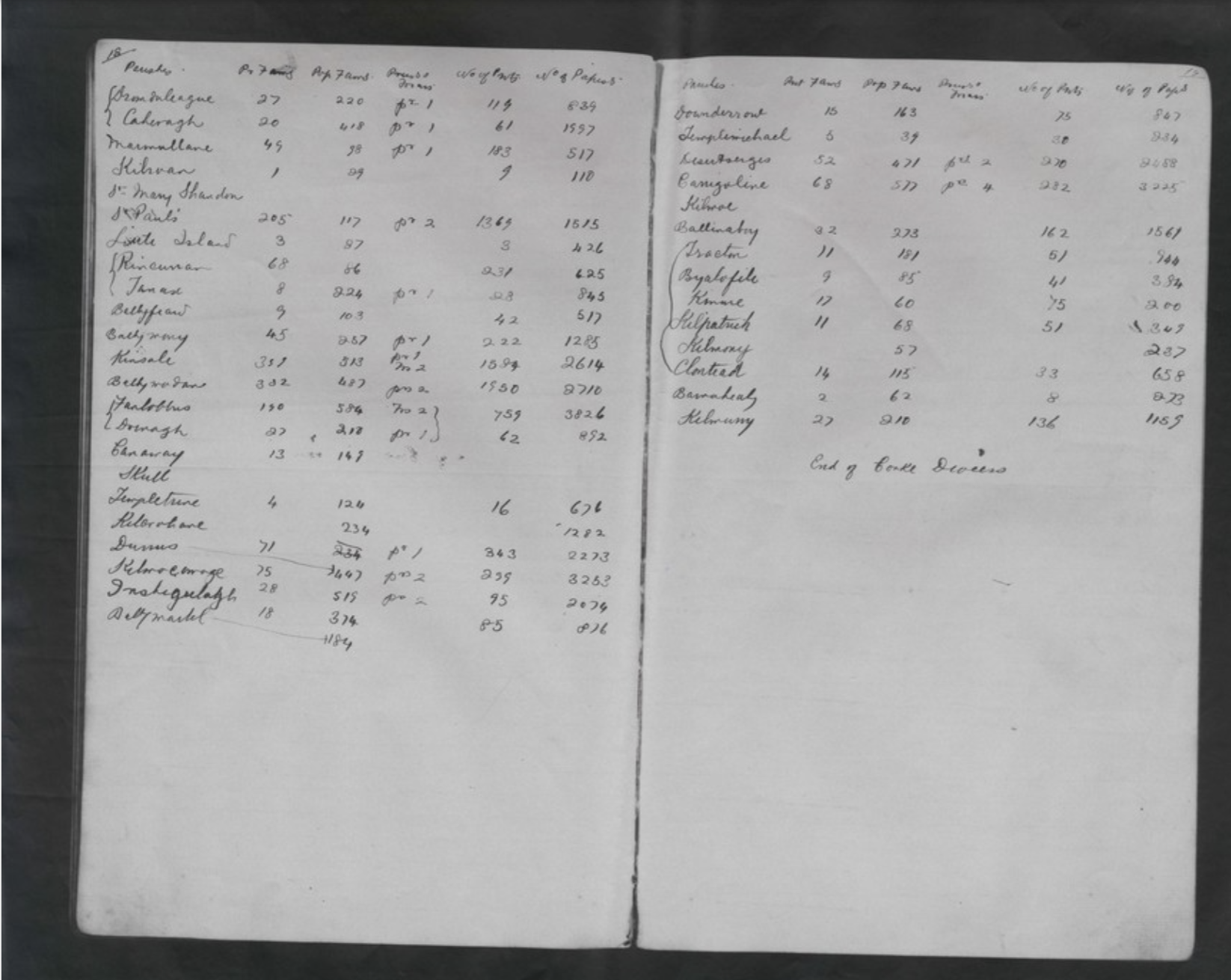
Kilcrohane and Durrus, 71 Protestant households, and 343 Protestant individuals; 681 Catholic households, and 3,555 Catholic individuals.
Kilcrohane, 234 Catholic households, and 1,282 Catholic individuals. Protestant numbers only available with Durrus.
Durrus, 447 Catholic households, and 2,273 Catholic individuals. One resident priest. Protestant numbers only available with Kilcrohane.
Kilmocomoge, 75 Protestant and 519 Catholic households, containing 299 Protestants and 3,253 Catholics. Two priests.
William Carrigan provides the following additional information, which, importantly, confirms that the census provided the names of householders (in bold italics, our emphasis):**
Kilmocomoge: ‘Standish Barry, priest; Denis Doly, coadjutor: and in the list of the householders in “Bantry town & suburbs” we find the name of “Standish Barry, Popish priest for this parish”’.
Durrus: ‘Timothy Crowly, living in Upper Coomkeen is “Popish priest for the parish of Durrus”’.
Kilcrohane: ‘No priest given’.
Census abstracts for the dioceses of Cork and Ross can be found in NAI PRIV/M/4921, pp 16-22. For clerical succession lists for Cork and Ross see W. Maziere Brady, Clerical and parochial records of Cork, Cloyne and Ross (3 vols, Dublin, 1863-4).
* Parliamentary Records Index, vol. ix, p. 1,952 (National Archives of Ireland RC 14/9); Brady, Cork, Cloyne and Ross, i, p. 95.
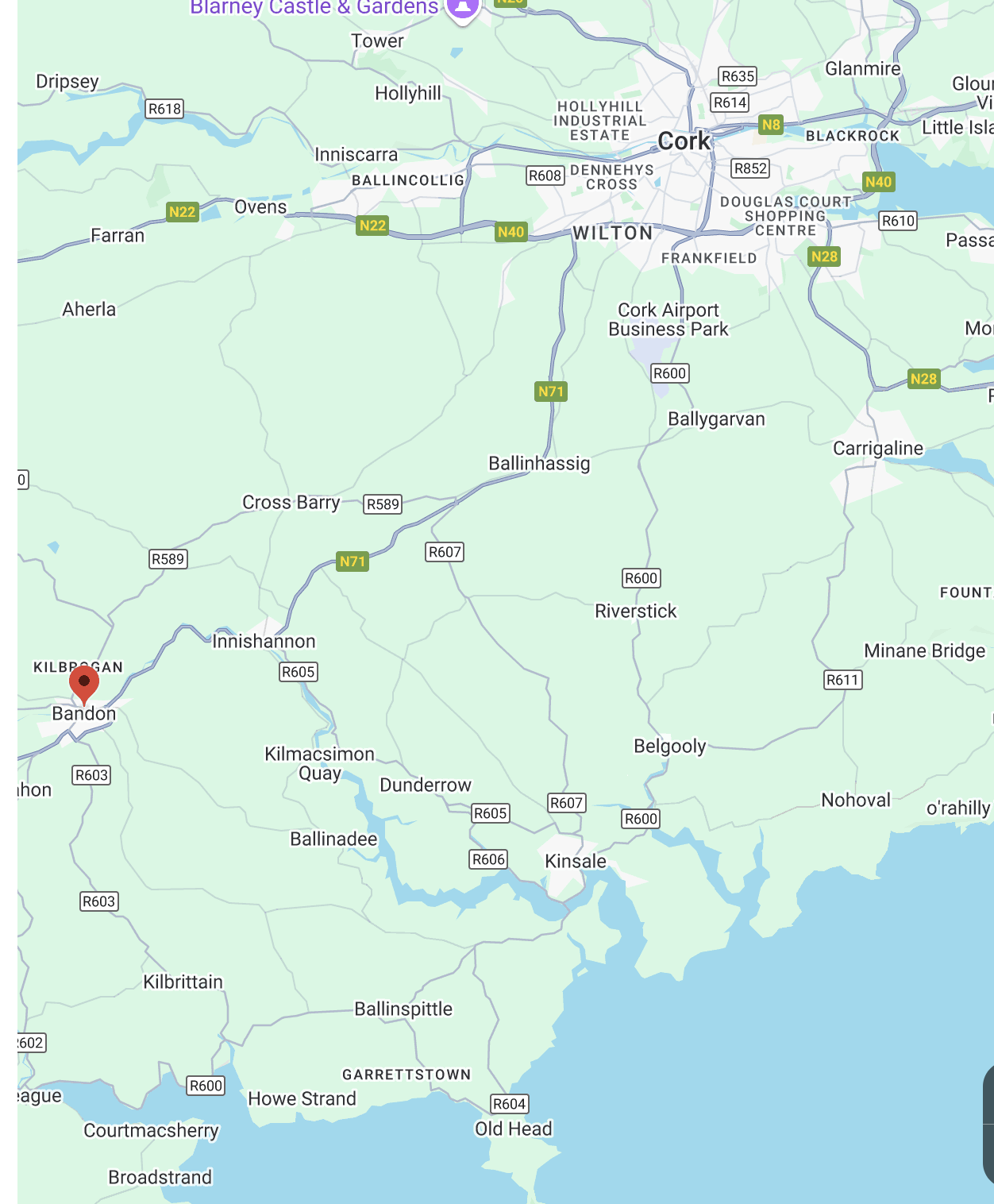
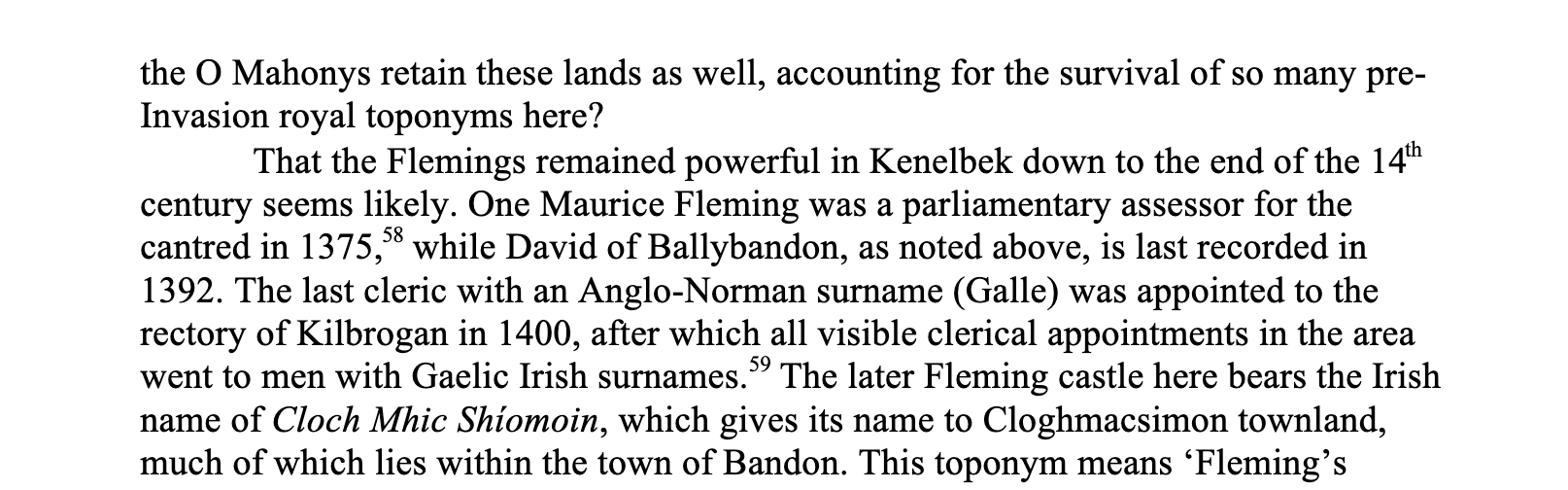
This paper deals with the Anglo-Norman settlement in what may best be described as mid-Cork, an area centring on Bandon town, and goes on to trace the descent of the chief families of that settlement into the early 17 th century. It also features a study of the O Mahony lords of Kinelmeaky and the O Murrays of Ballymodan.
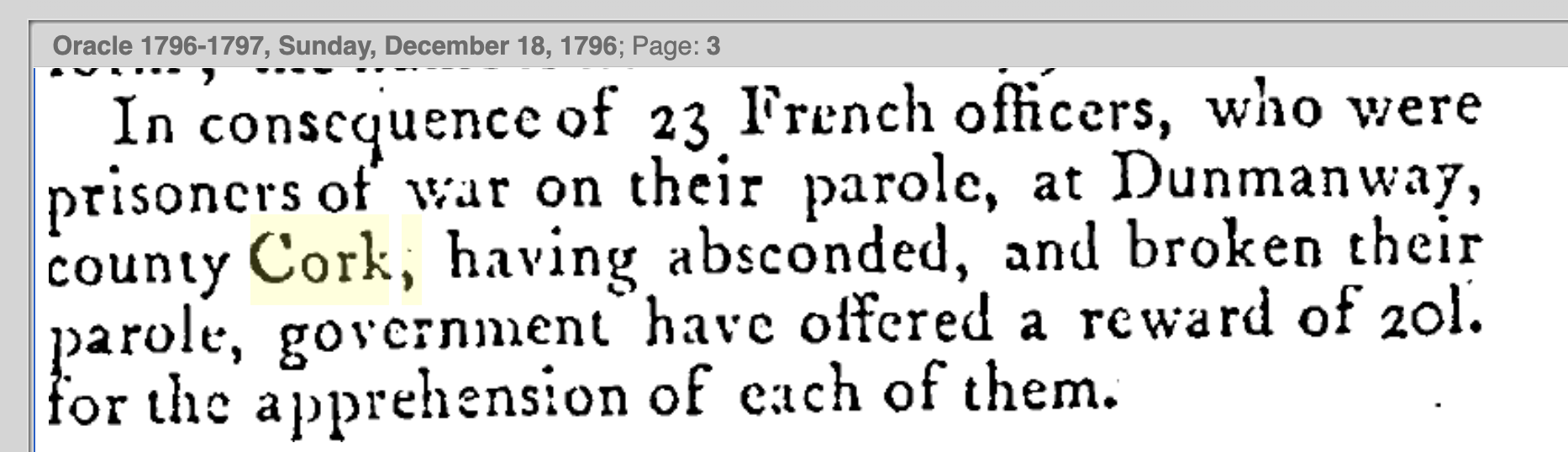
There are various reports of French Officer on Parole in full military regalia being much in demand at balls and other festivities at the time in West Cork.
Lord Bantry claimed £2,000 for wine purchased on their entertainment, under protest Dublin Castle paid, this is referred to in Lord Shannon’s letters to his son.
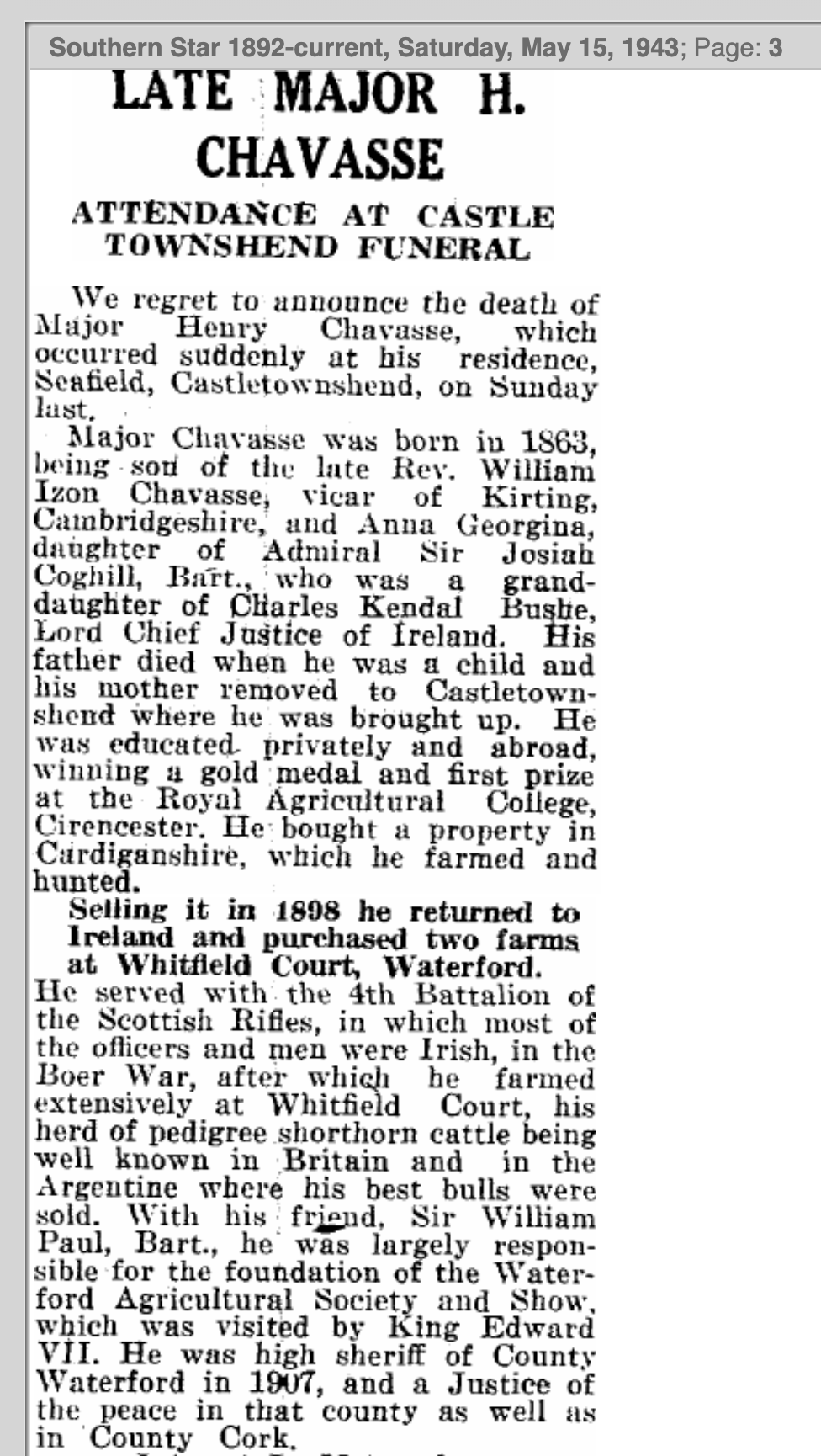
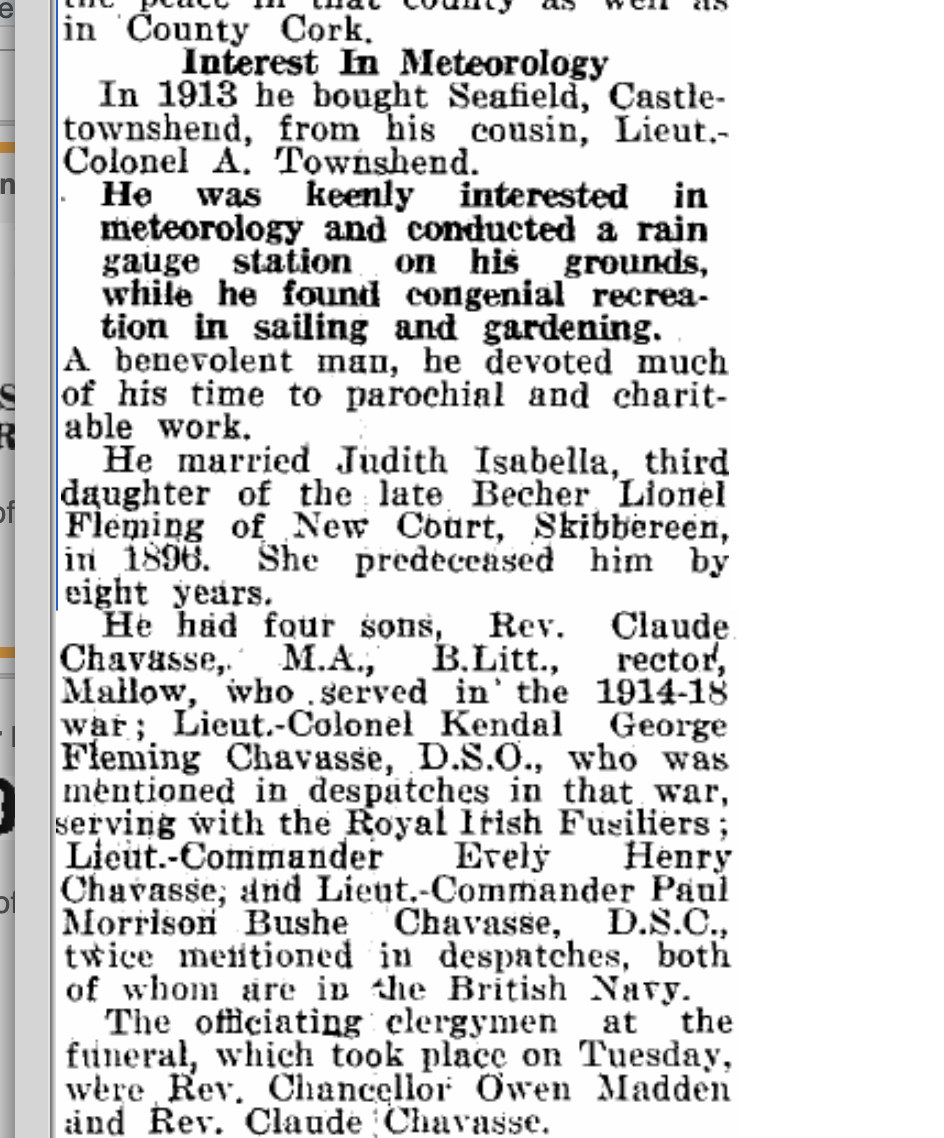
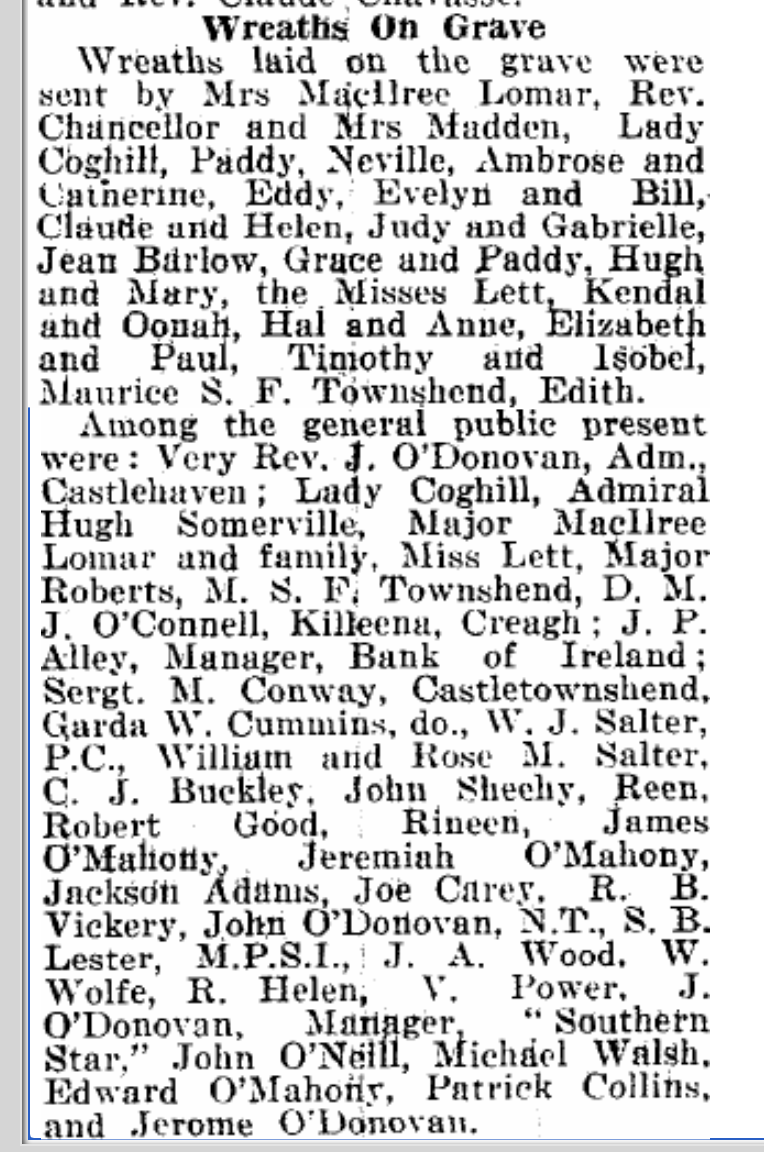
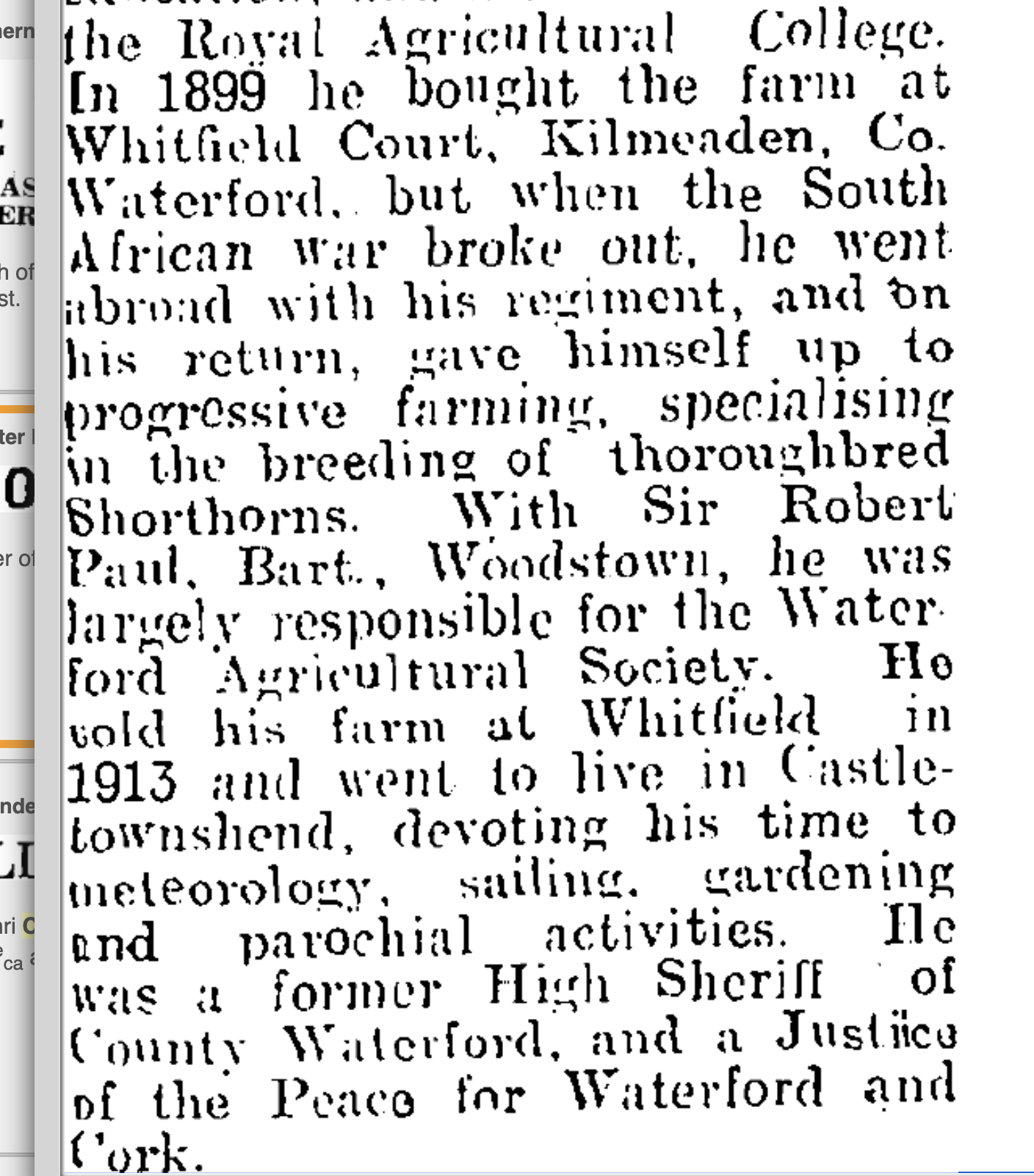
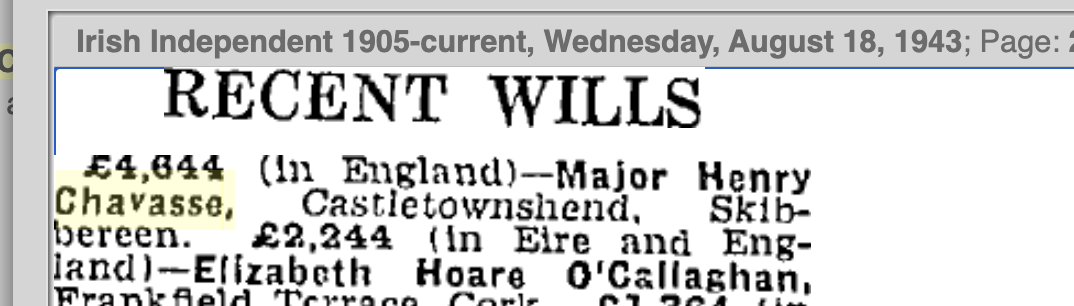
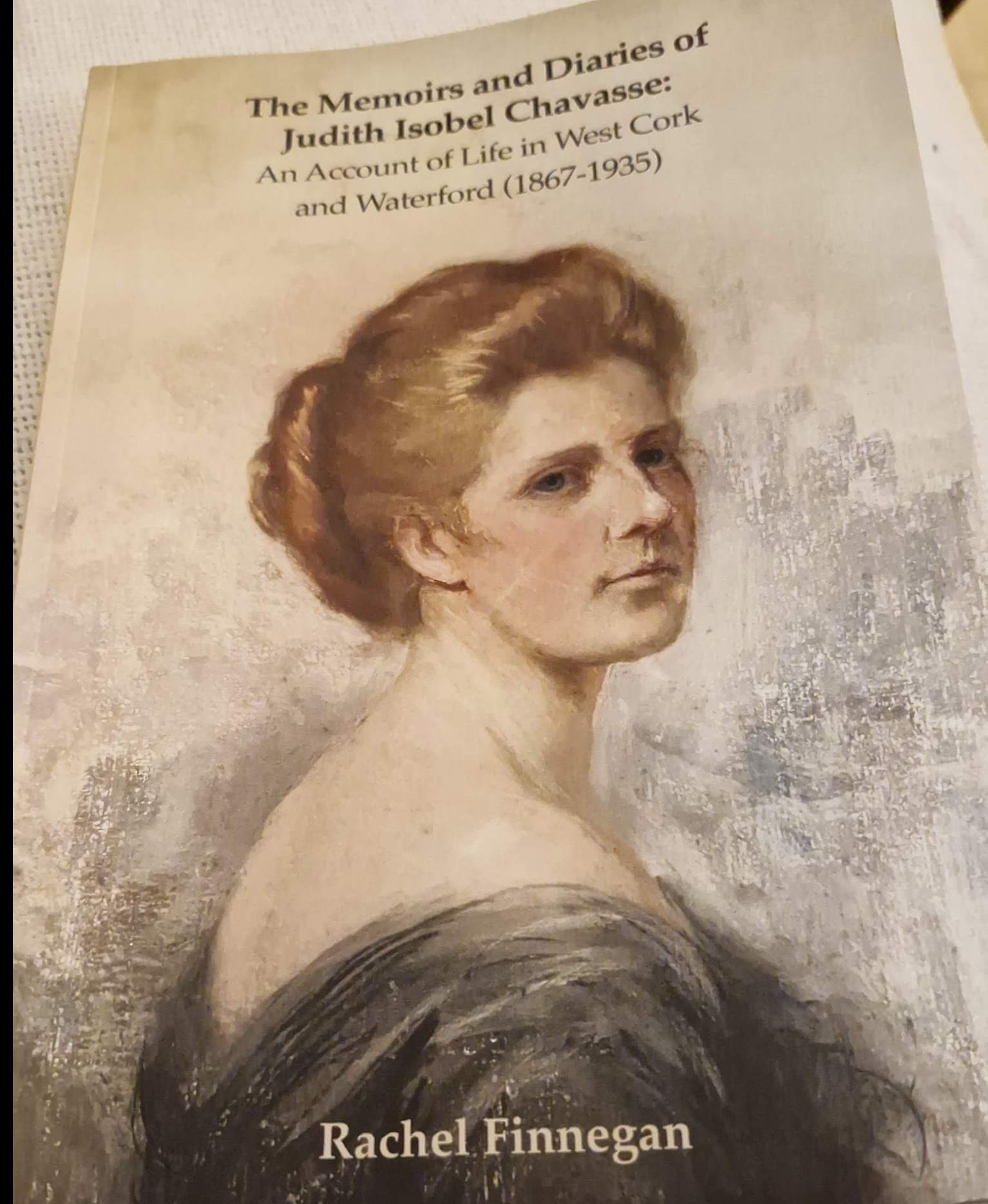
Major Henry (Hal) Chavasse, (1863-1943), 1915, Seafield, Castletownshend, listed 1922. Whitefield Court, Waterford, High Sheriff, Co, Waterford, J.P., Co. Waterford. His mother is a granddaughter of Charles Kendal Bushe, Lord Chief Justice of Ireland. The Chavasse family originated from the borders of France and Savoy came to England to support the Jacobites during the 1715 rebellion. Originally Catholic they converted and a branch of the family settled in Ireland concentrated around West Cork. Educated Cirencester Agricultural College, served 18 years in the British Army. He married Judith Isobel Fleming, Newcourt, Skibbereen, (1867-1935). Her memoir and diaries now published. Metrologist, cattle breeder, best bulls sold in Britain and Argentina.
listed 1922. Whitefield Court, Waterford, High Sheriff, Co, Waterford, J.P., Co. Waterford. His mother is a granddaughter of Charles Kendal Bushe, Lord Chief Justice of Ireland. The Chavasse family originated from the borders of France and Savoy came to England to support the Jacobites during the 1715 rebellion. Originally Catholic they converted and a branch of the family settled in Ireland concentrated around West Cork. Educated Cirencester Agricultural College, served 18 years in the British Army. He married Judith Isobel Fleming, Newcourt, Skibbereen, (1867-1935). Her memoir and diaries now published. Metrologist, cattle breeder, best bulls sold in Britain and Argentina.\
This had been abstracted from the Irish annual return. In between details of the court returns is a sampling of some of the local Magistrates who sat. Since the mid 17th century the Magistrates of West Cork were overwhelmingly Protestant bar a bried period around 1680 and the first Catholic to be appointed was
Daniel O’Sullivan, Cameatringen, Berehaven, Co. Cork, 1814, Died On Passage from Bristol Where he Had Been for the Recovery of His Health, D. O’Sullivan, Cameatringen, Berehaven, Co. Cork, First Catholic Appointed Magistrate since Reign of Queen Anne, Captain of Berehaven Loyal Infantry, Descended From One of The Princely Branches of O’Sullivan Beare. O’Sullivan, Daniel (1758/61?–1814), middleman and magistrate, was second son of Daniel O’Sullivan and his wife Honora, daughter of Morgan O’Connell (1739–1809) of Carhen, Cahirciveen, Co. Kerry, and therefore first cousin to Daniel O’Connell (qv). On his father’s side he was grandnephew to Morty (Murtagh) Óg O’Sullivan, a smuggler shot at Eyries, Co. Kerry, while resisting arrest for homicide in 1754. The family resided in Caretringane House, Castletownbere, Co. Kerry, and leased a sizeable property in the Coulagh area on the Eyre estate. Their uncle’s fate did not deter the family from the smuggling tradition, though the French traveller Coquebert de Montbret commented on the social pretensions of the family in 1791. Following the death (c.1796) of his elder brother, John, Daniel was vested with administration of the estate until his nephew, Morty O’Sullivan (d. 1825), should come of age. In December 1796, when French vessels belonging to the expeditionary force under Gen. Lazare Hoche (1766–97) were observed anchored off Bere Island, O’Sullivan with great alacrity initiated a state of emergency in the district, ordering his tenants to drive cattle inland and to conceal provisions in the event of a French landing. Having posted a large number of tenants to watch the coast for the next eleven days, he took prisoner the crew of a French longboat reconnoitring the beaches and rushed them for interrogation to the nearest British garrison in Bantry. O’Sullivan was applauded for his loyalty, made captain of the Berehaven loyal infantry corps of yeomanry, and presented with the freedom of Cork city – the first catholic to receive the honour since the early 1700s. Recommended to the commission of the peace by the county governors, he was the first catholic to be made a magistrate in Co. Cork since the early 1700s.
In recognition of his part at the time of the attempted French Invasion at Bantry Bay in 1796.
The Magistrates were drawn from the ranks of the Landlords or their agents. Many had a well deserved reputation of being sectarian and partisan so slowly the British administration introduced Resident Magistrates initial former RIC inspectors to retired British army officers. Edith Somervill ‘The Irish RM probably accurately depicts the. None of the Magistrates had any legal training, a situation that still pertains in England. The situation improved towards the end of the 19th century as many of th RM were either barristers or solicitors.
This was part of the radical overhaul of the Irish Justice system post Independence ebay the Free State Government.
They abolished the Magistrates who still sit in Northern Ireland, This was praised by the former Lord Chancellor Ignatious O’Brien, (Baron Shandon 1857-1930).
When the lord chancellor, Redmond John Barry, retired in 1913 O’Brien was appointed to the vacant post. While he was a hard worker he was neither diplomatic nor forceful enough to be truly effective, and was notorious for his long-winded and self-important judgments. His judicial philosophy favoured sweeping aside precedent and technicalities in favour of substantive justice as he saw it; hence he was on good terms with Peter O’Brien (qv), though he disapproved of his politics, and at odds with Christopher Palles (qv), though he acknowledged Palles’s eminence as a jurist. He greatly enjoyed the social side of his office and the ceremonies and amusements of the viceregal court.
O’Brien was nearly ousted as lord chancellor in 1915 in favour of James Campbell (qv) by the first coalition government – his removal was also sought by T. M. Healy and William O’Brien (qv) (1852–1928) – but was retained after a public outcry orchestrated by the Redmondites, which threatened to affect American public opinion. He expressed guarded optimism for the future of the Irish Free State, and admired the government of W. T. Cosgrave (qv), praising such decisions as the replacement of JPs by paid district justices and the creation of an unarmed police force. He emerges from its pages as a sensitive and somewhat neurotic m


 West Cork History