From An Lár TV Irish Community, Culture and Heritage Group, Moya Brennan sings:
The oldest Irish carol on record, dated back to the 12th century’ http://t.co/5xNHtrneBS
22 Wednesday Jan 2014
Posted in Uncategorized
From An Lár TV Irish Community, Culture and Heritage Group, Moya Brennan sings:
The oldest Irish carol on record, dated back to the 12th century’ http://t.co/5xNHtrneBS
22 Wednesday Jan 2014
Posted in Uncategorized
From Beare family web site:
http://www.bearefamilytree.com/bandonbeares.html
Bandon, Co. Cork:
New Brunswick:
22 Wednesday Jan 2014
Posted in Uncategorized
22 Wednesday Jan 2014
Posted in Uncategorized
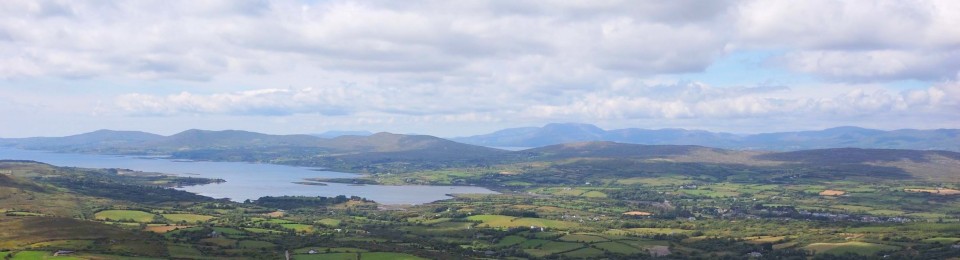
In relation to Lisheenacreagh, the enclosed shows the farm and building probably of the period. The Daly family were Church of Ireland not Methodist, but you get some idea of the surrounding countryside.

22 Wednesday Jan 2014
Posted in Uncategorized
22 Wednesday Jan 2014
22 Wednesday Jan 2014
Posted in Uncategorized
James Hutchinson Swanton, 1815 – 1891, son of William Swanton, Ballydehob and Hanna Hutchinson, Clonee, Durrus. Her father, Hugh Hutchinson, landlord and Margaret O’Sullivan, Ballagahadown between Caheragh and Drimoleague. She is probably sister to Eugene O’Sullivan, Gent, middleman on a number of estates including Dunmanway Shouldham Estate. He is a church warden, Drimoleague c 1790. The Hutchinson major property owners in Bantry since at least mid 17th century. Not to be confused with Bantry Hutchins family. Slowly lands including Blackrock House now Bantry House acquired by Richard White (Ancestor of Lord Bantry). Estate sold Landed Estates Court 1850s.
Gortnagrough:
James Hutchinson Swanton, 1815 – 1891, son of William Swanton, Ballydehob and Hanna Hutchinson, Clonee, Durrus. Her father, Hugh Hutchinson, landlord and Margaret O’Sullivan, Ballagahadown between Caheragh and Drimoleague. She is probably sister to Eugene O’Sullivan, Gent, middleman on a number of estates including Dunmanway Shouldham Estate. He is a church warden, Drimoleague c 1790. The Hutchinson major property owners in Bantry since at least mid 17th century. Not to be confused with Bantry Hutchins family. Slowly lands including Blackrock House now Bantry House acquired by Richard White (Ancestor of Lord Bantry). Estate sold Landed Estates Court 1850s.
Magistrate:
James Hutchinson Swanton, Rineen Skibbereen, resident, April 1857, £143. Report on 1850 dinner for Sir Robert Kane, President Queens College. Prominent Methodist. From 1875 Carrisbrook House, Pembroke Ballsbridge. Businessman, miller. landowner, sitting Skibbereen 1861,
House at Rineen, in the 1901 census the house was…
View original post 86 more words
21 Tuesday Jan 2014
Posted in Uncategorized
It is hard even at a remove of 300 hundred years to conceive of the evil of the Penal Laws. The administrative and judicial class of England who have given the world the rule of law, nascent democracy a free press among other gifts have the penal laws as an eternal blot to their memory. It was clearly designed to extirpate the Irish people as a separate cultural, religious and administrative entity. Thankfully the objective has not suceeded
http://library.law.umn.edu/irishlaw/
There is however a different view that it must be interpreted in the context of the 17th and early 18th century for example the French imposed even more sever restrictions on their fellow countrymen who were Protestant. It has been suggested that the Penal Laws were characterises as a series of multiple petty tyrannies.
It had a modern echo in the behaviour of the West Pakistani regime in East Pakistan to suppress the Benhali rebellion in the early 1970s. There was a deliberate policy of annihilating the cultural and intellectual elite to cut the head off the Bengalai Nation. Needless to say it did not succeed. Bangladesh although very poor today rates very highly on a whole range of indicators.
A manifestation of the Penal Laws is the reported renunciation of Popery in Bantry church before Pastor Davies in the 1730s I think Maziere Brady refers to it.
In fact it was an elaborate charade entered into by all concerned to safeguard their mutual commercial interests.
The Galwey and Meade families were prominent in Cork pre Reformation as merchants and landowners. They were extensively involved in the Bantry fishing business in the 18th century. Pastor Davies had a wide range of interests, fishing, land, smelting and religion was probably a type of hobby. He was a partner with the Galweys, Meads, Jagoes, and Youngs among others in shipping cargos of fish from Bantry they each had shares calculated as one sixteenth. Some time after the remounciation the Meads and Galweys of Bantry were subscribing to funds to oppose the Penal Laws.
Their position would be analogous to the Moranos, the Crypto-Jews who ostensibly converted to Christianity but secretly continued their prohibited worship:
http://en.wikipedia.org/wiki/Crypto-Judaism
Another manifestation of the unintended consequences of the Penal Laws was the development in Dublin of a cluster of firms of Attorneys specialising in conveyancing, using elements of the Penal Laws to subvert them and continue the de facto ownership of land in Catholic hands. Recent studied have estimated that through various legal stratagems and trusts devices Catholics controlled up to 25% of land as opposed to the earlier accepted figure of 10%
21 Tuesday Jan 2014
Posted in Uncategorized
1610 Map of China, by Chinese Cartographer in Java, finding the sea route to China, the Law of the Sea and the emergence of London as a Global City 1549-1689.

These issues are discussed in a recent review of 2 books in the Economist Magazine.
20 Monday Jan 2014
Posted in Uncategorized
From Claire Santry’s Blog:
The Ulster Scots Community Network (USCN) has published three new e-titles, each available for free download. Two of them will be of interest to researchers with ancestors in Canada and Pennsylvania, as these books are focussed on emigrants (or their descendents) who settled in those locations after leaving the northern province.
This trio of new publications joins a growing bookshelf of titles from USCN. You can download them all from the USCN Publications page. Hard copies are also available.
The Ulster-Scots Community Network was established in 1995 to promote awareness and understanding of the Ulster-Scots tradition in history, language and culture, and to highlight the significant contribution of the Ulster-Scots community to the development of life in Northern Ireland, the border counties of the Republic of Ireland, and the wider Ulster-Scots diaspora. The organisation has more than 400 member groups.
– See more at: http://irish-genealogy-news.blogspot.ie/2014/01/trio-of-new-ulster-scots-titles-for.html#sthash.qVmzQeBv.dpuf


