1904 – Fastnet Lighthouse, Co. Cork – Architecture of Cork – Archiseek.com
05 Friday Feb 2016
Posted in Uncategorized
05 Friday Feb 2016
Posted in Uncategorized
05 Friday Feb 2016
Posted in Uncategorized
05 Friday Feb 2016
Posted in Uncategorized
05 Friday Feb 2016
Posted in Uncategorized
05 Friday Feb 2016
Posted in Uncategorized
05 Friday Feb 2016
Posted in Uncategorized
Robert M. Salter, (1814-1876), from Ballybane, Schull West Cork to service in State Legislature, Wisconsin, USA, 1862.
He married Jane Camier in 1834, in Cork, and after her death 1843, Jane Sweetnam (1823-1897) He emigrated to the USA 1846 and settled in Jackson, Washington, Wisconsin. He served as Town Supervisor and is credited with bringing fine horses to Washington and Ozaukee Counties.
On his death ‘The Democrat’ on the 9th August 1876 reported that by one of the largest gatherings ever witnessed and there were 81 teams in the procession many coming on horseback.
04 Thursday Feb 2016
Posted in Uncategorized
04 Thursday Feb 2016
Posted in Uncategorized
02 Tuesday Feb 2016
Posted in Uncategorized
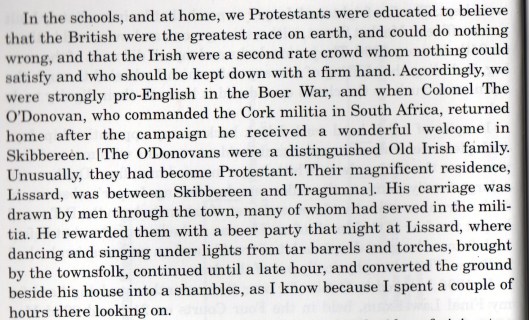
Return of The O’Donovan, Colonel South Cork Militia, from the Boer War in South Africa, His Carriage Drawn by Men Through Town of Skibbereen, West Cork, Party at Lissard, Singing and Dancing. Porter Flowing to The Early Hours, Light From Tar Barrels.
From Willie Kingston’s memoir
Magistrate:
Colonel Morgan William ‘The O’Donovan’ Oxon (1861-1940), CB, D.L., MA, 1888, ‘The O’Donovan’, Clann Cathal, Lis Ard, Skibbereen, son of Henry Wintrop ‘The O’Donovan’ MA, DL. and Amelia d ‘The O’Grady’, Courcy O’Grady, Kilbollyowne, Co. Limerick. Ed. Haileybury and Oxford, Lieutenant-Colonel Munster Fusiliers, Colonel South Cork Militia Boer War, Succeeded Colonel Aylmer C. Somerville 1899 as President Carbery Agricultural Society. M Mary Eleanor, odo Rev. J Yarker Barton, Chaplain to British Forces, listed 1921.
02 Tuesday Feb 2016
Posted in Uncategorized
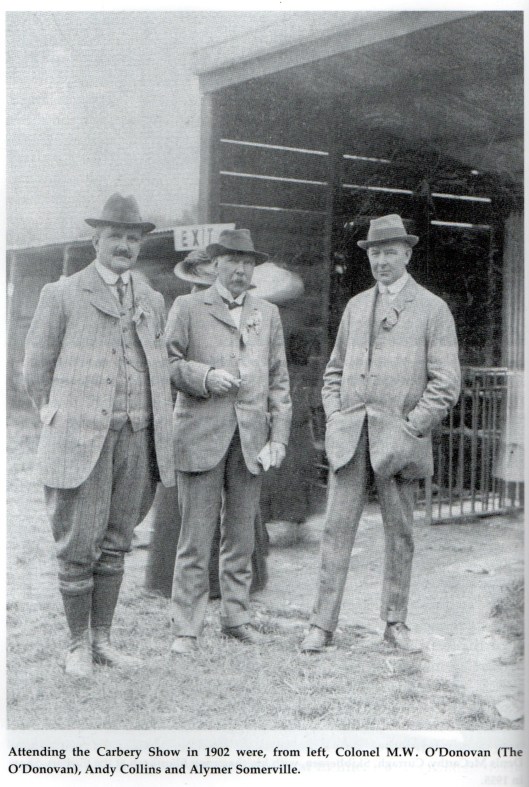
Carbery Agricultural Show, Skibbereen, 1896/7 Prizewinners with Photo of Past President 1892-7, Aylmer Coghill Somerville DL, and The O’Donovan President 1899.
Aylmer Coghill Somerville DL, 1891, England, Tally-Ho House, Castletownshend, listed 1913, President of Carbery Agricultural Show 1892-7, as was his father earlier in 1840s. listed at Shanacourt Castle, Castletownshend, 1921. Listed at Shanacourt Castle, Castletownshend, 1921. Executor £489, of father Lieutenant-Colonel Thomas Somerville D.L.(1825-1898)
Colonel Morgan William ‘The O’Donovan’ Oxon (1861-1940), CB, D.L., MA, 1888, ‘The O’Donovan’, Clann Cathal, Lis Ard, Skibbereen, son of Henry Winthrop ‘The O’Donovan’ MA, DL. and Amelia d ‘The O’Grady’, Courcy O’Grady, Kilbollyowne, Co. Limerick. Ed. Haileybury and Oxford, Lieutenant-Colonel Munster Fusiliers, Colonel South Cork Militia Boer War, Succeeded Colonel Aylmer C. Somerville 1899 as President Carbery Agricultural Society. Presented organ to Creagh Church to commemorate the Jubilee of Queen Victoria. 1893 Member Cork Historical and Archaeological Society. Member Royal Society of Antiquaries 1889. Considered the preservation of ancient documents a matter of importance. M Mary Eleanor, (Madame) odo Rev. J Yarker Barton, Chaplain to British Forces, she chaired the Women’s Emergency Recruiting Committee WW1, Skibbereen, listed 1921. Attending 10 Grand Jury presentments
George Rye, Macroom, Co.Cork, Early Agriculturalist, 1730 on the Burning of Lime.


Prizewinners, 1896 and 1897 Carbery Agricultural Show, Skibbereen.
The names were abstracted by Teddy O’Regan, in an article on the Carbery Agricultural Skibbereen and District Historical Society, 2006. A number of additional items of information is included. Most of the livestock exhibitors were substantial farmers. Many of the names appear in agricultural shows from the 1850s.
Aileen Wilson, Corran, Leap
The O’Donovan, Lissard, Skibbereen, (Landlord)
Samuel Woulfe, Ballydehob
Henry O’Donovan Becher, Castlehaven, (Landlord?)
Denis O’Driscoll, Castlehaven
Crowley, Western road, Clonakilty
Carey, Skibbereen
H. Jeffrey, Lettercollum, Timoleague
Josiah Jeffrey, Derry, Rosscarbery
J. G. Shannon, Gurteenakilla, Ballydehob
Shannon, Derrygreen, Skibbereen
Patrick Hurley, Moneyvolihane, Castlehaven
Patrick Walsh, Carrigfada, Skibbereen
Daniel Minihane, Creagh, Skibbereen
Jeremiah Geaney, Drishanebeg, Castlehaven
Vickery, Ballycomane, Durrus, George Vickery of same family also appears
Hosford, Castlelands, Enniskeane?
Miss S. Perrier, Ballinure House, Blackrock, Cork, may have Woulfe, Ballydehob relations
O’Sullivan, Cloghane, Skibbereen
James Barry, Lick, Skibbereen
P. Hawkes, Barryshall, Timoleague
S. Woulfe, Skibbereen
Eugene Sweeney, Lickowen, Castlehaven
Miss E. Reeves, Glandore
Mrs. T. Downes Skibbereen, (Solicitor family?)
John O’Mahony, Town View, Skibbereen
Mrs. O’Neill, Tooreeasillane
Morgan Lambert, Bawnagallopy, Skibbereen
Rev. M. Cunningham, Leap
Rev. J. O’Hea, Ardfield, Clonakilty
James Barrett, Ri, Clonakilty
Jerome C. O’Sullivan, Clonakilty
John J. Levis, Highfield, Oldcourt, Skibbereen
Thomas Shannon, White Hall, Skibbereen
John Kingston, Scahana, Union Hall
Michael Crowley, Droumadaca, Drimoleague
Jonas Woulfe, Bantry
Timothy Sweeney, Clonakilty
Daniel Leonard, Big Marsh, Aughadown
John J. O’Connell, Skibbereen
David Law, Ahiiskey, Clonakilty
Denis McCarthy, The Castle, Glandore
William Jennings, Skibbereen
James Tinder, Church Cross, Aughdown
John Sweeney, Coolnaclehy, Caheragh
George Vickery, Ballycomane, Durrus, Vickery family in Ballycomane since 1780s, originate Rooska.
James Hurley, Ardagh, Rosscarbery
John Minehane, Lisheen, Church Cross
Bartholomew Hourihane, Cooldurrighy
Cornelius O’Donovan, Junior, Cooldurrighy
Jeremiah O’Mahony, Coomnageehy
William O’Donovan, Aughadown
Patrick Hickey, Coronea, Skibbereen
Patrick O’Brien, Lick, Skibbereen
Denis O’Brien, Skibbereen
Cornelius O’Sullivan, Moneyvolihane
John Fitzgerald, Derryconnell, Schull


