• About
  • Customs Report 1821-2 (and Miscellaneous Petitions to Government 1820-5) and some Earlier Customs Data, including staffing, salaries, duties including, Cork, Kinsale, Youghal, Baltimore, with mention of Bantry, Crookhaven, Glandore, Berehaven, Castletownsend, Enniskeane, Passage, Crosshaven, Cove, Clonakilty, Cortmacsherry.
  • Eoghan O’Keeffe 1656-1723, Glenville, Co. Cork later Parish Priest, Doneralie 1723 Lament in old Irish
  • Historic maps from Cork City and County from 1600
  • Horsehair, animal blood an early 18th century Stone House in West Cork and Castles.
  • Interesting Links
  • Jack Dukelow, 1866-1953 Wit and Historian, Rossmore, Durrus, West Cork. Charlie Dennis, Batt The Fiddler.
  • Kilcoe Church, West Cork, built by Father Jimmy O’Sullivan, 1905 with glass by Sarah Purser, A. E. Childs (An Túr Gloine) and Harry Clarke Stained Glass Limited
  • Late 18th/Early 19th century house, Ahagouna (Áth Gamhna: Crossing Place of the Calves/Spriplings) Clashadoo, Durrus, West Cork, Ireland
  • Letter from Lord Carbery, 1826 re Destitution and Emigration in West Cork and Eddy Letters, Tradesmen going to the USA and Labourers to New Brunswick
  • Marriage early 1700s of Cormac McCarthy son of Florence McCarthy Mór, to Dela Welply (family originally from Wales) where he took the name Welply from whom many West Cork Welplys descend.
  • Online Archive New Brunswick, Canada, many Cork connections
  • Origin Dukelow family, including Coughlan, Baker, Kingston and Williamson ancestors
  • Return of Yeomanry, Co. Cork, 1817
  • Richard Townsend, Durrus, 1829-1912, Ireland’s oldest Magistrate and Timothy O’Donovan, Catholic Magistrate from 1818 as were his two brothers Dr. Daniel and Richard, Rev Arminger Sealy, Bandon, Magistrate died Bandon aged 95, 1855
  • School Folklore Project 1937-8, Durrus, Co. Cork, Schools Church of Ireland, Catholic.
  • Sean Nós Tradition re emerges in Lidl and Aldi
  • Some Cork and Kerry families such as Galwey, Roches, Atkins, O’Connells, McCarthys, St. Ledgers, Orpen, Skiddy, in John Burkes 1833 Commoners of Great Britain and Ireland:
  • Statement of Ted (Ríoch) O’Sullivan (1899-1971), Barytes Miner at Derriganocht, Lough Bofinne with Ned Cotter, later Fianna Fáil T.D. Later Fianna Fáil TD and Senator, Gortycloona, Bantry, Co. Cork, to Bureau of Military History, Alleged Torture by Hammer and Rifle at Castletownbere by Free State Forces, Denied by William T Cosgrave who Alleged ‘He Tried to Escape’.
  • The Rabbit trade in the 1950s before Myxomatosis in the 1950s snaring, ferrets.

West Cork History

~ History of Durrus/Muintervara

West Cork History

Monthly Archives: March 2016

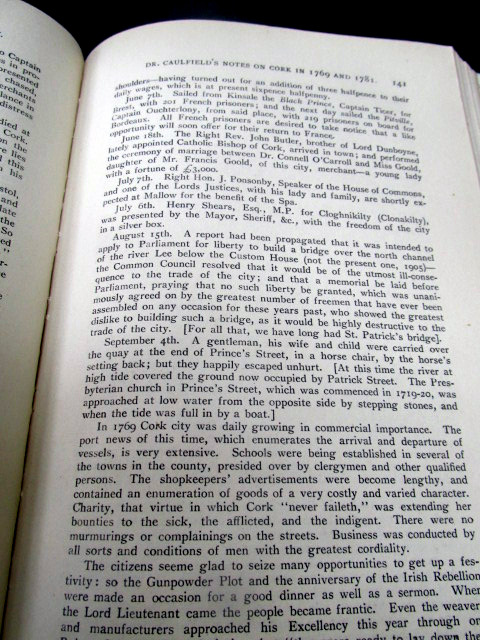
1769, Marriage Performed Cork Bishop of Cork Dr. John Butler, Brother of Lord Dunboyne, between Doctor Connell O’Carroll and Miss Goold (Gould) daughter of Francis Goold, Merchant, Cork, with Fortune of £3,000. Resignation of Bishop Butler to Retain family Title and later Marriage adn birth of Daughter

16 Wednesday Mar 2016

Posted by durrushistory in Uncategorized

≈ 2 Comments


1769, Marriage Performed Cork Bishop of Cork Dr. John Butler, Brother of Lord Dunboyne, between Doctor Connell O’Carroll and Miss Goold (Gould) daughter of Francis Goold, Merchant, Cork,  with Fortune of £3,000.  Resignation of Bishop Butler to Retain Family Title and later Marriage and birth of Daughter.

From Dr. Caulfield extraction of notices in Cork Evening Post.

The notice is interesting on a number of fronts. The Goulds were one of a number of Old Catholic Merchant families expelled from Cork and debarred under the Penal Laws from land dealing and the legal profession.  Like many such families they became merchants, but the mid 18th century they were a considerable force and probably had the balance of economic power by 1900. Daniel O’Connell’s evidence in 1828 to a Parliamentary enquiry in London was that at that stage, the Catholics had most of the deposits at the Bank of Ireland and most of the stock of the Company.

By the time of this marriage the Penal Laws were not enforced, the Bishop lived openly and was a respected figure and the programme of church building began.

Bishop Butler, Courtesy Fethard at Home:

http://fethard.com/

HEIR TO A TITLE
At that time it was very much considered that titles should be passed on and remain directly hereditary within the immediate family. The Butler family were of ‘noble blood’ and well known land owners. As mentioned Bishop John Butler was the third son of the 18th Earl of Dunboyne. On the death of the 18th Earl in 1772 his eldest son, James, became the 19th Earl. Pierce, brother of James who died in 1768 became the 20th Lord. Pierce died in 1773 and his son also named Pierce became the 21st Lord. The 21st Lord was nephew of Bishop John Butler. He died in 1786 and the title of Lord Dunboyne was passed to Bishop John Butler certainly raised a problem which he was very concerned about. As he was a Bishop of the Roman Catholic Church he could not legitimately beget an heir.

MARRAIGE
He finally decided to apply to the Pope for permission to get married to beget an heir and considered that being a Butler permission would be granted. He also resigned as Bishop of Cork on 12th December, 1786.
In the Parish of Drom; Co. Tipperary tradition has it that at Brookley House, a Butler residence, the Bishop while under the influence of drink met Miss Maria Butler, a Protestant from Wilford who encouraged his attentions. This girl whom the Baron wished to make his Baroness and mother of his heir was Maria Butler aged 23, younger daughter of Theobald Butler Wilford, Co. Tipperary. Wilford House is about four miles NW of Mullinahone. Lord Dunboyne (John Butler) spent the Christmas of 1786 at Wilford House and before he left Theobald Butler told his daughter Maria that his Lordship had asked him for her hand in marriage. Maria said she understood Roman Catholic Clergy could not marry. Lord Dunboyne said he had petitioned the Holy Father and he felt that in view of the circumstances and being a Butler that he would get a dispensation.

A RELUCTANT YES
An immediate reply was not asked of Maria, but without delay she was taken by her father to Catherine O’ Brien Butler’s at Bansha , Co. Tipperary and Lord Dunboyne came from Cork to visit them. Maria considered all the factors and reluctantly said ‘yes’ to the marriage. They were married at the end of April 1787 possibly in St. Mary’s church of Ireland, Clonmel. This event was directly reported to Rome by the Archbishop of Cashel and it caused great worry and controversy both at home and abroad. On the 11th August, 1787 the Archbishop of Cashel (Dr. James Butler II) met Lord Dunboyne – the former Bishop of Cork at the house of a mutual friend. – Dr. Fogarty of Clonmel – where the Archbishop handed over a parchment (a lengthy one) to Lord Dunboyne which the Archbishop had received from Rome showing the Holy Father’s grief and affliction at the situation. When Lord Dunboyne had finished reading the letter (dated 9th June 1787) he pleaded “I fear my case has not been fully understood. I am not a young man, nor am I seeking release from my vows for selfish reasons. The Holy Father must be told again that I am solely concerned with the continuation of our family..” It was to no avail to point out the gravity of the situation as he made up his mind that he had done the right thing.

APOSTACY
Lord Dunboyne was received into the Established Church on the 19th August, 1787 at St. Mary’s church, Clonmel by Rev. MR. Dunlevy. A crowd assembled outside the church and protested. His apostasy gave rise to renewed intense and bitter sorrow. He never became a very active member of his new church. For the next few years Lord and Lady Dunboyne lived at home at Dunboyne Castle, Co. Meath with the summers spent at their summer residence at Gracefield now part of the Loreto Convent, Balbriggan, Co. Dublin. Maria was delivered of an infant girl which did not live longer than half and hour – tradition has it that it was a premature baby and that it is buried in the Augustinian Friary at Fethard. Both Lord and Lady Dunboyne fell into a deep depression and Maria’s father arranged a diversion of a Dublin life by renting a town house at 18 Leesons Street, Dublin. It was here that Lord Dunboyne lived out his life.
In April 1791 the first convict ship sailed from Cork to Australia and The United Irishmen were formed that same year. In May 1794 Maria was introduced to James Butler, a Grand Nephew of the Archbishop of Cashel, and the rightful heir to the title of Lord Dunboyne- she was not at all pleased as she wished that Lord Dunboyne would will his title to her brother.

RECONCILIATION
Dunboyne village was burned down by the troops in the rebellion of 1798 and the little chapel destroyed. Lord Dunboyne offered the Parish Priest, Father Connell, a new site for the chapel. During a visit of Lord Dunboyne to Tipperary the Parish Priest of Kilusty near Fethard interceded with him for assistance. He gave him a chalice dated 1621. The chalice is still preserved at Fethard. Lord Dunboyne’s conscience seems to have been troubling him- his marriage barren and now in his 69th year his health was failing. He greatly longed for reconciliation with Rome and he wrote to the Holy Father through Dr. Troy, Archbishop of Dublin, on 2nd May, 1800. Dr. Troy meanwhile asked Dr. William Gahan, O.S.A. (an old friend of Lord Dunboyne) to visit him. Dr. William Gahan was at this time the best known religious writer in the English speaking world and was a former Provincial of the Augustinian Order. Dr. Gahan confessed the old man, who died at 18 Leeson Street, Dublin 2 on the 7th May, 1800. He is buried with his daughter under the Sanctuary in the Augustinian Church, Fethard, Co. Tipperary.

COMPREHENSIVE WILL
Even though Lord Dunboyne did not regain Kiltinan Castle, Fethard, Co. Tipperary from the Cookes he was an extensive property owner and a well-off man. He made a comprehensive and lengthy will on 1st May, 1800 in which he provided for his immediate family as well as leaving substantial property to Maynooth College including Dunboyne Castle. His will was contested by his sister, Mrs Catherine O’ Brien Butler, Bansha, Co. Tipperary at Trim, Co. Meath assizes on 24th August, 1802. Dr. Gahan gave admirable evidence at the trial. After a long hearing the will was found to be valid and the parties reached agreement subsequently.
James Butler (the cousin that Lady Dunboyne did not welcome) petitioned the Lord Lieutenant and became the 23rd Lord Dunboyne. He was a cousin of the ‘bishop of Cork’ and nephew of James I Archbishop of Cashel. The present Lord Dunboyne is a direct descendant of James Butler the 23rd Lord. Lady Dunboyne was 23 when she married Lord Dunboyne who was then 57. She outlived him by 60 years dying in 1860 aged 95 years. She remarried in September 1801 John Hubert Moore and they had one son born in 1805. Maria was widowed again in 1822. She lived at Shannon Grove, Co. Galway and is buried in the cemetery at nearby Clonfert Cathedral.
1-IMG_9405


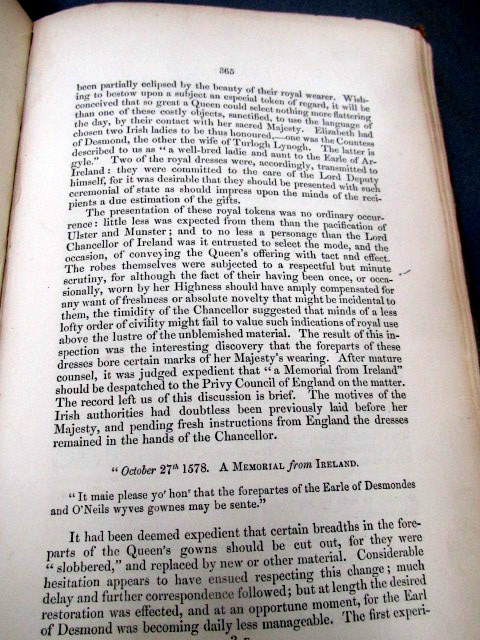
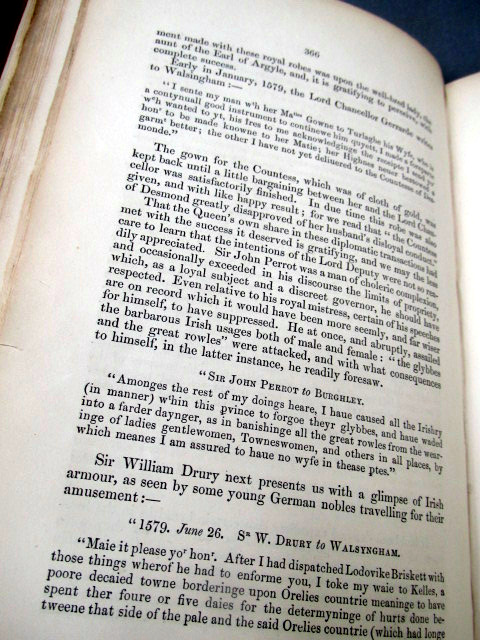
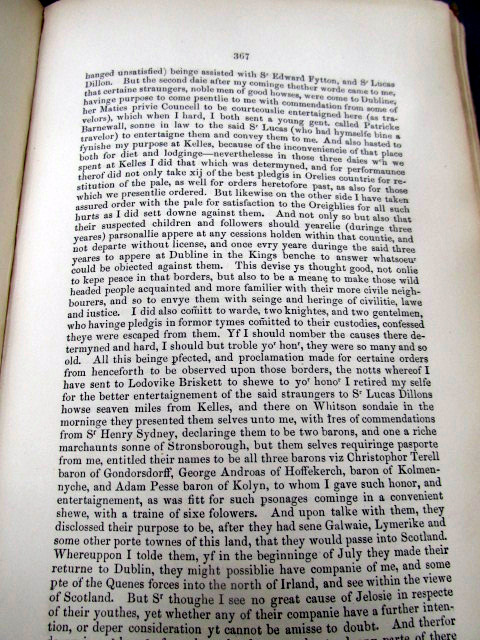
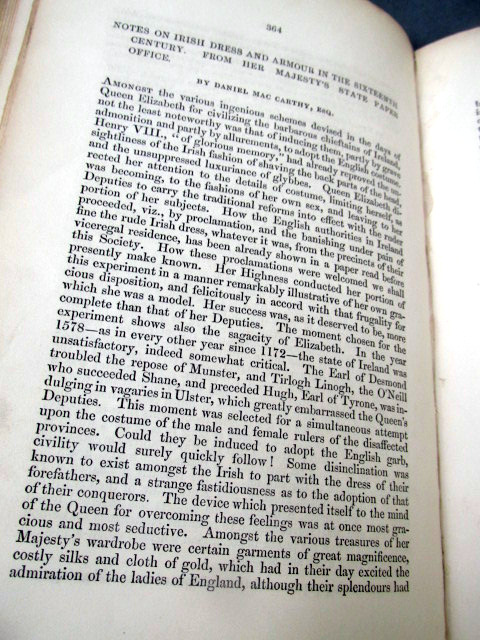
1578, Notes on Irish Dress and Armour From Her Majesties (Elizabeth) State Papers.

15 Tuesday Mar 2016

Posted by durrushistory in Uncategorized

≈ Leave a comment


1578, Notes on Irish Dress and Armour From Her Majesties (Elizabeth) State Papers.


1-IMG_9454


2-IMG_9455

3-IMG_9456

4-IMG_9457.JPG

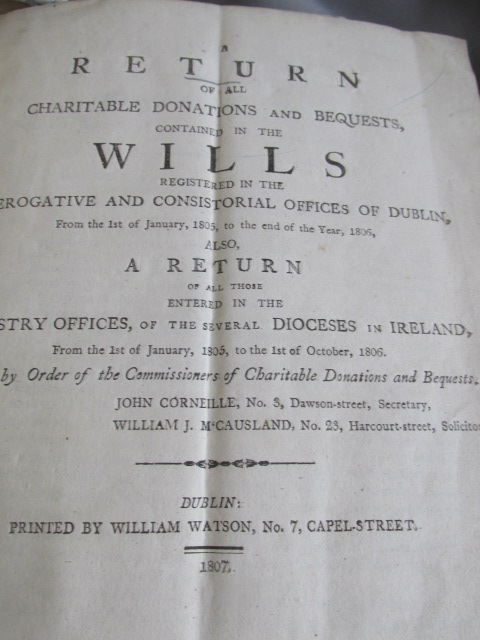
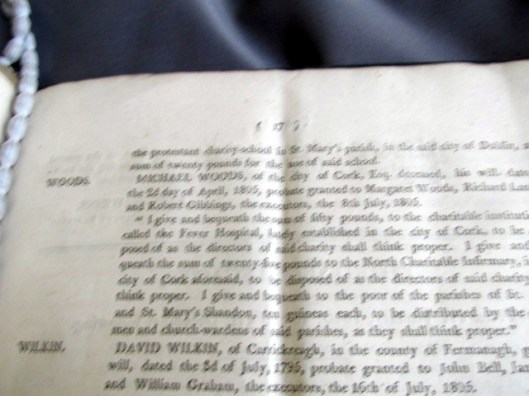
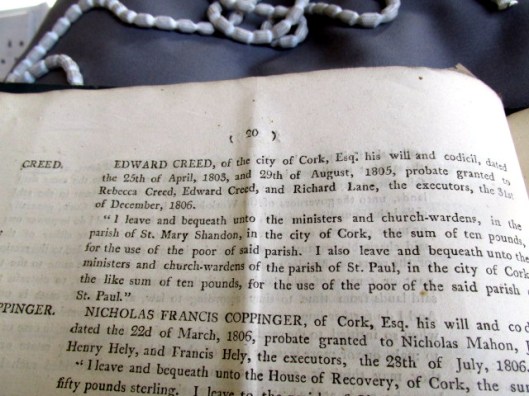
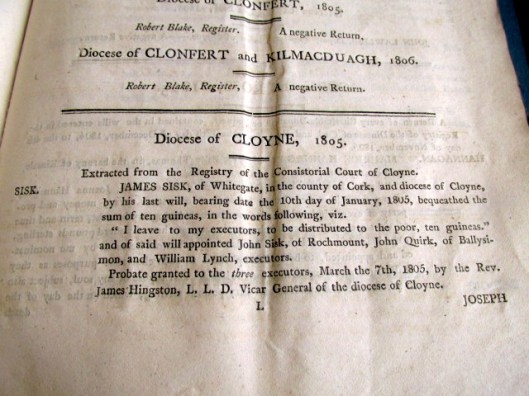
Some Old Cork Wills and Bequests of 1805.

15 Tuesday Mar 2016

Posted by durrushistory in Uncategorized

≈ Leave a comment


Some Old Cork Wills and Bequests of 1805.


1-IMG_9423

2-IMG_9424

3-IMG_9425

4-IMG_9426

5-IMG_9427

6-IMG_9428

7-IMG_9429

8-IMG_9430

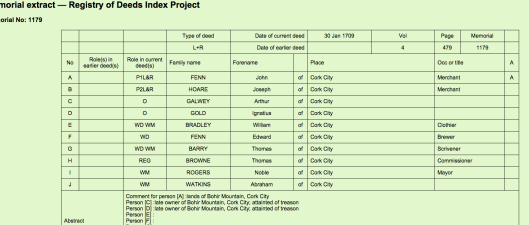
1709, Lands at Bohir Mountain, Co. Cork of Arthur Galwey and Ignatius Gold (Gould), ‘Attained For Treason’.

15 Tuesday Mar 2016

Posted by durrushistory in Uncategorized

≈ 1 Comment


1709, Lands at Bohir Mountain, Co. Cork of Arthur Galwey and Ignatius Gold (Gould), ‘Attained For Treason’.

The Goulds and Galweys were part of a network of old English, Hiberno-Danish and Gaelic families who controlled Cork and its hinterland until the 17th century.  Some later converted to the Church of Ireland, some emigrated to the continent and some prospered in trade, many fell by the wayside.

The Fenns were probably later bankers Fenns Quay in Cork near the Courthouse is called after them.  the Hoare family major merchants.  The lands may have been acquired from the Hollow Blade Company.


Screen Shot 2016-03-15 at 12.21.24


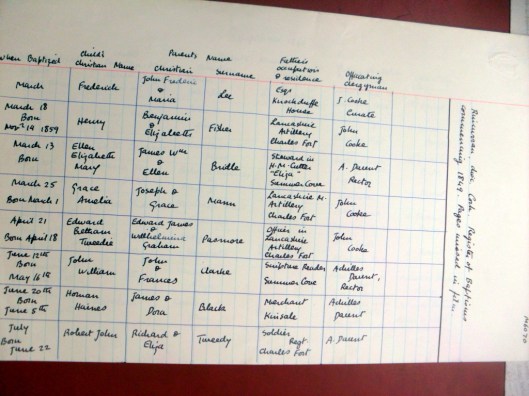
Rincurran, Kinsale, Co. Cork, Baptisms, Church of Ireland 1849, 1860 and St. Multose, Kinsale from 1683.

15 Tuesday Mar 2016

Posted by durrushistory in Uncategorized

≈ 1 Comment


Rincurran, Kinsale, Co. Cork,  Baptisms, Church of Ireland 1849, 1860 and St. Multose, Kinsale from 1683.


St. Multose, Kinsale, Church of Ireland, Records, 1683-


2-SAM_3727

1-SAM_3726


1-SAM_3726
2-SAM_3727

Rare Survivor of 1922 Destruction of Dublin Public Records Office, Judgement of Rev. Samuel Kyle, Judge Consistory Court, Cloyne 1853, Illegal Baptism, Sommerville V Robinson.

14 Monday Mar 2016

Posted by durrushistory in Uncategorized

≈ Leave a comment


Rare Survivor of 1922 Destruction of Dublin Public Records Office, Judgement of Rev. Samuel Kyle, Judge Consistory Court, Cloyne 1853, Illegal Baptism, Sommerville V Robinson.

After the Demise of the Consistory Courts the Cork and Cloyne Court records, including wills from the 1500s went sent to the Public Records Office in Dublin and were all destroyed.  One well known archivist on getting up every morning puts a curse on those who set off the bombs.

1850, Cork Consistory (Probate/Matrimonial) Court, Vice-Chancellor (Judge) Venerable Samuel Kyle, Holder of Multiple Benefices and Sinecures, Non Resident in London Registrar, Barrister, Mr. Henry Stopford Kyle, Work done by Deputy, All Proctors Protestant, Case of Intestate Alexander McCarthy, Butter Merchant Intestate and the Ursuline Convent.

1850 Evidence of The Venerable Samuel Kyle, LLD, Vicar General of Dioceses of Cork and Cloyne, on Consistory (Probate) Court, Registrar Henry Stopford Kyle, Barrister, Resident in London, 6 Proctors, 4 Advocates All Protestants. In Registry Attached to St. Finbarr’s Cathedral, Cork, Book of Wills since 1575, Classified wills from 1606-1850, Court Documents from 1755 (All Probably Destroyed in 1922).

Cork and Cloyne Court:

https://docs.google.com/document/d/1FWBV3gRAeVpYqD5Nlq9j4by9xQGww9Y141pT1mZshpA/edit


Consistory Court Cloyne 1853

Tide’s Out!

13 Sunday Mar 2016

Posted by durrushistory in Uncategorized

≈ Leave a comment


Finola's avatarRoaringwater Journal

the Cove

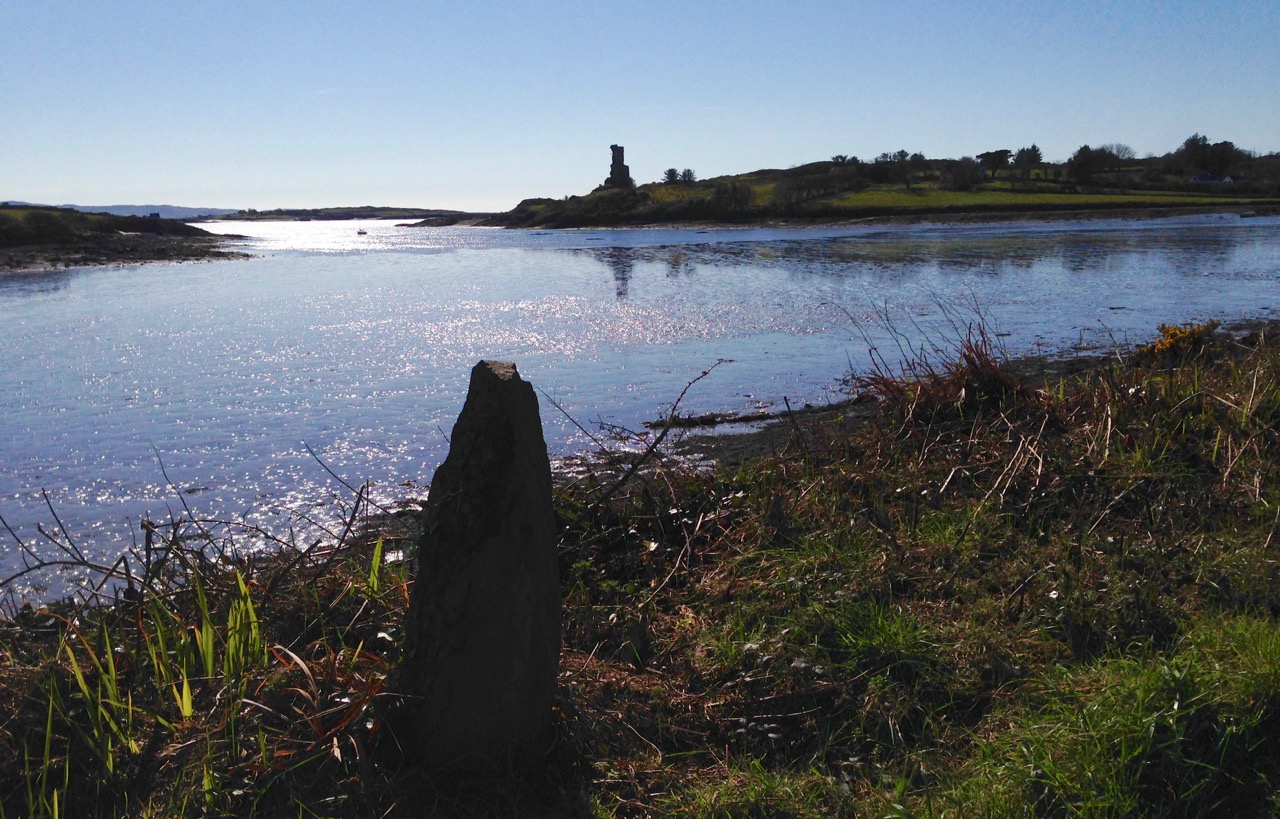
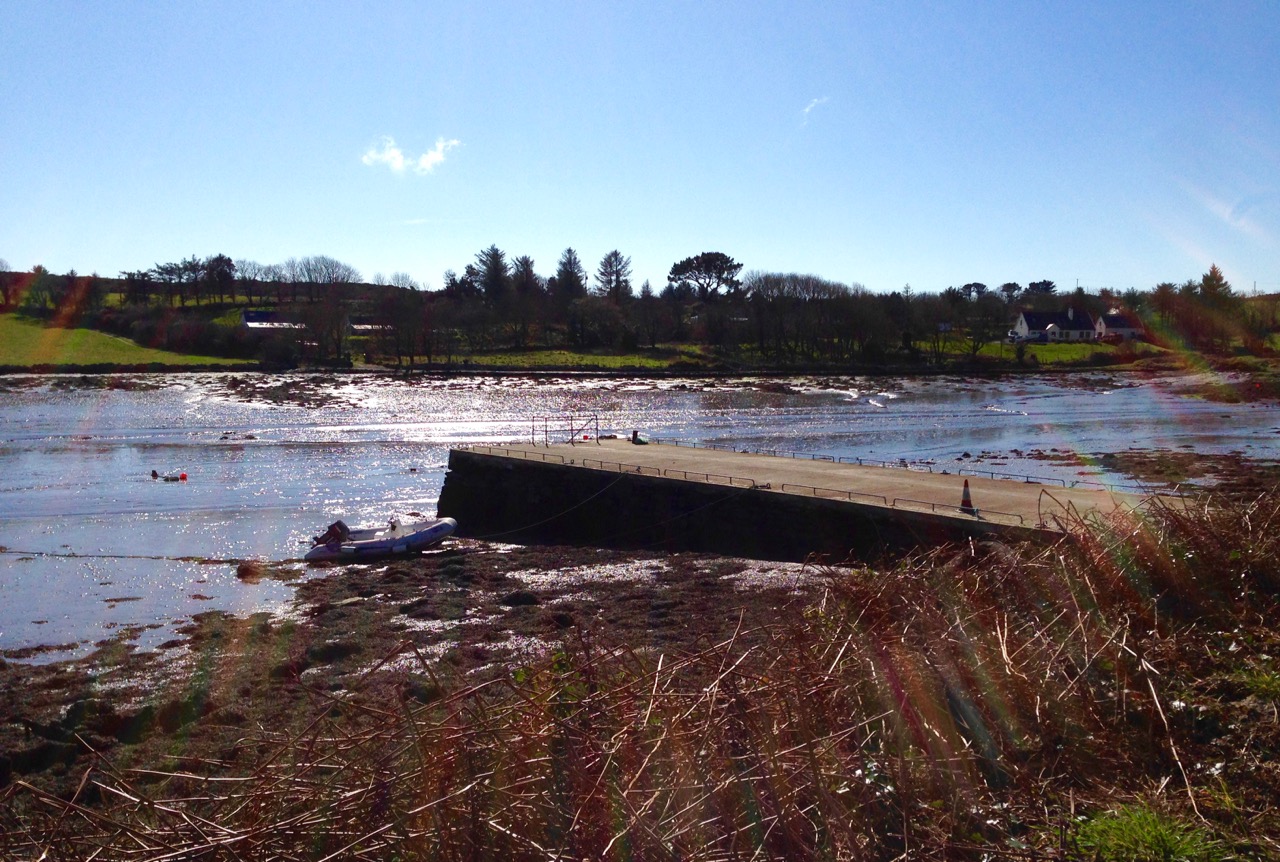
Up here in Nead an Iolair we have a perfect view of the state of the tide in Rossbrin Cove, the natural harbour below us which is accessed from Roaringwater Bay. Just now it’s a Spring Tide – and an extreme one: we’ve never seen the Cove quite so empty. I think it’s because there was a ‘supermoon’ a day or two ago – that’s the point at which the moon’s orbit is closest to the earth, and this affects the rise and fall of the tides.

low tide

On a day when the sun does be splitting the stones we walk the long way over the hill and through the lanes to have a look at what the low tide has revealed. The surface of the boreens is hot to the touch, and it’s hard to recall that, during the last couple of weeks, we have had wild storms, some icy mornings…

View original post 433 more words

Gallery

Four rather obscure wells on the Mizen

13 Sunday Mar 2016

Posted by durrushistory in Uncategorized

≈ Leave a comment

This gallery contains 9 photos.


Gallery

Mizen Mud: Recipe for a February Exploration Day

13 Sunday Mar 2016

Posted by durrushistory in Uncategorized

≈ Leave a comment

This gallery contains 16 photos.


Originally posted on Roaringwater Journal:
It’s been a wet, wet winter, but when the sun shines in February (which it does,…

Rosemary FFolliott’s Genealogy of Co, Cork Herrick Family. Some Interconnected families, Warrens, MacSyneys (McSweeny), Burke, Reardon, Burrows, Dunne, Bradfield.

13 Sunday Mar 2016

Posted by durrushistory in Uncategorized

≈ Leave a comment


Rosemary FFolliott’s Genealogy of Co, Cork Herrick Family.  Some Interconnected families, Warrens, MacSyneys (McSweeny), Burke, Reardon, Burrows, Dunne, Bradfield.

http://landedestates.nuigalway.ie/LandedEstates/jsp/estate-show.jsp?id=2805

Click to access herricksetc_part1.pdf

Magistrates:

Edward Herrick, 1729, Bettys Burrow

Captain Edward Herrick, Bellmount, Crookstown, late 12th Foot Regiment., listed 1875-6. 1870, return 677 acres.

Falkiner Herrick Esq., 1772, Shippool, Bandon.  Subscriber  of 1766 ‘The History of the Irish Rebellon’, Cork, 1766

Gersham Herrick, 1703, witness to 1727 deed with William Irwin merchant, Kinsale.  Herricks granted forfeit Roche lands KInsale/Innishannon 17th century.

Major Gerdham/Greshaam Herrick, 1875, Resident, Midleton Park, Queenstown, Resident, 1870 return 515 acres.

John H. Herrick, Fort Lisle, Cobh, listed 1854.

Henry Herrick, Woodlands, Bandon, Attending Landlord Meeting Bandon Courthouse 1846.  Reps, Cork,  1870 return 1,011 acres.

Thomas R. Herrick, Pre 1831, Coolkirky/Coolkerry, Ballymartle, Kinsale, Subscriber Lewis Topographical Dictionary of Ireland  1837, listed 1843, voted 1850 for Denis Galwey as High Constable for Ibane and Ballyroe (Clonakilty), Thomas H. Herrick, Shippool, Innishannon, listed 1854.

Thomas H. Herrick, 1856, Shippool, Innishannon.

Thomas Bousefield Herrick, Shippool, Innishannon, listed 1875-6, subscriber 1861 to Smith’s History of Cork. Reps of Bandon, 1870 return 355 acres.

William Henry Herrick, Pre 1831, Shippool, Innishannon, sitting Innishannon 1835, listed 1838, 1843, voted 1850 for Denis Galwey as High Constable for Ibane and Ballyroe (Clonakilty). Subscriber Lewis Topographical Dictionary of Ireland  1837.

← Older posts
Newer posts →

Blog Stats

  • 856,331 hits

16th Regiment of Foot assisted female emigration australia ballyclough bantry bay caithness legion cavan regiment of militia cheshire fencibles coppinger's court inbhear na mbearc Irish words in use 1930s lord lansdowne's regiment mallow melbourne ned kelly new brunswick O'Dalys Bardic Family. o'regan Personal Memoirs rosscarbery schull sir redmond barry sir walter coppinger st. johns sydney Townlands treaty of limerick Uncategorized university of Melbourne victoria

16th Regiment of Foot assisted female emigration australia ballyclough bantry bay caithness legion cavan regiment of militia cheshire fencibles coppinger's court inbhear na mbearc Irish words in use 1930s lord lansdowne's regiment mallow melbourne ned kelly new brunswick O'Dalys Bardic Family. o'regan Personal Memoirs rosscarbery schull sir redmond barry sir walter coppinger st. johns sydney Townlands treaty of limerick Uncategorized university of Melbourne victoria
Follow West Cork History on WordPress.com

Enter your email address to follow this blog and receive notifications of new posts by email.

Join 519 other subscribers

Feedjit

  • durrushistory's avatar durrushistory

Archives

  • February 2026
  • January 2026
  • December 2025
  • November 2025
  • October 2025
  • September 2025
  • August 2025
  • July 2025
  • June 2025
  • May 2025
  • April 2025
  • March 2025
  • February 2025
  • January 2025
  • December 2024
  • November 2024
  • October 2024
  • September 2024
  • August 2024
  • July 2024
  • June 2024
  • May 2024
  • April 2024
  • March 2024
  • February 2024
  • January 2024
  • December 2023
  • November 2023
  • October 2023
  • September 2023
  • August 2023
  • July 2023
  • June 2023
  • May 2023
  • April 2023
  • March 2023
  • February 2023
  • January 2023
  • December 2022
  • November 2022
  • October 2022
  • September 2022
  • August 2022
  • July 2022
  • June 2022
  • May 2022
  • April 2022
  • March 2022
  • February 2022
  • January 2022
  • December 2021
  • November 2021
  • October 2021
  • September 2021
  • August 2021
  • July 2021
  • June 2021
  • May 2021
  • April 2021
  • March 2021
  • February 2021
  • January 2021
  • December 2020
  • November 2020
  • October 2020
  • September 2020
  • August 2020
  • July 2020
  • June 2020
  • May 2020
  • April 2020
  • March 2020
  • February 2020
  • January 2020
  • December 2019
  • November 2019
  • October 2019
  • September 2019
  • August 2019
  • July 2019
  • June 2019
  • May 2019
  • April 2019
  • March 2019
  • February 2019
  • January 2019
  • December 2018
  • November 2018
  • October 2018
  • September 2018
  • August 2018
  • July 2018
  • June 2018
  • May 2018
  • April 2018
  • March 2018
  • February 2018
  • January 2018
  • December 2017
  • November 2017
  • October 2017
  • September 2017
  • August 2017
  • July 2017
  • June 2017
  • May 2017
  • April 2017
  • March 2017
  • February 2017
  • January 2017
  • December 2016
  • November 2016
  • October 2016
  • September 2016
  • August 2016
  • July 2016
  • June 2016
  • May 2016
  • April 2016
  • March 2016
  • February 2016
  • January 2016
  • December 2015
  • November 2015
  • October 2015
  • September 2015
  • August 2015
  • July 2015
  • June 2015
  • May 2015
  • April 2015
  • March 2015
  • February 2015
  • January 2015
  • December 2014
  • November 2014
  • October 2014
  • September 2014
  • August 2014
  • July 2014
  • June 2014
  • May 2014
  • April 2014
  • March 2014
  • February 2014
  • January 2014
  • December 2013
  • November 2013
  • October 2013
  • September 2013
  • August 2013
  • July 2013
  • June 2013
  • May 2013
  • April 2013
  • March 2013
  • February 2013
  • January 2013
  • November 2012
  • October 2012
  • September 2012
  • August 2012
  • July 2012
  • June 2012
  • May 2012
  • April 2012
  • March 2012
  • February 2012
  • January 2012
  • December 2011
  • November 2011
  • October 2011

Blog at WordPress.com.

  • Subscribe Subscribed
    • West Cork History
    • Join 519 other subscribers
    • Already have a WordPress.com account? Log in now.
    • West Cork History
    • Subscribe Subscribed
    • Sign up
    • Log in
    • Report this content
    • View site in Reader
    • Manage subscriptions
    • Collapse this bar
 

Loading Comments...