Schedule of Money lenders and their sureties c 1830, Co. Cork.
university of Southampton Digitalisation project
16 Sunday Nov 2014
Posted in Uncategorized
Schedule of Money lenders and their sureties c 1830, Co. Cork.
university of Southampton Digitalisation project
16 Sunday Nov 2014
Posted in Uncategorized
Case of disputed Glebe Lands at Crookhaven, West Cork c 1723, by Rector, Dr. Limerick, referes to Genealogy of Thadues Coughlan, his son Rev Dermitius Coughlan who fled 1641 from Cromwell his great grandson Jeremy (Jeremiah) Attorney and Irish Agent to Burlington Estate, on the road from Schull to Crookhaven ‘nor a bed a man can lie on nor a morsel to be eaten’, Henry Becher’s Fishing palace 1641, Captain William Hull with the wooden leg, Darby Mahony agent to Sir Richard Hull, Donagh McWilliam Coughlan proctor to Rev Thadeus Coughlan, Benjamin Sullivan Attorney Cork and East India Company Connections.
https://durrushistory.wordpress.com/wp-admin/post.php?post=7557&action=edit&message=6&postpost=v2
the piece contains a wealth of contemporary accounts of the area practises etc.
http://fmg.ac/phocadownload/userupload/scanned-sources/tpg2/pp344-356.pdf (Provenance unknown)
The Coughlans converted to the Church of Ireland early 17th century and were close to the Hulls and the Earl of Cork. Jeremy (Jeremiah) married Susanna Evanson daughter of Nathaniel from Durrus c 1705 an as attorney in Lismore managed the Burlington Estate with Andrew Crotty. The Coughlans are probably related to the Queens County Attorneys of the early 18th century.
One branch of the Durrus, Clashadoo, Dukelows are probably related to them by marriage in ealy 19th century.
There is a reference to Benjamin Sullivan attorney for the crown marrying daughter of Rv. Limerick. The Parliamentary Biography for his son an MP as was another son gives the father’s address as Dromreagh conjectural Dromreagh Durrus which could explain marriage to Bridget Limerick of Ballydehob. He was Clerk of the Crown for Cork and Waterford again a possible connection with the Boyles Earls of Cork.
Perry O’Donovan’s blog:
The west coast of west Cork was infested with piratic havens at this time and, in an effort to make inroads on these cultures of lawlessness, Boss Boyle had a garrison deployed to Crookhaven, so beginning the long association between Crookhaven and the strategic services of the British authorities — an association that would continue with excise-men and watchtowers and lighthouses up until the surpassing of Marconi’s wireless telecommunications technology in the early 1900s.*
Between 1610 and the 1630s Crookhaven was an industrious English-plantation fishing colony, some hundreds strong. In addition to Wilkinsons and Wilsons and Burchills and the like, the colony included Nottors (Germans from Herrengberg) and Roycrofts and Camiers (French Huguenots), lichen-coated headstones for whom tilt and totter picturesquely in the church graveyard. This first Protestant colony was wiped out in the Counter-Reformation-sponsored ethnic cleansing of the 1640s.
SAMSUNG DIGITAL CAMERAIn 1699-1700 Dive Downes, the Anglican bishop of Cork and Ross, visited every parish in his episcopal territories. On 6 June 1700, he day-tripped by boat (from Schull) west to the parish of Kilmoe. At Crookhaven he found the ruins of a church at the edge of the village “dedicated to St Mullagh”; “part of the Chapple”, he judged, much “older than the rest”. There were no books or registers for the parish, but he found nine Protestant families living in the area, among whom were John Prouce, the Parish Clerk, Thomas Dyer “the Tide Waiter” (customs and excise-man), Thadeus Coughlan, Mr Pierce Arnott, and a Mr Mahon. On the 4th Sunday of the month Mr Vyze preached at Mr Coughlan’s house.
Dr Peter Browne, bishop of Cork and Ross from 1710 to 1735, had the church rebuilt at his own expense — the bishop’s coat of arms, in stone, may still be made out in the west gable of the building.
The church was rebuilt again in the 1840s, the new building rededicated to St Brendan the Navigator (the carved stone bearing Bishop Browne’s coat of arms reset in the west-facing gable-wall).
Nicholas Cummins, rector of the Kilmoe union of parishes back in the 1980s, provided the following collect for St Brendan’s, which is appropriately simple and direct: ‘Almighty God, / You inspired your servant St Brendan the Navigator to sail across the seas in a voyage of discovery / Grant that we following his example withstand all the storms of life and arrive at the safe haven of your eternal kingdom, / Through Jesus Christ Our Lord.’
Amen.
§ Lines from ‘Last Light over Europe’, a poem by John Wakeman.
* The following did not appear in the Irish Times piece, however, because of the character of the web (and because this is my blog) I am going to add it here (along with all the additional pictures).
Guglielmo_Marconi_1901_wireless_signalIn The Magic of West Cork, Pat Murphy (a retired Daily Mail reporter) reports asking an elderly fisherman in Crookhaven in the 1950s if he had known Marconi when the great man was in the locality in 1901, and if so had he any dealings with him [on Guglielmo Marconi, to save you Wikipediaing it, see below] . “Indeed then I did”, said the old salt. “I used to carry the telegrams for him from the station at Brow Head to the Post Office and back again every day.” What sort was he, Pat asked. “A nice poor craythur altogether”, the old man replied emphatically. “He used to walk about with his hands behind his back and his head stuck out like a horse going to the wather trough; thinkin’, thinkin’ all the time. Sure the man was all brains. I believe he wore the lightest hat in the world lest it press down on his brain too much. And yet in anything other than the telegraphs the same man was an eejit; yes, an eejit. He wanted to get a sealskin coat for his wife — an O’Brien, by the way — and didn’t he go out in a boat with a boyeen to shoot seals when they were reported in the mouth of the bay. Well, surely you’d expect a man with a brain like that to realise that trying to shoot from a boat that was rockin’ about on the movement of the water that the gulls would be more in danger than the seals? Why didn’t he sit up on a rock and let the boyeen go out in the boat and be ready to pick them up when he had them shot?”
“But a great man nonetheless. His voice can be heard on the darkest night anywhere there is danger on the seas. Did not a big boat sink off the easht coast of America some time ago and didn’t the brave little ladeen at the wireless signal SOS…SOS until the water was half way up his neck and not a soul aboard that ship was lost! O, have no doubt about it, Marconi took a power of cruelty out of the sea. May God be good to him. A nice poor craythur altogether.”
Guglielmo Marconi (1874-1937) won the Nobel Prize for Physics in 1909 for his contribution to the development of wireless telegraphy. Marconi’s mother was one of the Jamesons of the Jameson Whiskey distillery. His father was a wealthy Italian landowner from near Bologna, and it was as a science student at the University of Bologna that the young Marconi became interested in electromagnetic waves (radio waves). Marconi didn’t actually invent or discover anything, rather he drew together and improved what was already around for some time — decades even — producing an effective (commercially viable) system. Indeed, there were many forms of radio transmitters already in existence in the 1890s, but they were unable to achieve transmission ranges of more than a few hundred meters. By practical experimentation the teenage Marconi increased the range of his homemade system significantly, transmitting up to 1.5 kilometres (nearly a mile). Moreover his system could cope with hills and other obstacles in the landscape.
In 1895, aged 21, Marconi came to London seeking development money for his ideas (he was unsuccessful in his approaches to the authorities in Italy). By means of his mother’s family connections he was able to marshal the interest of William Preece, the Royal Mail’s chief electrical engineer. Soon (working in England) Marconi was successfully transmitting over distances of up to 6 kilometres (3.6 miles), even over large bodies of water. By the summer of 1897 he successfully transmitted the message “Are you ready” over a distance of 16 kilometres (9.9 miles). After which a series of lectures on ‘Signalling through space without wires’ at the Royal Institution made his reputation nationally. In 1899 Marconi was successfully transmitting across the English Channel. And in the same year he went to America and successfully transmitted reports of the America’s Cup yachting race for the New York Herald. By then he had his sights firmly set on trans-Atlantic transmissions, which he finally achieved at end of 1902. On 18 January 1903, when President Theodore Roosevelt transmitted a message of greeting to King Edward VII, Marconi’s place in history was secure. ‘Marconi Stations’, as they came to be called, were soon sprouting up all along the Atlantic coasts in Europe and the United States.
Not only was Marconi’s mother Irish, he married an Irishwoman, Beatrice O’Brien (1882-1976), daughter of Edward Donough O’Brien, Lord Inchiquin. They divorced in 1924 but before doing so they had four children, a son Giulio (1910-71), and three girls, Degna (1908-98), Gioia (1916-96), and another little girl who died in infancy.
16 Sunday Nov 2014
Posted in Uncategorized
Parish Priest of Schull and Kilmoe, West Cork, Rev. Jeremiah Hart converts to the Church of Ireland in 1774.
From Irish Genealogical Abstracts from the ‘Londonderry Journal 1772-1784’. The Journal makes frequent references to conversions as to that of Daniel O’Sullivan and Timothy Harrington, Parish of Bantry in the 24th November 1775.
Sometimes conversion may have been for doctrinal other times for Commercial reasons but by the 1777s the Penal Laws were in abeyances. Probably more frequently marriage was the reason.
In the 1790s was the sensational conversion of Father Daniel McCarthy Parish priest of Durrus.
In the early 18th century ‘Perversion’ of Protestants to Catholicism was a major concern in Church of Ireland reports.
15 Saturday Nov 2014
Posted in Uncategorized
Some Grand Jury Presentment payments 1807, Co. Cork including for killing of otters two payments of £20 for Reformed Priests Reverend William Crowley and Rev. Daniel McCarthy (of McCarthy Muclagh family married 1793 his ward Miss Sarah Blair of Blair’s Cove, Durrus, interpreter of French attempted invasion Bantry Bay)
15 Saturday Nov 2014
Posted in Uncategorized
Tags
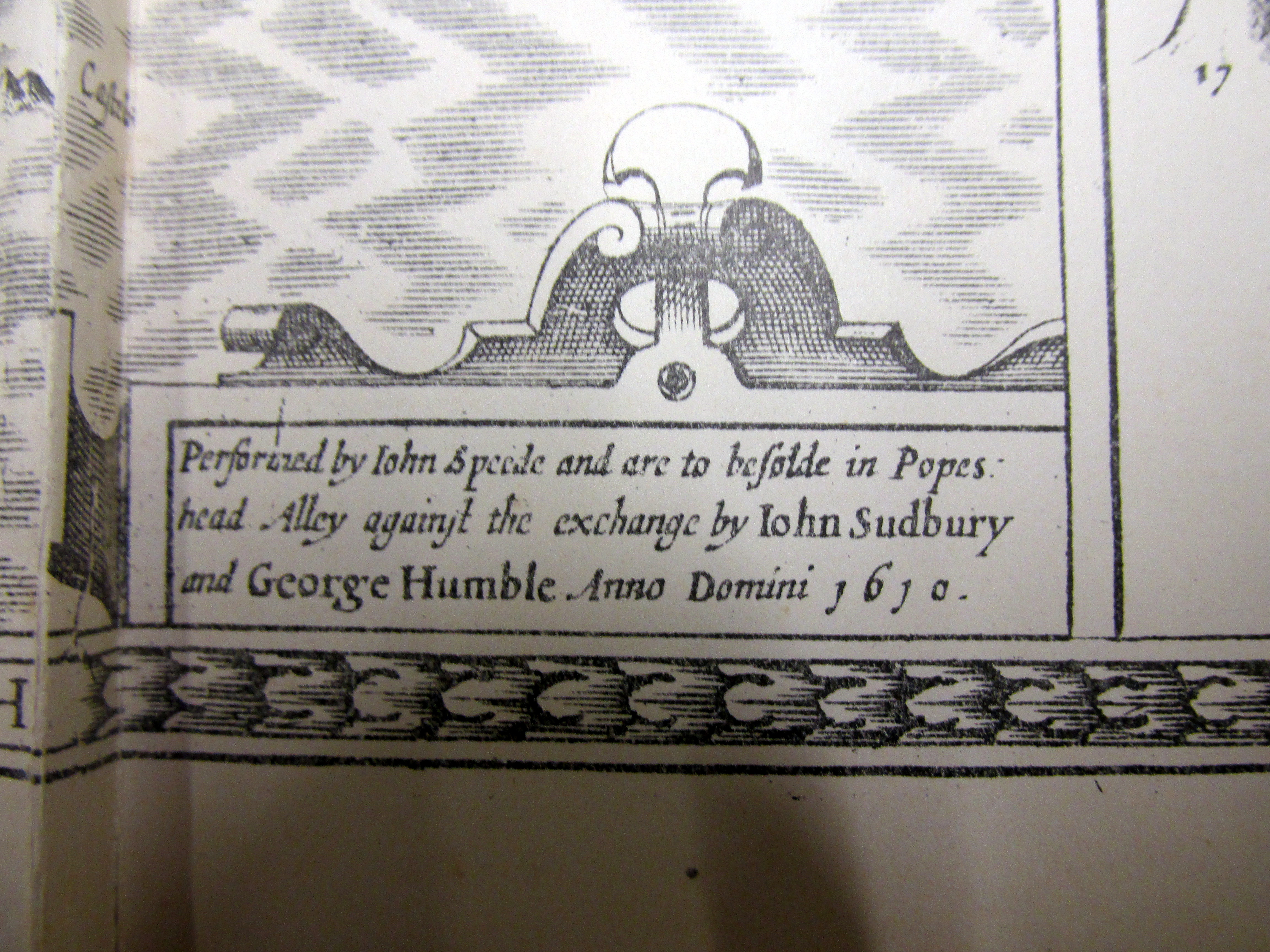
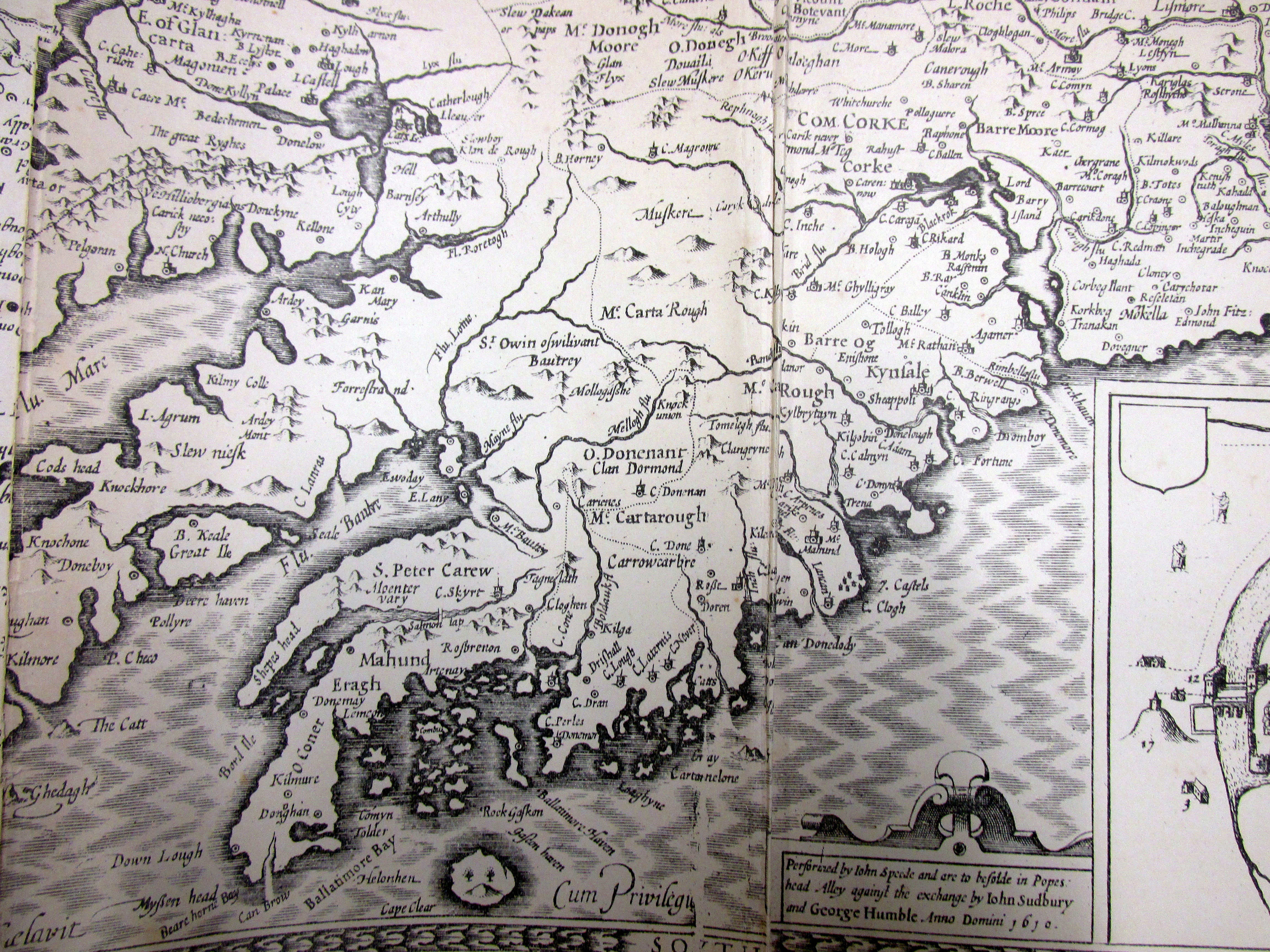
John Speed, Map of West Cork, 1630.
15 Saturday Nov 2014
Posted in Uncategorized
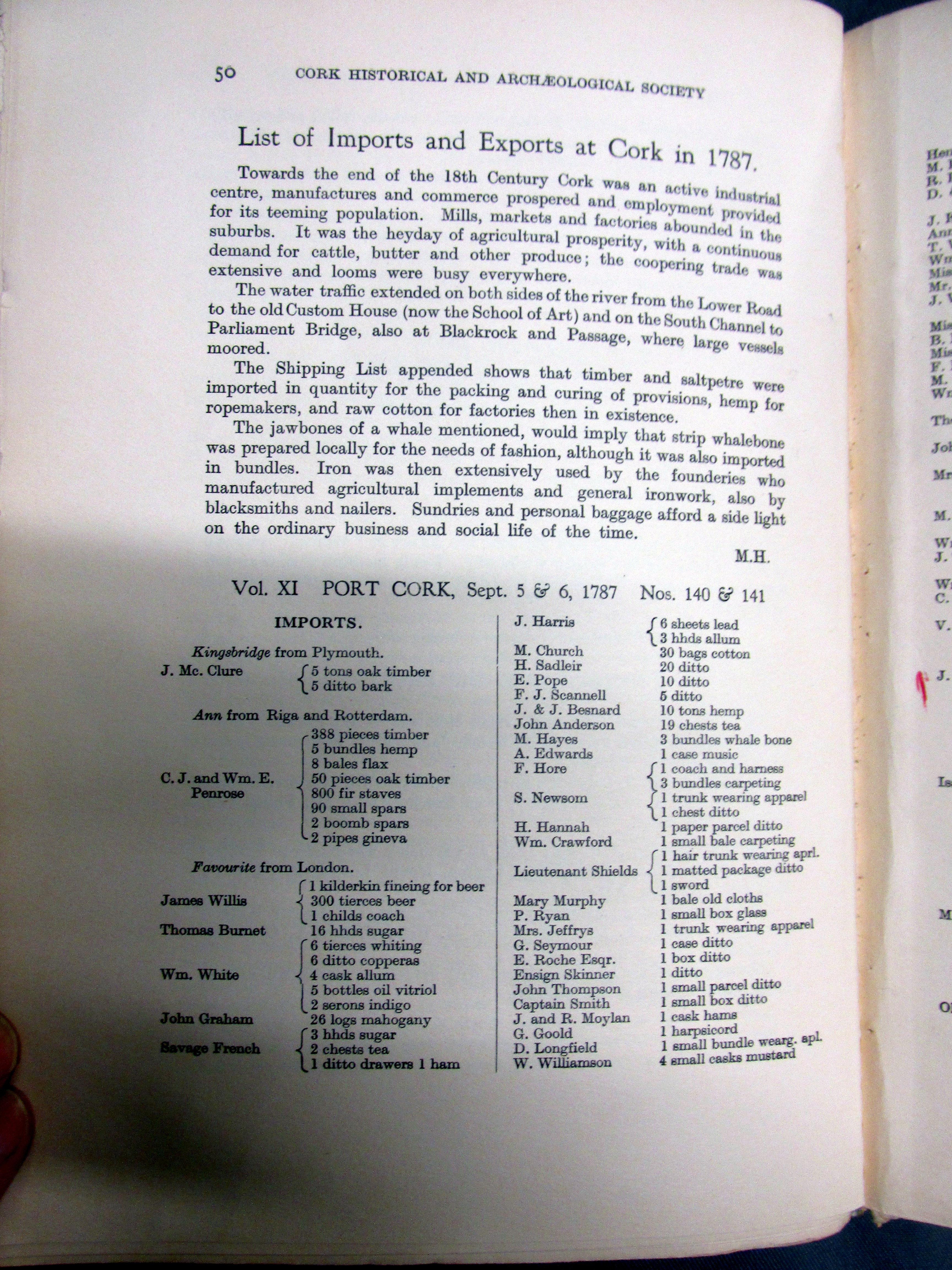
Some Exports and Imports from Cork 1787 merchants and consignees mentioned, Ports involved
Plymouth, Riga, Rotterdam, London, Arundel, Sr. Petersburg, Jamaica, Nantz, Carthegena, St. Kitts, Bordeaux, Lowell, Baltimore, Lisbon.
Courtesy Cork Historical and Archaeological Society.
This snapshot gives an idea of the range of trading contacts and the extent of the various merchants expertise. On one of the lading a child’s carriage is included and effects of military men.

Some Exports and Imports from Cork 1787 merchants and consignees mentioned, Ports involved
Plymouth, Riga, Rotterdam, London, Arundel, Sr. Petersburg, Jamaica, Nantz, Carthegena, St. Kitts, Bordeaux, Lowell, Baltimore, Lisbon.
15 Saturday Nov 2014
Posted in Uncategorized
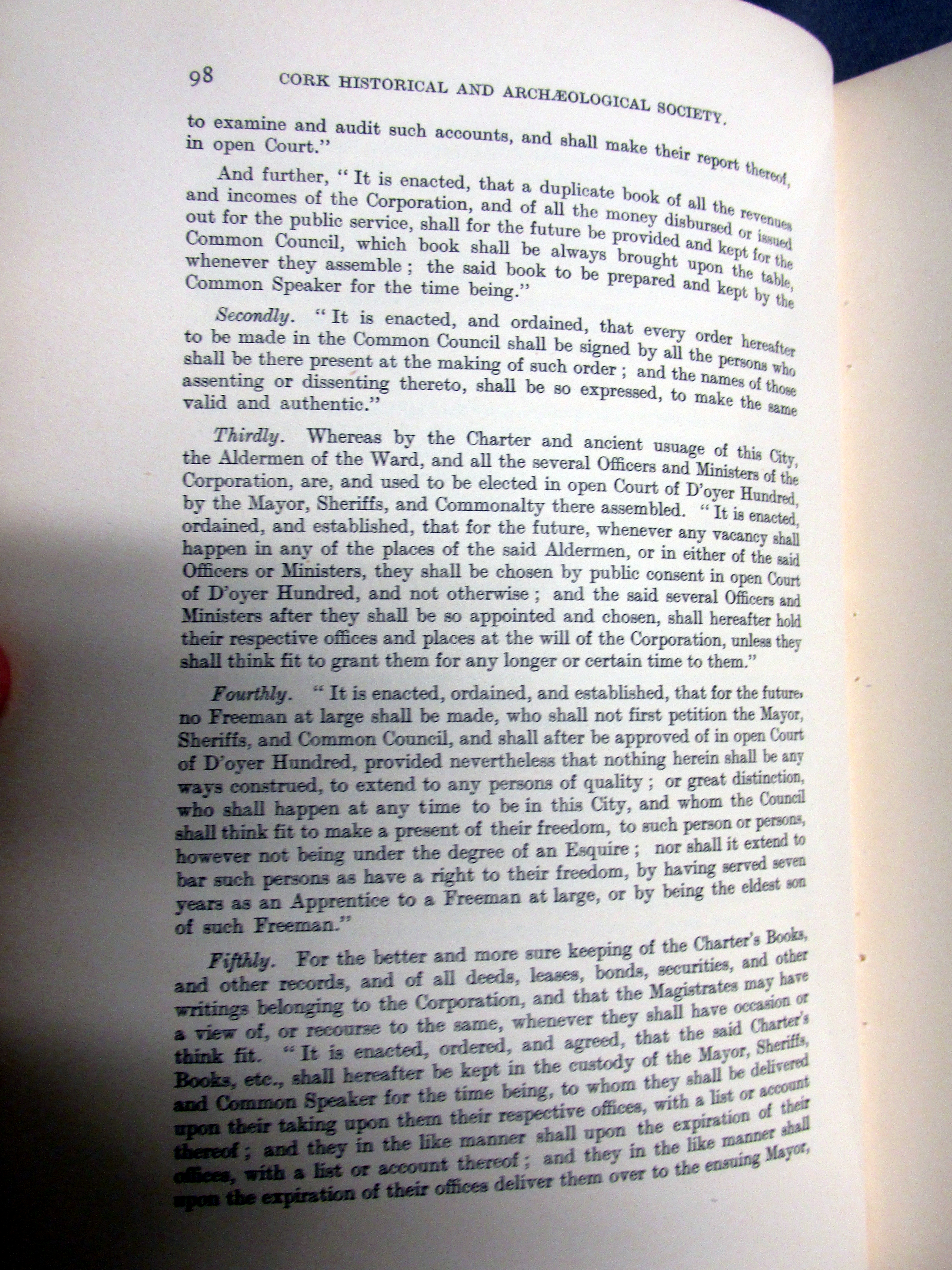
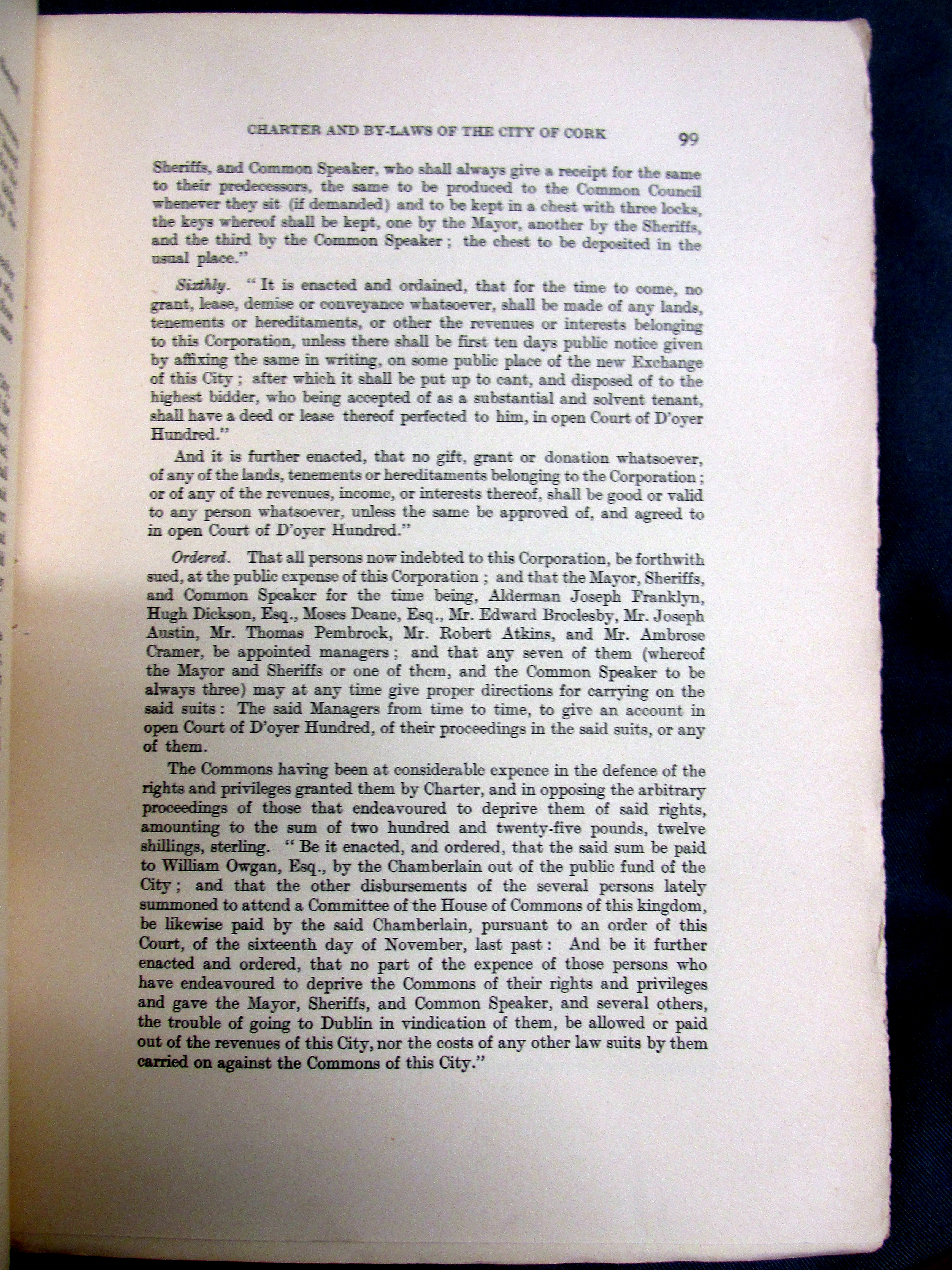
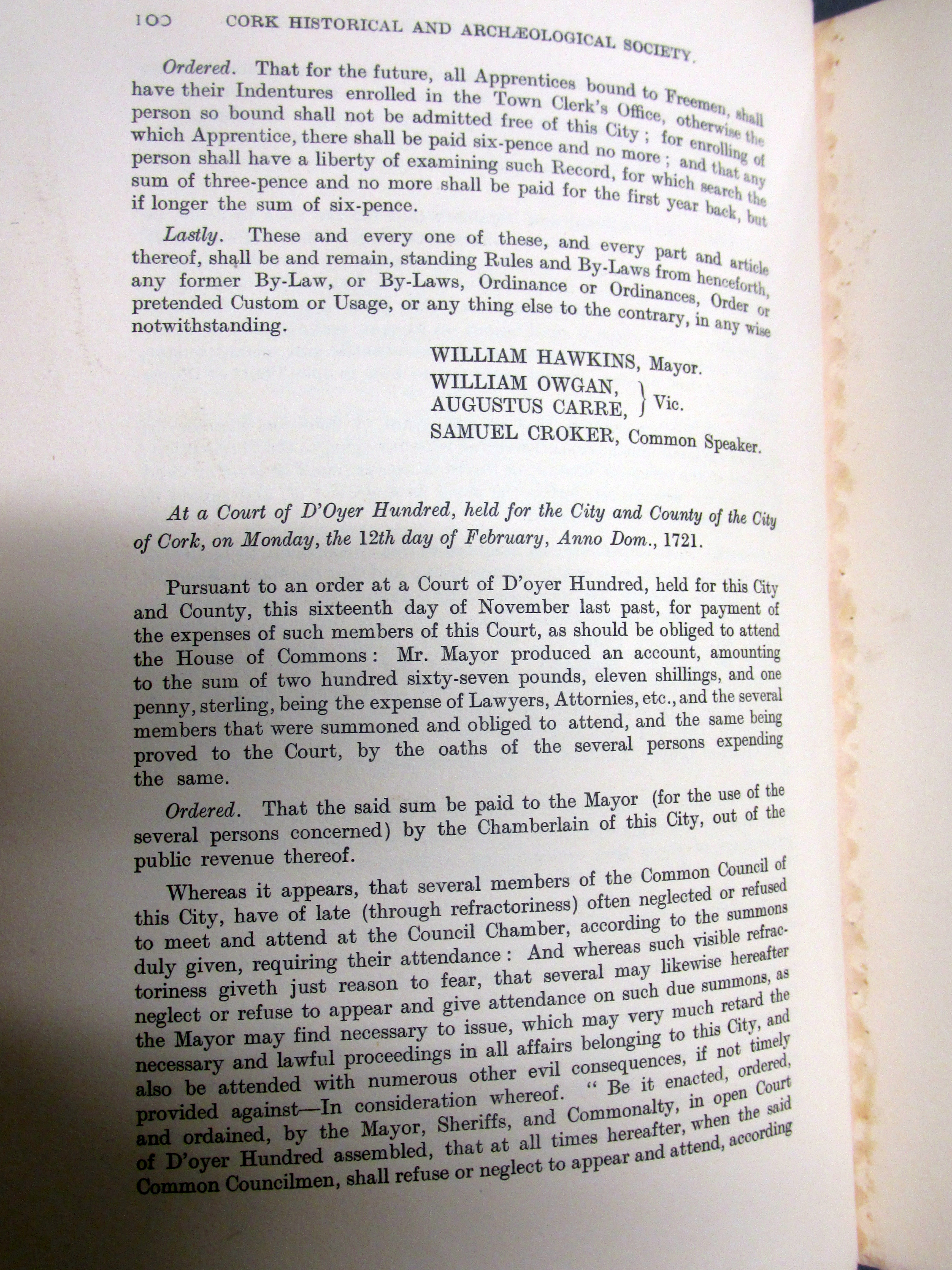
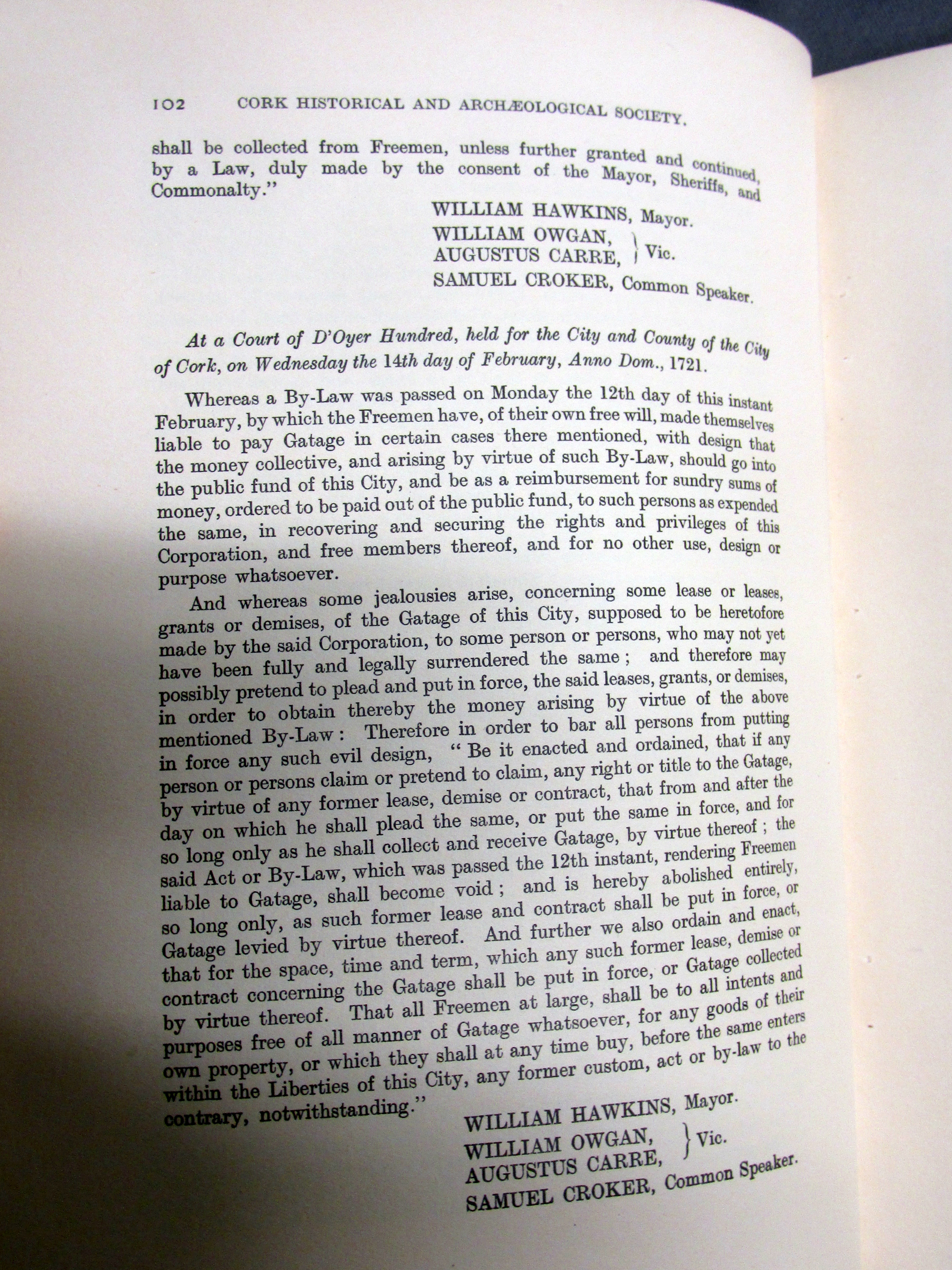
Meeting of Court of D’oyer, 12th February 1721, enacting By Laws including lay out of The Lough and election among other of Dutchman Theodore Van Sevenhoven (Lavitt’s Quay earlier called after him)
Courtesy Cork Historical and Archaeological Journal.
There was a Dutch influence in Cork using engineering expertise in reclaiming the marshes. The Mardyke is Dutch in name. The Van Sevenhoven were important merchants and the quays in the area of the present Lavitt’s Quay was called after them.
Cork in the 18th century was one of the most important ports in Northern Europe roughly equalling Bristol in trade and population. This was enabled by the mercantile elite mainly Protestant and Quaker who had important contacts in London which aided the victualling trade with the Colonies and armed forces. It stagnated in the 19th century and at the end of that century Bristol was five times bigger.
A reading of deeds in the Registry of Deeds Project for Cork City shows the explosive growth and the families involved.

14 Friday Nov 2014
Posted in Uncategorized
Doctor Barry, 1800, on ‘Shinach’ (Small Pox) and practice in Cork of inoculation with Cow Pox 50 years before Dr Jenner’s vaccination and late 18th century inoculations by Mr. Goodwin, Bantry, West Cork.
Dr. Barry:
Mr Goodwin, the family were apothecaries since at least the mid 18th century and may have originated on Whiddy Island.
http://books.google.ie/books?id=SYDMbd_iQfsC&pg=PA427&lpg=PA427&dq=bantry+apothecary&source=bl&ots=PXtgkCyRgC&sig=N0Cm-e9VAIcWDPBv-lXv2LpalUw&hl=en&sa=X&ei=iHNmVPagDITnaIWsgtgI&ved=0CBIQ6AEwAzgK
Bantry Apothecaries
14 Friday Nov 2014
Posted in Uncategorized
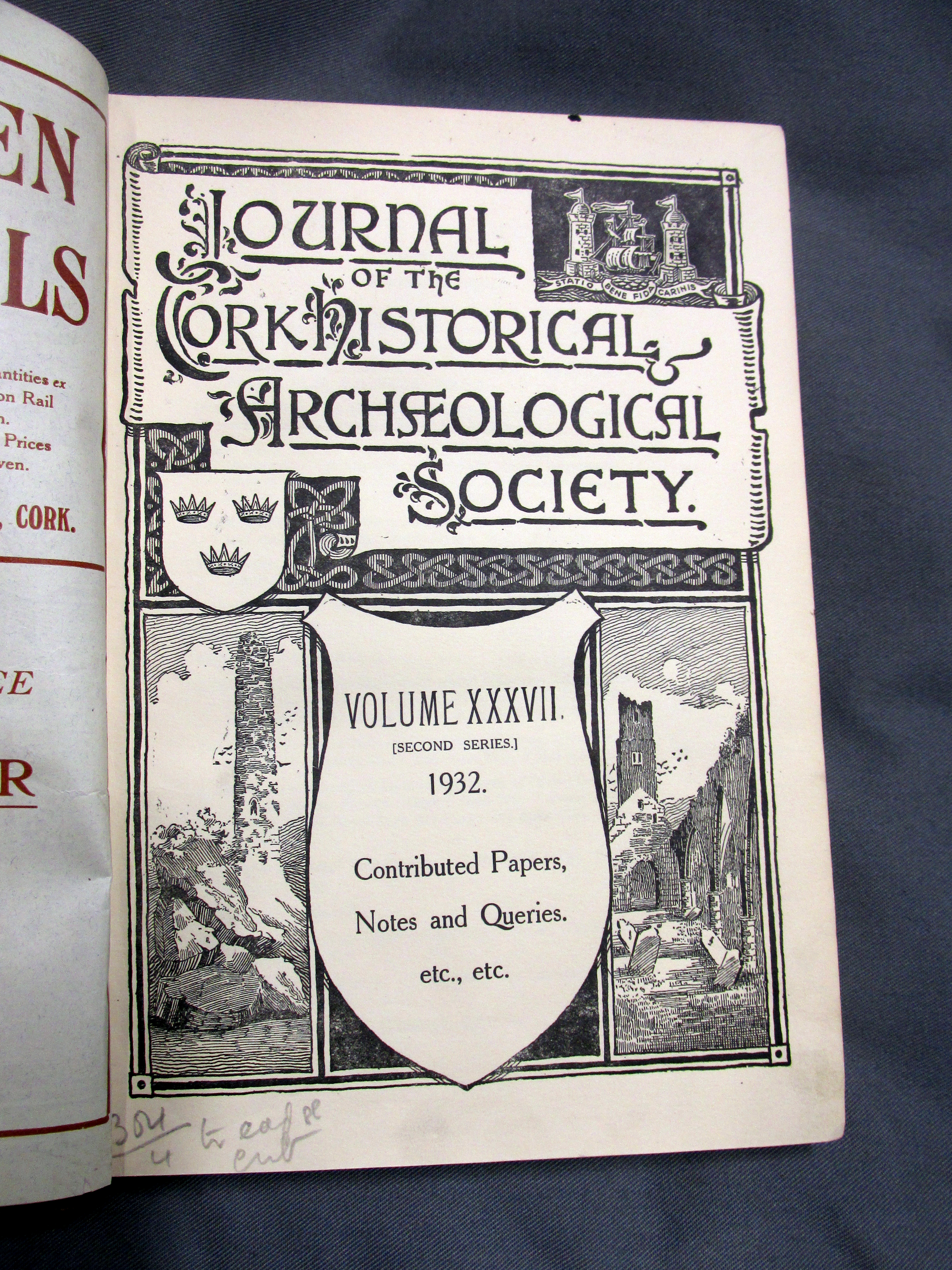
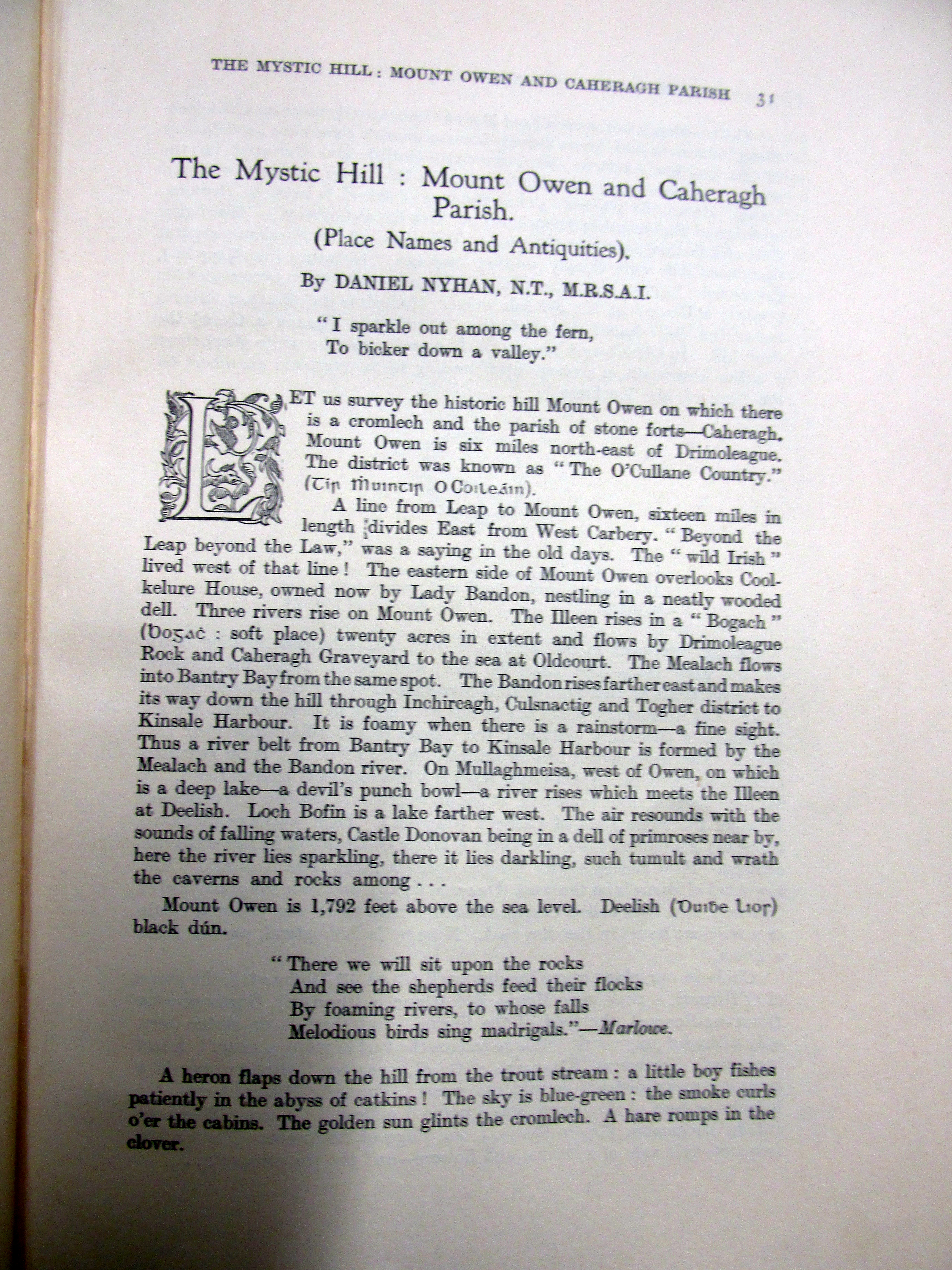
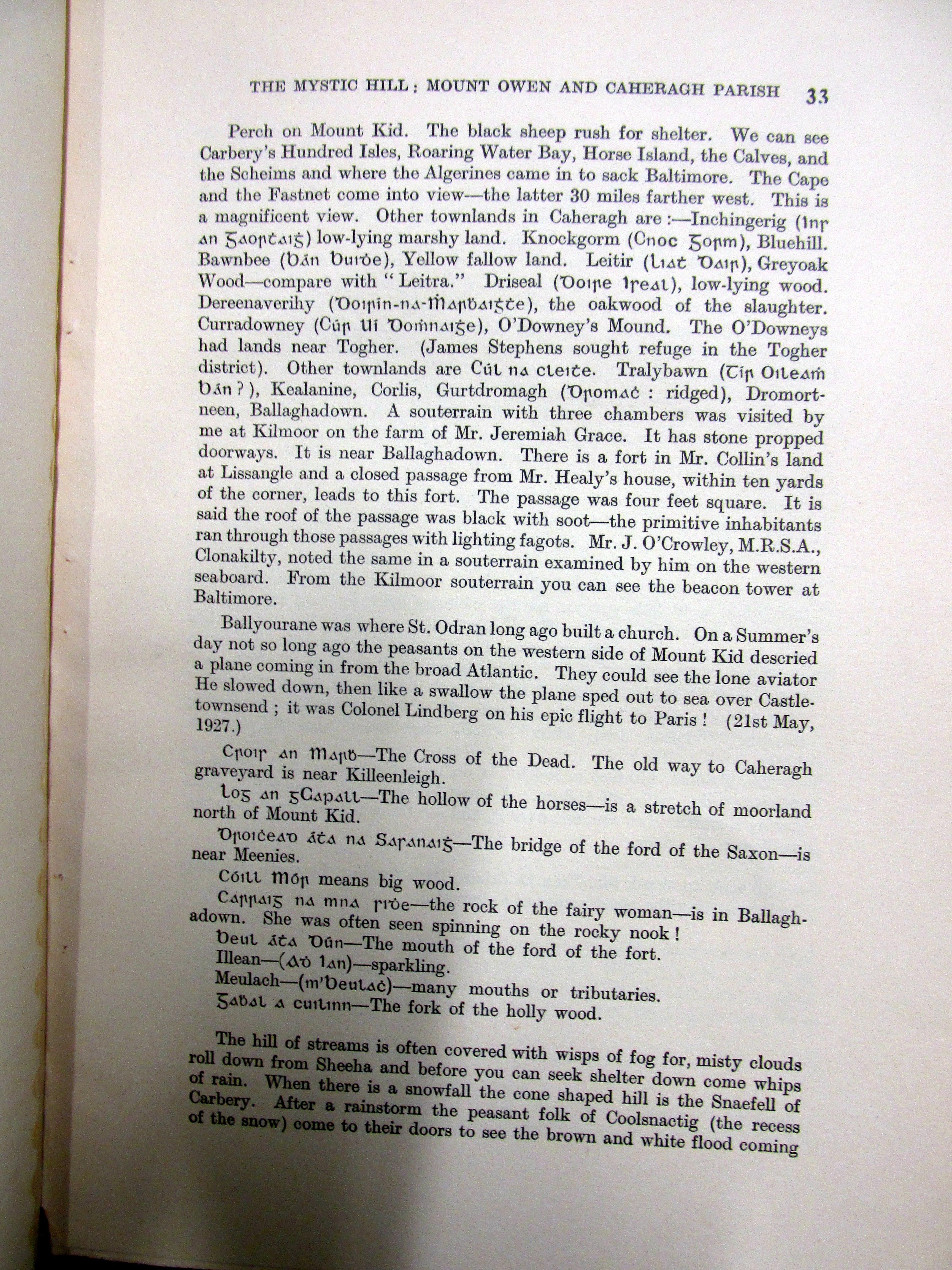
The Mystic Hill of Mount Owen and Caheragh Parish, West Cork, place of origin of Ilen, Bandon and Meelagh Rivers, 21st November 1927 Charles Lindbergh flies over Castletownsend. Article 1932 Daniel Nyhan, National Teacher, Member Royal Society of Antiquarians of Ireland.
Courtesy Cork Historical and Archaeological Society 1932,
Caheragh Church of Ireland records, Catholic on irishgenealogy.ie:

14 Friday Nov 2014
Posted in Uncategorized
Colm Creedon: Cork City Railway Stations 1949-1985.
https://plus.google.com/photos/100968344231272482288/albums/6081509218695974145
 West Cork History