• About
  • Customs Report 1821-2 (and Miscellaneous Petitions to Government 1820-5) and some Earlier Customs Data, including staffing, salaries, duties including, Cork, Kinsale, Youghal, Baltimore, with mention of Bantry, Crookhaven, Glandore, Berehaven, Castletownsend, Enniskeane, Passage, Crosshaven, Cove, Clonakilty, Cortmacsherry.
  • Eoghan O’Keeffe 1656-1723, Glenville, Co. Cork later Parish Priest, Doneralie 1723 Lament in old Irish
  • Historic maps from Cork City and County from 1600
  • Horsehair, animal blood an early 18th century Stone House in West Cork and Castles.
  • Interesting Links
  • Jack Dukelow, 1866-1953 Wit and Historian, Rossmore, Durrus, West Cork. Charlie Dennis, Batt The Fiddler.
  • Kilcoe Church, West Cork, built by Father Jimmy O’Sullivan, 1905 with glass by Sarah Purser, A. E. Childs (An Túr Gloine) and Harry Clarke Stained Glass Limited
  • Late 18th/Early 19th century house, Ahagouna (Áth Gamhna: Crossing Place of the Calves/Spriplings) Clashadoo, Durrus, West Cork, Ireland
  • Letter from Lord Carbery, 1826 re Destitution and Emigration in West Cork and Eddy Letters, Tradesmen going to the USA and Labourers to New Brunswick
  • Marriage early 1700s of Cormac McCarthy son of Florence McCarthy Mór, to Dela Welply (family originally from Wales) where he took the name Welply from whom many West Cork Welplys descend.
  • Online Archive New Brunswick, Canada, many Cork connections
  • Origin Dukelow family, including Coughlan, Baker, Kingston and Williamson ancestors
  • Return of Yeomanry, Co. Cork, 1817
  • Richard Townsend, Durrus, 1829-1912, Ireland’s oldest Magistrate and Timothy O’Donovan, Catholic Magistrate from 1818 as were his two brothers Dr. Daniel and Richard, Rev Arminger Sealy, Bandon, Magistrate died Bandon aged 95, 1855
  • School Folklore Project 1937-8, Durrus, Co. Cork, Schools Church of Ireland, Catholic.
  • Sean Nós Tradition re emerges in Lidl and Aldi
  • Some Cork and Kerry families such as Galwey, Roches, Atkins, O’Connells, McCarthys, St. Ledgers, Orpen, Skiddy, in John Burkes 1833 Commoners of Great Britain and Ireland:
  • Statement of Ted (Ríoch) O’Sullivan (1899-1971), Barytes Miner at Derriganocht, Lough Bofinne with Ned Cotter, later Fianna Fáil T.D. Later Fianna Fáil TD and Senator, Gortycloona, Bantry, Co. Cork, to Bureau of Military History, Alleged Torture by Hammer and Rifle at Castletownbere by Free State Forces, Denied by William T Cosgrave who Alleged ‘He Tried to Escape’.
  • The Rabbit trade in the 1950s before Myxomatosis in the 1950s snaring, ferrets.

West Cork History

~ History of Durrus/Muintervara

West Cork History

Monthly Archives: September 2014

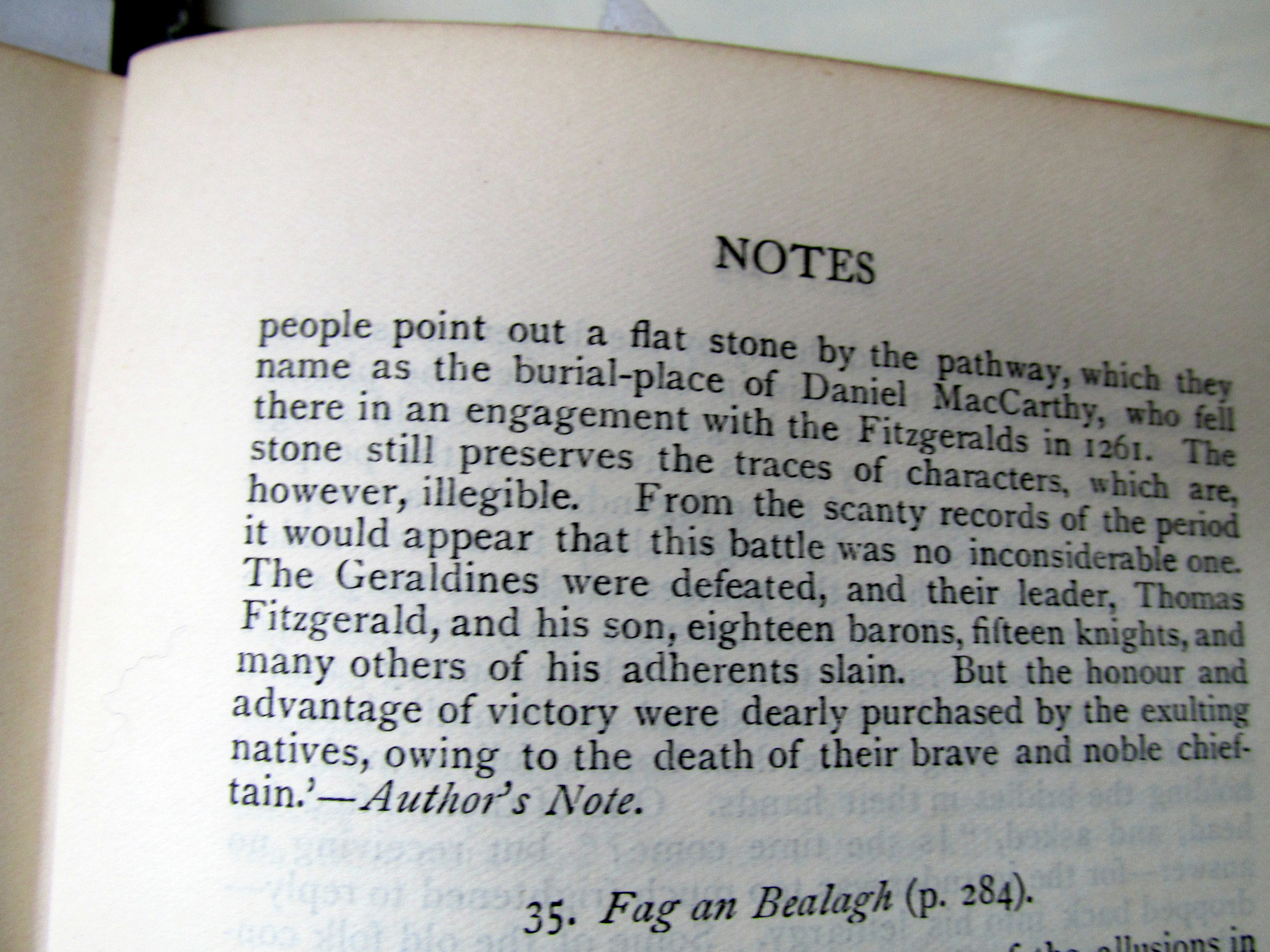
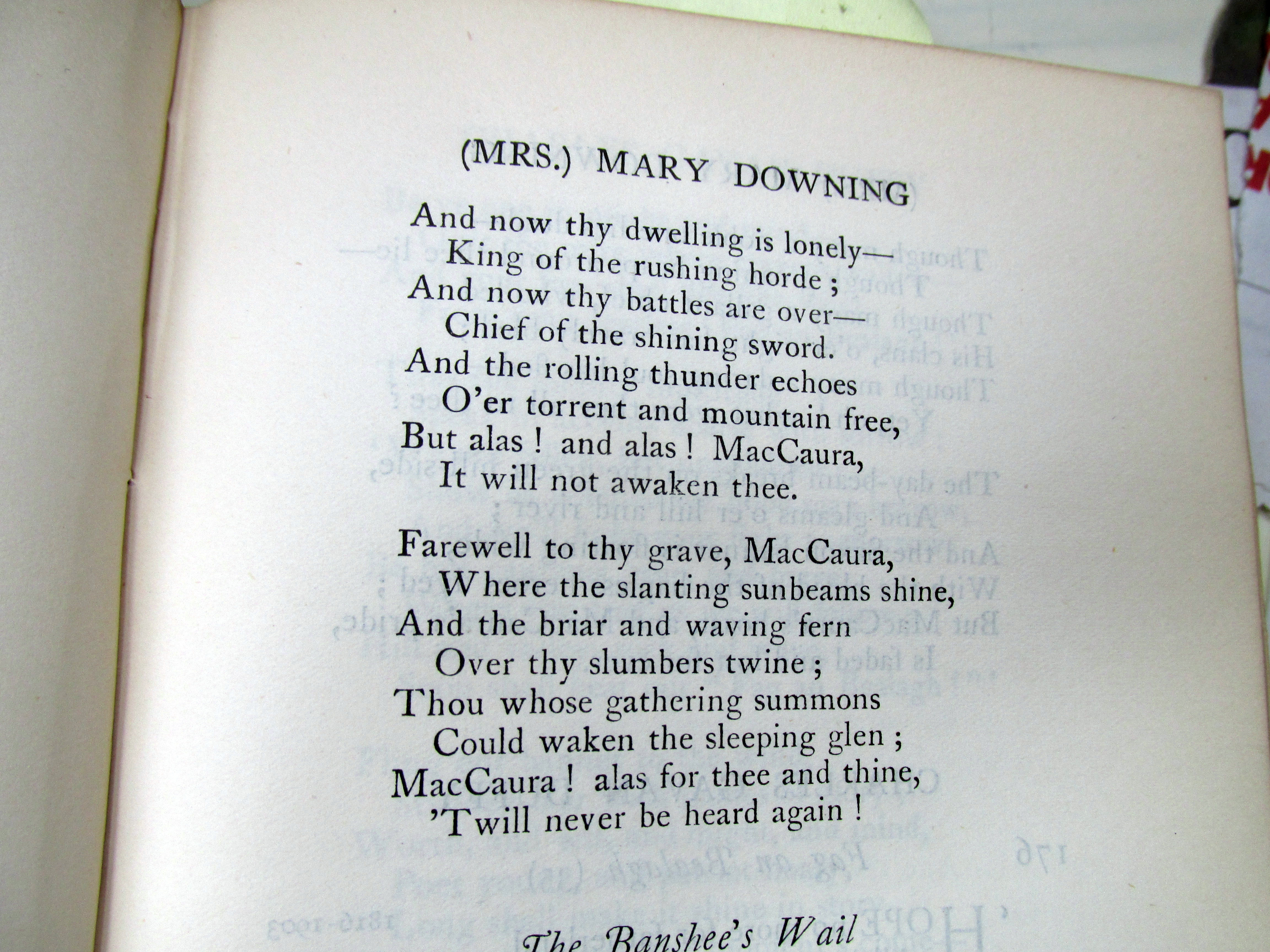
Grave of Mac Caura by Mrs Mary Downing (1815-1881), death of Daniel McCarthy 1281 in egagement with Fitzgeralds at Callan on road from Glenerough to Bantry

18 Thursday Sep 2014

Posted by durrushistory in Uncategorized

≈ Leave a comment


Grave of Mac Caura by Mrs Mary Downing (1815-1881), death of Daniel McCarthy 1281 in egagement with Fitzgeralds at Callan on road from Glenerough to Bantry
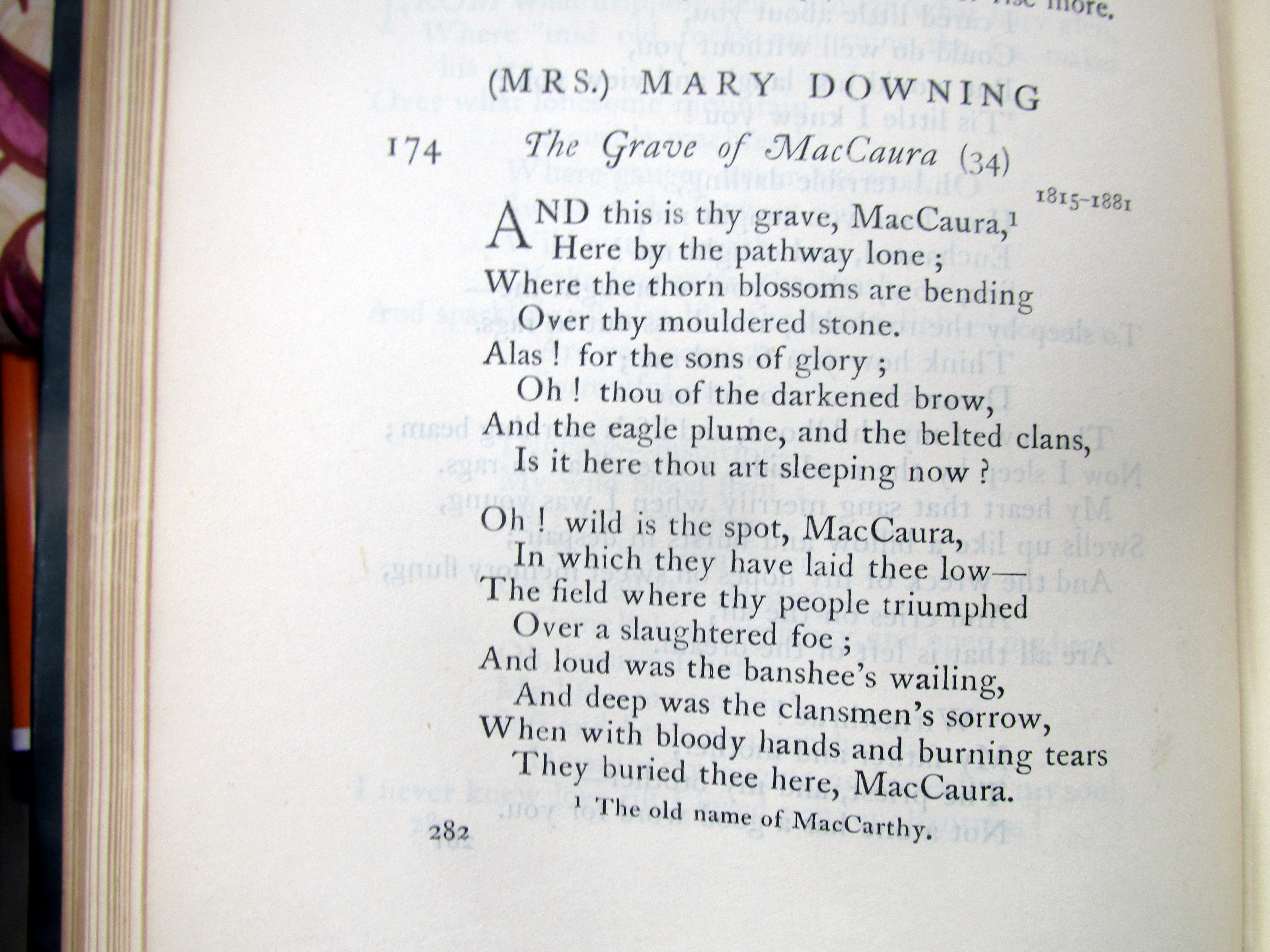
3-IMG_5586

1-IMG_5584

2-IMG_5585

1-IMG_5587

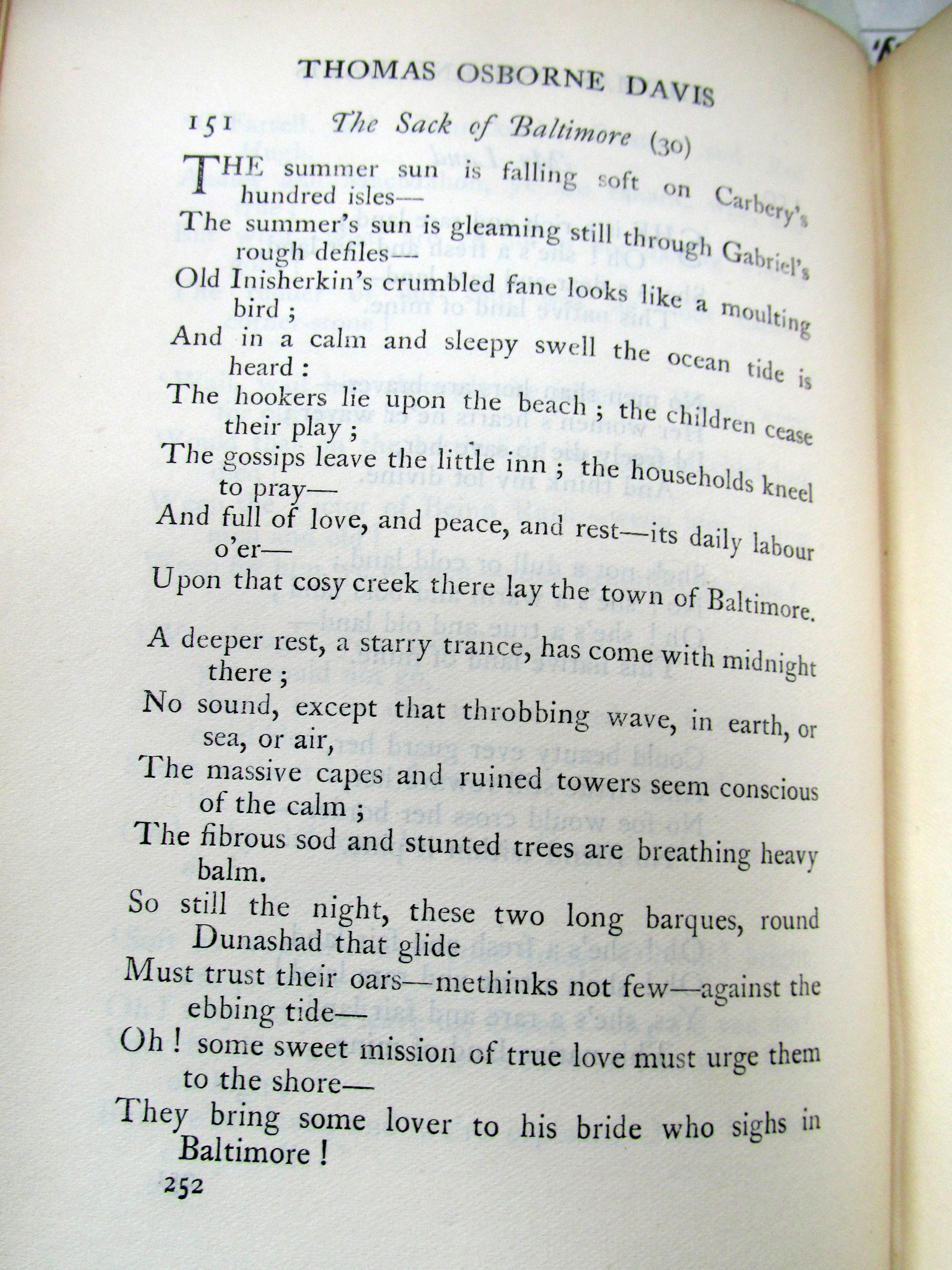
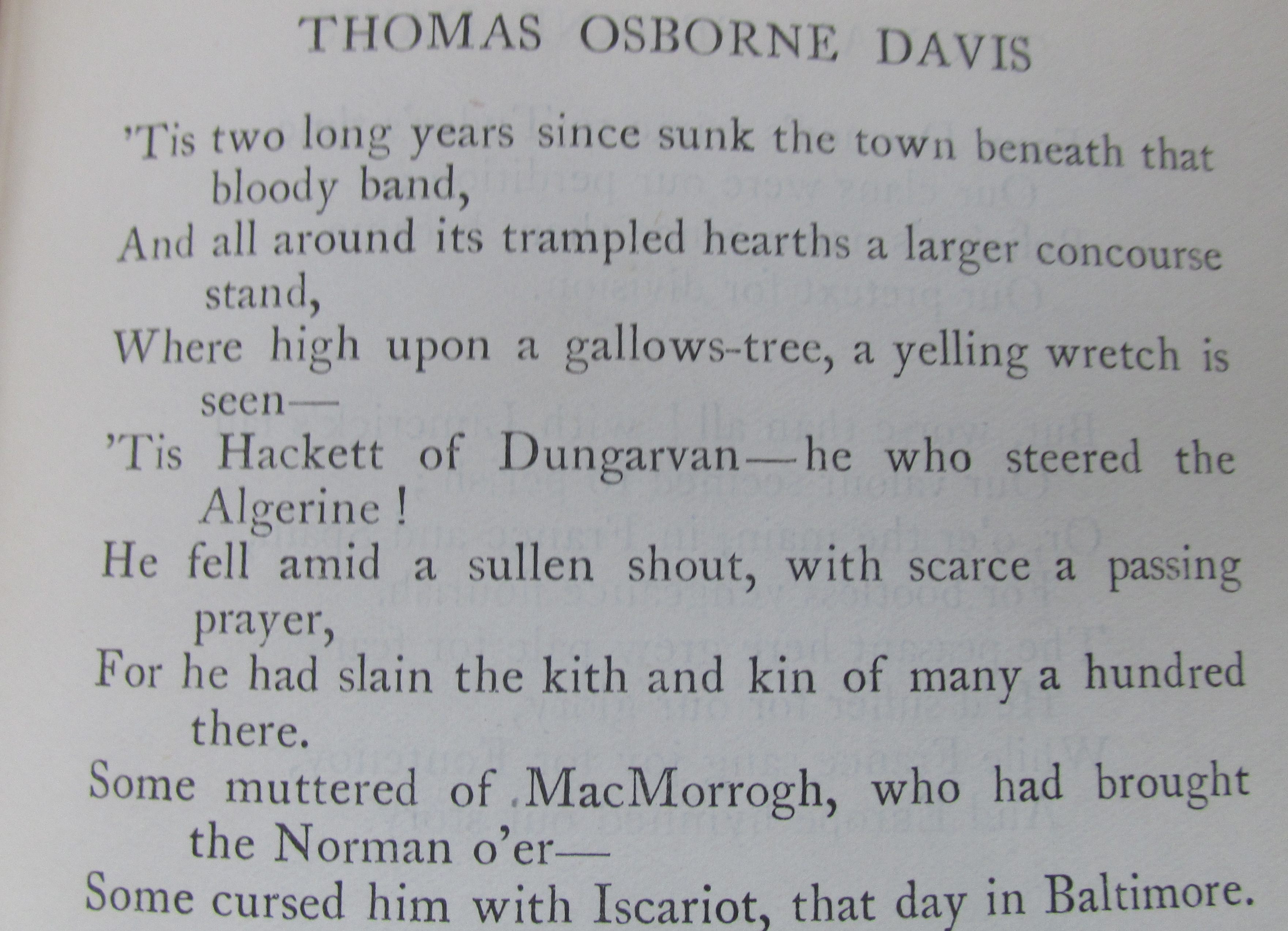
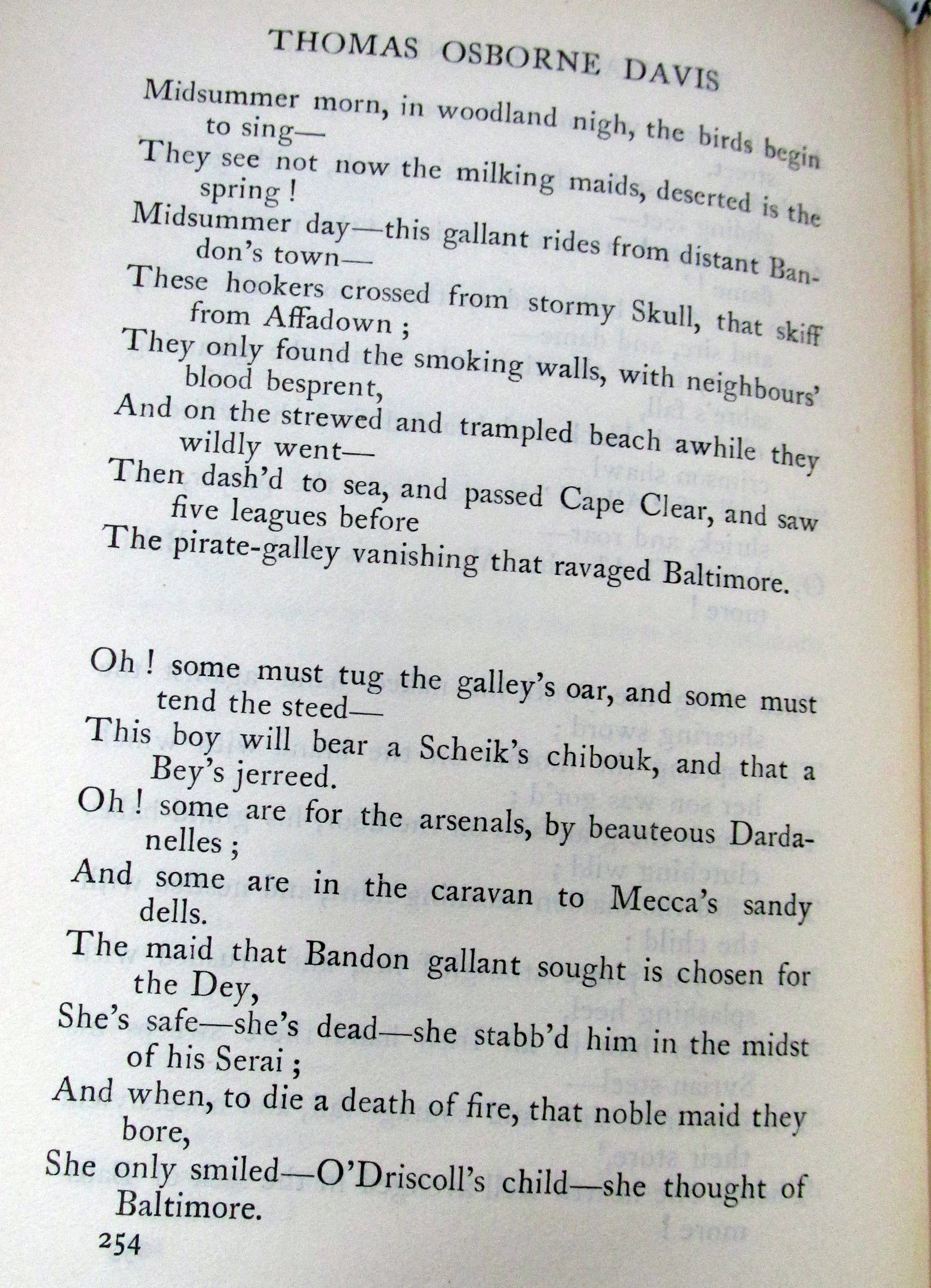
The sack of Baltimore, by Thomas Davis

18 Thursday Sep 2014

Posted by durrushistory in Uncategorized

≈ Leave a comment


The sack of Baltimore, by Thomas Davis

1-IMG_5579

2-IMG_5580

3-IMG_5583

2-IMG_5582

1-IMG_5581

http://en.wikipedia.org/wiki/Sack_of_Baltimore

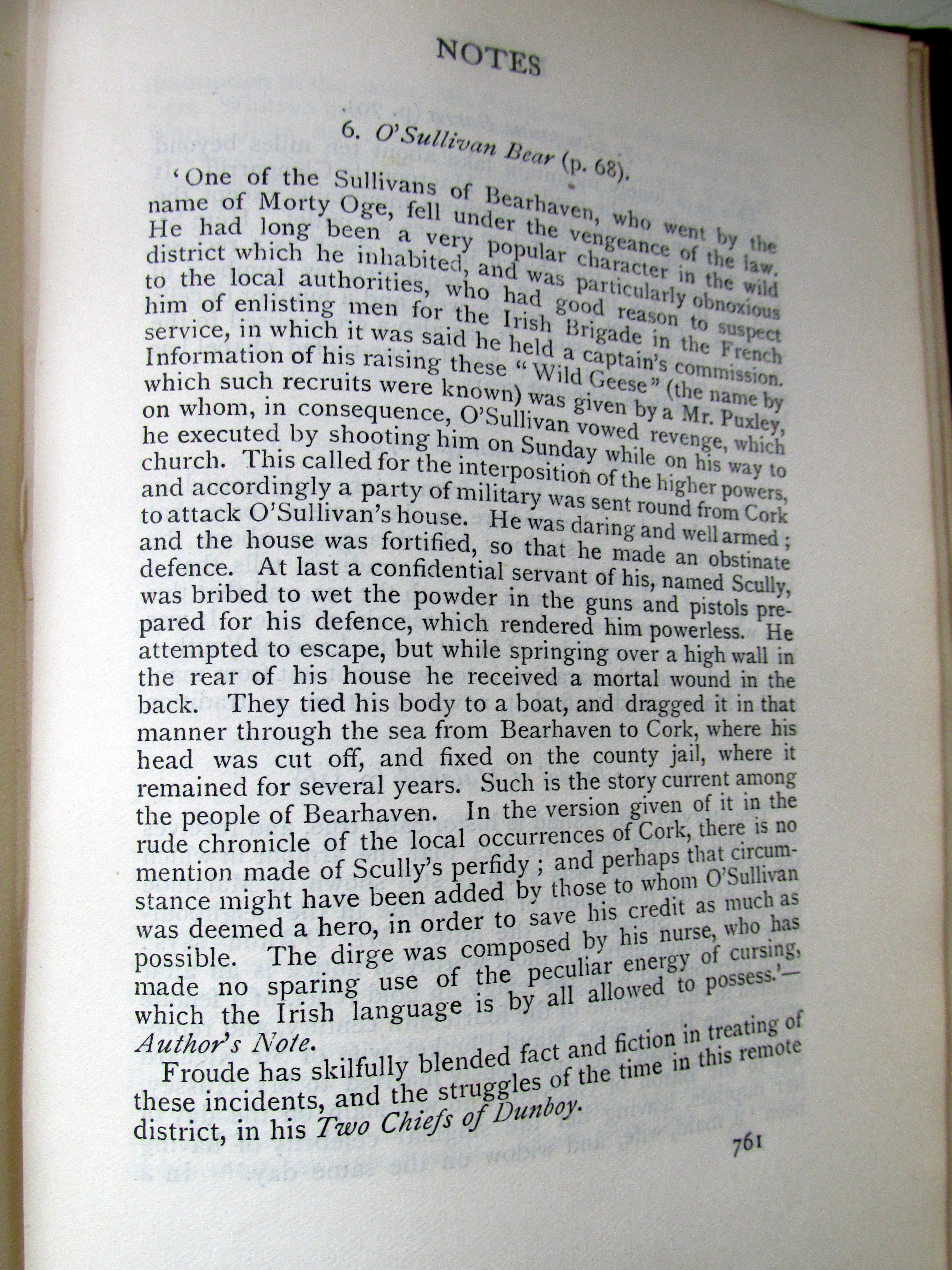
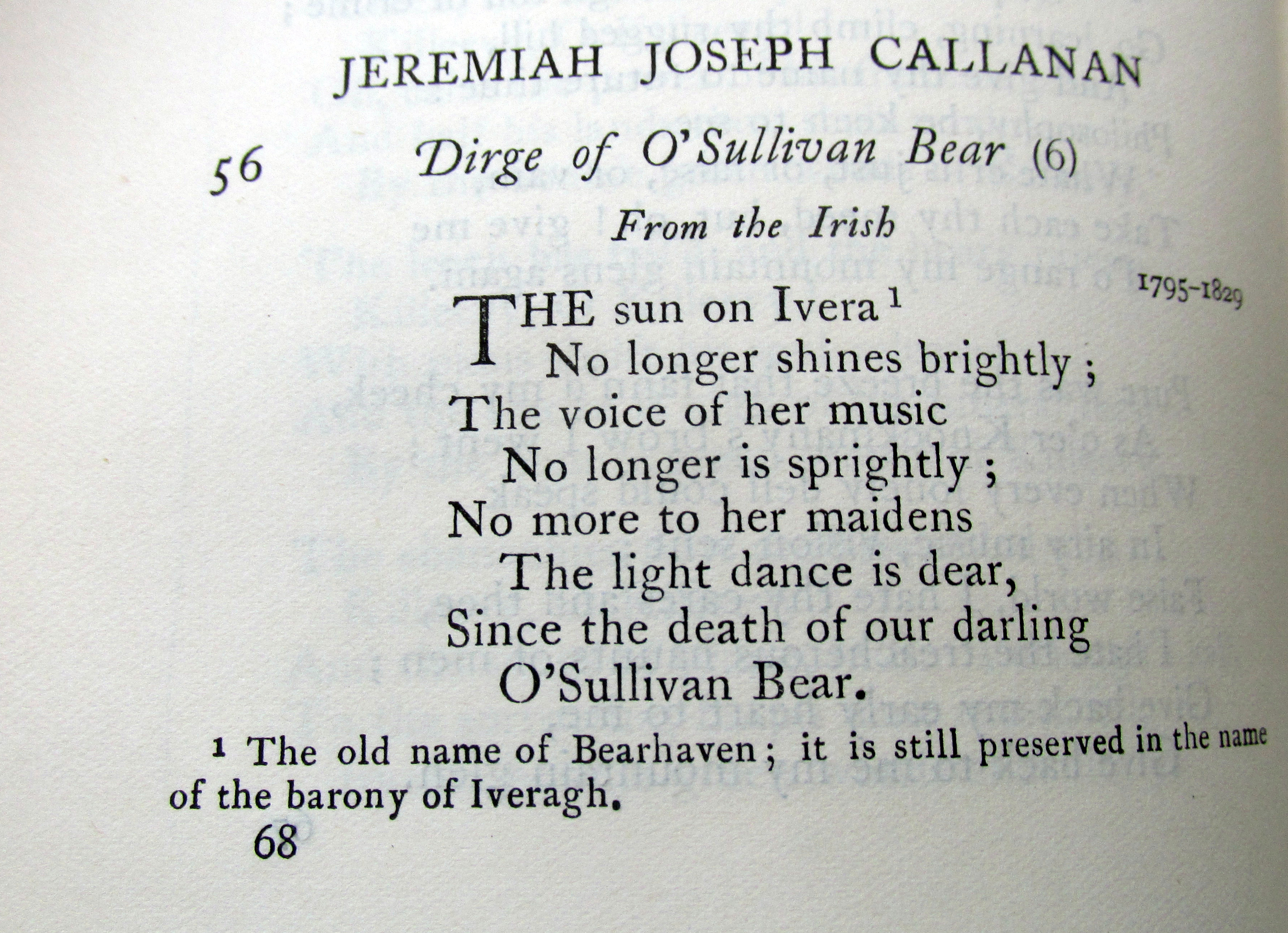
Dirge of Murty Óg O’Sullivan Bere, composed in Irish by his nurse translated by Jeremiah Joseph Callnan, Murty killed John Puxley in turn he was betrayed by his servant Scully, killed, his body dragged by boat from Berehaven to Cork beheaded and his head lay for years on Cork Jail.

18 Thursday Sep 2014

Posted by durrushistory in Uncategorized

≈ 3 Comments


Dirge of Murty Óg O’Sullivan Bere, composed in Irish by his nurse translated by Jeremiah Joseph Callanan, Murty killed John Puxley in turn he was betrayed by his servant Scully, killed, his body dragged by boat from Berehaven to Cork beheaded and his head lay for years on Cork Jail.

Callanan

https://durrushistory.wordpress.com/2014/08/22/httpdurrushistory-wordpress-com20111008dr-john-odonovan-the-odaly-family-bards-muintervara-1852-extract/

There is a similarity also in the judicial murder of Art O’Leary (Art Ó Laoighre) some year later. Both were of the old Gaelic Stock and held commissions in Continental Regiments and fell foul of the new class Puxley and Morris
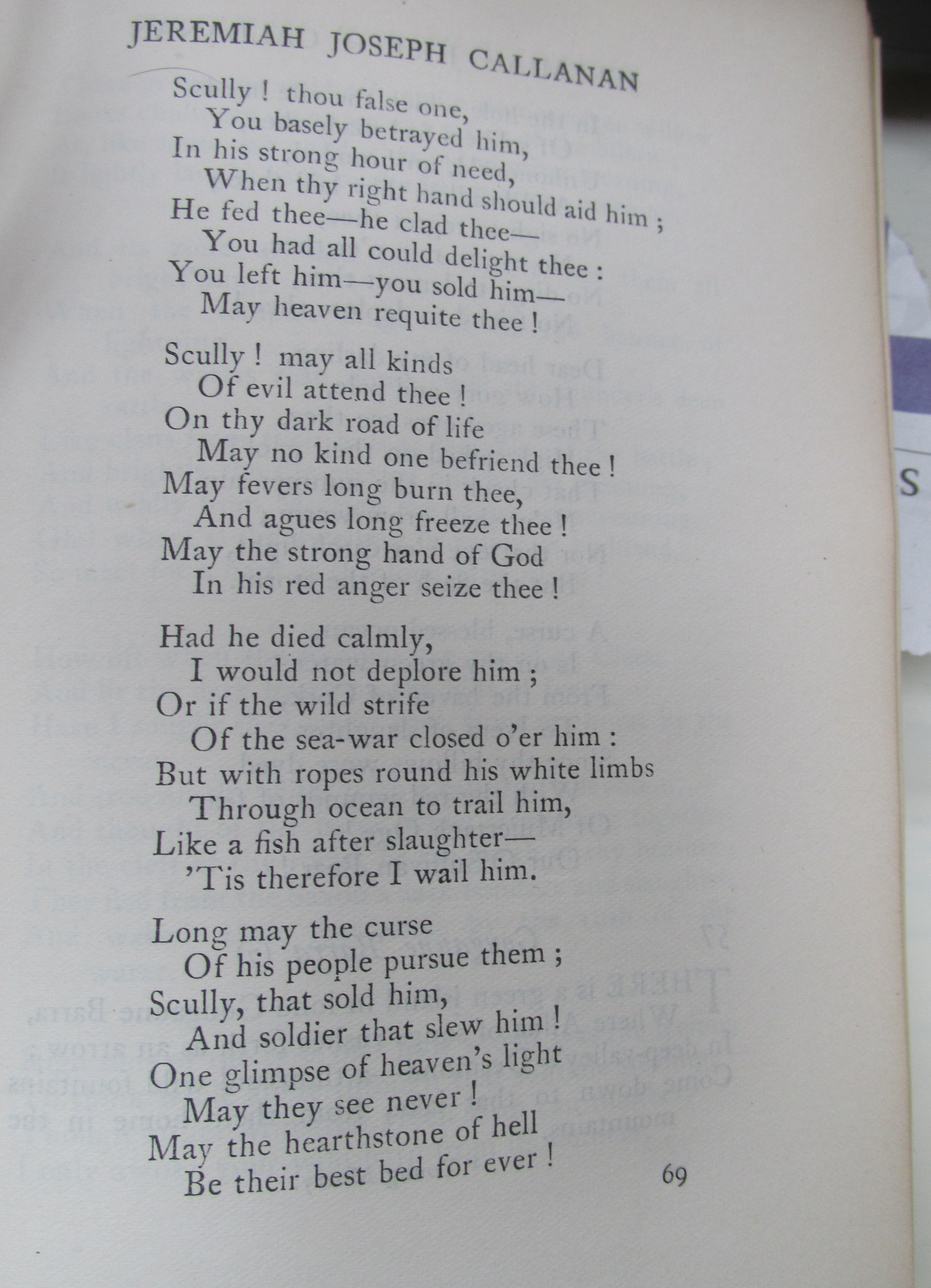
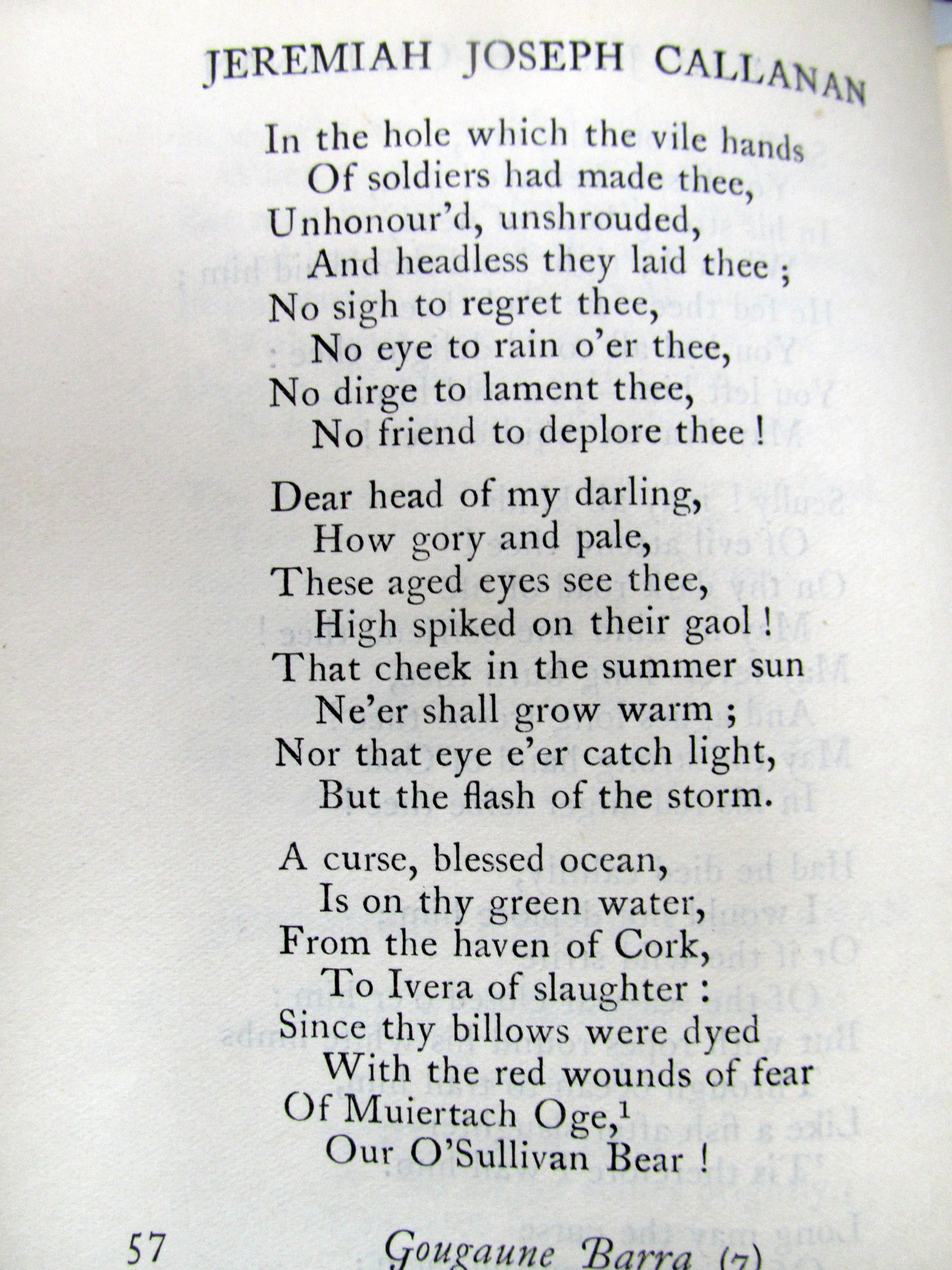
3-IMG_5577

4-IMG_5578

1-IMG_5575

2-IMG_5576

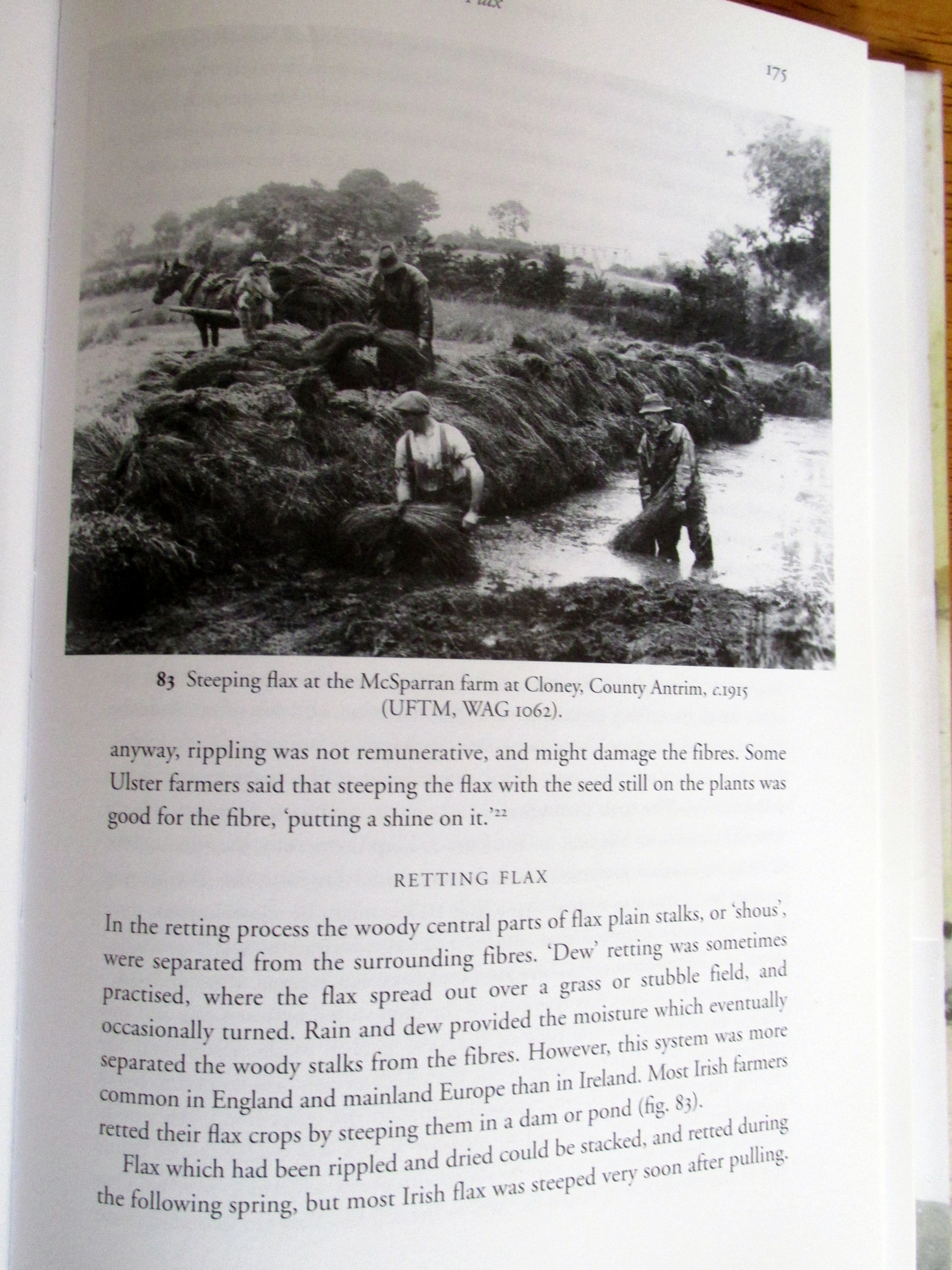
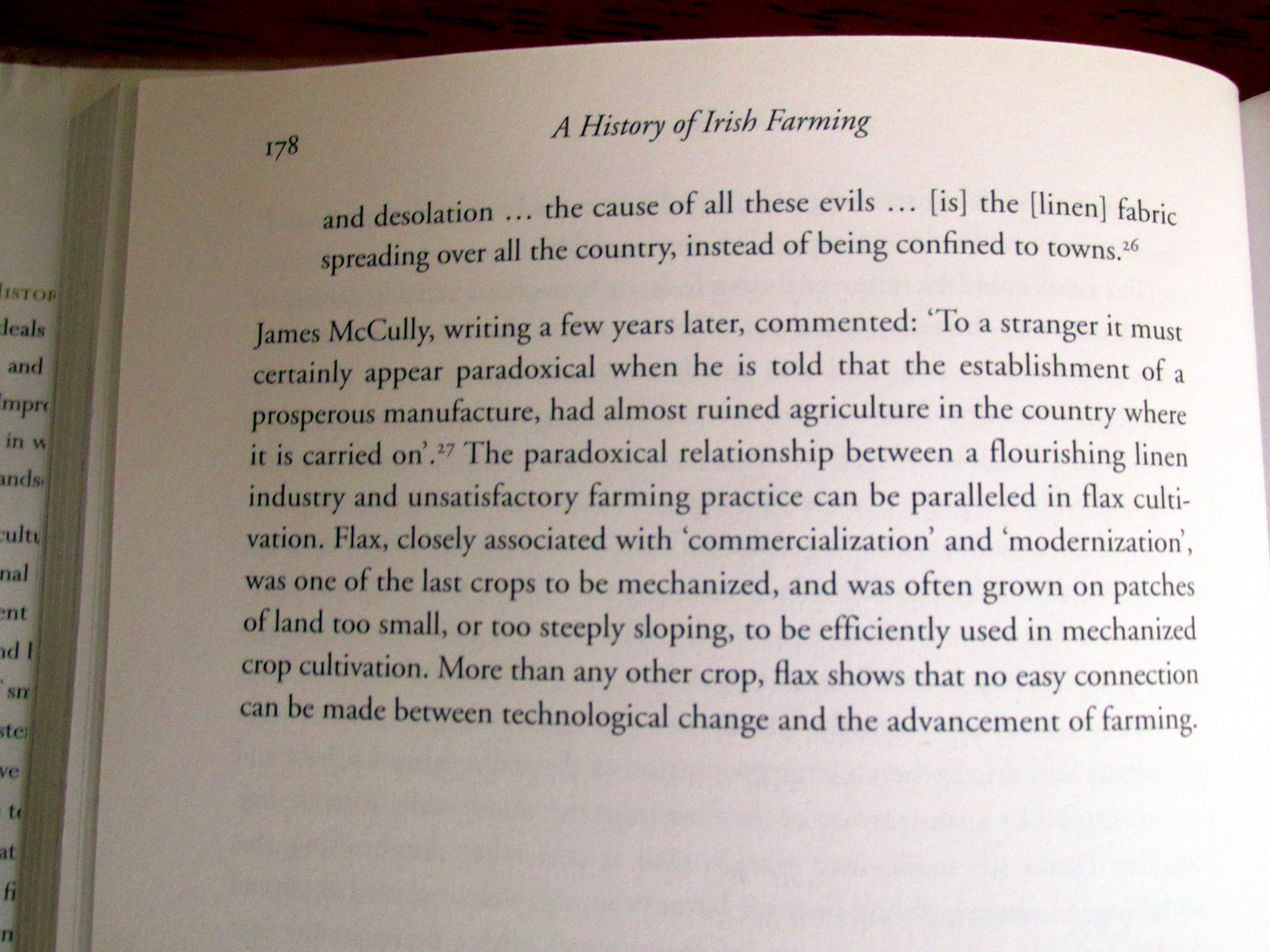
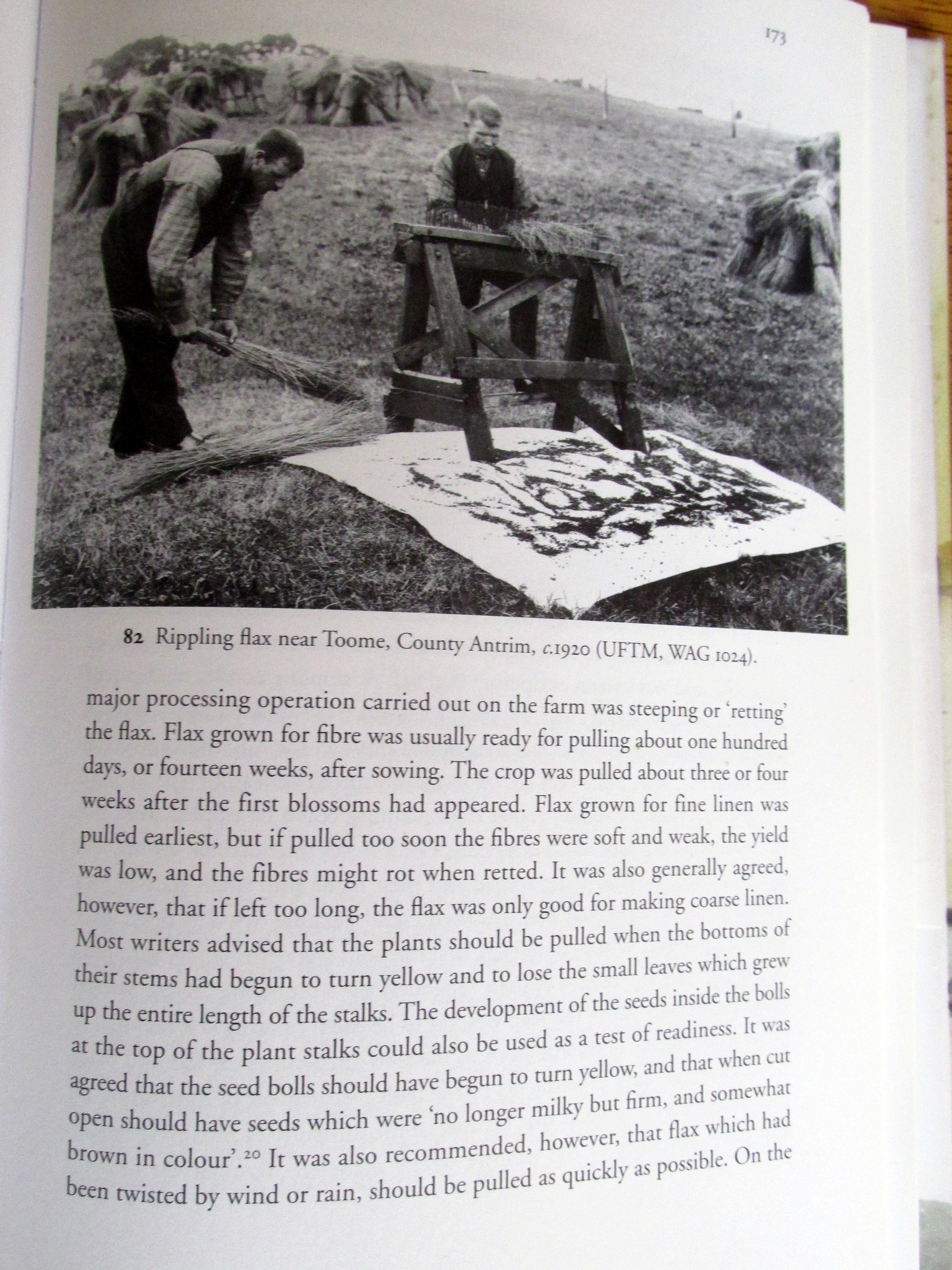
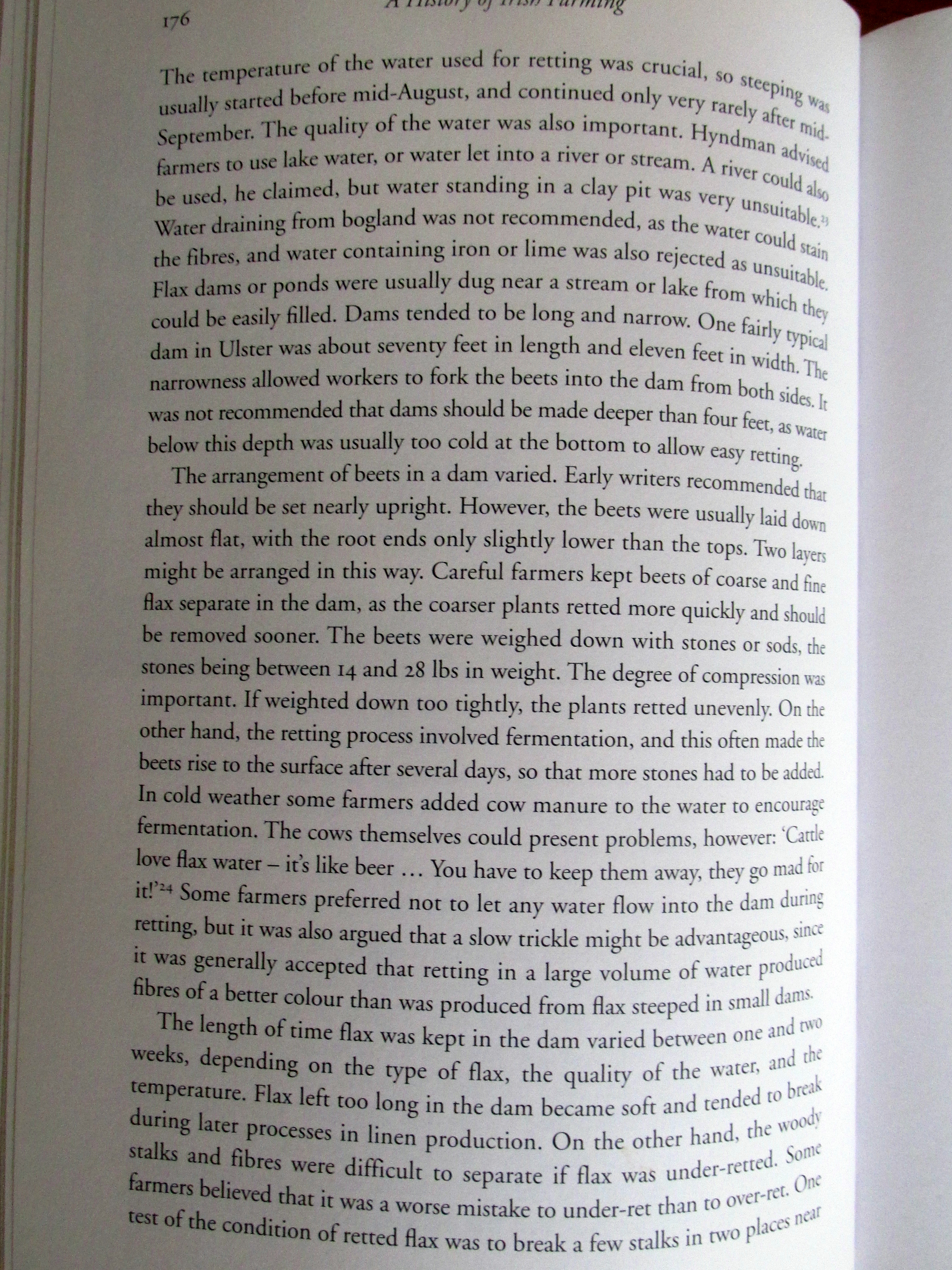
1891, An unfortunate dispute between the local Scutch Mill owners as to the relative claims of Clonakilty, Dunmanway or Ballineen, West Cork to have a flax market was the means of preventing northern buyers attending the Southern markets and Flax growing in Ireland generally.

17 Wednesday Sep 2014

Posted by durrushistory in Uncategorized

≈ 2 Comments


1891, An unfortunate dispute between the local Scutch Mill owners as to the relative claims of Clonakilty, Dunmanway or Ballineen, West Cork to have a flax market was the means of preventing northern buyers attending the Southern markets and Flax growing in Ireland generally.

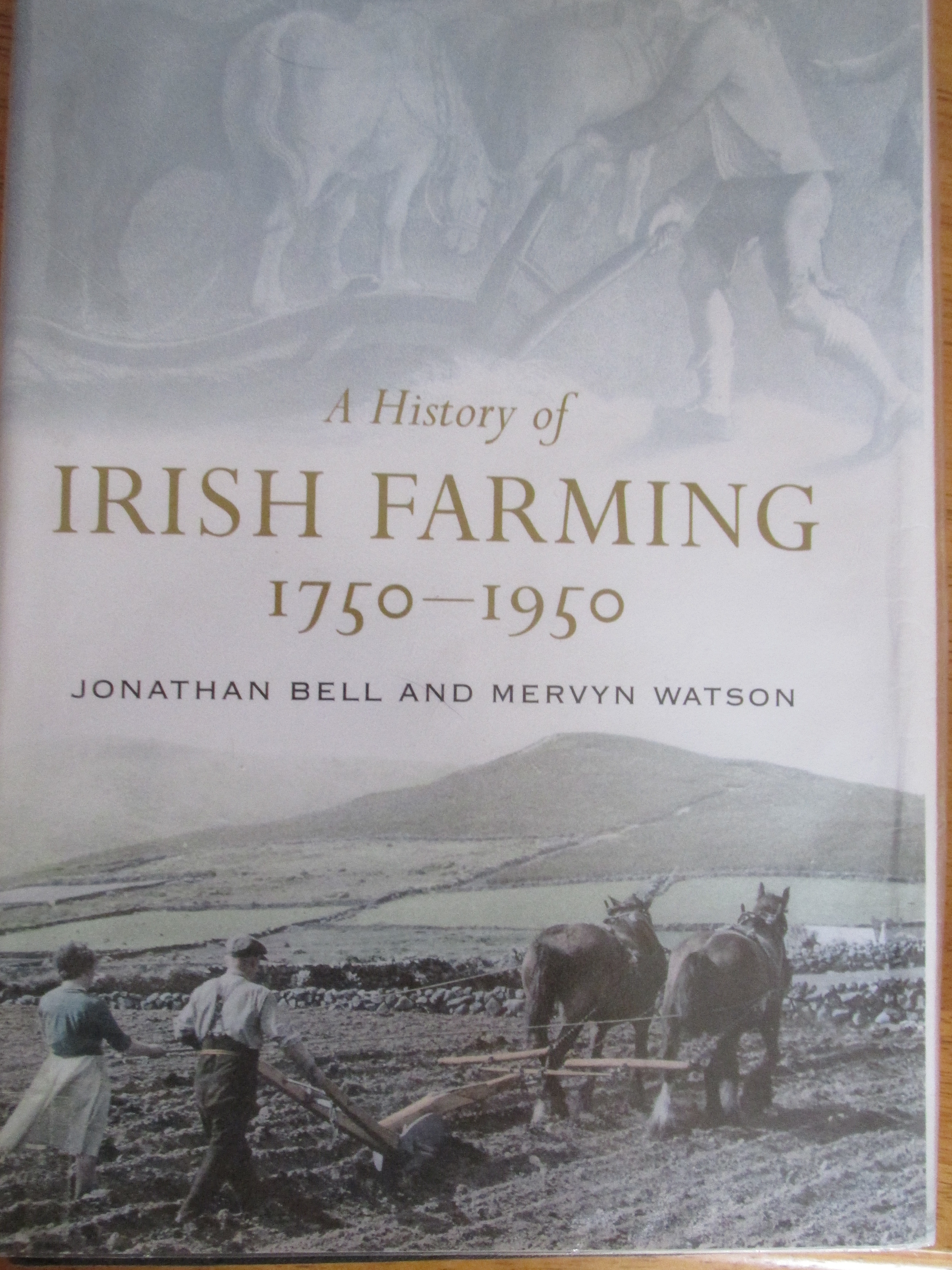
During World War 2 the Northern Buyers returned to West Cork.

Courtesy Four Courts Press, 2008.
1-IMG_5602

2-IMG_5603

3-IMG_5604

03-IMG_5607

02-IMG_5606

07-IMG_5611

04-IMG_5608

10-IMG_5614

06-IMG_5610

01-IMG_5605

05-IMG_5609

09-IMG_5613

08-IMG_5612

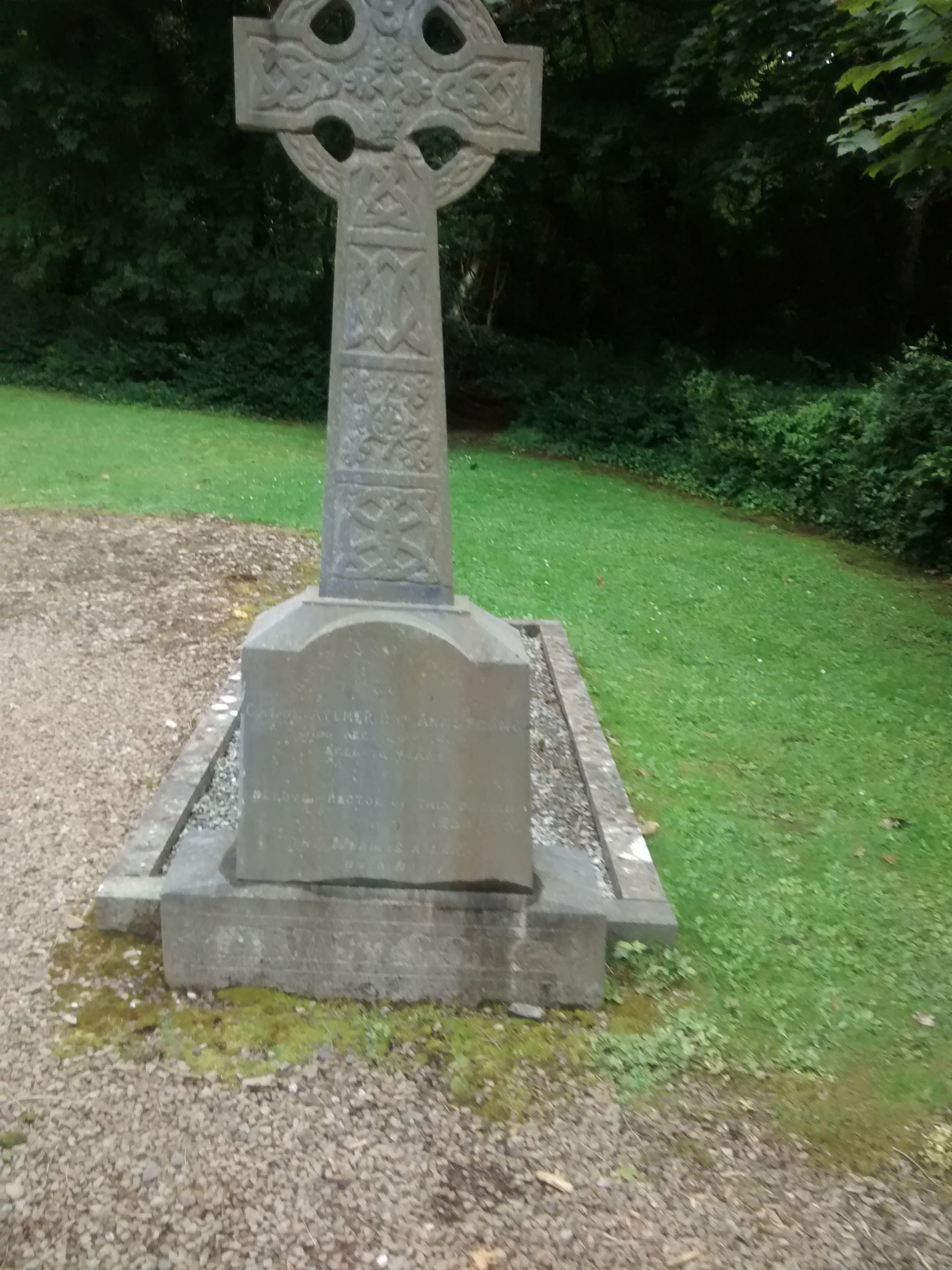
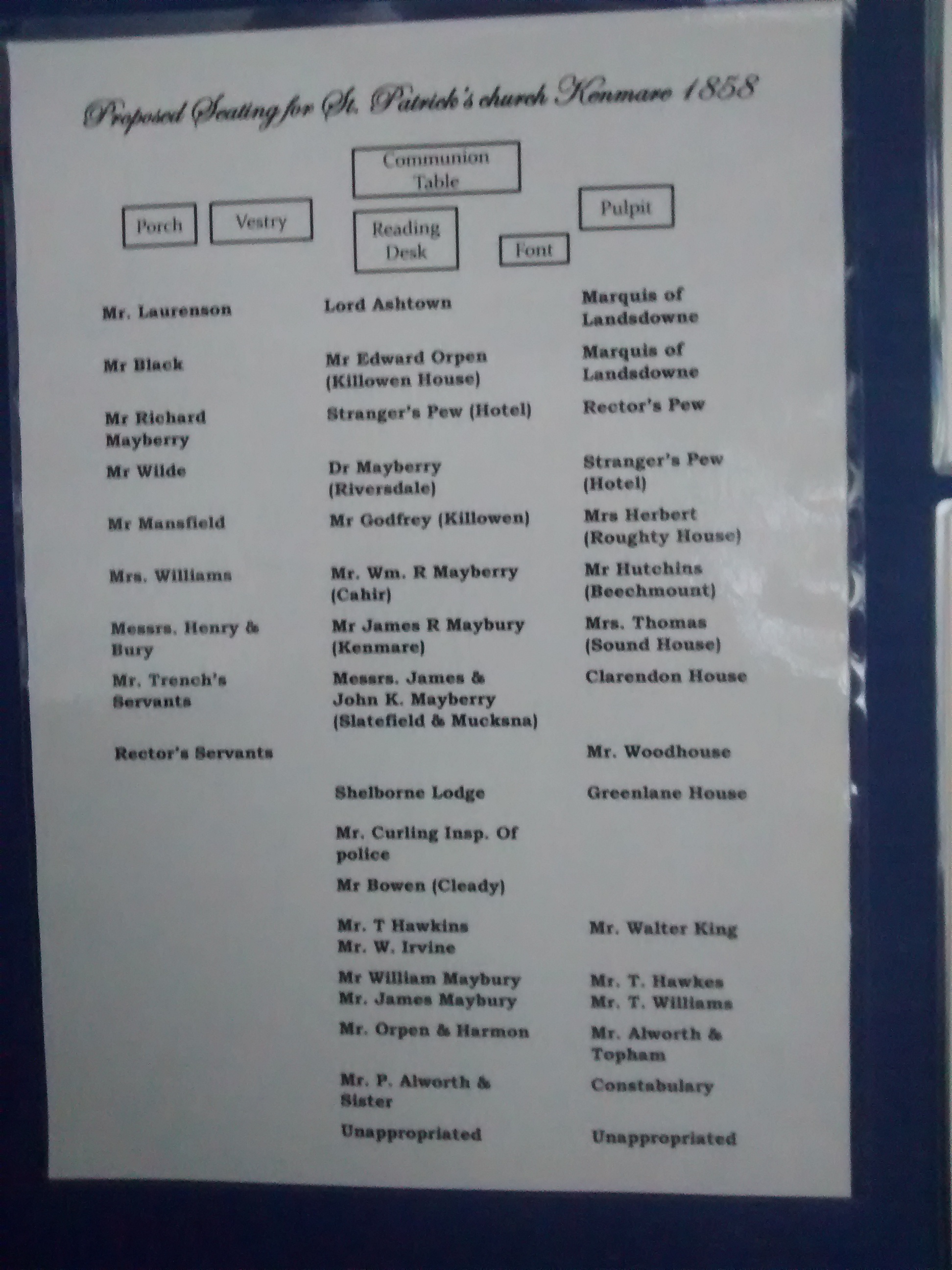
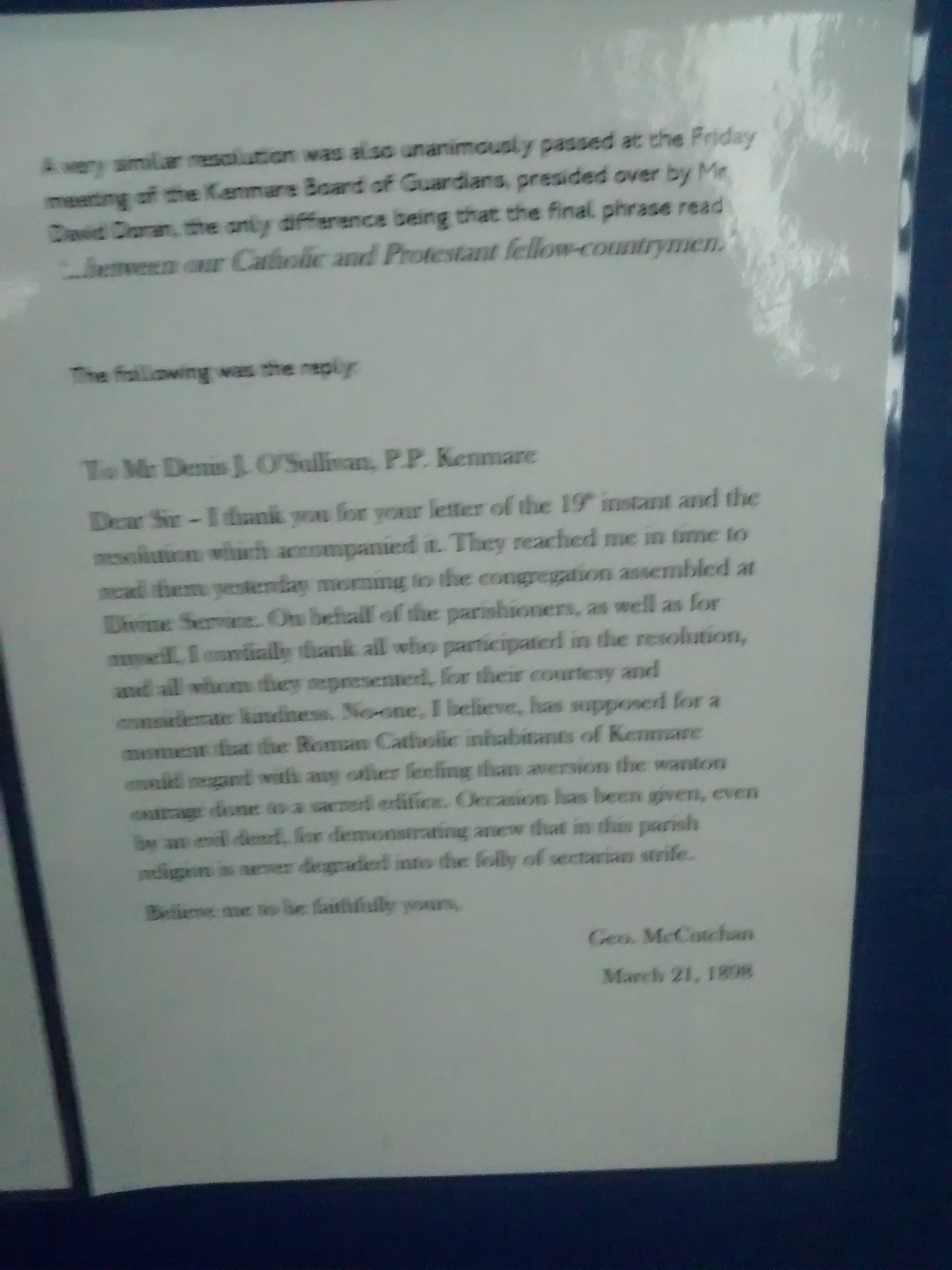
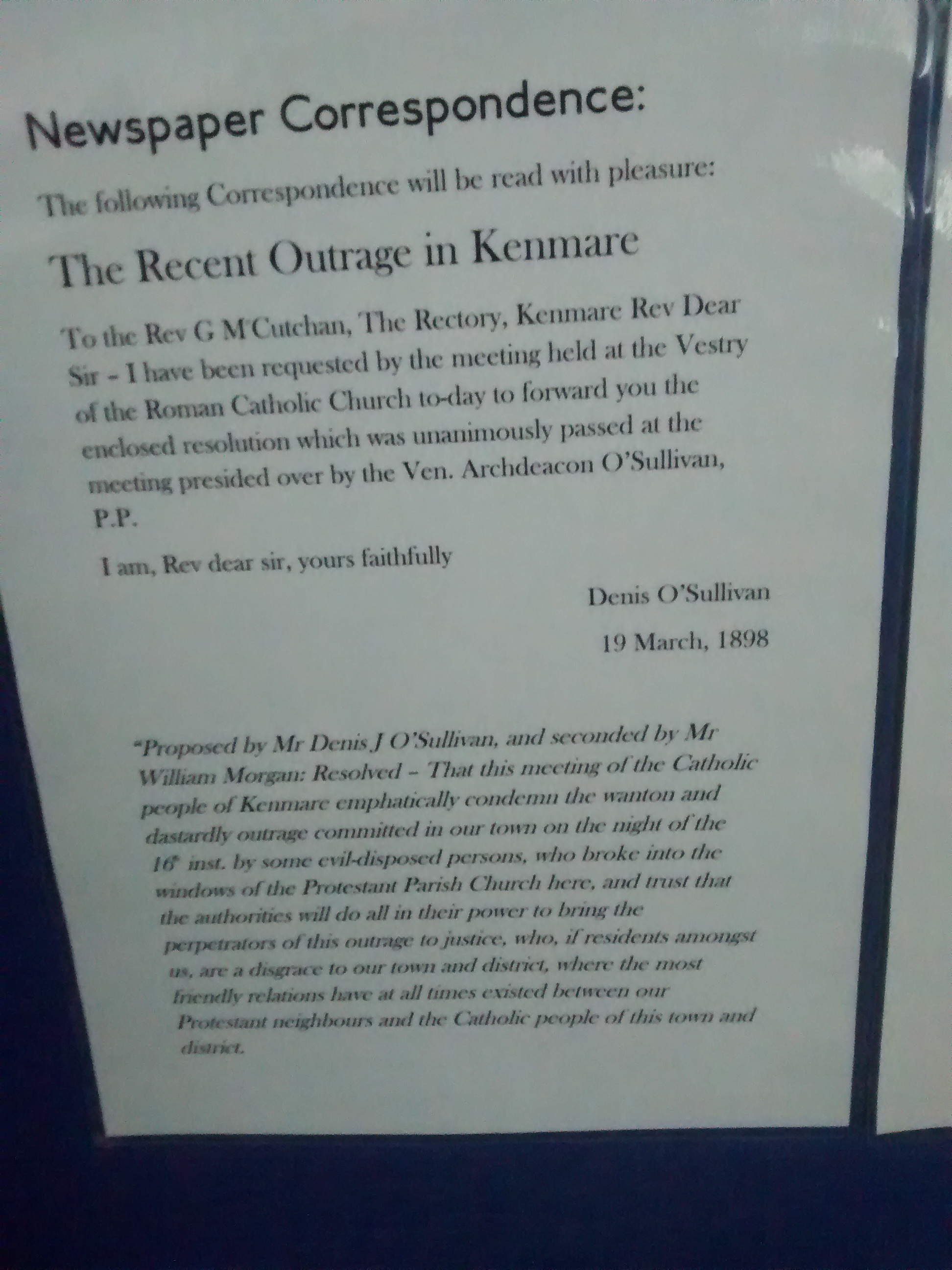
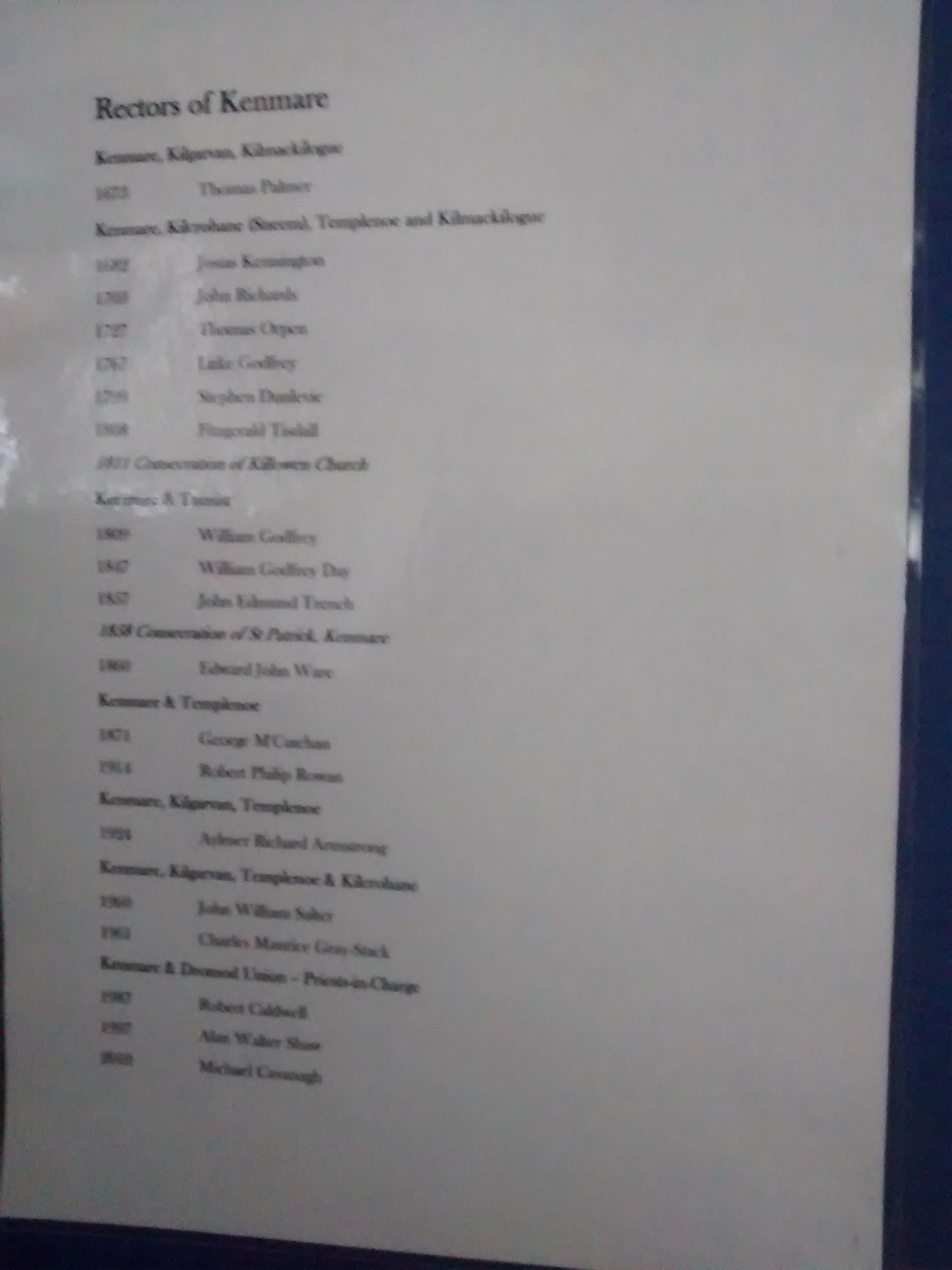
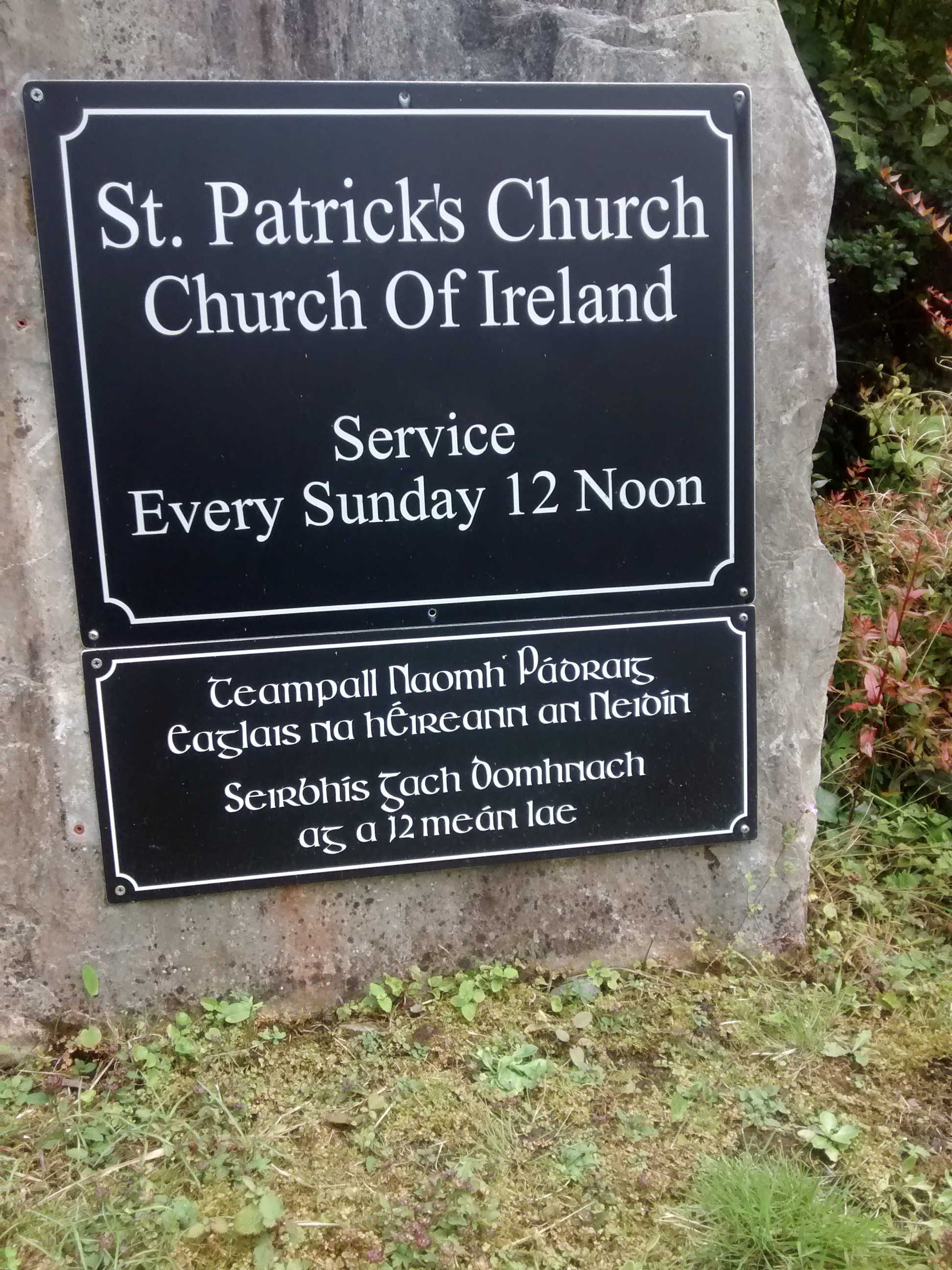
St Patrick’s Church of Ireland Kenmare (Teampaill Naomh Pádraig Eaglais na hÉireann an Neidín, proposed seating 1858 included Marquis of Lansdowne, Mayberry, Herbert, Herman, Orpen, Hutchins family members, Outrage when windows broken 1898 and resolution condemning same by Catholic Vestry.

16 Tuesday Sep 2014

Posted by durrushistory in Uncategorized

≈ 2 Comments


St Patrick’s Church of Ireland Kenmare (Teampaill Naomh Pádraig Eaglais na hÉireann an Neidín, proposed seating 1858 included Marquis of Lansdowne, Mayberry, Herbert, Herman, Orpen, Hutchins family members, Outrage when windows broken 1898 and resolution condemning same by Catholic Vestry.

The Mayberry family were extensive landowners in the area and were intermarried with the Mahonys, of Dunmore Castle. The Marquis of Lansdowne were descendants of Sir William Petty who founded Kenmare and still have Derreen Gardens in the area.

Sir William Petty:

Sir William Petty, 1623-1687, True Genius, founder of Modern Economics and Government Accounts and Prohobition of Non-Protestants working in his Berehaven Mines
1-IMG_20140811_134401925
2-IMG_20140811_134446693
3-IMG_20140811_135036478
2-IMG_20140811_135046845
3-IMG_20140811_135051468
5-IMG_20140811_135103394
4-IMG_20140811_135059178
1-IMG_20140811_135041707

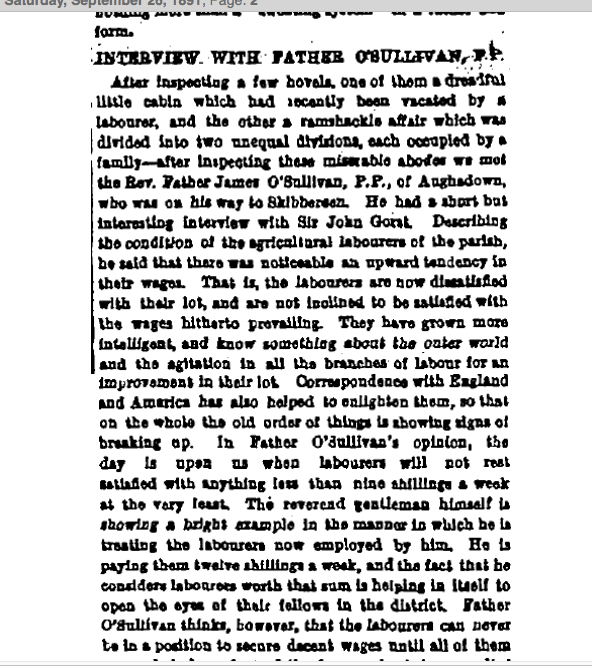
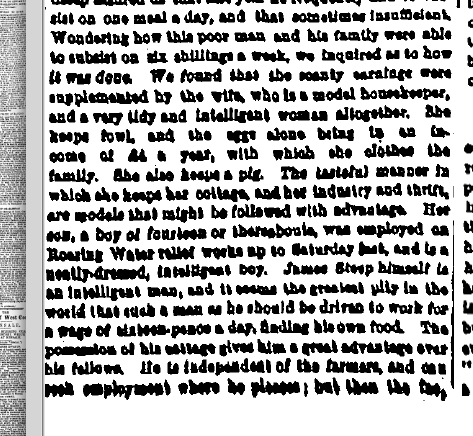
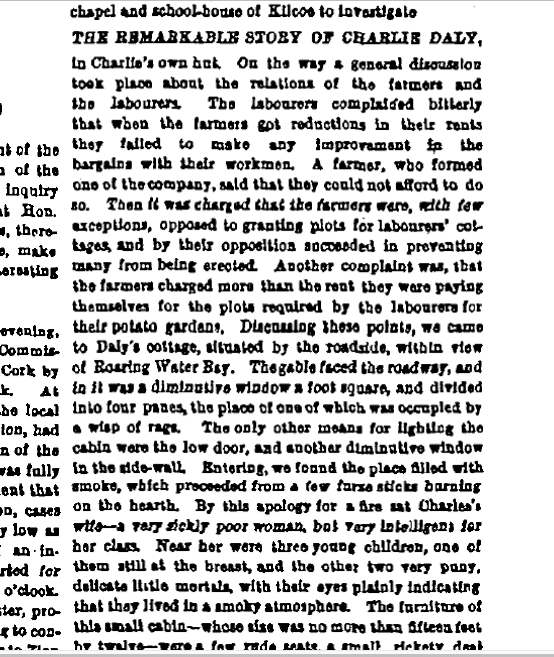
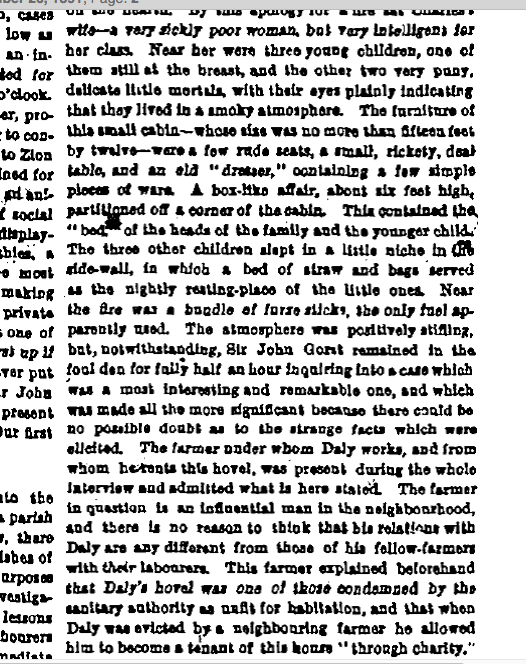
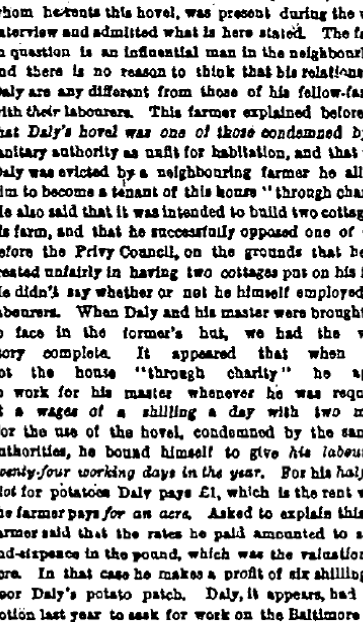
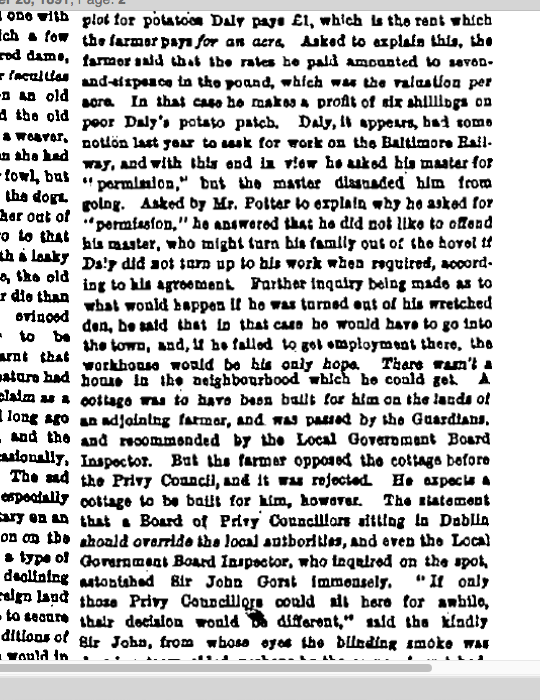
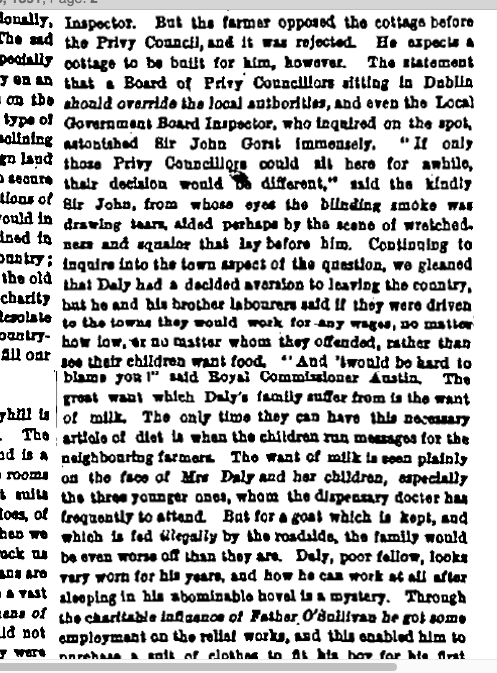
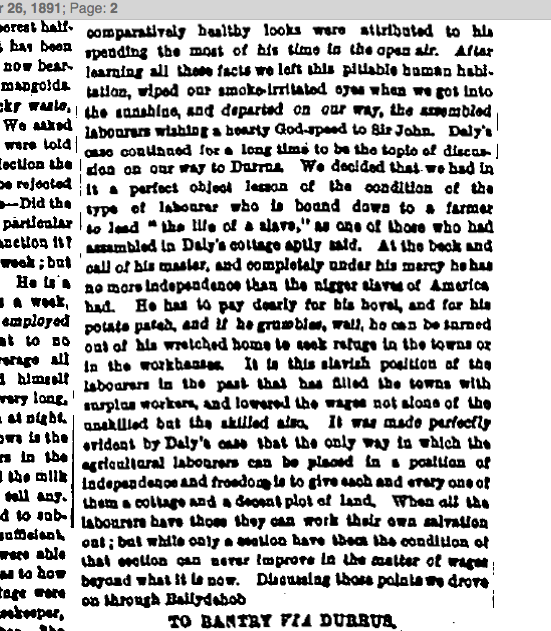
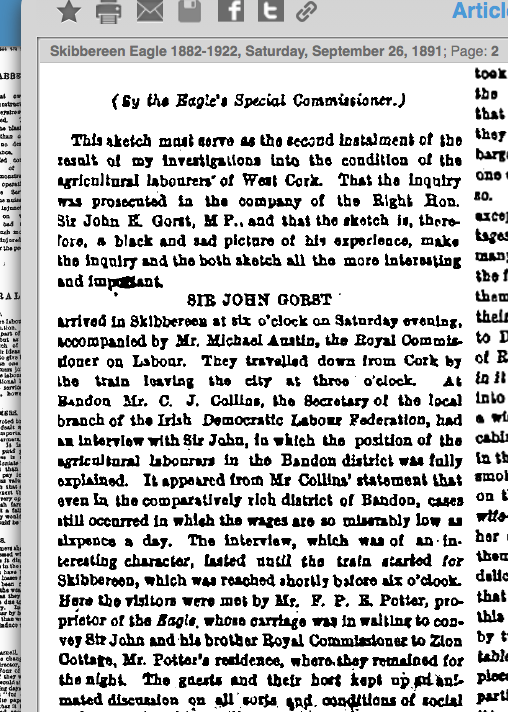
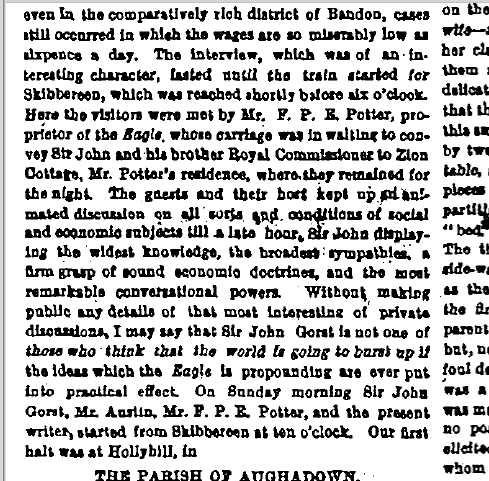
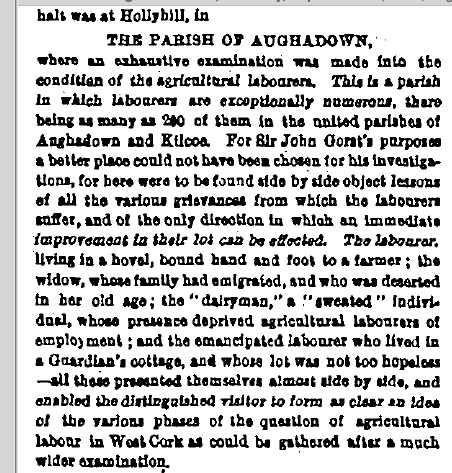
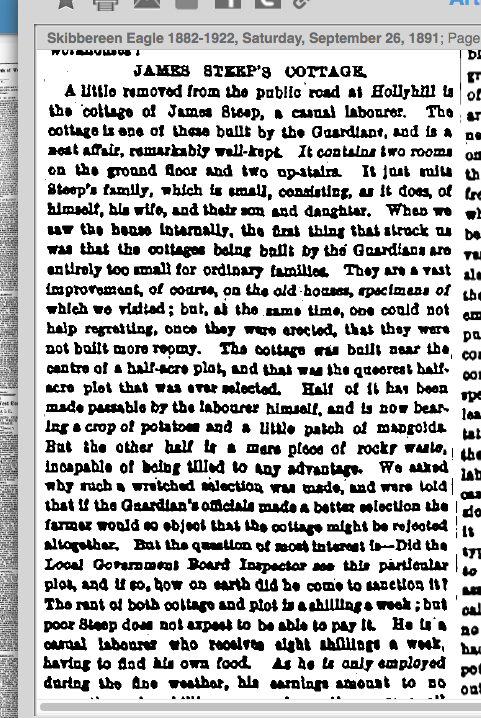
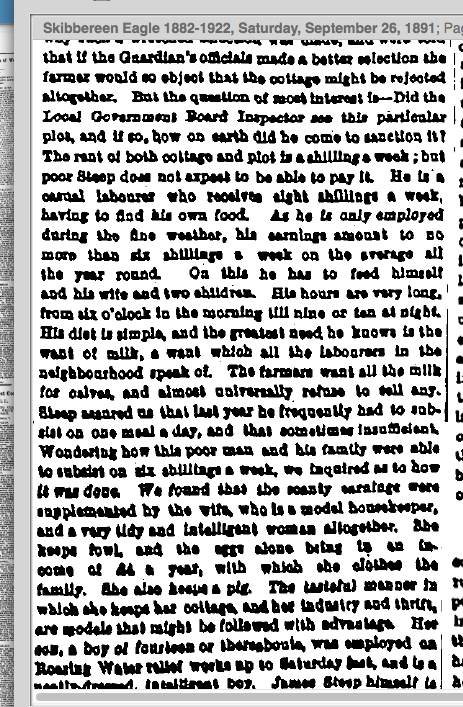
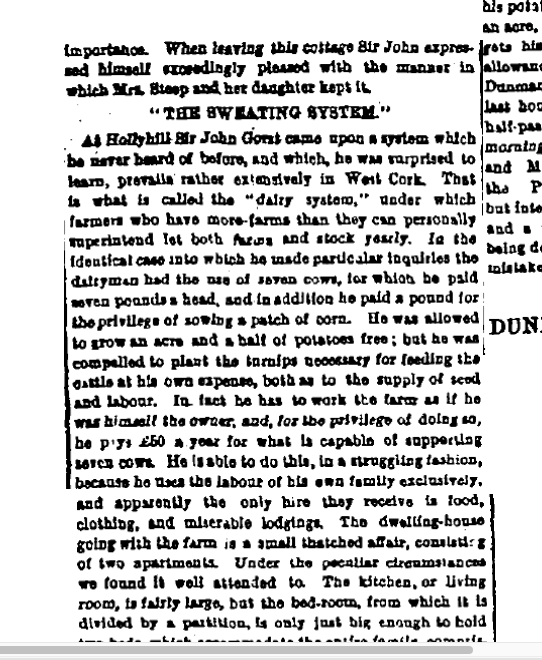
Pounding the furze for the mare in foal. Sir John Gorst 1891, Reforming M.P., Visit to Aughadown, Detailed Account of Distress.

15 Monday Sep 2014

Posted by durrushistory in Uncategorized

≈ 4 Comments


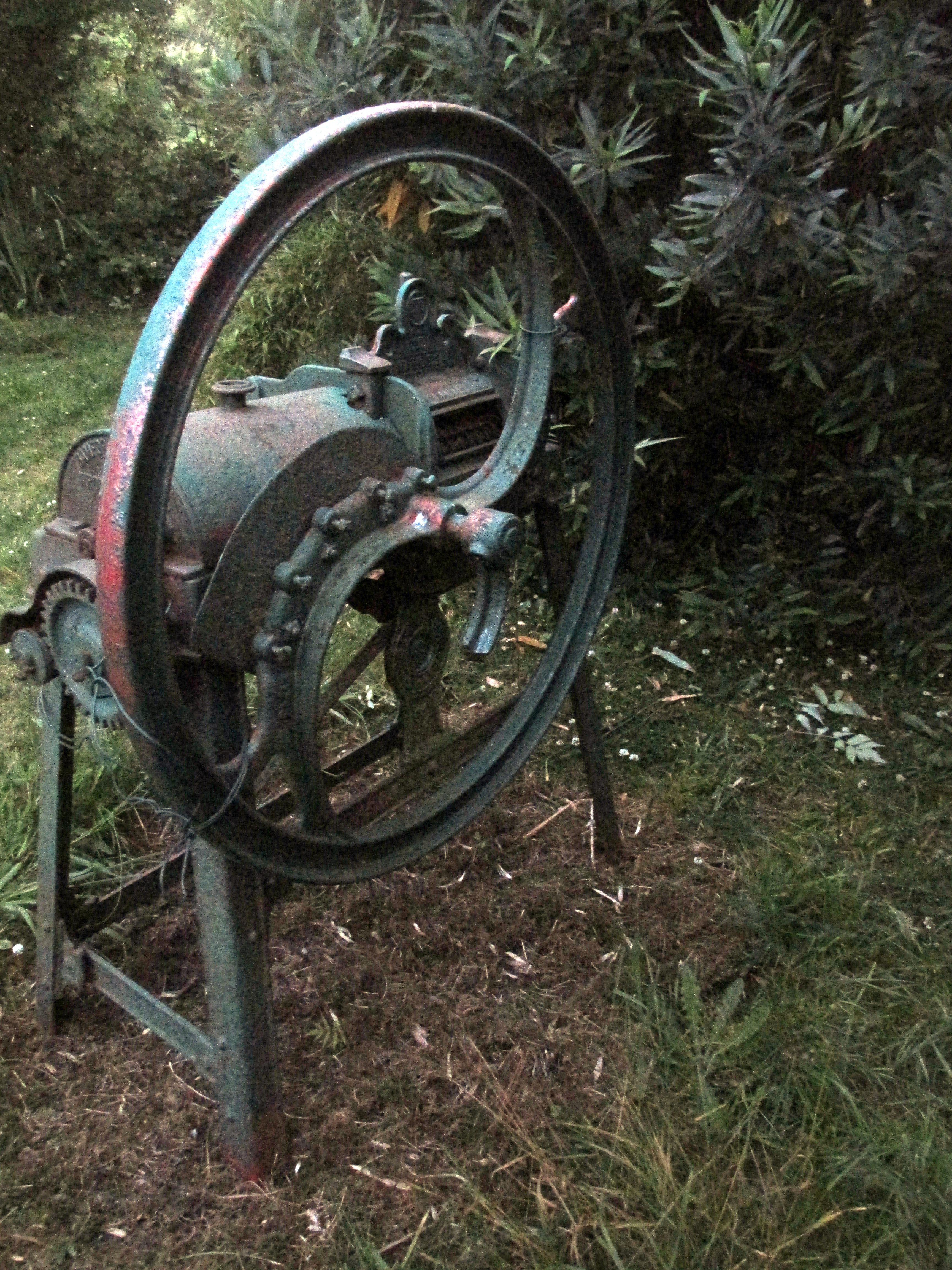
Pounding the furze for the mare in foal.

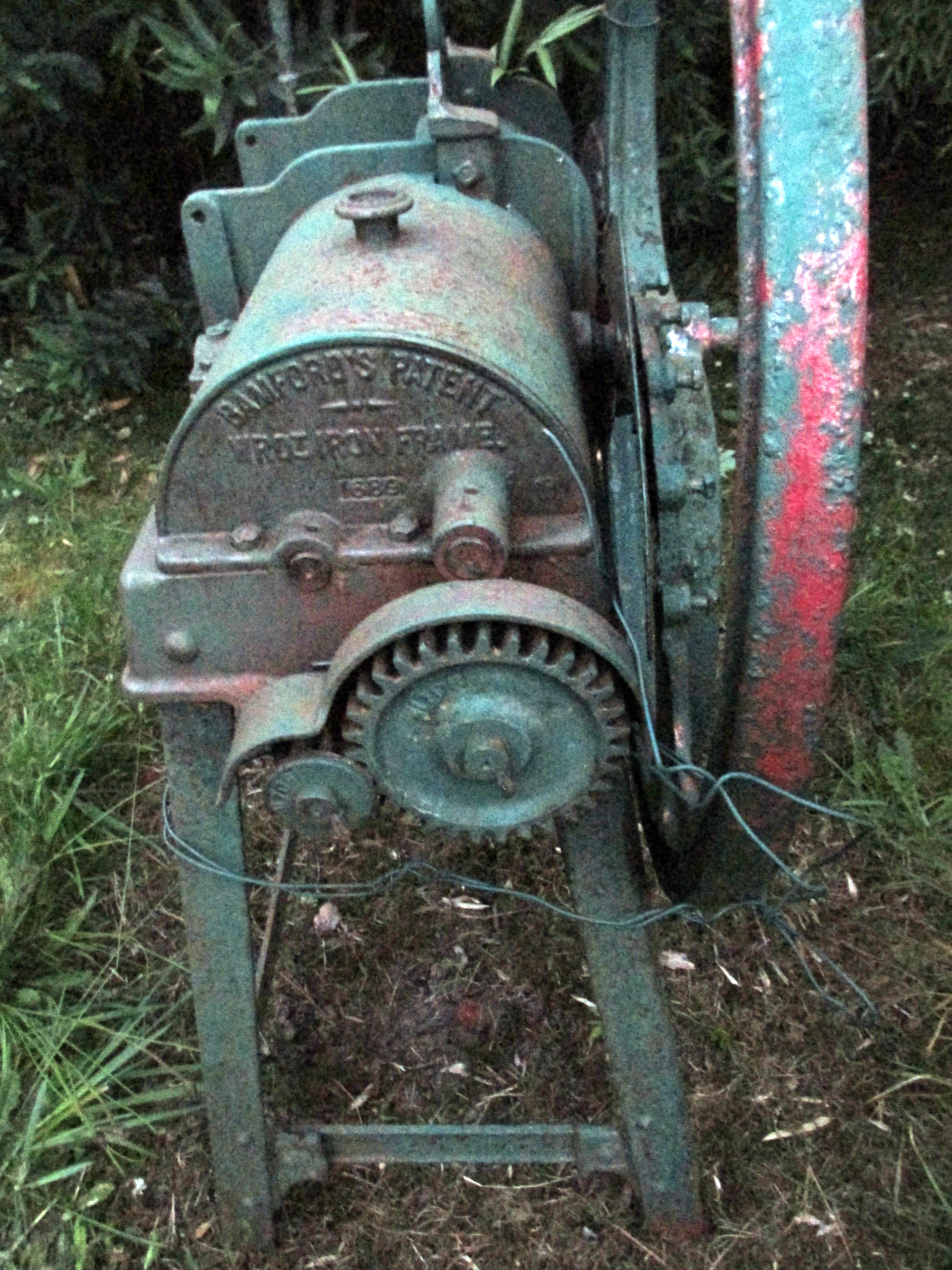
Pre the mid 1960s the workhorse on Irish farms was literally the horse. The diet was supplemented by furze (whin or gorse in some areas), chopped up with a furze machine. These sturdy machines of cast iron are still around and grinded the plant and then chopped it. Mares in foal have a delicate digestive system and the furze was further pounded to make it palatable.

Farmers would often travel a mile of so to get a cart load of furze. Brakes or waste land of up to a half an acre would often be planted with a harvest within two years

Donal Hickey Irish Examiner:

https://www.irishexaminer.com/property/homeandoutdoors/arid-30839915.html

In his book, Farming In Ireland, John Feehan mentioned many registered accounts in legal documents from the 15th and 16th centuries listing gorse being used as animal fodder: “It was especially valued in feeding horses, though cattle throve on it also, either fed on its own or as part of a mixed diet.”

Feeding gorse continued until the 19th century, with many admitting to getting more gorse per acre than they would if they made hay. Feehan also recalls how farmers, in Cork especially, grew a few acres of what was called “furze meadow”. Given current fodder shortages, maybe there’s a lesson there.

This furze machine was sold in 1889 auction as new:

https://docs.google.com/document/d/1OaTv0viw8AKxaoUtJEym5y0Dp0xAqTqZj5nE7nyitDg/edit
1-IMG_3436
2-IMG_3437

Aiteann gaelach, Tufts of furze

Garbhóg, forked hazel stick used in divining, a furze stick was used by an English artist who bought Sea Lodge in the 1940s to divine for water. The house had no water which was obtained from the nearby priest’s well. The English lady found a small stream near the house

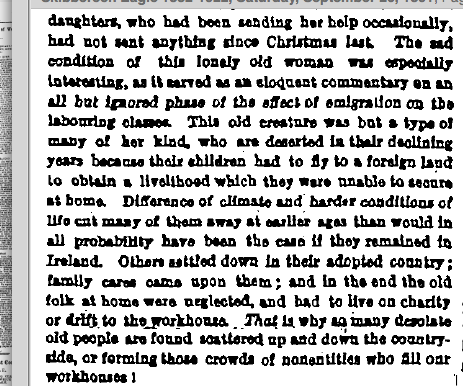
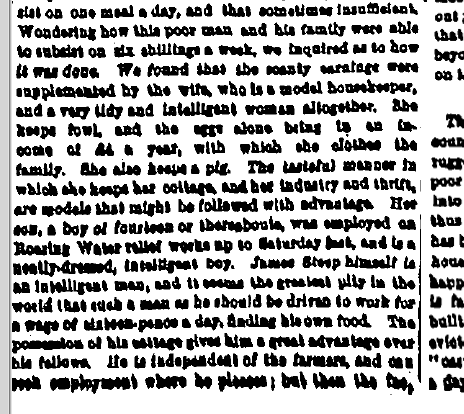
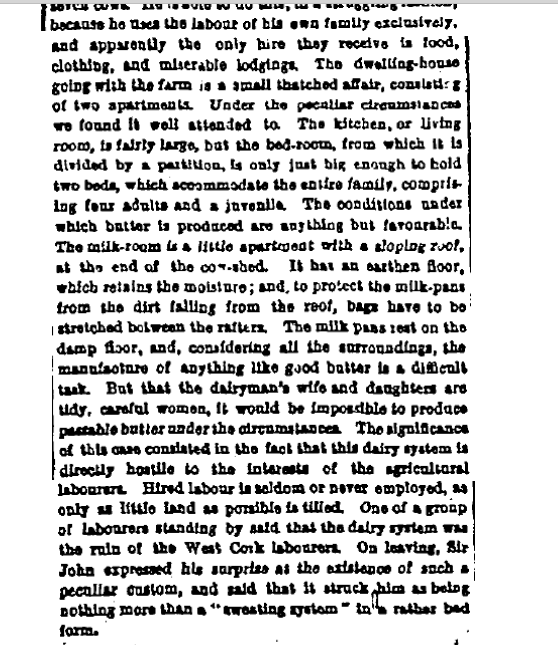
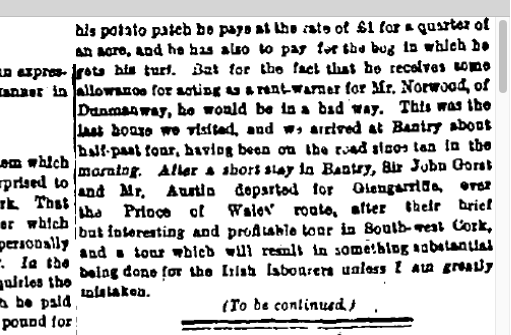
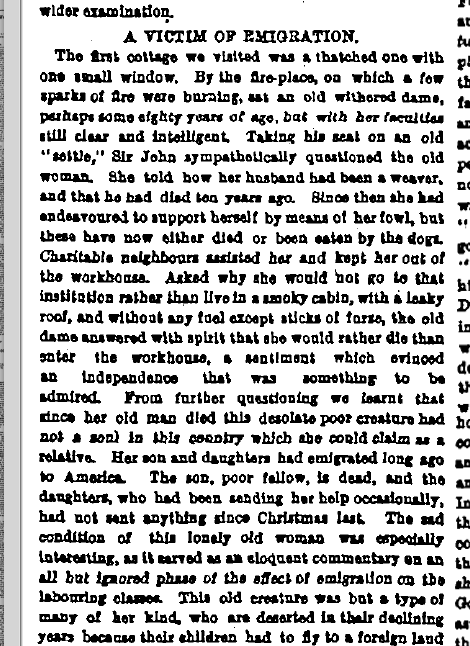
In 1891 Sir John Gorst, Reforming MP, 1891 visited Aughadown and the detailed account in the Southern Star carries description of furze sticks used as fuel:

Comments on use of furze sticks for heating.
.

.

.

,

.

.

.

.

.

.

.

.

.

Generally on Furze from Blog:

welshboy
Gorse/Furze Fuel and feed

Just been reading about the capability of gorse as a fuel or feed for cattle/horses.


Apparently it has half the protein of oats and can be harvested at a two year rotation yielding ” 2000 20lb faggots from an acre” so about 9 tons per acre per year. Cattle and horses love it once processed for them.


Furze can be used as fodder for animals. It was said that an acre of furze could provide enough winter feed for six horses. As a fuel it has a high concentration of oil in its leaves and branches, and so catches fire easily and burns well, giving off a heat almost equal to that of charcoal.


The question is how do you harvest it using modern machines ?
It grows well with us -difficulty keeping it down
http://encyclopedia.jrank.org/FRA_GAE/FURZE_GORSE.html

‘In France,’ to quote Syme and Sowerby, British Botany, 1864, ‘it is used for burning, being cut down every few years, in places where it grows naturally. In Surrey and other counties, it is used largely as fuel, especially by bakers in their ovens and is cultivated for that purpose and cut down every three years. When burned, it yields a quantity of ashes rich in alkali, which are sometimes used for washing, either in the form of a solution or lye, or mixed with clay and made into balls, as a substitute for soap. The ashes form an excellent manure and it is not uncommon where the ground is covered with Furze bushes to burn them down to improve the land and to secure a crop of young shoots, which are readily eaten by cattle. In some parts of England, it is usual to put the Furze bushes into a mill to crush the thorns and then to feed horses and cows with the branches. When finely cut or crushed, sheep will readily eat it.’
welshboy


Just what somebody does
” I tie the branches of gorse in bundles and hang them up for horses. This is an excellent addition to their winter feed and our Welsh Cobs would always leave their hay until they had finished the gorse. It also takes some time for them to eat as they are careful due to the spines; this again is a real advantage in winter and provides them with something to do. They will peel and eat every strip of bark that they can reach

The bundle of peeled sticks (a faggot) which is what you are left with when the horses have finished with it is great firewood.”

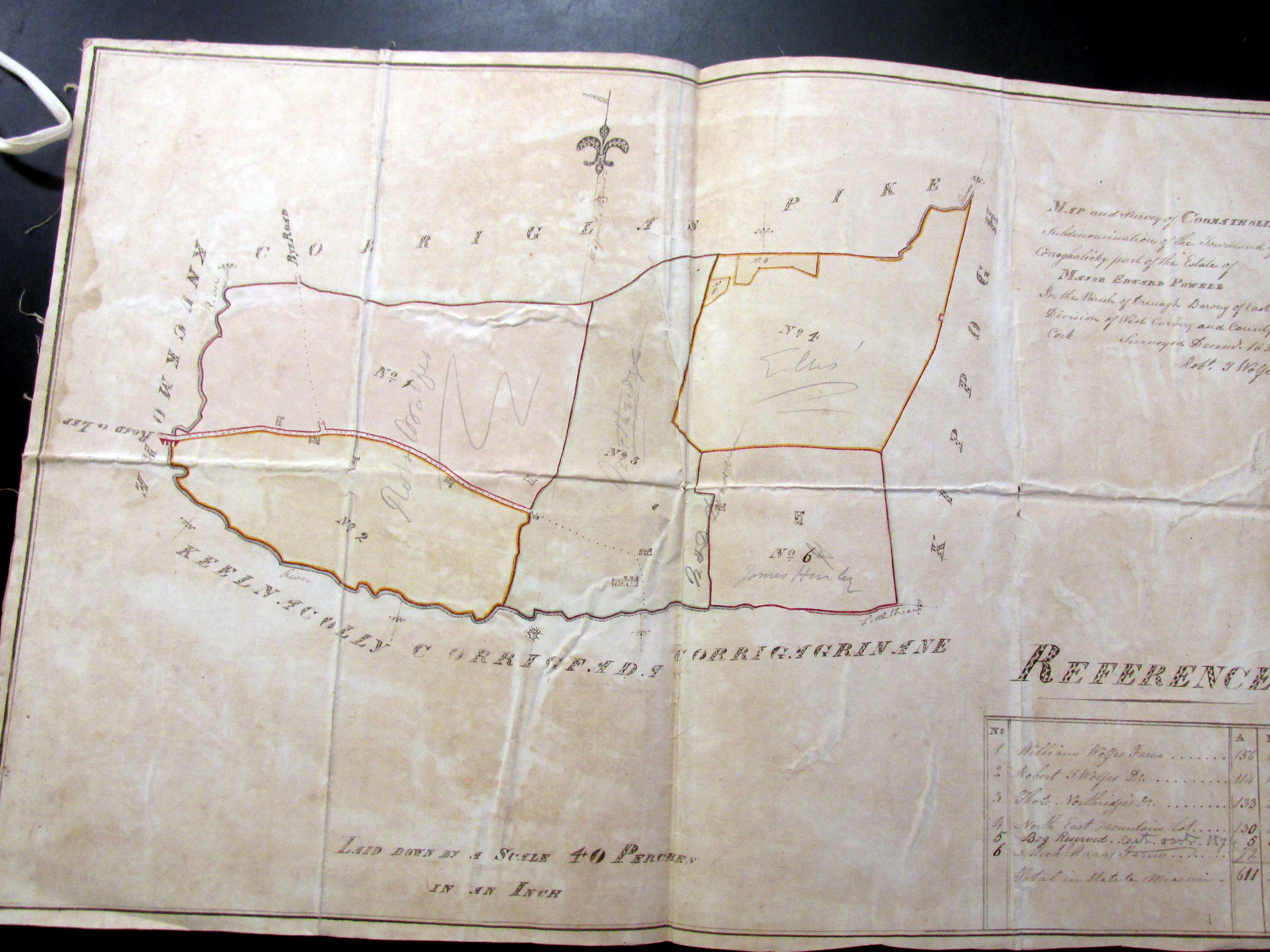
Survey and Map by Robert J Wolfe December 1835, of Estate of Major Edward Powell (Estate of the Late Lieutenant Colonel Richard O’Donovan of the enniskillen Dragoons by his marriage with Miss Powell of Wales) at Drinagh, West Cork showing Major Tenants, Keelnacolly, Corrigfadda, Corrigagrinane, Kippagh, Knockmore, Corriglas Pike mentioned.

14 Sunday Sep 2014

Posted by durrushistory in Uncategorized

≈ 4 Comments


https://www.google.ie/maps/place/Drinagh,+Co.+Cork/@51.6513977,-9.1471506,15z/data=!3m1!4b1!4m2!3m1!1s0x4845aa1a8b511ff3:0x2600c7a819bb5a12

Survey and Map by Robert J Wolfe December 1835, of Estate of Major Edward Powell (Estate of the Late Lieutenant Colonel Richard O’Donovan of the Enniskillen Dragoons by his marriage with Miss Powell of Wales) at Drinagh, West Cork showing Major Tenants, Keelnacolly, Corrigfadda, Corrigagrinane, Kippagh, Knockmore, Corriglas Pike mentioned.

The Powells acquired the O’Donovan estate by the marriage General O’Donovan with Miss Powell from Wales.  They and no children, on his death she succeeded and left the property to her brother.   This caused consternation in the extended O’Donovan family this being part of the ancestral estate in direct line from c the 13th century.

Major Powell at the time also possessed the old O’Donovan Estate at Bawnlahan.

http://landedestates.nuigalway.ie:8080/LandedEstates/jsp/estate-show.jsp?id=2439

1-IMG_4742

2-IMG_4743

3-IMG_4744

1-IMG_4745

2-IMG_4746

3-IMG_4747

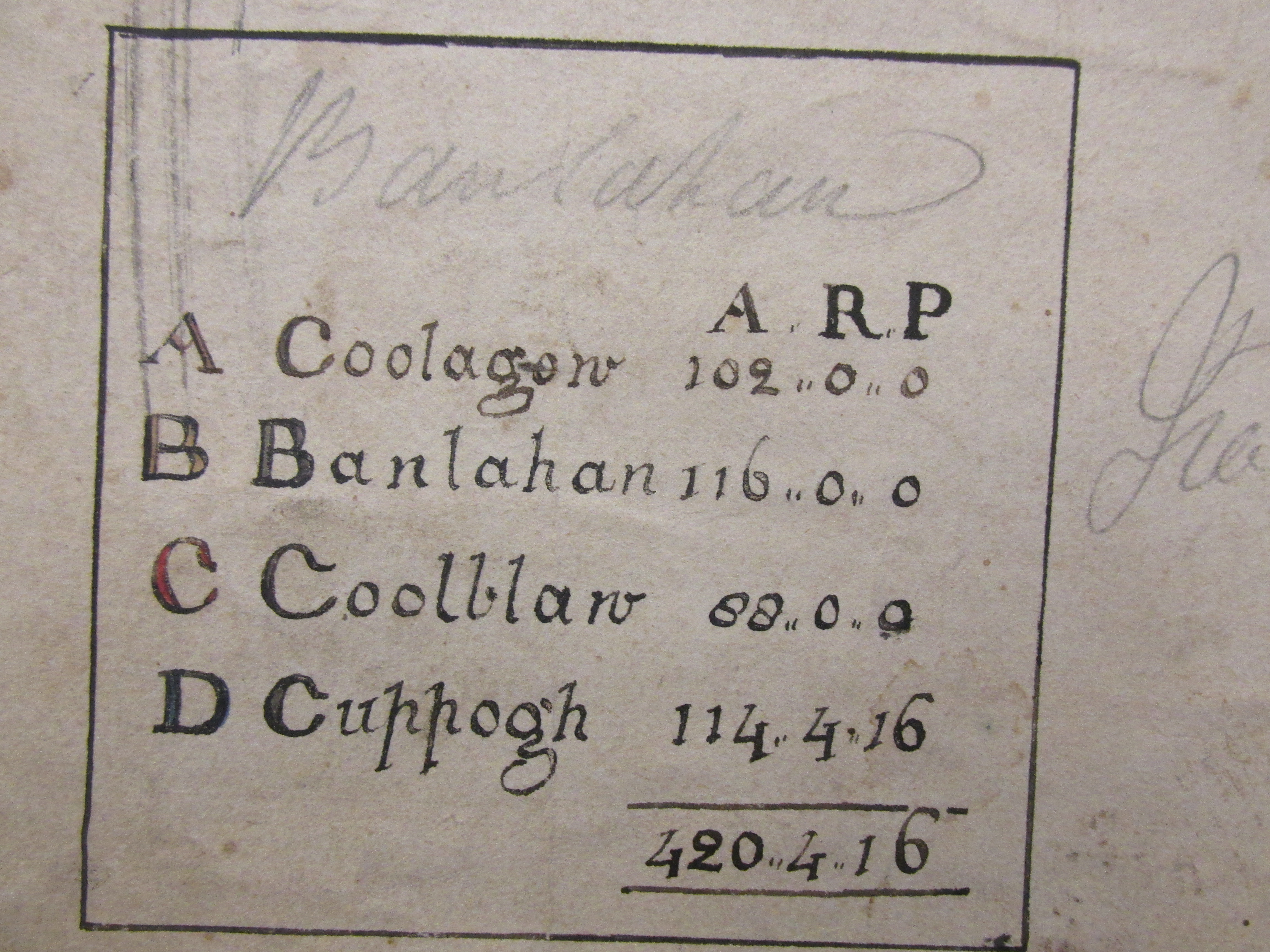
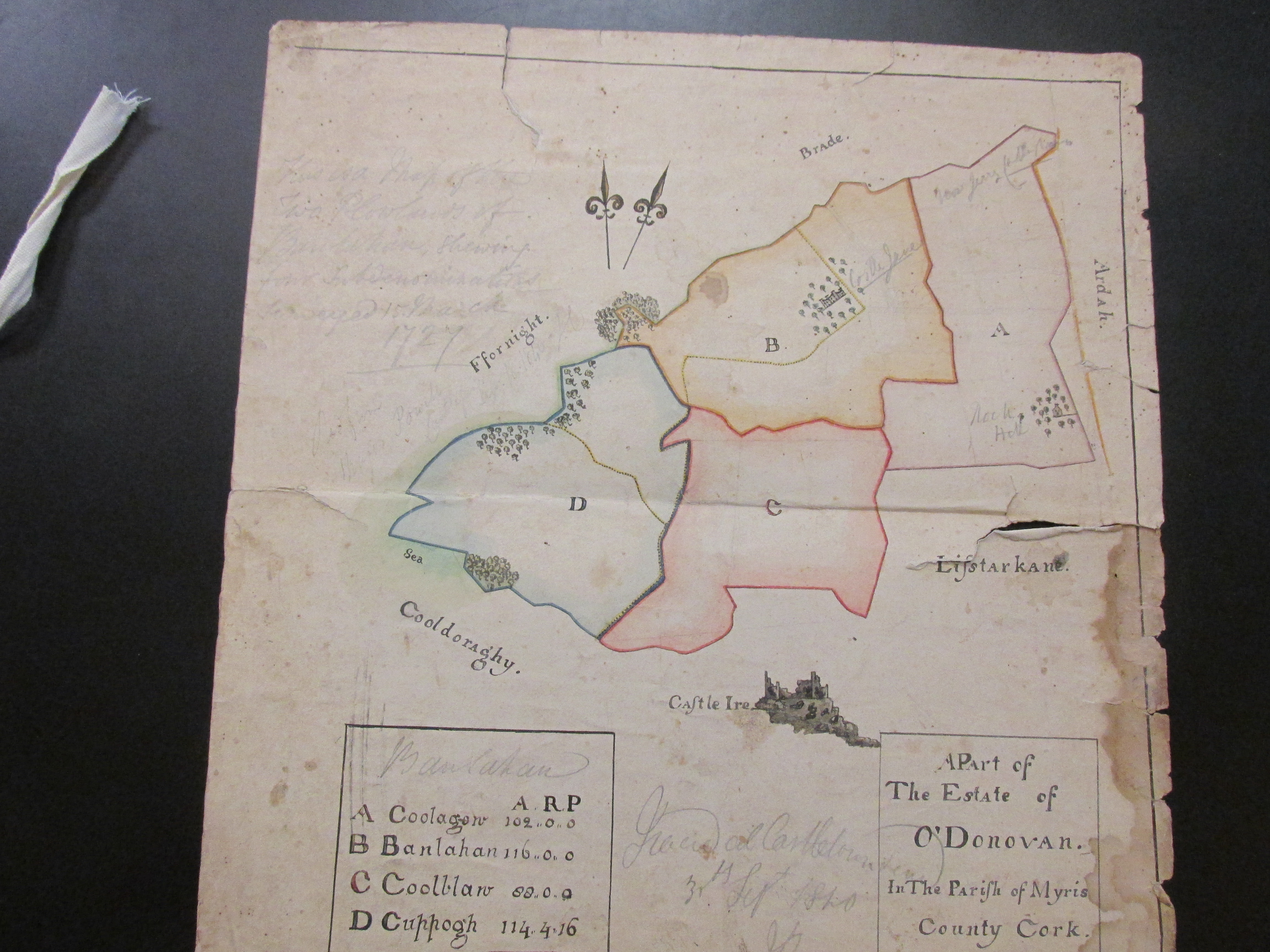
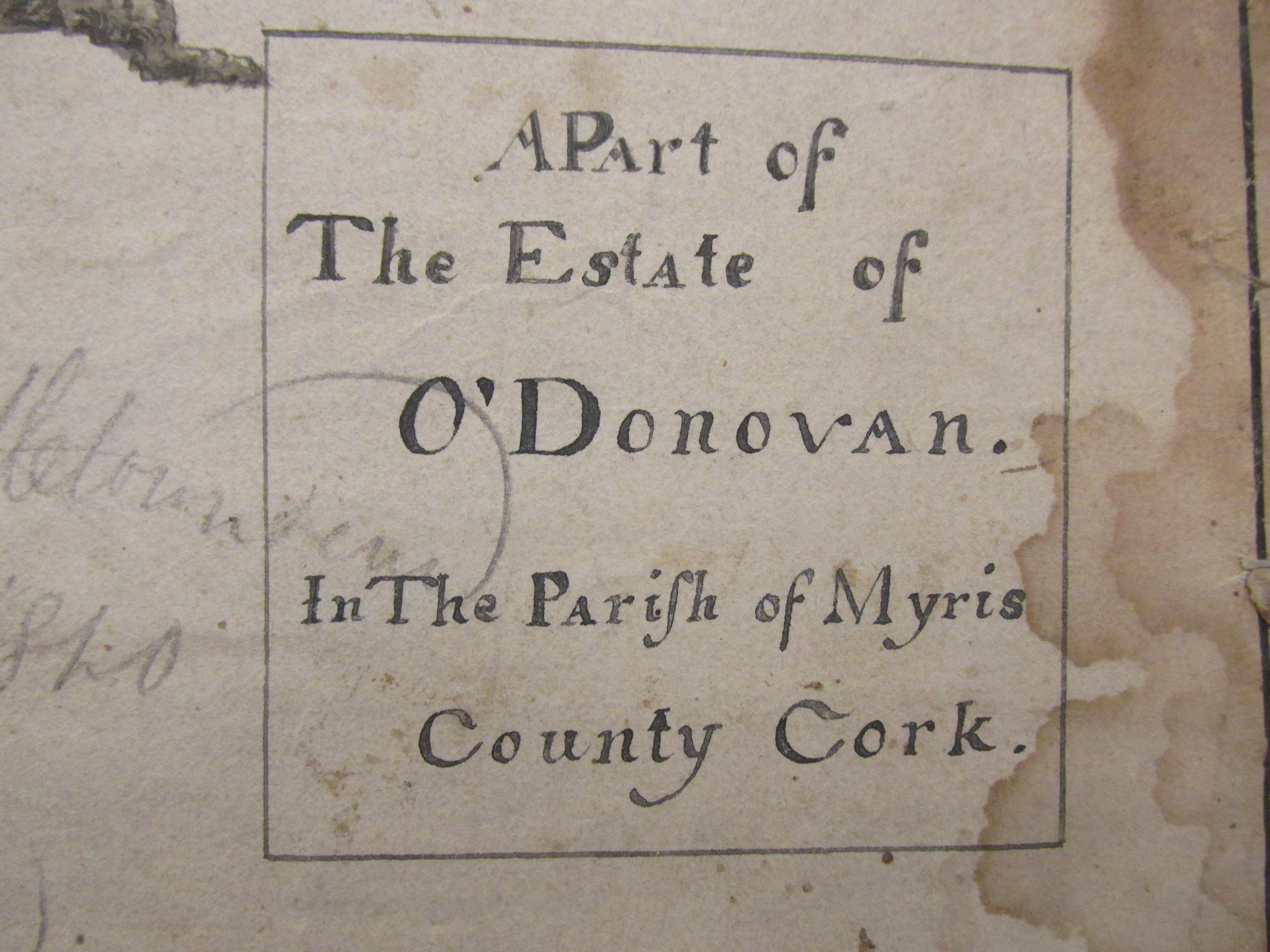
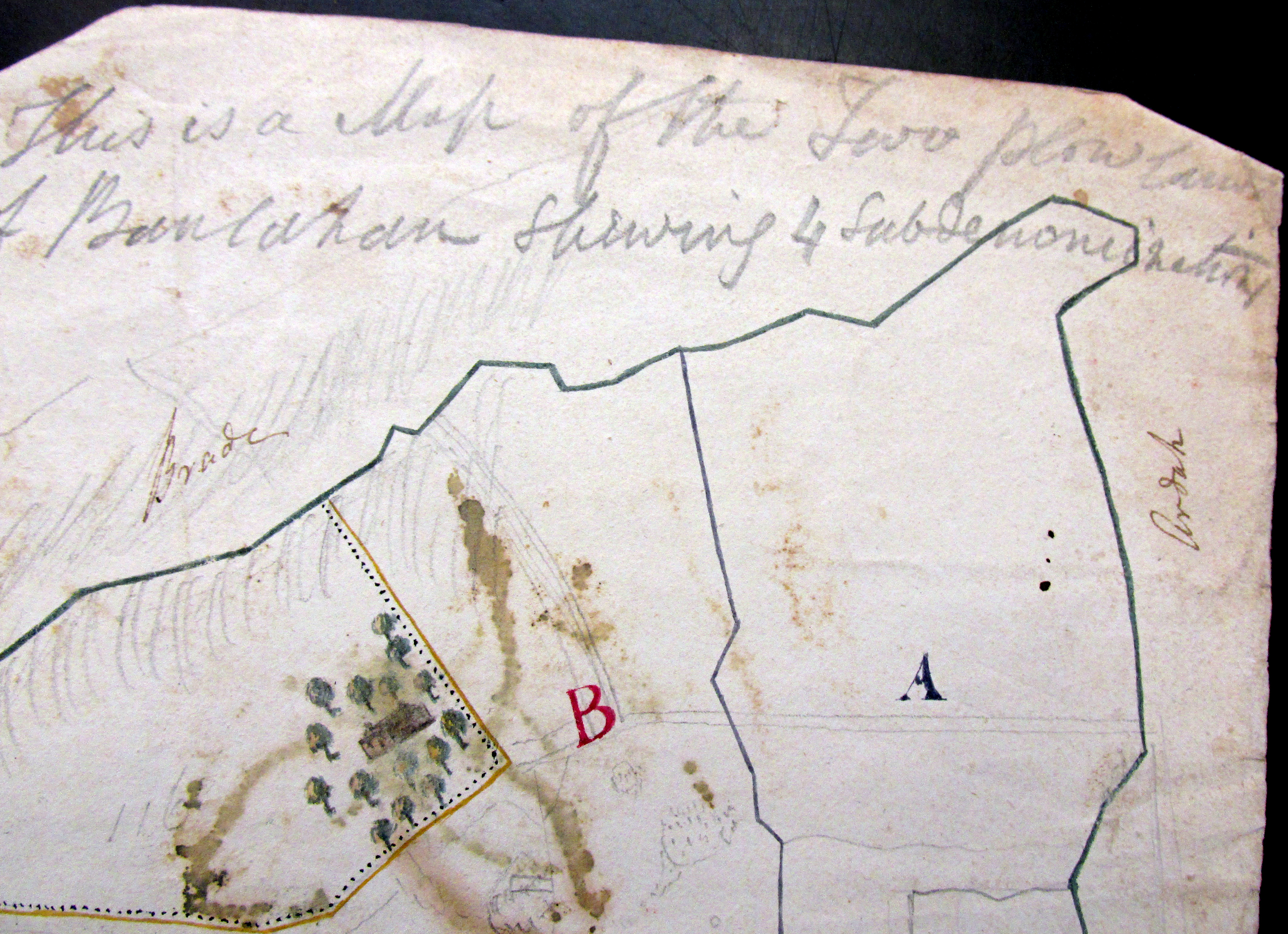
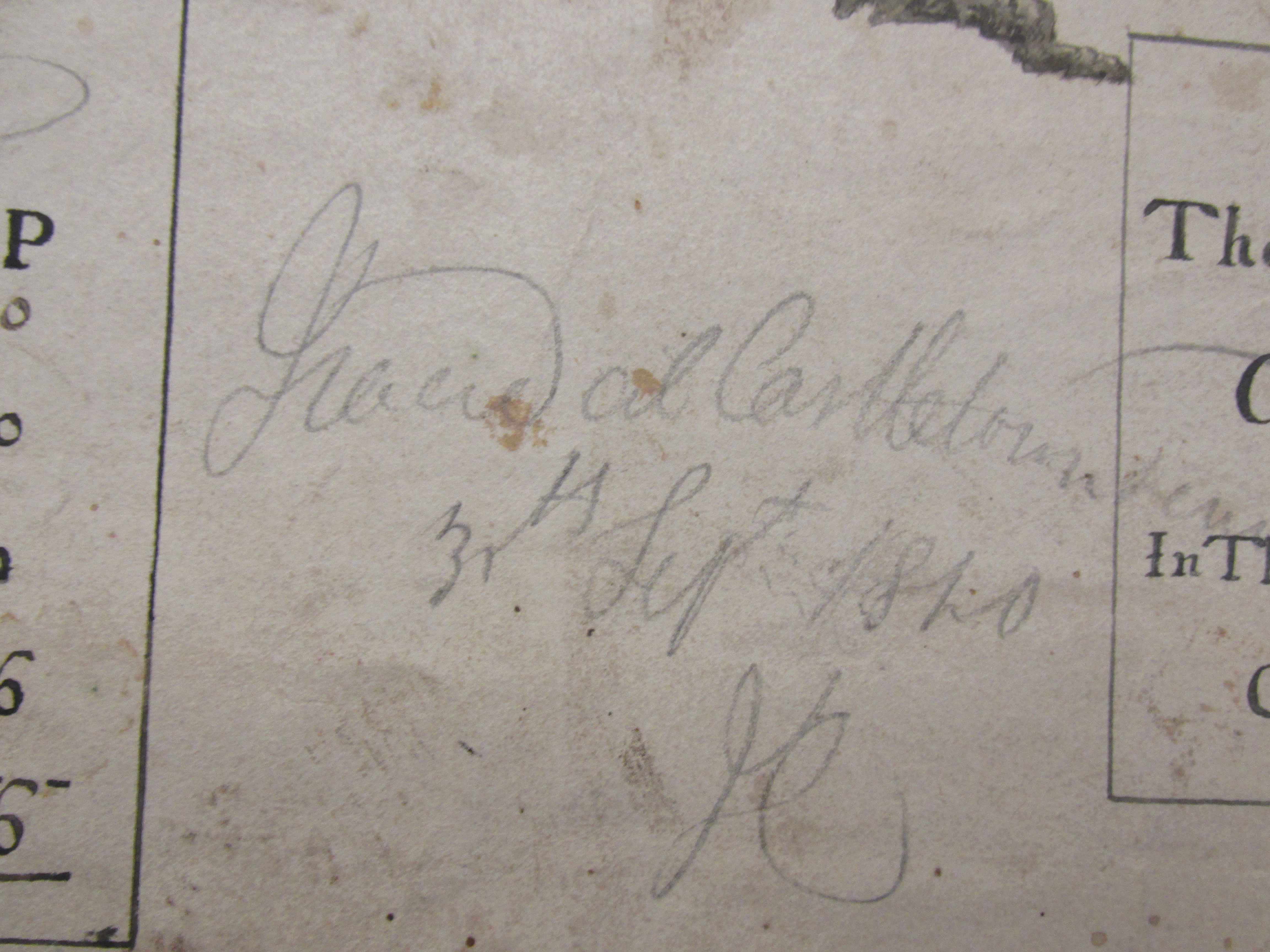
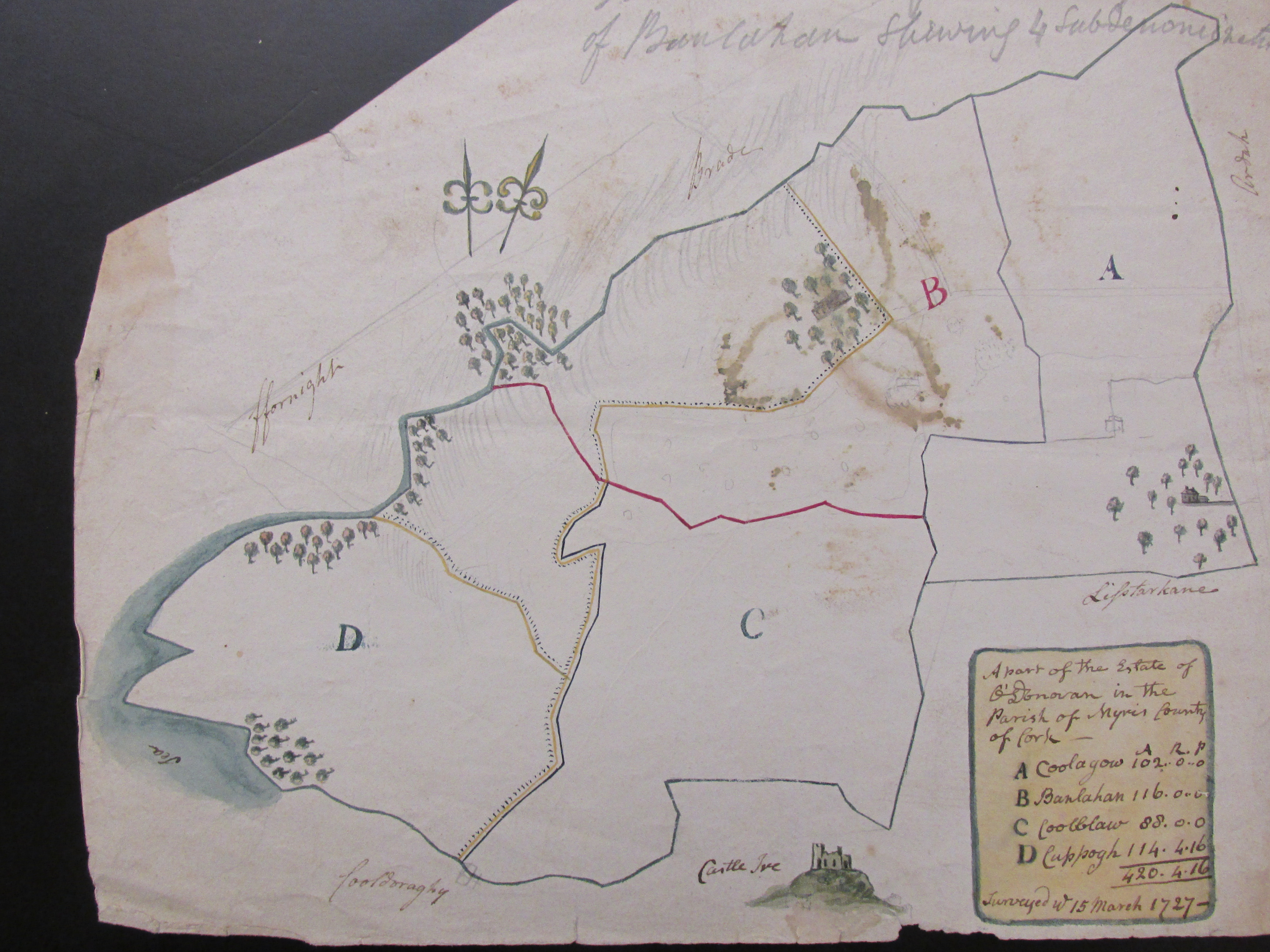
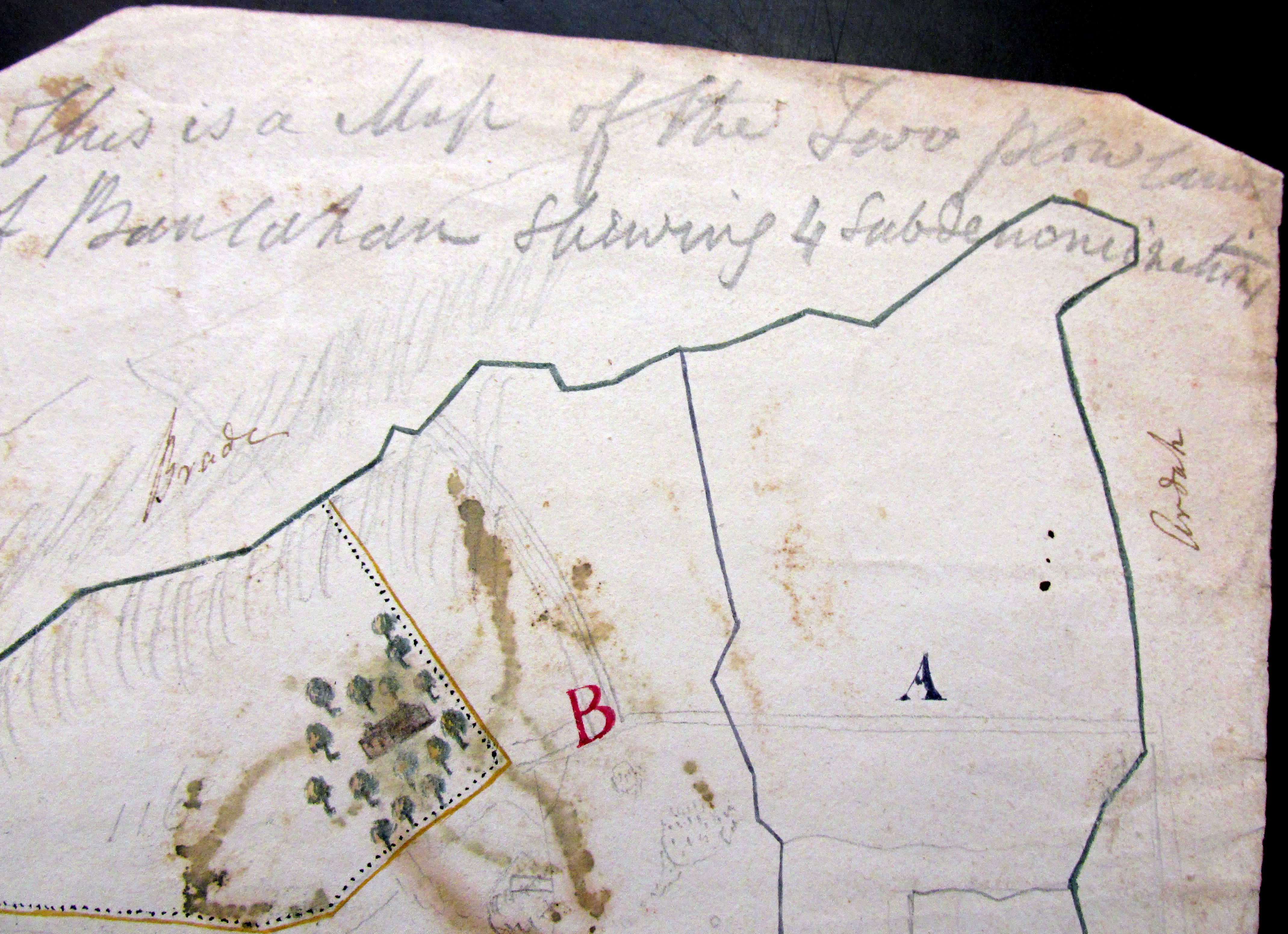
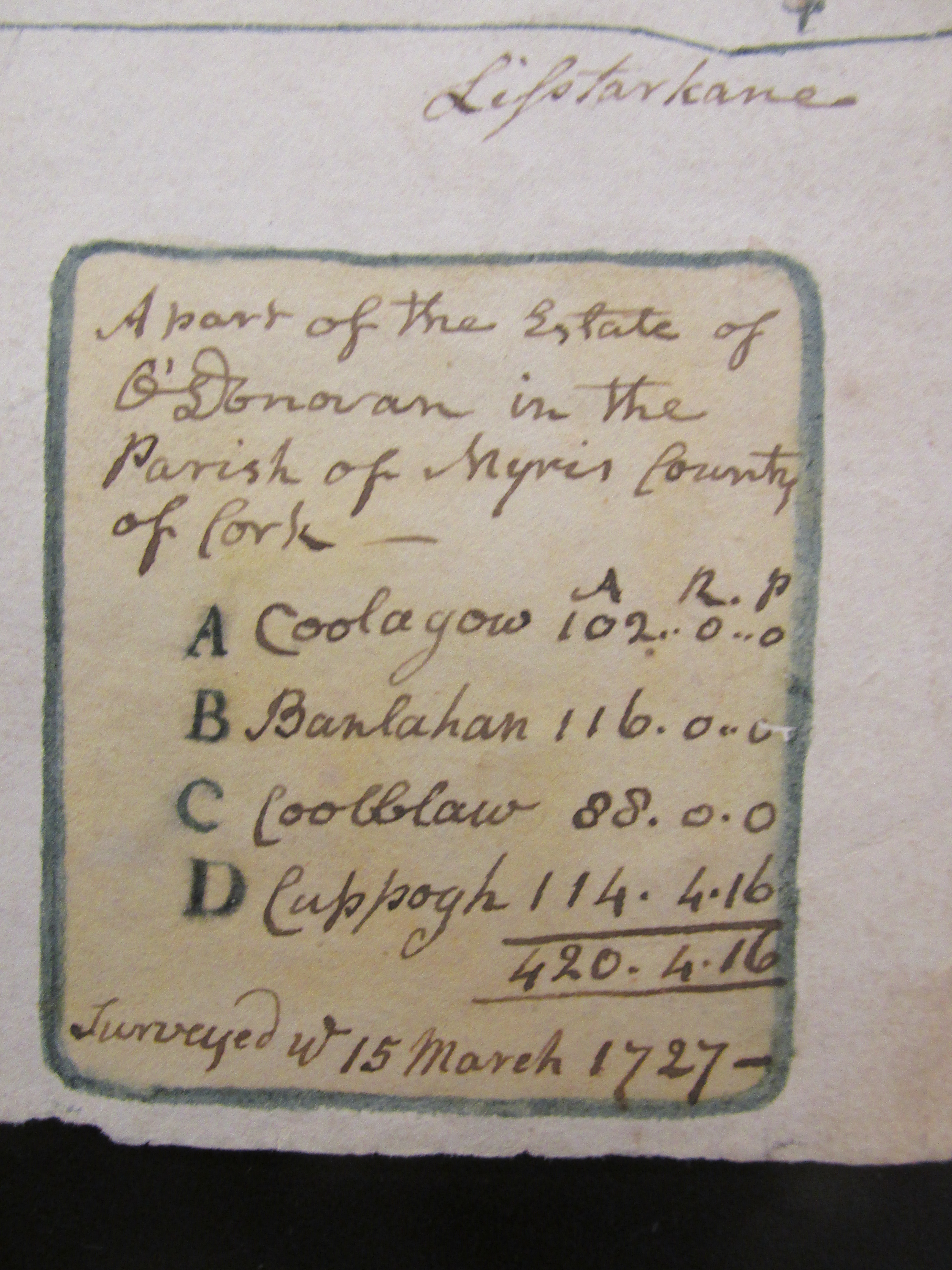
Survey 15th March 1727 of O’Donovan Estate, Bawnlahan, Parish of Myross, West Cork Coolagon, Bawnlahan, Coolblaw, Cuppogh 2 Ploughlands 4 sub denominations Brade, Castle Jane, Ffooldoragh, 1788 deed Minor children of Daniel O’Donovan and Jane Becher she was between 14 and 16 when she married it was his second in his 60s.

14 Sunday Sep 2014

Posted by durrushistory in Uncategorized

≈ 2 Comments


https://www.google.ie/maps/place/Myross+Island,+Co.+Cork/@51.5284991,-9.1458248,15z/data=!3m1!4b1!4m5!3m4!1s0x4845ae6564afd551:0x4a5b47a590409925!8m2!3d51.5285005!4d-9.1370684?hl=en

Later deed minor children of Daniel O’Donovan and Jane Becher she was between 14 and 16 when she married it was his second in his 60s.


Screen Shot 2016-06-29 at 19.21.02

Survey 15th March 1727 of O’Donovan Estate, Bawnlahan, Parish of Myross, West Cork Coolagon, Bawnlahan, Coolblaw, Cuppogh 2 Ploughlands 4 sub denominations Brade, Castle Jane, Ffooldoragh, 1788 deed Minor children of Daniel O’Donovan and Jane Becher she was between 14 and 16 when she married it was his second in his 60s.

.
1-IMG_4733

1-IMG_4739

2-IMG_4740

6-IMG_4738

5-IMG_4737

3-IMG_4735

1-IMG_4732

4-IMG_4736

2-IMG_4734

2-IMG_4734

1-IMG_4732

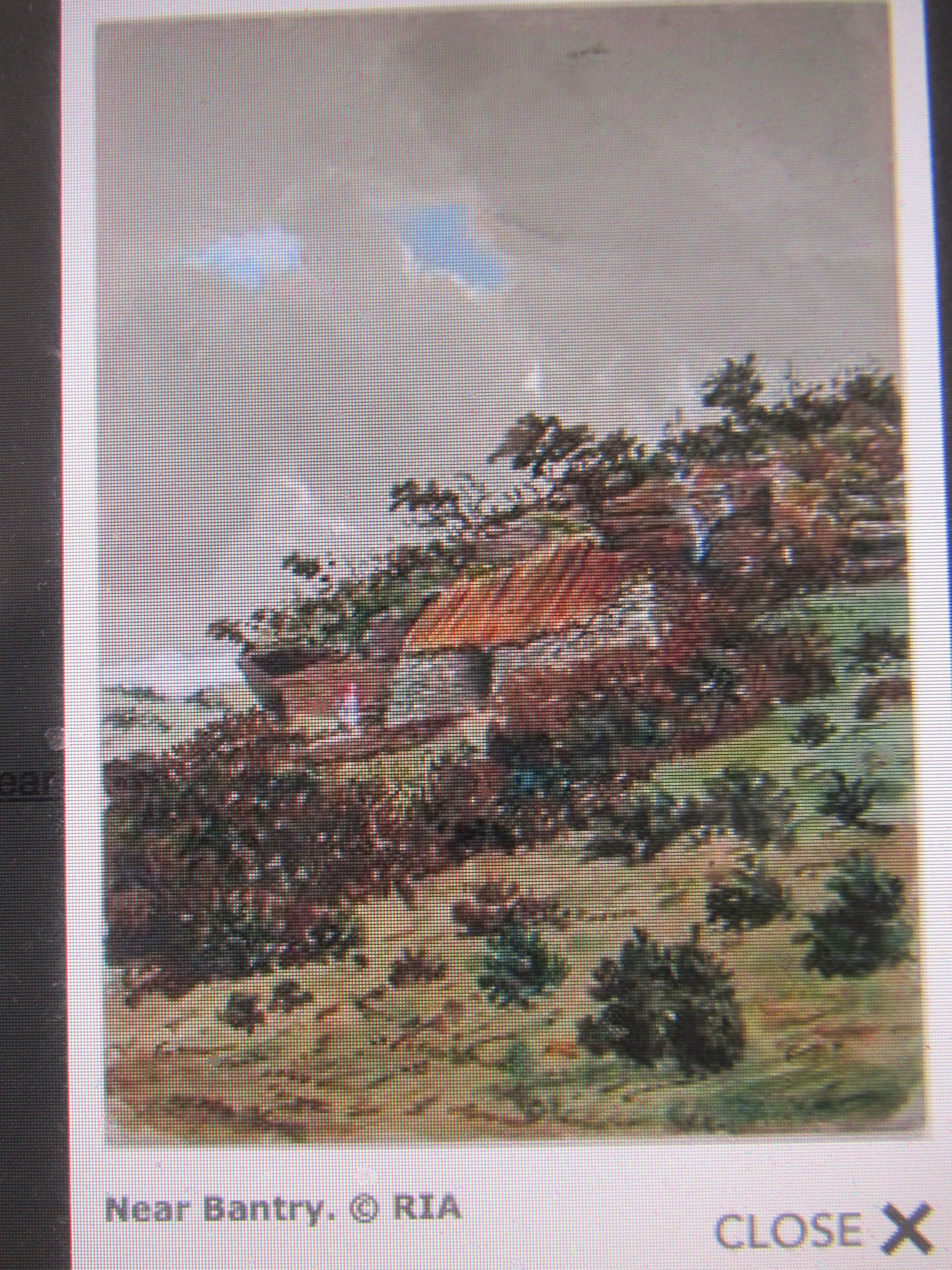
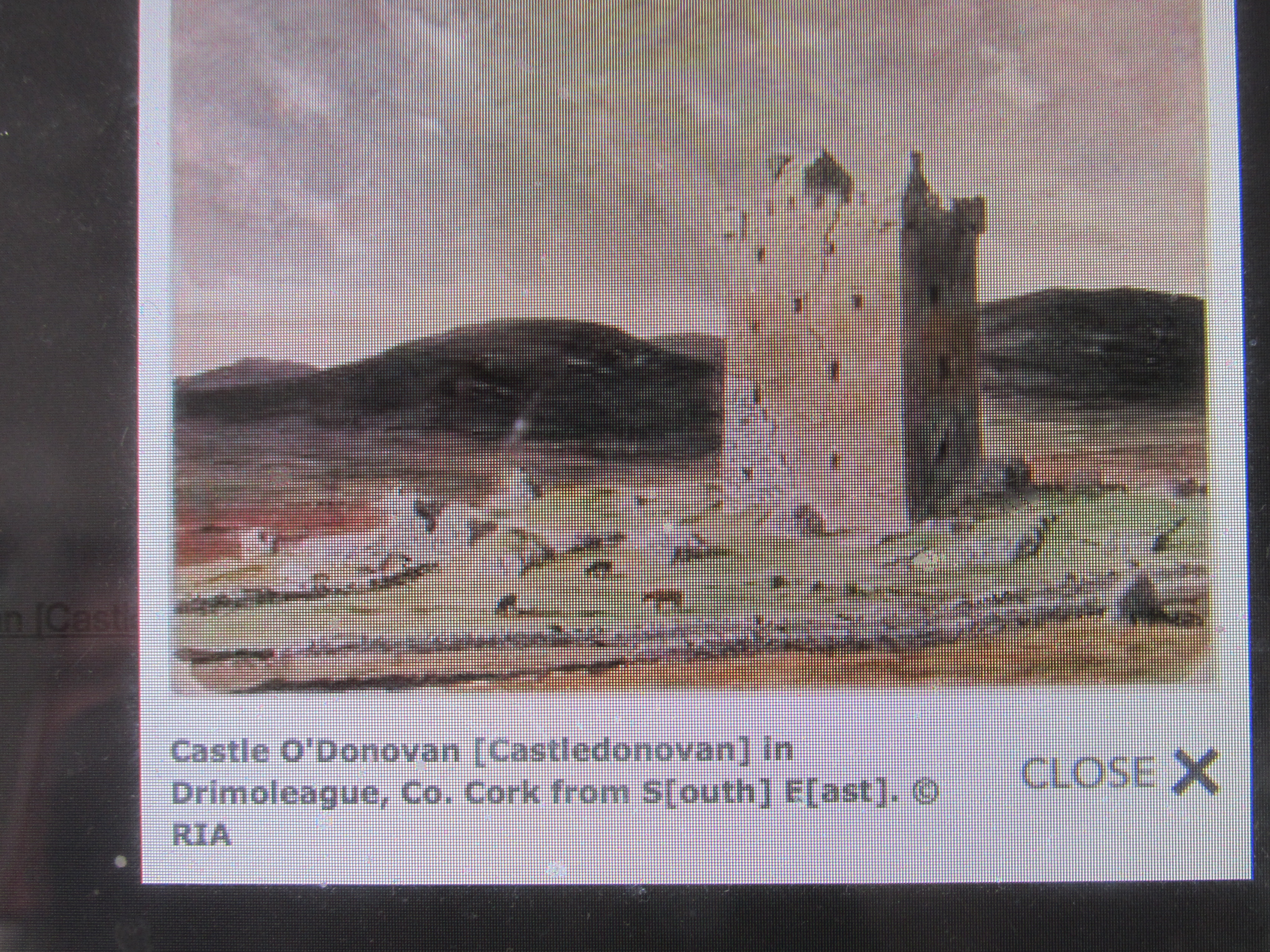
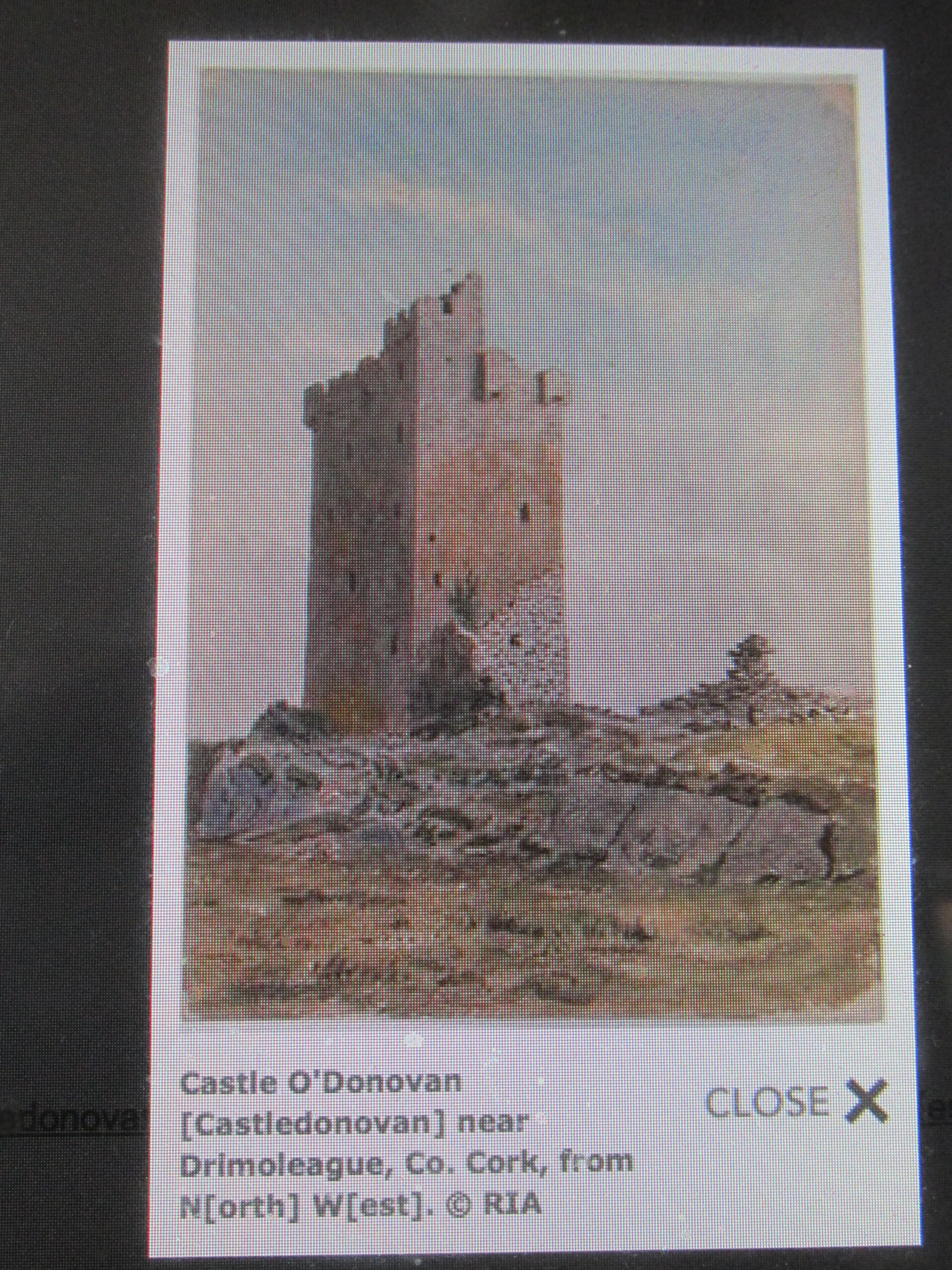
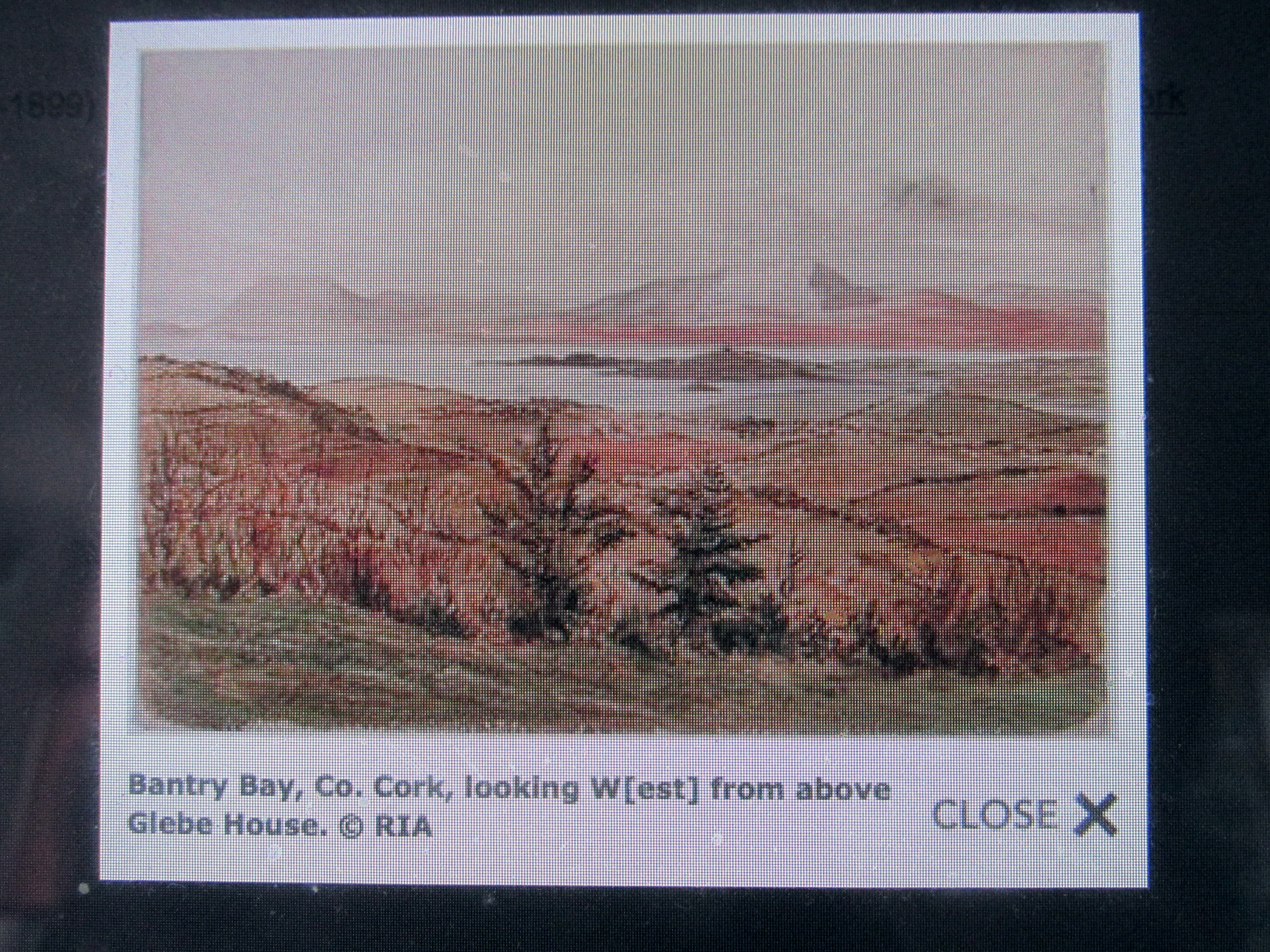
Views of Bantry and Castle Donovan West Cork c 1840 by Sir Henry Edward Leigh Dryden (1816-1899).
14 Sunday Sep 2014

Posted by durrushistory in Uncategorized

≈ Leave a comment


Views of Bantry and Castle Donovan West Cork c 1840 by Sir Henry Edward Leigh Dryden (1816-1899).

http://www.bbc.co.uk/arts/yourpaintings/paintings/sir-henry-edward-leigh-dryden-18181899-4th-bt-of-canons-a171188

1-IMG_5571

2-IMG_5572

4-IMG_5574

3-IMG_5573

1-IMG_5585

2-IMG_5586

3-IMG_5587

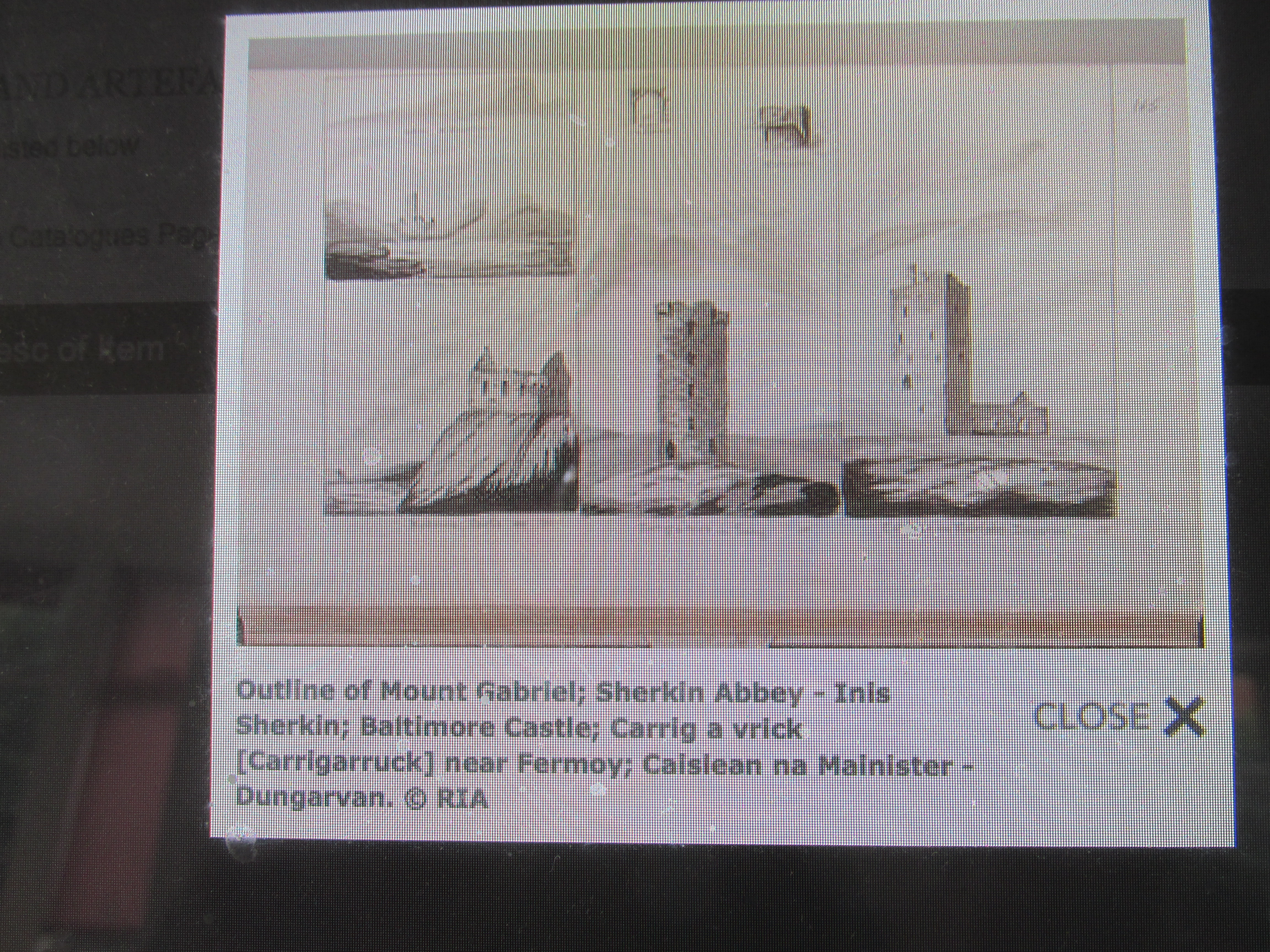
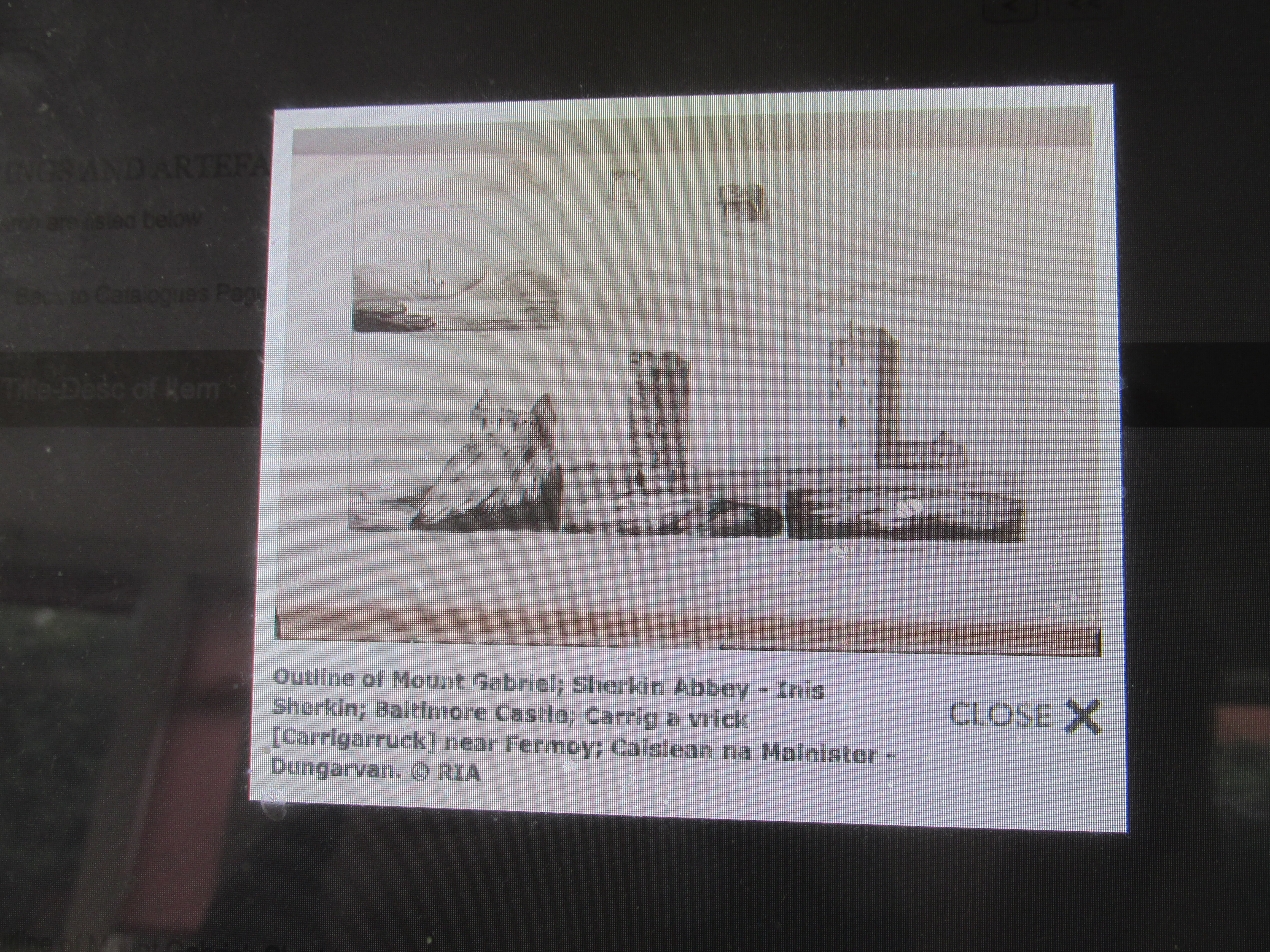
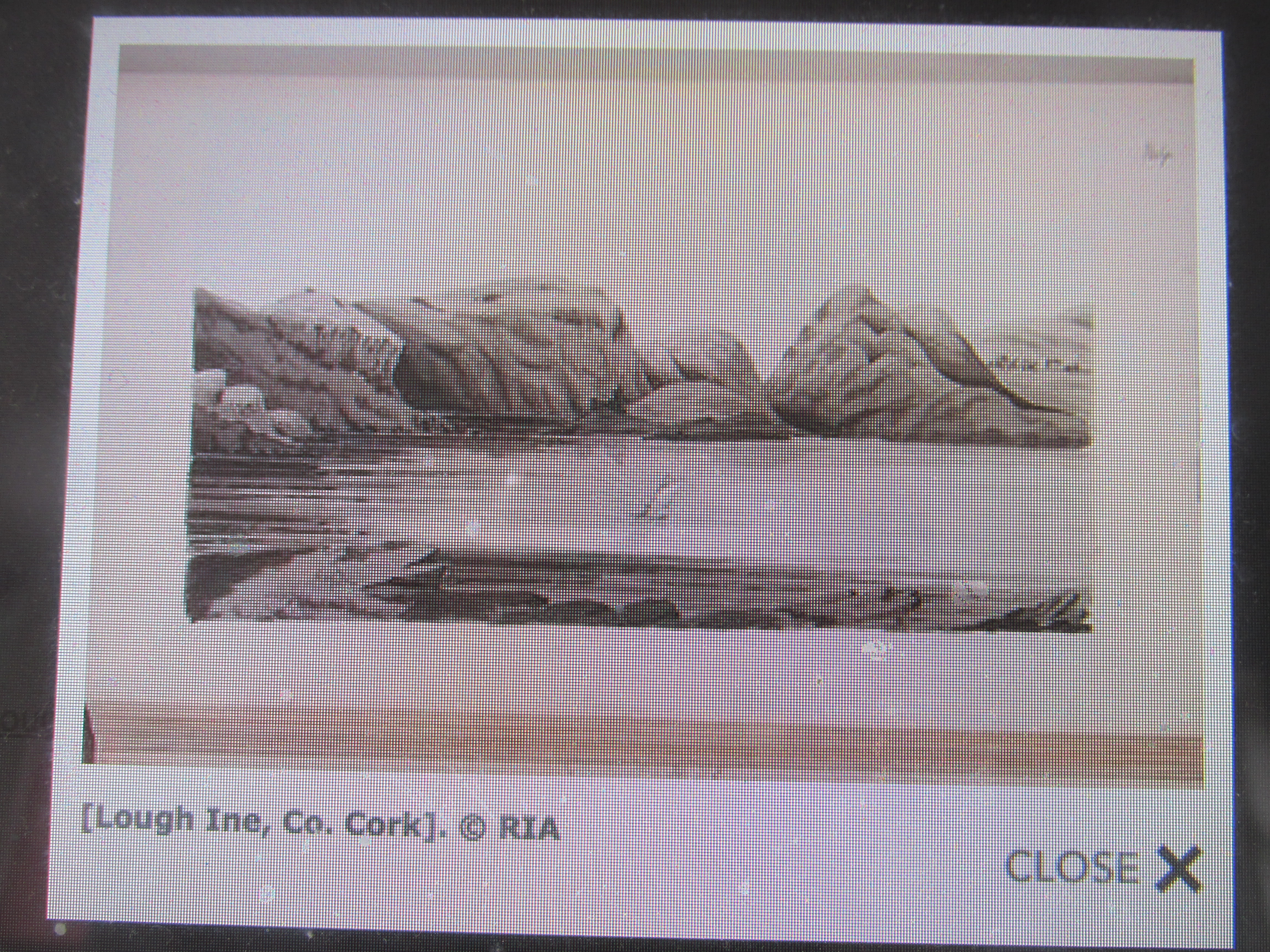
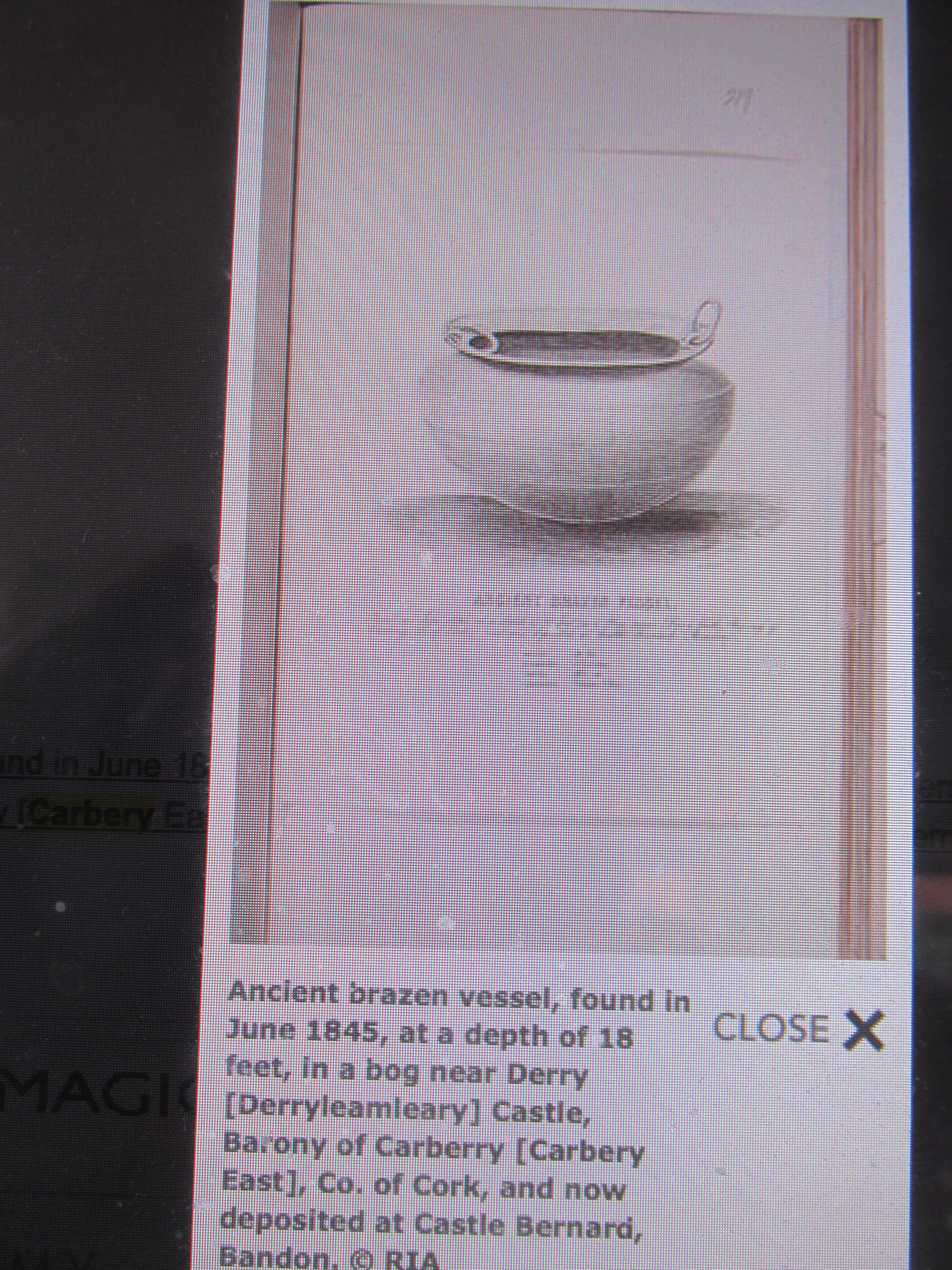
Sketches by Cork Antiquarian, John Windle (1801-1865), Ross Cathedral and Old Church, Mount Gabriel, Sherkin Island, Baltimore Castle, Ancient Brazen Vessel found in June 1845 and deposited in Castle Bernard (burnt down 1920), Lough Ine, Coppinger’s Court,

14 Sunday Sep 2014

Posted by durrushistory in Uncategorized

≈ 2 Comments


Sketches by Cork Antiquarian, John Windle (1801-1865), Ross Cathedral and Old Church, Mount Gabriel, Sherkin Island, Baltimore Castle, Ancient Brazen Vessel found in June 1845 and deposited in Castle Bernard (burnt down 1920), Lough Ine, Coppinger’s Court,

John Windle:

http://www.ricorso.net/rx/az-data/authors/w/Windele_J/life.htm

Article in Dublin Penny Journal on journey from Drimoleague to Durrus.

https://durrushistory.wordpress.com/2013/10/28/rides-through-the-county-of-cork-castle-donovan-dublin-penny-journal-11th-november-1834/

Courtesy RIA Digital Library,
http://cats.ria.ie/ics-wpd/exec/icswppro.dll?AC=PREV_BLOCK&XC=/ics-wpd/exec/icswppro.dll&BU=http%3A%2F%2Fcats.ria.ie%2Fprintssimple.html&TN=Prints&SN=AUTO28489&SE=535&RN=105&MR=35&TR=0&TX=1000&ES=0&CS=1&XP=&RF=Web+Display+-+List&EF=&DF=Web+Display+-+Full&RL=1&EL=1&DL=1&NP=1&ID=&MF=&MQ=&TI=0&DT=&ST=0&IR=0&NR=0&NB=3&SV=0&SS=0&BG=&FG=&QS=printssimple-out&OEX=ISO-8859-1&OEH=ISO-8859-1

1-IMG_5574

6-IMG_5582

2-IMG_5578

5-IMG_5581

3-IMG_5579

1-IMG_5577

4-IMG_5580

1-IMG_5583

2-IMG_5584

← Older posts
Newer posts →

Blog Stats

  • 844,143 hits

16th Regiment of Foot assisted female emigration australia ballyclough bantry bay caithness legion cavan regiment of militia cheshire fencibles coppinger's court inbhear na mbearc Irish words in use 1930s lord lansdowne's regiment mallow melbourne ned kelly new brunswick O'Dalys Bardic Family. o'regan Personal Memoirs rosscarbery schull sir redmond barry sir walter coppinger st. johns sydney Townlands treaty of limerick Uncategorized university of Melbourne victoria

16th Regiment of Foot assisted female emigration australia ballyclough bantry bay caithness legion cavan regiment of militia cheshire fencibles coppinger's court inbhear na mbearc Irish words in use 1930s lord lansdowne's regiment mallow melbourne ned kelly new brunswick O'Dalys Bardic Family. o'regan Personal Memoirs rosscarbery schull sir redmond barry sir walter coppinger st. johns sydney Townlands treaty of limerick Uncategorized university of Melbourne victoria
Follow West Cork History on WordPress.com

Enter your email address to follow this blog and receive notifications of new posts by email.

Join 518 other subscribers

Feedjit

  • durrushistory's avatar durrushistory

Archives

  • January 2026
  • December 2025
  • November 2025
  • October 2025
  • September 2025
  • August 2025
  • July 2025
  • June 2025
  • May 2025
  • April 2025
  • March 2025
  • February 2025
  • January 2025
  • December 2024
  • November 2024
  • October 2024
  • September 2024
  • August 2024
  • July 2024
  • June 2024
  • May 2024
  • April 2024
  • March 2024
  • February 2024
  • January 2024
  • December 2023
  • November 2023
  • October 2023
  • September 2023
  • August 2023
  • July 2023
  • June 2023
  • May 2023
  • April 2023
  • March 2023
  • February 2023
  • January 2023
  • December 2022
  • November 2022
  • October 2022
  • September 2022
  • August 2022
  • July 2022
  • June 2022
  • May 2022
  • April 2022
  • March 2022
  • February 2022
  • January 2022
  • December 2021
  • November 2021
  • October 2021
  • September 2021
  • August 2021
  • July 2021
  • June 2021
  • May 2021
  • April 2021
  • March 2021
  • February 2021
  • January 2021
  • December 2020
  • November 2020
  • October 2020
  • September 2020
  • August 2020
  • July 2020
  • June 2020
  • May 2020
  • April 2020
  • March 2020
  • February 2020
  • January 2020
  • December 2019
  • November 2019
  • October 2019
  • September 2019
  • August 2019
  • July 2019
  • June 2019
  • May 2019
  • April 2019
  • March 2019
  • February 2019
  • January 2019
  • December 2018
  • November 2018
  • October 2018
  • September 2018
  • August 2018
  • July 2018
  • June 2018
  • May 2018
  • April 2018
  • March 2018
  • February 2018
  • January 2018
  • December 2017
  • November 2017
  • October 2017
  • September 2017
  • August 2017
  • July 2017
  • June 2017
  • May 2017
  • April 2017
  • March 2017
  • February 2017
  • January 2017
  • December 2016
  • November 2016
  • October 2016
  • September 2016
  • August 2016
  • July 2016
  • June 2016
  • May 2016
  • April 2016
  • March 2016
  • February 2016
  • January 2016
  • December 2015
  • November 2015
  • October 2015
  • September 2015
  • August 2015
  • July 2015
  • June 2015
  • May 2015
  • April 2015
  • March 2015
  • February 2015
  • January 2015
  • December 2014
  • November 2014
  • October 2014
  • September 2014
  • August 2014
  • July 2014
  • June 2014
  • May 2014
  • April 2014
  • March 2014
  • February 2014
  • January 2014
  • December 2013
  • November 2013
  • October 2013
  • September 2013
  • August 2013
  • July 2013
  • June 2013
  • May 2013
  • April 2013
  • March 2013
  • February 2013
  • January 2013
  • November 2012
  • October 2012
  • September 2012
  • August 2012
  • July 2012
  • June 2012
  • May 2012
  • April 2012
  • March 2012
  • February 2012
  • January 2012
  • December 2011
  • November 2011
  • October 2011

Blog at WordPress.com.

  • Subscribe Subscribed
    • West Cork History
    • Join 518 other subscribers
    • Already have a WordPress.com account? Log in now.
    • West Cork History
    • Subscribe Subscribed
    • Sign up
    • Log in
    • Report this content
    • View site in Reader
    • Manage subscriptions
    • Collapse this bar
 

Loading Comments...