Magourney
22 Friday Aug 2014
Posted in Uncategorized
22 Friday Aug 2014
Posted in Uncategorized
22 Friday Aug 2014
Posted in Uncategorized
22 Friday Aug 2014
Posted in Uncategorized
FROM CORK TO SOUTH AMERICA, MARRIAGE IN BAGOTA OF GENERAL O’LEARY SON OF JEREMIAH O’LEARY, ESQ., BUTTER MERCHANT, CORK, GRANDFATHER FLORENCE O’LEARY, DUNMANWAY, TO SOLEDAD SOUBLETTE NIECE TO PRESIDENT BOLIVAR. LATER DIPLOMAT IN EUROPE AND BRITISH CHARGE’ DE’AFFAIRS. PRESENT COLLECTION OF PLANTS ANIMALS TO UNIVERSITY COLLEGE CORK.
They went on to have 9 children. He was told after General Bolivar’s death to burn his papers but did not so so and spent his life organising them into a multi volume publication.
From Cork Constitution, 26th June 1830, complied by Mr. McDonnell and in Cork and Present.
There was a plaque to General O’ Leary in a property in Barrack Street, Cork. The re erection of the plaque is on the Council’s commemoration committee agenda plus there is a new bust to O’Leary in Fitzgerald’s Park. /p>
22 Friday Aug 2014
Posted in Uncategorized
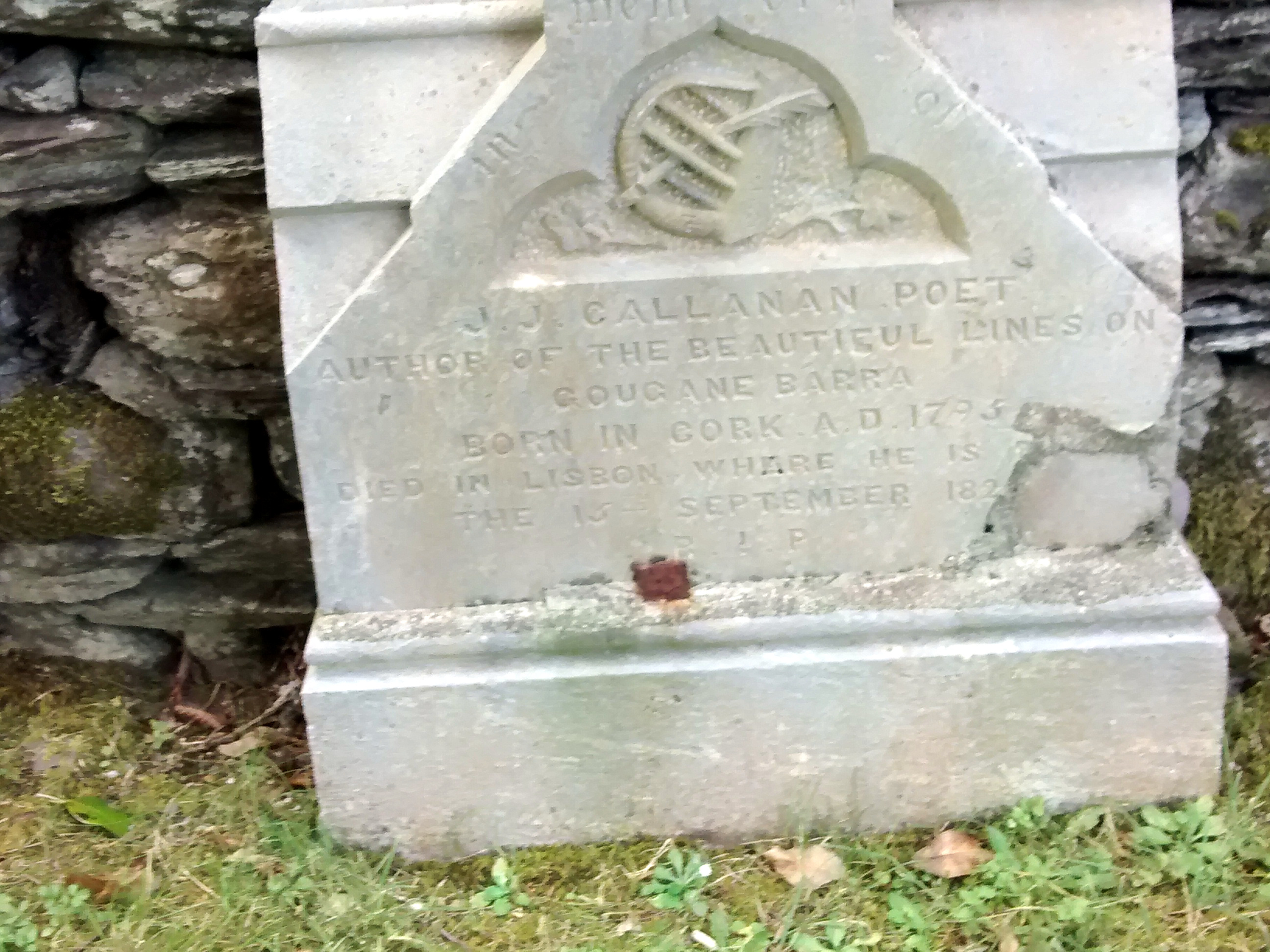
JJ James (Jeremiah) Joseph Callanan, 1786 died Lisbon 1829, Cork Poet bridging Gaelic Ireland with Irish Literature in English, Aonghus Ó Dalaigh, poems.
The Trinity Alumni records record him as Pensioner admitted 6th July 1801, aged 15, Roman Catholic, son of John Physician educated Mr. Lee Vernon 1805 see Allibone.
Presumably a brother slightly different spelling ‘Callinan’ Thomas educated Mr. Barrington admitted 5th July 1802.
Walker’s magazine records a marriage in November 1779 between John Callanan MD and Miss Cooper, Barry’s Court, daughter of William. It is possible that Cooper is a version of Coppinger and might account for his schooling in Cobh.
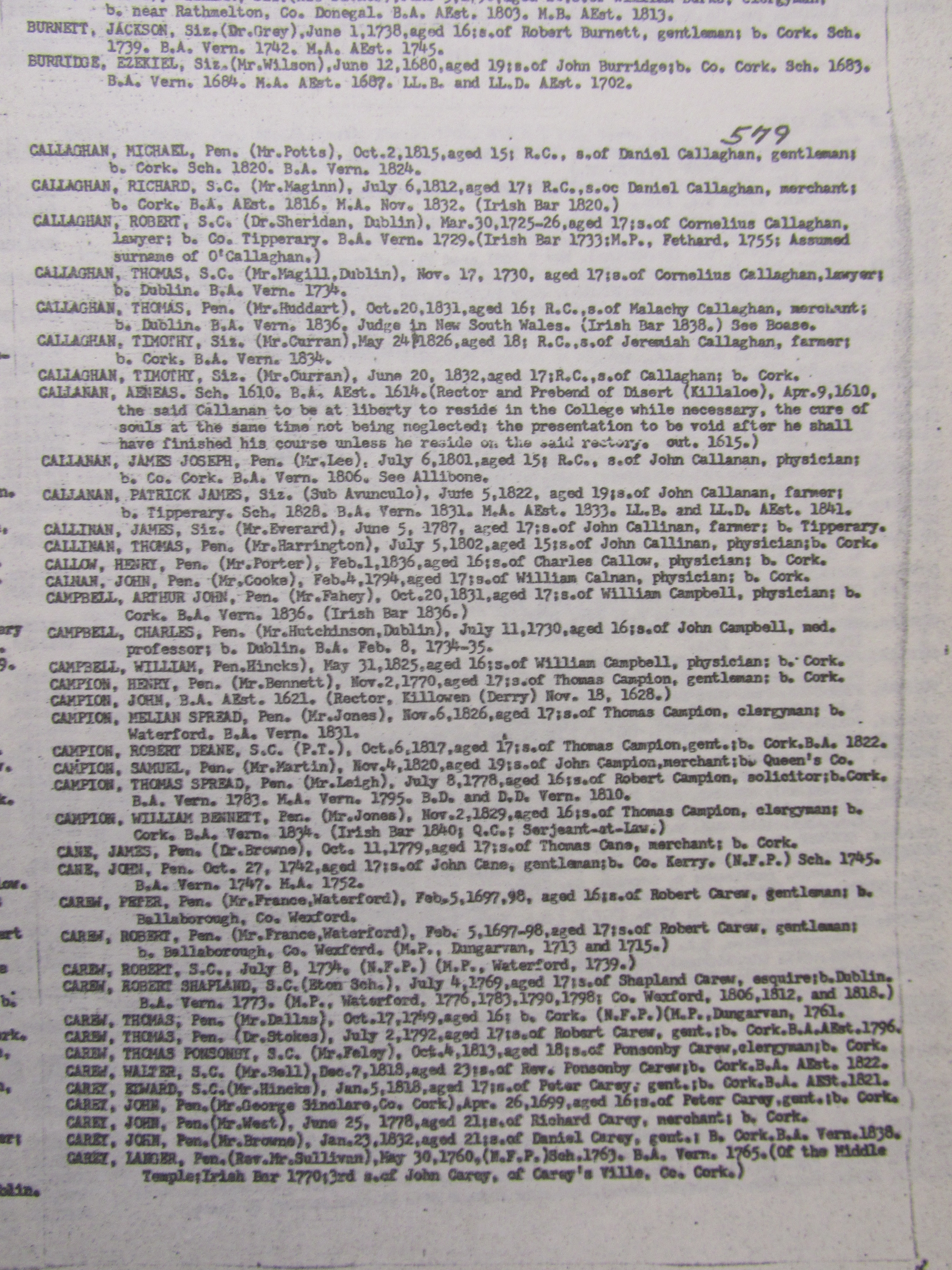
From Dr. Casey collection.
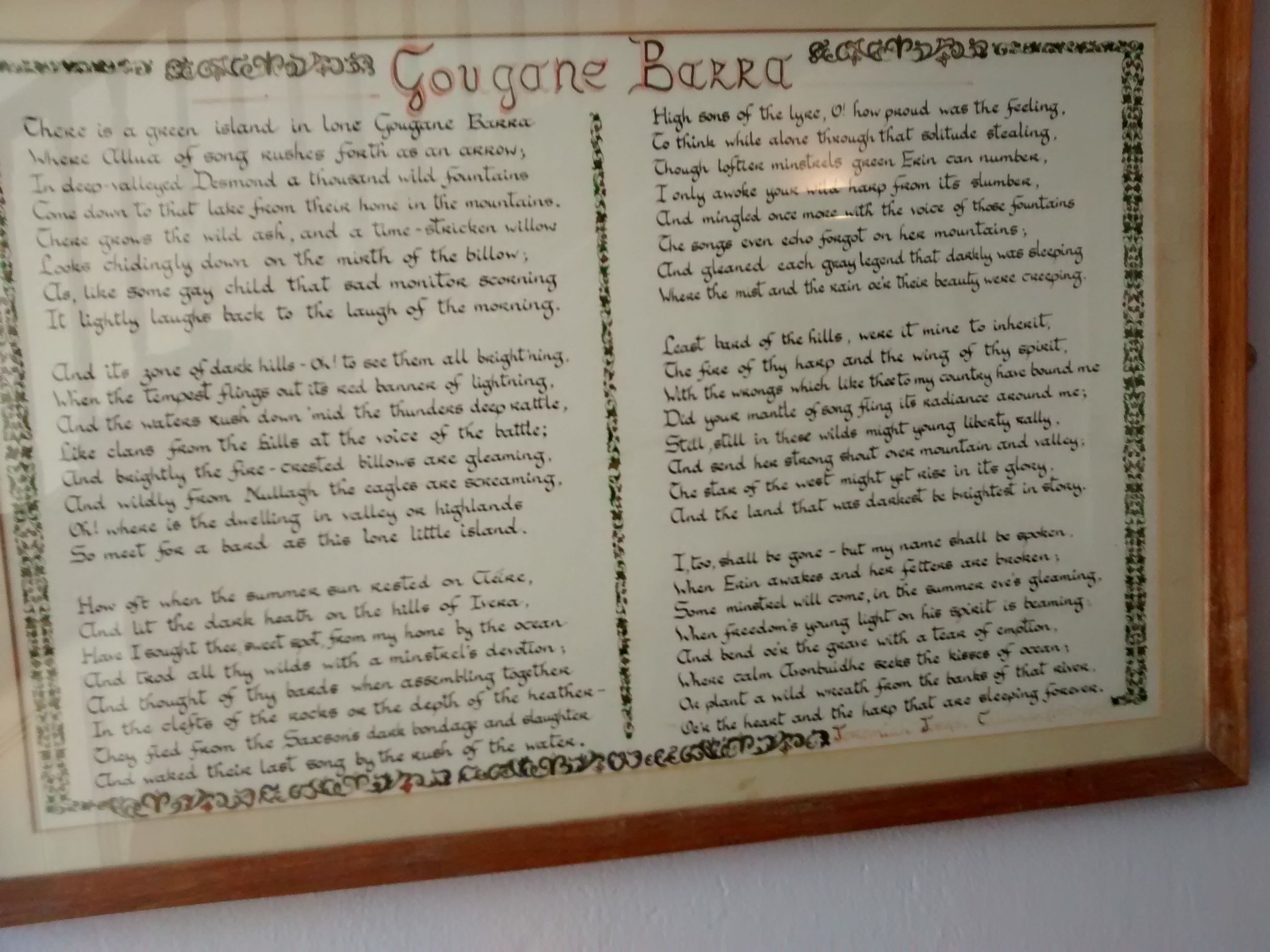
It is forgotten but a section of the Catholic population survived and some thrived during the Penal Laws. The Callanans appear as apothecaries in Cork, Doctors, and are close to McCarthys, Nagles and O’Learys (of the ‘outlaw’ family Raleigh Macroom) and form a close network. It is from this background that JJ Callinan came. Later his friend Crofton Croker would comment that he spent years living with various friends who were Doctors, Schoolteachers and surprisingly Policemen. One such Doctor was Doctor Burke who practised in the Square in Bantry and was from A Caheragh Landowning family probably associated with the McCarthys according to the late Cork Historian John T Collins. It was in Bantry he wrote Gougán Barra.
https://docs.google.com/spreadsheet/ccc?key=0AqhnQGE3ANjzdDA2VHduY1pNUHllbFFHbzJKRUhzU3c#gid=0
In the online edition of the Kings Inns Admission papers (Irish Manuscript Commission) p 92 online p 72 text the admission records of James Joseph Callanan gives his date of birth as the 17th January 1786, 3rd son of father John Medical Doctor mother Catherine Coppinger. TCD 1805, MT M 1806 E (Admitted King’s Inns) 1809. The mother’s name is interesting, as the Coppingers are of Danish descent and his friend Crofton Croker describes him as ‘fair’.
A possible cousin also appears on the list for 1800 James Callanan born 1783 2nd son of Michael Apothecary and Elizabeth McCarthy.
The Callinan’s were the hereditary physicians of the McCarthys:
To continue the McCarthy connection JJ Callanan at one time tutored from a well to do McCarthy family in Millstreet.
Crofton Croker’s description of a man of genius somewhat dissolute exiling himself for years from polite company to spend in West Cork is somewhat reminiscent of the medieval poets such as Aonghus Ó Dalaigh from Kilcrohane.
http://www.ainm.ie/Bio.aspx?ID=1052
http://www.ricorso.net/rx/az-data/authors/c/Callanan_JJ/life.htm
21 Thursday Aug 2014
Posted in Uncategorized
Subscription list of donations by the Gentlemen of the Parish of Bantry, sent by Father Peter O’Sullivan, Parish Priest of Bantry, West Cork, 8th January 1732 to Bishop Doctor Teige McCarthy Rabagh, against Penal Laws included are The Worthy Mr. Henry Gallwey £1-10-0, his generous and worthy son £1-3s, Nicholas Mead 5/5d, Andrew Morrogh, William Gallwey, John Casey, Patrick Skiddie, Cornelius Sexton, James Gould, Daniel Leahy, Robert Gallwey, and Richard Casey each contributed 2 shillings 8 pence halfpenny, Conformity and the Fishing Trade, Father Walsh parish priest of Durrus and Aonghus Ó Dalaigh, poet.
There is a query as to what coin 5s 5d and 2 shillings 8 pence halfpenny represented.
Some of the names Galwey, Mead, Skiddy, Morrogh, Gould were prominent Cork City Catholic Merchant names in the 17th century. It is likely that in 1723 they were involved in the fishing business and Continental trade which was thriving. Later some of the Galweys and Meads conformed to the Church of Ireland. In all probability this was a charade to protect their mercantile interests as the clergyman officiating was Pastor Davies. They were in partnership with him in sending cargos of pilchards to Portugal in shares of one sixteenth.
This transcript was obtained by Father T. J. Walsh, he had been Parish Priest of Durrus in the 1960s and wrote a History Of Muintervara for the Capuchin Annual. He had a particular interest in the O’Daly Bardic School and especially the poet Aonghus Ó Dalaigh.
http://en.wikipedia.org/wiki/Aonghus_Ruadh_na_nAor_Ó_Dálaigh
His sermons were speckled with such references which unfortunately were lost on his flock.
https://docs.google.com/file/d/0B6hnQGE3ANjzeGVUT1pueV9jdkk/preview
Meade:
Gallwey:
Gallwey Lawyers:
| 1861 | Bryan Galwey | Solicitor? | Appearing in Bantry Quarter Sessions | Skibbereen Eagle | |||
| 1720 | John Galwey | London Inns, Middle Temple, King’s Inns | Bantry, 3rd son father Henry Gent, Merchant, Papist, mother Mary Mellefont, Ballingarry (Ballingeary?), John conformed to the Church of Ireland 1729. | Admission Middle Temple Register 1661-1781, Vol 1, Linen Hall Library Belfast. Sir Henry Blackhall, ‘The Galweys of Munster’ |
1435-1610
Gibson’s History of Cork, vol. 2, p. 1, points out that the Ronaynes were one of the twelve families from which during the period 1435-1610 the chief magistrate of Cork was chosen—the remaining eleven being those of Gould, Roche, Tyrry (Terry), Meade, Coppinger, Galway, Sarsfield, Morrogh, Skiddy (Scudamore), Walters and Lavallyn
Obituary Father Walsh:
Obituary of Canon T. J. Walsh, M.A., P.P., Cork Historian, 1984, former parish Priest of Durrus.
21 Thursday Aug 2014
Posted in Uncategorized
Some songs of West Cork, from 1880s ‘The Chapel of Charming Rossmore’, ‘Fifty years Ago (The ESB in Coolea), The Rookery, ‘Garnish’, ‘The Banks of Sullane’, ‘A Toast to Beara’, ‘The Shores of Coolough Bay’, ‘The Strands of Ballylickey and the transmission of music and song along the Butter Roads.
Rossmore from Flor Crowley, ‘In West Cork Long Ago’, 1979 Mercier Press
The others from Tomás Ó Canainn’s ‘The Songs of Cork’, publisged by Gilbert Dalton Ltd. 1978.
The late Tomás Ó Canainn was from Derry, a lecturer in Electrical Engineering and Music in UCC. He was a member of the group Na Fíli and played the accordion at the Irish mass in St. Peter and Pauls, in Cork.
Some of the songs in his book such as The Rookery were sung in West Cork but came from Cork City probably with the butter men returning from the butter market in the late 18th and early 19th century.
In Seán Ó Se’s recent memoir he describes his grand father who settled in Beara and was a butter carter. He would, in the 19th century, stay over in a lodging house at the bottom of Shandon Street, in Cork and pick up songs from all over Cork and Munster ad then sign the at home.
20 Wednesday Aug 2014
Posted in Uncategorized
Pre 1965 farming practices West Cork, Red Elephant and Epicure potatoes, working with the grufán, threshing with the steam engine, winnowing of wheat and oats, working in the bog.
Flor Crowley NT, Behigulane describes farming practices in Dunmanway for small to middling farms which would have been common to Protestant and Catholic farmers from the Famine to the early 1960s. From then on, reclamation, rural electrification and specialisation spelled the end for many of the prctices described.
The page sequence in the PDF is out, note the bottom page number.

20 Wednesday Aug 2014
Posted in Uncategorized
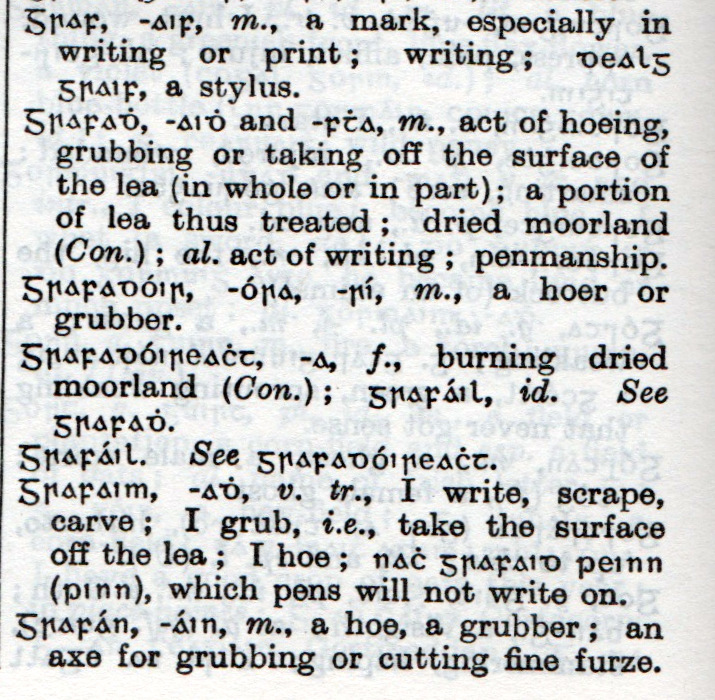
Words in Irish from Dunmanway, West Cork from Flor Crowley N.T. (National Teacher), Behigullane, Dunmanway. Flor is the short for Florence the old version of the name in Irish is Finín, Fineen, Finghín.
Magistrate of same name:
Florence Crowley,1895, Behagullane, Dunmanway, listed 1913.
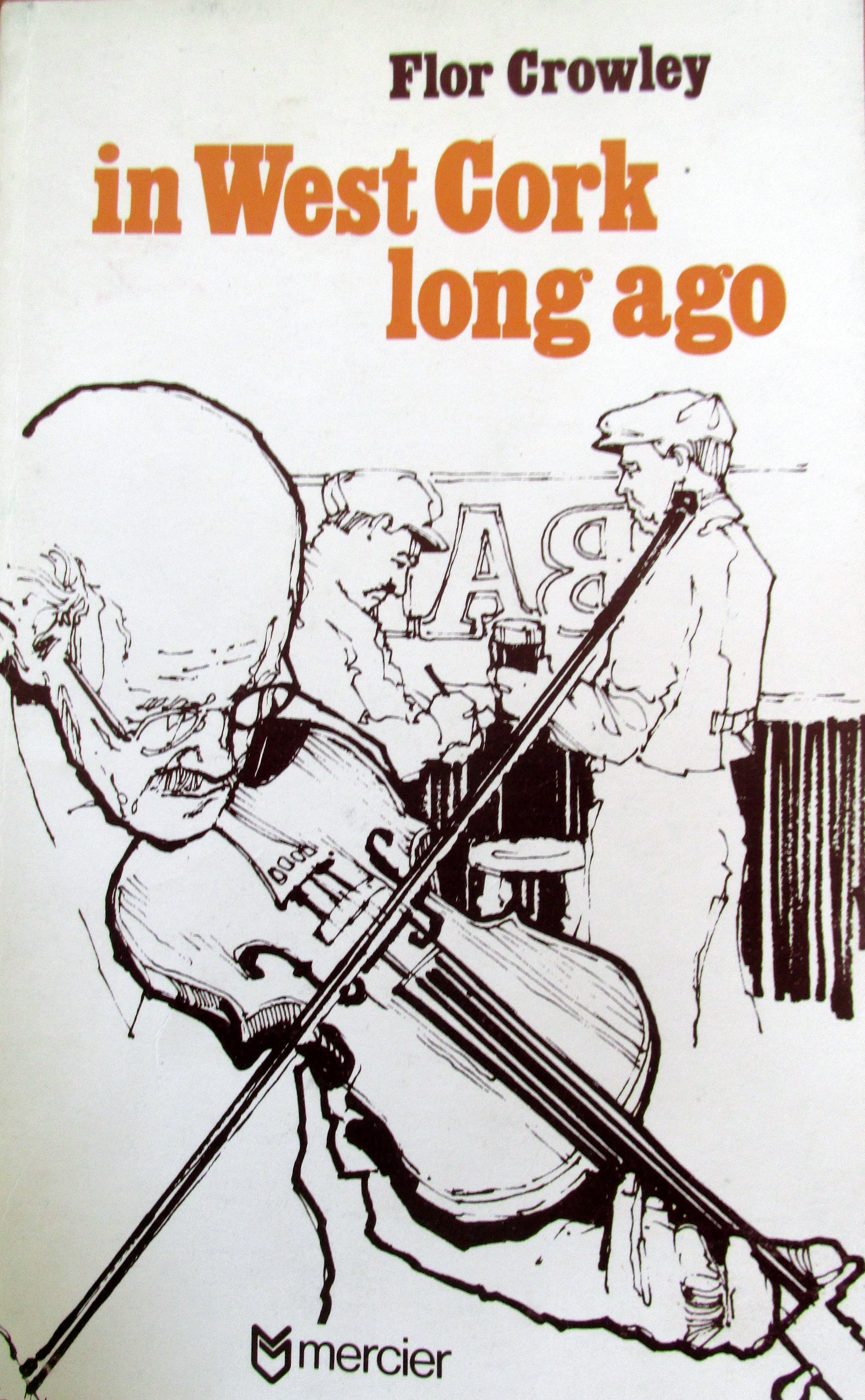
From his book ‘In West Cork Long Ago’, 1979, Mercier. Some of the practises flailing had probably gone out by the early 20th century.
Pages 9 and 10
https://docs.google.com/document/d/1dLSWVUsYRVa2ViKqOHyj5sl6Plz-tzLLVgpQgU3gvQM/edit
Drinagh 1940s
18 Monday Aug 2014
Posted in Uncategorized
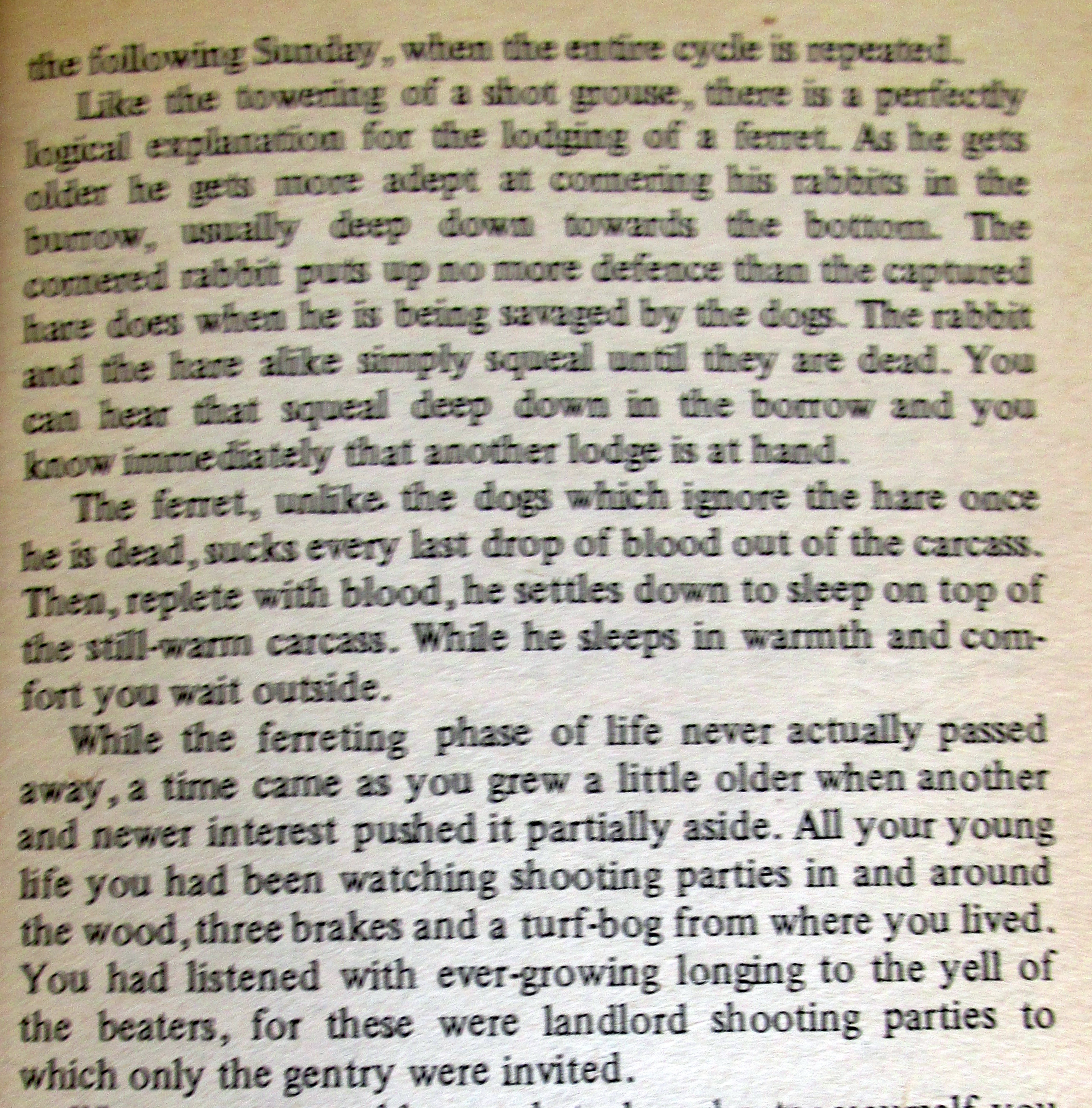
Out for a day with the Ferret in Dunmanway, West Cork, Long Ago.
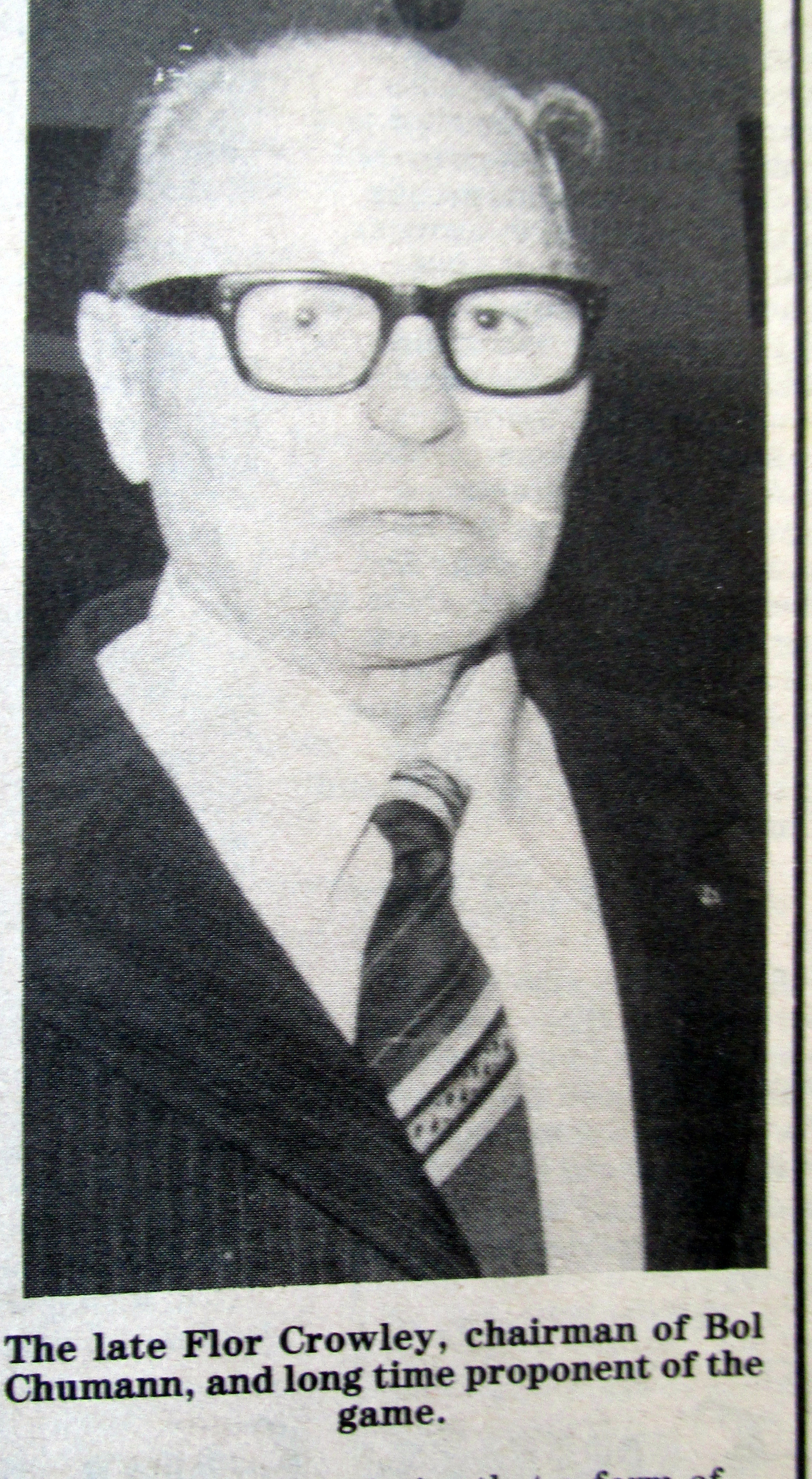
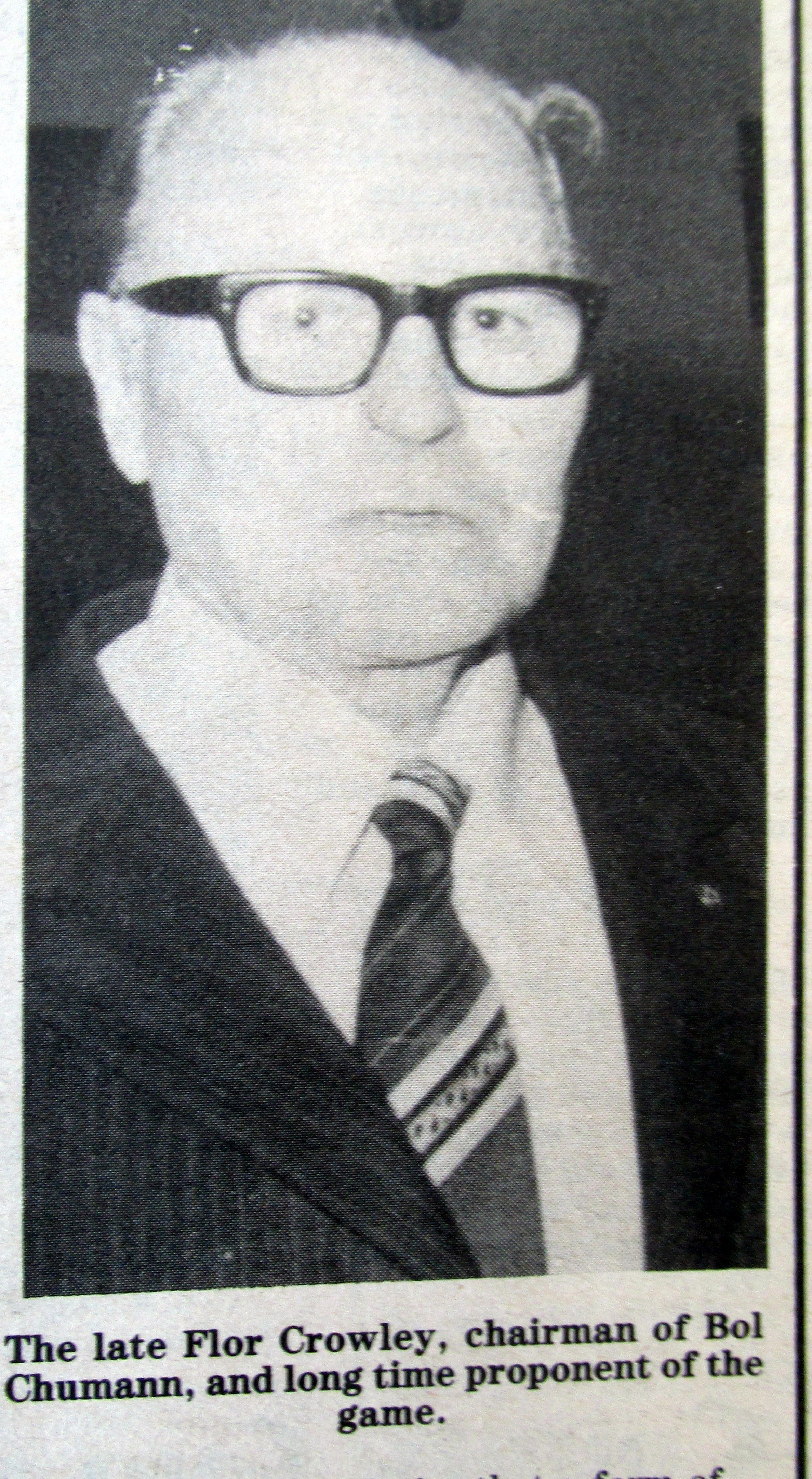
From Flor Crolwey’s book ‘In West Cork Long Ago’. Mercier Press 1979. A fascinating account of old times. He was from Behigullane, Dunmanway a National Teacher at Behagh National School. He was a founder of ‘An Ból Chumann na hÉireann’ in 1954 the body regulating road bowlng.
http://www.askaboutireland.ie/reading-room/sports-recreation/sport/road-bowling/bol-chumann-na-heireannth/
The book is redolent of De Valera’s Ireland of the mid 20th century, the views now seems narrow.

17 Sunday Aug 2014
Posted in Uncategorized
Earliest representation of West Cork person, 1585, Catherine Cullinane, Ballynacarriga Castle, Dunmanway.
In Brian Lalor’s excellent book of sketches and commentary he refers to the earliest portrait of a West Cork person. (Brandon Book Publishers Ltd. 1990)
This is Catherine Cullinane, wife of Randal Hurley who build Ballinacarriga Castle in 1585. The castle was forfeit in 1654 to the Crofts.
Ballynacarriga Castle was built in 1585 by Randal Hurley. (The date 1585 can be seen in a window-recess on the top floor). The castle was forfeited by the Hurleys in 1654, and it passed to the Crofts. It is believed that the castle was used as a chapel as well as a family residence. Locals say that the chapel was still in use until 1815.
Catherine Cullinane is shown in two window embrasures in the main chamber on the upper floor in carvings in low relief. She is shown in Elizabethan Dress, three roses represent her three children. Her initial and those of Randal Hurley are also carved.
http://www.britainirelandcastles.com/Ireland/County-Cork/Ballynacarriga-Castle.html
 West Cork History